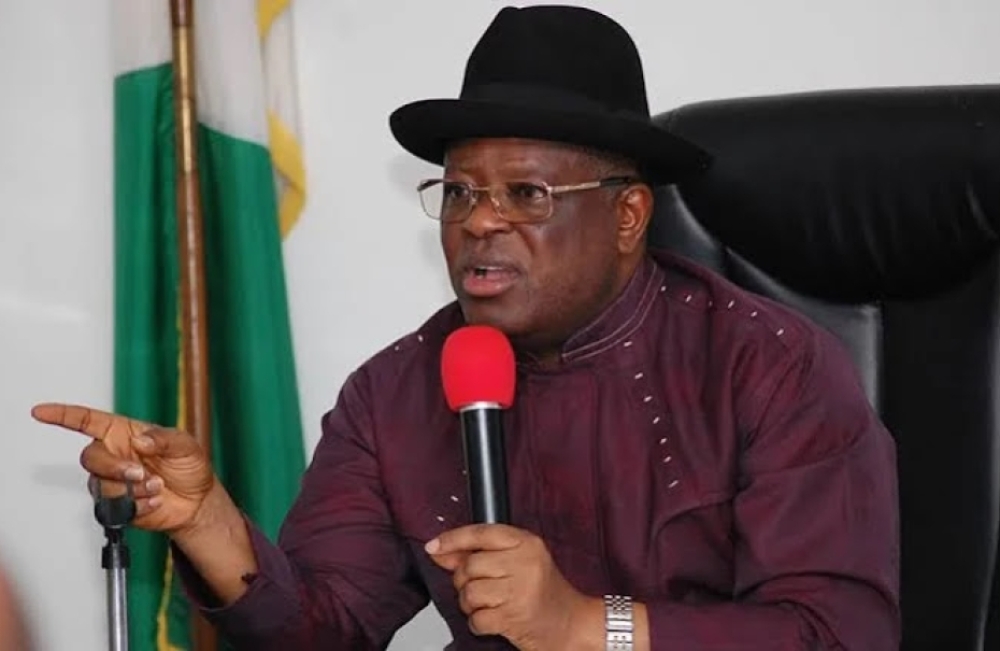
UMAHI ORDERS IMMEDIATE EMERGENCY INTERVENTION ON BENIN-ASABA ROAD, AND SOME OTHER CRITICAL FEDERAL ROADS
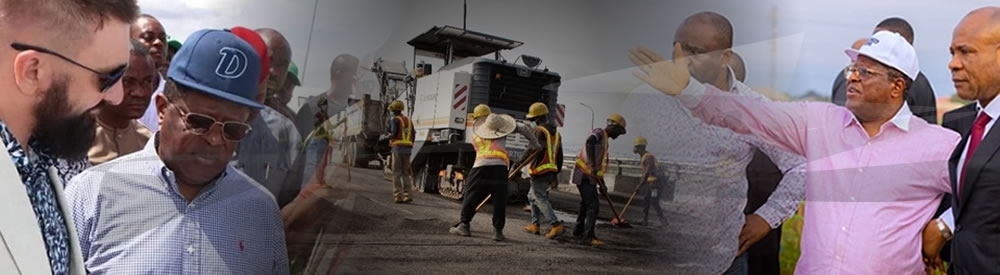
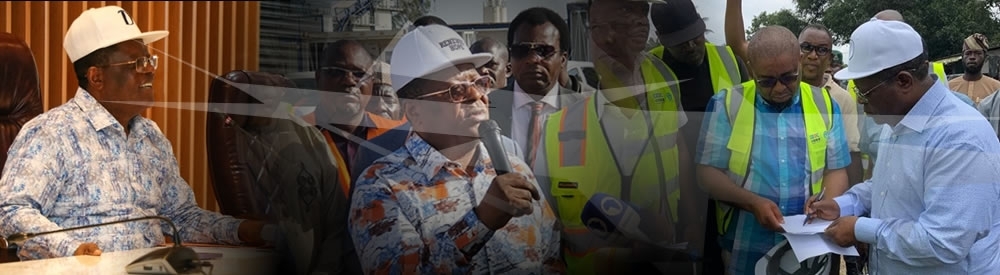
The Honourable Minister of Works, Senator Engr. David Nweze Umahi, CON, has directed the immediate deployment of major contractors to all three sections of the Benin-Asaba Federal Road to restore the failed sections and bring an end to the suffering of motorists and other road users.
This is because, the situation on the concessioned Benin-Asaba Road has reached a point where the overall public interest must take precedence over the existing concession agreement.
Recall that the Honourable Minister of Works was on the Benin-Asaba Road about seven days ago, where he assembled a number of contractors and directed them to prepare for immediate palliative intervention on the affected sections of the road at no cost to the concessionaire. In line with the Concession agreement which requires that before the Federal Government could intervene, the permission of the concessionaire must be required, and that permission was not granted to federal government.
The Minister subsequently proposed three options to the concessionaire, any one of which would have enabled the Federal Government to move in and address the worsening condition of the road. Unfortunately, none of the options was accepted by the concessionaire. Immediately after the Minister left Asaba, the already limited equipment deployed to the road by the concessionaire was further reduced to just one, worsening the situation and increasing the suffering of motorists and other road users.
While the Minister takes responsibility for the concerns and suffering of Nigerians using the road, it is important to state that the concessionaire has also not taken the suffering of Edo people and travelling public sufficiently into consideration by declining all the options put forward by the Federal Government. The concessionaire continues to rely on the terms of the concession agreement entered into by the previous administration, an agreement which weighs heavily against the Federal Government’s ability to intervene quickly in the interest of the public in a situation like this.
In view of this situation, the Honourable Minister of Works has directed the immediate deployment of major contractors within the corridor to all three sections of the Benin-Asaba Road to restore the failed sections and bring relief to the people, with the cost of the emergency intervention being borne by the Federal Government. The Honourable Minister has also directed immediate redesign of the entire route to be rebuilt with reinforced concrete pavement. The public should therefore take note that immediate action is underway to restore every failed section of the Benin-Asaba Road and subsequently rehabilitate the entire sections of the road using reinforced concrete pavement.
2. On the Benin-Sapele Road:
The Governors of Edo and Delta States, the Niger Delta Development Commission (NDDC), and the Federal Government are currently engaged in interventions on different sections of the road to restore the entire route. While some sections are receiving palliative attention, permanent works are also ongoing on other sections.
3. On Ifaki(Ekiti) - Kabba (Kogi) Road:
The Federal Government is engaging both the contractor; Gamji Nigeria Company Limited, and Dangote PLC on immediate emergency and permanent intervention on the most failed sections of the road, while efforts are being made to financially mobilise the company for more extensive permanent work to commence on the axis.
4. On the Sokoto-Zamfara-Katsina Road: This is an inherited project involving the dualisation of approximately 350 kilometres, which translates to about 700 kilometers. The project has since been redesigned and is currently ongoing and most sections are being reconstructed using reinforced concrete pavement. From the Sokoto axis towards Zamfara, over 50 kilometres of one carriageway have been fully completed with reinforced concrete pavement. From Zamfara to Katsina, some sections have been completed and palliative works have been ordered over the sections that have not been reconstructed. However, the pace of work slowed down due to the redesign and rephasing of the project. The contractors currently engaged on the road include CBC, SETRACO, Triacta and Mothercat. They are being remobilised to return to site and complete the outstanding works.
5. On the Abuja-Kaduna-Zaria-Kano Road: The Federal Government took over the Road project and has currently completed the 118-kilometer mostly on reinforced concrete pavement on lot 1. The Lot 2, which covers 164 kilometres, is over 60 percent completed on reinforced concrete pavement. The Federal Government has also introduced solar-powered light on the entire route of Abuja-Kaduna-Zaria - Kano to improve visibility during night travel and enhance the overall security situation on the route. The entire project is scheduled for completion by December 2026.
6. On Bauchi-Jigawa Road: Triacta Nigeria Limited has been mobilised to carry out the necessary interventions on some failed sections and work is currently ongoing in those failed sections.
7. On the Sagamu-Ore Road: 48 Kilometers of the 96-kilometre road have already been completed using reinforced concrete pavement. There is also a 24-kilometre section around Ore which was abandoned by the previous contractor. The Federal Government has directed its immediate restoration to ensure seamless travel. Solar lights are being installed in the entire 96kilometer of the road.
8. On Flooded Sections on Sagamu-Ore-Benin Road: The flooded sections on the same corridor between Sagamu-Ore-Benin Road, as well as other flooded sections in Ondo State, are being designed for emergency procurement and intervention.
9. On the East-West Road:
Some failed and critical sections, including defective sections of bridges along the East-West Road, are being marked out for emergency procurement and intervention.
10. On the Abuja-Lokoja Road:
Several contracts are ongoing along the route, while the three critical sections currently without contracts are being procured for emergency intervention.
11. On the Lokoja-Benin-Warri Road: The President has directed a complete redesign and procurement of the 400-kilometre dualised route covering the uncompleted sections, using reinforced concrete pavement, while palliative works will continue with the contractors currently on the road.
12. On Carter Bridge:
While the Federal Government continues to undertake weekly maintenance of the underwater elements of the bridge. The site has also been handed over to the contractor, CCECC, for the construction of a permanent new bridge, and work has commenced.
13. On the Third Mainland Bridge:
With regard to the defective underwater structural elements, the Federal Government is at the final stage of determining the appropriate intervention for the repair of the affected elements.
14. On the flooded section of the Lagos-Ibadan Road: Work has commenced on the affected section. There are also several flooded sections on federal roads across the six geopolitical zones, largely occasioned by excessive flooding and the effects of climate change. The Federal Government is identifying and marking these sections for immediate attention.
15. On the First and Second Niger Bridges:
Intervention work is ongoing on the approach roads to the Second Niger Bridge damaged by flood and the work is progressing very well. The First Niger Bridge has been closed to traffic to enable immediate repair works. Contractor has mobilized to site and comprehensive rehabilitation of the bridge has started. From Summit Junction to the First Niger Bridge, massive rehabilitation work is also ongoing using reinforced concrete pavement.
16. The Honourable Minister wishes to commend the President of the Federal Republic of Nigeria, His Excellency Bola Ahmed Tinubu, GCFR, for the massive work being undertaken on the nation’s roads since the administration assumed office in 2023.
17. It is important to state that when the present administration came into office, there was hardly any part of the country where one could travel for an hour without encountering significant challenges on the road network. The condition of the country’s roads and bridges was a major national infrastructure challenge.
18. Rather than shy away from the problem, the administration of President Bola Ahmed Tinubu made the nation’s road network a priority. Virtually every part of the country became a priority, and the Federal Government, through the Federal Ministry of Works, Regional Commissions, Parastatals and other MDA’s has continued to respond extensively to these challenges.
19. The Federal Government is currently working on over 80 percent of the inherited federal roads, an unprecedented level of intervention in the country’s road infrastructure.
20. We ask the public to understand the enormous challenges inherited on our roads and bridges and to take note not only of the problems being solved, but also of the permanent solutions being introduced.
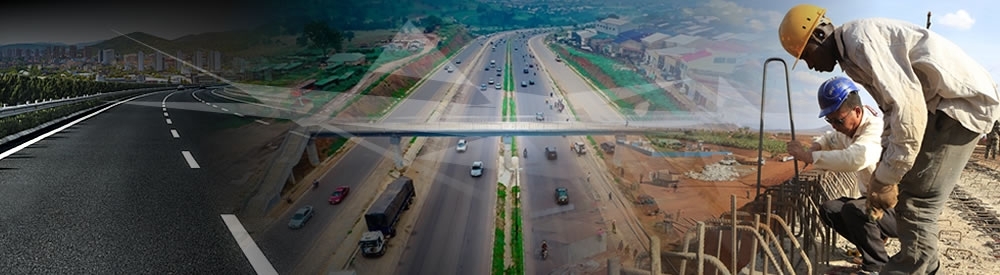
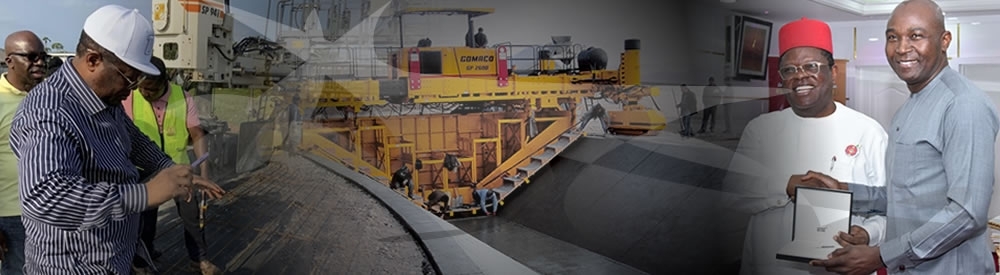
21. A major part of this new approach is the use of reinforced concrete pavement, designed to significantly extend the lifespan of major roads. These roads are expected to last between 50 and 100 years. This means that roads being constructed under President Bola Ahmed Tinubu’s administration are being designed with future generations in mind, rather than simply providing temporary solutions to today’s problems. And this is a complete departure from the past, when roads often deteriorated only a few years after completion, resulting in a continuous cycle of reconstruction and expenditure.
22. We appreciate the concerns of Nigerians over the condition of some roads presently and the difficulties faced by motorists and commuters who cannot move easily from one point to another. Those concerns are legitimate, and the Federal Government is listening. But Nigerians should also recognise the enormous scale of the problems inherited and the amount of work currently being undertaken across the country.
23. It is simply impossible to resolve every road challenge accumulated over many years of neglect by the past administrations within three years. What is important is that the government is working, the government is responding, and the government is putting permanent solutions in place.
25. We appreciate members of the public who send situation reports on failed roads and other infrastructure challenges. These reports help the Ministry identify areas requiring urgent attention. However, we also appeal to members of the public to report when such problems have been addressed, just as they report when they occur.
24. We are aware of situations where photographs and reports of road challenges continue to circulate on social media even after the Federal Government has intervened and resolved the particular problem.
25. However, the Ministry will continue to respond as rapidly as possible to genuine reports and concerns from Nigerians.
26. It is also important to note that we have compiled a comprehensive record of all inherited, ongoing and intervention projects across the country which is available to the public. This is to ensure that Nigerians have access to information on the infrastructure projects being undertaken nationwide and can fully participate in and appreciate the infrastructure revolution of President Bola Ahmed Tinubu’s administration.

UMAHI ORDERS IMMEDIATE EMERGENCY INTERVENTION ON BENIN-ASABA ROAD, AND SOME OTHER CRITICAL FEDERAL ROADS The Honourable Minister of Works, Senator Engr. David Nweze Umahi, CON, has directed the immediate deployment of major contractors to all three sections of the Benin-Asaba Federal Road to restore the failed sections and bring an end to the suffering of motorists and other road users. This is because, the situation on the concessioned Benin-Asaba Road has reached a point where the overall public interest must take precedence over the existing concession agreement. Recall that the Honourable Minister of Works was on the Benin-Asaba Road about seven days ago, where he assembled a number of contractors and directed them to prepare for immediate palliative intervention on the affected sections of the road at no cost to the concessionaire. In line with the Concession agreement which requires that before the Federal Government could intervene, the permission of the concessionaire must be required, and that permission was not granted to federal government. The Minister subsequently proposed three options to the concessionaire, any one of which would have enabled the Federal Government to move in and address the worsening condition of the road. Unfortunately, none of the options was accepted by the concessionaire. Immediately after the Minister left Asaba, the already limited equipment deployed to the road by the concessionaire was further reduced to just one, worsening the situation and increasing the suffering of motorists and other road users. While the Minister takes responsibility for the concerns and suffering of Nigerians using the road, it is important to state that the concessionaire has also not taken the suffering of Edo people and travelling public sufficiently into consideration by declining all the options put forward by the Federal Government. The concessionaire continues to rely on the terms of the concession agreement entered into by the previous administration, an agreement which weighs heavily against the Federal Government’s ability to intervene quickly in the interest of the public in a situation like this. In view of this situation, the Honourable Minister of Works has directed the immediate deployment of major contractors within the corridor to all three sections of the Benin-Asaba Road to restore the failed sections and bring relief to the people, with the cost of the emergency intervention being borne by the Federal Government. The Honourable Minister has also directed immediate redesign of the entire route to be rebuilt with reinforced concrete pavement. The public should therefore take note that immediate action is underway to restore every failed section of the Benin-Asaba Road and subsequently rehabilitate the entire sections of the road using reinforced concrete pavement. 2. On the Benin-Sapele Road: 3. On Ifaki(Ekiti) - Kabba (Kogi) Road: 4. On the Sokoto-Zamfara-Katsina Road: This is an inherited project involving the dualisation of approximately 350 kilometres, which translates to about 700 kilometers. The project has since been redesigned and is currently ongoing and most sections are being reconstructed using reinforced concrete pavement. From the Sokoto axis towards Zamfara, over 50 kilometres of one carriageway have been fully completed with reinforced concrete pavement. From Zamfara to Katsina, some sections have been completed and palliative works have been ordered over the sections that have not been reconstructed. However, the pace of work slowed down due to the redesign and rephasing of the project. The contractors currently engaged on the road include CBC, SETRACO, Triacta and Mothercat. They are being remobilised to return to site and complete the outstanding works. 5. On the Abuja-Kaduna-Zaria-Kano Road: The Federal Government took over the Road project and has currently completed the 118-kilometer mostly on reinforced concrete pavement on lot 1. The Lot 2, which covers 164 kilometres, is over 60 percent completed on reinforced concrete pavement. The Federal Government has also introduced solar-powered light on the entire route of Abuja-Kaduna-Zaria - Kano to improve visibility during night travel and enhance the overall security situation on the route. The entire project is scheduled for completion by December 2026. 6. On Bauchi-Jigawa Road: Triacta Nigeria Limited has been mobilised to carry out the necessary interventions on some failed sections and work is currently ongoing in those failed sections. 7. On the Sagamu-Ore Road: 48 Kilometers of the 96-kilometre road have already been completed using reinforced concrete pavement. There is also a 24-kilometre section around Ore which was abandoned by the previous contractor. The Federal Government has directed its immediate restoration to ensure seamless travel. Solar lights are being installed in the entire 96kilometer of the road. 8. On Flooded Sections on Sagamu-Ore-Benin Road: The flooded sections on the same corridor between Sagamu-Ore-Benin Road, as well as other flooded sections in Ondo State, are being designed for emergency procurement and intervention. 9. On the East-West Road: 10. On the Abuja-Lokoja Road: 11. On the Lokoja-Benin-Warri Road: The President has directed a complete redesign and procurement of the 400-kilometre dualised route covering the uncompleted sections, using reinforced concrete pavement, while palliative works will continue with the contractors currently on the road. 12. On Carter Bridge: 13. On the Third Mainland Bridge: 14. On the flooded section of the Lagos-Ibadan Road: Work has commenced on the affected section. There are also several flooded sections on federal roads across the six geopolitical zones, largely occasioned by excessive flooding and the effects of climate change. The Federal Government is identifying and marking these sections for immediate attention. 15. On the First and Second Niger Bridges: 16. The Honourable Minister wishes to commend the President of the Federal Republic of Nigeria, His Excellency Bola Ahmed Tinubu, GCFR, for the massive work being undertaken on the nation’s roads since the administration assumed office in 2023. 17. It is important to state that when the present administration came into office, there was hardly any part of the country where one could travel for an hour without encountering significant challenges on the road network. The condition of the country’s roads and bridges was a major national infrastructure challenge. 18. Rather than shy away from the problem, the administration of President Bola Ahmed Tinubu made the nation’s road network a priority. Virtually every part of the country became a priority, and the Federal Government, through the Federal Ministry of Works, Regional Commissions, Parastatals and other MDA’s has continued to respond extensively to these challenges. 19. The Federal Government is currently working on over 80 percent of the inherited federal roads, an unprecedented level of intervention in the country’s road infrastructure. 20. We ask the public to understand the enormous challenges inherited on our roads and bridges and to take note not only of the problems being solved, but also of the permanent solutions being introduced. 21. A major part of this new approach is the use of reinforced concrete pavement, designed to significantly extend the lifespan of major roads. These roads are expected to last between 50 and 100 years. This means that roads being constructed under President Bola Ahmed Tinubu’s administration are being designed with future generations in mind, rather than simply providing temporary solutions to today’s problems. And this is a complete departure from the past, when roads often deteriorated only a few years after completion, resulting in a continuous cycle of reconstruction and expenditure. 22. We appreciate the concerns of Nigerians over the condition of some roads presently and the difficulties faced by motorists and commuters who cannot move easily from one point to another. Those concerns are legitimate, and the Federal Government is listening. But Nigerians should also recognise the enormous scale of the problems inherited and the amount of work currently being undertaken across the country. 23. It is simply impossible to resolve every road challenge accumulated over many years of neglect by the past administrations within three years. What is important is that the government is working, the government is responding, and the government is putting permanent solutions in place. 25. We appreciate members of the public who send situation reports on failed roads and other infrastructure challenges. These reports help the Ministry identify areas requiring urgent attention. However, we also appeal to members of the public to report when such problems have been addressed, just as they report when they occur. 24. We are aware of situations where photographs and reports of road challenges continue to circulate on social media even after the Federal Government has intervened and resolved the particular problem.
The Governors of Edo and Delta States, the Niger Delta Development Commission (NDDC), and the Federal Government are currently engaged in interventions on different sections of the road to restore the entire route. While some sections are receiving palliative attention, permanent works are also ongoing on other sections.
The Federal Government is engaging both the contractor; Gamji Nigeria Company Limited, and Dangote PLC on immediate emergency and permanent intervention on the most failed sections of the road, while efforts are being made to financially mobilise the company for more extensive permanent work to commence on the axis.
Some failed and critical sections, including defective sections of bridges along the East-West Road, are being marked out for emergency procurement and intervention.
Several contracts are ongoing along the route, while the three critical sections currently without contracts are being procured for emergency intervention.
While the Federal Government continues to undertake weekly maintenance of the underwater elements of the bridge. The site has also been handed over to the contractor, CCECC, for the construction of a permanent new bridge, and work has commenced.
With regard to the defective underwater structural elements, the Federal Government is at the final stage of determining the appropriate intervention for the repair of the affected elements.
Intervention work is ongoing on the approach roads to the Second Niger Bridge damaged by flood and the work is progressing very well. The First Niger Bridge has been closed to traffic to enable immediate repair works. Contractor has mobilized to site and comprehensive rehabilitation of the bridge has started. From Summit Junction to the First Niger Bridge, massive rehabilitation work is also ongoing using reinforced concrete pavement.
25. However, the Ministry will continue to respond as rapidly as possible to genuine reports and concerns from Nigerians.
26. It is also important to note that we have compiled a comprehensive record of all inherited, ongoing and intervention projects across the country which is available to the public. This is to ensure that Nigerians have access to information on the infrastructure projects being undertaken nationwide and can fully participate in and appreciate the infrastructure revolution of President Bola Ahmed Tinubu’s administration.
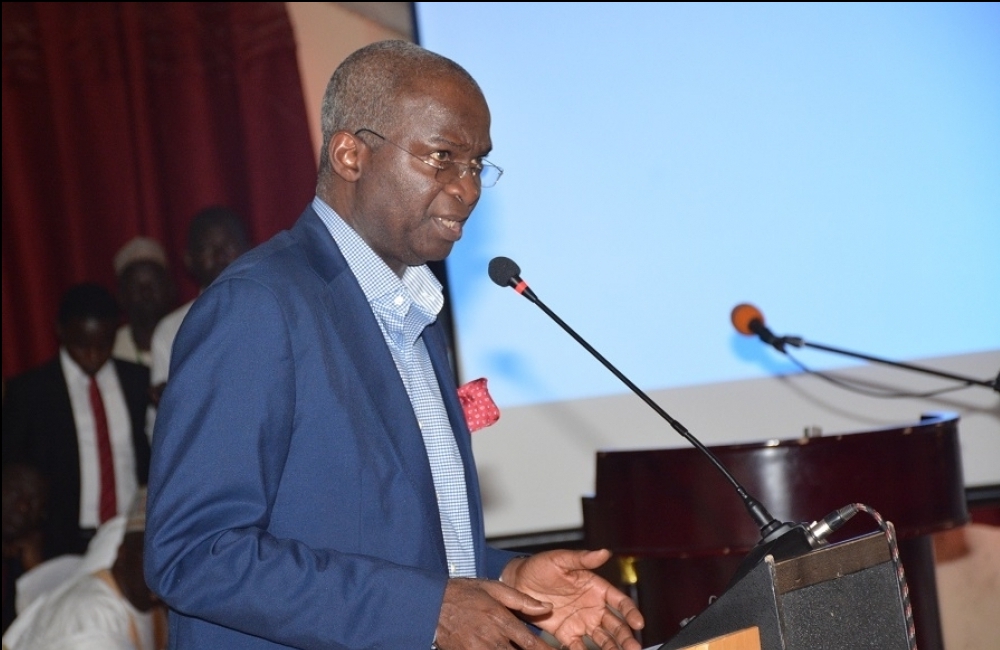
BRF Gabfest 5: Discussing the Ways to Curb the Human Factors Involved in Road Accidents Lagos, Nigeria, June 22, 2021 — For the 5th edition of the Babatunde Raji Fashola (BRF) GabFest, an event created to discuss the role of the youth in Nigeria’s future, the theme is “Arrive Alive: Building a Road towards better driving culture”. Statistics show that Road traffic injuries are the leading cause of death among young people aged 15-29. Around the world, road traffic injuries cause 1.25 million deaths and up to 50 million injuries each year. Surprisingly, data shows that the top causative factor for road accidents are not bad roads but speeding, loss of vehicular control, wrongful overtaking and generally poor driving culture. To discuss this pandemic, and explore ways to curb the human factors behind such accidents, six speakers across two panels will offer constructive insight at the event, on the 28th June, 2021. The speakers will cut across both the public and private sectors, and offer the audience the chance to engage on the subject matter. They will discuss matters ranging from road safety traffic measures and how accidents occur, to what to do in the event of an accident, insurance, drinking and driving responsibly, and also breaking users cycle of road accidents. The aim is to realize the factors that we have control over, and how to take a collective responsibility over them to improve the future. Attendees would also be allowed to ask questions after the Panelist discussion. The confirmed line-up of speakers includes Dr Yazid Omotayo -Head, Medical Unit/Pre-Hospital Care Unit, Lagos State Emergency Management Agency (LASEMA), Ms Bethia Idoko -Head of Business Development, Gidi Traffic, Mr Oluseye Banjoko MCIArb (Uk)- Partner, CLP Legal and Fred Akinmuyisitan - Head, Marketing Strategy and Planning, The Heineken Company. The Corps Marshal of the Federal Road Safety Corps (FRSC), Dr Boboye Oyeyemi will offer insights on the statistics coming in from Federal Highways across the country. It will be a platform for these leaders to share their expertise as pertains to Road Accidents. “It is imperative to find opportunities to convene and discuss ways in which we can push forward as a people, and reduce these casualties” says Terfa Tilley-Gyado, Director of Communications of The Temple Company, who will also be addressing attendees of the event. The programme will end with a closing remark by the Honourable Minister of Works and Housing, Mr Babatunde Raji Fashola SAN. Due to COVID-19 restrictions, the event will be conducted virtually over ZOOM, and is open to the public to register via https://bit.ly/gabfest5. The entire session will run for a duration of two hours. ...
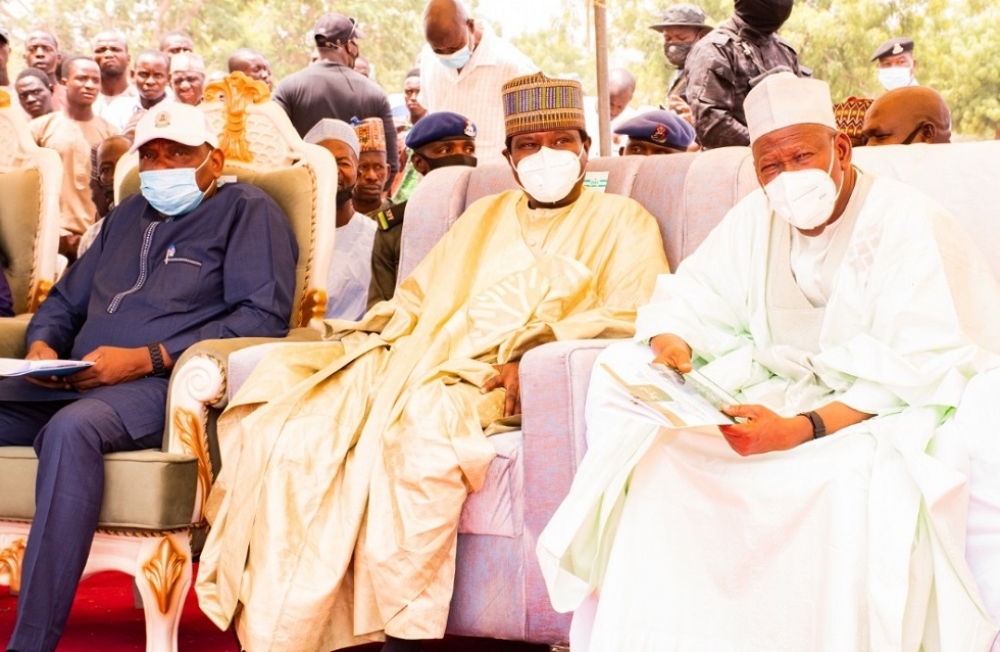
FG Flags-off N62.7bn Construction of Kano-Gwarzo-Dayi Federal Highway The Federal Government has flagged-off the construction work of the 90.65km Kano-Gwarzo-Dayi Federal Highway linking Kano and Katsina States, Thursday, June 10, 2021 in Kano. The contract for the reconstruction of the road to dual carriage way was approved by the Federal Executive Council (FEC) in November 2020 at the cost of N62.711b with the completion period of 24 months. Permanent Secretary, Federal Ministry of Works and Housing, Babangida Hussaini, in his welcome address stated that the contract was awarded on December 1st, 2020 to Messes CGC Nigeria Limited. The Permanent Secretary was represented at the flag-off ceremony by Engr Folorunsho Esan, Director Highways (North -West) in the Federal Ministry of Works and Housing. He explained that the 90.65km dual carriage way has a total number of three bridges, with additional 7.3 meters width and 1.5 meters shoulder width and an outer shoulder width of 2.7meters. Already the Kano State Government had dualised 7.2km of the road from the Bayero University Kano (BUK) axis. The construction started from the BUK junction and terminated at outskirt of Dayi town in Katsina State. Hussaini disclosed that the road would be completed with all the furnitures such as lane markings, kilometer signs, signages etc., adding that the road would last not less than 20 years. In his remarks at the ceremony, Kano State Governor Abdullahi Umar Ganduje described the project as gigantic, important, socially and economically of great benefits to the people of Kano, Katsina, Zamfara, Sokoto and Kebbi States. The governor also explained that the reconstructed road would also contribute in addressing the security challenges along the area. Accordingly, Governor Ganduje said that, as requested by the Federal Government, Kano State Government is ready to pay the compensation for the facilities and utilities that would be affected by the dualisation of the road He commended President Muhammadu Buhari for all the projects he brought to Kano State, stating that the President has paid back the Kano people for the massive votes they always give him during elections. Governor Ganduje listed among others, a number of projects which the Federal Government brought to Kano to include: Maiduguri- Yobe- Kano Road; Kano- Kaduna-Abuja Road, Kano-Katsina Road, Kano- Katsina- Jibia- Maradi rail project, Lagos- Ibadan- Kaduna- Kano rail project and now Kano- Gwarzo- Dayi Road and construction of new wing at Mallam Aminu Kano International Airport (MAKIA). Ganduje told the gathering that, with all the projects, commercial and business opportunities had increased in Kano as well as improved security. In his remarks, the Senator representing Kano North Senator Barau Jibrin commended the Minister of Works and Housing Babatunde Fashola, Minister of State, Engr Abubakar Aliyu and the Permanent Secretary, Babangida Hussaini. Senator Barau reminded the gathering that, the project was a promise they made to the people during their campaign tour with the Governor, stating that it was now time to thank God for making it realisable. Also, the Executive Director of Messes CGC Nigeria Limited, the Construction Company handling the contract, Mr Fan Xiaojing thanked the Federal Government and Kano State for the opportunity given to his company to handle the project, stating that it was an indication that their expertise in handling such project was recognised. He stated that with the cooperation of all the stakeholders the job would be delivered on scheduled. Royal fathers of the day that graced the occasion wer:, His Highness the Emir of Bichi, Alhaji Nasiru Ado Bayero and Dr. Alhaji Ibrahim Abubay Ii the Emir of Karaye Al in Kano State. ...
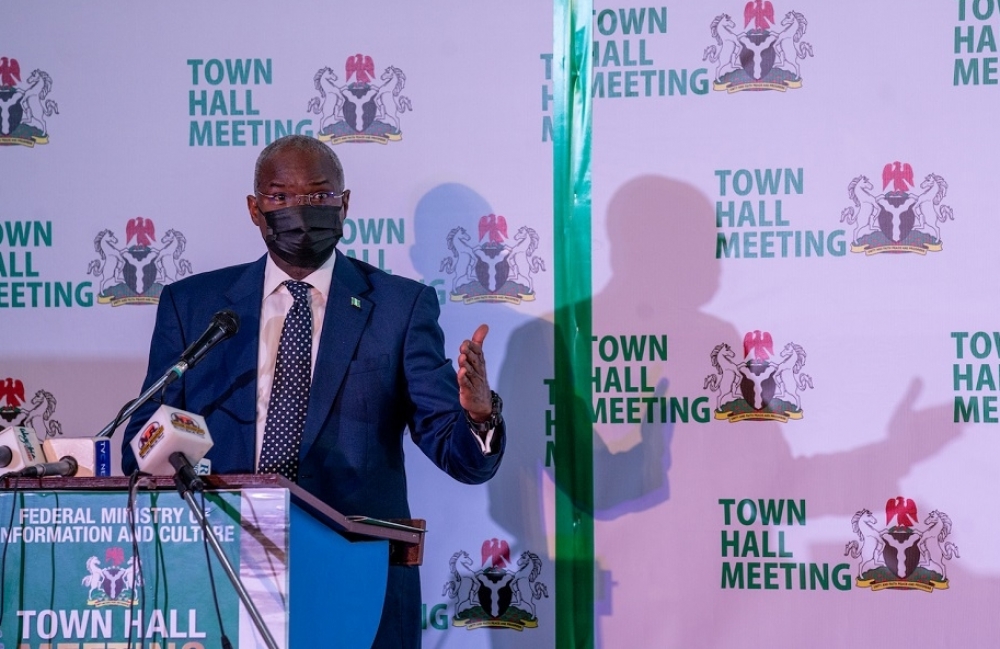
Stop the Destruction of our Common wealth, Fashola pleads at Town Hall Meeting The Honourable Minister of Works and Housing, Mr. Babatunde Raji Fashola SAN has appealed to those vandalizing government properties in the country to desist from doing so. The Minister made the appeal during his presentation at the Townhall Meeting on Protecting Public Infrastructure organized by the Federal Ministry of Information, which took place today 7th June 2021 at NAF Conference Centre Abuja. Fashola, who noted all that no nation grows beyond the capacity of its infrastructure, lamented the level of damage and vandalization of public properties in the nation. The Minister said, "our ability to grow, to develop and to prosper, to get education and essentially to live a good life is tied to quality and quantity of Infrastructure that we have, explaining that properties damaged under the purview of his Ministry included bridges across the nation such as Otedola and Kara bridges in Lagos, Tamburawa Bridge in Kano among others which would respectively cost 203M, 605M and 1.8 Billion naira to repair. Noting that these money could have been expended on other sectors such as health, education etc. Fashola disclosed that another form in which the bridge was abused included the conversion of spaces under the bridge to shops and the use of parking spaces for businesses, adding that the Ministry had started the process of recovery of all these spaces with the aim of ensuring that they are utilized for their legitimate purposes. The Minister also condemned the vandalism of signages on the Federal Highways across the country. He explained that "Signages have begun to reappear on the nation’s highways but these signages have become targets of some people and turned to billboards for campaign." He added that some of them were out rightly carted away. Fashola further condemned the abuse of the right of way by some people who raise structure on them, explaining that 45.72 metre from the centre line of both sides of the road lies within the right of way. The Minister also decried the building of bumps on Federal Highways which he noted are dangerous to unsuspecting road users, adding that the public buildings are also not left out by vandals. The Minister noted that though there are existing laws to punish these criminal acts but they were no longer realistic in view of the economic changes that have taken place since the time they were enacted and now and therefore called for quick amendment of the laws so that offenders could be adequately punished. Fashola also called upon the citizens to take responsibility over government properties and stand up against vandalism and willful destruction of the common wealth of the country. In his welcome Address, the Honourable Minister of Information and Culture Alhaji Lai Muhammed said the aim of the Townhall meeting was to bridge the gap between the Government and the people. The Minister said infrastructure deficit was one of the challenges facing the country and the current administration had invested hugely on it despite the lean resources available to it. "Despite a drastic drop in revenues and competing priorities especially that of tackling insecurity, the Federal Government had invested heavily in providing new infrastructure in addition to reconstruction and rehabilitating of existing ones." However, he lamented that in recent times such laudable efforts of the government were being thwarted by some unpatriotic citizens through wanton destruction of critical infrastructure thereby depriving the greater citizenry for whose benefits these projects and services are provided. The Ministers of Aviation, Senator Hadi Sirika, Transport, Rotimi Amaechi, and the Federal Capital Territory Abuja, Muhammed Bello also took turn to reveal the negative impact and cost of vandalism and destruction of public properties under the purview of their respective Ministry. As a way of overcoming the problem, stakeholders present at the occasion suggested that stiffer laws against such crimes should be passed by the National Assembly, Traditional Rulers should be involved in the security of public properties, State governments should be made to partake in securing federal government projects within their domain, security agents should be encouraged to be more vigilant and massive sensitization of the general public should be carried out to engage the citizens in the ownership and protection of these properties. Also present at the occasion were the Minister of Communication and Digital Economy, Mr. Ali Patani, the Minister of State for Works and Housing, Engineer Abubakar D .Aliyu and Heads of Federal Agencies. ...
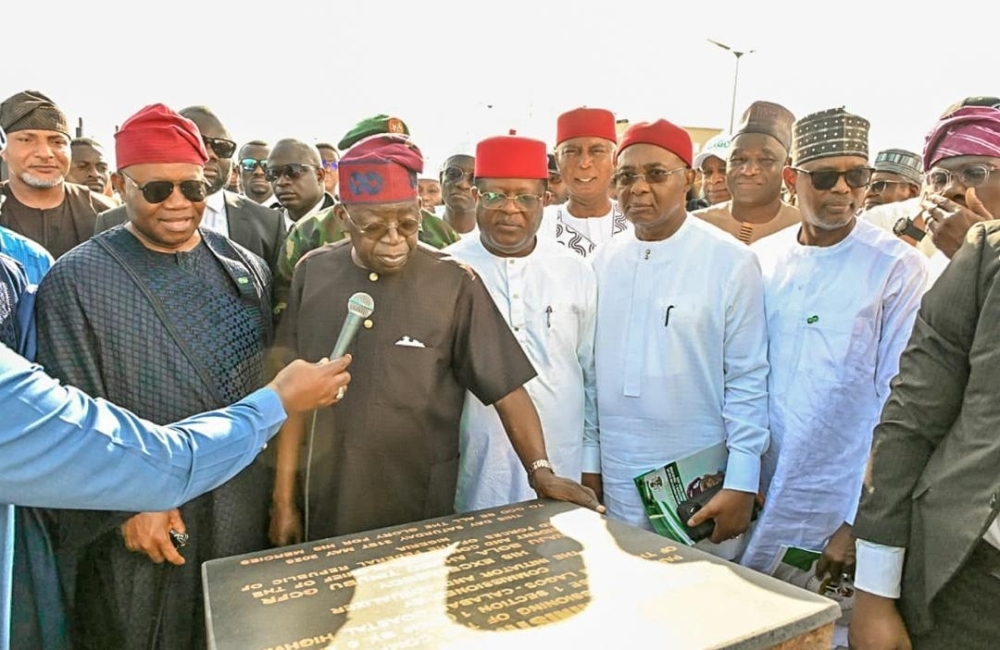
DRIVING NIGERIA’S FUTURE: CELEBRATING TWO YEARS OF TRANSFORMATIVE LEADERSHIP AND THE LAGOS-CALABAR COASTAL HIGHWAY MILESTONE
DRIVING NIGERIA’S FUTURE: CELEBRATING TWO YEARS OF TRANSFORMATIVE LEADERSHIP AND THE LAGOS-CALABAR COASTAL HIGHWAY MILESTONE
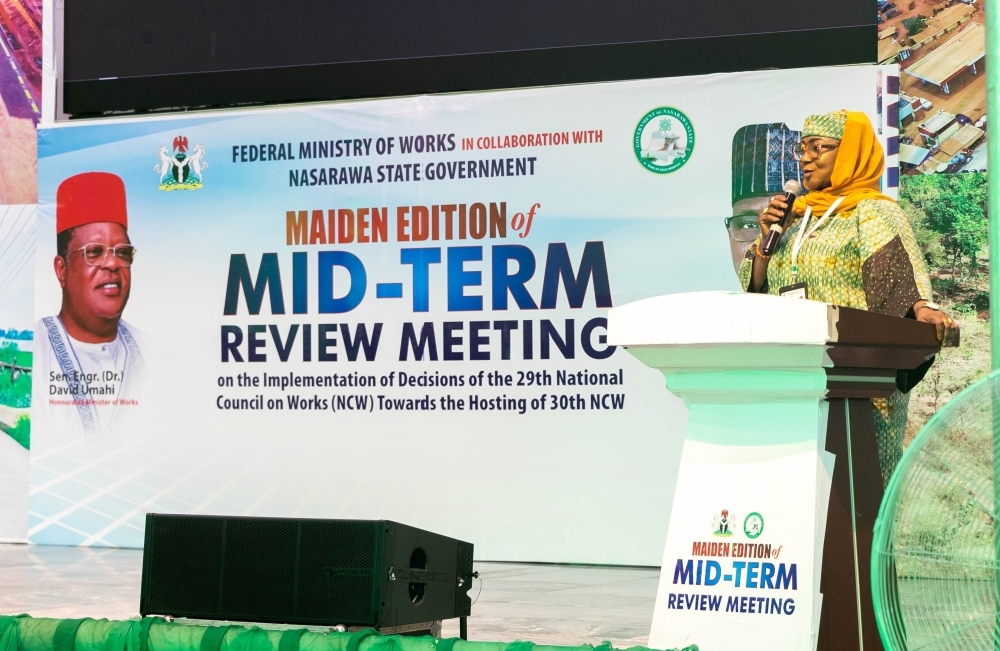
MID -TERM REVIEW MEETING ON THE IMPLIMENTATION OF THE DECISIONS REACHED AT THE 29TH NATIONAL COUNCIL ON WORKS (NCW) DAY 1
MID -TERM REVIEW MEETING ON THE IMPLIMENTATION OF THE DECISIONS REACHED AT THE 29TH NATIONAL COUNCIL ON WORKS (NCW) DAY 1