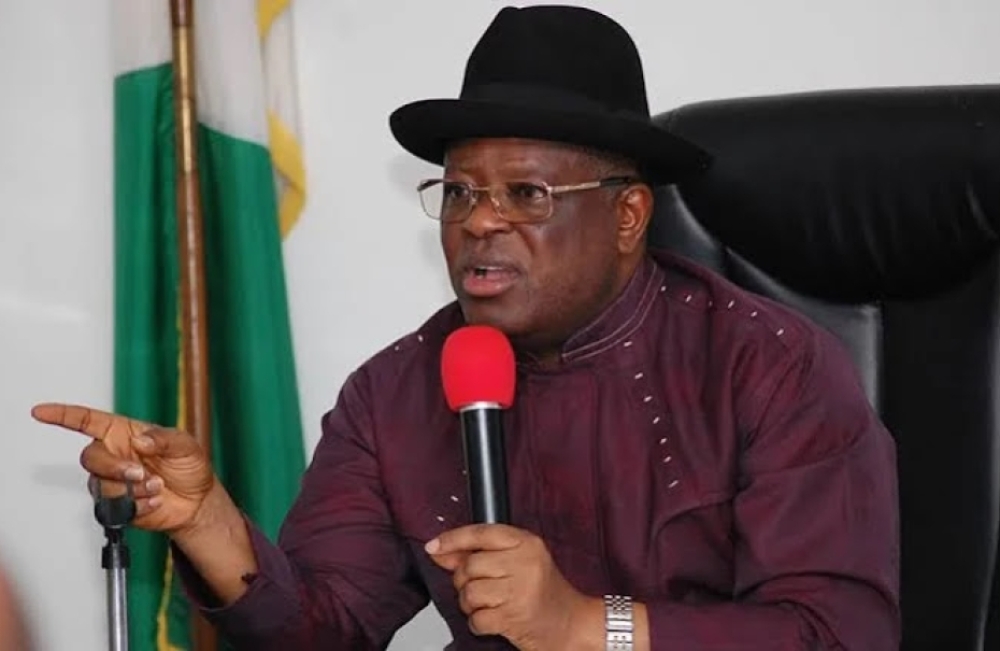
UMAHI ORDERS IMMEDIATE EMERGENCY INTERVENTION ON BENIN-ASABA ROAD, AND SOME OTHER CRITICAL FEDERAL ROADS
The Honourable Minister of Works, Senator Engr. David Nweze Umahi, CON, has directed the immediate deployment of major contractors to all three sections of the Benin-Asaba Federal Road to restore the failed sections and bring an end to the suffering of motorists and other road users.
This is because, the situation on the concessioned Benin-Asaba Road has reached a point where the overall public interest must take precedence over the existing concession agreement.
Recall that the Honourable Minister of Works was on the Benin-Asaba Road about seven days ago, where he assembled a number of contractors and directed them to prepare for immediate palliative intervention on the affected sections of the road at no cost to the concessionaire. In line with the Concession agreement which requires that before the Federal Government could intervene, the permission of the concessionaire must be required, and that permission was not granted to federal government.
The Minister subsequently proposed three options to the concessionaire, any one of which would have enabled the Federal Government to move in and address the worsening condition of the road. Unfortunately, none of the options was accepted by the concessionaire. Immediately after the Minister left Asaba, the already limited equipment deployed to the road by the concessionaire was further reduced to just one, worsening the situation and increasing the suffering of motorists and other road users.
While the Minister takes responsibility for the concerns and suffering of Nigerians using the road, it is important to state that the concessionaire has also not taken the suffering of Edo people and travelling public sufficiently into consideration by declining all the options put forward by the Federal Government. The concessionaire continues to rely on the terms of the concession agreement entered into by the previous administration, an agreement which weighs heavily against the Federal Government’s ability to intervene quickly in the interest of the public in a situation like this.
In view of this situation, the Honourable Minister of Works has directed the immediate deployment of major contractors within the corridor to all three sections of the Benin-Asaba Road to restore the failed sections and bring relief to the people, with the cost of the emergency intervention being borne by the Federal Government. The Honourable Minister has also directed immediate redesign of the entire route to be rebuilt with reinforced concrete pavement. The public should therefore take note that immediate action is underway to restore every failed section of the Benin-Asaba Road and subsequently rehabilitate the entire sections of the road using reinforced concrete pavement.
2. On the Benin-Sapele Road:
The Governors of Edo and Delta States, the Niger Delta Development Commission (NDDC), and the Federal Government are currently engaged in interventions on different sections of the road to restore the entire route. While some sections are receiving palliative attention, permanent works are also ongoing on other sections.
3. On Ifaki(Ekiti) - Kabba (Kogi) Road:
The Federal Government is engaging both the contractor; Gamji Nigeria Company Limited, and Dangote PLC on immediate emergency and permanent intervention on the most failed sections of the road, while efforts are being made to financially mobilise the company for more extensive permanent work to commence on the axis.
4. On the Sokoto-Zamfara-Katsina Road: This is an inherited project involving the dualisation of approximately 350 kilometres, which translates to about 700 kilometers. The project has since been redesigned and is currently ongoing and most sections are being reconstructed using reinforced concrete pavement. From the Sokoto axis towards Zamfara, over 50 kilometres of one carriageway have been fully completed with reinforced concrete pavement. From Zamfara to Katsina, some sections have been completed and palliative works have been ordered over the sections that have not been reconstructed. However, the pace of work slowed down due to the redesign and rephasing of the project. The contractors currently engaged on the road include CBC, SETRACO, Triacta and Mothercat. They are being remobilised to return to site and complete the outstanding works.
5. On the Abuja-Kaduna-Zaria-Kano Road: The Federal Government took over the Road project and has currently completed the 118-kilometer mostly on reinforced concrete pavement on lot 1. The Lot 2, which covers 164 kilometres, is over 60 percent completed on reinforced concrete pavement. The Federal Government has also introduced solar-powered light on the entire route of Abuja-Kaduna-Zaria - Kano to improve visibility during night travel and enhance the overall security situation on the route. The entire project is scheduled for completion by December 2026.
6. On Bauchi-Jigawa Road: Triacta Nigeria Limited has been mobilised to carry out the necessary interventions on some failed sections and work is currently ongoing in those failed sections.
7. On the Sagamu-Ore Road: 48 Kilometers of the 96-kilometre road have already been completed using reinforced concrete pavement. There is also a 24-kilometre section around Ore which was abandoned by the previous contractor. The Federal Government has directed its immediate restoration to ensure seamless travel. Solar lights are being installed in the entire 96kilometer of the road.
8. On Flooded Sections on Sagamu-Ore-Benin Road: The flooded sections on the same corridor between Sagamu-Ore-Benin Road, as well as other flooded sections in Ondo State, are being designed for emergency procurement and intervention.
9. On the East-West Road:
Some failed and critical sections, including defective sections of bridges along the East-West Road, are being marked out for emergency procurement and intervention.
10. On the Abuja-Lokoja Road:
Several contracts are ongoing along the route, while the three critical sections currently without contracts are being procured for emergency intervention.
11. On the Lokoja-Benin-Warri Road: The President has directed a complete redesign and procurement of the 400-kilometre dualised route covering the uncompleted sections, using reinforced concrete pavement, while palliative works will continue with the contractors currently on the road.
12. On Carter Bridge:
While the Federal Government continues to undertake weekly maintenance of the underwater elements of the bridge. The site has also been handed over to the contractor, CCECC, for the construction of a permanent new bridge, and work has commenced.
13. On the Third Mainland Bridge:
With regard to the defective underwater structural elements, the Federal Government is at the final stage of determining the appropriate intervention for the repair of the affected elements.
14. On the flooded section of the Lagos-Ibadan Road: Work has commenced on the affected section. There are also several flooded sections on federal roads across the six geopolitical zones, largely occasioned by excessive flooding and the effects of climate change. The Federal Government is identifying and marking these sections for immediate attention.
15. On the First and Second Niger Bridges:
Intervention work is ongoing on the approach roads to the Second Niger Bridge damaged by flood and the work is progressing very well. The First Niger Bridge has been closed to traffic to enable immediate repair works. Contractor has mobilized to site and comprehensive rehabilitation of the bridge has started. From Summit Junction to the First Niger Bridge, massive rehabilitation work is also ongoing using reinforced concrete pavement.
16. The Honourable Minister wishes to commend the President of the Federal Republic of Nigeria, His Excellency Bola Ahmed Tinubu, GCFR, for the massive work being undertaken on the nation’s roads since the administration assumed office in 2023.
17. It is important to state that when the present administration came into office, there was hardly any part of the country where one could travel for an hour without encountering significant challenges on the road network. The condition of the country’s roads and bridges was a major national infrastructure challenge.
18. Rather than shy away from the problem, the administration of President Bola Ahmed Tinubu made the nation’s road network a priority. Virtually every part of the country became a priority, and the Federal Government, through the Federal Ministry of Works, Regional Commissions, Parastatals and other MDA’s has continued to respond extensively to these challenges.
19. The Federal Government is currently working on over 80 percent of the inherited federal roads, an unprecedented level of intervention in the country’s road infrastructure.
20. We ask the public to understand the enormous challenges inherited on our roads and bridges and to take note not only of the problems being solved, but also of the permanent solutions being introduced.
21. A major part of this new approach is the use of reinforced concrete pavement, designed to significantly extend the lifespan of major roads. These roads are expected to last between 50 and 100 years. This means that roads being constructed under President Bola Ahmed Tinubu’s administration are being designed with future generations in mind, rather than simply providing temporary solutions to today’s problems. And this is a complete departure from the past, when roads often deteriorated only a few years after completion, resulting in a continuous cycle of reconstruction and expenditure.
22. We appreciate the concerns of Nigerians over the condition of some roads presently and the difficulties faced by motorists and commuters who cannot move easily from one point to another. Those concerns are legitimate, and the Federal Government is listening. But Nigerians should also recognise the enormous scale of the problems inherited and the amount of work currently being undertaken across the country.
23. It is simply impossible to resolve every road challenge accumulated over many years of neglect by the past administrations within three years. What is important is that the government is working, the government is responding, and the government is putting permanent solutions in place.
25. We appreciate members of the public who send situation reports on failed roads and other infrastructure challenges. These reports help the Ministry identify areas requiring urgent attention. However, we also appeal to members of the public to report when such problems have been addressed, just as they report when they occur.
24. We are aware of situations where photographs and reports of road challenges continue to circulate on social media even after the Federal Government has intervened and resolved the particular problem.
25. However, the Ministry will continue to respond as rapidly as possible to genuine reports and concerns from Nigerians.
26. It is also important to note that we have compiled a comprehensive record of all inherited, ongoing and intervention projects across the country which is available to the public. This is to ensure that Nigerians have access to information on the infrastructure projects being undertaken nationwide and can fully participate in and appreciate the infrastructure revolution of President Bola Ahmed Tinubu’s administration.

UMAHI ORDERS IMMEDIATE EMERGENCY INTERVENTION ON BENIN-ASABA ROAD, AND SOME OTHER CRITICAL FEDERAL ROADS The Honourable Minister of Works, Senator Engr. David Nweze Umahi, CON, has directed the immediate deployment of major contractors to all three sections of the Benin-Asaba Federal Road to restore the failed sections and bring an end to the suffering of motorists and other road users. This is because, the situation on the concessioned Benin-Asaba Road has reached a point where the overall public interest must take precedence over the existing concession agreement. Recall that the Honourable Minister of Works was on the Benin-Asaba Road about seven days ago, where he assembled a number of contractors and directed them to prepare for immediate palliative intervention on the affected sections of the road at no cost to the concessionaire. In line with the Concession agreement which requires that before the Federal Government could intervene, the permission of the concessionaire must be required, and that permission was not granted to federal government. The Minister subsequently proposed three options to the concessionaire, any one of which would have enabled the Federal Government to move in and address the worsening condition of the road. Unfortunately, none of the options was accepted by the concessionaire. Immediately after the Minister left Asaba, the already limited equipment deployed to the road by the concessionaire was further reduced to just one, worsening the situation and increasing the suffering of motorists and other road users. While the Minister takes responsibility for the concerns and suffering of Nigerians using the road, it is important to state that the concessionaire has also not taken the suffering of Edo people and travelling public sufficiently into consideration by declining all the options put forward by the Federal Government. The concessionaire continues to rely on the terms of the concession agreement entered into by the previous administration, an agreement which weighs heavily against the Federal Government’s ability to intervene quickly in the interest of the public in a situation like this. In view of this situation, the Honourable Minister of Works has directed the immediate deployment of major contractors within the corridor to all three sections of the Benin-Asaba Road to restore the failed sections and bring relief to the people, with the cost of the emergency intervention being borne by the Federal Government. The Honourable Minister has also directed immediate redesign of the entire route to be rebuilt with reinforced concrete pavement. The public should therefore take note that immediate action is underway to restore every failed section of the Benin-Asaba Road and subsequently rehabilitate the entire sections of the road using reinforced concrete pavement. 2. On the Benin-Sapele Road: 3. On Ifaki(Ekiti) - Kabba (Kogi) Road: 4. On the Sokoto-Zamfara-Katsina Road: This is an inherited project involving the dualisation of approximately 350 kilometres, which translates to about 700 kilometers. The project has since been redesigned and is currently ongoing and most sections are being reconstructed using reinforced concrete pavement. From the Sokoto axis towards Zamfara, over 50 kilometres of one carriageway have been fully completed with reinforced concrete pavement. From Zamfara to Katsina, some sections have been completed and palliative works have been ordered over the sections that have not been reconstructed. However, the pace of work slowed down due to the redesign and rephasing of the project. The contractors currently engaged on the road include CBC, SETRACO, Triacta and Mothercat. They are being remobilised to return to site and complete the outstanding works. 5. On the Abuja-Kaduna-Zaria-Kano Road: The Federal Government took over the Road project and has currently completed the 118-kilometer mostly on reinforced concrete pavement on lot 1. The Lot 2, which covers 164 kilometres, is over 60 percent completed on reinforced concrete pavement. The Federal Government has also introduced solar-powered light on the entire route of Abuja-Kaduna-Zaria - Kano to improve visibility during night travel and enhance the overall security situation on the route. The entire project is scheduled for completion by December 2026. 6. On Bauchi-Jigawa Road: Triacta Nigeria Limited has been mobilised to carry out the necessary interventions on some failed sections and work is currently ongoing in those failed sections. 7. On the Sagamu-Ore Road: 48 Kilometers of the 96-kilometre road have already been completed using reinforced concrete pavement. There is also a 24-kilometre section around Ore which was abandoned by the previous contractor. The Federal Government has directed its immediate restoration to ensure seamless travel. Solar lights are being installed in the entire 96kilometer of the road. 8. On Flooded Sections on Sagamu-Ore-Benin Road: The flooded sections on the same corridor between Sagamu-Ore-Benin Road, as well as other flooded sections in Ondo State, are being designed for emergency procurement and intervention. 9. On the East-West Road: 10. On the Abuja-Lokoja Road: 11. On the Lokoja-Benin-Warri Road: The President has directed a complete redesign and procurement of the 400-kilometre dualised route covering the uncompleted sections, using reinforced concrete pavement, while palliative works will continue with the contractors currently on the road. 12. On Carter Bridge: 13. On the Third Mainland Bridge: 14. On the flooded section of the Lagos-Ibadan Road: Work has commenced on the affected section. There are also several flooded sections on federal roads across the six geopolitical zones, largely occasioned by excessive flooding and the effects of climate change. The Federal Government is identifying and marking these sections for immediate attention. 15. On the First and Second Niger Bridges: 16. The Honourable Minister wishes to commend the President of the Federal Republic of Nigeria, His Excellency Bola Ahmed Tinubu, GCFR, for the massive work being undertaken on the nation’s roads since the administration assumed office in 2023. 17. It is important to state that when the present administration came into office, there was hardly any part of the country where one could travel for an hour without encountering significant challenges on the road network. The condition of the country’s roads and bridges was a major national infrastructure challenge. 18. Rather than shy away from the problem, the administration of President Bola Ahmed Tinubu made the nation’s road network a priority. Virtually every part of the country became a priority, and the Federal Government, through the Federal Ministry of Works, Regional Commissions, Parastatals and other MDA’s has continued to respond extensively to these challenges. 19. The Federal Government is currently working on over 80 percent of the inherited federal roads, an unprecedented level of intervention in the country’s road infrastructure. 20. We ask the public to understand the enormous challenges inherited on our roads and bridges and to take note not only of the problems being solved, but also of the permanent solutions being introduced. 21. A major part of this new approach is the use of reinforced concrete pavement, designed to significantly extend the lifespan of major roads. These roads are expected to last between 50 and 100 years. This means that roads being constructed under President Bola Ahmed Tinubu’s administration are being designed with future generations in mind, rather than simply providing temporary solutions to today’s problems. And this is a complete departure from the past, when roads often deteriorated only a few years after completion, resulting in a continuous cycle of reconstruction and expenditure. 22. We appreciate the concerns of Nigerians over the condition of some roads presently and the difficulties faced by motorists and commuters who cannot move easily from one point to another. Those concerns are legitimate, and the Federal Government is listening. But Nigerians should also recognise the enormous scale of the problems inherited and the amount of work currently being undertaken across the country. 23. It is simply impossible to resolve every road challenge accumulated over many years of neglect by the past administrations within three years. What is important is that the government is working, the government is responding, and the government is putting permanent solutions in place. 25. We appreciate members of the public who send situation reports on failed roads and other infrastructure challenges. These reports help the Ministry identify areas requiring urgent attention. However, we also appeal to members of the public to report when such problems have been addressed, just as they report when they occur. 24. We are aware of situations where photographs and reports of road challenges continue to circulate on social media even after the Federal Government has intervened and resolved the particular problem.
The Governors of Edo and Delta States, the Niger Delta Development Commission (NDDC), and the Federal Government are currently engaged in interventions on different sections of the road to restore the entire route. While some sections are receiving palliative attention, permanent works are also ongoing on other sections.
The Federal Government is engaging both the contractor; Gamji Nigeria Company Limited, and Dangote PLC on immediate emergency and permanent intervention on the most failed sections of the road, while efforts are being made to financially mobilise the company for more extensive permanent work to commence on the axis.
Some failed and critical sections, including defective sections of bridges along the East-West Road, are being marked out for emergency procurement and intervention.
Several contracts are ongoing along the route, while the three critical sections currently without contracts are being procured for emergency intervention.
While the Federal Government continues to undertake weekly maintenance of the underwater elements of the bridge. The site has also been handed over to the contractor, CCECC, for the construction of a permanent new bridge, and work has commenced.
With regard to the defective underwater structural elements, the Federal Government is at the final stage of determining the appropriate intervention for the repair of the affected elements.
Intervention work is ongoing on the approach roads to the Second Niger Bridge damaged by flood and the work is progressing very well. The First Niger Bridge has been closed to traffic to enable immediate repair works. Contractor has mobilized to site and comprehensive rehabilitation of the bridge has started. From Summit Junction to the First Niger Bridge, massive rehabilitation work is also ongoing using reinforced concrete pavement.
25. However, the Ministry will continue to respond as rapidly as possible to genuine reports and concerns from Nigerians.
26. It is also important to note that we have compiled a comprehensive record of all inherited, ongoing and intervention projects across the country which is available to the public. This is to ensure that Nigerians have access to information on the infrastructure projects being undertaken nationwide and can fully participate in and appreciate the infrastructure revolution of President Bola Ahmed Tinubu’s administration.
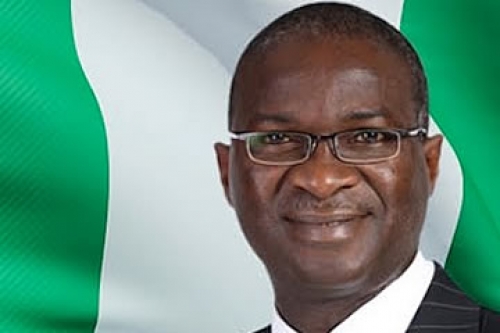
Buhari Making Economy Front And Centre Of Next Level Agenda- Fashola * Says concerns of Nigerians about borrowing and national debt, though legitimate, must be balanced with what citizens ask for * “The President is getting the job done; the economy is the front and centre with commitment to infrastructure”, says Minister * Advocates cooperation of host communities for successful completion of infrastructural projects * Underscores voluntary compliance as he warns truck drivers against parking and dumping petroleum products on highways The Minister of Works and Housing, Mr. Babatunde Fashola SAN, Tuesday concluded a two-day inspection tour of on-going Highway Projects in Niger State stating that President Muhammadu Buhari was making the Nation’s economy the front and centre of his administration’s Next Level Agenda. Speaking at Bokani Junction in Niger State where he was briefed on the progress of work on the Dualization of Jebba-Mokwa-Bokani Road (Section II), Fashola said the President, in making this decision, has chosen the development of infrastructure as anchor to achieve economic growth more quickly adding that the passing of the 2020 Budget in the first week of January was a clear indication of that decision. The Minister told hundreds of residents of Mokwa Community who trooped out to welcome him at the site, “Whether you notice or not, the President has been very clear in his commitment to build infrastructure”, adding that the passing of the annual budget in the first month of the year has not happened in the country for a very long time. “From the first day of the year, we already have a budget in place. That hasn’t happened for a budget to be in place in January in Nigeria for a long time”, he said adding that the economy forms “a very front and centre issue for the President and his Team”. Underscoring the readiness of the government to pursue the goal, Fashola, however advocated the cooperation of the communities hosting infrastructural projects across the country saying nothing would be achieved without the cooperation of the communities by way of peace and readiness to cede portions of their lands through which road projects must pass. The Minister, who noted that the present Dry Season, which, according to him is expected to last for the next five to six months, was the best time to work and make progress on the road projects, said the cooperation of the people would be paramount in order not to lose the advantage provided by the period. He told the community members, “This is the dry weather when we can do a lot of work if the communities cooperate with us”, adding that although the President has directed that states hosting Federal road projects should handle all compensation issues, the Federal Government could always come back and deal with such issues. He added, “But we will lose the dry weather if we don’t get that cooperation quickly”. Reiterating the commitment of President Buhari in getting the job done, Fashola declared, “The economy is the front and centre issue for the President “, adding that he and his team were in the State to inspect road projects as a demonstration of the commitment to infrastructure development. “My team and I have been in Niger State since yesterday. We have done the Suleja-Minna Road ; we have gone to Lapai and Lambata Road, we have gone to Agaie-Barro Port Road, we have gone to New Bussa-Kaiama Road this morning and now we are on this road (Jebba-Mokwa-Bokani Section 2). These are just about five of the 16 road projects that we have in Niger State”, he said. The Minister, who emphasized the need for the cooperation of the host communities in the successful completion of the project, told the people, “So it is a lot of work going on here and we need people’s cooperation now to deliver it because that is what you are expecting. But we can’t do it alone”. While interacting with newsmen on the first day of the inspection, Fashola expressed his displeasure at the illegal parking of trucks on the nation’s highways, noting that the dumping of fuel and diesel on ongoing road projects was responsible for the premature deterioration of the roads adding that the petroleum products destroy the binding capacity of asphalt. Reacting to the parking of trucks and dumping of fuel and diesel on a portion of the ongoing Suleja-Minna road where, according to him, asphalt was laid just two weeks earlier by the contractors, Messrs Salini Nigeria Limited, the Minister said this has been one of the major challenges facing road construction in the country. He added, “And the uninformed will say the roads are not well built. But the roads are well built; but because of the petroleum products dumped on them, the asphalt loses their binding capacity. The chemicals and asphalt do not mix”. Emphasizing the urgent need for trucks to relocate from the nation’s highways as a means to safeguard the roads to last their lifespan, the Minister declared, “We want all of the truck users, owners, NARTO, Drivers Associations and Petroleum Tanker Drivers to direct their members to leave our highways alone”. He said, however, that as much as government would apply sanctions on defaulters, it would prefer voluntary compliance from the drivers pointing out that there was need for them to understand that by doing so they would also be helping to preserve the road on which they carry out their daily business. “Ideally, the law enforcement should remove them with penalties for obstructing the Federal Highways. But if you look at the Federal Highway Act, I think it is about forty something or fifty-something years old: those are the laws that are under consideration in terms of amendment”, he said adding that the first thing would be to create an awareness as, according to him, “Law enforcement does not succeed if you begin to chase everybody”. Fashola ,who had also met and interacted with some of the truck Operators whose vehicles were parked on the road, advocated continued engagement by Government and the Press with the truck drivers to create an awareness that it was in their best interest that they comply with the law. “Approved axial tonnage load is about 46 tonnes and I know that some people are doing more than that. Again there will be enforcement because that damages the roads and give uneven runways on our roads and shortens the lifespan of the roads. So contrary to the news that the roads were not well built it is abuse that shortens the lifespan of the roads.” Speaking on other challenges faced by the contractors as earlier presented by the Project Manager of the contracting company, Fashola reiterated the directive of President Muhammadu Buhari that states wanting Federal road projects in their jurisdictions to be completed, should take up the responsibility arising from compensation issues. “It is the responsibility of these state Governors to acquire these lands and also pay the compensations. I believe that we will help where we can but the position of government is that states that want these roads delivered must settle the compensation issues at the local government so that we can face the sundry challenges”, he said. Listing the projects already covered by the team on the first day of the inspection, Fashola continued, “Of course from that Suleja-Minna Road we turned off to Lapai-Lambata-Bida Road and again you see the work going on there. That road has given us some kind of challenge during the Rainy Season”, he said adding that a study of the status of the soil was being carried out at the moment to see how the structure of the pavement could be redesigned. “Our target is that this Rainy Season, which is about four or five months away commuters here should have a better experience subject to our ability to fix that critical section around Saminaka”, he said adding that from the road, the team turned off into the Agaie-Barro Road which leads to Barro Port that was commissioned recently and which the government wants to complete so that the Port could be fully operational. Drawing the attention of the newsmen to the fact that the Port project was inherited, the Minister explained further, “It turned out that before we came the road was awarded to a different contractor from the Port itself, so they finished at different times. So it is a kind of sequencing that needs to be done now. It is an example that we must now have to learn from so that in the future these kinds of project, if we have to do them, we have to integrate them as turnkey projects so that we finish them together.” Responding to the question of funding which was also part of the challenges raised by the contractors, Fashola, who said it was part of the reason the newsmen were invited to be part of the tour, added, “We want you to take these images back to the Nigerian people. The concerns of Nigerians about borrowing and national debt are legitimate concerns. But it is Important to also let them know that those concerns must be balanced with what they themselves ask for”. “They want these infrastructure and I believe that if they know that these borrowings are for infrastructure in a way that they see that the money will come to deliver a road, I believe that those concerns will be appropriately assuaged, I think we will have a better conversation. The country is not yet the rich country that it should be”, he said adding that if the decision to build infrastructure was pursued vigorously now, the country would be the better for it. Ongoing projects inspected during the two-day tour include Dualization of Suleja-Minna Road Phase I and II, reconstruction of Bida-Lapai-Lambata Road, construction of Agaie-Katchia-Barro Road, Dualization of Jebba-Mokwa-Bokani Road-Junction Road in Kwara and Niger States, Section II, and rehabilitation of New Bussa-Kaiama Road. The Minister was accompanied on the tour, which began on Monday morning till Tuesday evening, by top officials of the Ministry including Director of Highways, Construction and Rehabilitation, Engr. Yemi Oguntominiyi, the Director Planning, Research and Statistics, Dr. Famous Eseduwo, the Deputy Director, North Central, Engr. Bora Aganaba and the Federal Controller of Works, Niger State, Engr. Iheanacho Felix Umeh who gave detailed reports on the various Federal projects within the State, among others. Also on the tour were members of the Press from the Print and Electronic Media. ...
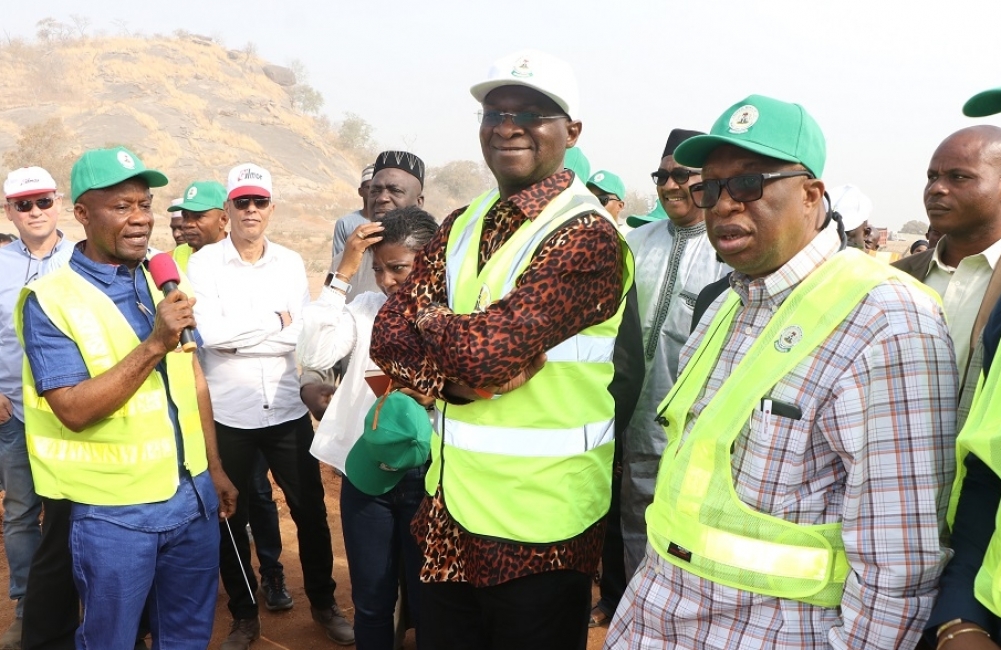
Borrowing To Be Invested In Infrastructure Development-Fashola The Honourable Minister of Works and Housing, Babatunde Raji Fashola, SAN has said that Federal Government's borrowing would be invested in the development of the nation's infrastructure. Fashola disclosed this during his inspection tour of Highway projects in Niger State. The projects the Minister inspected were: the dualization of Suleja-Minna Phase I and phase II, the reconstruction of Bida-Lapai-Lambata road, the construction of Agaie-Katcha-Barro road, dualization of Jebba-Mokwa-Bokani road and rehabilitation of New Bussa-Kaiama road. Speaking during the inspection, he explained that borrowing invested on infrastructure would create jobs and help the country achieve self- sustaining economy. He said, "a nation 's wealth is measured by its infrastructure. " According to him: " the concern of Nigerians on government borrowing is legitimate, but borrowing should be weighed with the problem they are used to solve", he said. He said that, "people need infrastructure if they can see that the money borrowed is used to deliver critical infrastructure, then their queries can be assuaged." Each of the road projects inspected has the capacity to employ over a thousand workforce. This would help the Federal Government's drive in creating jobs for its teaming unemployment youths.According to the Project Manager of Salini Nigeria Limited the company handling the dualization of the Suleja-Mina road, Mr. Paolo Canpanella said that his company has over 300 staff in their payroll and that they are committed to completing the road on or before the completion date of January 2023. The dualization of Jebba-Mokwa-Bakani road in Niger State will ease transportation of agricultural produce, reduce the pressure on existing single-carriage road facilities, reduce travel time and ultimately reduce vehicle operating costs. ...
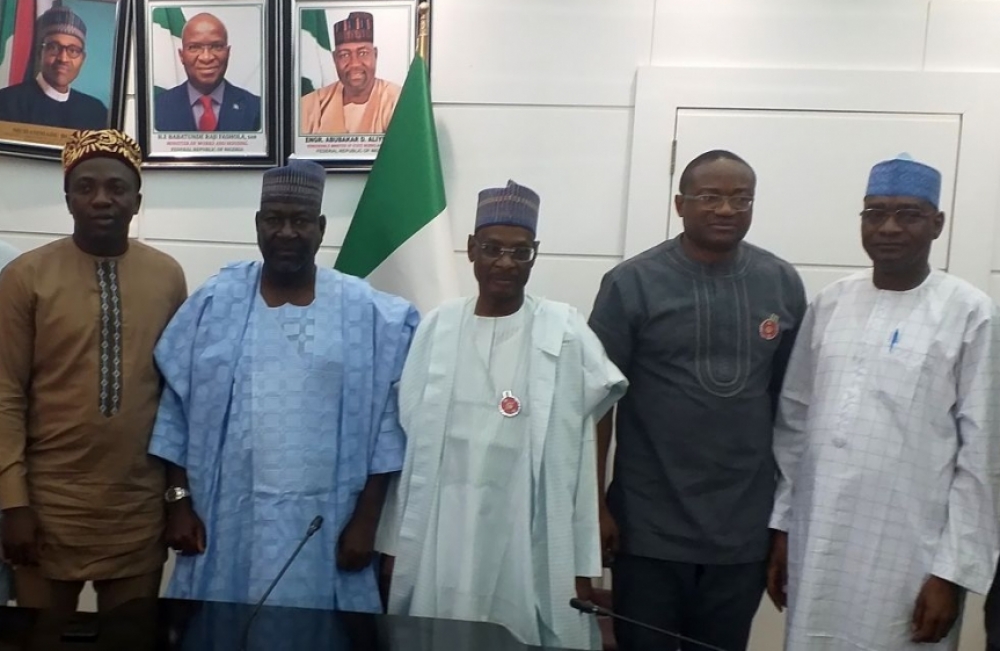
Engage Federal Ministry Of Works And Housing On The State Of Nigeria Highways - Engr Aliyu The Honourable Minister of State for Works and Housing Engr. Abubakar D. Aliyu has charged Nigerians and the public in general to engage his Ministry on the state of the highways in the country with a view to improve their condition for ease of movement. Engr. Aliyu also enjoined the public to seek necessary information and clarification from his Ministry in order to be properly guided on infrastructure put in place by government to make life more meaningful for the citizens. He made the remark today in Abuja while hosting the Niger Delta Activist Forum who came to pay him a courtesy visit in the Ministry. The Minister noted that the President Muhammudu Buhari led government is serious, responsive and listens to the yearnings of Nigerians and has shown commitment in providing the necessary infrastructure by beefing the budget on roads from 16billion in 2015 to over N300 billion in the 2020 budget for the Federal Ministry of Works and Housing. He told the Niger Delta Activist Group that, there was no opportunity in the past for people to interact with decision makers in the Works and Housing sectors. He said the Executive Order No. 5 signed into law by Mr. President is mostly about the Local Content and it is being observed at the Federal Executive Council in the award of contracts. He disclosed that roads that had reached 80% completion level would be given priority for completion in 2020, adding that on-going roads and projects would not be abandoned. He enjoined the pubic to keep engaging the controllers and directors in the Ministry on the state of the highways in the country. On the request made by the activists on the reconstruction of Calabar-Odukpani-Itu road, Engr. Aliyu stated that the Federal Government was taking necessary actions to fix the bad portions of that road. Earlier the President of Niger Delta Activist , Comrade Success Jack said that his association is a Pan Niger Delta Group committed to ensure that the policies of Federal Government get the right support and also to foster the spirit of peace and understanding between the Federal Governments and the people of the Niger Delta region The President noted that their mission was to draw Federal Government attention to the bad state of the Calabar –Odukpani –Itu road with a view to fix it in order to reduce the plight of commuters on that road Comrade Jack also spoke on the need to fix other roads in the Niger Delta Region that need attention. The President of the Association commended the Minister of Works and Housing Babatunde Raji Fashola SAN, the Minister of State , Engr. Abubakar D. Aliyu and the staff of the Ministry for the commitment and passion in responding to the yearning of Nigerians in fixing Nigeria road infrastructure. Comrade Jack stated that his organization was willing to mobilize the indigenes of Niger Delta to collaborate with contractors to ensure their safety is guaranteed while executing their projects ...
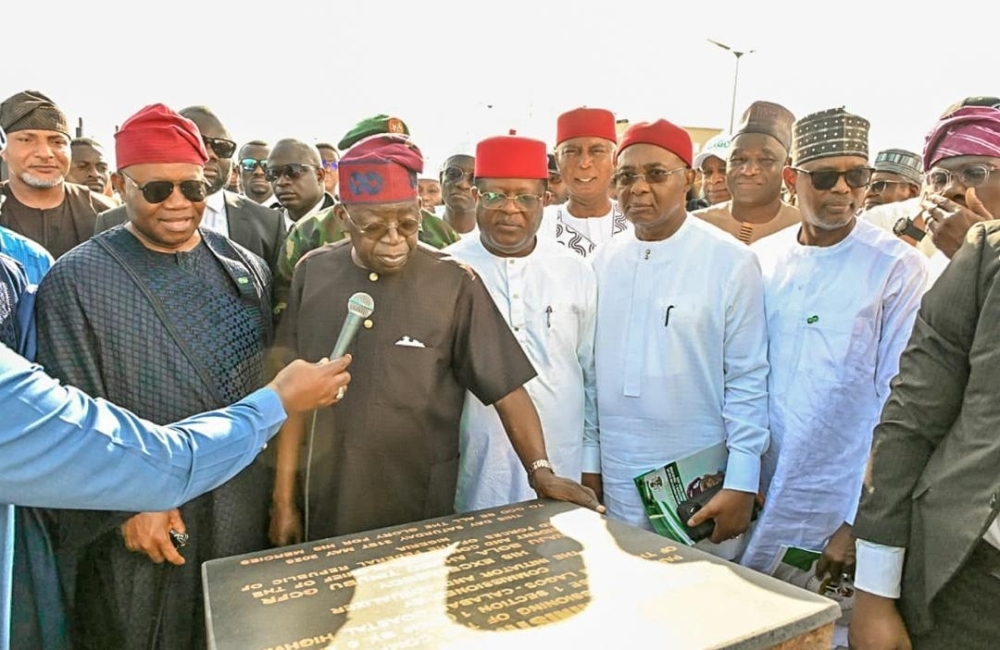
DRIVING NIGERIA’S FUTURE: CELEBRATING TWO YEARS OF TRANSFORMATIVE LEADERSHIP AND THE LAGOS-CALABAR COASTAL HIGHWAY MILESTONE
DRIVING NIGERIA’S FUTURE: CELEBRATING TWO YEARS OF TRANSFORMATIVE LEADERSHIP AND THE LAGOS-CALABAR COASTAL HIGHWAY MILESTONE
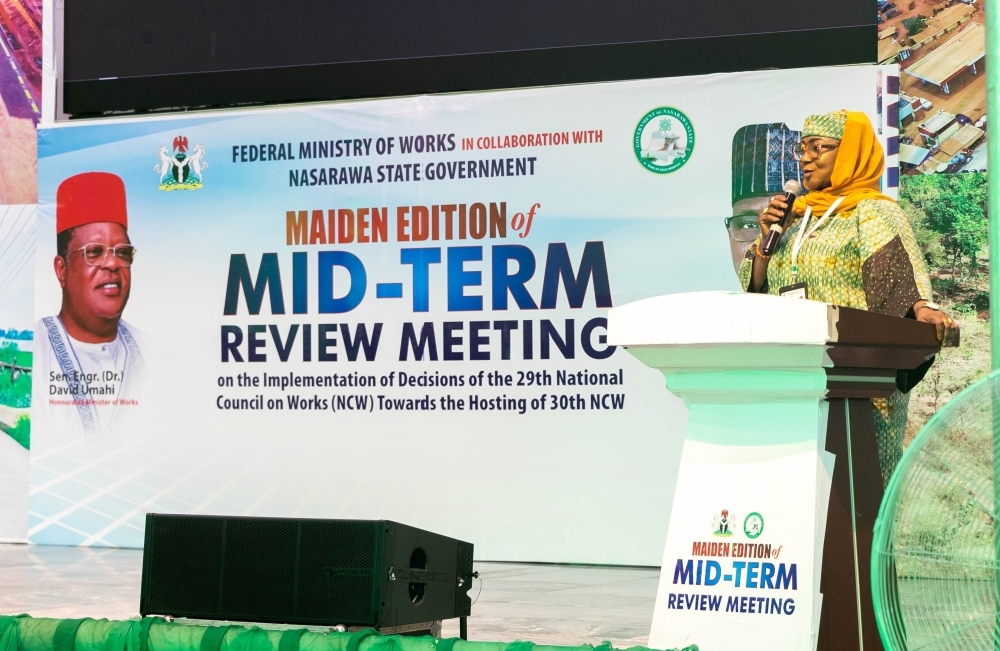
MID -TERM REVIEW MEETING ON THE IMPLIMENTATION OF THE DECISIONS REACHED AT THE 29TH NATIONAL COUNCIL ON WORKS (NCW) DAY 1
MID -TERM REVIEW MEETING ON THE IMPLIMENTATION OF THE DECISIONS REACHED AT THE 29TH NATIONAL COUNCIL ON WORKS (NCW) DAY 1