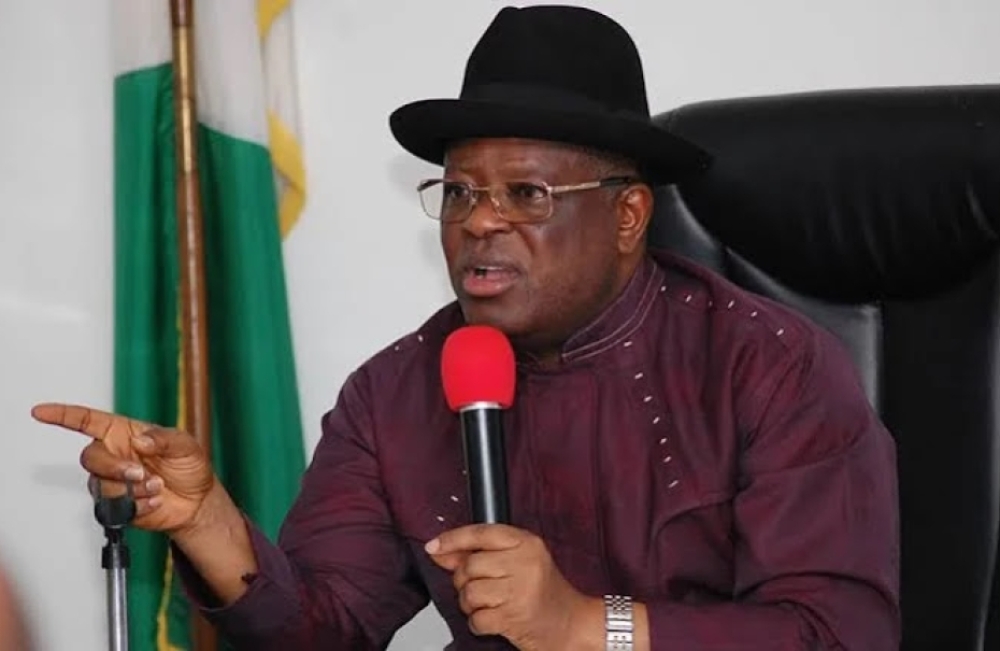
UMAHI ORDERS IMMEDIATE EMERGENCY INTERVENTION ON BENIN-ASABA ROAD, AND SOME OTHER CRITICAL FEDERAL ROADS
The Honourable Minister of Works, Senator Engr. David Nweze Umahi, CON, has directed the immediate deployment of major contractors to all three sections of the Benin-Asaba Federal Road to restore the failed sections and bring an end to the suffering of motorists and other road users.
This is because, the situation on the concessioned Benin-Asaba Road has reached a point where the overall public interest must take precedence over the existing concession agreement.
Recall that the Honourable Minister of Works was on the Benin-Asaba Road about seven days ago, where he assembled a number of contractors and directed them to prepare for immediate palliative intervention on the affected sections of the road at no cost to the concessionaire. In line with the Concession agreement which requires that before the Federal Government could intervene, the permission of the concessionaire must be required, and that permission was not granted to federal government.
The Minister subsequently proposed three options to the concessionaire, any one of which would have enabled the Federal Government to move in and address the worsening condition of the road. Unfortunately, none of the options was accepted by the concessionaire. Immediately after the Minister left Asaba, the already limited equipment deployed to the road by the concessionaire was further reduced to just one, worsening the situation and increasing the suffering of motorists and other road users.
While the Minister takes responsibility for the concerns and suffering of Nigerians using the road, it is important to state that the concessionaire has also not taken the suffering of Edo people and travelling public sufficiently into consideration by declining all the options put forward by the Federal Government. The concessionaire continues to rely on the terms of the concession agreement entered into by the previous administration, an agreement which weighs heavily against the Federal Government’s ability to intervene quickly in the interest of the public in a situation like this.
In view of this situation, the Honourable Minister of Works has directed the immediate deployment of major contractors within the corridor to all three sections of the Benin-Asaba Road to restore the failed sections and bring relief to the people, with the cost of the emergency intervention being borne by the Federal Government. The Honourable Minister has also directed immediate redesign of the entire route to be rebuilt with reinforced concrete pavement. The public should therefore take note that immediate action is underway to restore every failed section of the Benin-Asaba Road and subsequently rehabilitate the entire sections of the road using reinforced concrete pavement.
2. On the Benin-Sapele Road:
The Governors of Edo and Delta States, the Niger Delta Development Commission (NDDC), and the Federal Government are currently engaged in interventions on different sections of the road to restore the entire route. While some sections are receiving palliative attention, permanent works are also ongoing on other sections.
3. On Ifaki(Ekiti) - Kabba (Kogi) Road:
The Federal Government is engaging both the contractor; Gamji Nigeria Company Limited, and Dangote PLC on immediate emergency and permanent intervention on the most failed sections of the road, while efforts are being made to financially mobilise the company for more extensive permanent work to commence on the axis.
4. On the Sokoto-Zamfara-Katsina Road: This is an inherited project involving the dualisation of approximately 350 kilometres, which translates to about 700 kilometers. The project has since been redesigned and is currently ongoing and most sections are being reconstructed using reinforced concrete pavement. From the Sokoto axis towards Zamfara, over 50 kilometres of one carriageway have been fully completed with reinforced concrete pavement. From Zamfara to Katsina, some sections have been completed and palliative works have been ordered over the sections that have not been reconstructed. However, the pace of work slowed down due to the redesign and rephasing of the project. The contractors currently engaged on the road include CBC, SETRACO, Triacta and Mothercat. They are being remobilised to return to site and complete the outstanding works.
5. On the Abuja-Kaduna-Zaria-Kano Road: The Federal Government took over the Road project and has currently completed the 118-kilometer mostly on reinforced concrete pavement on lot 1. The Lot 2, which covers 164 kilometres, is over 60 percent completed on reinforced concrete pavement. The Federal Government has also introduced solar-powered light on the entire route of Abuja-Kaduna-Zaria - Kano to improve visibility during night travel and enhance the overall security situation on the route. The entire project is scheduled for completion by December 2026.
6. On Bauchi-Jigawa Road: Triacta Nigeria Limited has been mobilised to carry out the necessary interventions on some failed sections and work is currently ongoing in those failed sections.
7. On the Sagamu-Ore Road: 48 Kilometers of the 96-kilometre road have already been completed using reinforced concrete pavement. There is also a 24-kilometre section around Ore which was abandoned by the previous contractor. The Federal Government has directed its immediate restoration to ensure seamless travel. Solar lights are being installed in the entire 96kilometer of the road.
8. On Flooded Sections on Sagamu-Ore-Benin Road: The flooded sections on the same corridor between Sagamu-Ore-Benin Road, as well as other flooded sections in Ondo State, are being designed for emergency procurement and intervention.
9. On the East-West Road:
Some failed and critical sections, including defective sections of bridges along the East-West Road, are being marked out for emergency procurement and intervention.
10. On the Abuja-Lokoja Road:
Several contracts are ongoing along the route, while the three critical sections currently without contracts are being procured for emergency intervention.
11. On the Lokoja-Benin-Warri Road: The President has directed a complete redesign and procurement of the 400-kilometre dualised route covering the uncompleted sections, using reinforced concrete pavement, while palliative works will continue with the contractors currently on the road.
12. On Carter Bridge:
While the Federal Government continues to undertake weekly maintenance of the underwater elements of the bridge. The site has also been handed over to the contractor, CCECC, for the construction of a permanent new bridge, and work has commenced.
13. On the Third Mainland Bridge:
With regard to the defective underwater structural elements, the Federal Government is at the final stage of determining the appropriate intervention for the repair of the affected elements.
14. On the flooded section of the Lagos-Ibadan Road: Work has commenced on the affected section. There are also several flooded sections on federal roads across the six geopolitical zones, largely occasioned by excessive flooding and the effects of climate change. The Federal Government is identifying and marking these sections for immediate attention.
15. On the First and Second Niger Bridges:
Intervention work is ongoing on the approach roads to the Second Niger Bridge damaged by flood and the work is progressing very well. The First Niger Bridge has been closed to traffic to enable immediate repair works. Contractor has mobilized to site and comprehensive rehabilitation of the bridge has started. From Summit Junction to the First Niger Bridge, massive rehabilitation work is also ongoing using reinforced concrete pavement.
16. The Honourable Minister wishes to commend the President of the Federal Republic of Nigeria, His Excellency Bola Ahmed Tinubu, GCFR, for the massive work being undertaken on the nation’s roads since the administration assumed office in 2023.
17. It is important to state that when the present administration came into office, there was hardly any part of the country where one could travel for an hour without encountering significant challenges on the road network. The condition of the country’s roads and bridges was a major national infrastructure challenge.
18. Rather than shy away from the problem, the administration of President Bola Ahmed Tinubu made the nation’s road network a priority. Virtually every part of the country became a priority, and the Federal Government, through the Federal Ministry of Works, Regional Commissions, Parastatals and other MDA’s has continued to respond extensively to these challenges.
19. The Federal Government is currently working on over 80 percent of the inherited federal roads, an unprecedented level of intervention in the country’s road infrastructure.
20. We ask the public to understand the enormous challenges inherited on our roads and bridges and to take note not only of the problems being solved, but also of the permanent solutions being introduced.
21. A major part of this new approach is the use of reinforced concrete pavement, designed to significantly extend the lifespan of major roads. These roads are expected to last between 50 and 100 years. This means that roads being constructed under President Bola Ahmed Tinubu’s administration are being designed with future generations in mind, rather than simply providing temporary solutions to today’s problems. And this is a complete departure from the past, when roads often deteriorated only a few years after completion, resulting in a continuous cycle of reconstruction and expenditure.
22. We appreciate the concerns of Nigerians over the condition of some roads presently and the difficulties faced by motorists and commuters who cannot move easily from one point to another. Those concerns are legitimate, and the Federal Government is listening. But Nigerians should also recognise the enormous scale of the problems inherited and the amount of work currently being undertaken across the country.
23. It is simply impossible to resolve every road challenge accumulated over many years of neglect by the past administrations within three years. What is important is that the government is working, the government is responding, and the government is putting permanent solutions in place.
25. We appreciate members of the public who send situation reports on failed roads and other infrastructure challenges. These reports help the Ministry identify areas requiring urgent attention. However, we also appeal to members of the public to report when such problems have been addressed, just as they report when they occur.
24. We are aware of situations where photographs and reports of road challenges continue to circulate on social media even after the Federal Government has intervened and resolved the particular problem.
25. However, the Ministry will continue to respond as rapidly as possible to genuine reports and concerns from Nigerians.
26. It is also important to note that we have compiled a comprehensive record of all inherited, ongoing and intervention projects across the country which is available to the public. This is to ensure that Nigerians have access to information on the infrastructure projects being undertaken nationwide and can fully participate in and appreciate the infrastructure revolution of President Bola Ahmed Tinubu’s administration.

UMAHI ORDERS IMMEDIATE EMERGENCY INTERVENTION ON BENIN-ASABA ROAD, AND SOME OTHER CRITICAL FEDERAL ROADS The Honourable Minister of Works, Senator Engr. David Nweze Umahi, CON, has directed the immediate deployment of major contractors to all three sections of the Benin-Asaba Federal Road to restore the failed sections and bring an end to the suffering of motorists and other road users. This is because, the situation on the concessioned Benin-Asaba Road has reached a point where the overall public interest must take precedence over the existing concession agreement. Recall that the Honourable Minister of Works was on the Benin-Asaba Road about seven days ago, where he assembled a number of contractors and directed them to prepare for immediate palliative intervention on the affected sections of the road at no cost to the concessionaire. In line with the Concession agreement which requires that before the Federal Government could intervene, the permission of the concessionaire must be required, and that permission was not granted to federal government. The Minister subsequently proposed three options to the concessionaire, any one of which would have enabled the Federal Government to move in and address the worsening condition of the road. Unfortunately, none of the options was accepted by the concessionaire. Immediately after the Minister left Asaba, the already limited equipment deployed to the road by the concessionaire was further reduced to just one, worsening the situation and increasing the suffering of motorists and other road users. While the Minister takes responsibility for the concerns and suffering of Nigerians using the road, it is important to state that the concessionaire has also not taken the suffering of Edo people and travelling public sufficiently into consideration by declining all the options put forward by the Federal Government. The concessionaire continues to rely on the terms of the concession agreement entered into by the previous administration, an agreement which weighs heavily against the Federal Government’s ability to intervene quickly in the interest of the public in a situation like this. In view of this situation, the Honourable Minister of Works has directed the immediate deployment of major contractors within the corridor to all three sections of the Benin-Asaba Road to restore the failed sections and bring relief to the people, with the cost of the emergency intervention being borne by the Federal Government. The Honourable Minister has also directed immediate redesign of the entire route to be rebuilt with reinforced concrete pavement. The public should therefore take note that immediate action is underway to restore every failed section of the Benin-Asaba Road and subsequently rehabilitate the entire sections of the road using reinforced concrete pavement. 2. On the Benin-Sapele Road: 3. On Ifaki(Ekiti) - Kabba (Kogi) Road: 4. On the Sokoto-Zamfara-Katsina Road: This is an inherited project involving the dualisation of approximately 350 kilometres, which translates to about 700 kilometers. The project has since been redesigned and is currently ongoing and most sections are being reconstructed using reinforced concrete pavement. From the Sokoto axis towards Zamfara, over 50 kilometres of one carriageway have been fully completed with reinforced concrete pavement. From Zamfara to Katsina, some sections have been completed and palliative works have been ordered over the sections that have not been reconstructed. However, the pace of work slowed down due to the redesign and rephasing of the project. The contractors currently engaged on the road include CBC, SETRACO, Triacta and Mothercat. They are being remobilised to return to site and complete the outstanding works. 5. On the Abuja-Kaduna-Zaria-Kano Road: The Federal Government took over the Road project and has currently completed the 118-kilometer mostly on reinforced concrete pavement on lot 1. The Lot 2, which covers 164 kilometres, is over 60 percent completed on reinforced concrete pavement. The Federal Government has also introduced solar-powered light on the entire route of Abuja-Kaduna-Zaria - Kano to improve visibility during night travel and enhance the overall security situation on the route. The entire project is scheduled for completion by December 2026. 6. On Bauchi-Jigawa Road: Triacta Nigeria Limited has been mobilised to carry out the necessary interventions on some failed sections and work is currently ongoing in those failed sections. 7. On the Sagamu-Ore Road: 48 Kilometers of the 96-kilometre road have already been completed using reinforced concrete pavement. There is also a 24-kilometre section around Ore which was abandoned by the previous contractor. The Federal Government has directed its immediate restoration to ensure seamless travel. Solar lights are being installed in the entire 96kilometer of the road. 8. On Flooded Sections on Sagamu-Ore-Benin Road: The flooded sections on the same corridor between Sagamu-Ore-Benin Road, as well as other flooded sections in Ondo State, are being designed for emergency procurement and intervention. 9. On the East-West Road: 10. On the Abuja-Lokoja Road: 11. On the Lokoja-Benin-Warri Road: The President has directed a complete redesign and procurement of the 400-kilometre dualised route covering the uncompleted sections, using reinforced concrete pavement, while palliative works will continue with the contractors currently on the road. 12. On Carter Bridge: 13. On the Third Mainland Bridge: 14. On the flooded section of the Lagos-Ibadan Road: Work has commenced on the affected section. There are also several flooded sections on federal roads across the six geopolitical zones, largely occasioned by excessive flooding and the effects of climate change. The Federal Government is identifying and marking these sections for immediate attention. 15. On the First and Second Niger Bridges: 16. The Honourable Minister wishes to commend the President of the Federal Republic of Nigeria, His Excellency Bola Ahmed Tinubu, GCFR, for the massive work being undertaken on the nation’s roads since the administration assumed office in 2023. 17. It is important to state that when the present administration came into office, there was hardly any part of the country where one could travel for an hour without encountering significant challenges on the road network. The condition of the country’s roads and bridges was a major national infrastructure challenge. 18. Rather than shy away from the problem, the administration of President Bola Ahmed Tinubu made the nation’s road network a priority. Virtually every part of the country became a priority, and the Federal Government, through the Federal Ministry of Works, Regional Commissions, Parastatals and other MDA’s has continued to respond extensively to these challenges. 19. The Federal Government is currently working on over 80 percent of the inherited federal roads, an unprecedented level of intervention in the country’s road infrastructure. 20. We ask the public to understand the enormous challenges inherited on our roads and bridges and to take note not only of the problems being solved, but also of the permanent solutions being introduced. 21. A major part of this new approach is the use of reinforced concrete pavement, designed to significantly extend the lifespan of major roads. These roads are expected to last between 50 and 100 years. This means that roads being constructed under President Bola Ahmed Tinubu’s administration are being designed with future generations in mind, rather than simply providing temporary solutions to today’s problems. And this is a complete departure from the past, when roads often deteriorated only a few years after completion, resulting in a continuous cycle of reconstruction and expenditure. 22. We appreciate the concerns of Nigerians over the condition of some roads presently and the difficulties faced by motorists and commuters who cannot move easily from one point to another. Those concerns are legitimate, and the Federal Government is listening. But Nigerians should also recognise the enormous scale of the problems inherited and the amount of work currently being undertaken across the country. 23. It is simply impossible to resolve every road challenge accumulated over many years of neglect by the past administrations within three years. What is important is that the government is working, the government is responding, and the government is putting permanent solutions in place. 25. We appreciate members of the public who send situation reports on failed roads and other infrastructure challenges. These reports help the Ministry identify areas requiring urgent attention. However, we also appeal to members of the public to report when such problems have been addressed, just as they report when they occur. 24. We are aware of situations where photographs and reports of road challenges continue to circulate on social media even after the Federal Government has intervened and resolved the particular problem.
The Governors of Edo and Delta States, the Niger Delta Development Commission (NDDC), and the Federal Government are currently engaged in interventions on different sections of the road to restore the entire route. While some sections are receiving palliative attention, permanent works are also ongoing on other sections.
The Federal Government is engaging both the contractor; Gamji Nigeria Company Limited, and Dangote PLC on immediate emergency and permanent intervention on the most failed sections of the road, while efforts are being made to financially mobilise the company for more extensive permanent work to commence on the axis.
Some failed and critical sections, including defective sections of bridges along the East-West Road, are being marked out for emergency procurement and intervention.
Several contracts are ongoing along the route, while the three critical sections currently without contracts are being procured for emergency intervention.
While the Federal Government continues to undertake weekly maintenance of the underwater elements of the bridge. The site has also been handed over to the contractor, CCECC, for the construction of a permanent new bridge, and work has commenced.
With regard to the defective underwater structural elements, the Federal Government is at the final stage of determining the appropriate intervention for the repair of the affected elements.
Intervention work is ongoing on the approach roads to the Second Niger Bridge damaged by flood and the work is progressing very well. The First Niger Bridge has been closed to traffic to enable immediate repair works. Contractor has mobilized to site and comprehensive rehabilitation of the bridge has started. From Summit Junction to the First Niger Bridge, massive rehabilitation work is also ongoing using reinforced concrete pavement.
25. However, the Ministry will continue to respond as rapidly as possible to genuine reports and concerns from Nigerians.
26. It is also important to note that we have compiled a comprehensive record of all inherited, ongoing and intervention projects across the country which is available to the public. This is to ensure that Nigerians have access to information on the infrastructure projects being undertaken nationwide and can fully participate in and appreciate the infrastructure revolution of President Bola Ahmed Tinubu’s administration.
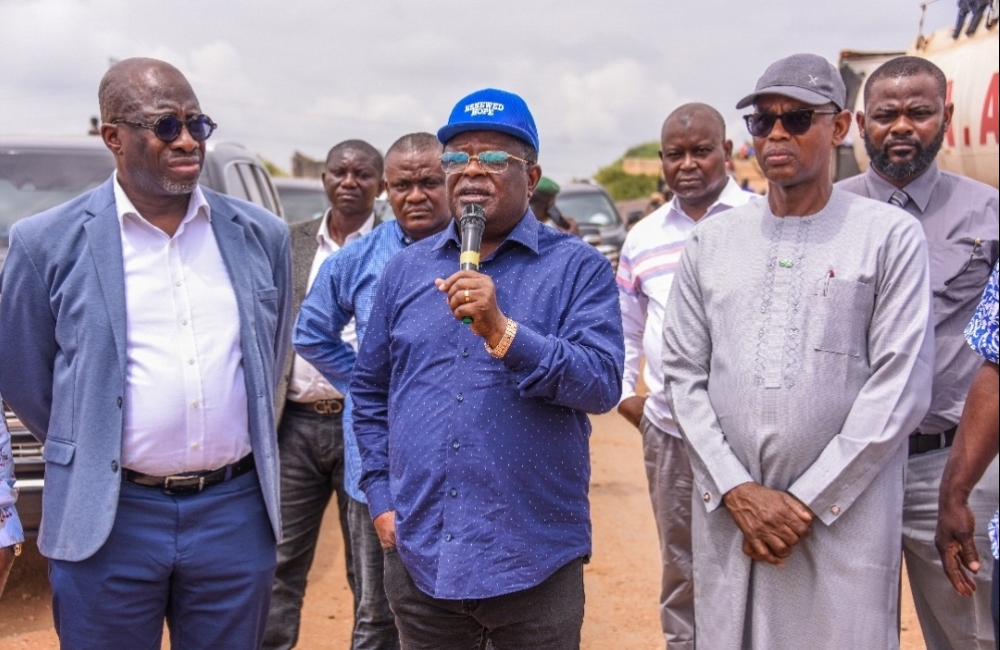
STAKEHOLDERS UNITE TO INSPECT ABUJA–KADUNA AND SULEJA– MINNA DUAL CARRIAGEWAYS -Declare Minna Road, an Emergency Project The Honourable Minister of Works, Engr. David Umahi, CON, FNATE, FNSE; the Deputy Chief Whip of the 10th Senate, Sen. (Barr.) Onyekachi Nwaebonyi; the Honourable Minister of State for Works, Hon. Muhammad Bello Goronyo, Esq.; PDP Chieftain, Otunba Segun Showunmi, among others Saturday, 28th June 2025, led a high-level inspection of the ongoing reconstruction of the Abuja–Kaduna–Minna dual carriageway, reaffirming the government’s commitment to transparency, engineering excellence, and sustainable infrastructure development. In his remarks, Engr. Umahi disclosed that over 11 kilometres of Section 1 have already been reconstructed using 200 mm reinforced concrete with a projected lifespan of 100 years. The construction process, which involves pulverising failed pavement, laying an 80 mm cement-stabilised stone base, and installing Y20 steel reinforcements at 20 cm intervals beneath a 60 mm concrete top, matches the quality standards adopted for the Lagos–Calabar Coastal Highway and the Sokoto–Badagry Road. The Minister noted that the momentum gained on the Abuja–Kaduna project had gained added momentum followed by the inquisition which brought about this transparent site engagement. The Minister also expressed gratitude to President Bola Ahmed Tinubu, GCFR, for his unwavering support following the termination of the previous contract with Julius Berger over cost discrepancies. “Without Mr. President’s support, it would have been difficult to redeem the project's integrity. But with the quality of work being delivered by Infoquest, today both the Ministry’s and my integrity are restored,” he said. Section 1 (118 km) is valued at ₦252 billion, while Section 2 (164 km), awarded at ₦525 billion, is progressing steadily across three subsections. In parallel with this progress, the Ministry addressed concerns over the Dualization of the Suleja–Minna Road (Phase 1) in Niger State, under Contract No. 6077 with Messrs Salini Nigeria Ltd. The project, covering 40 km from Diko Junction to Bonu village, includes 2 twin flyovers and 3 river bridges. Despite notable achievements—such as 36.89 km of sub-base, stone base, binder course, and wearing course already laid; construction of all 3 bridges up to transition slab level; and extensive culvert installations—the project has faced setbacks, including delayed payments and insecurity. As of the latest assessment, the project is 86.33% complete based on the original contract sum but stands at only 30.03% relative to the revised sum of ₦26.7 billion. The Honourable Minister has reaffirmed the Ministry’s position on accountability and directed that Salini be held responsible for any contractual lapses. Where necessary, portions of the outstanding works equal to the value owed by the contractor will be scoped out for direct execution under close supervision. Inspecting Sections I and II, Umahi decried the aged-long-neglect of the construction work by the contractor- Salini Nig. Ltd, which has left the site for the past 18 months without completing the contract. He also noted that the areas the Contractor claimed to have done have become dilapidated. He, however, called for the termination of the Messrs. Salini Nig. Ltd’s contract of sections I and II with immediate effect while declaring the project an emergency project to be handled under emergency procurement processes and taken over by CCECC and CGC companies. He also directed a-24 24-hour documentary on the road, especially the failed areas. “The project has been irrevocably terminated and Nigerians will see why we terminated it. If they (Salini) do not do what we have directed them to do, what they owe us under our supervision, we are all going to the EFCC to take it over” “We are documenting the current condition of the road for public accountability. Once work is completed, people tend to forget how bad it was. Information Department must keep a visual record to justify our emergency action”. Reiterating that the Suleja-Minna road is now a top priority, and every effort is being made to ensure timely and quality delivery in line with President Tinubu's Renewed Hope Agenda, Engr. Umahi reassured travellers of their safety with the incorporation of safety and security infrastructure into the road design, including solar-powered lighting, CCTV surveillance, and a rapid-response system that guarantees intervention from security agencies within 10 minutes of any incident. Kilometre 71 and other active segments are already being secured during the construction phase. This is to ensure traveler safety and long-term durability. The Minister restated the Ministry’s openness to scrutiny and partnerships. “Where we have done well, let Nigerians see it. Where we must do better, tell us—and we will act.” Minister of State, Hon. Bello M. Goronyo, praised the cross-sectoral nature of the inspection, noting that it marked a shift from armchair criticism to informed civic engagement. He lauded Showunmi’s patriotism and willingness to scrutinize national progress with sincerity, stating that real transformation must be driven by both resource allocation and unwavering commitment. Also present at the inspection, Barr. Onyekachi Nwaebonyi, Deputy Chief Whip of the 10th Senate and member of the Committee of Works commended the scale and engineering quality of the project, affirming the Senate’s continued commitment to funding and legislative backing for infrastructure that enhances trade, national cohesion, and safety. Segun Showunmi, a well-known national voice on governance, whose concerns over delayed infrastructure projects prompted the engagement, applauded the Ministry’s openness. “I dropped everything to be here because our national integrity matters. This isn’t personal interests or affiliations; it’s about shared responsibility,” he remarked. While commending the quality of work, he maintained that his endorsement was based strictly on performance and would not be extended as a blanket approval to the broader administration. He further noted that public figures owe the nation constructive criticism and not endless cynicism, and that holding leadership accountable is of utmost importance as it helps in building the nation. “We’ve seen progress, and like Oliver Twist, we ask for more. Let this be the new standard—less noise, more delivery,” he concluded. ...
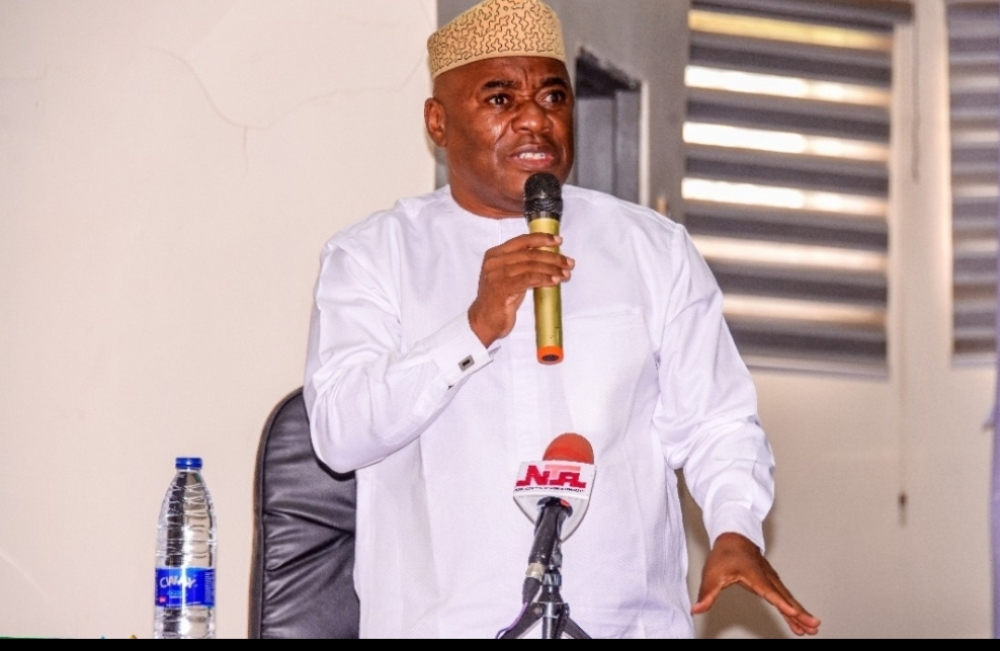
EMPOWERING ENGINEERS THROUGH KNOWLEDGE-DRIVEN TRAINING TO DELIVER SAFER AND STRONGER ROADS The Federal Ministry of Works, under the strategic leadership of the Honourable Minister, Engr. David Umahi, CON, and the Honourable Minister of State, Hon. Bello M. Goronyo, Esq., organised a three-day zonal capacity-building training for engineers, technologists, and technicians in the North Central zone. As part of this initiative, the training commenced on Tuesday, 24th June 2025 at the Pavement Evaluation Unit, Sheda, Kwali Area Council, the FCT, where participants gathered for intensive knowledge-sharing and technical skill enhancement tailored to the evolving demands of modern infrastructure delivery. In his keynote address, the Permanent Secretary, Engr. Olufunsho Adebiyi, FNSE, emphasised that the programme, approved by the Honourable Minister, aims to address the widening generational and capacity gaps caused by the recent retirement of a significant number of senior engineers and the anticipated exit of more within the year. He noted that organising the training on a zonal basis ensures efficient resource management while encouraging broader participation across the federation. The training refreshes core competencies in highway and bridge design, project and contract management, and applicable quality assurance procedures, while promoting cross-functional exposure to develop versatile, all-around professionals. Highlighting the importance of dynamic field experience, the Permanent Secretary underscored the need to rotate engineers across different regions and departments, stating that long-term stay in a single location or unit limits professional growth and technical adaptability. Addressing the recruitment gap within the service, he explained that a comprehensive personnel audit had been conducted and submitted to the Office of the Head of the Civil Service of the Federation for further consideration. He also called on young professionals to invest in self-development and embrace competence as a prerequisite for employability in a modern public service environment, where performance now drives progression. Reaffirming the Ministry’s zero tolerance for misconduct, he noted that the civil service has well-established disciplinary frameworks across all cadres and that infractions will be met with appropriate sanctions through existing regulations. The technical sessions featured expert-led lectures, including “Effective Supervision of Federal Highway Projects” by Engr. Olufemi Oyekanmi, PhD, emphasised the urgency of addressing workforce overload and called for increased manpower to support the rising volume of national projects, while urging field engineers to uphold discipline and deliver consistently despite constraints. Engr. C. Shausu delivered a session on “ _Effective Communication Skills,”_ highlighting the critical role of communication in project coordination and interdepartmental collaboration. Additionally, “Ensuring Safety in Project Sites” was delivered by Engr. A.A. Adebiyi stressed the importance of enforcing safety protocols and maintaining high standards to protect lives and infrastructure. Speaking on the broader significance of the programme, the Director, Highways, Planning and Development, Engr. David Yiltong Dechi, described the training as a demonstration of the Ministry’s commitment to the professional development and technical performance of its workforce, urging participants to embrace their roles with renewed dedication and a stronger sense of national duty. From the participants’ perspective, the training was described as enriching and transformative, with attendees affirming that the sessions provided valuable insights into professional best practices and identified key areas for improvement to enhance effective project delivery. In his closing remarks, the Permanent Secretary reminded participants that the training was not merely academic, but a moral and professional awakening. He called on engineers to recommit to excellence, uphold ethical standards, and demonstrate the technical leadership the Ministry represents. “Let this engagement reset our priorities and rekindle our pride as engineers. We must rise above complacency- we must deliver,” he charged. This training forms part of a broader national initiative approved by the Honourable Minister to strengthen technical capacity, reinforce professionalism, and ensure that the Federal Ministry of Works remains at the forefront of sustainable infrastructure development across Nigeria. ...
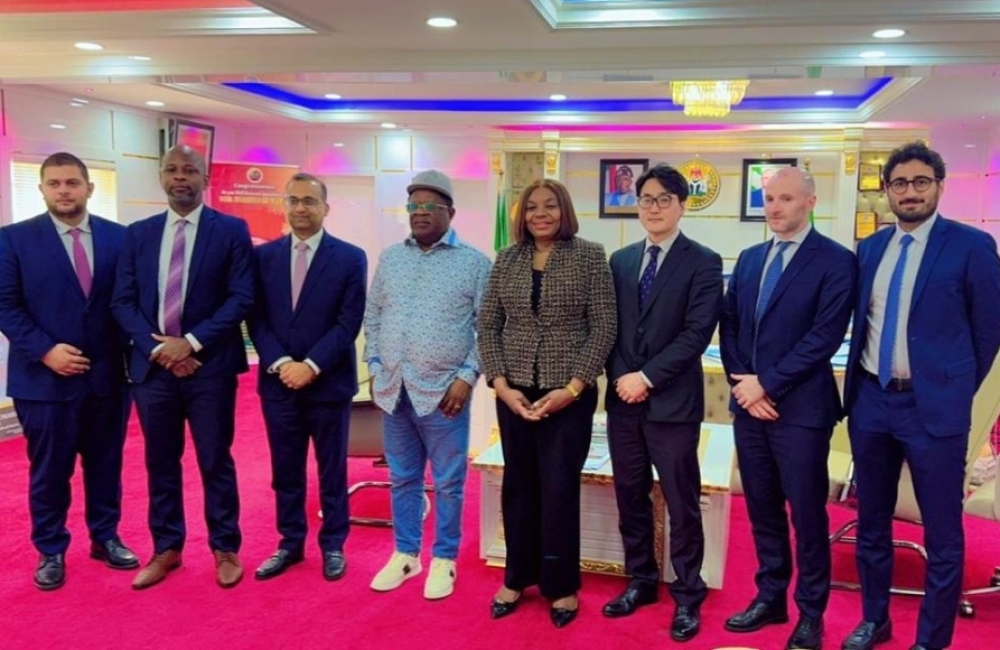
HON MINISTER OF WORKS, DEPLOYS MINISTRY’S PERSONNEL, MAINTENANCE TEAM OF CONCESSIONAIRE TO THE RECENTLY FLOODED SECTION OF COMPLETED LAFIA-MAKURDI ROAD, TASKS THEM ON PERMANENT SOLUTION TO FLOODING ALONG THE CARRIAGEWAY -APOLOGIZES TO MR. PRESIDENT, ROAD USERS FOR THE EMBARRASSMENT CAUSED BY NEGLIGENCE OF THE CONCESSIONAIRE WHOSE DUTY IS TO OPERATE AND MAINTAIN THE ROAD. In a passionate response to the flooding situation that occurred along Lafia-Makurdi road that severely disrupted traffic flow on 18th June 2025, the Honourable Minister of Works, His Excellency, Sen. Engr. Nweze David Umahi, CON has directed the immediate deployment of the Ministry’s personnel and the maintenance team of China Harbour Operations and Maintenance Company, concessionaire for Abuja-Keffi-Akwanga-Lafia-Makurdi road to bring effective and permanent solution to flood disturbances along the road. In a Press Statement made in his office on 19th June 2025, the Honourable Minister condemned the unfortunate negligence by the concessionaire whose duty under the Highways Development Management Initiative (HDMI) of the Federal Government is to operate and maintain the road. “We have got information on the unfortunate flooding of a section of Keffi-Makurdi road which is under HDMI, that is, a PPP with China Harbour. We know that the project has been completed and it is tolled, but unfortunately yesterday there were a lot of debris that covered an existing culvert there and that led to flooding but in the midst of that rain we deployed our Ministry of Works personnel in Makurdi State and also the China Harbour personnel and they had to go to the inlet of the culvert and removed all the debris and the flood has been totally evacuated.” That section of the road has been reinstated He directed the concessionaire to critically assess the primary cause, provide a permanent solution to flooding along the carriageway, and take all steps necessary to prevent future occurrence. "We apologize very profusely to Mr. President and Nigerians, for the embarrassment, this unfortunate incident caused him and Nigerians." He commended the President for his fatherly intervention in the unfortunate incident in Benue State. "We also commend Mr. President very highly for his fatherly role in Benue State. His visit there has made a lot of impact in the lives of the people of Benue State and everyone living in that place. With God on his side, Benue people shall see sustainable peace and progress." Speaking earlier during the courtesy visit of the Managing Director/CEO of Citibank Nigeria Ltd, Nneka Enwereji, the Honourable Minister highlighted some of the initiatives of Federal Government of Nigeria under the present administration to improve the quantity and quality of the road assets in Nigeria, especially the initiative to construct the four Renewed Hope Legacy Projects which are critical road infrastructure necessary for the economic advancement of the nation. He sought for the partnership of the bank by investing on any of the Renewed Hope Legacy Projects “I'm happy to have Citibank Executives here in my office today to discuss how they can partner with us over the four Legacy Projects of President Bola Ahmed Tinubu, GCFR and also other infrastructural developments in the country. We have had a very fruitful meeting, and I am very happy that the efforts of Mr President on external inflow is yielding desired result and that the international community has commended him very highly on his transformative reforms. This project shall be realized by the courage and commitment of President Bola Ahmed Tinubu GCFR.” In her mission statement, the Managing Director/Chief Executive Officer of Citibank Nigeria Ltd, expressed the willingness of the Bank to partner with Federal Government of Nigeria through sustainable investment and funding in the development of those projects that would make a positive impact to the progress of the country. She expressed pleasure over the impressive strides of the Renewed Hope administration, which are necessary to build investor’s confidence. “We are here as Citibank to discuss how we can effectively partner with you,to know the project you are undertaking, and see how we can leverage the access that we have to support some of those projects and make a positive impact to the progress of the country. We want to discuss some of the specifics and some of the projects that we are already looking at in the country. We are very impressed with the big strides that you are making. And we want to support that as much as we can.” Hon. Barr. Orji Uchenna Orji Special Adviser (Media) to the Honourable Minister of Works ...
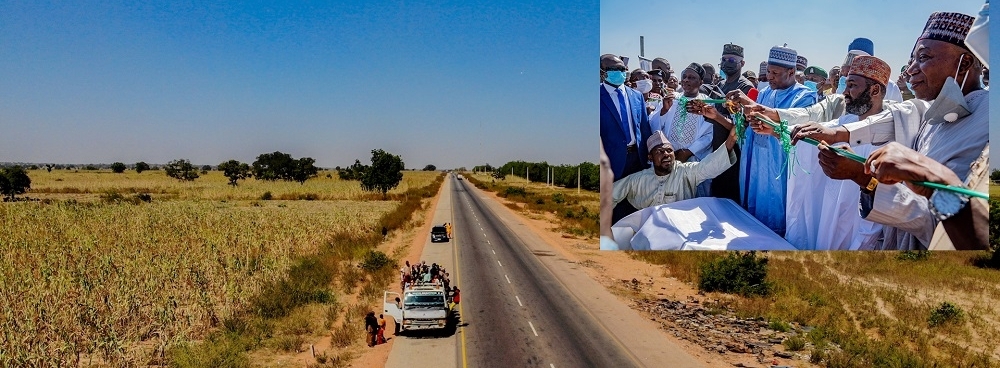
REMARKS BY THE HONOURABLE MINISTER OF WORKS AND HOUSING, MR BABATUNDE FASHOLA, SAN, AT THE PROJECT COMPLETION AND HAND OVER FLAG OFF ON THURSDAY 25TH NOVEMBER, 2021 AT KOKO/BESSE LGA, KEBBI STATE
On behalf of the Federal Government of Nigeria and President Muhammadu Buhari, I bring good tidings to the peoples and Governments of Sokoto, Kebbi and Niger States, who will be impacted by the Sokoto-Tambuwal-Jega-Kontagora-Makera Road that our President will hand over today.
My principal message to you all is that this is the first of many more project Completion and Handovers our country will experience in the next few weeks and months as we enter what l call a season of completion and impact.
In this phase of completion Mr. President has approved that Ministers from the various States where projects have been completed should represent him to perform the handover formalities.
The other handing over formalities that will follow these formalities which we flag off today in Kebbi will be in:
a) Jigawa for Section II covering 142.2 x 2 (dual) Kilometers between Shuwarin and Azare, connecting Jigawa and Bauchi States.
b) Bauchi for Section III covering 106.3 x 2 Kilometers between Azare and Potiskum , connecting Bauchi and Yobe States.
c) Benue for Vandeikya-Obudu Cattleranch Road covering 24 Kilometers connecting Benue and Cross River States.
d) Ebonyi for Nnewe- Uduma- Uburu Road covering 26.27 Kilometers with 14 Kilometers spur to Ishiagu connecting Enugu and Ebonyi States.
These projects represent major investment in road Transport infrastructure, which is a commitment of the Buhari administration as a driver for economic growth and prosperity.
They are visible and incontrovertible Assets in proof of what Nigeria’s resources are invested in, from a combination of our earned resources, and borrowings.
This occasion affords another opportunity to acknowledge the impact of the Sukuk funding in the completion of Azare – Potiskum, Shuwarin – Potiskum and Sokoto-Tambuwal- Kontagora Roads.
The Sukuk is currently contributing to progress of work on 44 roads across Nigeria and as we complete them, events like this will hold.
I want to express gratitude of our Government to the investors in the Sukuk and thank the Ministry of Finance, and the members of the National Assembly, especially the Chairmen of the Senate and House Committees on Works in the 8th and 9th Assembly for their support.
Our gratitude to the Debt Management Office is deep and continuing for their role in previous SUKUKS which have been most innovative and impactful nationwide, and for the Sukuk we are expecting.
To our staff and contractors who have worked very hard to bring these projects to conclusion I also say thank you, as I cannot fail to acknowledge the cooperation of the host communities where these projects pass through or are hosted.
I hold them out as examples of what peace can achieve, and the investments that collaboration and some sacrifice can deliver if we embrace partnership with Government.
Ladies and Gentlemen, none of these would have been possible without the support of Ministers in the Federal Executive Council during debates over the projects.
To all Ministers in the first term and this current term, I express gratitude on behalf of the Ministry of Works and Housing for your support.
To the President and Vice President who preside for long hours over the Council meetings, your leadership is now bearing fruits and the evidence of change is now manifesting.
Bauchi, Jigawa, Benue, Cross Rivers, Sokoto, Kebbi, Niger, Enugu and Ebonyi bear witness and there is more to come.
Thank You.
BABATUNDE RAJI FASHOLA, SAN
MINISTER OF WORKS AND HOUSING
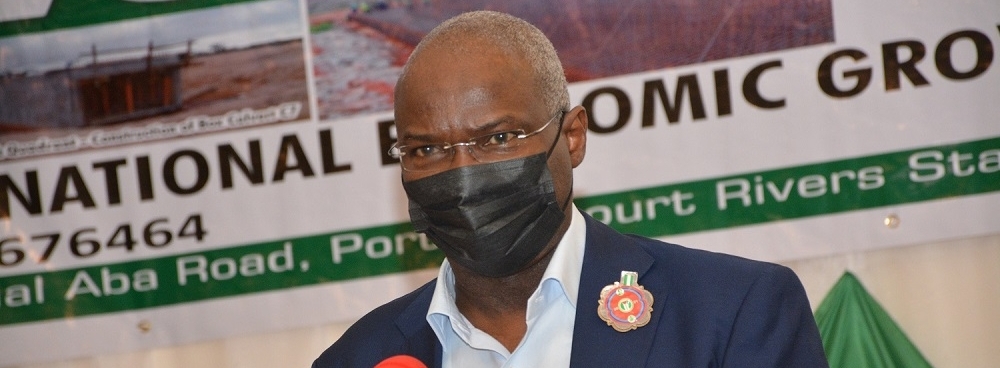
Keynote Address Of The Hon. Minister of Works And Housing, Mr. Babatunde Fashola, San, At The 26th Meeting Of The National Council On Works With The Theme, “Road Infrastructure Development, Job Creation And National Economic Growth”
On behalf of the Federal Government, I convey the appreciation of the Ministry of Works and Housing to the Government of Rivers State and Governor Nyesom Wike, for Hosting this 2020 edition of National Council on Works.
The commitment to host this was made last year when the Cross River State hosted the 2019 edition and when nobody foresaw the outbreak of a devastating viral pandemic called COVID-19.
The impact of the disease on livelihoods and the global economy has led countries across the world into different stages of negative economic growth and recession.
The need to address the economic challenges has prompted countries and Governments to design and implement various measures and policies to keep their economies going and to reflate them.
The Muhammadu Buhari Administration developed and has started implementing an Economic Sustainability Plan, that incorporates and challenges Ministries, Departments and Agencies (MDAs) to ramp up activities, inspite of COVID-19; in order to provide work, increase opportunities and sustain productivity.
The Ministry of Works and Housing, as a critical infrastructure provider of the Federal Government, is one of the focal MDAs assigned with responsibilities for sustaining and expanding the economy during and beyond the COVID period.
This in part explains the theme of this year’s Council which is, “Road Infrastructure Development, Job Creation and National Economic Growth”.
While the public looks forward mainly to the quality of the Highway pavement, the Government sees a larger economic impact of infrastructure and the way it helps to legitimately distribute wealth to the people at the bottom of the pyramid.
Road construction employs a large number of the urban poor, skilled and unskilled labour and vendors who depend on daily or weekly wages.
The lockdown period was a difficult period for them and it was not surprising that as soon as lockdown eased, the Agriculture Sector and Road Construction were the first to resume work.
Eleven (11) of the biggest contractors of the Federal Government were allowed to return to work in May 2020 in 26 states.
This was closely followed by the resumption of maintenance works in 92 different locations across 24 states by FERMA.
The Government then decided to increase the scope for local content, labour and materials by:
a) Advocating for the increased use of cement, stone and concrete which are all locally available
b) Advocating for the local production of Bitumen since we have large deposits of the raw material.
I am delighted to inform you that many of these policies are at different stages of implementation with consequences on the economy.
With safety guidelines for Social Distancing, face mask and sanitation issued to construction companies, construction work has resumed almost full time across the country even though the virus is still with us.
Although the Third Quarter GDP result is still negative at -3.62%, it shows growth in the following sectors:
a) Quarrying and other minerals production 41.81%
b) Cement manufacturing 11.96%
c) Construction 2.64%
With the sustenance of construction activities, a strong contribution will be seen on the road to economic recovery.
Regarding the need to use more cement, more stone and concrete, the Ministry had to produce a design manual for Rigid Pavement in consultation with all the stakeholders in the industry.
I am happy to Report that the Sub-Committee led by the Honourable Minister of State, Engr. Abubakar D. Aliyu, and the Director of Bridges and Design, Engr. Emmanuel Adeoye, have produced the first Rigid Pavement Manual for Nigerian Roads.
There could be no better place to unveil it than at the National Council for Works, where all State Governments and other stakeholders are present.
This should also form the basis for implementing the Government policy for more labour-intensive Road Construction to stimulate employment drive, and more use of locally available materials of stone, cement and concrete for improved economic productivity.
It is impossible to discuss roads and economic development without discussing:
a) capital appreciation of 30-40% that infrastructure provision adds to the value of land;
b) the supply chain of food, lubricants, construction materials like laterite, cement, Reinforcement (steel), Water, Energy (Diesel) that is positively affected by infrastructure;
c) the sub-specialities of subcontractors such as Lane Marking, Highway Signage and Electrical fittings,
all of which benefit from the Construction of a Road.
I am aware that all the States are executing one infrastructure project or the other and this is how it must be. I was in Rivers State recently to commission a Bridge project undertaken by the State Government.
Our collective National Spending on infrastructure will contribute in no small way to our recovery from recession, but also propel inclusive and beneficial growth.
Examples abound of the positive impact of the investment in infrastructure through a value chain of inclusive wealth distribution that is immediately activated when one of our construction sites utilises 5,000 trucks of laterites at N30,000 per truck.
Such a value chain would include the owner of the quarries, the operators in the quarries, the truck owners and truck drivers, among several others.
When one of our contractors also recently paid N500 million to his diesel suppliers, another inclusive wealth distribution value chain got activated or sustained.
In closing this speech permit me to highlight the challenges we still encounter in some states and communities with respect to claims for compensation, which hinder our contractors’ ability to work.
Challenges in the area of compensation require further collaboration and for States to play a lead role.
The need for an interactive forum between State Commissioners and Federal Ministry of Works, which will occur more frequently than the annual Council, as recently suggested by the Honourable Commissioner for Works from Kwara State will also hopefully be considered at this Meeting.
I thank you all for your attention.
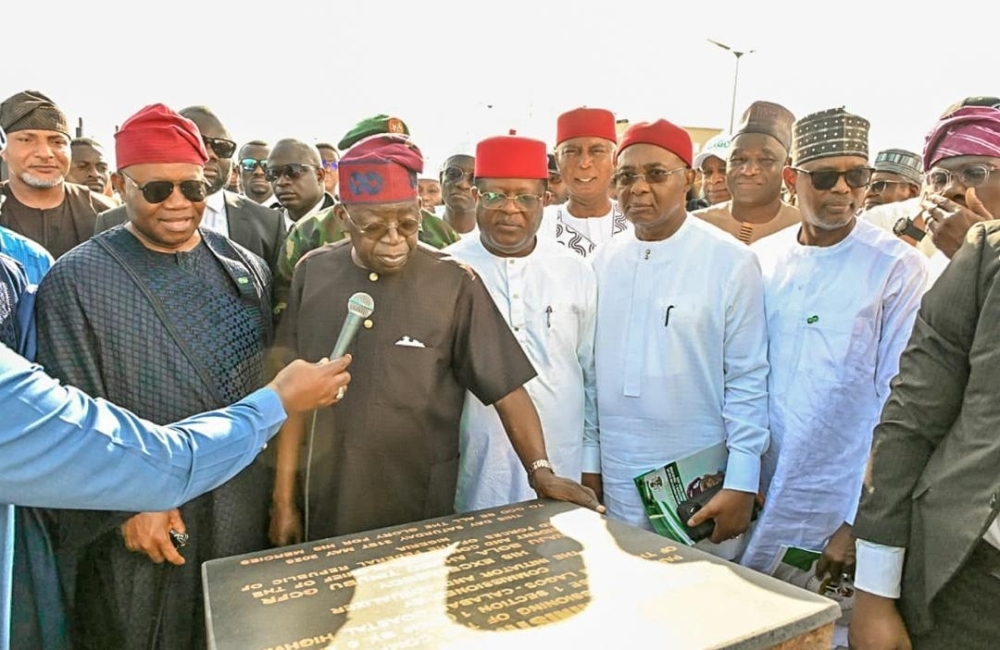
DRIVING NIGERIA’S FUTURE: CELEBRATING TWO YEARS OF TRANSFORMATIVE LEADERSHIP AND THE LAGOS-CALABAR COASTAL HIGHWAY MILESTONE
DRIVING NIGERIA’S FUTURE: CELEBRATING TWO YEARS OF TRANSFORMATIVE LEADERSHIP AND THE LAGOS-CALABAR COASTAL HIGHWAY MILESTONE
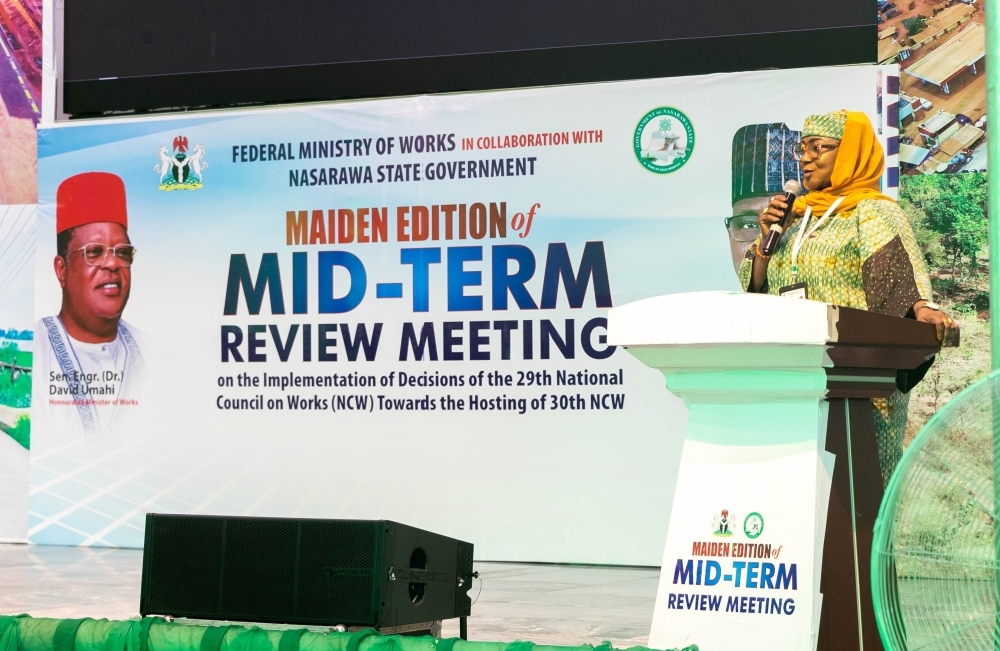
MID -TERM REVIEW MEETING ON THE IMPLIMENTATION OF THE DECISIONS REACHED AT THE 29TH NATIONAL COUNCIL ON WORKS (NCW) DAY 1
MID -TERM REVIEW MEETING ON THE IMPLIMENTATION OF THE DECISIONS REACHED AT THE 29TH NATIONAL COUNCIL ON WORKS (NCW) DAY 1