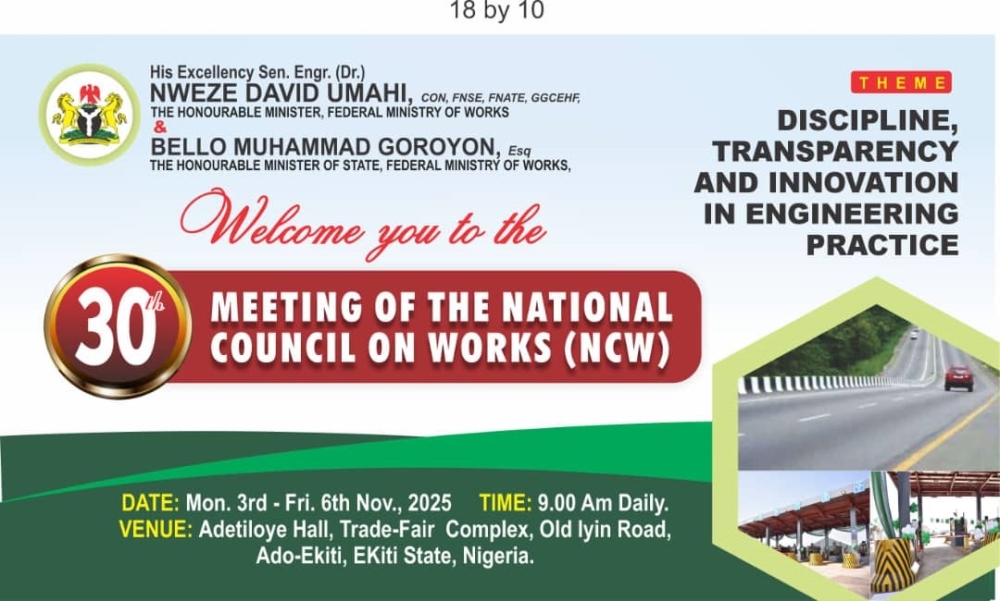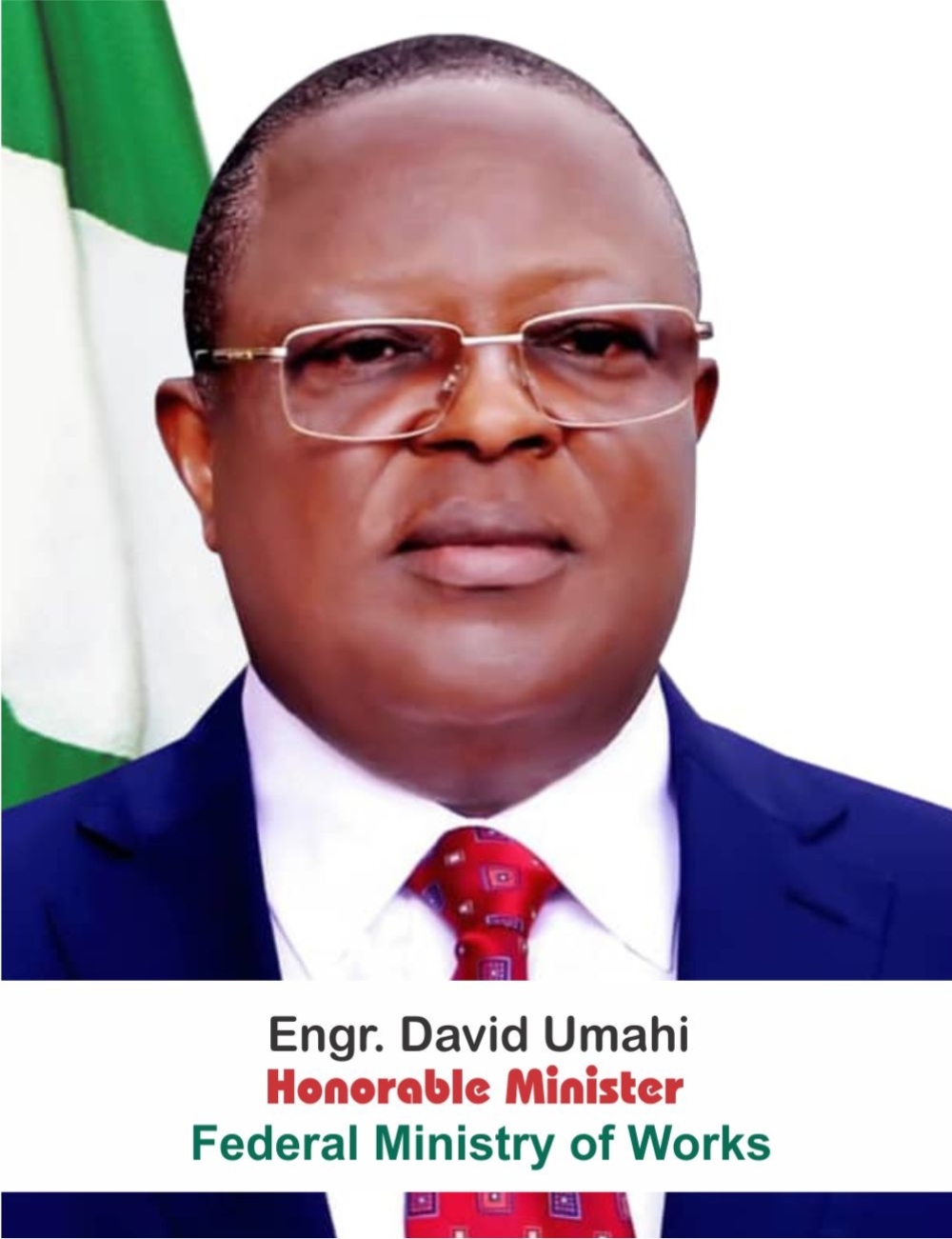
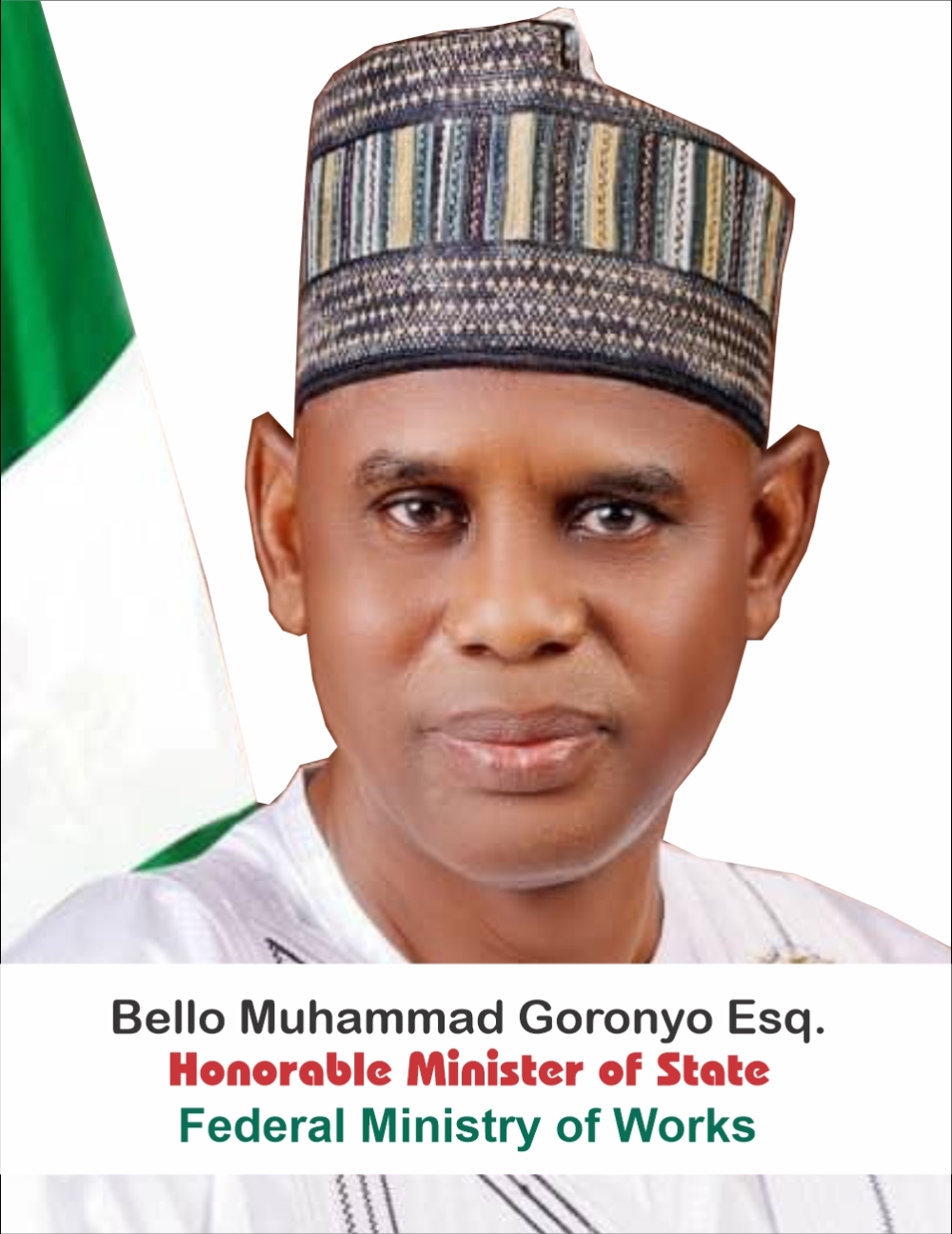
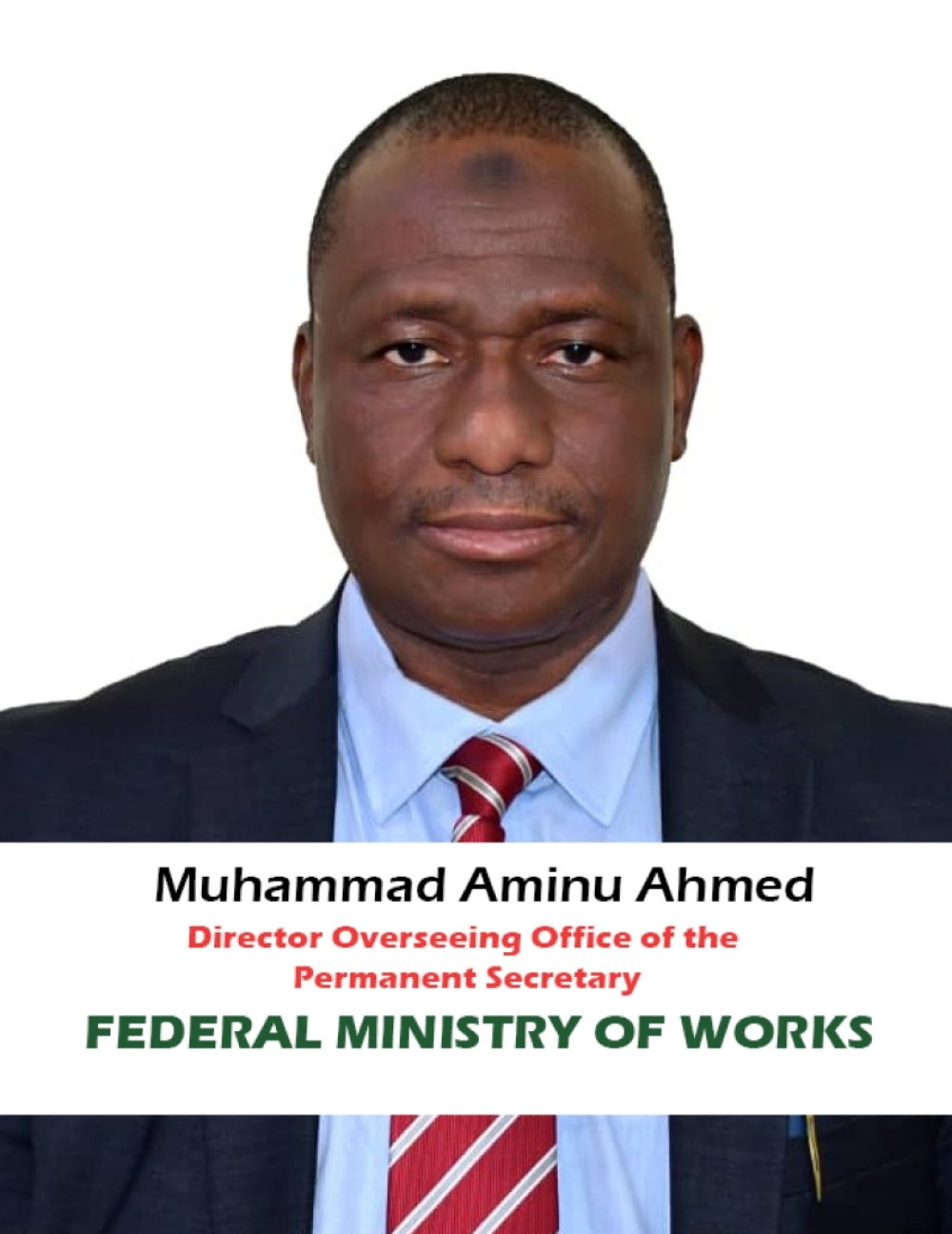
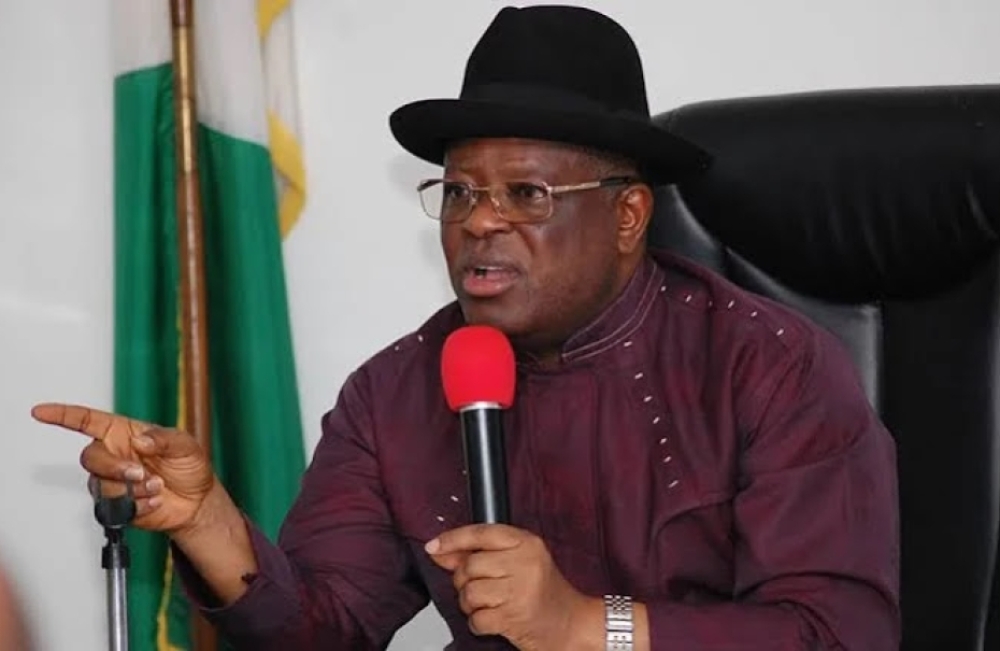
UMAHI ORDERS IMMEDIATE EMERGENCY INTERVENTION ON BENIN-ASABA ROAD, AND SOME OTHER CRITICAL FEDERAL ROADS
The Honourable Minister of Works, Senator Engr. David Nweze Umahi, CON, has directed the immediate deployment of major contractors to all three sections of the Benin-Asaba Federal Road to restore the failed sections and bring an end to the suffering of motorists and other road users.
This is because, the situation on the concessioned Benin-Asaba Road has reached a point where the overall public interest must take precedence over the existing concession agreement.
Recall that the Honourable Minister of Works was on the Benin-Asaba Road about seven days ago, where he assembled a number of contractors and directed them to prepare for immediate palliative intervention on the affected sections of the road at no cost to the concessionaire. In line with the Concession agreement which requires that before the Federal Government could intervene, the permission of the concessionaire must be required, and that permission was not granted to federal government.
The Minister subsequently proposed three options to the concessionaire, any one of which would have enabled the Federal Government to move in and address the worsening condition of the road. Unfortunately, none of the options was accepted by the concessionaire. Immediately after the Minister left Asaba, the already limited equipment deployed to the road by the concessionaire was further reduced to just one, worsening the situation and increasing the suffering of motorists and other road users.
While the Minister takes responsibility for the concerns and suffering of Nigerians using the road, it is important to state that the concessionaire has also not taken the suffering of Edo people and travelling public sufficiently into consideration by declining all the options put forward by the Federal Government. The concessionaire continues to rely on the terms of the concession agreement entered into by the previous administration, an agreement which weighs heavily against the Federal Government’s ability to intervene quickly in the interest of the public in a situation like this.
In view of this situation, the Honourable Minister of Works has directed the immediate deployment of major contractors within the corridor to all three sections of the Benin-Asaba Road to restore the failed sections and bring relief to the people, with the cost of the emergency intervention being borne by the Federal Government. The Honourable Minister has also directed immediate redesign of the entire route to be rebuilt with reinforced concrete pavement. The public should therefore take note that immediate action is underway to restore every failed section of the Benin-Asaba Road and subsequently rehabilitate the entire sections of the road using reinforced concrete pavement.
2. On the Benin-Sapele Road:
The Governors of Edo and Delta States, the Niger Delta Development Commission (NDDC), and the Federal Government are currently engaged in interventions on different sections of the road to restore the entire route. While some sections are receiving palliative attention, permanent works are also ongoing on other sections.
3. On Ifaki(Ekiti) - Kabba (Kogi) Road:
The Federal Government is engaging both the contractor; Gamji Nigeria Company Limited, and Dangote PLC on immediate emergency and permanent intervention on the most failed sections of the road, while efforts are being made to financially mobilise the company for more extensive permanent work to commence on the axis.
4. On the Sokoto-Zamfara-Katsina Road: This is an inherited project involving the dualisation of approximately 350 kilometres, which translates to about 700 kilometers. The project has since been redesigned and is currently ongoing and most sections are being reconstructed using reinforced concrete pavement. From the Sokoto axis towards Zamfara, over 50 kilometres of one carriageway have been fully completed with reinforced concrete pavement. From Zamfara to Katsina, some sections have been completed and palliative works have been ordered over the sections that have not been reconstructed. However, the pace of work slowed down due to the redesign and rephasing of the project. The contractors currently engaged on the road include CBC, SETRACO, Triacta and Mothercat. They are being remobilised to return to site and complete the outstanding works.
5. On the Abuja-Kaduna-Zaria-Kano Road: The Federal Government took over the Road project and has currently completed the 118-kilometer mostly on reinforced concrete pavement on lot 1. The Lot 2, which covers 164 kilometres, is over 60 percent completed on reinforced concrete pavement. The Federal Government has also introduced solar-powered light on the entire route of Abuja-Kaduna-Zaria - Kano to improve visibility during night travel and enhance the overall security situation on the route. The entire project is scheduled for completion by December 2026.
6. On Bauchi-Jigawa Road: Triacta Nigeria Limited has been mobilised to carry out the necessary interventions on some failed sections and work is currently ongoing in those failed sections.
7. On the Sagamu-Ore Road: 48 Kilometers of the 96-kilometre road have already been completed using reinforced concrete pavement. There is also a 24-kilometre section around Ore which was abandoned by the previous contractor. The Federal Government has directed its immediate restoration to ensure seamless travel. Solar lights are being installed in the entire 96kilometer of the road.
8. On Flooded Sections on Sagamu-Ore-Benin Road: The flooded sections on the same corridor between Sagamu-Ore-Benin Road, as well as other flooded sections in Ondo State, are being designed for emergency procurement and intervention.
9. On the East-West Road:
Some failed and critical sections, including defective sections of bridges along the East-West Road, are being marked out for emergency procurement and intervention.
10. On the Abuja-Lokoja Road:
Several contracts are ongoing along the route, while the three critical sections currently without contracts are being procured for emergency intervention.
11. On the Lokoja-Benin-Warri Road: The President has directed a complete redesign and procurement of the 400-kilometre dualised route covering the uncompleted sections, using reinforced concrete pavement, while palliative works will continue with the contractors currently on the road.
12. On Carter Bridge:
While the Federal Government continues to undertake weekly maintenance of the underwater elements of the bridge. The site has also been handed over to the contractor, CCECC, for the construction of a permanent new bridge, and work has commenced.
13. On the Third Mainland Bridge:
With regard to the defective underwater structural elements, the Federal Government is at the final stage of determining the appropriate intervention for the repair of the affected elements.
14. On the flooded section of the Lagos-Ibadan Road: Work has commenced on the affected section. There are also several flooded sections on federal roads across the six geopolitical zones, largely occasioned by excessive flooding and the effects of climate change. The Federal Government is identifying and marking these sections for immediate attention.
15. On the First and Second Niger Bridges:
Intervention work is ongoing on the approach roads to the Second Niger Bridge damaged by flood and the work is progressing very well. The First Niger Bridge has been closed to traffic to enable immediate repair works. Contractor has mobilized to site and comprehensive rehabilitation of the bridge has started. From Summit Junction to the First Niger Bridge, massive rehabilitation work is also ongoing using reinforced concrete pavement.
16. The Honourable Minister wishes to commend the President of the Federal Republic of Nigeria, His Excellency Bola Ahmed Tinubu, GCFR, for the massive work being undertaken on the nation’s roads since the administration assumed office in 2023.
17. It is important to state that when the present administration came into office, there was hardly any part of the country where one could travel for an hour without encountering significant challenges on the road network. The condition of the country’s roads and bridges was a major national infrastructure challenge.
18. Rather than shy away from the problem, the administration of President Bola Ahmed Tinubu made the nation’s road network a priority. Virtually every part of the country became a priority, and the Federal Government, through the Federal Ministry of Works, Regional Commissions, Parastatals and other MDA’s has continued to respond extensively to these challenges.
19. The Federal Government is currently working on over 80 percent of the inherited federal roads, an unprecedented level of intervention in the country’s road infrastructure.
20. We ask the public to understand the enormous challenges inherited on our roads and bridges and to take note not only of the problems being solved, but also of the permanent solutions being introduced.
21. A major part of this new approach is the use of reinforced concrete pavement, designed to significantly extend the lifespan of major roads. These roads are expected to last between 50 and 100 years. This means that roads being constructed under President Bola Ahmed Tinubu’s administration are being designed with future generations in mind, rather than simply providing temporary solutions to today’s problems. And this is a complete departure from the past, when roads often deteriorated only a few years after completion, resulting in a continuous cycle of reconstruction and expenditure.
22. We appreciate the concerns of Nigerians over the condition of some roads presently and the difficulties faced by motorists and commuters who cannot move easily from one point to another. Those concerns are legitimate, and the Federal Government is listening. But Nigerians should also recognise the enormous scale of the problems inherited and the amount of work currently being undertaken across the country.
23. It is simply impossible to resolve every road challenge accumulated over many years of neglect by the past administrations within three years. What is important is that the government is working, the government is responding, and the government is putting permanent solutions in place.
25. We appreciate members of the public who send situation reports on failed roads and other infrastructure challenges. These reports help the Ministry identify areas requiring urgent attention. However, we also appeal to members of the public to report when such problems have been addressed, just as they report when they occur.
24. We are aware of situations where photographs and reports of road challenges continue to circulate on social media even after the Federal Government has intervened and resolved the particular problem.
25. However, the Ministry will continue to respond as rapidly as possible to genuine reports and concerns from Nigerians.
26. It is also important to note that we have compiled a comprehensive record of all inherited, ongoing and intervention projects across the country which is available to the public. This is to ensure that Nigerians have access to information on the infrastructure projects being undertaken nationwide and can fully participate in and appreciate the infrastructure revolution of President Bola Ahmed Tinubu’s administration.

UMAHI ORDERS IMMEDIATE EMERGENCY INTERVENTION ON BENIN-ASABA ROAD, AND SOME OTHER CRITICAL FEDERAL ROADS The Honourable Minister of Works, Senator Engr. David Nweze Umahi, CON, has directed the immediate deployment of major contractors to all three sections of the Benin-Asaba Federal Road to restore the failed sections and bring an end to the suffering of motorists and other road users. This is because, the situation on the concessioned Benin-Asaba Road has reached a point where the overall public interest must take precedence over the existing concession agreement. Recall that the Honourable Minister of Works was on the Benin-Asaba Road about seven days ago, where he assembled a number of contractors and directed them to prepare for immediate palliative intervention on the affected sections of the road at no cost to the concessionaire. In line with the Concession agreement which requires that before the Federal Government could intervene, the permission of the concessionaire must be required, and that permission was not granted to federal government. The Minister subsequently proposed three options to the concessionaire, any one of which would have enabled the Federal Government to move in and address the worsening condition of the road. Unfortunately, none of the options was accepted by the concessionaire. Immediately after the Minister left Asaba, the already limited equipment deployed to the road by the concessionaire was further reduced to just one, worsening the situation and increasing the suffering of motorists and other road users. While the Minister takes responsibility for the concerns and suffering of Nigerians using the road, it is important to state that the concessionaire has also not taken the suffering of Edo people and travelling public sufficiently into consideration by declining all the options put forward by the Federal Government. The concessionaire continues to rely on the terms of the concession agreement entered into by the previous administration, an agreement which weighs heavily against the Federal Government’s ability to intervene quickly in the interest of the public in a situation like this. In view of this situation, the Honourable Minister of Works has directed the immediate deployment of major contractors within the corridor to all three sections of the Benin-Asaba Road to restore the failed sections and bring relief to the people, with the cost of the emergency intervention being borne by the Federal Government. The Honourable Minister has also directed immediate redesign of the entire route to be rebuilt with reinforced concrete pavement. The public should therefore take note that immediate action is underway to restore every failed section of the Benin-Asaba Road and subsequently rehabilitate the entire sections of the road using reinforced concrete pavement. 2. On the Benin-Sapele Road: 3. On Ifaki(Ekiti) - Kabba (Kogi) Road: 4. On the Sokoto-Zamfara-Katsina Road: This is an inherited project involving the dualisation of approximately 350 kilometres, which translates to about 700 kilometers. The project has since been redesigned and is currently ongoing and most sections are being reconstructed using reinforced concrete pavement. From the Sokoto axis towards Zamfara, over 50 kilometres of one carriageway have been fully completed with reinforced concrete pavement. From Zamfara to Katsina, some sections have been completed and palliative works have been ordered over the sections that have not been reconstructed. However, the pace of work slowed down due to the redesign and rephasing of the project. The contractors currently engaged on the road include CBC, SETRACO, Triacta and Mothercat. They are being remobilised to return to site and complete the outstanding works. 5. On the Abuja-Kaduna-Zaria-Kano Road: The Federal Government took over the Road project and has currently completed the 118-kilometer mostly on reinforced concrete pavement on lot 1. The Lot 2, which covers 164 kilometres, is over 60 percent completed on reinforced concrete pavement. The Federal Government has also introduced solar-powered light on the entire route of Abuja-Kaduna-Zaria - Kano to improve visibility during night travel and enhance the overall security situation on the route. The entire project is scheduled for completion by December 2026. 6. On Bauchi-Jigawa Road: Triacta Nigeria Limited has been mobilised to carry out the necessary interventions on some failed sections and work is currently ongoing in those failed sections. 7. On the Sagamu-Ore Road: 48 Kilometers of the 96-kilometre road have already been completed using reinforced concrete pavement. There is also a 24-kilometre section around Ore which was abandoned by the previous contractor. The Federal Government has directed its immediate restoration to ensure seamless travel. Solar lights are being installed in the entire 96kilometer of the road. 8. On Flooded Sections on Sagamu-Ore-Benin Road: The flooded sections on the same corridor between Sagamu-Ore-Benin Road, as well as other flooded sections in Ondo State, are being designed for emergency procurement and intervention. 9. On the East-West Road: 10. On the Abuja-Lokoja Road: 11. On the Lokoja-Benin-Warri Road: The President has directed a complete redesign and procurement of the 400-kilometre dualised route covering the uncompleted sections, using reinforced concrete pavement, while palliative works will continue with the contractors currently on the road. 12. On Carter Bridge: 13. On the Third Mainland Bridge: 14. On the flooded section of the Lagos-Ibadan Road: Work has commenced on the affected section. There are also several flooded sections on federal roads across the six geopolitical zones, largely occasioned by excessive flooding and the effects of climate change. The Federal Government is identifying and marking these sections for immediate attention. 15. On the First and Second Niger Bridges: 16. The Honourable Minister wishes to commend the President of the Federal Republic of Nigeria, His Excellency Bola Ahmed Tinubu, GCFR, for the massive work being undertaken on the nation’s roads since the administration assumed office in 2023. 17. It is important to state that when the present administration came into office, there was hardly any part of the country where one could travel for an hour without encountering significant challenges on the road network. The condition of the country’s roads and bridges was a major national infrastructure challenge. 18. Rather than shy away from the problem, the administration of President Bola Ahmed Tinubu made the nation’s road network a priority. Virtually every part of the country became a priority, and the Federal Government, through the Federal Ministry of Works, Regional Commissions, Parastatals and other MDA’s has continued to respond extensively to these challenges. 19. The Federal Government is currently working on over 80 percent of the inherited federal roads, an unprecedented level of intervention in the country’s road infrastructure. 20. We ask the public to understand the enormous challenges inherited on our roads and bridges and to take note not only of the problems being solved, but also of the permanent solutions being introduced. 21. A major part of this new approach is the use of reinforced concrete pavement, designed to significantly extend the lifespan of major roads. These roads are expected to last between 50 and 100 years. This means that roads being constructed under President Bola Ahmed Tinubu’s administration are being designed with future generations in mind, rather than simply providing temporary solutions to today’s problems. And this is a complete departure from the past, when roads often deteriorated only a few years after completion, resulting in a continuous cycle of reconstruction and expenditure. 22. We appreciate the concerns of Nigerians over the condition of some roads presently and the difficulties faced by motorists and commuters who cannot move easily from one point to another. Those concerns are legitimate, and the Federal Government is listening. But Nigerians should also recognise the enormous scale of the problems inherited and the amount of work currently being undertaken across the country. 23. It is simply impossible to resolve every road challenge accumulated over many years of neglect by the past administrations within three years. What is important is that the government is working, the government is responding, and the government is putting permanent solutions in place. 25. We appreciate members of the public who send situation reports on failed roads and other infrastructure challenges. These reports help the Ministry identify areas requiring urgent attention. However, we also appeal to members of the public to report when such problems have been addressed, just as they report when they occur. 24. We are aware of situations where photographs and reports of road challenges continue to circulate on social media even after the Federal Government has intervened and resolved the particular problem.
The Governors of Edo and Delta States, the Niger Delta Development Commission (NDDC), and the Federal Government are currently engaged in interventions on different sections of the road to restore the entire route. While some sections are receiving palliative attention, permanent works are also ongoing on other sections.
The Federal Government is engaging both the contractor; Gamji Nigeria Company Limited, and Dangote PLC on immediate emergency and permanent intervention on the most failed sections of the road, while efforts are being made to financially mobilise the company for more extensive permanent work to commence on the axis.
Some failed and critical sections, including defective sections of bridges along the East-West Road, are being marked out for emergency procurement and intervention.
Several contracts are ongoing along the route, while the three critical sections currently without contracts are being procured for emergency intervention.
While the Federal Government continues to undertake weekly maintenance of the underwater elements of the bridge. The site has also been handed over to the contractor, CCECC, for the construction of a permanent new bridge, and work has commenced.
With regard to the defective underwater structural elements, the Federal Government is at the final stage of determining the appropriate intervention for the repair of the affected elements.
Intervention work is ongoing on the approach roads to the Second Niger Bridge damaged by flood and the work is progressing very well. The First Niger Bridge has been closed to traffic to enable immediate repair works. Contractor has mobilized to site and comprehensive rehabilitation of the bridge has started. From Summit Junction to the First Niger Bridge, massive rehabilitation work is also ongoing using reinforced concrete pavement.
25. However, the Ministry will continue to respond as rapidly as possible to genuine reports and concerns from Nigerians.
26. It is also important to note that we have compiled a comprehensive record of all inherited, ongoing and intervention projects across the country which is available to the public. This is to ensure that Nigerians have access to information on the infrastructure projects being undertaken nationwide and can fully participate in and appreciate the infrastructure revolution of President Bola Ahmed Tinubu’s administration.
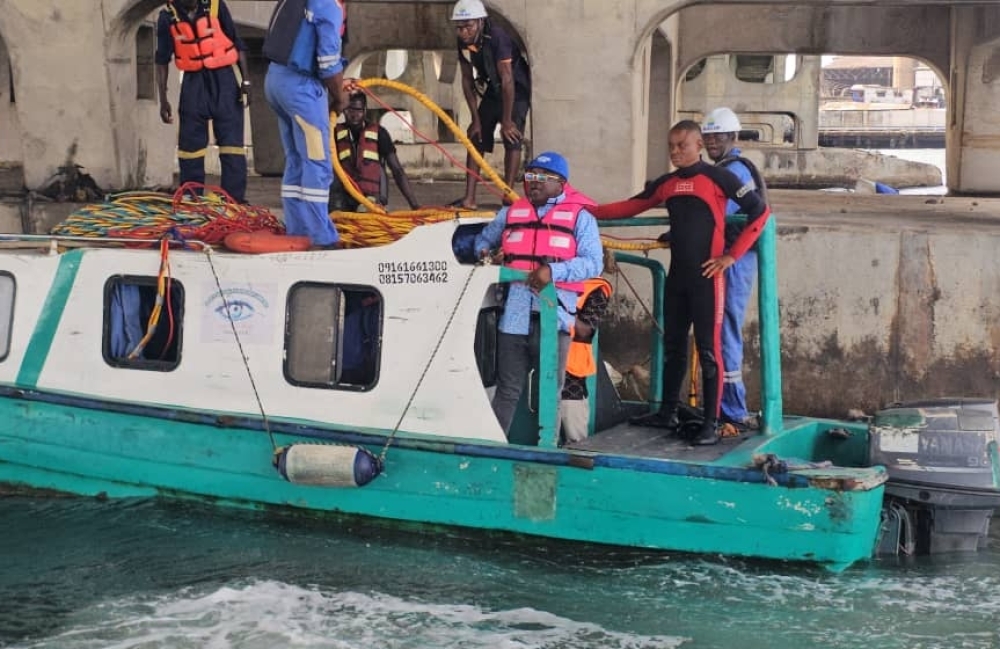
WORKS MINISTER, SEN UMAHI ASSESSES STRUCTURAL INTEGRITY OF THE UNDERWATER ELEMENTS OF BRIDGES THAT LINK LAGOS ISLAND TO MAINLAND -- Federal Controller of Works Lagos Absolved of Professional Negligence, Resumes Work as Investigation Reveals the Closure of Independence Bridge Lagos Was an Honest Mistake The Honourable Minister of Works, His Excellency, Sen Engr Nweze David Umahi CON has inspected the substructure and other underwater elements of Third Mainland bridge, Eko bridge, Carter bridge and Independence bridge to assess the structural integrity of some of the structures as well as appraise the progress of work on the bridge elements whose maintenance has been generously commenced by the Renewed Hope administration of the President of the Federal Republic of Nigeria, His Excellency, Bola Ahmed Tinubu GCFR. In his press briefing after the inspection visit to the four bridges on 5th April 2025, the Honourable Minister of Works, expressed satisfaction with the quality and speed of underwater works done on the 3rd Mainland bridge and Carter bridge handled by Julius Berger Plc as well as Eko bridge and Independence bridge handled by Buildwell Nig Ltd. He commended the contractors for the milestone completion recorded by them but frowned at the continued tampering of the underwater piers and pile caps of the bridges by people despite warnings. He made particular reference to the most recent case of a ship that capsized at Eko bridge waterway, hit and destroyed the underwater pier and pile cap of the bridge, thereby causing a big threat to the structure of the bridge. He also made mention of unlawful dredging going on in the waterways of 3rd Mainland bridge where the dredger destroyed the pile cap of the bridge. "We have inspected the 3rd Mainland Bridge and Carter Bridge handled by Julius Berger to know what is happening below the deck, and we are satisfied with the work they're doing. I can say that the work on the 3rd Mainland Bridge is about 50 percent completed, and that of Carter Bridge is about 70 percent completed. We didn't visit Iddo Bridge because it's a small work, and it's not as dangerous as what is happening under the deck of Third Mainland Bridge and Carter Bridge. Part of Julius Berger's work is to reinstate the deflected slab in the 3rd Mainland bridge. We don't have deflection in Carter bridge and this is the reason why we closed the 3rd Mainland bridge against big trucks, and so they ( contractors) are insisting that they have a new design to tackle that because it's a very delicate work and they want our designers to go with them to Germany and look at the new design and then give approval, and so I've approved for that to happen." Underscoring the importance of the underwater elements to the substructure of a bridge, the Honourable Minister explained, "The pile caps are like the legs to human beings. What the pile cap and the pies are to the bridges are what the legs are to human beings. So imagine a vehicle hitting one of your legs." Narrating what happened during his inspection to the bridge, he said, "And so I immediately directed divers to be deployed, and I went to the smaller boat to monitor the level of damages below the water, occasioned by this dredger that hit the pile. And I was very shocked. A whole one pile was totally removed. And what is holding that particular section is only the rods. So, some of the rods are removed. So it's like a whole leg of somebody is cut off." He appealed to the Governor of Lagos State to consider the need to shut down the waterways between the Carter bridge and Eko bridge because of the risk occasioned by the impact of the capsized to underwater elements. "Let me appeal to the Governor of Lagos State to please enforce that the waterways between Carter Bridge and the Eko Bridge be closed because the dredger that hit the pile caps and the piles tumbled and they got sunk. So what is safe is for that section of the waterways to be closed down. And so I'm alerting all the authorities of the Navy, the Lagos State government, they have always been very proactive. This section of the waterway needs to be closed down immediately." He emphasized the danger of dredging sand along the bridge areas. He said, "The dredging of sand along seas and rivers is very dangerous because all the piles in Lagos State were executed through skin friction, which means that it is the sand that is holding the piles and holding the bridge. At the Third Mainland Bridge, we have installed a camera to observe what is going on top and also under the bridge. And so we're going to be looking at that for the bridges in Lagos even though it's quite a lot of cost. The Honourable Minister, who also visited the ongoing construction of Section I of Lagos-Calabar Coastal Highway project by Hitech Construction Company Ltd, was full of joy for the quality and level of work the contractor has attained. Speaking at Chainage 13, where shore protection was being considered to be done, he said the President's bold decision to invest on infrastructure at this time of economic challenges, shows his practical political will to transform economic limitations to possibilities. The Honourable Minister highlighted the great investment and tourism opportunities that would be generated upon the completion of sections of Lagos-Calabar Coastal Highway. He said, "And, of course, we also have foreign investment in this, because 70% of this project is dollar-based, on loan as low as 2.5% single digit interest. And so, what is the problem if I can recover this money in 10 years? We're going to have a relief station along the corridor where we will have supermarkets, small clinic, towing vans, parking lots for cars and trucks and so on and so forth. We are going to have trees all through the route and, of course, solar lights and CCTV cameras. So, it's going to be a sight to behold. I want Nigerians to be very clear that the President is replicating what you see in the Western world, and people are saying don't do it." He urged Nigerians to keep faith with the vision underpinning the Renewed Hope agenda on road development, noting that where an individual's land is affected by the ongoing road infrastructure revolution, it is for the overriding public interest. He described as misleading and fictitious, the claim by one Mrs Ifeoma that she invested over $215m on her land on the right of way at Chainage 18 of Lagos-Calabar Coastal Highway and urged those darkening counsel without knowledge to visit the location and see that no single structure was built there except a gate which has been removed to give way for construction work. Meanwhile, the Honourable Minister of Works has absolved the Federal Controller of Works, Engr. Olukorede Keisha of any negligence in her duty, noting that the findings of the Federal Ministry of Works revealed that the error in the procedure for the closing of Independence bridge, Lagos that caused the regrettable grid lock was an honest mistake, but with an intention to save lives. He has directed the Federal Controller of Works to resume work with immediate effect. ...
HONOURABLE MINISTER OF WORKS, SUCCESSFULLY REPAIRS AND REOPENS THE FAILED SECTION OF INDEPENDENCE BRIDGE LAGOS, INTRODUCES POLICY OF STAKEHOLDER ENGAGEMENT/FEEDBACK MECHANISM BEFORE APPROVAL FOR CLOSURE OF FEDERAL ROADS NATIONWIDE In keeping with the abiding sense of responsibility and proactiveness of the Renewed Hope administration of the President of the Federal Republic of Nigeria, His Excellency, Bola Ahmed Tinubu, GCFR the Honourable Minister of Works, His Excellency, Sen. Engr. Nweze David Umahi, CON has fixed the failed section of Independence bridge, Lagos, which was closed for repairs on 2nd April 2025, and which closure caused untold hardship to Lagosians due to gridlock, necessitating the visit of the Honourable Minister of Works on 3rd April 2025 less than 24 hours of the incident. In his speech to mark the opening of the bridge for traffic, the Honourable Minister said it was God's grace and enablement that informed the timeous success recorded in fixing the bridge. He noted that the reason for the closure of the bridge was not for pleasure but for a technical failure of the approach slab, which affected the strength and utility of the bridge. He, however, expressed displeasure that the right procedure for the closure was not followed, and that was the reason why the public was taken unawares. He said, "So, the reason for the closure was not for pleasure. It was because it became very dangerous for commuters to use the place. But we didn't do it in the right way. And now, we had a design for the project, and I've looked at the design that we intended to use by using God's wisdom and grace and experience, and we have agreed to redesign the project. It's going to be redesigned as one span in a bridge." He thanked Mr. President for his purposefulness in leadership that inspires passion, responsiveness, and proactiveness in handling matters that affect Nigerians. He also thanked the Governor of Lagos State, the engineers of the Federal Ministry of Works in Lagos, the contractor handling the bridge repair (Buildwell Nig Ltd), and Hitech Nigeria Ltd. for their cooperation and support and assistance that saw to the successful reopening of the bridge. He equally thanked Lagosians, the press and other well-meaning Nigerians and stakeholders who showed concern over the plight of Nigerians affected by the closure of the bridge. He said, "So, we remain grateful to Mr. President. We also thank the Governor for his intervention and understanding and the information given to Lagosians that has drastically reduced bottlenecks all over the lsland. We are grateful. We are grateful for Hitech. Hitech gave us a lot of support, materials, and equipment. We are very thankful to Hitech. All through the night, they were bringing materials, they were bringing equipment. We also thank very highly our partner Buildwell, in this expert bridge. I absolve them of any blame in this circumstance. I'd rather thank them. They have been working in the past three days and nights, and we are grateful for their cooperation and for the partnership that has helped us to restore this bridge. And, of course, to Chief Elumelu and some other prominent Nigerians like Dangote, for their calls and encouragement. They even requested that they send their planes to carry us, and we said no" The Honourable Minister used the opportunity to roll out a new policy direction on measures to follow before a federal road is closed nationwide. He stated that going forward, a feedback mechanism through stakeholders' engagement would be a condition precedent that must take place before approval for closure of federal bridges/roads of essential utility such as those in Lagos State. He mentioned among others that the person seeking such closure must state "what is to be done on that place and then will state the technical problems and the technical solution. He will be able to put up all these exposures to the public. So, we request comments from the public and tell them how long it is going to last. And so, with this feedback, everybody is in the know, and then we'll be able to do that." ...
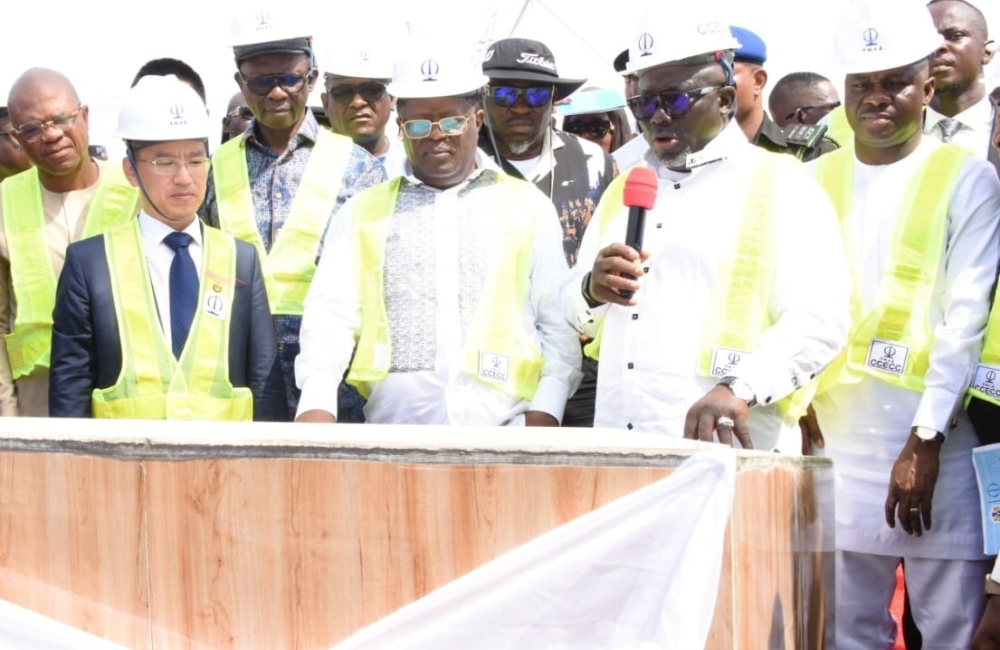
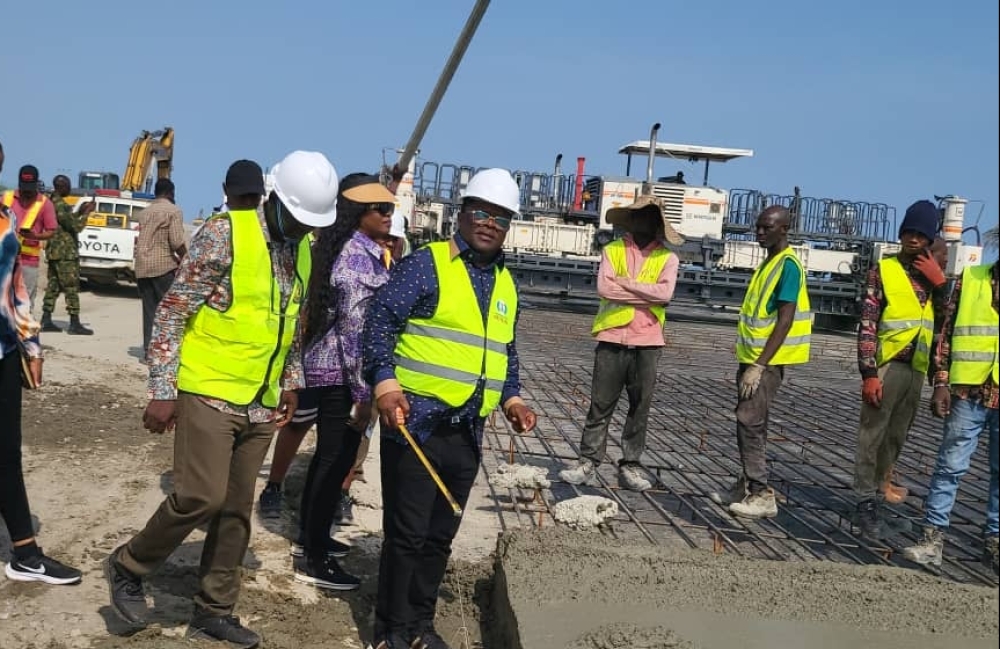
FG Flags Off Access Road to Second Niger Bridge (Phase 2A), Reinforces Commitment to Infrastructure Development The Federal Government through the Federal Ministry of Works has officially flagged off the Construction of a 17.55-Kilometre Access Road to the Second Niger Bridge (Phase 2A) in Asaba, linking the South South Zone to the South East. This milestone event underscores the administration’s unwavering dedication to enhancing national road infrastructure and fostering economic growth. Speaking at the ceremony, the Honourable Minister of Works Engr (Sen) David Umahi CON, FNSE, FNATE lauded the host State Government for its commitment to infrastructure development, emphasising that governance is about improving the lives of the people. He commended the Edo State Governor’s proactive approach to addressing road infrastructure needs, acknowledging the numerous ongoing projects, including three major flyovers in Warri town. "Your state is a construction site. You have demonstrated that leadership is about responsibility, not excuses. Instead of blaming the Federal government, you are taking proactive actions. That is highly commendable," he stated. Engr. Umahi further highlighted the Federal Government’s broader vision for road infrastructure, revealing that multiple strategic road projects are either ongoing or in the pipeline, nationwide. These include the Lagos-Ibadan Expressway, the Benin-Asaba Expressway, the Sokoto-Gusau-Katsina-Kaduna corridor, the East-West Road, the remaining section of Abuja-Kaduna-Zaria-Kano Dual Carriageway, amongst others. He assured that the 9-kilometre extension of the just-flagged off Reconstruction of the Benin-Asaba Expressway to the 2nd Niger Bridge requested by the State Government has been approved. To ensure the security and sustainability of the newly constructed roads and bridges, the Government has implemented advanced surveillance measures, including the installation of CCTV cameras along the Access Roads and the Bridge. These cameras will be linked to the offices of the Governors of the concerned States to monitor activities and prevent vandalism. Additionally, the project will incorporate solar-powered streetlights to enhance visibility and security. The Minister reiterated the administration’s commitment to prioritising inherited projects and delivering impactful infrastructure to Nigerians. He emphasized that under President Tinubu's Renewed Hope Agenda, road projects nationwide are receiving unprecedented attention, ensuring seamless connectivity and economic progress. "All major road projects inherited by Mr. President are ongoing. He has given them priority attention. This administration believes in continuity and results, not political excuses," he stressed. The project, he continued, is part of a broader national infrastructure strategy aimed at connecting key economic zones and improving transportation efficiency. The government has assured that funding is secured, with 30% of the contract sum ready to be paid, while strict timelines and performance monitoring will be enforced to ensure timely delivery. The Delta State Governor, Rt. Hon Sheriff Francis Oborevwori, while acknowledging the presence of dignitaries at the occasion, stated “It is an honor and privilege to stand before you today, representing His Excellency, Senator Bola Ahmed Tinubu, GCFR the President of the Federal Republic of Nigeria. This occasion is not just about flagging off a road project—it is a testament to this administration’s unwavering commitment to economic development, national integration, and infrastructure renewal. “The construction of the Access Road is a major step towards strengthening our nation’s connectivity. This road will ease movement, facilitate trade, and enhance economic opportunities for the people of Delta, Anambra, and beyond. It is yet another proof that under this administration, infrastructure development remains a top priority for fostering economic growth and national unity. I want to, especially, commend the government and people of Delta and Anambra States for their collaboration in ensuring the success of this project. Your support and cooperation are crucial in making this vision a reality. Infrastructure development is not just the responsibility of the Federal Government requires the collective effort of all stakeholders, including the State Governments, Local Communities, and Private Sector Partners,” says the President. The Governor added “To our esteemed contractors, I urge you to ensure the highest standards of quality and timely completion of this project. This is not just a road; it is a legacy of progress that will serve generations to come.” He extended his gratitude to all present-the traditional rulers, community leaders, and all who have contributed in one way or another to the realisation of the initiative. “Your support and dedication to the success of this project reflect our shared commitment to building a better, more connected Nigeria. As we look forward to its completion, let us all continue to work together for the development of our great nation,” Governor Oborevwori concluded. ...
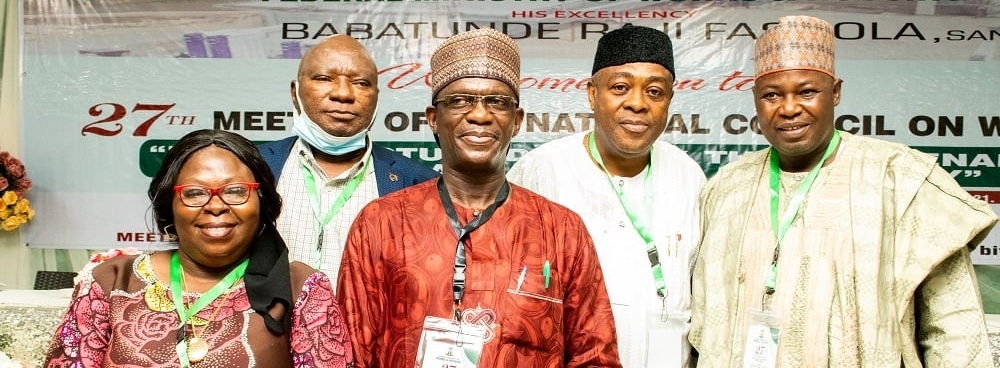
National Council On Works Kicks Off In Bauchi
The 27th National Council on Works has kicked off in Bauchi, Bauchi State capital today, Monday, September 20th, 2021
The four- day Council Meeting has the theme:” Infrastructure Delivery; the Maintenance Economy and National Prosperity.”
In his opening remarks at the technical session, the Director, Planning, Research and Statistics of Federal Ministry of Works and Housing, Jide Ode-Martins, described the theme for this year’s Council as timely, considering the collective resolve to address the challenges in road development in the country within available resources.
He explained that the first 2 days of the meeting will be the technical meeting of the Directors, followed by the meeting of the Permanent Secretaries that will fine-tune the recommendations of the Directors' meeting and other stakeholders.
The outcome of the Permanent Secretaries' meeting, he added, will be presented to the Council meeting of States' Commissioners and heads of relevant agencies under the Chairmanship of the Honourable Minister of Works and Housing for final deliberation.
Accordingly, Ode-Martins stated that the responsibility of the technical meeting of the Directors and other stakeholders was to create a solid and resourceful foundation by reviewing diligently the memoranda submitted by stakeholders.
He called on all the participants to make necessary contributions towards a successful Council Meeting.
“Esteemed delegates and officials, the timing of this meeting is very significant as it affords us the opportunity to think through and make necessary provisions in our various institutions towards adequate infrastructure delivery and cultivate maintenance culture to improve national prosperity,” he said.
Earlier, in his welcome address the Permanent Secretary Bauchi State Ministry of Works and Transport, Engr Stephen Abubakar, said that the theme of the meeting was suitable to the present situation in the country where there was the need to rethink infrastructure delivery and its maintenance for socio-economic development of the nation.
He further said that the meeting would provide the required platform for participants in the works sector to articulate policies that would provide the enabling environment and guide the path that would lead the country in bridging infrastructure gaps through innovative delivery and effective maintenance culture.
In attendance at the opening ceremony were critical stakeholders of the Works sector from the 36 states of the federation and the Federal Capital Territory, Abuja and representatives of the private sector.
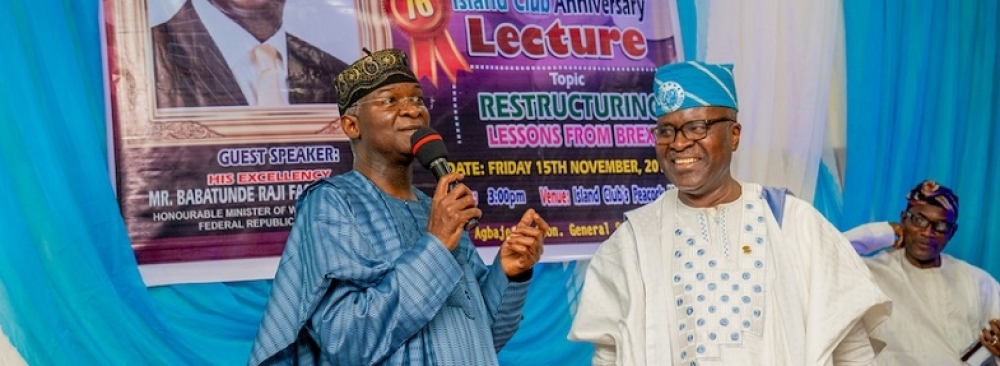
Restructuring For A Better Life – Lessons From BREXIT, Being Address Delivered By H.E, Babatunde Raji Fashola, SAN At The 2019 Island Club 76th Anniversary Lecture
Caveat
I must commence this address by issuing a caveat or a series of them namely:
a) That I started writing this piece intended as a public contribution to the restructuring debate in January 2019.
b) The views I express here are personal to me and do not reflect the position of the Government in which I serve or that of the All Progressives Congress of which I am a member.
c) The views are also informed by further reflections on positions I have taken on the need to strengthen our federal system of Government and to do so based not on emotions or political interests, but in the interest of improving the quality of life of Nigerians and for the purpose of developing Nigeria.
d) More importantly to state is that in seeking to solve a problem, we must look at many options, analyse their strengths and weaknesses and resist the temptation to jump at what first appears as a “solution” because it may not be the solution after all.
The quest for a better life has been an unending aspiration of the human civilization and will remain so till the end of time- that is if time ever ends.
From the agrarian to the industrial and now the information technology age, all the peoples of all nations are seeking a better life.
But the quest for a better life has led to many choices, sometimes well thought out and in some cases not so well thought out.
Some have sought constitutional amendments only to realize that a new document does not a better life procure. Some have sought geographical demarcations and creation of new nations, states and local governments only to realize that a new territory does not necessarily deliver a better life.
Some have sought increased control of resources and wealth only to find out that more wealth does not necessarily translate into a better life. These are facts of life, yet the quest for a better life, being a natural human longing and seeking, must continue.
There are a few things that Nigeria and Britain share in common in their quest for a better life and their coincidental reach for new political and economic realignments that currently dominate their public discourse in the name of “Restructuring” and “Brexit” respectively.
First to be noted is that both nations as they currently exist are not originals and this is true of many nations (Texas). (Netherlands).
Nigeria’s recent history of statehood or nationhood is still very fresh in the memory as having evolved as an amalgamation of many territories of diverse ethnic and religious dispositions in 1914.
But it is a story that dates back much longer; first to the British conquest of Lagos in 1861, the Berlin Conference of 1883-1885 and then to the Southern and Northern Protectorates that were the predecessors to the 1914 amalgamation.
This saw many Muslims, Christians, animists and people of diverse languages bound together in a household where a better life has now become a common aspiration.
It is important to point out that in Britain or the United Kingdom as they are also known, England was the kingdom, and that is why till date there is only a Queen of England not of Britain. The Scottish, Welsh, Irish who together with England constitute Britain are not English people. They have Christians and Muslim citizens, Anglicans, Catholics and Protestants.
While this speech may not be able to delve into the detail of their diversity and historical origins, it will suffice for comparison to point out that crude oil is largely to be found on the soil of the Scottish who continuously express an intention to leave the union.
And Britain as we know it today first emerged in 1801 when it united with the neighbouring Kingdom of Ireland, forming the United Kingdom of Great Britain and Ireland. This was renamed the United Kingdom of Great Britain and Northern Ireland following the secession of the Irish Free State in 1922.
In perhaps the same way that Nigeria has moved from two (2) protectorates and one (1) colony to three regions, four regions, 12 states, 19 states to 36 states, Britain in its original form has had to concede independence to the southern part of Ireland now known as the Republic of Ireland while Northern Ireland remains a part of the United Kingdom.
This was the result of the Good Friday Peace Agreement that secured a truce after many years of conflict between Catholics and Protestants in Ireland which spilled to several parts of the United Kingdom and resulted in bombings and acts of terror in the 1970s, similar to some of what we have experienced in the North East of Nigeria.
In spite of these, POLITICAL REALIGNMENTS, the quest for a better life exists in both countries – Nigeria and the UK. There are problems of unemployment, security, health care, homelessness, quality of education, cost of living and business competitiveness to mention but a few in both countries.
What is different is the scale of the problem, characterized by how the resources have been invested or misused, the level of development, which is manifest in the quality of infrastructure that supports transport, energy, health care, education and law enforcement.
What does not change is the quest for a better life on both sides, and interestingly, the political leadership has weaponized this quest for maximum benefit.
In the United Kingdom, the answer to the quest for a better life is in seeing Britain leave the European Union, a union they joined reluctantly in 1973.
So, to the people of Britain, “Brexit” (one word) was sold as a politically nebulous term that suggested to the ordinary people that the free movement of other Europeans into Britain was responsible for the lack of jobs.
That the amount they were paying as membership fees of the union was part of the reason why there was not enough money to spend at home on British education and healthcare.
That the need to subordinate their laws to the European parliament affected the British government’s ability to properly protect their own people.
It was a fascinating proposition. Their constitutional arrangement required that a referendum be conducted to ask the people to decide.
In the quest for a better life, the people voted in the referendum that Britain should leave or exit from the European Union. So was formed Brexit.
The people voted for a political Rearrangement in the belief that it would deliver economic and social benefits, and therefore a better life.
But, at the time they were voting, nobody told or reminded the people, that:
Most of the insulin that diabetic patients used to treat themselves in Britain came from France and the cost might go up.
Some of the best medical personnel in Britain were Europeans who might leave. ( 5,000 Nurses from Europe have since left the United Kingdom , as alleged by a member of Parliament on the 29th October 2019 and Nigeria and some other countries are paying the price with 2-3 year contracts being offered to their medical personnel to fill the Gap).
40 per cent of their food comes from Europe.
If they travelled to European cities, they may require visas to enter, or will have to share the same queue with Asians, Africans and other nationalities at immigration points at airports and may lose their right to use the European entry point.
Needless to reiterate, while it is doubtful that the people will all have voted for the risk of high cost of insulin, high cost of food or loss of their right of entry, the vagueness of the details of Brexit as presented by the political spin masters, has certainly left the country in some quandary.
Some people are now saying it was not well explained to them. Some have gone to court to stop the process but were unsuccessful and some are now saying they want a fresh referendum.
The political class that set the stage for Brexit now say there is no going back. The people have spoken in a referendum, and that it is a threat to democracy not to do their bidding.
Here is the tyranny of democracy’s fixation with the will of the majority and its supremacy. The majority is not always right while their supremacy is not always unimpeachable.
While this debate goes on about how to Brexit after 3 years of the Referendum to leave, businesses are either Relocating or shutting down, Jobs are also being lost , and uncertainty is hobbling investment decisions.
Of course, because things are no longer what they used to be, those who described us as “fantastically corrupt” are now “visiting us fantastically”. The Prime Minister and the Prince of Wales have been here.
Their views have not changed. We are simply a market that can replace what they might be losing in Europe as a result of Brexit.
So, while we roll out cultural troupes, take them to entertainment spots and queue to take selfies , they are looking for where there is food supply, skilled labour, and possibly a new source of insulin that will be cheaper than that of France, post-Brexit.
How we react to this opportunity is another matter for another conversation, but it is one that must take place very quickly. This new friendship must be defined by mutually beneficial parameters.
But this takes me now to Restructuring, which is also one word, like Brexit.
The proponents of restructuring have not been specific. Some of them, with very great respect, it appears that some of them simply want what they were used to in their more youthful days which was a parliamentary system of government and not a presidential system of Government. There is nothing wrong with this, after all we are often victims of habits that are difficult to change.
However, a much younger generation did not experience the parliamentary system and may be taken in by some arguments such as cost of getting elected and the cost of legislative work. In a parliamentary system, you may have a Prime Minister in the saddle for 16 straight years for as long as he is the leader of his party. Mrs. Margaret Thatcher was Prime Minister for 16 years for example. Given our current realities and diversity as a people, is that desirable in our land?
True as the cost of legislation may be as a factor, this generation must be told in clear terms that it was during the Parliamentary system that the political crisis of the 1960s started, and with a combination of other factors, led to a civil war in which many died.
They must read up about it, and demand more explanation as to why it did not prevent our division from resulting in a full blown civil war.
Of course we must not forget that the UK Parliamentary system has produced 4 (Four) Prime Ministers in the last 12 (Twelve years) including the incumbent. Do we want such rapid political leadership changes like this? What does it portend for policy consistency and continuity?
All I can add is that empirical evidence has shown that diversity such as we have, is better managed with a federal arrangement and that this generation should look before they leap.
A federal arrangement reduces suspicion, hate, and acrimony and prevents hostilities. It makes for greater stability over all and collaborative working of the federating units, forging a sense of belonging in its trail and setting the tone for competitive spirit.
However, when the protagonists of restructuring are pressed to say what they mean, some say they want a more federal union and that what we have is a unitary government masquerading as a federal one.
So, their argument becomes an argument of political arrangement. The issue is, therefore, not so much the objective but the artery road, shun of bypass to the objective goal of restructuring.
When the constitutional amendment to allow for the creation of state police was voted down, very few of the champions of a wholly federal arrangement raised a whimper. This was a big item of restructuring to reform law enforcement.
I have previously said and I repeat my views that multi-level policing by whatever name called, is something that I agree with.
What is a true federal arrangement without decentralized law enforcement, when you have a decentralized judiciary and law making arrangement? Shouldn’t states that make their own laws have their own agencies to enforce them and local governments that make bylaws have their own community policing?
Put simply, it seems that some of the protagonists of Restructuring want a true federation but prefer a unitary police. Even at that, the structure of the police system is not on its own a guaranty of efficiency.
The unitary British political system has operated a decentralised policing system which is now being considered for wholesale merger in order to save costs.
With rising crime, especially gang violence and knife attacks, such as a recent report of 13 knife stabbings over a 24-hour period, thorough reflection requires one to ask whether simple structural re-arrangement will resolve the knife attack problems.
As we grapple with the issue of a minimum wage, I expect the voices of the Restructurers, apostles of true federation, and those who want control of resources to stand with REASON, that the wages should not be uniform if the resources and the cost of living are not uniform.
This is a position I have previously advocated publicly, that states must be allowed to decide their own wages, and that wages must move from the Exclusive to the Concurrent list of the Constitution.
Sadly, I have not heard those voices raised at the same decibel as they have argued for restructuring.
My position on state police, wages and other issues also make a protagonist, but not all protagonists will agree with me, because they also want something different.
For yet some other people, the appeal of restructuring is the opportunity to agitate for more states and more local governments. That may be legitimate.
But the aspiration must answer some questions like, which states will be carved up? What is their viability? How do we solve the problems of existing ones that are at the point that wages of the public servants cannot be paid?
It might interest members of the public to know that boundary disputes from states creation that took place in 1967 and after that are still unresolved before the National Boundaries Commission, as some asset sharing and ownership issues have also persisted from states created after the 1967 episode.
It is perhaps helpful to also point to the fact that some of the states created over two decades ago such as Anambra, Bayelsa, Nasarawa, Zamfara and Ekiti feel that they are not fairly treated because there are no Federal Secretariats in their state.
The Buhari Administration is now completing and in the process of furnishing some of these secretariats while new ones have recently been awarded.
For yet another group of the protagonists of restructuring, the argument is in favour of a weaker centre and stronger states as federating units.
Apart from the case which is appropriately made for a change in the revenue allocation formula, they hinge the argument on the case that the President is too powerful. In fact, some have argued that the Nigerian president is the most powerful in the world; however, recent facts do not support this assertion.
We are witnesses to the fact a president once seized local government funds and the Supreme Court, an arm of Government that is set up as a check and balance on excessive powers and abuse of same, rightly declared that there was no constitutional power to do so.
Although the order to release the money was not immediately complied with, another president who recognised the limits of presidential power appropriately ordered the release of the funds.
We are living witnesses to how difficult it has been for these so called all powerful presidents to get their Budget passed without alterations, (some of which are so fundamental) by the parliament.
I leave you to decide whether the all-embracing “powers” of the Nigerian president is a “fact” or a contrived “myth” to bolster the case for restructuring.
I also urge you to read the Nigerian constitution and see for yourself the power and duties of the Nigeria president. If you do, as I have done, you will find 48 items of mention concerning the office of the president.(Duties, functions of the President- See Annexure I).
It seems that in the determination to support the unfounded argument about the enormous powers of the President, those who make the case, conveniently lump Powers with Functions and Duties.
Power is the legal right or authorization to act or not to act. It is the ability conferred on a person by law to alter, by an act of will, the rights, duties, liabilities and other relations, either of that person or another. On the other hand, the term ‘Function’ is the duty of the office.
The summary of references to the President show:-
a) Powers exercisable by the President = 23
b) Powers exercisable by the President, subject to National Assembly = 9
c) Power exercisable by the President, subject to other institutions = 4
d) Duties and Functions = 9
e) Restriction on the powers of the President = 3
Total = 48
For yet another group of Restructurers, they want their own country created by excising their zone. I only need to say that they should look closely at the break-up of Yugoslavia, the Soviet Union, and lately Sudan, to see whether it has delivered on the expectation of a better life.
In addition to that, they must look at the potential of what they might gain as being separate nations, to what they might leave behind from inter-marriage and families that they have created in other parts of Nigeria.
Recently the Cable News Network featured the story of the emotional reunion of an octogenarian mother with a son she had left behind when Korea was broken up into North and South as different nations in the 1940s.
And it is not just about people, it extends to resources and sustenance that contribute to better life. Think of whether you want to live in a new country and have to spend money to import some of the things you could get by driving just an hour without a border or the need for a visa.
That is the reality of Brexit today.
Before writing this piece, I thought it might be worthwhile to find out what ordinary Nigerians, as distinct from political actors know about Restructuring.
I commissioned a survey, in December 2018, which was a repeat of a similar one , in late 2017.
Just over 2 in 5 of the respondents are aware of the ongoing restructuring debate in the country. Even after prompting, a third of the sample still remain unfamiliar with the term (Restructuring.)
33% Don’t know what restructuring means.
15% Think that it means amending the constitution.
14% think that it means reorganising/rebuilding the country.
8% think that it means devolution of power to the states.
6% think that it means changing the revenue allocation formula.
6% think that it means reverting to Regional Government.
3% think it means increasing Federal Resources to selected states that are viable.
2% think that it means abolition of Federal Character and adoption of merit based appointment.
2% think that it means restructuring the economy.
While the findings may not vitiate the imperative of restructuring, what these point out is that there is a great deal of work to be done by its protagonists. Restructuring is inherently desirable.
Those not overtly enthusiastic even when they grasp what restructuring means, what are their fears? We must make efforts to allay their fears. Because a leader leads, carrying his vision of a higher goal and a better life even when a larger section of the citizenry are yet to see his cause clearly, it means the call for restructuring requires greater public education. It is in this way we would not plunge the country into intractable confusion, to put it mildly.
Let me say emphatically that the quest for a better life in Nigeria is legitimate and salutary. That is because there is so much more that we can do and will do.
However, it seems to me that while the quest for a better life may be assisted by amending some parts of the constitution, on its own it will not deliver a better life. A better life is the commonwealth that is produced by what I call common contribution. In other words, it is the result of hard work and dedicated productivity. It is what we produce that we can distribute.
For example, how much do we produce in terms of human activity and how will amending some parts of the Constitution on their own, translate to increased national productivity?
How many of our people in public and private sector who are contracted for an 8(Eight) hour daily work shift, actually work for 4(four hours)?
A better life is not a miracle product. It is the harvest of the investment of labour.
While considering numbers, it might be useful to see how they impact education.
The default argument for poor quality education is Government.
That is true to the extent that Government is the regulator, responsible for setting standards and all. But how many schools does Government own? The record indicates that there are a total of 165 universities in Nigeria; (not including a few recently approved ones) 43 belong to the Federal Government; 47 to the state Governments and 75 are private universities.
At the secondary level, there are 104 unity schools owned by the federal Government; this is a drop in the ocean, compared to the number of secondary and primary schools owned by state governments and private organisations nationwide.
Let me use the data from Lagos that I can claim some degree of familiarity with to make this case of responsibility.
There were a total of 8,274 schools primary and secondary in Lagos State. The state government owned a total of 1,681, made up of 1,045 primary and 636 secondary, representing 20 (%) per cent of the total number of schools.
The remaining were owned by the private sector, individuals, non-profit organisation and religious missions. These numbers show where the bulk of responsibility for foundational education lies, with us, the private people, entrepreneurs and less with Government.
The same is also true of the health sector where critical life saving intervention, like ante-natal care, immunization of babies, sanitation and refuse management all lie with the Local Government system under our Constitution.
Do we wish to restructure and pass these to the federal government, whose powers we say are already too much, or will we get down to work and make these primary health centres do their work of preventing disease, supporting wellbeing and deterring illness, or do we want to blame the constitution?
Let me remind all of us that we already have in our constitution a provision that seeks to promote the equitable distribution of opportunities called the Federal Character provision.
Has it solved the problem of access to opportunities and jobs?
The Supreme Court of Nigeria has also advanced the cause for restructuring in its judgement in the case popularly called the Resource Control Case by which certain oil producing states get 13% extra revenue from the distribution pool.
Has it achieved a better life for the peoples of those states?
I think the jury will be out for a long time on this one.
These are some of the hard facts.
They point clearly to where the responsibility for a better life lies. While admittedly a document may point the way; while it may show direction, it is we who must tread the path it shows to us. A good document not backed by the right attitude does not take a people far.
So, in addition to restructuring our political and administrative arrangements, we must restructure our attitude and our mind set. A better life does not necessarily exist in a new document without the right political education, a change of attitude and our inflexible commitment to public good.
Hearty felicitations to the Island Club at 76, and long the Federal Republic of Nigeria .
Babatunde Raji Fashola, SAN
Honourable Minister of Works and Housing
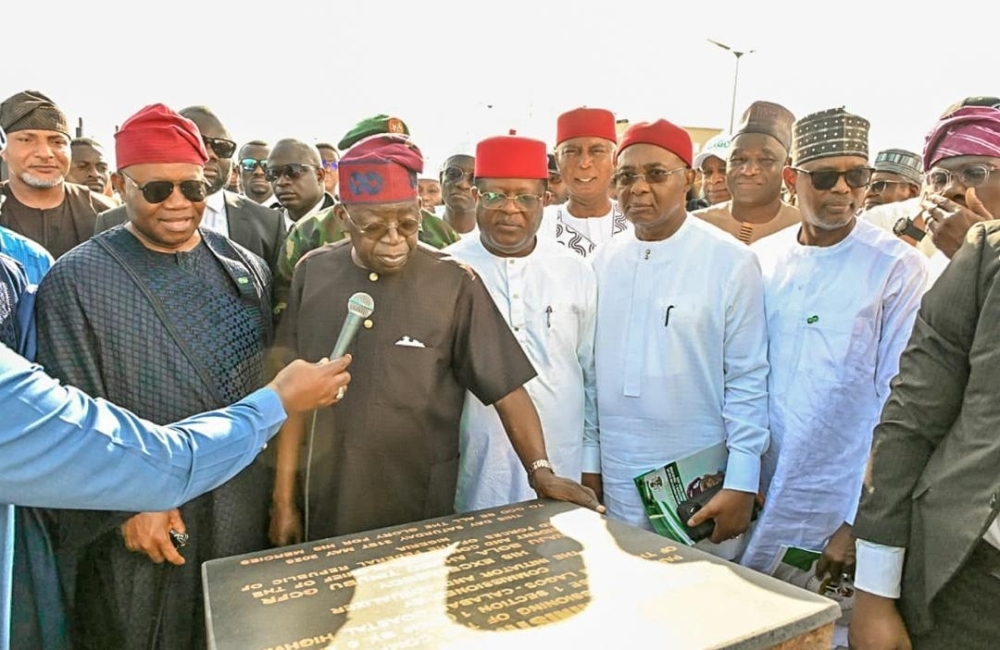
DRIVING NIGERIA’S FUTURE: CELEBRATING TWO YEARS OF TRANSFORMATIVE LEADERSHIP AND THE LAGOS-CALABAR COASTAL HIGHWAY MILESTONE
DRIVING NIGERIA’S FUTURE: CELEBRATING TWO YEARS OF TRANSFORMATIVE LEADERSHIP AND THE LAGOS-CALABAR COASTAL HIGHWAY MILESTONE
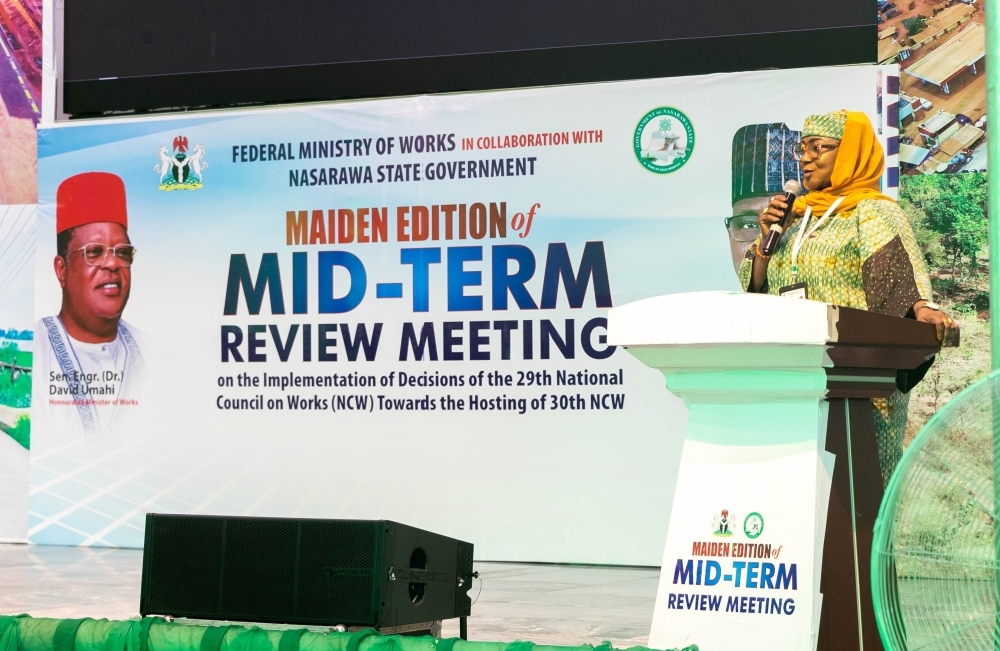
MID -TERM REVIEW MEETING ON THE IMPLIMENTATION OF THE DECISIONS REACHED AT THE 29TH NATIONAL COUNCIL ON WORKS (NCW) DAY 1
MID -TERM REVIEW MEETING ON THE IMPLIMENTATION OF THE DECISIONS REACHED AT THE 29TH NATIONAL COUNCIL ON WORKS (NCW) DAY 1