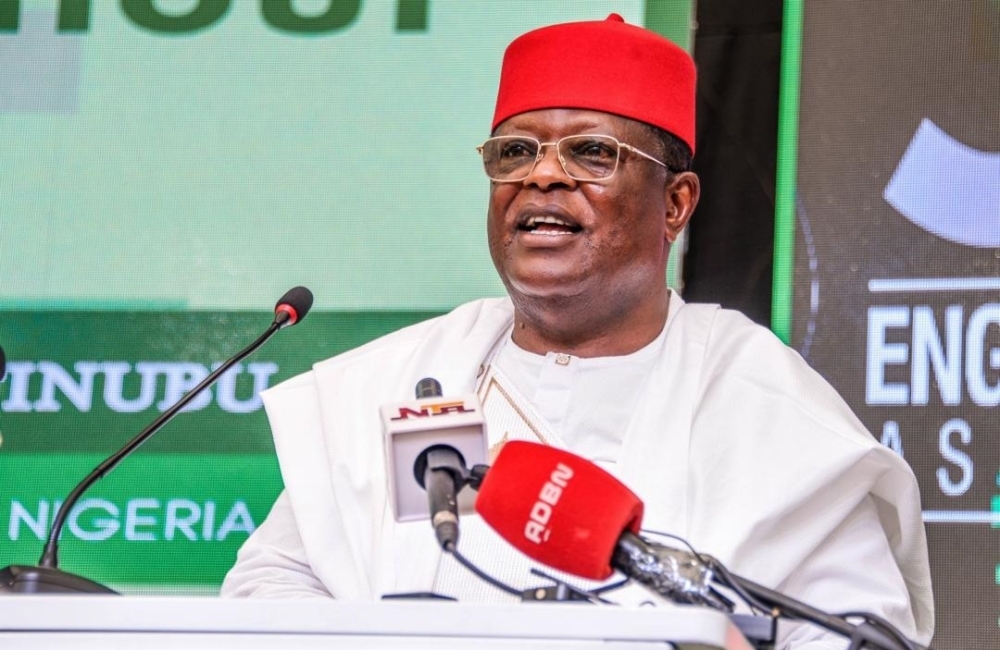
PRESIDENT TINUBU REITERATES COMMITMENT TO QUALITY INFRASTRUCTURE DELIVERY AT THE 34TH COREN ENGINEERING ASSEMBLY
President Bola Ahmed Tinubu, GCFR, has reaffirmed the Federal Government's unwavering commitment to strengthening engineering regulations, promoting quality infrastructure, and safeguarding public safety across Nigeria.
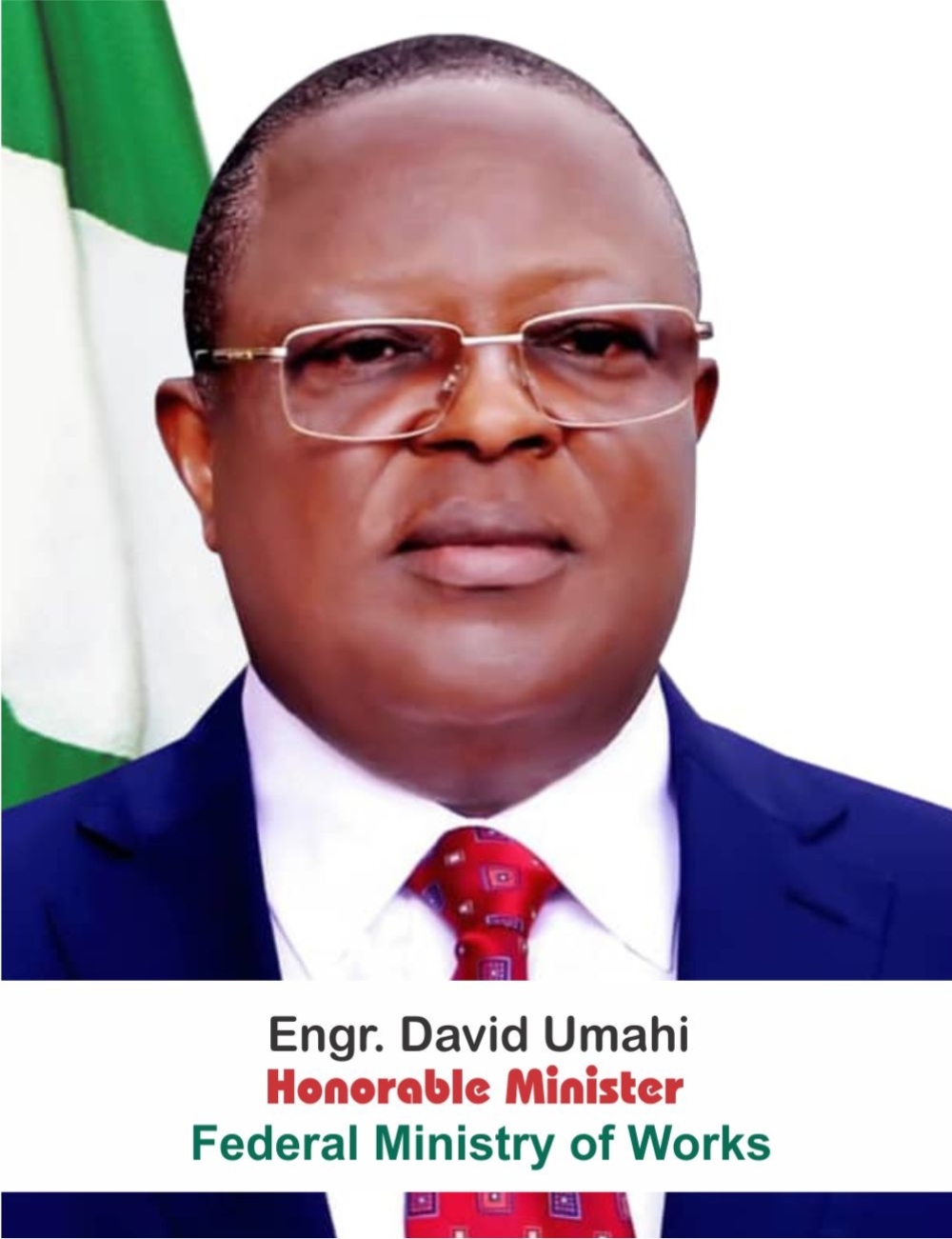
Represented by the Honourable Minister of Works, *Engr. David Umahi, CON, FNSE, FNATE *, while declaring open the 34th COREN Engineering Assembly, the President described the Assembly’s theme, *"Advancing Public Safety in Nigeria through Strategic Engineering Regulatory Enforcement and a Tiered Sanctioning Regime,"* as timely and relevant to the nation’s developmental aspirations.
The President stated that engineering remains the backbone of national development and that effective regulatory enforcement is essential for protecting lives, ensuring quality infrastructure, and restoring public confidence in the engineering profession.
He stressed that regulations are not intended to punish professionals but to protect public interest, noting that *” no road, bridge, or building is more valuable than human life.”*
President Tinubu assured participants that his administration remains fully committed to completing the four (4) Legacy Road Projects across the six geopolitical zones, under the Renewed Hope Agenda. He described them as strategic investments that will transform the nation’s economy, improve connectivity, and stimulate sustainable development.
The Honourable Minister of Works commended the Council for the Regulation of Engineering in Nigeria (COREN) for choosing an apt theme that aligns with the Federal Government’s vision for quality infrastructure delivery and adherence to public safety.
He noted that engineering is a profession where mistakes can cost human lives, emphasising that, unlike many other professions, there is often no opportunity for appeal after a structural failure. He, therefore, called for stronger regulations, strict enforcement, and effective sanctions against unqualified practitioners and professionals, who compromise ethics and standards.
Engr. Umahi stressed that site engineers must discharge their responsibilities professionally and should never allow contractors to dictate engineering decisions. He urged Council to strengthen its disciplinary mechanisms, similar to other professional regulatory bodies, to ensure that only qualified engineers are allowed to practice.
The Minister highlighted the achievements of President Tinubu’s administration, especially the ongoing Legacy Road Projects spread across all the geopolitical zones, designed to improve economic integration, enhance national security, create employment opportunities, and stimulate investment.
He expressed confidence that with continued discipline, transparency, and adherence to engineering ethos, Nigeria’s infrastructure deficit would be significantly reduced within the coming years.
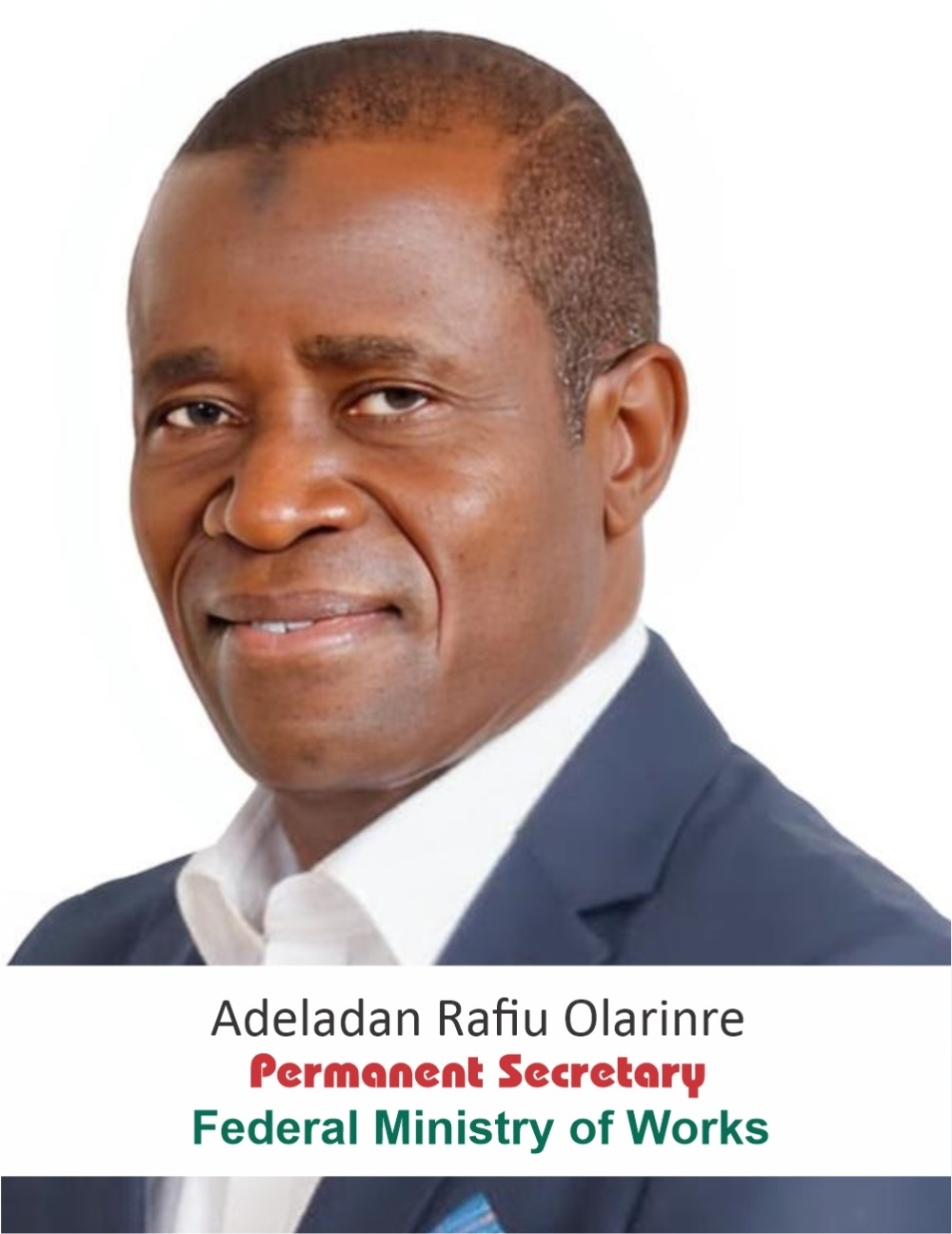
Presenting the *Keynote Address* on behalf of the Honourable Minister, the *Permanent Secretary, Federal Ministry of Works, Mr. Rafiu Adeladan,* stated that the Renewed Hope Agenda places infrastructure development at the centre of Nigeria’s economic transformation. He explained that the Ministry is implementing four major Legacy Projects across the geopolitical zones to connect communities, promote commerce, improve national integration, and encourage investment.
The Permanent Secretary emphasised that quality assurance, competence, professionalism, and independence amongst stakeholders remain fundamental requirements for sustainable infrastructure development. He urged engineers to uphold ethical standards, comply strictly with engineering regulations and best practices, and strengthen resilience through adherence to due process
The Chairman of the occasion, *Alhaji Aliko Dangote, GCON,* represented by *Prof. Hassan Umaru* described the Assembly as timely and significant, noting that engineering excellence remains the foundation of public trust, industrial competitiveness, and national development.
He observed that every infrastructure project must be executed according to approved standards and maintained throughout its lifespan. Drawing from the experience of the *Dangote Refinery* project, he explained that rigorous engineering design, quality control, technical discipline, and strict compliance with standards were critical to its successful delivery.
The Chairman called for sustained excellence within the engineering profession and urged COREN to continue strengthening regulatory frameworks, while enforcing disciplinary measures against erring practitioners, in order to safeguard lives and property.
In his *Welcome Address,* the *President of COREN, Engr. Prof. Sadiq Zubair Abubakar, FNSE,* outlined the Council’s statutory responsibility of regulating engineering education and practice in Nigeria, in line with international standards and recommended practices.
He explained that engineering graduates are expected to undergo mandatory industrial training before participating in the National Youth Service Corps (NYSC), describing practical exposure as critical to professional competence.
Prof. Abubakar further disclosed that COREN has successfully introduced digital verification and enforcement systems to improve transparency, eliminate fraudulent practices, and strengthen regulatory compliance.
He assured members that the Council would continue to uphold integrity, professionalism, and accountability, while addressing attempts by some practitioners to circumvent established standards. According to him, engineering regulation must remain transparent, sustainable, and effective in preventing infrastructure failures across the country.
In his introductory remarks, *Prof. O. A. U. Uche* emphasised the importance of sustaining quality infrastructure development through continuous improvement in engineering practice. He described infrastructure development as a collective responsibility requiring collaboration among government, professional bodies, academia, industry, and private sector stakeholders. In this vein, he, therefore, called for stronger synergy in advancing engineering excellence and national development.
The *Honourable Minister of Innovation, Science and Technology, Dr. Bosun Tijjani*, stated that science, technology, and engineering remain critical drivers of economic growth, innovation, and public safety. He pledged continued collaboration between the Ministry and engineering regulatory agencies.
Representing the Nigeria Governors' Forum, the *Governor of Plateau State, Barr. Caleb Mutfwang,* opined that engineering is one of the most respected professions globally and emphasised the need to create an enabling environment for engineers to thrive, while sustaining public safety and economic development.
The *National Chairman of the All Progressives Congress (APC), Professor Nentawe Yilwatda*, commended COREN for its achievements in regulating engineering practice. He described engineers as the backbone of national development and praised the Federal Ministry of Works, under the leadership of Engr. David Umahi for the remarkable progress recorded on the four Legacy Road Projects and others across the six geopolitical zones.
He congratulated the Ministry for its commitment to quality infrastructure and affirmed that Nigerian engineers continue to distinguish themselves through professionalism and excellence both nationally and internationally.
The 34th Engineering Assembly reaffirms
COREN’s commitment to strengthening engineering regulations, enforcement, and a tiered sanctioning regime to ensure public safety and sustainable infrastructure development in Nigeria.




President Bola Ahmed Tinubu, GCFR, has reaffirmed the Federal Government's unwavering commitment to strengthening engineering regulations, promoting quality infrastructure, and safeguarding public safety across Nigeria. Represented by the Honourable Minister of Works, *Engr. David Umahi, CON, FNSE, FNATE *, while declaring open the 34th COREN Engineering Assembly, the President described the Assembly’s theme, *"Advancing Public Safety in Nigeria through Strategic Engineering Regulatory Enforcement and a Tiered Sanctioning Regime,"* as timely and relevant to the nation’s developmental aspirations. The President stated that engineering remains the backbone of national development and that effective regulatory enforcement is essential for protecting lives, ensuring quality infrastructure, and restoring public confidence in the engineering profession. He stressed that regulations are not intended to punish professionals but to protect public interest, noting that *” no road, bridge, or building is more valuable than human life.”* President Tinubu assured participants that his administration remains fully committed to completing the four (4) Legacy Road Projects across the six geopolitical zones, under the Renewed Hope Agenda. He described them as strategic investments that will transform the nation’s economy, improve connectivity, and stimulate sustainable development. The Honourable Minister of Works commended the Council for the Regulation of Engineering in Nigeria (COREN) for choosing an apt theme that aligns with the Federal Government’s vision for quality infrastructure delivery and adherence to public safety. He noted that engineering is a profession where mistakes can cost human lives, emphasising that, unlike many other professions, there is often no opportunity for appeal after a structural failure. He, therefore, called for stronger regulations, strict enforcement, and effective sanctions against unqualified practitioners and professionals, who compromise ethics and standards. Engr. Umahi stressed that site engineers must discharge their responsibilities professionally and should never allow contractors to dictate engineering decisions. He urged Council to strengthen its disciplinary mechanisms, similar to other professional regulatory bodies, to ensure that only qualified engineers are allowed to practice. The Minister highlighted the achievements of President Tinubu’s administration, especially the ongoing Legacy Road Projects spread across all the geopolitical zones, designed to improve economic integration, enhance national security, create employment opportunities, and stimulate investment. He expressed confidence that with continued discipline, transparency, and adherence to engineering ethos, Nigeria’s infrastructure deficit would be significantly reduced within the coming years. Presenting the *Keynote Address* on behalf of the Honourable Minister, the *Permanent Secretary, Federal Ministry of Works, Mr. Rafiu Adeladan,* stated that the Renewed Hope Agenda places infrastructure development at the centre of Nigeria’s economic transformation. He explained that the Ministry is implementing four major Legacy Projects across the geopolitical zones to connect communities, promote commerce, improve national integration, and encourage investment. The Permanent Secretary emphasised that quality assurance, competence, professionalism, and independence amongst stakeholders remain fundamental requirements for sustainable infrastructure development. He urged engineers to uphold ethical standards, comply strictly with engineering regulations and best practices, and strengthen resilience through adherence to due process The Chairman of the occasion, *Alhaji Aliko Dangote, GCON,* represented by *Prof. Hassan Umaru* described the Assembly as timely and significant, noting that engineering excellence remains the foundation of public trust, industrial competitiveness, and national development. He observed that every infrastructure project must be executed according to approved standards and maintained throughout its lifespan. Drawing from the experience of the *Dangote Refinery* project, he explained that rigorous engineering design, quality control, technical discipline, and strict compliance with standards were critical to its successful delivery. The Chairman called for sustained excellence within the engineering profession and urged COREN to continue strengthening regulatory frameworks, while enforcing disciplinary measures against erring practitioners, in order to safeguard lives and property. In his *Welcome Address,* the *President of COREN, Engr. Prof. Sadiq Zubair Abubakar, FNSE,* outlined the Council’s statutory responsibility of regulating engineering education and practice in Nigeria, in line with international standards and recommended practices. He explained that engineering graduates are expected to undergo mandatory industrial training before participating in the National Youth Service Corps (NYSC), describing practical exposure as critical to professional competence. Prof. Abubakar further disclosed that COREN has successfully introduced digital verification and enforcement systems to improve transparency, eliminate fraudulent practices, and strengthen regulatory compliance. He assured members that the Council would continue to uphold integrity, professionalism, and accountability, while addressing attempts by some practitioners to circumvent established standards. According to him, engineering regulation must remain transparent, sustainable, and effective in preventing infrastructure failures across the country. In his introductory remarks, *Prof. O. A. U. Uche* emphasised the importance of sustaining quality infrastructure development through continuous improvement in engineering practice. He described infrastructure development as a collective responsibility requiring collaboration among government, professional bodies, academia, industry, and private sector stakeholders. In this vein, he, therefore, called for stronger synergy in advancing engineering excellence and national development. The *Honourable Minister of Innovation, Science and Technology, Dr. Bosun Tijjani*, stated that science, technology, and engineering remain critical drivers of economic growth, innovation, and public safety. He pledged continued collaboration between the Ministry and engineering regulatory agencies. Representing the Nigeria Governors' Forum, the *Governor of Plateau State, Barr. Caleb Mutfwang,* opined that engineering is one of the most respected professions globally and emphasised the need to create an enabling environment for engineers to thrive, while sustaining public safety and economic development. The *National Chairman of the All Progressives Congress (APC), Professor Nentawe Yilwatda*, commended COREN for its achievements in regulating engineering practice. He described engineers as the backbone of national development and praised the Federal Ministry of Works, under the leadership of Engr. David Umahi for the remarkable progress recorded on the four Legacy Road Projects and others across the six geopolitical zones. He congratulated the Ministry for its commitment to quality infrastructure and affirmed that Nigerian engineers continue to distinguish themselves through professionalism and excellence both nationally and internationally. The 34th Engineering Assembly reaffirms
PRESIDENT TINUBU REITERATES COMMITMENT TO QUALITY INFRASTRUCTURE DELIVERY AT THE 34TH COREN ENGINEERING ASSEMBLY
COREN’s commitment to strengthening engineering regulations, enforcement, and a tiered sanctioning regime to ensure public safety and sustainable infrastructure development in Nigeria.
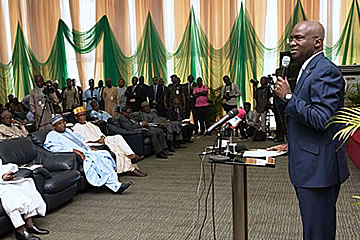
Fashola Charged Stakeholders To Complement Government’s Effort In Housing Delivery The Minister of Power, Works and Housing, Babatunde Raji Fashola, SAN, has charged stakeholders in the housing sector to focus more on how to solve the problem of housing deficits in the country rather than magnify the problem. He said inspite of the housing challenges; Nigeria will over time come out if consistent right policies are put in place. Fashola stated this at the opening ceremony of the 11th Abuja International Housing Show with the theme, Solving Nigeria’s Housing Challenges through Innovative Finance and Infrastructure Solution. The Minister noted that financing is not only the problem in the housing industry but also the issue of affordability and acceptability, adding that it is important to build to the satisfaction of the off - takers. He said that the Ministry is currently building in 33 States of the federation to respond to the climatic and cultural demands of the people under the National Housing Programme, adding that this will be used as a pilot to interface with the private sector. While commending the vision and tenacity of Fesadeb Communication Ltd, the organiser, the Minister said that it is important to have a housing economy, an economy that delivers on a value chain that will impact on people’s economic lives like the artisans, mason, plumbers, welders and food vendors. Earlier in his address, the Chairman of the All Progressive Congress (APC) and Chairman of the Abuja International Housing Show, Chief John Odigie-Oyegun, noted that the choice of the theme for this year’s event is not only apt but appropriate. Oyegun stated that the Buhari administration promised to provide decent and affordable housing to Nigerians through the establishment of the National Housing Programme with a target of raising enough finance to build 1 million housing estates annually within the next decades. He said that the APC-led government is also committed to bridge the gap of housing deficits by providing affordable housing for low income earners who are the most marginalised due to access to finance. He added that a new housing social project has been included in the economic recovery plan recently launched by the federal government with the objective to reduce the housing deficits and stimulate economic growth of the country. The Abuja International Housing Show over the years has proved to be a veritable platform that brings stakeholders’ in the built industry together to chat a way forward in solving housing problem in Nigeria. ...
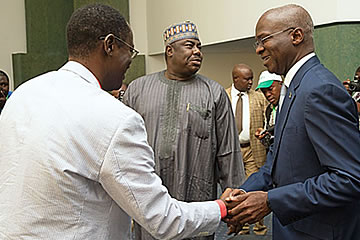
Fashola Advocates A Housing Economy For Rebuilding Economy, Country * Minister commends private sector participants in the Housing Sector at the 11th Abuja International Housing Show in the FCT * Says FG is now building models that respond to nation’s cultural and climatic diversities in 33 states “as a pilot to then interface with the Private Sector” * We remain committed and we will deliver and improve what we met , he declares The 11th Abuja International Housing Show kicked off in the Federal Capital Territory Monday with the Minister of Power, Works and Housing, Mr. Babatunde Fashola SAN, advocating a Housing Economy as a viable means of rebuilding the nation and its economy. In a keynote address at the International Conference Centre venue of the three-day event, Fashola, who explained the concept of Housing Economy to mean “an economy that delivers on a continuous basis at every spectrum of the value chain”, starting from the construction sites. He said such continuous construction would impact mostly on the lives of artisans, labourers, builders and others at the construction sites, whom he described as “the most vulnerable members of the society”. Stressing that the society has a duty to support such people, the Minister pointed out that the construction site has provided a major source of income for, not only construction workers such as plumbers, welders, bricklayers, retailers, but also suppliers of building materials and food vendors, adding, “It is the place where we can impact most on peoples’ lives”. “Those are the most vulnerable members of our society that we must continue to support”, he said adding that the kind of response that could be received from creating a sustainable housing construction through building on a continuous basis would be “almost unbelievable”. Recalling his inspection of Housing sites in Taraba, Gombe, Ekiti, Oyo and other states across the country earlier in the year, Fashola declared, “the story I can tell you is that plumbers, welders, bricklayers, food vendors, all say, ‘Thank Buhari for us because we are back to work’. And that is the story; that is where it starts”. Particularly recalling his visit to the Oyo State site where he met a couple working at the site with the husband as a mason and bricklayer while the wife sold food to workers, the Minister, who noted that the couple relocated from Lagos to the site on learning of the project, added, “Let us just continue to build because the opportunities that it provides for rebuilding the economy and for rebuilding our country are simply prolific”. On plans to include members of the informal sector in the Housing programme, Fashola said his Ministry was currently working on how to expand and register cooperatives and assist people to key into the programme adding that work in that regard has almost been concluded. The Minister said the plan had become necessary because within the financing sector it had become important to ensure that those who have legitimate assets and income but were not in the formal recorded form could still be assisted to participate in home ownership. Using the level 07 or 08 Civil Servant, who earns N50,000, as example, the Minister said although the amount may not be enough, he may have other assets like a farm or his wife’s business that they could put together adding that the plan was to expand the frontiers of how to determine what was affordable and the kind of income that could come into the programme. “What we are currently working on now is how to expand and register cooperatives and assist people; because we have seen that the formal sector has its own structured organization where they contribute money, they help each other to build it. How can we use that to help them to build for themselves? We are almost completing work in that regard”, he said. Fashola, who acknowledged that there is a challenge in the nation’s Housing sector, however, said the way to solve it was not to look at the size but to focus on how to solve it urging that the size of the problem should not dampen the enthusiasm to seek for solutions. Debunking the estimated size of the nation’s housing deficit as not based on any audit or accurate census, the Minister, who stated that life without problems was unimaginable, added, “I always say that it is because there are problems that opportunities also arise, whether in public or the private sector”. “I think the most important thing I want to say here is that the size of the problem should not dampen our enthusiasm to find solutions. Let us focus more on what we can contribute, what we can do rather than how big the problem is”, he said adding, “I will say this in the context of every time I hear 17 million Housing deficit; who did the census; who did the audit?” The Minister recalled that barely 15 years ago Nigerians needed to get international direct dialling to be able to call somebody outside the country adding that although it was a big problem, the country just focussed on how to find a solution and, indeed, found a solution with many Nigerians now owning phones. According to him, although not everybody in Nigeria today has a telephone, “But inch by inch, step by step, village by village, community by community we are connecting”, adding, “That must be the same attitude here”. Still emphasizing the need to focus on solutions, Fashola, who recalled the time in the country when the only television station available was the Nigerian Television Authority, stated that Nigerians now have more channels than they could watch, adding that Nigerians must adopt the attitude that having overcome many problems in the past, the housing problem could be overcome. The Minister commended Nigerians for their innovativeness pointing out that the banner, depicting the many brands of exhibitors at the Housing Show was a demonstration that Nigerians were not idle. He declared, “Look at all of those brands, it means that Nigerians are doing something. So we are not idle, we are not inactive and step by step we will get to our destination”. On the theme of the Show, “Solving Nigeria’s Housing Challenges Through Innovative Finance and Infrastructure Solutions”, Fashola, who said the financing problem would remain for as long as humanity, explained that the growth of global population was not proportionate with the increase in availability of funds. The Minister explained further, “The public Housing programme in the United Kingdom started since 1918. Next year it will be 100 years old. And, you know what, not everybody in the UK owns a house. There are people who still sleep on the streets. They have only managed to achieve about 65 per cent home ownership”. “And it varies depending on the economy because even home owners also lose their homes. They have reduced rental and increased ownership; but from 1918 till now, not everybody owns a home and that is just about 65million or 70million people”, he said. Also, according to the Minister, Singapore, with barely five million people, started her Housing programme in 1962 and has achieved a home ownership of 80 per cent of their population after about 60 years while in Hong Kong, one of the biggest financial centres in the world, people live in cages; in flats cut into pieces “because the average cost of a house is 19 times higher than the average wage”. “And this is the context in which I said the issue of financing will remain for a long time. But within that we can improve the quality of our lives if we focus on what we can do, if we focus on major progress, if we understand that housing delivery is a long time commitment”, he said. Expressing the commitment of the Federal Government to deliver on its promises of affordable housing for Nigerians, Fashola declared, “We remain committed and we will deliver and improve what we met”, adding that in discussing financing it should also be understood that there are many other problems such as issues of affordability and issues of acceptability. The Minister declared, “We have empty houses in many states of the Federation. Why are they not occupied? Can people afford them? Where they can afford them, do they like the way they are built?” adding that these were the problems that must be addressed in order to build for the choice and demand of the off taker. Fashola commended his team in the Ministry for the work they have done in the last one year during which, according to him, “they have designed a National Housing model that responds to the cultural and climatic diversities of Nigeria”, adding that the Ministry was now building in 33 states of the Federation “as a pilot to then interface with the Private Sector”. Also present at the Opening Ceremony of the Housing Show which is featuring hundreds of exhibitors and stakeholders in the Housing Sector, include, the Minister of State in the Ministry of Power, Works and Housing, Hon. Mustapha Baba Shehuri, Chairman of the All Progressives Congress (APC), Chief John Odigie Oyegun, who was Chairman of the Opening Ceremony, Minister of Labour and Productivity, Dr. Chris Ngige, Legislators, Governors, Traditional Rulers and other stakeholders in both Public and Private Sectors. ...
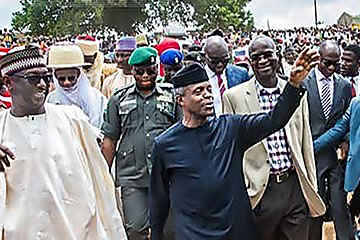
Osinbajo Visits Site of Collapsed Bridge on Ilorin-Mokwa-Jebba Road *Inspects Ongoing Repair Works & Assures Motorists, Residents Of FG’s Commitment To Address Their Plight The flow of vehicular traffic on the Ilorin-Mokwa-Jebba road would be normalized within two weeks according to Acting President Yemi Osinbajo, SAN. Already the Federal Government has commenced work to make the road passable pending the commencement of work on re-construction of the collapsed Bakino bridge at Tatabu community near Mokwa in Niger State. Prof. Osinbajo who visited the site for an on-the-spot assessment earlier today gave the assurance having received assurances from top government officials including Power, Works & Housing Minister, Mr. Babatunde Fashola and the contractors on site. Specifically the Ag. President received briefs from relevant officials on site including the site engineers and supervisors from the Federal Ministry of Works. He also embarked on a tour of the collapsed bridge. Prof. Osinbajo then told newsmen at the site that government was fully committed to ending the difficulties on the Ilorin-Mokwa-Jebba road by addressing the remote causes of the deterioration on the road. According to the Acting President, ``the Minister of Works is working on a lasting solution but in the interim we have assurances from the contractors and engineers working here that this road will be made passable in about a fortnight.’’ He assured that construction work on building a new bridge would commence but that it would take some time for it to be completed due to the slow movement of material from Ilorin to the site. According to him, ``The contractors have informed me that movement of material to this location would be difficult and slow because of the deplorable nature of the road but with the commitment and support of the Federal Road Safety Corps and other agencies, the job would be done in good time.’’ He added the Federal Ministry of Power, Works and Housing in collaboration with the Ministry of Transport were both working on a more lasting solution that will reduce the over -dependence on the highway especially by diverting the movement of heavy duty cargo from the roads to the railways. While speaking to youths who had gathered at the site of the collapsed bridge, Prof. Osinbajo conveyed the greetings of President Muhammadu Buhari to the community and urged for patience while government's efforts are in top gear to fix both the collapsed bridge and the road. The Acting President was companies on the visit by Mr. Fashola, the Minister of Power, Works and Housing; the Governor of Niger State, Abubakar Bello, the Estu Nupe, HRH, Dr Yahaya Abubakar and other senior government officials. ...
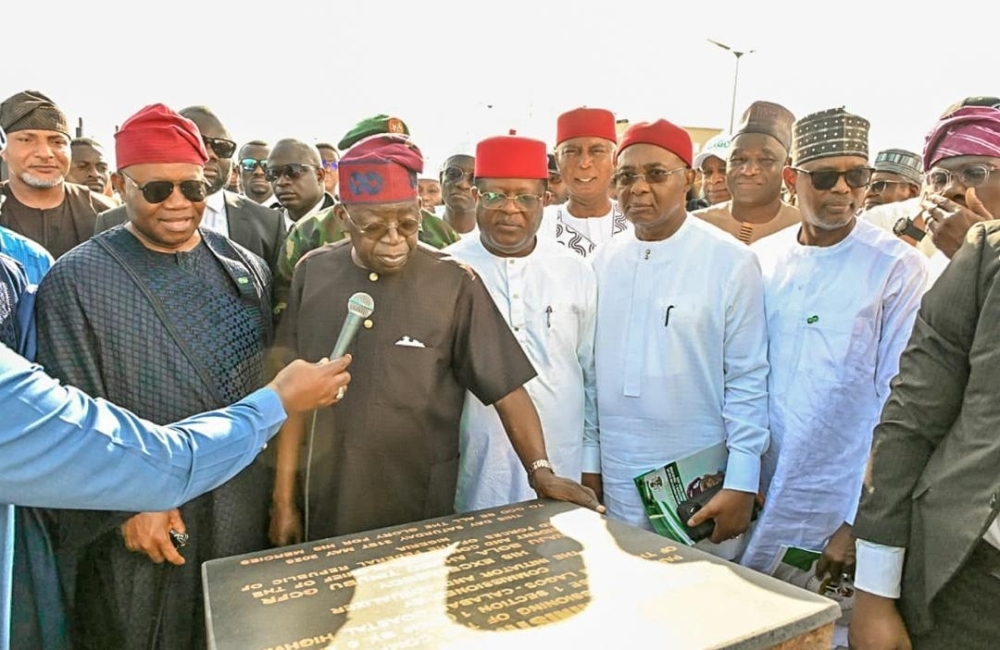
DRIVING NIGERIA’S FUTURE: CELEBRATING TWO YEARS OF TRANSFORMATIVE LEADERSHIP AND THE LAGOS-CALABAR COASTAL HIGHWAY MILESTONE
DRIVING NIGERIA’S FUTURE: CELEBRATING TWO YEARS OF TRANSFORMATIVE LEADERSHIP AND THE LAGOS-CALABAR COASTAL HIGHWAY MILESTONE
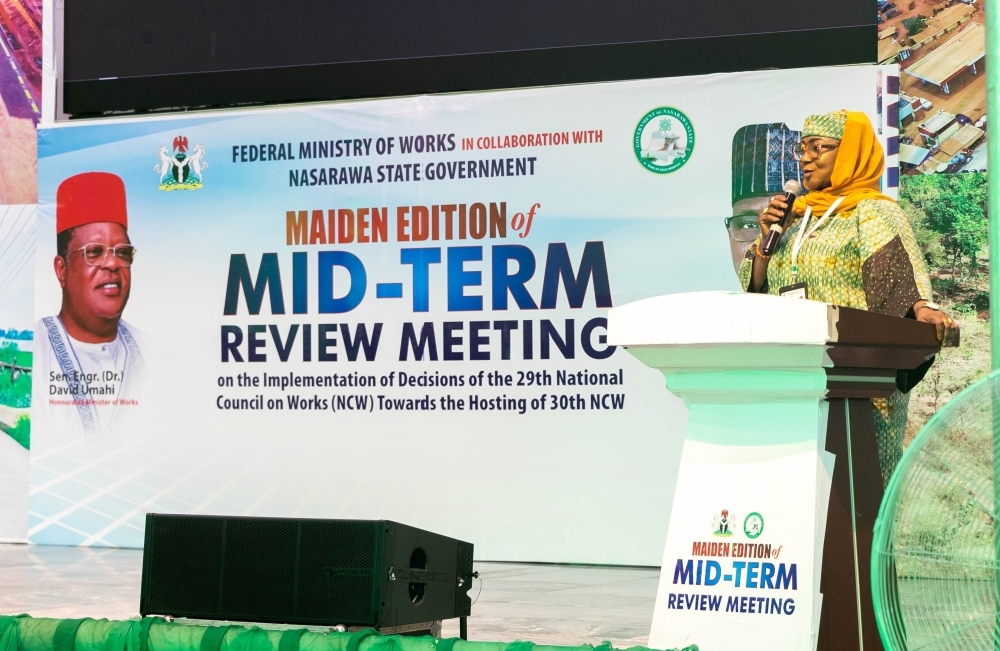
MID -TERM REVIEW MEETING ON THE IMPLIMENTATION OF THE DECISIONS REACHED AT THE 29TH NATIONAL COUNCIL ON WORKS (NCW) DAY 1
MID -TERM REVIEW MEETING ON THE IMPLIMENTATION OF THE DECISIONS REACHED AT THE 29TH NATIONAL COUNCIL ON WORKS (NCW) DAY 1