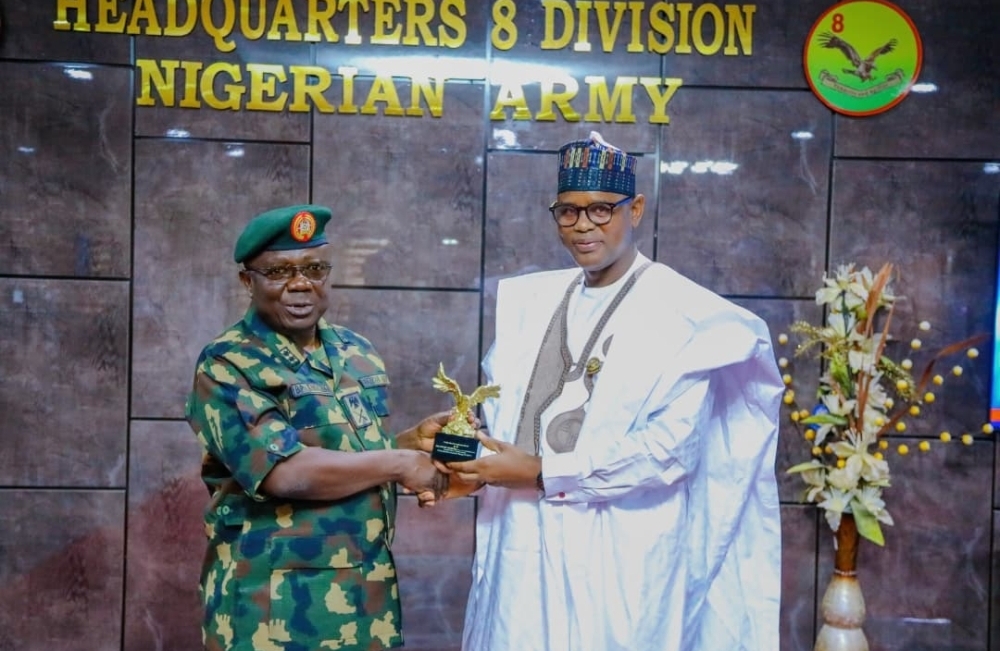
GORONYO COMMENDS SOKOTO GOVERNOR FOR DONATING 10 HILUX VEHICLES TO STRENGTHEN SECURITY ALONG SOKOTO–BADAGRY SUPERHIGHWAY
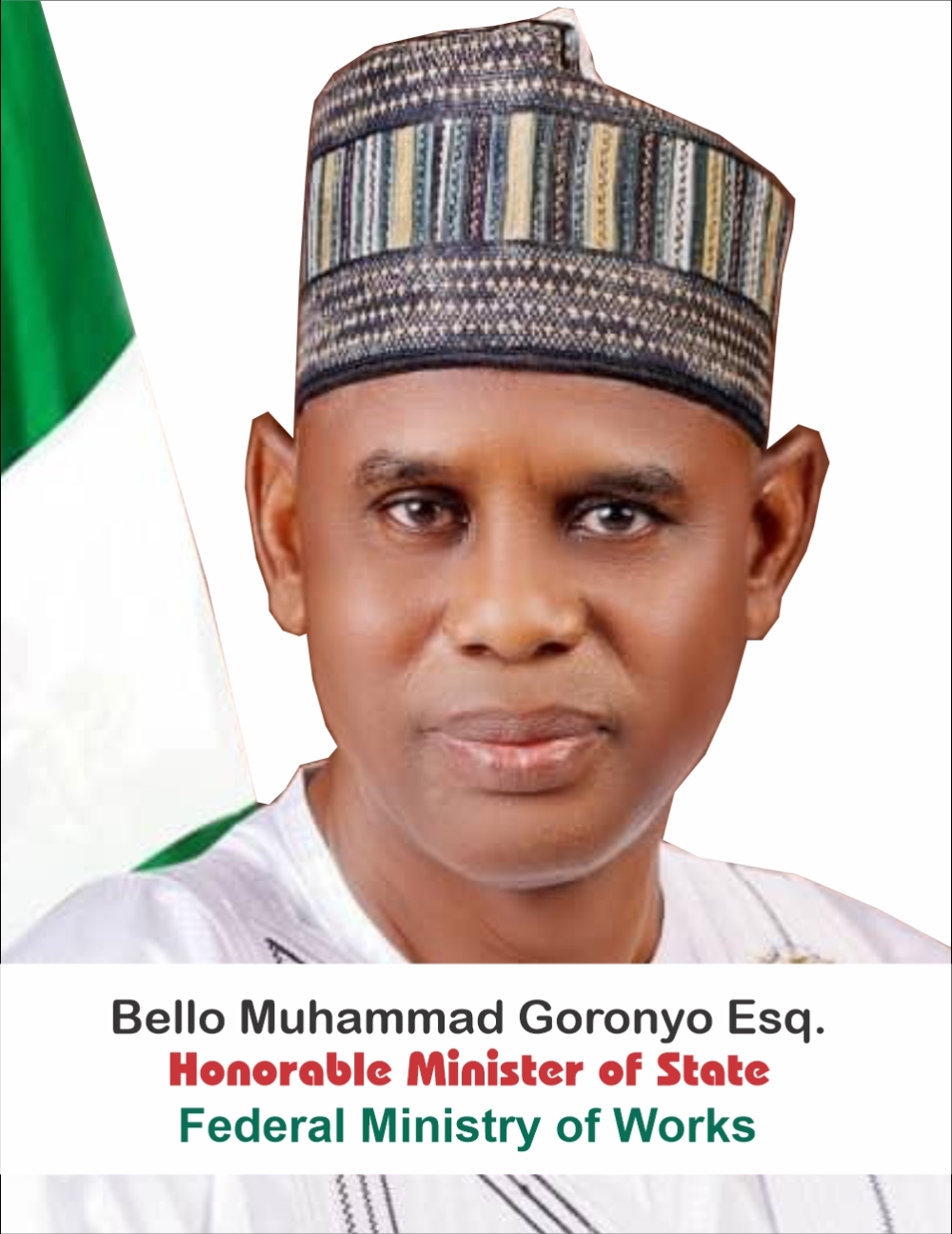
The Honourable Minister of State for Works, Rt. Hon. Bello Muhammad Goronyo, Esq., has commended the Governor of Sokoto State, Dr. Ahmed Aliyu Sokoto, PhD, for donating 10 operational Toyota Hilux vehicles to strengthen security operations along the Sokoto–Badagry Superhighway and other strategic infrastructure corridors.
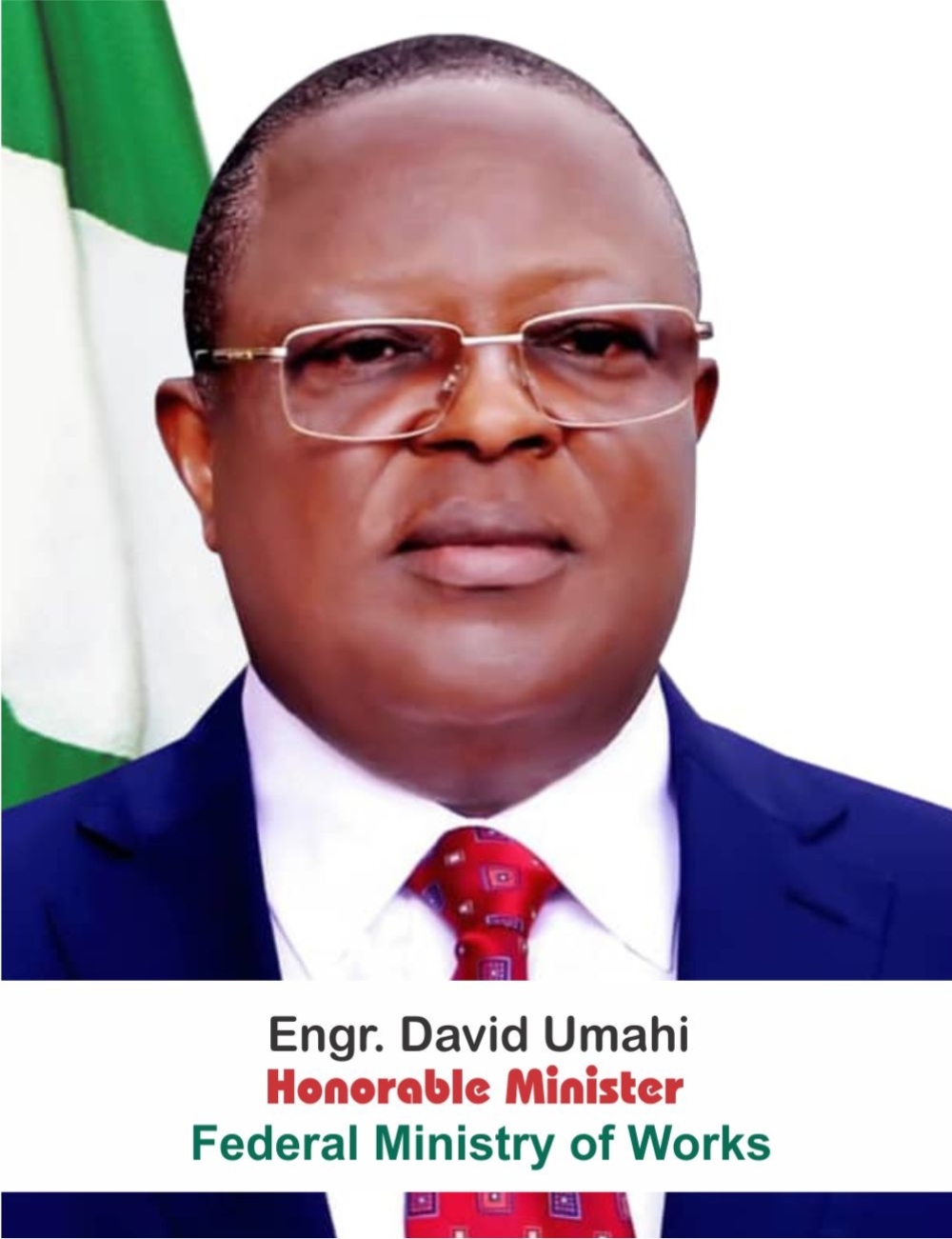
The vehicles were formally commissioned and handed over to the Nigerian Army at the Headquarters of the 8 Division, Nigerian Army, Sokoto, on Thursday, October 8, 2026, by the Honourable Minister of State for Works, on behalf of the Honourable Minister of Works, Engr. David Nweze Umahi, CON, FNSE.
The donation is expected to enhance the operational capacity of military personnel and other security agencies responsible for protecting construction workers, contractors, equipment and host communities along the highway corridor.
Speaking during the ceremony, Goronyo described the donation as a demonstration of the Sokoto State Government’s commitment to national development and the successful implementation of President Bola Ahmed Tinubu, GCFR’s Renewed Hope Agenda, particularly its landmark infrastructure projects.
The Minister emphasised that the Sokoto–Badagry Superhighway represents a long-standing national infrastructure vision that dates back several decades, with its conception traced to the era of former President Shehu Shagari in the 1970s. However, the vision remained unrealised for decades until the administration of President Bola Ahmed Tinubu, GCFR, initiated the construction of the 1,068-kilometre highway in October 2024.
He described the project as a significant step towards translating a historic aspiration into tangible infrastructure that will connect communities, expand economic opportunities and strengthen national integration.
According to Goronyo, President Tinubu’s commitment to the project demonstrates the Federal Government’s determination to bridge critical infrastructure gaps and improve connectivity between northern and southern Nigeria.
He noted that the superhighway, which traverses Sokoto, Kebbi, Niger, Kwara, Oyo, Ogun and Lagos states, is designed to facilitate the movement of people and goods, reduce transportation costs, stimulate trade, create employment and open up new economic opportunities along its route.
The Minister added that the highway would improve access to markets, schools, healthcare facilities and other essential services while supporting agriculture, commerce, industry and the development of communities across the corridor.
He stressed that the successful delivery of the project would require sustained commitment, effective coordination and cooperation among the Federal Government, state governments, security agencies, contractors and host communities.
Goronyo maintained that effective security remained essential to the timely and successful completion of the Sokoto–Badagry Superhighway. He explained that the provision of operational vehicles would strengthen the mobility and response capabilities of security personnel deployed to safeguard the project and its surrounding communities.
The Minister highlighted other strategic infrastructure projects being undertaken by the Federal Government, including the Lagos–Calabar Coastal Highway, the Calabar–Abuja/Trans-Saharan corridor, the Akwanga–Jos–Bauchi–Gombe corridor, the Abuja–Kaduna–Zaria–Kano route and the Zaria–Gusau–Sokoto corridor.
He explained that these projects form part of the Federal Government’s broader commitment to developing an integrated road network capable of supporting commerce, strengthening inter-state connections and accelerating national economic growth.
Rt. Hon. Goronyo further noted that the use of continuously reinforced concrete pavement on the Sokoto–Badagry Superhighway was intended to provide durable road infrastructure capable of serving Nigerians for decades. He added that complementary environmental and safety measures, including tree planting and solar-powered street lighting where provided for in the project, would contribute to environmental sustainability, visibility and road safety.
Goronyo commended the Nigerian Army and other security agencies for their resilience, professionalism and sacrifices in protecting lives, property and critical national infrastructure. He acknowledged the difficult conditions under which security personnel operate and urged them to remain steadfast in carrying out their constitutional responsibilities.
The Honourable Minister also expressed deep condolences to the Nigerian military over the reported loss of personnel in a bandit attack while on official duty the previous day. He described the loss as painful and extended his sympathy to the affected personnel, their colleagues and bereaved families, while praying for the peaceful repose of the departed and strength for their loved ones.
He further acknowledged the support of the National Security Adviser in addressing security challenges associated with the project, particularly through assistance and coordination aimed at strengthening security operations along the highway corridor.
Reaffirming his commitment to the Federal Government’s infrastructure development agenda, Goronyo said the Ministry of Works would continue to support the implementation of strategic projects under President Tinubu’s leadership, working in collaboration with relevant stakeholders to ensure their successful delivery.
He expressed optimism that the continued implementation of the Federal Government’s development programmes would bring lasting benefits to Nigerians, while acknowledging the complementary role of the Sokoto State Government in supporting infrastructure development and security.
In his remarks, the General Officer Commanding (GOC), 8 Division, Nigerian Army, Sokoto, Major General Bengba Paul Koughna, expressed appreciation to the Federal Government, the Federal Ministry of Works and the Sokoto State Government for the donation of the 10 Hilux vehicles.
The GOC noted that the vehicles would significantly enhance the operational mobility and response capabilities of troops deployed along the highway corridor, particularly across the approximately 440-kilometre section extending through Sokoto and Kebbi states.
He explained that troops conduct regular patrols and maintain multiple deployment points along the corridor, making the additional vehicles a valuable boost to their operational effectiveness.
He assured the Minister that the vehicles would be deployed appropriately to support security operations and protect construction workers, contractors, equipment and other stakeholders involved in the project.
The GOC also commended the representative of Hitech Construction Company, retired General Sa'ad Abubakar, for the company's involvement in the project.
The event was attended by retired Assistant Inspector-General of Police (AIG) Aliyu Garba, officials of the Federal Ministry of Works, representatives of the Sokoto State Government and other stakeholders.
The donation underscores the importance of sustained collaboration among the Federal Government, state governments, security agencies, contractors and host communities in addressing security challenges and ensuring the safe and timely delivery of strategic infrastructure projects.
The Federal Ministry of Works reiterates its commitment to working with all relevant stakeholders to protect national infrastructure and advance the objectives of President Bola Ahmed Tinubu, GCFR’s Renewed Hope Agenda for sustainable economic growth and development.

GORONYO COMMENDS SOKOTO GOVERNOR FOR DONATING 10 HILUX VEHICLES TO STRENGTHEN SECURITY ALONG SOKOTO–BADAGRY SUPERHIGHWAY The Honourable Minister of State for Works, Rt. Hon. Bello Muhammad Goronyo, Esq., has commended the Governor of Sokoto State, Dr. Ahmed Aliyu Sokoto, PhD, for donating 10 operational Toyota Hilux vehicles to strengthen security operations along the Sokoto–Badagry Superhighway and other strategic infrastructure corridors. The vehicles were formally commissioned and handed over to the Nigerian Army at the Headquarters of the 8 Division, Nigerian Army, Sokoto, on Thursday, October 8, 2026, by the Honourable Minister of State for Works, on behalf of the Honourable Minister of Works, Engr. David Nweze Umahi, CON, FNSE. Speaking during the ceremony, Goronyo described the donation as a demonstration of the Sokoto State Government’s commitment to national development and the successful implementation of President Bola Ahmed Tinubu, GCFR’s Renewed Hope Agenda, particularly its landmark infrastructure projects. The Minister emphasised that the Sokoto–Badagry Superhighway represents a long-standing national infrastructure vision that dates back several decades, with its conception traced to the era of former President Shehu Shagari in the 1970s. However, the vision remained unrealised for decades until the administration of President Bola Ahmed Tinubu, GCFR, initiated the construction of the 1,068-kilometre highway in October 2024. He described the project as a significant step towards translating a historic aspiration into tangible infrastructure that will connect communities, expand economic opportunities and strengthen national integration. According to Goronyo, President Tinubu’s commitment to the project demonstrates the Federal Government’s determination to bridge critical infrastructure gaps and improve connectivity between northern and southern Nigeria. The Minister added that the highway would improve access to markets, schools, healthcare facilities and other essential services while supporting agriculture, commerce, industry and the development of communities across the corridor. Goronyo maintained that effective security remained essential to the timely and successful completion of the Sokoto–Badagry Superhighway. He explained that the provision of operational vehicles would strengthen the mobility and response capabilities of security personnel deployed to safeguard the project and its surrounding communities. The Minister highlighted other strategic infrastructure projects being undertaken by the Federal Government, including the Lagos–Calabar Coastal Highway, the Calabar–Abuja/Trans-Saharan corridor, the Akwanga–Jos–Bauchi–Gombe corridor, the Abuja–Kaduna–Zaria–Kano route and the Zaria–Gusau–Sokoto corridor. Rt. Hon. Goronyo further noted that the use of continuously reinforced concrete pavement on the Sokoto–Badagry Superhighway was intended to provide durable road infrastructure capable of serving Nigerians for decades. He added that complementary environmental and safety measures, including tree planting and solar-powered street lighting where provided for in the project, would contribute to environmental sustainability, visibility and road safety. Goronyo commended the Nigerian Army and other security agencies for their resilience, professionalism and sacrifices in protecting lives, property and critical national infrastructure. He acknowledged the difficult conditions under which security personnel operate and urged them to remain steadfast in carrying out their constitutional responsibilities. The Honourable Minister also expressed deep condolences to the Nigerian military over the reported loss of personnel in a bandit attack while on official duty the previous day. He described the loss as painful and extended his sympathy to the affected personnel, their colleagues and bereaved families, while praying for the peaceful repose of the departed and strength for their loved ones. He further acknowledged the support of the National Security Adviser in addressing security challenges associated with the project, particularly through assistance and coordination aimed at strengthening security operations along the highway corridor. Reaffirming his commitment to the Federal Government’s infrastructure development agenda, Goronyo said the Ministry of Works would continue to support the implementation of strategic projects under President Tinubu’s leadership, working in collaboration with relevant stakeholders to ensure their successful delivery. He expressed optimism that the continued implementation of the Federal Government’s development programmes would bring lasting benefits to Nigerians, while acknowledging the complementary role of the Sokoto State Government in supporting infrastructure development and security. In his remarks, the General Officer Commanding (GOC), 8 Division, Nigerian Army, Sokoto, Major General Bengba Paul Koughna, expressed appreciation to the Federal Government, the Federal Ministry of Works and the Sokoto State Government for the donation of the 10 Hilux vehicles. The GOC noted that the vehicles would significantly enhance the operational mobility and response capabilities of troops deployed along the highway corridor, particularly across the approximately 440-kilometre section extending through Sokoto and Kebbi states. He explained that troops conduct regular patrols and maintain multiple deployment points along the corridor, making the additional vehicles a valuable boost to their operational effectiveness. He assured the Minister that the vehicles would be deployed appropriately to support security operations and protect construction workers, contractors, equipment and other stakeholders involved in the project. The GOC also commended the representative of Hitech Construction Company, retired General Sa'ad Abubakar, for the company's involvement in the project. The event was attended by retired Assistant Inspector-General of Police (AIG) Aliyu Garba, officials of the Federal Ministry of Works, representatives of the Sokoto State Government and other stakeholders. The Federal Ministry of Works reiterates its commitment to working with all relevant stakeholders to protect national infrastructure and advance the objectives of President Bola Ahmed Tinubu, GCFR’s Renewed Hope Agenda for sustainable economic growth and development.
The donation is expected to enhance the operational capacity of military personnel and other security agencies responsible for protecting construction workers, contractors, equipment and host communities along the highway corridor.
He noted that the superhighway, which traverses Sokoto, Kebbi, Niger, Kwara, Oyo, Ogun and Lagos states, is designed to facilitate the movement of people and goods, reduce transportation costs, stimulate trade, create employment and open up new economic opportunities along its route.
He stressed that the successful delivery of the project would require sustained commitment, effective coordination and cooperation among the Federal Government, state governments, security agencies, contractors and host communities.
He explained that these projects form part of the Federal Government’s broader commitment to developing an integrated road network capable of supporting commerce, strengthening inter-state connections and accelerating national economic growth.
The donation underscores the importance of sustained collaboration among the Federal Government, state governments, security agencies, contractors and host communities in addressing security challenges and ensuring the safe and timely delivery of strategic infrastructure projects.
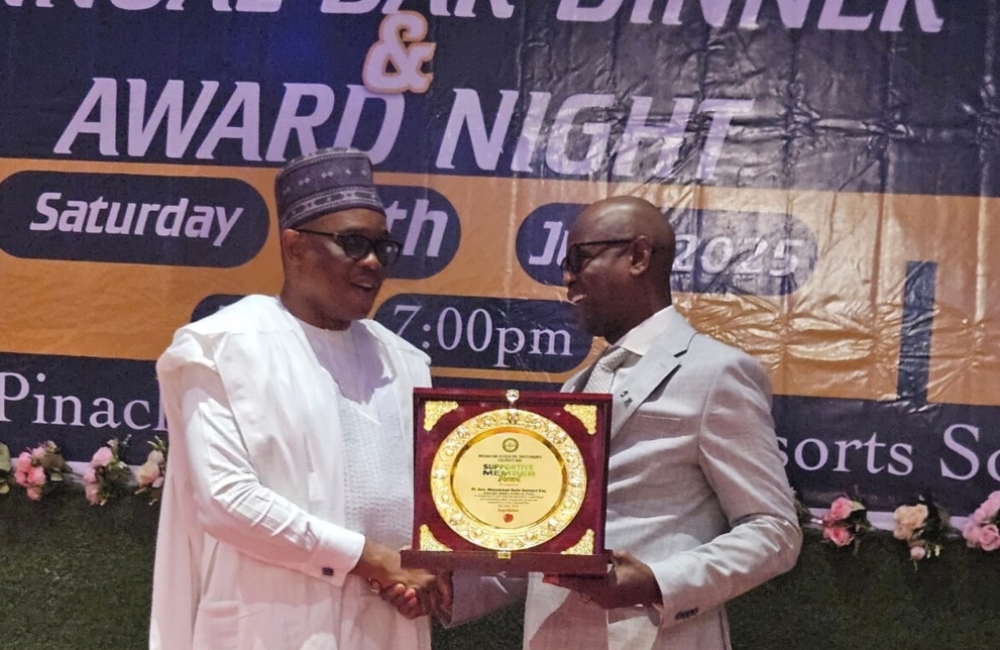
HONOURABLE MINISTER OF STATE FOR WORKS, RT. HON. BELLO MUHAMMAD GORONYO, ESQ., HONOURED BY NBA SOKOTO BRANCH AT ANNUAL BAR DINNER AND AWARD NIGHT The Honourable Minister of State, Federal Ministry of Works, Rt. Hon. Bello Muhammad Goronyo, Esq., was recently honoured with the “Supportive Member Award” by the Nigerian Bar Association (NBA) Sokoto Branch during its Annual Bar Dinner and Award Night. The award, which was presented by the National President of the NBA, Mazi Afam Osigwe, SAN, recognises the Minister’s exceptional contributions to national development, unwavering commitment to the growth of infrastructure, and dedication to good governance and the rule of law. The “Supportive Member Award” specifically celebrates his long-time dedication, commitment, and outstanding efforts towards the growth and sustainability of the Caliphate Bar. In his acceptance remarks, Rt. Hon. Bello Muhammad Goronyo, Esq., expressed profound gratitude to the NBA Sokoto Branch and the national leadership for the recognition, describing it as a source of encouragement to redouble his efforts in the service of the nation. He commended the NBA for its steadfast role in defending justice, promoting the rule of law, and serving as a strong advocate for the people. The colourful event, which attracted members of the legal profession, government officials, and dignitaries from within and outside Sokoto State, also witnessed the recognition of other distinguished individuals including the National President of NBA and organisations for their outstanding contributions to society. The Honourable Minister reaffirmed the commitment of the Federal Ministry of Works to continue implementing critical infrastructural projects across the country aimed at boosting economic growth, enhancing connectivity, and improving the quality of life for all Nigerians. ...
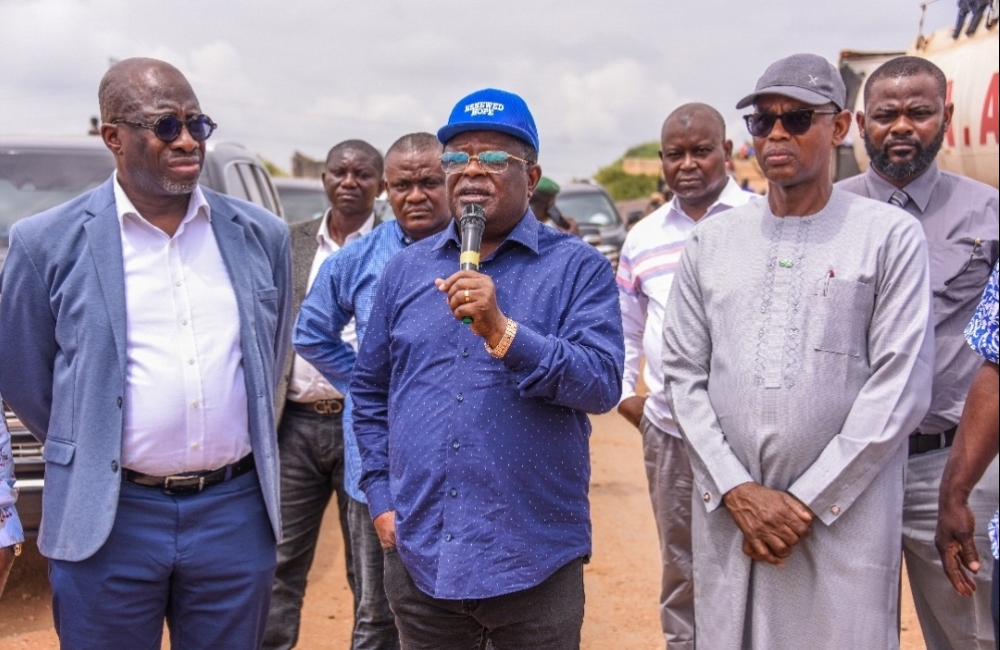
STAKEHOLDERS UNITE TO INSPECT ABUJA–KADUNA AND SULEJA– MINNA DUAL CARRIAGEWAYS -Declare Minna Road, an Emergency Project The Honourable Minister of Works, Engr. David Umahi, CON, FNATE, FNSE; the Deputy Chief Whip of the 10th Senate, Sen. (Barr.) Onyekachi Nwaebonyi; the Honourable Minister of State for Works, Hon. Muhammad Bello Goronyo, Esq.; PDP Chieftain, Otunba Segun Showunmi, among others Saturday, 28th June 2025, led a high-level inspection of the ongoing reconstruction of the Abuja–Kaduna–Minna dual carriageway, reaffirming the government’s commitment to transparency, engineering excellence, and sustainable infrastructure development. In his remarks, Engr. Umahi disclosed that over 11 kilometres of Section 1 have already been reconstructed using 200 mm reinforced concrete with a projected lifespan of 100 years. The construction process, which involves pulverising failed pavement, laying an 80 mm cement-stabilised stone base, and installing Y20 steel reinforcements at 20 cm intervals beneath a 60 mm concrete top, matches the quality standards adopted for the Lagos–Calabar Coastal Highway and the Sokoto–Badagry Road. The Minister noted that the momentum gained on the Abuja–Kaduna project had gained added momentum followed by the inquisition which brought about this transparent site engagement. The Minister also expressed gratitude to President Bola Ahmed Tinubu, GCFR, for his unwavering support following the termination of the previous contract with Julius Berger over cost discrepancies. “Without Mr. President’s support, it would have been difficult to redeem the project's integrity. But with the quality of work being delivered by Infoquest, today both the Ministry’s and my integrity are restored,” he said. Section 1 (118 km) is valued at ₦252 billion, while Section 2 (164 km), awarded at ₦525 billion, is progressing steadily across three subsections. In parallel with this progress, the Ministry addressed concerns over the Dualization of the Suleja–Minna Road (Phase 1) in Niger State, under Contract No. 6077 with Messrs Salini Nigeria Ltd. The project, covering 40 km from Diko Junction to Bonu village, includes 2 twin flyovers and 3 river bridges. Despite notable achievements—such as 36.89 km of sub-base, stone base, binder course, and wearing course already laid; construction of all 3 bridges up to transition slab level; and extensive culvert installations—the project has faced setbacks, including delayed payments and insecurity. As of the latest assessment, the project is 86.33% complete based on the original contract sum but stands at only 30.03% relative to the revised sum of ₦26.7 billion. The Honourable Minister has reaffirmed the Ministry’s position on accountability and directed that Salini be held responsible for any contractual lapses. Where necessary, portions of the outstanding works equal to the value owed by the contractor will be scoped out for direct execution under close supervision. Inspecting Sections I and II, Umahi decried the aged-long-neglect of the construction work by the contractor- Salini Nig. Ltd, which has left the site for the past 18 months without completing the contract. He also noted that the areas the Contractor claimed to have done have become dilapidated. He, however, called for the termination of the Messrs. Salini Nig. Ltd’s contract of sections I and II with immediate effect while declaring the project an emergency project to be handled under emergency procurement processes and taken over by CCECC and CGC companies. He also directed a-24 24-hour documentary on the road, especially the failed areas. “The project has been irrevocably terminated and Nigerians will see why we terminated it. If they (Salini) do not do what we have directed them to do, what they owe us under our supervision, we are all going to the EFCC to take it over” “We are documenting the current condition of the road for public accountability. Once work is completed, people tend to forget how bad it was. Information Department must keep a visual record to justify our emergency action”. Reiterating that the Suleja-Minna road is now a top priority, and every effort is being made to ensure timely and quality delivery in line with President Tinubu's Renewed Hope Agenda, Engr. Umahi reassured travellers of their safety with the incorporation of safety and security infrastructure into the road design, including solar-powered lighting, CCTV surveillance, and a rapid-response system that guarantees intervention from security agencies within 10 minutes of any incident. Kilometre 71 and other active segments are already being secured during the construction phase. This is to ensure traveler safety and long-term durability. The Minister restated the Ministry’s openness to scrutiny and partnerships. “Where we have done well, let Nigerians see it. Where we must do better, tell us—and we will act.” Minister of State, Hon. Bello M. Goronyo, praised the cross-sectoral nature of the inspection, noting that it marked a shift from armchair criticism to informed civic engagement. He lauded Showunmi’s patriotism and willingness to scrutinize national progress with sincerity, stating that real transformation must be driven by both resource allocation and unwavering commitment. Also present at the inspection, Barr. Onyekachi Nwaebonyi, Deputy Chief Whip of the 10th Senate and member of the Committee of Works commended the scale and engineering quality of the project, affirming the Senate’s continued commitment to funding and legislative backing for infrastructure that enhances trade, national cohesion, and safety. Segun Showunmi, a well-known national voice on governance, whose concerns over delayed infrastructure projects prompted the engagement, applauded the Ministry’s openness. “I dropped everything to be here because our national integrity matters. This isn’t personal interests or affiliations; it’s about shared responsibility,” he remarked. While commending the quality of work, he maintained that his endorsement was based strictly on performance and would not be extended as a blanket approval to the broader administration. He further noted that public figures owe the nation constructive criticism and not endless cynicism, and that holding leadership accountable is of utmost importance as it helps in building the nation. “We’ve seen progress, and like Oliver Twist, we ask for more. Let this be the new standard—less noise, more delivery,” he concluded. ...
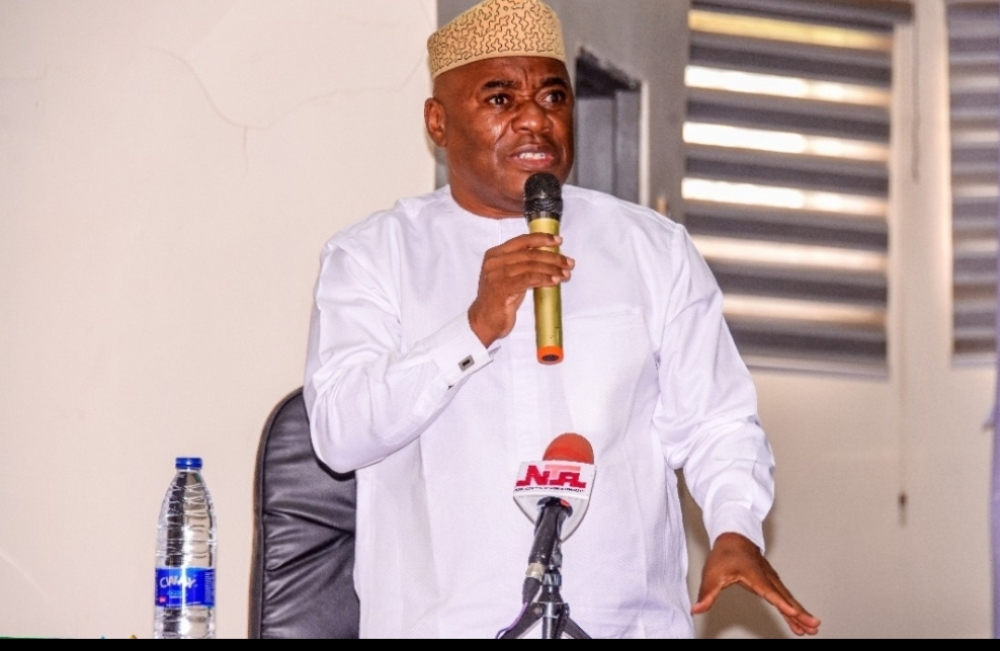
EMPOWERING ENGINEERS THROUGH KNOWLEDGE-DRIVEN TRAINING TO DELIVER SAFER AND STRONGER ROADS The Federal Ministry of Works, under the strategic leadership of the Honourable Minister, Engr. David Umahi, CON, and the Honourable Minister of State, Hon. Bello M. Goronyo, Esq., organised a three-day zonal capacity-building training for engineers, technologists, and technicians in the North Central zone. As part of this initiative, the training commenced on Tuesday, 24th June 2025 at the Pavement Evaluation Unit, Sheda, Kwali Area Council, the FCT, where participants gathered for intensive knowledge-sharing and technical skill enhancement tailored to the evolving demands of modern infrastructure delivery. In his keynote address, the Permanent Secretary, Engr. Olufunsho Adebiyi, FNSE, emphasised that the programme, approved by the Honourable Minister, aims to address the widening generational and capacity gaps caused by the recent retirement of a significant number of senior engineers and the anticipated exit of more within the year. He noted that organising the training on a zonal basis ensures efficient resource management while encouraging broader participation across the federation. The training refreshes core competencies in highway and bridge design, project and contract management, and applicable quality assurance procedures, while promoting cross-functional exposure to develop versatile, all-around professionals. Highlighting the importance of dynamic field experience, the Permanent Secretary underscored the need to rotate engineers across different regions and departments, stating that long-term stay in a single location or unit limits professional growth and technical adaptability. Addressing the recruitment gap within the service, he explained that a comprehensive personnel audit had been conducted and submitted to the Office of the Head of the Civil Service of the Federation for further consideration. He also called on young professionals to invest in self-development and embrace competence as a prerequisite for employability in a modern public service environment, where performance now drives progression. Reaffirming the Ministry’s zero tolerance for misconduct, he noted that the civil service has well-established disciplinary frameworks across all cadres and that infractions will be met with appropriate sanctions through existing regulations. The technical sessions featured expert-led lectures, including “Effective Supervision of Federal Highway Projects” by Engr. Olufemi Oyekanmi, PhD, emphasised the urgency of addressing workforce overload and called for increased manpower to support the rising volume of national projects, while urging field engineers to uphold discipline and deliver consistently despite constraints. Engr. C. Shausu delivered a session on “ _Effective Communication Skills,”_ highlighting the critical role of communication in project coordination and interdepartmental collaboration. Additionally, “Ensuring Safety in Project Sites” was delivered by Engr. A.A. Adebiyi stressed the importance of enforcing safety protocols and maintaining high standards to protect lives and infrastructure. Speaking on the broader significance of the programme, the Director, Highways, Planning and Development, Engr. David Yiltong Dechi, described the training as a demonstration of the Ministry’s commitment to the professional development and technical performance of its workforce, urging participants to embrace their roles with renewed dedication and a stronger sense of national duty. From the participants’ perspective, the training was described as enriching and transformative, with attendees affirming that the sessions provided valuable insights into professional best practices and identified key areas for improvement to enhance effective project delivery. In his closing remarks, the Permanent Secretary reminded participants that the training was not merely academic, but a moral and professional awakening. He called on engineers to recommit to excellence, uphold ethical standards, and demonstrate the technical leadership the Ministry represents. “Let this engagement reset our priorities and rekindle our pride as engineers. We must rise above complacency- we must deliver,” he charged. This training forms part of a broader national initiative approved by the Honourable Minister to strengthen technical capacity, reinforce professionalism, and ensure that the Federal Ministry of Works remains at the forefront of sustainable infrastructure development across Nigeria. ...
VC Commends FG for Road Intervention in University
The Vice Chancellor of Bayero University Kano, Professor Sagir Adamu Abbas has commended the Federal Government for the road intervention projects in tertiary institutions nationwide.
Professor Abbas who led the management team of the University on a visit to the Federal Ministry of Works and Housing expressed appreciation for intervention in road projects and street lights in his institution.
He described the intervention in Bayero University as critical to the institution which had provided a conducive atmosphere for learning in the University thereby boosting the morale of the students and staff in the institution.
In his response, the Permanent Secretary Federal Ministry of Works and Housing, Babangida Hussaini who received the delegation on behalf of the Honourable Minister of Works and Housing, Mr. Babatunde Raji Fashola, SAN, appreciated the team for the accolades showered on the Ministry and noted that the commitment of President Muhammadu Buhari to providing infrastructure in every sector of the country provided the needed motivation to the Ministry of Works and Housing to discharge its mandate judiciously.
The Permanent Secretary also stated that the Honourable Minister of Works and Housing has a strong passion to ensure the fulfillment of President Muhammadu Buahari’s commitment to providing infrastructure in all sectors across the states of the federation.
It will be recalled that the Federal Ministry of Works and Housing had so far completed and delivered 29 out of 47 road projects executed in various tertiary institutions nationwide.
Other members of the delegation from the university are Deputy Vice Chancellor; Professor Mahmoud Umar Sani, Acting Registrar; Jemila Salim, and Director Liaison Office Abuja; Ibrahim Usman Yakasai.

INSECURITY: Taking Actions Against Organized Crime, Speech Delivered By H.E Babatunde Raji Fashola, SAN At The 4th Annual Lecture Organized By The United Action For Change At The Digital Bridge Institute
It is no longer news that world leaders are facing enormous challenges in the execution of their primary mandate which is the security and well-being of their citizens.
From mass shootings and school shootings, with massive opiod crises and gang wars in the United States, to knife killings in London, bombings in Paris, mass shootings in New Zealand, just to mention a few; our Civilization is facing new challenges of security.
Please see Appendix 1 for some Crime Data Statistics
Nigeria is not insulated from these happenings and therefore has had her own share of old and emerging security challenges.
It is the Nigerian situation that I seek to address. The numerous conversations that have been held about what to do and how to overcome the challenges that we face, omits to make critical linkages between security challenges that we face and the deliberate conduct of a few of our people and others who are not Nigerians.
Conversations have focused on the capacity of law enforcement officers, from numerical strength, to financial resources, training and equipment as if this was the only problem.
While all of these are necessary and welcome, they are regrettably not enough and they are inadequate to resolve the problems we have to overcome.
This inadequacy is best captured in the often-repeated statement of fact by elected leaders and security personnel as well, that the challenges of securing all of us requires many more of us and indeed, all of us, to act.
I have argued and restate the argument that the ability to mobilize well-armed, well trained, well funded security personnel to a point of crisis in a pre-emptive or reactive manner only helps to achieve enforcement of the law.
It does not guaranty security, if there is no peace.
It is peace and peaceful co-existence that inures to safety and security; otherwise no sooner are the personnel redeployed, as they inevitably will be, do the communities or persons involved return to hostilities.
Therefore one of the points of action that I urge us to commit to, is to seek to identify the causes or sources of conflict amongst people, groups of people, and communities, and seek to eliminate, resolve or manage them better, in a quest for permanent peace; and, by extension, security.
This requires the involvement of local people, people close to the problem, people with influence and people with some authority to play this role.
The logic of this argument often finds expression in the persistent calls made on traditional rulers to play a more active role.
It must involve teachers, market leaders, and spiritual leaders, elected and appointed public office holders and in every manner of speaking it must involve the whole village.
But while we may have identified law enforcement and persons of influence, there are many more people who do not constitute members of this class who have an all important role to play.
But their ability to rise up and respond requires them to understand the gravity of the problem; and this is the Centrepiece of this intervention.
Majority of the issues that heighten the spectre of insecurity are not accidental, they are deliberate.
They are often driven by reward or expectation thereof, in cash, kind and influence. What the world (and by extension Nigeria) is contending with is not just insecurity and crime, it is insecurity escalated by ORGANIZED CRIME!!!
Organized crime is a chain whose links must not only be broken, but whose individual parts must be separated, degraded and prevented from ever linking together.
With this background, I propose to move to specifics and examples, from my experience in government, to link this chain and highlight their connectivity, and explain why it requires more than law enforcement and persons of influence to make all of us safe.
INTELLIGENCE
The collection of information and the use of it to prevent crime or apprehend criminal activity is often discussed as if it is the prerogative of law enforcement agencies alone.
Let me be clear that this is the duty of the citizen and it starts with all of us being interested in our own wellbeing and security.
Indeed section 24(e) of the Constitution provides that:
“It shall be the duty of every citizen to-
(e) render assistance to appropriate and lawful agencies in the maintenance of law and order;”
It involves not only careful choices about our lifestyle which will prevent us from being attractive as victims to Criminals. It requires us to show more interest in what is around us, who is around us and to pay more attention to unusual things.
It also requires courage, a lot of it, to be able to share information, no matter how innocuous, with law enforcement, to enable them keep us safe.
There is no magic to intelligence gathering. It is rooted in civic responsibility.
One institution of civic participation that we must revive, reform and re-Use is the RESIDENTS/LANDLORDS ASSOCIATION. We need them very quickly.
Know Your Neighbour is a critical first line of Defence against any criminal activity and in particular against organized crime. This is because it:
a. Helps to occupy the space of anonymity in which all criminals thrive;
b. Provides information or suspicion about irregular or abnormal behavior that requires attention.
It is when information is offered that law enforcement must act to check, re-check and verify.
So, when 17 (SEVENTEEN) suitcases loaded with explosives were brought into Lagos in 2013, law enforcement missed it.
It was citizen information (which we did not discard) that led to their seizure, apprehension of the suspects and their cargo of terror, their trial and eventual conviction, which enabled Government put them in a place where they could no longer harm residents of Lagos.
OPEN SPACES/ EMPTY BUILDINGS
It is my humble view, and one which is very strongly held, that there is no time more compelling than now for State governments to dominate open spaces within their territories.
By law, State governments control urban and development planning, and how these powers are exercised or not exercised affects how law enforcement agencies perform and how criminals can either escape justice or be apprehended.
Apart from street signages, house numbering which helps with identification and response to distress calls, State Governments must use the provision of the Land Use Act to reduce and ultimately eliminate the number of abandoned, uncompleted buildings in their states. They constitute an easy refuge not only for destitutes but also for people with untoward intentions.
Abandoned buildings provide free and unmonitored accommodation for criminals, and also storage for implements and proceeds of crime or evidence of it, like guns, drugs, cash, stolen goods kidnap victims or even dead bodies.
In an apparent display of “COMPASSION” (if that is what it is) for vulnerable members of our society, we have allowed all manner of people to dominate open spaces like sidewalks, street corners as acts of empathy for the poor and vulnerable.
The truth is that by planning laws, the PROPERTY LINE of residents ends where their fence or land beacon ends as shown in their survey plans.
The landed property of individuals does not extend to the sidewalk or the road, upon which many have built and many have appropriated for personal use.
Every piece of land beyond the property line belongs to the government. The unauthorized uses of the public spaces are liable to sanctions by law under any vigilant government.
It is the DUTY of Civil and Public Servants to understand this, and take steps to Occupy, Dominate and Manage these spaces for lawful activity only (such as Parks and Gardens that are MONITORED), in collaboration with members of the public.
Governments, State and local, who fail to dominate these spaces, do so at the peril of their residents.
It is from these spaces that people masquerading as traders, hawkers, have either launched criminal attacks on citizens, or helped to ferry arms, drugs or proceeds of crime.
Therefore, urban and town planning departments are important building blocks for law enforcement and security, and critical points of immediate action against organized crime.
ROAD TRAFFIC LAW; OKADA VEHICLE LISENCE/REGISTRATION
Stolen vehicles, unregistered (and therefore anonymous) vehicles, tricycles, and motorcycles constitute a vast area of neglect that we must attend to especially at State level where road traffic laws have been enacted but largely unenforced.
The decision not to register a vehicle is a choice which indicates a deliberate (organised) decision as against an accidental one.
Very often these are the conduits for getaways from crimes because without registration, tracing it is difficult.
As governor, with my police aides, we once apprehended a motorcycle with three (3) male passengers. When we searched, we found a fire arm under the seat, a lady’s handbag, baby diapers and a feeding bottle.
I leave the rest to your imagination.
In the days when Lagos was plagued by frequent bank robberies, unregistered motorcycles were the favoured getaway vehicles for the robbers. We also discovered that they were the medium for trafficking in hard drugs like marijuana, cocaine and heroin.
In one Robbery incident on Ikorodu Road where a Young Medical Doctor unfortunately lost his life, the Getaway vehicle was a Motorcyle riding against traffic.
Unknown to many residents, while their children were at home and seemingly safe, organized drug rings used motorcycle riders to deliver hard drugs to them right in their houses under their parents noses.
These and many more reasons informed the strict enforcement of the Lagos Road Traffic Law on motorcycles at the time.
In a society where nobody is above the law, then, everybody’s vehicle, from President to the ordinary citizen must carry a license plate, registered with government.
Throughout my tenure as governor, my vehicle always displayed the registration of LASG 01. I was told by my security aides that there was a regulation that required them to cover my licence plates after a particular time of the day; I refused to comply, first because “the regulation” was not produced and more importantly because I was certain that the Traffic Law commanded my obedience.
Our security challenges require actions by legislation to eliminate anonymity to reduce the sphere of operation for organized crime.
The Attorneys-General of the States, the Speakers of all State Houses of Assembly and legislators must be visionary and far sighted in developing legislative reforms that cover and dominate this space of criminal operation.
PUBLIC BUILDINGS, HOTELS, GUEST HOUSES
In most parts of the world today, it is inconceivable to take up lodging in any hotel without a credible form of identification, and where that is achieved, no visitor of a registered guest is allowed beyond the reception area into the rooms without presenting an identification which is scanned, copied and recorded.
If we reflect on the number of murders that have taken place in hotels or criminals who have been apprehended in hotels, guest houses or hospitality facilities, we can only imagine what might have been missed.
Again these are local matters under the dominion of State and Local Governments.
Any State that is serious about security must pay attention to the identification of persons at Hotels and Guest houses.
This is an area begging for urgent national action while promoting hospitality, entertainment and tourism. Safety is the underlying currency on which this industry thrives.
Cameras in lifts, staircases and corridors of these types of buildings must be made mandatory by Legislation. Technology is making cameras more affordable and cost should not be meritorious argument against compliance.
A commitment to documentation, identification and transparency, will itself create jobs as it will drive growth of the business.
Let us make no mistake about this, organised crime looks for those unmanned spaces to plan, and sets up itself deliberately to occupy them and hurt us.
Organised crime does this, not only by physical pain, injury and sometimes unfortunately death, but reputationally as well, by giving us a name we do not deserve.
EDUCATION, SPIRITUALISM, MIRACLES
This is a very serious and almost endemic issue in many parts of the developing world where people, partly because of poor education are led to believe in miracles induced by fetish, occult and spiritualism or “black magic”.
Recently, our public space was dominated by stories of youthful (and perhaps the not so youthful) men in a desperate search for ladies’ underwear.
The story suggested that this was an avenue to get rich. I assume it was somehow convertible into cash.
I know that money (cash) is produced by printing in a mint, but a belief system to the contrary is difficult to change and this is why I say this is a serious problem. Our entertainment industry albeit unintentionally, has helped to promote this belief and I say that the time to stop it is not now, it was yesterday.
If we reflect on the number of people who have disappeared without trace, if we consider that they might have been murdered for ritual purposes, if we reflect on the number of people that have been arrested with human parts, without any identification of whose body parts were recovered, it would not be difficult to agree, that we should have acted yesterday.
What I have attempted to demonstrate is that criminal activity of many types that threaten our peace and security are demonstrably mainly organized and not accidental.
We must therefore beam a very bright searchlight on organised crime.
We must recognize that organised crime is a business that we must put out of business because it thrives at our collective peril.
The people behind organised crime earn their livelihood from it and also employ people, including the young and able bodied who play critical roles in the value chain of its operation.
They have collaborators in critical institutions of State and at sensitive places like our borders, (land, sea and air), as we have recently heard from reports about illicit drugs planted in the luggage of an innocent Nigerian lady who travelled to Saudi Arabia.
Seizures of containers of arms and Tramadol at our ports are not accidental. They are the products of vigilance and dedication by border security personnel against organised crime.
But the question to ask is how many actually got in undetected.
Therefore, the case for immediate action by budgetary commitment and spending against an illegal business that is investing must be a compelling matter of national consensus.
The United Kingdom recently made the case for investing an additional £2 Billion to its existing budget, in order to fight organised crime.
Because of the rewards that organised crime offers by way of illicit funds, and its appeal to the young, old, unemployed and vulnerable, we must move financial controls to another level.
While the BVN (Bank Verification Number) initiative is welcome, the amount of money outside the banking system, such as that with traders of foreign exchange on major streets of some of our cities command action by way of more imaginative financial controls.
I must not in this sense be misunderstood to be suggesting that these types of businesses or other vending businesses be put out of commission where they are not manifestly illegal.
On the contrary, I am recommending actions such as record keeping of all currencies they buy and sell, and from whom, to whom, and provide reporting and check on their transaction.
KIDNAPPING
This is more easy to understand as being organized. A recent report by a victim that his abductors were using a laptop to monitor all efforts by law enforcement to rescue him supports the case for spending and investing in technology.
It is comforting and encouraging to know that the Nigerian Communications Commìssion (NCC), the Regulator of the Telecoms operators is continuing to review data to ensure that unregistered and therefore anonymous SIM card holders ( used to demand ransom and for other Organised criminal purposes) are identified and delisted from the network.
CATTLE RUSTLING AND BANDITRY
This is another face of organized crime that is perhaps not well understood.
To the urban dweller who is not connected to rural life and those involved in the business of animal husbandry, it is easy to miss the cash and material benefit in every head of cattle.
Therefore conversations about the ethnic connection of these crimes rather than the organized criminal activity, is what dominates the public space.
We take ourselves away further from the solution if we do not see an organized pattern and the reward of cattle stolen and re-sold for cash, as a stronger motive for these actions.
HUMAN TRAFFICKING/MIGRATION
The spectre of human trafficking, a modern act of human slavery, for sex, prostitution rings, forced labour, lies at the heart of large scale migration. Yes they may be compounded by bad governance, poor education and poverty. But a group is organizing around it and profiting.
The victims see “opportunities” in Europe while organized crime sees “vulnerability” which makes them perfect targets to be used as sex slaves and cheap (and forced) Labour, being undocumented and therefore “illegal” immigrants.
THE MEDIA
The media like other non-state actors in any society have an important role to play. The people behind organised crime also watch television, listen to radio and use telephones, laptops handheld devices and are therefore connected to the media.
It is therefore important to understand that in the discharge of the duty of Security, the Odds against Government and all her institutions are VERY HIGH.
Government and her institutions must get it RIGHT ALL THE TIME, while criminals need to be right ONLY ONCE, to create, fear, pain, terror, Victims and consequently NEWS.
All acts of ”valorising” and ”eulogising” the “successes of the criminals in the media in our apparent frustration and the “political” weaponising of their “feats” only helps to promote their illicit brand.
I had the privilege of accompanying President Muhammadu Buhari to the G7 meeting held in Germany in June 2015.
One of the Resolutions of the world leaders, Barack Obama, Angela Merkel, David Cameron, Sarkozy and others at the meeting was to go back home and engage their local media to stop broadcasting images of “Islamic” terrorists beheading victims, and recruiting young people.
We can now think back when last you saw such images on an international network. Instead, those images have been replaced by images of Western governments destroying strongholds of “Islamic” Terrorists.
You can view it as a reverse propaganda, and my view is that it advances the security effort rather than undermine it. This must be a front burner contribution that our media can make, while still reporting news of unfortunate acts of crime.
Specifically, I recommend that leaders of our Media Resolve to take down those images of terror, such as those showing girls in captivity, with Masked gun-wielding men standing over them. They inadvertently promote the “Brand” of crime.
All of us, and especially the media as managers of information must remember that FEAR, PAIN, MISERY, TEARS, INJURY and CONFUSION are the purpose of Criminals.
Reportage of crime must innovate to document and report the incident without inadvertently lending itself to spreading the message of the criminals.
I suspect that those who are behind some of the unfortunate criminal incidents that have happened recently must be rubbing their hands with glee and patting themselves on the back when they see the screaming headlines, the scathing commentaries and the doomsday predictions.
What we must not do, is deliberately or unintentionally valorise, eulogise crime or provide propaganda for it.
What is true of images is true of spoken words that foster hate, breed mistrust and incite conflict and violence.
The media must make the investment and commitment to take away their platforms from the purveyors of such messages.
We must also remember that the people who perpetrate these acts are not only local people. There are international collaborators especially those seeking access and control of economic resources like timbre, cocoa, oil and other minerals.
Conflicts have therefore been known to be planned, as deliberate STATECRAFT launched and perpetrated, in order to distract government from regulating the control and access to those resources while being focused on conflict management.
It is my humble view that with globalisation, the damage of media exposure has exceeded the reality of our security challenges.
It seems to me that we can also learn from what some other media outlets, especially of the Electronic cadre now do in the global age.
What they broadcast to the whole world about their Country is not exactly the same as what they broadcast within their Country. This must be a matter of editorial choice about which I claim no expertise.
But this brings me to the provisions of Section 24 (b) of the Nigerian Constitution imposes a duty on all of us to:
“help to enhance the power, prestige and good name of Nigeria, defend Nigeria and render such national service as may be required.”
What I have observed in the style adopted by some other international media houses while reporting tragedies and disasters, is how they shift the focus to the human angle of positivity by emphasising on stories of bravery, survival, human empathy, heroism and stoicism with which they project the positive image of their people, communities and Country.
The Boston Marathon bombing was an example. It was not that there were no intelligence failures or that people were not killed.
But the media took us away from the story of killings to the survival stories.
One year after, Boston was not only holding the Marathon again, she was hosting the Annual Conference of the International Bar Association.
The mass shooting in Texas in 2019 was dominated by the story of defiance of a people who will not be cowed and a few months after the tragedy, Texas was hosting the world in a pre-planned sports meet that was not cancelled.
Regrettably, the erroneous impression now being created by public reportage is one that suggests that all of our country is unliveable, and unenjoyable.
The facts do not support this even as we clearly have challenges.
We must therefore work together to remake this image from one that is not us, to one that fairly and accurately reflects us and our situation.
Babatunde Raji Fashola, SAN
Hon. Minister of Works and Housing
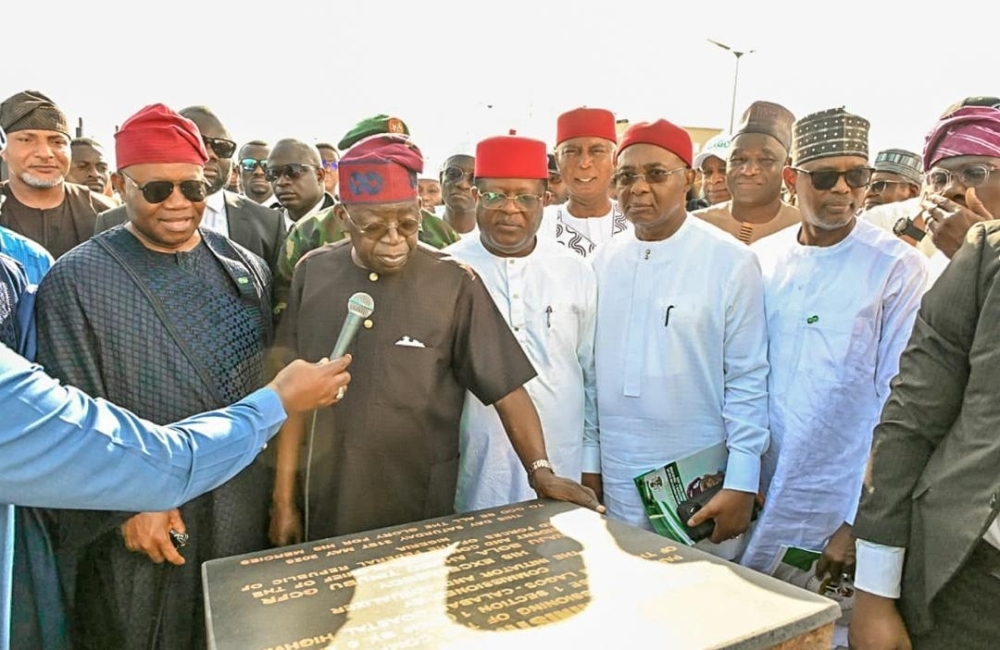
DRIVING NIGERIA’S FUTURE: CELEBRATING TWO YEARS OF TRANSFORMATIVE LEADERSHIP AND THE LAGOS-CALABAR COASTAL HIGHWAY MILESTONE
DRIVING NIGERIA’S FUTURE: CELEBRATING TWO YEARS OF TRANSFORMATIVE LEADERSHIP AND THE LAGOS-CALABAR COASTAL HIGHWAY MILESTONE
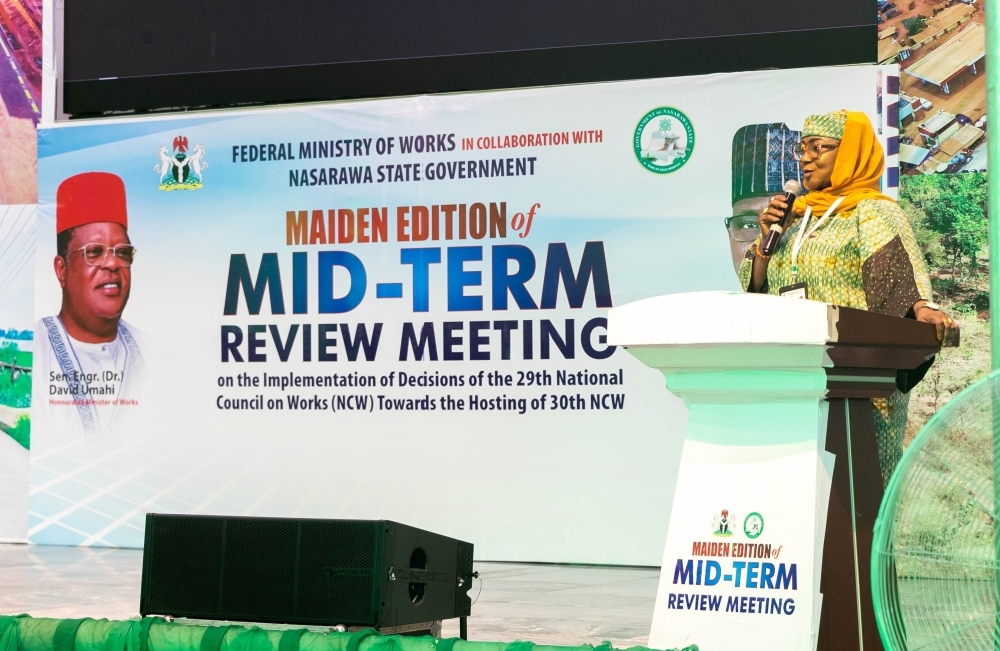
MID -TERM REVIEW MEETING ON THE IMPLIMENTATION OF THE DECISIONS REACHED AT THE 29TH NATIONAL COUNCIL ON WORKS (NCW) DAY 1
MID -TERM REVIEW MEETING ON THE IMPLIMENTATION OF THE DECISIONS REACHED AT THE 29TH NATIONAL COUNCIL ON WORKS (NCW) DAY 1