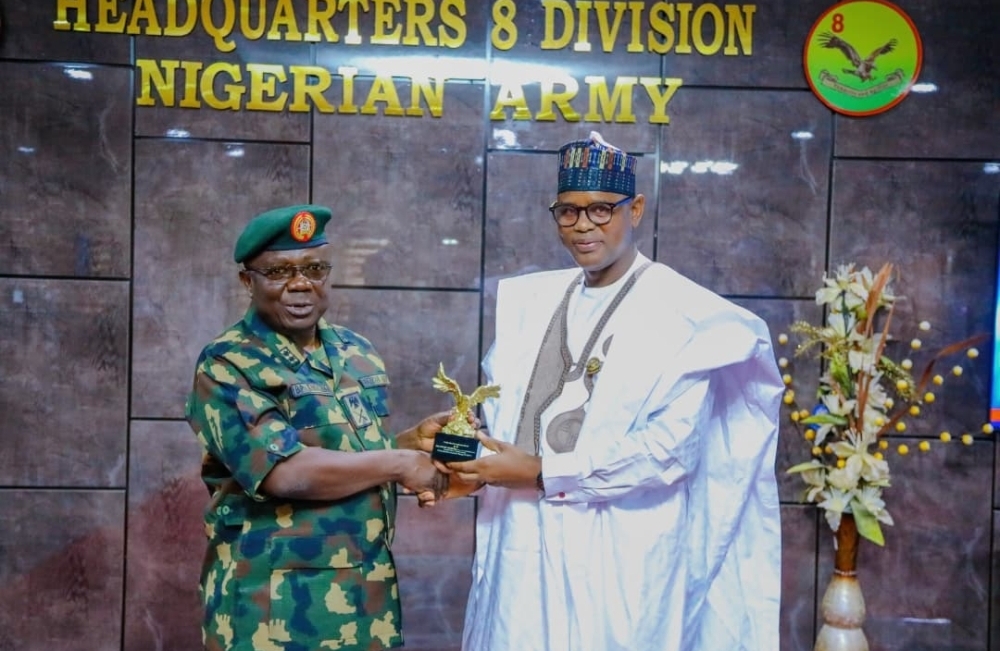
GORONYO COMMENDS SOKOTO GOVERNOR FOR DONATING 10 HILUX VEHICLES TO STRENGTHEN SECURITY ALONG SOKOTO–BADAGRY SUPERHIGHWAY
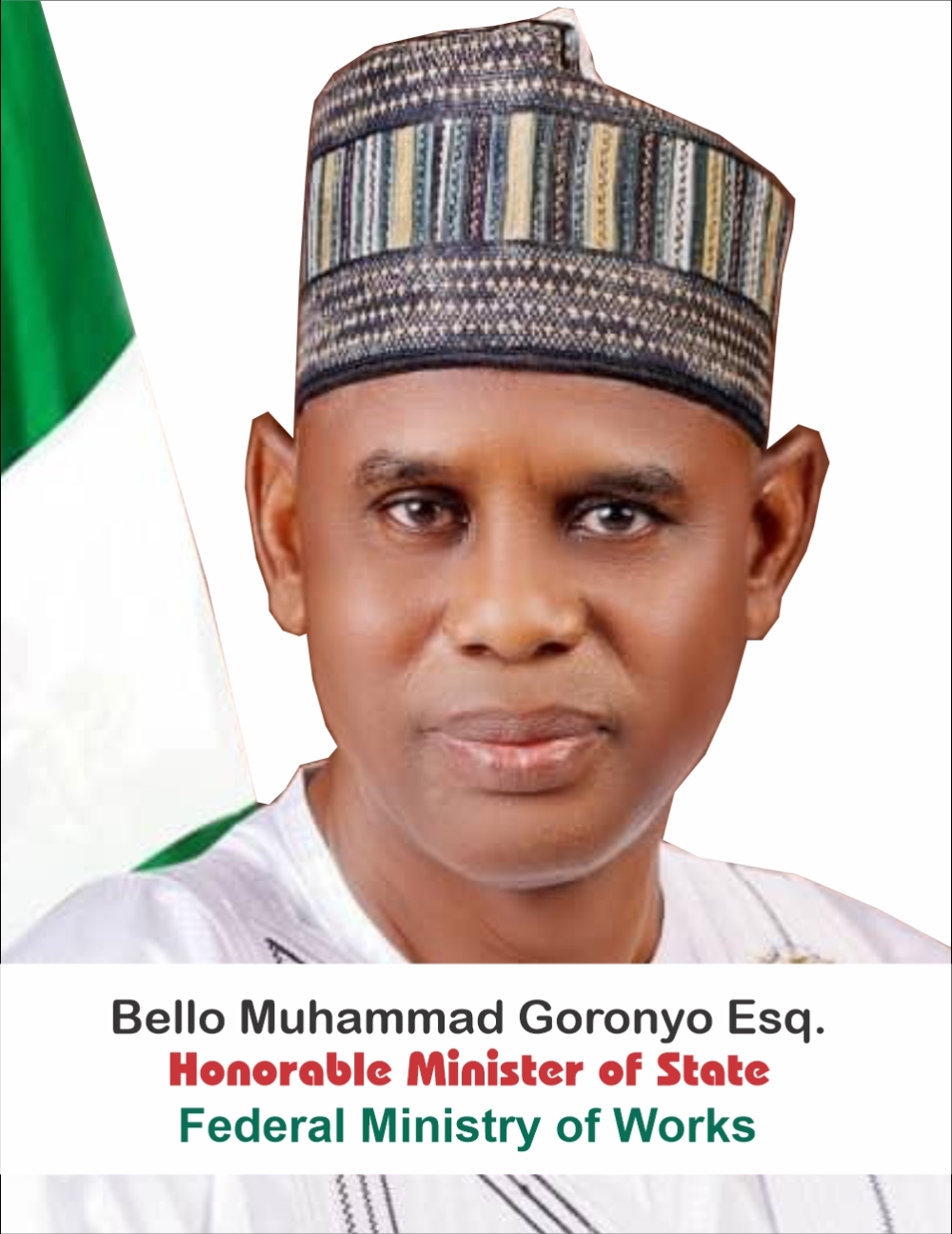
The Honourable Minister of State for Works, Rt. Hon. Bello Muhammad Goronyo, Esq., has commended the Governor of Sokoto State, Dr. Ahmed Aliyu Sokoto, PhD, for donating 10 operational Toyota Hilux vehicles to strengthen security operations along the Sokoto–Badagry Superhighway and other strategic infrastructure corridors.
The vehicles were formally commissioned and handed over to the Nigerian Army at the Headquarters of the 8 Division, Nigerian Army, Sokoto, on Thursday, October 8, 2026, by the Honourable Minister of State for Works, on behalf of the Honourable Minister of Works, Engr. David Nweze Umahi, CON, FNSE.
The donation is expected to enhance the operational capacity of military personnel and other security agencies responsible for protecting construction workers, contractors, equipment and host communities along the highway corridor.
Speaking during the ceremony, Goronyo described the donation as a demonstration of the Sokoto State Government’s commitment to national development and the successful implementation of President Bola Ahmed Tinubu, GCFR’s Renewed Hope Agenda, particularly its landmark infrastructure projects.
The Minister emphasised that the Sokoto–Badagry Superhighway represents a long-standing national infrastructure vision that dates back several decades, with its conception traced to the era of former President Shehu Shagari in the 1970s. However, the vision remained unrealised for decades until the administration of President Bola Ahmed Tinubu, GCFR, initiated the construction of the 1,068-kilometre highway in October 2024.
He described the project as a significant step towards translating a historic aspiration into tangible infrastructure that will connect communities, expand economic opportunities and strengthen national integration.
According to Goronyo, President Tinubu’s commitment to the project demonstrates the Federal Government’s determination to bridge critical infrastructure gaps and improve connectivity between northern and southern Nigeria.
He noted that the superhighway, which traverses Sokoto, Kebbi, Niger, Kwara, Oyo, Ogun and Lagos states, is designed to facilitate the movement of people and goods, reduce transportation costs, stimulate trade, create employment and open up new economic opportunities along its route.
The Minister added that the highway would improve access to markets, schools, healthcare facilities and other essential services while supporting agriculture, commerce, industry and the development of communities across the corridor.
He stressed that the successful delivery of the project would require sustained commitment, effective coordination and cooperation among the Federal Government, state governments, security agencies, contractors and host communities.
Goronyo maintained that effective security remained essential to the timely and successful completion of the Sokoto–Badagry Superhighway. He explained that the provision of operational vehicles would strengthen the mobility and response capabilities of security personnel deployed to safeguard the project and its surrounding communities.
The Minister highlighted other strategic infrastructure projects being undertaken by the Federal Government, including the Lagos–Calabar Coastal Highway, the Calabar–Abuja/Trans-Saharan corridor, the Akwanga–Jos–Bauchi–Gombe corridor, the Abuja–Kaduna–Zaria–Kano route and the Zaria–Gusau–Sokoto corridor.
He explained that these projects form part of the Federal Government’s broader commitment to developing an integrated road network capable of supporting commerce, strengthening inter-state connections and accelerating national economic growth.
Rt. Hon. Goronyo further noted that the use of continuously reinforced concrete pavement on the Sokoto–Badagry Superhighway was intended to provide durable road infrastructure capable of serving Nigerians for decades. He added that complementary environmental and safety measures, including tree planting and solar-powered street lighting where provided for in the project, would contribute to environmental sustainability, visibility and road safety.
Goronyo commended the Nigerian Army and other security agencies for their resilience, professionalism and sacrifices in protecting lives, property and critical national infrastructure. He acknowledged the difficult conditions under which security personnel operate and urged them to remain steadfast in carrying out their constitutional responsibilities.
The Honourable Minister also expressed deep condolences to the Nigerian military over the reported loss of personnel in a bandit attack while on official duty the previous day. He described the loss as painful and extended his sympathy to the affected personnel, their colleagues and bereaved families, while praying for the peaceful repose of the departed and strength for their loved ones.
He further acknowledged the support of the National Security Adviser in addressing security challenges associated with the project, particularly through assistance and coordination aimed at strengthening security operations along the highway corridor.
Reaffirming his commitment to the Federal Government’s infrastructure development agenda, Goronyo said the Ministry of Works would continue to support the implementation of strategic projects under President Tinubu’s leadership, working in collaboration with relevant stakeholders to ensure their successful delivery.
He expressed optimism that the continued implementation of the Federal Government’s development programmes would bring lasting benefits to Nigerians, while acknowledging the complementary role of the Sokoto State Government in supporting infrastructure development and security.
In his remarks, the General Officer Commanding (GOC), 8 Division, Nigerian Army, Sokoto, Major General Bengba Paul Koughna, expressed appreciation to the Federal Government, the Federal Ministry of Works and the Sokoto State Government for the donation of the 10 Hilux vehicles.
The GOC noted that the vehicles would significantly enhance the operational mobility and response capabilities of troops deployed along the highway corridor, particularly across the approximately 440-kilometre section extending through Sokoto and Kebbi states.
He explained that troops conduct regular patrols and maintain multiple deployment points along the corridor, making the additional vehicles a valuable boost to their operational effectiveness.
He assured the Minister that the vehicles would be deployed appropriately to support security operations and protect construction workers, contractors, equipment and other stakeholders involved in the project.
The GOC also commended the representative of Hitech Construction Company, retired General Sa'ad Abubakar, for the company's involvement in the project.
The event was attended by retired Assistant Inspector-General of Police (AIG) Aliyu Garba, officials of the Federal Ministry of Works, representatives of the Sokoto State Government and other stakeholders.
The donation underscores the importance of sustained collaboration among the Federal Government, state governments, security agencies, contractors and host communities in addressing security challenges and ensuring the safe and timely delivery of strategic infrastructure projects.
The Federal Ministry of Works reiterates its commitment to working with all relevant stakeholders to protect national infrastructure and advance the objectives of President Bola Ahmed Tinubu, GCFR’s Renewed Hope Agenda for sustainable economic growth and development.

GORONYO COMMENDS SOKOTO GOVERNOR FOR DONATING 10 HILUX VEHICLES TO STRENGTHEN SECURITY ALONG SOKOTO–BADAGRY SUPERHIGHWAY The Honourable Minister of State for Works, Rt. Hon. Bello Muhammad Goronyo, Esq., has commended the Governor of Sokoto State, Dr. Ahmed Aliyu Sokoto, PhD, for donating 10 operational Toyota Hilux vehicles to strengthen security operations along the Sokoto–Badagry Superhighway and other strategic infrastructure corridors. The vehicles were formally commissioned and handed over to the Nigerian Army at the Headquarters of the 8 Division, Nigerian Army, Sokoto, on Thursday, October 8, 2026, by the Honourable Minister of State for Works, on behalf of the Honourable Minister of Works, Engr. David Nweze Umahi, CON, FNSE. Speaking during the ceremony, Goronyo described the donation as a demonstration of the Sokoto State Government’s commitment to national development and the successful implementation of President Bola Ahmed Tinubu, GCFR’s Renewed Hope Agenda, particularly its landmark infrastructure projects. The Minister emphasised that the Sokoto–Badagry Superhighway represents a long-standing national infrastructure vision that dates back several decades, with its conception traced to the era of former President Shehu Shagari in the 1970s. However, the vision remained unrealised for decades until the administration of President Bola Ahmed Tinubu, GCFR, initiated the construction of the 1,068-kilometre highway in October 2024. He described the project as a significant step towards translating a historic aspiration into tangible infrastructure that will connect communities, expand economic opportunities and strengthen national integration. According to Goronyo, President Tinubu’s commitment to the project demonstrates the Federal Government’s determination to bridge critical infrastructure gaps and improve connectivity between northern and southern Nigeria. The Minister added that the highway would improve access to markets, schools, healthcare facilities and other essential services while supporting agriculture, commerce, industry and the development of communities across the corridor. Goronyo maintained that effective security remained essential to the timely and successful completion of the Sokoto–Badagry Superhighway. He explained that the provision of operational vehicles would strengthen the mobility and response capabilities of security personnel deployed to safeguard the project and its surrounding communities. The Minister highlighted other strategic infrastructure projects being undertaken by the Federal Government, including the Lagos–Calabar Coastal Highway, the Calabar–Abuja/Trans-Saharan corridor, the Akwanga–Jos–Bauchi–Gombe corridor, the Abuja–Kaduna–Zaria–Kano route and the Zaria–Gusau–Sokoto corridor. Rt. Hon. Goronyo further noted that the use of continuously reinforced concrete pavement on the Sokoto–Badagry Superhighway was intended to provide durable road infrastructure capable of serving Nigerians for decades. He added that complementary environmental and safety measures, including tree planting and solar-powered street lighting where provided for in the project, would contribute to environmental sustainability, visibility and road safety. Goronyo commended the Nigerian Army and other security agencies for their resilience, professionalism and sacrifices in protecting lives, property and critical national infrastructure. He acknowledged the difficult conditions under which security personnel operate and urged them to remain steadfast in carrying out their constitutional responsibilities. The Honourable Minister also expressed deep condolences to the Nigerian military over the reported loss of personnel in a bandit attack while on official duty the previous day. He described the loss as painful and extended his sympathy to the affected personnel, their colleagues and bereaved families, while praying for the peaceful repose of the departed and strength for their loved ones. He further acknowledged the support of the National Security Adviser in addressing security challenges associated with the project, particularly through assistance and coordination aimed at strengthening security operations along the highway corridor. Reaffirming his commitment to the Federal Government’s infrastructure development agenda, Goronyo said the Ministry of Works would continue to support the implementation of strategic projects under President Tinubu’s leadership, working in collaboration with relevant stakeholders to ensure their successful delivery. He expressed optimism that the continued implementation of the Federal Government’s development programmes would bring lasting benefits to Nigerians, while acknowledging the complementary role of the Sokoto State Government in supporting infrastructure development and security. In his remarks, the General Officer Commanding (GOC), 8 Division, Nigerian Army, Sokoto, Major General Bengba Paul Koughna, expressed appreciation to the Federal Government, the Federal Ministry of Works and the Sokoto State Government for the donation of the 10 Hilux vehicles. The GOC noted that the vehicles would significantly enhance the operational mobility and response capabilities of troops deployed along the highway corridor, particularly across the approximately 440-kilometre section extending through Sokoto and Kebbi states. He explained that troops conduct regular patrols and maintain multiple deployment points along the corridor, making the additional vehicles a valuable boost to their operational effectiveness. He assured the Minister that the vehicles would be deployed appropriately to support security operations and protect construction workers, contractors, equipment and other stakeholders involved in the project. The GOC also commended the representative of Hitech Construction Company, retired General Sa'ad Abubakar, for the company's involvement in the project. The event was attended by retired Assistant Inspector-General of Police (AIG) Aliyu Garba, officials of the Federal Ministry of Works, representatives of the Sokoto State Government and other stakeholders. The Federal Ministry of Works reiterates its commitment to working with all relevant stakeholders to protect national infrastructure and advance the objectives of President Bola Ahmed Tinubu, GCFR’s Renewed Hope Agenda for sustainable economic growth and development.
The donation is expected to enhance the operational capacity of military personnel and other security agencies responsible for protecting construction workers, contractors, equipment and host communities along the highway corridor.
He noted that the superhighway, which traverses Sokoto, Kebbi, Niger, Kwara, Oyo, Ogun and Lagos states, is designed to facilitate the movement of people and goods, reduce transportation costs, stimulate trade, create employment and open up new economic opportunities along its route.
He stressed that the successful delivery of the project would require sustained commitment, effective coordination and cooperation among the Federal Government, state governments, security agencies, contractors and host communities.
He explained that these projects form part of the Federal Government’s broader commitment to developing an integrated road network capable of supporting commerce, strengthening inter-state connections and accelerating national economic growth.
The donation underscores the importance of sustained collaboration among the Federal Government, state governments, security agencies, contractors and host communities in addressing security challenges and ensuring the safe and timely delivery of strategic infrastructure projects.
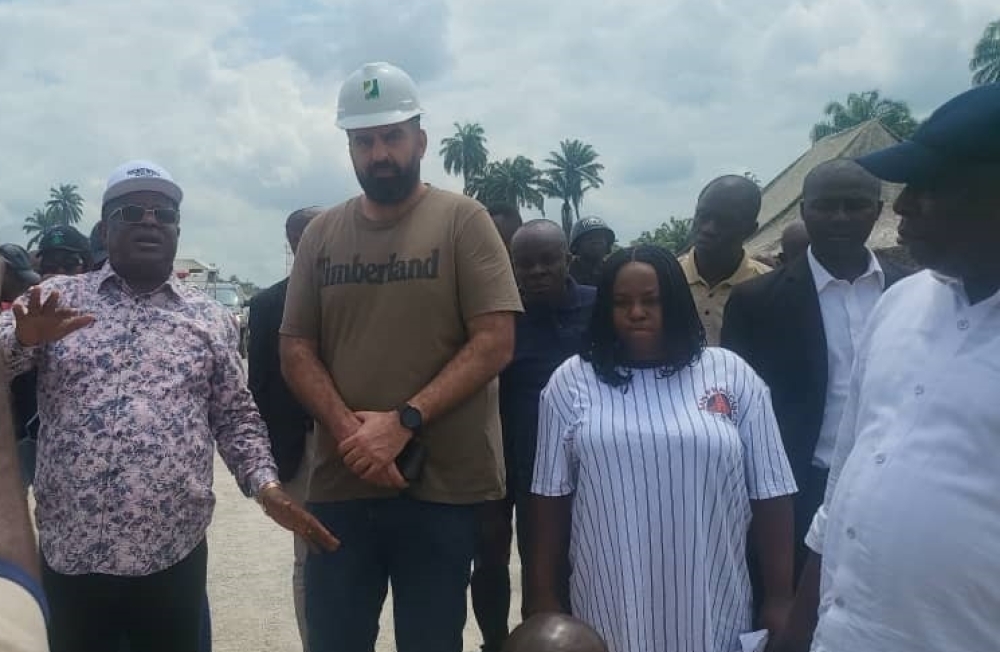
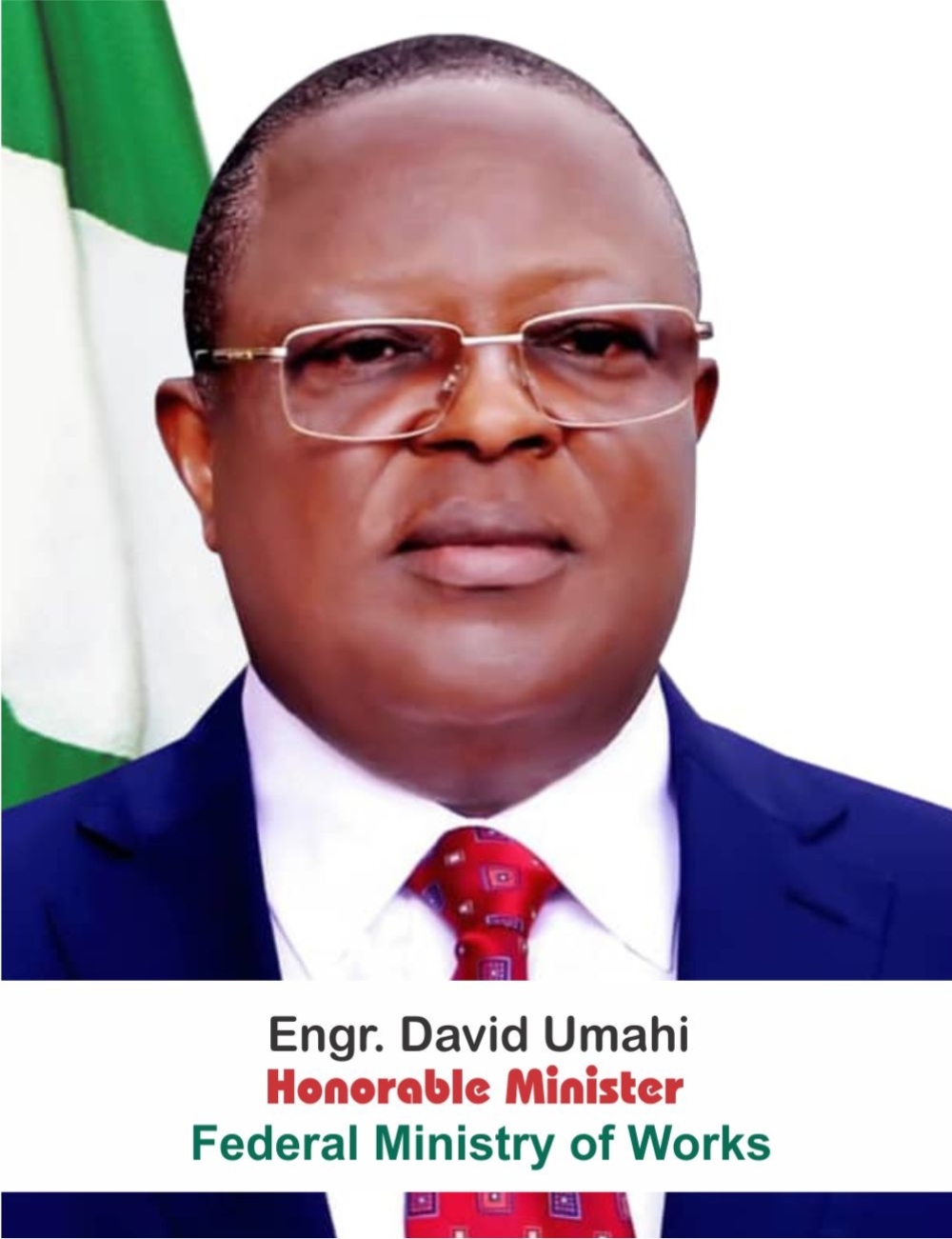
EAST WEST ROAD: PRESIDENT TINUBU'S ADMINISTRATION COMMITTED TO ENDING PAVEMENT FAILURES AND YEARS OF ROAD INFRASTRUCTURE NEGLECT IN THE REGION, SET TO DELIVER POPULAR ROAD INFRASTRUCTURE THAT WILL STAND THE TEST OF TIME In keeping with the Renewed Hope agenda of giving all regions the environment to attain their full economic potentials and guarantee a sense of self-actualization among Nigerians, the administration of His Excellency President Asiwaju Bola Ahmed Tinubu GCFR has introduced a more formidable measure of construction to end pavement failures and years of infrastructural neglect on the East West Road of South-South Nigeria. This was revealed by the Honourable Minister of Works, His Excellency, Sen. Engr. Nweze David Umahi CON during his visit to the project sites at East West Road section II: Kaiama-Ahoada in Rivers/ Bayelsa States; the construction of Multiple Box Culverts at flood damaged locations along the dualization of East West Road handled by Messrs Rock Results Nigeria Ltd and the dualization of East West Road, Section II ( sub section II) handled by SETRACO Nigeria Ltd dated 22nd July 2024. Speaking after the inspection of work progress, the Honourable Minister said that Federal Government redesigned the inherited ongoing project, using reinforced concrete technology to end the perennial pavement failures and years of road neglect across the wetland Niger Delta. He said that some sections of the East-West Road starting from Lokoja to Benin were also rescoped and redesigned in reinforced concrete, and that the height of the road was increased above the flood level, and that the redesign factored the peculiar environment, geomorphology and soil characteristics which were responsible for the failures of flexible pavement used over the years by successive administrations. On the Kaiama-Ahoada section, he said, "When we came on board, the job was already awarded by the past administration. And so, the only new thing in all these locations under President Tinubu is the relief culverts that these two local contractors are putting and are proving themselves to be of a very high reputation in terms of their works. We are encouraging many more local contractors to come and work, because there's so much to work." He observed that the impact of climate change was largely responsible for the flood that came over the two sections of the road but commended the two contractors handling the relief culverts for their deep commitment to the intervention work despite having not been paid. He stated, "And so our directive is that the contractor shouldn't open more relief culverts. Let us contain the floods by working with NDDC. And I commend the MD of NDDC for the fantastic work they are doing." He thanked Rock Results, who also did emergency works, even though it's outside the scope and the 29 Battalion with other paramilitary outfits for the management of the traffic which he said would continue for the next two to four weeks. While seeking for patience on the side of the road users, he assured that permanent solution was underway as the project was being procured to raise the road above the flood level while reinforced concrete of 12 inches would be used to do the overlay. The Honourable Minister who also visited the KM 15 Section 3A of the East- West road (from Eleme Junction to Onne Port Junction) handled by Messrs RCC Nigeria Ltd, commended the quality of work being done but urged the contractor to re-mobilize at least in 6 sections of the project to ensure timely project delivery or be prepared to relinquish the other carriageway for award to another contractor. He stated, "It is Presidential order that this road should be given the maximum attention, and that's why he asked me to come and look at it, and then give him a report. So, we're looking at December for project delivery, but certainly not at the pace that RCC is going." While reacting to the statement credited to a Clergy, Buba Isa on the state of some federal roads, the Honourable Minister reiterated the commitment of the Renewed Hope administration in fixing all the inherited ongoing projects and backlogs of road infrastructure deficits nationwide orchestrated by many years of neglect. While commending President Tinubu for the glaring deference in road infrastructure under his administration which road users are attesting to, he called for patience and understanding as enduring solution to road failures had been reinvented by the Renewed Hope administration and very soon Nigerians would enjoy sustainable infrastructure delivery. ...
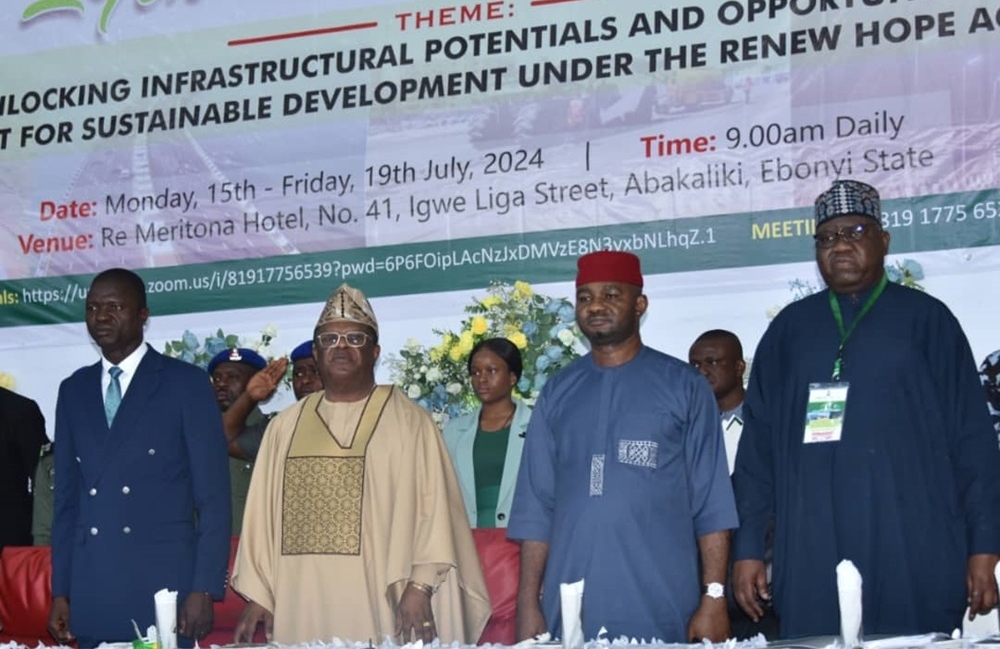
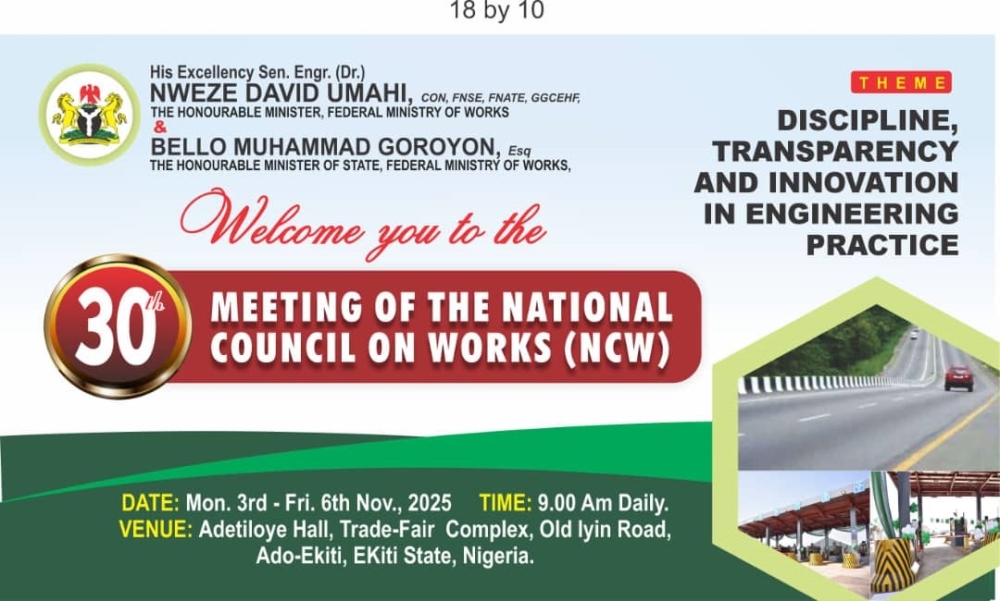
WORKS MINSTER DRAWS THE CURTAINS ON COUNCIL MEETING The Honourable Minister of Works, His Excellency, Engr. David Umahi has noted that the National Council of Works meeting will propel acceleration of completion of projects in Nigeria. Umahi, stated this while addressing the closing session of the National Council of works held at Abakaliki, Ebonyi state. The Minister who lauded the Council members for their commitment, noted that the gathering has been an invaluable platform for deliberation, collaboration, and the exchange of innovative ideas. He noted that, their contributions and insights are critical to Nigeria's shared mission of enhancing and sustaining our nation's infrastructure. According to him, "over the past few days, we have engaged in robust discussions on several key areas critical to our work. We have reviewed the progress of ongoing projects, identified challenges, and mapped out strategies to overcome them. Our discussions have been guided by our unwavering commitment to building infrastructure that is durable, efficient, and inclusive. "I am pleased to share some of the significant outcomes from these meetings. One, Project Acceleration and Completion: We have agreed on measures to expedite the completion of ongoing projects, particularly those that are crucial for connectivity and economic growth. This includes enhanced coordination among federal, state, and local governments. "We have Innovation and Technology: We have endorsed the adoption of cutting-edge technologies in our infrastructure projects. This will not only improve efficiency but also ensure that our infrastructure is resilient and future ready. "Moreso, Sustainability and Environment: Environmental sustainability has been a cornerstone of our discussions. We have committed to integrating sustainable practices in all our projects to minimize environmental impact and promote long-term ecological balance". The Honourable Minister, explained that, the Council meetings have also yielded Public-Private Partnerships and stressed that they have recognizing the importance of collaboration and have laid out plans to strengthen public-private partnerships. "This will leverage private sector expertise and resources to complement our efforts in delivering world-class infrastructure. "We have recorded capacity building and Workforce Development: We have outlined initiatives to enhance the skills and capacity of our workforce. This is essential for ensuring that our projects are executed to the highest standards and for fostering a culture of excellence in the sector. "The outcomes of these meetings will serve as a roadmap for our future endeavours. They reflect our collective vision and determination to provide infrastructure that meets the needs of our people and supports our nation's growth. Senator Umahi urged all stakeholders to remain engaged and committed adding that the success of our initiatives depends on our continued collaboration and dedication. "Together, we can achieve remarkable progress and create a legacy of robust and resilient infrastructure for future generations" he noted. Earlier, the Governor of Ebonyi state, the RT. Hon. Francis Ogbona Nwifru disclosed that his administration has embarked on the construction of 700 km roads projects across the three Senatorial districts stressing that his administration's determination to execute quality projects is yielding good results. Nwifru who commended the Federal Government for choosing to hold the National Council of Works in Ebonyi State, noted that, Ministry of Works is a tripod, which other sectors stand upon. He however appealed to the Federal Government through the Ministry of Works to complete some of the federal road projects abandoned in Ebonyi state to ease the pain of his people. While drawing the curtains on the 29th National Council on works, Engr. Umahi proposed that the year 2025 edition could hold in either of Nasarawa or Benue states, but this is subject to interests. ...
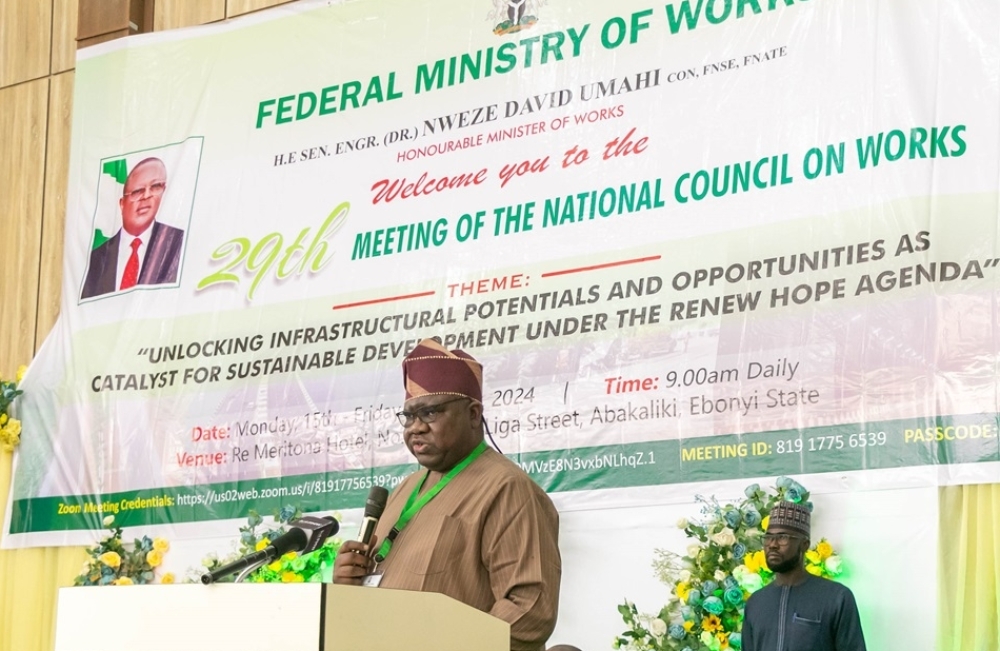
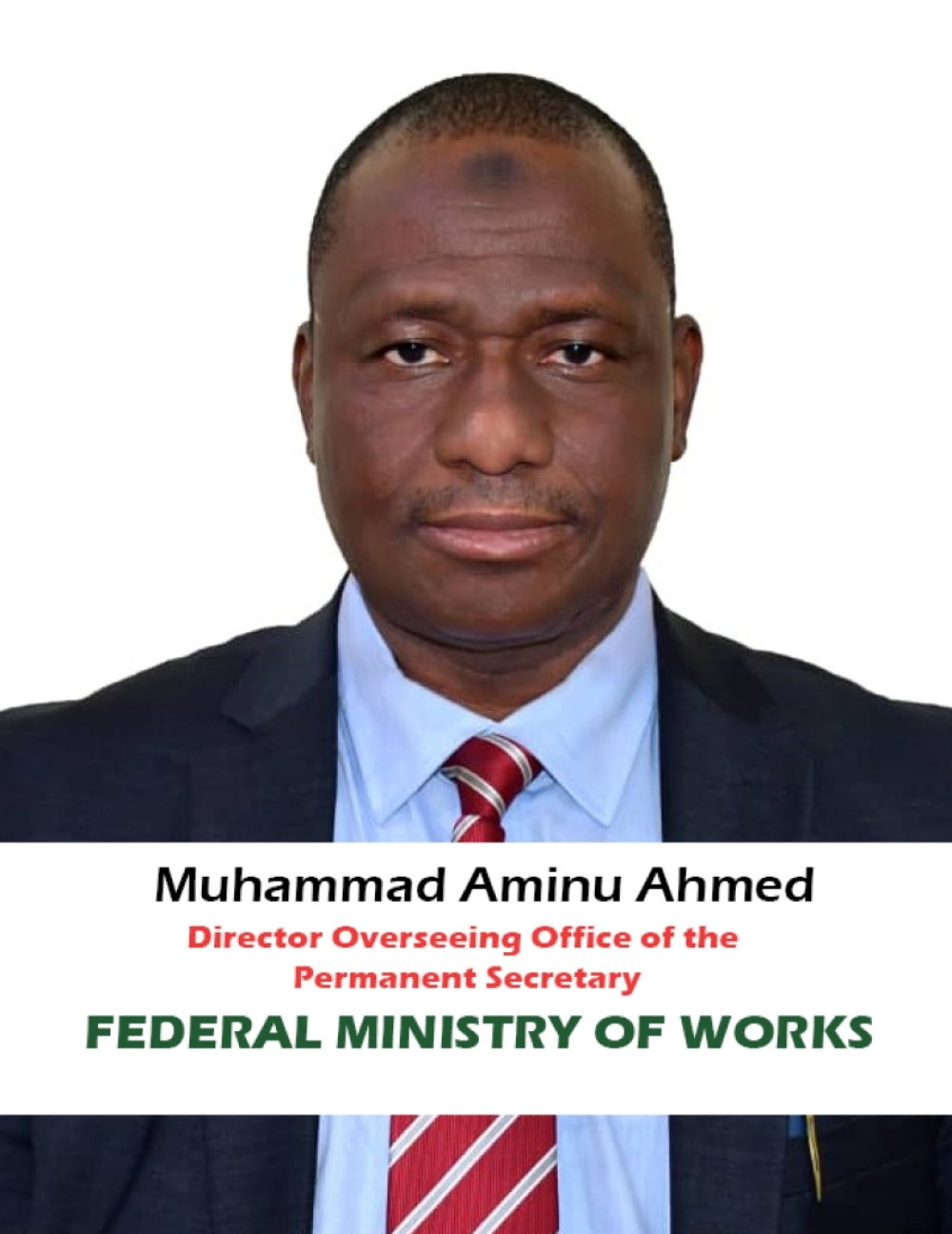
Permanent Secretary charges Council to offer technical support The Permanent Secretary Federal Ministry of Works, Yakubu Adam Kofarmata (PHD) has urged members of the Council of Works to provide technical support to unlocking infrastructure potentials in Nigeria. Kofarmata stated this while speaking at the 29th meeting of the National Council on Works holding at Abakaliki, Ebonyi State. The Council which commenced on Monday 15th July, 2024 has the theme: UNLOCKING INFRASTRUCTURAL POTENTIALS AND OPPORTUNITIES AS CATALYST FOR SUSTAINABLE DEVELOPMENT UNDER THE RENEWED HOPE AGENDA. The Permanent Secretary said: " the objective behind the choice of this theme is to ensure that all memoranda from stakeholders and the general public are strictly based on as well as informed by those issues and subject matter that address the thematic areas of the various sub- themes derived from the Council's theme held the previous day. "I am pleased to note that these strategic sub- themes include; policy formulation and implementation, institution strengthening, adoption of Continuously Reinforced Concrete Pavement (CRCP) in road construction in Nigeria, integrated financing and alternative funding for roads and bridges projects in Nigeria ". Kofarmata also noted other sub-themes include emergency preparedness and response in road maintenance and sustainability, tackling road infrastructure deficit through strategic partnership and use of alternative technologies, and development of a national infrastructure data bank: a veritable tool for road infrastructure delivery in Nigeria. He said that the meeting of the Permanent Secretaries of Ministries of works across the States in Nigeria is coming after the meeting of the Directors and experts earlier held, purposely to enable them to have high level of technical session to deliberate and adopt drafted technical reports generated from the previous session of experts. "I therefore urge you to passionately apply due diligence in your consideration of the draft technical report with a view to doing justice by being objective to enable us deliver this national assignment seamlessly, without fear or favour. "We must focus our eyes on the ball, having at the back of our minds the ultimate goal, which is the preparation of a comprehensive, credible and a good draft technical report admissible by the National Council on Works (NCW) at the end of the day", he said. Abdullahi Mohammed Assistant Chief Information Officer. For: Acting Head, Information and Public Relations ...
State's Encroachment Affecting Progress of Our Work- Engr. Adebiyi
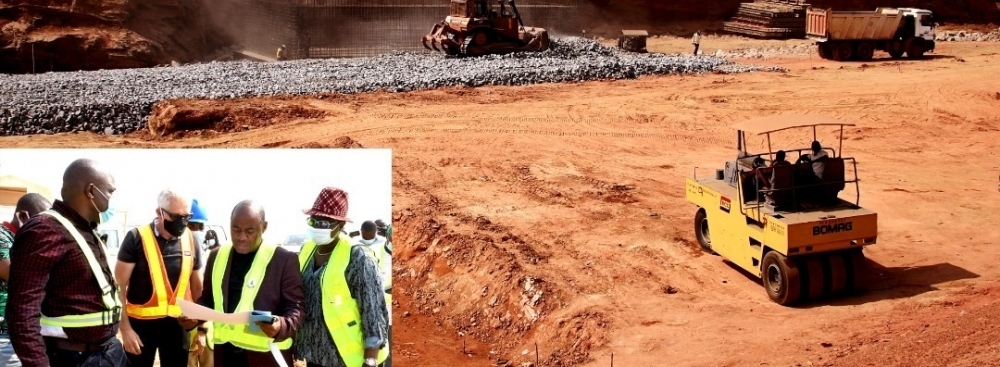
The Director of Highway Construction and Rehabilitation of Federal Ministry of Works and Housing, Engr. Funso Adebiyi has said that the encroachment on the Rigth-of-way of the Fedeal road projects in Oyo State and Illega mining activities along the new alignments has impeded the. Construction and the dualisation of the Ibadan-Ilorin road section 2 Oyo-Ogbomosho road projects.
Engr. Adebiyi stated this at the weekend during the inspection of the 56.00km green field road project.
He stated that the project was initially awarded in 2010 to Messrs RCC Nigeria limited and was later reviewed after augmentation on November, 2020 with a completion date of November, 2023.
Speaking during inspection of the project, the Director disclosed that the level of completion was 76 percent before the contract was reviewed by the Federal Executive Council which now brought the level of percentage completion to 40 percent as a result of additional works approved by Federal Executive
He described the quality of job done as standard pointing out that it was of international standard. However, he pointed out that the activities of illegal mining and building activities were undermining the progress of work on the project. “Any such structure within the right of our way is illegal and that government would not pay any form of compensation. You cannot build on someone's land and still expect compensation," he explained.
He appealed to Oyo State Government to help stop the illegal encroachment on federal government's right-of-way "We discovered that the State Goverment was giving approval to build and mine along the same alignment of the road and this has created a huge problem for the progress of work because the earth materials we would have used has been mined away, it is not good and must be stopped," he said.
Adebiyi also cautioned drivers for their reckless driving.
The Federal Controller of Works, Oyo state, Engr. kayode Ibrahim, said that the contractor was working massively at the bridge locations and at various stages of completion on the five bridges adding that 21.80km of asphaltic binder has been accomplished.
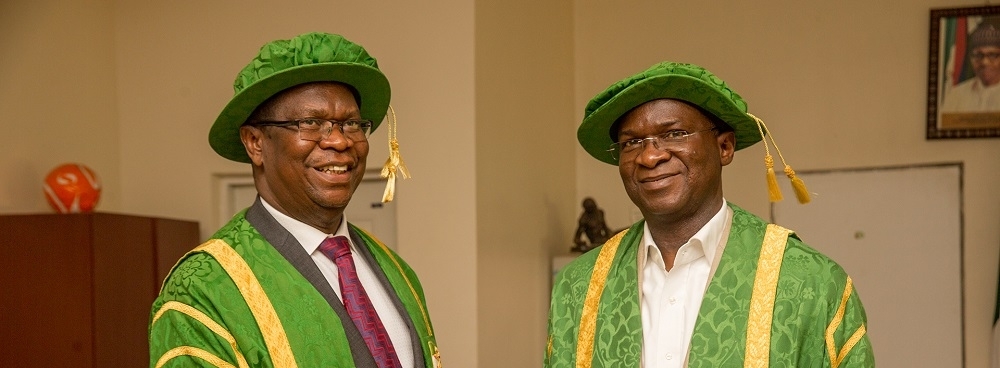
Text Of The Special Herbert Macaulay Memorial Lecture Delivered By The Honourable Minister Of Power, Works & Housing At The University Of Nigeria, Nsukka
I am the most unlikely candidate to deliver a lecture on engineering and its contributions to national development.
I feel truly honored to be invited and I am humbled. As you all know too well, I am a legal practitioner, and went to university with subjects in the liberal arts, likely History, Literature, Economics and Religious Knowledge.
This itself was not a choice. It was, for me, a matter of necessity. I wanted to be a professional and law was the only profession I could gain admission to study without having to contend with Mathematics.
I just did not like Mathematics and was confounded by figures and formulas in Physics and Chemistry.
In my third year in secondary school, I was moved from the science classes to the arts and I was happy to see end of Mathematics. Or, so I thought, until Public Service beckoned.
From my days as Governor having to deal with budgets, Mathematics did not leave me as much as I thought we had parted ways.
Roads, Bridges, Waterworks, Housing projects and General Infrastructure had to be built in Lagos State if we were to come anywhere close to fulfilling electoral promises that I made and serving the people in any meaningful way.
Enter drawings, designs, calculations in bills of Engineering measurement, bills of quantities to measure costs and so much more.
Everything I thought I had parted ways with as a former student of the sciences were staring me in the face as a Governor.
I had to understand road designs, piles for bridges, housing designs, bills of quantities, dredging projects, gas pipelines to support our independent power plants, chlorine aid chemicals to treat water, visits had to be made to project sites and everywhere I entered there was an engineer of one type or the other.
TYPES OF ENGINEERING
In preparing this speech my little research further brought to fore the many ways that engineering defines our lives more than we have perhaps acknowledged.
For example, some of the diverse fields of engineering we have not paid enough attention to are:
Metallurgical Engineering which involves the research, control and development of processes used in the extraction and refining of metals.
Biomechanical and Biomedical engineering which combine the discipline of mechanical engineering with human anatomy and physiology. Resultantly, this leads to work in developing prostheses, developing movements for people with spinal injuries and refining equipment used for athletes.
Geomatic engineers collect, display and analyse data about the Earth’s surface and its gravity fields. This is crucial for developing mapping technology, delineating legal boundaries and indeed monitoring environmental changes.
Plastics engineering. At a time where there is a proliferation of plastic waste, this area of engineering can help develop technologies to manipulate and reshape plastics for recycling purposes.
Software engineering. In this age of apps, software engineers are trained in the specification, development, design and maintenance of software systems and products.
Water resource engineering. We cannot take for granted that water will always be an available resource. Indeed, there are already many examples, both at home and abroad, where the search for water has quickly escalated into conflicts. This type of engineering helps in the assessment of pollution sources, the control of flood damage and resolution of conflicts and effective management of water reserves.
As a coastal State, Lagos was threatened by flood, being 2 (TWO) meters below the sea level and again engineers around me, explaining how the drainage hydraulic systems of canals worked to prevent the State from being submerged.
It became very clear to me that engineering defines our civilization and there is no escape from it, in the way that law, orders our civilizations.
From the sub-national activities in Lagos, things have moved on to a National scale, with President Muhammadu Buhari’s decision to merge the Ministries of Power, Works and Housing into one, and my appointment as substantive Minister, with Mustapha Baba Shekuri and Suleiman Hassan Zarma as Ministers of State I and II respectively.
I stand here today on the shoulders of giants who created this opportunity.
President Muhammadu Buhari who built this platform, and the many engineers at Lagos State level and now in the Ministry of Power, Works and Housing in Abuja, who have been my pillars of support by sharing their knowledge.
As I have said earlier, engineering defines life, and for a nation with a growing population like Nigeria that requires a massive injection of infrastructure, Engineering is going to play a very important role in our journey of development and our quest for prosperity.
One of the things I hope to achieve here is to re-focus the attention of this university and others to the need that Nigeria has today and will have for many decades to come, for well-trained Engineers who will not only build our infrastructure but will maintain them.
Given what President Buhari has committed to deliver, I do not foresee a situation where any Engineer or Technician who is enterprising will not have job to do; and I will explain.
As I said earlier, our population is growing; and the impact on our infrastructure is now manifest and it is affecting our quality of life.
Whether it is this school, where you will see that lecture rooms are crowded, bed space for students is a challenge, sports facilities probably aging, and water supply a struggle.
Or at the sea ports and airports that were built decades ago, or road networks that erosion have taken over, or power transformers and distributions lines that now serve multiples of the people they were initially installed for.
You will see an opportunity for infrastructure upgrade, addition, renewal or reconstruction. Every time you see these challenges, there is inherently an opportunity for an engineer; and this is what I want us to focus on—the opportunities.
We have done it before. In the 1970s immediately after the unfortunate Civil War, Nigeria embarked on a radical infrastructure renewal, building stadia, roads, bridges, high rise towers and so on, similar to what has unfolded in the United Arab Emirate in the last decade.
In the 1990s, there was a modest effort, which coincidentally was led by President Buhari under the aegis of the Petroleum Trust Fund, which became short-lived.
Some of the roads that are still motorable in some parts of the country today were beneficiaries of that intervention, and it is no surprise that people in those places still look to President Buhari for hope because they know he has done it before.
Sadly, we missed this opportunity in the period of between 2007-2015 on a national scale when the price of crude oil, our biggest export, started rising until it exceeded to $100 per barrel and stayed there for a few years.
While many oil producing nations like Saudi Arabia, Qatar, Brazil, United Arab Emirates of Dubai and Abu Dhabi chose to invest in life changing infrastructure of hospitals, bridges airports, universities, skyscrapers, the managers of our own economy chose a different infrastructure.
They called it Stomach Infrastructure.
They shared the money that could have changed our lives.
They imported $5m worth of rice almost on a daily basis and distributed it to the people who could have produced it.
There is now judicial proceeding seeking to have some people account for how $2.2 Billion was allegedly shared for financing an election.
While the judicial proceedings will, hopefully, answer the question as to what happened, my interest is in the lost opportunity.
Around the same period and with the same opportunity of oil proceeds, the Burj Khalifa, which is 829 meters tall and has 163 floors making it, the tallest building of all time, opened in Dubai; to announce their emergence on the world stage .
It took less than 5 years to build and it cost $1.5 Bilion, less than what was allegedly diverted for elections here.
The opportunities that were lost are difficult to fully quantify in terms of material success and pride, employment for engineers, technicians, artisans, suppliers, and so much more.
This is the lost opportunity that President Buhari is determined to harness through the Economic Recovery and Growth Plan, a document that I enjoin every one of us to read.
In it, you will see a clear statement of intent, with a clear statement of actions, and you will see what each ministry is supposed to do.
For the Ministry of Power, Works and Housing, our action points relate to Power sufficiency and infrastructure delivery, especially roads, bridges, public buildings and housing, in order to reflate the economy, create jobs, improve productivity and growth.
So, when President Buhari talks about change, he wants us to understand that stomach infrastructure was a National Misadventure that must never happen again.
He wants us to commit to the type of infrastructure that changes lives, and builds real things that will deliver a shared prosperity.
When President Buhari talks about change, he wants us to remember that while billions of dollars were being mismanaged, the roads on this campus were deteriorating. Enugu-Port-Harcourt road was not motorable.
Enugu- Onitsha road was dilapidated.
Work had stopped on the Second Niger Bridge.
Work had stopped on the Zik Mausoleum, all because we chose stomach infrastructure and neglected to pay contractors and engineers.
President Buhari wants us to understand that change is not an accidental occurrence; it is a matter of choice. Unlike before, President Buhari’s government has made a different choice.
That choice is to invest our resources in infrastructure; and in 3 years the signs are becoming manifest:-
Some Contractors are now back to university roads.
The first phase of 9 out of 37 Independent Power Projects for Federal Universities has been funded from the budget and the first Green Bonds ever launched in Africa.
Contractors are back to work on Enugu–Port Harcourt and Enugu–Onitsha; the problem of the 9th Mile Road will be finally solved with a new engineering design.
Work has resumed on the 2nd Niger Bridge, and with a Presidential Infrastructure Development Fund, work should not stop again on that project because of funding, until it is completed.
The Contractor is back to site at the site of the Zik Mausoleum, and promises to complete and hand it over before December this year.
There is a housing project being undertaken in 34 states of Nigeria including this State, where no less than one thousand people are currently employed at each site including engineers.
Power projects are being delivered to critical markets under a pilot scheme to support small businesses, using young electrical engineers deploying solar and gas plants in Ariaria Market for 37,000 shops and Sabon Gari Market for 15,000 shops.
Whenever I visited all these sites, the dominant profession was engineering. Men and women involved in design, testing, measurement, mixing of aggregate to cast concrete, Iron rods for reinforcement, installing solar panels, connecting electrical appliances like transformers, circuit breakers, and many more in order to deliver life changing infrastructure.
When we talk about how difficult things became in our country, it is a conversation about the opportunities we probably did not give to our Engineers.
President Buhari is determined to change that.
If you are still looking for evidence of his commitment to change; I will share some more examples with you.
The first is a series of difficult projects that seem to have defied solutions and to which the Buhari Government directed its change agenda.
One of them is the massive commitment to developing a National Standard gauge rail network to ease transportation.
The first of these, the Lagos–Ibadan-Kano line has commenced with thousands of men and women working on the sites.
There is also the Bodo – Bonny highway and bridges to connect Bodo to the Island of Bonny in Rivers state.
You might be interested to learn that this project was conceived in the late 1970s and two different contracts to deliver it were not executed.
The project has now been awarded and the contractor is on site, employing engineers and other professionals to deliver life-changing infrastructure in the Niger Delta.
One of the things that will happen is that the dangerous crossing across the creek and Atlantic Ocean from Bodo to Bonny and back and its consequential cost and time to the people of the area will be replaced by a drive across the bridge over the water bodies.
Of course, some of you might have heard of the Mambilla Hydro power plant. To put it mildly in scope and cost it is gargantuan.
It will easily contend as the largest single power plant in Africa, with its 3,050 megawatt size and its $5.7 Billion cost.
It will involve building massive dams, casting millions of tons of concrete, deploying millions of tons of cement, iron rods, mobilising equipment, transporting them, housing workers, feeding them and developing an ecosystem of productivity in Taraba State, that will challenge all of our logistic capacities.
It will take at least 5 years to build; during which time $5.7 Billion, about N2.1 Trillion, will be expended. It is an Engineer’s dreams come true.
What is significant about it is that it was conceived since about 1972, and while many talked about it, the Buhari Government choose to act. That is change.
After many years, the Federal Executive Council of Nigeria, the highest Executive decision making body created by our constitution has approved it. The Engineering procurement and construction contract has been signed.
What is left is to raise the funding to finance it.
Instead of bemoaning the lost opportunity of many squandered billions of dollars, this project was one of the top items on President Buhari’s agenda when he visited China in 2016.
The Minister for Finance is leading our negotiation team to raise the finance.
Apart from the power that it will deliver, the construction jobs it will create, the mining employment for rocks, sand, and other building materials, the road network, the resettlement construction, and other benefits, it will unlock the agricultural promise of Taraba and surrounding states in a most defining way for our National prosperity.
But the commitment does not end at project development; it is backed by Executive action such as the President’s Executive Order No 5 that seeks to promote and secure local content by ensuring that the jobs that can be done by Nigerians must be reserved for them.
This must be good and welcome news for Nigerian professionals, especially those involved in Engineering and Construction business.
On our housing sites, there are similar directives that all the materials to used be made in Nigeria, unless they are items that we are unable to produce.
But Mr. President has not stopped there. In order to ensure that yesterday’s lost opportunities are not replicated, he is now deploying some of the recovered proceeds towards rebuilding our infrastructure.
In the Works Sector, he has just approved the release of N120 Billion towards funding 37 roads in the 2018 budget.
This is indisputable evidence of his commitment to hand Nigeria back to the people and make our money work for us.
Ladies and Gentlemen, the list of what is changing in our country for the better is long. The promise of hope and a better tomorrow are bigger than the problem that Nigeria faces today.
What remains is a matter of choice for us to choose what we want.
We will have to choose between real infrastructure and infrastructure of the stomach.
The Faculty of Engineering in the University of Nigeria and other Universities, and the Engineering students have to make, a choice; about which type of infrastructure provides security for their future.
It is, for me, truly commendable for the University of Nigeria to have inaugurated such a prestigious platform as this Herbert Macaulay Memorial Lecture, to propagate the nationalist and developmental ideals of one of the Giants of our country.
What we then do after the lecture becomes more defining than what we say.
The Economic Recovery and Growth Plan and the commitment to infrastructure renewal and development indicate clearly, where this Government’s priorities lie.
In order to make our manpower development and production respond to our National needs, I contend that the University of Nigeria must see the enormous opportunities and need for Engineers if we are to successfully deliver these projects I have listed and many more still to come.
The best way to respond and contribute to national development is to commit to producing high quality Engineering graduates, and stimulate a high Engineering undergraduate intake.
The future for jobs is promising.
Engineers will be needed not just to build Mambilla Power, the Rail projects, the Bridges, the Airports, the Seaports, and the Gas pipelines, the Power Substations and other projects, but more importantly to operate and maintain them in order to keep them running.
It is this handshake, between Government programmes and policies on one hand, and career development and manpower building by the Universities on the other hand that will take us quicker and faster towards the kind of Nigeria, that men like Herbert Macaulay in whose name we gather, dreamt of, lived for, fought for and died for.
For the construction to take place there must be a conducive work environment, where opportunities can birth Jobs, drive productivity and create prosperity; there must be peace.
Peace of a kind that requires little if any of the law enforcement capacity of the state; and a type of peace that is driven by brotherhood and peaceful coexistence.
All of us must seek that kind of peace in our enlightened common interest.
I seriously think that the best that security agents can do is to prevent conflict from being violent, to enforce the law and impose order.
It us, you and I, who hold the keys to peace
I thank Professor Benjamin C Ozumba, the Vice-Chancellor, the University of Nigeria, the faculty Board of Engineering for inviting me, and I thank you for listening.
Babatunde Raji Fashola, SAN
Honourable Minister of Power, Works and Housing
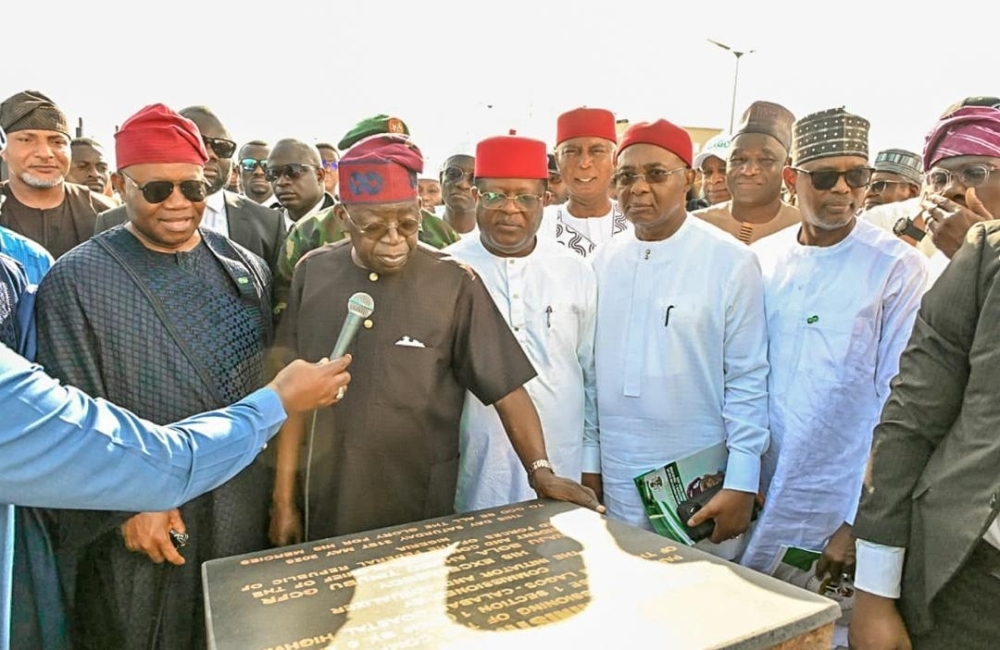
DRIVING NIGERIA’S FUTURE: CELEBRATING TWO YEARS OF TRANSFORMATIVE LEADERSHIP AND THE LAGOS-CALABAR COASTAL HIGHWAY MILESTONE
DRIVING NIGERIA’S FUTURE: CELEBRATING TWO YEARS OF TRANSFORMATIVE LEADERSHIP AND THE LAGOS-CALABAR COASTAL HIGHWAY MILESTONE
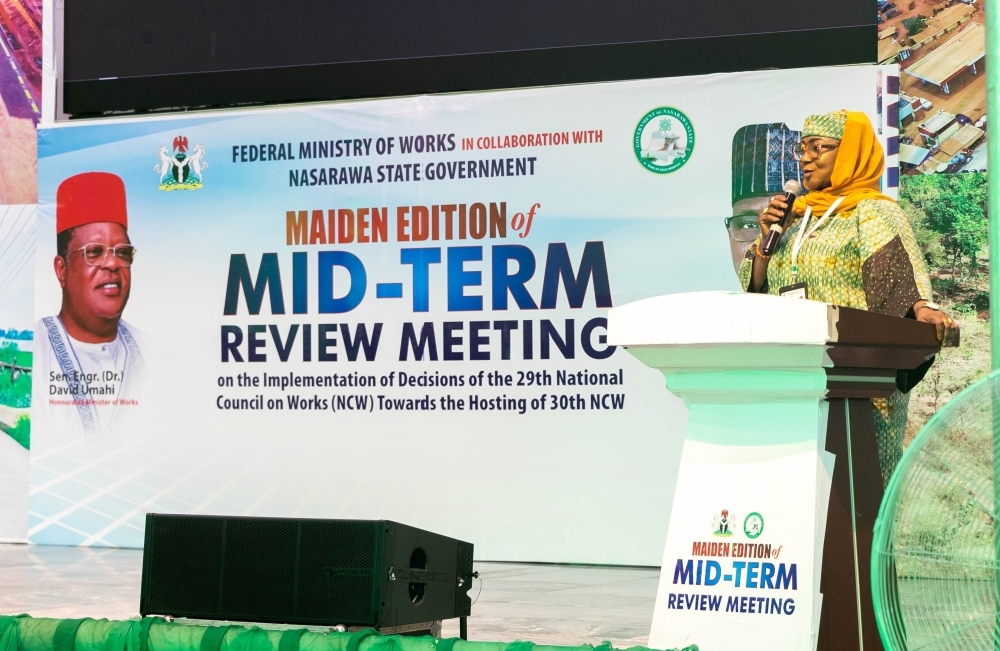
MID -TERM REVIEW MEETING ON THE IMPLIMENTATION OF THE DECISIONS REACHED AT THE 29TH NATIONAL COUNCIL ON WORKS (NCW) DAY 1
MID -TERM REVIEW MEETING ON THE IMPLIMENTATION OF THE DECISIONS REACHED AT THE 29TH NATIONAL COUNCIL ON WORKS (NCW) DAY 1