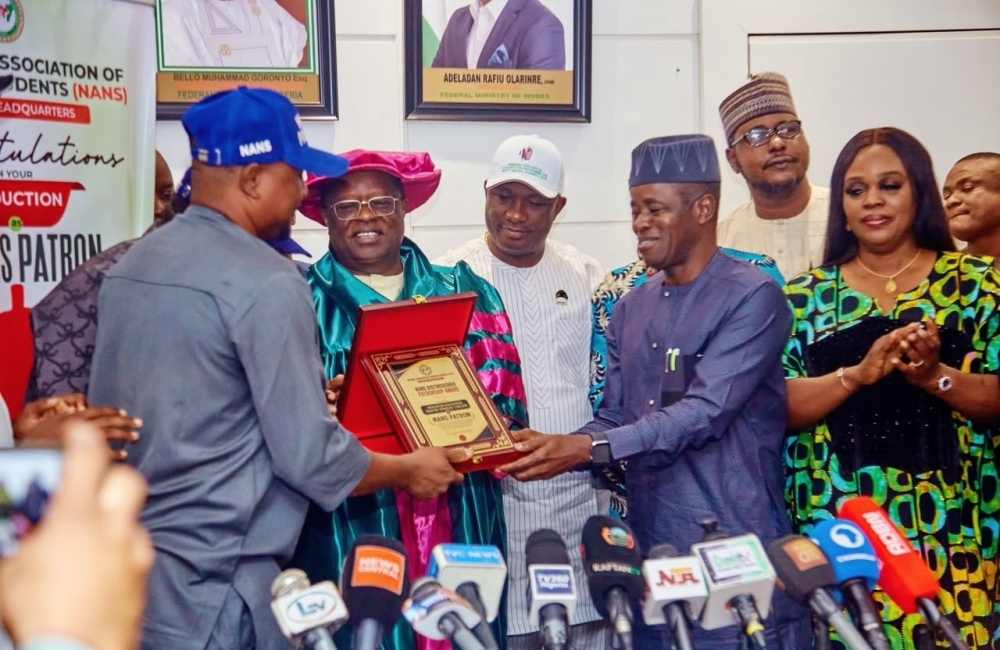
“THE WORST IS OVER; OUR GDP IS GROWING MORE THAN OUR POPULATION. THAT MEANS WE HAVE A FUTURE” - UMAHI TELLS NANS
— As Nigerian Students Induct Him as Grand Patron, Hail Him as “One of the Finest” in Tinubu’s Renewed Hope Cabinet
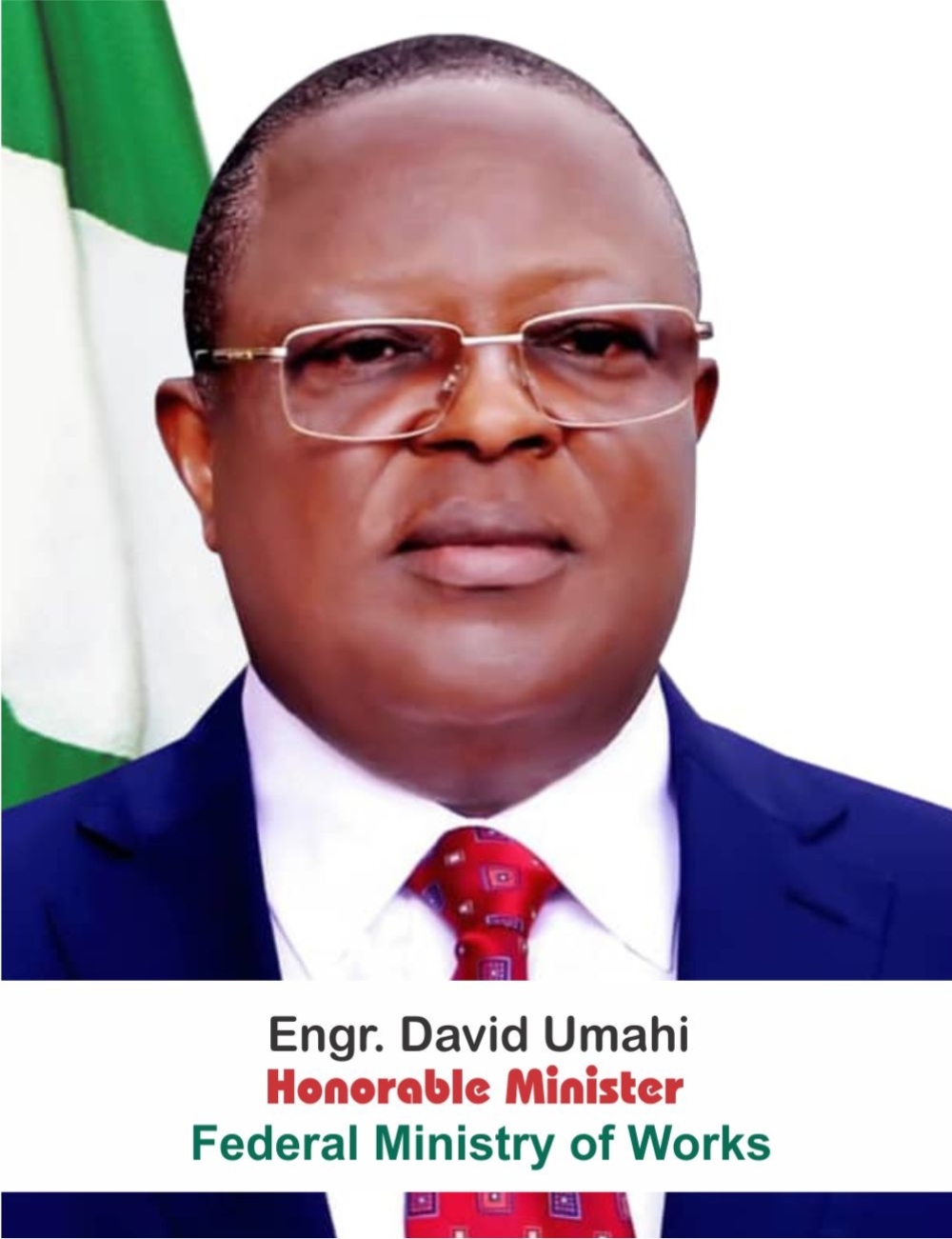
The Minister of Works, Senator Engr. David Umahi, CON, has declared that Nigeria is now seeing stronger economic outlook under President Bola Ahmed Tinubu, noting that the country’s Gross Domestic Product (GDP) is now growing faster than its population.
Umahi made the declaration on Monday, August 10, 2026, at the headquarters of the Federal Ministry of Works in Abuja, while speaking after he was formally inducted as Patron of the National Association of Nigerian Students (NANS).
The minister described the development as a positive indication of Nigeria’s economic prospects, saying, “I was enthused to find out that our GDP is growing more than our population. That means we have a future.”
The NANS leadership, led by its President, Dist. Comr. Akinteye Babatunde Afeez, GCNS, had earlier commended Umahi for his contributions to national infrastructure and described him as “a worthy member of the Renewed Hope Cabinet and, indeed, as one of the finest public servants Nigeria has produced in the contemporary era.”
The students said the recognition was not merely ceremonial but a reflection of Umahi’s visible contribution to road infrastructure and national development under President Bola Ahmed Tinubu’s administration.
According to NANS, the roads and bridges being delivered under Umahi’s supervision are directly connected to the lives of Nigerian students, affecting their mobility, access to educational institutions, examinations, internships, businesses and employment opportunities.
The students specifically cited major projects including the Abuja-Kaduna-Kano Expressway, Abuja-Kaduna-Minna route, Enugu-Port Harcourt Expressway and Lagos-Calabar Coastal Highway as examples of projects they said demonstrate the Federal Government’s commitment to improving national connectivity.
Afeez also disclosed that NANS had studied project reports of the Federal Ministry of Works covering the period between May 2023 and May 2026 and expressed its intention to embark on nationwide project tours to inspect completed and rehabilitated projects.
He said the students would use their platforms to communicate the impact of the projects to millions of Nigerian students, Nigerians and the wider world.
Responding, Umahi challenged Nigerian students and young people to look beyond political sentiments and examine the policies and achievements of the Tinubu administration objectively.
“We have had somebody say, ‘President Tinubu is tired.’ How do you know he is tired? I am part of President Tinubu. The Minister of Interior, the FCT, all the ministers and all the SSAs are vibrant and working. So how do you just jump at that conclusion?”
The minister urged Nigerians to demand concrete alternatives from those criticising the administration.
“If you say that the President is not doing well, what is your alternative?” he asked, stressing that political promises must be backed by clear plans and a credible mission.
He also called on students and other young Nigerians to take a position on issues affecting the country, arguing that remaining neutral in the face of visible progress was not always the right approach.
“You may say that you are not politicians or that you will not take sides, but this is the time to take sides in our national affairs. It is time to take a stand,” Umahi said.
On the economy, the minister acknowledged that the macroeconomy was only beginning to recover but urged Nigerians to consider the condition of the economy before the present administration took office and assess the reforms objectively.
“You may say that the macroeconomy is just beginning to recover. What was it like before the President took over? Everybody agrees that the macroeconomy is being fixed. It is up to you to dissect the ongoing reforms and take a position.”
Umahi also pointed to developments in the education sector, saying the stability being witnessed under the Tinubu administration had created an environment in which students were able to continue their studies without the disruption of nationwide strikes.
“For the first time, students never went on strike. Never. Look at the stability of Nigeria. That has never happened throughout the history of this country.”
“Where is the subsidy money?” Umahi explains
Addressing questions surrounding the removal of fuel subsidy and where the resulting resources were being deployed, Umahi pointed to the scale of ongoing infrastructure projects across the country.
He cited the Abuja-Kaduna-Zaria-Kano road, which he said covers 375 kilometres and, when measured as a dual carriageway, amounts to 750 kilometres.
According to the minister, more than ₦200 billion has already been spent on the project, with 480 kilometres of the dual carriageway completed and further sections nearing completion.
“For the first time, we have been able to complete 118 kilometres of concrete pavement within 30 months. That has never happened,” he said.
The Minister said the remaining works were expected to be completed by November, noting that the two projects on the route have a combined cost of ₦752 billion, with more than 80 percent already paid.
He also highlighted the Sokoto-Zamfara-Zaria corridor, the Benue-Ninth Mile road, and the Bodo - Bonny Island road as examples of projects receiving significant attention under the Tinubu administration.
On the Bonny Island project, he said:
“For the first time, people will move from the island to the mainland in Bonny Island, where the LNG is produced. A project costing ₦280 billion under President Bola Ahmed Tinubu has been completed. The 39.7-kilometre road is fully done, and the people of Bonny are very happy. They are no longer dying at sea. They are now driving through the land.”
The minister also spoke extensively about the administration’s legacy road projects, including the Lagos-Calabar Coastal Highway and the expanded Northeast Fourth Legacy Project.
He disclosed that the Northeast project, originally running from Akwanga through Jos, Bauchi, Gombe and Biu, had been extended through Yobe to Maiduguri, adding another 400 kilometres to the project.
Umahi defended the Lagos-Calabar Coastal Highway against criticisms, saying the project was strategically important to the Niger Delta and would be completed.
“I do not know why people are attacking the Lagos-Calabar Coastal Highway. After all, this is coming from the Niger Delta, where the oil is coming from. Why is nobody attacking the other three Legacy Projects, but this one is being attacked? That is unfair and unrealistic. That project will be completed. In fact, over 50 percent of the entire stretch is already under construction.”
The minister also used the occasion to speak about the development of the Southeast, saying President Tinubu had deliberately embarked on projects aimed at integrating the region into the national infrastructure network.
“The Southeast, for the first time, is being remembered, and I thank the people in the Southeast because sometimes I say, ‘Listen, our people should not be sentimental.’”
He said the administration’s approach to the region was intentional and urged the people of the Southeast to work with other parts of the country.
“The President has a good intention to integrate the people of the Southeast, and I have to be very honest with you. If I were not a minister from the Southeast, we would not have been able to get the projects we have secured. It is intentional on the part of Mr. President. Go and right the wrongs of the Southeast.”
Umahi cited the Enugu-Onitsha Expressway and Enugu-Port Harcourt Expressway among the major projects transforming connectivity in the region.
He also disclosed that President Tinubu had approved the re-scoping and reconstruction of the Lokoja-Benin-Warri corridor, covering a total of 401 kilometres.
The minister was particularly direct in urging the students to support President Tinubu in the 2027 election, arguing that Nigerians should support the administration if they believe its policies are producing results.
“I want you to take a side. If you say you are on the list of a coalition and you say that what we are doing is good, then we have to take a stand to vote for the President in the coming election.”
“Let him finish. Let him take back our country. Let him reposition our country.”
Umahi also urged Nigerians to look beyond political rhetoric and focus on practical solutions to the country’s challenges.
“Listening to others should not mean allowing yourselves to be insulted or blackmailed. Cheap talk will not solve our problems. Nobody is saying what he or she can do differently. The worst is over. The darkest part of the night is an hour before dawn.”
He pointed to the decline in food prices as one of the developments Nigerians should consider in assessing the economy, recalling that a 50-kilogramme bag of rice, which he said had risen above ₦80,000 and at some point reached ₦100,000, was now selling at about ₦58,000.
Umahi also stressed the administration’s commitment to transparency in the execution of road projects, saying the Ministry of Works had opened its projects to scrutiny by anti-corruption agencies.
“Now, why are we doing this? Transparency. We have turned these projects over to the ICPC. They have gone round. We are ready for constructive criticism, and where necessary, we will make amends.”
He added that the Ministry had also written to the Economic and Financial Crimes Commission (EFCC) to inspect its projects. “We have nothing to hide in this administration.”
The minister urged NANS to organise a major student engagement across the geopolitical zones where students could ask questions directly and hear the government’s explanations on its policies and projects.
“Let me defend this administration. Organise it and let me come. Move students from across the zone to a central point where we can talk to them and address their concerns. We have to deliberate on the issues. We have to debate them. Ask your questions, and we will answer them.”
He said he would attend such engagements with some ministers and Senior Special Assistants to the President, stressing that students were important stakeholders in the country’s future.
Umahi further challenged young Nigerians to take responsibility for protecting public infrastructure and contributing positively to national development. “See something, say something. Together, we can take back our country because it belongs to us.”
He said the responsibility for the performance of government should be placed on the officials directly responsible for specific sectors, rather than on the President for every operational issue.
“I am here because the President gave me the responsibility to be in charge of roads and bridges. If I do not do it, I should be the one to be blamed, not the President. I am not the President. The President has divided himself into a number of his appointees. These appointees should be the ones to answer and take responsibility.”
The minister concluded by thanking the students for the recognition and expressing his readiness to deepen collaboration with NANS.
“I want to thank you very much.“
He described the students as important partners in the national development process and encouraged them to remain informed, ask questions and hold leaders accountable.
The NANS President, in his address, said the association considered Umahi worthy of its patronage because of his record of public service, infrastructure delivery and commitment to national development.
He said the roads being constructed under Umahi’s leadership would outlive the present administration and continue to serve generations of Nigerians.
“History will not remember public officers merely because they occupied important offices. History will remember them for what they built, what they changed and the lives they touched.”
Afeez formally welcomed Umahi into the NANS family as Patron, describing the partnership between the student body and the Federal Ministry of Works as an opportunity to bring government projects closer to young Nigerians and deepen informed national discourse.

“THE WORST IS OVER; OUR GDP IS GROWING MORE THAN OUR POPULATION. THAT MEANS WE HAVE A FUTURE” - UMAHI TELLS NANS — As Nigerian Students Induct Him as Grand Patron, Hail Him as “One of the Finest” in Tinubu’s Renewed Hope Cabinet The Minister of Works, Senator Engr. David Umahi, CON, has declared that Nigeria is now seeing stronger economic outlook under President Bola Ahmed Tinubu, noting that the country’s Gross Domestic Product (GDP) is now growing faster than its population. Umahi made the declaration on Monday, August 10, 2026, at the headquarters of the Federal Ministry of Works in Abuja, while speaking after he was formally inducted as Patron of the National Association of Nigerian Students (NANS). The minister described the development as a positive indication of Nigeria’s economic prospects, saying, “I was enthused to find out that our GDP is growing more than our population. That means we have a future.” The NANS leadership, led by its President, Dist. Comr. Akinteye Babatunde Afeez, GCNS, had earlier commended Umahi for his contributions to national infrastructure and described him as “a worthy member of the Renewed Hope Cabinet and, indeed, as one of the finest public servants Nigeria has produced in the contemporary era.” The students said the recognition was not merely ceremonial but a reflection of Umahi’s visible contribution to road infrastructure and national development under President Bola Ahmed Tinubu’s administration. According to NANS, the roads and bridges being delivered under Umahi’s supervision are directly connected to the lives of Nigerian students, affecting their mobility, access to educational institutions, examinations, internships, businesses and employment opportunities. The students specifically cited major projects including the Abuja-Kaduna-Kano Expressway, Abuja-Kaduna-Minna route, Enugu-Port Harcourt Expressway and Lagos-Calabar Coastal Highway as examples of projects they said demonstrate the Federal Government’s commitment to improving national connectivity. Afeez also disclosed that NANS had studied project reports of the Federal Ministry of Works covering the period between May 2023 and May 2026 and expressed its intention to embark on nationwide project tours to inspect completed and rehabilitated projects. He said the students would use their platforms to communicate the impact of the projects to millions of Nigerian students, Nigerians and the wider world. Responding, Umahi challenged Nigerian students and young people to look beyond political sentiments and examine the policies and achievements of the Tinubu administration objectively. “We have had somebody say, ‘President Tinubu is tired.’ How do you know he is tired? I am part of President Tinubu. The Minister of Interior, the FCT, all the ministers and all the SSAs are vibrant and working. So how do you just jump at that conclusion?” The minister urged Nigerians to demand concrete alternatives from those criticising the administration. “If you say that the President is not doing well, what is your alternative?” he asked, stressing that political promises must be backed by clear plans and a credible mission. He also called on students and other young Nigerians to take a position on issues affecting the country, arguing that remaining neutral in the face of visible progress was not always the right approach. “You may say that you are not politicians or that you will not take sides, but this is the time to take sides in our national affairs. It is time to take a stand,” Umahi said. On the economy, the minister acknowledged that the macroeconomy was only beginning to recover but urged Nigerians to consider the condition of the economy before the present administration took office and assess the reforms objectively. “You may say that the macroeconomy is just beginning to recover. What was it like before the President took over? Everybody agrees that the macroeconomy is being fixed. It is up to you to dissect the ongoing reforms and take a position.” Umahi also pointed to developments in the education sector, saying the stability being witnessed under the Tinubu administration had created an environment in which students were able to continue their studies without the disruption of nationwide strikes. “For the first time, students never went on strike. Never. Look at the stability of Nigeria. That has never happened throughout the history of this country.” “Where is the subsidy money?” Umahi explains Addressing questions surrounding the removal of fuel subsidy and where the resulting resources were being deployed, Umahi pointed to the scale of ongoing infrastructure projects across the country. He cited the Abuja-Kaduna-Zaria-Kano road, which he said covers 375 kilometres and, when measured as a dual carriageway, amounts to 750 kilometres. According to the minister, more than ₦200 billion has already been spent on the project, with 480 kilometres of the dual carriageway completed and further sections nearing completion. “For the first time, we have been able to complete 118 kilometres of concrete pavement within 30 months. That has never happened,” he said. The Minister said the remaining works were expected to be completed by November, noting that the two projects on the route have a combined cost of ₦752 billion, with more than 80 percent already paid. He also highlighted the Sokoto-Zamfara-Zaria corridor, the Benue-Ninth Mile road, and the Bodo - Bonny Island road as examples of projects receiving significant attention under the Tinubu administration. On the Bonny Island project, he said: “For the first time, people will move from the island to the mainland in Bonny Island, where the LNG is produced. A project costing ₦280 billion under President Bola Ahmed Tinubu has been completed. The 39.7-kilometre road is fully done, and the people of Bonny are very happy. They are no longer dying at sea. They are now driving through the land.” The minister also spoke extensively about the administration’s legacy road projects, including the Lagos-Calabar Coastal Highway and the expanded Northeast Fourth Legacy Project. He disclosed that the Northeast project, originally running from Akwanga through Jos, Bauchi, Gombe and Biu, had been extended through Yobe to Maiduguri, adding another 400 kilometres to the project. Umahi defended the Lagos-Calabar Coastal Highway against criticisms, saying the project was strategically important to the Niger Delta and would be completed. “I do not know why people are attacking the Lagos-Calabar Coastal Highway. After all, this is coming from the Niger Delta, where the oil is coming from. Why is nobody attacking the other three Legacy Projects, but this one is being attacked? That is unfair and unrealistic. That project will be completed. In fact, over 50 percent of the entire stretch is already under construction.” The minister also used the occasion to speak about the development of the Southeast, saying President Tinubu had deliberately embarked on projects aimed at integrating the region into the national infrastructure network. “The Southeast, for the first time, is being remembered, and I thank the people in the Southeast because sometimes I say, ‘Listen, our people should not be sentimental.’” He said the administration’s approach to the region was intentional and urged the people of the Southeast to work with other parts of the country. “The President has a good intention to integrate the people of the Southeast, and I have to be very honest with you. If I were not a minister from the Southeast, we would not have been able to get the projects we have secured. It is intentional on the part of Mr. President. Go and right the wrongs of the Southeast.” Umahi cited the Enugu-Onitsha Expressway and Enugu-Port Harcourt Expressway among the major projects transforming connectivity in the region. He also disclosed that President Tinubu had approved the re-scoping and reconstruction of the Lokoja-Benin-Warri corridor, covering a total of 401 kilometres. The minister was particularly direct in urging the students to support President Tinubu in the 2027 election, arguing that Nigerians should support the administration if they believe its policies are producing results. “I want you to take a side. If you say you are on the list of a coalition and you say that what we are doing is good, then we have to take a stand to vote for the President in the coming election.” Umahi also urged Nigerians to look beyond political rhetoric and focus on practical solutions to the country’s challenges. “Listening to others should not mean allowing yourselves to be insulted or blackmailed. Cheap talk will not solve our problems. Nobody is saying what he or she can do differently. The worst is over. The darkest part of the night is an hour before dawn.” He pointed to the decline in food prices as one of the developments Nigerians should consider in assessing the economy, recalling that a 50-kilogramme bag of rice, which he said had risen above ₦80,000 and at some point reached ₦100,000, was now selling at about ₦58,000. Umahi also stressed the administration’s commitment to transparency in the execution of road projects, saying the Ministry of Works had opened its projects to scrutiny by anti-corruption agencies. “Now, why are we doing this? Transparency. We have turned these projects over to the ICPC. They have gone round. We are ready for constructive criticism, and where necessary, we will make amends.” He added that the Ministry had also written to the Economic and Financial Crimes Commission (EFCC) to inspect its projects. “We have nothing to hide in this administration.” The minister urged NANS to organise a major student engagement across the geopolitical zones where students could ask questions directly and hear the government’s explanations on its policies and projects. “Let me defend this administration. Organise it and let me come. Move students from across the zone to a central point where we can talk to them and address their concerns. We have to deliberate on the issues. We have to debate them. Ask your questions, and we will answer them.” He said he would attend such engagements with some ministers and Senior Special Assistants to the President, stressing that students were important stakeholders in the country’s future. Umahi further challenged young Nigerians to take responsibility for protecting public infrastructure and contributing positively to national development. “See something, say something. Together, we can take back our country because it belongs to us.” He said the responsibility for the performance of government should be placed on the officials directly responsible for specific sectors, rather than on the President for every operational issue. “I am here because the President gave me the responsibility to be in charge of roads and bridges. If I do not do it, I should be the one to be blamed, not the President. I am not the President. The President has divided himself into a number of his appointees. These appointees should be the ones to answer and take responsibility.” The minister concluded by thanking the students for the recognition and expressing his readiness to deepen collaboration with NANS. “I want to thank you very much.“ He described the students as important partners in the national development process and encouraged them to remain informed, ask questions and hold leaders accountable. The NANS President, in his address, said the association considered Umahi worthy of its patronage because of his record of public service, infrastructure delivery and commitment to national development. He said the roads being constructed under Umahi’s leadership would outlive the present administration and continue to serve generations of Nigerians. “History will not remember public officers merely because they occupied important offices. History will remember them for what they built, what they changed and the lives they touched.” Afeez formally welcomed Umahi into the NANS family as Patron, describing the partnership between the student body and the Federal Ministry of Works as an opportunity to bring government projects closer to young Nigerians and deepen informed national discourse.
“Let him finish. Let him take back our country. Let him reposition our country.”
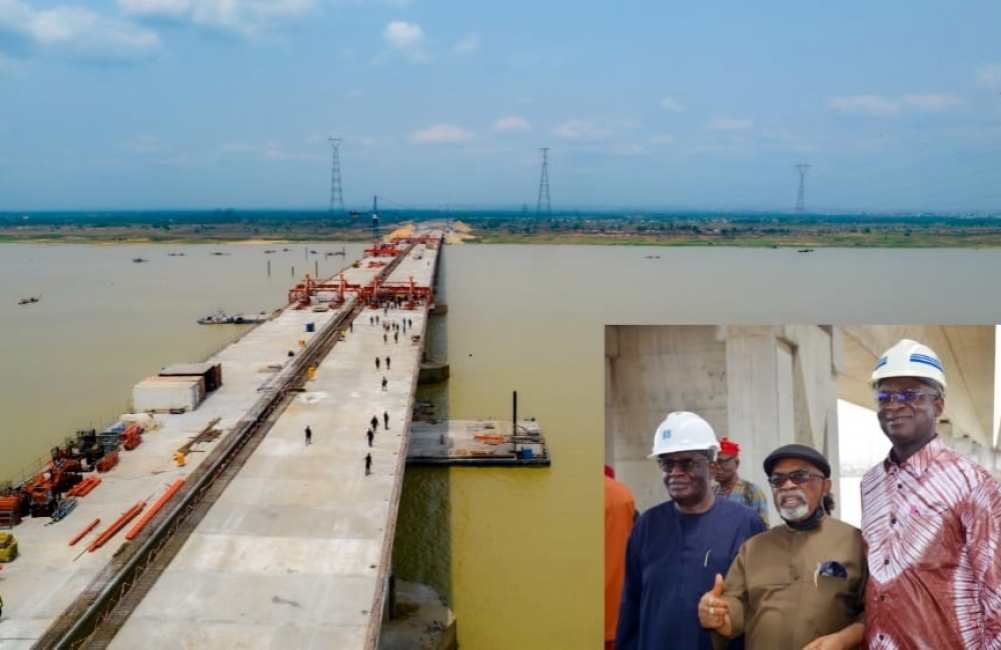
Second Niger Bridge To Be Ready By April - FG · As Gambari, Fashola, Ngige, others inspect Bridge, record milestone of walking from Asaba to Onitsha end of Project The Federal Government has assured that the Second Niger Bridge will be completed by April 2022 and would be commissioned by President Muhammadu Buhari before the end of the year. Describing the Second Niger Bridge as a national infrastructure with immense socio-economic benefits for the contiguous states and indeed the entire nation, the Chief of Staff to President Muhammadu Buhari , Prof. Ibrahim Gambari who in company with the Minister of Works and Housing, Mr. Babatunde Raji Fashola, SAN, his Labour and Productivity counterpart , Dr. Chris Ngige and the Managing Director of the Nigeria Sovereign Investment Authority, Uche Orji inspected the bridge on Tuesday March 8, 2022, said that the project has once again demonstrated the President’s commitment to the bridging of the infrastructure gap in the country. He said that the project being implemented by the Federal Ministry of Works and Housing is funded through the Presidential Infrastructure Development Fund in conjunction with the Nigeria Sovereign Investment Authority (NSIA). On tolling of the asset when completed, Prof. Gambari said that the Federal Executive Council (FEC) had developed a National Tolling Policy for the entire nation and that whether or not the bridge would be tolled was not the key issue, adding that the priority of the government was to get the project delivered. He added that if the road was eventually tolled, there would be alternative route. “So, when this bridge is tolled, the old bridge is an alternative route, so you have the choice to make between speed and price,” he said. Speaking on the possibility of managing the bridge through a concession arrangement, the Minister of Works and Housing said the major responsibility of the government was to deliver the project in collaboration with NSIA saying, “Once we have finished, if they choose to concession, they can concession.” Fashola said that the Ministry has secured the approval of the Federal Executive Council on a National Tolling Policy that is of international standard. “Concessioning of projects is regulated by law. There are rules on how it is done. We are currently supervising the concession of 12 highways across Nigeria through the Highway Development and Management Initiative (HDMI) and the process is opened to the general public. “So, if we choose to concession this one, it will also be opened to the general public,” he said. He stated that the Chief of Staff to the President was on tour of the project to see that what the Ministry has been reporting is in consonance with what is happening on the Bridge so that he can brief Mr. President appropriately. The Minister said work on the bridge had reached appreciable level and appealed to the communities around the impressive Second Niger Bridge project to bear with the Federal Government as power supply was going to be interrupted for two weeks to put finishing touches to the project, adding that adequate notice would be given ahead when that would be done. The Federal Controller of Works in Anambra State and the Engineer Representative of the 2nd Niger Bridge, Engineer Ajani Adeyemo said that the existing Niger Bridge was built in 1965 noting that it has remained the crucial East-West link over the years. However, due to age and excessive axle load and the heavy traffic congestion arising from the enhanced economic activities in the South-East and South-South transport corridors, the Federal Ministry of Works and Housing initiated the second Niger Bridge which has attained 93 percent completion under the leadership of President Buhari. According to him, the bridge when completed would reduce the strain on the existing Niger Bridge, improve traffic flow, improve health, security and create opportunities for the host communities as well as Nigerians to improve their socio-economic activities. The highlight of the inspection visit was the historic walk of the Chief of Staff to Mr.President, the Honourable Ministers of Works and Housing, the Honourable Minister of Labour and Productivity and others including senior journalists from various media houses from the Onitsha end to the Asaba side of the Bridge. ...
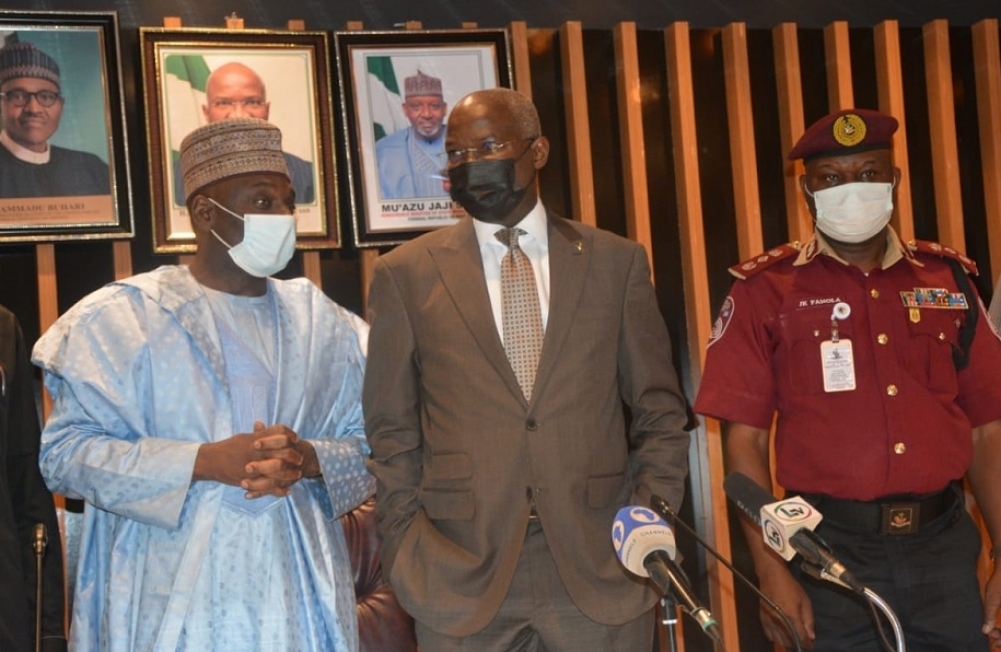
Palliative Measures On Nigerian Roads Are Paying Off – Fashola · Says Rehabilitation, Construction works ongoing across the country as Ministry presents 2021 Ember Months, Post Rainy Season Palliative Works Report to Stakeholders · Minister urges truck drivers to desist from parking on road shoulders · NARTO, NURTW, other stakeholders commend FG as FRSC reports 9% reduction in accident rates during the period The Minister of Works and Housing, Mr. Babatunde Fashola, SAN has said the Federal Government's ember months palliative measures on fixing Nigerian roads are paying off. Fashola made the remark in Abuja during a performance review meeting of stakeholders on the 2021 Ember Months and Post Rainy Season Palliative Works on Nigerian Roads. Fashola said that the Ministry and the Federal Roads Maintenance Agency (FERMA) yearly undertake routine palliative repairs of federal roads across the country during the ember months and post rainy season to facilitate easy movement of travelers, motorists, goods and services. Fashola reiterated that different seasons bring different challenges and so the plan for every season is based on the report available and with such feedback things would be done better. “Seasons of the year bring different challenges, so what works for one season is not going to work for another season and we must remember this as public servants. It is with plan we can make things better. Things don’t happen by accident, we can control how they happen with good planning,” he said. The Minister explained that ember months is not a period to toy with. It is a period when most things begin to happen naturally and based on that the roads become so busy which compels the Ministry and the Federal Roads Maintenance Agency to carry out palliative works on the roads to reduce accidents and other ugly incidents on the roads. “So, let’s remember what ember months is, it is months indicating clearly that the year is coming to an end. And as the year ends certain things begin to happen naturally. People still travel, there are a lot of social and religious gatherings and movements, people consume a lot more items than they normally consume and the roads will be busy,” he added. Fashola stated that with the ember months palliative measures on busy roads to ensure seamless travelling by the general public, accidents rate according to reports by the Federal Road Safety Commission reduced by 9% which is a positive development. “There is an indication that accidents rate has reduced with about 9% and that is a very positive thing, which means there were less deaths and loss of property,” he said. The Minister tasked every road user to be conscious of the fact that the road is a shared asset and can only last when used properly and no asset will last if it is abused. He urged the truck drivers to avoid parking on road shoulders because it reduces its life span. He, however, stated that road palliatives are not the final answer but construction and rehabilitation and that the Ministry has repaired and constructed many roads and still doing more across the states of the Federation. The Minister charged contractors on Nigerian roads to use proper road signages at all the construction sites and to ensure that standards are not compromised. He warned that any contractor not complying with the standards must be sanctioned according to the law. In their remarks at the event, the Federal Road Safety Commission (FRSC) representative, Deputy Corps Marshal Operations, Kayode Fanola, the National President Nigerian Association of Road Transport Owners (NARTO), Yusuf Lawal Othman and National Union of Road Transport Workers (NURTW) representative, Deputy General Secretary, Comrade Anthony Asogwa, commended the Ministry and the Federal Roads Maintenance Agency for the laudable achievements on roads maintenance palliatives across the country during the ember months as they helped curb accidents rate. Earlier, the Director Highways Construction and Rehabilitation in the Ministry, Engr. Folorunso Esan, made a detailed presentation on the various Highways across the country where the ember months and post rainy season palliative measures were carried out. Engr. Esan stated that the Federal Government released the needed funds to carry out the palliative works on the affected roads. The Managing Director/ Chief Executive Officer of the Federal Roads Maintenance Agency, Engr. Nuruddeen Rafindadi also corroborated the fact that the Federal Government provided the needed funds for the execution of the repair works on the affected roads. ...
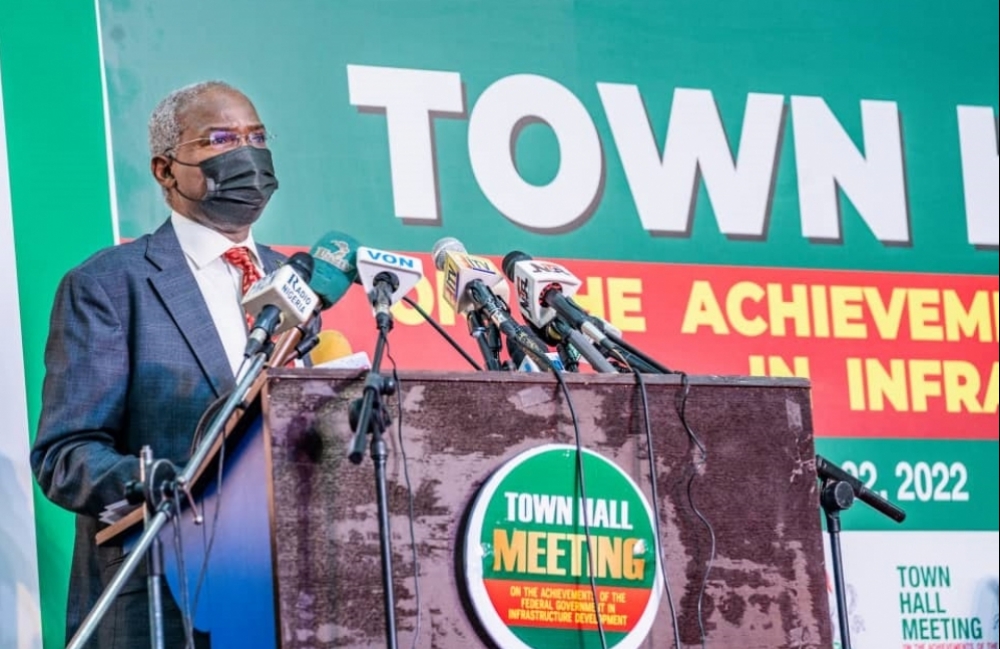
FG’s Achievements on Roads, Housing Infrastructure Remarkable - Fashola .... 1,019 road, bridge projects ongoing, 941kms completed, commissioned *... National Housing Programme in 34 states ready for Commissioning * The Minister of Works and Housing, Mr. Babatunde Fashola, SAN, has stated that the administration of President Muhammadu Buhari has achieved more on infrastructure development for the country than any other administration in recent times. Fashola , who made a presentation on Tuesday, February 22, 2022, at a Town Hall Meeting organized in Abuja by the Minister of Information and Culture, Alhaji Lai Mohamed, spoke alongside the Ministers of Finance, Budget and Economic Planning, Dr. (Mrs.) Zainab Shamsuna Ahmed and Minister of State for Power, Engr. Goody Agbah who also presented the score cards of their Ministries as part of the Federal Government’s achievements in Infrastructure development. The Minister explained that the Progressive government of President Buhari was currently handling 1,019 roads and bridge projects nationwide, adding that it within 18 days towards the ends of last year, it commissioned 941 kilometers of roads connecting 10 states across five geo-political zones which are impacting positively on the lives of the people in many more ways. The commissioned roads are: Kebbi-Sokoto-Kontagora-Jega - Yawuri Road in Sokoto and Kebbi States; Shuarin-Azare Road in Jigawa and Bauchi States; Azare - Potiskum Road in Bauchi and Yobe States; Vandeikya – Obudu Road in Benue and Cross River States and Nnewe – Oduma Road in Enugu and Ebonyi States. He also stated that bridges such as the joint border bridge in Mfum , Cross River State which is a major international link to Cameroon ; Ikom bridge which was now a gateway to the northern part of the country through Katsina-Ala ìn Benue state had all been completed by the Federal government. Accordingly, the Minister revealed that the Bonny-Bodo project construction which has four major bridges and eight minor ones were already in an advanced stage of completion. The project, according to him, is one of the major projects which had defied execution by past administrations but the Buhari administration has tackled and is making significant progress. Other such difficult projects in which the administration has brought to near completion include, the Second Niger Bridge in Anambra and Delta States, the Abuja – Kaduna – Zaria- Kano Road, the Apapa – Oworonsoki Road and the Lagos- Ibadan Expressway. Fashola listed other infrastructure projects across the country to include: ongoing highway and bridges projects, tertiary institutions internal roads rehabilitation, construction of new Federal Secretariats in six states and rehabilitation of 24 Secretariats across the country and construction of housing estates under the National Housing Programme in 34 states. The Minister commended President Muhammadu Buhari for making available resources to continue with infrastructural development throughout the federation. According to him, if all infrastructural facilities are in place, they will ease the process of doing business and increase productivity, pointing out that farmers as well as other Nigerians engaging in various businesses could now move their products or render their services with more ease. On the economic benefits of road construction to the people, Fashola said, a lot of jobs have been created for suppliers of sand and building materials, artisans, labourers, farmers and even food vendors who make their daily earnings from the construction sites. For other Nigerians to appreciate what the present government has done on infrastructure, Fashola recalled the testimonies and experiences of some Nigerians as regards how the roads construction impacted positively on their lives. He quoted what Nigerians across the social strata said about the roads that were commissioned in their respective areas. “President Buhari is legitimately distributing wealth through investment in road infrastructure and the 100 million Nigerians he said would be taken out of poverty in a decade would be achieved." he said. “What really distinguishes this Progressive government under President Muhammadu Buhari is the focus and change it brought in governance. Infrastructure is one area that we are not only different but better,” the Minister added. Earlier, Minister of Finance, Budget and National Planning, Mrs. Zainab Shamsuna Ahmed revealed that the federal government had planned to spend about N1.42 trillion on infrastructure and N2.11 trillion on human capital. She stated that under the Road Infrastructure Development and Refurbishment Investment Tax Credit Scheme, RITCS, a total of 33 road projects have been embarked upon, covering a total length of 1, 564.95 in 2021. ...
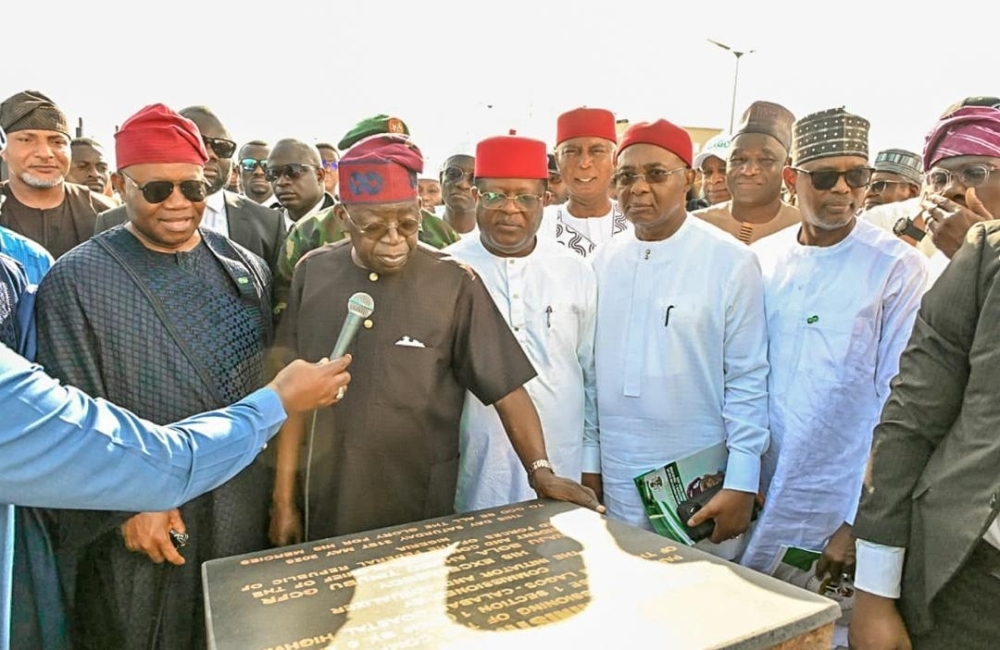
DRIVING NIGERIA’S FUTURE: CELEBRATING TWO YEARS OF TRANSFORMATIVE LEADERSHIP AND THE LAGOS-CALABAR COASTAL HIGHWAY MILESTONE
DRIVING NIGERIA’S FUTURE: CELEBRATING TWO YEARS OF TRANSFORMATIVE LEADERSHIP AND THE LAGOS-CALABAR COASTAL HIGHWAY MILESTONE
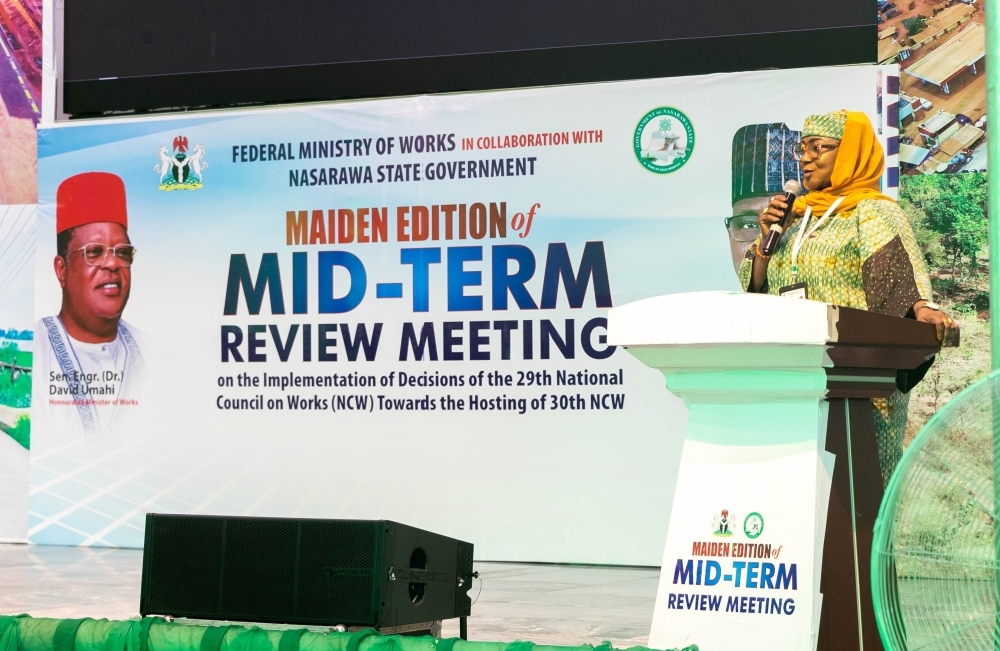
MID -TERM REVIEW MEETING ON THE IMPLIMENTATION OF THE DECISIONS REACHED AT THE 29TH NATIONAL COUNCIL ON WORKS (NCW) DAY 1
MID -TERM REVIEW MEETING ON THE IMPLIMENTATION OF THE DECISIONS REACHED AT THE 29TH NATIONAL COUNCIL ON WORKS (NCW) DAY 1