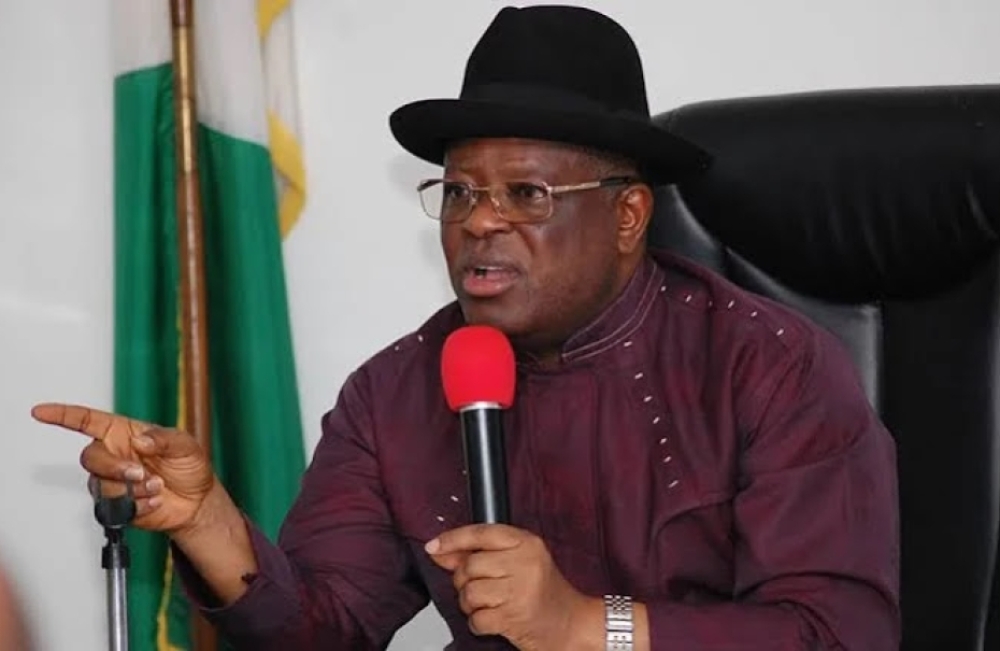
UMAHI ORDERS IMMEDIATE EMERGENCY INTERVENTION ON BENIN-ASABA ROAD, AND SOME OTHER CRITICAL FEDERAL ROADS
The Honourable Minister of Works, Senator Engr. David Nweze Umahi, CON, has directed the immediate deployment of major contractors to all three sections of the Benin-Asaba Federal Road to restore the failed sections and bring an end to the suffering of motorists and other road users.
This is because, the situation on the concessioned Benin-Asaba Road has reached a point where the overall public interest must take precedence over the existing concession agreement.
Recall that the Honourable Minister of Works was on the Benin-Asaba Road about seven days ago, where he assembled a number of contractors and directed them to prepare for immediate palliative intervention on the affected sections of the road at no cost to the concessionaire. In line with the Concession agreement which requires that before the Federal Government could intervene, the permission of the concessionaire must be required, and that permission was not granted to federal government.
The Minister subsequently proposed three options to the concessionaire, any one of which would have enabled the Federal Government to move in and address the worsening condition of the road. Unfortunately, none of the options was accepted by the concessionaire. Immediately after the Minister left Asaba, the already limited equipment deployed to the road by the concessionaire was further reduced to just one, worsening the situation and increasing the suffering of motorists and other road users.
While the Minister takes responsibility for the concerns and suffering of Nigerians using the road, it is important to state that the concessionaire has also not taken the suffering of Edo people and travelling public sufficiently into consideration by declining all the options put forward by the Federal Government. The concessionaire continues to rely on the terms of the concession agreement entered into by the previous administration, an agreement which weighs heavily against the Federal Government’s ability to intervene quickly in the interest of the public in a situation like this.
In view of this situation, the Honourable Minister of Works has directed the immediate deployment of major contractors within the corridor to all three sections of the Benin-Asaba Road to restore the failed sections and bring relief to the people, with the cost of the emergency intervention being borne by the Federal Government. The Honourable Minister has also directed immediate redesign of the entire route to be rebuilt with reinforced concrete pavement. The public should therefore take note that immediate action is underway to restore every failed section of the Benin-Asaba Road and subsequently rehabilitate the entire sections of the road using reinforced concrete pavement.
2. On the Benin-Sapele Road:
The Governors of Edo and Delta States, the Niger Delta Development Commission (NDDC), and the Federal Government are currently engaged in interventions on different sections of the road to restore the entire route. While some sections are receiving palliative attention, permanent works are also ongoing on other sections.
3. On Ifaki(Ekiti) - Kabba (Kogi) Road:
The Federal Government is engaging both the contractor; Gamji Nigeria Company Limited, and Dangote PLC on immediate emergency and permanent intervention on the most failed sections of the road, while efforts are being made to financially mobilise the company for more extensive permanent work to commence on the axis.
4. On the Sokoto-Zamfara-Katsina Road: This is an inherited project involving the dualisation of approximately 350 kilometres, which translates to about 700 kilometers. The project has since been redesigned and is currently ongoing and most sections are being reconstructed using reinforced concrete pavement. From the Sokoto axis towards Zamfara, over 50 kilometres of one carriageway have been fully completed with reinforced concrete pavement. From Zamfara to Katsina, some sections have been completed and palliative works have been ordered over the sections that have not been reconstructed. However, the pace of work slowed down due to the redesign and rephasing of the project. The contractors currently engaged on the road include CBC, SETRACO, Triacta and Mothercat. They are being remobilised to return to site and complete the outstanding works.
5. On the Abuja-Kaduna-Zaria-Kano Road: The Federal Government took over the Road project and has currently completed the 118-kilometer mostly on reinforced concrete pavement on lot 1. The Lot 2, which covers 164 kilometres, is over 60 percent completed on reinforced concrete pavement. The Federal Government has also introduced solar-powered light on the entire route of Abuja-Kaduna-Zaria - Kano to improve visibility during night travel and enhance the overall security situation on the route. The entire project is scheduled for completion by December 2026.
6. On Bauchi-Jigawa Road: Triacta Nigeria Limited has been mobilised to carry out the necessary interventions on some failed sections and work is currently ongoing in those failed sections.
7. On the Sagamu-Ore Road: 48 Kilometers of the 96-kilometre road have already been completed using reinforced concrete pavement. There is also a 24-kilometre section around Ore which was abandoned by the previous contractor. The Federal Government has directed its immediate restoration to ensure seamless travel. Solar lights are being installed in the entire 96kilometer of the road.
8. On Flooded Sections on Sagamu-Ore-Benin Road: The flooded sections on the same corridor between Sagamu-Ore-Benin Road, as well as other flooded sections in Ondo State, are being designed for emergency procurement and intervention.
9. On the East-West Road:
Some failed and critical sections, including defective sections of bridges along the East-West Road, are being marked out for emergency procurement and intervention.
10. On the Abuja-Lokoja Road:
Several contracts are ongoing along the route, while the three critical sections currently without contracts are being procured for emergency intervention.
11. On the Lokoja-Benin-Warri Road: The President has directed a complete redesign and procurement of the 400-kilometre dualised route covering the uncompleted sections, using reinforced concrete pavement, while palliative works will continue with the contractors currently on the road.
12. On Carter Bridge:
While the Federal Government continues to undertake weekly maintenance of the underwater elements of the bridge. The site has also been handed over to the contractor, CCECC, for the construction of a permanent new bridge, and work has commenced.
13. On the Third Mainland Bridge:
With regard to the defective underwater structural elements, the Federal Government is at the final stage of determining the appropriate intervention for the repair of the affected elements.
14. On the flooded section of the Lagos-Ibadan Road: Work has commenced on the affected section. There are also several flooded sections on federal roads across the six geopolitical zones, largely occasioned by excessive flooding and the effects of climate change. The Federal Government is identifying and marking these sections for immediate attention.
15. On the First and Second Niger Bridges:
Intervention work is ongoing on the approach roads to the Second Niger Bridge damaged by flood and the work is progressing very well. The First Niger Bridge has been closed to traffic to enable immediate repair works. Contractor has mobilized to site and comprehensive rehabilitation of the bridge has started. From Summit Junction to the First Niger Bridge, massive rehabilitation work is also ongoing using reinforced concrete pavement.
16. The Honourable Minister wishes to commend the President of the Federal Republic of Nigeria, His Excellency Bola Ahmed Tinubu, GCFR, for the massive work being undertaken on the nation’s roads since the administration assumed office in 2023.
17. It is important to state that when the present administration came into office, there was hardly any part of the country where one could travel for an hour without encountering significant challenges on the road network. The condition of the country’s roads and bridges was a major national infrastructure challenge.
18. Rather than shy away from the problem, the administration of President Bola Ahmed Tinubu made the nation’s road network a priority. Virtually every part of the country became a priority, and the Federal Government, through the Federal Ministry of Works, Regional Commissions, Parastatals and other MDA’s has continued to respond extensively to these challenges.
19. The Federal Government is currently working on over 80 percent of the inherited federal roads, an unprecedented level of intervention in the country’s road infrastructure.
20. We ask the public to understand the enormous challenges inherited on our roads and bridges and to take note not only of the problems being solved, but also of the permanent solutions being introduced.
21. A major part of this new approach is the use of reinforced concrete pavement, designed to significantly extend the lifespan of major roads. These roads are expected to last between 50 and 100 years. This means that roads being constructed under President Bola Ahmed Tinubu’s administration are being designed with future generations in mind, rather than simply providing temporary solutions to today’s problems. And this is a complete departure from the past, when roads often deteriorated only a few years after completion, resulting in a continuous cycle of reconstruction and expenditure.
22. We appreciate the concerns of Nigerians over the condition of some roads presently and the difficulties faced by motorists and commuters who cannot move easily from one point to another. Those concerns are legitimate, and the Federal Government is listening. But Nigerians should also recognise the enormous scale of the problems inherited and the amount of work currently being undertaken across the country.
23. It is simply impossible to resolve every road challenge accumulated over many years of neglect by the past administrations within three years. What is important is that the government is working, the government is responding, and the government is putting permanent solutions in place.
25. We appreciate members of the public who send situation reports on failed roads and other infrastructure challenges. These reports help the Ministry identify areas requiring urgent attention. However, we also appeal to members of the public to report when such problems have been addressed, just as they report when they occur.
24. We are aware of situations where photographs and reports of road challenges continue to circulate on social media even after the Federal Government has intervened and resolved the particular problem.
25. However, the Ministry will continue to respond as rapidly as possible to genuine reports and concerns from Nigerians.
26. It is also important to note that we have compiled a comprehensive record of all inherited, ongoing and intervention projects across the country which is available to the public. This is to ensure that Nigerians have access to information on the infrastructure projects being undertaken nationwide and can fully participate in and appreciate the infrastructure revolution of President Bola Ahmed Tinubu’s administration.

UMAHI ORDERS IMMEDIATE EMERGENCY INTERVENTION ON BENIN-ASABA ROAD, AND SOME OTHER CRITICAL FEDERAL ROADS The Honourable Minister of Works, Senator Engr. David Nweze Umahi, CON, has directed the immediate deployment of major contractors to all three sections of the Benin-Asaba Federal Road to restore the failed sections and bring an end to the suffering of motorists and other road users. This is because, the situation on the concessioned Benin-Asaba Road has reached a point where the overall public interest must take precedence over the existing concession agreement. Recall that the Honourable Minister of Works was on the Benin-Asaba Road about seven days ago, where he assembled a number of contractors and directed them to prepare for immediate palliative intervention on the affected sections of the road at no cost to the concessionaire. In line with the Concession agreement which requires that before the Federal Government could intervene, the permission of the concessionaire must be required, and that permission was not granted to federal government. The Minister subsequently proposed three options to the concessionaire, any one of which would have enabled the Federal Government to move in and address the worsening condition of the road. Unfortunately, none of the options was accepted by the concessionaire. Immediately after the Minister left Asaba, the already limited equipment deployed to the road by the concessionaire was further reduced to just one, worsening the situation and increasing the suffering of motorists and other road users. While the Minister takes responsibility for the concerns and suffering of Nigerians using the road, it is important to state that the concessionaire has also not taken the suffering of Edo people and travelling public sufficiently into consideration by declining all the options put forward by the Federal Government. The concessionaire continues to rely on the terms of the concession agreement entered into by the previous administration, an agreement which weighs heavily against the Federal Government’s ability to intervene quickly in the interest of the public in a situation like this. In view of this situation, the Honourable Minister of Works has directed the immediate deployment of major contractors within the corridor to all three sections of the Benin-Asaba Road to restore the failed sections and bring relief to the people, with the cost of the emergency intervention being borne by the Federal Government. The Honourable Minister has also directed immediate redesign of the entire route to be rebuilt with reinforced concrete pavement. The public should therefore take note that immediate action is underway to restore every failed section of the Benin-Asaba Road and subsequently rehabilitate the entire sections of the road using reinforced concrete pavement. 2. On the Benin-Sapele Road: 3. On Ifaki(Ekiti) - Kabba (Kogi) Road: 4. On the Sokoto-Zamfara-Katsina Road: This is an inherited project involving the dualisation of approximately 350 kilometres, which translates to about 700 kilometers. The project has since been redesigned and is currently ongoing and most sections are being reconstructed using reinforced concrete pavement. From the Sokoto axis towards Zamfara, over 50 kilometres of one carriageway have been fully completed with reinforced concrete pavement. From Zamfara to Katsina, some sections have been completed and palliative works have been ordered over the sections that have not been reconstructed. However, the pace of work slowed down due to the redesign and rephasing of the project. The contractors currently engaged on the road include CBC, SETRACO, Triacta and Mothercat. They are being remobilised to return to site and complete the outstanding works. 5. On the Abuja-Kaduna-Zaria-Kano Road: The Federal Government took over the Road project and has currently completed the 118-kilometer mostly on reinforced concrete pavement on lot 1. The Lot 2, which covers 164 kilometres, is over 60 percent completed on reinforced concrete pavement. The Federal Government has also introduced solar-powered light on the entire route of Abuja-Kaduna-Zaria - Kano to improve visibility during night travel and enhance the overall security situation on the route. The entire project is scheduled for completion by December 2026. 6. On Bauchi-Jigawa Road: Triacta Nigeria Limited has been mobilised to carry out the necessary interventions on some failed sections and work is currently ongoing in those failed sections. 7. On the Sagamu-Ore Road: 48 Kilometers of the 96-kilometre road have already been completed using reinforced concrete pavement. There is also a 24-kilometre section around Ore which was abandoned by the previous contractor. The Federal Government has directed its immediate restoration to ensure seamless travel. Solar lights are being installed in the entire 96kilometer of the road. 8. On Flooded Sections on Sagamu-Ore-Benin Road: The flooded sections on the same corridor between Sagamu-Ore-Benin Road, as well as other flooded sections in Ondo State, are being designed for emergency procurement and intervention. 9. On the East-West Road: 10. On the Abuja-Lokoja Road: 11. On the Lokoja-Benin-Warri Road: The President has directed a complete redesign and procurement of the 400-kilometre dualised route covering the uncompleted sections, using reinforced concrete pavement, while palliative works will continue with the contractors currently on the road. 12. On Carter Bridge: 13. On the Third Mainland Bridge: 14. On the flooded section of the Lagos-Ibadan Road: Work has commenced on the affected section. There are also several flooded sections on federal roads across the six geopolitical zones, largely occasioned by excessive flooding and the effects of climate change. The Federal Government is identifying and marking these sections for immediate attention. 15. On the First and Second Niger Bridges: 16. The Honourable Minister wishes to commend the President of the Federal Republic of Nigeria, His Excellency Bola Ahmed Tinubu, GCFR, for the massive work being undertaken on the nation’s roads since the administration assumed office in 2023. 17. It is important to state that when the present administration came into office, there was hardly any part of the country where one could travel for an hour without encountering significant challenges on the road network. The condition of the country’s roads and bridges was a major national infrastructure challenge. 18. Rather than shy away from the problem, the administration of President Bola Ahmed Tinubu made the nation’s road network a priority. Virtually every part of the country became a priority, and the Federal Government, through the Federal Ministry of Works, Regional Commissions, Parastatals and other MDA’s has continued to respond extensively to these challenges. 19. The Federal Government is currently working on over 80 percent of the inherited federal roads, an unprecedented level of intervention in the country’s road infrastructure. 20. We ask the public to understand the enormous challenges inherited on our roads and bridges and to take note not only of the problems being solved, but also of the permanent solutions being introduced. 21. A major part of this new approach is the use of reinforced concrete pavement, designed to significantly extend the lifespan of major roads. These roads are expected to last between 50 and 100 years. This means that roads being constructed under President Bola Ahmed Tinubu’s administration are being designed with future generations in mind, rather than simply providing temporary solutions to today’s problems. And this is a complete departure from the past, when roads often deteriorated only a few years after completion, resulting in a continuous cycle of reconstruction and expenditure. 22. We appreciate the concerns of Nigerians over the condition of some roads presently and the difficulties faced by motorists and commuters who cannot move easily from one point to another. Those concerns are legitimate, and the Federal Government is listening. But Nigerians should also recognise the enormous scale of the problems inherited and the amount of work currently being undertaken across the country. 23. It is simply impossible to resolve every road challenge accumulated over many years of neglect by the past administrations within three years. What is important is that the government is working, the government is responding, and the government is putting permanent solutions in place. 25. We appreciate members of the public who send situation reports on failed roads and other infrastructure challenges. These reports help the Ministry identify areas requiring urgent attention. However, we also appeal to members of the public to report when such problems have been addressed, just as they report when they occur. 24. We are aware of situations where photographs and reports of road challenges continue to circulate on social media even after the Federal Government has intervened and resolved the particular problem.
The Governors of Edo and Delta States, the Niger Delta Development Commission (NDDC), and the Federal Government are currently engaged in interventions on different sections of the road to restore the entire route. While some sections are receiving palliative attention, permanent works are also ongoing on other sections.
The Federal Government is engaging both the contractor; Gamji Nigeria Company Limited, and Dangote PLC on immediate emergency and permanent intervention on the most failed sections of the road, while efforts are being made to financially mobilise the company for more extensive permanent work to commence on the axis.
Some failed and critical sections, including defective sections of bridges along the East-West Road, are being marked out for emergency procurement and intervention.
Several contracts are ongoing along the route, while the three critical sections currently without contracts are being procured for emergency intervention.
While the Federal Government continues to undertake weekly maintenance of the underwater elements of the bridge. The site has also been handed over to the contractor, CCECC, for the construction of a permanent new bridge, and work has commenced.
With regard to the defective underwater structural elements, the Federal Government is at the final stage of determining the appropriate intervention for the repair of the affected elements.
Intervention work is ongoing on the approach roads to the Second Niger Bridge damaged by flood and the work is progressing very well. The First Niger Bridge has been closed to traffic to enable immediate repair works. Contractor has mobilized to site and comprehensive rehabilitation of the bridge has started. From Summit Junction to the First Niger Bridge, massive rehabilitation work is also ongoing using reinforced concrete pavement.
25. However, the Ministry will continue to respond as rapidly as possible to genuine reports and concerns from Nigerians.
26. It is also important to note that we have compiled a comprehensive record of all inherited, ongoing and intervention projects across the country which is available to the public. This is to ensure that Nigerians have access to information on the infrastructure projects being undertaken nationwide and can fully participate in and appreciate the infrastructure revolution of President Bola Ahmed Tinubu’s administration.
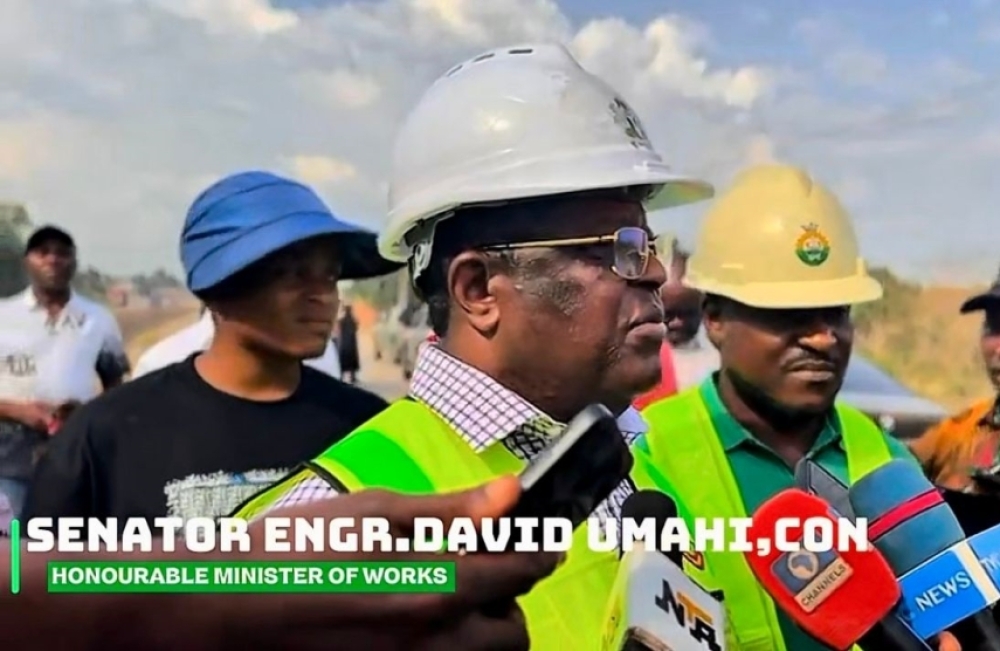
UMAHI DECLARES AN END TO YEARS OF DEADLY TRAPS AND GRIDLOCK ON THE ENUGU–ONITSHA EXPRESSWAY, SETS MARCH 31 DEADLINE FOR REOPENING The Honourable Minister of Works, Senator Engr. David Umahi, CON has declared that the long-troubled Enugu–Onitsha Expressway is fast shedding its grim past, as the Federal Government intensifies a sweeping infrastructure upgrade across the South-East under the President, His Excellency, Senator Bola Ahmed Tinubu, GCFR. Umahi made the declaration on Monday, March 23, 2026, during an inspection of ongoing projects in Enugu, including the Enugu–Onitsha Expressway and the Eke-Obinagu Flyover, where he expressed confidence that the era of consistent fatal accidents, endless traffic, and public frustration along the road is coming to an end. “I’m going round the six geopolitical zones assessing what is possibly to be commissioned before May 29th by Mr President. There are mega project that the President will be available for before May 29th and we mean it,” the Minister said. Once regarded as one of the most dangerous highways in the region, the Enugu–Onitsha road had for years been plagued by tanker explosions, loss of lives, and economic disruptions. But Umahi said decisive intervention by the Tinubu administration has changed the trajectory. “Now this route, the Enugu-Onitsha expressway, you recall that when we came on board, everyday, people were talking about this road. There were a lot of tanker accidents, a lot of people died and so forth. But my joy is that the whole thing is a past story, because the President has swinged into action,” he stated. The Minister disclosed that the dual carriageway, which spans 107 kilometres on each side, is undergoing a major structural shift, with a significant portion being converted from asphalt to concrete to ensure durability. “It is not only that we are repairing this road… about half of it is going on to be concrete. I have no confidence in asphalt I continue to say it. By the time the asphalt fail we will have 50 percent of the road still intact and if it fails within the second tenure of the president then be rest assured that we will fix it,” he said. He added that the same approach is being extended to sections in Anambra State, including the head bridge axis, where an initial asphalt design is being replaced with concrete pavement to align with modern highway standards. “At the head Bridge we have 39k, we’re changing that to concrete so that we can have this coastal road type of road pavement there in Anambra and here in Enugu,”. Beyond reconstruction, the project is also being enhanced with solar-powered street lighting and environmental features aimed at improving safety and sustainability. “So that is going to happen but then not only that. We are putting solar light both for the one that was constructed before us and the one that is being done by us. Within the first one week we will have solar light up to this 1km and we continue we are also going to plant trees which is very important,” he added. The Minister urged the people of the South-East to recognise the level of federal intervention in the region, noting that such attention to infrastructure was previously lacking. “The people of South East have to be very grateful to Mr President. The reason is that we never had it like this. I was governor for 8 years and I can’t think of any Federal road project in Ebonyi State,” he said. He also cautioned against divisive narratives, warning that some actors were misleading the public for selfish interests. “I want to ask our people to be very very careful, there are people that pretend that they are helping us but they actually inciting us against government… we need to know when people are genuinely interested in our case,” he said. Calling for sustained support for President Tinubu, Umahi described the ongoing works as part of a broader effort to correct past neglect and integrate the South-East more fully into national development. “Let us allow this man that have started to right the wrong metted on us as the people of Southeast in the past. Let us allow him the next four years and we will be very much fully integrated,” he stated, adding, “To know the revolution that is going on in infrastructure… this is the Biafra we are looking for.” As a major milestone, the Minister directed that the Enugu–Onitsha Expressway be reopened for public use on or before March 31. “I have given the controller the authority, by the 31st or before, he should call the press to open this road, call the people of South East… let them know that this road is open for travel and that will be our Easter celebration,”. Addressing concerns over project costs, Umahi clarified that the Ministry of Works does not unilaterally determine project pricing, noting that approvals pass through multiple regulatory layers, including the Bureau of Public Procurement and the Federal Executive Council. “I’m not the final authority when it comes to the cost of a project, there are layers of approval, the Bureau of Public Procurement, their own stands and not my own,” he explained. He maintained that the standard being applied to the Enugu–Onitsha project is consistent with major road projects across the country. “The same road architecture as the Lagos-Calabar coastal highway and the Sokoto-Badagry Super Highway… so no discrimination with the president, everybody is the same,” Umahi said. ...
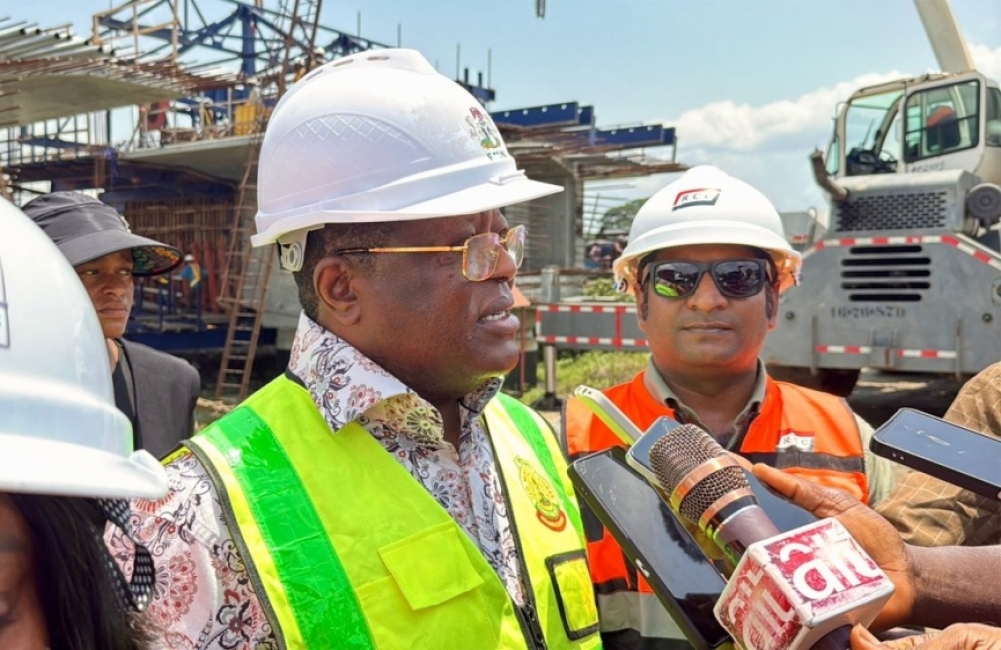
UMAHI RAISES ALARM OVER MISUSE OF ROADS, WARNS AGAINST PARKING OF TANKS, OTHER HEAVY-DUTY VEHICLES -As young engineers set to understudy the project under the President’s mentorship program The Honourable Minister of Works, Senator Engr. David Umahi, CON has raised serious concern over the damaging practice of parking fuel tankers and other heavy-duty vehicles on newly constructed roads, warning that such actions pose direct threat to the durability and lifespan of critical national infrastructure. The Minister made this known during an inspection of the Aleto Bridge project, Rivers State on Saturday, March 21, 2026. “Yesterday I was passing through this road, the entire road we have completed was totally blocked… not by moving vehicles but fuel tankers, they parked on the road.” He emphasized that no road infrastructure is designed to withstand prolonged static loading from heavy vehicles. “No road project anywhere in the world is designed for static loads, they will destroy the road.” With the total project cost exceeding ₦230 billion ₦156 billion for phase one and ₦83 billion for phase two the Minister stressed that such investments must be protected. “Is that what we should fold our hands and allow it to be destroyed?” The Minister expressed satisfaction with the pace and quality of work being delivered by the contractor, RCC, while also commending President Bola Ahmed Tinubu GCFR for his decisive intervention in sustaining the project. “I want to thank RCC very highly and commend Mr President for his heart of love toward the Niger Delta,” the Minister stated. He explained that although funding by the Nigerian National Petroleum Company Limited ceased in August 2025, the President promptly approved an alternative funding mechanism, ensuring that work continued uninterrupted. “We are not owing RCC on this project… it is a very, very highly skilled and technical project and I’m very happy with the quality of work.” The Minister described the Aleto Bridge Project as a landmark engineering effort, incorporating modern concrete pavement technology, solar-powered lighting, environmental landscaping, and reinforced structural features. In line with the Federal Government’s commitment to human capital development, the Minister disclosed plans to integrate young Nigerian engineers into the project through a mentorship programme championed by President Tinubu. “We are making efforts on President Tinubu mentorship programme where young engineers will come and study what we’re doing here. They are our future leaders and it is a technical project to behold.” Providing an update on timelines, the Minister noted that one carriageway of the project is expected to be completed before May 25, 2026, with the first phase projected for full completion by August 2026. “They have promised me that before May 25th that one carriageway of this very innovative construction will be completed and before August the first phase of this project would have been totally completed.” He further expressed confidence that the second phase, which includes multiple flyovers and bridges, will be delivered within the year. The Minister also highlighted the strategic redesign of the project from asphalt to concrete pavement, a decision directed by the President to ensure long-term durability. “We inherited this project from zero ground. It was the President that directed that we should redesign using concrete and then you can see the result.” The Honourable Minister concluded by calling on Nigerians, particularly road users and transport operators, to take collective responsibility in safeguarding public infrastructure. “Let us protect our own. The minister cannot be here and everywhere. The road is being done and it’s been perfectly done but we have a duty to protect it.” ...
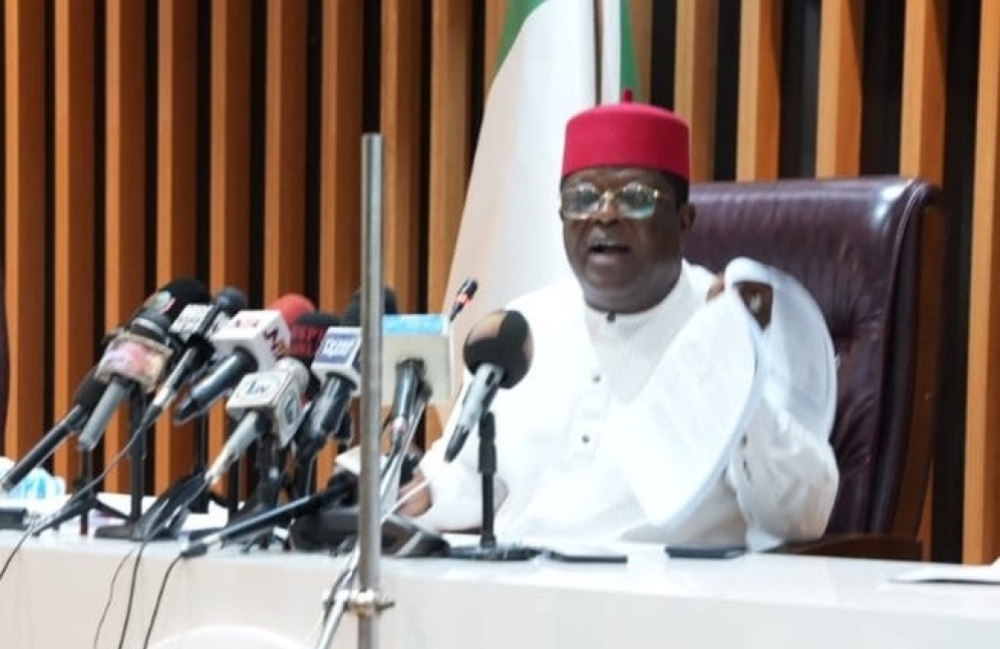
SETTING THE RECORD STRAIGHT ON RECENT ISSUES SURROUNDING MRS TRACY OHIRI’S MATTER The attention of the Honourable Minister of Works, Senator Engr. David Umahi, CON, has been drawn to the ongoing public discourse surrounding the claims and counterclaims by Mrs. Tracy Ohiri, particularly as they relate to her lawyer, Barr. Marshall Abubakar. Ordinarily, we would have ignored this, but it has become necessary, in the interest of truth and public clarity, to address these issues directly. First, it is important to clarify that Barr. Marshall Abubakar acted in good faith and was motivated solely by a desire to assist Mrs. Ohiri. His involvement was entirely selfless and driven by a genuine effort to resolve the matter amicably. At no time did Barr. Marshall discuss or negotiate payment of any money to Mrs. Ohiri. However, some associates and well-meaning individuals independently approached him with the intention of helping her. For the avoidance of doubt, the Honourable Minister had clearly stated two conditions for resolving the matter: either the issue should be determined in court, or Mrs. Ohiri should provide verifiable evidence, including all relevant communications, to substantiate her claims. It must also be emphasized that Barr. Marshall Abubakar conducted himself with utmost decency and integrity throughout. He neither requested nor received any money from the Honourable Minister at any point. Following the failure to meet the stated conditions, particularly the inability to provide credible and verifiable evidence, the Minister has directed his legal team to proceed with all court processes to ensure that the truth is fully established. The Minister further acknowledged that he had indicated to Barr. Marshall that if Mrs. Ohiri could provide complete evidence, logs and communications from the period in question, some friends and associates were willing to contribute the sum of One Billion Naira (N1b). The Minister is still waiting for the above. It is also worth noting that for several years, the Minister chose to remain silent despite persistent provocations and public attacks. This restraint was deliberate and guided by a commitment to focus on state and national service rather than distractions. However, recent developments have made it necessary to respond. The Honourable Minister therefore extends sincere appreciation to Nigerians who have taken their time to examine the facts and arrive at an informed understanding of the situation. There is growing awareness that not everyone who presents themselves as a victim truly is one, and that, in some cases, narratives are deliberately inverted. The Honourable Minister remains fully committed to his mandate. He will not be distracted from the ongoing work of delivering critical road infrastructure across the country. The focus remains on results, service, and ensuring that Nigerians continue to benefit from projects that improve connectivity, economic growth, and national development. We assure Nigerians that this administration will continue to pursue its transformation agenda with dedication, transparency, and an unwavering sense of responsibility. ...
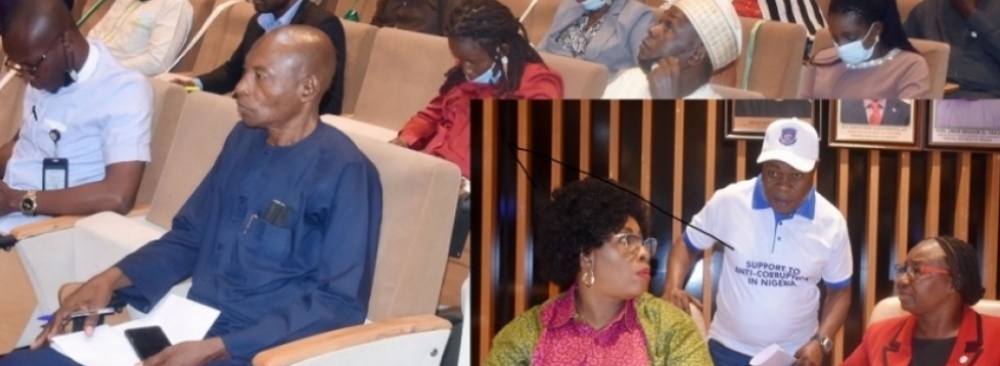
Works Ministry Sensitizes Staff On Corruption Trends In The Public Service
In a bid to ensure a corrupt free public service, the Federal Ministry of Works and Housing has organized a sensitization seminar for its officers on corruption trends in the public service.
The theme of the seminar is "Corruption Trends in Public Service, Causes and Impact on National Development,” was organised by the Anti- Corruption and Transparency Unit, ACTU at the headquarters of the Federal Ministry of Works and Housing, Mabushi, Abuja.
Declaring the workshop open, the Minister of Works and Housing, Mr. Babatunde Fashola advised participants to be transparent and obey the rules and regulations guiding the operations of their schedules as they carry out their assignments.
Fashola, represented by the Director Press and Public Relations of the Ministry, Mrs. Blessings Lere-Adams, emphasized that corruption is crime and urged participants to shun it in a bid to live a peaceful retirement life devoid of incessant invitations from anti-corruption agencies after retirement.
He added that adopting a corrupt free attitude in the course of duty would enhance Nigeria's overall development as a nation.
Presenting her paper tagged, "Corruption and Its Impact,” a facilitator from the Independent Corrupt Practices and Other Related Matters Commission, ICPC, Mrs. Adebimpe Abodunrin, “explained to the participants that every civil servant has been trusted with the assignment given to him and should not be seen betraying it by being corrupt. 'Public Service is a position of trust, don’t betray it," she said.
She urged participants to exhibit good characters while carrying out their duties as the public service was vitally important and majorly counted when any country was being adjudged corrupt or not by the ranking of Transparency International. "Public Service contributes to the perception," Abiodun remarked.
According to her the act of corruption which included abuse of office, dishonesty, breaking of rules and regulations, evil and immoral acts among others were major hindrances to any nation's development and should be shunned completely by Nigerians in all sectors if Nigeria must develop in all areas, noting that individual actions in workplace could either have a negative or positive impact on the entire system.
Mrs. Abodunrin further gave the effects of corruption on national development to include; lack of development, high rate of unemployment, lack of qualified personnel, high cost of living, lack of basic amenities, all of these dents Nigeria's reputation and enhances stigmatization of its citizens, loss of welfare system, adding that the monetization policy was introduced because of the high rate of corruption within the public service.
Another Facilitator from ICPC, Mrs Joy Ebbah, while taking the participants through ethical behaviour in workplace, explained that the ethics of an organisation are the statues and policies of that organisation.
She noted that maintaining an ethical workplace simply means maintaining professional workplace as well as ability to obey rules and regulations guiding their offices.
Ebbah, while calling on ACTU to constantly review and update, if necessary, the code of ethics of the Federal Ministry of Works and Housing, affirmed that Nations have failed due to the workers' failure to abide by ethical rules by developing good and professional characters such as transparency and obedience.
Ebbah urged participants to develop a mindset of commitment and obedience if Nigeria must attain its national development.
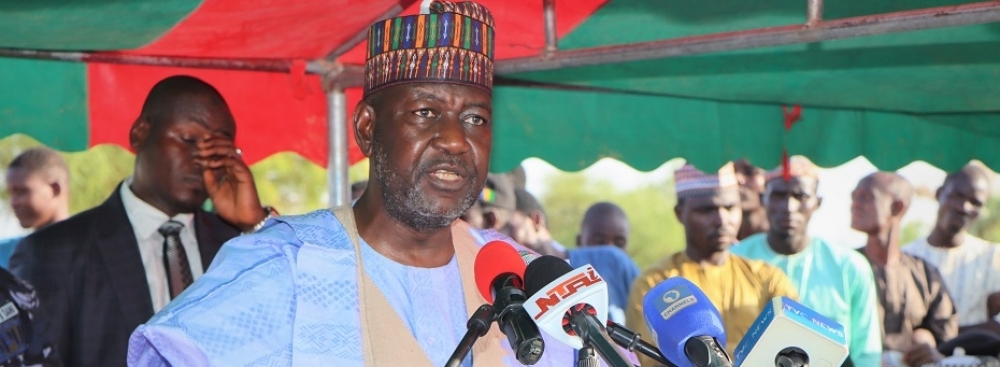
Speech by President Muhammadu Buhari represented by the Honourable Minister of Power, Engr Abubakar D. Aliyu at The Completion and Handover of Nguru-Gashua-Bayamari Road in Yobe State on Saturday, 2nd July, 2022
On behalf of the Federal Government and President Muhammadu Buhari, I bring best wishes to the Government and people of Yobe State.
Our commitment to improving road transport infrastructure, our determination to improve the ease of doing business, create jobs and prosperity to lift people out of poverty brings us here today because the results of our investment are manifesting.
I can confidently say that as we enter the final lap of the tenure of the Buhari administration we are also entering a season of completion and delivery of projects.
As you can all see, we are handing over today the 55 Kilometre Road, which links Nguru-Gashua-Bayamari in Yobe State to Jigawa and Borno States. A very important Road that connects agrarian and trading communities to ease the movement of their farm products.
By linking these communities together, this road becomes a critical component of our national road network.
This road has been built to the highest quality of design and workmanship and if is well used and not abused, it should last for the designed service life.
Road abuse takes many forms such as overloading of vehicles and trucks which accelerates pavement damage, spilling of petroleum products, which dissolves all the components and allows water to penetrate, and converting the road shoulders to permanent parking places, that brings the onset of road failure from the shoulder.
We must all do our best to avoid these practices, report them when they occur and act in a lawful manner to stop them.
The road is also a story of the capacity of our people. The patriotic Nigerians who were employed directly to build this road, the scores of suppliers employed indirectly who are responsible for providing the machines utilized in the construction.
These are not only nation builders to whom we offer our salutations, they are the heart of the Nigerian economy, the micro, small and medium enterprises that drive our economic growth.
This road is also a statement of economic efficiency and ease of doing business.
This is because the travel time before construction has now reduced since the completion of the road.
Of course, this road is part of our many roads to prosperity because reduced journey times means reduced expense on travel, because time is money.
This road also symbolizes change as you will observe in the road furniture, such as the lane markings and Route Assurance signs.
These components had all but disappeared on our highways but our commitment to change has restored them, with the markings helping drivers to achieve better lane management and control of their vehicles; while the Route Assurance signs provide information about how much further or longer, the drivers and commuters have to travel and the distance to the next village, town or state.
Of course, another element of change is the travel experience on a new and well-built road from the old and previously unmotorable road.
Now that we have this new and well-built road, we have duties to ourselves and to other road users.
One of those duties is to ensure that we drive in accordance with the law as stipulated in the Highway Code.
Accordingly, for the avoidance of any doubt, I wish to reiterate that the maximum driving speed on this and other Federal Highways nationwide is 100 (ONE HUNDRED) KM PER HOUR and no more.
On behalf of the Federal Government and President Muhammadu Buhari, I formally declare this Nguru-Gashua-Bayamari Road in Yobe State completed and open for public use.
For your safety and that of other road users, I implore you not to exceed 100 KM PER HOUR.
We want you alive to witness and be part of the prosperity and promise of Nigeria.
I wish you safe and happy motoring.
Engr. Abubakar D. Aliyu, FNSE
Honourable Minister of Power
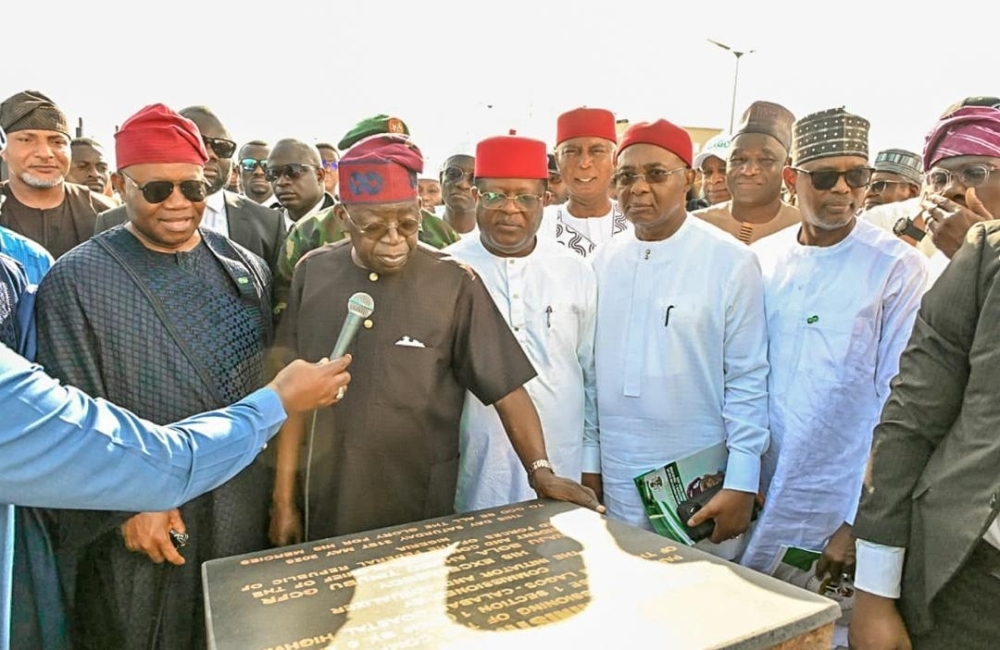
DRIVING NIGERIA’S FUTURE: CELEBRATING TWO YEARS OF TRANSFORMATIVE LEADERSHIP AND THE LAGOS-CALABAR COASTAL HIGHWAY MILESTONE
DRIVING NIGERIA’S FUTURE: CELEBRATING TWO YEARS OF TRANSFORMATIVE LEADERSHIP AND THE LAGOS-CALABAR COASTAL HIGHWAY MILESTONE
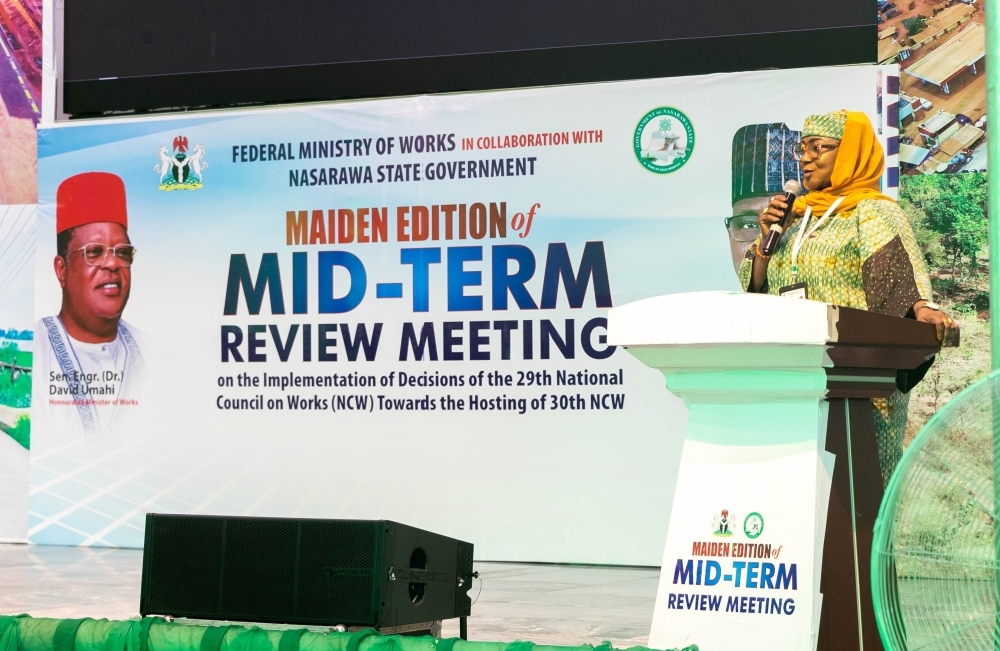
MID -TERM REVIEW MEETING ON THE IMPLIMENTATION OF THE DECISIONS REACHED AT THE 29TH NATIONAL COUNCIL ON WORKS (NCW) DAY 1
MID -TERM REVIEW MEETING ON THE IMPLIMENTATION OF THE DECISIONS REACHED AT THE 29TH NATIONAL COUNCIL ON WORKS (NCW) DAY 1