“THE WORST IS OVER; OUR GDP IS GROWING MORE THAN OUR POPULATION. THAT MEANS WE HAVE A FUTURE” - UMAHI TELLS NANS
— As Nigerian Students Induct Him as Grand Patron, Hail Him as “One of the Finest” in Tinubu’s Renewed Hope Cabinet
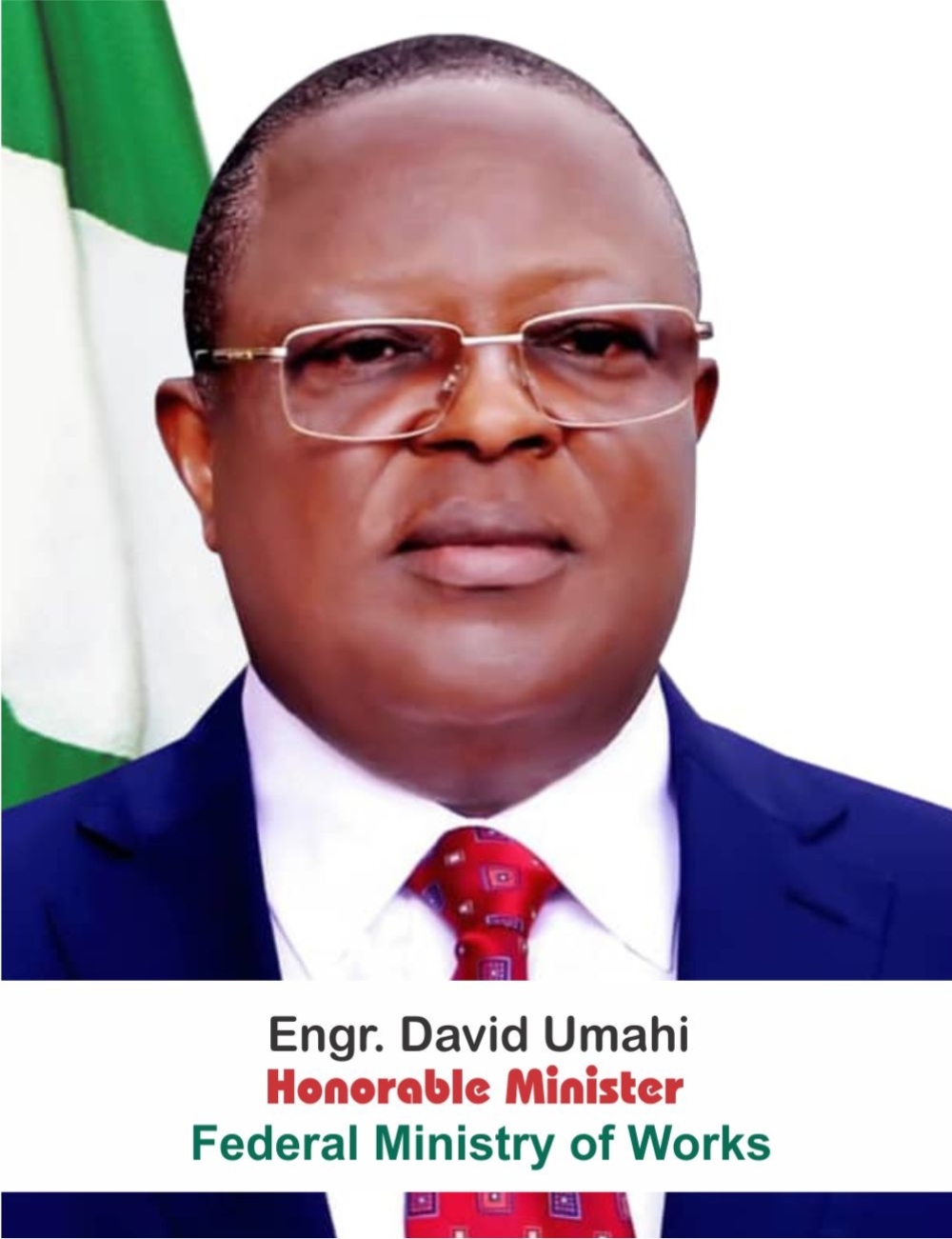
The Minister of Works, Senator Engr. David Umahi, CON, has declared that Nigeria is now seeing stronger economic outlook under President Bola Ahmed Tinubu, noting that the country’s Gross Domestic Product (GDP) is now growing faster than its population.
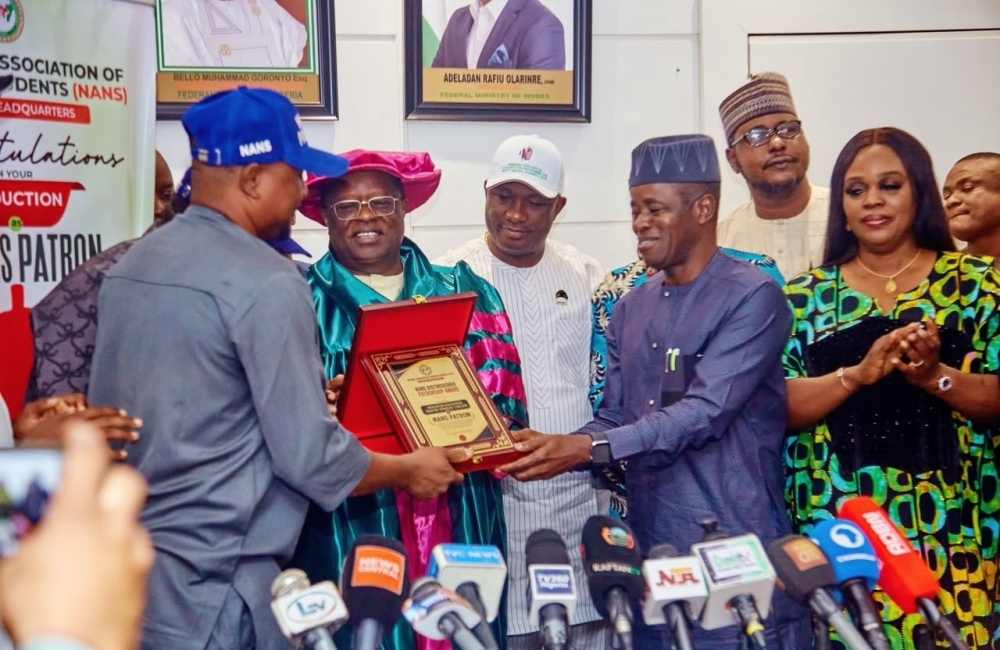
Umahi made the declaration on Monday, August 10, 2026, at the headquarters of the Federal Ministry of Works in Abuja, while speaking after he was formally inducted as Patron of the National Association of Nigerian Students (NANS).
The minister described the development as a positive indication of Nigeria’s economic prospects, saying, “I was enthused to find out that our GDP is growing more than our population. That means we have a future.”
The NANS leadership, led by its President, Dist. Comr. Akinteye Babatunde Afeez, GCNS, had earlier commended Umahi for his contributions to national infrastructure and described him as “a worthy member of the Renewed Hope Cabinet and, indeed, as one of the finest public servants Nigeria has produced in the contemporary era.”
The students said the recognition was not merely ceremonial but a reflection of Umahi’s visible contribution to road infrastructure and national development under President Bola Ahmed Tinubu’s administration.
According to NANS, the roads and bridges being delivered under Umahi’s supervision are directly connected to the lives of Nigerian students, affecting their mobility, access to educational institutions, examinations, internships, businesses and employment opportunities.
The students specifically cited major projects including the Abuja-Kaduna-Kano Expressway, Abuja-Kaduna-Minna route, Enugu-Port Harcourt Expressway and Lagos-Calabar Coastal Highway as examples of projects they said demonstrate the Federal Government’s commitment to improving national connectivity.
Afeez also disclosed that NANS had studied project reports of the Federal Ministry of Works covering the period between May 2023 and May 2026 and expressed its intention to embark on nationwide project tours to inspect completed and rehabilitated projects.
He said the students would use their platforms to communicate the impact of the projects to millions of Nigerian students, Nigerians and the wider world.
Responding, Umahi challenged Nigerian students and young people to look beyond political sentiments and examine the policies and achievements of the Tinubu administration objectively.
“We have had somebody say, ‘President Tinubu is tired.’ How do you know he is tired? I am part of President Tinubu. The Minister of Interior, the FCT, all the ministers and all the SSAs are vibrant and working. So how do you just jump at that conclusion?”
The minister urged Nigerians to demand concrete alternatives from those criticising the administration.
“If you say that the President is not doing well, what is your alternative?” he asked, stressing that political promises must be backed by clear plans and a credible mission.
He also called on students and other young Nigerians to take a position on issues affecting the country, arguing that remaining neutral in the face of visible progress was not always the right approach.
“You may say that you are not politicians or that you will not take sides, but this is the time to take sides in our national affairs. It is time to take a stand,” Umahi said.
On the economy, the minister acknowledged that the macroeconomy was only beginning to recover but urged Nigerians to consider the condition of the economy before the present administration took office and assess the reforms objectively.
“You may say that the macroeconomy is just beginning to recover. What was it like before the President took over? Everybody agrees that the macroeconomy is being fixed. It is up to you to dissect the ongoing reforms and take a position.”
Umahi also pointed to developments in the education sector, saying the stability being witnessed under the Tinubu administration had created an environment in which students were able to continue their studies without the disruption of nationwide strikes.
“For the first time, students never went on strike. Never. Look at the stability of Nigeria. That has never happened throughout the history of this country.”
“Where is the subsidy money?” Umahi explains
Addressing questions surrounding the removal of fuel subsidy and where the resulting resources were being deployed, Umahi pointed to the scale of ongoing infrastructure projects across the country.
He cited the Abuja-Kaduna-Zaria-Kano road, which he said covers 375 kilometres and, when measured as a dual carriageway, amounts to 750 kilometres.
According to the minister, more than ₦200 billion has already been spent on the project, with 480 kilometres of the dual carriageway completed and further sections nearing completion.
“For the first time, we have been able to complete 118 kilometres of concrete pavement within 30 months. That has never happened,” he said.
The Minister said the remaining works were expected to be completed by November, noting that the two projects on the route have a combined cost of ₦752 billion, with more than 80 percent already paid.
He also highlighted the Sokoto-Zamfara-Zaria corridor, the Benue-Ninth Mile road, and the Bodo - Bonny Island road as examples of projects receiving significant attention under the Tinubu administration.
On the Bonny Island project, he said:
“For the first time, people will move from the island to the mainland in Bonny Island, where the LNG is produced. A project costing ₦280 billion under President Bola Ahmed Tinubu has been completed. The 39.7-kilometre road is fully done, and the people of Bonny are very happy. They are no longer dying at sea. They are now driving through the land.”
The minister also spoke extensively about the administration’s legacy road projects, including the Lagos-Calabar Coastal Highway and the expanded Northeast Fourth Legacy Project.
He disclosed that the Northeast project, originally running from Akwanga through Jos, Bauchi, Gombe and Biu, had been extended through Yobe to Maiduguri, adding another 400 kilometres to the project.
Umahi defended the Lagos-Calabar Coastal Highway against criticisms, saying the project was strategically important to the Niger Delta and would be completed.
“I do not know why people are attacking the Lagos-Calabar Coastal Highway. After all, this is coming from the Niger Delta, where the oil is coming from. Why is nobody attacking the other three Legacy Projects, but this one is being attacked? That is unfair and unrealistic. That project will be completed. In fact, over 50 percent of the entire stretch is already under construction.”
The minister also used the occasion to speak about the development of the Southeast, saying President Tinubu had deliberately embarked on projects aimed at integrating the region into the national infrastructure network.
“The Southeast, for the first time, is being remembered, and I thank the people in the Southeast because sometimes I say, ‘Listen, our people should not be sentimental.’”
He said the administration’s approach to the region was intentional and urged the people of the Southeast to work with other parts of the country.
“The President has a good intention to integrate the people of the Southeast, and I have to be very honest with you. If I were not a minister from the Southeast, we would not have been able to get the projects we have secured. It is intentional on the part of Mr. President. Go and right the wrongs of the Southeast.”
Umahi cited the Enugu-Onitsha Expressway and Enugu-Port Harcourt Expressway among the major projects transforming connectivity in the region.
He also disclosed that President Tinubu had approved the re-scoping and reconstruction of the Lokoja-Benin-Warri corridor, covering a total of 401 kilometres.
The minister was particularly direct in urging the students to support President Tinubu in the 2027 election, arguing that Nigerians should support the administration if they believe its policies are producing results.
“I want you to take a side. If you say you are on the list of a coalition and you say that what we are doing is good, then we have to take a stand to vote for the President in the coming election.”
“Let him finish. Let him take back our country. Let him reposition our country.”
Umahi also urged Nigerians to look beyond political rhetoric and focus on practical solutions to the country’s challenges.
“Listening to others should not mean allowing yourselves to be insulted or blackmailed. Cheap talk will not solve our problems. Nobody is saying what he or she can do differently. The worst is over. The darkest part of the night is an hour before dawn.”
He pointed to the decline in food prices as one of the developments Nigerians should consider in assessing the economy, recalling that a 50-kilogramme bag of rice, which he said had risen above ₦80,000 and at some point reached ₦100,000, was now selling at about ₦58,000.
Umahi also stressed the administration’s commitment to transparency in the execution of road projects, saying the Ministry of Works had opened its projects to scrutiny by anti-corruption agencies.
“Now, why are we doing this? Transparency. We have turned these projects over to the ICPC. They have gone round. We are ready for constructive criticism, and where necessary, we will make amends.”
He added that the Ministry had also written to the Economic and Financial Crimes Commission (EFCC) to inspect its projects. “We have nothing to hide in this administration.”
The minister urged NANS to organise a major student engagement across the geopolitical zones where students could ask questions directly and hear the government’s explanations on its policies and projects.
“Let me defend this administration. Organise it and let me come. Move students from across the zone to a central point where we can talk to them and address their concerns. We have to deliberate on the issues. We have to debate them. Ask your questions, and we will answer them.”
He said he would attend such engagements with some ministers and Senior Special Assistants to the President, stressing that students were important stakeholders in the country’s future.
Umahi further challenged young Nigerians to take responsibility for protecting public infrastructure and contributing positively to national development. “See something, say something. Together, we can take back our country because it belongs to us.”
He said the responsibility for the performance of government should be placed on the officials directly responsible for specific sectors, rather than on the President for every operational issue.
“I am here because the President gave me the responsibility to be in charge of roads and bridges. If I do not do it, I should be the one to be blamed, not the President. I am not the President. The President has divided himself into a number of his appointees. These appointees should be the ones to answer and take responsibility.”
The minister concluded by thanking the students for the recognition and expressing his readiness to deepen collaboration with NANS.
“I want to thank you very much.“
He described the students as important partners in the national development process and encouraged them to remain informed, ask questions and hold leaders accountable.
The NANS President, in his address, said the association considered Umahi worthy of its patronage because of his record of public service, infrastructure delivery and commitment to national development.
He said the roads being constructed under Umahi’s leadership would outlive the present administration and continue to serve generations of Nigerians.
“History will not remember public officers merely because they occupied important offices. History will remember them for what they built, what they changed and the lives they touched.”
Afeez formally welcomed Umahi into the NANS family as Patron, describing the partnership between the student body and the Federal Ministry of Works as an opportunity to bring government projects closer to young Nigerians and deepen informed national discourse.

“THE WORST IS OVER; OUR GDP IS GROWING MORE THAN OUR POPULATION. THAT MEANS WE HAVE A FUTURE” - UMAHI TELLS NANS — As Nigerian Students Induct Him as Grand Patron, Hail Him as “One of the Finest” in Tinubu’s Renewed Hope Cabinet The Minister of Works, Senator Engr. David Umahi, CON, has declared that Nigeria is now seeing stronger economic outlook under President Bola Ahmed Tinubu, noting that the country’s Gross Domestic Product (GDP) is now growing faster than its population. Umahi made the declaration on Monday, August 10, 2026, at the headquarters of the Federal Ministry of Works in Abuja, while speaking after he was formally inducted as Patron of the National Association of Nigerian Students (NANS). The minister described the development as a positive indication of Nigeria’s economic prospects, saying, “I was enthused to find out that our GDP is growing more than our population. That means we have a future.” The NANS leadership, led by its President, Dist. Comr. Akinteye Babatunde Afeez, GCNS, had earlier commended Umahi for his contributions to national infrastructure and described him as “a worthy member of the Renewed Hope Cabinet and, indeed, as one of the finest public servants Nigeria has produced in the contemporary era.” The students said the recognition was not merely ceremonial but a reflection of Umahi’s visible contribution to road infrastructure and national development under President Bola Ahmed Tinubu’s administration. According to NANS, the roads and bridges being delivered under Umahi’s supervision are directly connected to the lives of Nigerian students, affecting their mobility, access to educational institutions, examinations, internships, businesses and employment opportunities. The students specifically cited major projects including the Abuja-Kaduna-Kano Expressway, Abuja-Kaduna-Minna route, Enugu-Port Harcourt Expressway and Lagos-Calabar Coastal Highway as examples of projects they said demonstrate the Federal Government’s commitment to improving national connectivity. Afeez also disclosed that NANS had studied project reports of the Federal Ministry of Works covering the period between May 2023 and May 2026 and expressed its intention to embark on nationwide project tours to inspect completed and rehabilitated projects. He said the students would use their platforms to communicate the impact of the projects to millions of Nigerian students, Nigerians and the wider world. Responding, Umahi challenged Nigerian students and young people to look beyond political sentiments and examine the policies and achievements of the Tinubu administration objectively. “We have had somebody say, ‘President Tinubu is tired.’ How do you know he is tired? I am part of President Tinubu. The Minister of Interior, the FCT, all the ministers and all the SSAs are vibrant and working. So how do you just jump at that conclusion?” The minister urged Nigerians to demand concrete alternatives from those criticising the administration. “If you say that the President is not doing well, what is your alternative?” he asked, stressing that political promises must be backed by clear plans and a credible mission. He also called on students and other young Nigerians to take a position on issues affecting the country, arguing that remaining neutral in the face of visible progress was not always the right approach. “You may say that you are not politicians or that you will not take sides, but this is the time to take sides in our national affairs. It is time to take a stand,” Umahi said. On the economy, the minister acknowledged that the macroeconomy was only beginning to recover but urged Nigerians to consider the condition of the economy before the present administration took office and assess the reforms objectively. “You may say that the macroeconomy is just beginning to recover. What was it like before the President took over? Everybody agrees that the macroeconomy is being fixed. It is up to you to dissect the ongoing reforms and take a position.” Umahi also pointed to developments in the education sector, saying the stability being witnessed under the Tinubu administration had created an environment in which students were able to continue their studies without the disruption of nationwide strikes. “For the first time, students never went on strike. Never. Look at the stability of Nigeria. That has never happened throughout the history of this country.” “Where is the subsidy money?” Umahi explains Addressing questions surrounding the removal of fuel subsidy and where the resulting resources were being deployed, Umahi pointed to the scale of ongoing infrastructure projects across the country. He cited the Abuja-Kaduna-Zaria-Kano road, which he said covers 375 kilometres and, when measured as a dual carriageway, amounts to 750 kilometres. According to the minister, more than ₦200 billion has already been spent on the project, with 480 kilometres of the dual carriageway completed and further sections nearing completion. “For the first time, we have been able to complete 118 kilometres of concrete pavement within 30 months. That has never happened,” he said. The Minister said the remaining works were expected to be completed by November, noting that the two projects on the route have a combined cost of ₦752 billion, with more than 80 percent already paid. He also highlighted the Sokoto-Zamfara-Zaria corridor, the Benue-Ninth Mile road, and the Bodo - Bonny Island road as examples of projects receiving significant attention under the Tinubu administration. On the Bonny Island project, he said: “For the first time, people will move from the island to the mainland in Bonny Island, where the LNG is produced. A project costing ₦280 billion under President Bola Ahmed Tinubu has been completed. The 39.7-kilometre road is fully done, and the people of Bonny are very happy. They are no longer dying at sea. They are now driving through the land.” The minister also spoke extensively about the administration’s legacy road projects, including the Lagos-Calabar Coastal Highway and the expanded Northeast Fourth Legacy Project. He disclosed that the Northeast project, originally running from Akwanga through Jos, Bauchi, Gombe and Biu, had been extended through Yobe to Maiduguri, adding another 400 kilometres to the project. Umahi defended the Lagos-Calabar Coastal Highway against criticisms, saying the project was strategically important to the Niger Delta and would be completed. “I do not know why people are attacking the Lagos-Calabar Coastal Highway. After all, this is coming from the Niger Delta, where the oil is coming from. Why is nobody attacking the other three Legacy Projects, but this one is being attacked? That is unfair and unrealistic. That project will be completed. In fact, over 50 percent of the entire stretch is already under construction.” The minister also used the occasion to speak about the development of the Southeast, saying President Tinubu had deliberately embarked on projects aimed at integrating the region into the national infrastructure network. “The Southeast, for the first time, is being remembered, and I thank the people in the Southeast because sometimes I say, ‘Listen, our people should not be sentimental.’” He said the administration’s approach to the region was intentional and urged the people of the Southeast to work with other parts of the country. “The President has a good intention to integrate the people of the Southeast, and I have to be very honest with you. If I were not a minister from the Southeast, we would not have been able to get the projects we have secured. It is intentional on the part of Mr. President. Go and right the wrongs of the Southeast.” Umahi cited the Enugu-Onitsha Expressway and Enugu-Port Harcourt Expressway among the major projects transforming connectivity in the region. He also disclosed that President Tinubu had approved the re-scoping and reconstruction of the Lokoja-Benin-Warri corridor, covering a total of 401 kilometres. The minister was particularly direct in urging the students to support President Tinubu in the 2027 election, arguing that Nigerians should support the administration if they believe its policies are producing results. “I want you to take a side. If you say you are on the list of a coalition and you say that what we are doing is good, then we have to take a stand to vote for the President in the coming election.” Umahi also urged Nigerians to look beyond political rhetoric and focus on practical solutions to the country’s challenges. “Listening to others should not mean allowing yourselves to be insulted or blackmailed. Cheap talk will not solve our problems. Nobody is saying what he or she can do differently. The worst is over. The darkest part of the night is an hour before dawn.” He pointed to the decline in food prices as one of the developments Nigerians should consider in assessing the economy, recalling that a 50-kilogramme bag of rice, which he said had risen above ₦80,000 and at some point reached ₦100,000, was now selling at about ₦58,000. Umahi also stressed the administration’s commitment to transparency in the execution of road projects, saying the Ministry of Works had opened its projects to scrutiny by anti-corruption agencies. “Now, why are we doing this? Transparency. We have turned these projects over to the ICPC. They have gone round. We are ready for constructive criticism, and where necessary, we will make amends.” He added that the Ministry had also written to the Economic and Financial Crimes Commission (EFCC) to inspect its projects. “We have nothing to hide in this administration.” The minister urged NANS to organise a major student engagement across the geopolitical zones where students could ask questions directly and hear the government’s explanations on its policies and projects. “Let me defend this administration. Organise it and let me come. Move students from across the zone to a central point where we can talk to them and address their concerns. We have to deliberate on the issues. We have to debate them. Ask your questions, and we will answer them.” He said he would attend such engagements with some ministers and Senior Special Assistants to the President, stressing that students were important stakeholders in the country’s future. Umahi further challenged young Nigerians to take responsibility for protecting public infrastructure and contributing positively to national development. “See something, say something. Together, we can take back our country because it belongs to us.” He said the responsibility for the performance of government should be placed on the officials directly responsible for specific sectors, rather than on the President for every operational issue. “I am here because the President gave me the responsibility to be in charge of roads and bridges. If I do not do it, I should be the one to be blamed, not the President. I am not the President. The President has divided himself into a number of his appointees. These appointees should be the ones to answer and take responsibility.” The minister concluded by thanking the students for the recognition and expressing his readiness to deepen collaboration with NANS. “I want to thank you very much.“ He described the students as important partners in the national development process and encouraged them to remain informed, ask questions and hold leaders accountable. The NANS President, in his address, said the association considered Umahi worthy of its patronage because of his record of public service, infrastructure delivery and commitment to national development. He said the roads being constructed under Umahi’s leadership would outlive the present administration and continue to serve generations of Nigerians. “History will not remember public officers merely because they occupied important offices. History will remember them for what they built, what they changed and the lives they touched.” Afeez formally welcomed Umahi into the NANS family as Patron, describing the partnership between the student body and the Federal Ministry of Works as an opportunity to bring government projects closer to young Nigerians and deepen informed national discourse.
“Let him finish. Let him take back our country. Let him reposition our country.”
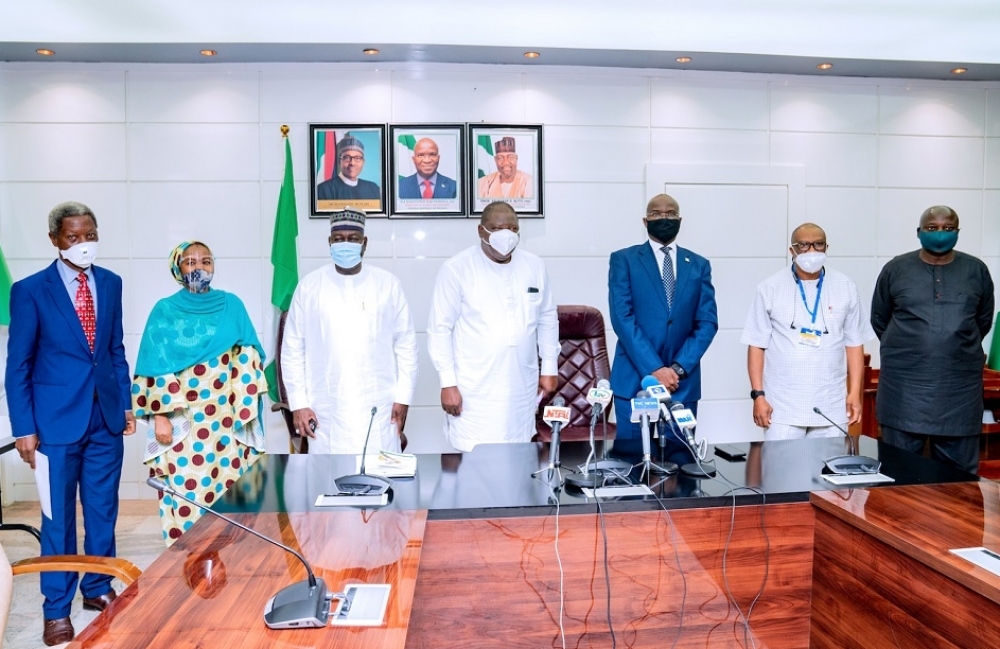
Fashola Charges Universities On Preparation Of Young People For Leadership * As Committee of Vice Chancellors hails FG, Minister over interventions in 44 tertiary institutions, infrastructure development across the country * Minister describes those who set up universities as “casting a stone of faith into the future” * Also charges them on research and data collation to assist governments and businesses The Committee of Vice Chancellors of Nigeria has commended the Federal Government over interventions in 44 Federal tertiary institutions as well as the on-going infrastructure development across the country just as the Minister of Works and Housing, Mr. Babatunde Fashola SAN charged the nation’s universities on the need to produce men and women of character worthy to take over the leadership of the country. Fashola, who spoke when the Committee of Vice Chancellors/Association of Vice Chancellors of Nigerian Universities (CVC/AVCNU), paid him a courtesy visit, also stressed the importance of universities as a place where the characters of young people were finally shaped in readiness for leadership. Stressing the importance of universities as platforms for character molding, among other functions, the Minister, who described investment in universities as “casting a stone of faith into the future”, said it was an investment that always yielded very enormous profit for any nation. “It is a place where young boys and girls transit to becoming young men and women and that is where their characters are finally shaped in readiness to take over the leadership of the country”, he said adding that as overseers of the institutions, the Vice Chancellors have daunting tasks to accomplish. Assuring the University dons of government support to ensure success, Fashola declared, “Somebody like me, I am a product of an investment of those who set up the University of Benin. Also there are many Nigerians who, like me, are products of that act of faith that happened in the 1970s”. “I sit here today, and there are Senators, Senate Presidents and so many other professionals who were also products of that investment. And what is true of the University of Benin is also true of all other universities across the country”, he said. The Minister, who also charged the Universities on the collation and use of data, said the world was now chasing data and there was, therefore, need for the universities to put in useful form the data they have accumulated over the years to assist governments and businesses in the country in national development. “The world is chasing data, collating data. This data is sitting in our universities. Almost every lecturer I know asks students to write one research paper or the other. The data is there, but can we put it in a useful form to inform our governments, to inform our businesses, to inform our society?” he said. Recalling his years as Visitor to the Lagos State University (LASU), Fashola, who noted that they had meetings which they christened “The Town and Gown”, with the Town representing Government and the Gown representing Universities, said his administration gained a lot in terms of research outcomes and development. “It was a time when we had lectures, symposia, not just in LASU but in other universities”, he said adding that the University of Lagos Consult was one of the state government registered consultants which his administration used to do a lot of research and a lot of consultancy work. The Minister, however, expressed regrets that not enough universities were investing in such consultancy today pointing out that there are many areas in which Nigerian universities could do research and consultancy such as on general elections and other political issues arising from elections across the country. Noting that every government would be interested in such research results, the Minister asked, “How many universities have hosted Presidential Debates? You have the auditorium, you have the students, If you put it together you will have sponsors”, adding that governments and the universities could work together to ensure that the right persons were elected into office. On collaboration between his Ministry and the Universities in infrastructure development in tertiary institutions, Fashola, who expressed readiness to work with the institutions to strengthen their infrastructure, however, urged them to come up with a structured plan adding that any such plan that would ensure security of investment would attract investors. Assuring the university dons of his readiness to collaborate with them in infrastructure development in the tertiary institutions, Fashola asked them to develop a plan for such investment adding, “When there is a plan, money will come”. “Let us start from hostels. Students are paying something or the other, but is there a structured plan to ensure that there is land, to ensure that the land is safe, to do a survey about students’ willingness to pay. What is the average size of rooms available? What is the market cost, transport cost that is safe? Those are the things that any investor would want to know”, he said adding that an investor would also be interested in knowing that the academic year would not be disrupted by strikes of either the academic or non-academic staff. Expressing confidence that investments in infrastructure would happen in universities in the country, Fashola declared, “I offer myself willing and ready to work with you along this line anytime”, adding that the Ministry was currently in 44 tertiary institutions owned by the Federal Government, both Universities, Colleges of Education and Polytechnics building their internal roads. “Some of those roads have not been touched for 20 to 30 year”, the Minister noted expressing dismay, however, that when people complain about the budget for education, they do not put into account such investment as road rehabilitations and other interventions from other sectors outside Education. He told his guests, “We want the universities to come out and say, no this is also investment in education. So it is not only what you see in the Ministry of Education that is the sum total of the investment in Education”, adding that there is a lot that the universities could do Fashola also decried the proliferation and abuse of Honorary Degrees by universities in the country recalling that in his eight-year tenure as Governor of Lagos State and Visitor at LASU one of the things his administration did was to put on hold the award of any Honorary Degree for about two to three years. “We said, look we are going to be different and for two or three years we did not award any Honorary Degree because truly the idea of Honorary Degree is an important building block of society and once we throw those blocks away or make them unviable then the purpose for it is lost”, the Minister said. He recalled. “In my eight years in office I had 17 offers and I didn’t take one. I told them to wait until when I was out of office and if they still find me worthy they should then come. And when I was out of office only one came back”, adding, “The point I want to make is that we have to encourage our children to work hard. What have these honorees of the universities done to deserve the honour? What of those who have become undeserving, will you go back and tell them to return the degrees, that they don’t deserve it anymore?” Noting that there was need to have an acceptable version of the History of Nigeria, Fashola charged the Committee to assemble the many professors of History in the universities and assign the task to them to produce such a version that would be a true History of Nigeria, acceptable by all Nigerians, including the Historians themselves. “There is one thing you can do for Nigeria. Bring all these people together to start work on one acceptable version of Nigeria’s history. It is that version that can be thought in primary and secondary schools. Because that is what is happening in other countries. They fought wars too but they have written one final version of their history. When you have written that final version it will be thought in our primary and secondary schools”, the Minister said. Earlier, in his opening remarks, the Chairman of the Committee, Professor Yakubu Aboki Ochefu, said the Committee had come to express gratitude to the Minister for the interventions in 44 tertiary institutions across the country adding that it was the first time government was undertaking rehabilitation of roads in the institutions. Professor Ochefu, who also informed the Minister that the Committee was preparing a Compendium of Achievements as part of programmes being lined up to celebrate its 60th anniversary in October this year said the Committee had prepared a questionnaire for the Minister to fill that would give them an insight into his infrastructure development at the Lagos State University while he was Governor of Lagos State, which would form part of the Compendium. Giving a brief background of the Committee, the Chairman said it was established in 1962 with eight universities, including the Universities of Lagos and Ibadan as members adding that the membership now stood at 174 consisting of 46 Federal, 48 State and 79 private universities. He noted that the Committee was working to improve the number of women Vice Chancellors in the country. Professor Ochefu, who later handed a copy of the questionnaire to the Minister explained further, “We will devote a section of the Compendium to share with you how you turned the fortunes of the Lagos State University (LASU) during your tenure as Governor of Lagos State and Visitor to the University. Also present at the occasion were the Minister of State, Engr. Abubakar Aliyu, Acting Permanent Secretary, Engr. Yemi Oguntominiyi, Directors, Special Advisers and other top Ministry functionaries while on the Committee’s side were three other executives including the Secretary General of the Committee. ...
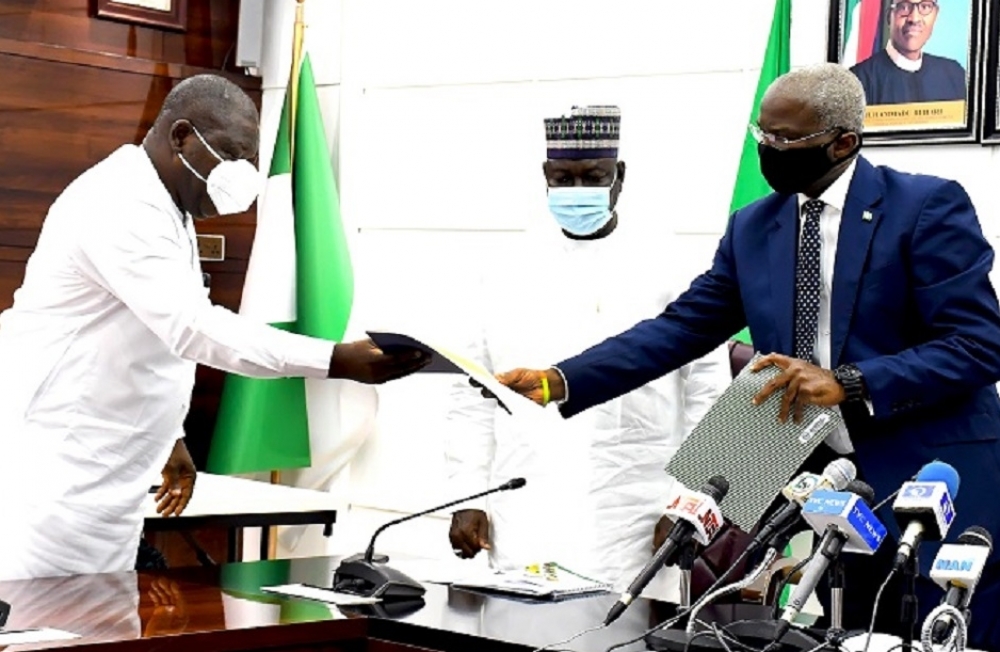
Fashola Charges Vice Chancellors on the Use of Data to Aid National Development The Honourable Minister of Works and Housing, Mr. Babatunde Fashola SAN has charged the Vice Chancellors in Nigeria Universities to channel the data in their confines to guide government, the business community and the citizenry on national development. Fashola gave the charge while granting audience to the Association of Vice Chancellors of Nigerian Universities, who paid him a courtesy visit today in his office. The Minister said, “The world is chasing data, collating data, this data is sitting in our Universities, almost every lecturer ask students to write one research paper or the other. We can use this data in a useful form, to inform our government, to inform businessmen, to inform the society”. He added that for instance such information could be used in the analysis of a local government with a view to yielding positive results. In response to the call for his support by the Vice Chancellors, he said, “In terms of collaborative relationship on infrastructure, you can take my cooperation for granted”. Fashola stated that the Ministry of Works and Housing had intervened in the building of roads in 44 tertiary institutions in the country under this administration but lamented that when people criticize government on the state of roads no University came to inform the public on those interventions. The Minister who described the University as an investment into the future urged the Vice Chancellors to be discreet in the award of honourary degrees which he described as very important building blocks that should be given to only deserving people and not for those whose achievement is just the occupation of a political office. He said this would encourage the youth to work harder while charging honourary degree holders to bring their impact to bear in the development of the universities. Fashola also advised them to bring Professors together to write an acceptable version of the Nigerian history that will be taught in schools like it was done in some other climes. Speaking earlier, Secretary General of the Association and leader of the delegation, Professor Yakubu Aboki Ochefu informed the Minister that the Association which was established in 1962 is a platform for sharing ideas and engaging Nigerians on issues that affect the Nigerian universities. He added that the organization which had the universities of Ibadan, Lagos, Ife, Nsukka and Ahmadu Bello University, Zaria at inception now has 174 universities. Professor Ochefu who praised the Minister for his commitment to road construction and maintenance, expressed gratitude to him for the intervention of his Ministry in the building of internal road in 44 tertiary institutions across Nigeria. He informed Fashola that they were in the Ministry to seek his cooperation in their plan to produce a compendium on the forthcoming celebration of the 60th anniversary of their association in Nigeria, and his support to tackle the problems facing Nigerian universities. Professor Ochefu said that the group decided to seek partnership with the Minister to share experience in view of the pivotal role he played in the development ofLagos State university when he was the Governor of Lagos State. Present an the occasion were the Minister of State for Works and Housing, Engr. Abubakar D. Aliyu, [FNSE], the Director overseeing the office of the Permanent Secretary, Engr. Yemi Oguntominiyi and other Directors of the Ministry. ...
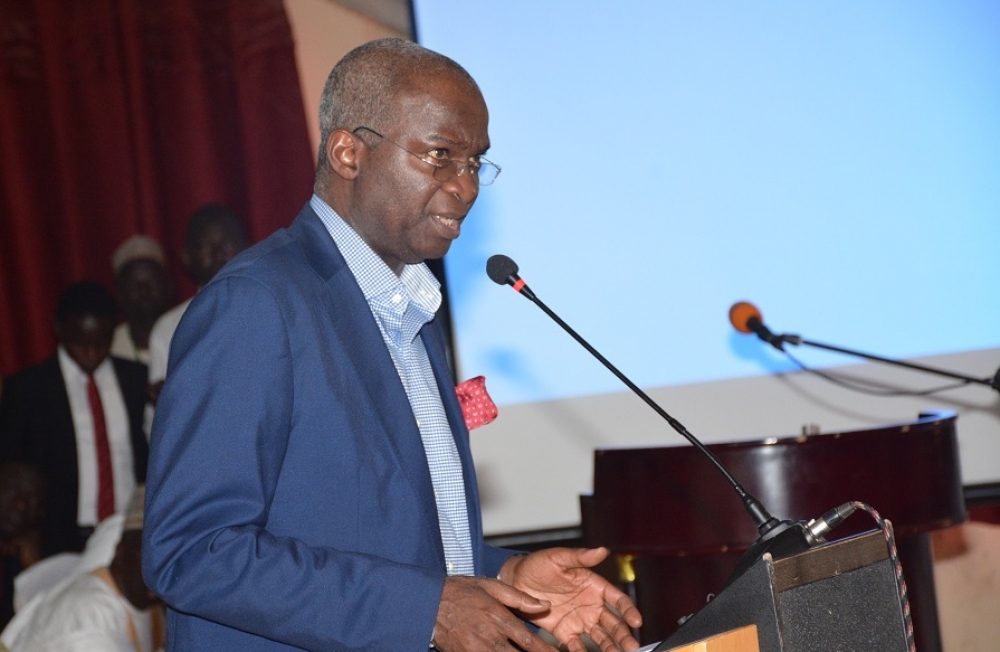
Buhari’s Commitment to Infrastructure is Monumental, Unprecedented – Fashola The Honourable Minister of Works and Housing Mr. Babatunde Raji Fashola, SAN has described the commitment of the Buhari led Administration to Infrastructure development as monumental and unprecedented. The Minister made this description while responding to questions on Radio Nigeria phone-in programme “Have your say” this morning. Fashola hinged his commendation on the Infrastructural transformation work being implemented in the various sectors of the economy such as works and Housing, Transportation, Digital communication and economy, adding that if these were done in the past, the situation of the economy of the country would not have been as bad as it is now. While responding to the question on why many Federal roads were still in bad condition and why it was taking time to be completed, Fashola attributed it to procurement process, limited resources and the process of road construction. Citing an example of the Abuja - Lokoja road, he said the road which is about 300kilometre long was being expanded from 2 lanes to 4 lanes, which means that the entire work on that road is about 1200 kilometres. He added that a section of the road had been completed remaining only the section from Kotonkarfe to Lokoja, “some section have been completed, what is remaining is from Koton Karfe to Lokoja, which we are trying to finish”, he said. Fashola mentioned Lagos -Ibadan, Enugu –Port Harcout, Kano –Maiduguri, Ekpoma –lokoja roads among those that have been partially completed. The Minister said most of the roads were being reconstructed as some of them were impassable before now, citing Benin- Ore - Shagamu, Enugu –Port Harcourt roads. He urged Nigerians to be patient with the government considering the fact that these bad roads which were left undone by the previous administration when oil was selling at $140 per barrel are now being reconstructed and rehabilitated by the Buhari Administration at a time that oil price per barrel is less than 50 dollars. The Minister who disclosed the plan to finish 22 roads between 2020 and 2022 explained that the Federal Government was currently concentrating on Federal roads which are interconnecting states. “Our roads are those that connect state to state. We are focusing on them, it is when we have done these key roads that we will concentrate on others”, he said. On the housing sector, The Minister who was asked why some houses that had been completed by the Federal Government were yet to be allocated, said, “Some of the houses have been completed but there is still a lot to be done. In some cases we have not finished electrical connection to public power, we have not finished internal road work, there have been cases of theft and pilfering and we are doing replacement”. Fashola revealed that a digital framework was been worked out to ensure that application is done online to avoid undue influence from anyone. He also said that Federal Government was considering giving some allocations to State Governments for onward allocation to their indigenes since the States donated the land. He called on State Government and the Private sector to complement the effort of the Federal Government in the provision of houses to the people in overcoming the housing deficit. ...
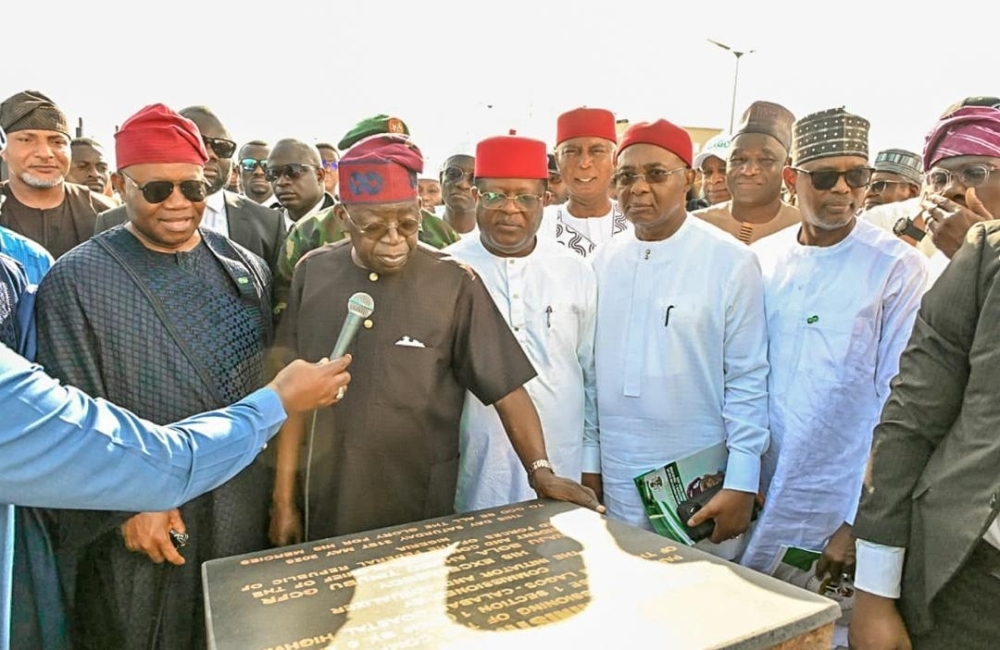
DRIVING NIGERIA’S FUTURE: CELEBRATING TWO YEARS OF TRANSFORMATIVE LEADERSHIP AND THE LAGOS-CALABAR COASTAL HIGHWAY MILESTONE
DRIVING NIGERIA’S FUTURE: CELEBRATING TWO YEARS OF TRANSFORMATIVE LEADERSHIP AND THE LAGOS-CALABAR COASTAL HIGHWAY MILESTONE
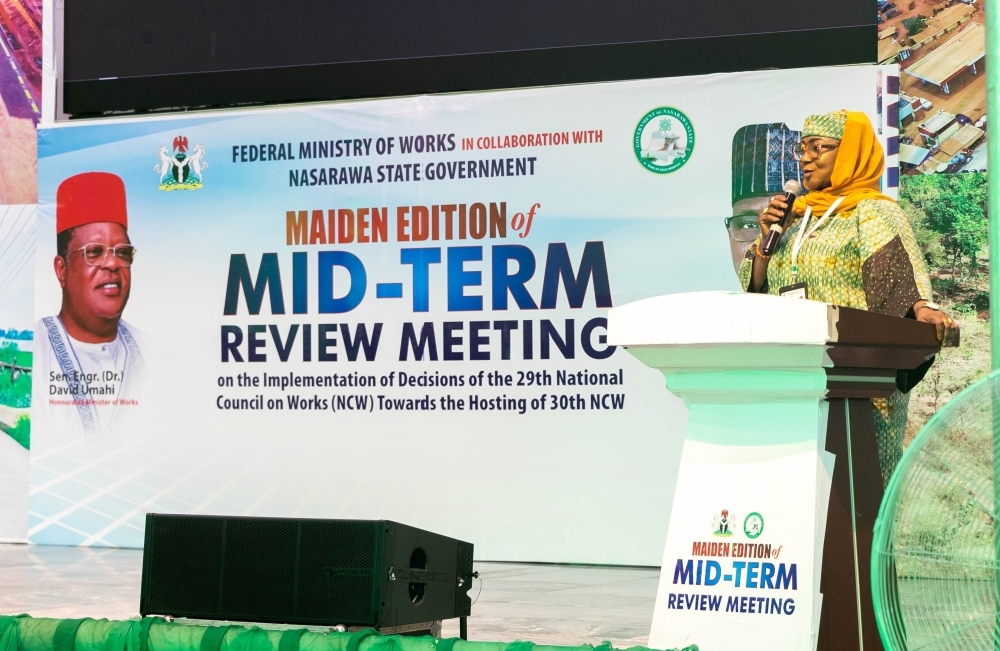
MID -TERM REVIEW MEETING ON THE IMPLIMENTATION OF THE DECISIONS REACHED AT THE 29TH NATIONAL COUNCIL ON WORKS (NCW) DAY 1
MID -TERM REVIEW MEETING ON THE IMPLIMENTATION OF THE DECISIONS REACHED AT THE 29TH NATIONAL COUNCIL ON WORKS (NCW) DAY 1