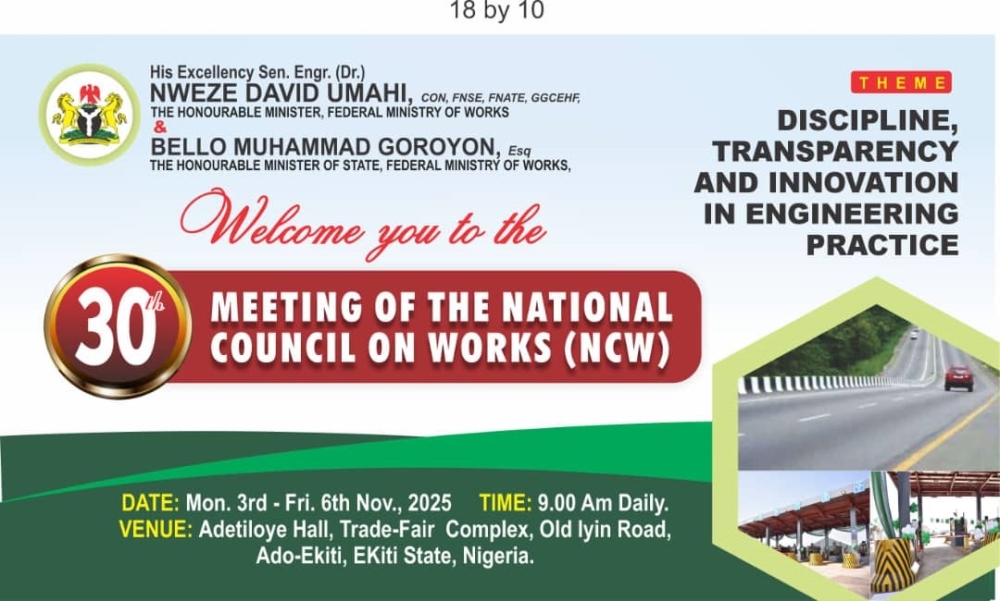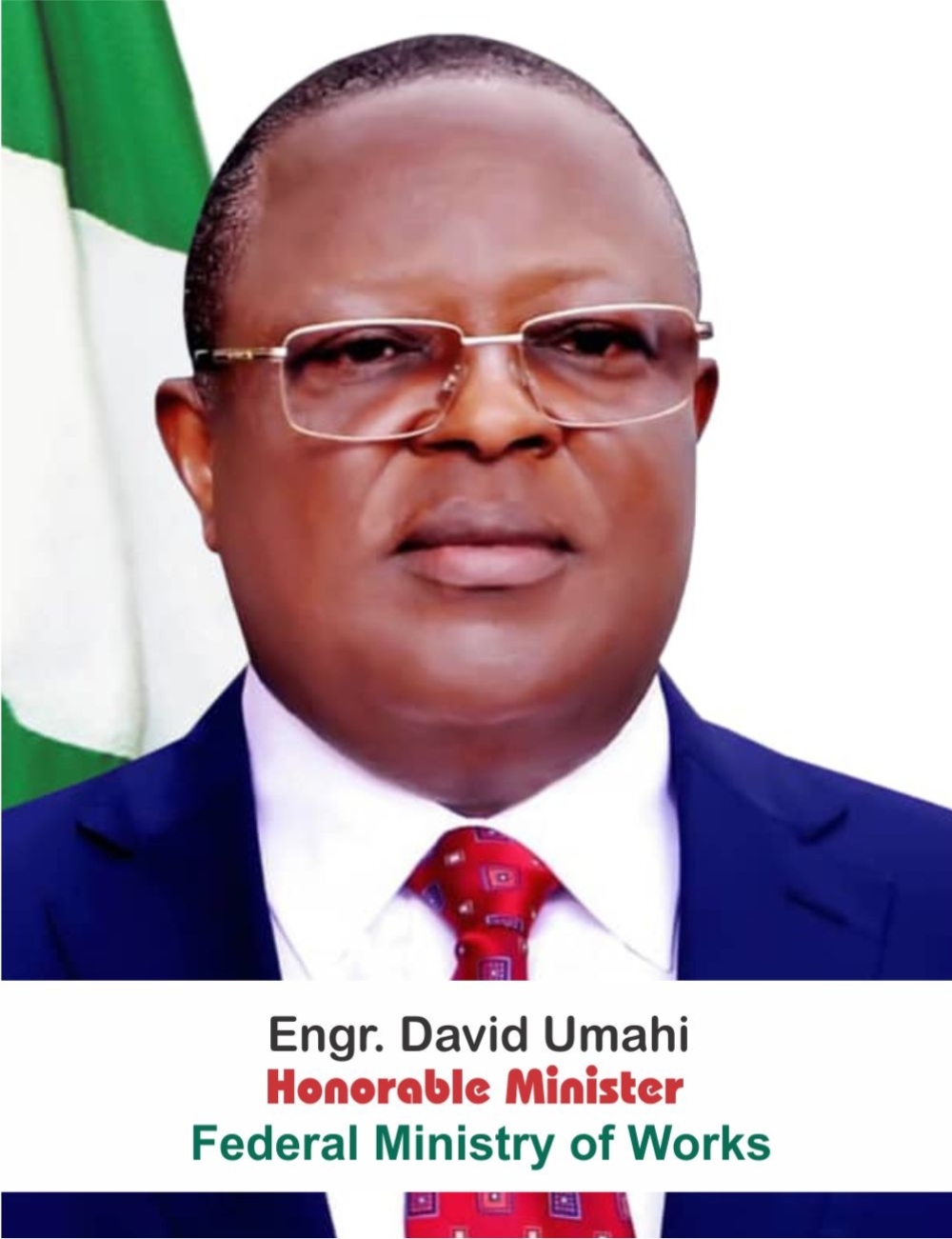
“THE WORST IS OVER; OUR GDP IS GROWING MORE THAN OUR POPULATION. THAT MEANS WE HAVE A FUTURE” - UMAHI TELLS NANS
— As Nigerian Students Induct Him as Grand Patron, Hail Him as “One of the Finest” in Tinubu’s Renewed Hope Cabinet
The Minister of Works, Senator Engr. David Umahi, CON, has declared that Nigeria is now seeing stronger economic outlook under President Bola Ahmed Tinubu, noting that the country’s Gross Domestic Product (GDP) is now growing faster than its population.
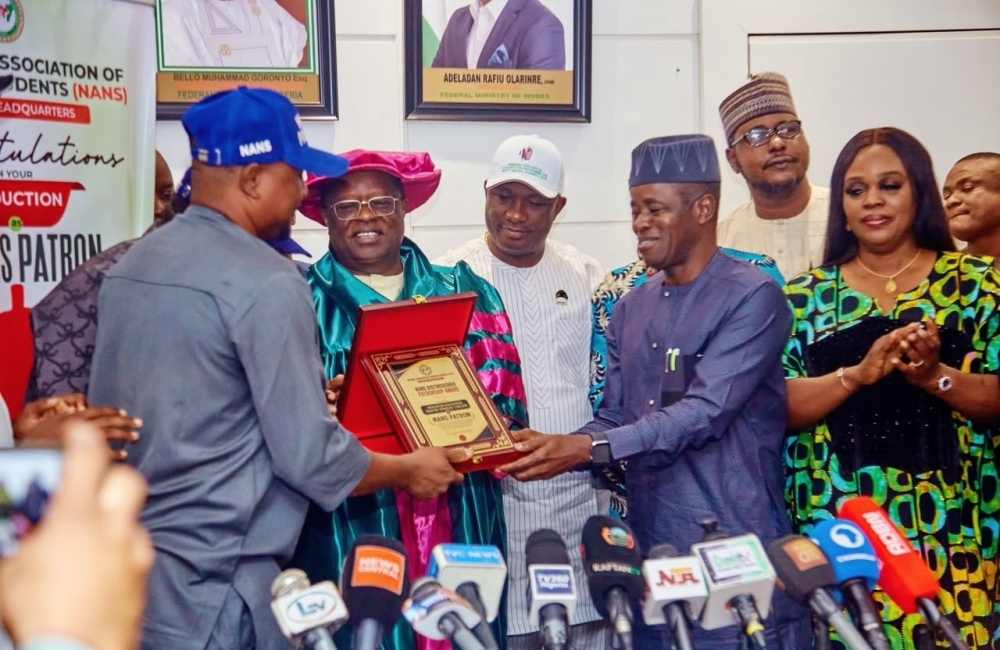
Umahi made the declaration on Monday, August 10, 2026, at the headquarters of the Federal Ministry of Works in Abuja, while speaking after he was formally inducted as Patron of the National Association of Nigerian Students (NANS).
The minister described the development as a positive indication of Nigeria’s economic prospects, saying, “I was enthused to find out that our GDP is growing more than our population. That means we have a future.”
The NANS leadership, led by its President, Dist. Comr. Akinteye Babatunde Afeez, GCNS, had earlier commended Umahi for his contributions to national infrastructure and described him as “a worthy member of the Renewed Hope Cabinet and, indeed, as one of the finest public servants Nigeria has produced in the contemporary era.”
The students said the recognition was not merely ceremonial but a reflection of Umahi’s visible contribution to road infrastructure and national development under President Bola Ahmed Tinubu’s administration.
According to NANS, the roads and bridges being delivered under Umahi’s supervision are directly connected to the lives of Nigerian students, affecting their mobility, access to educational institutions, examinations, internships, businesses and employment opportunities.
The students specifically cited major projects including the Abuja-Kaduna-Kano Expressway, Abuja-Kaduna-Minna route, Enugu-Port Harcourt Expressway and Lagos-Calabar Coastal Highway as examples of projects they said demonstrate the Federal Government’s commitment to improving national connectivity.
Afeez also disclosed that NANS had studied project reports of the Federal Ministry of Works covering the period between May 2023 and May 2026 and expressed its intention to embark on nationwide project tours to inspect completed and rehabilitated projects.
He said the students would use their platforms to communicate the impact of the projects to millions of Nigerian students, Nigerians and the wider world.
Responding, Umahi challenged Nigerian students and young people to look beyond political sentiments and examine the policies and achievements of the Tinubu administration objectively.
“We have had somebody say, ‘President Tinubu is tired.’ How do you know he is tired? I am part of President Tinubu. The Minister of Interior, the FCT, all the ministers and all the SSAs are vibrant and working. So how do you just jump at that conclusion?”
The minister urged Nigerians to demand concrete alternatives from those criticising the administration.
“If you say that the President is not doing well, what is your alternative?” he asked, stressing that political promises must be backed by clear plans and a credible mission.
He also called on students and other young Nigerians to take a position on issues affecting the country, arguing that remaining neutral in the face of visible progress was not always the right approach.
“You may say that you are not politicians or that you will not take sides, but this is the time to take sides in our national affairs. It is time to take a stand,” Umahi said.
On the economy, the minister acknowledged that the macroeconomy was only beginning to recover but urged Nigerians to consider the condition of the economy before the present administration took office and assess the reforms objectively.
“You may say that the macroeconomy is just beginning to recover. What was it like before the President took over? Everybody agrees that the macroeconomy is being fixed. It is up to you to dissect the ongoing reforms and take a position.”
Umahi also pointed to developments in the education sector, saying the stability being witnessed under the Tinubu administration had created an environment in which students were able to continue their studies without the disruption of nationwide strikes.
“For the first time, students never went on strike. Never. Look at the stability of Nigeria. That has never happened throughout the history of this country.”
“Where is the subsidy money?” Umahi explains
Addressing questions surrounding the removal of fuel subsidy and where the resulting resources were being deployed, Umahi pointed to the scale of ongoing infrastructure projects across the country.
He cited the Abuja-Kaduna-Zaria-Kano road, which he said covers 375 kilometres and, when measured as a dual carriageway, amounts to 750 kilometres.
According to the minister, more than ₦200 billion has already been spent on the project, with 480 kilometres of the dual carriageway completed and further sections nearing completion.
“For the first time, we have been able to complete 118 kilometres of concrete pavement within 30 months. That has never happened,” he said.
The Minister said the remaining works were expected to be completed by November, noting that the two projects on the route have a combined cost of ₦752 billion, with more than 80 percent already paid.
He also highlighted the Sokoto-Zamfara-Zaria corridor, the Benue-Ninth Mile road, and the Bodo - Bonny Island road as examples of projects receiving significant attention under the Tinubu administration.
On the Bonny Island project, he said:
“For the first time, people will move from the island to the mainland in Bonny Island, where the LNG is produced. A project costing ₦280 billion under President Bola Ahmed Tinubu has been completed. The 39.7-kilometre road is fully done, and the people of Bonny are very happy. They are no longer dying at sea. They are now driving through the land.”
The minister also spoke extensively about the administration’s legacy road projects, including the Lagos-Calabar Coastal Highway and the expanded Northeast Fourth Legacy Project.
He disclosed that the Northeast project, originally running from Akwanga through Jos, Bauchi, Gombe and Biu, had been extended through Yobe to Maiduguri, adding another 400 kilometres to the project.
Umahi defended the Lagos-Calabar Coastal Highway against criticisms, saying the project was strategically important to the Niger Delta and would be completed.
“I do not know why people are attacking the Lagos-Calabar Coastal Highway. After all, this is coming from the Niger Delta, where the oil is coming from. Why is nobody attacking the other three Legacy Projects, but this one is being attacked? That is unfair and unrealistic. That project will be completed. In fact, over 50 percent of the entire stretch is already under construction.”
The minister also used the occasion to speak about the development of the Southeast, saying President Tinubu had deliberately embarked on projects aimed at integrating the region into the national infrastructure network.
“The Southeast, for the first time, is being remembered, and I thank the people in the Southeast because sometimes I say, ‘Listen, our people should not be sentimental.’”
He said the administration’s approach to the region was intentional and urged the people of the Southeast to work with other parts of the country.
“The President has a good intention to integrate the people of the Southeast, and I have to be very honest with you. If I were not a minister from the Southeast, we would not have been able to get the projects we have secured. It is intentional on the part of Mr. President. Go and right the wrongs of the Southeast.”
Umahi cited the Enugu-Onitsha Expressway and Enugu-Port Harcourt Expressway among the major projects transforming connectivity in the region.
He also disclosed that President Tinubu had approved the re-scoping and reconstruction of the Lokoja-Benin-Warri corridor, covering a total of 401 kilometres.
The minister was particularly direct in urging the students to support President Tinubu in the 2027 election, arguing that Nigerians should support the administration if they believe its policies are producing results.
“I want you to take a side. If you say you are on the list of a coalition and you say that what we are doing is good, then we have to take a stand to vote for the President in the coming election.”
“Let him finish. Let him take back our country. Let him reposition our country.”
Umahi also urged Nigerians to look beyond political rhetoric and focus on practical solutions to the country’s challenges.
“Listening to others should not mean allowing yourselves to be insulted or blackmailed. Cheap talk will not solve our problems. Nobody is saying what he or she can do differently. The worst is over. The darkest part of the night is an hour before dawn.”
He pointed to the decline in food prices as one of the developments Nigerians should consider in assessing the economy, recalling that a 50-kilogramme bag of rice, which he said had risen above ₦80,000 and at some point reached ₦100,000, was now selling at about ₦58,000.
Umahi also stressed the administration’s commitment to transparency in the execution of road projects, saying the Ministry of Works had opened its projects to scrutiny by anti-corruption agencies.
“Now, why are we doing this? Transparency. We have turned these projects over to the ICPC. They have gone round. We are ready for constructive criticism, and where necessary, we will make amends.”
He added that the Ministry had also written to the Economic and Financial Crimes Commission (EFCC) to inspect its projects. “We have nothing to hide in this administration.”
The minister urged NANS to organise a major student engagement across the geopolitical zones where students could ask questions directly and hear the government’s explanations on its policies and projects.
“Let me defend this administration. Organise it and let me come. Move students from across the zone to a central point where we can talk to them and address their concerns. We have to deliberate on the issues. We have to debate them. Ask your questions, and we will answer them.”
He said he would attend such engagements with some ministers and Senior Special Assistants to the President, stressing that students were important stakeholders in the country’s future.
Umahi further challenged young Nigerians to take responsibility for protecting public infrastructure and contributing positively to national development. “See something, say something. Together, we can take back our country because it belongs to us.”
He said the responsibility for the performance of government should be placed on the officials directly responsible for specific sectors, rather than on the President for every operational issue.
“I am here because the President gave me the responsibility to be in charge of roads and bridges. If I do not do it, I should be the one to be blamed, not the President. I am not the President. The President has divided himself into a number of his appointees. These appointees should be the ones to answer and take responsibility.”
The minister concluded by thanking the students for the recognition and expressing his readiness to deepen collaboration with NANS.
“I want to thank you very much.“
He described the students as important partners in the national development process and encouraged them to remain informed, ask questions and hold leaders accountable.
The NANS President, in his address, said the association considered Umahi worthy of its patronage because of his record of public service, infrastructure delivery and commitment to national development.
He said the roads being constructed under Umahi’s leadership would outlive the present administration and continue to serve generations of Nigerians.
“History will not remember public officers merely because they occupied important offices. History will remember them for what they built, what they changed and the lives they touched.”
Afeez formally welcomed Umahi into the NANS family as Patron, describing the partnership between the student body and the Federal Ministry of Works as an opportunity to bring government projects closer to young Nigerians and deepen informed national discourse.

“THE WORST IS OVER; OUR GDP IS GROWING MORE THAN OUR POPULATION. THAT MEANS WE HAVE A FUTURE” - UMAHI TELLS NANS — As Nigerian Students Induct Him as Grand Patron, Hail Him as “One of the Finest” in Tinubu’s Renewed Hope Cabinet The Minister of Works, Senator Engr. David Umahi, CON, has declared that Nigeria is now seeing stronger economic outlook under President Bola Ahmed Tinubu, noting that the country’s Gross Domestic Product (GDP) is now growing faster than its population. Umahi made the declaration on Monday, August 10, 2026, at the headquarters of the Federal Ministry of Works in Abuja, while speaking after he was formally inducted as Patron of the National Association of Nigerian Students (NANS). The minister described the development as a positive indication of Nigeria’s economic prospects, saying, “I was enthused to find out that our GDP is growing more than our population. That means we have a future.” The NANS leadership, led by its President, Dist. Comr. Akinteye Babatunde Afeez, GCNS, had earlier commended Umahi for his contributions to national infrastructure and described him as “a worthy member of the Renewed Hope Cabinet and, indeed, as one of the finest public servants Nigeria has produced in the contemporary era.” The students said the recognition was not merely ceremonial but a reflection of Umahi’s visible contribution to road infrastructure and national development under President Bola Ahmed Tinubu’s administration. According to NANS, the roads and bridges being delivered under Umahi’s supervision are directly connected to the lives of Nigerian students, affecting their mobility, access to educational institutions, examinations, internships, businesses and employment opportunities. The students specifically cited major projects including the Abuja-Kaduna-Kano Expressway, Abuja-Kaduna-Minna route, Enugu-Port Harcourt Expressway and Lagos-Calabar Coastal Highway as examples of projects they said demonstrate the Federal Government’s commitment to improving national connectivity. Afeez also disclosed that NANS had studied project reports of the Federal Ministry of Works covering the period between May 2023 and May 2026 and expressed its intention to embark on nationwide project tours to inspect completed and rehabilitated projects. He said the students would use their platforms to communicate the impact of the projects to millions of Nigerian students, Nigerians and the wider world. Responding, Umahi challenged Nigerian students and young people to look beyond political sentiments and examine the policies and achievements of the Tinubu administration objectively. “We have had somebody say, ‘President Tinubu is tired.’ How do you know he is tired? I am part of President Tinubu. The Minister of Interior, the FCT, all the ministers and all the SSAs are vibrant and working. So how do you just jump at that conclusion?” The minister urged Nigerians to demand concrete alternatives from those criticising the administration. “If you say that the President is not doing well, what is your alternative?” he asked, stressing that political promises must be backed by clear plans and a credible mission. He also called on students and other young Nigerians to take a position on issues affecting the country, arguing that remaining neutral in the face of visible progress was not always the right approach. “You may say that you are not politicians or that you will not take sides, but this is the time to take sides in our national affairs. It is time to take a stand,” Umahi said. On the economy, the minister acknowledged that the macroeconomy was only beginning to recover but urged Nigerians to consider the condition of the economy before the present administration took office and assess the reforms objectively. “You may say that the macroeconomy is just beginning to recover. What was it like before the President took over? Everybody agrees that the macroeconomy is being fixed. It is up to you to dissect the ongoing reforms and take a position.” Umahi also pointed to developments in the education sector, saying the stability being witnessed under the Tinubu administration had created an environment in which students were able to continue their studies without the disruption of nationwide strikes. “For the first time, students never went on strike. Never. Look at the stability of Nigeria. That has never happened throughout the history of this country.” “Where is the subsidy money?” Umahi explains Addressing questions surrounding the removal of fuel subsidy and where the resulting resources were being deployed, Umahi pointed to the scale of ongoing infrastructure projects across the country. He cited the Abuja-Kaduna-Zaria-Kano road, which he said covers 375 kilometres and, when measured as a dual carriageway, amounts to 750 kilometres. According to the minister, more than ₦200 billion has already been spent on the project, with 480 kilometres of the dual carriageway completed and further sections nearing completion. “For the first time, we have been able to complete 118 kilometres of concrete pavement within 30 months. That has never happened,” he said. The Minister said the remaining works were expected to be completed by November, noting that the two projects on the route have a combined cost of ₦752 billion, with more than 80 percent already paid. He also highlighted the Sokoto-Zamfara-Zaria corridor, the Benue-Ninth Mile road, and the Bodo - Bonny Island road as examples of projects receiving significant attention under the Tinubu administration. On the Bonny Island project, he said: “For the first time, people will move from the island to the mainland in Bonny Island, where the LNG is produced. A project costing ₦280 billion under President Bola Ahmed Tinubu has been completed. The 39.7-kilometre road is fully done, and the people of Bonny are very happy. They are no longer dying at sea. They are now driving through the land.” The minister also spoke extensively about the administration’s legacy road projects, including the Lagos-Calabar Coastal Highway and the expanded Northeast Fourth Legacy Project. He disclosed that the Northeast project, originally running from Akwanga through Jos, Bauchi, Gombe and Biu, had been extended through Yobe to Maiduguri, adding another 400 kilometres to the project. Umahi defended the Lagos-Calabar Coastal Highway against criticisms, saying the project was strategically important to the Niger Delta and would be completed. “I do not know why people are attacking the Lagos-Calabar Coastal Highway. After all, this is coming from the Niger Delta, where the oil is coming from. Why is nobody attacking the other three Legacy Projects, but this one is being attacked? That is unfair and unrealistic. That project will be completed. In fact, over 50 percent of the entire stretch is already under construction.” The minister also used the occasion to speak about the development of the Southeast, saying President Tinubu had deliberately embarked on projects aimed at integrating the region into the national infrastructure network. “The Southeast, for the first time, is being remembered, and I thank the people in the Southeast because sometimes I say, ‘Listen, our people should not be sentimental.’” He said the administration’s approach to the region was intentional and urged the people of the Southeast to work with other parts of the country. “The President has a good intention to integrate the people of the Southeast, and I have to be very honest with you. If I were not a minister from the Southeast, we would not have been able to get the projects we have secured. It is intentional on the part of Mr. President. Go and right the wrongs of the Southeast.” Umahi cited the Enugu-Onitsha Expressway and Enugu-Port Harcourt Expressway among the major projects transforming connectivity in the region. He also disclosed that President Tinubu had approved the re-scoping and reconstruction of the Lokoja-Benin-Warri corridor, covering a total of 401 kilometres. The minister was particularly direct in urging the students to support President Tinubu in the 2027 election, arguing that Nigerians should support the administration if they believe its policies are producing results. “I want you to take a side. If you say you are on the list of a coalition and you say that what we are doing is good, then we have to take a stand to vote for the President in the coming election.” Umahi also urged Nigerians to look beyond political rhetoric and focus on practical solutions to the country’s challenges. “Listening to others should not mean allowing yourselves to be insulted or blackmailed. Cheap talk will not solve our problems. Nobody is saying what he or she can do differently. The worst is over. The darkest part of the night is an hour before dawn.” He pointed to the decline in food prices as one of the developments Nigerians should consider in assessing the economy, recalling that a 50-kilogramme bag of rice, which he said had risen above ₦80,000 and at some point reached ₦100,000, was now selling at about ₦58,000. Umahi also stressed the administration’s commitment to transparency in the execution of road projects, saying the Ministry of Works had opened its projects to scrutiny by anti-corruption agencies. “Now, why are we doing this? Transparency. We have turned these projects over to the ICPC. They have gone round. We are ready for constructive criticism, and where necessary, we will make amends.” He added that the Ministry had also written to the Economic and Financial Crimes Commission (EFCC) to inspect its projects. “We have nothing to hide in this administration.” The minister urged NANS to organise a major student engagement across the geopolitical zones where students could ask questions directly and hear the government’s explanations on its policies and projects. “Let me defend this administration. Organise it and let me come. Move students from across the zone to a central point where we can talk to them and address their concerns. We have to deliberate on the issues. We have to debate them. Ask your questions, and we will answer them.” He said he would attend such engagements with some ministers and Senior Special Assistants to the President, stressing that students were important stakeholders in the country’s future. Umahi further challenged young Nigerians to take responsibility for protecting public infrastructure and contributing positively to national development. “See something, say something. Together, we can take back our country because it belongs to us.” He said the responsibility for the performance of government should be placed on the officials directly responsible for specific sectors, rather than on the President for every operational issue. “I am here because the President gave me the responsibility to be in charge of roads and bridges. If I do not do it, I should be the one to be blamed, not the President. I am not the President. The President has divided himself into a number of his appointees. These appointees should be the ones to answer and take responsibility.” The minister concluded by thanking the students for the recognition and expressing his readiness to deepen collaboration with NANS. “I want to thank you very much.“ He described the students as important partners in the national development process and encouraged them to remain informed, ask questions and hold leaders accountable. The NANS President, in his address, said the association considered Umahi worthy of its patronage because of his record of public service, infrastructure delivery and commitment to national development. He said the roads being constructed under Umahi’s leadership would outlive the present administration and continue to serve generations of Nigerians. “History will not remember public officers merely because they occupied important offices. History will remember them for what they built, what they changed and the lives they touched.” Afeez formally welcomed Umahi into the NANS family as Patron, describing the partnership between the student body and the Federal Ministry of Works as an opportunity to bring government projects closer to young Nigerians and deepen informed national discourse.
“Let him finish. Let him take back our country. Let him reposition our country.”
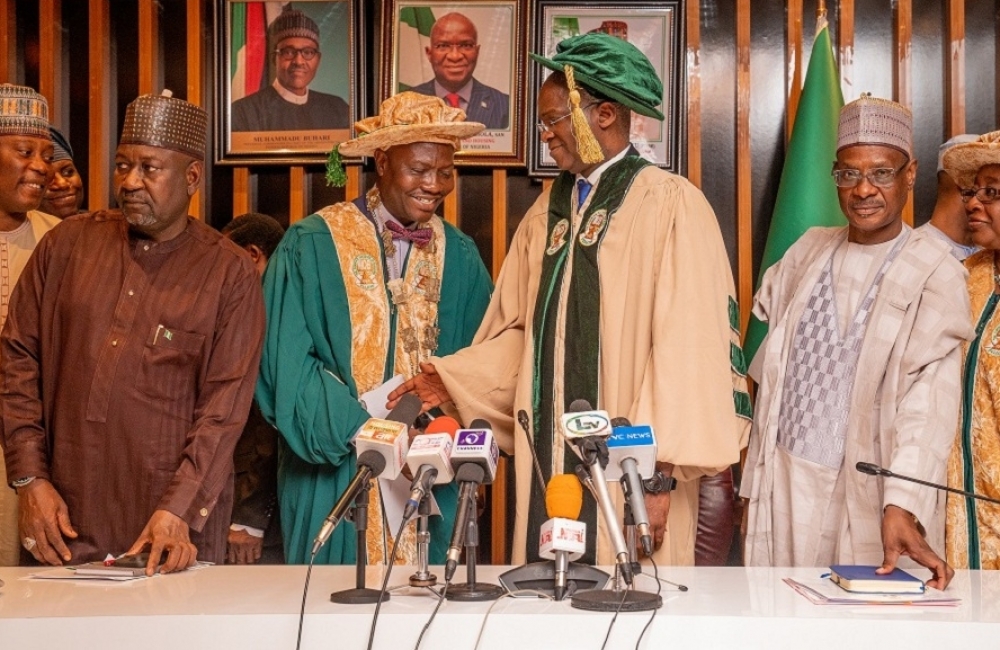
Build On Knowledge And Value- Fashola The Honourable Minister of Works and Housing, Babatunde Raji Fashola, SAN has urged builders in Nigeria to deploy knowledge and value in building projects, pointing out that it was the combination of both that give value to building. "We need to build on our knowledge and value. It is these that give meaning to the bricks and mould we use. If we build without knowledge, it will not last, " he said. Fashola made the remarks while receiving the Fellowship Award of the Nigerian Institute of Building in Abuja yesterday. The Minister used the occasion to debunk the news going round that Federal Government was planning to sell un-occupied houses. According to Fashola what the Government was saying was to encourage big house owners to break them to small units so that people can rent or buy them and start to make income from such houses. He also charged builders to build what people can use, instead of building big houses only to be left unused. He said, "Build to the sensitivity of the young generation by building small houses." Fashola thanked the Institute for the conferment of the award on behalf of the Ministry saying that it was a recognition of hard work and team spirit. "On my own, I will do my best to live up to the responsibility of encouraging the building of affordable houses", he stated. Earlier, the National President of the Nigerian Institute of Building, Builder Kunle Awobodu said that, "The conferment of the prestigious honorary fellowship of the institute is the highest recognition to be bestowed on an individual solely based on performance evaluation of which Fashola is a beneficiary." He said that construction of buildings is a barometer of a thriving economy, adding that what distinguishes a city from a town, and a town from a village is the number and quality of buildings. Speaking further, he stated that, " Any nation bereft of building codes is vulnerable to inappropriate building construction." He therefore called on manufacturers of building materials, artisans and professionals that the culture of doing it right must be embraced. He enjoined the Minister not to relent in his efforts to ensure the use of Nigeria's building code to guide building construction in Nigeria. ...
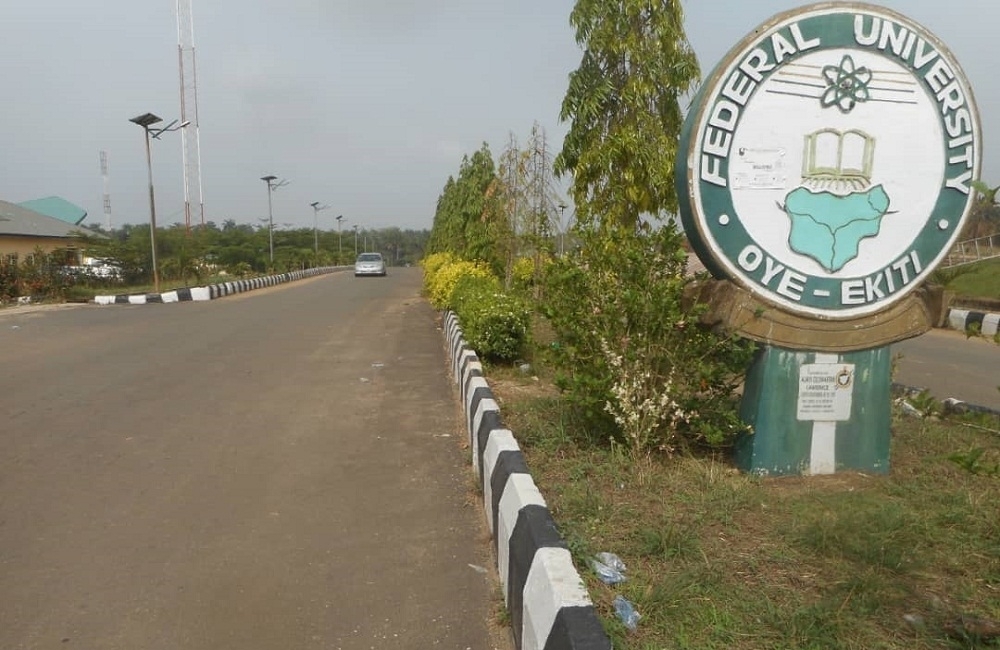
FG Steps Up Road Infrastructure In Tertiary Institutions The Federal Government of Nigeria has reiterated its commitment to bridge the infrastructural gap across the country and in all sectors as it continues its internal road intervention project to boost education and make the learning environment more conducive for students. The Honourable Minister of Works and Housing, Babatunde Raji Fashola, expressed the government's commitment to bridging infrastructural gap while handing over a newly reconstructed 1.33 kilometres internal road by his Ministry at the Federal University Oye, Ekiti State. Speaking at the handing over ceremony, Fashola who was represented by the Ekiti State Federal Controller of Works Engr. Ishaq Lawalsaid that the intervention in internal roads construction within tertiary institutions is currently going on in 43 tertiary institutions, out of which 18 had been fully completed by the government of President Muhammadu Buhari, and admonished the school authority to ensure that the asset was maintained and not abused. The students of Federal University Oye, expressed renewed enthusiasm with regard to attending classes and becoming more zealous in the pursuit of their academic career as a result of the reconstructed road. Earlier In his welcome remarks, the Vice Chancellor of the University, Professor Kayode Shoremekun, thanked the federal government and the Ministry of Works and Housing for the reconstruction of over 1 kilometre internal road within the campus to ease vehicular movement and other activities. He urged the Minister not to abandon the school in subsequent budgetary provisions as more projects were begging for attention. He also appealed to the federal government to continue to partner with the school towards ensuring the provision of necessary social amenities to cater for over twenty thousand students of the university. The occasion was witnessed by top government officials and management staff of the institution. ...
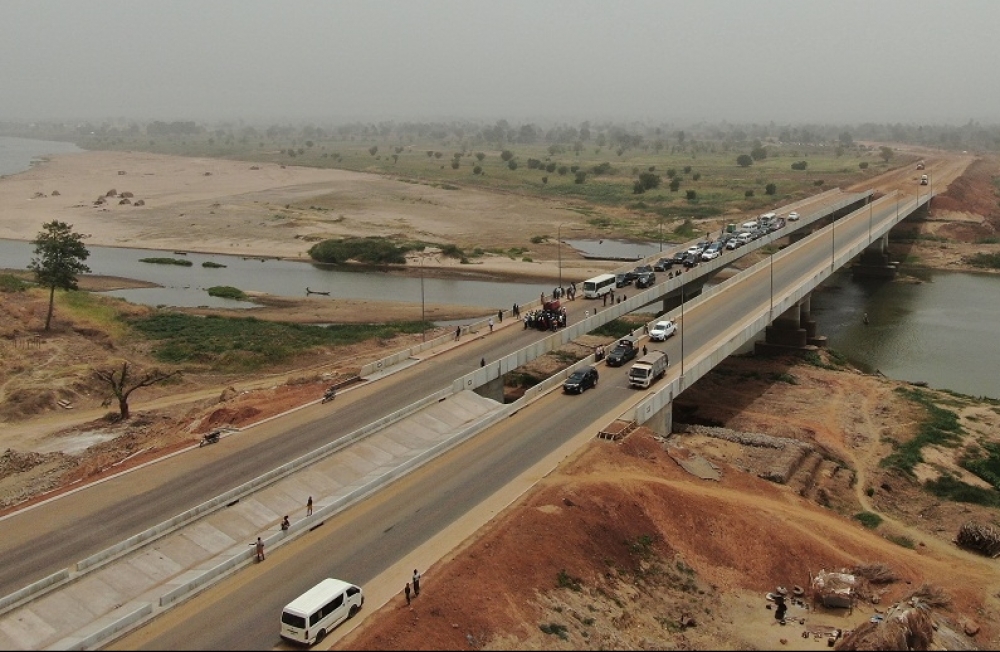
Loko-Oweto Bridge A Major Intervention By Buhari Administration In Linking Nigeria - Fashola * As Minister inspects the 2.2 km Bridge linking the East to the North of the country * Says when finished, will reduce journey time from the East to the FCT and impact positively on cost, ease of doing business * Loko-Oweto, 2nd Niger Bridges across two largest rivers in Nigeria to improve national integration, coexistence – Fashola * Now Loko is London because of this Bridge , says Emir of Loko, expresses profound gratitude to Buhari The Minister of Works and Housing, Mr. Babatunde Fashola SAN, at the weekend inspected the progress of work on the Loko-Oweto Bridge linking Nasarawa and Benue States describing it as a major Bridge intervention by President Muhammadu Buhari’s administration in linking the various regions of the country together. Fashola, who spoke with newsmen after inspecting the 2.2kilometre Bridge which crosses the River Benue, said the Bridge was a strategic transport route to connect the Northern part of the country to those coming from the Eastern part adding that it would reduce drastically the travel time between the two regions. The Minister told newsmen at the interaction, “This is a Bridge that connects North and South of Nigeria, Oweto in Benue and Loko in Nasarawa, which links you to the Federal Capital Territory. So this is a major strategic transport route to connect this part of the country and all those coming from the East of Nigeria”. He said anyone familiar with the territory of Benue State would also know that from Oturkpo, going to Oturkpa and to Ogbulafor, one would link the East of Nigeria. “So this is going to reduce the journey time between the Eastern Region of Nigeria and the Federal Capital, through Nasarawa and neighbouring states by many hours”, he said. Noting that the journey from the East to Abuja takes sometimes a whole day or more, Fashola declared, “Now, you can make this connection in about six hours from the East of Nigeria to Abuja. So, this is a major impact on business, reducing cost, time and improving the ease of doing business”. “When I came here in 2016, only one side of the Bridge was completed; now, the entire bridge is completed. The only work that remains now is the connecting roads to link the Bridge to the towns”, the Minister said adding that the road from Oturkpo to Oweto has been completed, with only three and half kilometres remaining to link the Bridge to the road on the Benue side. He said although there is still some work to be done on the Loko side with about 74 kilometres of connecting road to complete, vehicular traffic has commenced on the road because of the evident shortness of the link adding that it has now become a major route for transporting yams and other agricultural produce from Benue State to Nasarawa and to other parts of the North. Emphasizing the objective of the Bridge intervention by the Buhari administration, Fashola declared, “This is the Bridge that crosses River Benue while the 2nd Niger Bridge is also going on. They are the two major Bridge interventions across the two largest rivers in Nigeria to improve national integration and further improve national coexistence in the country”. “The last time I visited here no vehicles was passing because the connection was not complete. But what has happened now is that even as the road remains uncompleted we see trucks moving through because the road is evidently shorter”, the Minister said adding that it is going to develop into a major economic route for Nigeria, especially for farm produce from farmers and other agricultural produce. The Minister also noted that there are now street lights on the Bridge, explaining that when it was still combined with Power, the Ministry thought it wise to address the issue of electricity so that the host community would also benefit from the project which, according to him, is now a few months to completion. “We are a few months away from its final completion”, the Minister told newsmen adding, “You can also see now that there is street light; there was no electricity when we came here in 2016; of course we were then a combined Ministry of Power, Works and Housing. So we also addressed the electricity solution so that this community can also benefit”. Noting that there is still work to be done and the need to secure required resources against the backdrop of the current global economic challenges, the Minister, however, expressed delight that a lot of progress has been made, adding, “I want the work to be finished quickly, the government wants it finished like yesterday; the President wants to hand it over day before yesterday”. In his remarks, the traditional ruler of Loko, Alhaji Abubakar Ahmed Sabo Umar, expressed delight at the visit of the Minister and the Minister of State and also the pace of work on the Bridge saying the people of the Loko Community were pleased that the project would open the community up and boost economic and social activities between them and other parts of the country. Describing the project as the biggest in Nigeria at the moment, the Emir expressed profound gratitude to the Muhammadu Buhari administration saying the project has turned the Loko Community into a busy vehicular link route between the Eastern part and the Northern part of Nigeria. “The Loko community is extremely happy with the Muhammadu Buhari government because of this project. From Loko here, you can see the movement of vehicles. Though the project is yet to be completed, you can see more than 500 vehicles passing from the North to the East and from the East to the North”, the obviously elated traditional ruler said. He said the route was hazardous before the project commenced because, according to him, the journey was made by boat across the river Benue, adding, “But you can see now that only the small part that remains to join the road to the Bridge but yet if you are here you cannot believe the economic activities that are going on across the Bridge on a daily basis.” “If you are here in this community, you will see that now Loko is another London because of this Bridge. That is why we are very grateful to the Government of Muhammadu Buhari,” he said. Accompanying the Minister on the over six hours journey from Abuja, were the Minister of State, Engr. Abubakar Aliyu, Directors of the Ministry including the Director Highway, Construction and Rehabilitation,Engr. Oluyemi Oguntominiyi, his Bridges and Designs counterpart, Engr. Emmanuel Adeoye, the Federal Controller of Works Nasarawa State, Engr. Wasiu Taiwo and Special Advisers as well as journalists from the Electronic and Print Media. ...
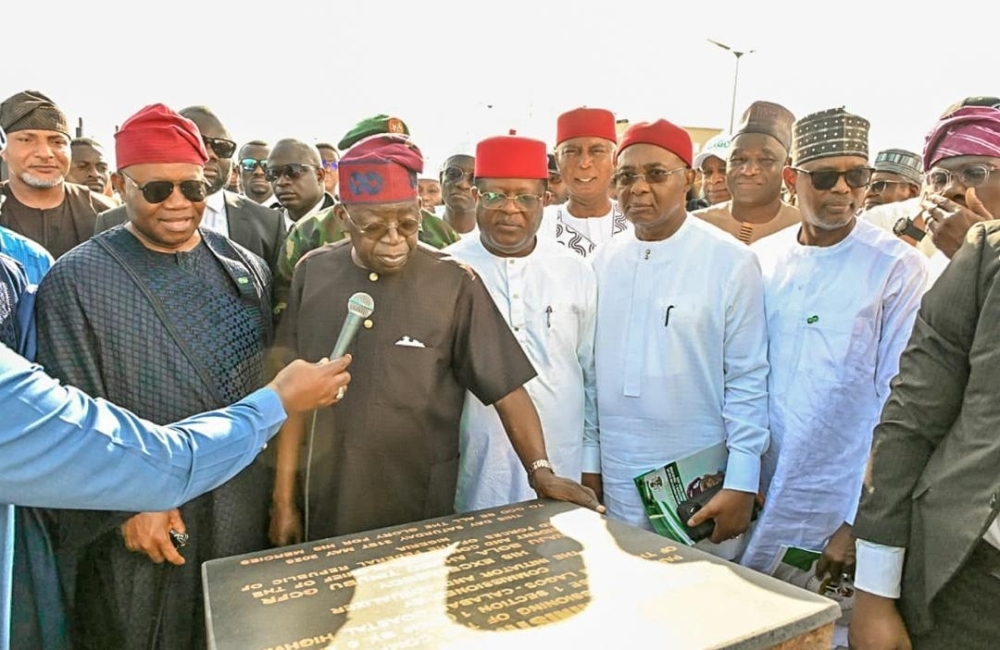
DRIVING NIGERIA’S FUTURE: CELEBRATING TWO YEARS OF TRANSFORMATIVE LEADERSHIP AND THE LAGOS-CALABAR COASTAL HIGHWAY MILESTONE
DRIVING NIGERIA’S FUTURE: CELEBRATING TWO YEARS OF TRANSFORMATIVE LEADERSHIP AND THE LAGOS-CALABAR COASTAL HIGHWAY MILESTONE
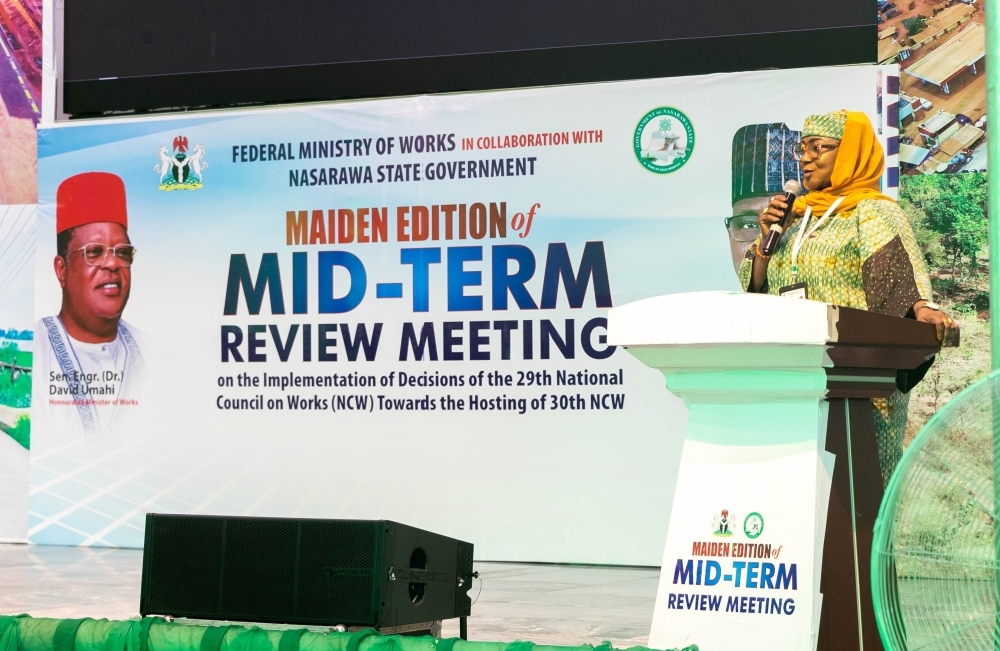
MID -TERM REVIEW MEETING ON THE IMPLIMENTATION OF THE DECISIONS REACHED AT THE 29TH NATIONAL COUNCIL ON WORKS (NCW) DAY 1
MID -TERM REVIEW MEETING ON THE IMPLIMENTATION OF THE DECISIONS REACHED AT THE 29TH NATIONAL COUNCIL ON WORKS (NCW) DAY 1