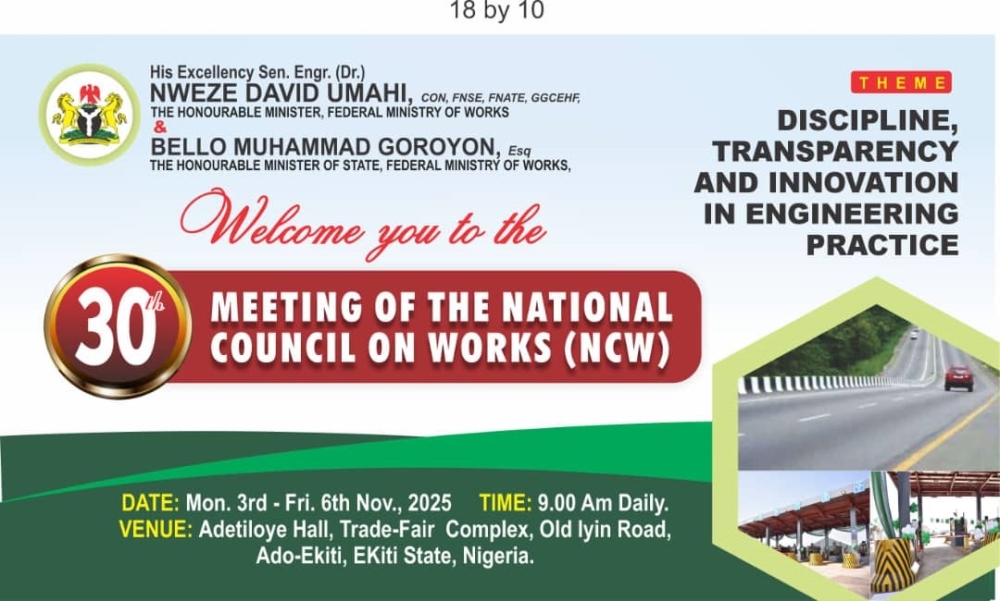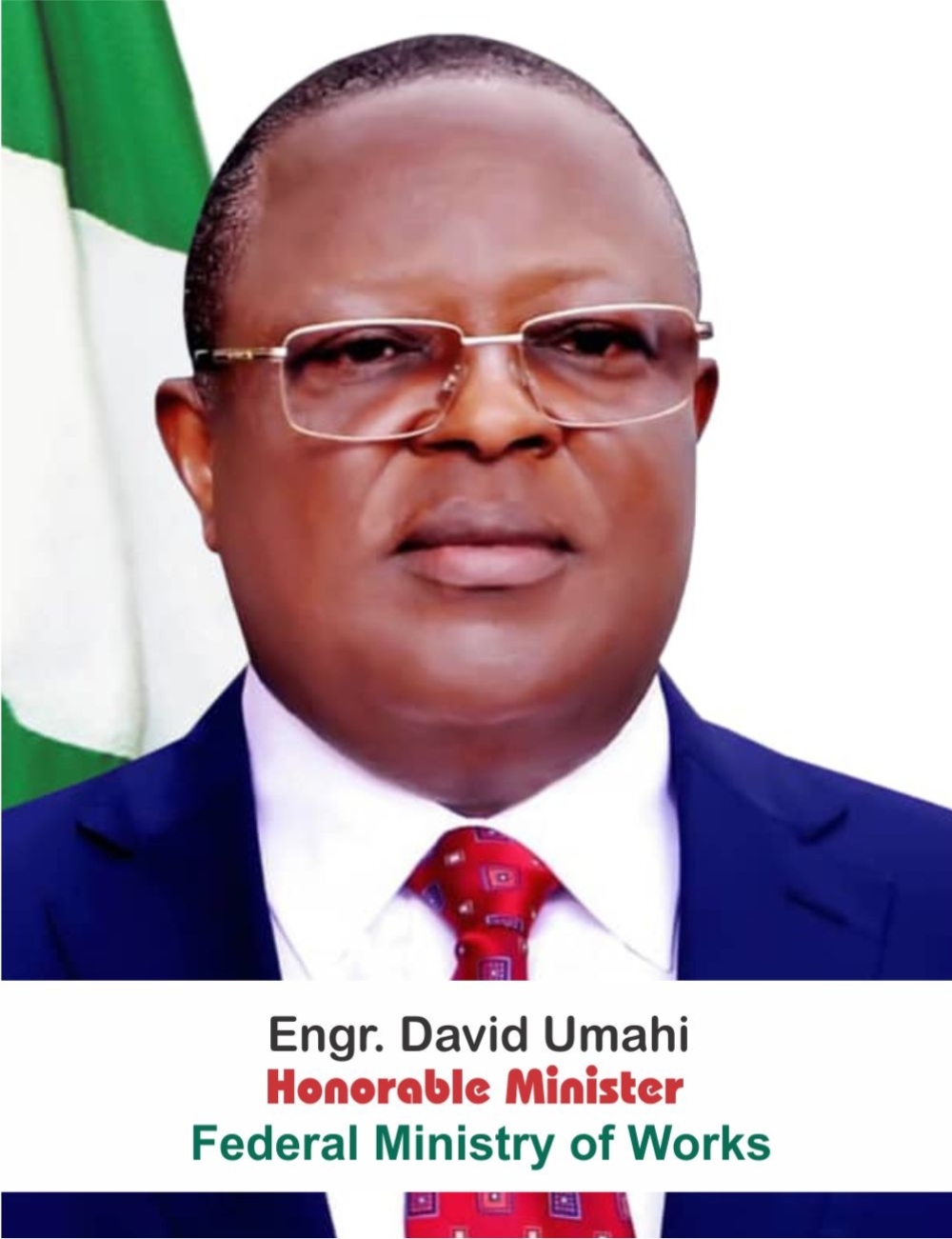
“THE WORST IS OVER; OUR GDP IS GROWING MORE THAN OUR POPULATION. THAT MEANS WE HAVE A FUTURE” - UMAHI TELLS NANS
— As Nigerian Students Induct Him as Grand Patron, Hail Him as “One of the Finest” in Tinubu’s Renewed Hope Cabinet
The Minister of Works, Senator Engr. David Umahi, CON, has declared that Nigeria is now seeing stronger economic outlook under President Bola Ahmed Tinubu, noting that the country’s Gross Domestic Product (GDP) is now growing faster than its population.
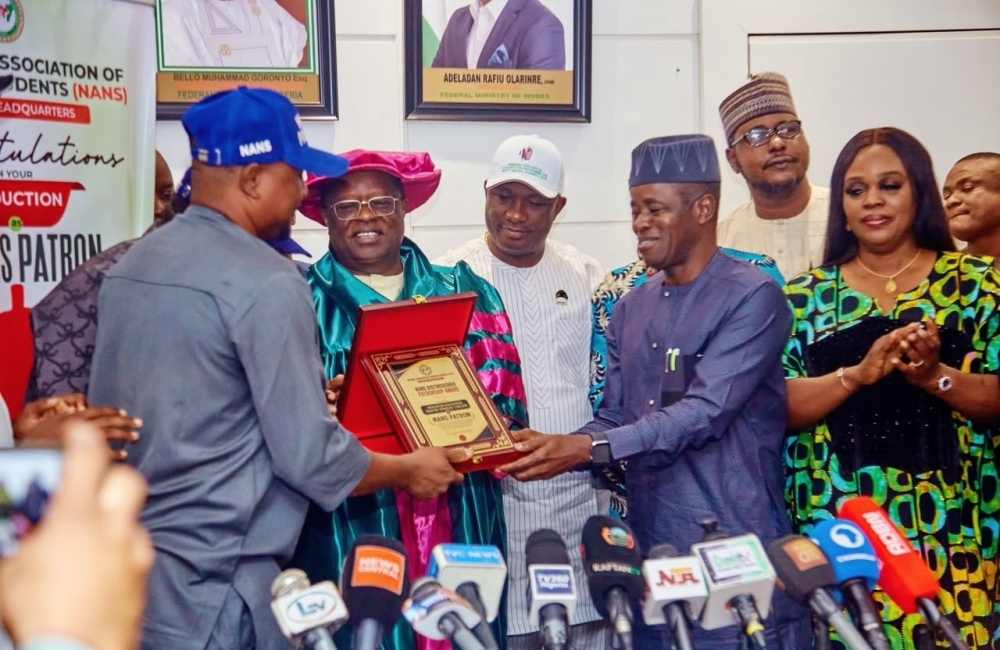
Umahi made the declaration on Monday, August 10, 2026, at the headquarters of the Federal Ministry of Works in Abuja, while speaking after he was formally inducted as Patron of the National Association of Nigerian Students (NANS).
The minister described the development as a positive indication of Nigeria’s economic prospects, saying, “I was enthused to find out that our GDP is growing more than our population. That means we have a future.”
The NANS leadership, led by its President, Dist. Comr. Akinteye Babatunde Afeez, GCNS, had earlier commended Umahi for his contributions to national infrastructure and described him as “a worthy member of the Renewed Hope Cabinet and, indeed, as one of the finest public servants Nigeria has produced in the contemporary era.”
The students said the recognition was not merely ceremonial but a reflection of Umahi’s visible contribution to road infrastructure and national development under President Bola Ahmed Tinubu’s administration.
According to NANS, the roads and bridges being delivered under Umahi’s supervision are directly connected to the lives of Nigerian students, affecting their mobility, access to educational institutions, examinations, internships, businesses and employment opportunities.
The students specifically cited major projects including the Abuja-Kaduna-Kano Expressway, Abuja-Kaduna-Minna route, Enugu-Port Harcourt Expressway and Lagos-Calabar Coastal Highway as examples of projects they said demonstrate the Federal Government’s commitment to improving national connectivity.
Afeez also disclosed that NANS had studied project reports of the Federal Ministry of Works covering the period between May 2023 and May 2026 and expressed its intention to embark on nationwide project tours to inspect completed and rehabilitated projects.
He said the students would use their platforms to communicate the impact of the projects to millions of Nigerian students, Nigerians and the wider world.
Responding, Umahi challenged Nigerian students and young people to look beyond political sentiments and examine the policies and achievements of the Tinubu administration objectively.
“We have had somebody say, ‘President Tinubu is tired.’ How do you know he is tired? I am part of President Tinubu. The Minister of Interior, the FCT, all the ministers and all the SSAs are vibrant and working. So how do you just jump at that conclusion?”
The minister urged Nigerians to demand concrete alternatives from those criticising the administration.
“If you say that the President is not doing well, what is your alternative?” he asked, stressing that political promises must be backed by clear plans and a credible mission.
He also called on students and other young Nigerians to take a position on issues affecting the country, arguing that remaining neutral in the face of visible progress was not always the right approach.
“You may say that you are not politicians or that you will not take sides, but this is the time to take sides in our national affairs. It is time to take a stand,” Umahi said.
On the economy, the minister acknowledged that the macroeconomy was only beginning to recover but urged Nigerians to consider the condition of the economy before the present administration took office and assess the reforms objectively.
“You may say that the macroeconomy is just beginning to recover. What was it like before the President took over? Everybody agrees that the macroeconomy is being fixed. It is up to you to dissect the ongoing reforms and take a position.”
Umahi also pointed to developments in the education sector, saying the stability being witnessed under the Tinubu administration had created an environment in which students were able to continue their studies without the disruption of nationwide strikes.
“For the first time, students never went on strike. Never. Look at the stability of Nigeria. That has never happened throughout the history of this country.”
“Where is the subsidy money?” Umahi explains
Addressing questions surrounding the removal of fuel subsidy and where the resulting resources were being deployed, Umahi pointed to the scale of ongoing infrastructure projects across the country.
He cited the Abuja-Kaduna-Zaria-Kano road, which he said covers 375 kilometres and, when measured as a dual carriageway, amounts to 750 kilometres.
According to the minister, more than ₦200 billion has already been spent on the project, with 480 kilometres of the dual carriageway completed and further sections nearing completion.
“For the first time, we have been able to complete 118 kilometres of concrete pavement within 30 months. That has never happened,” he said.
The Minister said the remaining works were expected to be completed by November, noting that the two projects on the route have a combined cost of ₦752 billion, with more than 80 percent already paid.
He also highlighted the Sokoto-Zamfara-Zaria corridor, the Benue-Ninth Mile road, and the Bodo - Bonny Island road as examples of projects receiving significant attention under the Tinubu administration.
On the Bonny Island project, he said:
“For the first time, people will move from the island to the mainland in Bonny Island, where the LNG is produced. A project costing ₦280 billion under President Bola Ahmed Tinubu has been completed. The 39.7-kilometre road is fully done, and the people of Bonny are very happy. They are no longer dying at sea. They are now driving through the land.”
The minister also spoke extensively about the administration’s legacy road projects, including the Lagos-Calabar Coastal Highway and the expanded Northeast Fourth Legacy Project.
He disclosed that the Northeast project, originally running from Akwanga through Jos, Bauchi, Gombe and Biu, had been extended through Yobe to Maiduguri, adding another 400 kilometres to the project.
Umahi defended the Lagos-Calabar Coastal Highway against criticisms, saying the project was strategically important to the Niger Delta and would be completed.
“I do not know why people are attacking the Lagos-Calabar Coastal Highway. After all, this is coming from the Niger Delta, where the oil is coming from. Why is nobody attacking the other three Legacy Projects, but this one is being attacked? That is unfair and unrealistic. That project will be completed. In fact, over 50 percent of the entire stretch is already under construction.”
The minister also used the occasion to speak about the development of the Southeast, saying President Tinubu had deliberately embarked on projects aimed at integrating the region into the national infrastructure network.
“The Southeast, for the first time, is being remembered, and I thank the people in the Southeast because sometimes I say, ‘Listen, our people should not be sentimental.’”
He said the administration’s approach to the region was intentional and urged the people of the Southeast to work with other parts of the country.
“The President has a good intention to integrate the people of the Southeast, and I have to be very honest with you. If I were not a minister from the Southeast, we would not have been able to get the projects we have secured. It is intentional on the part of Mr. President. Go and right the wrongs of the Southeast.”
Umahi cited the Enugu-Onitsha Expressway and Enugu-Port Harcourt Expressway among the major projects transforming connectivity in the region.
He also disclosed that President Tinubu had approved the re-scoping and reconstruction of the Lokoja-Benin-Warri corridor, covering a total of 401 kilometres.
The minister was particularly direct in urging the students to support President Tinubu in the 2027 election, arguing that Nigerians should support the administration if they believe its policies are producing results.
“I want you to take a side. If you say you are on the list of a coalition and you say that what we are doing is good, then we have to take a stand to vote for the President in the coming election.”
“Let him finish. Let him take back our country. Let him reposition our country.”
Umahi also urged Nigerians to look beyond political rhetoric and focus on practical solutions to the country’s challenges.
“Listening to others should not mean allowing yourselves to be insulted or blackmailed. Cheap talk will not solve our problems. Nobody is saying what he or she can do differently. The worst is over. The darkest part of the night is an hour before dawn.”
He pointed to the decline in food prices as one of the developments Nigerians should consider in assessing the economy, recalling that a 50-kilogramme bag of rice, which he said had risen above ₦80,000 and at some point reached ₦100,000, was now selling at about ₦58,000.
Umahi also stressed the administration’s commitment to transparency in the execution of road projects, saying the Ministry of Works had opened its projects to scrutiny by anti-corruption agencies.
“Now, why are we doing this? Transparency. We have turned these projects over to the ICPC. They have gone round. We are ready for constructive criticism, and where necessary, we will make amends.”
He added that the Ministry had also written to the Economic and Financial Crimes Commission (EFCC) to inspect its projects. “We have nothing to hide in this administration.”
The minister urged NANS to organise a major student engagement across the geopolitical zones where students could ask questions directly and hear the government’s explanations on its policies and projects.
“Let me defend this administration. Organise it and let me come. Move students from across the zone to a central point where we can talk to them and address their concerns. We have to deliberate on the issues. We have to debate them. Ask your questions, and we will answer them.”
He said he would attend such engagements with some ministers and Senior Special Assistants to the President, stressing that students were important stakeholders in the country’s future.
Umahi further challenged young Nigerians to take responsibility for protecting public infrastructure and contributing positively to national development. “See something, say something. Together, we can take back our country because it belongs to us.”
He said the responsibility for the performance of government should be placed on the officials directly responsible for specific sectors, rather than on the President for every operational issue.
“I am here because the President gave me the responsibility to be in charge of roads and bridges. If I do not do it, I should be the one to be blamed, not the President. I am not the President. The President has divided himself into a number of his appointees. These appointees should be the ones to answer and take responsibility.”
The minister concluded by thanking the students for the recognition and expressing his readiness to deepen collaboration with NANS.
“I want to thank you very much.“
He described the students as important partners in the national development process and encouraged them to remain informed, ask questions and hold leaders accountable.
The NANS President, in his address, said the association considered Umahi worthy of its patronage because of his record of public service, infrastructure delivery and commitment to national development.
He said the roads being constructed under Umahi’s leadership would outlive the present administration and continue to serve generations of Nigerians.
“History will not remember public officers merely because they occupied important offices. History will remember them for what they built, what they changed and the lives they touched.”
Afeez formally welcomed Umahi into the NANS family as Patron, describing the partnership between the student body and the Federal Ministry of Works as an opportunity to bring government projects closer to young Nigerians and deepen informed national discourse.

“THE WORST IS OVER; OUR GDP IS GROWING MORE THAN OUR POPULATION. THAT MEANS WE HAVE A FUTURE” - UMAHI TELLS NANS — As Nigerian Students Induct Him as Grand Patron, Hail Him as “One of the Finest” in Tinubu’s Renewed Hope Cabinet The Minister of Works, Senator Engr. David Umahi, CON, has declared that Nigeria is now seeing stronger economic outlook under President Bola Ahmed Tinubu, noting that the country’s Gross Domestic Product (GDP) is now growing faster than its population. Umahi made the declaration on Monday, August 10, 2026, at the headquarters of the Federal Ministry of Works in Abuja, while speaking after he was formally inducted as Patron of the National Association of Nigerian Students (NANS). The minister described the development as a positive indication of Nigeria’s economic prospects, saying, “I was enthused to find out that our GDP is growing more than our population. That means we have a future.” The NANS leadership, led by its President, Dist. Comr. Akinteye Babatunde Afeez, GCNS, had earlier commended Umahi for his contributions to national infrastructure and described him as “a worthy member of the Renewed Hope Cabinet and, indeed, as one of the finest public servants Nigeria has produced in the contemporary era.” The students said the recognition was not merely ceremonial but a reflection of Umahi’s visible contribution to road infrastructure and national development under President Bola Ahmed Tinubu’s administration. According to NANS, the roads and bridges being delivered under Umahi’s supervision are directly connected to the lives of Nigerian students, affecting their mobility, access to educational institutions, examinations, internships, businesses and employment opportunities. The students specifically cited major projects including the Abuja-Kaduna-Kano Expressway, Abuja-Kaduna-Minna route, Enugu-Port Harcourt Expressway and Lagos-Calabar Coastal Highway as examples of projects they said demonstrate the Federal Government’s commitment to improving national connectivity. Afeez also disclosed that NANS had studied project reports of the Federal Ministry of Works covering the period between May 2023 and May 2026 and expressed its intention to embark on nationwide project tours to inspect completed and rehabilitated projects. He said the students would use their platforms to communicate the impact of the projects to millions of Nigerian students, Nigerians and the wider world. Responding, Umahi challenged Nigerian students and young people to look beyond political sentiments and examine the policies and achievements of the Tinubu administration objectively. “We have had somebody say, ‘President Tinubu is tired.’ How do you know he is tired? I am part of President Tinubu. The Minister of Interior, the FCT, all the ministers and all the SSAs are vibrant and working. So how do you just jump at that conclusion?” The minister urged Nigerians to demand concrete alternatives from those criticising the administration. “If you say that the President is not doing well, what is your alternative?” he asked, stressing that political promises must be backed by clear plans and a credible mission. He also called on students and other young Nigerians to take a position on issues affecting the country, arguing that remaining neutral in the face of visible progress was not always the right approach. “You may say that you are not politicians or that you will not take sides, but this is the time to take sides in our national affairs. It is time to take a stand,” Umahi said. On the economy, the minister acknowledged that the macroeconomy was only beginning to recover but urged Nigerians to consider the condition of the economy before the present administration took office and assess the reforms objectively. “You may say that the macroeconomy is just beginning to recover. What was it like before the President took over? Everybody agrees that the macroeconomy is being fixed. It is up to you to dissect the ongoing reforms and take a position.” Umahi also pointed to developments in the education sector, saying the stability being witnessed under the Tinubu administration had created an environment in which students were able to continue their studies without the disruption of nationwide strikes. “For the first time, students never went on strike. Never. Look at the stability of Nigeria. That has never happened throughout the history of this country.” “Where is the subsidy money?” Umahi explains Addressing questions surrounding the removal of fuel subsidy and where the resulting resources were being deployed, Umahi pointed to the scale of ongoing infrastructure projects across the country. He cited the Abuja-Kaduna-Zaria-Kano road, which he said covers 375 kilometres and, when measured as a dual carriageway, amounts to 750 kilometres. According to the minister, more than ₦200 billion has already been spent on the project, with 480 kilometres of the dual carriageway completed and further sections nearing completion. “For the first time, we have been able to complete 118 kilometres of concrete pavement within 30 months. That has never happened,” he said. The Minister said the remaining works were expected to be completed by November, noting that the two projects on the route have a combined cost of ₦752 billion, with more than 80 percent already paid. He also highlighted the Sokoto-Zamfara-Zaria corridor, the Benue-Ninth Mile road, and the Bodo - Bonny Island road as examples of projects receiving significant attention under the Tinubu administration. On the Bonny Island project, he said: “For the first time, people will move from the island to the mainland in Bonny Island, where the LNG is produced. A project costing ₦280 billion under President Bola Ahmed Tinubu has been completed. The 39.7-kilometre road is fully done, and the people of Bonny are very happy. They are no longer dying at sea. They are now driving through the land.” The minister also spoke extensively about the administration’s legacy road projects, including the Lagos-Calabar Coastal Highway and the expanded Northeast Fourth Legacy Project. He disclosed that the Northeast project, originally running from Akwanga through Jos, Bauchi, Gombe and Biu, had been extended through Yobe to Maiduguri, adding another 400 kilometres to the project. Umahi defended the Lagos-Calabar Coastal Highway against criticisms, saying the project was strategically important to the Niger Delta and would be completed. “I do not know why people are attacking the Lagos-Calabar Coastal Highway. After all, this is coming from the Niger Delta, where the oil is coming from. Why is nobody attacking the other three Legacy Projects, but this one is being attacked? That is unfair and unrealistic. That project will be completed. In fact, over 50 percent of the entire stretch is already under construction.” The minister also used the occasion to speak about the development of the Southeast, saying President Tinubu had deliberately embarked on projects aimed at integrating the region into the national infrastructure network. “The Southeast, for the first time, is being remembered, and I thank the people in the Southeast because sometimes I say, ‘Listen, our people should not be sentimental.’” He said the administration’s approach to the region was intentional and urged the people of the Southeast to work with other parts of the country. “The President has a good intention to integrate the people of the Southeast, and I have to be very honest with you. If I were not a minister from the Southeast, we would not have been able to get the projects we have secured. It is intentional on the part of Mr. President. Go and right the wrongs of the Southeast.” Umahi cited the Enugu-Onitsha Expressway and Enugu-Port Harcourt Expressway among the major projects transforming connectivity in the region. He also disclosed that President Tinubu had approved the re-scoping and reconstruction of the Lokoja-Benin-Warri corridor, covering a total of 401 kilometres. The minister was particularly direct in urging the students to support President Tinubu in the 2027 election, arguing that Nigerians should support the administration if they believe its policies are producing results. “I want you to take a side. If you say you are on the list of a coalition and you say that what we are doing is good, then we have to take a stand to vote for the President in the coming election.” Umahi also urged Nigerians to look beyond political rhetoric and focus on practical solutions to the country’s challenges. “Listening to others should not mean allowing yourselves to be insulted or blackmailed. Cheap talk will not solve our problems. Nobody is saying what he or she can do differently. The worst is over. The darkest part of the night is an hour before dawn.” He pointed to the decline in food prices as one of the developments Nigerians should consider in assessing the economy, recalling that a 50-kilogramme bag of rice, which he said had risen above ₦80,000 and at some point reached ₦100,000, was now selling at about ₦58,000. Umahi also stressed the administration’s commitment to transparency in the execution of road projects, saying the Ministry of Works had opened its projects to scrutiny by anti-corruption agencies. “Now, why are we doing this? Transparency. We have turned these projects over to the ICPC. They have gone round. We are ready for constructive criticism, and where necessary, we will make amends.” He added that the Ministry had also written to the Economic and Financial Crimes Commission (EFCC) to inspect its projects. “We have nothing to hide in this administration.” The minister urged NANS to organise a major student engagement across the geopolitical zones where students could ask questions directly and hear the government’s explanations on its policies and projects. “Let me defend this administration. Organise it and let me come. Move students from across the zone to a central point where we can talk to them and address their concerns. We have to deliberate on the issues. We have to debate them. Ask your questions, and we will answer them.” He said he would attend such engagements with some ministers and Senior Special Assistants to the President, stressing that students were important stakeholders in the country’s future. Umahi further challenged young Nigerians to take responsibility for protecting public infrastructure and contributing positively to national development. “See something, say something. Together, we can take back our country because it belongs to us.” He said the responsibility for the performance of government should be placed on the officials directly responsible for specific sectors, rather than on the President for every operational issue. “I am here because the President gave me the responsibility to be in charge of roads and bridges. If I do not do it, I should be the one to be blamed, not the President. I am not the President. The President has divided himself into a number of his appointees. These appointees should be the ones to answer and take responsibility.” The minister concluded by thanking the students for the recognition and expressing his readiness to deepen collaboration with NANS. “I want to thank you very much.“ He described the students as important partners in the national development process and encouraged them to remain informed, ask questions and hold leaders accountable. The NANS President, in his address, said the association considered Umahi worthy of its patronage because of his record of public service, infrastructure delivery and commitment to national development. He said the roads being constructed under Umahi’s leadership would outlive the present administration and continue to serve generations of Nigerians. “History will not remember public officers merely because they occupied important offices. History will remember them for what they built, what they changed and the lives they touched.” Afeez formally welcomed Umahi into the NANS family as Patron, describing the partnership between the student body and the Federal Ministry of Works as an opportunity to bring government projects closer to young Nigerians and deepen informed national discourse.
“Let him finish. Let him take back our country. Let him reposition our country.”
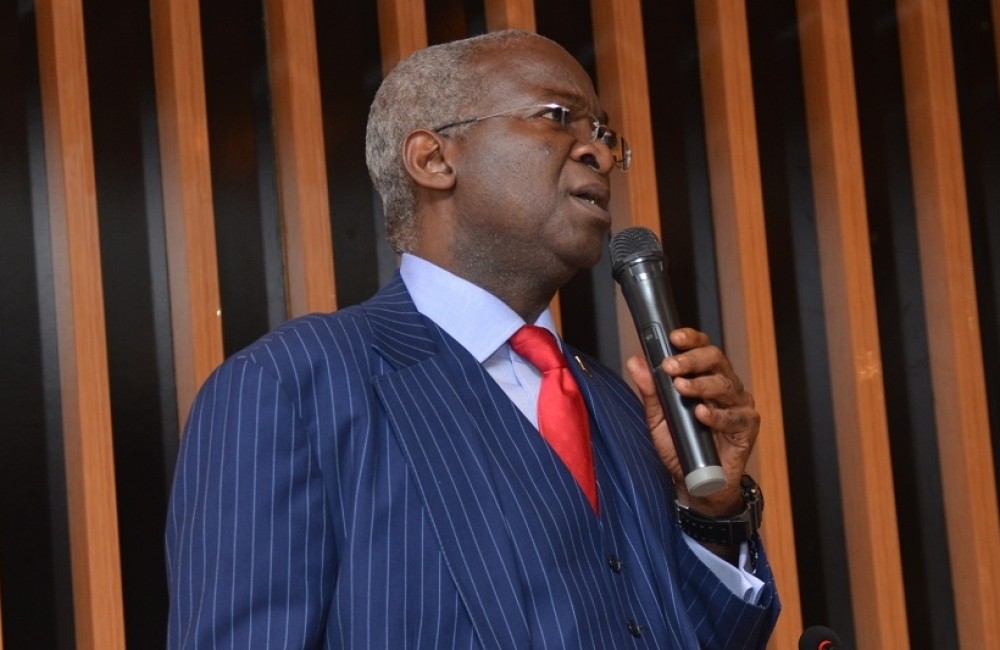
There’s A Lot Of Work Ahead Of Us, In Spite Of What We’ve Done Before, Says Fashola * As he assumes duty as Minister of Works and Housing * Calls for readiness among staff of the Ministry to work towards achieving Presidential mandate of economic prosperity for all * Expresses joy that staff have continued some of the projects left behind at the expiration of last administration * Suspends all travels, leave of absence to ensure the working out of the budget for the Ministry in the next two weeks The new Minister of Works and Housing, Mr. Babatunde Fashola SAN, has called for readiness among the staff of the Ministry in order to achieve the mandate of the Federal Government for economic growth and development as well as job creation in the country expressing his resolve to provide the needed leadership. Fashola who was the immediate past Minister of Power, Works and Housing, said the need to achieve the mandate was in line with the clear mandate of President Muhammadu Buhari who in his speech, while swearing in the Ministers earlier, had made it clear that he wanted the Ministers to further grow and stabilize the nation’s economy. Addressing the senior management staff of the Ministry at the Conference Room in Mabushi soon after the inauguration at the State House, Fashola expressed joy that the staff had remained faithful to some of the works left behind by his team during the last administration but warned that that there was still work to be done to consolidate on the foundation so far laid. The Minister declared, “I am happy to see that some of the works we left you have remained faithful and that is in the spirit of continuity and development which is what the nation needs”. He added, however, “There is still a lot of work ahead of us in spite of what we have done before and I offer myself ready and willing to do my part by providing leadership and I trust that all of you are ready as well”. “The mandate of Mr. President is very clear and it derives from his mandate to the people of Nigeria. And if you watched the Swearing-in ceremony today and listened to his speech, he wants us to be his eyes and ears and his agents to serve all the people of Nigeria and that is what we must set out to achieve”, Fashola said pointing out that the President was unequivocal on the urgent need to stabilize the economy. According to the Minister, the President was clear about the need to sustain the growth already experienced in the economy, adding, “The economy has grown from recession and out of recession and it has grown for consecutive eight quarters. But we need to double that growth and even multiply it , but that will depend on how we work this time. The central purpose is to create prosperity and to create jobs and I think this is possible”. Fashola, who said the immediate need was to work out a budget for the Ministry in the next two weeks, urged all the agencies and departments of the Ministry to work closely with the Permanent Secretary to achieve the feat adding that the budget remained the article of faith between the government and the governed. He declared, “One of the first things we have to do is to quickly work out the budget for the Ministry of Works and Housing and we have to do that in the next two weeks”, adding that because the budget was the article of faith in governance, all agencies and departments of the Ministry must work together to produce a budget worthy of note by the Ministry. Pointing out that the leadership of the National Assembly has expressed commitment to conduct all the budget defenses in the month of October, Fashola said in order to ensure that this was achieved and all documents were made ready for the defense, all leaves, travels and other less compelling engagements must be put aside for now. He stressed the need for the nation’s professionals to be more committed and dedicated to the service of the country pointing out that the fortunes of every nation was determined by how their professionals engage in national service. He said the central purpose of public service was to create prosperity and deliver better life to the people. Welcoming the new Minister of State, Engineer Aliyu Abubakar, Fashola, who expressed joy that he is reuniting with the new Minister , “in the service of our fatherland” after many years, disclosed that aside working with him at the level of Governors' Forum they also worked together in the formative years of the All Progressives Congress. Describing him as a very strong Party Man, Fashola, who said the speech rendered by the Minister of State was the longest he ever heard him give, added, “What is instructive about it is that he has laid himself bare to those of you who don`t know him. This was plain in all he has said.” The Minister said in terms of professional qualifications, the new Minister of State was bringing a lot of experience that would be beneficial to the Ministry, adding, “I heard a very rousing applause when he said he is a civil engineer and also when he included his water engineering background. And so, of course, he brings a lot of experience that is beneficial to the Ministry.” The inaugural meeting with management staff of the Ministry was attended by the Permanent Secretary Works, Directors, heads of departments and agencies of the Ministry as well as Special Advisers and other top government functionaries. ...
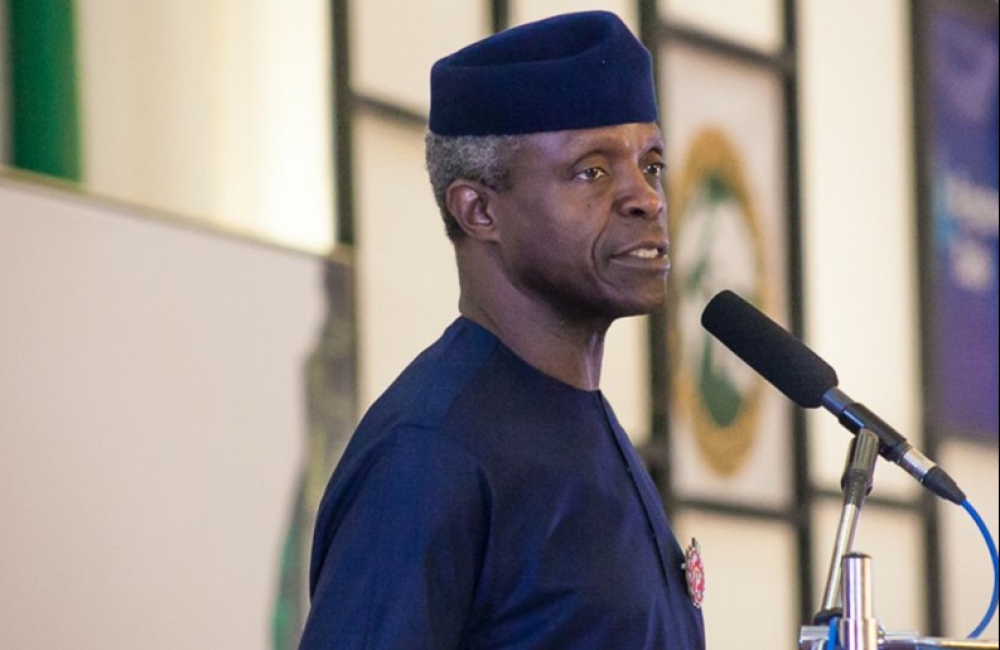
FG Committed To Delivering Effective Power Supply To Nigerians – Osinbajo Vice-President Yemi Osinbajo on Thursday reassured Nigerians that Federal Government was committed to ensuring effective and cost reflective power supply in the country. Osinbanjo gave the assurance during the official inauguration of the Niger Delta Power Holding Company (NDPHC) new 2×60MVA, 132/33KV substation and associated 132KV transmission lines in Abeokuta, Ogun. The News Agency of Nigeria (NAN) reports the vice president inaugurated the 2×60MVA, 132/33KV relief substation for Abeokuta; line bay extension works at Otta, Papalantoro and old Abeokuta 132/33KV substation. According to Osinbajo, this commissioning is an important part of government effort to improve supply and quality of power to homes and businesses in Nigeria. “In past few years, resolving the power problem has been top priority of government of Nigeria. “Today, we have about 13,427 megawatts installed capacity and available capacity of 8,342 megawatts. “This was achieved through the effort of government and private sector partnership on rehabilitation of turbines in Shiroro Egbin, Delta, Sapele, among others,” he said. He assured Nigerians that before the end of 2019, new generation was expected to be injected into the national grid to boost and increase power supply in the country. Osinbajo said the distribution capacity in the 11 Discos were significantly low, hovering at around 4,000 megawatts on average with a peak at about 5,400MW. He added that despite all the availability of about 8,000MW of generation and 7,000MW of transmission capacity, the lack of Disco infrastructure to absorb and deliver grid power to end-users had largely restricted generation to an average of about 4,000MW, and sometimes even falling below 4,000MW. “It is evident that despite all efforts that has been put into trying to expand the grid, the structure of the market today cannot deliver on government’s promises to provide power for domestic and industrial use. “A substantial change of strategy is necessary. There is clearly need for a change of strategy. “What we have done in the past has taken us to a point where there is clearly a change of strategy,” he said. The Chief Executive Officer of the NDPHC, Mr Chiedu Ugbo, said he the new 2×60MVA, 132/33KV substation of Abeokuta, when fully come on stream, would provide reliable power off-take via six 33KV distribution feeders to the state capital (Abeokuta) and its environs. He explained further that the 1×60MVA transformer at Otta would provide additional power supply via three 33KV feeders to Otta and its environs. Besides, Ugbo underscored the importance of the projects and said they would impact positively on power supply to Abeokuta, Otta axis and Papalanto. “NDPHC’s contribution to the tansmission grid system has transformed the hitherto radial 330Kv/132KV grid into a more robust grid system with significant provision of alternative power flow routes which now serve as redundancies and which has resulted in a more reliable and stable Nigeria grid. “Of note in these respects are the commissioning of the over 220KM long 330KV Double Circuit (DC) lines providing alternative supply route into Abuja and the FCT from Geregu. “Through a new Lokoja substation, a new Gwagwalada substation into the existing TCN Katampe and Apo substations with several significant expansion works on existing substation developments along this route,” he said. Agbo said electricity supply to those parts of Ogun along the axis of Otta right up to Abeokuta the state capital were initially via a double circuit 132kV line into Otta, from the mega 330/132/33kV transformer substation at Ikeja west which serves as a marshalling station for several power plant inflows into Lagos. *A 2X40MVA 132/33kV substation was built at this Otta location for supply to Otta and environs. “Out of Otta, a single circuit lower capacity 132kV line was built to connect Abeokuta via an intermediate 132/33kV Substation at Papalanto within the premises of Lafarge Cement Company. “The Abeokuta Substation was also equipped with 2X40MVA 132/33kV Transformers for supplying Abeokuta and its environs. “Over time, all these facilities became overloaded and lacking capacity to cater to growing demands in these locations, necessitating NDPHC intervention. “A schematic overview of the old status and NDPH intervention is attached for visual clarity,” he added. The NDPHC boss said the company constructed a total of 77.5kms high capacity 132kV transmission Lines, thus providing near quadrupling of the supply (wheeling) capacity out of Otta (from 70MW to 250MW) and thereby eliminating supply constraints and attendant load shedding that had existed before at Otta, and Abeokuta. He said that additionally, the NIPP 2X60MVA 132/33kV Substation at New Abeokuta provided reliable 6nos. 33kV distribution feeders to Abeokuta environs, while the added 1X60MVA 132/33kV Transformer at Otta provided additional 3nos. 33kV feeders to Otta environs. The Managing Director, Transmission Company of Nigeria (TCN), Mr Usman Mohammed, said 1.66 billion dollars had been secured from the World Bank and other multilateral financing agencies on network projects. Usman said the financing was raised for the expansion of the national power grid. He said the Nigeria Electricity Transmission Project, which sought to redress certain deficiencies and operating constraints of the power transmission system, was financed by the World Bank and was worth 486 million dollars. “The project is in three stages; two phases have passed pre-qualification state while the third is still on pre-qualification stage. He said the pre-qualification of the Northern Corridor project being funded by the French Development Agency (Agence Française de Développement) was almost completed. Mohammed said: “The project will cover the closing of loop in-between Sokoto to Kaura Namoda and Katsina. “Environmental Impact Assessment is on-going, verification for compensation for the right of way is also on-going. The project loan is 300 million dollars,” he said. According to him, the Lagos-Ogun transmission project, which is worth $238m, is being financed by Japan International Cooperation Agency. Usman said the project design, EIA studies, technical studies and resettlement action plan had been concluded. He said compensation request had been forwarded to the Bureau of Public Procurement for due diligence which was expected to be concluded in the third quarter of the year. Source: (NAN) ...
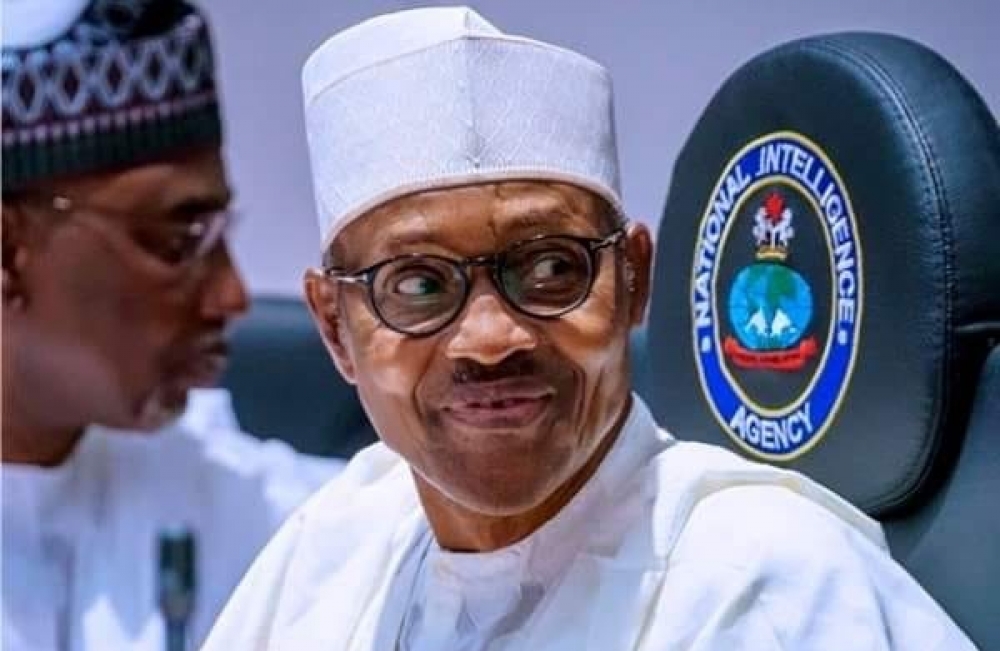
Our Priority Investments In Infrastructure Paying Off - President Buhari President Muhammadu Buhari says his administration’s investment in infrastructure like rails, roads, bridges and waterways have started yielding positive results with tangible evidence for all to see. Speaking at the commissioning of the reconstructed Shinkafi-Yandaki-Gafiya—Abdallawa-Dankaba road in Katsina, as part of activities during his visit to the state, the President said the special attention given to infrastructure by his administration will be intensified, since the investments had been justified with more people benefiting. “Infrastructure is vital to economic development. As you are aware, this administration has given special attention to infrastructural transformation of our country. “This is in consonance with the change philosophy of the administration. Such projects and programs form part of our contribution to national development, which are tangible for all to see,” he said. He commended the strategy by Governor Aminu Bello Masari’s administration to make roads motorable throughout the year for citizens, adding “we all know that the economy of Katsina State is agrarian. Our wealth is farming and livestock rearing. Hence the need to open it up through and across all communities so as to maximally tap the abundant agricultural and livestock resources the state is endowed with.” In his remark, Governor Masari said the government “had all along been mindful of the need for infrastructural development across the nooks and crannies of the state.’’ He said the decision had “efficiently and effectively facilitated smooth movement of people, goods and services on trade and commerce, not only within Katsina State but across other neighbouring states.’’ The governor noted that the economy of the state and wellbeing of the people had improved with the focus on infrastructure. President Buhari will commission more projects in the state on Thursday. ...
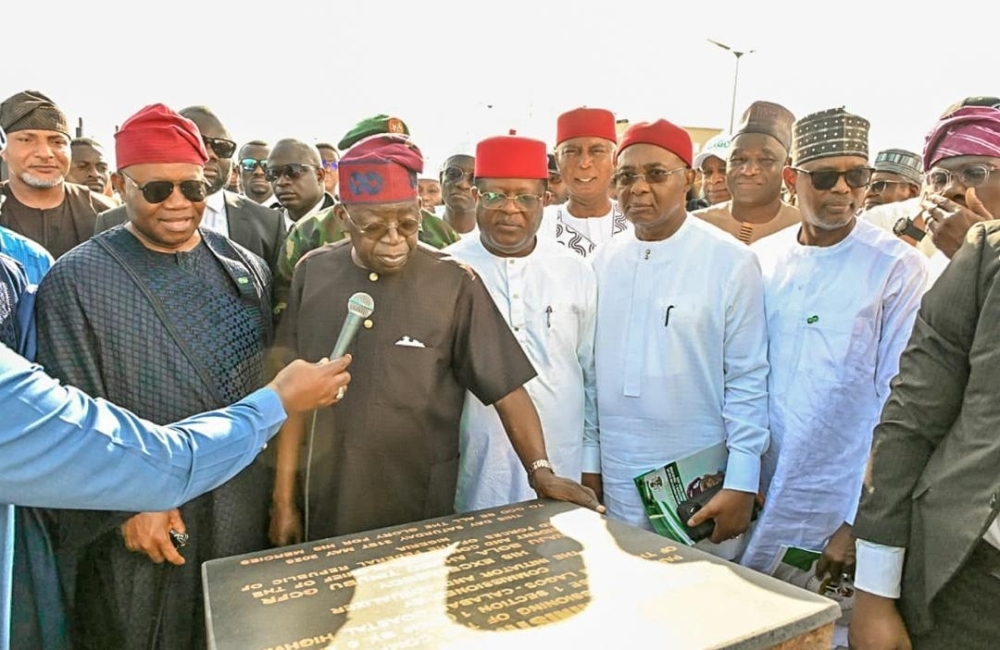
DRIVING NIGERIA’S FUTURE: CELEBRATING TWO YEARS OF TRANSFORMATIVE LEADERSHIP AND THE LAGOS-CALABAR COASTAL HIGHWAY MILESTONE
DRIVING NIGERIA’S FUTURE: CELEBRATING TWO YEARS OF TRANSFORMATIVE LEADERSHIP AND THE LAGOS-CALABAR COASTAL HIGHWAY MILESTONE
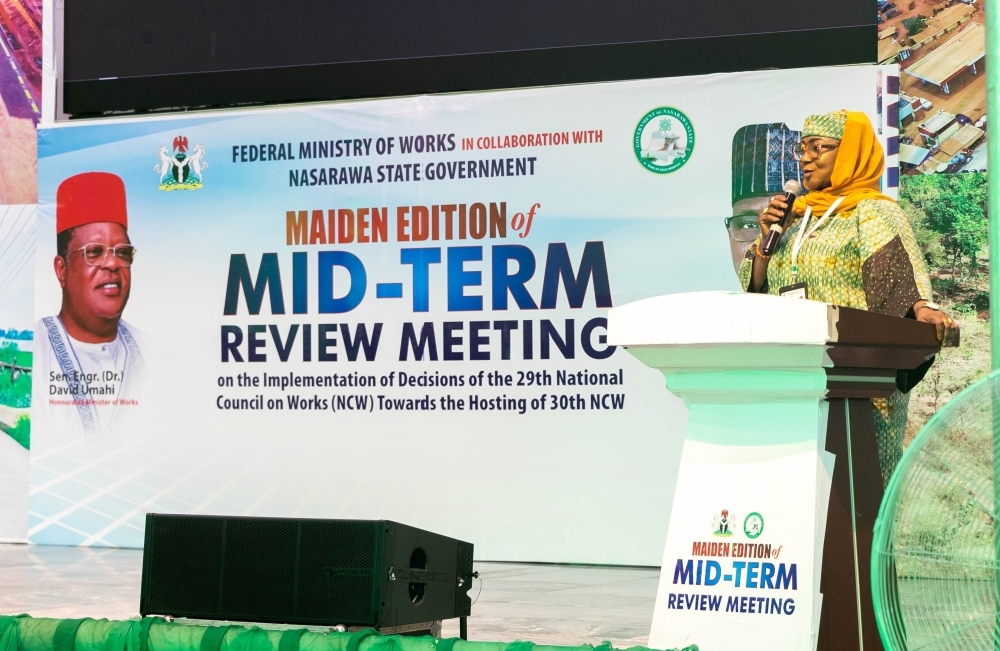
MID -TERM REVIEW MEETING ON THE IMPLIMENTATION OF THE DECISIONS REACHED AT THE 29TH NATIONAL COUNCIL ON WORKS (NCW) DAY 1
MID -TERM REVIEW MEETING ON THE IMPLIMENTATION OF THE DECISIONS REACHED AT THE 29TH NATIONAL COUNCIL ON WORKS (NCW) DAY 1