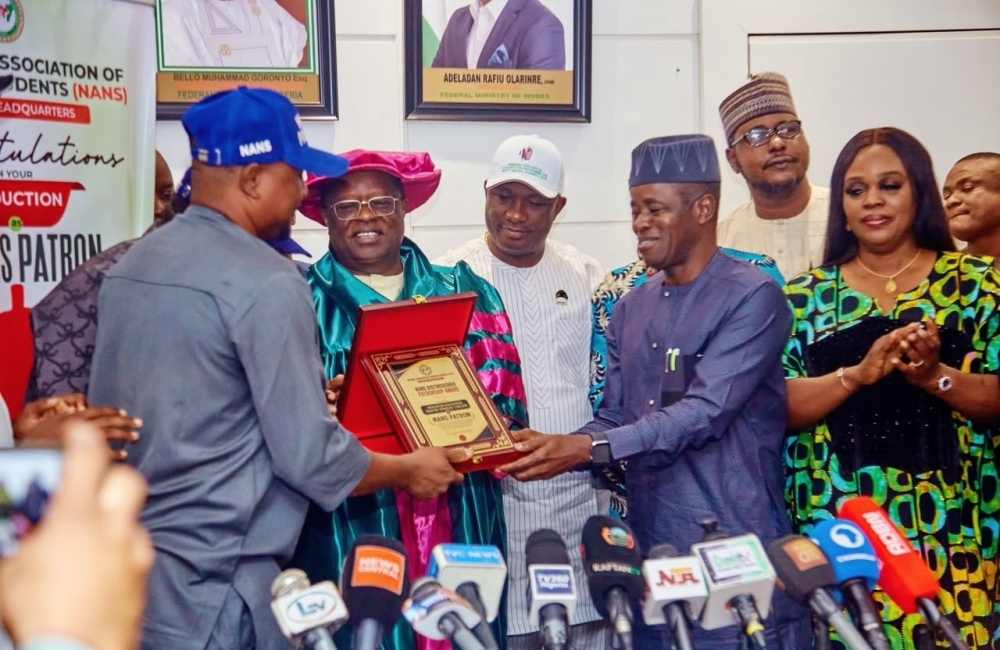
“THE WORST IS OVER; OUR GDP IS GROWING MORE THAN OUR POPULATION. THAT MEANS WE HAVE A FUTURE” - UMAHI TELLS NANS
— As Nigerian Students Induct Him as Grand Patron, Hail Him as “One of the Finest” in Tinubu’s Renewed Hope Cabinet
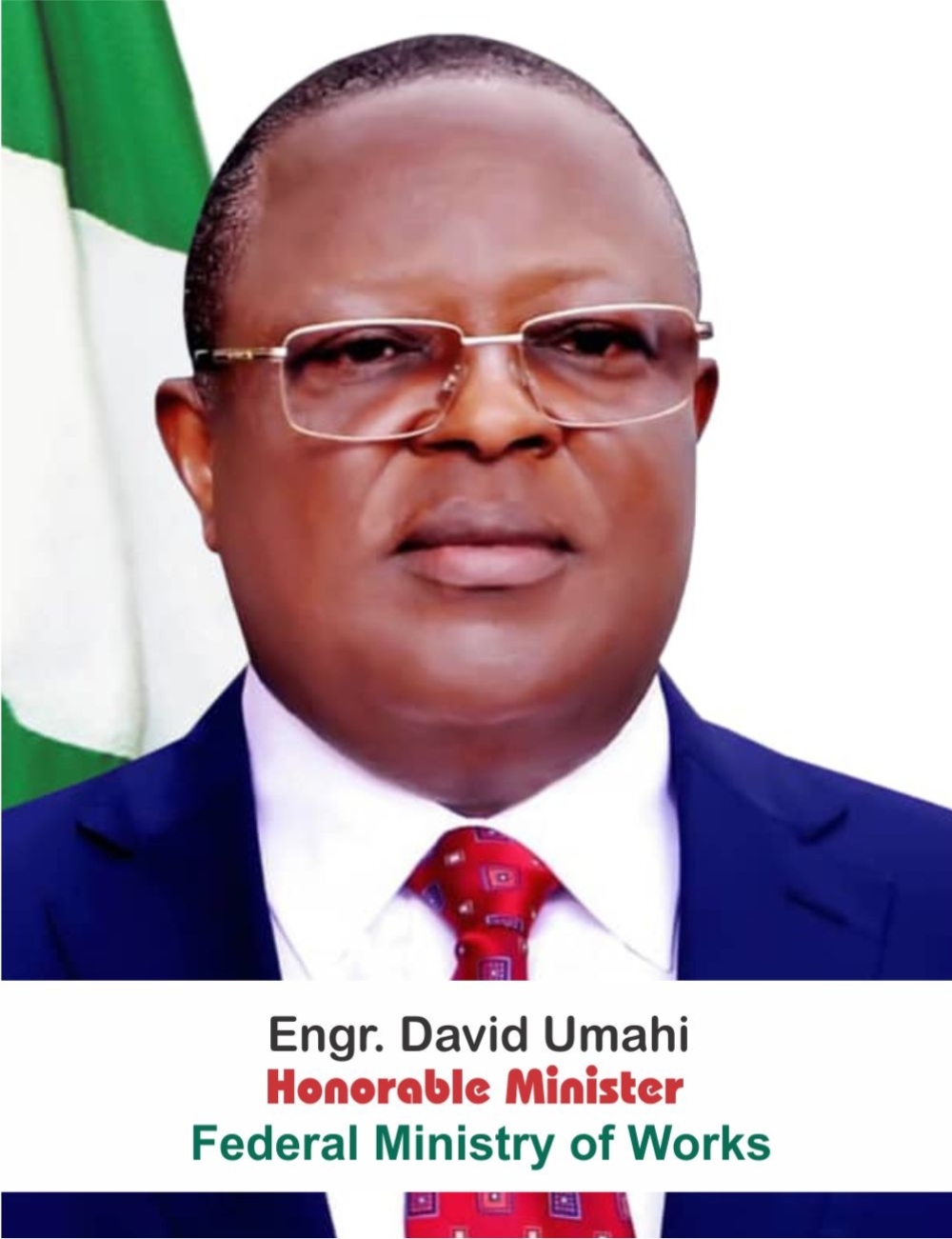
The Minister of Works, Senator Engr. David Umahi, CON, has declared that Nigeria is now seeing stronger economic outlook under President Bola Ahmed Tinubu, noting that the country’s Gross Domestic Product (GDP) is now growing faster than its population.
Umahi made the declaration on Monday, August 10, 2026, at the headquarters of the Federal Ministry of Works in Abuja, while speaking after he was formally inducted as Patron of the National Association of Nigerian Students (NANS).
The minister described the development as a positive indication of Nigeria’s economic prospects, saying, “I was enthused to find out that our GDP is growing more than our population. That means we have a future.”
The NANS leadership, led by its President, Dist. Comr. Akinteye Babatunde Afeez, GCNS, had earlier commended Umahi for his contributions to national infrastructure and described him as “a worthy member of the Renewed Hope Cabinet and, indeed, as one of the finest public servants Nigeria has produced in the contemporary era.”
The students said the recognition was not merely ceremonial but a reflection of Umahi’s visible contribution to road infrastructure and national development under President Bola Ahmed Tinubu’s administration.
According to NANS, the roads and bridges being delivered under Umahi’s supervision are directly connected to the lives of Nigerian students, affecting their mobility, access to educational institutions, examinations, internships, businesses and employment opportunities.
The students specifically cited major projects including the Abuja-Kaduna-Kano Expressway, Abuja-Kaduna-Minna route, Enugu-Port Harcourt Expressway and Lagos-Calabar Coastal Highway as examples of projects they said demonstrate the Federal Government’s commitment to improving national connectivity.
Afeez also disclosed that NANS had studied project reports of the Federal Ministry of Works covering the period between May 2023 and May 2026 and expressed its intention to embark on nationwide project tours to inspect completed and rehabilitated projects.
He said the students would use their platforms to communicate the impact of the projects to millions of Nigerian students, Nigerians and the wider world.
Responding, Umahi challenged Nigerian students and young people to look beyond political sentiments and examine the policies and achievements of the Tinubu administration objectively.
“We have had somebody say, ‘President Tinubu is tired.’ How do you know he is tired? I am part of President Tinubu. The Minister of Interior, the FCT, all the ministers and all the SSAs are vibrant and working. So how do you just jump at that conclusion?”
The minister urged Nigerians to demand concrete alternatives from those criticising the administration.
“If you say that the President is not doing well, what is your alternative?” he asked, stressing that political promises must be backed by clear plans and a credible mission.
He also called on students and other young Nigerians to take a position on issues affecting the country, arguing that remaining neutral in the face of visible progress was not always the right approach.
“You may say that you are not politicians or that you will not take sides, but this is the time to take sides in our national affairs. It is time to take a stand,” Umahi said.
On the economy, the minister acknowledged that the macroeconomy was only beginning to recover but urged Nigerians to consider the condition of the economy before the present administration took office and assess the reforms objectively.
“You may say that the macroeconomy is just beginning to recover. What was it like before the President took over? Everybody agrees that the macroeconomy is being fixed. It is up to you to dissect the ongoing reforms and take a position.”
Umahi also pointed to developments in the education sector, saying the stability being witnessed under the Tinubu administration had created an environment in which students were able to continue their studies without the disruption of nationwide strikes.
“For the first time, students never went on strike. Never. Look at the stability of Nigeria. That has never happened throughout the history of this country.”
“Where is the subsidy money?” Umahi explains
Addressing questions surrounding the removal of fuel subsidy and where the resulting resources were being deployed, Umahi pointed to the scale of ongoing infrastructure projects across the country.
He cited the Abuja-Kaduna-Zaria-Kano road, which he said covers 375 kilometres and, when measured as a dual carriageway, amounts to 750 kilometres.
According to the minister, more than ₦200 billion has already been spent on the project, with 480 kilometres of the dual carriageway completed and further sections nearing completion.
“For the first time, we have been able to complete 118 kilometres of concrete pavement within 30 months. That has never happened,” he said.
The Minister said the remaining works were expected to be completed by November, noting that the two projects on the route have a combined cost of ₦752 billion, with more than 80 percent already paid.
He also highlighted the Sokoto-Zamfara-Zaria corridor, the Benue-Ninth Mile road, and the Bodo - Bonny Island road as examples of projects receiving significant attention under the Tinubu administration.
On the Bonny Island project, he said:
“For the first time, people will move from the island to the mainland in Bonny Island, where the LNG is produced. A project costing ₦280 billion under President Bola Ahmed Tinubu has been completed. The 39.7-kilometre road is fully done, and the people of Bonny are very happy. They are no longer dying at sea. They are now driving through the land.”
The minister also spoke extensively about the administration’s legacy road projects, including the Lagos-Calabar Coastal Highway and the expanded Northeast Fourth Legacy Project.
He disclosed that the Northeast project, originally running from Akwanga through Jos, Bauchi, Gombe and Biu, had been extended through Yobe to Maiduguri, adding another 400 kilometres to the project.
Umahi defended the Lagos-Calabar Coastal Highway against criticisms, saying the project was strategically important to the Niger Delta and would be completed.
“I do not know why people are attacking the Lagos-Calabar Coastal Highway. After all, this is coming from the Niger Delta, where the oil is coming from. Why is nobody attacking the other three Legacy Projects, but this one is being attacked? That is unfair and unrealistic. That project will be completed. In fact, over 50 percent of the entire stretch is already under construction.”
The minister also used the occasion to speak about the development of the Southeast, saying President Tinubu had deliberately embarked on projects aimed at integrating the region into the national infrastructure network.
“The Southeast, for the first time, is being remembered, and I thank the people in the Southeast because sometimes I say, ‘Listen, our people should not be sentimental.’”
He said the administration’s approach to the region was intentional and urged the people of the Southeast to work with other parts of the country.
“The President has a good intention to integrate the people of the Southeast, and I have to be very honest with you. If I were not a minister from the Southeast, we would not have been able to get the projects we have secured. It is intentional on the part of Mr. President. Go and right the wrongs of the Southeast.”
Umahi cited the Enugu-Onitsha Expressway and Enugu-Port Harcourt Expressway among the major projects transforming connectivity in the region.
He also disclosed that President Tinubu had approved the re-scoping and reconstruction of the Lokoja-Benin-Warri corridor, covering a total of 401 kilometres.
The minister was particularly direct in urging the students to support President Tinubu in the 2027 election, arguing that Nigerians should support the administration if they believe its policies are producing results.
“I want you to take a side. If you say you are on the list of a coalition and you say that what we are doing is good, then we have to take a stand to vote for the President in the coming election.”
“Let him finish. Let him take back our country. Let him reposition our country.”
Umahi also urged Nigerians to look beyond political rhetoric and focus on practical solutions to the country’s challenges.
“Listening to others should not mean allowing yourselves to be insulted or blackmailed. Cheap talk will not solve our problems. Nobody is saying what he or she can do differently. The worst is over. The darkest part of the night is an hour before dawn.”
He pointed to the decline in food prices as one of the developments Nigerians should consider in assessing the economy, recalling that a 50-kilogramme bag of rice, which he said had risen above ₦80,000 and at some point reached ₦100,000, was now selling at about ₦58,000.
Umahi also stressed the administration’s commitment to transparency in the execution of road projects, saying the Ministry of Works had opened its projects to scrutiny by anti-corruption agencies.
“Now, why are we doing this? Transparency. We have turned these projects over to the ICPC. They have gone round. We are ready for constructive criticism, and where necessary, we will make amends.”
He added that the Ministry had also written to the Economic and Financial Crimes Commission (EFCC) to inspect its projects. “We have nothing to hide in this administration.”
The minister urged NANS to organise a major student engagement across the geopolitical zones where students could ask questions directly and hear the government’s explanations on its policies and projects.
“Let me defend this administration. Organise it and let me come. Move students from across the zone to a central point where we can talk to them and address their concerns. We have to deliberate on the issues. We have to debate them. Ask your questions, and we will answer them.”
He said he would attend such engagements with some ministers and Senior Special Assistants to the President, stressing that students were important stakeholders in the country’s future.
Umahi further challenged young Nigerians to take responsibility for protecting public infrastructure and contributing positively to national development. “See something, say something. Together, we can take back our country because it belongs to us.”
He said the responsibility for the performance of government should be placed on the officials directly responsible for specific sectors, rather than on the President for every operational issue.
“I am here because the President gave me the responsibility to be in charge of roads and bridges. If I do not do it, I should be the one to be blamed, not the President. I am not the President. The President has divided himself into a number of his appointees. These appointees should be the ones to answer and take responsibility.”
The minister concluded by thanking the students for the recognition and expressing his readiness to deepen collaboration with NANS.
“I want to thank you very much.“
He described the students as important partners in the national development process and encouraged them to remain informed, ask questions and hold leaders accountable.
The NANS President, in his address, said the association considered Umahi worthy of its patronage because of his record of public service, infrastructure delivery and commitment to national development.
He said the roads being constructed under Umahi’s leadership would outlive the present administration and continue to serve generations of Nigerians.
“History will not remember public officers merely because they occupied important offices. History will remember them for what they built, what they changed and the lives they touched.”
Afeez formally welcomed Umahi into the NANS family as Patron, describing the partnership between the student body and the Federal Ministry of Works as an opportunity to bring government projects closer to young Nigerians and deepen informed national discourse.

“THE WORST IS OVER; OUR GDP IS GROWING MORE THAN OUR POPULATION. THAT MEANS WE HAVE A FUTURE” - UMAHI TELLS NANS — As Nigerian Students Induct Him as Grand Patron, Hail Him as “One of the Finest” in Tinubu’s Renewed Hope Cabinet The Minister of Works, Senator Engr. David Umahi, CON, has declared that Nigeria is now seeing stronger economic outlook under President Bola Ahmed Tinubu, noting that the country’s Gross Domestic Product (GDP) is now growing faster than its population. Umahi made the declaration on Monday, August 10, 2026, at the headquarters of the Federal Ministry of Works in Abuja, while speaking after he was formally inducted as Patron of the National Association of Nigerian Students (NANS). The minister described the development as a positive indication of Nigeria’s economic prospects, saying, “I was enthused to find out that our GDP is growing more than our population. That means we have a future.” The NANS leadership, led by its President, Dist. Comr. Akinteye Babatunde Afeez, GCNS, had earlier commended Umahi for his contributions to national infrastructure and described him as “a worthy member of the Renewed Hope Cabinet and, indeed, as one of the finest public servants Nigeria has produced in the contemporary era.” The students said the recognition was not merely ceremonial but a reflection of Umahi’s visible contribution to road infrastructure and national development under President Bola Ahmed Tinubu’s administration. According to NANS, the roads and bridges being delivered under Umahi’s supervision are directly connected to the lives of Nigerian students, affecting their mobility, access to educational institutions, examinations, internships, businesses and employment opportunities. The students specifically cited major projects including the Abuja-Kaduna-Kano Expressway, Abuja-Kaduna-Minna route, Enugu-Port Harcourt Expressway and Lagos-Calabar Coastal Highway as examples of projects they said demonstrate the Federal Government’s commitment to improving national connectivity. Afeez also disclosed that NANS had studied project reports of the Federal Ministry of Works covering the period between May 2023 and May 2026 and expressed its intention to embark on nationwide project tours to inspect completed and rehabilitated projects. He said the students would use their platforms to communicate the impact of the projects to millions of Nigerian students, Nigerians and the wider world. Responding, Umahi challenged Nigerian students and young people to look beyond political sentiments and examine the policies and achievements of the Tinubu administration objectively. “We have had somebody say, ‘President Tinubu is tired.’ How do you know he is tired? I am part of President Tinubu. The Minister of Interior, the FCT, all the ministers and all the SSAs are vibrant and working. So how do you just jump at that conclusion?” The minister urged Nigerians to demand concrete alternatives from those criticising the administration. “If you say that the President is not doing well, what is your alternative?” he asked, stressing that political promises must be backed by clear plans and a credible mission. He also called on students and other young Nigerians to take a position on issues affecting the country, arguing that remaining neutral in the face of visible progress was not always the right approach. “You may say that you are not politicians or that you will not take sides, but this is the time to take sides in our national affairs. It is time to take a stand,” Umahi said. On the economy, the minister acknowledged that the macroeconomy was only beginning to recover but urged Nigerians to consider the condition of the economy before the present administration took office and assess the reforms objectively. “You may say that the macroeconomy is just beginning to recover. What was it like before the President took over? Everybody agrees that the macroeconomy is being fixed. It is up to you to dissect the ongoing reforms and take a position.” Umahi also pointed to developments in the education sector, saying the stability being witnessed under the Tinubu administration had created an environment in which students were able to continue their studies without the disruption of nationwide strikes. “For the first time, students never went on strike. Never. Look at the stability of Nigeria. That has never happened throughout the history of this country.” “Where is the subsidy money?” Umahi explains Addressing questions surrounding the removal of fuel subsidy and where the resulting resources were being deployed, Umahi pointed to the scale of ongoing infrastructure projects across the country. He cited the Abuja-Kaduna-Zaria-Kano road, which he said covers 375 kilometres and, when measured as a dual carriageway, amounts to 750 kilometres. According to the minister, more than ₦200 billion has already been spent on the project, with 480 kilometres of the dual carriageway completed and further sections nearing completion. “For the first time, we have been able to complete 118 kilometres of concrete pavement within 30 months. That has never happened,” he said. The Minister said the remaining works were expected to be completed by November, noting that the two projects on the route have a combined cost of ₦752 billion, with more than 80 percent already paid. He also highlighted the Sokoto-Zamfara-Zaria corridor, the Benue-Ninth Mile road, and the Bodo - Bonny Island road as examples of projects receiving significant attention under the Tinubu administration. On the Bonny Island project, he said: “For the first time, people will move from the island to the mainland in Bonny Island, where the LNG is produced. A project costing ₦280 billion under President Bola Ahmed Tinubu has been completed. The 39.7-kilometre road is fully done, and the people of Bonny are very happy. They are no longer dying at sea. They are now driving through the land.” The minister also spoke extensively about the administration’s legacy road projects, including the Lagos-Calabar Coastal Highway and the expanded Northeast Fourth Legacy Project. He disclosed that the Northeast project, originally running from Akwanga through Jos, Bauchi, Gombe and Biu, had been extended through Yobe to Maiduguri, adding another 400 kilometres to the project. Umahi defended the Lagos-Calabar Coastal Highway against criticisms, saying the project was strategically important to the Niger Delta and would be completed. “I do not know why people are attacking the Lagos-Calabar Coastal Highway. After all, this is coming from the Niger Delta, where the oil is coming from. Why is nobody attacking the other three Legacy Projects, but this one is being attacked? That is unfair and unrealistic. That project will be completed. In fact, over 50 percent of the entire stretch is already under construction.” The minister also used the occasion to speak about the development of the Southeast, saying President Tinubu had deliberately embarked on projects aimed at integrating the region into the national infrastructure network. “The Southeast, for the first time, is being remembered, and I thank the people in the Southeast because sometimes I say, ‘Listen, our people should not be sentimental.’” He said the administration’s approach to the region was intentional and urged the people of the Southeast to work with other parts of the country. “The President has a good intention to integrate the people of the Southeast, and I have to be very honest with you. If I were not a minister from the Southeast, we would not have been able to get the projects we have secured. It is intentional on the part of Mr. President. Go and right the wrongs of the Southeast.” Umahi cited the Enugu-Onitsha Expressway and Enugu-Port Harcourt Expressway among the major projects transforming connectivity in the region. He also disclosed that President Tinubu had approved the re-scoping and reconstruction of the Lokoja-Benin-Warri corridor, covering a total of 401 kilometres. The minister was particularly direct in urging the students to support President Tinubu in the 2027 election, arguing that Nigerians should support the administration if they believe its policies are producing results. “I want you to take a side. If you say you are on the list of a coalition and you say that what we are doing is good, then we have to take a stand to vote for the President in the coming election.” Umahi also urged Nigerians to look beyond political rhetoric and focus on practical solutions to the country’s challenges. “Listening to others should not mean allowing yourselves to be insulted or blackmailed. Cheap talk will not solve our problems. Nobody is saying what he or she can do differently. The worst is over. The darkest part of the night is an hour before dawn.” He pointed to the decline in food prices as one of the developments Nigerians should consider in assessing the economy, recalling that a 50-kilogramme bag of rice, which he said had risen above ₦80,000 and at some point reached ₦100,000, was now selling at about ₦58,000. Umahi also stressed the administration’s commitment to transparency in the execution of road projects, saying the Ministry of Works had opened its projects to scrutiny by anti-corruption agencies. “Now, why are we doing this? Transparency. We have turned these projects over to the ICPC. They have gone round. We are ready for constructive criticism, and where necessary, we will make amends.” He added that the Ministry had also written to the Economic and Financial Crimes Commission (EFCC) to inspect its projects. “We have nothing to hide in this administration.” The minister urged NANS to organise a major student engagement across the geopolitical zones where students could ask questions directly and hear the government’s explanations on its policies and projects. “Let me defend this administration. Organise it and let me come. Move students from across the zone to a central point where we can talk to them and address their concerns. We have to deliberate on the issues. We have to debate them. Ask your questions, and we will answer them.” He said he would attend such engagements with some ministers and Senior Special Assistants to the President, stressing that students were important stakeholders in the country’s future. Umahi further challenged young Nigerians to take responsibility for protecting public infrastructure and contributing positively to national development. “See something, say something. Together, we can take back our country because it belongs to us.” He said the responsibility for the performance of government should be placed on the officials directly responsible for specific sectors, rather than on the President for every operational issue. “I am here because the President gave me the responsibility to be in charge of roads and bridges. If I do not do it, I should be the one to be blamed, not the President. I am not the President. The President has divided himself into a number of his appointees. These appointees should be the ones to answer and take responsibility.” The minister concluded by thanking the students for the recognition and expressing his readiness to deepen collaboration with NANS. “I want to thank you very much.“ He described the students as important partners in the national development process and encouraged them to remain informed, ask questions and hold leaders accountable. The NANS President, in his address, said the association considered Umahi worthy of its patronage because of his record of public service, infrastructure delivery and commitment to national development. He said the roads being constructed under Umahi’s leadership would outlive the present administration and continue to serve generations of Nigerians. “History will not remember public officers merely because they occupied important offices. History will remember them for what they built, what they changed and the lives they touched.” Afeez formally welcomed Umahi into the NANS family as Patron, describing the partnership between the student body and the Federal Ministry of Works as an opportunity to bring government projects closer to young Nigerians and deepen informed national discourse.
“Let him finish. Let him take back our country. Let him reposition our country.”
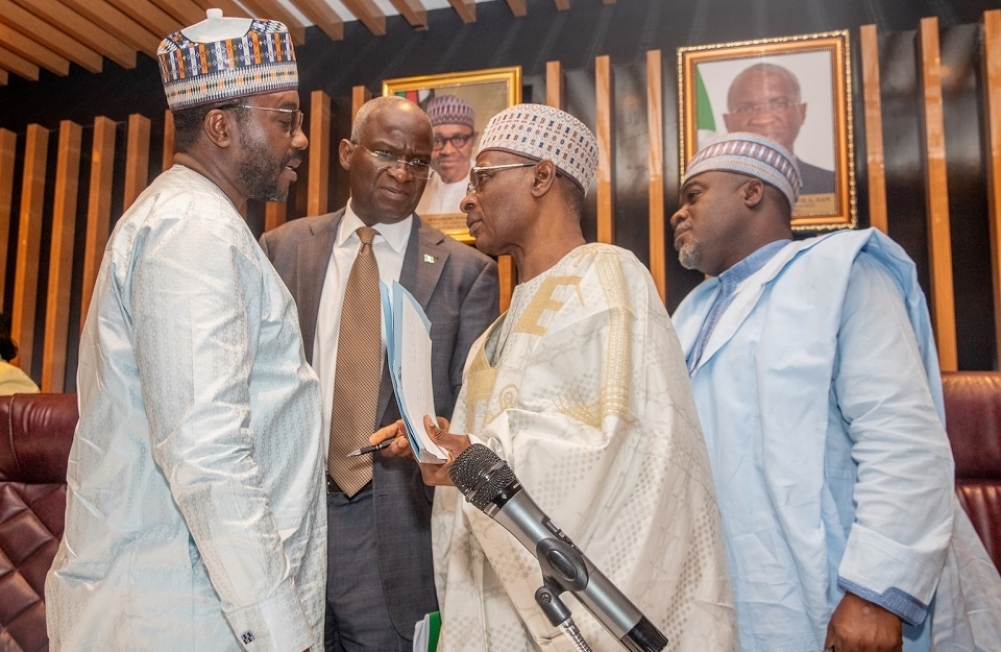
FG’s Maintenance Policy Is To Empower Nigerians At The Base Of The Economic Pyramid, Enable Small Businesses Grow- Fashola * As Minister addresses the Press on Infrastructure Maintenance Framework for Public Buildings recently approved by FEC * Says Buhari’s signing law to protect people living with disability from discrimination, exclusion also offers job opportunities to redesign, remodel, retrofit assets nationwide The Minister of Power, Works and Housing, Mr. Babatunde Fashola SAN, Thursday in Abuja, briefed the Press on the recently approved National Infrastructure Maintenance Framework saying it is a choice of the Buhari Administration to drive the small business sector, skill utilization and to move the economy from growth without jobs to growth driven by new jobs that reward services. Addressing newsmen at a conference, attended also by Heads of Ministries, Departments and Agencies as well as Parastatals and Members of the National Assembly, among other stakeholders, Fashola said, however, that the Framework, which applies to public buildings for now, would ultimately extend to other public assets like roads, bridges, rail, power installations and other infrastructure of a public nature. The Minister, who said the Framework was approved on January 9, 2018, explained that the Federal Executive Council’s approval meant that “after decades of agonizing about lack of maintenance, the Buhari government has chosen to act”, describing it as “policy decision of enormous profundity”, as, according to him, “the records do not indicate that any such policy decision has previously been taken at the federal level”. He said the decision to approve the Framework was provoked by a memorandum from the Ministry of Power, Works and Housing that challenged the conventional thinking that "Nigeria does not have a maintenance culture", adding, “The memorandum argued and FEC agreed, that maintenance of infrastructure, whether public or private, is not a cultural issue but an economic one”. According to him, the memorandum showed that in the built industry, only about 23 per cent of the workforce was employed by Design (6%), Construction (15%) and Governance (2%), while the remaining 77 per cent were employed by Maintenance and Operation adding, “the Council was persuaded to accept that while skill training and vocational centres exist almost nationwide for training artisans like plumbers, painters, bricklayers, welders, tilers, electricians etc., there is a lack of National policy that makes the practice of these vocations economically worthwhile on a sustainable basis”. The Minister said available data showed that many people trained in vocations such as Plumbing, Carpentry, Tiling, Masonry, Painting, Bricklaying, Welding, Electrical installations etc often resort to other vocations in which they do not have training such as riding motorcycles and tricycles in order to make a living. Giving details on what the Framework entails, Fashola said the first step would be to conduct Site Assessment of the affected buildings involving measurements, valuation and data collation, all of which, he noted, require the employment of people to carry out the process thereby creating jobs even from the very first step, adding that it would also provide for credible data such as lettable space, value of the property and so on “which could form the basis of the economic decisions or even actions in emergency periods”. The next step, the Minister said, would be Condition Assessment which would also, according to him, require people to be trained and employed to assess the conditions of affected buildings from foundation to roof and for mechanical and electrical sustainability for purpose adding that the maintenance programme would then be developed from the assessments as to what jobs would need to be done to restore the building to fitness while award of maintenance contract, also based on the assessments, would then be following the existing procurement law. Citing an example, Fashola, who said the Ministry carried out a pilot programme on nine buildings comprising a Federal Government College, a Federal Hospital, a Federal Court building, a federal prison, a federal secretariat and four office buildings belonging to the Ministry, pointed out that in one of the sample buildings leading up to the memorandum to FEC, out of 63 air-conditioning units, 11 required replacement or repairs while windows, doors, tiles, roofing materials, plastering works were also identified that required replacement or repair. And in another building, he said, out of about 30 toilets or so, about 12 were not functional, providing jobs for those in the Plumbing business, pointing out that buildings owned by parastatals, airports and others were yet to be reached where such jobs were likely waiting for skilled workers. “This provides a window of opportunity for small businesses who are into facility management and for young graduates of building technicians, architecture, engineering and even technical schools to register for these contracts”, he said adding that successful bidders would then be in a position to employ artisans to execute the maintenance contract they have won in the bid. Fashola said each Ministry, Department and Agency (MDA) would be responsible for its own procurement for its own building after training of their designated personnel by the staff of the Ministry of Power, Works and Housing who would guide them through the framework approved by the Federal Executive Council, adding that because data is critical to the programme, “each MDA will file data with the Ministry of Power, Works and Housing who will centrally manage data and use it to advise government and brief the public, while the MDA reserves the right to keep its own data”. Reiterating that the implementation of the Framework would start with public buildings, the Minister, who noted that the award of contracts would not only drive employment for artisans but the demand of manufacturing and suppliers of parts like wood, pipes, paint, tiles, electrical fittings, windows and tools, in addition to those of cleaning items like soap, detergent, polish, varnish etc, declared, “This is the economy that we see ahead as we set out to implement this approval as we progress”. On the cost of implementation, Fashola said the pilot survey showed that the nine buildings would cost about N40.3 billion to reconstruct, while it would cost N922 million per annum to maintain them, which is about 2.3 per cent of cost of replacement, adding that if maintenance was pursued the buildings could last their lifespan of between 50 and 60 years and instead of using N40 billion to replace existing buildings it could be used to expand and provide more buildings for the nation’s growing population. “Just these nine buildings will require about 400 people to keep them well maintained a year. For example, the school will require at least 30 people to be employed per school for maintenance; and the federal government owns 104 Unity schools which potentially will require 3,120 maintenance staff. So you can see the economy we see when this extends to all our hospitals, all our courts, all our prisons, all our police stations, all our universities and covers all public buildings”, the Minister said. Comparing the new economic initiative to the Lagos Green Economy, Fashola declared, “This is an economic choice by this government to drive the small business sector, to drive skill utilization and to move the economy from growth without jobs to growth driven by new jobs that reward services”. The Minister also disclosed that President Buhari also in January signed the law to protect people living with disability from discrimination and exclusion thereby “raising the bar for construction, services and a new way of life for Nigerians”, adding, “We have five years to comply, and this requires that all our buildings must have lifts and well-designed ramps for people confined to their wheelchairs, not hills they cannot use on their own. “We must modify all our toilets with support for our brothers and sisters who are living with disabilities, as we must build sidewalks for them to use our roads without colliding with vehicles. Our airports and parking lots in buildings must become compliant with international best practice by providing corridors and facilities for people living with disabilities at arrival and departure points, while a minimum number of slots clearly designated must be provided for vehicles owned by people living with disabilities”, he further explained adding that this was another opportunity for jobs to re-design, to re-model, to retrofit all assets nationwide to comply with the law as signed by Mr President. “This is Nigeria that beckons upon us from today and the immediate future. A Nigeria where public infrastructure works because they are maintained; a Nigeria where everybody has a secure sense of belonging because they can use their skills and labour to earn a decent income and retain their dignity, a Nigeria where government cares for the people living with disability by providing the basic minimum facilities that gives them a sense of belonging to demonstrate their ability”, the Minister said. Pointing out that Government has taken the leadership role to provide the policy and the how to make the present Nigeria possible, Fashola urged all and sundry to take ownership of the platform of opportunities and make it work. “It is now your responsibility and mine to take ownership of this platform of opportunities and make it work for all of us”, he said. Responding to questions during the interactive session with the media and other stakeholders, Fashola explained that the maintenance contracts that would emerge from the implementation of the framework would be funded through appropriation adding that the members of the National Assembly were invited to also take note of the Framework and work out modalities in the annual budgets. On how to engage artisans and technicians who are already in government and those outside governments, the Minister explained that the Head of the Civil Service of the Federation would provide clarification adding that there are certain levels of entry that government has dispensed with and some of the artisans fall within those entry levels while the services are now contracted out. Also responding to the question on whether or not there would be sanctions for non-compliance, Fashola said the implementation would be largely by voluntary compliance adding that just as an individual would not wait for sanction before repairing broken down domestic utilities, MDAs would not need sanctions before embarking on maintenance of their facilities. Earlier in their goodwill remarks, Head of the Civil Service of the Federation who was represented at the occasion and the Director General, National Orientation Agency hailed the Framework as highly commendable in a country where maintenance culture had been jettisoned for decades while the Chairmen, House Committees on Works and Housing in the National Assembly, Hon. Dr. Abubakar Kannike and Hon. Mahmud Mohammed respectively, commended the Ministry for coming up with the Maintenance initiative pledging to play their role in ensuring that it gets consideration in the nation’s annual appropriations. ...
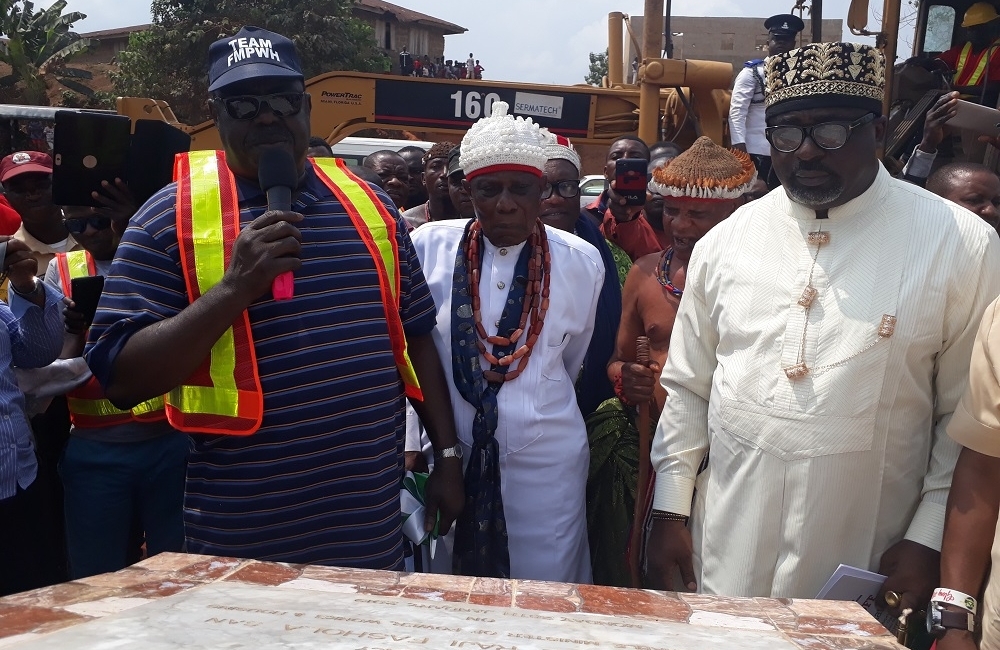
FG Flags Off Multi Billion Naira 73km Rehabilitation Of Odukpani-Ikom-Ogoja Road In Cross River The Federal Government once again has reiterated its commitment and effort towards bridging the infrastructural gap across the entire six geo-political zones of the country with the aim of stimulating economic growth ease of doing business as well as providing improved standard of living to its citizenry. Towards the realization of the Ministry’s mandate by Mr President to complete and rehabilitate all exiting road projects in the country, the Honourable Minister of Power, Works and Housing, Babatunde Raji Fashola, SAN, formally flagged off the Rehabilitation of 73 kilometres single carriage way stretching from Odukpani Junction through Ikom to Ogoja in Cross River State at the contract sum of over 14 billion naira awarded to an indigenous contractor, Messer Sermatech Construction Company. Fashola, who was represented by the Minister of State in the Ministry, Hon. Mustapha Baba-Shehuri, said that the present administration is investing heavily in the provision of critical infrastructure with at least one on-going road project per State in Nigeria. The Minister stated that the project completion period is within twenty-four months, adding that the federal highway links the industrial and agricultural towns of Akamkpa, Biase and Yakurr. The frequent plying of the 44 year old road by industrialists and haulage of agricultural produce has led to its deterioration with shoulders completely eroded’’. Earlier in his speech, the Chief Host and Executive Governor of Cross River State, Senator Ben Ayande appreciated President Buhari for his support and goodwill to the state regardless of political differences, adding that the state is enjoying the dividends of democracy by partnering with the Federal Government. Representing the Governor at the occasion, the Commissioner for Works in the state, Engr. Dane Osim-Asu noted that one of the major policy thrusts of Cross River state government is industrialization, noting that this cannot be achieved without good and motorable roads which will create a nexus between these two to grow the economy of the state. The Director, Highways, Construction and Rehabilitations from the Ministry, Engr. Yemi Oguntominiyi, in his opening address commended President Buhari for his commitment to the project and support to the Ministry in the course of the procurement process and eventual award of the contract by the Federal Executive Council in November, 2018. Oguntominiyi further stated that the completion of the rehabilitation works on the corridor will, no doubt, reduce vehicle operating costs; improve travel time, reduce road accidents and also stimulate the socio-economic growth and general security of towns and cities in the state. The Minister and his entourage also inspected some completed and ongoing rehabilitation projects along the road corridor of Calabar-Ikom-Ogoja federal highway led by the Federal Controller of Works in the state, Mr Bassey Nsentip ...
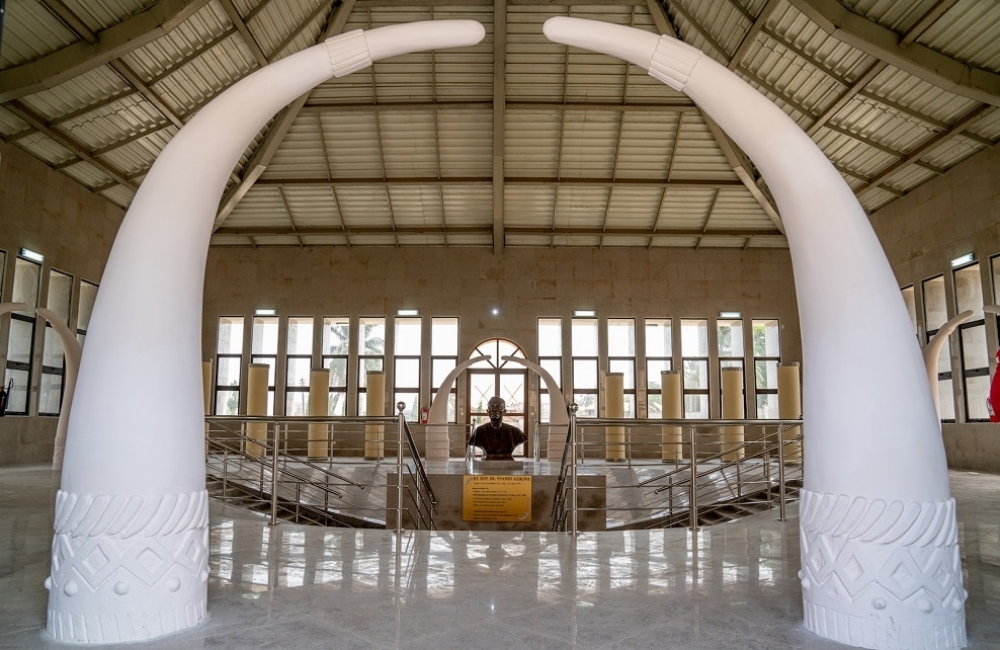
FG Commissions The Zik Mausoleum: Says Edifice Will Promote Nationalism, Patriotism And Public Service The President Muhammadu Buhari’s led administration has once again made a landmark achievement in his effort to ensure provision of critical infrastructures across the nation. The President was in Onitsha, Anambra State to officially commission the Nnamdi Azikiwe Mausoleum (The Zik Mausoleum), a public building of national and international significance and a monument to honour the late Nigeria’s first President and a nationalist, Dr Nnamdi Azikiwe. In his speech, President Buhari noted that the building will serve the purpose of promoting nationalism, patriotism and public service while urging Nigerians to emulate the best values that the foremost nationalist espoused in knowledge, service and leadership. He said the late legend will be remembered for his comradeship, brotherhood and engaging politics. President Buhari also noted that “rather than Zik choosing to be a local, he chose to be a nationalistic, he embraced all the territory of Nigeria”, adding that his legacies will remain evergreen. Earlier in his welcome address, the Honourable Minister of Power, Works and Housing, Babatunde Raji Fashola, expressed with delight that the completion and commissioning of the Zik Mausoleum was a dream come true and mission accomplished. He said that Mr President’s mandate to the Ministry to complete as many abandoned and uncompleted federal projects is a reality today, but regretted that the national monument and tribute to patriotism was subordinated to private interests that did not benefit the Nigerian economy as a result of corruption. Fashola stated that for the period of 19 years (between 1996 to 2015) when the Zik Mausoleum project was conceived, oil income and proceeds accrued to Nigeria were in the hundreds billions of United States Dollars, yet there was no significant progress on the building until this administration came into power. The Minister however added that the construction period of the project generated economy activities in the state by engaging the services of suppliers, transporters, drivers, food vendors, bricklayers, carpenters, welders and ordinary hardworking Nigerians whose livelihood was taken away by corruption. Speaking at the occasion, the Executive Governor of Anambra State, Willie Obiano thanked President Muhammadu Buhari for delivering the monument which successive governments lacked the political will to complete. Obiano stated that it is indeed remarkable that 23 years after the Great Zik of Africa died, he’s finally given a befitting mausoleum as a resting place, adding that the Great Owelle of Onitsha has now joined leaders like Kwanme Nkrumah of Ghana and Julius Nyerere of Tanzania and others whose mausoleum have become a major tourist destinations in Africa. He appealed to President Buhari to declare Zik’s birthday, November 16, a National Day in Nigeria, nothing that this will be in keeping with the honour and dignity conferred on other great and illustrious leaders in Africa. Appreciating the Federal Government on behalf of the Ziks’ family, one of the Sons of Dr Azikiwe, Ambassador Emeka Azikiwe, described the monument as a wonderful legacy initiated in honour and recognition of his father’s immense contributions to the nation’s independence, democracy and national development. ‘’As we celebrate the commissioning of the Zik Mausoleum and Conference centre, the historic legacies left by him are numerous and vital to the revitalization of the development potentials in Africa’’. The Zik Mausoleum is located in the city centre of Onitsha, comprising of the main Mausoleum and the Administrative/Conference building. Construction works commenced in 1997 and was conceived to serve as a national monument and a tourism centre in memory of the late legend and foremost Nationalist globally recognized as the Father of African Nationalism. ...
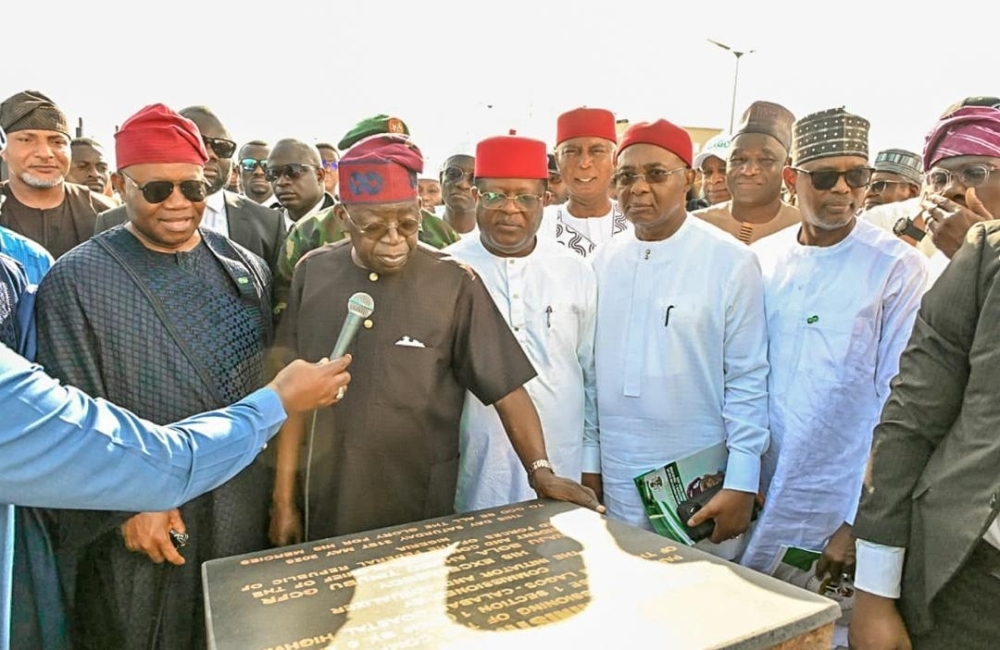
DRIVING NIGERIA’S FUTURE: CELEBRATING TWO YEARS OF TRANSFORMATIVE LEADERSHIP AND THE LAGOS-CALABAR COASTAL HIGHWAY MILESTONE
DRIVING NIGERIA’S FUTURE: CELEBRATING TWO YEARS OF TRANSFORMATIVE LEADERSHIP AND THE LAGOS-CALABAR COASTAL HIGHWAY MILESTONE
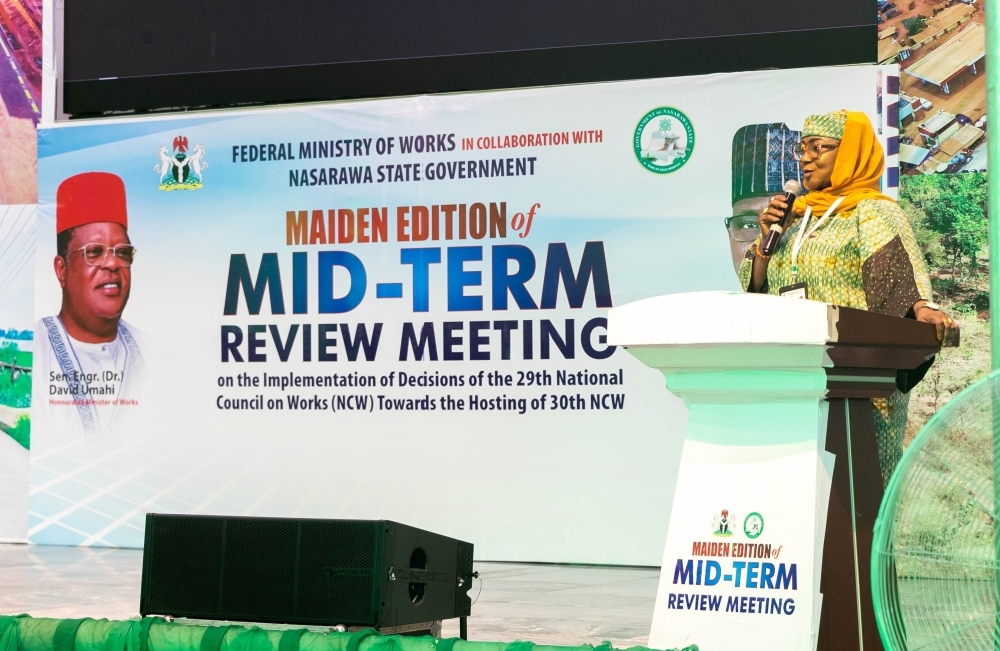
MID -TERM REVIEW MEETING ON THE IMPLIMENTATION OF THE DECISIONS REACHED AT THE 29TH NATIONAL COUNCIL ON WORKS (NCW) DAY 1
MID -TERM REVIEW MEETING ON THE IMPLIMENTATION OF THE DECISIONS REACHED AT THE 29TH NATIONAL COUNCIL ON WORKS (NCW) DAY 1