“THE WORST IS OVER; OUR GDP IS GROWING MORE THAN OUR POPULATION. THAT MEANS WE HAVE A FUTURE” - UMAHI TELLS NANS
— As Nigerian Students Induct Him as Grand Patron, Hail Him as “One of the Finest” in Tinubu’s Renewed Hope Cabinet
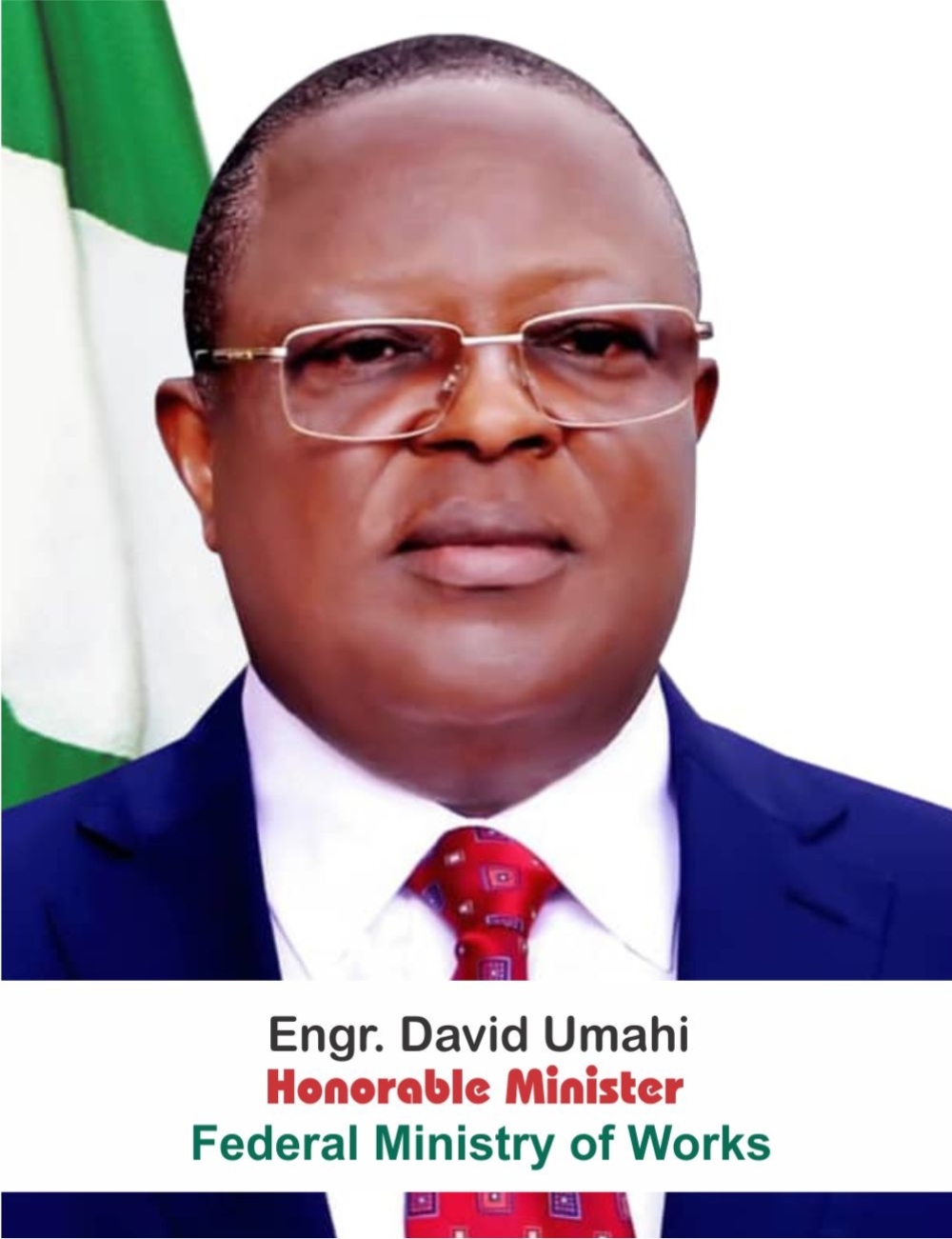
The Minister of Works, Senator Engr. David Umahi, CON, has declared that Nigeria is now seeing stronger economic outlook under President Bola Ahmed Tinubu, noting that the country’s Gross Domestic Product (GDP) is now growing faster than its population.
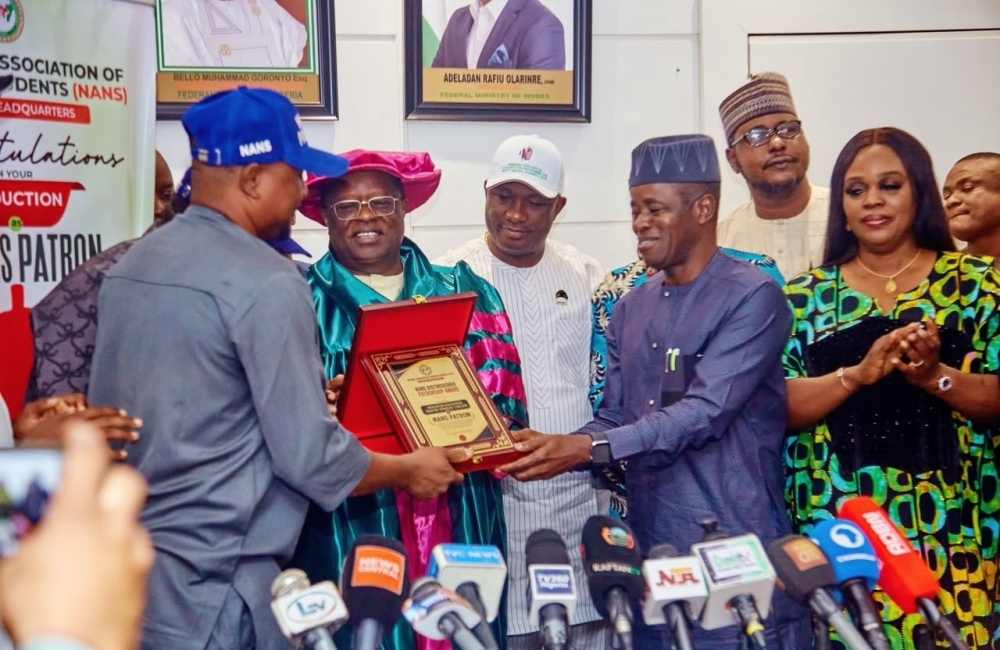
Umahi made the declaration on Monday, August 10, 2026, at the headquarters of the Federal Ministry of Works in Abuja, while speaking after he was formally inducted as Patron of the National Association of Nigerian Students (NANS).
The minister described the development as a positive indication of Nigeria’s economic prospects, saying, “I was enthused to find out that our GDP is growing more than our population. That means we have a future.”
The NANS leadership, led by its President, Dist. Comr. Akinteye Babatunde Afeez, GCNS, had earlier commended Umahi for his contributions to national infrastructure and described him as “a worthy member of the Renewed Hope Cabinet and, indeed, as one of the finest public servants Nigeria has produced in the contemporary era.”
The students said the recognition was not merely ceremonial but a reflection of Umahi’s visible contribution to road infrastructure and national development under President Bola Ahmed Tinubu’s administration.
According to NANS, the roads and bridges being delivered under Umahi’s supervision are directly connected to the lives of Nigerian students, affecting their mobility, access to educational institutions, examinations, internships, businesses and employment opportunities.
The students specifically cited major projects including the Abuja-Kaduna-Kano Expressway, Abuja-Kaduna-Minna route, Enugu-Port Harcourt Expressway and Lagos-Calabar Coastal Highway as examples of projects they said demonstrate the Federal Government’s commitment to improving national connectivity.
Afeez also disclosed that NANS had studied project reports of the Federal Ministry of Works covering the period between May 2023 and May 2026 and expressed its intention to embark on nationwide project tours to inspect completed and rehabilitated projects.
He said the students would use their platforms to communicate the impact of the projects to millions of Nigerian students, Nigerians and the wider world.
Responding, Umahi challenged Nigerian students and young people to look beyond political sentiments and examine the policies and achievements of the Tinubu administration objectively.
“We have had somebody say, ‘President Tinubu is tired.’ How do you know he is tired? I am part of President Tinubu. The Minister of Interior, the FCT, all the ministers and all the SSAs are vibrant and working. So how do you just jump at that conclusion?”
The minister urged Nigerians to demand concrete alternatives from those criticising the administration.
“If you say that the President is not doing well, what is your alternative?” he asked, stressing that political promises must be backed by clear plans and a credible mission.
He also called on students and other young Nigerians to take a position on issues affecting the country, arguing that remaining neutral in the face of visible progress was not always the right approach.
“You may say that you are not politicians or that you will not take sides, but this is the time to take sides in our national affairs. It is time to take a stand,” Umahi said.
On the economy, the minister acknowledged that the macroeconomy was only beginning to recover but urged Nigerians to consider the condition of the economy before the present administration took office and assess the reforms objectively.
“You may say that the macroeconomy is just beginning to recover. What was it like before the President took over? Everybody agrees that the macroeconomy is being fixed. It is up to you to dissect the ongoing reforms and take a position.”
Umahi also pointed to developments in the education sector, saying the stability being witnessed under the Tinubu administration had created an environment in which students were able to continue their studies without the disruption of nationwide strikes.
“For the first time, students never went on strike. Never. Look at the stability of Nigeria. That has never happened throughout the history of this country.”
“Where is the subsidy money?” Umahi explains
Addressing questions surrounding the removal of fuel subsidy and where the resulting resources were being deployed, Umahi pointed to the scale of ongoing infrastructure projects across the country.
He cited the Abuja-Kaduna-Zaria-Kano road, which he said covers 375 kilometres and, when measured as a dual carriageway, amounts to 750 kilometres.
According to the minister, more than ₦200 billion has already been spent on the project, with 480 kilometres of the dual carriageway completed and further sections nearing completion.
“For the first time, we have been able to complete 118 kilometres of concrete pavement within 30 months. That has never happened,” he said.
The Minister said the remaining works were expected to be completed by November, noting that the two projects on the route have a combined cost of ₦752 billion, with more than 80 percent already paid.
He also highlighted the Sokoto-Zamfara-Zaria corridor, the Benue-Ninth Mile road, and the Bodo - Bonny Island road as examples of projects receiving significant attention under the Tinubu administration.
On the Bonny Island project, he said:
“For the first time, people will move from the island to the mainland in Bonny Island, where the LNG is produced. A project costing ₦280 billion under President Bola Ahmed Tinubu has been completed. The 39.7-kilometre road is fully done, and the people of Bonny are very happy. They are no longer dying at sea. They are now driving through the land.”
The minister also spoke extensively about the administration’s legacy road projects, including the Lagos-Calabar Coastal Highway and the expanded Northeast Fourth Legacy Project.
He disclosed that the Northeast project, originally running from Akwanga through Jos, Bauchi, Gombe and Biu, had been extended through Yobe to Maiduguri, adding another 400 kilometres to the project.
Umahi defended the Lagos-Calabar Coastal Highway against criticisms, saying the project was strategically important to the Niger Delta and would be completed.
“I do not know why people are attacking the Lagos-Calabar Coastal Highway. After all, this is coming from the Niger Delta, where the oil is coming from. Why is nobody attacking the other three Legacy Projects, but this one is being attacked? That is unfair and unrealistic. That project will be completed. In fact, over 50 percent of the entire stretch is already under construction.”
The minister also used the occasion to speak about the development of the Southeast, saying President Tinubu had deliberately embarked on projects aimed at integrating the region into the national infrastructure network.
“The Southeast, for the first time, is being remembered, and I thank the people in the Southeast because sometimes I say, ‘Listen, our people should not be sentimental.’”
He said the administration’s approach to the region was intentional and urged the people of the Southeast to work with other parts of the country.
“The President has a good intention to integrate the people of the Southeast, and I have to be very honest with you. If I were not a minister from the Southeast, we would not have been able to get the projects we have secured. It is intentional on the part of Mr. President. Go and right the wrongs of the Southeast.”
Umahi cited the Enugu-Onitsha Expressway and Enugu-Port Harcourt Expressway among the major projects transforming connectivity in the region.
He also disclosed that President Tinubu had approved the re-scoping and reconstruction of the Lokoja-Benin-Warri corridor, covering a total of 401 kilometres.
The minister was particularly direct in urging the students to support President Tinubu in the 2027 election, arguing that Nigerians should support the administration if they believe its policies are producing results.
“I want you to take a side. If you say you are on the list of a coalition and you say that what we are doing is good, then we have to take a stand to vote for the President in the coming election.”
“Let him finish. Let him take back our country. Let him reposition our country.”
Umahi also urged Nigerians to look beyond political rhetoric and focus on practical solutions to the country’s challenges.
“Listening to others should not mean allowing yourselves to be insulted or blackmailed. Cheap talk will not solve our problems. Nobody is saying what he or she can do differently. The worst is over. The darkest part of the night is an hour before dawn.”
He pointed to the decline in food prices as one of the developments Nigerians should consider in assessing the economy, recalling that a 50-kilogramme bag of rice, which he said had risen above ₦80,000 and at some point reached ₦100,000, was now selling at about ₦58,000.
Umahi also stressed the administration’s commitment to transparency in the execution of road projects, saying the Ministry of Works had opened its projects to scrutiny by anti-corruption agencies.
“Now, why are we doing this? Transparency. We have turned these projects over to the ICPC. They have gone round. We are ready for constructive criticism, and where necessary, we will make amends.”
He added that the Ministry had also written to the Economic and Financial Crimes Commission (EFCC) to inspect its projects. “We have nothing to hide in this administration.”
The minister urged NANS to organise a major student engagement across the geopolitical zones where students could ask questions directly and hear the government’s explanations on its policies and projects.
“Let me defend this administration. Organise it and let me come. Move students from across the zone to a central point where we can talk to them and address their concerns. We have to deliberate on the issues. We have to debate them. Ask your questions, and we will answer them.”
He said he would attend such engagements with some ministers and Senior Special Assistants to the President, stressing that students were important stakeholders in the country’s future.
Umahi further challenged young Nigerians to take responsibility for protecting public infrastructure and contributing positively to national development. “See something, say something. Together, we can take back our country because it belongs to us.”
He said the responsibility for the performance of government should be placed on the officials directly responsible for specific sectors, rather than on the President for every operational issue.
“I am here because the President gave me the responsibility to be in charge of roads and bridges. If I do not do it, I should be the one to be blamed, not the President. I am not the President. The President has divided himself into a number of his appointees. These appointees should be the ones to answer and take responsibility.”
The minister concluded by thanking the students for the recognition and expressing his readiness to deepen collaboration with NANS.
“I want to thank you very much.“
He described the students as important partners in the national development process and encouraged them to remain informed, ask questions and hold leaders accountable.
The NANS President, in his address, said the association considered Umahi worthy of its patronage because of his record of public service, infrastructure delivery and commitment to national development.
He said the roads being constructed under Umahi’s leadership would outlive the present administration and continue to serve generations of Nigerians.
“History will not remember public officers merely because they occupied important offices. History will remember them for what they built, what they changed and the lives they touched.”
Afeez formally welcomed Umahi into the NANS family as Patron, describing the partnership between the student body and the Federal Ministry of Works as an opportunity to bring government projects closer to young Nigerians and deepen informed national discourse.

“THE WORST IS OVER; OUR GDP IS GROWING MORE THAN OUR POPULATION. THAT MEANS WE HAVE A FUTURE” - UMAHI TELLS NANS — As Nigerian Students Induct Him as Grand Patron, Hail Him as “One of the Finest” in Tinubu’s Renewed Hope Cabinet The Minister of Works, Senator Engr. David Umahi, CON, has declared that Nigeria is now seeing stronger economic outlook under President Bola Ahmed Tinubu, noting that the country’s Gross Domestic Product (GDP) is now growing faster than its population. Umahi made the declaration on Monday, August 10, 2026, at the headquarters of the Federal Ministry of Works in Abuja, while speaking after he was formally inducted as Patron of the National Association of Nigerian Students (NANS). The minister described the development as a positive indication of Nigeria’s economic prospects, saying, “I was enthused to find out that our GDP is growing more than our population. That means we have a future.” The NANS leadership, led by its President, Dist. Comr. Akinteye Babatunde Afeez, GCNS, had earlier commended Umahi for his contributions to national infrastructure and described him as “a worthy member of the Renewed Hope Cabinet and, indeed, as one of the finest public servants Nigeria has produced in the contemporary era.” The students said the recognition was not merely ceremonial but a reflection of Umahi’s visible contribution to road infrastructure and national development under President Bola Ahmed Tinubu’s administration. According to NANS, the roads and bridges being delivered under Umahi’s supervision are directly connected to the lives of Nigerian students, affecting their mobility, access to educational institutions, examinations, internships, businesses and employment opportunities. The students specifically cited major projects including the Abuja-Kaduna-Kano Expressway, Abuja-Kaduna-Minna route, Enugu-Port Harcourt Expressway and Lagos-Calabar Coastal Highway as examples of projects they said demonstrate the Federal Government’s commitment to improving national connectivity. Afeez also disclosed that NANS had studied project reports of the Federal Ministry of Works covering the period between May 2023 and May 2026 and expressed its intention to embark on nationwide project tours to inspect completed and rehabilitated projects. He said the students would use their platforms to communicate the impact of the projects to millions of Nigerian students, Nigerians and the wider world. Responding, Umahi challenged Nigerian students and young people to look beyond political sentiments and examine the policies and achievements of the Tinubu administration objectively. “We have had somebody say, ‘President Tinubu is tired.’ How do you know he is tired? I am part of President Tinubu. The Minister of Interior, the FCT, all the ministers and all the SSAs are vibrant and working. So how do you just jump at that conclusion?” The minister urged Nigerians to demand concrete alternatives from those criticising the administration. “If you say that the President is not doing well, what is your alternative?” he asked, stressing that political promises must be backed by clear plans and a credible mission. He also called on students and other young Nigerians to take a position on issues affecting the country, arguing that remaining neutral in the face of visible progress was not always the right approach. “You may say that you are not politicians or that you will not take sides, but this is the time to take sides in our national affairs. It is time to take a stand,” Umahi said. On the economy, the minister acknowledged that the macroeconomy was only beginning to recover but urged Nigerians to consider the condition of the economy before the present administration took office and assess the reforms objectively. “You may say that the macroeconomy is just beginning to recover. What was it like before the President took over? Everybody agrees that the macroeconomy is being fixed. It is up to you to dissect the ongoing reforms and take a position.” Umahi also pointed to developments in the education sector, saying the stability being witnessed under the Tinubu administration had created an environment in which students were able to continue their studies without the disruption of nationwide strikes. “For the first time, students never went on strike. Never. Look at the stability of Nigeria. That has never happened throughout the history of this country.” “Where is the subsidy money?” Umahi explains Addressing questions surrounding the removal of fuel subsidy and where the resulting resources were being deployed, Umahi pointed to the scale of ongoing infrastructure projects across the country. He cited the Abuja-Kaduna-Zaria-Kano road, which he said covers 375 kilometres and, when measured as a dual carriageway, amounts to 750 kilometres. According to the minister, more than ₦200 billion has already been spent on the project, with 480 kilometres of the dual carriageway completed and further sections nearing completion. “For the first time, we have been able to complete 118 kilometres of concrete pavement within 30 months. That has never happened,” he said. The Minister said the remaining works were expected to be completed by November, noting that the two projects on the route have a combined cost of ₦752 billion, with more than 80 percent already paid. He also highlighted the Sokoto-Zamfara-Zaria corridor, the Benue-Ninth Mile road, and the Bodo - Bonny Island road as examples of projects receiving significant attention under the Tinubu administration. On the Bonny Island project, he said: “For the first time, people will move from the island to the mainland in Bonny Island, where the LNG is produced. A project costing ₦280 billion under President Bola Ahmed Tinubu has been completed. The 39.7-kilometre road is fully done, and the people of Bonny are very happy. They are no longer dying at sea. They are now driving through the land.” The minister also spoke extensively about the administration’s legacy road projects, including the Lagos-Calabar Coastal Highway and the expanded Northeast Fourth Legacy Project. He disclosed that the Northeast project, originally running from Akwanga through Jos, Bauchi, Gombe and Biu, had been extended through Yobe to Maiduguri, adding another 400 kilometres to the project. Umahi defended the Lagos-Calabar Coastal Highway against criticisms, saying the project was strategically important to the Niger Delta and would be completed. “I do not know why people are attacking the Lagos-Calabar Coastal Highway. After all, this is coming from the Niger Delta, where the oil is coming from. Why is nobody attacking the other three Legacy Projects, but this one is being attacked? That is unfair and unrealistic. That project will be completed. In fact, over 50 percent of the entire stretch is already under construction.” The minister also used the occasion to speak about the development of the Southeast, saying President Tinubu had deliberately embarked on projects aimed at integrating the region into the national infrastructure network. “The Southeast, for the first time, is being remembered, and I thank the people in the Southeast because sometimes I say, ‘Listen, our people should not be sentimental.’” He said the administration’s approach to the region was intentional and urged the people of the Southeast to work with other parts of the country. “The President has a good intention to integrate the people of the Southeast, and I have to be very honest with you. If I were not a minister from the Southeast, we would not have been able to get the projects we have secured. It is intentional on the part of Mr. President. Go and right the wrongs of the Southeast.” Umahi cited the Enugu-Onitsha Expressway and Enugu-Port Harcourt Expressway among the major projects transforming connectivity in the region. He also disclosed that President Tinubu had approved the re-scoping and reconstruction of the Lokoja-Benin-Warri corridor, covering a total of 401 kilometres. The minister was particularly direct in urging the students to support President Tinubu in the 2027 election, arguing that Nigerians should support the administration if they believe its policies are producing results. “I want you to take a side. If you say you are on the list of a coalition and you say that what we are doing is good, then we have to take a stand to vote for the President in the coming election.” Umahi also urged Nigerians to look beyond political rhetoric and focus on practical solutions to the country’s challenges. “Listening to others should not mean allowing yourselves to be insulted or blackmailed. Cheap talk will not solve our problems. Nobody is saying what he or she can do differently. The worst is over. The darkest part of the night is an hour before dawn.” He pointed to the decline in food prices as one of the developments Nigerians should consider in assessing the economy, recalling that a 50-kilogramme bag of rice, which he said had risen above ₦80,000 and at some point reached ₦100,000, was now selling at about ₦58,000. Umahi also stressed the administration’s commitment to transparency in the execution of road projects, saying the Ministry of Works had opened its projects to scrutiny by anti-corruption agencies. “Now, why are we doing this? Transparency. We have turned these projects over to the ICPC. They have gone round. We are ready for constructive criticism, and where necessary, we will make amends.” He added that the Ministry had also written to the Economic and Financial Crimes Commission (EFCC) to inspect its projects. “We have nothing to hide in this administration.” The minister urged NANS to organise a major student engagement across the geopolitical zones where students could ask questions directly and hear the government’s explanations on its policies and projects. “Let me defend this administration. Organise it and let me come. Move students from across the zone to a central point where we can talk to them and address their concerns. We have to deliberate on the issues. We have to debate them. Ask your questions, and we will answer them.” He said he would attend such engagements with some ministers and Senior Special Assistants to the President, stressing that students were important stakeholders in the country’s future. Umahi further challenged young Nigerians to take responsibility for protecting public infrastructure and contributing positively to national development. “See something, say something. Together, we can take back our country because it belongs to us.” He said the responsibility for the performance of government should be placed on the officials directly responsible for specific sectors, rather than on the President for every operational issue. “I am here because the President gave me the responsibility to be in charge of roads and bridges. If I do not do it, I should be the one to be blamed, not the President. I am not the President. The President has divided himself into a number of his appointees. These appointees should be the ones to answer and take responsibility.” The minister concluded by thanking the students for the recognition and expressing his readiness to deepen collaboration with NANS. “I want to thank you very much.“ He described the students as important partners in the national development process and encouraged them to remain informed, ask questions and hold leaders accountable. The NANS President, in his address, said the association considered Umahi worthy of its patronage because of his record of public service, infrastructure delivery and commitment to national development. He said the roads being constructed under Umahi’s leadership would outlive the present administration and continue to serve generations of Nigerians. “History will not remember public officers merely because they occupied important offices. History will remember them for what they built, what they changed and the lives they touched.” Afeez formally welcomed Umahi into the NANS family as Patron, describing the partnership between the student body and the Federal Ministry of Works as an opportunity to bring government projects closer to young Nigerians and deepen informed national discourse.
“Let him finish. Let him take back our country. Let him reposition our country.”
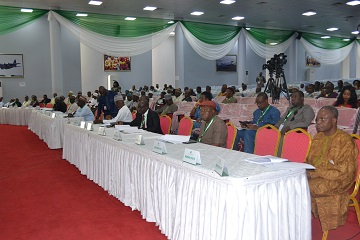
FG Poised To Revitalise Housing Sector In The Provision Of Affordable Housing Delivery The Federal Government through the Federal Ministry of Power, Works and Housing has reiterated its commitment to revitalising the Housing Sector of the Ministry by providing quantum budgetary allocation to the Sector in order to address the challenges of housing deficit in the country. This was stated by the Permanent Secretary (Works & Housing) sectors of the Ministry, Mohammed Bukar while declaring open the meeting of Permanent Secretaries at the on-going 6th meeting of the National Council on Lands, Housing and Urban Development in Abuja. Mohammed stated that the Council Meeting provides an avenue for stakeholders in the built environment across the nation to come together and deliberate on matters that will move the Housing Sector forward. He added that deliberations and recommendations from delegates in the conference will proffer solutions and reposition the Sector for better performance and meeting the housing needs of the people. Earlier, the Permanent Secretary of the Federal Capital Territory (FCT), Chinyeaka Christian, represented by the Director of Land Administration, Adamu Jibrin Hussaini noted in his remarks that the theme of the Council: ‘’Building for Inclusion, Growth and Prosperity’’ is not only apt, but that it will avail professionals and other stakeholders the opportunity to rub minds and articulate common fronts in tackling challenges in the sub-sector. The FCT Permanent Secretary stated that the FCT Minister, Mallam Muhammed Musa Bello is working very hard to reposition the over 8, 000 square kilometres land space in the Federal Capital for a better result, adding that provision of basic infrastructure in the nation’s capital is key to this present Administration. The Meeting of the National Council on Lands, Housing and Urban Development which started two days ago, featured extensive deliberations on various Memoranda by various states across the federation, stakeholders and other relevant organizations. Reports of the meeting will be discussed by the forum of the Permanent Secretaries today with a view to making far reaching recommendations to the Council coming up tomorrow, 24 August, 2017. Olatunji John PIO (Housing) For: Ag Director (Information) ...
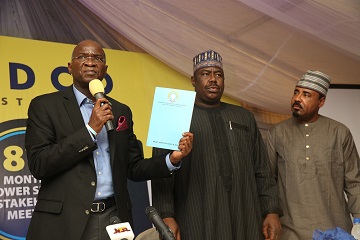
Remarks By The Honourable Minister Mr. Babatunde Raji Fashola, SAN At The Monthly Power Sector Operators Meeting Held In Kano On Monday 14th August 2017 I welcome you to another of our monthly meetings at which I feel the need to make fairly extended opening remarks, in order to properly place on record the steps we are taking, the progress we are making and the challenges we still have to overcome, as we pursue our road map of incremental, steady and ultimately uninterrupted power. I am compelled to start on a sad note, to acknowledge an electrical accident that occurred in Minna, Niger recently, and to commiserate with the victims and extend our heartfelt sympathy to their families and to the people and Government of Niger state. As soon as the incident was brought to my attention, I asked the officials of NEMSA, our safety and standards agency to visit the scene, condole the victims and conduct an investigation, the report of which reached me by e-mail over the weekend and which we will review and implement. As you will re-call, Government has approved the Power Sector Recovery Programme, a series of actions, Policies and Programmes aimed at re- engineering the shortcomings of the privatisation process, supporting the process through this transition and learning period, and ultimately delivering a stable, competitive and efficient Power Sector for Nigeria. Some of the policies, programmes, actions which have started taking effect include: a. Payment assurance guarantee of N 701b b. Constitution of some boards of agencies like NERC and REA, with more still to come c. Verification of MDA debts, now completed with plans to get approvals on how to pay d. Expansion of transmission capacity with the completion of Kukwaba Sub-Station last month to bring relief to Katampe in Abuja, Completion of Aja Sub-Station in Lagos and last week to completion of the repairs at Ikot Ekpene switching station to activate the full 1,300MW evacuation capacity of the Calabar to Ikot Ekpene double circuit transmission line. e. FEC approval of the compromise agreement that frees the Federal Government of Nigeria of Judgement Debt of N119Billion, and also releases N 39 Billion towards the supply of meters to customers of Discos I will pause here to expatiate on how this will work Please re-call that Government had in the past attempted to intervene in meter supply through CAPMI which ultimately I decided we should wind down because of the distrust and disaffection it was creating between consumers and Discos with Government caught in the middle with numerous petitions by customers who paid for meters that were not delivered within the approved time or at all. Some Discos have come back to say that their customers still want to pay for meters and they can reach agreements with them on how to pay for it. Government will not stand in the way of such an agreement. It is consistent with the intent of privatization envisioned by The Electric Power Sector Reform ACT (EPSRA) or at least it does not violate the Act. What I will reiterate is that the Discos have the obligation to meter customers, because they are the ones who charge for electricity which must be measured. If the customers and the Discos reach an agreement between themselves, where the customer assumes the responsibility of the Disco of his own free will, and NERC sanctions this agreement, then so be it. The difference between this kind of agreement and CAPMI, is that it is not a government initiative which CAPMI was. However, through NERC, Government will monitor and regulate to ensure that Discos do not use this as an excuse to abdicate their responsibility to provide meters. In addition to this kind of agreement, what government has decided to do is optimize the EPSRA provision to democratize access to meters, starting with the N 39 Billion, which will be a loan to the meter provider. While it is true that Discos have the obligation to meter customers, the law did not vest a monopoly of meter supplies, or even retail sales, in Discos. Anybody who qualifies under safety regulation by NEMSA and under licenses issued by the NERC can supply meters to customers under conditions stipulated by NERC. In other words, meter supply is an open but regulated business. You need a license from NERC to undertake it. You need to comply with testing and safety standards of NEMSA to produce, import or install it but it is not a monopoly for Discos alone. Therefore, pursuant to the provisions of the EPSRA, NERC will issue regulations for : a. Meter service providers b. Meter and retail franchise operators c. Community Aggregation Services for sale of electricity and provision of meters d. Low cost meter supply Once the regulations are ready we will work with NERC to clarify and announce how to licence and implement the metering programmes. We have met with investors of Discos and discussed these intentions with them, and we will work with them through NERC to formalize the details. The successful implementation of this programme will help to reduce conflict between Discos and customers, ensure collection of tariff, reduce losses, improve liquidity and bring some relief to the finances of some Discos who cannot afford to fund meters. In addition to the meter issue, we have made some progress with generation. I have previously reported that unlike in 2016, damage to Gas pipelines and assets have reduced in 2017 as a result of Government effort and significant progress is being made with repairs and supply of gas. Although this does not mean that we have enough gas for all our power plants, we are at least getting closer to where we were in February 2016 when we hit 5074 MW mainly by the gas plants before the attack on pipelines started. Today’s improved gas supply also coincides with the onset of the rains which gives us added power from the Hydros. The available power that can go on the Grid as at August 10, 2017 is 6,863 MW. The transmission capacity is at 6,700MW. The primary constraint at the moment is the inability of the distribution companies’ 33kV infrastructure to collect all the power that can be delivered at the 750 33kV delivery points at transmission substations and distribute the energy to paying customers. This is progress, that is consistent with our road map of Incremental Power, showing a growth of generation from 2690 MW in May 2015 and growth of transmission from 5,000 MW in May 2015. But I regret to inform that this progress creates a new problem. The Discos are unable to take and sell the power. This is the first time we have more power than the Discos can distribute. It shows that some problems in Generation and Transmission are being solved, while there are still challenges in the value chain. As you know, the assets that Discos inherited were largely aging, investment by them has not been sufficient, foreign exchange volatilities have affected their asset value base and their ability to access credit. We need every part of the value chain, from Gas to Generation, Transmission to Distribution to operate efficiently. Therefore, just as the payment assurance guarantee has provided some comfort for gas and Gencos and transmission investment by Government budget is translating to Incremental Power, we have declared the policy of eligible customer and also the mini Grid regulations. These are also what was intended by the EPSRA which I urge all Nigerians to take time to read. It is a profound piece of Legislation. If we read and understand its provision and we are patient with its steady implementation, we will reap its rewards. Eligible Customers What the law prescribes is the solution to the problem that the Discos currently have with aging distribution equipment at their 33kv and 11kv distribution points and with distribution transformers. Large Power consumers to be prescribed by NERC, such as state Government secretariats, large estates, industrial complexes and even generation companies can apply to NERC to build the distribution assets that Discos cannot fund, defray the cost over time, or pay a user charge to the Disco under an arrangement approved by NERC in order to get more reliable power, at a price which is higher than public tariff of N29Kw/h but less than N80kw/h of diesel power. This creates a new window of investment in the Sector to supply power on a willing buyer and willing seller basis at a price to be negotiated over the public Tariff of N29Kw/h and below Diesel power of at least N80Kw/h. I have heard statements that raise questions about limitations of state Government to participate in power production. I will like to say that whether it is under the Eligible customer principle or Embedded Generation principle, there is nothing in the Law that limits a state Government except to get a licence from NERC. Mini Grids This is also consistent with our policy of Incremental power, and the provisions of the EPRSA which shows that within a Disco’s licence, a new licence can be granted by NERC: because no monopoly was intended by the law unless is expressly stated in the licence. Mini Grids are already a feature of many parts of the world where privatization has taken place and they democratize access to power for those who want to produce below 1MW of power. The Regulations, released by NERC today show the process for qualification and application. I can only ask that we all embrace it and allow it to work. I see many possibilities. First access to power, economic boost, relief to Disocs from unsatisfied customers, an opportunity for Discos to re-invent their businesses with a chance in the future to buy power from mini grids or even buy out the Grid owner. Ladies and Gentlemen, these and more are what the EPSRA clearly intended. This is what the Government is determined to deliver to the people by administering the law, and this is our progress report from last month. Babatunde Raji Fashola, SAN Honourable Minister of Power, Works and Housing 14th August 2017 ...

Housing Staff Multi-Purpose Cooperative Society Takes A Giant Stride The Staff Multi-Purpose Cooperative Society of the Housing Sector of the Ministry of Power, Works and Housing has taken a giant step by aligning with the Ministry’s core mandate of ensuring adequate and sustainable housing delivery. The Permanent Secretary (Works and Housing), Alhaji Mohammed Bukar, represented by the Director, Human Resources Management, Mrs. Morayo Alimi stated this at the commissioning of 9-unit 2 bedroom flats located in Kubwa metropolis of Abuja built by the Staff Multi-Purpose Cooperative Society. The project, which is an initiative of the society, was constructed within six months under the supervision and collaboration of professionals in the ministry. Alimi expressed elation that the project was constructed during her tenure, noting that it is a pointer to great things to come. She added that it is an outstanding success story considering other stories following various co-operative societies, which often end in court cases. She commended the executives of the co-operative society for their commitment and determination in achieving the great feat, adding that in future, staff from other ministries will seek posting to the housing sector of the ministry in order to secure a house to live. She further indicated interest in having the blueprint so that other sectors of the ministry can replicate same. Earlier in his remarks, the Chairman, Association of Senior Civil Servant, (Housing Chapter), Comrade Alaka Olumuyiwa, expressed gratitude to God for a dream come through. He enjoined the management to collaborate with the Union and the Cooperative in achieving other housing projects under construction. Also speaking at the occasion, the Chairman of the Staff Multi-Purpose Cooperative Society, Mr. Frank Obidiri expressed gratitude to God for the completion of the project which started in February, 2017, adding that the houses are strictly for staff of housing sector of the ministry. The cost of each flat is 8 million naira and would be paid for the period of six years. He congratulated the beneficiaries of the houses who are financial members of the co-operative. ...
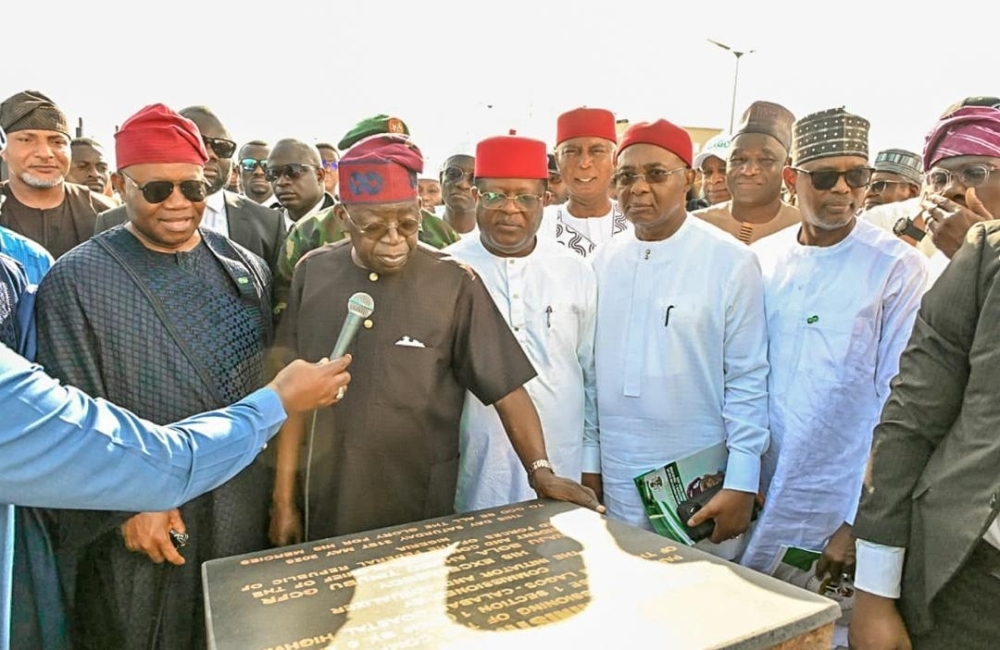
DRIVING NIGERIA’S FUTURE: CELEBRATING TWO YEARS OF TRANSFORMATIVE LEADERSHIP AND THE LAGOS-CALABAR COASTAL HIGHWAY MILESTONE
DRIVING NIGERIA’S FUTURE: CELEBRATING TWO YEARS OF TRANSFORMATIVE LEADERSHIP AND THE LAGOS-CALABAR COASTAL HIGHWAY MILESTONE
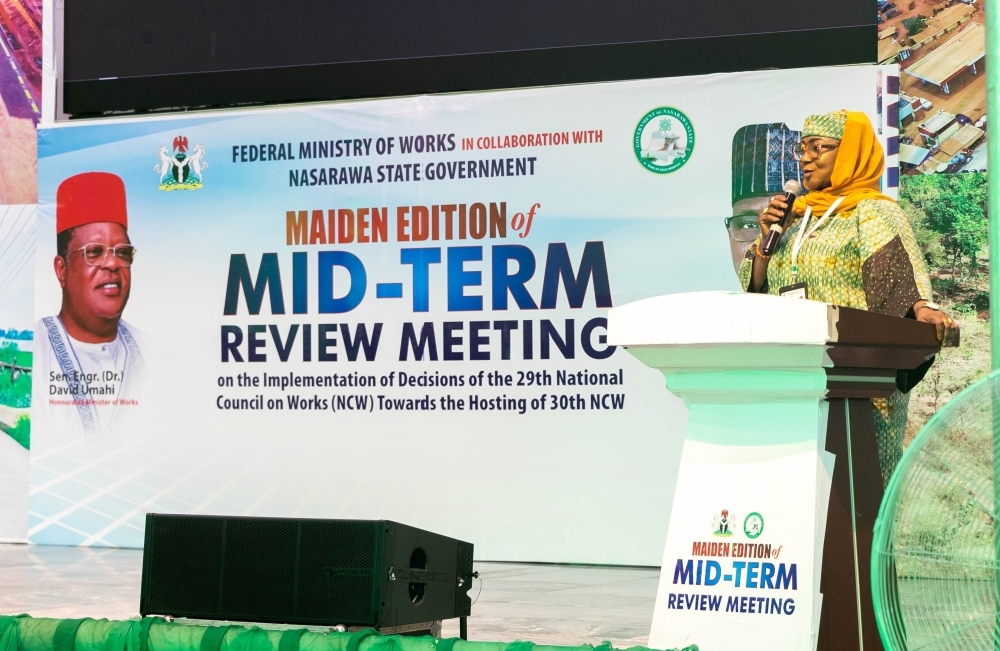
MID -TERM REVIEW MEETING ON THE IMPLIMENTATION OF THE DECISIONS REACHED AT THE 29TH NATIONAL COUNCIL ON WORKS (NCW) DAY 1
MID -TERM REVIEW MEETING ON THE IMPLIMENTATION OF THE DECISIONS REACHED AT THE 29TH NATIONAL COUNCIL ON WORKS (NCW) DAY 1