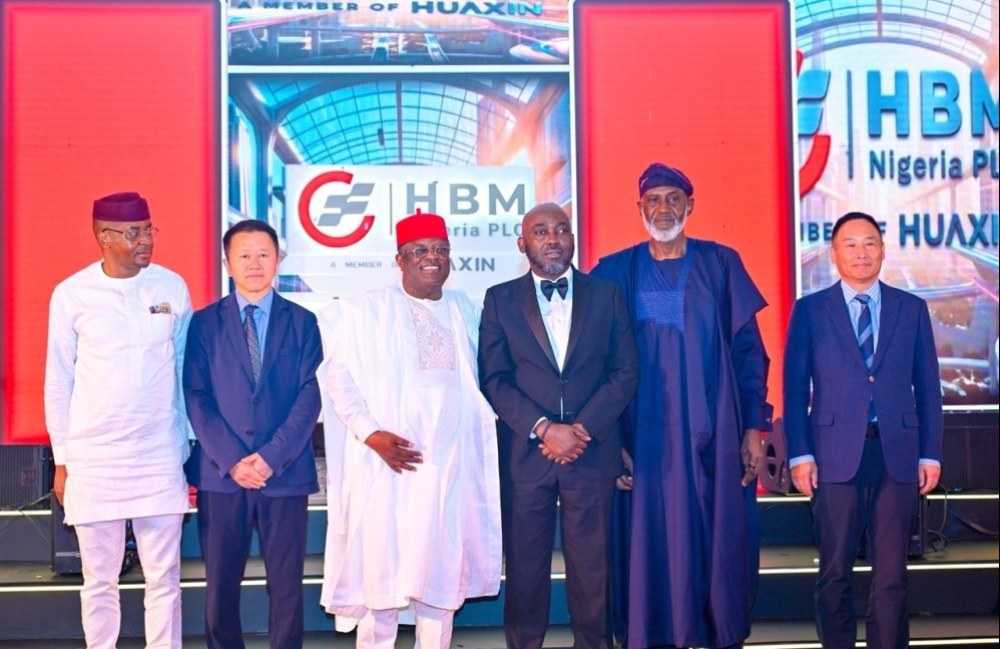
CEMENT MANUFACTURERS MUST REDUCE PRICES, TINUBU IS RETAKING NIGERIA — UMAHI
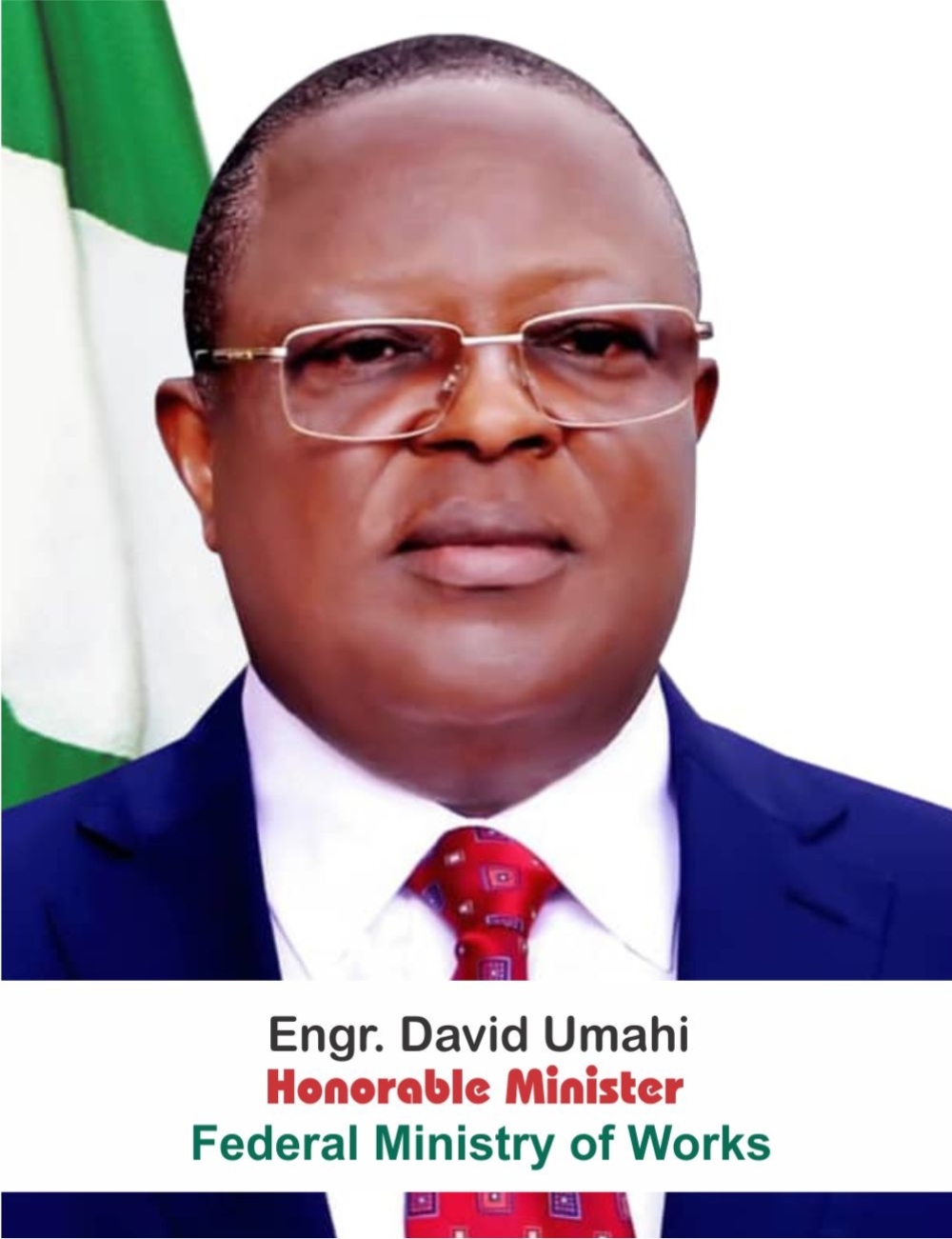
The Honourable Minister of Works, Senator Engr. David Umahi, CON, has called on cement manufacturers across the country to immediately reduce the price of cement, insisting that the current cost of the product is placing pressure on ongoing infrastructure projects and increasing demands for contract variations.
Umahi made the call while delivering keynote address at the official unveiling of the new corporate identity of Lafarge, now rebranded as HBM, a member of the HUAXIN Group, held at the Lagos Continental Hotel on June 21, 2026.
Speaking before industry leaders, investors, and stakeholders, the Minister emphasized that the Federal Government would engage cement manufacturers from July 1 to address the issue of cement prices. “I want to insist that Lafarge now HBM and other manufacturers of cement should reduce their prices,” Umahi declared.
“We shall be engaging on this from First of July. Manufacturer of Cement must reduce their prices because the contractors are chocking me to review their contracts. But nobody is reviewing anybody’s contract. It’s the manufacturers of cement that should review their cost.”
The Minister noted that President Bola Ahmed Tinubu’s administration is investing heavily in critical infrastructure across the country, creating unprecedented opportunities for manufacturers and investors. He urged HBM and other industry players to expand their capacity to meet the growing demands of the nation’s infrastructure revolution.
Commending the company on its transition and renewed commitment to the Nigerian market, Umahi assured the management of government support and partnership. “I commend you very highly and I say welcome onboard and we are going to work together. The market is smaller than what the president is doing. So, enlarge your coast,” he said.
The Minister used the occasion to highlight the remarkable progress being recorded under President Tinubu’s Renewed Hope Agenda, particularly in the area of infrastructure development. He pointed to the Lagos-Calabar Coastal Highway as one of the evidences of the administration’s bold vision and commitment to national transformation.
According to him, the quality and scale of the project have continued to attract global attention and admiration. “When the Dudge Bank came to evaluate our project, they said it was undervalued and that the project is of topmost quality. Today, Our neighboring nations are coming to steal the technology of the coastal highway.”
Umahi expressed profound appreciation to President Tinubu for providing the leadership and political will driving the country’s infrastructure renaissance, assuring Nigerians that the administration remains firmly on course to restore national prosperity. “I want to use this opportunity to thank President Bola Ahmed Tinubu and I commit that Mr. President is committed to retake this country. The President knows what he is doing. The vision and mission are achievable and we are on course and this country will be taken back for the good of Nigerians.”

CEMENT MANUFACTURERS MUST REDUCE PRICES, TINUBU IS RETAKING NIGERIA — UMAHI The Honourable Minister of Works, Senator Engr. David Umahi, CON, has called on cement manufacturers across the country to immediately reduce the price of cement, insisting that the current cost of the product is placing pressure on ongoing infrastructure projects and increasing demands for contract variations. Umahi made the call while delivering keynote address at the official unveiling of the new corporate identity of Lafarge, now rebranded as HBM, a member of the HUAXIN Group, held at the Lagos Continental Hotel on June 21, 2026. Speaking before industry leaders, investors, and stakeholders, the Minister emphasized that the Federal Government would engage cement manufacturers from July 1 to address the issue of cement prices. “I want to insist that Lafarge now HBM and other manufacturers of cement should reduce their prices,” Umahi declared. “We shall be engaging on this from First of July. Manufacturer of Cement must reduce their prices because the contractors are chocking me to review their contracts. But nobody is reviewing anybody’s contract. It’s the manufacturers of cement that should review their cost.” The Minister noted that President Bola Ahmed Tinubu’s administration is investing heavily in critical infrastructure across the country, creating unprecedented opportunities for manufacturers and investors. He urged HBM and other industry players to expand their capacity to meet the growing demands of the nation’s infrastructure revolution. Commending the company on its transition and renewed commitment to the Nigerian market, Umahi assured the management of government support and partnership. “I commend you very highly and I say welcome onboard and we are going to work together. The market is smaller than what the president is doing. So, enlarge your coast,” he said. The Minister used the occasion to highlight the remarkable progress being recorded under President Tinubu’s Renewed Hope Agenda, particularly in the area of infrastructure development. He pointed to the Lagos-Calabar Coastal Highway as one of the evidences of the administration’s bold vision and commitment to national transformation. According to him, the quality and scale of the project have continued to attract global attention and admiration. “When the Dudge Bank came to evaluate our project, they said it was undervalued and that the project is of topmost quality. Today, Our neighboring nations are coming to steal the technology of the coastal highway.” Umahi expressed profound appreciation to President Tinubu for providing the leadership and political will driving the country’s infrastructure renaissance, assuring Nigerians that the administration remains firmly on course to restore national prosperity. “I want to use this opportunity to thank President Bola Ahmed Tinubu and I commit that Mr. President is committed to retake this country. The President knows what he is doing. The vision and mission are achievable and we are on course and this country will be taken back for the good of Nigerians.”
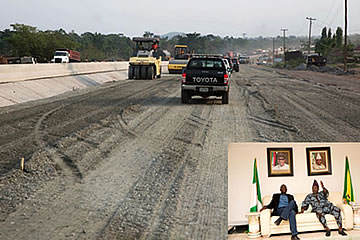
Fashola Reiterates FG’s Commitment to Co-Operate with State Governments to Achieve Their developmental Agenda The Minister of Power, Works and Housing, Babatunde Raji Fashola, SAN has reiterated the commitment of the Federal Government to assist every state in the Federation towards the achievement of their developmental agenda within the scope of the nation’s Constitution. Fashola stated this at the beginning of his inspection tour of road projects in the South-West geo-political zone with a courtesy visit on the Governor of Ekiti State, Ayodele Fayose. The Minister who had travelled from Abuja by road to the state capital, Ado Ekiti said that help is on the way with the administration of President Muhammadu Buhari as far as road infrastructure is concerned; adding that the President is committed to redeem the expenses of state governments on federal roads. He explained that the Federal Government is in the process of raising bonds to ensure that states get their money back. He expressed the optimism that the government at the Federal level will assist the state to achieve its agenda, as the ministry is collaborating with the Federal Ministry of Finance in providing the fund required for payment to construction companies. Fashola also enjoined State Governments to treat the Federal Controllers of works and Housing in the various states as they treat Ambassadors in order to make the roads safe and motorable. He asked for seamless relationship and co-operation as the Controllers would be held accountable for the condition of federal roads within their domain. He expressed appreciation to the State Government for the provision of land for the National Housing Programme which he said would be beneficial to the state as it would provide jobs and economic opportunies for indigenes of Ekiti State. Earlier, the Federal Controller of Works, Engineer Hezekiah Kehinde, had briefed the Governor and senior officials of the State on the situation of the various Federal roads in the State. Governor Ayodele Fayose, in his response stated that for the Minister to travel by road from Abuja to Ekiti, “to feel what the ordinary Nigerians are feeling on the road” is enough statement to convince people of the Minister’s passion and commitment to improve the status of the roads and the well being of Nigerians. The Governor promised to remove the signposts which he had erected on federal roads in the state and to tone done his criticism of the Federal Government, hoping that the Minister will match words with action. Mr. Fayose asked the Minister to revisit the issue of payment to the State Government for the intervention on the Akure-Ikere-Ado Ekiti federal road on which he had done a lot and spent a considerable amount of about N2billion. ...
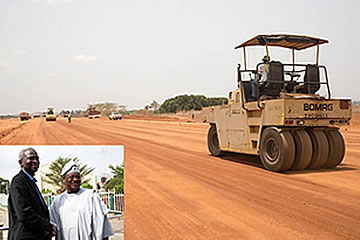
FG To Pay Outstanding Debt Owed To The State Governments-Fashola. The Minister of Power, Works and Housing, Babatunde Raji Fashola, has rekindled the hope of state governments across the nation that Federal Government is working assiduously to see that in no distant time, the money incurred by the states on Federal road projects will be paid back, saying that “Federal Government under President Muhammadu Buhari is committed to fulfill his promise by paying all expense incurred by the state governments on federal roads.” Fashola revealled this in Osogbo while playing a courtesy call on the Governor of Osun state, Ogbeni Rauf Adesoji Aregbesola in his office during an inspection tour to Federal government projects under his ministry in the South-West geo-political zone recently. He explained that the Federal Government is working hard to see that bond is raised so that states get their money back. The Minister stated that the purpose for the Federal government to post the Federal Controllers to the state of the federation is not to engage in rivalry game but to strengthening the cordial relations between the Federal and the state governments, therefore they are partners in progress and they must be seen as the representative of Federal Government. Fashola applauded Osun state government for its quick intervention on Gbongan-Kwara state boundary road, which will ultimately going to lead to economic recovery of Nigerians as well as reducing the travel time of the commuters plying along this corridor. In his response, the Governor of Osun State, Ogbeni Rauf Adesoji Aregbesola, expressed his gratitude to the Minister and by extension to President Muhammadu Buhari for keeping to his promises since assumption of office. The governor explained the seal for his administration to embark on infrastructural development. He said “his government appreciates importance of infrastructure development as one of the ways that will improve economic activities as well as employment generation of the people, hence the government took a giant step to intervene in many road projects across the state, whether Federal Government roads, state roads or local government roads”. While at Ondo state governor’s office earlier in the day, the Minister used the visit to appeal to the government of Ondo State to co-operate with the Federal Controllers posted to the state because Federal Government realized that for Nigerians to fully feel the impact of government in terms of infrastructural development, there must be collaboration between the Federal and State governments, therefore, it must be noted that Federal Government is not in a game of rivalry with any state governments. He solicited for endurable co-operation between the state government and Federal Controllers in the state; saying that “this is necessary because development anchors on peaceful co-existence among the key actors in the system.” He concluded by saying that the Controllers in the state would be held responsible should there be any deplorable condition of Federal projects within the purview of the areas of their assignments. Fashola who was in Ondo State en-route Ekiti State said that help is on the way with the Federal Government led by President Muhammadu Buhari as far as road infrastructure development is concerned; saying that “the President is committed to refund all money spent by the state governments on federal roads.” While responding, the governor appreciated the Minister’s visit, saying that it is a sign of many good things that await the new administration in the state. He appealed to the Minister on Owo-Akungba-Okene road and said “due to its strategic position of the road needed to be dualised as this is the only road connecting South West to Northern States from the Ondo axis.” He also called on the Minister to bailout some communities who have been experiencing total blackout for more than six months. ...
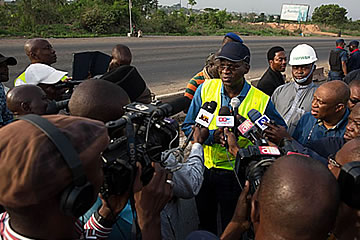
Infrastructural Development: FG Promises Prompt Payment Of Contractors The Federal Government under President Muhammadu Buhari, has assured the constrictors handling various road projects across the country of prompt payment of their money as soon as their works are certified for payment. The Minister of Power, Works and Housing, Babatunde Raji Fashola, affirmed this during a press interview at Apapa Wharf in Lagos to mark the end of his inspection tour of the Federal Government projects in the South-West. He said that unlike before when contractors were owed for more than two years “President Muhammadu Buhari has given marching order to relevant agencies to see that delaying contractors’ money after certification of their works is no longer tolerated. All hands must be on deck to ensure that ongoing projects nationwide continue apace with regular funding” The Minister also stated that as soon as the third quarter capital allocation is released, government will fulfill its promise by paying the contractor’s. He further added that if fourth quarter capital allocation is released before 2016 rolling plan rolls out, they should also expect additional payment and if otherwise, the payment will roll over to 2017 rolling plan. He concluded by saying that all stakeholders are working tirelessly to meet up with Mr. President’s directive. Fashola applauded the contractors for the level of the on-going road projects across the states he visited. According to him “in all the sites so far visited across the nation, works are moving progressively, and it will be unjust for any government official to hold back their money.” The Minister explained that some of what used to be the federal roads now fall within the metropolitan areas or state. He called on the state governments to takeover such roads for proper managing. He added that this will avail Federal Government the opportunity of taking adequate steps to efficiently manage the federal roads nationwide and to serve Nigerians better. He also said that the decision of the Federal Government to repositioning the economy through infrastructural development has begun to materialise; mentioning “that the contractors on many of the federal roads across the nation are back to construction sites and thus assisting in relating to the host communities and further generating employment for Nigerians. Fashola said that government is working hard to strengthen the Federal Road Maintenance Agency, (FERMA), by constituting a governing board in line with the provision of its setup, as well as creating enabling environment where its mandate will be realised. The Minister enjoined the state governments to embrace the policy on national housing by making land available for government. According to him “such provision however, should be accessible to people, otherwise it will be a fruitless effort for government to invest fortunes on a policy that people will not appreciate; people must be considered before allocating land for national housing policy.” ...
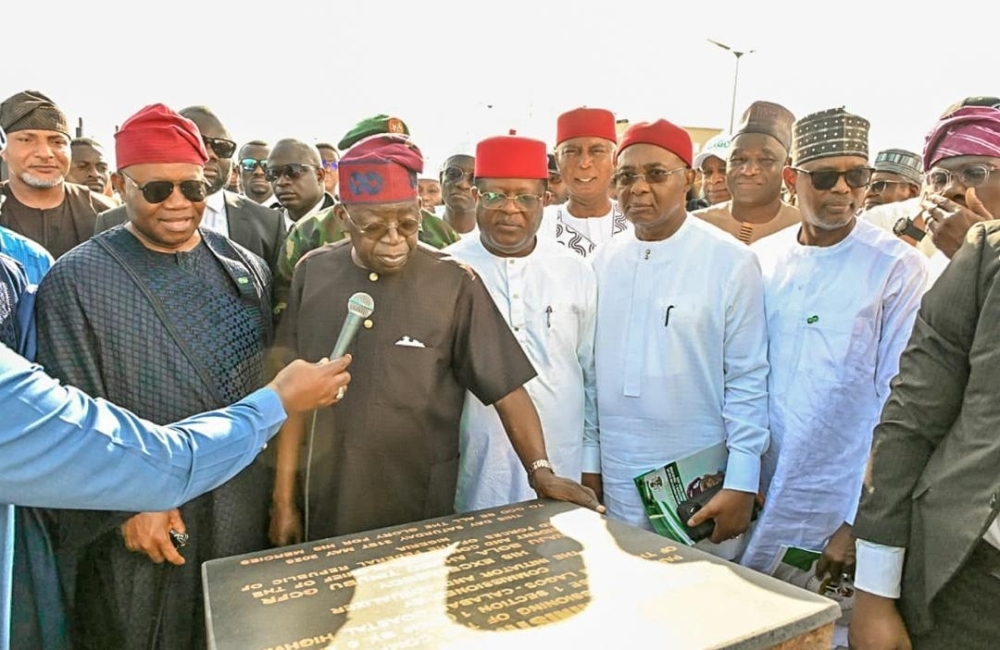
DRIVING NIGERIA’S FUTURE: CELEBRATING TWO YEARS OF TRANSFORMATIVE LEADERSHIP AND THE LAGOS-CALABAR COASTAL HIGHWAY MILESTONE
DRIVING NIGERIA’S FUTURE: CELEBRATING TWO YEARS OF TRANSFORMATIVE LEADERSHIP AND THE LAGOS-CALABAR COASTAL HIGHWAY MILESTONE
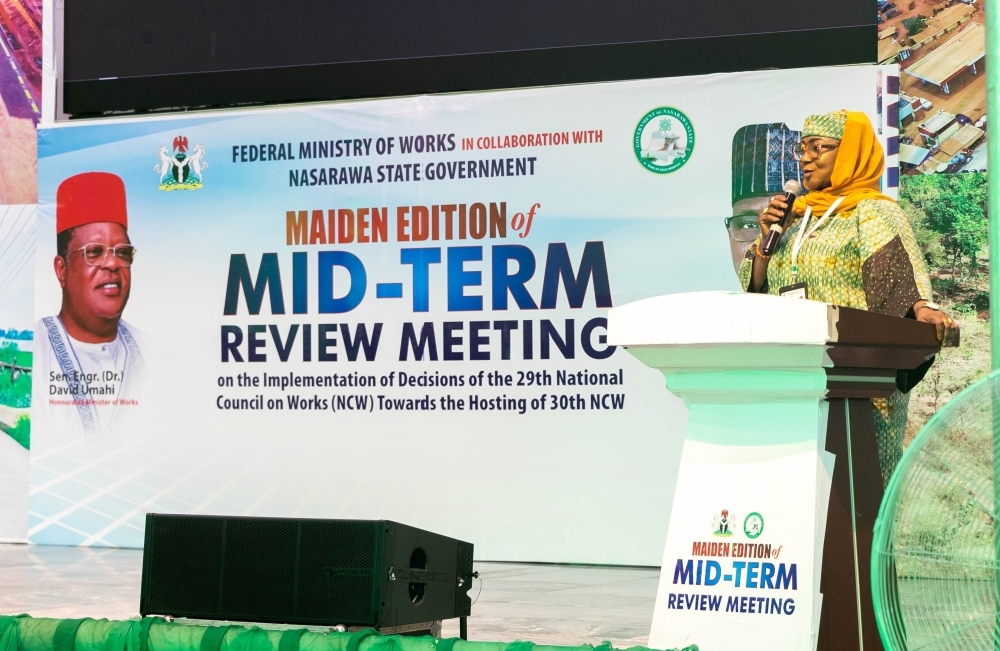
MID -TERM REVIEW MEETING ON THE IMPLIMENTATION OF THE DECISIONS REACHED AT THE 29TH NATIONAL COUNCIL ON WORKS (NCW) DAY 1
MID -TERM REVIEW MEETING ON THE IMPLIMENTATION OF THE DECISIONS REACHED AT THE 29TH NATIONAL COUNCIL ON WORKS (NCW) DAY 1