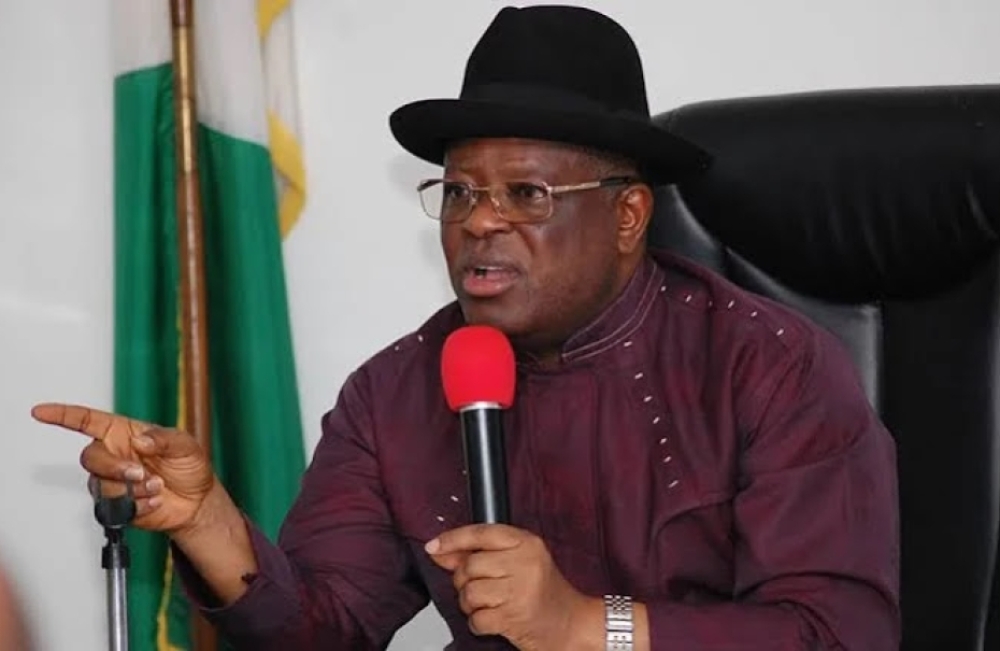
UMAHI ORDERS IMMEDIATE EMERGENCY INTERVENTION ON BENIN-ASABA ROAD, AND SOME OTHER CRITICAL FEDERAL ROADS
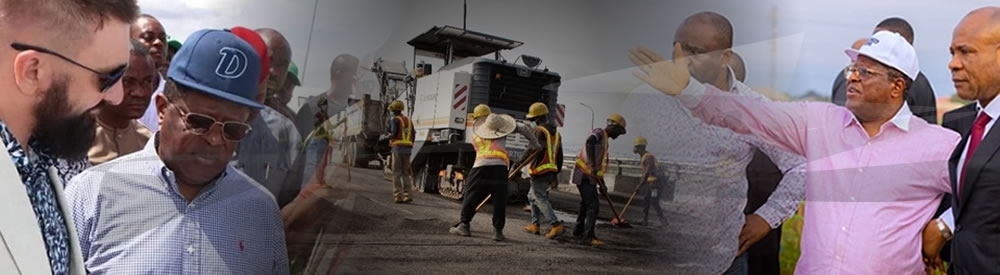
The Honourable Minister of Works, Senator Engr. David Nweze Umahi, CON, has directed the immediate deployment of major contractors to all three sections of the Benin-Asaba Federal Road to restore the failed sections and bring an end to the suffering of motorists and other road users.
This is because, the situation on the concessioned Benin-Asaba Road has reached a point where the overall public interest must take precedence over the existing concession agreement.
Recall that the Honourable Minister of Works was on the Benin-Asaba Road about seven days ago, where he assembled a number of contractors and directed them to prepare for immediate palliative intervention on the affected sections of the road at no cost to the concessionaire. In line with the Concession agreement which requires that before the Federal Government could intervene, the permission of the concessionaire must be required, and that permission was not granted to federal government.
The Minister subsequently proposed three options to the concessionaire, any one of which would have enabled the Federal Government to move in and address the worsening condition of the road. Unfortunately, none of the options was accepted by the concessionaire. Immediately after the Minister left Asaba, the already limited equipment deployed to the road by the concessionaire was further reduced to just one, worsening the situation and increasing the suffering of motorists and other road users.
While the Minister takes responsibility for the concerns and suffering of Nigerians using the road, it is important to state that the concessionaire has also not taken the suffering of Edo people and travelling public sufficiently into consideration by declining all the options put forward by the Federal Government. The concessionaire continues to rely on the terms of the concession agreement entered into by the previous administration, an agreement which weighs heavily against the Federal Government’s ability to intervene quickly in the interest of the public in a situation like this.
In view of this situation, the Honourable Minister of Works has directed the immediate deployment of major contractors within the corridor to all three sections of the Benin-Asaba Road to restore the failed sections and bring relief to the people, with the cost of the emergency intervention being borne by the Federal Government. The Honourable Minister has also directed immediate redesign of the entire route to be rebuilt with reinforced concrete pavement. The public should therefore take note that immediate action is underway to restore every failed section of the Benin-Asaba Road and subsequently rehabilitate the entire sections of the road using reinforced concrete pavement.
2. On the Benin-Sapele Road:
The Governors of Edo and Delta States, the Niger Delta Development Commission (NDDC), and the Federal Government are currently engaged in interventions on different sections of the road to restore the entire route. While some sections are receiving palliative attention, permanent works are also ongoing on other sections.
3. On Ifaki(Ekiti) - Kabba (Kogi) Road:
The Federal Government is engaging both the contractor; Gamji Nigeria Company Limited, and Dangote PLC on immediate emergency and permanent intervention on the most failed sections of the road, while efforts are being made to financially mobilise the company for more extensive permanent work to commence on the axis.
4. On the Sokoto-Zamfara-Katsina Road: This is an inherited project involving the dualisation of approximately 350 kilometres, which translates to about 700 kilometers. The project has since been redesigned and is currently ongoing and most sections are being reconstructed using reinforced concrete pavement. From the Sokoto axis towards Zamfara, over 50 kilometres of one carriageway have been fully completed with reinforced concrete pavement. From Zamfara to Katsina, some sections have been completed and palliative works have been ordered over the sections that have not been reconstructed. However, the pace of work slowed down due to the redesign and rephasing of the project. The contractors currently engaged on the road include CBC, SETRACO, Triacta and Mothercat. They are being remobilised to return to site and complete the outstanding works.
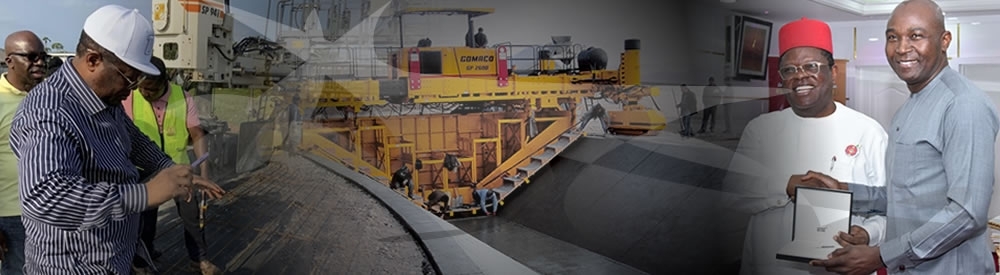
5. On the Abuja-Kaduna-Zaria-Kano Road: The Federal Government took over the Road project and has currently completed the 118-kilometer mostly on reinforced concrete pavement on lot 1. The Lot 2, which covers 164 kilometres, is over 60 percent completed on reinforced concrete pavement. The Federal Government has also introduced solar-powered light on the entire route of Abuja-Kaduna-Zaria - Kano to improve visibility during night travel and enhance the overall security situation on the route. The entire project is scheduled for completion by December 2026.
6. On Bauchi-Jigawa Road: Triacta Nigeria Limited has been mobilised to carry out the necessary interventions on some failed sections and work is currently ongoing in those failed sections.
7. On the Sagamu-Ore Road: 48 Kilometers of the 96-kilometre road have already been completed using reinforced concrete pavement. There is also a 24-kilometre section around Ore which was abandoned by the previous contractor. The Federal Government has directed its immediate restoration to ensure seamless travel. Solar lights are being installed in the entire 96kilometer of the road.
8. On Flooded Sections on Sagamu-Ore-Benin Road: The flooded sections on the same corridor between Sagamu-Ore-Benin Road, as well as other flooded sections in Ondo State, are being designed for emergency procurement and intervention.
9. On the East-West Road:
Some failed and critical sections, including defective sections of bridges along the East-West Road, are being marked out for emergency procurement and intervention.
10. On the Abuja-Lokoja Road:
Several contracts are ongoing along the route, while the three critical sections currently without contracts are being procured for emergency intervention.
11. On the Lokoja-Benin-Warri Road: The President has directed a complete redesign and procurement of the 400-kilometre dualised route covering the uncompleted sections, using reinforced concrete pavement, while palliative works will continue with the contractors currently on the road.
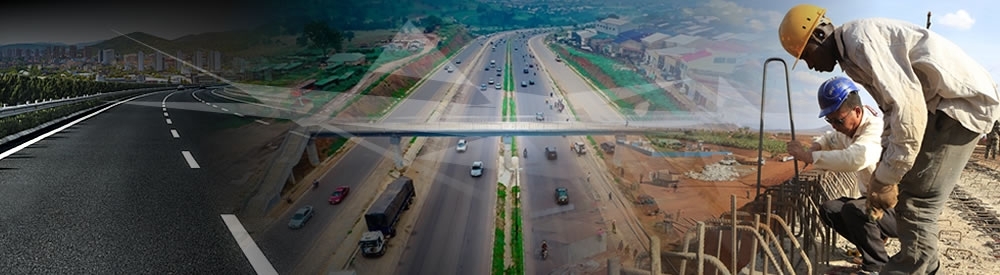
12. On Carter Bridge:
While the Federal Government continues to undertake weekly maintenance of the underwater elements of the bridge. The site has also been handed over to the contractor, CCECC, for the construction of a permanent new bridge, and work has commenced.
13. On the Third Mainland Bridge:
With regard to the defective underwater structural elements, the Federal Government is at the final stage of determining the appropriate intervention for the repair of the affected elements.
14. On the flooded section of the Lagos-Ibadan Road: Work has commenced on the affected section. There are also several flooded sections on federal roads across the six geopolitical zones, largely occasioned by excessive flooding and the effects of climate change. The Federal Government is identifying and marking these sections for immediate attention.
15. On the First and Second Niger Bridges:
Intervention work is ongoing on the approach roads to the Second Niger Bridge damaged by flood and the work is progressing very well. The First Niger Bridge has been closed to traffic to enable immediate repair works. Contractor has mobilized to site and comprehensive rehabilitation of the bridge has started. From Summit Junction to the First Niger Bridge, massive rehabilitation work is also ongoing using reinforced concrete pavement.
16. The Honourable Minister wishes to commend the President of the Federal Republic of Nigeria, His Excellency Bola Ahmed Tinubu, GCFR, for the massive work being undertaken on the nation’s roads since the administration assumed office in 2023.
17. It is important to state that when the present administration came into office, there was hardly any part of the country where one could travel for an hour without encountering significant challenges on the road network. The condition of the country’s roads and bridges was a major national infrastructure challenge.
18. Rather than shy away from the problem, the administration of President Bola Ahmed Tinubu made the nation’s road network a priority. Virtually every part of the country became a priority, and the Federal Government, through the Federal Ministry of Works, Regional Commissions, Parastatals and other MDA’s has continued to respond extensively to these challenges.
19. The Federal Government is currently working on over 80 percent of the inherited federal roads, an unprecedented level of intervention in the country’s road infrastructure.
20. We ask the public to understand the enormous challenges inherited on our roads and bridges and to take note not only of the problems being solved, but also of the permanent solutions being introduced.
21. A major part of this new approach is the use of reinforced concrete pavement, designed to significantly extend the lifespan of major roads. These roads are expected to last between 50 and 100 years. This means that roads being constructed under President Bola Ahmed Tinubu’s administration are being designed with future generations in mind, rather than simply providing temporary solutions to today’s problems. And this is a complete departure from the past, when roads often deteriorated only a few years after completion, resulting in a continuous cycle of reconstruction and expenditure.
22. We appreciate the concerns of Nigerians over the condition of some roads presently and the difficulties faced by motorists and commuters who cannot move easily from one point to another. Those concerns are legitimate, and the Federal Government is listening. But Nigerians should also recognise the enormous scale of the problems inherited and the amount of work currently being undertaken across the country.
23. It is simply impossible to resolve every road challenge accumulated over many years of neglect by the past administrations within three years. What is important is that the government is working, the government is responding, and the government is putting permanent solutions in place.
25. We appreciate members of the public who send situation reports on failed roads and other infrastructure challenges. These reports help the Ministry identify areas requiring urgent attention. However, we also appeal to members of the public to report when such problems have been addressed, just as they report when they occur.
24. We are aware of situations where photographs and reports of road challenges continue to circulate on social media even after the Federal Government has intervened and resolved the particular problem.
25. However, the Ministry will continue to respond as rapidly as possible to genuine reports and concerns from Nigerians.
26. It is also important to note that we have compiled a comprehensive record of all inherited, ongoing and intervention projects across the country which is available to the public. This is to ensure that Nigerians have access to information on the infrastructure projects being undertaken nationwide and can fully participate in and appreciate the infrastructure revolution of President Bola Ahmed Tinubu’s administration.

UMAHI ORDERS IMMEDIATE EMERGENCY INTERVENTION ON BENIN-ASABA ROAD, AND SOME OTHER CRITICAL FEDERAL ROADS The Honourable Minister of Works, Senator Engr. David Nweze Umahi, CON, has directed the immediate deployment of major contractors to all three sections of the Benin-Asaba Federal Road to restore the failed sections and bring an end to the suffering of motorists and other road users. This is because, the situation on the concessioned Benin-Asaba Road has reached a point where the overall public interest must take precedence over the existing concession agreement. Recall that the Honourable Minister of Works was on the Benin-Asaba Road about seven days ago, where he assembled a number of contractors and directed them to prepare for immediate palliative intervention on the affected sections of the road at no cost to the concessionaire. In line with the Concession agreement which requires that before the Federal Government could intervene, the permission of the concessionaire must be required, and that permission was not granted to federal government. The Minister subsequently proposed three options to the concessionaire, any one of which would have enabled the Federal Government to move in and address the worsening condition of the road. Unfortunately, none of the options was accepted by the concessionaire. Immediately after the Minister left Asaba, the already limited equipment deployed to the road by the concessionaire was further reduced to just one, worsening the situation and increasing the suffering of motorists and other road users. While the Minister takes responsibility for the concerns and suffering of Nigerians using the road, it is important to state that the concessionaire has also not taken the suffering of Edo people and travelling public sufficiently into consideration by declining all the options put forward by the Federal Government. The concessionaire continues to rely on the terms of the concession agreement entered into by the previous administration, an agreement which weighs heavily against the Federal Government’s ability to intervene quickly in the interest of the public in a situation like this. In view of this situation, the Honourable Minister of Works has directed the immediate deployment of major contractors within the corridor to all three sections of the Benin-Asaba Road to restore the failed sections and bring relief to the people, with the cost of the emergency intervention being borne by the Federal Government. The Honourable Minister has also directed immediate redesign of the entire route to be rebuilt with reinforced concrete pavement. The public should therefore take note that immediate action is underway to restore every failed section of the Benin-Asaba Road and subsequently rehabilitate the entire sections of the road using reinforced concrete pavement. 2. On the Benin-Sapele Road: 3. On Ifaki(Ekiti) - Kabba (Kogi) Road: 4. On the Sokoto-Zamfara-Katsina Road: This is an inherited project involving the dualisation of approximately 350 kilometres, which translates to about 700 kilometers. The project has since been redesigned and is currently ongoing and most sections are being reconstructed using reinforced concrete pavement. From the Sokoto axis towards Zamfara, over 50 kilometres of one carriageway have been fully completed with reinforced concrete pavement. From Zamfara to Katsina, some sections have been completed and palliative works have been ordered over the sections that have not been reconstructed. However, the pace of work slowed down due to the redesign and rephasing of the project. The contractors currently engaged on the road include CBC, SETRACO, Triacta and Mothercat. They are being remobilised to return to site and complete the outstanding works. 5. On the Abuja-Kaduna-Zaria-Kano Road: The Federal Government took over the Road project and has currently completed the 118-kilometer mostly on reinforced concrete pavement on lot 1. The Lot 2, which covers 164 kilometres, is over 60 percent completed on reinforced concrete pavement. The Federal Government has also introduced solar-powered light on the entire route of Abuja-Kaduna-Zaria - Kano to improve visibility during night travel and enhance the overall security situation on the route. The entire project is scheduled for completion by December 2026. 6. On Bauchi-Jigawa Road: Triacta Nigeria Limited has been mobilised to carry out the necessary interventions on some failed sections and work is currently ongoing in those failed sections. 7. On the Sagamu-Ore Road: 48 Kilometers of the 96-kilometre road have already been completed using reinforced concrete pavement. There is also a 24-kilometre section around Ore which was abandoned by the previous contractor. The Federal Government has directed its immediate restoration to ensure seamless travel. Solar lights are being installed in the entire 96kilometer of the road. 8. On Flooded Sections on Sagamu-Ore-Benin Road: The flooded sections on the same corridor between Sagamu-Ore-Benin Road, as well as other flooded sections in Ondo State, are being designed for emergency procurement and intervention. 9. On the East-West Road: 10. On the Abuja-Lokoja Road: 11. On the Lokoja-Benin-Warri Road: The President has directed a complete redesign and procurement of the 400-kilometre dualised route covering the uncompleted sections, using reinforced concrete pavement, while palliative works will continue with the contractors currently on the road. 12. On Carter Bridge: 13. On the Third Mainland Bridge: 14. On the flooded section of the Lagos-Ibadan Road: Work has commenced on the affected section. There are also several flooded sections on federal roads across the six geopolitical zones, largely occasioned by excessive flooding and the effects of climate change. The Federal Government is identifying and marking these sections for immediate attention. 15. On the First and Second Niger Bridges: 16. The Honourable Minister wishes to commend the President of the Federal Republic of Nigeria, His Excellency Bola Ahmed Tinubu, GCFR, for the massive work being undertaken on the nation’s roads since the administration assumed office in 2023. 17. It is important to state that when the present administration came into office, there was hardly any part of the country where one could travel for an hour without encountering significant challenges on the road network. The condition of the country’s roads and bridges was a major national infrastructure challenge. 18. Rather than shy away from the problem, the administration of President Bola Ahmed Tinubu made the nation’s road network a priority. Virtually every part of the country became a priority, and the Federal Government, through the Federal Ministry of Works, Regional Commissions, Parastatals and other MDA’s has continued to respond extensively to these challenges. 19. The Federal Government is currently working on over 80 percent of the inherited federal roads, an unprecedented level of intervention in the country’s road infrastructure. 20. We ask the public to understand the enormous challenges inherited on our roads and bridges and to take note not only of the problems being solved, but also of the permanent solutions being introduced. 21. A major part of this new approach is the use of reinforced concrete pavement, designed to significantly extend the lifespan of major roads. These roads are expected to last between 50 and 100 years. This means that roads being constructed under President Bola Ahmed Tinubu’s administration are being designed with future generations in mind, rather than simply providing temporary solutions to today’s problems. And this is a complete departure from the past, when roads often deteriorated only a few years after completion, resulting in a continuous cycle of reconstruction and expenditure. 22. We appreciate the concerns of Nigerians over the condition of some roads presently and the difficulties faced by motorists and commuters who cannot move easily from one point to another. Those concerns are legitimate, and the Federal Government is listening. But Nigerians should also recognise the enormous scale of the problems inherited and the amount of work currently being undertaken across the country. 23. It is simply impossible to resolve every road challenge accumulated over many years of neglect by the past administrations within three years. What is important is that the government is working, the government is responding, and the government is putting permanent solutions in place. 25. We appreciate members of the public who send situation reports on failed roads and other infrastructure challenges. These reports help the Ministry identify areas requiring urgent attention. However, we also appeal to members of the public to report when such problems have been addressed, just as they report when they occur. 24. We are aware of situations where photographs and reports of road challenges continue to circulate on social media even after the Federal Government has intervened and resolved the particular problem.
The Governors of Edo and Delta States, the Niger Delta Development Commission (NDDC), and the Federal Government are currently engaged in interventions on different sections of the road to restore the entire route. While some sections are receiving palliative attention, permanent works are also ongoing on other sections.
The Federal Government is engaging both the contractor; Gamji Nigeria Company Limited, and Dangote PLC on immediate emergency and permanent intervention on the most failed sections of the road, while efforts are being made to financially mobilise the company for more extensive permanent work to commence on the axis.
Some failed and critical sections, including defective sections of bridges along the East-West Road, are being marked out for emergency procurement and intervention.
Several contracts are ongoing along the route, while the three critical sections currently without contracts are being procured for emergency intervention.
While the Federal Government continues to undertake weekly maintenance of the underwater elements of the bridge. The site has also been handed over to the contractor, CCECC, for the construction of a permanent new bridge, and work has commenced.
With regard to the defective underwater structural elements, the Federal Government is at the final stage of determining the appropriate intervention for the repair of the affected elements.
Intervention work is ongoing on the approach roads to the Second Niger Bridge damaged by flood and the work is progressing very well. The First Niger Bridge has been closed to traffic to enable immediate repair works. Contractor has mobilized to site and comprehensive rehabilitation of the bridge has started. From Summit Junction to the First Niger Bridge, massive rehabilitation work is also ongoing using reinforced concrete pavement.
25. However, the Ministry will continue to respond as rapidly as possible to genuine reports and concerns from Nigerians.
26. It is also important to note that we have compiled a comprehensive record of all inherited, ongoing and intervention projects across the country which is available to the public. This is to ensure that Nigerians have access to information on the infrastructure projects being undertaken nationwide and can fully participate in and appreciate the infrastructure revolution of President Bola Ahmed Tinubu’s administration.
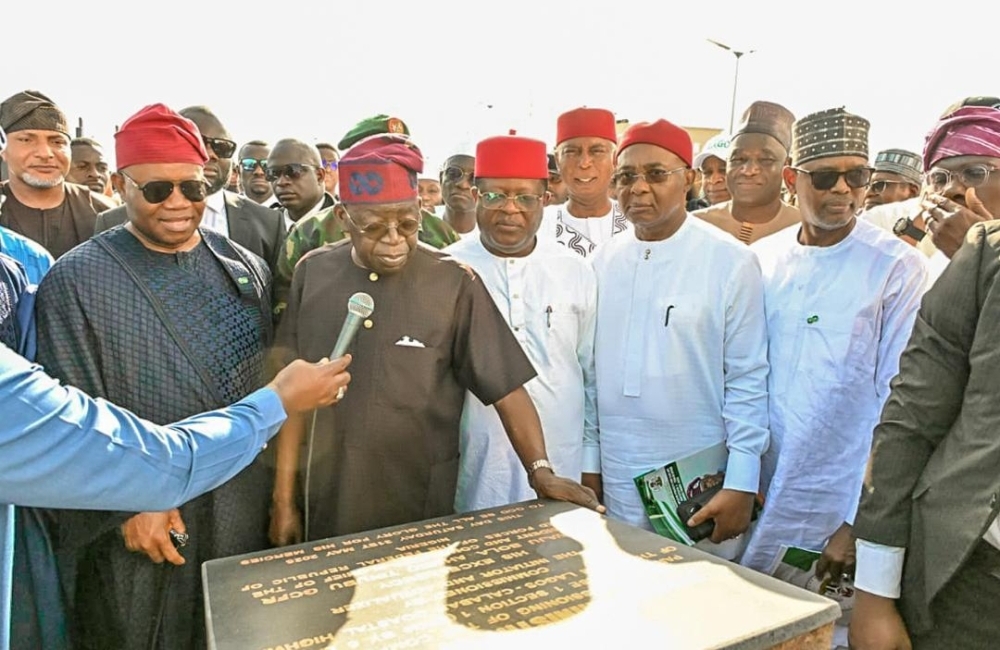
DRIVING NIGERIA’S FUTURE: CELEBRATING TWO YEARS OF TRANSFORMATIVE LEADERSHIP AND THE LAGOS-CALABAR COASTAL HIGHWAY MILESTONE In a historic ceremony marking the successful completion of two years in office by President Bola Ahmed Tinubu, GCFR, the Federal Government officially commissioned the completed 30-kilometre portion of the 40.7- kilometre Lagos-Calabar Coastal Highway, Phase 1, Section I and several others, as well as flagged off the construction of new roads, in the Southern region, symbolically. The event, which was held in Lagos on Saturday, 31st May 2025, was performed by His Excellency, President Bola Ahmed Tinubu, GCFR. It brought together eminent government officials including; the President of the Senate, Sen. Godswill Akpabio, GCON, the Secretary to the Government of the Federation (SGF), Sen. George Akume the Governors of Lagos, Ogun, Borno, Imo, Bayelsa, Kogi and Edo States, Captains of Industry, Contractors, Traditional Rulers and other Stakeholders Honourable Minister of Works, Engr. David Umahi, CON, FNSE, FNATE; the Minister of State for Works, Bello M. Goronyo, Esq; Governors Hope Uzodinma of Imo State and Dapo Abiodun of Ogun State; Senator Godswill Akpabio; and other distinguished guests. In his opening remarks, President Bola Ahmed Tinubu, GCFR reflected on the bold strides made during his two years in office, under the Renewed Hope Agenda. He identified the Lagos-Calabar Coastal Highway as a flagship project that encapsulates the commitment to infrastructure development as a driver of economic transformation. Despite initial skepticism, the project has become a beacon of progress, connecting nine coastal states of Lagos, Ogun, Ondo, Delta, Edo, Bayelsa, Rivers, Akwa Ibom, and Cross River. It is projected to contribute up to US$12 billion annually to Nigeria’s GDP within its first decade. The President emphasised that the project will ease transportation, reduce costs of travel and vehicle maintenance, as well as travel time, and drive growth across agriculture, industry, tourism, marine, and commerce while creating thousands of jobs and expanding opportunities for Nigerians. He described the progress as clear evidence of purposeful leadership delivering tangible results. Speaking, the Honourable Minister of Works, Sen. (Engr.) David Umahi, CON, praised the scope and significance of the project, describing the highway as a game-changer that not only connects nine littoral states but also unlocks vital trade and industrial corridors. He echoed the anticipated economic impact, reaffirming that the project will reduce transportation costs, shorten travel times, stimulate local economies, and create extensive employment opportunities for Nigerians. He appreciated the President for the vision and leadership, the Federal Executive Council (FEC) for its consideration and approval and the Minister of Finance for providing the counterpart funding. The Minister of State for Works, Hon. Bello Muhammad Goronyo, Esq. reaffirmed the Federal Government’s unwavering commitment to national development through the provision of critical infrastructure. He emphasised that enhancing connectivity and fostering regional integration remain vital pillars for sustainable prosperity. Delivering a Goodwill Message, the Senate President lauded the transformative potential of the project, spotlighting the strategic partnership between the government and private sector entities such as Hitech Construction Company. He described the highway as a “backbone for economic revitalisation” that will attract investment and create new avenues for economic empowerment. Other goodwill messages echoed these sentiments and much more. Governor Hope Uzodinma of Imo State and the Chairman of the Progressive Governors Forum, commended President Tinubu’s resilience and clarity of purpose, recognising the highway as a powerful symbol of leadership that delivers on its promise. He expressed pride in the project’s pivotal role in national development and economic progress. Governor Dapo Abiodun of Ogun State described the Lagos-Calabar Coastal Highway as a legacy of visionary leadership and focused execution. He underscored its visible socio-economic impact through improved interstate connectivity and increased commercial activity, stressing that the project will significantly improve lives and economies across southern Nigeria. Earlier, in his welcome address, the Permanent Secretary, Federal Ministry of Works, Engr. Funsho Adebiyi, FNSE warmly welcomed all dignitaries and expressed heartfelt gratitude to Mr. President. He celebrated the milestone as a monumental achievement, noting that the highway will benefit not only the state on its alignment but the entire nation. He also emphasised that the project stands as a symbol of unity, progress, and a shared national vision for a more prosperous future. Others completed road and bridge projects in the Southern part of the country that was symbolically commissioned by the President including; i. Lagos-Ibadan Expressway, Phase 1, Section I (Shagamu-Ibadan) in Ogun and Oyo States, ii. Ikorodu-Shagamu Road in Lagos and Ogun States, iii. Lagos-Badagry Expressway (Agbara Junction - Nigeria-Benin Border in Lagos State, iv. Dualisation of East-West Road, Section II, Subsection I, (Eleme Junction-Ahoada in Rivers State, v. Upgrading of 15km of the East-West Road (Eleme Junction-Onne Port Junction) in Rivers State, vi. Construction of a New Bridge to Replace the Near-Collapsed One at Akpoha in Ebonyi State, vii. Rehabilitation of Enugu-Port Harcourt Expressway, Section III (Enugu-Lokpanta) in Enugu State, viii. Reconstructed Collapsed Bridge at New Artisan Market in Enugu on the Enugu-Port Harcourt Expressway and ix. Alesi-Ugep Road (Iyamoyung-Ugep) in Cross River State. While those that were flagged off, also symbolically, included; i. Rehabilitated Ibadan-Ife-Ilesha-Akure-Benin Road in Oyo, Osun, Ondo, and Edo States, ii. Nembe-Brass Road, Section II in Bayelsa State and iii. Section (107 Kilometres) of the Enugu-Onitsha Dual Carriageway in Enugu and Anambra States. Mohammad Abdullahi Ahmed Director, Press and Public Relations. ...
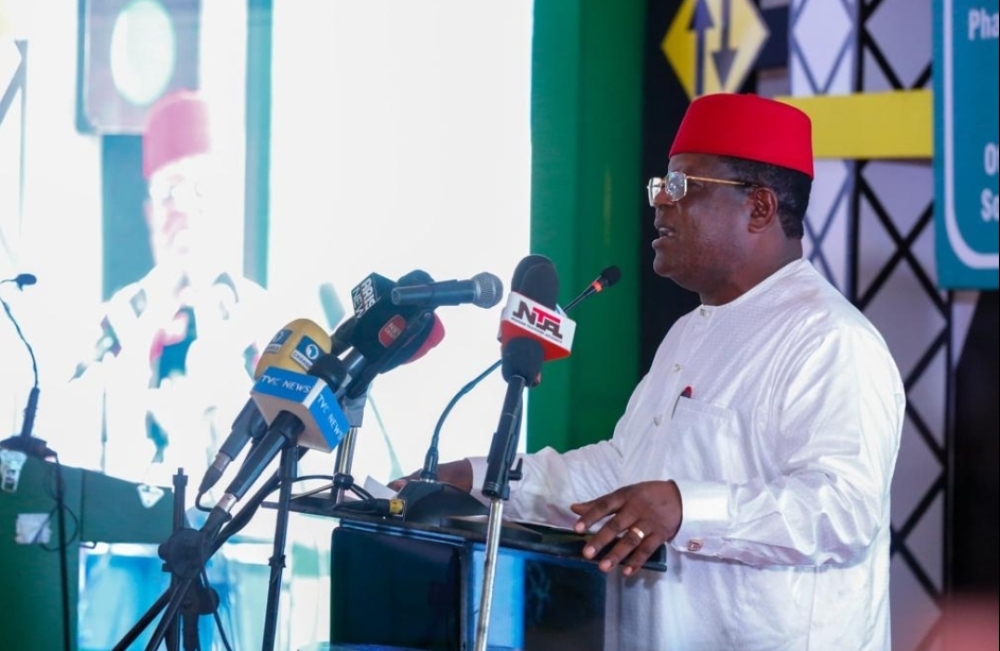
WORKS MINISTER,SEN. UMAHI FELICITATES WITH PRESIDENT BOLA AHMED TINUBU GCFR ON THE 2ND ANNIVERSARY OF HIS RENEWED HOPE ADMINISTRATION, DESCRIBES HIM AS A LEADER WITH ENDURING COMMITMENT TO A PROSPEROUS NIGERIA It is with a deep sense of responsibility and profound pleasure that I congratulate the President of the Federal Republic of Nigeria,His Excellency, Bola Ahmed Tinubu GCFR on this auspicious occasion of the 2-year anniversary of his Renewed Hope administration. . 2. Your Excellency,our dear President,we are delighted by the momentum in your administration's vision to give our nation a strong sense of identity and to build the future and potential of her people. Within the shortest record time,your administration has made incredible marks in changing the inhibitive narrative of leadership deficits that hamper national progress; you have remained unwavering in tackling a range of accumulated and deeply rooted problems of poor infrastructure and other socio-economic challenges that face the nation. 3. In the works sector, the Renewed Hope agenda of revolutionizing the road infrastructure to foster economic growth and enhance the quality of life for all Nigerians is bearing fruit. Within two years in office, you have given unprecedented attention to the road infrastructure through emergency interventions to failed roads and bridges nationwide, increased funding of inherited ongoing projects, introduction of policies and innovations that guarantee quality,speed and value for money, and initiative to construct legacy projects that will expand the transportation ecosystem and turn around Nigeria's economy for sustainable prosperity. You are indeed a leader with enduring commitment to a prosperous Nigeria. 4. As we celebrate this eventful anniversary full of great accomplishments, we pray to God Almighty to continue to bless and prosper your vision to put Nigeria on the path to irreversible progress. Once more congratulations, Mr. President. Sen. Engr. Nweze David Umahi,CON,FNSE FNATE Honourable Minister of Works ...
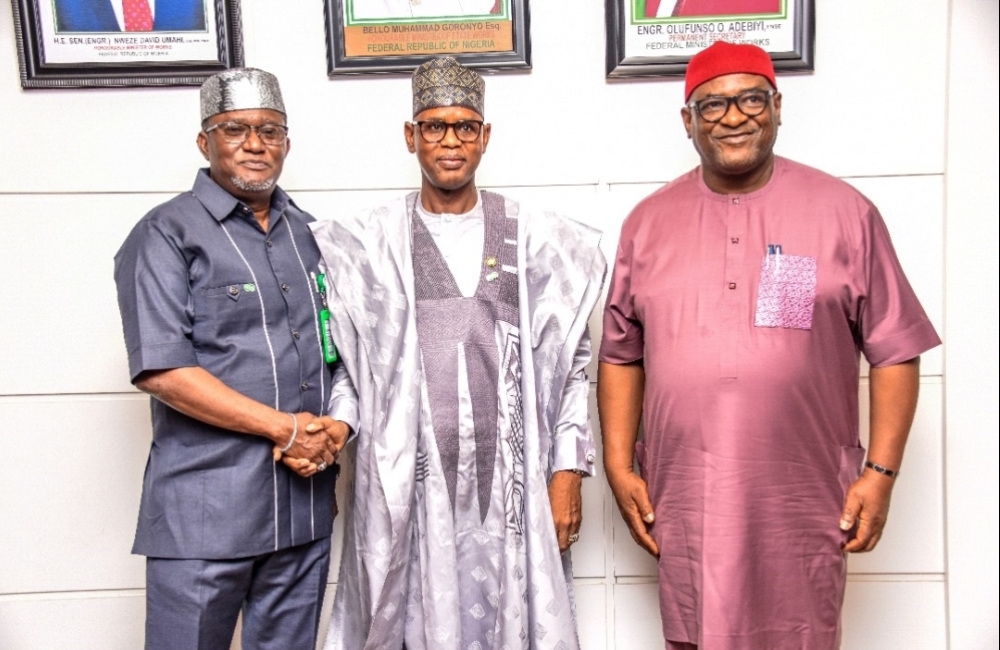
FG PRIORITISES EMERGENCY WORKS ON BENIN–SAPELE ROAD, REAFFIRMS SWIFT INTERVENTION ON FAILED OBAYANTOR STRATEGIC AXIS The Federal Ministry of Works has reiterated its commitment to urgent intervention on the severely deteriorated Benin–Sapele Road, particularly the section leading towards Obayantor in Edo State. This pledge follows a formal appeal by the Benin-Owena River Basin Development Authority (BORBDA), which highlighted the road’s deteriorating condition and its serious socio-economic impact. During a strategic meeting held at the Ministry’s headquarters in Abuja, the Honourable Minister of State for Works, Bello M. Goronyo, Esq., who represented the Honourable Minister of Works, Sen. (Engr.) David Umahi, CON, FNSE, FNATE expressed concern over the insecurity and economic paralysis stemming from the road’s poor condition. In his remarks, Goronyo stated: “I have listened with a heavy heart to your presentations. The kidnappings along that corridor, the economic losses, and the direct threat to food security are not palatable. This is not just about roads; it's about national stability and the well-being of our people. I assure you that the Ministry, under the leadership of Engr. Umahi is committed to acting swiftly and decisively.” The Managing Director of Benin-Owena River Basin Development Authority (BORBDA), Dr. Adekanmbi Samuel gave a detailed account of the challenges along the 24-kilometre stretch, emphasising the insecurity, economic dislocation, and impact on agriculture and power infrastructure. He stressed the importance of inter-agency collaboration in supporting President Bola Ahmed Tinubu’s emergency declaration on food security. Earlier, the Director of Highways, Bridges and Design, Engr. Bede Obioha, who stood in for the Permanent Secretary, acknowledged the urgency of the issues raised and commended the spirit of cooperation. “We welcome engagements like this as they help us identify critical gaps. This Ministry remains responsive and committed to resolving transport-related challenges, wherever they occur,” he affirmed, assuring that the concerns raised would be captured for prompt action. ...
VC Commends FG for Road Intervention in University
The Vice Chancellor of Bayero University Kano, Professor Sagir Adamu Abbas has commended the Federal Government for the road intervention projects in tertiary institutions nationwide.
Professor Abbas who led the management team of the University on a visit to the Federal Ministry of Works and Housing expressed appreciation for intervention in road projects and street lights in his institution.
He described the intervention in Bayero University as critical to the institution which had provided a conducive atmosphere for learning in the University thereby boosting the morale of the students and staff in the institution.
In his response, the Permanent Secretary Federal Ministry of Works and Housing, Babangida Hussaini who received the delegation on behalf of the Honourable Minister of Works and Housing, Mr. Babatunde Raji Fashola, SAN, appreciated the team for the accolades showered on the Ministry and noted that the commitment of President Muhammadu Buhari to providing infrastructure in every sector of the country provided the needed motivation to the Ministry of Works and Housing to discharge its mandate judiciously.
The Permanent Secretary also stated that the Honourable Minister of Works and Housing has a strong passion to ensure the fulfillment of President Muhammadu Buahari’s commitment to providing infrastructure in all sectors across the states of the federation.
It will be recalled that the Federal Ministry of Works and Housing had so far completed and delivered 29 out of 47 road projects executed in various tertiary institutions nationwide.
Other members of the delegation from the university are Deputy Vice Chancellor; Professor Mahmoud Umar Sani, Acting Registrar; Jemila Salim, and Director Liaison Office Abuja; Ibrahim Usman Yakasai.
INSECURITY: Taking Actions Against Organized Crime, Speech Delivered By H.E Babatunde Raji Fashola, SAN At The 4th Annual Lecture Organized By The United Action For Change At The Digital Bridge Institute
It is no longer news that world leaders are facing enormous challenges in the execution of their primary mandate which is the security and well-being of their citizens.
From mass shootings and school shootings, with massive opiod crises and gang wars in the United States, to knife killings in London, bombings in Paris, mass shootings in New Zealand, just to mention a few; our Civilization is facing new challenges of security.
Please see Appendix 1 for some Crime Data Statistics
Nigeria is not insulated from these happenings and therefore has had her own share of old and emerging security challenges.
It is the Nigerian situation that I seek to address. The numerous conversations that have been held about what to do and how to overcome the challenges that we face, omits to make critical linkages between security challenges that we face and the deliberate conduct of a few of our people and others who are not Nigerians.
Conversations have focused on the capacity of law enforcement officers, from numerical strength, to financial resources, training and equipment as if this was the only problem.
While all of these are necessary and welcome, they are regrettably not enough and they are inadequate to resolve the problems we have to overcome.
This inadequacy is best captured in the often-repeated statement of fact by elected leaders and security personnel as well, that the challenges of securing all of us requires many more of us and indeed, all of us, to act.
I have argued and restate the argument that the ability to mobilize well-armed, well trained, well funded security personnel to a point of crisis in a pre-emptive or reactive manner only helps to achieve enforcement of the law.
It does not guaranty security, if there is no peace.
It is peace and peaceful co-existence that inures to safety and security; otherwise no sooner are the personnel redeployed, as they inevitably will be, do the communities or persons involved return to hostilities.
Therefore one of the points of action that I urge us to commit to, is to seek to identify the causes or sources of conflict amongst people, groups of people, and communities, and seek to eliminate, resolve or manage them better, in a quest for permanent peace; and, by extension, security.
This requires the involvement of local people, people close to the problem, people with influence and people with some authority to play this role.
The logic of this argument often finds expression in the persistent calls made on traditional rulers to play a more active role.
It must involve teachers, market leaders, and spiritual leaders, elected and appointed public office holders and in every manner of speaking it must involve the whole village.
But while we may have identified law enforcement and persons of influence, there are many more people who do not constitute members of this class who have an all important role to play.
But their ability to rise up and respond requires them to understand the gravity of the problem; and this is the Centrepiece of this intervention.
Majority of the issues that heighten the spectre of insecurity are not accidental, they are deliberate.
They are often driven by reward or expectation thereof, in cash, kind and influence. What the world (and by extension Nigeria) is contending with is not just insecurity and crime, it is insecurity escalated by ORGANIZED CRIME!!!
Organized crime is a chain whose links must not only be broken, but whose individual parts must be separated, degraded and prevented from ever linking together.
With this background, I propose to move to specifics and examples, from my experience in government, to link this chain and highlight their connectivity, and explain why it requires more than law enforcement and persons of influence to make all of us safe.
INTELLIGENCE
The collection of information and the use of it to prevent crime or apprehend criminal activity is often discussed as if it is the prerogative of law enforcement agencies alone.
Let me be clear that this is the duty of the citizen and it starts with all of us being interested in our own wellbeing and security.
Indeed section 24(e) of the Constitution provides that:
“It shall be the duty of every citizen to-
(e) render assistance to appropriate and lawful agencies in the maintenance of law and order;”
It involves not only careful choices about our lifestyle which will prevent us from being attractive as victims to Criminals. It requires us to show more interest in what is around us, who is around us and to pay more attention to unusual things.
It also requires courage, a lot of it, to be able to share information, no matter how innocuous, with law enforcement, to enable them keep us safe.
There is no magic to intelligence gathering. It is rooted in civic responsibility.
One institution of civic participation that we must revive, reform and re-Use is the RESIDENTS/LANDLORDS ASSOCIATION. We need them very quickly.
Know Your Neighbour is a critical first line of Defence against any criminal activity and in particular against organized crime. This is because it:
a. Helps to occupy the space of anonymity in which all criminals thrive;
b. Provides information or suspicion about irregular or abnormal behavior that requires attention.
It is when information is offered that law enforcement must act to check, re-check and verify.
So, when 17 (SEVENTEEN) suitcases loaded with explosives were brought into Lagos in 2013, law enforcement missed it.
It was citizen information (which we did not discard) that led to their seizure, apprehension of the suspects and their cargo of terror, their trial and eventual conviction, which enabled Government put them in a place where they could no longer harm residents of Lagos.
OPEN SPACES/ EMPTY BUILDINGS
It is my humble view, and one which is very strongly held, that there is no time more compelling than now for State governments to dominate open spaces within their territories.
By law, State governments control urban and development planning, and how these powers are exercised or not exercised affects how law enforcement agencies perform and how criminals can either escape justice or be apprehended.
Apart from street signages, house numbering which helps with identification and response to distress calls, State Governments must use the provision of the Land Use Act to reduce and ultimately eliminate the number of abandoned, uncompleted buildings in their states. They constitute an easy refuge not only for destitutes but also for people with untoward intentions.
Abandoned buildings provide free and unmonitored accommodation for criminals, and also storage for implements and proceeds of crime or evidence of it, like guns, drugs, cash, stolen goods kidnap victims or even dead bodies.
In an apparent display of “COMPASSION” (if that is what it is) for vulnerable members of our society, we have allowed all manner of people to dominate open spaces like sidewalks, street corners as acts of empathy for the poor and vulnerable.
The truth is that by planning laws, the PROPERTY LINE of residents ends where their fence or land beacon ends as shown in their survey plans.
The landed property of individuals does not extend to the sidewalk or the road, upon which many have built and many have appropriated for personal use.
Every piece of land beyond the property line belongs to the government. The unauthorized uses of the public spaces are liable to sanctions by law under any vigilant government.
It is the DUTY of Civil and Public Servants to understand this, and take steps to Occupy, Dominate and Manage these spaces for lawful activity only (such as Parks and Gardens that are MONITORED), in collaboration with members of the public.
Governments, State and local, who fail to dominate these spaces, do so at the peril of their residents.
It is from these spaces that people masquerading as traders, hawkers, have either launched criminal attacks on citizens, or helped to ferry arms, drugs or proceeds of crime.
Therefore, urban and town planning departments are important building blocks for law enforcement and security, and critical points of immediate action against organized crime.
ROAD TRAFFIC LAW; OKADA VEHICLE LISENCE/REGISTRATION
Stolen vehicles, unregistered (and therefore anonymous) vehicles, tricycles, and motorcycles constitute a vast area of neglect that we must attend to especially at State level where road traffic laws have been enacted but largely unenforced.
The decision not to register a vehicle is a choice which indicates a deliberate (organised) decision as against an accidental one.
Very often these are the conduits for getaways from crimes because without registration, tracing it is difficult.
As governor, with my police aides, we once apprehended a motorcycle with three (3) male passengers. When we searched, we found a fire arm under the seat, a lady’s handbag, baby diapers and a feeding bottle.
I leave the rest to your imagination.
In the days when Lagos was plagued by frequent bank robberies, unregistered motorcycles were the favoured getaway vehicles for the robbers. We also discovered that they were the medium for trafficking in hard drugs like marijuana, cocaine and heroin.
In one Robbery incident on Ikorodu Road where a Young Medical Doctor unfortunately lost his life, the Getaway vehicle was a Motorcyle riding against traffic.
Unknown to many residents, while their children were at home and seemingly safe, organized drug rings used motorcycle riders to deliver hard drugs to them right in their houses under their parents noses.
These and many more reasons informed the strict enforcement of the Lagos Road Traffic Law on motorcycles at the time.
In a society where nobody is above the law, then, everybody’s vehicle, from President to the ordinary citizen must carry a license plate, registered with government.
Throughout my tenure as governor, my vehicle always displayed the registration of LASG 01. I was told by my security aides that there was a regulation that required them to cover my licence plates after a particular time of the day; I refused to comply, first because “the regulation” was not produced and more importantly because I was certain that the Traffic Law commanded my obedience.
Our security challenges require actions by legislation to eliminate anonymity to reduce the sphere of operation for organized crime.
The Attorneys-General of the States, the Speakers of all State Houses of Assembly and legislators must be visionary and far sighted in developing legislative reforms that cover and dominate this space of criminal operation.
PUBLIC BUILDINGS, HOTELS, GUEST HOUSES
In most parts of the world today, it is inconceivable to take up lodging in any hotel without a credible form of identification, and where that is achieved, no visitor of a registered guest is allowed beyond the reception area into the rooms without presenting an identification which is scanned, copied and recorded.
If we reflect on the number of murders that have taken place in hotels or criminals who have been apprehended in hotels, guest houses or hospitality facilities, we can only imagine what might have been missed.
Again these are local matters under the dominion of State and Local Governments.
Any State that is serious about security must pay attention to the identification of persons at Hotels and Guest houses.
This is an area begging for urgent national action while promoting hospitality, entertainment and tourism. Safety is the underlying currency on which this industry thrives.
Cameras in lifts, staircases and corridors of these types of buildings must be made mandatory by Legislation. Technology is making cameras more affordable and cost should not be meritorious argument against compliance.
A commitment to documentation, identification and transparency, will itself create jobs as it will drive growth of the business.
Let us make no mistake about this, organised crime looks for those unmanned spaces to plan, and sets up itself deliberately to occupy them and hurt us.
Organised crime does this, not only by physical pain, injury and sometimes unfortunately death, but reputationally as well, by giving us a name we do not deserve.
EDUCATION, SPIRITUALISM, MIRACLES
This is a very serious and almost endemic issue in many parts of the developing world where people, partly because of poor education are led to believe in miracles induced by fetish, occult and spiritualism or “black magic”.
Recently, our public space was dominated by stories of youthful (and perhaps the not so youthful) men in a desperate search for ladies’ underwear.
The story suggested that this was an avenue to get rich. I assume it was somehow convertible into cash.
I know that money (cash) is produced by printing in a mint, but a belief system to the contrary is difficult to change and this is why I say this is a serious problem. Our entertainment industry albeit unintentionally, has helped to promote this belief and I say that the time to stop it is not now, it was yesterday.
If we reflect on the number of people who have disappeared without trace, if we consider that they might have been murdered for ritual purposes, if we reflect on the number of people that have been arrested with human parts, without any identification of whose body parts were recovered, it would not be difficult to agree, that we should have acted yesterday.
What I have attempted to demonstrate is that criminal activity of many types that threaten our peace and security are demonstrably mainly organized and not accidental.
We must therefore beam a very bright searchlight on organised crime.
We must recognize that organised crime is a business that we must put out of business because it thrives at our collective peril.
The people behind organised crime earn their livelihood from it and also employ people, including the young and able bodied who play critical roles in the value chain of its operation.
They have collaborators in critical institutions of State and at sensitive places like our borders, (land, sea and air), as we have recently heard from reports about illicit drugs planted in the luggage of an innocent Nigerian lady who travelled to Saudi Arabia.
Seizures of containers of arms and Tramadol at our ports are not accidental. They are the products of vigilance and dedication by border security personnel against organised crime.
But the question to ask is how many actually got in undetected.
Therefore, the case for immediate action by budgetary commitment and spending against an illegal business that is investing must be a compelling matter of national consensus.
The United Kingdom recently made the case for investing an additional £2 Billion to its existing budget, in order to fight organised crime.
Because of the rewards that organised crime offers by way of illicit funds, and its appeal to the young, old, unemployed and vulnerable, we must move financial controls to another level.
While the BVN (Bank Verification Number) initiative is welcome, the amount of money outside the banking system, such as that with traders of foreign exchange on major streets of some of our cities command action by way of more imaginative financial controls.
I must not in this sense be misunderstood to be suggesting that these types of businesses or other vending businesses be put out of commission where they are not manifestly illegal.
On the contrary, I am recommending actions such as record keeping of all currencies they buy and sell, and from whom, to whom, and provide reporting and check on their transaction.
KIDNAPPING
This is more easy to understand as being organized. A recent report by a victim that his abductors were using a laptop to monitor all efforts by law enforcement to rescue him supports the case for spending and investing in technology.
It is comforting and encouraging to know that the Nigerian Communications Commìssion (NCC), the Regulator of the Telecoms operators is continuing to review data to ensure that unregistered and therefore anonymous SIM card holders ( used to demand ransom and for other Organised criminal purposes) are identified and delisted from the network.
CATTLE RUSTLING AND BANDITRY
This is another face of organized crime that is perhaps not well understood.
To the urban dweller who is not connected to rural life and those involved in the business of animal husbandry, it is easy to miss the cash and material benefit in every head of cattle.
Therefore conversations about the ethnic connection of these crimes rather than the organized criminal activity, is what dominates the public space.
We take ourselves away further from the solution if we do not see an organized pattern and the reward of cattle stolen and re-sold for cash, as a stronger motive for these actions.
HUMAN TRAFFICKING/MIGRATION
The spectre of human trafficking, a modern act of human slavery, for sex, prostitution rings, forced labour, lies at the heart of large scale migration. Yes they may be compounded by bad governance, poor education and poverty. But a group is organizing around it and profiting.
The victims see “opportunities” in Europe while organized crime sees “vulnerability” which makes them perfect targets to be used as sex slaves and cheap (and forced) Labour, being undocumented and therefore “illegal” immigrants.
THE MEDIA
The media like other non-state actors in any society have an important role to play. The people behind organised crime also watch television, listen to radio and use telephones, laptops handheld devices and are therefore connected to the media.
It is therefore important to understand that in the discharge of the duty of Security, the Odds against Government and all her institutions are VERY HIGH.
Government and her institutions must get it RIGHT ALL THE TIME, while criminals need to be right ONLY ONCE, to create, fear, pain, terror, Victims and consequently NEWS.
All acts of ”valorising” and ”eulogising” the “successes of the criminals in the media in our apparent frustration and the “political” weaponising of their “feats” only helps to promote their illicit brand.
I had the privilege of accompanying President Muhammadu Buhari to the G7 meeting held in Germany in June 2015.
One of the Resolutions of the world leaders, Barack Obama, Angela Merkel, David Cameron, Sarkozy and others at the meeting was to go back home and engage their local media to stop broadcasting images of “Islamic” terrorists beheading victims, and recruiting young people.
We can now think back when last you saw such images on an international network. Instead, those images have been replaced by images of Western governments destroying strongholds of “Islamic” Terrorists.
You can view it as a reverse propaganda, and my view is that it advances the security effort rather than undermine it. This must be a front burner contribution that our media can make, while still reporting news of unfortunate acts of crime.
Specifically, I recommend that leaders of our Media Resolve to take down those images of terror, such as those showing girls in captivity, with Masked gun-wielding men standing over them. They inadvertently promote the “Brand” of crime.
All of us, and especially the media as managers of information must remember that FEAR, PAIN, MISERY, TEARS, INJURY and CONFUSION are the purpose of Criminals.
Reportage of crime must innovate to document and report the incident without inadvertently lending itself to spreading the message of the criminals.
I suspect that those who are behind some of the unfortunate criminal incidents that have happened recently must be rubbing their hands with glee and patting themselves on the back when they see the screaming headlines, the scathing commentaries and the doomsday predictions.
What we must not do, is deliberately or unintentionally valorise, eulogise crime or provide propaganda for it.
What is true of images is true of spoken words that foster hate, breed mistrust and incite conflict and violence.
The media must make the investment and commitment to take away their platforms from the purveyors of such messages.
We must also remember that the people who perpetrate these acts are not only local people. There are international collaborators especially those seeking access and control of economic resources like timbre, cocoa, oil and other minerals.
Conflicts have therefore been known to be planned, as deliberate STATECRAFT launched and perpetrated, in order to distract government from regulating the control and access to those resources while being focused on conflict management.
It is my humble view that with globalisation, the damage of media exposure has exceeded the reality of our security challenges.
It seems to me that we can also learn from what some other media outlets, especially of the Electronic cadre now do in the global age.
What they broadcast to the whole world about their Country is not exactly the same as what they broadcast within their Country. This must be a matter of editorial choice about which I claim no expertise.
But this brings me to the provisions of Section 24 (b) of the Nigerian Constitution imposes a duty on all of us to:
“help to enhance the power, prestige and good name of Nigeria, defend Nigeria and render such national service as may be required.”
What I have observed in the style adopted by some other international media houses while reporting tragedies and disasters, is how they shift the focus to the human angle of positivity by emphasising on stories of bravery, survival, human empathy, heroism and stoicism with which they project the positive image of their people, communities and Country.
The Boston Marathon bombing was an example. It was not that there were no intelligence failures or that people were not killed.
But the media took us away from the story of killings to the survival stories.
One year after, Boston was not only holding the Marathon again, she was hosting the Annual Conference of the International Bar Association.
The mass shooting in Texas in 2019 was dominated by the story of defiance of a people who will not be cowed and a few months after the tragedy, Texas was hosting the world in a pre-planned sports meet that was not cancelled.
Regrettably, the erroneous impression now being created by public reportage is one that suggests that all of our country is unliveable, and unenjoyable.
The facts do not support this even as we clearly have challenges.
We must therefore work together to remake this image from one that is not us, to one that fairly and accurately reflects us and our situation.
Babatunde Raji Fashola, SAN
Hon. Minister of Works and Housing
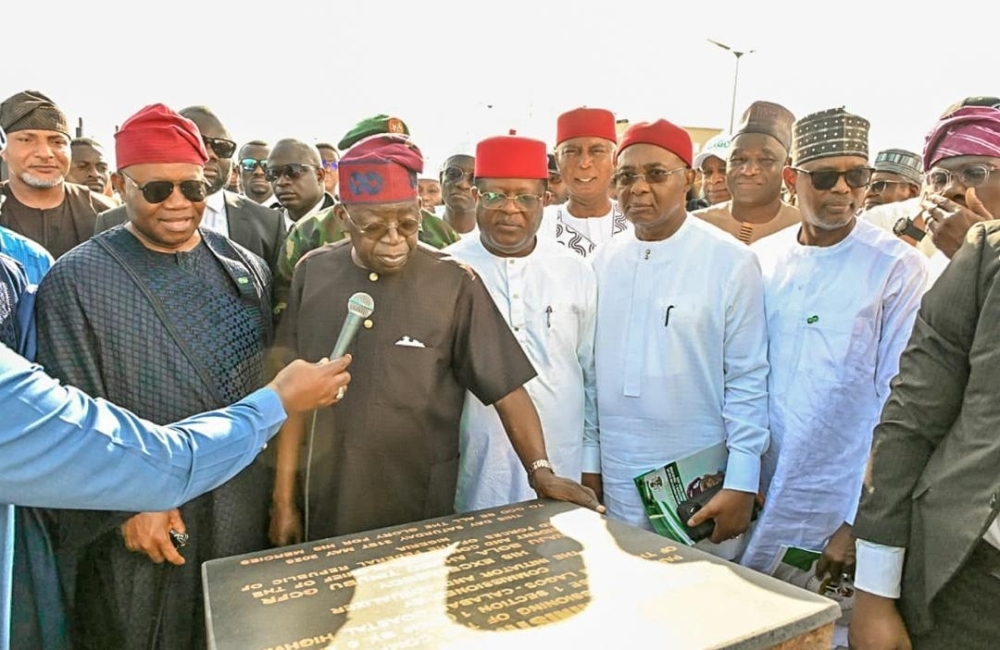
DRIVING NIGERIA’S FUTURE: CELEBRATING TWO YEARS OF TRANSFORMATIVE LEADERSHIP AND THE LAGOS-CALABAR COASTAL HIGHWAY MILESTONE
DRIVING NIGERIA’S FUTURE: CELEBRATING TWO YEARS OF TRANSFORMATIVE LEADERSHIP AND THE LAGOS-CALABAR COASTAL HIGHWAY MILESTONE
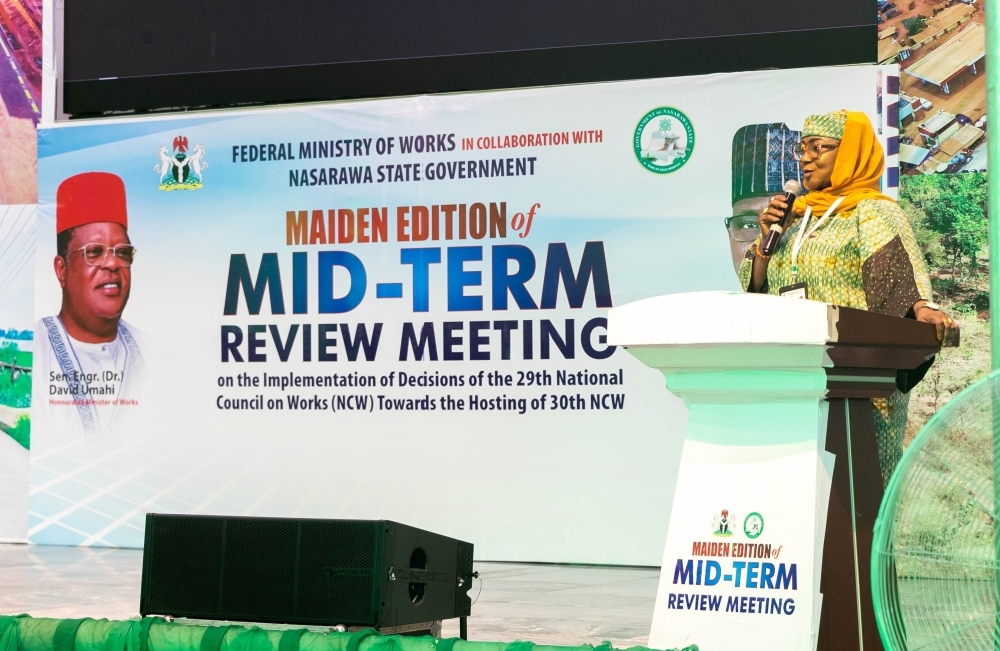
MID -TERM REVIEW MEETING ON THE IMPLIMENTATION OF THE DECISIONS REACHED AT THE 29TH NATIONAL COUNCIL ON WORKS (NCW) DAY 1
MID -TERM REVIEW MEETING ON THE IMPLIMENTATION OF THE DECISIONS REACHED AT THE 29TH NATIONAL COUNCIL ON WORKS (NCW) DAY 1