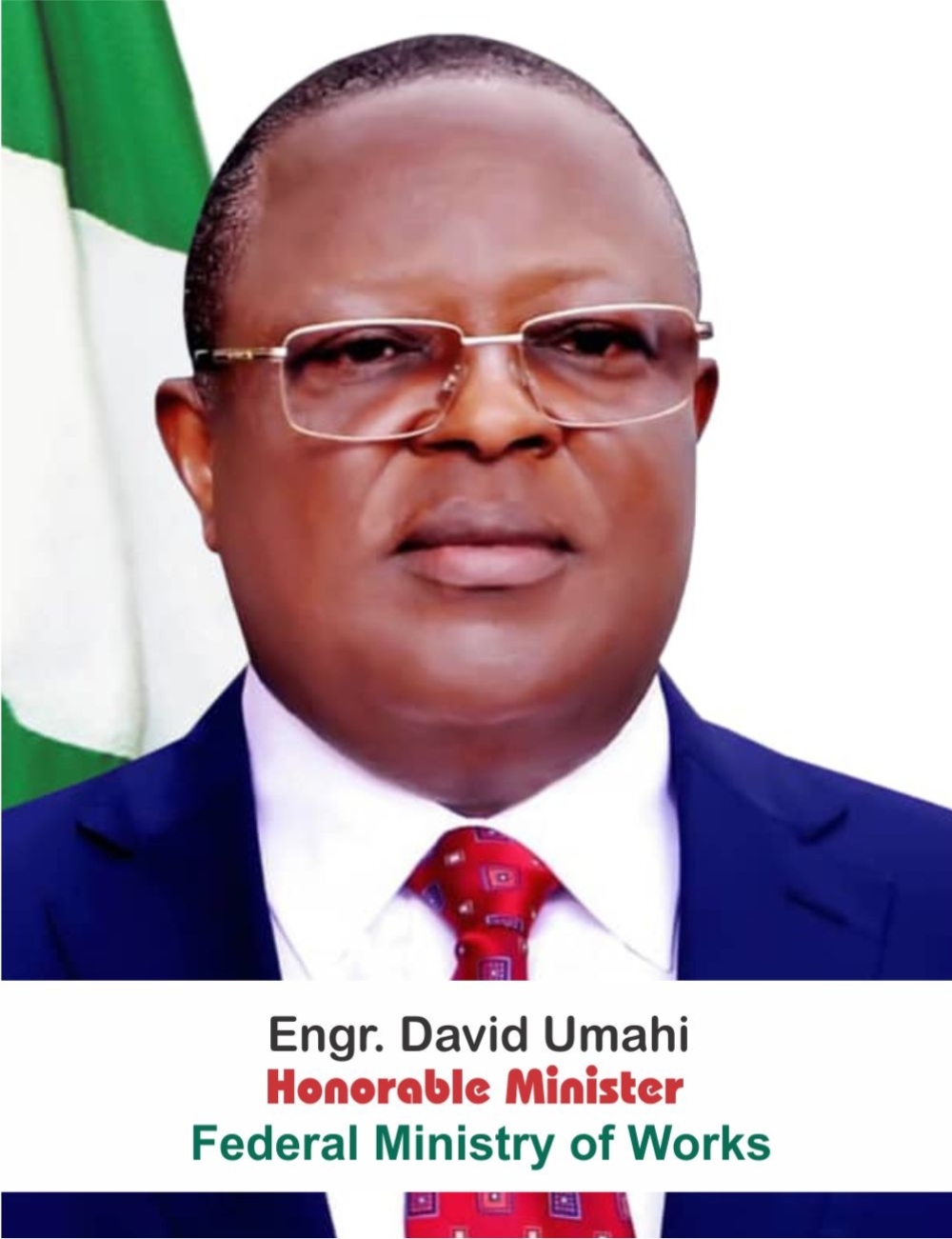
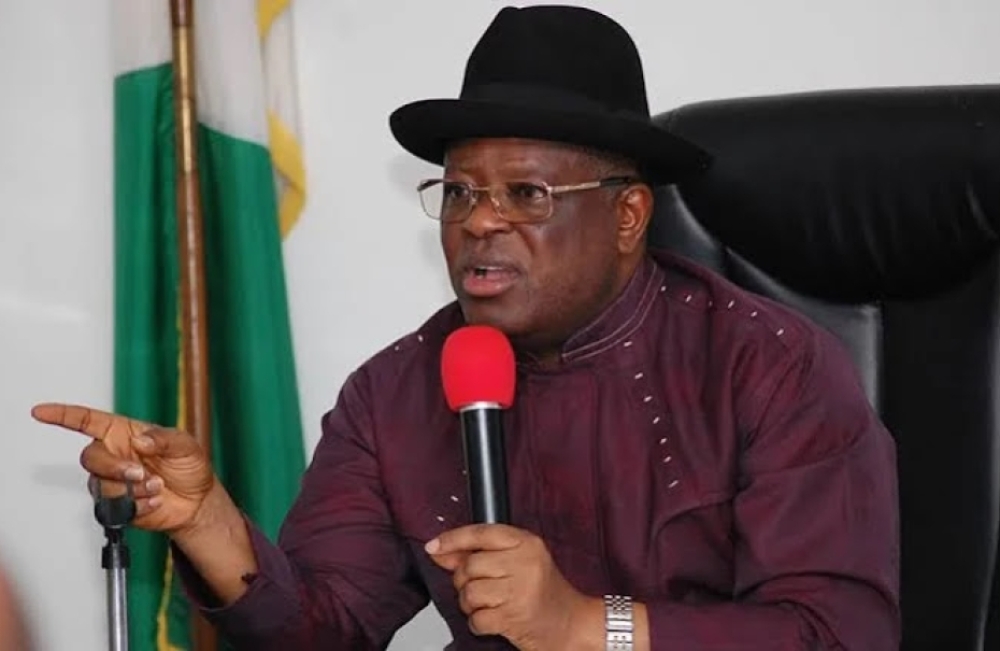
UMAHI ORDERS IMMEDIATE EMERGENCY INTERVENTION ON BENIN-ASABA ROAD, AND SOME OTHER CRITICAL FEDERAL ROADS
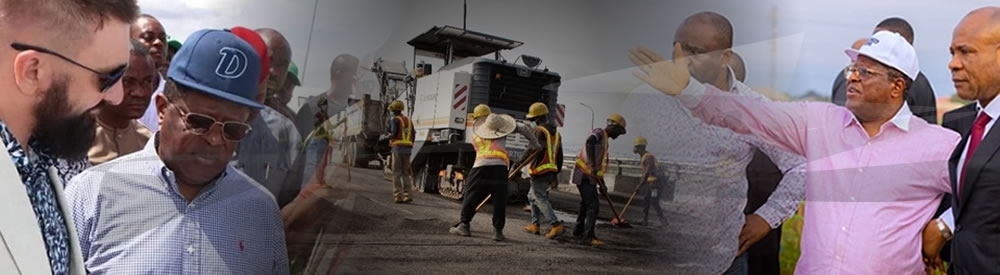
The Honourable Minister of Works, Senator Engr. David Nweze Umahi, CON, has directed the immediate deployment of major contractors to all three sections of the Benin-Asaba Federal Road to restore the failed sections and bring an end to the suffering of motorists and other road users.
This is because, the situation on the concessioned Benin-Asaba Road has reached a point where the overall public interest must take precedence over the existing concession agreement.
Recall that the Honourable Minister of Works was on the Benin-Asaba Road about seven days ago, where he assembled a number of contractors and directed them to prepare for immediate palliative intervention on the affected sections of the road at no cost to the concessionaire. In line with the Concession agreement which requires that before the Federal Government could intervene, the permission of the concessionaire must be required, and that permission was not granted to federal government.
The Minister subsequently proposed three options to the concessionaire, any one of which would have enabled the Federal Government to move in and address the worsening condition of the road. Unfortunately, none of the options was accepted by the concessionaire. Immediately after the Minister left Asaba, the already limited equipment deployed to the road by the concessionaire was further reduced to just one, worsening the situation and increasing the suffering of motorists and other road users.
While the Minister takes responsibility for the concerns and suffering of Nigerians using the road, it is important to state that the concessionaire has also not taken the suffering of Edo people and travelling public sufficiently into consideration by declining all the options put forward by the Federal Government. The concessionaire continues to rely on the terms of the concession agreement entered into by the previous administration, an agreement which weighs heavily against the Federal Government’s ability to intervene quickly in the interest of the public in a situation like this.
In view of this situation, the Honourable Minister of Works has directed the immediate deployment of major contractors within the corridor to all three sections of the Benin-Asaba Road to restore the failed sections and bring relief to the people, with the cost of the emergency intervention being borne by the Federal Government. The Honourable Minister has also directed immediate redesign of the entire route to be rebuilt with reinforced concrete pavement. The public should therefore take note that immediate action is underway to restore every failed section of the Benin-Asaba Road and subsequently rehabilitate the entire sections of the road using reinforced concrete pavement.
2. On the Benin-Sapele Road:
The Governors of Edo and Delta States, the Niger Delta Development Commission (NDDC), and the Federal Government are currently engaged in interventions on different sections of the road to restore the entire route. While some sections are receiving palliative attention, permanent works are also ongoing on other sections.
3. On Ifaki(Ekiti) - Kabba (Kogi) Road:
The Federal Government is engaging both the contractor; Gamji Nigeria Company Limited, and Dangote PLC on immediate emergency and permanent intervention on the most failed sections of the road, while efforts are being made to financially mobilise the company for more extensive permanent work to commence on the axis.
4. On the Sokoto-Zamfara-Katsina Road: This is an inherited project involving the dualisation of approximately 350 kilometres, which translates to about 700 kilometers. The project has since been redesigned and is currently ongoing and most sections are being reconstructed using reinforced concrete pavement. From the Sokoto axis towards Zamfara, over 50 kilometres of one carriageway have been fully completed with reinforced concrete pavement. From Zamfara to Katsina, some sections have been completed and palliative works have been ordered over the sections that have not been reconstructed. However, the pace of work slowed down due to the redesign and rephasing of the project. The contractors currently engaged on the road include CBC, SETRACO, Triacta and Mothercat. They are being remobilised to return to site and complete the outstanding works.
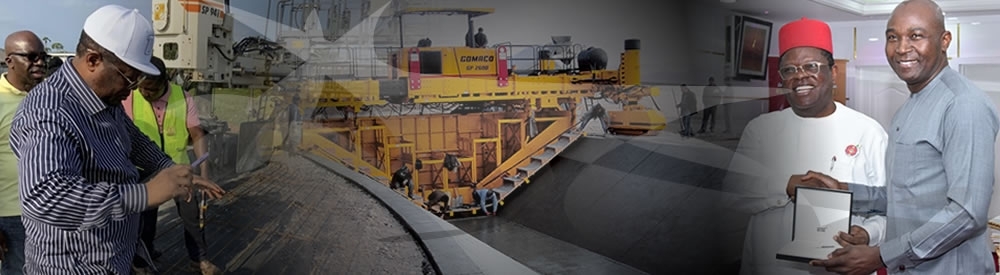
5. On the Abuja-Kaduna-Zaria-Kano Road: The Federal Government took over the Road project and has currently completed the 118-kilometer mostly on reinforced concrete pavement on lot 1. The Lot 2, which covers 164 kilometres, is over 60 percent completed on reinforced concrete pavement. The Federal Government has also introduced solar-powered light on the entire route of Abuja-Kaduna-Zaria - Kano to improve visibility during night travel and enhance the overall security situation on the route. The entire project is scheduled for completion by December 2026.
6. On Bauchi-Jigawa Road: Triacta Nigeria Limited has been mobilised to carry out the necessary interventions on some failed sections and work is currently ongoing in those failed sections.
7. On the Sagamu-Ore Road: 48 Kilometers of the 96-kilometre road have already been completed using reinforced concrete pavement. There is also a 24-kilometre section around Ore which was abandoned by the previous contractor. The Federal Government has directed its immediate restoration to ensure seamless travel. Solar lights are being installed in the entire 96kilometer of the road.
8. On Flooded Sections on Sagamu-Ore-Benin Road: The flooded sections on the same corridor between Sagamu-Ore-Benin Road, as well as other flooded sections in Ondo State, are being designed for emergency procurement and intervention.
9. On the East-West Road:
Some failed and critical sections, including defective sections of bridges along the East-West Road, are being marked out for emergency procurement and intervention.
10. On the Abuja-Lokoja Road:
Several contracts are ongoing along the route, while the three critical sections currently without contracts are being procured for emergency intervention.
11. On the Lokoja-Benin-Warri Road: The President has directed a complete redesign and procurement of the 400-kilometre dualised route covering the uncompleted sections, using reinforced concrete pavement, while palliative works will continue with the contractors currently on the road.
12. On Carter Bridge:
While the Federal Government continues to undertake weekly maintenance of the underwater elements of the bridge. The site has also been handed over to the contractor, CCECC, for the construction of a permanent new bridge, and work has commenced.
13. On the Third Mainland Bridge:
With regard to the defective underwater structural elements, the Federal Government is at the final stage of determining the appropriate intervention for the repair of the affected elements.
14. On the flooded section of the Lagos-Ibadan Road: Work has commenced on the affected section. There are also several flooded sections on federal roads across the six geopolitical zones, largely occasioned by excessive flooding and the effects of climate change. The Federal Government is identifying and marking these sections for immediate attention.
15. On the First and Second Niger Bridges:
Intervention work is ongoing on the approach roads to the Second Niger Bridge damaged by flood and the work is progressing very well. The First Niger Bridge has been closed to traffic to enable immediate repair works. Contractor has mobilized to site and comprehensive rehabilitation of the bridge has started. From Summit Junction to the First Niger Bridge, massive rehabilitation work is also ongoing using reinforced concrete pavement.
16. The Honourable Minister wishes to commend the President of the Federal Republic of Nigeria, His Excellency Bola Ahmed Tinubu, GCFR, for the massive work being undertaken on the nation’s roads since the administration assumed office in 2023.
17. It is important to state that when the present administration came into office, there was hardly any part of the country where one could travel for an hour without encountering significant challenges on the road network. The condition of the country’s roads and bridges was a major national infrastructure challenge.
18. Rather than shy away from the problem, the administration of President Bola Ahmed Tinubu made the nation’s road network a priority. Virtually every part of the country became a priority, and the Federal Government, through the Federal Ministry of Works, Regional Commissions, Parastatals and other MDA’s has continued to respond extensively to these challenges.
19. The Federal Government is currently working on over 80 percent of the inherited federal roads, an unprecedented level of intervention in the country’s road infrastructure.
20. We ask the public to understand the enormous challenges inherited on our roads and bridges and to take note not only of the problems being solved, but also of the permanent solutions being introduced.
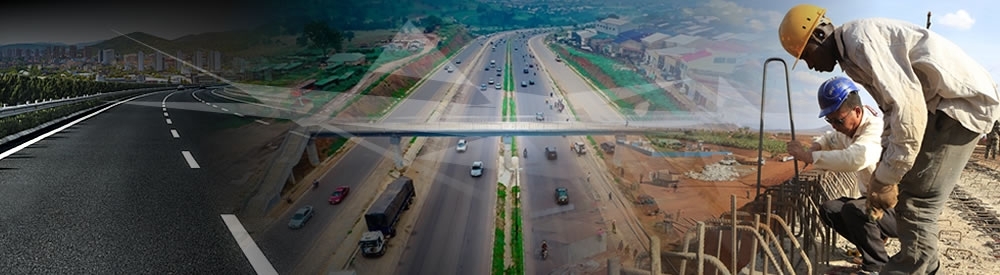
21. A major part of this new approach is the use of reinforced concrete pavement, designed to significantly extend the lifespan of major roads. These roads are expected to last between 50 and 100 years. This means that roads being constructed under President Bola Ahmed Tinubu’s administration are being designed with future generations in mind, rather than simply providing temporary solutions to today’s problems. And this is a complete departure from the past, when roads often deteriorated only a few years after completion, resulting in a continuous cycle of reconstruction and expenditure.
22. We appreciate the concerns of Nigerians over the condition of some roads presently and the difficulties faced by motorists and commuters who cannot move easily from one point to another. Those concerns are legitimate, and the Federal Government is listening. But Nigerians should also recognise the enormous scale of the problems inherited and the amount of work currently being undertaken across the country.
23. It is simply impossible to resolve every road challenge accumulated over many years of neglect by the past administrations within three years. What is important is that the government is working, the government is responding, and the government is putting permanent solutions in place.
25. We appreciate members of the public who send situation reports on failed roads and other infrastructure challenges. These reports help the Ministry identify areas requiring urgent attention. However, we also appeal to members of the public to report when such problems have been addressed, just as they report when they occur.
24. We are aware of situations where photographs and reports of road challenges continue to circulate on social media even after the Federal Government has intervened and resolved the particular problem.
25. However, the Ministry will continue to respond as rapidly as possible to genuine reports and concerns from Nigerians.
26. It is also important to note that we have compiled a comprehensive record of all inherited, ongoing and intervention projects across the country which is available to the public. This is to ensure that Nigerians have access to information on the infrastructure projects being undertaken nationwide and can fully participate in and appreciate the infrastructure revolution of President Bola Ahmed Tinubu’s administration.

UMAHI ORDERS IMMEDIATE EMERGENCY INTERVENTION ON BENIN-ASABA ROAD, AND SOME OTHER CRITICAL FEDERAL ROADS The Honourable Minister of Works, Senator Engr. David Nweze Umahi, CON, has directed the immediate deployment of major contractors to all three sections of the Benin-Asaba Federal Road to restore the failed sections and bring an end to the suffering of motorists and other road users. This is because, the situation on the concessioned Benin-Asaba Road has reached a point where the overall public interest must take precedence over the existing concession agreement. Recall that the Honourable Minister of Works was on the Benin-Asaba Road about seven days ago, where he assembled a number of contractors and directed them to prepare for immediate palliative intervention on the affected sections of the road at no cost to the concessionaire. In line with the Concession agreement which requires that before the Federal Government could intervene, the permission of the concessionaire must be required, and that permission was not granted to federal government. The Minister subsequently proposed three options to the concessionaire, any one of which would have enabled the Federal Government to move in and address the worsening condition of the road. Unfortunately, none of the options was accepted by the concessionaire. Immediately after the Minister left Asaba, the already limited equipment deployed to the road by the concessionaire was further reduced to just one, worsening the situation and increasing the suffering of motorists and other road users. While the Minister takes responsibility for the concerns and suffering of Nigerians using the road, it is important to state that the concessionaire has also not taken the suffering of Edo people and travelling public sufficiently into consideration by declining all the options put forward by the Federal Government. The concessionaire continues to rely on the terms of the concession agreement entered into by the previous administration, an agreement which weighs heavily against the Federal Government’s ability to intervene quickly in the interest of the public in a situation like this. In view of this situation, the Honourable Minister of Works has directed the immediate deployment of major contractors within the corridor to all three sections of the Benin-Asaba Road to restore the failed sections and bring relief to the people, with the cost of the emergency intervention being borne by the Federal Government. The Honourable Minister has also directed immediate redesign of the entire route to be rebuilt with reinforced concrete pavement. The public should therefore take note that immediate action is underway to restore every failed section of the Benin-Asaba Road and subsequently rehabilitate the entire sections of the road using reinforced concrete pavement. 2. On the Benin-Sapele Road: 3. On Ifaki(Ekiti) - Kabba (Kogi) Road: 4. On the Sokoto-Zamfara-Katsina Road: This is an inherited project involving the dualisation of approximately 350 kilometres, which translates to about 700 kilometers. The project has since been redesigned and is currently ongoing and most sections are being reconstructed using reinforced concrete pavement. From the Sokoto axis towards Zamfara, over 50 kilometres of one carriageway have been fully completed with reinforced concrete pavement. From Zamfara to Katsina, some sections have been completed and palliative works have been ordered over the sections that have not been reconstructed. However, the pace of work slowed down due to the redesign and rephasing of the project. The contractors currently engaged on the road include CBC, SETRACO, Triacta and Mothercat. They are being remobilised to return to site and complete the outstanding works. 5. On the Abuja-Kaduna-Zaria-Kano Road: The Federal Government took over the Road project and has currently completed the 118-kilometer mostly on reinforced concrete pavement on lot 1. The Lot 2, which covers 164 kilometres, is over 60 percent completed on reinforced concrete pavement. The Federal Government has also introduced solar-powered light on the entire route of Abuja-Kaduna-Zaria - Kano to improve visibility during night travel and enhance the overall security situation on the route. The entire project is scheduled for completion by December 2026. 6. On Bauchi-Jigawa Road: Triacta Nigeria Limited has been mobilised to carry out the necessary interventions on some failed sections and work is currently ongoing in those failed sections. 7. On the Sagamu-Ore Road: 48 Kilometers of the 96-kilometre road have already been completed using reinforced concrete pavement. There is also a 24-kilometre section around Ore which was abandoned by the previous contractor. The Federal Government has directed its immediate restoration to ensure seamless travel. Solar lights are being installed in the entire 96kilometer of the road. 8. On Flooded Sections on Sagamu-Ore-Benin Road: The flooded sections on the same corridor between Sagamu-Ore-Benin Road, as well as other flooded sections in Ondo State, are being designed for emergency procurement and intervention. 9. On the East-West Road: 10. On the Abuja-Lokoja Road: 11. On the Lokoja-Benin-Warri Road: The President has directed a complete redesign and procurement of the 400-kilometre dualised route covering the uncompleted sections, using reinforced concrete pavement, while palliative works will continue with the contractors currently on the road. 12. On Carter Bridge: 13. On the Third Mainland Bridge: 14. On the flooded section of the Lagos-Ibadan Road: Work has commenced on the affected section. There are also several flooded sections on federal roads across the six geopolitical zones, largely occasioned by excessive flooding and the effects of climate change. The Federal Government is identifying and marking these sections for immediate attention. 15. On the First and Second Niger Bridges: 16. The Honourable Minister wishes to commend the President of the Federal Republic of Nigeria, His Excellency Bola Ahmed Tinubu, GCFR, for the massive work being undertaken on the nation’s roads since the administration assumed office in 2023. 17. It is important to state that when the present administration came into office, there was hardly any part of the country where one could travel for an hour without encountering significant challenges on the road network. The condition of the country’s roads and bridges was a major national infrastructure challenge. 18. Rather than shy away from the problem, the administration of President Bola Ahmed Tinubu made the nation’s road network a priority. Virtually every part of the country became a priority, and the Federal Government, through the Federal Ministry of Works, Regional Commissions, Parastatals and other MDA’s has continued to respond extensively to these challenges. 19. The Federal Government is currently working on over 80 percent of the inherited federal roads, an unprecedented level of intervention in the country’s road infrastructure. 20. We ask the public to understand the enormous challenges inherited on our roads and bridges and to take note not only of the problems being solved, but also of the permanent solutions being introduced. 21. A major part of this new approach is the use of reinforced concrete pavement, designed to significantly extend the lifespan of major roads. These roads are expected to last between 50 and 100 years. This means that roads being constructed under President Bola Ahmed Tinubu’s administration are being designed with future generations in mind, rather than simply providing temporary solutions to today’s problems. And this is a complete departure from the past, when roads often deteriorated only a few years after completion, resulting in a continuous cycle of reconstruction and expenditure. 22. We appreciate the concerns of Nigerians over the condition of some roads presently and the difficulties faced by motorists and commuters who cannot move easily from one point to another. Those concerns are legitimate, and the Federal Government is listening. But Nigerians should also recognise the enormous scale of the problems inherited and the amount of work currently being undertaken across the country. 23. It is simply impossible to resolve every road challenge accumulated over many years of neglect by the past administrations within three years. What is important is that the government is working, the government is responding, and the government is putting permanent solutions in place. 25. We appreciate members of the public who send situation reports on failed roads and other infrastructure challenges. These reports help the Ministry identify areas requiring urgent attention. However, we also appeal to members of the public to report when such problems have been addressed, just as they report when they occur. 24. We are aware of situations where photographs and reports of road challenges continue to circulate on social media even after the Federal Government has intervened and resolved the particular problem.
The Governors of Edo and Delta States, the Niger Delta Development Commission (NDDC), and the Federal Government are currently engaged in interventions on different sections of the road to restore the entire route. While some sections are receiving palliative attention, permanent works are also ongoing on other sections.
The Federal Government is engaging both the contractor; Gamji Nigeria Company Limited, and Dangote PLC on immediate emergency and permanent intervention on the most failed sections of the road, while efforts are being made to financially mobilise the company for more extensive permanent work to commence on the axis.
Some failed and critical sections, including defective sections of bridges along the East-West Road, are being marked out for emergency procurement and intervention.
Several contracts are ongoing along the route, while the three critical sections currently without contracts are being procured for emergency intervention.
While the Federal Government continues to undertake weekly maintenance of the underwater elements of the bridge. The site has also been handed over to the contractor, CCECC, for the construction of a permanent new bridge, and work has commenced.
With regard to the defective underwater structural elements, the Federal Government is at the final stage of determining the appropriate intervention for the repair of the affected elements.
Intervention work is ongoing on the approach roads to the Second Niger Bridge damaged by flood and the work is progressing very well. The First Niger Bridge has been closed to traffic to enable immediate repair works. Contractor has mobilized to site and comprehensive rehabilitation of the bridge has started. From Summit Junction to the First Niger Bridge, massive rehabilitation work is also ongoing using reinforced concrete pavement.
25. However, the Ministry will continue to respond as rapidly as possible to genuine reports and concerns from Nigerians.
26. It is also important to note that we have compiled a comprehensive record of all inherited, ongoing and intervention projects across the country which is available to the public. This is to ensure that Nigerians have access to information on the infrastructure projects being undertaken nationwide and can fully participate in and appreciate the infrastructure revolution of President Bola Ahmed Tinubu’s administration.
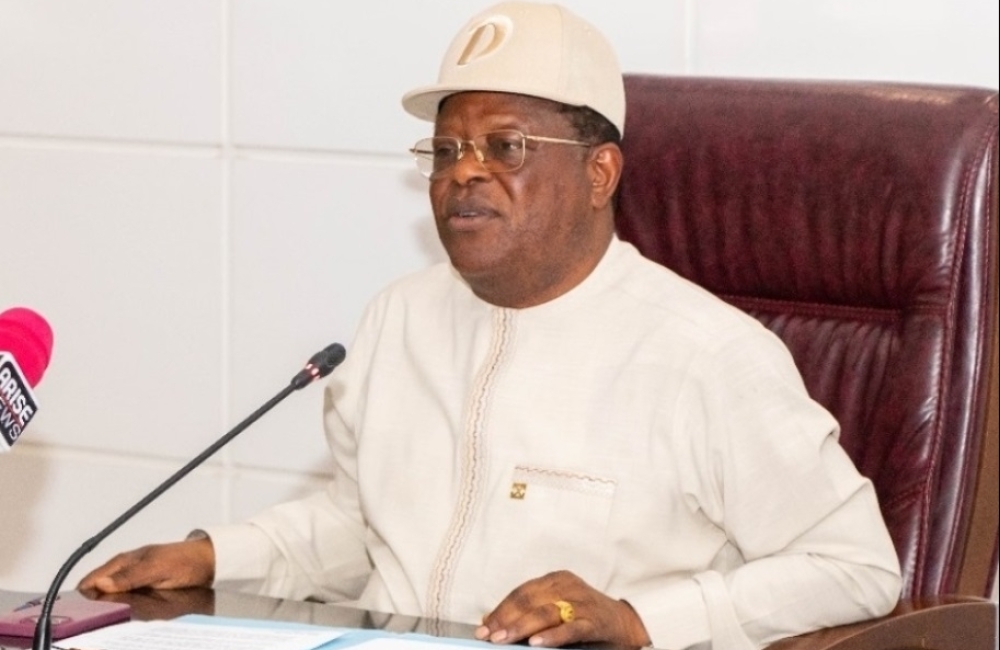
COASTAL HIGHWAY: TINUBU TO FLAG-OFF SECTIONS THREE AND FOUR IN CROSS RIVER TO AKWA IBOM As part of the commitment of the Tinubu Administration to sustain its on-going infrastructural development drive in line with its Renewed Hope Agenda. The Federal Government has announced plans to commence the flag-off of the next phase of the Lagos- Calabar Coastal highway from Cross River to Akwa Ibom. The Minister of Works Senator (Engr) David Umahi disclosed this at the stakeholder’s engagement meeting in Uyo, Akwa Ibom state on 29, June 2024. According to the Minister of Works, “we are here to introduce sections three and four of the famous Lagos- Calabar Coastal Highway. "We started and awarded section one which started in Lagos and terminated at deep port in Lagos and is at 474 km "There is section two that is starting at Lekki Deep Sea Port and taking it to the famous Dangote Refinery" The Honourable Minister added that the President has graciously directed that sections three and four must start at Cross River and stop at Akwa Ibom. Senator Umahi recalled that the Senate President once addressed the people of Akwa Ibom state, and he assured them that "sections three and four will start on this part of the coastal highway and this is the fulfilment of that assurance, and we are happy doing this”. He added. Speaking further, the Minister explained "that section three has 27km on Akwa Ibom land 38km on Cross River State. While section four is entirely on Akwa Ibom that is 80km. When you add 27km and 80km, you have 107km, so you are benefiting through maximizing this coastal highway. "When we complete the procurement process and award these sections three and four, work will start in many sub- sections of this sections all at the same time. "Tinubu is a man who matches his words with actions. So, we are happy with the level of commendations and support we receive from Nigerians for the so many benefits of the coastal highway Speaking at the event, the Senate President, Senator Godswill Akpabio expressed his appreciation to President Bola Ahmed Tinubu for listening to his plea to start sections three and four of the coastal highways in Cross River State to Akwa Ibom. He called on the Akwa Ibom State Governor, Pastor Umo Eno to give maximum support to the federal government and buy into the coastal highway project. The former governor also called on the Minister of works to engage the services of engineers from the state on the project. Also speaking at the event, the Akwa Ibom state governor assured the stakeholders that the state will cooperate with the federal government to ensure the completion of the project. ...
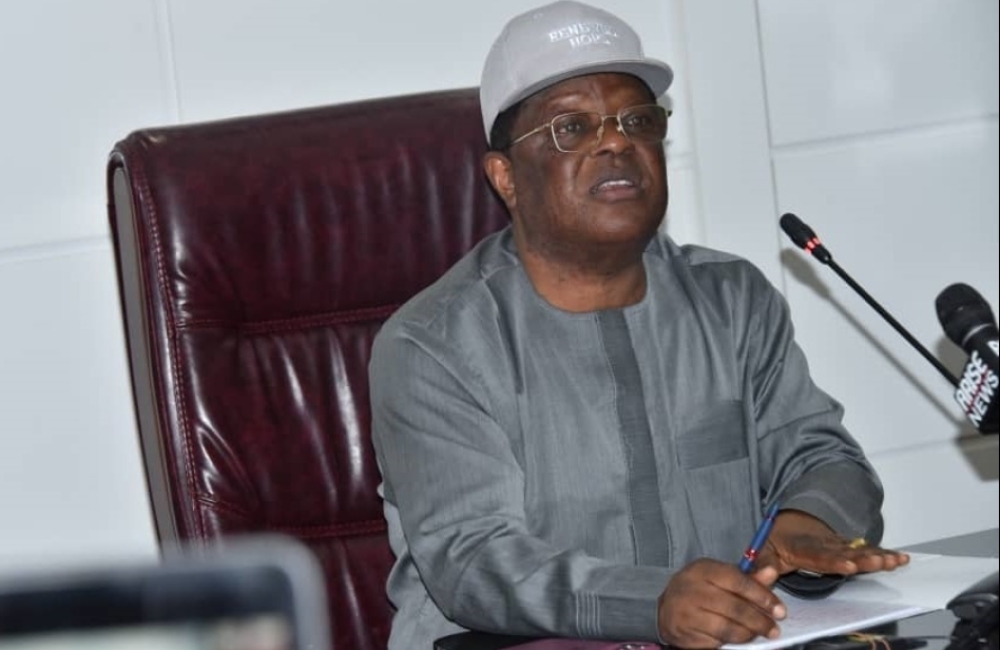
WORKS MINISTER LAMENTS ON THE ATTITUDE OF EXPATRIATE CONTRACTORS ON ROAD PROJECTS. PLEDGE TO ENCOURAGE LOCAL CONTRACTORS The Federal government has announced plans to terminate the contracts of contractors carrying out the reconstruction and rehabilitation of the Lokoja-Benin road for delaying the contracts and not showing commitment to the plight of the people. The Minister of Works, Senator (Engr) David Umahi, disclosed this at the stakeholder’s engagement meeting in Uyo, Akwa Ibom on 29 June,2024 According to the Minister, while lamenting over the attitude of some unpatriotic expatriate contractors in the country warned that any contractor who continues to behave in that way will have his contract terminated. While inspecting projects sites along Calabar -Itu road on his way to Cross River State from Uyo, Senator Umahi was physically worried about the agony Nigerians go through over the poor condition of the road. He called on Julius Berger to return to the project site immediately to avoid sanctions from the ministry. "We are going to do everything to support local contractors, we are going to encourage them, build them so that they can compete with the expatriate contractors, but more pains no more gains" he said. The Minister thanked President Tinubu for his desire to alleviate the suffering of our people by carrying out massive infrastructural rehabilitation in the country. ...
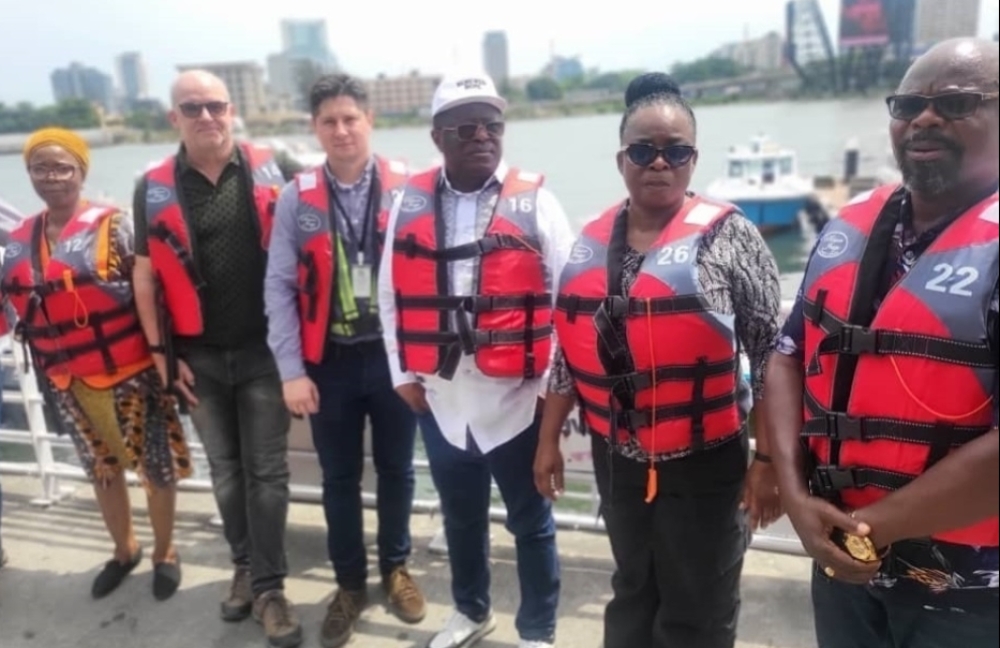
HONOURABLE MINISTER OF WORKS, UMAHI COMMENCES NATIONWIDE STAKEHOLDERS' ENGAGEMENT FOR THE CONSTRUCTION OF RENEWED HOPE LEGACY ROAD INFRASTRUCTURE PROJECTS THAT WILL STIMULATE NATIONAL PROSPERITY Following the approval of the President of the Federal Republic of Nigeria, His Excellency President Asiwaju Bola Ahmed Tinubu GCFR for the commencement of the national road infrastructure network that will traverse the various trade and agricultural corridors of Nigeria and in keeping with the Renewed Hope strategic economic recovery plans, the Honourable Minister of Works, His Excellency, Sen Engr Nweze David Umahi CON has commenced nationwide stakeholders engagement for the construction of sections of the three (3) Renewed Hope Legacy Road Infrastructure projects. The Honourable Minister will on Saturday, 29th, and Sunday 30th June 2024 hold this session of the stakeholders' engagement in Akwa Ibom and Cross-River States, respectively. In Akwa Ibom, he will present and discuss the proposed alignment for the construction of Sections 3B and 4 of Lagos-Calabar Coastal Highway project passing through the State and in Cross River State he will present and discuss section 3A of Lagos-Calabar Coastal Highway and 92 km segment of the Calabar-Sout East- North Central- Apo Abuja Superhighway passing through the State. Stakeholders expected in the event include: Governors of concerned States, Senate and Federal House of Representatives Committees on Works, Honourable Ministers of line Ministries, Royal fathers and technocrats, Nigerian Communications Commission and major Telecommunication Service Providers, other relevant stakeholders and the Media. The Senate President Federal Republic of Nigeria, His Excellency, Sen. Godswill Akpabio CON is expected to be the Special Guest of Honour in the event The three Renewed Hope Legacy Road Infrastructure projects when completed shall have historic national interconnectivity that will crisscross the major transportation routes of Northern and Southern States of Nigeria and that is the Sokoto - Badagry Superhighway (SBS): a 1,000-kilometer highway connecting Sokoto in Northern Nigeria to Badagry in Western Nigeria, passing through 7 States and connecting to the Lagos-Calabar coastal (LCCH) highway at Ahmadu Bello way Lagos; Lagos-Calabar Coastal Highway: a 700-kilometer coastal highway connecting from Lagos State to Cross River State through 8 States; and the Calabar- South East- North Central- Apo Abuja 477-kilometer Superhighway connecting from Calabar to Ebonyi, Benue, Kogi, Nasarawa States and ending at Apo in Abuja This stakeholders' meeting will afford opportunities to communities along the routes and trade corridors to appreciate the potentials of the project to the enhancement of industrialization, tourism, agricultural commercialization and mechanization, trade and investment, and economic competitiveness not only among the people of the area, but also the various regions of Nigeria, and thus stimulate national prosperity. ...
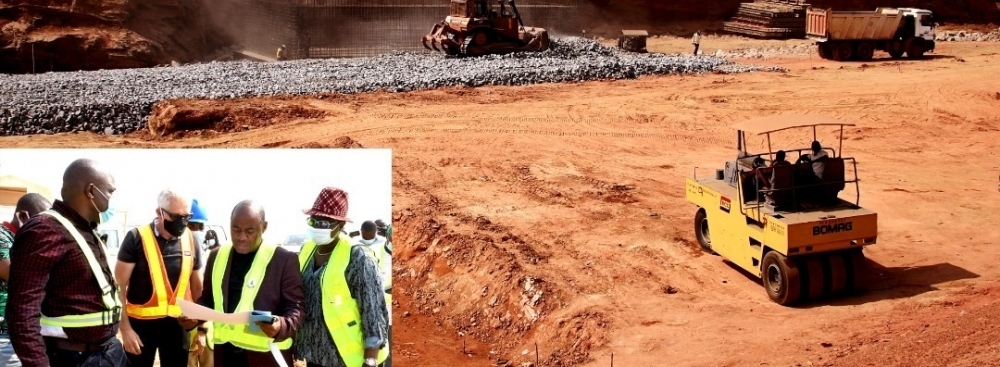
State's Encroachment Affecting Progress of Our Work- Engr. Adebiyi
The Director of Highway Construction and Rehabilitation of Federal Ministry of Works and Housing, Engr. Funso Adebiyi has said that the encroachment on the Rigth-of-way of the Fedeal road projects in Oyo State and Illega mining activities along the new alignments has impeded the. Construction and the dualisation of the Ibadan-Ilorin road section 2 Oyo-Ogbomosho road projects.
Engr. Adebiyi stated this at the weekend during the inspection of the 56.00km green field road project.
He stated that the project was initially awarded in 2010 to Messrs RCC Nigeria limited and was later reviewed after augmentation on November, 2020 with a completion date of November, 2023.
Speaking during inspection of the project, the Director disclosed that the level of completion was 76 percent before the contract was reviewed by the Federal Executive Council which now brought the level of percentage completion to 40 percent as a result of additional works approved by Federal Executive
He described the quality of job done as standard pointing out that it was of international standard. However, he pointed out that the activities of illegal mining and building activities were undermining the progress of work on the project. “Any such structure within the right of our way is illegal and that government would not pay any form of compensation. You cannot build on someone's land and still expect compensation," he explained.
He appealed to Oyo State Government to help stop the illegal encroachment on federal government's right-of-way "We discovered that the State Goverment was giving approval to build and mine along the same alignment of the road and this has created a huge problem for the progress of work because the earth materials we would have used has been mined away, it is not good and must be stopped," he said.
Adebiyi also cautioned drivers for their reckless driving.
The Federal Controller of Works, Oyo state, Engr. kayode Ibrahim, said that the contractor was working massively at the bridge locations and at various stages of completion on the five bridges adding that 21.80km of asphaltic binder has been accomplished.
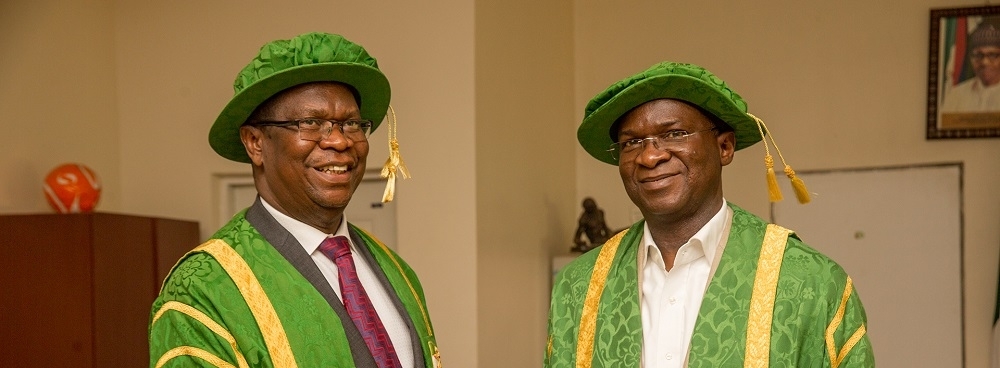
Text Of The Special Herbert Macaulay Memorial Lecture Delivered By The Honourable Minister Of Power, Works & Housing At The University Of Nigeria, Nsukka
I am the most unlikely candidate to deliver a lecture on engineering and its contributions to national development.
I feel truly honored to be invited and I am humbled. As you all know too well, I am a legal practitioner, and went to university with subjects in the liberal arts, likely History, Literature, Economics and Religious Knowledge.
This itself was not a choice. It was, for me, a matter of necessity. I wanted to be a professional and law was the only profession I could gain admission to study without having to contend with Mathematics.
I just did not like Mathematics and was confounded by figures and formulas in Physics and Chemistry.
In my third year in secondary school, I was moved from the science classes to the arts and I was happy to see end of Mathematics. Or, so I thought, until Public Service beckoned.
From my days as Governor having to deal with budgets, Mathematics did not leave me as much as I thought we had parted ways.
Roads, Bridges, Waterworks, Housing projects and General Infrastructure had to be built in Lagos State if we were to come anywhere close to fulfilling electoral promises that I made and serving the people in any meaningful way.
Enter drawings, designs, calculations in bills of Engineering measurement, bills of quantities to measure costs and so much more.
Everything I thought I had parted ways with as a former student of the sciences were staring me in the face as a Governor.
I had to understand road designs, piles for bridges, housing designs, bills of quantities, dredging projects, gas pipelines to support our independent power plants, chlorine aid chemicals to treat water, visits had to be made to project sites and everywhere I entered there was an engineer of one type or the other.
TYPES OF ENGINEERING
In preparing this speech my little research further brought to fore the many ways that engineering defines our lives more than we have perhaps acknowledged.
For example, some of the diverse fields of engineering we have not paid enough attention to are:
Metallurgical Engineering which involves the research, control and development of processes used in the extraction and refining of metals.
Biomechanical and Biomedical engineering which combine the discipline of mechanical engineering with human anatomy and physiology. Resultantly, this leads to work in developing prostheses, developing movements for people with spinal injuries and refining equipment used for athletes.
Geomatic engineers collect, display and analyse data about the Earth’s surface and its gravity fields. This is crucial for developing mapping technology, delineating legal boundaries and indeed monitoring environmental changes.
Plastics engineering. At a time where there is a proliferation of plastic waste, this area of engineering can help develop technologies to manipulate and reshape plastics for recycling purposes.
Software engineering. In this age of apps, software engineers are trained in the specification, development, design and maintenance of software systems and products.
Water resource engineering. We cannot take for granted that water will always be an available resource. Indeed, there are already many examples, both at home and abroad, where the search for water has quickly escalated into conflicts. This type of engineering helps in the assessment of pollution sources, the control of flood damage and resolution of conflicts and effective management of water reserves.
As a coastal State, Lagos was threatened by flood, being 2 (TWO) meters below the sea level and again engineers around me, explaining how the drainage hydraulic systems of canals worked to prevent the State from being submerged.
It became very clear to me that engineering defines our civilization and there is no escape from it, in the way that law, orders our civilizations.
From the sub-national activities in Lagos, things have moved on to a National scale, with President Muhammadu Buhari’s decision to merge the Ministries of Power, Works and Housing into one, and my appointment as substantive Minister, with Mustapha Baba Shekuri and Suleiman Hassan Zarma as Ministers of State I and II respectively.
I stand here today on the shoulders of giants who created this opportunity.
President Muhammadu Buhari who built this platform, and the many engineers at Lagos State level and now in the Ministry of Power, Works and Housing in Abuja, who have been my pillars of support by sharing their knowledge.
As I have said earlier, engineering defines life, and for a nation with a growing population like Nigeria that requires a massive injection of infrastructure, Engineering is going to play a very important role in our journey of development and our quest for prosperity.
One of the things I hope to achieve here is to re-focus the attention of this university and others to the need that Nigeria has today and will have for many decades to come, for well-trained Engineers who will not only build our infrastructure but will maintain them.
Given what President Buhari has committed to deliver, I do not foresee a situation where any Engineer or Technician who is enterprising will not have job to do; and I will explain.
As I said earlier, our population is growing; and the impact on our infrastructure is now manifest and it is affecting our quality of life.
Whether it is this school, where you will see that lecture rooms are crowded, bed space for students is a challenge, sports facilities probably aging, and water supply a struggle.
Or at the sea ports and airports that were built decades ago, or road networks that erosion have taken over, or power transformers and distributions lines that now serve multiples of the people they were initially installed for.
You will see an opportunity for infrastructure upgrade, addition, renewal or reconstruction. Every time you see these challenges, there is inherently an opportunity for an engineer; and this is what I want us to focus on—the opportunities.
We have done it before. In the 1970s immediately after the unfortunate Civil War, Nigeria embarked on a radical infrastructure renewal, building stadia, roads, bridges, high rise towers and so on, similar to what has unfolded in the United Arab Emirate in the last decade.
In the 1990s, there was a modest effort, which coincidentally was led by President Buhari under the aegis of the Petroleum Trust Fund, which became short-lived.
Some of the roads that are still motorable in some parts of the country today were beneficiaries of that intervention, and it is no surprise that people in those places still look to President Buhari for hope because they know he has done it before.
Sadly, we missed this opportunity in the period of between 2007-2015 on a national scale when the price of crude oil, our biggest export, started rising until it exceeded to $100 per barrel and stayed there for a few years.
While many oil producing nations like Saudi Arabia, Qatar, Brazil, United Arab Emirates of Dubai and Abu Dhabi chose to invest in life changing infrastructure of hospitals, bridges airports, universities, skyscrapers, the managers of our own economy chose a different infrastructure.
They called it Stomach Infrastructure.
They shared the money that could have changed our lives.
They imported $5m worth of rice almost on a daily basis and distributed it to the people who could have produced it.
There is now judicial proceeding seeking to have some people account for how $2.2 Billion was allegedly shared for financing an election.
While the judicial proceedings will, hopefully, answer the question as to what happened, my interest is in the lost opportunity.
Around the same period and with the same opportunity of oil proceeds, the Burj Khalifa, which is 829 meters tall and has 163 floors making it, the tallest building of all time, opened in Dubai; to announce their emergence on the world stage .
It took less than 5 years to build and it cost $1.5 Bilion, less than what was allegedly diverted for elections here.
The opportunities that were lost are difficult to fully quantify in terms of material success and pride, employment for engineers, technicians, artisans, suppliers, and so much more.
This is the lost opportunity that President Buhari is determined to harness through the Economic Recovery and Growth Plan, a document that I enjoin every one of us to read.
In it, you will see a clear statement of intent, with a clear statement of actions, and you will see what each ministry is supposed to do.
For the Ministry of Power, Works and Housing, our action points relate to Power sufficiency and infrastructure delivery, especially roads, bridges, public buildings and housing, in order to reflate the economy, create jobs, improve productivity and growth.
So, when President Buhari talks about change, he wants us to understand that stomach infrastructure was a National Misadventure that must never happen again.
He wants us to commit to the type of infrastructure that changes lives, and builds real things that will deliver a shared prosperity.
When President Buhari talks about change, he wants us to remember that while billions of dollars were being mismanaged, the roads on this campus were deteriorating. Enugu-Port-Harcourt road was not motorable.
Enugu- Onitsha road was dilapidated.
Work had stopped on the Second Niger Bridge.
Work had stopped on the Zik Mausoleum, all because we chose stomach infrastructure and neglected to pay contractors and engineers.
President Buhari wants us to understand that change is not an accidental occurrence; it is a matter of choice. Unlike before, President Buhari’s government has made a different choice.
That choice is to invest our resources in infrastructure; and in 3 years the signs are becoming manifest:-
Some Contractors are now back to university roads.
The first phase of 9 out of 37 Independent Power Projects for Federal Universities has been funded from the budget and the first Green Bonds ever launched in Africa.
Contractors are back to work on Enugu–Port Harcourt and Enugu–Onitsha; the problem of the 9th Mile Road will be finally solved with a new engineering design.
Work has resumed on the 2nd Niger Bridge, and with a Presidential Infrastructure Development Fund, work should not stop again on that project because of funding, until it is completed.
The Contractor is back to site at the site of the Zik Mausoleum, and promises to complete and hand it over before December this year.
There is a housing project being undertaken in 34 states of Nigeria including this State, where no less than one thousand people are currently employed at each site including engineers.
Power projects are being delivered to critical markets under a pilot scheme to support small businesses, using young electrical engineers deploying solar and gas plants in Ariaria Market for 37,000 shops and Sabon Gari Market for 15,000 shops.
Whenever I visited all these sites, the dominant profession was engineering. Men and women involved in design, testing, measurement, mixing of aggregate to cast concrete, Iron rods for reinforcement, installing solar panels, connecting electrical appliances like transformers, circuit breakers, and many more in order to deliver life changing infrastructure.
When we talk about how difficult things became in our country, it is a conversation about the opportunities we probably did not give to our Engineers.
President Buhari is determined to change that.
If you are still looking for evidence of his commitment to change; I will share some more examples with you.
The first is a series of difficult projects that seem to have defied solutions and to which the Buhari Government directed its change agenda.
One of them is the massive commitment to developing a National Standard gauge rail network to ease transportation.
The first of these, the Lagos–Ibadan-Kano line has commenced with thousands of men and women working on the sites.
There is also the Bodo – Bonny highway and bridges to connect Bodo to the Island of Bonny in Rivers state.
You might be interested to learn that this project was conceived in the late 1970s and two different contracts to deliver it were not executed.
The project has now been awarded and the contractor is on site, employing engineers and other professionals to deliver life-changing infrastructure in the Niger Delta.
One of the things that will happen is that the dangerous crossing across the creek and Atlantic Ocean from Bodo to Bonny and back and its consequential cost and time to the people of the area will be replaced by a drive across the bridge over the water bodies.
Of course, some of you might have heard of the Mambilla Hydro power plant. To put it mildly in scope and cost it is gargantuan.
It will easily contend as the largest single power plant in Africa, with its 3,050 megawatt size and its $5.7 Billion cost.
It will involve building massive dams, casting millions of tons of concrete, deploying millions of tons of cement, iron rods, mobilising equipment, transporting them, housing workers, feeding them and developing an ecosystem of productivity in Taraba State, that will challenge all of our logistic capacities.
It will take at least 5 years to build; during which time $5.7 Billion, about N2.1 Trillion, will be expended. It is an Engineer’s dreams come true.
What is significant about it is that it was conceived since about 1972, and while many talked about it, the Buhari Government choose to act. That is change.
After many years, the Federal Executive Council of Nigeria, the highest Executive decision making body created by our constitution has approved it. The Engineering procurement and construction contract has been signed.
What is left is to raise the funding to finance it.
Instead of bemoaning the lost opportunity of many squandered billions of dollars, this project was one of the top items on President Buhari’s agenda when he visited China in 2016.
The Minister for Finance is leading our negotiation team to raise the finance.
Apart from the power that it will deliver, the construction jobs it will create, the mining employment for rocks, sand, and other building materials, the road network, the resettlement construction, and other benefits, it will unlock the agricultural promise of Taraba and surrounding states in a most defining way for our National prosperity.
But the commitment does not end at project development; it is backed by Executive action such as the President’s Executive Order No 5 that seeks to promote and secure local content by ensuring that the jobs that can be done by Nigerians must be reserved for them.
This must be good and welcome news for Nigerian professionals, especially those involved in Engineering and Construction business.
On our housing sites, there are similar directives that all the materials to used be made in Nigeria, unless they are items that we are unable to produce.
But Mr. President has not stopped there. In order to ensure that yesterday’s lost opportunities are not replicated, he is now deploying some of the recovered proceeds towards rebuilding our infrastructure.
In the Works Sector, he has just approved the release of N120 Billion towards funding 37 roads in the 2018 budget.
This is indisputable evidence of his commitment to hand Nigeria back to the people and make our money work for us.
Ladies and Gentlemen, the list of what is changing in our country for the better is long. The promise of hope and a better tomorrow are bigger than the problem that Nigeria faces today.
What remains is a matter of choice for us to choose what we want.
We will have to choose between real infrastructure and infrastructure of the stomach.
The Faculty of Engineering in the University of Nigeria and other Universities, and the Engineering students have to make, a choice; about which type of infrastructure provides security for their future.
It is, for me, truly commendable for the University of Nigeria to have inaugurated such a prestigious platform as this Herbert Macaulay Memorial Lecture, to propagate the nationalist and developmental ideals of one of the Giants of our country.
What we then do after the lecture becomes more defining than what we say.
The Economic Recovery and Growth Plan and the commitment to infrastructure renewal and development indicate clearly, where this Government’s priorities lie.
In order to make our manpower development and production respond to our National needs, I contend that the University of Nigeria must see the enormous opportunities and need for Engineers if we are to successfully deliver these projects I have listed and many more still to come.
The best way to respond and contribute to national development is to commit to producing high quality Engineering graduates, and stimulate a high Engineering undergraduate intake.
The future for jobs is promising.
Engineers will be needed not just to build Mambilla Power, the Rail projects, the Bridges, the Airports, the Seaports, and the Gas pipelines, the Power Substations and other projects, but more importantly to operate and maintain them in order to keep them running.
It is this handshake, between Government programmes and policies on one hand, and career development and manpower building by the Universities on the other hand that will take us quicker and faster towards the kind of Nigeria, that men like Herbert Macaulay in whose name we gather, dreamt of, lived for, fought for and died for.
For the construction to take place there must be a conducive work environment, where opportunities can birth Jobs, drive productivity and create prosperity; there must be peace.
Peace of a kind that requires little if any of the law enforcement capacity of the state; and a type of peace that is driven by brotherhood and peaceful coexistence.
All of us must seek that kind of peace in our enlightened common interest.
I seriously think that the best that security agents can do is to prevent conflict from being violent, to enforce the law and impose order.
It us, you and I, who hold the keys to peace
I thank Professor Benjamin C Ozumba, the Vice-Chancellor, the University of Nigeria, the faculty Board of Engineering for inviting me, and I thank you for listening.
Babatunde Raji Fashola, SAN
Honourable Minister of Power, Works and Housing
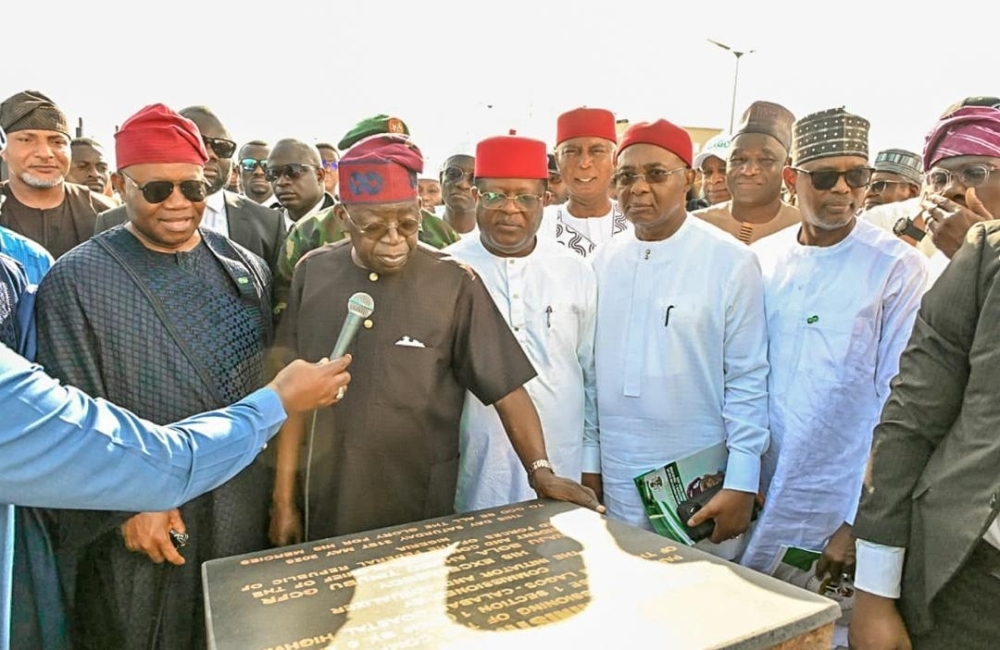
DRIVING NIGERIA’S FUTURE: CELEBRATING TWO YEARS OF TRANSFORMATIVE LEADERSHIP AND THE LAGOS-CALABAR COASTAL HIGHWAY MILESTONE
DRIVING NIGERIA’S FUTURE: CELEBRATING TWO YEARS OF TRANSFORMATIVE LEADERSHIP AND THE LAGOS-CALABAR COASTAL HIGHWAY MILESTONE
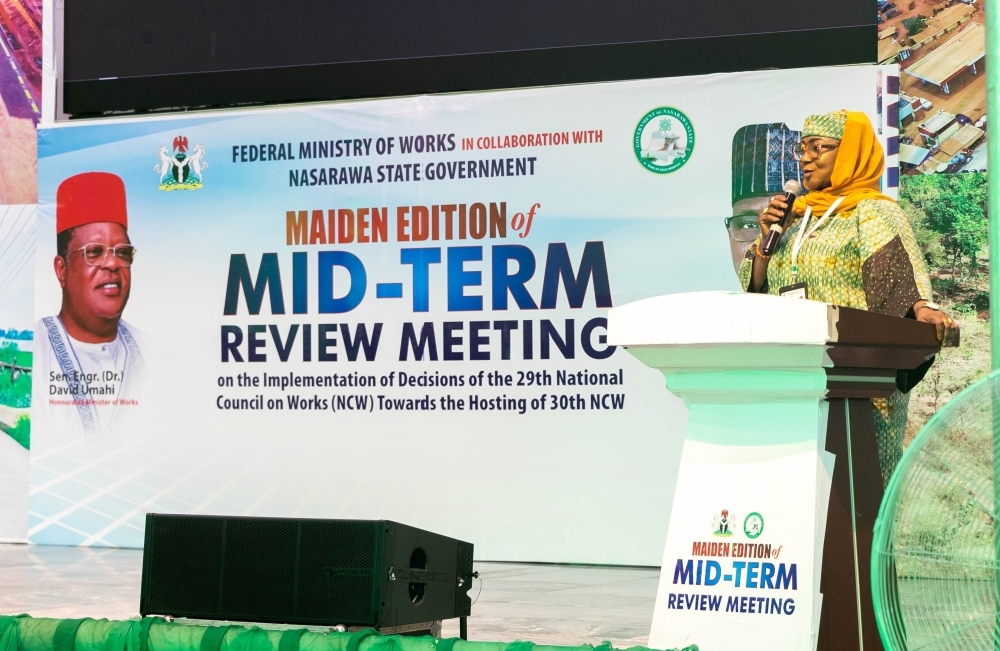
MID -TERM REVIEW MEETING ON THE IMPLIMENTATION OF THE DECISIONS REACHED AT THE 29TH NATIONAL COUNCIL ON WORKS (NCW) DAY 1
MID -TERM REVIEW MEETING ON THE IMPLIMENTATION OF THE DECISIONS REACHED AT THE 29TH NATIONAL COUNCIL ON WORKS (NCW) DAY 1