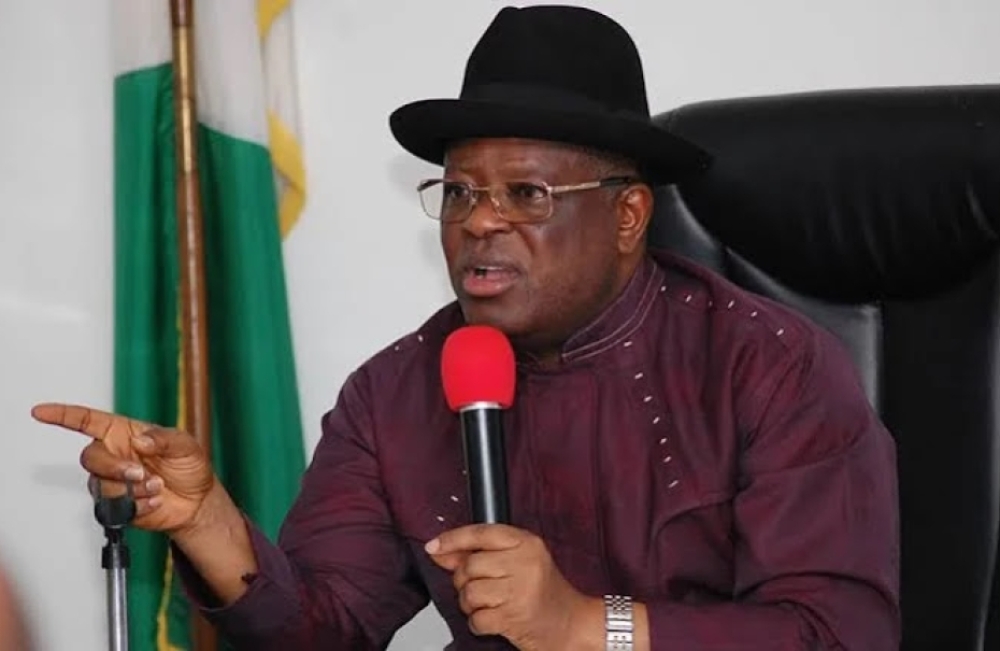
UMAHI ORDERS IMMEDIATE EMERGENCY INTERVENTION ON BENIN-ASABA ROAD, AND SOME OTHER CRITICAL FEDERAL ROADS
The Honourable Minister of Works, Senator Engr. David Nweze Umahi, CON, has directed the immediate deployment of major contractors to all three sections of the Benin-Asaba Federal Road to restore the failed sections and bring an end to the suffering of motorists and other road users.
This is because, the situation on the concessioned Benin-Asaba Road has reached a point where the overall public interest must take precedence over the existing concession agreement.
Recall that the Honourable Minister of Works was on the Benin-Asaba Road about seven days ago, where he assembled a number of contractors and directed them to prepare for immediate palliative intervention on the affected sections of the road at no cost to the concessionaire. In line with the Concession agreement which requires that before the Federal Government could intervene, the permission of the concessionaire must be required, and that permission was not granted to federal government.
The Minister subsequently proposed three options to the concessionaire, any one of which would have enabled the Federal Government to move in and address the worsening condition of the road. Unfortunately, none of the options was accepted by the concessionaire. Immediately after the Minister left Asaba, the already limited equipment deployed to the road by the concessionaire was further reduced to just one, worsening the situation and increasing the suffering of motorists and other road users.
While the Minister takes responsibility for the concerns and suffering of Nigerians using the road, it is important to state that the concessionaire has also not taken the suffering of Edo people and travelling public sufficiently into consideration by declining all the options put forward by the Federal Government. The concessionaire continues to rely on the terms of the concession agreement entered into by the previous administration, an agreement which weighs heavily against the Federal Government’s ability to intervene quickly in the interest of the public in a situation like this.
In view of this situation, the Honourable Minister of Works has directed the immediate deployment of major contractors within the corridor to all three sections of the Benin-Asaba Road to restore the failed sections and bring relief to the people, with the cost of the emergency intervention being borne by the Federal Government. The Honourable Minister has also directed immediate redesign of the entire route to be rebuilt with reinforced concrete pavement. The public should therefore take note that immediate action is underway to restore every failed section of the Benin-Asaba Road and subsequently rehabilitate the entire sections of the road using reinforced concrete pavement.
2. On the Benin-Sapele Road:
The Governors of Edo and Delta States, the Niger Delta Development Commission (NDDC), and the Federal Government are currently engaged in interventions on different sections of the road to restore the entire route. While some sections are receiving palliative attention, permanent works are also ongoing on other sections.
3. On Ifaki(Ekiti) - Kabba (Kogi) Road:
The Federal Government is engaging both the contractor; Gamji Nigeria Company Limited, and Dangote PLC on immediate emergency and permanent intervention on the most failed sections of the road, while efforts are being made to financially mobilise the company for more extensive permanent work to commence on the axis.
4. On the Sokoto-Zamfara-Katsina Road: This is an inherited project involving the dualisation of approximately 350 kilometres, which translates to about 700 kilometers. The project has since been redesigned and is currently ongoing and most sections are being reconstructed using reinforced concrete pavement. From the Sokoto axis towards Zamfara, over 50 kilometres of one carriageway have been fully completed with reinforced concrete pavement. From Zamfara to Katsina, some sections have been completed and palliative works have been ordered over the sections that have not been reconstructed. However, the pace of work slowed down due to the redesign and rephasing of the project. The contractors currently engaged on the road include CBC, SETRACO, Triacta and Mothercat. They are being remobilised to return to site and complete the outstanding works.
5. On the Abuja-Kaduna-Zaria-Kano Road: The Federal Government took over the Road project and has currently completed the 118-kilometer mostly on reinforced concrete pavement on lot 1. The Lot 2, which covers 164 kilometres, is over 60 percent completed on reinforced concrete pavement. The Federal Government has also introduced solar-powered light on the entire route of Abuja-Kaduna-Zaria - Kano to improve visibility during night travel and enhance the overall security situation on the route. The entire project is scheduled for completion by December 2026.
6. On Bauchi-Jigawa Road: Triacta Nigeria Limited has been mobilised to carry out the necessary interventions on some failed sections and work is currently ongoing in those failed sections.
7. On the Sagamu-Ore Road: 48 Kilometers of the 96-kilometre road have already been completed using reinforced concrete pavement. There is also a 24-kilometre section around Ore which was abandoned by the previous contractor. The Federal Government has directed its immediate restoration to ensure seamless travel. Solar lights are being installed in the entire 96kilometer of the road.
8. On Flooded Sections on Sagamu-Ore-Benin Road: The flooded sections on the same corridor between Sagamu-Ore-Benin Road, as well as other flooded sections in Ondo State, are being designed for emergency procurement and intervention.
9. On the East-West Road:
Some failed and critical sections, including defective sections of bridges along the East-West Road, are being marked out for emergency procurement and intervention.
10. On the Abuja-Lokoja Road:
Several contracts are ongoing along the route, while the three critical sections currently without contracts are being procured for emergency intervention.
11. On the Lokoja-Benin-Warri Road: The President has directed a complete redesign and procurement of the 400-kilometre dualised route covering the uncompleted sections, using reinforced concrete pavement, while palliative works will continue with the contractors currently on the road.
12. On Carter Bridge:
While the Federal Government continues to undertake weekly maintenance of the underwater elements of the bridge. The site has also been handed over to the contractor, CCECC, for the construction of a permanent new bridge, and work has commenced.
13. On the Third Mainland Bridge:
With regard to the defective underwater structural elements, the Federal Government is at the final stage of determining the appropriate intervention for the repair of the affected elements.
14. On the flooded section of the Lagos-Ibadan Road: Work has commenced on the affected section. There are also several flooded sections on federal roads across the six geopolitical zones, largely occasioned by excessive flooding and the effects of climate change. The Federal Government is identifying and marking these sections for immediate attention.
15. On the First and Second Niger Bridges:
Intervention work is ongoing on the approach roads to the Second Niger Bridge damaged by flood and the work is progressing very well. The First Niger Bridge has been closed to traffic to enable immediate repair works. Contractor has mobilized to site and comprehensive rehabilitation of the bridge has started. From Summit Junction to the First Niger Bridge, massive rehabilitation work is also ongoing using reinforced concrete pavement.
16. The Honourable Minister wishes to commend the President of the Federal Republic of Nigeria, His Excellency Bola Ahmed Tinubu, GCFR, for the massive work being undertaken on the nation’s roads since the administration assumed office in 2023.
17. It is important to state that when the present administration came into office, there was hardly any part of the country where one could travel for an hour without encountering significant challenges on the road network. The condition of the country’s roads and bridges was a major national infrastructure challenge.
18. Rather than shy away from the problem, the administration of President Bola Ahmed Tinubu made the nation’s road network a priority. Virtually every part of the country became a priority, and the Federal Government, through the Federal Ministry of Works, Regional Commissions, Parastatals and other MDA’s has continued to respond extensively to these challenges.
19. The Federal Government is currently working on over 80 percent of the inherited federal roads, an unprecedented level of intervention in the country’s road infrastructure.
20. We ask the public to understand the enormous challenges inherited on our roads and bridges and to take note not only of the problems being solved, but also of the permanent solutions being introduced.
21. A major part of this new approach is the use of reinforced concrete pavement, designed to significantly extend the lifespan of major roads. These roads are expected to last between 50 and 100 years. This means that roads being constructed under President Bola Ahmed Tinubu’s administration are being designed with future generations in mind, rather than simply providing temporary solutions to today’s problems. And this is a complete departure from the past, when roads often deteriorated only a few years after completion, resulting in a continuous cycle of reconstruction and expenditure.
22. We appreciate the concerns of Nigerians over the condition of some roads presently and the difficulties faced by motorists and commuters who cannot move easily from one point to another. Those concerns are legitimate, and the Federal Government is listening. But Nigerians should also recognise the enormous scale of the problems inherited and the amount of work currently being undertaken across the country.
23. It is simply impossible to resolve every road challenge accumulated over many years of neglect by the past administrations within three years. What is important is that the government is working, the government is responding, and the government is putting permanent solutions in place.
25. We appreciate members of the public who send situation reports on failed roads and other infrastructure challenges. These reports help the Ministry identify areas requiring urgent attention. However, we also appeal to members of the public to report when such problems have been addressed, just as they report when they occur.
24. We are aware of situations where photographs and reports of road challenges continue to circulate on social media even after the Federal Government has intervened and resolved the particular problem.
25. However, the Ministry will continue to respond as rapidly as possible to genuine reports and concerns from Nigerians.
26. It is also important to note that we have compiled a comprehensive record of all inherited, ongoing and intervention projects across the country which is available to the public. This is to ensure that Nigerians have access to information on the infrastructure projects being undertaken nationwide and can fully participate in and appreciate the infrastructure revolution of President Bola Ahmed Tinubu’s administration.

UMAHI ORDERS IMMEDIATE EMERGENCY INTERVENTION ON BENIN-ASABA ROAD, AND SOME OTHER CRITICAL FEDERAL ROADS The Honourable Minister of Works, Senator Engr. David Nweze Umahi, CON, has directed the immediate deployment of major contractors to all three sections of the Benin-Asaba Federal Road to restore the failed sections and bring an end to the suffering of motorists and other road users. This is because, the situation on the concessioned Benin-Asaba Road has reached a point where the overall public interest must take precedence over the existing concession agreement. Recall that the Honourable Minister of Works was on the Benin-Asaba Road about seven days ago, where he assembled a number of contractors and directed them to prepare for immediate palliative intervention on the affected sections of the road at no cost to the concessionaire. In line with the Concession agreement which requires that before the Federal Government could intervene, the permission of the concessionaire must be required, and that permission was not granted to federal government. The Minister subsequently proposed three options to the concessionaire, any one of which would have enabled the Federal Government to move in and address the worsening condition of the road. Unfortunately, none of the options was accepted by the concessionaire. Immediately after the Minister left Asaba, the already limited equipment deployed to the road by the concessionaire was further reduced to just one, worsening the situation and increasing the suffering of motorists and other road users. While the Minister takes responsibility for the concerns and suffering of Nigerians using the road, it is important to state that the concessionaire has also not taken the suffering of Edo people and travelling public sufficiently into consideration by declining all the options put forward by the Federal Government. The concessionaire continues to rely on the terms of the concession agreement entered into by the previous administration, an agreement which weighs heavily against the Federal Government’s ability to intervene quickly in the interest of the public in a situation like this. In view of this situation, the Honourable Minister of Works has directed the immediate deployment of major contractors within the corridor to all three sections of the Benin-Asaba Road to restore the failed sections and bring relief to the people, with the cost of the emergency intervention being borne by the Federal Government. The Honourable Minister has also directed immediate redesign of the entire route to be rebuilt with reinforced concrete pavement. The public should therefore take note that immediate action is underway to restore every failed section of the Benin-Asaba Road and subsequently rehabilitate the entire sections of the road using reinforced concrete pavement. 2. On the Benin-Sapele Road: 3. On Ifaki(Ekiti) - Kabba (Kogi) Road: 4. On the Sokoto-Zamfara-Katsina Road: This is an inherited project involving the dualisation of approximately 350 kilometres, which translates to about 700 kilometers. The project has since been redesigned and is currently ongoing and most sections are being reconstructed using reinforced concrete pavement. From the Sokoto axis towards Zamfara, over 50 kilometres of one carriageway have been fully completed with reinforced concrete pavement. From Zamfara to Katsina, some sections have been completed and palliative works have been ordered over the sections that have not been reconstructed. However, the pace of work slowed down due to the redesign and rephasing of the project. The contractors currently engaged on the road include CBC, SETRACO, Triacta and Mothercat. They are being remobilised to return to site and complete the outstanding works. 5. On the Abuja-Kaduna-Zaria-Kano Road: The Federal Government took over the Road project and has currently completed the 118-kilometer mostly on reinforced concrete pavement on lot 1. The Lot 2, which covers 164 kilometres, is over 60 percent completed on reinforced concrete pavement. The Federal Government has also introduced solar-powered light on the entire route of Abuja-Kaduna-Zaria - Kano to improve visibility during night travel and enhance the overall security situation on the route. The entire project is scheduled for completion by December 2026. 6. On Bauchi-Jigawa Road: Triacta Nigeria Limited has been mobilised to carry out the necessary interventions on some failed sections and work is currently ongoing in those failed sections. 7. On the Sagamu-Ore Road: 48 Kilometers of the 96-kilometre road have already been completed using reinforced concrete pavement. There is also a 24-kilometre section around Ore which was abandoned by the previous contractor. The Federal Government has directed its immediate restoration to ensure seamless travel. Solar lights are being installed in the entire 96kilometer of the road. 8. On Flooded Sections on Sagamu-Ore-Benin Road: The flooded sections on the same corridor between Sagamu-Ore-Benin Road, as well as other flooded sections in Ondo State, are being designed for emergency procurement and intervention. 9. On the East-West Road: 10. On the Abuja-Lokoja Road: 11. On the Lokoja-Benin-Warri Road: The President has directed a complete redesign and procurement of the 400-kilometre dualised route covering the uncompleted sections, using reinforced concrete pavement, while palliative works will continue with the contractors currently on the road. 12. On Carter Bridge: 13. On the Third Mainland Bridge: 14. On the flooded section of the Lagos-Ibadan Road: Work has commenced on the affected section. There are also several flooded sections on federal roads across the six geopolitical zones, largely occasioned by excessive flooding and the effects of climate change. The Federal Government is identifying and marking these sections for immediate attention. 15. On the First and Second Niger Bridges: 16. The Honourable Minister wishes to commend the President of the Federal Republic of Nigeria, His Excellency Bola Ahmed Tinubu, GCFR, for the massive work being undertaken on the nation’s roads since the administration assumed office in 2023. 17. It is important to state that when the present administration came into office, there was hardly any part of the country where one could travel for an hour without encountering significant challenges on the road network. The condition of the country’s roads and bridges was a major national infrastructure challenge. 18. Rather than shy away from the problem, the administration of President Bola Ahmed Tinubu made the nation’s road network a priority. Virtually every part of the country became a priority, and the Federal Government, through the Federal Ministry of Works, Regional Commissions, Parastatals and other MDA’s has continued to respond extensively to these challenges. 19. The Federal Government is currently working on over 80 percent of the inherited federal roads, an unprecedented level of intervention in the country’s road infrastructure. 20. We ask the public to understand the enormous challenges inherited on our roads and bridges and to take note not only of the problems being solved, but also of the permanent solutions being introduced. 21. A major part of this new approach is the use of reinforced concrete pavement, designed to significantly extend the lifespan of major roads. These roads are expected to last between 50 and 100 years. This means that roads being constructed under President Bola Ahmed Tinubu’s administration are being designed with future generations in mind, rather than simply providing temporary solutions to today’s problems. And this is a complete departure from the past, when roads often deteriorated only a few years after completion, resulting in a continuous cycle of reconstruction and expenditure. 22. We appreciate the concerns of Nigerians over the condition of some roads presently and the difficulties faced by motorists and commuters who cannot move easily from one point to another. Those concerns are legitimate, and the Federal Government is listening. But Nigerians should also recognise the enormous scale of the problems inherited and the amount of work currently being undertaken across the country. 23. It is simply impossible to resolve every road challenge accumulated over many years of neglect by the past administrations within three years. What is important is that the government is working, the government is responding, and the government is putting permanent solutions in place. 25. We appreciate members of the public who send situation reports on failed roads and other infrastructure challenges. These reports help the Ministry identify areas requiring urgent attention. However, we also appeal to members of the public to report when such problems have been addressed, just as they report when they occur. 24. We are aware of situations where photographs and reports of road challenges continue to circulate on social media even after the Federal Government has intervened and resolved the particular problem.
The Governors of Edo and Delta States, the Niger Delta Development Commission (NDDC), and the Federal Government are currently engaged in interventions on different sections of the road to restore the entire route. While some sections are receiving palliative attention, permanent works are also ongoing on other sections.
The Federal Government is engaging both the contractor; Gamji Nigeria Company Limited, and Dangote PLC on immediate emergency and permanent intervention on the most failed sections of the road, while efforts are being made to financially mobilise the company for more extensive permanent work to commence on the axis.
Some failed and critical sections, including defective sections of bridges along the East-West Road, are being marked out for emergency procurement and intervention.
Several contracts are ongoing along the route, while the three critical sections currently without contracts are being procured for emergency intervention.
While the Federal Government continues to undertake weekly maintenance of the underwater elements of the bridge. The site has also been handed over to the contractor, CCECC, for the construction of a permanent new bridge, and work has commenced.
With regard to the defective underwater structural elements, the Federal Government is at the final stage of determining the appropriate intervention for the repair of the affected elements.
Intervention work is ongoing on the approach roads to the Second Niger Bridge damaged by flood and the work is progressing very well. The First Niger Bridge has been closed to traffic to enable immediate repair works. Contractor has mobilized to site and comprehensive rehabilitation of the bridge has started. From Summit Junction to the First Niger Bridge, massive rehabilitation work is also ongoing using reinforced concrete pavement.
25. However, the Ministry will continue to respond as rapidly as possible to genuine reports and concerns from Nigerians.
26. It is also important to note that we have compiled a comprehensive record of all inherited, ongoing and intervention projects across the country which is available to the public. This is to ensure that Nigerians have access to information on the infrastructure projects being undertaken nationwide and can fully participate in and appreciate the infrastructure revolution of President Bola Ahmed Tinubu’s administration.
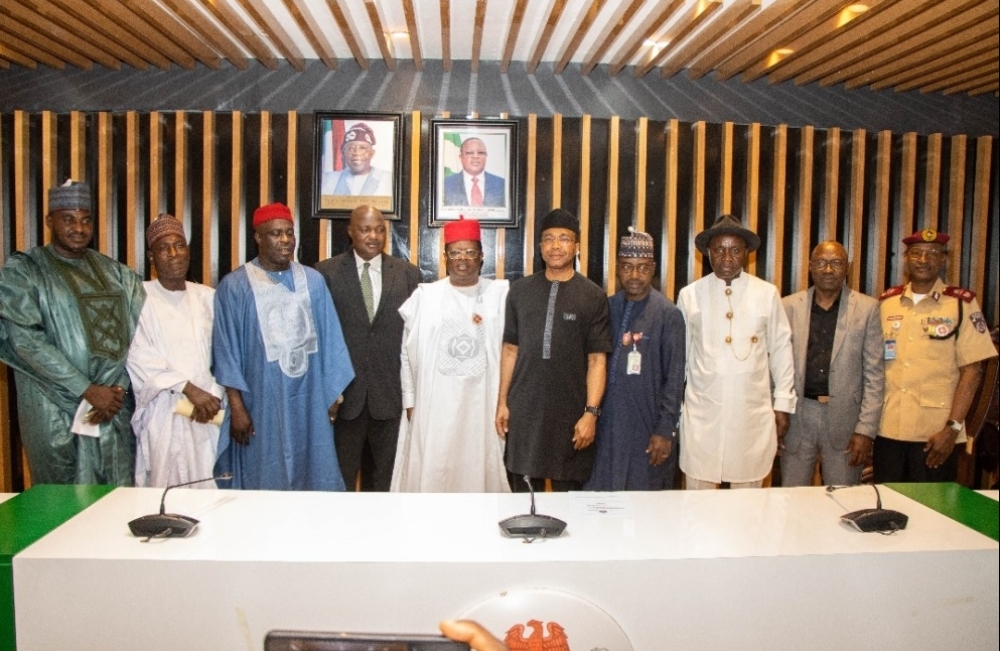
Minister of Works Sen Umahi Inaugurates Board of Federal Roads Maintenance Agency (Ferma) Charges Members to Brace Up to the Road Infrastructure Maintenance Challenges in Nigeria The Honourable Minister of Works, His Excellency, Sen. Engr. Nweze David Umahi CON has charged the newly inaugurated members of Governing Board of Federal Roads Maintenance Agency ( FERMA) to brace up to the challenges of road infrastructure maintenance facing the country and show unwavering commitment to the road maintenance programmes of the Renewed Hope administration of the President of the Federal Republic of Nigeria, His Excellency, Sen. Asiwaju Bola Ahmed Tinubu GCFR The Hon. Minister gave this charge during the inauguration of the FERMA Governing Board at the Conference Room, Federal Ministry of Works, Headquarters. Mabushi, Abuja on 21st December 2023. The Hon Minister thanked the President of Nigeria for appointing men of proven integrity and ability into the FERMA Board and for approving the 2023 Supplementary Budget which provides landmark interventions on the Federal roads. He said road infrastructure was critical to the socio-economic development of our nation noting that the critical sectors that drive economic growth rely greatly on road infrastructure development. "Let me first congratulate the nominees of Mr. President to the FERMA board and to express my gratitude deeply to Mr. President who has found you worthy to do this job. We have a very critical situation with our roads all over the country. and for me, the number one thing Nigerians needed like yesterday is road. Road is everything. If we fix our roads today, we will bring down inflation in this country, because bad road is affecting every aspect of our economic activities. He maintained that the enhanced budgetary provision for road infrastructure under our dear President shows his commitment in changing the narrative of our road infrastructure. "This underscores the fact that Mr. President understands the plight of our people as far as our road infrastructure is concerned, he's doing everything within the budget and outside the budget to fix our roads. And I want to assure Nigerians on behalf of Mr. President that our hopes are renewed in tackling our road infrastructure decays.” It would be recalled that by section 3 of the Federal Road Maintenance Agency, (FERMA) Amendment Act 2007, the President had on 13th October, 2023 approved the appointment of the following members of the Governing Board of FERMA and they had been confirmed by the Senate: Engr. Dr. Chukwuemeka Chijioke Agbasi - Managing Director Engr. lbi Terna Manasseh - Member Dr. Kenneth Ugbala - Member Sen. Timothy Aduda - Member Babatunde Daramola - Member Hon. Preye Oseke Member Aminu Adamu Papa - Member Engr. Abubakar Bappa - Member ACM Shehu Mohammed - Member Yusuf Lawal Othman – Member Earlier the Permanent Secretary, Federal Ministry of Works, Mahmuda Mamman described the newly appointed members of FERMA board as people of proven competence and experience and expressed hope that they would perform in their new assignment. In his acceptance speech on behalf of the newly constituted board, the Managing Director of FERMA Engr. Dr. Chukwuemeka Chijioke Agbasi thanked the President for finding them worthy to be appointed as board members of FERMA and pledged to discharge their responsibilities with the fear of God and align to the policy of the Federal Minister of Works and also to the mandate of FERMA. He expressed the commitment of FERMA towards making a visible difference on the road condition and the travel experience of commuters in the country. ...
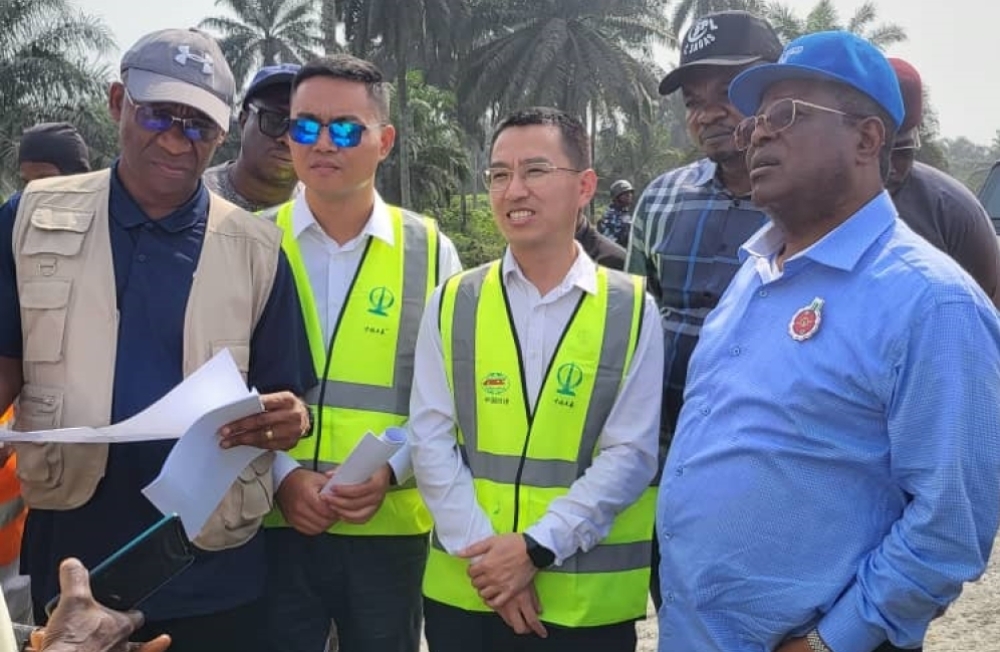
The Commitment of the Federal Ministry of Works under H.E Sen. Engr Nweze David Umahi, on Prompt Supervision and Quality Delivery of Projects is Yielding Fruits, Contractors Now Ready to Meet the Expectations of Road Users and Indeed Nigerians The Works Minister, His Excellency Sen. Engr Nweze David Umah did not spare a moment upon arriving in Nigeria from Cotonou, Benin Republic where he chaired a Steering Committee on the construction of Lagos- Abidjan Highway Corridor Development Project on 15th December,2023, and he moved to pay unscheduled inspection visit to some ongoing Federal Road projects around Rivers State. The action minister is particular on standard, design, and specification. He gives attention to every detail on the contract award, ensures that certificates generated are accounted for by the Ministry's Engineers, and that Resident Engineers, Controllers and Consultants are on the ground to monitor project details. Umahi works on weekends, day and night, and takes no excuse for an answer. His eyes are on the ball, making sure that the vision of Mr. President on the road infrastructure revolution under his Renewed Hope administration is achieved within a record time. Sen. Umahi visited the following Federal Projects on 16th December 2023, upon arrival from Cotonou, and it was a marathon inspection that did put the contractors, the Ministry's Engineers and the consultants on their toes. The projects visited are: 1. Rehabilitation of Enugu to Port Harcourt Section 4: Aba to Port Harcourt at Km 204 to Km 206 by Messrs. CCECC and 2. RCC section of the East West Road between Eleme junction and Onne Port. Very soon, Nigeria will see that the Renewed Hope administration of His Excellency, Sen. Asiwaju Bola Ahmed Tinubu GCFR is on a mission to restore the hope of Nigerians for a prosperous future we can all be proud of. Pictures Speak. Pls share and be ready to be part of the supervision. It is your right. Contact us on our dedicated numbers to report any shoddy job or unnecessary inconveniences to road users by contractors. ...
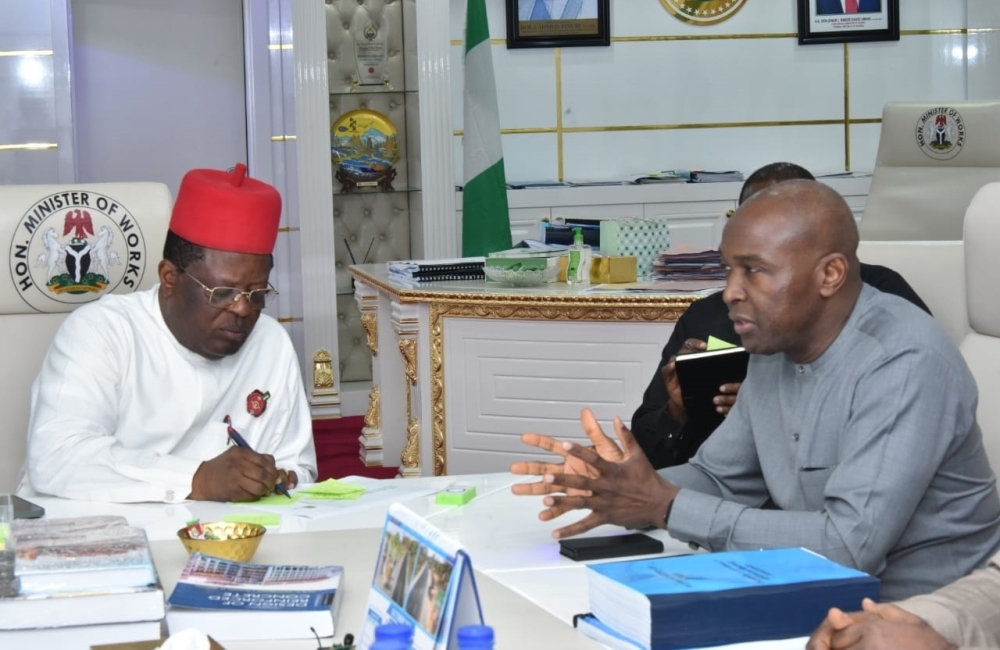
Nigeria LNG Commended for Commitment to The Completion of Bodo-bonny Federal Road In Rivers State And Interest To Connect To East West Road The Hon. Minister of Works, His Excellency, Sen. Engr. Nweze David Umahi, CON has commended Nigeria NLG Limited for its commitment to funding the completion of the Bodo-Bonny Federal road in Rivers State in line with the tripartite agreement with Federal Government and Julius Berger Nigeria Plc, and for indicating interest to connect the road to East West Road to maximize the economic potentials of the area. The Hon Minister made this commendation when the management of Nigeria NLG Ltd led by its MD/ CEO, Dr Philip Mshelbilla, visited him in his office at Federal Ministry of Works Headquarters, Mabushi Abuja on 11th December,2023. He further commended them for putting the interest of Nigeria first in their contractual negotiations and for keying into the innovations and ideals of the Renewed Hope Administration of President Asiwaju Bola Ahmed Tinubu,GCFR with respect to quality, innovations, cost effectiveness and timely completion of road projects embarked upon by Federal Government. "Thank you very much. When I see Nigerians that are standing for the country, I feel very excited because Nigeria is our only country. We can't mortgage the country; we can't sell the country. I saw your letter with regard to requests by Julius Berger Nigeria Plc, the contractor, to increase the contract sum. And you and your board together with your team vehemently stood against that. That gave me some teeth to bite because I saw a commitment by all parties that this project will not increase beyond the augmented amount of 199,000,000,000. So, I want to commend you for that." The Hon. Minister enjoined Julius Berger to respect the spirit and letters of the tripartite agreement and go back to site, assuring that Federal Government would offer compassionate considerations on the remaining 16% uncompleted job without necessarily expanding the contract envelope. "I discovered by the letters of JB that they have abandoned the site, and that's against the contract they signed, even if they needed to leave the site, the general conditions of contract specify the procedures for notices in such a circumstance. Well, we have discussed with them and I said, we are going to look at the remaining 16% on a compassionate ground, and see whether there is any merit, and we can see if there is any money left in the contingency, but definitely will not expand the envelope. Expanding the envelope means you are going back to your Board. Expanding the envelope means my going back to Federal Inland Revenue, going back to BPP, going back to Mr. President, going back to Federal Executive Council. So it's a long journey, and that will not allow that project to be completed as planned". Speaking on behalf of the management of Nigeria NLG Ltd, the MD/CEO reiterated the vision of the company in not only building a globally competitive LNG company but also in contributing towards building a better Nigeria by delivering quality infrastructure through projects such as the Bobo-Bonny road being funded by NLNG. He assured that everything possible would be done to complete the road on time as provided under the agreement bearing in mind the concerns of the contractor handling the project. "With regards to coming back to the Bonny Bodo road, we see two parts to it, the main road itself. We are really looking forward to that being completed on time. We have had commitments in the past from the contractor around its completion and we do understand that there are concerns around what is happening in the economy now". He thanked the Hon. Minister of Works for his commitment to road infrastructure revolution and expressed hope that the economy of Nigeria would bounce back with the manifest determination of President Tinubu's administration in fixing the critical infrastructure for the growth of our economy. He assured the Hon. Minister of the readiness of the company to partner with Federal Government always in her developmental efforts. "We have indicated an interest to pursue the extension of that road from Bodo so that it connects to the East West Road. That way you then have a complete corridor of major roads connecting to East West Road, rather than ending in Bodo. In summary, just to thank the Minister again, your commitment to projects like this across the country will indeed make a huge difference to the common man, to transportation of people, farmers who need to move their products". ...
Minister Guarantees Continuous Funding Of Second Niger Bridge Construction
The Minister of State for Power, Works and Housing, Hon. Mustapha Baba Shehuri has guaranteed Nigerians of Federal Government’s determination to continue funding on-going construction works on the 2nd Niger Bridge linking Asaba, Delta State with Onitsha, Anambra State. He gave the assurance while on an inspection visit to the site.
2. Hon. Shehuri reiterated that since the present Administration came on board, its priority has, essentially, been on infrastructural development. He added that this has placed a huge obligation on the construction of an additional bridge to compliment the existing one built in 1965 as a crucial link between the Eastern and Western regions of the country.
3. Hon. Shehuri said the Federal Government will stop at nothing to ensure that funds are released, as at when due, to the contractor in order to accomplish the project for ease of vehicular traffic and socio - economic enhancement.
4. The Minister revealed that since the commencement of the Main Works for the construction of this national infrastructure in 2017, after the completion of Early Works, Phases I - IV, there has been no delay in payments. This is evident in the appreciable progress achieved so far.
5. On the issue of compensation, the Minister appealed to the affected communities to co-operate with the Federal Government as the project, when eventually completed, would be of benefit to them, in particular, and Nigerians, as a whole.
6. Speaking earlier, the Federal Controller of Works, Anambra State, Engr. Ajani Adeyemo established the fact that the Ministry has already paid compensations to the tune of N3.5Billion for claims on the project corridor. He also disclosed that compensation was paid from Km 23 - 34.9 of the project, though there were still pockets of claims coming in from time to time. These outstanding claims have already been forwarded to the Ministry for consideration and settlement, he added.
7. Engr. Adeyemo, while allaying the fears of Nigerians on the scheduled delivery of the project, further explained that the 2nd Niger Bridge, alongside two other Federal Government projects, are specially funded from the National Sovereign Investments Fund (NSIF) and as such will not experience paucity of funding. The Federal Controller, gladly, informed the Minister that, while the completion period for the contract is 42 months, it is presently at 17% within 4 months.
8. The Project Director, Julius Berger (Nigeria) Limited, Mr Frederick Weiser stated that his Company has received payment on work done thus far and the communities have been co-operating as well. The major threat to the project, according to him, is the River Niger itself. He believes the river was going to rise between 10m to 12m as the rainy season was fast approaching. This, he said, calls for intensive work, 24 hours of the day, seven days a week to ensure it progresses before the River level rises.
Mr Babatunde Raji Fashola, SAN At The 23rd Meeting Of The National Council On Works
Address Delivered By The Honourable Minister Of Power, Works And Housing, At The NAF Conference Centre, Abuja On Thursday 20th July 2017
Distinguished ladies and gentlemen:
In choosing the theme of this year's Council, we, seek to raise the level and quality of our transport infrastructure to the globally acceptable standards.
As human beings, mobility has become a major commitment of the global urban agenda.
This must be so because our development, prosperity and sometimes our survival is tied to our mobility and so is our productivity, social and cultural interactions.
I am happy, first, to announce to you that Nigeria, under the leadership of President Buhari has played a critical and positive role in developing a common African position since 2016 that has helped to shape the Global Urban Agenda adopted in Quito, Ecuador this year to guide the global development until 2036.
What is left is for us as champions of that African position and urban agenda, is to begin to localize and implement its component parts for the benefits of our people.
Yes, we have to build roads, highways and bridges.
But the question then is: Roads, highways and bridges to where. Where do they lead?
Unless we know where these critical transport infrastructure lead to, they will either have failed to achieve the objective of mobility or will, at best, do so with difficulty.
Long before the development of the Internet and the proliferation of smart phones and apps, many countries have developed maps to help guide their citizens and transport infrastructure users through the labyrinth of their network of roads.
But these maps alone do not achieve the purpose without road signs, which indicates to road users, how far their journey is, how far they have progressed, how much is left to travel, and how far away they are from one village, city, local government, or from critical services like hospitals, fuel stations and hotels or motels to help ease the stress and tedium of long distance travel.
Sadly, these signs are either non-existent or largely insufficient on our highways.
So, imagine driving by yourself into a city you have never been, how do you know where to link the next interstate highway, or expect to buy fuel or plan to sleep for the night on a long journey or get medical help in case of a road traffic accident.
Have we considered the fact that the existence of highway signs is a reason why the car rental business and its collateral employment thrives in some countries and not in our own?
The proliferation of global, country and state maps on the handheld devices therefore creates a compelling urgency on all of us to start developing and installing signage on our roads, bridges and highways at interstate and intra-state levels.
This is one sure way of facilitating mobility and implementing the local component of the global urban agenda for the benefit of our people.
But it will not be enough to just simply erect any type of sign, in any place or indeed anyhow.
They must be produced according to specifications and enduring materials, and they must be installed to a minimum standard that ensures their durability, endurance and utility for commuters.
I would like to place on public record, my pride, and indeed my gratitude to the staff of the works sector of the Ministry of Power, Works and Housing for their hard work in developing these specifications and standards.
Similarly, I will like to acknowledge the technical support and cooperation that the Corp Marshal of the Federal Road Safety Corps (FRSC) and his team have afforded our team in the process of developing the size, quality and lettering specifications of these signs.
Ladies and gentlemen, helping commuters to navigate the journey is only half of the human benefit of signage and our mobility policy.
The other half is the direct economic benefits to those people who will benefit from contracts, jobs and the financial rewards that come from producing the signs, fabricating the steel, printing the signs, and the labour to be employed in installing them.
These benefits are also true of lane marking.
This is why we have chosen this National Council, where states are represented, professional groups are represented and the requisite technical personnel are present to unveil this policy and programme.
While our roads are still in various stages of completion, our economic needs compel us to refuse to wait until everything is done before we begin to confer the benefits of lane marking and street signage on our people.
We have met in the Ministry and agreed to compile the list of roads where significant sections have been completed, and prepare them for procurement and award of sub-contracts in collaboration with our main contractors, and this procurement will then be advertised in due course as required by law and subject to an open and competitive bids.
As more sections of roads reach completion they will be subject to similar processes so we expect this to be continuous.
While we will implore on and insist that those who benefit from these contracts perform them to the highest standards of quality, we understand that signs can be damaged, and road markings require periodic touching up.
Therefore, we see a future of maintenance jobs and contracts going forward, to create sustained employment in our road transport sector.
Ladies and gentlemen, I could think of no better time, when our economy needs to be creative in order to provide inclusion for unemployed young able-bodied people, and I can think of no better forum than this National Council of Works, to discuss the economic, safety, and people-oriented basis of this policy, to address the theme of this council which is ‘Adequate Traffic Signage - An Essential Key for Highways Infrastructure, Safety and Comfort.’
I will now conclude by saying that everybody has an important role to play in order to ensure that the benefits of this policy reach all the sectors of our economy and the people they are designed for.
I sincerely hope that our government will be able to count on you as we have always done to ensure its successful implementation.
Thank you very much for your attention.
Babatunde Raji Fashola, SAN
Honorable Minister for Power, Works and Housing
Thursday 20th July 2017
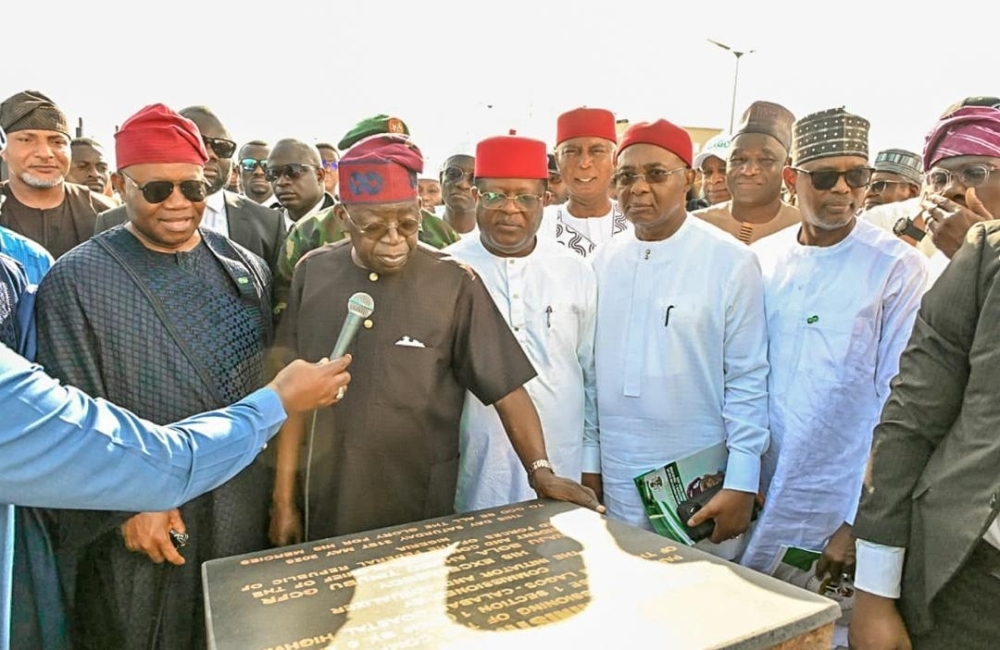
DRIVING NIGERIA’S FUTURE: CELEBRATING TWO YEARS OF TRANSFORMATIVE LEADERSHIP AND THE LAGOS-CALABAR COASTAL HIGHWAY MILESTONE
DRIVING NIGERIA’S FUTURE: CELEBRATING TWO YEARS OF TRANSFORMATIVE LEADERSHIP AND THE LAGOS-CALABAR COASTAL HIGHWAY MILESTONE
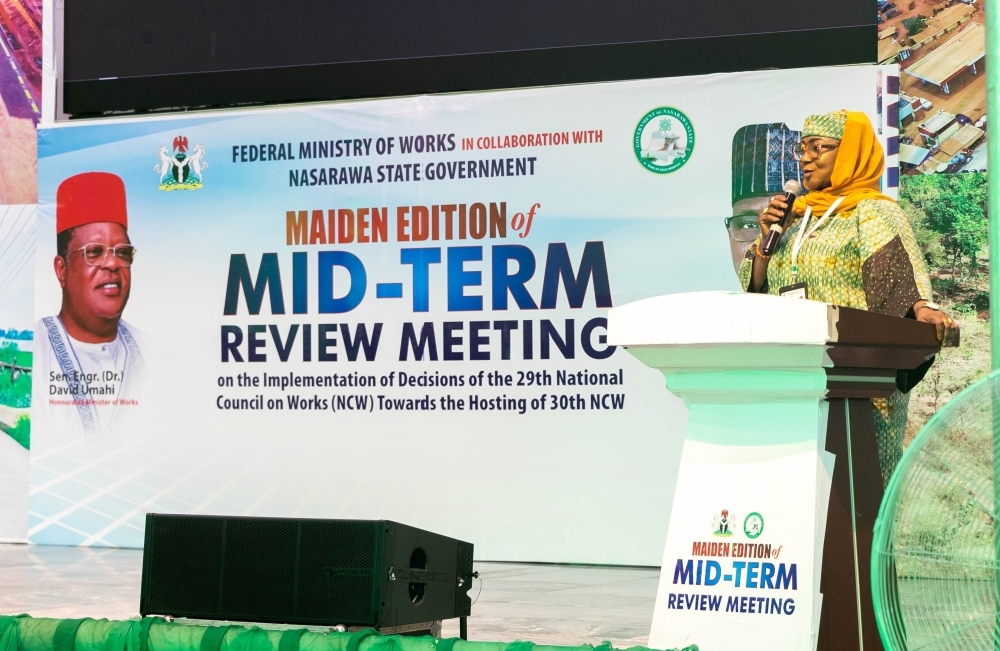
MID -TERM REVIEW MEETING ON THE IMPLIMENTATION OF THE DECISIONS REACHED AT THE 29TH NATIONAL COUNCIL ON WORKS (NCW) DAY 1
MID -TERM REVIEW MEETING ON THE IMPLIMENTATION OF THE DECISIONS REACHED AT THE 29TH NATIONAL COUNCIL ON WORKS (NCW) DAY 1