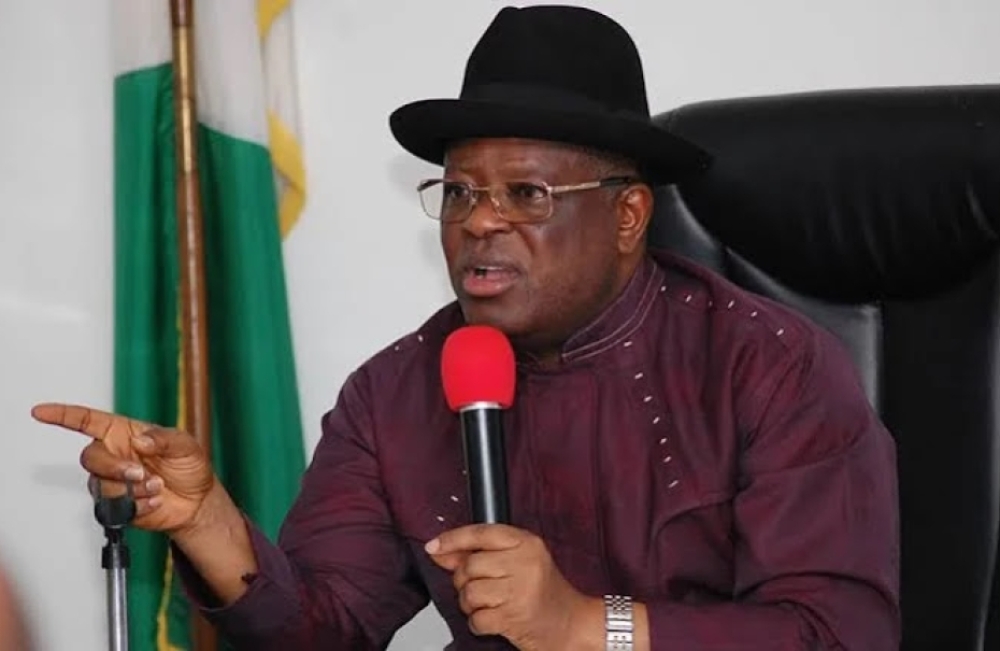
UMAHI ORDERS IMMEDIATE EMERGENCY INTERVENTION ON BENIN-ASABA ROAD, AND SOME OTHER CRITICAL FEDERAL ROADS
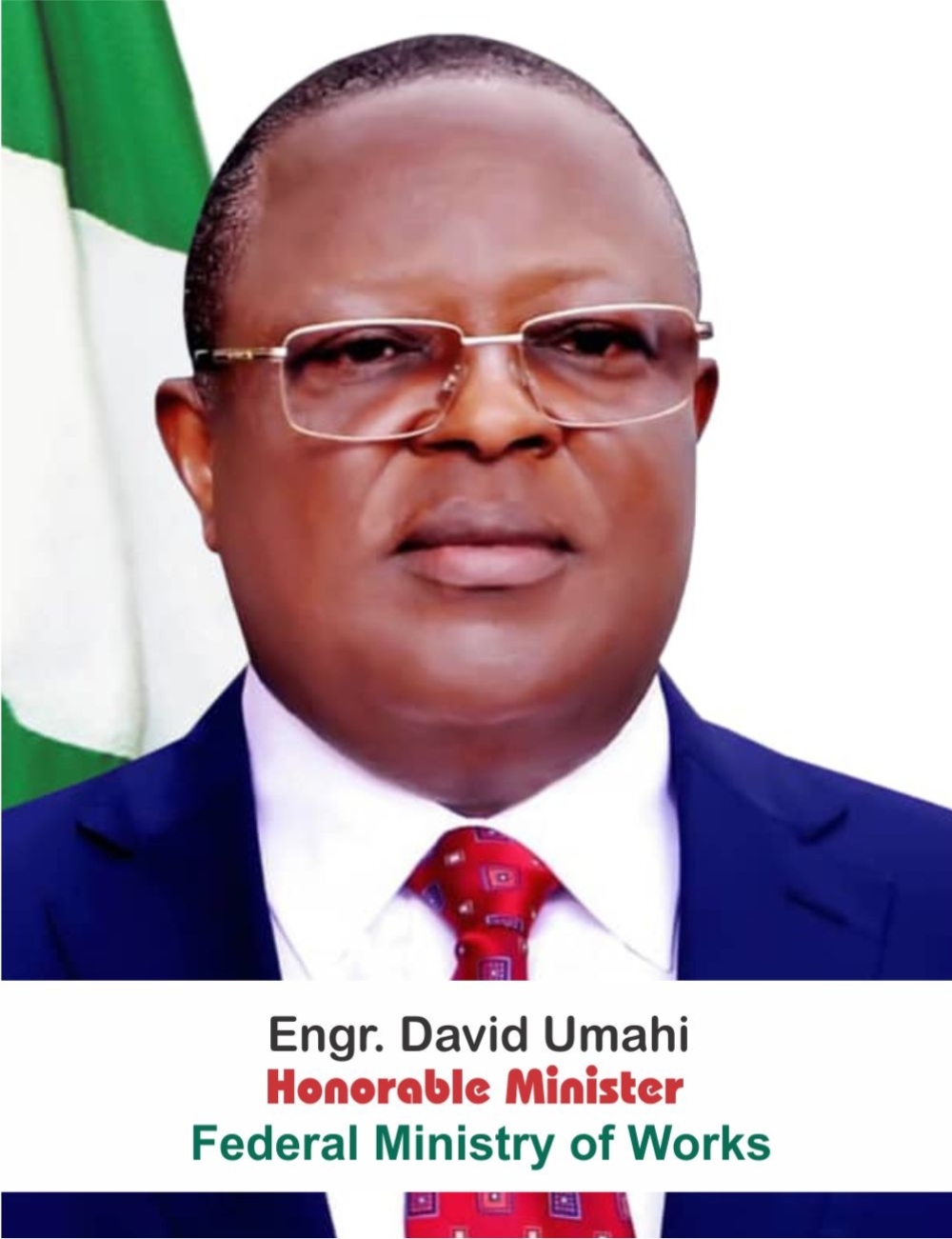
The Honourable Minister of Works, Senator Engr. David Nweze Umahi, CON, has directed the immediate deployment of major contractors to all three sections of the Benin-Asaba Federal Road to restore the failed sections and bring an end to the suffering of motorists and other road users.
This is because, the situation on the concessioned Benin-Asaba Road has reached a point where the overall public interest must take precedence over the existing concession agreement.
Recall that the Honourable Minister of Works was on the Benin-Asaba Road about seven days ago, where he assembled a number of contractors and directed them to prepare for immediate palliative intervention on the affected sections of the road at no cost to the concessionaire. In line with the Concession agreement which requires that before the Federal Government could intervene, the permission of the concessionaire must be required, and that permission was not granted to federal government.
The Minister subsequently proposed three options to the concessionaire, any one of which would have enabled the Federal Government to move in and address the worsening condition of the road. Unfortunately, none of the options was accepted by the concessionaire. Immediately after the Minister left Asaba, the already limited equipment deployed to the road by the concessionaire was further reduced to just one, worsening the situation and increasing the suffering of motorists and other road users.
While the Minister takes responsibility for the concerns and suffering of Nigerians using the road, it is important to state that the concessionaire has also not taken the suffering of Edo people and travelling public sufficiently into consideration by declining all the options put forward by the Federal Government. The concessionaire continues to rely on the terms of the concession agreement entered into by the previous administration, an agreement which weighs heavily against the Federal Government’s ability to intervene quickly in the interest of the public in a situation like this.
In view of this situation, the Honourable Minister of Works has directed the immediate deployment of major contractors within the corridor to all three sections of the Benin-Asaba Road to restore the failed sections and bring relief to the people, with the cost of the emergency intervention being borne by the Federal Government. The Honourable Minister has also directed immediate redesign of the entire route to be rebuilt with reinforced concrete pavement. The public should therefore take note that immediate action is underway to restore every failed section of the Benin-Asaba Road and subsequently rehabilitate the entire sections of the road using reinforced concrete pavement.
2. On the Benin-Sapele Road:
The Governors of Edo and Delta States, the Niger Delta Development Commission (NDDC), and the Federal Government are currently engaged in interventions on different sections of the road to restore the entire route. While some sections are receiving palliative attention, permanent works are also ongoing on other sections.
3. On Ifaki(Ekiti) - Kabba (Kogi) Road:
The Federal Government is engaging both the contractor; Gamji Nigeria Company Limited, and Dangote PLC on immediate emergency and permanent intervention on the most failed sections of the road, while efforts are being made to financially mobilise the company for more extensive permanent work to commence on the axis.
4. On the Sokoto-Zamfara-Katsina Road: This is an inherited project involving the dualisation of approximately 350 kilometres, which translates to about 700 kilometers. The project has since been redesigned and is currently ongoing and most sections are being reconstructed using reinforced concrete pavement. From the Sokoto axis towards Zamfara, over 50 kilometres of one carriageway have been fully completed with reinforced concrete pavement. From Zamfara to Katsina, some sections have been completed and palliative works have been ordered over the sections that have not been reconstructed. However, the pace of work slowed down due to the redesign and rephasing of the project. The contractors currently engaged on the road include CBC, SETRACO, Triacta and Mothercat. They are being remobilised to return to site and complete the outstanding works.
5. On the Abuja-Kaduna-Zaria-Kano Road: The Federal Government took over the Road project and has currently completed the 118-kilometer mostly on reinforced concrete pavement on lot 1. The Lot 2, which covers 164 kilometres, is over 60 percent completed on reinforced concrete pavement. The Federal Government has also introduced solar-powered light on the entire route of Abuja-Kaduna-Zaria - Kano to improve visibility during night travel and enhance the overall security situation on the route. The entire project is scheduled for completion by December 2026.
6. On Bauchi-Jigawa Road: Triacta Nigeria Limited has been mobilised to carry out the necessary interventions on some failed sections and work is currently ongoing in those failed sections.
7. On the Sagamu-Ore Road: 48 Kilometers of the 96-kilometre road have already been completed using reinforced concrete pavement. There is also a 24-kilometre section around Ore which was abandoned by the previous contractor. The Federal Government has directed its immediate restoration to ensure seamless travel. Solar lights are being installed in the entire 96kilometer of the road.
8. On Flooded Sections on Sagamu-Ore-Benin Road: The flooded sections on the same corridor between Sagamu-Ore-Benin Road, as well as other flooded sections in Ondo State, are being designed for emergency procurement and intervention.
9. On the East-West Road:
Some failed and critical sections, including defective sections of bridges along the East-West Road, are being marked out for emergency procurement and intervention.
10. On the Abuja-Lokoja Road:
Several contracts are ongoing along the route, while the three critical sections currently without contracts are being procured for emergency intervention.
11. On the Lokoja-Benin-Warri Road: The President has directed a complete redesign and procurement of the 400-kilometre dualised route covering the uncompleted sections, using reinforced concrete pavement, while palliative works will continue with the contractors currently on the road.
12. On Carter Bridge:
While the Federal Government continues to undertake weekly maintenance of the underwater elements of the bridge. The site has also been handed over to the contractor, CCECC, for the construction of a permanent new bridge, and work has commenced.
13. On the Third Mainland Bridge:
With regard to the defective underwater structural elements, the Federal Government is at the final stage of determining the appropriate intervention for the repair of the affected elements.
14. On the flooded section of the Lagos-Ibadan Road: Work has commenced on the affected section. There are also several flooded sections on federal roads across the six geopolitical zones, largely occasioned by excessive flooding and the effects of climate change. The Federal Government is identifying and marking these sections for immediate attention.
15. On the First and Second Niger Bridges:
Intervention work is ongoing on the approach roads to the Second Niger Bridge damaged by flood and the work is progressing very well. The First Niger Bridge has been closed to traffic to enable immediate repair works. Contractor has mobilized to site and comprehensive rehabilitation of the bridge has started. From Summit Junction to the First Niger Bridge, massive rehabilitation work is also ongoing using reinforced concrete pavement.
16. The Honourable Minister wishes to commend the President of the Federal Republic of Nigeria, His Excellency Bola Ahmed Tinubu, GCFR, for the massive work being undertaken on the nation’s roads since the administration assumed office in 2023.
17. It is important to state that when the present administration came into office, there was hardly any part of the country where one could travel for an hour without encountering significant challenges on the road network. The condition of the country’s roads and bridges was a major national infrastructure challenge.
18. Rather than shy away from the problem, the administration of President Bola Ahmed Tinubu made the nation’s road network a priority. Virtually every part of the country became a priority, and the Federal Government, through the Federal Ministry of Works, Regional Commissions, Parastatals and other MDA’s has continued to respond extensively to these challenges.
19. The Federal Government is currently working on over 80 percent of the inherited federal roads, an unprecedented level of intervention in the country’s road infrastructure.
20. We ask the public to understand the enormous challenges inherited on our roads and bridges and to take note not only of the problems being solved, but also of the permanent solutions being introduced.
21. A major part of this new approach is the use of reinforced concrete pavement, designed to significantly extend the lifespan of major roads. These roads are expected to last between 50 and 100 years. This means that roads being constructed under President Bola Ahmed Tinubu’s administration are being designed with future generations in mind, rather than simply providing temporary solutions to today’s problems. And this is a complete departure from the past, when roads often deteriorated only a few years after completion, resulting in a continuous cycle of reconstruction and expenditure.
22. We appreciate the concerns of Nigerians over the condition of some roads presently and the difficulties faced by motorists and commuters who cannot move easily from one point to another. Those concerns are legitimate, and the Federal Government is listening. But Nigerians should also recognise the enormous scale of the problems inherited and the amount of work currently being undertaken across the country.
23. It is simply impossible to resolve every road challenge accumulated over many years of neglect by the past administrations within three years. What is important is that the government is working, the government is responding, and the government is putting permanent solutions in place.
25. We appreciate members of the public who send situation reports on failed roads and other infrastructure challenges. These reports help the Ministry identify areas requiring urgent attention. However, we also appeal to members of the public to report when such problems have been addressed, just as they report when they occur.
24. We are aware of situations where photographs and reports of road challenges continue to circulate on social media even after the Federal Government has intervened and resolved the particular problem.
25. However, the Ministry will continue to respond as rapidly as possible to genuine reports and concerns from Nigerians.
26. It is also important to note that we have compiled a comprehensive record of all inherited, ongoing and intervention projects across the country which is available to the public. This is to ensure that Nigerians have access to information on the infrastructure projects being undertaken nationwide and can fully participate in and appreciate the infrastructure revolution of President Bola Ahmed Tinubu’s administration.

UMAHI ORDERS IMMEDIATE EMERGENCY INTERVENTION ON BENIN-ASABA ROAD, AND SOME OTHER CRITICAL FEDERAL ROADS The Honourable Minister of Works, Senator Engr. David Nweze Umahi, CON, has directed the immediate deployment of major contractors to all three sections of the Benin-Asaba Federal Road to restore the failed sections and bring an end to the suffering of motorists and other road users. This is because, the situation on the concessioned Benin-Asaba Road has reached a point where the overall public interest must take precedence over the existing concession agreement. Recall that the Honourable Minister of Works was on the Benin-Asaba Road about seven days ago, where he assembled a number of contractors and directed them to prepare for immediate palliative intervention on the affected sections of the road at no cost to the concessionaire. In line with the Concession agreement which requires that before the Federal Government could intervene, the permission of the concessionaire must be required, and that permission was not granted to federal government. The Minister subsequently proposed three options to the concessionaire, any one of which would have enabled the Federal Government to move in and address the worsening condition of the road. Unfortunately, none of the options was accepted by the concessionaire. Immediately after the Minister left Asaba, the already limited equipment deployed to the road by the concessionaire was further reduced to just one, worsening the situation and increasing the suffering of motorists and other road users. While the Minister takes responsibility for the concerns and suffering of Nigerians using the road, it is important to state that the concessionaire has also not taken the suffering of Edo people and travelling public sufficiently into consideration by declining all the options put forward by the Federal Government. The concessionaire continues to rely on the terms of the concession agreement entered into by the previous administration, an agreement which weighs heavily against the Federal Government’s ability to intervene quickly in the interest of the public in a situation like this. In view of this situation, the Honourable Minister of Works has directed the immediate deployment of major contractors within the corridor to all three sections of the Benin-Asaba Road to restore the failed sections and bring relief to the people, with the cost of the emergency intervention being borne by the Federal Government. The Honourable Minister has also directed immediate redesign of the entire route to be rebuilt with reinforced concrete pavement. The public should therefore take note that immediate action is underway to restore every failed section of the Benin-Asaba Road and subsequently rehabilitate the entire sections of the road using reinforced concrete pavement. 2. On the Benin-Sapele Road: 3. On Ifaki(Ekiti) - Kabba (Kogi) Road: 4. On the Sokoto-Zamfara-Katsina Road: This is an inherited project involving the dualisation of approximately 350 kilometres, which translates to about 700 kilometers. The project has since been redesigned and is currently ongoing and most sections are being reconstructed using reinforced concrete pavement. From the Sokoto axis towards Zamfara, over 50 kilometres of one carriageway have been fully completed with reinforced concrete pavement. From Zamfara to Katsina, some sections have been completed and palliative works have been ordered over the sections that have not been reconstructed. However, the pace of work slowed down due to the redesign and rephasing of the project. The contractors currently engaged on the road include CBC, SETRACO, Triacta and Mothercat. They are being remobilised to return to site and complete the outstanding works. 5. On the Abuja-Kaduna-Zaria-Kano Road: The Federal Government took over the Road project and has currently completed the 118-kilometer mostly on reinforced concrete pavement on lot 1. The Lot 2, which covers 164 kilometres, is over 60 percent completed on reinforced concrete pavement. The Federal Government has also introduced solar-powered light on the entire route of Abuja-Kaduna-Zaria - Kano to improve visibility during night travel and enhance the overall security situation on the route. The entire project is scheduled for completion by December 2026. 6. On Bauchi-Jigawa Road: Triacta Nigeria Limited has been mobilised to carry out the necessary interventions on some failed sections and work is currently ongoing in those failed sections. 7. On the Sagamu-Ore Road: 48 Kilometers of the 96-kilometre road have already been completed using reinforced concrete pavement. There is also a 24-kilometre section around Ore which was abandoned by the previous contractor. The Federal Government has directed its immediate restoration to ensure seamless travel. Solar lights are being installed in the entire 96kilometer of the road. 8. On Flooded Sections on Sagamu-Ore-Benin Road: The flooded sections on the same corridor between Sagamu-Ore-Benin Road, as well as other flooded sections in Ondo State, are being designed for emergency procurement and intervention. 9. On the East-West Road: 10. On the Abuja-Lokoja Road: 11. On the Lokoja-Benin-Warri Road: The President has directed a complete redesign and procurement of the 400-kilometre dualised route covering the uncompleted sections, using reinforced concrete pavement, while palliative works will continue with the contractors currently on the road. 12. On Carter Bridge: 13. On the Third Mainland Bridge: 14. On the flooded section of the Lagos-Ibadan Road: Work has commenced on the affected section. There are also several flooded sections on federal roads across the six geopolitical zones, largely occasioned by excessive flooding and the effects of climate change. The Federal Government is identifying and marking these sections for immediate attention. 15. On the First and Second Niger Bridges: 16. The Honourable Minister wishes to commend the President of the Federal Republic of Nigeria, His Excellency Bola Ahmed Tinubu, GCFR, for the massive work being undertaken on the nation’s roads since the administration assumed office in 2023. 17. It is important to state that when the present administration came into office, there was hardly any part of the country where one could travel for an hour without encountering significant challenges on the road network. The condition of the country’s roads and bridges was a major national infrastructure challenge. 18. Rather than shy away from the problem, the administration of President Bola Ahmed Tinubu made the nation’s road network a priority. Virtually every part of the country became a priority, and the Federal Government, through the Federal Ministry of Works, Regional Commissions, Parastatals and other MDA’s has continued to respond extensively to these challenges. 19. The Federal Government is currently working on over 80 percent of the inherited federal roads, an unprecedented level of intervention in the country’s road infrastructure. 20. We ask the public to understand the enormous challenges inherited on our roads and bridges and to take note not only of the problems being solved, but also of the permanent solutions being introduced. 21. A major part of this new approach is the use of reinforced concrete pavement, designed to significantly extend the lifespan of major roads. These roads are expected to last between 50 and 100 years. This means that roads being constructed under President Bola Ahmed Tinubu’s administration are being designed with future generations in mind, rather than simply providing temporary solutions to today’s problems. And this is a complete departure from the past, when roads often deteriorated only a few years after completion, resulting in a continuous cycle of reconstruction and expenditure. 22. We appreciate the concerns of Nigerians over the condition of some roads presently and the difficulties faced by motorists and commuters who cannot move easily from one point to another. Those concerns are legitimate, and the Federal Government is listening. But Nigerians should also recognise the enormous scale of the problems inherited and the amount of work currently being undertaken across the country. 23. It is simply impossible to resolve every road challenge accumulated over many years of neglect by the past administrations within three years. What is important is that the government is working, the government is responding, and the government is putting permanent solutions in place. 25. We appreciate members of the public who send situation reports on failed roads and other infrastructure challenges. These reports help the Ministry identify areas requiring urgent attention. However, we also appeal to members of the public to report when such problems have been addressed, just as they report when they occur. 24. We are aware of situations where photographs and reports of road challenges continue to circulate on social media even after the Federal Government has intervened and resolved the particular problem.
The Governors of Edo and Delta States, the Niger Delta Development Commission (NDDC), and the Federal Government are currently engaged in interventions on different sections of the road to restore the entire route. While some sections are receiving palliative attention, permanent works are also ongoing on other sections.
The Federal Government is engaging both the contractor; Gamji Nigeria Company Limited, and Dangote PLC on immediate emergency and permanent intervention on the most failed sections of the road, while efforts are being made to financially mobilise the company for more extensive permanent work to commence on the axis.
Some failed and critical sections, including defective sections of bridges along the East-West Road, are being marked out for emergency procurement and intervention.
Several contracts are ongoing along the route, while the three critical sections currently without contracts are being procured for emergency intervention.
While the Federal Government continues to undertake weekly maintenance of the underwater elements of the bridge. The site has also been handed over to the contractor, CCECC, for the construction of a permanent new bridge, and work has commenced.
With regard to the defective underwater structural elements, the Federal Government is at the final stage of determining the appropriate intervention for the repair of the affected elements.
Intervention work is ongoing on the approach roads to the Second Niger Bridge damaged by flood and the work is progressing very well. The First Niger Bridge has been closed to traffic to enable immediate repair works. Contractor has mobilized to site and comprehensive rehabilitation of the bridge has started. From Summit Junction to the First Niger Bridge, massive rehabilitation work is also ongoing using reinforced concrete pavement.
25. However, the Ministry will continue to respond as rapidly as possible to genuine reports and concerns from Nigerians.
26. It is also important to note that we have compiled a comprehensive record of all inherited, ongoing and intervention projects across the country which is available to the public. This is to ensure that Nigerians have access to information on the infrastructure projects being undertaken nationwide and can fully participate in and appreciate the infrastructure revolution of President Bola Ahmed Tinubu’s administration.
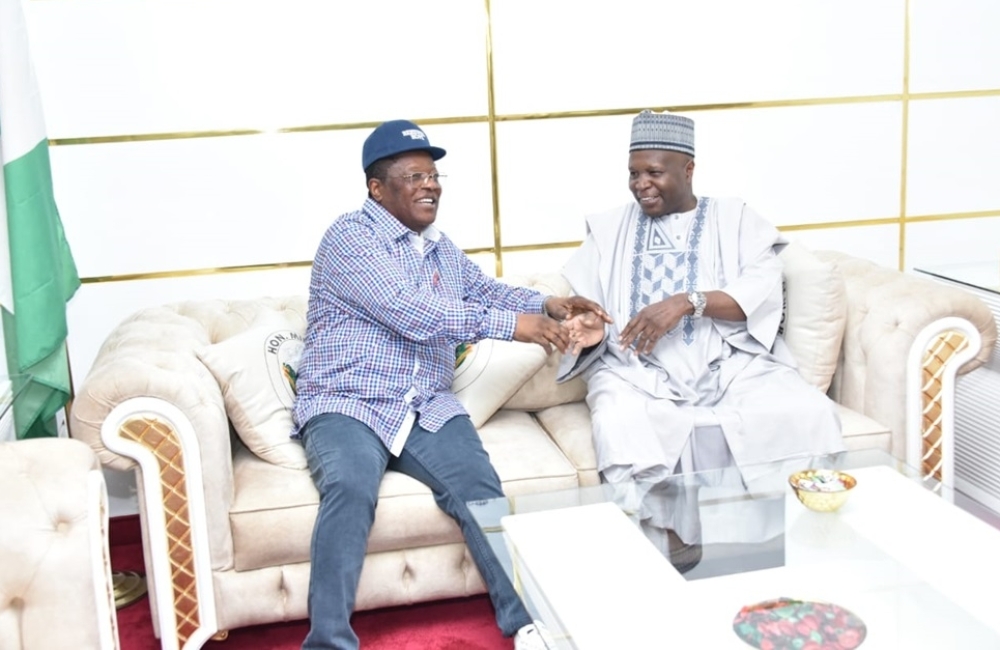
Gombe State Governor, Inuwa Pays a Working Visit to The Hon. Minister Of Works, Umahi, Seeks Intervention On Road Infrastructure Challenges In Gombe State, North East .... Says Umahi Has The Capacity To Solve Road Infrastructure Challenges In Nigeria The Honourable Minister of Works, His Excellency, Sen. Engr. Nweze David Umahi, CON today, 17th November, 2023 had a meeting in his office with the Governor of Gombe State, His Excellency, Muhammadu Yayaha Inuwa. Though the details of his mission for visiting the Hon. Minister were not disclosed to the press, it was not unconnected with the desire of the State Governor to seek the Federal Government's intervention on the various road infrastructure challenges in Gombe State and Noth East. During his interview with the Press which was quite brief, the Governor of Gombe State said he was satisfied with the outcome of his meeting with the Hon Minister of Works and expressed confidence that with the capacity and ingenuity of the Hon. Minister, the people of his State would in no distant time breathe a sigh of relief on the conditions of the Federal roads in their State “ The Honourable Minister is somebody that has the passion to see that Nigeria goes out of these challenges of infrastructure and economy, I came to discuss issues in my own state especially the North East , he has already given a positive answer to the issues Our meeting is in affirmative and positive and I hope that very soon we shall overcome the problem of infrastructure in this country . I believe he has the passion and capacity and will be able to deliver on the needs of Nigeria. We are encouraging him, and he is encouraging us to ensure that Nigeria is out of the problems and I have got a positive assurance from him.” Earlier, the Hon. Minister of Works shared his words of encouragement with the Governor and congratulated him for his passion to make a great difference in his State. The Hon. Minister also congratulated him on his successful re-election as Governor of Gombe State and for emerging as the Chairman of Northern Governors' Forum. "I congratulate you for your successful re-election as Governor of Gombe State and your emergence as Chairman Northern Governors' Forum. I know you will bring to bare your wealth of experience and knowledge in tackling the developmental challenges not only in your State but also in North East. " He assured that the Renewed Hope Agenda of the President of Nigeria, His Excellency, Sen. Asiwaju Bola Ahmed Tinubu, GCFR is on course and is bringing on board lasting solution to the accumulated developmental challenges in Nigeria. " The new policies on road construction and rehabilitation are robust and enduring. "The scope of intervention by Mr. President is holistic, and palliatives are underway to cater for the critical parts of our road infrastructure that need emergency attention". ...

Governor Zulum Pays A Courtesy Call To The Hon. Minister Of Works, Seeks Federal Government's Intervention On Road Infrastructure In Borno State The Hon Minister of Works, His Excellency, Sen Engr Nweze David Umahi, CON today 16th November, 2023 had an audience in his office with the Governor of Borno State, His Excellency, Prof. Babagana Umara Zulum CON Although the outcome of the meeting was not made known to the press, it was not unconnected with the zeal of the Governor to queue into the Federal Government's intervention plans on road infrastructure across the States of the Federation. The Governor, an Engineer, is on his second tenure in office and he is seen as one of the Governors that walk the talk in terms of innovative development. The Hon. Minister was happy to receive him in his office and expressed readiness to give him the needed support in the area of road infrastructure. ...
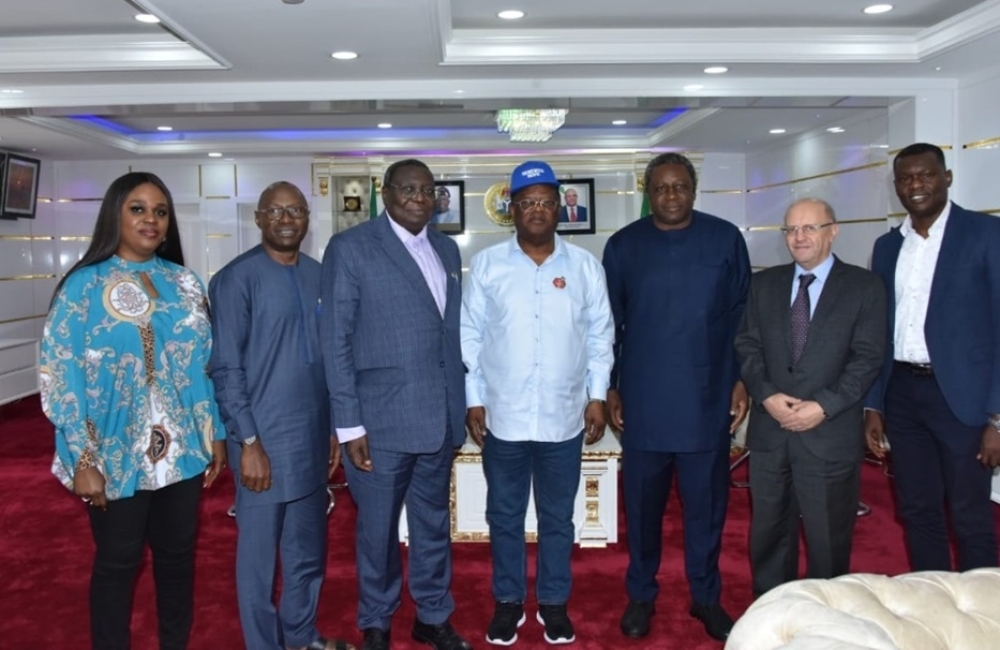
FG Receives Brief on Lagos/ Abidjan Highway Construction. The Minister of Works, Sen. Engr. Nwaeze David Umahi has been briefed on the ongoing construction of the Lagos – Abidjan Highway initiated by Heads of States and Government of five ECOWAS Member States. This took place at the Minister’s office. The ECOWAS delegation led by the ECOWAS Commissioner for Infrastructure, Energy and Digitalization Engr. Sediko Douka took place recently in Abuja. The Minister said that for ease of work and speedy completion, the highway project should have processes for its achievement like sectioning the project, considering the peculiarities of the areas across the corridor and also noting that some areas might be viable while some may not be. “I think for ease of work and speedy completion, the project should be sectioned and put a process in place to make the project achievable because some section might be viable while some other sections might not be” he said. Umahi underscores the importance of the highway project saying that the road project would propel rapid integration of the region, boast commercial activities, and improve social development among member states. Umahi also advocated for the use of concrete pavement on the Nigerian corridor noting that there are a lot of advantages using concrete in road construction without having issues of portholes or washout, concrete roads have a longer lifespan, it can withstand heavy traffic loads, low maintenance, less affected by temperature fluctuations and that this has been adopted by the Nigerian government. “A lot of advantages to use concrete to construct roads, concrete roads last longer compared to asphalt roads reducing the need for frequent repairs and maintenance, it’s stronger and can withstand heavy traffic loads, it also has low maintenance, and this has been adopted by the Nigerian government” he said. Umahi said that while adapting to feasibility result and technical studies, Nigeria would fast track the completion of her own section of the highway describing it as laudable and would enhance rapid growth. “We should fast track the completion of our own section following the feasibility result and technical studies and design. A laudable project for rapid growth and development. Earlier in his remarks, the ECOWAS Commissioner for Infrastructure, Mr. Sediko Douka thanked the Minister for granting them audience. He noted that Africa’s economic integration is hampered by large deficits in its transportation infrastructure and thus the 2050 ECOWAS vision seek to enhance infrastructure development recognized as a factor for economic growth and integration of people that will greatly contribute to the creation of a regional environment favorable to the free movement of people and goods. He said the 1,028 km road project was initiated by the Heads of States and Government of the Corridor Member States namely: Benin 128km, Cote d’Ivoire 155km, Ghana 576km, Nigeria 79.5km and Togo 89.2km in Yamoussoukro, Cote D’Ivoire on 28th February 2013. He added that the steering committee of the project is made up of the Ministers of Work of Corridor Member States and commissioner for Infrastructure of the ECOWAS Commission and the Minister is automatically a member. Their role, he said is to provide oversight guidance for the implementation of the project and each of the Minister’s reports back to their respective Head of Government. Also speaking, the Director Infrastructure Department, ECOWAS, Engr, Malik Ashoke revealed that the link bridge between Nigeria and Cameroon has been completed and commissioned, nevertheless scanning machine and weigh bridges are yet to be put in place, and are therefore requesting that the Nigerian Minister of Works may graciously aid in obtaining FG directive for ease of clearance of the equipment from the wharf. ...
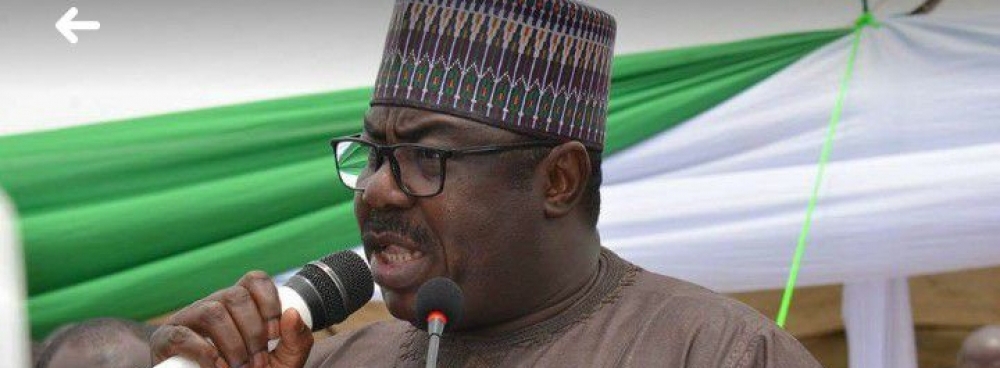
Minister Proffers A“Change Of Attitude” To Tackle Wastes In Nigeria
The Minister of State I, Federal Ministry of Power, Works and Housing, Hon. Mustapha Baba Shehuri has proffered a ‘change of attitude’ as a prerequisite for managing for municipal solid waste in the country.
This was contained in a Keynote Address delivered at the flag off ceremony to commemorate this year’s Urban October, a vehicle established by the United Nations to mark the World Habitat Day (WHD) and World Cities Day (WCD), held in at the NAF Conference Centre, Abuja.
Hon. Baba Shehuri disclosed that tackling municipal solid waste was a common challenge to urban dwellers, governments and communities andhas continued to create a great toll on public funds, as well as health due to the huge complexities surrounding the processes of generation, collection and disposal.
He decried the effects of solid waste had on the health of citizens, climate and the environment as a whole, indicating the need to clearly separate different aspects of waste management and for citizens to adopt attitudinal change towards tackling them.
The Minister further disclosed that municipal solid waste management is embedded within the Sustainable Development Goals (SDGs) and has strong linkages impacting on various areas of the SDGs, such as living conditions, sanitation and public health.
Speaking earlier, the Honourable Minister of State II, Surv. Suleiman Hassan Zarma opined that peoples’ lifestyles and consumption patterns could greatly reduce waste. He left stakeholders with a “food for thought” when he quote dthe British Economist, Sir Josiah Stamp, “It is easy to dodge our responsibilities, but we cannot dodge the consequences of dodging those responsibilities”.
He then urged urban dwellers to adopt more environmental friendly habits of taking active roles in environmental education for all, reverse the use of polythene, plastics to natural life and avoid exposing the environment to disasters.
The UN Under-Secretary General and Executive Director of UN-Habitat, Ms. Maimunah Mohd Sharif, represented by Mr. Jean Bakole, UN Resident Coordinator recommended the 3Rs - Reducing, Re-using and Recycling waste as alternative measures to tackle solid wastes.
Mr. Bakole reported that the UN-Habitat was carrying out its role to support cities to turn them into Waste-Wise Cities, ensuring wastes are properly disposed and managed. According to him, Plans are under way to recognize cities that are leading in waste management.
He said that effective waste management starts with individuals through taking corrective actions; and with this, “we could achieve a world that is cleaner, greener safer, healthier and happier for us to live, work and play in”.
The Chairman, Senate Committee on Housing and Urban Development, Senator Barnabas Gemade expressed delight to be part of the commemoration, stating thatas municipal solid wastes management poses a critical issue for Nigeria, he would urge the Parliament and other policy makers to have adequate representation at all levels of government to ensure that all municipal solid wastes management-related policies were properly covered and adapted.
The Minister of State I, Hon. Baba Shehuri presented gifts and awards to the outstanding school’s performance and participation in the World Habitat Day tothe following schools: Fine Trust Comprehensive College, Jikwoyi Phase 3, Anglican Comprehensive Secondary School, Kubwa and Fouad Lababidi Islamic Academy, Wuse, Abuja.
World Habitat Day (WHD) is usually marked every first Monday of October, while World Cities Day (WCD) is deliberated every October 31st worldwide. Their objectives are to reflect on the state of our towns and cities, and on the basic human right of all to adequate shelter.
It also reminds us we all have the power and the responsibility to shape the future of our cities and towns. This year’s WHD has as its Theme: Municipal Solid Waste Management and Building Sustainable and Resilient Cities for WCD.
Remarks By Babatunde Raji Fashola, SAN At The 15th Monthly Power Sector Operators Meeting Held In Jos
I would like to start my opening remarks at this 15th Monthly Power sector meeting by expressing my sympathy, and that of the Electricity Industry represented by the participants at this meeting, to the families of our brothers and sisters who were victims of the unfortunate electrocution accident in Cross Rivers state.
While we pray for the full recovery of the survivors who suffered various forms of injuries, we pray for the peaceful repose of the souls of the departed and may I request that we all rise to observe a moment of silence in honour of our dear departed brothers and sisters.
Whilst the accident is regrettable and the consequences very saddening, they were clearly man-made and avoidable, and if we must learn any lessons from the accident, it is to honestly and truthfully admit that it occurred as a result of non-compliance with laws and regulations. And if there is a time to learn the lesson, there can be no more auspicious moment than now.
Yes, I know that there are difficult challenges and people are struggling to eke out a living. But every business set up in a place of danger is a threat to life,that ultimately defeats the essence of survival.
We must admit as a People that the time to stop cutting corners and violating regulations has come upon us, and the time to change those non-compliant conduct is now, for our own long term benefit.
This is because the situation in Calabar, where a building was located under or close to an electricity line, exists in almost all cities in Nigeria and they are all accidents waiting to happen unless we prevent them.
The burden of preventing them, rests with all of us - Government and the governed.
TCN, the Discos and NEMSA all have roles to play. Their success however will depend on the will, support and collaboration of state governments who have the responsibility for granting construction permits and removing illegal structures.
For the information of the general public and the benefit of the state planning authorities, the applicable regulations for set back and approval of structures are as follows:
* For the 330 KV lines the set back is a total of 50 meters, that is 25 meters on both sides from the centre of the line.
B. For the 132 KV the set back is a total of 30 meters, that is 15 meters on both sides from the centre of the line.
* For the 33 KV lines which come close to our homes the buildings should observe at least 3.5 meters from the closest line and For the 11 KV lines, it is at least a 3-meter set back.
* For 415 volt lines it is 1.5 meters.
* For underground cables they should be buried at least 3 meters below the ground surface.
I know that there may be a debate about whether or not it is fair to relocate those noncompliant structures. Indeed, there will be arguments about whether it was the transmission line that got there before the buildings were erected or vice versa.
My response is that we need to keep people alive and we also need the electricity to improve our lives.
Therefore logic dictates that it is those non-compliant structures that must give way to save lives and to keep electricity on.
It is this logic that ensures there will be no repeat of the Calabar incident and that those who lost their lives would not have done so in vain.
I will now return to the subject and agenda of the meeting proper first by thanking our hosts the owners of the Jos Electricity Distribution Company for hosting us.
I will like to recall your attention to the purpose that I set out to achieve when I mooted the idea of these meetings.
The first was to provide an opportunity for me to visit one power asset or installation at least once a month to familiarize myself with their status, capacity, challenges and requirements in order to enable me make proper decisions without the need to be on the road for days on end.
I can say that this objective for me has been largely achieved. I now know most if not all of the power assets and I can visit and inspect the remainder at my convenience.
The second objective was to provide a monthly meeting for 2 (TWO) representatives each of every power distribution and generation company who could make decisions.
You will have to decide whether this objective has been achieved, because whilst I, the Honorable Minister of State and the Permanent Secretary have endeavored to attend all meetings some of you have sent junior officers who had no powers to bind your company to the meetings.
Nevertheless, I acknowledge that some problems have been solved and we remain committed to solving more as proof of our commitment to enabling businesses.
The third object was to provide a monthly forum where accurate information could be disseminated to the members of the public about what we are doing to resolve the problems of electricity and provide service to them.
I regret to announce that at best this objective is not being fully achieved or at worst is being frustrated by the Distribution Companies who have formed themselves into an Association of Distribution Companies, and have persistently issued statements on issues they either did not present for discussion at the meetings, or which contradicts the communiqué that is jointly agreed and released after each meeting.
The latest of such statements, which are wholly misleading and substantially untrue, because they conceal facts from the public, was issued and published on April 18 in the This Day newspaper.
I will come to the content of the statement shortly; but before doing so, I wish to state very clearly that while the right of association is a constitutional right which you are entitled to exercise, as is the right to free speech, the Ministry of Power, Works and Housing reserves the right to recognize or deal with you as an association.
As head of the Ministry, I regret that I will not deal with an association because the Bureau of Public Enterprises (BPE) acting for the National Council on Privatization (NCP) did not contract the asset sales and performance agreements with an association and neither did Nigerian Electricity Regulatory Commission grant you licenses as an association.
The Government contracted with 11 (ELEVEN) investors in the distribution companies and the Commission licensed 11 (ELEVEN) distribution companies. Government will continue to relate with you as such, through meetings such as this, or individually to ensure that you discharge your duties to consumers.
I am certain that NBET (the Bulk Trader) and the Nigerian Electricity Regulatory Commission (NERC), your regulator, will communicate a similar position to you.
Now I will address some of the issues raised in the statement you issued.
A. Centralization and escrowing of Disco revenues and Regulations to guide your procurement
Under this heading the statement alleges that attempts to escrow your accounts amounted to “nationalization or expropriation” of the Discos, and that attempts to make regulations to guide the pricing of your procurement was at best an intrusion into your business.
What you failed to say in the statement was that the escrow condition was agreed by you with Central Bank as a condition for offering you stabilization funds by way of loans to fund the business you invested in because commercial banks were reluctant to do so.
What you also failed to state was that the loan was at 10% interest which is well below commercial rates.
What you also failed to state is that you also agreed under that arrangement to establish letters of credit to guarantee future payments to NBET and TCN Market Operations, that the agreed commercial terms of the letters of credit authorizes NBET and TCN Market Operations to draw on the letters of credit for any default in payment to them, and that such defaults have occurred and continue to occur.
Any right-thinking person will accept the principle that any person lending you money must have the right to know what you are doing with the money especially when under collection and under payment has been a major feature of many Disco performances.
As far as the regulation on your procurement is concerned, what the public needs to know, which your statement was silent on, is that you are entitled to fully recover your costs and investment by law and this is the function of how tariffs calculated.
Since Government holds 40% of the shares of Discos on behalf of states and local governments and the Nigerian people, it has a duty to ensure that you buy parts and other equipment at reasonable and competitive market prices and not through inflated contracts to relatives as we have seen in some Discos in respect of which NERC will take action in due course and sanction those who are involved.
Declaration of eligible customers
Your statement claims that this provision, which allows certain classes of consumers to deal with the generation company directly is premature and results in extra cost to consumers.
Your statement is silent about the inability of some of your members to invest in feeders and distribution equipment to get power to consumers.
This has led to the emergence of the terminology of load rejection for an economy that does not have enough.
As you rightly acknowledge, the power to declare eligible customers is provided by law, and what it does is to entitle certain types of customers to deal directly with their power provider or Genco once they can bear the cost of constructing the distribution facility in cases that we currently have, where their Discos cannot or will not invest the money to do so.
Your statement does not address the ill-logic of standing in the way of a consumer seeking to get by himself what the service provider Disco has failed or is unable to give them.
As for the alarm and panic which your statement seeks to raise about increased tariff, eligible customer declaration is not compulsory and applies only to those who elect to benefit from it, and they are in a position to decide whether a tariff of over N60 per Kilowatt hour of generation by diesel which they currently use is preferable to investing in a distribution asset that gives them power at a lower tariff.
What is important is that the law is followed, consultations are held with prescribed and decisions are taken.
No Disco has exclusive rights over any area and its ability to retain an area must be consistent with the ability to provide service to the area.
Corporate Governance at Disco level
Your statement alleges that the complaint about lack of corporate governance in the Discos is not as important as other issues like payment of MDA debts, ensuring cost reflective tariffs and so on.
The statement is silent on the efforts being made at these monthly meetings to help you ascertain and prove the debts that you claim that Government owes you.
The statement is silent on your failure to provide up-to-date audited financial statements as required by your licenses.
If a company cannot produce all the records of its transactions and accounts does that not allude to gaps in its governance?
Your statement is silent about the number of times your consumers have contacted the ministry in Abuja about failure of service.
Does the fact that consumers go beyond their service provider who collects the money monthly to complain to Government who does not collect money for their power not call for a look in the mirror about your corporate governance?
If corporate governance was not an issue, your statement will not be silent about plans to improve service to consumers that by supplying them meters and rebuilding the trust that has been damaged by estimated billing.
Good corporate governance will ignite the conscience of an electricity business to first provide meters to its customers before seeking tariff increases so that a metered consumer will at least have the ability to fairly measure from his meter how he is being billed.
In order not to take any more time than I have done, I will only say about the other issues addressed in your statement relating to:
* The N701.9 Billion intervention
* Load rejection
* The Nigerian Electricity Market stabilization fund and;
D. Disco performance under which you allege the power infrastructure you inherited is old and that some progress has been made by you that I am the first to publicly defend your contributions to the sector, but to the extent that consumers are not yet satisfied, you must do more to improve service.
Rather than complain about old infrastructure, I wish to remind you that nobody forced you to buy those assets and you knew what you were buying.
The N701.9 Billion intervention fund is consistent with Government's policy and determination to enable businesses flourish, and it was intended to save the Gencos, the gas companies and their financiers who were providing service, from collapse.
Your statement did not tell members of the public that these companies were not getting paid because you were not remitting all of what you should remit to NBET and the market operator, admittedly because of reasons that are partly and not partly your fault.
As I said when I convened the first of these monthly meetings, it is entirely voluntary and nobody is under compulsion to attend.
As I have done at almost every previous meeting, I will now ask you all again to vote whether we should continue the meeting.
If the outcome of the vote is to discontinue the meetings, this will be my valedictory statement to the meeting.
If the outcome of the vote is to continue the meetings, then I will demand that this meeting must remain the platform for ventilating and resolving issues relating to the sector without prejudice to other meetings that the regulator may convene.
I will also, in that event, issue statements like this as the need arises where any group within the industry seeks to mislead or misrepresent our common actions.
Thank you very much for listening.
Babatunde Raji Fashola, SAN
Honourable Minister of Power, Works and Housing
Monday 8th May 2017
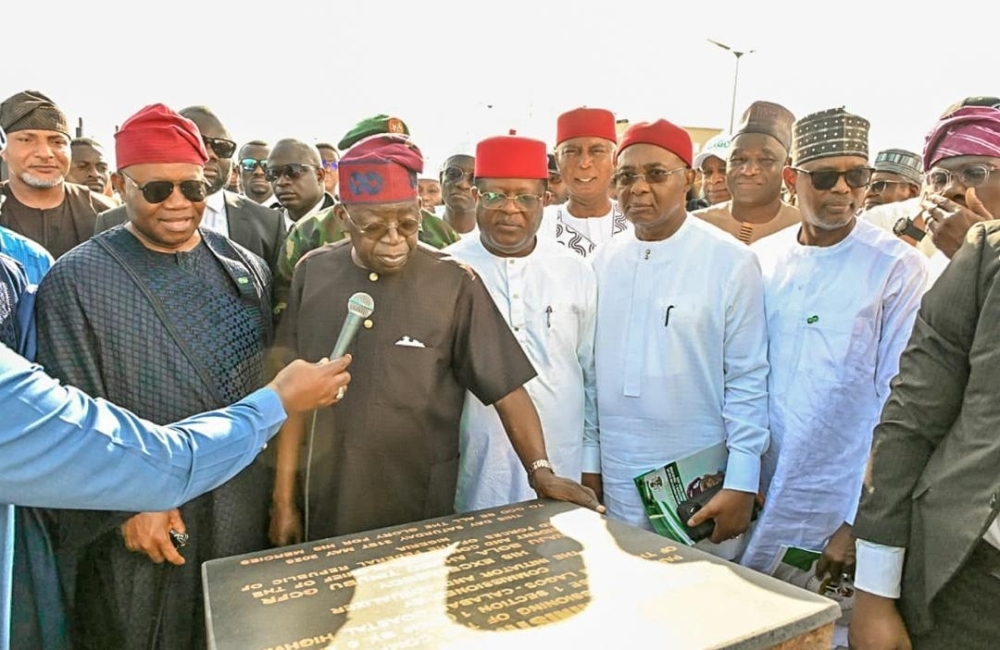
DRIVING NIGERIA’S FUTURE: CELEBRATING TWO YEARS OF TRANSFORMATIVE LEADERSHIP AND THE LAGOS-CALABAR COASTAL HIGHWAY MILESTONE
DRIVING NIGERIA’S FUTURE: CELEBRATING TWO YEARS OF TRANSFORMATIVE LEADERSHIP AND THE LAGOS-CALABAR COASTAL HIGHWAY MILESTONE
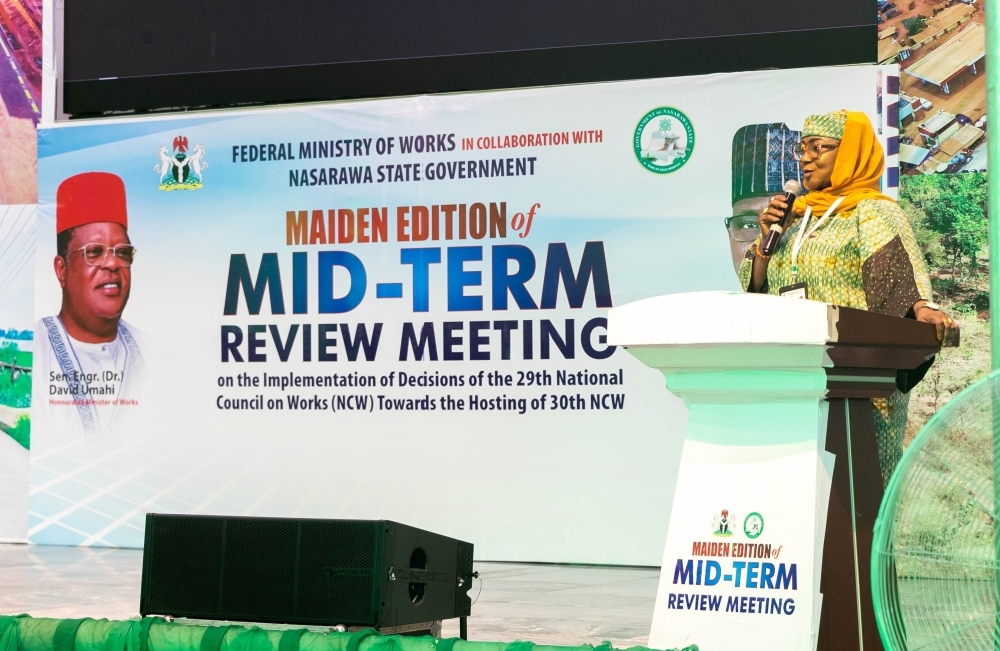
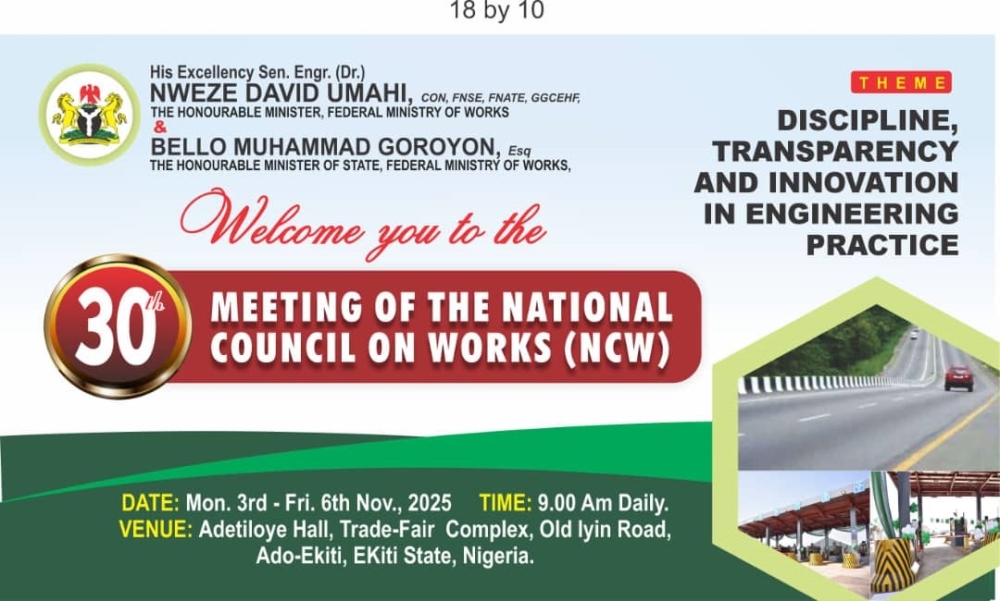
MID -TERM REVIEW MEETING ON THE IMPLIMENTATION OF THE DECISIONS REACHED AT THE 29TH NATIONAL COUNCIL ON WORKS (NCW) DAY 1
MID -TERM REVIEW MEETING ON THE IMPLIMENTATION OF THE DECISIONS REACHED AT THE 29TH NATIONAL COUNCIL ON WORKS (NCW) DAY 1