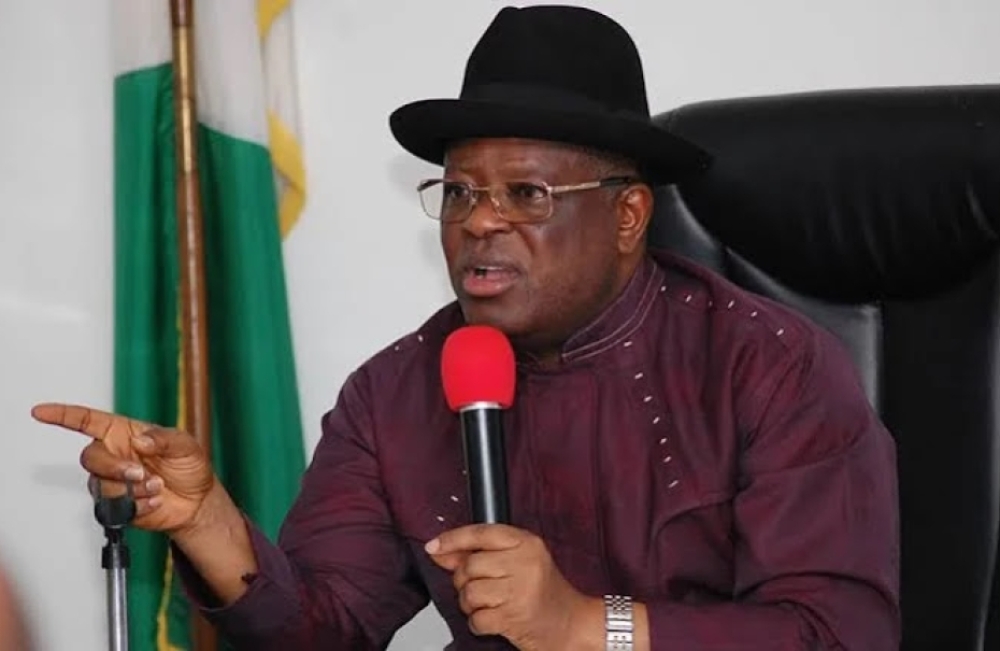
UMAHI ORDERS IMMEDIATE EMERGENCY INTERVENTION ON BENIN-ASABA ROAD, AND SOME OTHER CRITICAL FEDERAL ROADS
The Honourable Minister of Works, Senator Engr. David Nweze Umahi, CON, has directed the immediate deployment of major contractors to all three sections of the Benin-Asaba Federal Road to restore the failed sections and bring an end to the suffering of motorists and other road users.
This is because, the situation on the concessioned Benin-Asaba Road has reached a point where the overall public interest must take precedence over the existing concession agreement.
Recall that the Honourable Minister of Works was on the Benin-Asaba Road about seven days ago, where he assembled a number of contractors and directed them to prepare for immediate palliative intervention on the affected sections of the road at no cost to the concessionaire. In line with the Concession agreement which requires that before the Federal Government could intervene, the permission of the concessionaire must be required, and that permission was not granted to federal government.
The Minister subsequently proposed three options to the concessionaire, any one of which would have enabled the Federal Government to move in and address the worsening condition of the road. Unfortunately, none of the options was accepted by the concessionaire. Immediately after the Minister left Asaba, the already limited equipment deployed to the road by the concessionaire was further reduced to just one, worsening the situation and increasing the suffering of motorists and other road users.
While the Minister takes responsibility for the concerns and suffering of Nigerians using the road, it is important to state that the concessionaire has also not taken the suffering of Edo people and travelling public sufficiently into consideration by declining all the options put forward by the Federal Government. The concessionaire continues to rely on the terms of the concession agreement entered into by the previous administration, an agreement which weighs heavily against the Federal Government’s ability to intervene quickly in the interest of the public in a situation like this.
In view of this situation, the Honourable Minister of Works has directed the immediate deployment of major contractors within the corridor to all three sections of the Benin-Asaba Road to restore the failed sections and bring relief to the people, with the cost of the emergency intervention being borne by the Federal Government. The Honourable Minister has also directed immediate redesign of the entire route to be rebuilt with reinforced concrete pavement. The public should therefore take note that immediate action is underway to restore every failed section of the Benin-Asaba Road and subsequently rehabilitate the entire sections of the road using reinforced concrete pavement.
2. On the Benin-Sapele Road:
The Governors of Edo and Delta States, the Niger Delta Development Commission (NDDC), and the Federal Government are currently engaged in interventions on different sections of the road to restore the entire route. While some sections are receiving palliative attention, permanent works are also ongoing on other sections.
3. On Ifaki(Ekiti) - Kabba (Kogi) Road:
The Federal Government is engaging both the contractor; Gamji Nigeria Company Limited, and Dangote PLC on immediate emergency and permanent intervention on the most failed sections of the road, while efforts are being made to financially mobilise the company for more extensive permanent work to commence on the axis.
4. On the Sokoto-Zamfara-Katsina Road: This is an inherited project involving the dualisation of approximately 350 kilometres, which translates to about 700 kilometers. The project has since been redesigned and is currently ongoing and most sections are being reconstructed using reinforced concrete pavement. From the Sokoto axis towards Zamfara, over 50 kilometres of one carriageway have been fully completed with reinforced concrete pavement. From Zamfara to Katsina, some sections have been completed and palliative works have been ordered over the sections that have not been reconstructed. However, the pace of work slowed down due to the redesign and rephasing of the project. The contractors currently engaged on the road include CBC, SETRACO, Triacta and Mothercat. They are being remobilised to return to site and complete the outstanding works.
5. On the Abuja-Kaduna-Zaria-Kano Road: The Federal Government took over the Road project and has currently completed the 118-kilometer mostly on reinforced concrete pavement on lot 1. The Lot 2, which covers 164 kilometres, is over 60 percent completed on reinforced concrete pavement. The Federal Government has also introduced solar-powered light on the entire route of Abuja-Kaduna-Zaria - Kano to improve visibility during night travel and enhance the overall security situation on the route. The entire project is scheduled for completion by December 2026.
6. On Bauchi-Jigawa Road: Triacta Nigeria Limited has been mobilised to carry out the necessary interventions on some failed sections and work is currently ongoing in those failed sections.
7. On the Sagamu-Ore Road: 48 Kilometers of the 96-kilometre road have already been completed using reinforced concrete pavement. There is also a 24-kilometre section around Ore which was abandoned by the previous contractor. The Federal Government has directed its immediate restoration to ensure seamless travel. Solar lights are being installed in the entire 96kilometer of the road.
8. On Flooded Sections on Sagamu-Ore-Benin Road: The flooded sections on the same corridor between Sagamu-Ore-Benin Road, as well as other flooded sections in Ondo State, are being designed for emergency procurement and intervention.
9. On the East-West Road:
Some failed and critical sections, including defective sections of bridges along the East-West Road, are being marked out for emergency procurement and intervention.
10. On the Abuja-Lokoja Road:
Several contracts are ongoing along the route, while the three critical sections currently without contracts are being procured for emergency intervention.
11. On the Lokoja-Benin-Warri Road: The President has directed a complete redesign and procurement of the 400-kilometre dualised route covering the uncompleted sections, using reinforced concrete pavement, while palliative works will continue with the contractors currently on the road.
12. On Carter Bridge:
While the Federal Government continues to undertake weekly maintenance of the underwater elements of the bridge. The site has also been handed over to the contractor, CCECC, for the construction of a permanent new bridge, and work has commenced.
13. On the Third Mainland Bridge:
With regard to the defective underwater structural elements, the Federal Government is at the final stage of determining the appropriate intervention for the repair of the affected elements.
14. On the flooded section of the Lagos-Ibadan Road: Work has commenced on the affected section. There are also several flooded sections on federal roads across the six geopolitical zones, largely occasioned by excessive flooding and the effects of climate change. The Federal Government is identifying and marking these sections for immediate attention.
15. On the First and Second Niger Bridges:
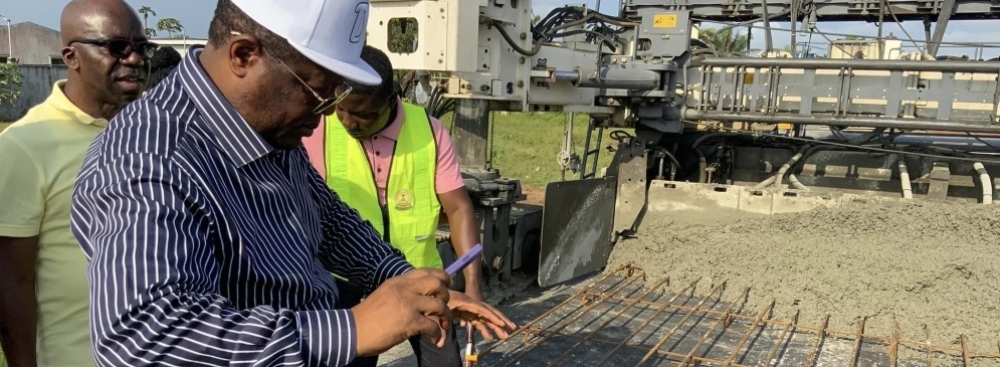
Intervention work is ongoing on the approach roads to the Second Niger Bridge damaged by flood and the work is progressing very well. The First Niger Bridge has been closed to traffic to enable immediate repair works. Contractor has mobilized to site and comprehensive rehabilitation of the bridge has started. From Summit Junction to the First Niger Bridge, massive rehabilitation work is also ongoing using reinforced concrete pavement.
16. The Honourable Minister wishes to commend the President of the Federal Republic of Nigeria, His Excellency Bola Ahmed Tinubu, GCFR, for the massive work being undertaken on the nation’s roads since the administration assumed office in 2023.
17. It is important to state that when the present administration came into office, there was hardly any part of the country where one could travel for an hour without encountering significant challenges on the road network. The condition of the country’s roads and bridges was a major national infrastructure challenge.
18. Rather than shy away from the problem, the administration of President Bola Ahmed Tinubu made the nation’s road network a priority. Virtually every part of the country became a priority, and the Federal Government, through the Federal Ministry of Works, Regional Commissions, Parastatals and other MDA’s has continued to respond extensively to these challenges.
19. The Federal Government is currently working on over 80 percent of the inherited federal roads, an unprecedented level of intervention in the country’s road infrastructure.
20. We ask the public to understand the enormous challenges inherited on our roads and bridges and to take note not only of the problems being solved, but also of the permanent solutions being introduced.
21. A major part of this new approach is the use of reinforced concrete pavement, designed to significantly extend the lifespan of major roads. These roads are expected to last between 50 and 100 years. This means that roads being constructed under President Bola Ahmed Tinubu’s administration are being designed with future generations in mind, rather than simply providing temporary solutions to today’s problems. And this is a complete departure from the past, when roads often deteriorated only a few years after completion, resulting in a continuous cycle of reconstruction and expenditure.
22. We appreciate the concerns of Nigerians over the condition of some roads presently and the difficulties faced by motorists and commuters who cannot move easily from one point to another. Those concerns are legitimate, and the Federal Government is listening. But Nigerians should also recognise the enormous scale of the problems inherited and the amount of work currently being undertaken across the country.
23. It is simply impossible to resolve every road challenge accumulated over many years of neglect by the past administrations within three years. What is important is that the government is working, the government is responding, and the government is putting permanent solutions in place.
25. We appreciate members of the public who send situation reports on failed roads and other infrastructure challenges. These reports help the Ministry identify areas requiring urgent attention. However, we also appeal to members of the public to report when such problems have been addressed, just as they report when they occur.
24. We are aware of situations where photographs and reports of road challenges continue to circulate on social media even after the Federal Government has intervened and resolved the particular problem.
25. However, the Ministry will continue to respond as rapidly as possible to genuine reports and concerns from Nigerians.
26. It is also important to note that we have compiled a comprehensive record of all inherited, ongoing and intervention projects across the country which is available to the public. This is to ensure that Nigerians have access to information on the infrastructure projects being undertaken nationwide and can fully participate in and appreciate the infrastructure revolution of President Bola Ahmed Tinubu’s administration.

UMAHI ORDERS IMMEDIATE EMERGENCY INTERVENTION ON BENIN-ASABA ROAD, AND SOME OTHER CRITICAL FEDERAL ROADS The Honourable Minister of Works, Senator Engr. David Nweze Umahi, CON, has directed the immediate deployment of major contractors to all three sections of the Benin-Asaba Federal Road to restore the failed sections and bring an end to the suffering of motorists and other road users. This is because, the situation on the concessioned Benin-Asaba Road has reached a point where the overall public interest must take precedence over the existing concession agreement. Recall that the Honourable Minister of Works was on the Benin-Asaba Road about seven days ago, where he assembled a number of contractors and directed them to prepare for immediate palliative intervention on the affected sections of the road at no cost to the concessionaire. In line with the Concession agreement which requires that before the Federal Government could intervene, the permission of the concessionaire must be required, and that permission was not granted to federal government. The Minister subsequently proposed three options to the concessionaire, any one of which would have enabled the Federal Government to move in and address the worsening condition of the road. Unfortunately, none of the options was accepted by the concessionaire. Immediately after the Minister left Asaba, the already limited equipment deployed to the road by the concessionaire was further reduced to just one, worsening the situation and increasing the suffering of motorists and other road users. While the Minister takes responsibility for the concerns and suffering of Nigerians using the road, it is important to state that the concessionaire has also not taken the suffering of Edo people and travelling public sufficiently into consideration by declining all the options put forward by the Federal Government. The concessionaire continues to rely on the terms of the concession agreement entered into by the previous administration, an agreement which weighs heavily against the Federal Government’s ability to intervene quickly in the interest of the public in a situation like this. In view of this situation, the Honourable Minister of Works has directed the immediate deployment of major contractors within the corridor to all three sections of the Benin-Asaba Road to restore the failed sections and bring relief to the people, with the cost of the emergency intervention being borne by the Federal Government. The Honourable Minister has also directed immediate redesign of the entire route to be rebuilt with reinforced concrete pavement. The public should therefore take note that immediate action is underway to restore every failed section of the Benin-Asaba Road and subsequently rehabilitate the entire sections of the road using reinforced concrete pavement. 2. On the Benin-Sapele Road: 3. On Ifaki(Ekiti) - Kabba (Kogi) Road: 4. On the Sokoto-Zamfara-Katsina Road: This is an inherited project involving the dualisation of approximately 350 kilometres, which translates to about 700 kilometers. The project has since been redesigned and is currently ongoing and most sections are being reconstructed using reinforced concrete pavement. From the Sokoto axis towards Zamfara, over 50 kilometres of one carriageway have been fully completed with reinforced concrete pavement. From Zamfara to Katsina, some sections have been completed and palliative works have been ordered over the sections that have not been reconstructed. However, the pace of work slowed down due to the redesign and rephasing of the project. The contractors currently engaged on the road include CBC, SETRACO, Triacta and Mothercat. They are being remobilised to return to site and complete the outstanding works. 5. On the Abuja-Kaduna-Zaria-Kano Road: The Federal Government took over the Road project and has currently completed the 118-kilometer mostly on reinforced concrete pavement on lot 1. The Lot 2, which covers 164 kilometres, is over 60 percent completed on reinforced concrete pavement. The Federal Government has also introduced solar-powered light on the entire route of Abuja-Kaduna-Zaria - Kano to improve visibility during night travel and enhance the overall security situation on the route. The entire project is scheduled for completion by December 2026. 6. On Bauchi-Jigawa Road: Triacta Nigeria Limited has been mobilised to carry out the necessary interventions on some failed sections and work is currently ongoing in those failed sections. 7. On the Sagamu-Ore Road: 48 Kilometers of the 96-kilometre road have already been completed using reinforced concrete pavement. There is also a 24-kilometre section around Ore which was abandoned by the previous contractor. The Federal Government has directed its immediate restoration to ensure seamless travel. Solar lights are being installed in the entire 96kilometer of the road. 8. On Flooded Sections on Sagamu-Ore-Benin Road: The flooded sections on the same corridor between Sagamu-Ore-Benin Road, as well as other flooded sections in Ondo State, are being designed for emergency procurement and intervention. 9. On the East-West Road: 10. On the Abuja-Lokoja Road: 11. On the Lokoja-Benin-Warri Road: The President has directed a complete redesign and procurement of the 400-kilometre dualised route covering the uncompleted sections, using reinforced concrete pavement, while palliative works will continue with the contractors currently on the road. 12. On Carter Bridge: 13. On the Third Mainland Bridge: 14. On the flooded section of the Lagos-Ibadan Road: Work has commenced on the affected section. There are also several flooded sections on federal roads across the six geopolitical zones, largely occasioned by excessive flooding and the effects of climate change. The Federal Government is identifying and marking these sections for immediate attention. 15. On the First and Second Niger Bridges: 16. The Honourable Minister wishes to commend the President of the Federal Republic of Nigeria, His Excellency Bola Ahmed Tinubu, GCFR, for the massive work being undertaken on the nation’s roads since the administration assumed office in 2023. 17. It is important to state that when the present administration came into office, there was hardly any part of the country where one could travel for an hour without encountering significant challenges on the road network. The condition of the country’s roads and bridges was a major national infrastructure challenge. 18. Rather than shy away from the problem, the administration of President Bola Ahmed Tinubu made the nation’s road network a priority. Virtually every part of the country became a priority, and the Federal Government, through the Federal Ministry of Works, Regional Commissions, Parastatals and other MDA’s has continued to respond extensively to these challenges. 19. The Federal Government is currently working on over 80 percent of the inherited federal roads, an unprecedented level of intervention in the country’s road infrastructure. 20. We ask the public to understand the enormous challenges inherited on our roads and bridges and to take note not only of the problems being solved, but also of the permanent solutions being introduced. 21. A major part of this new approach is the use of reinforced concrete pavement, designed to significantly extend the lifespan of major roads. These roads are expected to last between 50 and 100 years. This means that roads being constructed under President Bola Ahmed Tinubu’s administration are being designed with future generations in mind, rather than simply providing temporary solutions to today’s problems. And this is a complete departure from the past, when roads often deteriorated only a few years after completion, resulting in a continuous cycle of reconstruction and expenditure. 22. We appreciate the concerns of Nigerians over the condition of some roads presently and the difficulties faced by motorists and commuters who cannot move easily from one point to another. Those concerns are legitimate, and the Federal Government is listening. But Nigerians should also recognise the enormous scale of the problems inherited and the amount of work currently being undertaken across the country. 23. It is simply impossible to resolve every road challenge accumulated over many years of neglect by the past administrations within three years. What is important is that the government is working, the government is responding, and the government is putting permanent solutions in place. 25. We appreciate members of the public who send situation reports on failed roads and other infrastructure challenges. These reports help the Ministry identify areas requiring urgent attention. However, we also appeal to members of the public to report when such problems have been addressed, just as they report when they occur. 24. We are aware of situations where photographs and reports of road challenges continue to circulate on social media even after the Federal Government has intervened and resolved the particular problem.
The Governors of Edo and Delta States, the Niger Delta Development Commission (NDDC), and the Federal Government are currently engaged in interventions on different sections of the road to restore the entire route. While some sections are receiving palliative attention, permanent works are also ongoing on other sections.
The Federal Government is engaging both the contractor; Gamji Nigeria Company Limited, and Dangote PLC on immediate emergency and permanent intervention on the most failed sections of the road, while efforts are being made to financially mobilise the company for more extensive permanent work to commence on the axis.
Some failed and critical sections, including defective sections of bridges along the East-West Road, are being marked out for emergency procurement and intervention.
Several contracts are ongoing along the route, while the three critical sections currently without contracts are being procured for emergency intervention.
While the Federal Government continues to undertake weekly maintenance of the underwater elements of the bridge. The site has also been handed over to the contractor, CCECC, for the construction of a permanent new bridge, and work has commenced.
With regard to the defective underwater structural elements, the Federal Government is at the final stage of determining the appropriate intervention for the repair of the affected elements.
Intervention work is ongoing on the approach roads to the Second Niger Bridge damaged by flood and the work is progressing very well. The First Niger Bridge has been closed to traffic to enable immediate repair works. Contractor has mobilized to site and comprehensive rehabilitation of the bridge has started. From Summit Junction to the First Niger Bridge, massive rehabilitation work is also ongoing using reinforced concrete pavement.
25. However, the Ministry will continue to respond as rapidly as possible to genuine reports and concerns from Nigerians.
26. It is also important to note that we have compiled a comprehensive record of all inherited, ongoing and intervention projects across the country which is available to the public. This is to ensure that Nigerians have access to information on the infrastructure projects being undertaken nationwide and can fully participate in and appreciate the infrastructure revolution of President Bola Ahmed Tinubu’s administration.

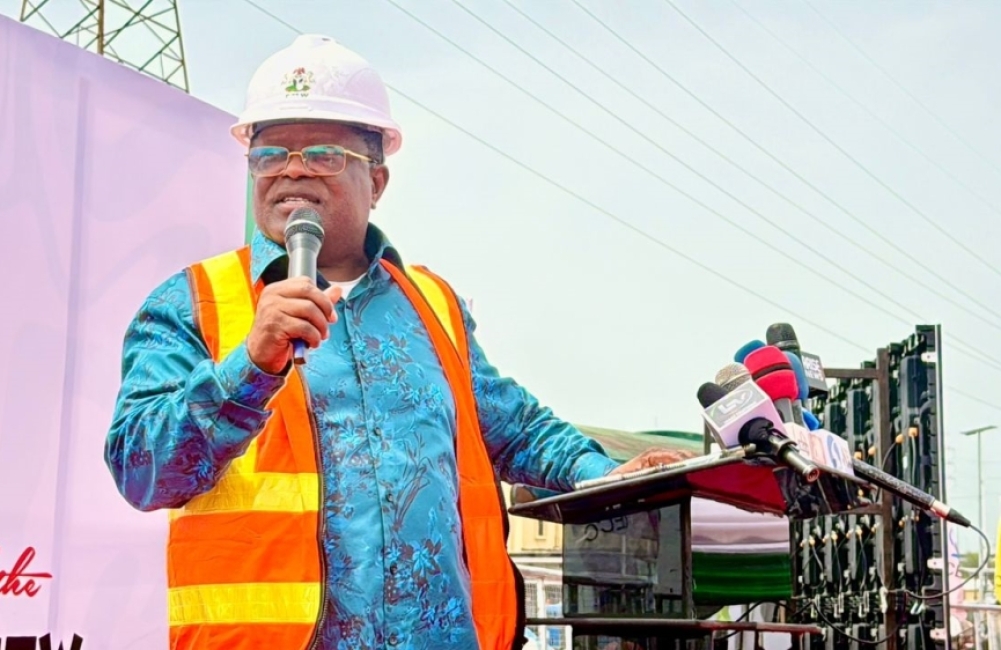
DON’T POLITICIZE SECURITY, IT WILL BE DEFEATED UNDER PRESIDENT TINUBU, SAYS UMAHI AS FG FLAGS OFF GOMBE–BIU DUALIZATION The Federal Government on Thursday, June 4, 2026 officially flagged off the Gombe–Biu Super Highway, a major component of the Akwanga–Jos–Bauchi–Gombe–Biu–Maiduguri Dualization Project, with the Minister of Works, Senator Engr. David Umahi, CON, expressing confidence that Nigeria's security challenges will be overcome under the administration of President Bola Ahmed Tinubu. Speaking at the ceremony in Gombe State, Umahi described the project as another demonstration of President Tinubu's commitment to infrastructure development and national unity, while commending Governor Muhammadu Inuwa Yahaya for the transformation of the state. "I’m very proud to boldly say that Gombe is an APC state. I’m very proud to have you as the Governor of Gombe State. Very proud to have President Bola Ahmed Tinubu as the President of Nigeria," Umahi said. "Just a few hours ago, you took us around, but what we saw, we are honestly very, very proud of what you have achieved in this state. We never knew that Gombe was this developed by you. We thank you, and we thank you because you’re a true Nigerian." Umahi disclosed that the Federal Government had expanded the scope of the Gombe-Biu section following requests from the state government and assured residents that construction activities would begin almost immediately. "We promise you that within the next 30 days, you will see real work on this highway." According to him, the Gombe-Biu section forms part of the approximately 700-kilometre Fourth Legacy Project stretching from Akwanga through Jos, Bauchi, Gombe and Biu to Maiduguri. He explained that the section was awarded to construction giant HITECH after a rigorous procurement process. "There were five other companies that contested with HITECH, and HITECH won it." The Minister also addressed the nation's security challenges, expressing confidence that the Tinubu administration would overcome them through collective efforts and sustained government action. “Security should not be politicized. It should not be weaponized. Why is it that anytime we are trying to have an election, there is heightened insecurity? This is very concerning because anybody who takes the life of others under any guise, God is watching, and God is going to pay back. “If anybody has a hand in the insecurity because the person wants power, God will resist such a person. "So we stand with the President, we pray for him, and we work with him. This phase will also pass, and we will win our election by God’s special grace." He noted that President Tinubu had demonstrated leadership in stabilizing key sectors of the economy and would also succeed in restoring lasting peace across the country. "The boat is already on sail. It is on the high sea. We are experiencing turbulence, but the President has been able to stabilize the boat in so many directions." "The macroeconomy is stabilized, the naira is stable, and we are descending the gains of the reforms to the micro level. This insecurity will also be solved by this President, and then we will all be grateful to God Almighty." The Minister described President Tinubu as a leader committed to delivering projects that had remained unrealized for decades. "I was shocked when the Governor traced back the history of this project, how past governments attempted it, but it remained a dot in a circle." "But the man that God has sent to solve the impossibilities, and that’s why I’m confident that this security issue will be solved by him." He cited the Sokoto-Badagry Super Highway, the Lagos-Calabar Coastal Highway and the Akwanga-Maiduguri Corridor as examples of long-conceived projects now being actualized under President Tinubu's administration. "The Sokoto-Badagry project was dreamt about fifty years ago by the Shagari administration. Who actualized it? President Bola Tinubu." "The Lagos-Calabar Coastal Highway was dreamt by himself about twenty-eight years ago. Who is actualizing it? President Bola Tinubu." "This one also goes back decades. Who is bringing it to fruition? The same President Bola Tinubu." Governor Muhammadu Inuwa Yahaya, CON, in his remarks, described the project as one of the most significant infrastructure investments in the history of Gombe State and expressed appreciation to President Tinubu and the Minister of Works for making it a reality. "The joy and excitement on the faces of our people speak for themselves. Across the state, people are celebrating because this project has come at a very important time in our history," the Governor said. He noted that the project aligns with the state's livestock and agricultural industrial zone initiative and would serve as a major catalyst for economic growth. "The livestock and agricultural zone will connect directly to the Super Highway, linking economic activities to critical infrastructure and opening up new opportunities for trade and investment." Governor Yahaya assured the Federal Government, contractors and stakeholders of the state's full support throughout the execution of the project. "On behalf of the Government and people of Gombe State, I assure you that the security of your personnel, equipment, and machinery is guaranteed throughout the duration of the project." Managing Director of HITECH Construction Company, Engr. Dany Abboud, assured stakeholders that the company would deliver the project according to the highest international standards. "We will execute this project to the highest international standards, as I have previously assured Your Excellencies. We will mobilize all necessary resources to ensure its successful delivery." He also pledged to create employment opportunities for host communities, particularly young people. "We are also committed to creating employment opportunities and empowering as many people as possible from the host communities, particularly the youth." Chairman of the Senate Committee on Works, Senator Allwell H. Onyesoh, commended President Tinubu's commitment to infrastructure development and called on Nigerians to support the administration. "We know we'll be coming here often considering the so many federal projects here. And I want to appeal to all of you to support Mr. President. He's doing very wonderfully for the nation." "Forget about induced insecurity that people are trying to bring to destabilize the country, but God will not allow it to work." Similarly, Chairman of the House Committee on Works, Hon. Akin Alabi, praised the partnership between the Executive and Legislature in delivering critical infrastructure projects across the country. He commended HITECH Construction Company for its quality of work, timely delivery of projects and positive relationship with host communities, describing the company as a strong partner in Nigeria's development. "As legislators, we oversee appropriations and project funding. From what we have seen on the ground, the company has delivered work that shows commitment and value." The traditional ruler of Yamaltu Emirate, The Mai Tangle and Chairman of the Gombe State Council of Chiefs, Dr. Danladi Sanusi Maiyamba III expressed appreciation to President Tinubu, the Federal Ministry of Works and all stakeholders involved in the project. He also pledged the full support of his people toward the successful execution of the highway. A significant portion of the road within Gombe State passes through the Yamaltu Emirate, and the monarch assured contractors of a peaceful and conducive environment throughout the construction period. Dignitaries at the flag-off ceremony included Senator Onyekachi Nwebonyi, Senator Ede Dafinone; Senator Anthony Yaro; Vice Chairman of the House Committee on Works, Hon. Usman Banye; Hon. Ajilosoro; Hon. Inuwa Garba; Hon. Alex; SSA-President Community Development (North East); SSA to President Community Development (SouthEast), Barr. Chioma Nweze, traditional rulers; government officials; representatives of HITECH Construction Company; and other stakeholders from across the country. ...
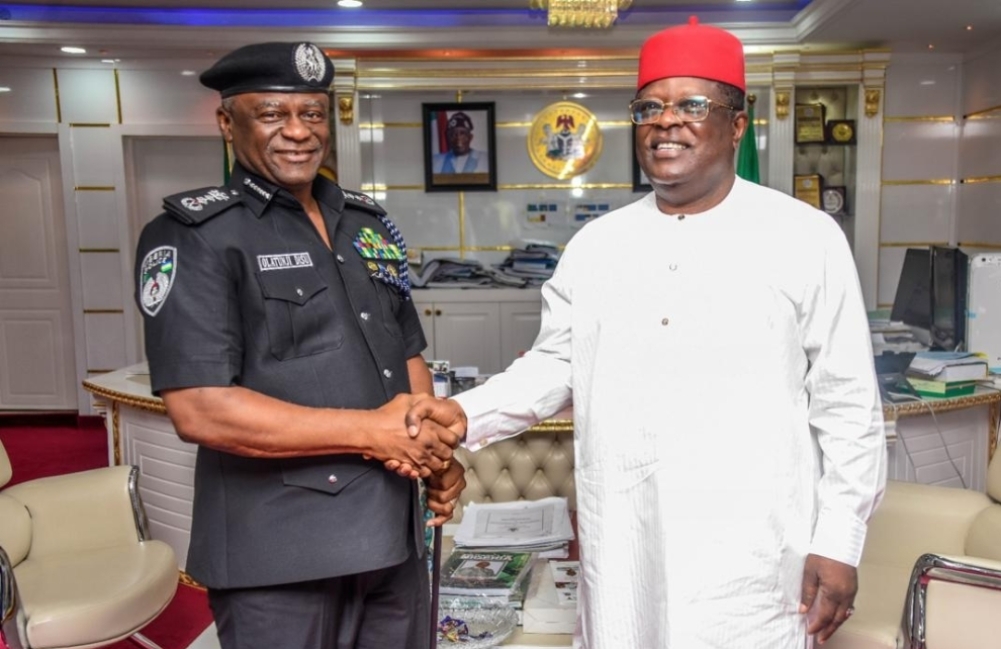
FG, NIGERIA POLICE DEEPEN PARTNERSHIP AS MINISTER UMAHI, IGP DISU STRENGTHEN SECURITY COLLABORATION FOR SAFER HIGHWAYS, NATIONAL DEVELOPMENT The Honourable Minister of Works, Sen. Engr. David Umahi, CON, FNSE, FNATE has commended President Bola Ahmed Tinubu’s administration for its impact on road infrastructure development across the six geopolitical zones of the country, while reaffirming the Federal Government’s commitment to strengthening collaboration with the Nigeria Police to safeguard critical national infrastructure and improve security along major highways. Engr. Umahi made the remarks during a working visit by the Nigeria Police delegation led by the Inspector-General of Police, IGP Olatunji Rilwan Disu, PSC, NPM, to the Federal Ministry of Works Headquarters in Abuja, where discussions focused on improving security around major road projects, deepening inter-agency cooperation, and advancing national developmental objectives. The visit underscored the Force's commitment, under the leadership of the IGP, to strengthening strategic collaboration with the Ministry to protect critical infrastructure and ensure safer highways across the country. He asked for logistic support from the Ministry to reposition the Nigeria Police Highway Patrol Unit in the face of a recent nationwide surge in the theft and vandalism of vital road furniture. Speaking during the visit, the Inspector-General of Police, IGP Olatunji Rilwan Disu, commended the Honourable Minister of Works for the transformation taking place in Nigeria’s road sector. He described roads as vital links of national unity, economic growth, social interaction, and public safety. According to the IGP, roads not only connect communities but also create employment opportunities, stimulate commerce, and contribute to crime reduction by expanding economic activities for citizens. He stated that his visit was aimed at reinforcing collaboration and synergy between the Ministry and the Nigeria Police to ensure improved transportation safety and enhanced security across Federal roads. IGP Disu noted that some of the ongoing road projects have attracted national and international attention due to their economic, tourist, and sporting potentials, stressing that improved infrastructure would open up opportunities for tourism, commerce, sports, and other socioeconomic activities across the country. He also pledged the readiness of the Force to strengthen security presence along major highways and critical project corridors, nationwide, emphasising that effective security on our highways remains essential for sustainable national development and economic stability. Responding, the Honourable Minister expressed appreciation to the Inspector-General of Police and the Nigeria Police for their continued support in securing ongoing and completed road projects, particularly in areas experiencing security challenges. He described the IGP as a dependable, disciplined, and professional officer, whose dedication to service continues to strengthen public confidence in the organisation. Engr. Umahi also welcomed the proactive security initiatives introduced under the IGP’s leadership, describing them as timely measures capable of enhancing peace, public safety, and national stability. He insisted that the success of the Federal Government’s ambitious road development agenda would not have been possible without the commitment and sacrifices of security agencies working tirelessly to protect project sites, personnel, and equipment, as well as installed furnishings such as solar panels, lights, batteries, and poles and reinforcements to road medians and CCTV systems. He also noted that many strategic road projects, particularly in insecurity-prone areas, would have been difficult to execute without the support and sacrifices of officers and men of the Nigeria Police and other security agencies. The Minister highlighted the ongoing four (4) Renewed Hope Legacy Road Projects and other strategic infrastructure developments being executed across the country, noting that no geopolitical zone has been left behind in the Federal Government’s development agenda, under President Tinubu. He further applauded the President’s determination to reposition Nigeria’s infrastructure landscape, explaining that government borrowings are being strategically directed toward economically viable and critical infrastructure projects capable of improving transportation, boosting commerce, and enhancing the quality of life of Nigerians. He explained that the current administration had adopted reinforced concrete pavement technology on several strategic road projects to ensure durability and long-term value, noting that many of the completed roads are designed to serve Nigerians for decades with minimal maintenance. He also disclosed that the Ministry had already begun integrating modern security features into major infrastructure projects, including surveillance systems, observation facilities, rest stations, and collaborative response mechanisms with security agencies along strategic highways. Engr. Umahi proposed the integration of a dedicated police security architecture into highway development plans, including designated security checkpoints, patrol bases, and operational centres to support intelligence gathering and emergency response along major road corridors and construction sites. In his address, the Honourable Minister of State for Works, Hon. Bello M. Goronyo, Esq., welcomed the IGP and his delegation and commended the Inspector-General for his leadership and untiring dedication to national security. He stressed the importance of security support for ongoing infrastructure development, especially with several strategic road projects currently underway across the country. He noted that improved collaboration between the Ministry and security agencies remains essential for protecting workers, equipment, and communities along project corridors. Goronyo further stated that President Tinubu has continued to provide the necessary budgetary support to enable the Ministry to execute numerous infrastructure projects nationwide, reaffirming the administration’s commitment to delivering quality roads and infrastructure capable of driving economic growth, connectivity, and national integration. In a Vote of Thanks, the Permanent Secretary of the Ministry, Mr. Rafiu Adeladan, appreciated the Inspector-General of Police and his team for the visit and commended the existing collaboration between the Ministry, the Office of the National Security Adviser (NSA), and other security agencies in protecting critical national infrastructure across the country. He noted that huge investments have been committed to road infrastructure development nationwide, echoing the need for sustained protection of these national assets to ensure their long-term value and impact on the lives of Nigerians. He expressed confidence that the working visit would further strengthen collaboration between the Ministry and the Nigeria Police in safeguarding critical infrastructure projects. Mohammed A. Ahmed Director, Information and Public Relations 25 May, 2026. ...
UMAHI ORDERS IMMEDIATE OPENING OF ABUJA-KADUNA-KANO ROAD SECTIONS The Honourable Minister of Works, Senator Engr. David Umahi, CON, has directed the contractor handling the Abuja–Kaduna-Kano Road project, Infiouest Nigeria Limited to immediately open all sections of the road to ease the movement of commuters traveling during the Eid al-Adha festive period and ensure safer and smoother journeys. The Minister is aware of the earlier accident that occurred along the road, which has now been completely cleared. Security agencies have also been deployed to strategic points along the road to maintain law and order and ensure the safety of road users throughout the festive season. ...
A Big Thank You to Brekete Family for the Words of Encouragement and Constructive Criticism to the Renewed Hope Administration of the Innovative President of the Federal Republic of Nigeria, His Excellency Asiwaju Bola Ahmed Tinubu, GCFR
The truth is that the President of the Federal Republic of Nigeria, His Excellency, Asiwaju Bola Ahmed Tinubu, GCFR means well for Nigeria. He is on a Divine mission to reinvent a nation of the dream of the founding fathers, where all Nigerians will be proud to be associated with.
The new innovations on road infrastructure introduced by the Federal Ministry of Works under Sen. Engr Nweze David Umahi, CON is among the numerous innovations initiated by Mr President to change the ugly narrative of our developmental history. This was what Mr President did when he presided over Lagos as the 1st democratically elected Governor of Lagos State in the history of the 4th Republic. He made Lagos to be truly Africa’s Centre of Excellence. He broadened the economic prospects of Lagos State and since then Lagos has continued to prosper and to dominate as the largest commercial hub in Africa. Now Mr President is presiding over the most populous country in Africa, you all will see a positive change that will beat the estimation of leaders of African continent. He has the will, the experience, the exposure and the ingenuity to achieve excellence in Nigeria's social- economic history.
The cream of resolute Hon. Ministers and the innovative policies of the Federal Government under our dear President, especially the idea of looking inwards and thinking out of the box will do a lot in mitigating the forex challenges, reduce capital flight, discourage corruption, create jobs and wealth for the teeming population, enhance export potentials, boost industrialization, reduce insecurity, increase our Gross Domestic Product, promote local content and prosper our nation.
This is the aspiration of Mr President. Concrete road initiative which was the original brainchild of our dear President when he presided over Lagos State will do a lot to change our narrative as we can be sure the new road policy is more enduring than the old system of asphalting which often fail and cause monumental pains to road users.
This is why the office of the Chief Press Secretary to the Hon. Minister of Works finds it progressively expedient to say a big thank you to the Brekete Family for supporting the road infrastructure initiative of our dear President Bola Ahmed Tinubu, GCFR.
Religious And Tribal Tolerance: Panacea to Peaceful Co-Existence in Nigeria - The Rev. Euba Example, Being the Text of The First Reverend William Benjamin Euba Memorial Lecture 110th Founders Day Celebration
Ladies and gentlemen, I wish to thank you all for the honour of inviting me to speak at this year's Founders Day celebration of the Eko Boys High School and in particular for inaugurating this Memorial lecture in honour of the visionary Reverend William Benjamin Euba now of very blessed memory, who founded this school.
I know that in 1955 when the Premier of the Western Region inaugurated the free primary education program across the western region, the prevailing condition was one of mass illiteracy.
While many of our people are now literate in numeracy and letters, and they can now operate a telephone, this literacy that we have come to take for granted, was unthinkable on any scale in the western region in 1955. Large numbers of people simply could not put meaning to numbers and letters talk less of reading or writing.
One of the permanent businesses of that time, was that of a professional letter writer. Yes, in case you did not know or you have forgotten that was a business that once thrived in Nigeria and which happily by the vision and execution of Awolowo, is now history, because the monopoly of knowledge by a few has been democratised by the leadership provided by one man and his team.
But my intervention is not about Obafemi Awolowo but rather about William Euba.
But it is important to put matters in context by emphasising how difficult things were in 1955 when Awolowo intervened, which is just 68 years ago.
You can therefore imagine perhaps how much more difficult the Euba era was, back in January 1913 when he opened the doors of Eko Boys High School to the public to get Educated.
That was 110 years ago today and approximately 42 years before free education started; and interestingly, both events occurred in January.
On a lighter note, and for those who have recently been involved in the debate over who is the greatest of all time between Lionel Messi and Cristiano Ronaldo, I do not intend such a debate between Euba and Awolowo.
Rather, I seek to celebrate the farsightedness of their vision about the importance of education and knowledge to nation building, peaceful coexistence and information management for rational choices.
This school, founded by Reverend Euba, and the many more that have come after it have in my view been the glue that has bound our people together in more ways than we have either acknowledged or appreciated.
This is the background to my discussion of the topic of this lecture: Religious and Tribal Tolerance: Panacea to Peaceful Coexistence in Nigeria - The Reverend Euba Example.
The example of Rev. Euba remains iconic because he set up a school that opened its doors to people from all walks of life, in our diverse country.
The importance of this educational tolerance to peaceful coexistence is easy to miss, if we do not understand how strong identities are, and how even more strongly people cling to their tribal, ethnic, and religious identities.
For those who want to delve into the matter of identity more deeply, I recommend, “IDENTITY: The Demand for Dignity and the Politics of Resentment” by Francis Fukuyama.
But for the purpose of today, it is simply important to stress how strongly those identities magnify our suspicions about one another, inflame myths about others in our minds and expand fault lines that overshadows the common bonds of humanity that we all share.
It is the very early work and initiative of men like Reverend Euba and other missionaries of the time to open access to formal education for African and Nigerian children on a non-discriminatory basis that has helped in no small way to bridge those gaps that are being widened by manipulation of our ethnic and religious diversity.
As I have had cause to argue on occasion, if our creator has demonstrated the capacity to create diversity, certainly nothing could have prevented him from making us all the same other than his infinite wisdom that our diversity would better enrich us and make our planet a more exciting place.
Regrettably this is what a few people (and I insist that they are few) choose to weaponize and deny us of the richness and excitement that the creator intended for us.
Clearly, Reverend Euba saw through their chicanery many years before it matured. He chose education as his weapon to put those few people in their place.
A place of irrelevance and ignominy, supplanted by the training of a large army of young people who have the understanding of both religions, who accept the minor differences between them and who decide to embrace the fundamentals of a common good and a common humanity.
Those young people, by virtue of the opportunity they got to attend the same school, sit in the same classrooms, eat together and participate in sporting activities together have learned that we are not different from one another even if we speak different languages.
Afterall, as Bishop Desmond Tutu of blessed memory argues in his book "God is not a Christian," that the languages we speak and the faith we profess are not divine; on the contrary they are products of where we were born and to whom we were born.
Those accidental circumstances should not define our essence. They should not be points of discord or discontent. Rather they should serve as sources of strength and richness which in fact they are.
It is to the eternal credit of Reverend William Benjamin Euba and others like him that they saw these sources of strength and richness and exposed young men and women to them through education.
This has turned a generation of young men and women into a large army of adults who have overcome religious and ethnic differences to contribute to national good and development.
Permit me to illustrate this phenomenon, by telling you a story that is only one example of many uncountable stories, which keeps the very few peddlers of division in check in our country.
On the 16th day of December 2022, I was invited to the Church Missionary Society (CMS) Grammar School premises to open an e-learning centre at the school premises in Bariga area of Lagos.
The centre had 300 computers, high speed broadband internet, fully equipped IT lab, for students and many other facilities for librarians and teachers. It was not built by the Anglican mission nor was it built by a Christian.
It was built by a Muslim, Senator Olugbenga Bareehu Ashafa, a two-term senator and now the Managing Director of the Federal Housing Authority.
It was built in part because he was an old boy of that school. The Anglican mission did not shut him out about 50 years ago when he sought admission there, on the grounds that he was a Muslim.
On the contrary, they opened their doors to him, and interestingly while still a student, the school gave him a special permission to perform the Hajj pilgrimage to Mecca as his parents wished and he returned to complete his education.
As I said, at the occasion, what is a Bareehu doing amongst Anglicans? Only the farsighted vision of missionaries and men like Reverend Euba could have found a place of comfort for a Bareehu amongst Anglicans, and for me a Raji in Eko Boys High School. Yes, I passed through this school for one year.
Ladies and gentlemen, Reverend Euba’s place in Nigeria’s quest for peaceful coexistence is legendary. We cannot thank him enough. May his kind, generous and visionary soul continue to rest in peace and may his example continue to inspire our nation.
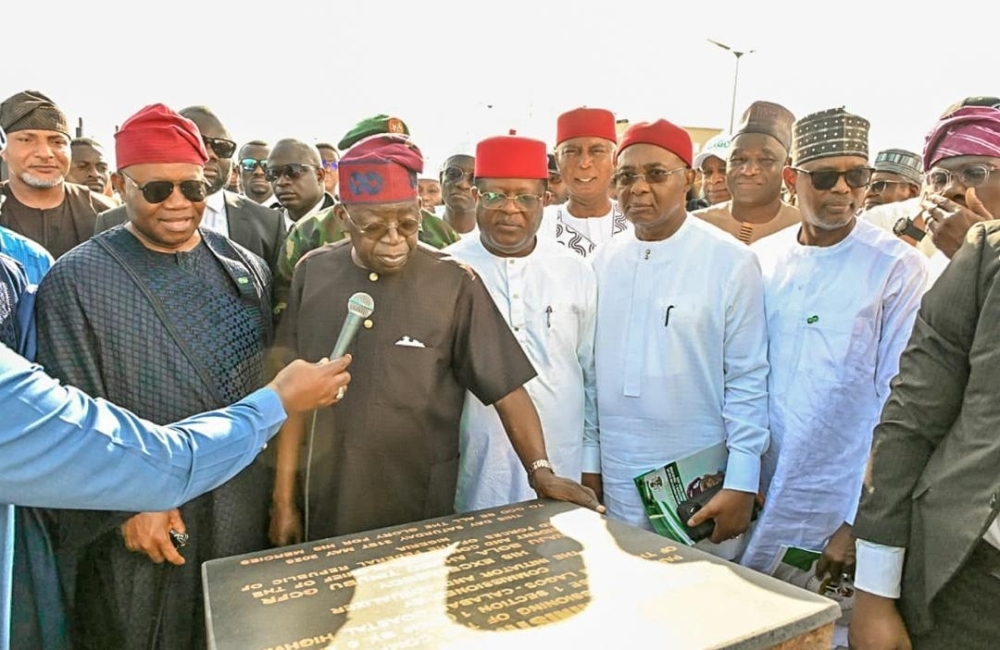
DRIVING NIGERIA’S FUTURE: CELEBRATING TWO YEARS OF TRANSFORMATIVE LEADERSHIP AND THE LAGOS-CALABAR COASTAL HIGHWAY MILESTONE
DRIVING NIGERIA’S FUTURE: CELEBRATING TWO YEARS OF TRANSFORMATIVE LEADERSHIP AND THE LAGOS-CALABAR COASTAL HIGHWAY MILESTONE
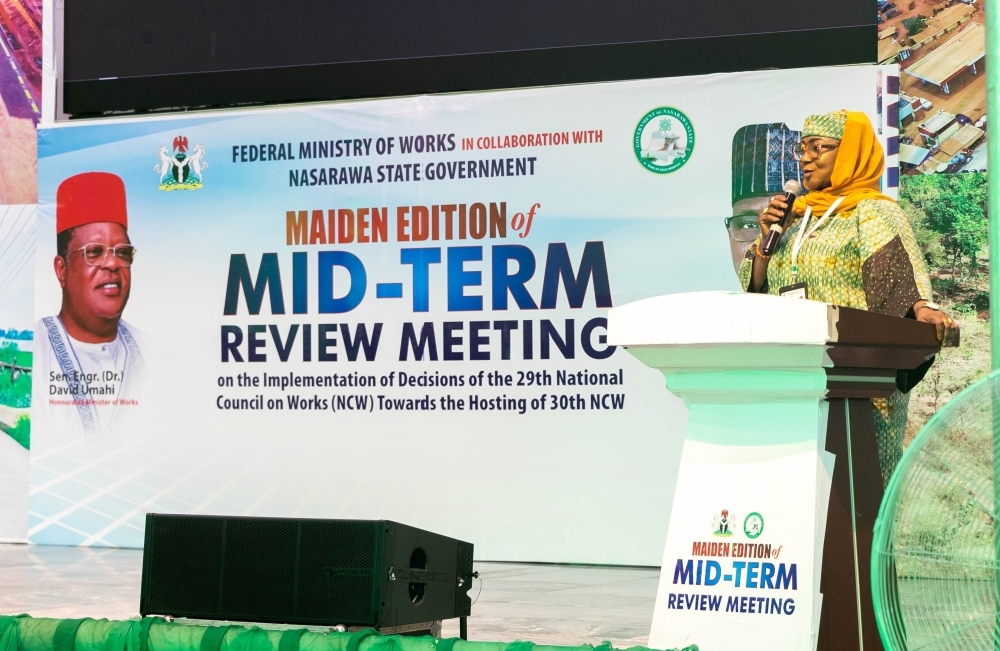
MID -TERM REVIEW MEETING ON THE IMPLIMENTATION OF THE DECISIONS REACHED AT THE 29TH NATIONAL COUNCIL ON WORKS (NCW) DAY 1
MID -TERM REVIEW MEETING ON THE IMPLIMENTATION OF THE DECISIONS REACHED AT THE 29TH NATIONAL COUNCIL ON WORKS (NCW) DAY 1