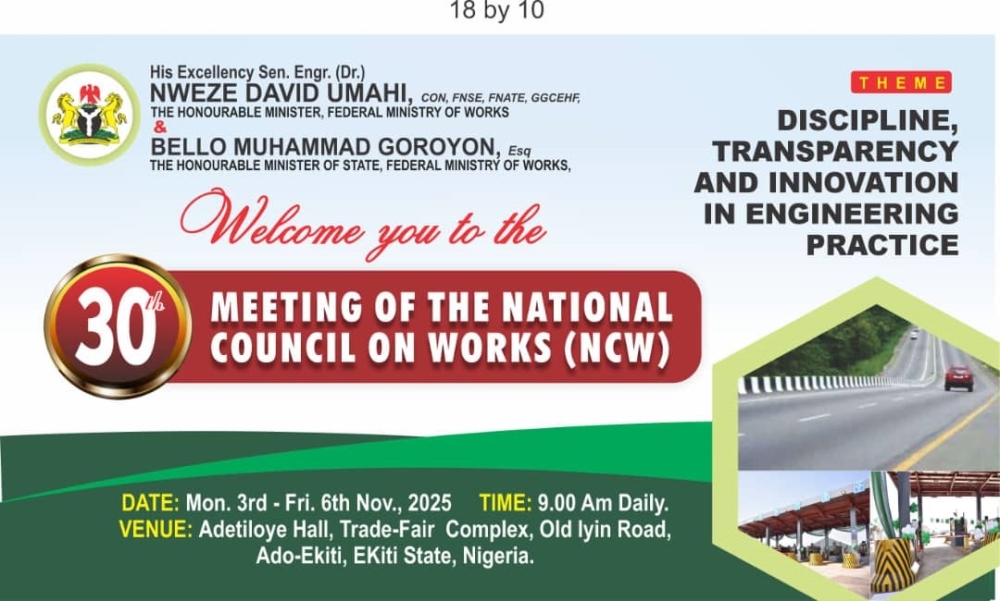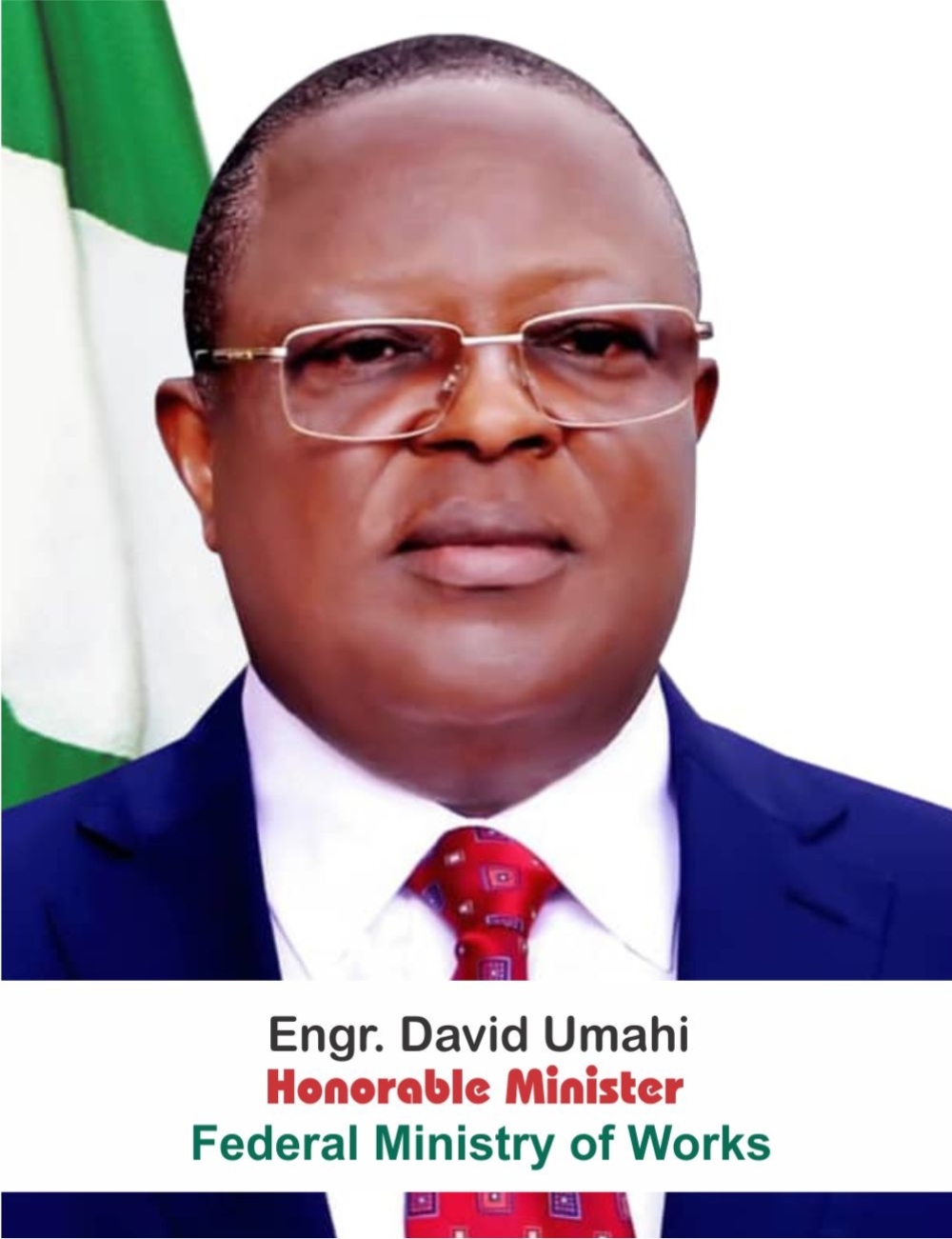
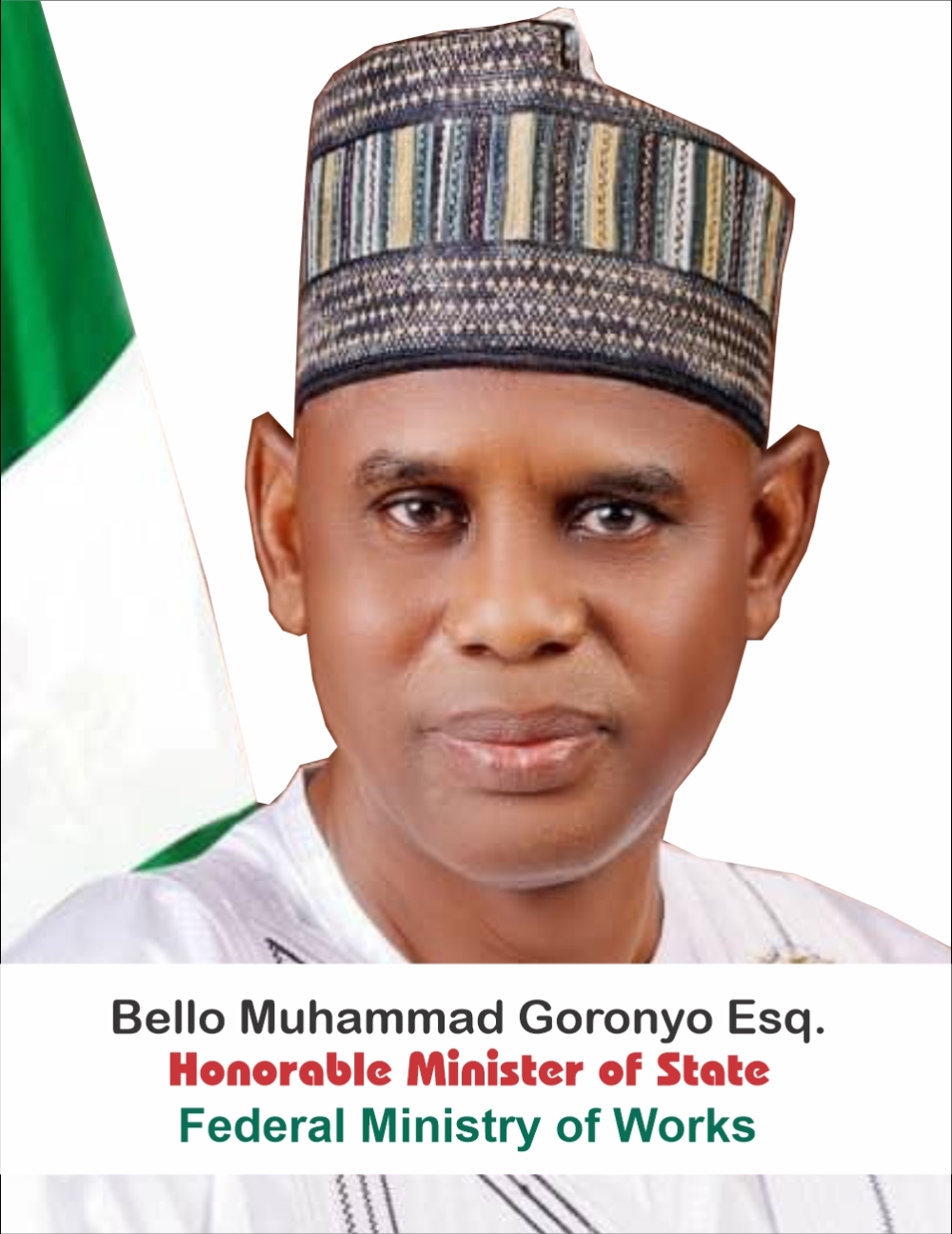
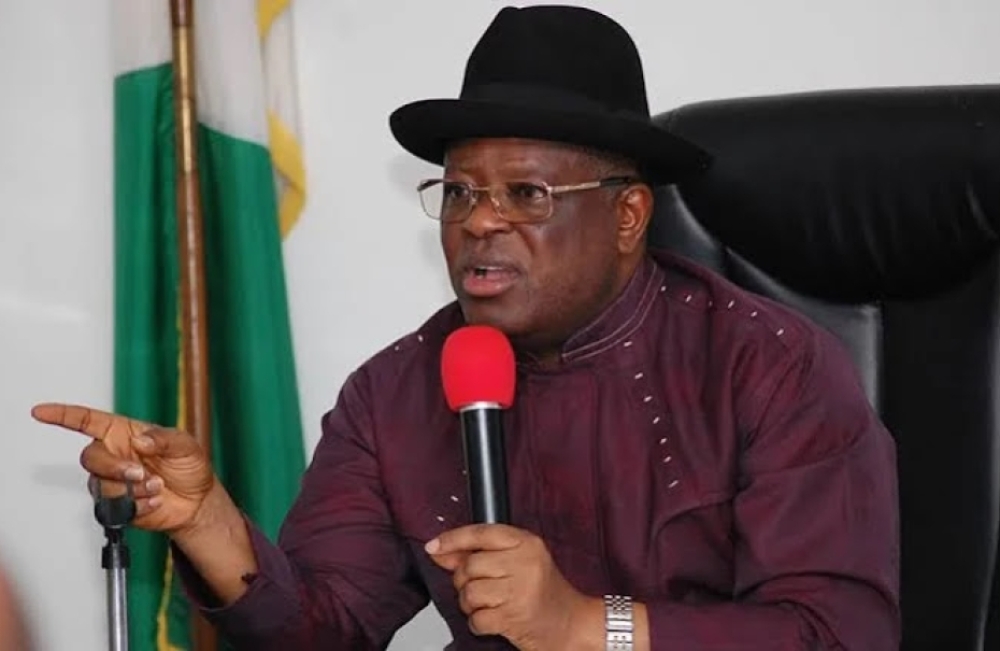
UMAHI ORDERS IMMEDIATE EMERGENCY INTERVENTION ON BENIN-ASABA ROAD, AND SOME OTHER CRITICAL FEDERAL ROADS
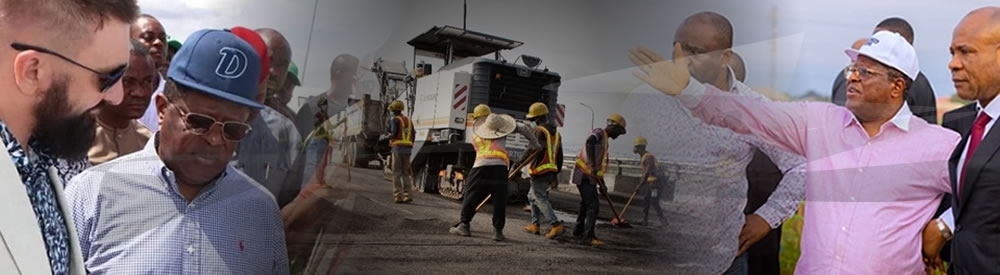
The Honourable Minister of Works, Senator Engr. David Nweze Umahi, CON, has directed the immediate deployment of major contractors to all three sections of the Benin-Asaba Federal Road to restore the failed sections and bring an end to the suffering of motorists and other road users.
This is because, the situation on the concessioned Benin-Asaba Road has reached a point where the overall public interest must take precedence over the existing concession agreement.
Recall that the Honourable Minister of Works was on the Benin-Asaba Road about seven days ago, where he assembled a number of contractors and directed them to prepare for immediate palliative intervention on the affected sections of the road at no cost to the concessionaire. In line with the Concession agreement which requires that before the Federal Government could intervene, the permission of the concessionaire must be required, and that permission was not granted to federal government.
The Minister subsequently proposed three options to the concessionaire, any one of which would have enabled the Federal Government to move in and address the worsening condition of the road. Unfortunately, none of the options was accepted by the concessionaire. Immediately after the Minister left Asaba, the already limited equipment deployed to the road by the concessionaire was further reduced to just one, worsening the situation and increasing the suffering of motorists and other road users.
While the Minister takes responsibility for the concerns and suffering of Nigerians using the road, it is important to state that the concessionaire has also not taken the suffering of Edo people and travelling public sufficiently into consideration by declining all the options put forward by the Federal Government. The concessionaire continues to rely on the terms of the concession agreement entered into by the previous administration, an agreement which weighs heavily against the Federal Government’s ability to intervene quickly in the interest of the public in a situation like this.
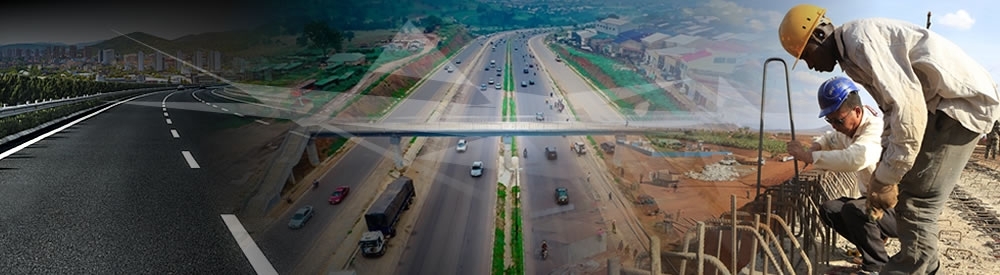
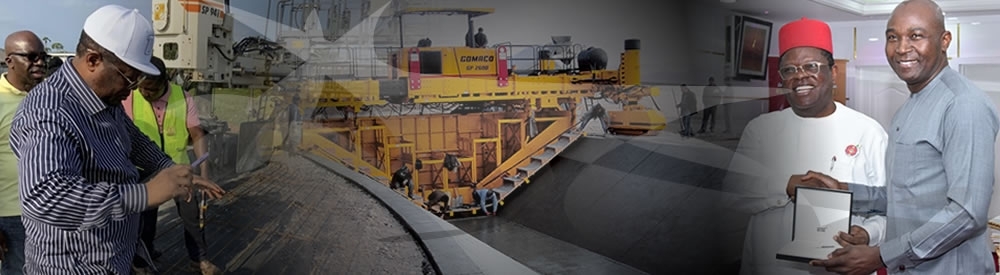
In view of this situation, the Honourable Minister of Works has directed the immediate deployment of major contractors within the corridor to all three sections of the Benin-Asaba Road to restore the failed sections and bring relief to the people, with the cost of the emergency intervention being borne by the Federal Government. The Honourable Minister has also directed immediate redesign of the entire route to be rebuilt with reinforced concrete pavement. The public should therefore take note that immediate action is underway to restore every failed section of the Benin-Asaba Road and subsequently rehabilitate the entire sections of the road using reinforced concrete pavement.
2. On the Benin-Sapele Road:
The Governors of Edo and Delta States, the Niger Delta Development Commission (NDDC), and the Federal Government are currently engaged in interventions on different sections of the road to restore the entire route. While some sections are receiving palliative attention, permanent works are also ongoing on other sections.
3. On Ifaki(Ekiti) - Kabba (Kogi) Road:
The Federal Government is engaging both the contractor; Gamji Nigeria Company Limited, and Dangote PLC on immediate emergency and permanent intervention on the most failed sections of the road, while efforts are being made to financially mobilise the company for more extensive permanent work to commence on the axis.
4. On the Sokoto-Zamfara-Katsina Road: This is an inherited project involving the dualisation of approximately 350 kilometres, which translates to about 700 kilometers. The project has since been redesigned and is currently ongoing and most sections are being reconstructed using reinforced concrete pavement. From the Sokoto axis towards Zamfara, over 50 kilometres of one carriageway have been fully completed with reinforced concrete pavement. From Zamfara to Katsina, some sections have been completed and palliative works have been ordered over the sections that have not been reconstructed. However, the pace of work slowed down due to the redesign and rephasing of the project. The contractors currently engaged on the road include CBC, SETRACO, Triacta and Mothercat. They are being remobilised to return to site and complete the outstanding works.
5. On the Abuja-Kaduna-Zaria-Kano Road: The Federal Government took over the Road project and has currently completed the 118-kilometer mostly on reinforced concrete pavement on lot 1. The Lot 2, which covers 164 kilometres, is over 60 percent completed on reinforced concrete pavement. The Federal Government has also introduced solar-powered light on the entire route of Abuja-Kaduna-Zaria - Kano to improve visibility during night travel and enhance the overall security situation on the route. The entire project is scheduled for completion by December 2026.
6. On Bauchi-Jigawa Road: Triacta Nigeria Limited has been mobilised to carry out the necessary interventions on some failed sections and work is currently ongoing in those failed sections.
7. On the Sagamu-Ore Road: 48 Kilometers of the 96-kilometre road have already been completed using reinforced concrete pavement. There is also a 24-kilometre section around Ore which was abandoned by the previous contractor. The Federal Government has directed its immediate restoration to ensure seamless travel. Solar lights are being installed in the entire 96kilometer of the road.
8. On Flooded Sections on Sagamu-Ore-Benin Road: The flooded sections on the same corridor between Sagamu-Ore-Benin Road, as well as other flooded sections in Ondo State, are being designed for emergency procurement and intervention.
9. On the East-West Road:
Some failed and critical sections, including defective sections of bridges along the East-West Road, are being marked out for emergency procurement and intervention.
10. On the Abuja-Lokoja Road:
Several contracts are ongoing along the route, while the three critical sections currently without contracts are being procured for emergency intervention.
11. On the Lokoja-Benin-Warri Road: The President has directed a complete redesign and procurement of the 400-kilometre dualised route covering the uncompleted sections, using reinforced concrete pavement, while palliative works will continue with the contractors currently on the road.
12. On Carter Bridge:
While the Federal Government continues to undertake weekly maintenance of the underwater elements of the bridge. The site has also been handed over to the contractor, CCECC, for the construction of a permanent new bridge, and work has commenced.
13. On the Third Mainland Bridge:
With regard to the defective underwater structural elements, the Federal Government is at the final stage of determining the appropriate intervention for the repair of the affected elements.
14. On the flooded section of the Lagos-Ibadan Road: Work has commenced on the affected section. There are also several flooded sections on federal roads across the six geopolitical zones, largely occasioned by excessive flooding and the effects of climate change. The Federal Government is identifying and marking these sections for immediate attention.
15. On the First and Second Niger Bridges:
Intervention work is ongoing on the approach roads to the Second Niger Bridge damaged by flood and the work is progressing very well. The First Niger Bridge has been closed to traffic to enable immediate repair works. Contractor has mobilized to site and comprehensive rehabilitation of the bridge has started. From Summit Junction to the First Niger Bridge, massive rehabilitation work is also ongoing using reinforced concrete pavement.
16. The Honourable Minister wishes to commend the President of the Federal Republic of Nigeria, His Excellency Bola Ahmed Tinubu, GCFR, for the massive work being undertaken on the nation’s roads since the administration assumed office in 2023.
17. It is important to state that when the present administration came into office, there was hardly any part of the country where one could travel for an hour without encountering significant challenges on the road network. The condition of the country’s roads and bridges was a major national infrastructure challenge.
18. Rather than shy away from the problem, the administration of President Bola Ahmed Tinubu made the nation’s road network a priority. Virtually every part of the country became a priority, and the Federal Government, through the Federal Ministry of Works, Regional Commissions, Parastatals and other MDA’s has continued to respond extensively to these challenges.
19. The Federal Government is currently working on over 80 percent of the inherited federal roads, an unprecedented level of intervention in the country’s road infrastructure.
20. We ask the public to understand the enormous challenges inherited on our roads and bridges and to take note not only of the problems being solved, but also of the permanent solutions being introduced.
21. A major part of this new approach is the use of reinforced concrete pavement, designed to significantly extend the lifespan of major roads. These roads are expected to last between 50 and 100 years. This means that roads being constructed under President Bola Ahmed Tinubu’s administration are being designed with future generations in mind, rather than simply providing temporary solutions to today’s problems. And this is a complete departure from the past, when roads often deteriorated only a few years after completion, resulting in a continuous cycle of reconstruction and expenditure.
22. We appreciate the concerns of Nigerians over the condition of some roads presently and the difficulties faced by motorists and commuters who cannot move easily from one point to another. Those concerns are legitimate, and the Federal Government is listening. But Nigerians should also recognise the enormous scale of the problems inherited and the amount of work currently being undertaken across the country.
23. It is simply impossible to resolve every road challenge accumulated over many years of neglect by the past administrations within three years. What is important is that the government is working, the government is responding, and the government is putting permanent solutions in place.
25. We appreciate members of the public who send situation reports on failed roads and other infrastructure challenges. These reports help the Ministry identify areas requiring urgent attention. However, we also appeal to members of the public to report when such problems have been addressed, just as they report when they occur.
24. We are aware of situations where photographs and reports of road challenges continue to circulate on social media even after the Federal Government has intervened and resolved the particular problem.
25. However, the Ministry will continue to respond as rapidly as possible to genuine reports and concerns from Nigerians.
26. It is also important to note that we have compiled a comprehensive record of all inherited, ongoing and intervention projects across the country which is available to the public. This is to ensure that Nigerians have access to information on the infrastructure projects being undertaken nationwide and can fully participate in and appreciate the infrastructure revolution of President Bola Ahmed Tinubu’s administration.

UMAHI ORDERS IMMEDIATE EMERGENCY INTERVENTION ON BENIN-ASABA ROAD, AND SOME OTHER CRITICAL FEDERAL ROADS The Honourable Minister of Works, Senator Engr. David Nweze Umahi, CON, has directed the immediate deployment of major contractors to all three sections of the Benin-Asaba Federal Road to restore the failed sections and bring an end to the suffering of motorists and other road users. This is because, the situation on the concessioned Benin-Asaba Road has reached a point where the overall public interest must take precedence over the existing concession agreement. Recall that the Honourable Minister of Works was on the Benin-Asaba Road about seven days ago, where he assembled a number of contractors and directed them to prepare for immediate palliative intervention on the affected sections of the road at no cost to the concessionaire. In line with the Concession agreement which requires that before the Federal Government could intervene, the permission of the concessionaire must be required, and that permission was not granted to federal government. The Minister subsequently proposed three options to the concessionaire, any one of which would have enabled the Federal Government to move in and address the worsening condition of the road. Unfortunately, none of the options was accepted by the concessionaire. Immediately after the Minister left Asaba, the already limited equipment deployed to the road by the concessionaire was further reduced to just one, worsening the situation and increasing the suffering of motorists and other road users. While the Minister takes responsibility for the concerns and suffering of Nigerians using the road, it is important to state that the concessionaire has also not taken the suffering of Edo people and travelling public sufficiently into consideration by declining all the options put forward by the Federal Government. The concessionaire continues to rely on the terms of the concession agreement entered into by the previous administration, an agreement which weighs heavily against the Federal Government’s ability to intervene quickly in the interest of the public in a situation like this. In view of this situation, the Honourable Minister of Works has directed the immediate deployment of major contractors within the corridor to all three sections of the Benin-Asaba Road to restore the failed sections and bring relief to the people, with the cost of the emergency intervention being borne by the Federal Government. The Honourable Minister has also directed immediate redesign of the entire route to be rebuilt with reinforced concrete pavement. The public should therefore take note that immediate action is underway to restore every failed section of the Benin-Asaba Road and subsequently rehabilitate the entire sections of the road using reinforced concrete pavement. 2. On the Benin-Sapele Road: 3. On Ifaki(Ekiti) - Kabba (Kogi) Road: 4. On the Sokoto-Zamfara-Katsina Road: This is an inherited project involving the dualisation of approximately 350 kilometres, which translates to about 700 kilometers. The project has since been redesigned and is currently ongoing and most sections are being reconstructed using reinforced concrete pavement. From the Sokoto axis towards Zamfara, over 50 kilometres of one carriageway have been fully completed with reinforced concrete pavement. From Zamfara to Katsina, some sections have been completed and palliative works have been ordered over the sections that have not been reconstructed. However, the pace of work slowed down due to the redesign and rephasing of the project. The contractors currently engaged on the road include CBC, SETRACO, Triacta and Mothercat. They are being remobilised to return to site and complete the outstanding works. 5. On the Abuja-Kaduna-Zaria-Kano Road: The Federal Government took over the Road project and has currently completed the 118-kilometer mostly on reinforced concrete pavement on lot 1. The Lot 2, which covers 164 kilometres, is over 60 percent completed on reinforced concrete pavement. The Federal Government has also introduced solar-powered light on the entire route of Abuja-Kaduna-Zaria - Kano to improve visibility during night travel and enhance the overall security situation on the route. The entire project is scheduled for completion by December 2026. 6. On Bauchi-Jigawa Road: Triacta Nigeria Limited has been mobilised to carry out the necessary interventions on some failed sections and work is currently ongoing in those failed sections. 7. On the Sagamu-Ore Road: 48 Kilometers of the 96-kilometre road have already been completed using reinforced concrete pavement. There is also a 24-kilometre section around Ore which was abandoned by the previous contractor. The Federal Government has directed its immediate restoration to ensure seamless travel. Solar lights are being installed in the entire 96kilometer of the road. 8. On Flooded Sections on Sagamu-Ore-Benin Road: The flooded sections on the same corridor between Sagamu-Ore-Benin Road, as well as other flooded sections in Ondo State, are being designed for emergency procurement and intervention. 9. On the East-West Road: 10. On the Abuja-Lokoja Road: 11. On the Lokoja-Benin-Warri Road: The President has directed a complete redesign and procurement of the 400-kilometre dualised route covering the uncompleted sections, using reinforced concrete pavement, while palliative works will continue with the contractors currently on the road. 12. On Carter Bridge: 13. On the Third Mainland Bridge: 14. On the flooded section of the Lagos-Ibadan Road: Work has commenced on the affected section. There are also several flooded sections on federal roads across the six geopolitical zones, largely occasioned by excessive flooding and the effects of climate change. The Federal Government is identifying and marking these sections for immediate attention. 15. On the First and Second Niger Bridges: 16. The Honourable Minister wishes to commend the President of the Federal Republic of Nigeria, His Excellency Bola Ahmed Tinubu, GCFR, for the massive work being undertaken on the nation’s roads since the administration assumed office in 2023. 17. It is important to state that when the present administration came into office, there was hardly any part of the country where one could travel for an hour without encountering significant challenges on the road network. The condition of the country’s roads and bridges was a major national infrastructure challenge. 18. Rather than shy away from the problem, the administration of President Bola Ahmed Tinubu made the nation’s road network a priority. Virtually every part of the country became a priority, and the Federal Government, through the Federal Ministry of Works, Regional Commissions, Parastatals and other MDA’s has continued to respond extensively to these challenges. 19. The Federal Government is currently working on over 80 percent of the inherited federal roads, an unprecedented level of intervention in the country’s road infrastructure. 20. We ask the public to understand the enormous challenges inherited on our roads and bridges and to take note not only of the problems being solved, but also of the permanent solutions being introduced. 21. A major part of this new approach is the use of reinforced concrete pavement, designed to significantly extend the lifespan of major roads. These roads are expected to last between 50 and 100 years. This means that roads being constructed under President Bola Ahmed Tinubu’s administration are being designed with future generations in mind, rather than simply providing temporary solutions to today’s problems. And this is a complete departure from the past, when roads often deteriorated only a few years after completion, resulting in a continuous cycle of reconstruction and expenditure. 22. We appreciate the concerns of Nigerians over the condition of some roads presently and the difficulties faced by motorists and commuters who cannot move easily from one point to another. Those concerns are legitimate, and the Federal Government is listening. But Nigerians should also recognise the enormous scale of the problems inherited and the amount of work currently being undertaken across the country. 23. It is simply impossible to resolve every road challenge accumulated over many years of neglect by the past administrations within three years. What is important is that the government is working, the government is responding, and the government is putting permanent solutions in place. 25. We appreciate members of the public who send situation reports on failed roads and other infrastructure challenges. These reports help the Ministry identify areas requiring urgent attention. However, we also appeal to members of the public to report when such problems have been addressed, just as they report when they occur. 24. We are aware of situations where photographs and reports of road challenges continue to circulate on social media even after the Federal Government has intervened and resolved the particular problem.
The Governors of Edo and Delta States, the Niger Delta Development Commission (NDDC), and the Federal Government are currently engaged in interventions on different sections of the road to restore the entire route. While some sections are receiving palliative attention, permanent works are also ongoing on other sections.
The Federal Government is engaging both the contractor; Gamji Nigeria Company Limited, and Dangote PLC on immediate emergency and permanent intervention on the most failed sections of the road, while efforts are being made to financially mobilise the company for more extensive permanent work to commence on the axis.
Some failed and critical sections, including defective sections of bridges along the East-West Road, are being marked out for emergency procurement and intervention.
Several contracts are ongoing along the route, while the three critical sections currently without contracts are being procured for emergency intervention.
While the Federal Government continues to undertake weekly maintenance of the underwater elements of the bridge. The site has also been handed over to the contractor, CCECC, for the construction of a permanent new bridge, and work has commenced.
With regard to the defective underwater structural elements, the Federal Government is at the final stage of determining the appropriate intervention for the repair of the affected elements.
Intervention work is ongoing on the approach roads to the Second Niger Bridge damaged by flood and the work is progressing very well. The First Niger Bridge has been closed to traffic to enable immediate repair works. Contractor has mobilized to site and comprehensive rehabilitation of the bridge has started. From Summit Junction to the First Niger Bridge, massive rehabilitation work is also ongoing using reinforced concrete pavement.
25. However, the Ministry will continue to respond as rapidly as possible to genuine reports and concerns from Nigerians.
26. It is also important to note that we have compiled a comprehensive record of all inherited, ongoing and intervention projects across the country which is available to the public. This is to ensure that Nigerians have access to information on the infrastructure projects being undertaken nationwide and can fully participate in and appreciate the infrastructure revolution of President Bola Ahmed Tinubu’s administration.
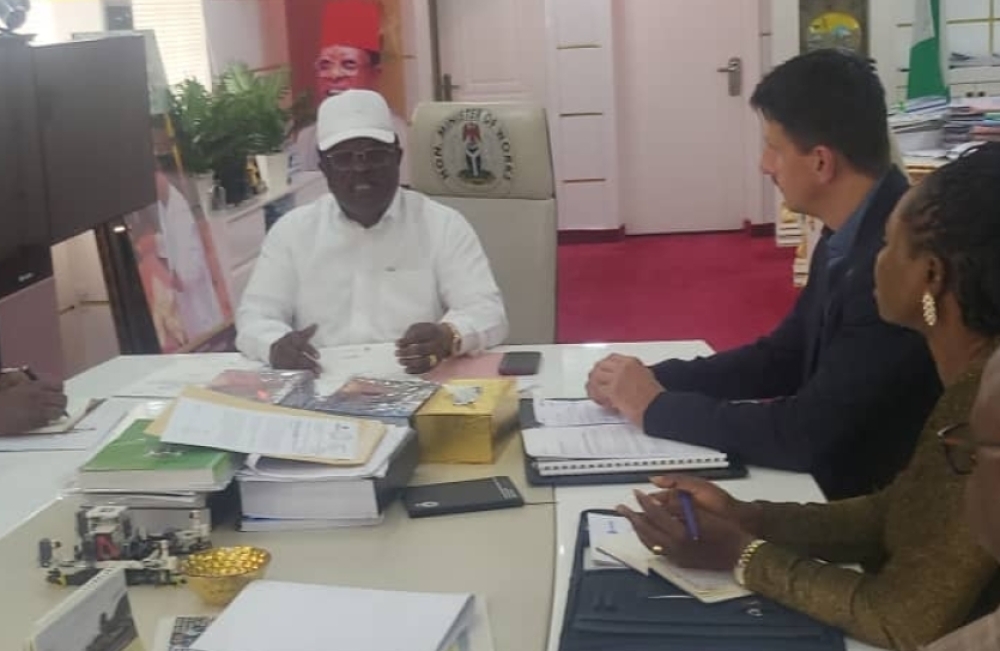
FG APPROVES FUNDS FOR THE COMPLETION OF THE REHABILITATION OF ABUJA-KADUNA- ZARIA–KANO DUAL CARRIAGEWAY AND BODO-BONNY ROAD WITH BRIDGES ACROSS THE OPOBO CHANNEL, TASKS JULIUS BERGER PLC ON QUALITY AND SPEEDY PROJECT DELIVERY. The Federal Government has tasked Julius Berger (Nig.) Plc on the need to fast-track the completion of the rehabilitation of the 82-km Section II of the Abuja – Kaduna – Zaria – Kano Dual Carriageway in FCT, Kaduna, and Kano States and the construction of the Bodo – Bonny road with bridges across the Opobo Channel, Route 430 in Rivers State. This charge was made by the Honourable Minister of Works, His Excellency, Sen. (Engr.) Nweze David Umahi, CON during a meeting with Julius Berger (Nig.) Plc, represented by its Executive Director, Projects, Engr. Banjamin Bott and the Head of Contract Management, Omonigho Brown at the Ministry’s headquarters Mabushi, Abuja on 3rd October 2024. Speaking during the meeting, the Honourable Minister stated that the Federal Executive Council (FEC) at its meeting of 23rd September, 2024 approved the re-scoping and downward review of the contract for the rehabilitation of the Abuja – Kaduna – Zaria – Kano Dual Carriageway in the FCT, Kaduna and Kano States, contract No. 6350 and the revised estimated total cost / augmentation of the contract for the construction of Bodo-Bonny road with bridges across the Opobo channel, route 430 in Rivers State, contract No. 6247, amounting to a total contract sum of Seven Hundred and Forty Billion, Seven Hundred and Ninety-Seven Million, Two Hundred and Four Thousand, Seven Hundred and Thirteen Naira, Twenty Five Kobo (N740,797,204,713. 25) and Eighty Billion, Seventy-Six Million, Three Hundred and Sixty-One Thousand, Thirty-Six Naira, Thirteen Kobo (N80,076,361,036.13) and tasked the contractors handling Federal Government's projects on the need for corporate nationalism in price negotiation in the face of the daunting economic challenges facing Nigeria. He said “Then we have section II, which is 82 kilometers by two, which is the section that JBN Plc is working on. And so, if you check what FEC approved on 23rd of September, FEC had approved that the total contract sum within the scope of Berger would be N740 billion, which means that if you remove N391 billion paid already, you now have about N340 billion remaining, which is the scope of their work for the 164 kilometers”. He urged the contractor to mobilize in the four sections of the Abuja - Zaria - Kaduna - Kano project to finish the job within 14 months. Engr. Umahi noted that the prices given on the said projects were the best in view of the economic reality of the time. He added, “So we are appealing to you not to try to increase the contract sum, because it will not be possible. And we have written to the President to approve that if JBN Plc does not accept the N740 billion, we will terminate the contract. We have terminated some of their jobs because we've been negotiating sometimes 12 months, 13 months. There must be an end to negotiation." He further said, “We are ready to pay you (JBN Plc) even fresh mobilisation, just to underscore the interest of the President on this project. So we are appealing and begging you that by Monday, you should be able to sign the addendum to the contract.” He harped on the need for JBN Plc to mobilize in multiple locations of the two projects so as to complete them on a record time. On the Bodo-Bonny project, he said “We don't think we have any issue. We've agreed on the N280 billion, which is the new contract sum that is fixed, and then for a 12- month completion period; that is an additional 12 months. So, we want you to mobilize in a minimum of three locations. So that within these 12 months, we'll be able to finish the job.” He went further to state, “In the letter to NLNG, we have to also propose 30% advance payment, so that they will be able to have enough funds to mitigate inflation and any form of variation.” The meeting ended with a formal handover of the Letters of Award in respect of the reviewed approved projects contract sums to Julius Berger (Plc), which terms contain inter alia: “that the contract is fixed, firm, non-transferable and deemed duly terminated by effluxion of time, unless otherwise formally reviewed by the Ministry. ...
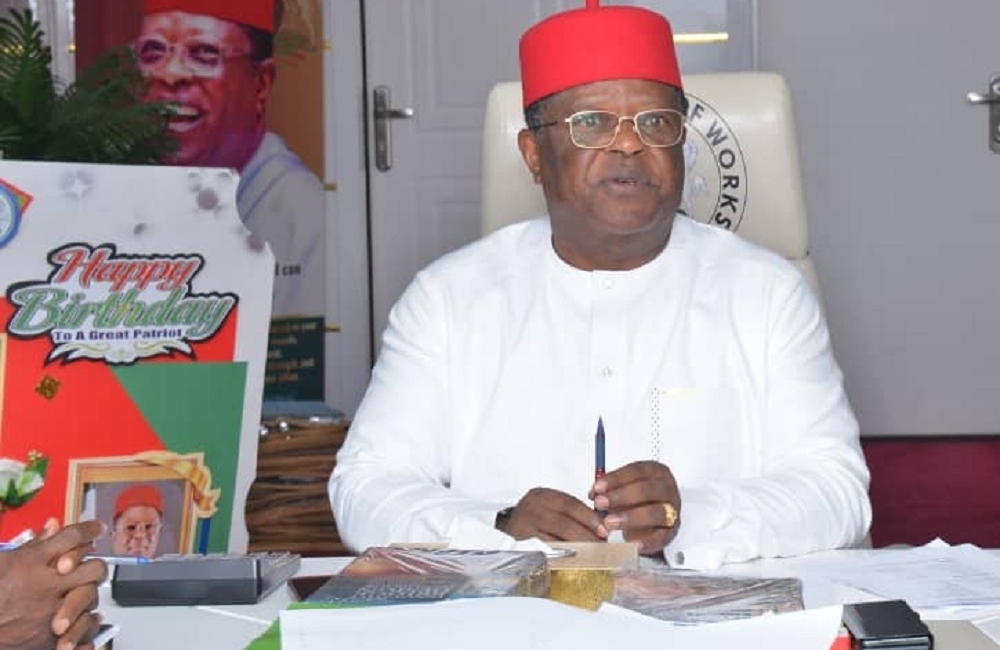
WORKS MINISTER DIRECTS IMMEDIATE ASSESSMENT OF SECTION III OF THE DUALIZED KANO - MAIDUGURI ROAD CUT OFF BY FLOOD, MEETS WITH DANGOTE, BUA, MAINSTREAM ON MEASURES TO FAST TRACK DELIVERY OF PROJECTS FUNDED BY TAX CREDIT - AS THE MINISTRY TERMINATES SECTION 1 KANO- MAIDUGURI ROAD HANDLED BY DANTATA & SAWOE LTD DUE TO EFFLUXION OF TIME The Honourable Minister of Works, His Excellency, Sen. Engr. Nweze David Umahi CON has assured the Bauchi State Governor of immediate intervention on the flood damaged section of the Kano- Maiduguri federal road within Bauchi State that was cut off by flood after a heavy downpour recently. As part of immediate measures, he has directed a technical team from the Ministry to move to the spot to evaluate the damage done and report back for the Ministry to procure an emergency solution to the problem to alleviate the attendant inconveniences faced by the road users, especially the people of Malori-Guskuri community in Katsgun Local Government Area of Bauchi State whose source of livelihood has been severely affected by the destruction occasioned by flood. He said, "I'm directing the Director of Highway Rehabilitation to liaise with the Permanent Secretary Ministry of Works to immediately deploy some technical people to go and evaluate what we can do over there and it's very unfortunate that when a job is completed by contractors, we don't even enjoy the road for five years, and we are back to square one. That's why I've been saying that this issue of a one-year liability period is not desirable because every badly executed job can last for one year, but it cannot last for five years. So we are still going to request the contractor that did the job, Mothercart Ltd, to join that team and find out why the road had to cut into two as reported to us today, and that is section three of Kano-Maiduguri road." He announced the termination of section 1 of Kano-Maiduguriroad awarded since 2007 to Dantata & Sawoe Ltd due to effluxion of time. Speaking during a performance review meeting with Dangote Group of Companies Plc, BUA Group of Companies Plc and Mainstream Energy Solutions Ltd on the road projects handled under Road Infrastructure Development and Refurbishment Investment Tax Credit Scheme held at the Ministry's headquarters, Mabushi -Abuja on 9th August 2024, the Honourable Minister said plans were underway to review the liability period for all federal government projects to ensure durability and value for money. He highlighted the progress made so far in funding critical projects under the Tax Credit Scheme and called for more concerted efforts by all contractors handling projects under the tax credit scheme in order to complete all the awarded projects on a record time as the projects are within the economic corridors of the nation. He said that going forward, there would be an agreement on milestone completion and timetable for the various ongoing projects being done under Tax Credit. "So, my position as the Minister of Works is that everybody must take responsibility. We will no longer fold our hands and allow the projects we have awarded and even reviewed to continue to linger. Nigerians are suffering on these roads, and President Ahmed Bola Tinubu GCFR is doing everything possible, giving the road sector special attention. And so it will be a failure on our side for us to fold our hands and watch contractors linger on these roads without minding the sufferings of the people." He called for more commitment on the side of all the funding partners, the ministry, and the contractors and asked for patience on the side of Nigerians. He said, " So we call for patience, partnership, and patriotism. The President means well for this nation. We must play our part and this is very important. So, to our contractors and to every staff member of the Ministry of Works, and of course to myself, we all must sit up and play our part to support the divine vision of Mr. President to retake our country." The following projects are handled on Tax Credit, and some of them have suffered delays due to obsolete prices, but all such projects are being reviewed to get these contractors to increase their pace of work. The projects are: - Dangote - the 35 km Apapa-Owonronshoki Expressway in Lagos State, the 38 km section of Abuja-Kaduna-Kano road dualization, the 49.577km Dikwa-Gamboru-Ngala road, Borno State, the construction of Nnamdi Azikiwe road (western bypass) in Kaduna State, the 49.153 km Bama - Banki road in Borno State, the reconstruction of 105km Obelle-Ilaro-Papalanto-Shagamu Road dualization, the reconstruction of 54.239km Deep Seaport in Lagos State, the 65.5 km Afikpo-Okigwe road in Ebonyi and Imo States being procured and the 53.7km of side lanes for the Lekki Deep Seaport in Lagos State being procured; - BUA - the 20 km of roads in each of the three sections of Lokoja - Benin Highway, the 17.6km section of Abuja-Kaduna-Kano road (more 3 km to be included at the Kano axis), the 132.5km Kano-Kongollam in Kano, Jigawa, and Kastina States, the 130km Bode Sadu - Kaiama road, 42km Eyenkorin-Offa road, the 73km Lafiaji-Bacita road and the 37km Okuta-Kenu road all in Kwara State; - Mainstream - the 76.586km Malando - Ngasike - Wara road in Kebbi State, the 45.13km Sabon Gari - Yuni - Auna Road in Magami LGA of Niger State and the asphalt overlay of Mokwa-Nasarawa road in Niger State. - MTN - the dualization of 107km Enugu- Onitsha road. The Honourable Minister commended the good works completed on the ongoing projects by Dangote Plc, like the Apapa-Owonronshoki Expressway,the Lekki-Deep Seaport road and the construction of Nnamdi Azikiwe road (western bypass) in Kaduna State. He also commended BUA for the good job they are doing at Ekpoma on the Lokoja Benin Highway project. He nonetheless charged Mainstream to step up efforts on the projects being handled by them. ...
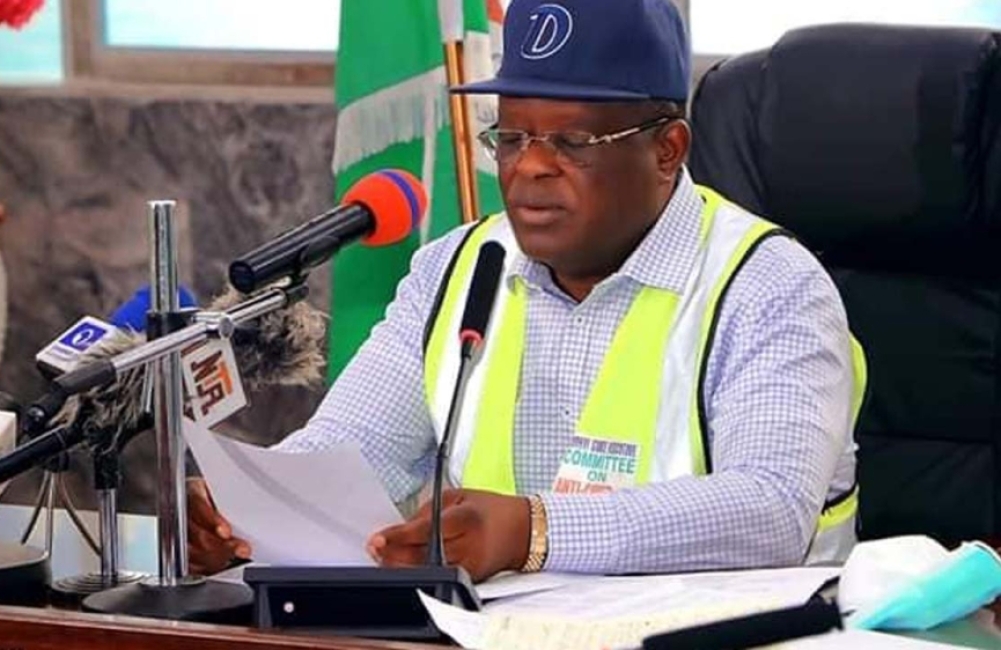
ENUGU – ONITSHA ROAD CONSTRUCTION: FEDERAL MINISTRY OF WORKS REVIEWS PERFORMANCE, FROWNS AT SLOW PACE OF WORK BY RCC AND NIGERCAT, DIRECTS ENFORCEMENT OF OPERATION FREE OUR ROADS In furtherance of Federal Government’s directive on review of performance of all inherited ongoing and new road projects nationwide and as part of efforts to alleviate the sufferings of road users, the Honourable Minister of Works, His Excellency, Sen. Engr. Nweze David Umahi, CON has directed the contractors handling the construction of the 107km Enugu – Onitsha road dualization to brace up for the implementation of the policies of the Renewed Hope administration with respect to speed and quality of work, commitment to project execution and care for the comfort of road users by maintaining one carriageway of the dual carriageway under construction to mitigate the sufferings of road users. This directive came during a crucial meeting of the Ministry with MTN that is funding the construction of Enugu – Onitsha road dualization under Road Infrastructure Development and Refurbishment Investment Tax Credit Scheme, the representatives of the Government of Enugu State and the two contractors handling the project under the Tax Credit scheme – RCC Ltd and Nigercat Ltd, held at the Ministry’s Headquarters, Mabushi- Abuja on 8th August 2024. The Honourable Minister while recalling that the Enugu – Onitsha dual carriageway is being funded by MTN under the Tax Credit Scheme expressed disappointment on the condition of the road under construction and blamed the sufferings of the road users on lack of commitment and sheer insensitivity of the contractors on the plight of the road users. He said, “The MTN has engaged the subcontractors, two subcontractors, RCC Ltd and Nigercat Ltd. The first time I supervised that project, I discovered that the Nigercat section where we have a binder course had failed. I directed that the binder course must be scarified and reinstated, and I knew it was inherited. I want to believe that it has been done.” He stated, “Let me express my disappointment over the slow pace of work on that project. It's one of the worst roads in this country. Everywhere we have diversion; diverting from the one that RCC and the Nigercat had completed, the contractors are not kind enough to even put stone based on the diversion points. So, by the reason of the launching of our Operation Free our Roads, it is now a violation of policy on the side of the controllers and directors of the Federal Ministry of Works where we have vehicles falling on any project that is ongoing or where there are pot holes on our roads” He further said, “Last Sunday, I inspected that road with the Governor of Enugu State and we saw the level of suffering of people at the Abakpa section of that road where RCC Ltd was putting binder, about 3.5 km of the road, and they blocked it. And so everybody now resorted to using one carriageway which is not even maintained. And so some people stayed there for five hours and that is not acceptable. I have continued to say that Nigerians should not be suffering while contractors are building roads for our people. It does not happen in any other country, the way it happens in Nigeria. The public must know that the President's intention is not for them to suffer while trying to fix the roads, and it is their right to insist that contractors should fix the roads that they are engaged on. Most of the time, contractors bring very serious nuisances, hardships, and pains to the public, and they don't care.” He thanked the government of Enugu State for their resolve to fund the construction of 20km Abakpa junction to Akama (9th Mile) section of Enugu – Onitsha road on rigid pavement and the construction of a flyover bridge at Abakpa junction to be refunded through MTN Tax Credit. He expressed hope that MTN would still execute the construction of the second phase of the 107km x 2 road dualization. He added, “Why Enugu State government is intervening is because of the slow pace of work by the contractors and because of funding issues. The essence of tax credit is for funds to be made available. And so, I don't see RCC going to keep to their promise to finish this project in 6 months. My advice to MTN is to look for another contractor within that axis if they want to get the job done. Division of labour is even the best. While they are doing the road, and if Nigercat is doing a good job, you can give them greater scope to do if you want to finish that job.” He warned that contractors delaying jobs are on their own as Federal Government, as a matter of policy, would not accept a phased handover of projects and has phased out VOP in contract administration. He maintained that the contractors must in line with the Renewed Hope agenda maintain all roads handled by them until they are fully completed and handed over to Federal Government. He further said to RCC Ltd, “When where you are working is almost going bad, it's better to get it finished. As a policy, we are not doing a phased handover. You have to finish your job, and then we inspect it, and if you take 10 years to finish your job, it's your duty to maintain the one that you have done that is failing” He re-emphasized the policy of the current administration, which de-emphasizes VOP but is open to contract review using prevailing rates. He said to RCC Ltd, “We've agreed on how to review the projects from Certificate No. 12, and it is the prevailing rates that we're going to give to you. And so, there will be no VOP when we review the job, and we should all work very hard to see that within two weeks, we get these documents down to BPP and see if we can take it to FEC this month.” He, however, noted that the slow pace in the progress of work on the Enugu – Onitsha road dualization does not lie in funding but in the execution by the contractors. ...
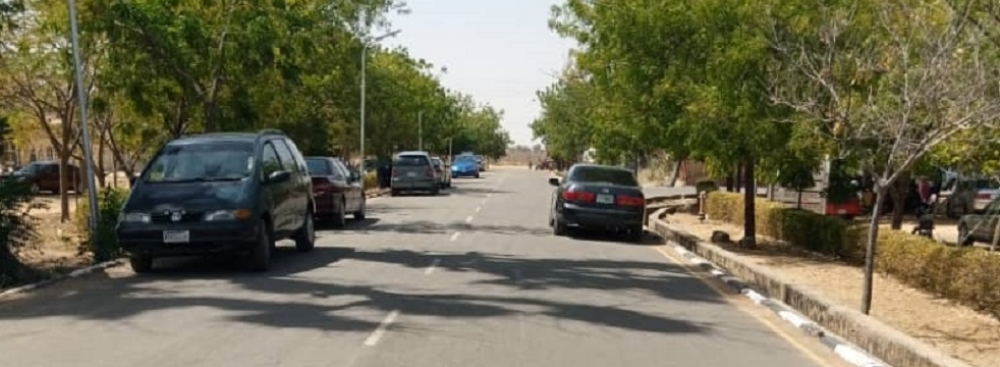
We Create Jobs through our Tertiary Institutions Road Intervention Programme - Fashola
Works and Housing Minister, Mr. Babatunde Fashola SAN has stated that the Tertiary Institutions Road Intervention Programme under his ministry has provided employment opportunities to some Nigerians and contributed to the job creation initiatives of the Federal government.
Mr. Fashola, represented by the Federal Controller of Works in Katsina State, Engr Babagana Tahir, spoke during the handover and commissioning of the reconstructed 2 kilometers road at the old site of the Federal University Dutsinma (FUDMA), Katsina State and the 100 meters drainage at the new site of the University.
" During the construction in FUDMA, some people were employed in the process contributing to the job creation of the government, and it is hoped that the school would now ensure that this asset is used properly and well maintained" he said.
The Minister explained that forty-three (43) road Intervention projects within the tertiary institutions across Nigeria were currently ongoing, out of which twenty nine (29) had been completed so far.
He added that seventeen (17) of such projects were handed over in 2020 and the twelve (12) are currently being commissioned of which FUDMA was among.
The 20 km Internal road intervention in FUDMA started from the main gate of the old site and covers the various roads on the campus connecting the Senate Building and parking surrounding slot, School Clinic, lecture classes, Post Graduate School library and other key buildings in the school.
The 100 meters drainage constructed at the new site of the University has three concrete culverts that provides smooth passage along the road linking Faculty of Sciences, Faculty Agricultural Technology and the Students Hostels.
Responding, the Vice Chancellor of the University, Professor Armaya'u Hamisu Bichi, represented by the Dean Post Graduate School, Professor Lawal Abdul Saulawa, specially expressed the sincere appreciation and gratitude to the Federal Government and the Hon. Minister for the laudable project.
He said that, FUDMA, being a young University was among the twelve new Universities established in 2010, as such needed more of such road interventions especially at its new site.
While congratulating Mr. Fashola for successful completion and handover of the project to the University, Professor Bichi also urged the Minister to consider constructing some internal roads at the new site of the University to smoothen it's daily operations.
Comrade Peter Seri, Chairman of the Senior Staff Association of Nigeria (SSN), FUDMA chapter, who was a pioneer staff of the University expressed joy at the project.
The Students Union Government (SUG) Acting President, Comrade Nasir Ahmad Batsari, in his reaction, thanked the government of President Muhammadu Buhari GCFR for coming to the aid of the School with what he described as a face-saving project to the university.
Chairman of the FUDMA ASUU chapter, Comrade Ahmed Muhammad, appreciated Federal Ministry of Work and Housing for doing a lot of work in the University, urging the government to do more to inspire learning , research and excellent academic activities.
" We used to park our cars outside the School at the inception of the University, but now you can see our cars all over the places around the buildings" he said.
Among the dignitaries that graced the occasion from the university community were: The Registrar, Deans of Faculties, Directors and other management staff.
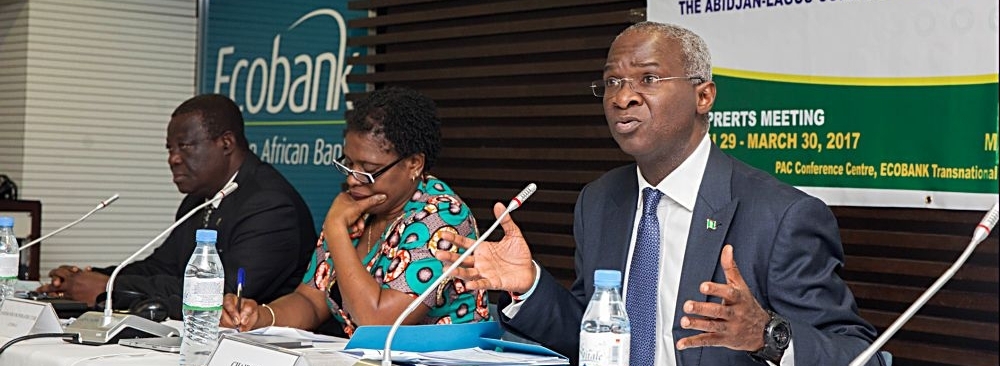
“The True Situation Of Electric Power In Nigeria Today And The Prospects For The Future” Speech By H.E Babatunde Raji Fashola, SAN At The Nigeria-South Africa Chamber Of Commerce (NSACC) Breakfast Forum
Thank you for inviting me to be your speaker at this Breakfast meeting and for choosing the topic, that seeks to know where we are, and where we are heading as regards power supply.
I think I will like to start by setting a context as to why I feel qualified to speak here and also about the subject without sounding immodest.
First, I think you deem me qualified by your invitation. Next reason of course is that, by virtue of my current office as Minister for Power, Works and Housing you expect me to know.
Furthermore, for those of you who live in Lagos, my tenure as governor heralded the development of Independent Power Plants in Iju, Lagos Island, Alausa Secretariat, Ikeja GRA, Lekki Phase 1 and Lekki Free Zone, all of which were targeted at supplying power to public institutions and facilities like the water works, courts, schools, and street lighting, except the Free Zone which was for commerce.
Most importantly I have visited almost all of Nigeria’s power plants in operation and those under construction, the National Control Centre, all the Distribution Companies, Major Transmission Sub-Stations and I know their current state of operation.
In addition, for 29 months, I had monthly meetings with all the operators in the power value chain across Nigeria’s states and commissioned not a few transmission and distribution assets.
Of course, I am not an engineer, but I have many brilliant Engineers who work with me and advise me.
I am also not an arm-chair analyst. I speak about what I have seen and experienced.
This background is important as context to the matter which you wish me to speak about, which is the real status of progress in the Power Sector.
So too are two other items of context; namely, where we were in 2015, and what we promised.
If you do not define your Goal against your reality, progress will be difficult to recognize.
As to where we were in 2015, power generation was averaging 4,000 MW; transmission was averaging 5,000 MW and distribution was averaging 3,000 MW.
As to what we promised, I stated in my very first public briefing in November 2015 that contrary to previous practice, we were committing to a journey; first of getting incremental power, with the plan to proceed to steady power, and ultimately get uninterrupted power.
I made it clear that our intention was to improve your power supply experience gradually rather than discuss the megawatts as quantum of power, and that any reference to the megawatts would be measuring milestones of our progress in the journey of incremental power.
As to where we are today: from 4,000MW, generation has reached 7,000MW, averaging incremental generation of 1,000 MW every year since 2015;
Transmission has reached 7,000MW from 5,000MW, averaging 666 MW of incremental transmission every year; and
Distribution peaked at 5,222MW in January of this year, from about 3,000 MW in 2015, averaging 740 MW incremental distribution capacity every year.
We have moved the needle forward – I see progress.
This was the essence of my promise to you that we will increase the available capacity and your experience will get better; however, we have not finished our work.
How far we can go depends on what those of you who will decide who forms the next government do when you vote.
You will compare our record of three years with what we met after the previous 16 (sixteen) years.
If you compare our performance record in three years with the 16 - year record of the previous administration in the areas of Generation, Transmission and Distribution you will get the following instructive results: Incremental Generation of 1000MW per year against 4000MW in 16 years which amounts to 250MW per year; Transmission capacity improvement by 666MW per year against 5000MW in 16 years which amounts to 312.5MW per year ; and Distribution capacity improvement by 740MW per year as against 3,000MW in 16 years which amounts to 187.5MW per year.
You will also compare the resources available to us in the last 3 years, with what was available over the previous 16 years.
In addition, you will have to ask yourself whether you are running your generator for longer or shorter periods today, than in 2015; and also whether you are spending more to buy fuel for your generator than three years ago.
Those of you who are well-meaning and right thinking know the answers.
The feedback from Consumers also reflect the impact of the results being underscored. I will share some of these with you. In the opening piece to the Law Section Pull-Out of October 16th , 2018 titled “ Lessons from Rome” Onikepo Braithwaite writes:
“… With regards to power supply in Nigeria, I had to encourage the Learned Silk and congratulate him, because the power supply in my area of residence, has been extremely steady in the past one year, to the extent that my generator is lying there unused, not even connected. I have been able to live comfortably, without a generator or an inverter, for almost one and a half years. However, we are eager to see this feat performed throughout the country, so that Nigerians can enjoy a better quality of life.”
Another Consumer gave the following feedback via sms :
“Just say I let you know in ajah now people worry more about buying meter card than petrol for generators. I was in the store in my neighbourhood and people were actually having the conversation I just smiled. And it's also economic growth for this axis as an home owner, cause more people are moving here I can say that boldly for my estate...well done Sir…”
Also, a Consumer who resides in the Mowe area of Ogun State, Steven Shobiye, gave the following testimonial which he titled, “ Mowe Comes Alive”:
“Since 2014, power supply in Mowe was dead until last year when hope was renewed and the town came alive again. This good news is not only for Mowe but all the neighbouring towns and villages like Ofada, Owode, Ogunronbi to mention a few. Thanks to tireless Minister for Power, Works and Housing, Mr Babatunde Raji Fashola SAN and his formidable team…”
The story of Magboro and its environs which got connected to power after 17 years of non – supply also remains a glowing testimony to progress in the Sector.
Of course, there are people still unserved or not well served. However, the good news is that there is a mechanism put in place by the Nigerian Electricity Regulatory Commission (NERC) to monitor complaints by Consumers. A total of 166,543 complaints were resolved out of 262,096 from January to June 2018.
You will also have to compare our plans for tomorrow with the plan of the others, and this takes me to the other part of the topic about PROSPECTS FOR THE FUTURE.
Today I can tell you that by the end of this year another 945 MW will be ready for supply from the following power plants;
(i) Azura 450MW (which is finished and producing)
(ii) AFAM IV 240MW (which is finished and awaiting commissioning)
(iii) Kaduna 215MW (which is undergoing pre-commissioning testing)
(iv) Kashimbilla 40MW (which is nearing completion).
Between 2019 and 2020 (Q1) Zungeru 700MW, Okpai II 450MW, totalling 1,150MW should come into operation.
These do not include about 7,000MW of installed but inoperative power plants that are constrained either by Gas supply or transmission capacity or both, about which action is being taken.
It does not include independent power plants now under construction in 9 federal universities with a plan to scale to 37 , neither does it include 15 independent power projects targeting major markets now under construction to power 85,000 shops and small businesses.
On the transmission side, we have finalized a 10-year transmission expansion plan from 2018 to 2028.
We have recovered 690 containers of power equipment abandoned at the Port as part of the legacy of the previous 16 years, and deployed them to the sub-stations they were originally meant for.
Currently, there are not less than 90 transmission sub-station projects at different stages of construction.
This year we have completed a few, and last week we commissioned Damaturu sub-station in Yobe, and Ejigbo sub-station in Lagos will be commissioned today , and so will the Ilase tourist beach in Lagos, which will soon be connected to grid power for the first time in its history.
On the distribution side, first let me remind you that all the eleven companies that distribute power were sold to private investors.
It is their responsibility, not that of Government to supply distribution equipment like breakers, transformers and meters.
So, if there is any problem there, as indeed there are, it is private businessmen who should solve this problem.
Of course their ability to respond partly depends on what government does. So, to the question what is government doing ? I say:
We have 7000 MW of power operationally available but distribution can only take 5000.
We have engaged with Manufacturers Association of Nigeria (MAN) to offer the rights to take the 2,000MW and enunciated the Eligible Customer Policy for consumers who take up to 2MW and beyond.
The policy took effect recently, 5 major industries have connected and we have dozens of new applications being processed;
For meter shortages, we have enunciated a policy of licencing Meter Asset Providers, independent of the Discos but who will be supplying their customers. 180 applications have been received.
Discos are also investing in meters and supplying them.
Off-grid supply – we have enunciated a Mini Grid Regulation that allows people to build and distribute up to 1MW under licence, and up to 100kw without licence.
Distribution Expansion- In order to support distribution equipment capacity, government as a shareholder of the Discos is investing about N72B in distribution equipment at the 33kv and 11kv points of the value chain.
In summary, incremental capacity is heading in the right direction, we are planning to solve today’s problems, liberalize participation in the sector, and enable private sector undertake the business of generating and distributing power, which it contracted to do with the privatization programme that took place in 2013.
The prospects for the future are clear, they portray hope, and I am optimistic that today’s problems represent opportunities in the power sector for tomorrow.
Thank you.
Babatunde Raji Fashola, SAN
Honourable Minister of Power, Works and Housing
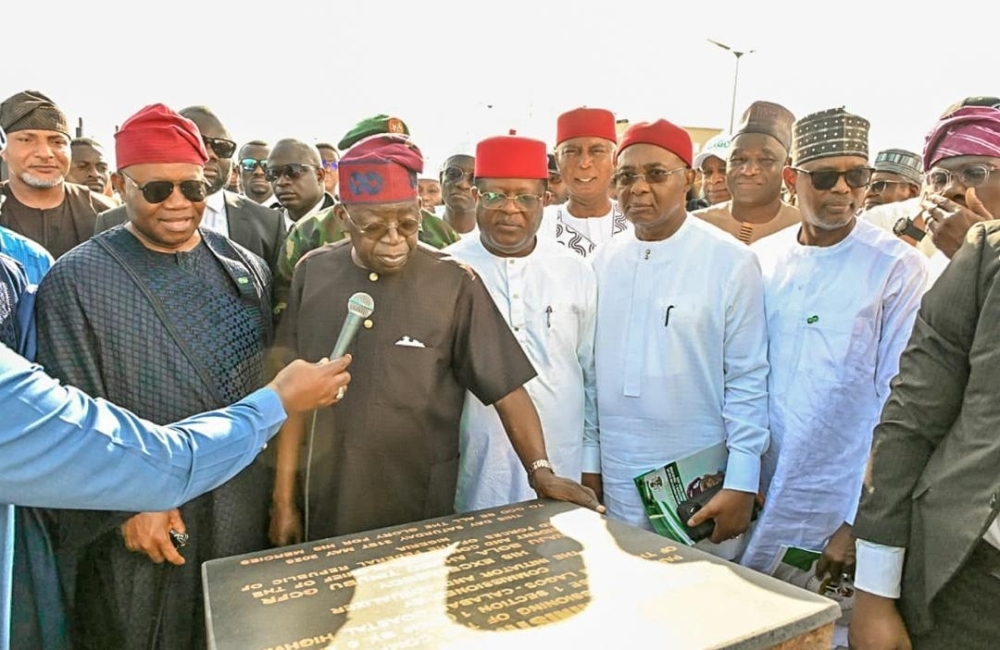
DRIVING NIGERIA’S FUTURE: CELEBRATING TWO YEARS OF TRANSFORMATIVE LEADERSHIP AND THE LAGOS-CALABAR COASTAL HIGHWAY MILESTONE
DRIVING NIGERIA’S FUTURE: CELEBRATING TWO YEARS OF TRANSFORMATIVE LEADERSHIP AND THE LAGOS-CALABAR COASTAL HIGHWAY MILESTONE
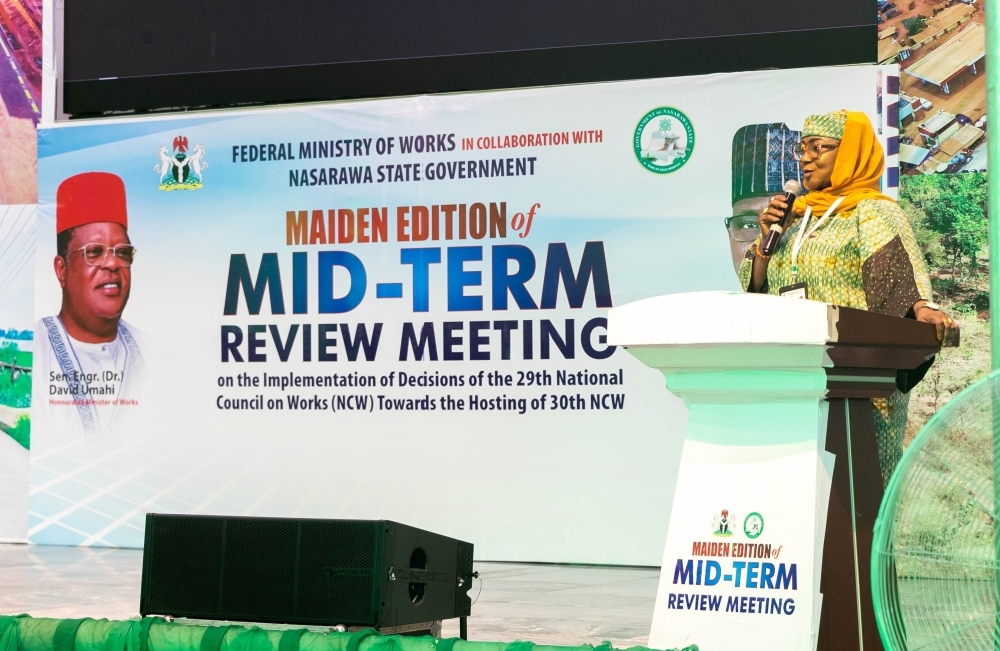
MID -TERM REVIEW MEETING ON THE IMPLIMENTATION OF THE DECISIONS REACHED AT THE 29TH NATIONAL COUNCIL ON WORKS (NCW) DAY 1
MID -TERM REVIEW MEETING ON THE IMPLIMENTATION OF THE DECISIONS REACHED AT THE 29TH NATIONAL COUNCIL ON WORKS (NCW) DAY 1