GORONYO COMMENDS SOKOTO GOVERNOR FOR DONATING 10 HILUX VEHICLES TO STRENGTHEN SECURITY ALONG SOKOTO–BADAGRY SUPERHIGHWAY
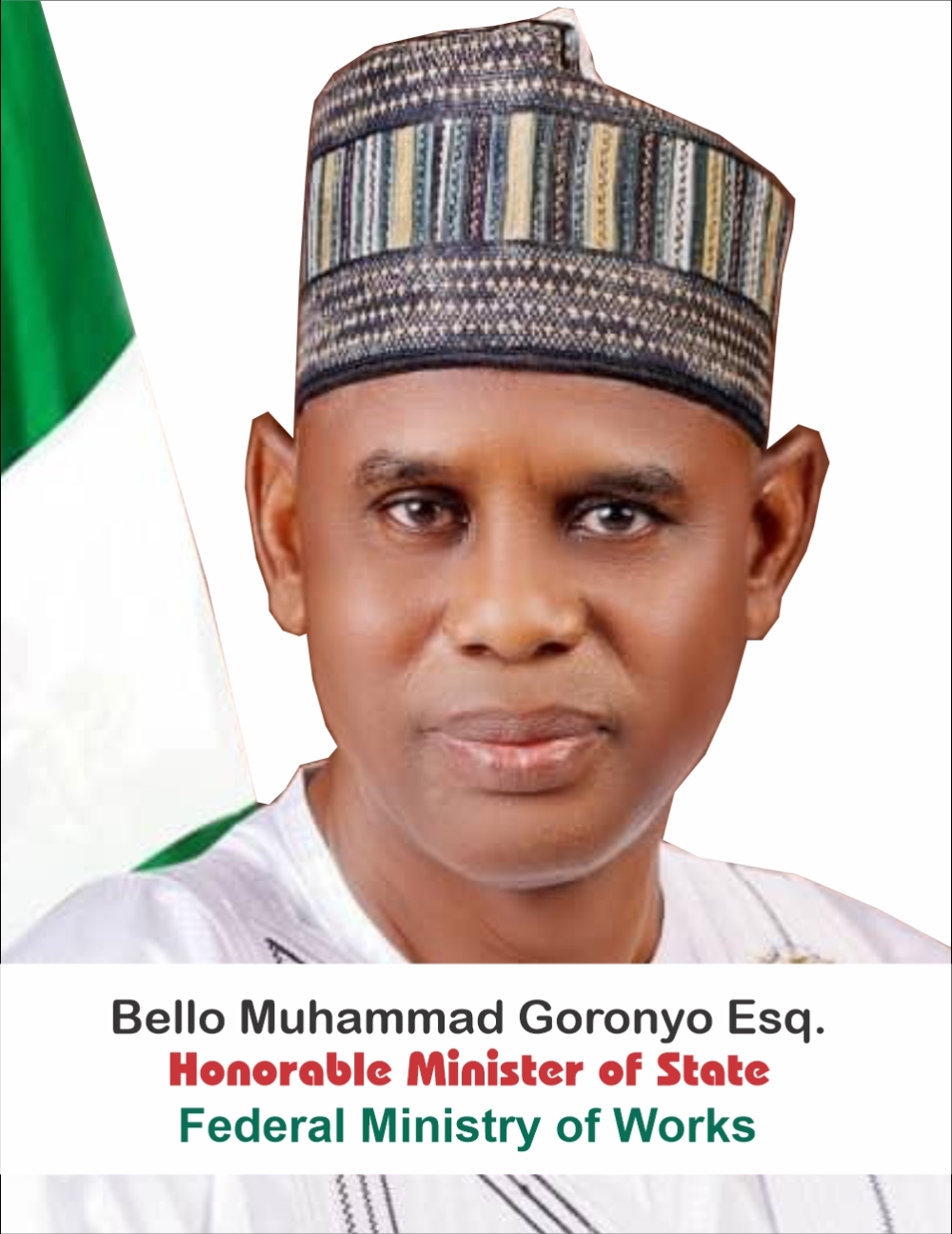
The Honourable Minister of State for Works, Rt. Hon. Bello Muhammad Goronyo, Esq., has commended the Governor of Sokoto State, Dr. Ahmed Aliyu Sokoto, PhD, for donating 10 operational Toyota Hilux vehicles to strengthen security operations along the Sokoto–Badagry Superhighway and other strategic infrastructure corridors.
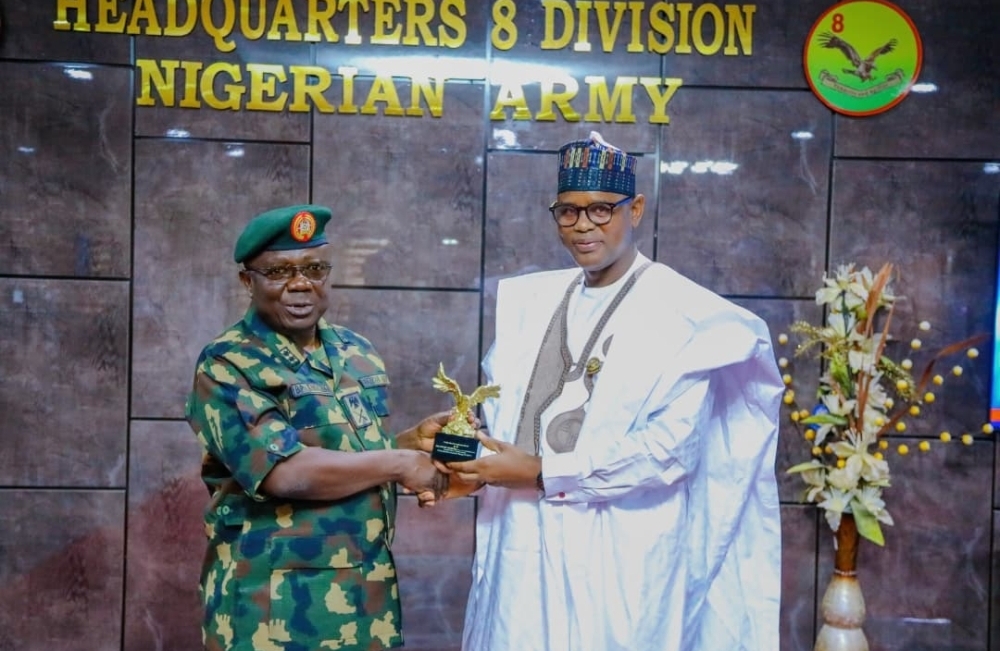
The vehicles were formally commissioned and handed over to the Nigerian Army at the Headquarters of the 8 Division, Nigerian Army, Sokoto, on Thursday, October 8, 2026, by the Honourable Minister of State for Works, on behalf of the Honourable Minister of Works, Engr. David Nweze Umahi, CON, FNSE.
The donation is expected to enhance the operational capacity of military personnel and other security agencies responsible for protecting construction workers, contractors, equipment and host communities along the highway corridor.
Speaking during the ceremony, Goronyo described the donation as a demonstration of the Sokoto State Government’s commitment to national development and the successful implementation of President Bola Ahmed Tinubu, GCFR’s Renewed Hope Agenda, particularly its landmark infrastructure projects.
The Minister emphasised that the Sokoto–Badagry Superhighway represents a long-standing national infrastructure vision that dates back several decades, with its conception traced to the era of former President Shehu Shagari in the 1970s. However, the vision remained unrealised for decades until the administration of President Bola Ahmed Tinubu, GCFR, initiated the construction of the 1,068-kilometre highway in October 2024.
He described the project as a significant step towards translating a historic aspiration into tangible infrastructure that will connect communities, expand economic opportunities and strengthen national integration.
According to Goronyo, President Tinubu’s commitment to the project demonstrates the Federal Government’s determination to bridge critical infrastructure gaps and improve connectivity between northern and southern Nigeria.
He noted that the superhighway, which traverses Sokoto, Kebbi, Niger, Kwara, Oyo, Ogun and Lagos states, is designed to facilitate the movement of people and goods, reduce transportation costs, stimulate trade, create employment and open up new economic opportunities along its route.
The Minister added that the highway would improve access to markets, schools, healthcare facilities and other essential services while supporting agriculture, commerce, industry and the development of communities across the corridor.
He stressed that the successful delivery of the project would require sustained commitment, effective coordination and cooperation among the Federal Government, state governments, security agencies, contractors and host communities.
Goronyo maintained that effective security remained essential to the timely and successful completion of the Sokoto–Badagry Superhighway. He explained that the provision of operational vehicles would strengthen the mobility and response capabilities of security personnel deployed to safeguard the project and its surrounding communities.
The Minister highlighted other strategic infrastructure projects being undertaken by the Federal Government, including the Lagos–Calabar Coastal Highway, the Calabar–Abuja/Trans-Saharan corridor, the Akwanga–Jos–Bauchi–Gombe corridor, the Abuja–Kaduna–Zaria–Kano route and the Zaria–Gusau–Sokoto corridor.
He explained that these projects form part of the Federal Government’s broader commitment to developing an integrated road network capable of supporting commerce, strengthening inter-state connections and accelerating national economic growth.
Rt. Hon. Goronyo further noted that the use of continuously reinforced concrete pavement on the Sokoto–Badagry Superhighway was intended to provide durable road infrastructure capable of serving Nigerians for decades. He added that complementary environmental and safety measures, including tree planting and solar-powered street lighting where provided for in the project, would contribute to environmental sustainability, visibility and road safety.
Goronyo commended the Nigerian Army and other security agencies for their resilience, professionalism and sacrifices in protecting lives, property and critical national infrastructure. He acknowledged the difficult conditions under which security personnel operate and urged them to remain steadfast in carrying out their constitutional responsibilities.
The Honourable Minister also expressed deep condolences to the Nigerian military over the reported loss of personnel in a bandit attack while on official duty the previous day. He described the loss as painful and extended his sympathy to the affected personnel, their colleagues and bereaved families, while praying for the peaceful repose of the departed and strength for their loved ones.
He further acknowledged the support of the National Security Adviser in addressing security challenges associated with the project, particularly through assistance and coordination aimed at strengthening security operations along the highway corridor.
Reaffirming his commitment to the Federal Government’s infrastructure development agenda, Goronyo said the Ministry of Works would continue to support the implementation of strategic projects under President Tinubu’s leadership, working in collaboration with relevant stakeholders to ensure their successful delivery.
He expressed optimism that the continued implementation of the Federal Government’s development programmes would bring lasting benefits to Nigerians, while acknowledging the complementary role of the Sokoto State Government in supporting infrastructure development and security.
In his remarks, the General Officer Commanding (GOC), 8 Division, Nigerian Army, Sokoto, Major General Bengba Paul Koughna, expressed appreciation to the Federal Government, the Federal Ministry of Works and the Sokoto State Government for the donation of the 10 Hilux vehicles.
The GOC noted that the vehicles would significantly enhance the operational mobility and response capabilities of troops deployed along the highway corridor, particularly across the approximately 440-kilometre section extending through Sokoto and Kebbi states.
He explained that troops conduct regular patrols and maintain multiple deployment points along the corridor, making the additional vehicles a valuable boost to their operational effectiveness.
He assured the Minister that the vehicles would be deployed appropriately to support security operations and protect construction workers, contractors, equipment and other stakeholders involved in the project.
The GOC also commended the representative of Hitech Construction Company, retired General Sa'ad Abubakar, for the company's involvement in the project.
The event was attended by retired Assistant Inspector-General of Police (AIG) Aliyu Garba, officials of the Federal Ministry of Works, representatives of the Sokoto State Government and other stakeholders.
The donation underscores the importance of sustained collaboration among the Federal Government, state governments, security agencies, contractors and host communities in addressing security challenges and ensuring the safe and timely delivery of strategic infrastructure projects.
The Federal Ministry of Works reiterates its commitment to working with all relevant stakeholders to protect national infrastructure and advance the objectives of President Bola Ahmed Tinubu, GCFR’s Renewed Hope Agenda for sustainable economic growth and development.

GORONYO COMMENDS SOKOTO GOVERNOR FOR DONATING 10 HILUX VEHICLES TO STRENGTHEN SECURITY ALONG SOKOTO–BADAGRY SUPERHIGHWAY The Honourable Minister of State for Works, Rt. Hon. Bello Muhammad Goronyo, Esq., has commended the Governor of Sokoto State, Dr. Ahmed Aliyu Sokoto, PhD, for donating 10 operational Toyota Hilux vehicles to strengthen security operations along the Sokoto–Badagry Superhighway and other strategic infrastructure corridors. The vehicles were formally commissioned and handed over to the Nigerian Army at the Headquarters of the 8 Division, Nigerian Army, Sokoto, on Thursday, October 8, 2026, by the Honourable Minister of State for Works, on behalf of the Honourable Minister of Works, Engr. David Nweze Umahi, CON, FNSE. Speaking during the ceremony, Goronyo described the donation as a demonstration of the Sokoto State Government’s commitment to national development and the successful implementation of President Bola Ahmed Tinubu, GCFR’s Renewed Hope Agenda, particularly its landmark infrastructure projects. The Minister emphasised that the Sokoto–Badagry Superhighway represents a long-standing national infrastructure vision that dates back several decades, with its conception traced to the era of former President Shehu Shagari in the 1970s. However, the vision remained unrealised for decades until the administration of President Bola Ahmed Tinubu, GCFR, initiated the construction of the 1,068-kilometre highway in October 2024. He described the project as a significant step towards translating a historic aspiration into tangible infrastructure that will connect communities, expand economic opportunities and strengthen national integration. According to Goronyo, President Tinubu’s commitment to the project demonstrates the Federal Government’s determination to bridge critical infrastructure gaps and improve connectivity between northern and southern Nigeria. The Minister added that the highway would improve access to markets, schools, healthcare facilities and other essential services while supporting agriculture, commerce, industry and the development of communities across the corridor. Goronyo maintained that effective security remained essential to the timely and successful completion of the Sokoto–Badagry Superhighway. He explained that the provision of operational vehicles would strengthen the mobility and response capabilities of security personnel deployed to safeguard the project and its surrounding communities. The Minister highlighted other strategic infrastructure projects being undertaken by the Federal Government, including the Lagos–Calabar Coastal Highway, the Calabar–Abuja/Trans-Saharan corridor, the Akwanga–Jos–Bauchi–Gombe corridor, the Abuja–Kaduna–Zaria–Kano route and the Zaria–Gusau–Sokoto corridor. Rt. Hon. Goronyo further noted that the use of continuously reinforced concrete pavement on the Sokoto–Badagry Superhighway was intended to provide durable road infrastructure capable of serving Nigerians for decades. He added that complementary environmental and safety measures, including tree planting and solar-powered street lighting where provided for in the project, would contribute to environmental sustainability, visibility and road safety. Goronyo commended the Nigerian Army and other security agencies for their resilience, professionalism and sacrifices in protecting lives, property and critical national infrastructure. He acknowledged the difficult conditions under which security personnel operate and urged them to remain steadfast in carrying out their constitutional responsibilities. The Honourable Minister also expressed deep condolences to the Nigerian military over the reported loss of personnel in a bandit attack while on official duty the previous day. He described the loss as painful and extended his sympathy to the affected personnel, their colleagues and bereaved families, while praying for the peaceful repose of the departed and strength for their loved ones. He further acknowledged the support of the National Security Adviser in addressing security challenges associated with the project, particularly through assistance and coordination aimed at strengthening security operations along the highway corridor. Reaffirming his commitment to the Federal Government’s infrastructure development agenda, Goronyo said the Ministry of Works would continue to support the implementation of strategic projects under President Tinubu’s leadership, working in collaboration with relevant stakeholders to ensure their successful delivery. He expressed optimism that the continued implementation of the Federal Government’s development programmes would bring lasting benefits to Nigerians, while acknowledging the complementary role of the Sokoto State Government in supporting infrastructure development and security. In his remarks, the General Officer Commanding (GOC), 8 Division, Nigerian Army, Sokoto, Major General Bengba Paul Koughna, expressed appreciation to the Federal Government, the Federal Ministry of Works and the Sokoto State Government for the donation of the 10 Hilux vehicles. The GOC noted that the vehicles would significantly enhance the operational mobility and response capabilities of troops deployed along the highway corridor, particularly across the approximately 440-kilometre section extending through Sokoto and Kebbi states. He explained that troops conduct regular patrols and maintain multiple deployment points along the corridor, making the additional vehicles a valuable boost to their operational effectiveness. He assured the Minister that the vehicles would be deployed appropriately to support security operations and protect construction workers, contractors, equipment and other stakeholders involved in the project. The GOC also commended the representative of Hitech Construction Company, retired General Sa'ad Abubakar, for the company's involvement in the project. The event was attended by retired Assistant Inspector-General of Police (AIG) Aliyu Garba, officials of the Federal Ministry of Works, representatives of the Sokoto State Government and other stakeholders. The Federal Ministry of Works reiterates its commitment to working with all relevant stakeholders to protect national infrastructure and advance the objectives of President Bola Ahmed Tinubu, GCFR’s Renewed Hope Agenda for sustainable economic growth and development.
The donation is expected to enhance the operational capacity of military personnel and other security agencies responsible for protecting construction workers, contractors, equipment and host communities along the highway corridor.
He noted that the superhighway, which traverses Sokoto, Kebbi, Niger, Kwara, Oyo, Ogun and Lagos states, is designed to facilitate the movement of people and goods, reduce transportation costs, stimulate trade, create employment and open up new economic opportunities along its route.
He stressed that the successful delivery of the project would require sustained commitment, effective coordination and cooperation among the Federal Government, state governments, security agencies, contractors and host communities.
He explained that these projects form part of the Federal Government’s broader commitment to developing an integrated road network capable of supporting commerce, strengthening inter-state connections and accelerating national economic growth.
The donation underscores the importance of sustained collaboration among the Federal Government, state governments, security agencies, contractors and host communities in addressing security challenges and ensuring the safe and timely delivery of strategic infrastructure projects.
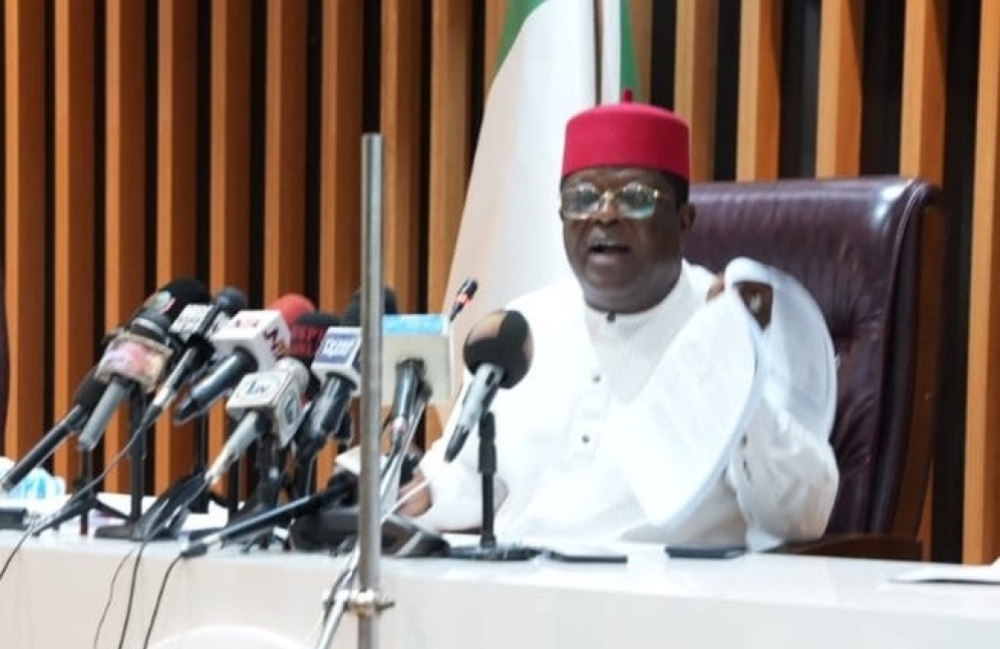
SETTING THE RECORD STRAIGHT ON RECENT ISSUES SURROUNDING MRS TRACY OHIRI’S MATTER The attention of the Honourable Minister of Works, Senator Engr. David Umahi, CON, has been drawn to the ongoing public discourse surrounding the claims and counterclaims by Mrs. Tracy Ohiri, particularly as they relate to her lawyer, Barr. Marshall Abubakar. Ordinarily, we would have ignored this, but it has become necessary, in the interest of truth and public clarity, to address these issues directly. First, it is important to clarify that Barr. Marshall Abubakar acted in good faith and was motivated solely by a desire to assist Mrs. Ohiri. His involvement was entirely selfless and driven by a genuine effort to resolve the matter amicably. At no time did Barr. Marshall discuss or negotiate payment of any money to Mrs. Ohiri. However, some associates and well-meaning individuals independently approached him with the intention of helping her. For the avoidance of doubt, the Honourable Minister had clearly stated two conditions for resolving the matter: either the issue should be determined in court, or Mrs. Ohiri should provide verifiable evidence, including all relevant communications, to substantiate her claims. It must also be emphasized that Barr. Marshall Abubakar conducted himself with utmost decency and integrity throughout. He neither requested nor received any money from the Honourable Minister at any point. Following the failure to meet the stated conditions, particularly the inability to provide credible and verifiable evidence, the Minister has directed his legal team to proceed with all court processes to ensure that the truth is fully established. The Minister further acknowledged that he had indicated to Barr. Marshall that if Mrs. Ohiri could provide complete evidence, logs and communications from the period in question, some friends and associates were willing to contribute the sum of One Billion Naira (N1b). The Minister is still waiting for the above. It is also worth noting that for several years, the Minister chose to remain silent despite persistent provocations and public attacks. This restraint was deliberate and guided by a commitment to focus on state and national service rather than distractions. However, recent developments have made it necessary to respond. The Honourable Minister therefore extends sincere appreciation to Nigerians who have taken their time to examine the facts and arrive at an informed understanding of the situation. There is growing awareness that not everyone who presents themselves as a victim truly is one, and that, in some cases, narratives are deliberately inverted. The Honourable Minister remains fully committed to his mandate. He will not be distracted from the ongoing work of delivering critical road infrastructure across the country. The focus remains on results, service, and ensuring that Nigerians continue to benefit from projects that improve connectivity, economic growth, and national development. We assure Nigerians that this administration will continue to pursue its transformation agenda with dedication, transparency, and an unwavering sense of responsibility. ...
EID MUBARAK TO OUR MUSLIM FAITHFULS I warmly felicitate with our Muslim brothers and sisters across Nigeria on the joyous occasion of Eid al-Fitr, which marks the successful completion of the holy month of Ramadan. Eid is a time of deep reflection, gratitude, and renewed commitment to the values of sacrifice, discipline, compassion, and obedience to the will of Almighty Allah. The lessons of Ramadan call us to live in peace with one another, uphold justice, and extend kindness to all, especially the less privileged. As we celebrate, I urge all Nigerians to continue to embrace unity, tolerance, and mutual respect, which remain essential to our collective progress as a nation. Let us also use this period to pray for the peace, stability, and sustained development of our dear country. On our part at the Federal Ministry of Works, we remain committed to delivering critical infrastructure that connects our people, strengthens economic growth, and improves the quality of life for all Nigerians. May Almighty Allah accept good prayers and acts of charity, and bless our nation with peace, prosperity, and good health. Eid Mubarak. Senator Engr. David Nweze Umahi, CON, FNSE, FNATE Honourable Minister of Work ...
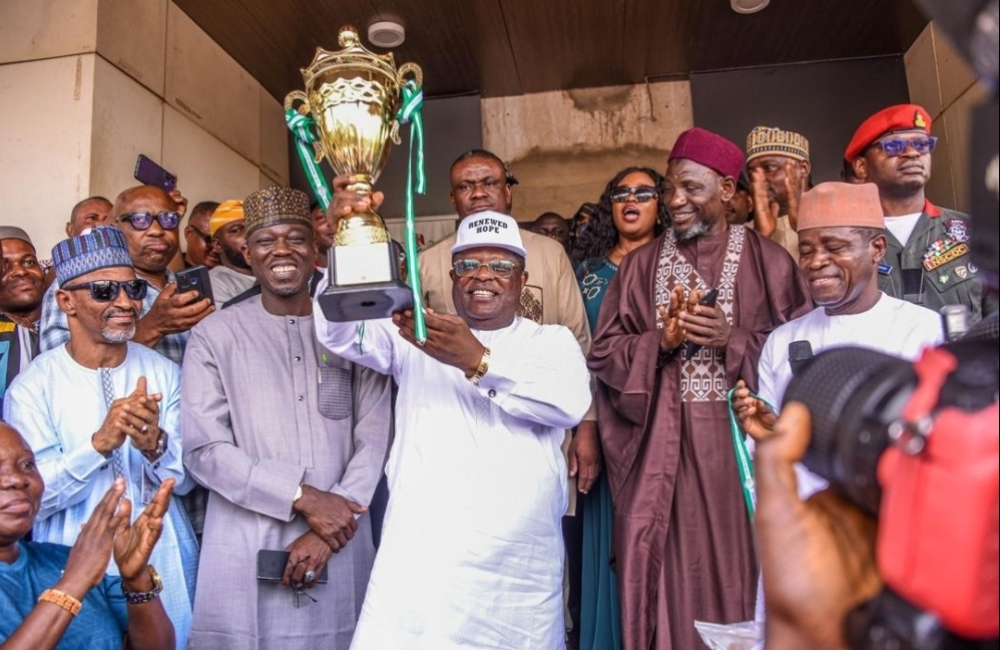
UMAHI CELEBRATES FEPSGA 2025 VICTORY, DEDICATES TROPHY, GOLD MEDAL TO PRESIDENT TINUBU The Honourable Minister of Works, Senator Engr. David Umahi, CON, FNSE, FNATE, has dedicated the Federal Ministry of Works’ victory at the 2025 Federal Public Service Games (FEPSGA) held in Yola, Adamawa State to the President and Commander-in-Chief of the Armed Forces, Bola Ahmed Tinubu, GCFR. The trophy and gold medal were formally presented to the Minister by the Ministry’s Sports Club during a surprise ceremony held on Wednesday at the Ministry’s Headquarters in Mabushi, Abuja. The event was attended by the Permanent Secretary, Directors, Union leaders, and other members of staff. While receiving the coveted trophy and medal, Engr. Umahi expressed profound gratitude to God Almighty and commended the Ministry’s sportsmen and women for their outstanding performance, which earned the Ministry recognition amongst other participating Ministries, extra-ministerial Departments, and Agencies (MDAs), including a gold medal in the March Pass category. “I congratulate our sportsmen and women who have made us proud. I dedicate this trophy and medal to Mr. President, in appreciation of his unprecedented support to the Federal Ministry of Works and his unwavering commitment to infrastructure development across the country,” the Minister declared. Engr. Umahi also appreciated the dedication of staff and assured them that their welfare remains a top priority under his watch. He reiterated that no staff member would experience neglect, pledging continued support in training, staff welfare, and improved workplace conditions. Earlier, the Permanent Secretary, Rafiu Adeladan, described the formal presentation as a token of appreciation for the Minister’s consistent encouragement and support for both official responsibilities and extracurricular activities, particularly sports development. He thanked him, on behalf of Management and staff, for his contribution to building capabilities and talent management, as well as enhancing the value proposition of workers, which he noted are the first and last pillars of the Federal Civil Service Strategy and Implementation Plan (FCSSIP). The Director of Human Resources Management, Ahmad Muhammad Tukur, commended the Minister’s leadership style, noting that staff competencies have significantly improved under his leadership. He highlighted expanded training opportunities across various professional fields and emphasised the Minister’s commitment to enhancing staff welfare beyond the traditional festive packages provided under the revised Public Service Rules (PSRs). Similarly, the Union Chairman, Engr. Kuti William Omobolanle, applauded the Minister for his impactful administrative style, staff welfare initiatives, and commitment to capability building. He cited recent approvals for staff training programmes, support, and other welfare interventions as clear evidence of a people-centred administration. Presenting the trophy on behalf of the Sports Club, Assistant Sports Manager, Temitayo Florence Omotosho, stated that the Ministry clinched first position in March Pass at the 2025 FEPSGA competition. She attributed the achievement to the Minister’s financial, moral, and administrative support. Responding, the Minister urged staff to rededicate themselves to public service with renewed commitment to transparency, professionalism, courage, and the fear of God. He announced plans to intensify training programmes across all cadres beginning in April as part of ongoing reforms aimed at enhancing productivity and service excellence. He further disclosed that the Ministry will, in due course, organise a nationwide gathering of its workforce to celebrate its collective achievements, as well as appreciate the President’s steadfast support for the works sector. ...
BRF: The Omoluabi Eko At 59
By Hakeem Bello
"What will protect all of us when all is said and done is law and order."
If there is a quiz to guess which Nigerian public servant said the above, chances are most will answer: Babatunde Raji Fashola (BRF).
Yes, of course. The quintessential lawyer and Senior Advocate of Nigeria (SAN) is not just a champion of Infrastructure development and deep thinker, he is a stickler for law and order.
He is 59 today.
Quite perceptively and against the run of high public expectation, BRF decided to remain president of his home rather than joining the initially crowded train for the Presidency of the country. But without a doubt, his confidence in, devotion and commitment to the development of Nigeria remains ever unwavering.
Indeed, BRF has become a brand name for efficiency, effectiveness, diligence, commitment and tenacity of purpose. The name will continue to resonate long after he leaves public office and whenever and wherever there is a need for devotion to duty, progressive idealism and commitment to Law and Order.
Probably because of his desire to serve away from the mainstream leadership - which agrees perfectly with his often-stated philosophy of commitment to service to one’s fatherland even “without a title or an office" - his engagements with the public will continue to revolve around the preoccupation with the attainment of a better society, governed by law and order, for all.
Just as Gabfest, a youth-focused conversation platform created in 2016 to commemorate BRF's birthday. This year's edition will explore the theme, “Why am I Voting?”
This topic which agrees significantly with the mood of the nation, currently undergoing the processes leading to the 2023 General Elections, will seek to examine the motivations of a cross-section of Nigerians behind their electoral choices.
During Gabfest 6, carefully selected panelists will interrogate their personal desires and expectations in relation to the Nigerian elections. Is their focus on transparency? Is it on better power or healthcare? Is potable water their challenge? Do they intend to vote across party, gender or ethnic lines? Have they voted in the past and for what position? These are just some examples of the questions that will hopefully yield a robust and lively discussion.
Having addressed such testy questions as, “Restructuring for a Better Life – Lessons from Brexit” and “What can the President Do for me?” in previous public lectures, you can trust Mr Fashola for encouraging a discourse on such a simple yet challenging question as “Why am I Voting?”
Perhaps as a prelude to this and a proof of his avowed commitment to the essence of performing basic civic obligations and maintaining order to keep society functioning optimally, Fashola in a virtual presentation he made recently at a symposium in Lagos with the theme, “Driving and the Nigerian in You” interrogated the nexus between individual conduct and public well-being.
In the presentation, he sought to graphically illustrate that it is neither solely the failure on the part of government nor lack of good roads that cause traffic jams or road mishaps on the nation’s highways and intra-city roads but the non-compliance to Law and Order by some members of the public including even the supposed law enforcers in some instances.
According to him, “We are converting what we built for traffic movement into other uses. It is totally against traffic and all other kinds of laws. So, I still say that traders cannot trade on our streets, buses cannot park on the sidewalks. Pedestrians must leave the roads. They must remain on the sidewalks that separate pedestrians from motorists. If these things happen, we will leave the stress, the tensions, accidents and the deaths that we experience as a result of those anomalies.”
The point must, perhaps, be made here that in advocating the adherence to Law and Order by the citizens, BRF has not in any way tried to shield the elite and the leadership from the guilt of infractions of law and order in their duties.
As a matter of fact, there are very many occasions when in his tour of duties as Governor or Minister, he had personally enforced the law, especially traffic laws, on government officials including high ranking police and army officers.
But he, however, maintains that it is incumbent on all citizens to insist on the compliance to Law and Order whenever their rights are being infringed upon by political office holders and those in positions of leadership.
And to prove his earlier assertion that 87 percent of road crashes in the country are caused by human factor, he showed an abridged version of the 2021-April 2022 monthly reports of road crashes across the country by the Federal Road Safety Corps (FRSC) saying the situation had been so since he had been Minister.
“What I have done is to separate those items which are human causative factors of road crashes and I have come up with 19 of such factors. I listed 13 of these factors which cause up to 87 percent of road crashes. And I say if these are eliminated, we would have eliminated by 87 percent the cause of road crashes,” he said.
Fashola, who cautioned against indiscriminate donation of motorcycles and tricycles to illiterate youths by politicians and elites in society in what they refer to as “Empowerment”, added, “We see a lot of motorcycles now inflicting pains on our lives. But who are the biggest donors of this Korope and Maruwa (Tricycles)? …Politicians, government officials and the elite; they call it empowerment...”
Saying all Nigerians have a role to play in bringing about law and order in the country, the Minister recalled an incident in Lagos, when he was State governor, when a citizen, Lanre Adio, insisted on his right of way to Lagos Mainland when a convoy of buses driving against traffic tried to force him out of the way, thereby causing a serious traffic jam on the Third Mainland Bridge.
“I had finished my work in Alausa one day and we were heading to the Island on Third Mainland Bridge. Normally at that time on a normal day, traffic would be light on the Island-bound traffic from Alausa. But this night the traffic was heavy. And as we inched towards it, I had to send some of our security details to go and see what was happening; and you can bet or imagine what happened,” the Minister narrated.
“Citizen Adio was driving with his daughter on the Mainland-bound side heading for the Oworonsoki end of the road. They were on their right side of the traffic and they were heading home when a long convoy of vehicles, including a public transporter who was driving against traffic was asking those who had the right of way to leave. Many left, but Citizen Adio was scandalised so he refused to leave.”
Fashola said in his presentation that despite invectives thrown at him by passengers in the offending bus, the man stood his ground till he arrived the scene and used his power of law enforcement “to force all the convoy back, made some arrests and then set Citizen Adio on his way.”
Posing the question, “Are we ready to act like Citizen Lanre Adio?” he asked his audience and proceeded to list more of the ways through which the high and the low contribute to dysfunctionality in society. “So, we must bring all of these to bear on ourselves. What will protect all of us when all is said and done is law and order, for the rich and the poor. We cannot trade on the streets, we cannot have big men driving unregistered vehicles or they cover their name plates and we cannot identify who did what with the vehicle. It makes crime detection very difficult. And at the end of the day it is just Law and Order.”
Rooted in the evergreen definition that “Law and Order exists for the purpose of establishing justice,” BRF has, in his now nearly two decades of public service, preached and led by example the essence of Law and Order as a foundation on which the sustainable development and progress of any nation could be laid.
He has continually built on this philosophy, perhaps with the consciousness, without doubt, that when Law and Order fail to establish justice “they become the dangerously structured dams that block the flow of progress”.
So, what has all this got to do with the coming General Elections, and what is the relation to the topic of the Sixth Gabfest. The truth of the matter is that this election will afford the people of Nigeria the opportunity to choose leaders that will maintain Law and Order and the Rule of Law.
With political parties waiting to begin official campaigns in earnest, BRF could only mean that any conversation involving compliance to Law and Order must involve everyone, including those aspiring to political leadership and those entrusted with the enforcement of Law and Order.
And if the topic, “Why am I Voting?” could also be expanded to read “Why am I voting for Candidate A or Candidate B,” then the question challenges all electorate to interrogate their true reason and motives for voting any aspirant to the position of leadership. Can such aspirants fulfill the yearning for security, peace, unity and good governance?
In that virtual presentation, BRF also spoke of the importance of continuity in governance especially good governance and knowledge and understanding of leadership. Citizens, he said, must not only appreciate good governance when they experience one but must also insist on it under any leader that emerges after the elections.
He elaborates on this by recalling the investments as Governor of Lagos State for two terms of eight years.
“When I look back to some of the investments that we made in Lagos and also across Nigeria; the Drivers’ Institute and training schools set up to train people to improve productivity, to set order and separate motorists from motorcyclists and all that, it is really a matter of regrets that we are still where we are. Many of the gains have been rolled back,” he said.
Stretched further, the topic, “Why am I Voting?”, could also mean that citizens must be ready to challenge their leaders when they are derailing from the path of good governance; when they deliberately tow the path of negligence in matters pertaining to the interest of the electorates and inclining to situations unacceptable to them.
Surely, as BRF turns 59 today, many Nigerians would wish him a happy birthday as a shining example of good leadership in whose steady hands the legacy projects of the current administration of President Muhammadu Buhari in life-defining road transport infrastructure are making rapid progress towards the finish line. They are also looking up to him for dedicated service to the nation at whatever level he chooses to be going forward with or without a title.
Happy Birthday, BRF.
● Mr Hakeem Bello, FNGE, is Special Adviser, Communications
to the Hon. Minister
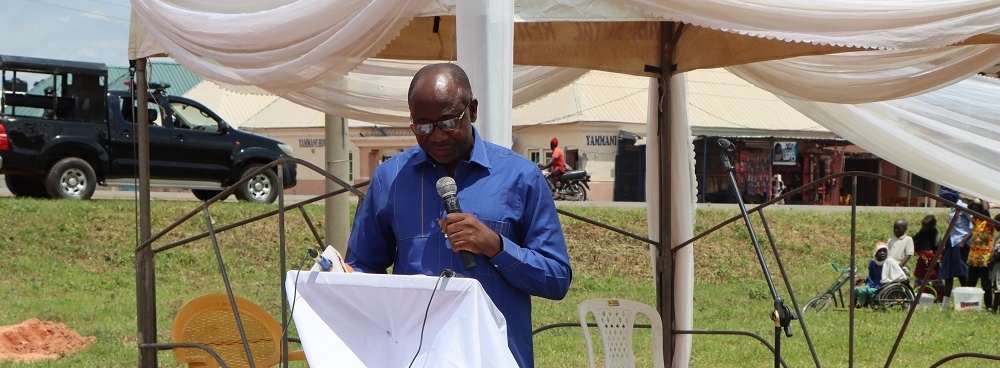
WELCOME ADDRESS BY THE PERMANENT SECRETARY, FEDERAL MINISTRY OF WORKS AND HOUSING, BASHIR NURA ALKALI, FCA, FCTI AT THE COMMISSIONING OF LAFIA-OBI-AWE-TUNGA ROAD IN NASARAWA STATE ON THURSDAY, 23rd JUNE, 2022.
PROTOCOLS
It is my great pleasure to welcome you all to this significant event in the affairs of our National life. I welcome all the eminent and distinguished invited guests to the occasion of the commissioning of the second phase of the completed roads across the country.
2. On behalf of the Honourable Minister Babatunde Raji Fashola SAN, Directors and Head of Units, Federal Ministry of Works & Housing, I welcome all distinguished invited Guests, the Royal Fathers and the entire people of Nasarawa State to this event.
3. As part of President Muhammadu Buhari’s developmental agenda of addressing road infrastructural development across the length and breadth of Nigeria, the Federal Government as a policy direction focused on the completion of several on-going projects to stimulate economic development, job creation and promoting local content. The focus is to link the major arterial roads to Refineries, Ports, tertiary institutions and high volume commercial centres with a view to reducing travel times, vehicle maintenance costs, safety and security of commuters etc.
4. The Ministry has successfully completed several roads and maintained several bridges to ensure that road users have a rewarding road travel experience. Several other roads and bridges are at various stages of completion such as the 2nd Niger Bridge and its approach road, Dualization of Abuja-Kaduna-Kano, Loko-Oweto Bridge linking Nasarawa to Benue States, Dualization of Enugu-Portharcourt Expressway, Bodo-Bonny Brigde, Lagos-Ibadan Dualization project, to mention just a few.
5. We have now entered the season of completion and handover of several roads and bridges projects across the country. Recently, 5-roads were commissioned by Mr. President who was represented by the Cabinet Ministers from the states where the projects were sited such as:
Commissioning of Sokoto-Tambuwal-Jega-Kotangora-Makere Road, Phases I&II in Kebbi State;
Vandeikya-Obudu Cattle Ranch Road Phases I&II in Benue State;
Nenwe-Oduma Road Sections I&II in Enugu and Ebonyi States;
Kano-Maiduguri Section III (Azare-Potiskum) in Bauchi/Yobe States; and
Kano-Maiduguri Road Section II Shuwarin-Azare, with spur from Dutse to Kwanar Huguma in Jigawa/Bauchi States.
6. In this phase of the commissioning, Mr. President approved the commissioning of the following roads:
Rehabilitation of Efon Alaaye-Erinmo-Iwaraja Road In Ekiti/Osun States;
Isoko Ring Road in Delta State;
Rehabilitation of Hadeija-Nguru Road, Phase II CH 40+000-CH 73+150 Kirikasama-Nguru in Jigawa State;
Completion of Gombe-Numan-Yola Road Phase II (Gombe-Kaltungo) in Gombe State;
Construction of Nguru-Gashua-Bayamari Road Section II, Phase I, (Gashua-Bayamari), Yobe State;
Rehabilitation of Nguru-Gashua-Bayamari Road Section I (Nguru-Gashua) Phase II in Yobe State;
Rehabilitation of Lafia-Obi-Awe-Tunga Road in Nasarawa State.
7. As we complete the commissioning of this road here in Nasarawa State, the train will move to Yobe State.
8. Our joy is that Nigerians are benefitting from the fruits of democracy and the promises made by the present Administration. These projects have created direct and indirect jobs as well as provided socio-economic benefits that the magnitude of such projects carries with it.
9. At this juncture, I welcome you all once again to the commissioning ceremony of this laudable road project in Nasarawa State.
Thank you and God bless you.
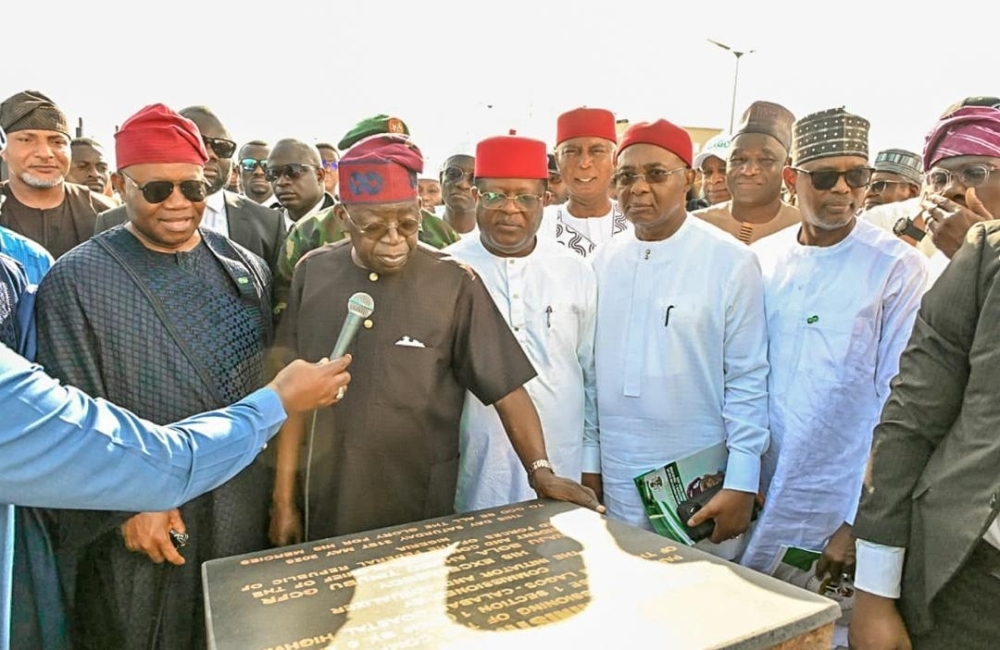
DRIVING NIGERIA’S FUTURE: CELEBRATING TWO YEARS OF TRANSFORMATIVE LEADERSHIP AND THE LAGOS-CALABAR COASTAL HIGHWAY MILESTONE
DRIVING NIGERIA’S FUTURE: CELEBRATING TWO YEARS OF TRANSFORMATIVE LEADERSHIP AND THE LAGOS-CALABAR COASTAL HIGHWAY MILESTONE
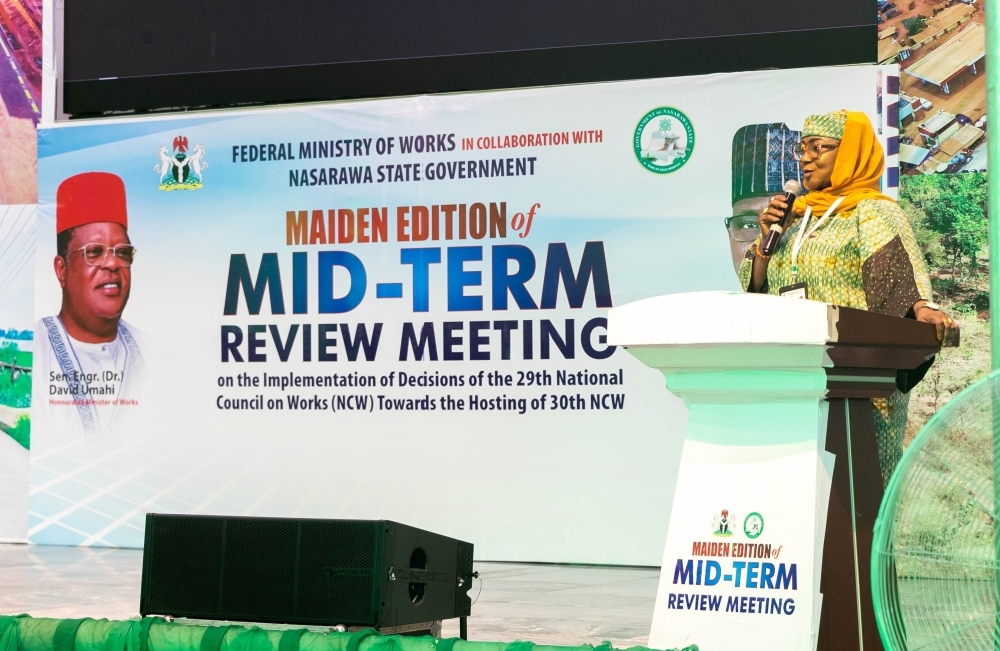
MID -TERM REVIEW MEETING ON THE IMPLIMENTATION OF THE DECISIONS REACHED AT THE 29TH NATIONAL COUNCIL ON WORKS (NCW) DAY 1
MID -TERM REVIEW MEETING ON THE IMPLIMENTATION OF THE DECISIONS REACHED AT THE 29TH NATIONAL COUNCIL ON WORKS (NCW) DAY 1