GORONYO COMMENDS SOKOTO GOVERNOR FOR DONATING 10 HILUX VEHICLES TO STRENGTHEN SECURITY ALONG SOKOTO–BADAGRY SUPERHIGHWAY
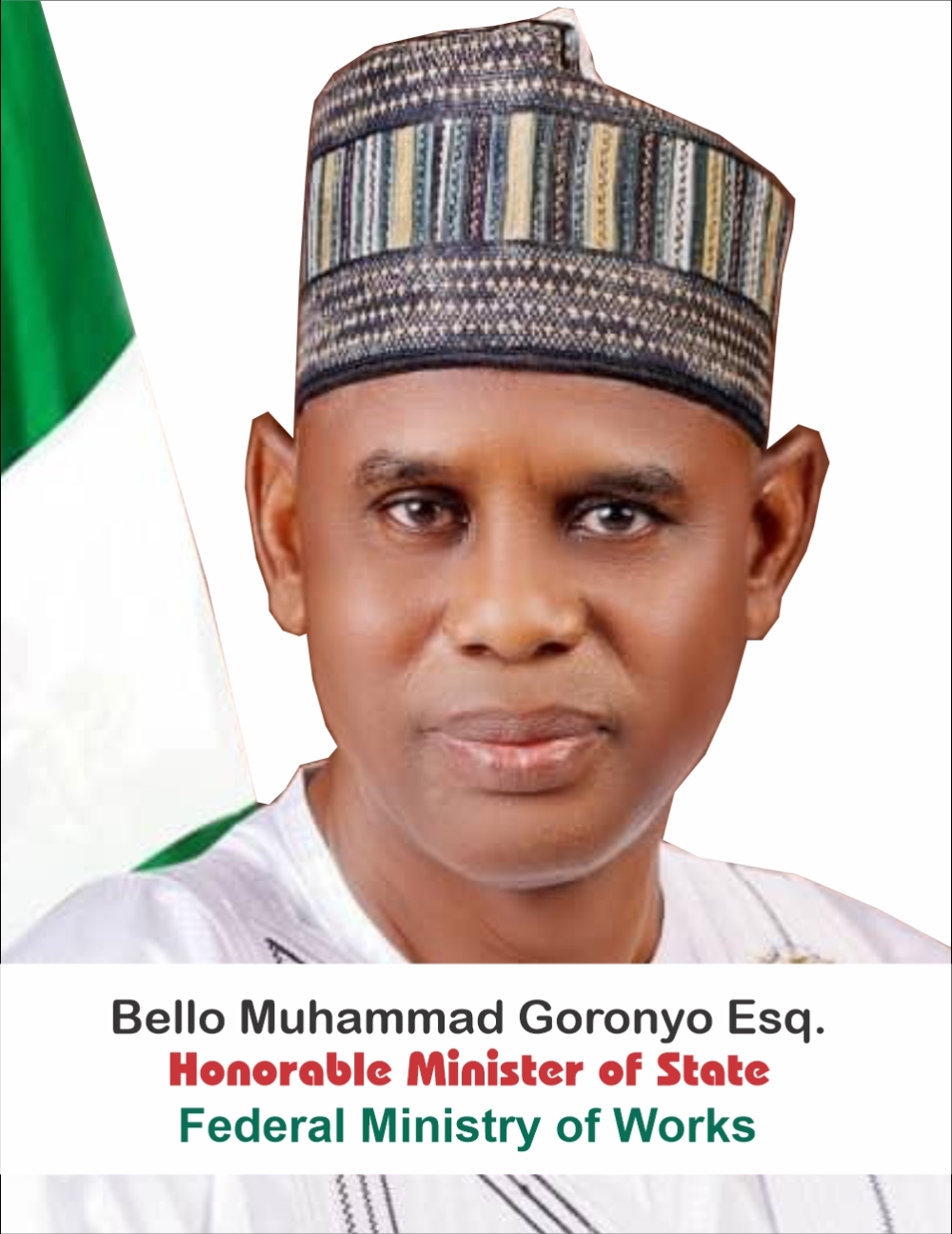
The Honourable Minister of State for Works, Rt. Hon. Bello Muhammad Goronyo, Esq., has commended the Governor of Sokoto State, Dr. Ahmed Aliyu Sokoto, PhD, for donating 10 operational Toyota Hilux vehicles to strengthen security operations along the Sokoto–Badagry Superhighway and other strategic infrastructure corridors.
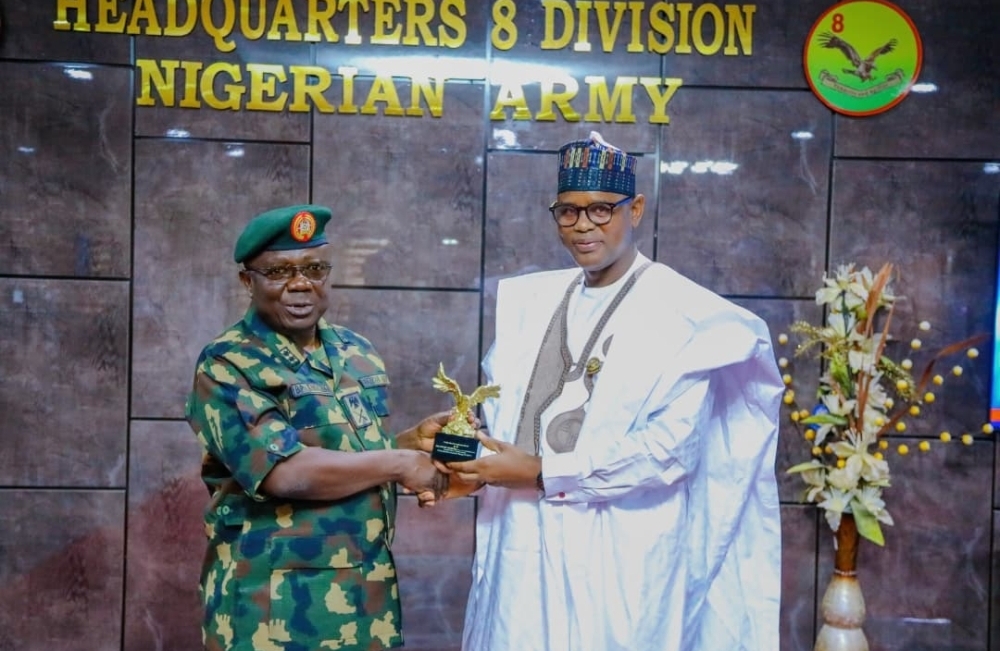
The vehicles were formally commissioned and handed over to the Nigerian Army at the Headquarters of the 8 Division, Nigerian Army, Sokoto, on Thursday, October 8, 2026, by the Honourable Minister of State for Works, on behalf of the Honourable Minister of Works, Engr. David Nweze Umahi, CON, FNSE.
The donation is expected to enhance the operational capacity of military personnel and other security agencies responsible for protecting construction workers, contractors, equipment and host communities along the highway corridor.
Speaking during the ceremony, Goronyo described the donation as a demonstration of the Sokoto State Government’s commitment to national development and the successful implementation of President Bola Ahmed Tinubu, GCFR’s Renewed Hope Agenda, particularly its landmark infrastructure projects.
The Minister emphasised that the Sokoto–Badagry Superhighway represents a long-standing national infrastructure vision that dates back several decades, with its conception traced to the era of former President Shehu Shagari in the 1970s. However, the vision remained unrealised for decades until the administration of President Bola Ahmed Tinubu, GCFR, initiated the construction of the 1,068-kilometre highway in October 2024.
He described the project as a significant step towards translating a historic aspiration into tangible infrastructure that will connect communities, expand economic opportunities and strengthen national integration.
According to Goronyo, President Tinubu’s commitment to the project demonstrates the Federal Government’s determination to bridge critical infrastructure gaps and improve connectivity between northern and southern Nigeria.
He noted that the superhighway, which traverses Sokoto, Kebbi, Niger, Kwara, Oyo, Ogun and Lagos states, is designed to facilitate the movement of people and goods, reduce transportation costs, stimulate trade, create employment and open up new economic opportunities along its route.
The Minister added that the highway would improve access to markets, schools, healthcare facilities and other essential services while supporting agriculture, commerce, industry and the development of communities across the corridor.
He stressed that the successful delivery of the project would require sustained commitment, effective coordination and cooperation among the Federal Government, state governments, security agencies, contractors and host communities.
Goronyo maintained that effective security remained essential to the timely and successful completion of the Sokoto–Badagry Superhighway. He explained that the provision of operational vehicles would strengthen the mobility and response capabilities of security personnel deployed to safeguard the project and its surrounding communities.
The Minister highlighted other strategic infrastructure projects being undertaken by the Federal Government, including the Lagos–Calabar Coastal Highway, the Calabar–Abuja/Trans-Saharan corridor, the Akwanga–Jos–Bauchi–Gombe corridor, the Abuja–Kaduna–Zaria–Kano route and the Zaria–Gusau–Sokoto corridor.
He explained that these projects form part of the Federal Government’s broader commitment to developing an integrated road network capable of supporting commerce, strengthening inter-state connections and accelerating national economic growth.
Rt. Hon. Goronyo further noted that the use of continuously reinforced concrete pavement on the Sokoto–Badagry Superhighway was intended to provide durable road infrastructure capable of serving Nigerians for decades. He added that complementary environmental and safety measures, including tree planting and solar-powered street lighting where provided for in the project, would contribute to environmental sustainability, visibility and road safety.
Goronyo commended the Nigerian Army and other security agencies for their resilience, professionalism and sacrifices in protecting lives, property and critical national infrastructure. He acknowledged the difficult conditions under which security personnel operate and urged them to remain steadfast in carrying out their constitutional responsibilities.
The Honourable Minister also expressed deep condolences to the Nigerian military over the reported loss of personnel in a bandit attack while on official duty the previous day. He described the loss as painful and extended his sympathy to the affected personnel, their colleagues and bereaved families, while praying for the peaceful repose of the departed and strength for their loved ones.
He further acknowledged the support of the National Security Adviser in addressing security challenges associated with the project, particularly through assistance and coordination aimed at strengthening security operations along the highway corridor.
Reaffirming his commitment to the Federal Government’s infrastructure development agenda, Goronyo said the Ministry of Works would continue to support the implementation of strategic projects under President Tinubu’s leadership, working in collaboration with relevant stakeholders to ensure their successful delivery.
He expressed optimism that the continued implementation of the Federal Government’s development programmes would bring lasting benefits to Nigerians, while acknowledging the complementary role of the Sokoto State Government in supporting infrastructure development and security.
In his remarks, the General Officer Commanding (GOC), 8 Division, Nigerian Army, Sokoto, Major General Bengba Paul Koughna, expressed appreciation to the Federal Government, the Federal Ministry of Works and the Sokoto State Government for the donation of the 10 Hilux vehicles.
The GOC noted that the vehicles would significantly enhance the operational mobility and response capabilities of troops deployed along the highway corridor, particularly across the approximately 440-kilometre section extending through Sokoto and Kebbi states.
He explained that troops conduct regular patrols and maintain multiple deployment points along the corridor, making the additional vehicles a valuable boost to their operational effectiveness.
He assured the Minister that the vehicles would be deployed appropriately to support security operations and protect construction workers, contractors, equipment and other stakeholders involved in the project.
The GOC also commended the representative of Hitech Construction Company, retired General Sa'ad Abubakar, for the company's involvement in the project.
The event was attended by retired Assistant Inspector-General of Police (AIG) Aliyu Garba, officials of the Federal Ministry of Works, representatives of the Sokoto State Government and other stakeholders.
The donation underscores the importance of sustained collaboration among the Federal Government, state governments, security agencies, contractors and host communities in addressing security challenges and ensuring the safe and timely delivery of strategic infrastructure projects.
The Federal Ministry of Works reiterates its commitment to working with all relevant stakeholders to protect national infrastructure and advance the objectives of President Bola Ahmed Tinubu, GCFR’s Renewed Hope Agenda for sustainable economic growth and development.

GORONYO COMMENDS SOKOTO GOVERNOR FOR DONATING 10 HILUX VEHICLES TO STRENGTHEN SECURITY ALONG SOKOTO–BADAGRY SUPERHIGHWAY The Honourable Minister of State for Works, Rt. Hon. Bello Muhammad Goronyo, Esq., has commended the Governor of Sokoto State, Dr. Ahmed Aliyu Sokoto, PhD, for donating 10 operational Toyota Hilux vehicles to strengthen security operations along the Sokoto–Badagry Superhighway and other strategic infrastructure corridors. The vehicles were formally commissioned and handed over to the Nigerian Army at the Headquarters of the 8 Division, Nigerian Army, Sokoto, on Thursday, October 8, 2026, by the Honourable Minister of State for Works, on behalf of the Honourable Minister of Works, Engr. David Nweze Umahi, CON, FNSE. Speaking during the ceremony, Goronyo described the donation as a demonstration of the Sokoto State Government’s commitment to national development and the successful implementation of President Bola Ahmed Tinubu, GCFR’s Renewed Hope Agenda, particularly its landmark infrastructure projects. The Minister emphasised that the Sokoto–Badagry Superhighway represents a long-standing national infrastructure vision that dates back several decades, with its conception traced to the era of former President Shehu Shagari in the 1970s. However, the vision remained unrealised for decades until the administration of President Bola Ahmed Tinubu, GCFR, initiated the construction of the 1,068-kilometre highway in October 2024. He described the project as a significant step towards translating a historic aspiration into tangible infrastructure that will connect communities, expand economic opportunities and strengthen national integration. According to Goronyo, President Tinubu’s commitment to the project demonstrates the Federal Government’s determination to bridge critical infrastructure gaps and improve connectivity between northern and southern Nigeria. The Minister added that the highway would improve access to markets, schools, healthcare facilities and other essential services while supporting agriculture, commerce, industry and the development of communities across the corridor. Goronyo maintained that effective security remained essential to the timely and successful completion of the Sokoto–Badagry Superhighway. He explained that the provision of operational vehicles would strengthen the mobility and response capabilities of security personnel deployed to safeguard the project and its surrounding communities. The Minister highlighted other strategic infrastructure projects being undertaken by the Federal Government, including the Lagos–Calabar Coastal Highway, the Calabar–Abuja/Trans-Saharan corridor, the Akwanga–Jos–Bauchi–Gombe corridor, the Abuja–Kaduna–Zaria–Kano route and the Zaria–Gusau–Sokoto corridor. Rt. Hon. Goronyo further noted that the use of continuously reinforced concrete pavement on the Sokoto–Badagry Superhighway was intended to provide durable road infrastructure capable of serving Nigerians for decades. He added that complementary environmental and safety measures, including tree planting and solar-powered street lighting where provided for in the project, would contribute to environmental sustainability, visibility and road safety. Goronyo commended the Nigerian Army and other security agencies for their resilience, professionalism and sacrifices in protecting lives, property and critical national infrastructure. He acknowledged the difficult conditions under which security personnel operate and urged them to remain steadfast in carrying out their constitutional responsibilities. The Honourable Minister also expressed deep condolences to the Nigerian military over the reported loss of personnel in a bandit attack while on official duty the previous day. He described the loss as painful and extended his sympathy to the affected personnel, their colleagues and bereaved families, while praying for the peaceful repose of the departed and strength for their loved ones. He further acknowledged the support of the National Security Adviser in addressing security challenges associated with the project, particularly through assistance and coordination aimed at strengthening security operations along the highway corridor. Reaffirming his commitment to the Federal Government’s infrastructure development agenda, Goronyo said the Ministry of Works would continue to support the implementation of strategic projects under President Tinubu’s leadership, working in collaboration with relevant stakeholders to ensure their successful delivery. He expressed optimism that the continued implementation of the Federal Government’s development programmes would bring lasting benefits to Nigerians, while acknowledging the complementary role of the Sokoto State Government in supporting infrastructure development and security. In his remarks, the General Officer Commanding (GOC), 8 Division, Nigerian Army, Sokoto, Major General Bengba Paul Koughna, expressed appreciation to the Federal Government, the Federal Ministry of Works and the Sokoto State Government for the donation of the 10 Hilux vehicles. The GOC noted that the vehicles would significantly enhance the operational mobility and response capabilities of troops deployed along the highway corridor, particularly across the approximately 440-kilometre section extending through Sokoto and Kebbi states. He explained that troops conduct regular patrols and maintain multiple deployment points along the corridor, making the additional vehicles a valuable boost to their operational effectiveness. He assured the Minister that the vehicles would be deployed appropriately to support security operations and protect construction workers, contractors, equipment and other stakeholders involved in the project. The GOC also commended the representative of Hitech Construction Company, retired General Sa'ad Abubakar, for the company's involvement in the project. The event was attended by retired Assistant Inspector-General of Police (AIG) Aliyu Garba, officials of the Federal Ministry of Works, representatives of the Sokoto State Government and other stakeholders. The Federal Ministry of Works reiterates its commitment to working with all relevant stakeholders to protect national infrastructure and advance the objectives of President Bola Ahmed Tinubu, GCFR’s Renewed Hope Agenda for sustainable economic growth and development.
The donation is expected to enhance the operational capacity of military personnel and other security agencies responsible for protecting construction workers, contractors, equipment and host communities along the highway corridor.
He noted that the superhighway, which traverses Sokoto, Kebbi, Niger, Kwara, Oyo, Ogun and Lagos states, is designed to facilitate the movement of people and goods, reduce transportation costs, stimulate trade, create employment and open up new economic opportunities along its route.
He stressed that the successful delivery of the project would require sustained commitment, effective coordination and cooperation among the Federal Government, state governments, security agencies, contractors and host communities.
He explained that these projects form part of the Federal Government’s broader commitment to developing an integrated road network capable of supporting commerce, strengthening inter-state connections and accelerating national economic growth.
The donation underscores the importance of sustained collaboration among the Federal Government, state governments, security agencies, contractors and host communities in addressing security challenges and ensuring the safe and timely delivery of strategic infrastructure projects.
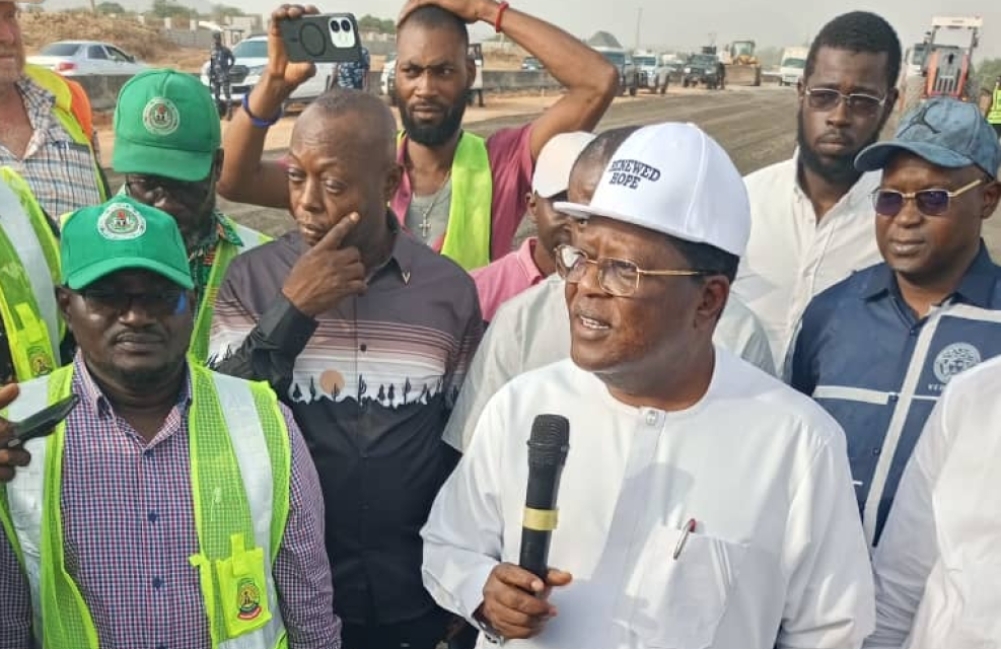
**FEDERAL MINISTRY OF WORKS’ POLICY YIELDING RESULTS ** — Mobilise to Site for 2 Weeks Before Payment of Mobilisation Fees - Umahi* The Honourable Minister of Works, His Excellency, Engr. (Sen.) David Umahi, CON, FNSE, FNATE has continued to insist that only contractors, who can deliver are needed to work on Nigeria roads. This is to guarantee that road projects are not abandoned by recalcitrant contractors. He stated this while inspecting ongoing works on the Abuja-Kaduna-Zaria-Kano Dual Carriageway, Section I (Abuja-Kaduna) that starts from the Zuba Interchange (CH0+000) and ends at the Western Bypass (CH165+500) in Kaduna, the Kaduna State Capital with an additional four (4) kilometres from Zuba towards Gwagwalada on the Abuja-Lokoja Expressway. Forty (40) kilometres (dual) will be on rigid pavement (concrete). According to the Minister, the company, Messrs Infoquest International (Nig.) Limited has proven its capacity to deliver quality jobs on record time, seeing how far they have gone within a month of signing the contract. “This is without being paid the initial 30% mobilisation fee as against what has been the previous practice,” he emphasised. He stressed that the Ministry’s decision that every contractor must be at the site and working for at least two weeks before the mobilisation fee is paid, is the way to go for sustainable project development and delivery. Commending the quality of work, the Minister urged Resident Engineers/Engineer’s Representatives on other projects, across the country, to be vigilant in ensuring that the correct composition of the stone base is achieved, stressing that a standard stone base must contain at least 70% stone, hence the name and 30% dust. “Any deviation from this ratio will compromise the road’s structural integrity, leading to premature failure,” he observed. Engr. Umahi also reiterated that the Abuja-Kano Dual Carriageway is so dear to Mr. President’s heart, being a vital corridor linking the North to the southern parts of the country, as well as neighbouring countries of Cameroun, Niger, and Benin Republics. While promising that the remaining portion of the entire alignment, Section III (Zaria-Kano), which is at the Kano end of the project, will soon be approved and awarded, he advised that reinforced concrete overlay be completed on the underlying structures before the commencement of the rainy season. It would be recalled that this was the project that was unnecessarily delayed for many years by Messrs Julius Berger (Nig.) PLC (JBN) and courageously terminated by the Ministry, some months ago, Umahi explained. "This project is the heartbeat of Mr. President because of its economic value. We are committed to ensuring its timely completion, and by the first week of March, we will begin laying an eight-inch continuous reinforced concrete pavement," the Minister stated. He reiterated that “The Federal Government remains resolute in its commitment to quality infrastructure development, ensuring that all projects under the Ministry’s supervision must meet the highest standards and be completed on schedule.” He added that interested companies must adhere to international standards and recommended practices in road construction or exit the scene. The Managing Director /Chief Executive Officer of the construction firm, Mr. Joseph Abougaoude disclosed that the company took the challenge to start the work without any payment of mobilisation fees because it is capable and, most importantly, its belief in the Renewed Hope Administration of President Bola Ahmed Tinubu, GCFR. He promised to deliver the contract following standards and on record time. He went further to acknowledge the Minister’s proactive leadership, adding "My promise is that I will not let you down. I take this project as a challenge and accept my role in ensuring its success. I am fully committed to this project and will push ahead to meet expectations." While fielding questions from reporters on the Lagos-Calabar Coastal Highway and the status of Julius Berger vis-a-vis contract with the Ministry, the Minister confirmed that before the end of the year, the entire first section of the Highway will be completed and that JBN is not sidelined from the Ministry’s contracts but, on the contrary, they are still working for the Ministry on other road infrastructure projects like the Bodo-Bonny Road, some major bridges in Lagos, as well as other places in Nigeria. He commended the new leadership of the company for aligning with the policies of the Ministry and respecting professional engineering standards. ...
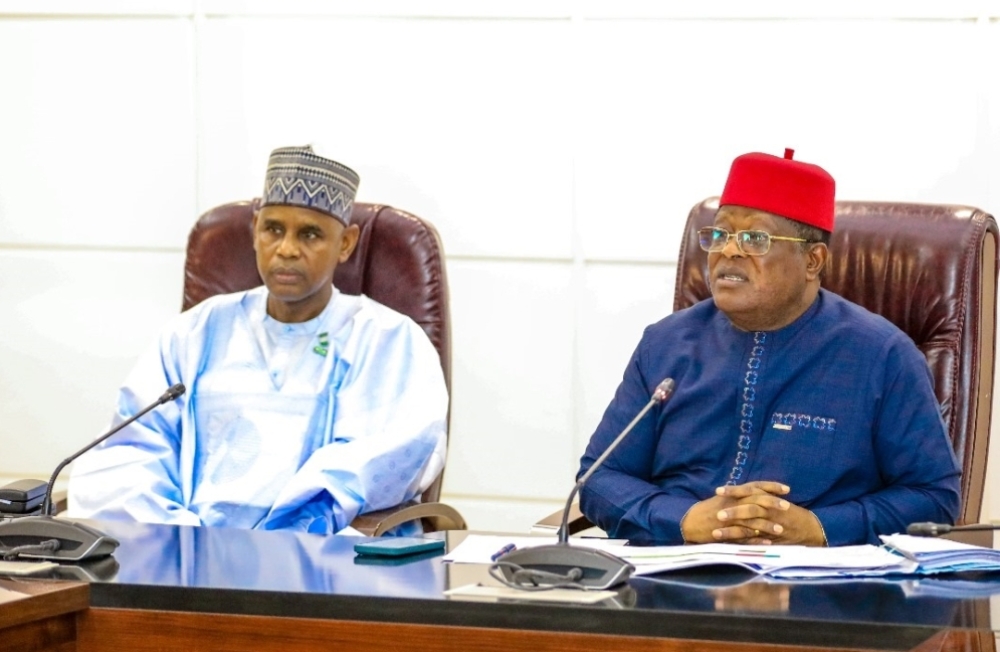
FEDERAL MINISTRY OF WORKS/ MTN MEETS ON QUALITY AND SPEEDY DELIVERY OF ENUGU - ONITSHA EXPRESSWAY PROJECT FUNDED BY MTN UNDER TAX CREDIT SCHEME,FIXES COMPLETION DEADLINE FOR 10TH MAY 2026 AS HONOURABLE MINISTER OF WORKS CALLS FOR IMMEDIATE REDUCTION OF COST OF CEMENT TO N7,000 BY MANUFACTURERS GIVEN THE INCREASED ECONOMIC REBOUND THROUGH MR. PRESIDENT’S SUSTAINED REFORMS The meeting of the Federal Ministry of Works with MTN and RCC Company Nig. Ltd over the slow funding and execution of the Enugu-Onitsha Expressway by MTN under the Infrastructure Development and Refurbishment Investment (Tax Credit) Scheme, held at the Ministry's headquarters, Mabushi-Abuja on 26th February 2025 has ended with the following resolutions: A - The construction of Enugu-Onitsha dual-carriageway must be completed by 10th May 2026. B - MTN shall be held responsible should the road fail after construction on account of shady job by the contractor. C - There will be no variation or VOP on the project and RCC must note that going forward, the operation of VOP in their projects must be in accordance with the procedure contained in the Conditions of Contract and not at the whims and caprices of the contractor. D - MTN not to sacrifice their responsibility of funding the project at the altar of MTN's business profit as this will wittingly or unwittingly inhibit speedy delivery of the project and inpune on the public perception of the will of government to ensure logical completion of the project. E - There must be a commitment in writing between MTN and the Federal Ministry of Works that this offer is predicated on these conditions herein set out. There must be a commitment because the more the job delays, the more there is variation. Speaking during the meeting, which had in attendance, the Honourable Minister of State for Works, Rt. Hon. Mohammad Bello Goronyo Esq, the Permanent Secretary of the Federal Ministry of Works, Engr. O.O Adebiyi, the representatives of MTN, the Managing Director of RCC Company Nig Ltd and his team, the Honourable Minister of Works, His Excellency, Sen. Engr. Nweze David Umahi, CON reiterated that the Federal Ministry of Works is unwavering in its commitment towards ensuring that the contractor handling the project, and in this case MTN that is handling the project under the Tax Credit Scheme is made to ensure quality and speedy delivery of the project. He wondered why an official of MTN could go on his way to insinuate that the directive made by the Federal Ministry of Works that RCC Ltd should stop using materials that could derail the quality outcome of the job amounted to a sabotage of the projects of Mr. President in South East. He said,: "We have to put the records straight that this ministry has the responsibility to ensure quality delivery of work by contractors. And the contractor in this case is MTN". He recounted the various inspection visits he made to contractors' project sites and how this had caused them to brace up for ensuring quality and speed in project delivery. He said of MTN's Enugu-Onitsha Expressway project, "We went through what MTN was doing. We discovered that they were using peeled sand to do the job. I'm an engineer. I'm not a history graduate. I'm a fellow of the Nigerian Society of Engineers, and I've spent all my life in the field. And we gave a directive, which is in line with the general conditions of contract, that should stop using such sand but go back, and use river sand, which we paid for." The Honourable Minister emphasized the need for RCC Nig Ltd to play by the rule in project variation. He decried as unacceptable a situation where RCC could do a job of N38 billion and demand for a VOP N14 billion and said that going forward such indulgence by contractors in the name of inflation would not be tolerated. He used the medium to call on the manufacturers of cement, which is a key element in the construction industry, especially on the use of Continuously Reinforced Concrete Pavement, to please reduce the cost of cement to N7,000 as the price of dollar has drastically reduced, the cost of petrol is coming down and efforts are being made by Mr. President to fix the road. He said, "I'm happy that the policies of Mr. President, are working. Today, a dollar is about N1,400. And let me use the opportunity to express dissatisfaction with the cost of cement. Our contractors have called and complained that they wanted to move back to asphalt. We are using this medium to tell the cement manufacturers that at the time, the dollar was almost N2,000, they increased cement from N7,500. Why should today that the President has brought dollar to stability to about N1400, and is still going down, why should cement be selling for N9,500? We are requesting cement manufacturers to bring down the cost of cement to N7,000. If after one week they don't do that, I have to complain officially to Mr. President." In their separate remarks, the Honourable Minister of State for Works and the Permanent Secretary Federal Ministry of Works estolled the stance of the Federal Ministry of Works on the policies that would not only fast track job execution but also guarantee value for money and quality project outcome. They urged the contractor to cooperate with the new paradigm under the Renewed Hope administration and work towards delivering the Enugu-Onitsha dual-carriageway on a record time so that Mr. President could commission it for public use. The representative of MTN in his vote of thanks expressed the readiness of MTN in working towards realizing the delivery of the project within the agreed timeline. ...
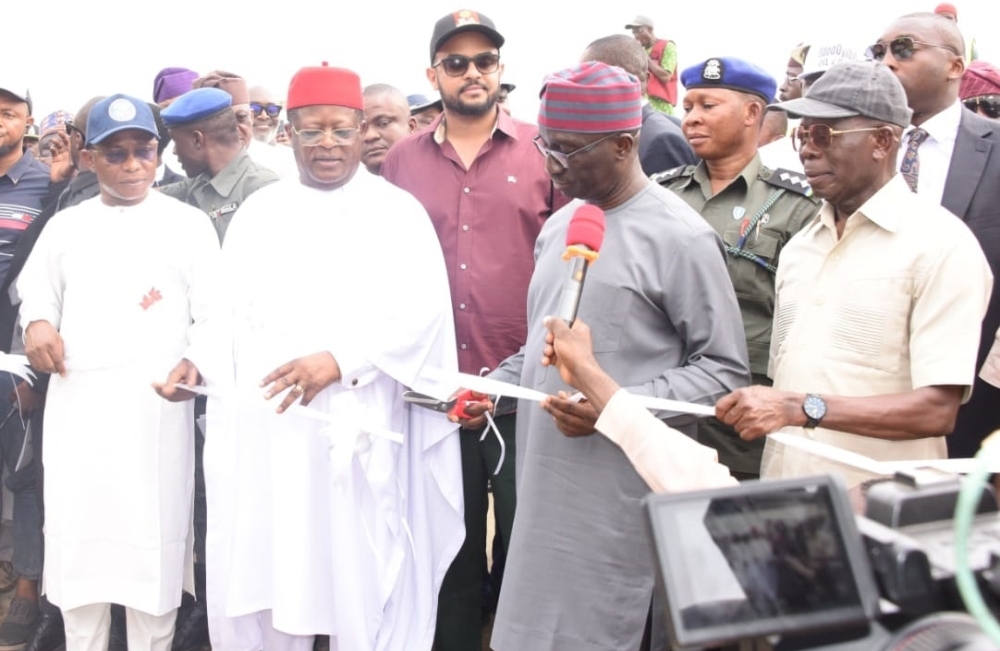
FG FLAGS OFF DUALISATION OF AJAOKUTA JUNCTION - OKENE - OKPELLA - AUCHI - EKPOMA - BENIN ROAD IN KOGI AND EDO STATES -Road Construction under President Tinubu has 50-100 Years Guarantee Sequel to the termination of the contracts for Sections II, III, and IV of the Dualisation of Obajana Junction - Benin Road due to non-performance and effluxion of time, last year, and their re-award, the Federal Government, through the Minister of Works, His Excellency, Sen. (Engr.) David Nweze Umahi, CON, FNSE, FNATE has flagged off the said projects. The ceremony was held on Wednesday, 19th February in Ekpoma, Edo State. During the flag-off ceremony, Engr. Umahi gave a brief pathetic history about the road, which moved Mr. President to order a permanent solution on the road using Continuously Reinforced Concrete Pavement (CRCP) technology with a 50-100 years guarantee. According to him, hitherto, commuters and motorists have been going through hardship due to its failure and high traffic volume, hence the dire need for its dualization. He stated that the project has lingered for too long with attendant consequences on the road users. He added that he has been visiting the road since his assumption of duty and has held several meetings with the former contractors but nothing changed. Upon reporting back to Mr. President, he ordered for immediate and permanent solution to alleviate the suffering, which led to the termination of three (3) out of the four (4) sections of the entire alignment. As an adjoining part of the East-West road, it is very dear to President Bola Ahmed Tinubu, GCFR, Umahi posited. It is, as well, a vital link to the Federal Capital (Abuja) and other Northern States with the South-East, South-West, and South-South geo-political zones of the country, thereby helping to connect and improve economic activities. He commended the Governor and the good people of Edo state for the display of team spirit on the project. Umahi disclosed that the Governor does not only supervise State Government works but extends his monitoring to those of the Federal Government. He also expressed his gladness for the governor’s humble disposition and for the quantum of projects going on in the state within a spate of 100 days in office, which was being celebrated on the same day. While appreciating Mr. President for his concern for the plight of the people plying the road, as well as those living along its corridor, the Minister pleaded with them for patience during the duration of the construction of the additional lanes and reconstruction of the existing alignment. He directed the contractors to expedite action on the work, as delays will not be tolerated. In his remarks, the representative of Mr. President and Governor of Edo State, His Excellency, Sen. Monday Okpebholo praised Mr. President and the Minister of Works for coming to the aid of the people of Edo State. According to him, with this kind gesture of Mr. President, light has entered the state. He promised, on behalf of his people, unalloyed support for Mr. President’s re-election in 2027. Also, the Governor of Kogi State being represented by the Deputy Governor thanked Mr. President for the fatherly gesture, assuring him of reciprocity during the elections. In a Goodwill Message, the former Governor of Edo State and Senator representing Edo North, Sen. Adams Oshomole hailed the magnanimity of President Bola Ahmed Tinubu, GCFR, and the untiring spirit of Engr. David Umahi, while thanking God for witnessing the day. It is worthy of note that the dualization of Lokoja - Benin Road is in four Sections, but three sections of the road project fall under Edo State. Section II starts from Okene to Auchi, which is about 63.70km long; Section III starts from Auchi – Ehor, which is about 54.224km long, and Section IV, which starts from Ehor - Benin is about 67.9km long. The Section I (Obajana Junction-Ajaokuta Junction) of the project, which is ongoing, is being handled by Messrs CGC (Nig.) Ltd. They were also awarded Section II, while Section III is being given to Messrs Bua Construction (Nig.) Ltd. and IV to CBC (Nig.) Ltd. ...
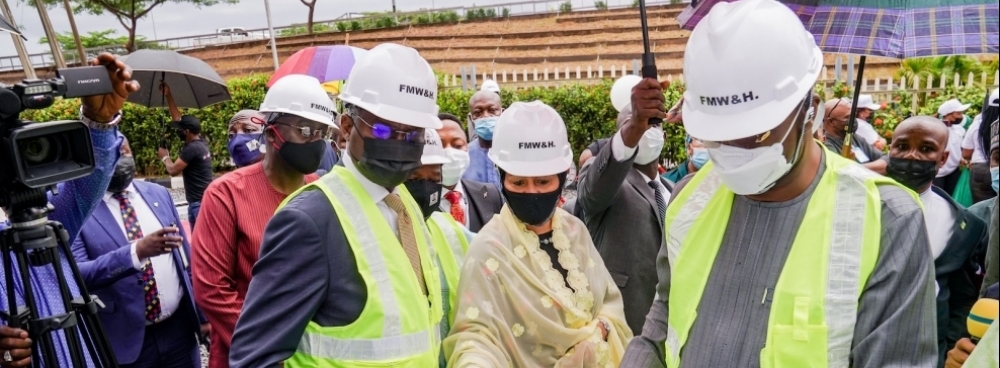
Speech By His Excellency Muhammadu Buhari, President of The Federal Republic of Nigeria at the Commissioning of Solar Power PV Plus Microgrid System and Energy Retrofitting of The Federal Ministry of Works and Housing Headquarters Mabushi Abuja, Tuesday, 6th July, 2021
PROTOCOLS
I am delighted to perform the virtual commissioning of the 1.5megawatt Solar project that serves the 4 blocks of offices housing the Federal Ministry of Works and Housing on one hand and the Federal Ministry of Environment on the other hand, in the Mabushi Area of the Federal Capital Territory, Abuja.
2. This is a project that delivers on so many of our commitments at local and international levels.
3. For many years and indeed decades, our pursuit of electrical energy solutions have followed a single track of on-grid power, until recently, when off-grid power became a focal policy pursuit of this Administration.
4. The impact of that policy shift is that access to small scale and off-grid electricity is increasingly becoming available to Nigerians in marketplaces, universities, and business premises as is the case with other parts of the world; and it is therefore pleasing that Government is also taking its own medicine, by building its own off-grid power. This is a worthy option for other Agencies of Government to consider.
5. In addition to policy implementation, this project enables Nigeria fulfill commitments made with other leading countries of the world under the Paris Climate Change Agreement, which I signed on behalf of Nigeria.
6. At the heart of that Agreement is a global resolve to reduce carbon emissions by committing to the use of renewable sources of energy.
7. This 1.5megawatt solar farm which I am told is the largest solar project for a public building in Africa, will enable us reduce carbon emissions, and it is something to be proud of that we are contributing to saving this planet for future generation.
8. Another reason why I am pleased about this project is the impact of reliable energy on the ability of our public servants housed in these buildings to efficiently discharge their responsibilities to the members of the public.
9. As critical enablers of the private sector, the improved efficiency in public service delivery can only be expected to translate to an improvement in the ease of doing business, which is a major objective of our economic plans to grow the Nigerian economy and create jobs.
10. I want to reassure you of this administration’s commitment towards promoting energy efficiency and ensuring energy security to all Nigerians. We have just embarked upon the competitive procurement of up to 150 Mega Watts of Solar power along the Maiduguri axis to help address the issue of electricity supply along that axis, while enhancing grid stability through the provision of clean renewable energy.
11. I commend the Honourabe Ministers and staff of the Federal Ministry of Works and Housing and their Contractor for the successful delivery of this project which hopefully is just the first of many more to be delivered across Nigeria in the public and private sectors.
12. It is now my pleasure to commission this project for improved service delivery, and economic development.
13. Thank you and God bless the Federal Republic of Nigeria.
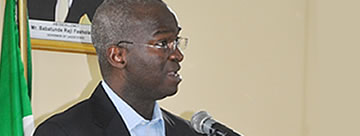
How Government Policy Affects Business, Society In National Development And Changing International Environment, A Keynote Delivered At Social, Political And Economic Environment Of Business (SPEB) Lagos Business School
I would like to thank Dr Franklin M. Ngwu for his kind gesture of inviting me to speak to you today. If Dr Ngwu’s kindness had extended to giving me a topic that might be of common interest to all of you, my gratitude to him would have been more immense.
As kind as Dr Ngwu has been, he asked me to speak about:
* How to “… provide a clearer understanding of the dynamic social, political and economic environment of firms”
* “relationship between government, business and society, and trends in national development strategy”; and
* “… Changing international environment…”
Each one of these issues is a matter worthy of immense study and conversation on its own; however, since they have been rolled into the subject of one session at which I am to speak, I have decided to use case studies that we are largely familiar with to illustrate the 3 (three) broad themes.
Therefore, I will be addressing:
* Relationship between government, business and society
* Developments in international environment
* Trends in national development
* GOVERNMENT, BUSINESS AND SOCIETY
* Ministerial Appointments
This issue has generated concerns which are understandable, controversies which are perhaps needless and criticisms that are based on comparisons which are misinformed, mischievous or plainly ignorant.
Because I listened to some of them and read some of them, I have produced a table showing the forms of government, and the constitutional provisions of the countries and jurisdictions of comparisons to make the case, now that the dust has settled:
Procedure of Appointment of Ministers in Selected Jurisdictions
| Appointing Authority | Consultation | Confirmation | Number | Oath | Parliamentary Membership | |
| Malawi | President | Not applicable | Not prescribed | Yes | Must NOT be parliamentarian | |
| South Africa | President | Executive VP and Party Leaders | Not Applicable | Max: 27 | Yes | Must be parliamentarian |
| Kenya | President | National Assembly | Min: 14 Max: 22 | Yes | Not Applicable | |
| India | President | Prime Minister | Not applicable | Not prescribed | Not stated | Must be Parliamentarian |
| Senegal | President | Prime Minister | Not applicable | Not prescribed | Not stated | Not stated |
| Ghana | President | Parliament | Min: 10 Max: 19 | Yes | Majority must be parliamentarian | |
| Nigeria | President | National Assembly | Min: 37* | Must not be parliamentarian |
*This follows the decision of the Court of Appeal in 2018 in the case of Panya v. President, FRN which held that FCT has the status of a state in the Federation and an indigene is entitled to be appointed a minister.
What you will immediately see from the tables are some of the countries of comparison are not federations like Nigeria.
Secondly, their political systems are parliamentary and not presidential (except for India). In effect, once you are elected as a member of parliament, you qualify to be minister, so the field of choice is significantly narrow; as distinct from our constitutional provision that requires one indigene to be picked from each of the 36 (THIRTY-SIX) states.
The President therefore has to pick one indigene from each state, and a person may be resident in a state and not be an indigene. There are sub-issues of gender, religion, age and senatorial districts, which are not constitutional but are nonetheless demanding of serious consideration in making the choice.
There is of course a debate of pre-stating the portfolio which is not constitutional but nevertheless generates intense controversy and we have seen how some people have analysed how some parts of the country got more substantive ministers and how some got more ministers of state and how some ministries were considered as “juicy” and some not so “juicy.”
I leave you to imagine how much longer the screening process may have taken, and how easier or more contentious approval may have been easy to secure if people had fore knowledge of the ministries to be assigned to their state representatives.
Please recall that the Chairman of EFCC was not cleared for 4 years, and nominees to NERC and FERMA were not cleared for almost 2 (two) years.
Each of these agencies have critical roles to play in our national lives in the areas of law enforcement, electricity regulation and road maintenance.
Please remember the bitter and vengeful confrontations between Democrats and Republicans, when President Trump nominated Brett Kavanaugh to fill a vacancy in the US Supreme Court. The grass is not greener on the other side.
* Roads
Today, the government is constructing roads in every state of Nigeria and while revenues are a challenge to prompt completion, some “experts” who have not successfully shown they can run a small business moan the loudest about Nigeria’s borrowing to fund infrastructure investment.
A Nigerian, has borrowed billions of dollars to build a refinery, petrochemical plant, fertilizer plant and gas processing plant, yet some backyard economists complain that a country whose population is in the hundreds of millions is borrowing too much to fix rail, roads, ports (air and sea) and power.
They come to the public space to talk about the GDP and infrastructure of the United States and OECD countries. But they are ominously silent on America’s public debt that exceeds $21 Trillion.
Nigerians in their Hundreds of Thousands go on holidays there, go for medical treatment there, seek for their citizenship, fly their airplanes and use their airports and unknowingly pay in part for the debt they sensibly incurred.
All of you business school graduates must seize the public space from those half-baked economists and enlighten the public about the necessity to invest before you can claim a DIVIDEND.
That said I will speak about:
* Lagos-Ibadan Expressway
* Apapa-Oworonshoki Expressway
* Ikorodu-Sagamu
* Lagos-Badagry
These roads share one thing in common. They were built at least 4 decades ago and have not only outlived their design lives, their carrying capacity has been overwhelmed by a growing population, larger than what it was when they were built in the 1970s and the economic size has grown much bigger.
NIGERIA
| YEAR | GDP ($) | POPULATION (NIGERIA) |
| 1976 | 36.31 Billion | 65.23 |
| 2015 | 481.1 Billion | 181.2 Million |
Since the return to democratic rule in 1999, these are some of the roads we all clamoured for their reconstruction, upgrade and expansion. Nothing worthy of note has happened until 2016 when construction either commenced or was restarted.
What we now hear is the inconvenience, instead of the acknowledgement that government is now responding and providing the service we all craved for almost two decades.
Please be aware that all those roads under construction are now CONSTRUCTION SITES and in the world that we now live in, SAFETY on construction sites is now a big issue.
Not only for motorists who have to drive through them but also for our brothers and sisters who are working there to deliver the infrastructure we desperately crave.
A camera sees only what the man behind the lens wants it to see. So instead of inconvenience, I see service, with the hope that things will get better.
APAPA PORT
I cannot conclude on infrastructure without mentioning Apapa port and the impact on all of us. There is a lot to be said but I will only share a few to enrich your perspectives and understanding of the difficult choices that government has to make.
These ports share some of the aging and capacity peculiarities of the roads I just discussed.
The Apapa port was first built in 1921 when Nigeria’s population and economic sizes were much smaller. (POPULATION 18.7 MILLION)
There was port expansion as the population and economy grew from 1921 until 1974/1975 in the wake of the cement Armada; when the Tincan Island port was built as the first and only port expansion 40 odd years after the port was originally built. (65 million population at the time).
The installed capacity is approximately 30 million metric tonnes throughout per annum, but it is now processing over 80 million metric tonnes. (Now estimated 180 million population) .
Please let us all remember that these ports have been concessioned to the private sector since 2007 for operation and government is essentially supervising and monitoring.
Has the private sector done its job by making the necessary investments in cranes, container handling equipment and facilities, scanners and personnel?
Why is government not exercising its powers, and what is the recourse for non-performing privatized or concessioned assets?
How does government raise additional and necessary money to dredge waterways to make them more navigable to other ports?
Should government bar those trucks from Apapa, and if so, what happens when raw materials cannot leave the port to factories?
If factories shut down, what happens to the thousands or millions who will lose their jobs, and the income tax they pay to the states and federal government, from which workers’ salaries are paid, security is funded and government business is run?
These are the real questions that government grapples with. They are interconnected and no one is easy to solve.
For now, government is reconstructing the road, developing a rail to the port, managing the traffic and supporting the construction of the Lekki port as the 3rd (Third) port expansion in Lagos in 100 years.
Other inland ports like the Baro port have been completed, but the access road is a work in progress, challenged only by insufficient funds, in an economy where some complain about borrowing, and there is a Fiscal Responsibility Act that limits the amount of deficit and consequently how much can be borrowed.
Curiously, there is no law that limits the number of children that families can have, or the rate at which the economy can grow.
* Trends in National Development
* Herdsmen Clashes/kidnapping
In the process of internal government review, we had cause in December 2018 to analyse data that we had gathered over 3 (three years), from 2016-2018.
Amongst the various issues we looked at, we observed that crime statistics particularly clashes between herdsmen and farmers increased between October-March every year in 2016, 2017 and 2018.
The data also showed that the water levels from rivers and canals began to recede around this period from October, when the rainy season ends to March which is the peaking period of the dry season. While some people still choose to see a FULANIZATION AGENDA, data and common sense clearly reveals the contrary.
As water recedes, pastoralists become compelled to move their animals in search of water heading from North downwards to South.
This is the obvious recipe for conflict, as livestock passes through farmlands in search of water and grazing opportunities.
You now think about it and ask yourself how many incidents of herdsmen attack you have heard about in the last 2 months in the peak of the rainy season, compared to the number reported between April and May earlier in the year.
What has the government done?
It has enunciated a policy to eliminate the source of conflict by providing grazing and watering opportunities for pastoralists.
You must remember RUGA and the outrage and resistance to it.
Recently you may have heard that 19 (NINETEEN) governors have signed up to the National Livestock Transformation Program (NLTP).
If both RUGA and NLTP have the same component of providing watering and grazing opportunities to pastoralists to prevent them from roaming and avoid conflict with farmers, what then you might ask is the difference and what was all the fuss about RUGA meant to achieve?
In my view, the fuss about RUGA was nothing but pettifogging.
As for the recent reports of increased cases of kidnapping as an emerging national trend, I make the point that this is not a novel crime in Nigeria.
From when I was a child we were reminded by our parents about the threats of kidnappers. So, what we have is a crime pattern that has come back to the front burner while cases of armed robbery at homes and banks seem to have taken a back burner.
The question I urge all of us to ask is why has it come back?
Is organized crime gathering more momentum?
Is the presence of police in deterring bank robberies forcing organized criminals to re-think and re-strategize?
Is the gradual reduction of cash at homes and on our persons, through greater use of bank cards and electronic wallets, making home attacks less rewarding and profitable?
Simply put, are the criminals saying to us, if we cannot rob a bank or a home for cash, why not seize the owner of the cash (hostage taking) and get their people to bring the cash to us?
If this is the case, what are we doing or going to do about it? (We should seriously consider and effect lifestyle changes that avoid obscene display of wealth which makes us vulnerable as potential victims.)
* Human Capital Development
One of the recent conversations that have dominated our public space is the seeming lack of commitment to investment in our human capital.
I emphasise the word “seeming”, because contrary to the case being made about the alleged lack of sufficient investment, only a part of the full picture is revealed to the unsuspecting public, either as a result of ignorance or mischief by the proponents of this lack of investment, who point only at the budget in the ministries of health and education at the federal government level to make this case.
Firstly, they conveniently ignore the budgets of states and local governments and the spending at these levels.
You cannot paint our National picture if you leave States and Local Governments out of the Frame.
Secondly, they compare this federal government budget (only) with that of countries like Ghana the whole country, while forgetting or omitting to state that the federal government budget only part of the country’s budget (52%) being a federation as opposed to Ghana, being the whole country, a republic.
Furthermore, they ignore expenditure in school infrastructure like buildings and roads (federal ministry of works’ road projects in 14 universities in phase I and 28 universities in phase II) which will not be captured in the budget of the ministry of education. (See Table Below) .
They then seem to lay the blame of this alleged lack of investment in schools and hospitals on the federal government, and sometimes ask for RESTRUCTURING as the way out.
But they do not tell their unsuspecting audience that:
* The federal government does not own one primary school
* The federal government does not own one primary healthcare centre
* The federal government owns 104 (unity) secondary schools
* The federal government owns 43 universities
* The federal government owns 47 universities
* The private sector owns 75 universities
Primary schools are the places where the foundation for learning and education is laid and primary health care centres are the appropriate places for ante-natal care for pregnant women, and immunization to babies to prevent infant and maternal deaths.
Our constitution sensibly leaves these to local governments closest to the people.
If anything needs to be restructured in these centres, it is not the constitution but the recruitment process, to ensure that the most competent people are entrusted to those places of enormous responsibilities of local government chairpersons, primary school teachers, primary health care personnel.
Table of Schools Benefitting from FGN Intervention in Internal Roads
* Alex Ekwueme Federal University Ndufu-Alike
* Federal College of Education, Asaba
* Federal College of Education, Zaria
* Federal Polytechnic, Damaturu
* Federal Polytechnic, Ede
* Federal Polytechnic, Offa
* Federal Polytechnic, Nekede
* Federal Polytechnic, Oko
* Federal School of Dental Technology and Therapy, Enugu
* Federal University of Agriculture, Abeokuta
* Federal University of Technology, Port Harcourt
* Federal University, Dutse
* Federal University, Dutsinma
* Federal University, Wukari
* Federal University of Technology, Akure
* Michael Okpara University of Agriculture, Umudike
* Modibo Adamawa University, Yola
* National Institute for Nigerian Languages, Aba
* Nigerian Institute of Oil Palm Research, Benin
* Nigerian Law School, Abuja
* University College Hospital Ibadan Phase II
* The Federal Polytechnic, Kaura Namoda
* The Federal Polytechnic,, Nasarawa
* University of Agriculture, Makurdi
* University of Calabar
* University of Ibadan
* University of Maiduguri Teaching Hospital
* University of Nigeria Teaching Hospital, Ituku, Enugu
* Usmanu Dan Fodiyo University, Sokoto
* University of Nigeria, Nsukka
* University of Maiduguri, Borno
* University of Benin, Edo
* University College Ibadan, Oyo State
* Kaduna Polytechnic, Kaduna
* Federal University, Lokoja, Kogi
* Federal University, Gashua, Yobe
* Federal University Oye, Ekiti State
* Federal University Otuoke, Bayelsa State
* Federal University of Technology, Owerri, Imo
* Federal University Lafia, Nasarawa State
* Federal Polytechnic, Bauchi State
* Federal College of Education, Katsina
* Bayero University Kano
SUSTAINABLE DEVELOPMENT GOALS
The proponents of this argument who tell only a part of the story of investment in Human Capital, also are either unaware of, or deliberately leave out the data of intervention in Rural areas where:
* Boreholes are being provided for access to water supply.
* Classrooms are being refurbished or built for access to education.
* Roads are being built to add value to land holding.
* Health facilities are being constructed for access to health care.
These projects number 3, 179, have employed 221,460 and benefitted or impacted 577,459 people nationwide between 2016 and 2019.
* CHANGING INTERNATIONAL ENVIRONMENT
* Right Wing Extremism (Illiberal Democracy)
The idea of liberalism in democracy seems to be yielding slowly to an emerging less liberal democracy for “quick” decision making and more cumbersome consensus building process for decision making.
China is a ready example, as is the United States, where the Republican dominated senate is now being accused of having lost its authority to oversight the president.
Turkey is yet another example, and the United Kingdom appears to be the latest to subscribe to this vogue with the suspension of her parliament.
With these developments, nationalistic agenda such as Make America Great Again, and Brexit are being pushed by the political elite and they are being (mis)understood to mean that it is foreigners who are causing local problems of economic (under) development, (un)employment and (in) security.
With the globalization and hi-tech, these messages are reaching many more people through handheld devices much quicker than they probably would 20 (twenty) years ago.
* Global Economic Snap-Shot
On the global economic front, things are slowing down. The United Kingdom has been in austerity mode for a decade, China is slowing down, and America is also slowing and simultaneously engaging in trade wars, using tariffs.
From 2015 when the Nuclear Treaty was signed with Iran, which allowed more oil into the market, prices of crude oil crashed and affects oil dependent economies like Saudi (drawing on reserves); Venezuela (slid to recession and depression); Nigeria went into recession and recovered to a consecutive quarter growth peaking at 1.9%.
If the two wealthiest members of the global family are at war and not doing well, what happens to the other members of the family?
On the African Continent, South Africa, the second largest by GDP is facing slow growth at less than 1%, and high crime, the lesson is that the grass is not greener on the other side.
* Local Economic Outlook
With a commitment to invest in infrastructure and build roads, rail, airports and power, the prognosis at home looks better than abroad. It is still some distance away but that is understandable as representative of the distance between policy, implementation and results.
Currently, the ministry of works and housing which I superintend has over 300 road contracts at different stages of execution.
If we can mobilize resources from October this year through to May 2020, which gives us 8 clear months of construction in dry weather.
The spin offs, for mining construction materials, labour and employment, reduced journey times and cost of travel as we complete, can only be good for the economy.
Ladies and gentlemen, these are my thoughts about the relationship between government, business and social trends in the national development and the changing international environment.
Thank you for listening.
Babatunde Raji Fashola, SAN
Hon. Minister of Works and Housing
Friday 20th September 2019
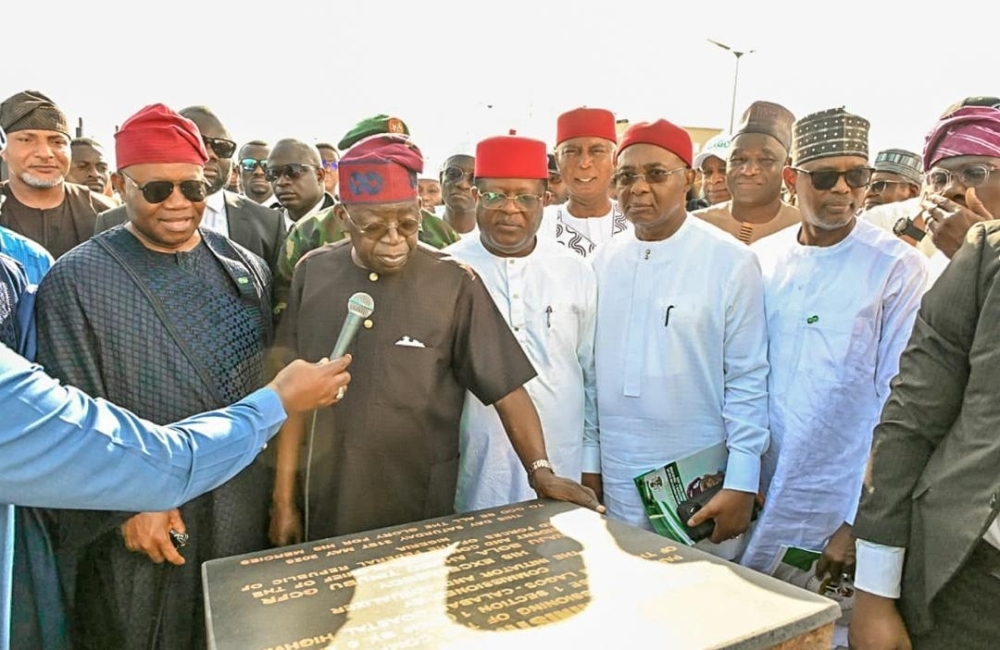
DRIVING NIGERIA’S FUTURE: CELEBRATING TWO YEARS OF TRANSFORMATIVE LEADERSHIP AND THE LAGOS-CALABAR COASTAL HIGHWAY MILESTONE
DRIVING NIGERIA’S FUTURE: CELEBRATING TWO YEARS OF TRANSFORMATIVE LEADERSHIP AND THE LAGOS-CALABAR COASTAL HIGHWAY MILESTONE
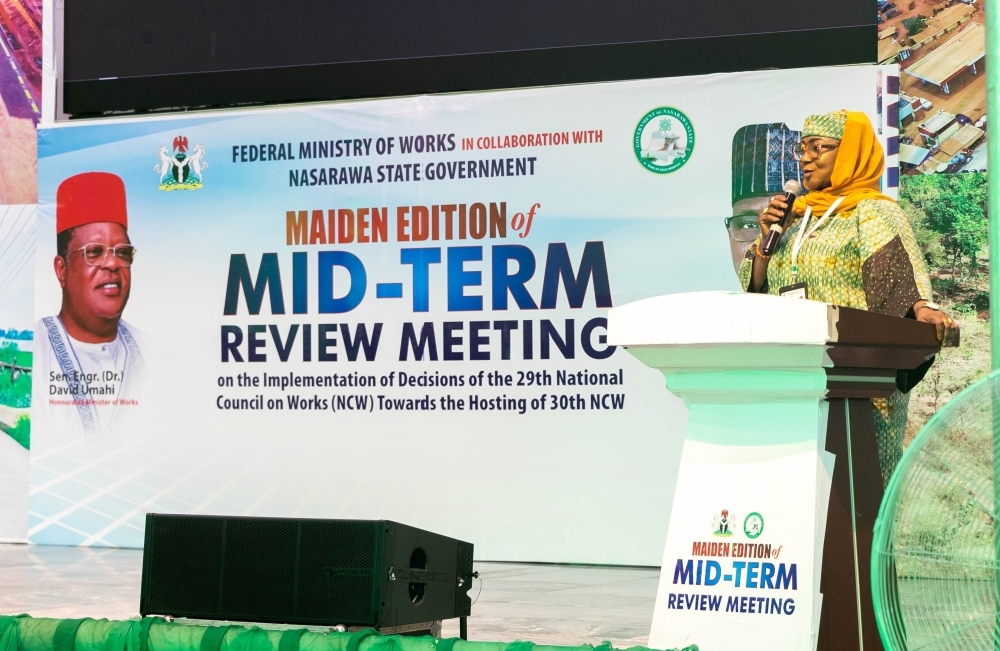
MID -TERM REVIEW MEETING ON THE IMPLIMENTATION OF THE DECISIONS REACHED AT THE 29TH NATIONAL COUNCIL ON WORKS (NCW) DAY 1
MID -TERM REVIEW MEETING ON THE IMPLIMENTATION OF THE DECISIONS REACHED AT THE 29TH NATIONAL COUNCIL ON WORKS (NCW) DAY 1