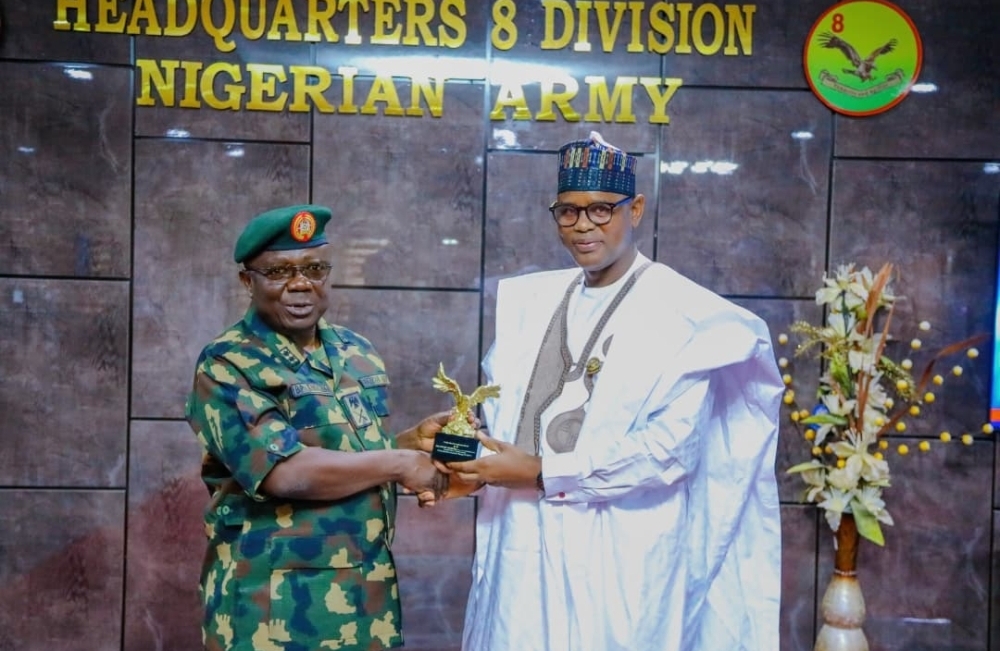
GORONYO COMMENDS SOKOTO GOVERNOR FOR DONATING 10 HILUX VEHICLES TO STRENGTHEN SECURITY ALONG SOKOTO–BADAGRY SUPERHIGHWAY
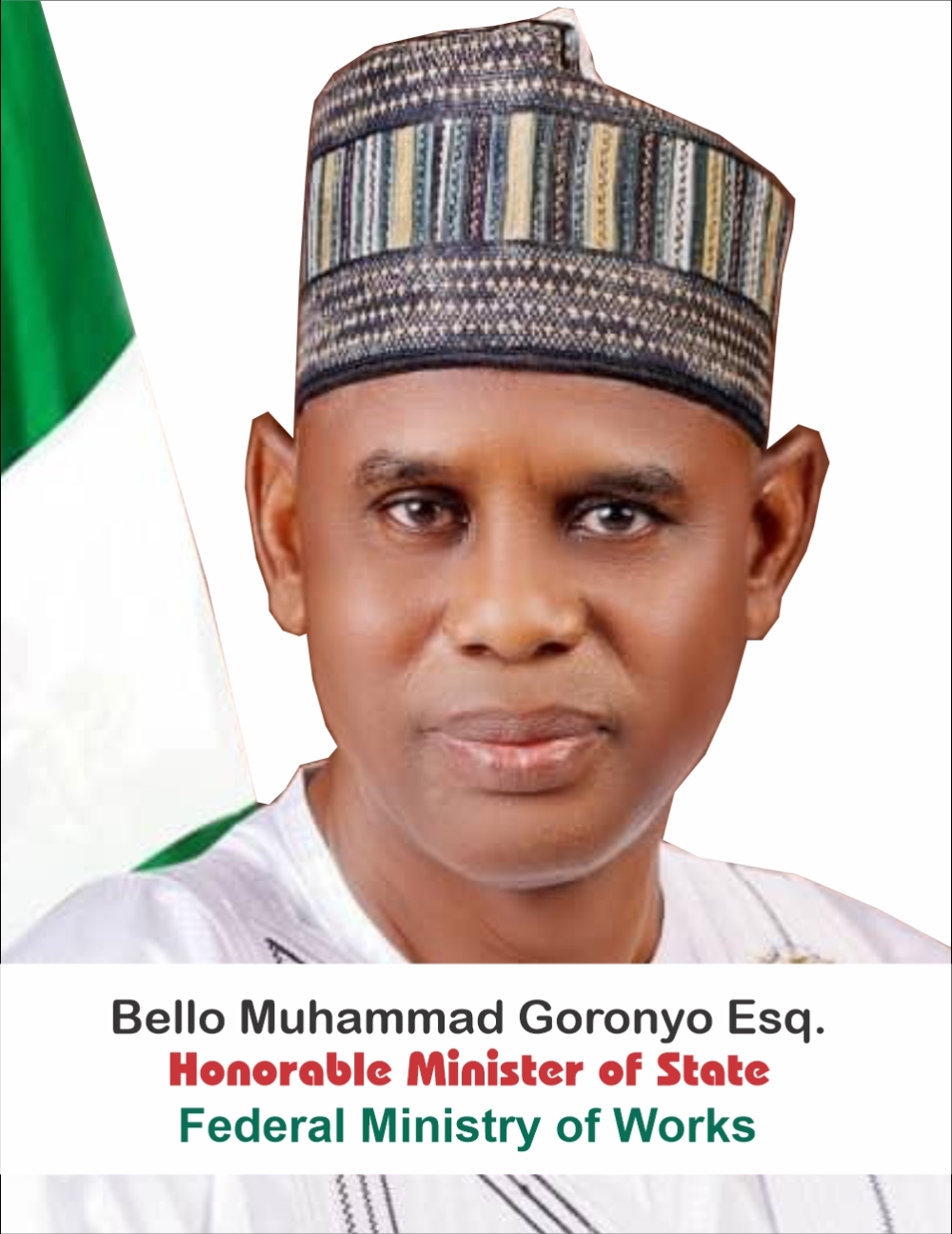
The Honourable Minister of State for Works, Rt. Hon. Bello Muhammad Goronyo, Esq., has commended the Governor of Sokoto State, Dr. Ahmed Aliyu Sokoto, PhD, for donating 10 operational Toyota Hilux vehicles to strengthen security operations along the Sokoto–Badagry Superhighway and other strategic infrastructure corridors.
The vehicles were formally commissioned and handed over to the Nigerian Army at the Headquarters of the 8 Division, Nigerian Army, Sokoto, on Thursday, October 8, 2026, by the Honourable Minister of State for Works, on behalf of the Honourable Minister of Works, Engr. David Nweze Umahi, CON, FNSE.
The donation is expected to enhance the operational capacity of military personnel and other security agencies responsible for protecting construction workers, contractors, equipment and host communities along the highway corridor.
Speaking during the ceremony, Goronyo described the donation as a demonstration of the Sokoto State Government’s commitment to national development and the successful implementation of President Bola Ahmed Tinubu, GCFR’s Renewed Hope Agenda, particularly its landmark infrastructure projects.
The Minister emphasised that the Sokoto–Badagry Superhighway represents a long-standing national infrastructure vision that dates back several decades, with its conception traced to the era of former President Shehu Shagari in the 1970s. However, the vision remained unrealised for decades until the administration of President Bola Ahmed Tinubu, GCFR, initiated the construction of the 1,068-kilometre highway in October 2024.
He described the project as a significant step towards translating a historic aspiration into tangible infrastructure that will connect communities, expand economic opportunities and strengthen national integration.
According to Goronyo, President Tinubu’s commitment to the project demonstrates the Federal Government’s determination to bridge critical infrastructure gaps and improve connectivity between northern and southern Nigeria.
He noted that the superhighway, which traverses Sokoto, Kebbi, Niger, Kwara, Oyo, Ogun and Lagos states, is designed to facilitate the movement of people and goods, reduce transportation costs, stimulate trade, create employment and open up new economic opportunities along its route.
The Minister added that the highway would improve access to markets, schools, healthcare facilities and other essential services while supporting agriculture, commerce, industry and the development of communities across the corridor.
He stressed that the successful delivery of the project would require sustained commitment, effective coordination and cooperation among the Federal Government, state governments, security agencies, contractors and host communities.
Goronyo maintained that effective security remained essential to the timely and successful completion of the Sokoto–Badagry Superhighway. He explained that the provision of operational vehicles would strengthen the mobility and response capabilities of security personnel deployed to safeguard the project and its surrounding communities.
The Minister highlighted other strategic infrastructure projects being undertaken by the Federal Government, including the Lagos–Calabar Coastal Highway, the Calabar–Abuja/Trans-Saharan corridor, the Akwanga–Jos–Bauchi–Gombe corridor, the Abuja–Kaduna–Zaria–Kano route and the Zaria–Gusau–Sokoto corridor.
He explained that these projects form part of the Federal Government’s broader commitment to developing an integrated road network capable of supporting commerce, strengthening inter-state connections and accelerating national economic growth.
Rt. Hon. Goronyo further noted that the use of continuously reinforced concrete pavement on the Sokoto–Badagry Superhighway was intended to provide durable road infrastructure capable of serving Nigerians for decades. He added that complementary environmental and safety measures, including tree planting and solar-powered street lighting where provided for in the project, would contribute to environmental sustainability, visibility and road safety.
Goronyo commended the Nigerian Army and other security agencies for their resilience, professionalism and sacrifices in protecting lives, property and critical national infrastructure. He acknowledged the difficult conditions under which security personnel operate and urged them to remain steadfast in carrying out their constitutional responsibilities.
The Honourable Minister also expressed deep condolences to the Nigerian military over the reported loss of personnel in a bandit attack while on official duty the previous day. He described the loss as painful and extended his sympathy to the affected personnel, their colleagues and bereaved families, while praying for the peaceful repose of the departed and strength for their loved ones.
He further acknowledged the support of the National Security Adviser in addressing security challenges associated with the project, particularly through assistance and coordination aimed at strengthening security operations along the highway corridor.
Reaffirming his commitment to the Federal Government’s infrastructure development agenda, Goronyo said the Ministry of Works would continue to support the implementation of strategic projects under President Tinubu’s leadership, working in collaboration with relevant stakeholders to ensure their successful delivery.
He expressed optimism that the continued implementation of the Federal Government’s development programmes would bring lasting benefits to Nigerians, while acknowledging the complementary role of the Sokoto State Government in supporting infrastructure development and security.
In his remarks, the General Officer Commanding (GOC), 8 Division, Nigerian Army, Sokoto, Major General Bengba Paul Koughna, expressed appreciation to the Federal Government, the Federal Ministry of Works and the Sokoto State Government for the donation of the 10 Hilux vehicles.
The GOC noted that the vehicles would significantly enhance the operational mobility and response capabilities of troops deployed along the highway corridor, particularly across the approximately 440-kilometre section extending through Sokoto and Kebbi states.
He explained that troops conduct regular patrols and maintain multiple deployment points along the corridor, making the additional vehicles a valuable boost to their operational effectiveness.
He assured the Minister that the vehicles would be deployed appropriately to support security operations and protect construction workers, contractors, equipment and other stakeholders involved in the project.
The GOC also commended the representative of Hitech Construction Company, retired General Sa'ad Abubakar, for the company's involvement in the project.
The event was attended by retired Assistant Inspector-General of Police (AIG) Aliyu Garba, officials of the Federal Ministry of Works, representatives of the Sokoto State Government and other stakeholders.
The donation underscores the importance of sustained collaboration among the Federal Government, state governments, security agencies, contractors and host communities in addressing security challenges and ensuring the safe and timely delivery of strategic infrastructure projects.
The Federal Ministry of Works reiterates its commitment to working with all relevant stakeholders to protect national infrastructure and advance the objectives of President Bola Ahmed Tinubu, GCFR’s Renewed Hope Agenda for sustainable economic growth and development.

GORONYO COMMENDS SOKOTO GOVERNOR FOR DONATING 10 HILUX VEHICLES TO STRENGTHEN SECURITY ALONG SOKOTO–BADAGRY SUPERHIGHWAY The Honourable Minister of State for Works, Rt. Hon. Bello Muhammad Goronyo, Esq., has commended the Governor of Sokoto State, Dr. Ahmed Aliyu Sokoto, PhD, for donating 10 operational Toyota Hilux vehicles to strengthen security operations along the Sokoto–Badagry Superhighway and other strategic infrastructure corridors. The vehicles were formally commissioned and handed over to the Nigerian Army at the Headquarters of the 8 Division, Nigerian Army, Sokoto, on Thursday, October 8, 2026, by the Honourable Minister of State for Works, on behalf of the Honourable Minister of Works, Engr. David Nweze Umahi, CON, FNSE. Speaking during the ceremony, Goronyo described the donation as a demonstration of the Sokoto State Government’s commitment to national development and the successful implementation of President Bola Ahmed Tinubu, GCFR’s Renewed Hope Agenda, particularly its landmark infrastructure projects. The Minister emphasised that the Sokoto–Badagry Superhighway represents a long-standing national infrastructure vision that dates back several decades, with its conception traced to the era of former President Shehu Shagari in the 1970s. However, the vision remained unrealised for decades until the administration of President Bola Ahmed Tinubu, GCFR, initiated the construction of the 1,068-kilometre highway in October 2024. He described the project as a significant step towards translating a historic aspiration into tangible infrastructure that will connect communities, expand economic opportunities and strengthen national integration. According to Goronyo, President Tinubu’s commitment to the project demonstrates the Federal Government’s determination to bridge critical infrastructure gaps and improve connectivity between northern and southern Nigeria. The Minister added that the highway would improve access to markets, schools, healthcare facilities and other essential services while supporting agriculture, commerce, industry and the development of communities across the corridor. Goronyo maintained that effective security remained essential to the timely and successful completion of the Sokoto–Badagry Superhighway. He explained that the provision of operational vehicles would strengthen the mobility and response capabilities of security personnel deployed to safeguard the project and its surrounding communities. The Minister highlighted other strategic infrastructure projects being undertaken by the Federal Government, including the Lagos–Calabar Coastal Highway, the Calabar–Abuja/Trans-Saharan corridor, the Akwanga–Jos–Bauchi–Gombe corridor, the Abuja–Kaduna–Zaria–Kano route and the Zaria–Gusau–Sokoto corridor. Rt. Hon. Goronyo further noted that the use of continuously reinforced concrete pavement on the Sokoto–Badagry Superhighway was intended to provide durable road infrastructure capable of serving Nigerians for decades. He added that complementary environmental and safety measures, including tree planting and solar-powered street lighting where provided for in the project, would contribute to environmental sustainability, visibility and road safety. Goronyo commended the Nigerian Army and other security agencies for their resilience, professionalism and sacrifices in protecting lives, property and critical national infrastructure. He acknowledged the difficult conditions under which security personnel operate and urged them to remain steadfast in carrying out their constitutional responsibilities. The Honourable Minister also expressed deep condolences to the Nigerian military over the reported loss of personnel in a bandit attack while on official duty the previous day. He described the loss as painful and extended his sympathy to the affected personnel, their colleagues and bereaved families, while praying for the peaceful repose of the departed and strength for their loved ones. He further acknowledged the support of the National Security Adviser in addressing security challenges associated with the project, particularly through assistance and coordination aimed at strengthening security operations along the highway corridor. Reaffirming his commitment to the Federal Government’s infrastructure development agenda, Goronyo said the Ministry of Works would continue to support the implementation of strategic projects under President Tinubu’s leadership, working in collaboration with relevant stakeholders to ensure their successful delivery. He expressed optimism that the continued implementation of the Federal Government’s development programmes would bring lasting benefits to Nigerians, while acknowledging the complementary role of the Sokoto State Government in supporting infrastructure development and security. In his remarks, the General Officer Commanding (GOC), 8 Division, Nigerian Army, Sokoto, Major General Bengba Paul Koughna, expressed appreciation to the Federal Government, the Federal Ministry of Works and the Sokoto State Government for the donation of the 10 Hilux vehicles. The GOC noted that the vehicles would significantly enhance the operational mobility and response capabilities of troops deployed along the highway corridor, particularly across the approximately 440-kilometre section extending through Sokoto and Kebbi states. He explained that troops conduct regular patrols and maintain multiple deployment points along the corridor, making the additional vehicles a valuable boost to their operational effectiveness. He assured the Minister that the vehicles would be deployed appropriately to support security operations and protect construction workers, contractors, equipment and other stakeholders involved in the project. The GOC also commended the representative of Hitech Construction Company, retired General Sa'ad Abubakar, for the company's involvement in the project. The event was attended by retired Assistant Inspector-General of Police (AIG) Aliyu Garba, officials of the Federal Ministry of Works, representatives of the Sokoto State Government and other stakeholders. The Federal Ministry of Works reiterates its commitment to working with all relevant stakeholders to protect national infrastructure and advance the objectives of President Bola Ahmed Tinubu, GCFR’s Renewed Hope Agenda for sustainable economic growth and development.
The donation is expected to enhance the operational capacity of military personnel and other security agencies responsible for protecting construction workers, contractors, equipment and host communities along the highway corridor.
He noted that the superhighway, which traverses Sokoto, Kebbi, Niger, Kwara, Oyo, Ogun and Lagos states, is designed to facilitate the movement of people and goods, reduce transportation costs, stimulate trade, create employment and open up new economic opportunities along its route.
He stressed that the successful delivery of the project would require sustained commitment, effective coordination and cooperation among the Federal Government, state governments, security agencies, contractors and host communities.
He explained that these projects form part of the Federal Government’s broader commitment to developing an integrated road network capable of supporting commerce, strengthening inter-state connections and accelerating national economic growth.
The donation underscores the importance of sustained collaboration among the Federal Government, state governments, security agencies, contractors and host communities in addressing security challenges and ensuring the safe and timely delivery of strategic infrastructure projects.
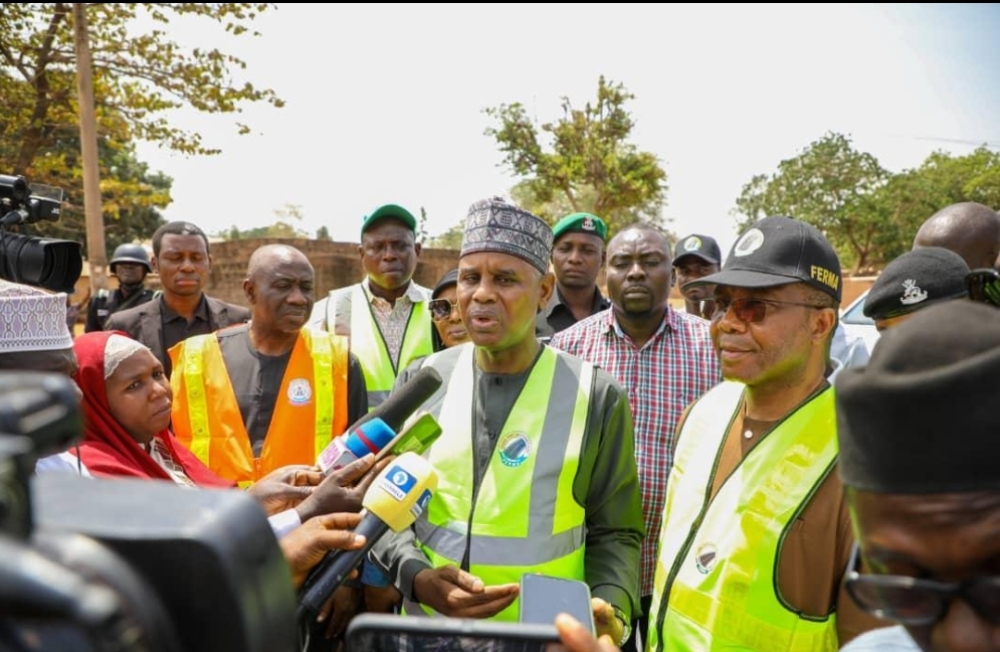
Minister Applauds FERMA Staff for Determination and Resilience The Minister of State for Works, Muhammad Bello Goronyo, Esq has complimented the determination and resilience of the management and staff of the Federal Roads Maintenance Agency (FERMA) in the discharge of their responsibilities. He stated this on Tuesday, 18th February, 2025, while addressing staff of the Agency in Lafia, headquarters of the North Central Zone, during a one-day familiarisation visit and inspection of ongoing works on the Keffi-Gitata-Shendam/Plateau State Border road in Nasarawa State. Goronyo acknowledged the resourcefulness of the FERMA’s personnel in fixing Nigeria's roads despite the inadequacy of annual budgetary allocations. He disclosed that pressures are being mounted on the Agency now, more than ever, from various quarters to maintain the roads despite the mergre resources. Goronyo cited as an example the Lokoja - Abuja Dual Carriageway, sections of which are in bad shape, prolonging travel time from 1 hour 30 minutes to 4 hours. In contrast, the Minister revealed that his journey from Abuja to Lafia was smooth, as well as joyful due to the good road. He said "This is hope being renewed and everybody must be on their toes. The President is determined to move the nation forward and we must support him to actualise his vision and mission." The Minister, who emphasised the determination of the Ministry of Works to resolve all the challenges being faced by the staff, stressed that they should ensure they sensitize the public against packing and abandoning vehicles, especially trucks on the roads. He also called on the Federal Road Safety Corps (FRSC) to support the Ministry’s efforts by safeguarding Federal roads across the country. He informed them that the Managing Director/CEO is addressing issues related to their welfare, while urging them to reciprocate the gesture by ensuring that the Agency continues to deliver on its mandate. The Minister added that the stakeholders across the country have been commending the Agency for their dedication and patriotism in maintaining Nigerian roads despite challenges of funding and security in some parts of the country. He noted that the Government alone cannot maintain all the roads due to the high level of deterioration, calling for a collective effort to ensure safer and motorable highways. Goronyo urged the road users, as well as benefiting communities to protect the infrastructure by not digging holes or creating demarcations. He added that President Bola Ahmed Tinubu, GCFR is ready and determined to ensure that all Nigerian roads are in good conditions for improved economy and assets. The Minister also reiterated the Federal Government's resolve to enhance road maintenance and urged all stakeholders to support the administration's initiatives aimed at achieving safe and durable roads, nationwide. Earlier in his remarks, the Managing Director/CEO, FERMA, Engr. Chukwuemeka Agbasiuu, Ph.d expressed his satisfaction with the progress of the rehabilitation projects in Nasarawa State. He reaffirmed the Agency's commitment to delivering high-quality roads and enhancing travel experience, in line with President Tinubu's Renewed Hope Agenda. Engr. Agbasi also guaranteed field workers training and retraining to equip them with 21st-century construction trends. He added that despite issues of insecurity in the North Central zone, they should not relent in their collective efforts to maintain Nigerian roads. He stated that FERMA is doing its best despite inadequate funding, stressing that it will soon take delivery of brand-new equipment, while the grounded ones would be repaired and put into use. Also, in his opening remarks, the Zonal Head of North Central II, covering Benue, Plateau, Taraba and Nasarawa States, Engr Halilu Umama highlighted the strategic importance of the region as a vital link between Northern and Southern Nigeria. He noted that many projects in the zone are being executed through direct labour between 2022 to 2024 and he outlined major challenges including the high costs of construction materials, equipment rental, low budgetary allocations, and road abuses such as the erection of illegal speed breakers and encroachments on Federal highways. In his Closing Remarks, the Federal Roads Maintenance Engineer for Nasarawa State, Engr. Aliu Muhammad voiced gratitude for the progress made in the past seven (7) months. He commended the leadership of the Ministry and that of FERMA for their commitment to improving road infrastructure and ensuring better conditions for field workers. ...
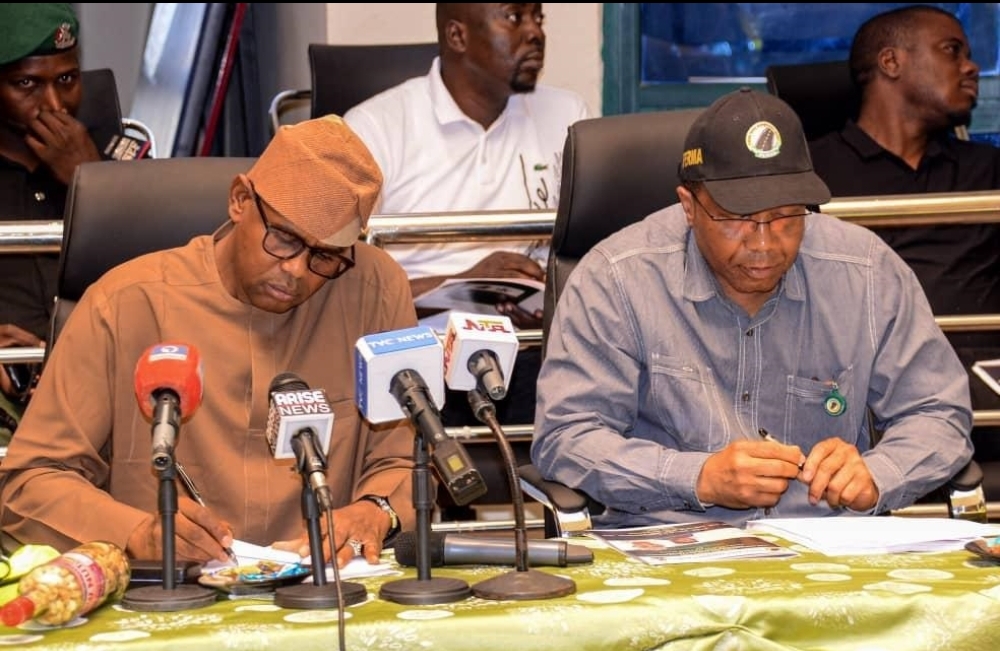
Over 35,000 Kilometres of Federal Roads Need Alternative Funding - Goronyo The Minister of State for Works, Muhammad Bello Goronyo, Esq has noted that over 35,000 kilometres of the Federal Government road network across Nigeria could not be funded through Annual Budgets alone, hence the need to source for alternative funding outside the government’s coffers. Goronyo stated this on Monday, 17th February, 2025, while addressing the Management and Staff of the Federal Roads Maintenance Agency (FERMA), Kogi State Field Office at Lokoja during a maiden visit alongside the MD/CEO, Engr Chukwumeka Agbasi. He reaffirmed that President Bola Ahmed Tinubu’s administration is determined to fix all the roads to ensure a drastic reduction in the level of unemployment, rate of crimes, and insecurity. According to him, " Let me commend President Tinubu, GCFR for his determination. I have never seen a President so committed to sustaining physical assets nationwide. The administration gives priority to various road projects scattered across the country. This shows that he is a patriotic Nigerian. He is undertaking these projects so that our economy can be improved, and the rate of unemployment, poverty, and crimes will be reduced. We are seeing the Super Highways from Ilelah to Sokoto to Badagry and another from Lagos to Calabar." Goronyo, who commended the staff of FERMA for their resilience and hard work over the years, noted that despite insecurity, and inadequate funding, Nigerians have been commending them for their excellent work. He urged them to bear with the Ministry of Works over their entitlements, disclosing that their requests for adjustment and increment in consequential salaries have been forwarded to the Salaries, Income, and Wages Commission for consideration and approval. Speaking further on funding for the maintenance of roads, Goronyo stressed that "about 35,000 kilometres of roads cannot be funded and maintained overnight. We have to look for alternative sources of funding so that we can continue to maintain our physical assets, which are the roads. We have to create new ways of funding and new alternatives. He assured that the Government is focused on ensuring that projects are completed in a timely and efficient manner with robust oversight and contractors’ compliance. He also added "I am calling on all of you to support us to ensure that President Bola Ahmed Tinubu succeeds in his mandate to deliver on the 8-point Renewed Hope Agenda. We must put Nigeria first before our interests. Let us fix our roads, we must think positively." Earlier, the Managing Director and Chief Executive Officer (MD/CEO) of FERMA, Engineer Chukwumeka Agbasi commended the Ministry of Works for its determination to ensure that the 8-point agenda of President Tinubu are realised, especially road projects across the country. He informed the Staff that before the end of the year, there would be an increment in their salaries and appealed to them to continue to support and partner with the Ministry to achieve their targeted goals. In his remarks, Engineer Muktar Abdurahim, the Officer in charge of the Kogi Field Office, informed the Minister that the office has thirty-seven (37) staff with 25 permanent and twelve (12) casual workers. He disclosed that Kogi State has sixteen (16) Federal Government roads with a total of 1,263 kilometres, emphasising that the 2024 nationwide flood incident did not affect any of the roads in the state. Engr. Abdulrahim revealed that out of six (6) roads under construction in the state, five (5) have been successfully executed, while one (1) is at 60% completion. He informed the Minister that they are facing challenges such as insecurity, and hyperinflation on the cost of construction materials, amongst others. Furthermore, the Director, North Central Zone I, Engr Omotayo Awodun commended the Federal Government’s commitment to fixing all the Federal roads across Nigeria, especially those in his zone, he also applauded the leadership style of the Honourable Minister of Works for his innovation, where new techniques and stricter supervision are being enforced, like what we are witnessing, today. ...

INFOQUEST NIG LTD WAS NEVER AWARDED ANY CONTRACT ON ABUJA- KADUNA ROAD AS FALSELY AND MALICIOUSLY REPORTED IN A PUBLICATION OF DAILY TRUST NEWSPAPERS OF 21/01/2025. -DAILY TRUST TO RENDER UNRESERVED APOLOGY TO FEDERAL MINISTRY OF WORKS FOR UNJUSTIFIABLE FALSEHOOD The Honourable Minister of Works, His Excellency, Sen. Nweze David Umahi CON has rebutted in strong terms the unwarranted, false, misleading, and damaging report published in Daily Trust Newspapers of 21st January 2025, which falsely represented the Federal Ministry of Works as having awarded a section of Abuja-Kaduna-Kano road dualization to Infoquest Nigeria Ltd. In a press conference held on 21st January 2025 at the Conference Hall of the Honourable Minister of Works and attended by the Honourable Minister of State for Works, Rt. Hon. Barr. Mohammed Bello Goronyo, the Permanent Secretary, Federal Ministry of Works, Engr. Folunso O. Adebiyi and key directors of the Ministry, the Honourable Minister, described as mischievous, insensitively misleading and injurious the statement credited to him in the said publication, where he was wrongly quoted to have said that Infoquest Nigeria Ltd secured a "No objection" of N252.89 billion from the Bureau of Public Procurement ( BPP) for the rehabilitation of a section Abuja- Kaduna- Zaria-Kano road and where they described the Ministry as having awarded the said contract to an obscure company. He made it clear that the Ministry had no business relationship with Infoquest Nigeria Ltd. He further made it known that the company that has a contractual relationship with the Ministry on the said project is Infiouest International Limited and that the company is corporately active and is absolutely in compliance with all legal requirements and regulations set by the Companies and Allied Matters Act. He berated the mischief created by the publication as a deliberate orchestration by a cartel to malign the Ministry, undermine the efforts of the Renewed Hope administration in revolutionizing road infrastructure development and demarket the company that has proven capacity in road construction. He demanded from Daily Trust Newspapers a public apology to the Federal Ministry of Works to be published in at least 5 national dailies for unjustifiably publishing falsehood against the Ministry of Works. The Honourable Minister also alluded to the mischiefs and deliberate misrepresentation of facts contained in the sponsored publications made in several national dailies by Julius Berger Plc recently on the reason why they reneged in their contractual obligations in respect of the section of Abuja-Kaduna-Zaria-Kano road they were handling before it was determined. He wondered why the coordinated onslaught of falsehood, blackmail, gangup by adversaries to the policy of government just because of the Ministry's insistence on a new order of value for money, quality assurance and best practices in project pricing and execution. He urged the public and the press to join in this desirable fight against national sabotage by some contractors. In his remarks, the Honourable Minister of State for Works said he was delighted by the proactiveness and resoluteness shown by the Ministry in decapitating the intentions of those who made the false publication against the Ministry which according to him was intended to distract the Ministry and undermine its confidence before Nigerians. He called on the media operators not to allow themselves to be used by the fifth columnists to publish unfounded reports to undermine the Renewed Hope agenda but should always crosscheck their information with the appropriate authority so as to let out only the truth to the public. In his vote of thanks, the Permanent Secretary described the press briefing as thoughtful and timely. He harped on the importance of development journalism and urged the media to always uphold the truth in their professional duties of information dissemination rather than allow themselves to be used as a tool in the hands of enemies of our national development. ...
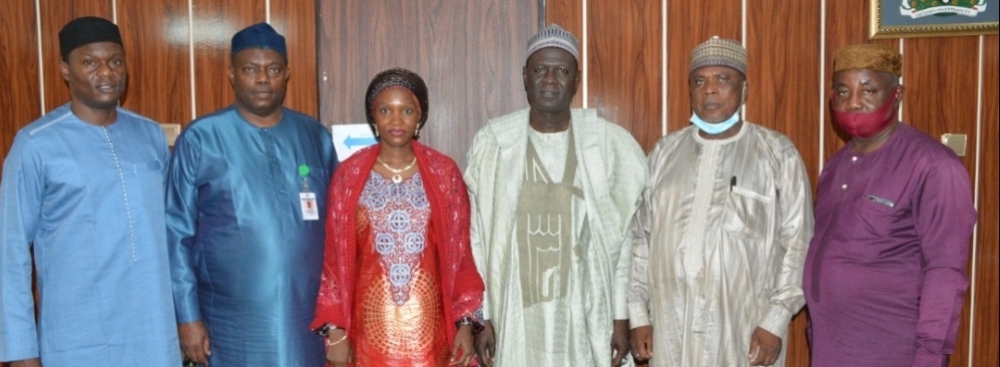
Works And Housing Staff Receives 2021 Public Service Awards
Four staffers of the Federal Ministry of Works and Housing have received 2021 Public Service Awards for diligence, commitment and dedication to service.
The recipients of the award were; Arc. Suara Akinola, Deputy-Director, Special Projects Unit, Engineer Ebere Izunobi, Assistant Director, Highway Planning and Development, Haruna Rakiya of the Public Building and Housing Development and Anemba Terhemeni of the Human Resources Management Department.
The Award was in commemoration of 2021 Public Service Week organized by the Office of the Head of the Civil Service of the Federation annually.
The Director Human Resources of the Ministry, Abdullahi Umar Utono presented the awardees to the Permanent Secretary of the Ministry, Babangida Hussaini, after they had been honoured by the Head of Service of the Federation at a ceremony in Abuja.
Receiving the awardees, the Permanent Secretary, Babaginda Hussaini congratulated and charged them to work harder in order to justify the award saying, “To whom much is given, much is expected.”
The Permanent Secretary described the award as an acknowledgement of one’s outstanding service to the Ministry in particular and the nation in general.
“Once you are recognized and awarded, you do not have a hidden place anymore. More is expected of you and please do not rest on your oasis.” He said.
Hussaini said that he was satisfied with their nomination for the prestigious award because he could attest to their competence and commitment to duty. “If I have to do the exercise again, I will select the same four officers for the award because they are tested and trusted,” he said.
In his remarks, the Director of Human Resources Management, Umar Utono said that the committee set up by the Ministry to evaluate nominees for the award did a thorough job in bringing up the four nominees for the award, adding that they were selected based on the input from their various Departments.
“Their selection met the criteria we look forward to in Civil Servants. We commend their contributions and urge them to work harder,” he said.
Utono also said that the award would serve as amotivation to other Civil Servants to work harder in order to benefit from subsequent awards.
Responding on behalf of the Awardees, the Deputy-Director, Special Project Unit, Arc. Suara Akinola thanked the Permanent Secretary for nominating them for award, saying that they will do more to justify his trust on them.
“It is a call to do more and I am pledging on behalf of the other awardees our total commitment to do more and that our selection for the award was not a mistake by the Ministry. We shall work harder to win more awards,” he said.
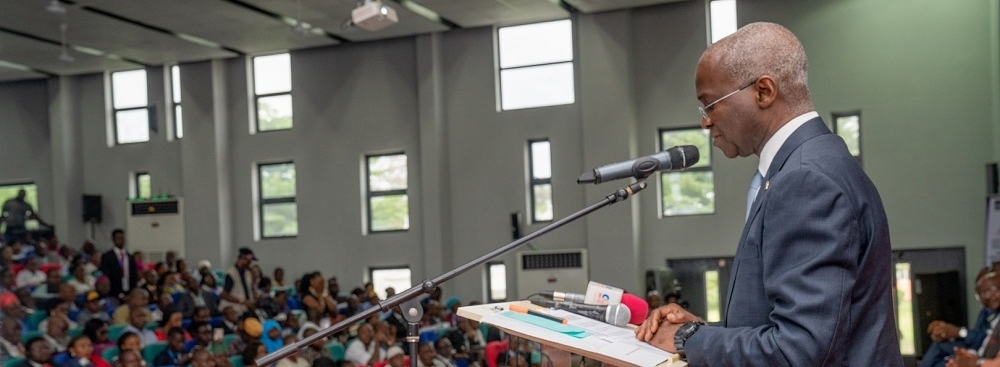
Driving National Development Through Research And Innovation, Being The Text Of Keynote Address Delivered At The Lagos State University’s 1st Research Fair And Endowment Of Research
It is fit and proper to start by expressing my appreciation to my host, Professor Olanrewaju A. Fagbohun, SAN, the Vice Chancellor and by extension the LASU university community, for inviting me to speak at this RESEARCH FAIR AND ENDORSEMENT OF RESEARCH GRANTS FUND.
The theme of conversation is “Driving National Development through Research and Innovation” as chosen by the DIRECTORATE OF RESEARCH MANAGEMENT AND INNOVATION.
I consider it eminently well- conceived at this time when we are confronted with several choices about what to do, to overcome our developmental challenges and what to do in order to propel ourselves to the Nigeria of our collective dreams.
Let me say that I entertain no doubt about the possibilities and promise that lie ahead of Nigeria.
The question therefore for me has never been whether Nigeria will fulfil and realize her promise; on the contrary the question has been when it will happen.
Therefore, I have always held the view that there is nothing wrong with Nigeria; and that what perhaps has been wrong, are some of the things we have done or failed to do, and when we have done them or failed to do them.
In other words, what has or have informed our decision making or choice making processes, have we measured the impact or consequences of what we have done or failed to do?
Have we monitored how our choices have impacted our journey of national development?
This is the context in which I seek to speak about “Research” and “Innovation” which is the theme of this research fair.
What is “Research” and what is “Innovation”?
These are the opening questions I pose and seek to answer; and by so doing, I hope to link them to our national development and hopefully relate them to a few cases of study and conclude with my own humble recommendations.
The Oxford Advanced Learner’s Dictionary defines “Research” as:
“a careful study of a subject …in order to discover new facts or information about it.”
And “Innovation” as:
“the introduction of new things, ideas or ways of doing something…”
With these working definitions, I will proceed to make a connection between research, innovation and national development; by reference to some things that we all know.
We all know that All Progressive Congress (APC) and President Muhammadu Buhari won in 2015 by defeating an incumbent president in an unprecedented election.
Has any university or research institution conducted a research (published); that is a “careful study” of why Nigerians voted for President Buhari’s message of:
* Tackling Insecurity
* Growing the economy
* Fighting corruption?
I have chosen to start with our democracy and election, because they have consequences on national development.
I know of no published work by any Nigerian university that answered the question. But I know how President Buhari came up with that message.
The answer is simple. The APC when it was formed chose to innovate.
In other words, as shown from our definition, APC chose to introduce a new thing or idea or way of doing something – contesting an election in Nigeria.
APC chose to research, that is, to conduct a careful study of a subject, our election. I was involved in the process at a very high level, as chair of the Strategy Committee in 2014. We commissioned a study of what the Nigerian people wanted.
We used a sample size of 20,000 people and administered 60 (sixty) questions to each person on a questionnaire in face to face interviews.
It took months, and cost money, (and I will come to this later because this is not only a “Research Fair” but also an Endowment of Research Grants Fund) but the rewards of success at the election more than justified it.
The outcome of the research showed that majority of those interviewed were not happy about:
* Security in the country (Insurgency and Bombing)
* The economy that was said to be growing and leaving people behind (jobless growth)
* The way issues of corruption were being handled.
Working with data analysts, we used the data from questions 1,200,000 (60 x 20,000) to craft an electoral message that responded to the front burner considerations of the electorate.
This is one example of research and innovation in relation to national development.
The other examples I will share relate to events in Lagos.
They are Oshodi Clearing; and the Lekki Expressway Toll Plaza contrasted with the Lekki Link Bridge Toll Plaza.
OSHODI
Many commuters around the Oshodi Area would remember how difficult it was to commute through the area.
Those who needed to use the airport had become accustomed to leaving home many hours ahead than was necessary, only because the traffic and commuting experience had become a nightmare.
The Lagos State government under my tenure was committed to solving the problem.
We sent a study team there to ascertain the cause of the gridlock.
We found that it was about 500 traders who chose the rail line as their market that were largely responsible for the problem.
They come from many states within Nigeria and from outside Nigeria.
Pedestrians crossing the Agege Motor road were also an impediment to free flow of traffic.
The impact of the gridlock was not limited to commuters, it affected property owners in the nearby Ikeja GRA, whose property values were diminishing and some of who were relocating to other parts of the state.
The gridlock also affected;
* Healthcare
(a) Because there was high carbon mono-oxide Pollution from vehicular fumes causing upper respiratory tract infections;
(b) Improper waste management led to vector settlements of rats and roaches who transmitted disease;
* Safety
(a) Because the large static population led to high crime incidents of robbery, rape, assault and sometimes murders;
Our study results recommended:
* Relocation of the traders, so we built a new market in Isopakodowo
* Separation of pedestrians from motorists so we built a new pedestrian bridge
* Crime deterring aids, so we installed street lights in Oshodi
The results were transformative.
* Traffic moved
* Crime rates dropped when we checked with the Oshodi Police Station and compared incidents before and after
* Property values steadied and rapidly rose in GRA Ikeja as reported by estate valuers
* Incidents of vector borne diseases reduced as reported by our teaching hospital LASUTH.
People wondered aloud how we achieved such a feat where no gun shot was fired or life lost or indeed anybody injured.
The answer is simple, we researched and we innovated. Again, it took time and cost money but it led to development.
And please bear in mind that I am not aware that any university has published any results of research on Oshodi before and after we intervened.
LEKKI EXPRESSWAY AND LEKKI LINK BRIDGE TOLL PLAZAS
Not a few will recall that the Lekki Expressway was in some state of disrepair before 2007 when the Lagos State government chose to reconstruct the 60km highway using private sector funds and concessioning the road.
This was itself innovative because that made it the first government owned road to be funded by private capital in West Africa.
There was also some study, which meant that innovation accompanied research. But one item that was probably not studied at all or enough was how people will react to the payment of tolls.
I say this because, there were town hall meetings with the residents and I recall there were town hall meetings held at the Lagoon restaurant and in the Governor’s office involving some property owners and chieftaincy families along the corridor.
They received the project information enthusiastically but we never discussed how much the toll would cost and their willingness to pay.
Needless to reiterate, the protests that greeted the commencement of tolling have now been well documented to bear repetition.
It was a useful lesson that served us in good stead when the Lekki Link Bridge tolling was commenced a few years later.
While the Lekki Link bridge was under construction and nearing completion, we commissioned a study about people’s willingness to pay and how much they were willing to pay.
The results informed the pricing of the toll and when the bridge opened there was no protest about the cost.
As you probably all know, the bridge has become a favourite destination for pedestrians and vehicle owners alike.
Our study showed amongst others that the crossing from Lekki to Ikoyi took 3 minutes approximately to traverse, without traffic if you use Link bridge, and over 20 minutes if you went through Falomo to the same point where the bridge lands on Alexander Avenue Ikoyi.
These are just a few examples of research and innovation in the Transportation sector of national development, -
There have been others in my time in government, such as
* The cost of Electric power using generators as compared with taking power from DisCo;
* The number of vehicles traversing various highways in Nigeria;
* The difference in journey and travel times on major highways before and during the Buhari government intervention on road infrastructure and
* The type of housing that Nigerians in different states will accept to live in, to mention a few.
I must not fail to mention the selfless work of Professor Olumide Olusanya whose research and Innovative recommendations led to the creation of the MUSON under pass at Onikan to relief traffic.
But I will proceed to now raise questions about innovation and research in other areas of our compelling national challenges;
* Security
* Health
* Education
* Economy
Why is there no published research about the pattern and morphology of our security challenges with results offering different solutions and new ideas by way of innovation to overcome these challenges?
Why have all the experts focused only on law enforcement capacity and resourcing, which are important?
Has its occurred to us that we are not just dealing with crime but with organized crime?
Has it occurred to us that our security challenges are providing vast economic rewards for those who organise to hurt us and that there is a lot we can do to support government and protect ourselves?
I have just completed a paper on this subject which I will publish soon.
Have we commissioned any study about the decade long industrial disputes in different parts of the country and how they affect:
* Health care delivery
* Education quality
* National productivity and our economic development?
There are vast areas of activity for research and innovation which I commend for consideration.
This is what many universities do across the world and these are Thesis subjects for the award of degrees and very valuable data from which universities raise money by selling the data to private and public institutions.
This is how knowledge centres (like universities) contribute to national development, and as they say, this is how the gown meets the town.
We have heard statements from unverified data that:
* Nigeria has a 17 million housing deficit
* Nigeria has 10 million children out of school
* Nigeria has a 200 million population
While there are challenges with housing supply, is the problem the same in rural and urban centres or only in the latter?
With the 2006 census popularly discredited and judicially annulled in about 11 local governments in Lagos State by the census tribunal, how can these figures be anything more than uneducated guesses or extrapolation?
Yet we seem to have accepted these figures without question.
National development through the provision of adequate facilities, sufficient infrastructure, adequate manpower such as teachers, doctors, nurses and other medical staff will struggle without verifiable data.
As they say, you cannot manage it, if you cannot measure it.
You might be interested to know that while there is a shortage of housing, there are also empty, and unoccupied buildings in almost every major city in Nigeria. Are these factored into the deficit?
How many people in the public and private sector who go to work from 8a.m to 4p.m, a period of 8 hours, actually do 4 hours productive work each day?
How does this affect national productivity and economic growth and what would Nigeria’s story be like if everybody actually worked for 4 hours only i.e. 50% of the contrasted time?
How many of us have taken time to advance the innovative works of Professor Olikoye Ransome-Kuti and Professor Babatunde Fafunwa on primary preventive healthcare and mother-tongue instruction in basic education.
Have we considered the impact on our children, of our mode of teaching by giving instructions, dictating notes by way of their getting used to taking instructions?
Have we studied what can happen if we start teaching them to solve problems by working in groups to stimulate their creativity and stir their curiosity?
Is this connected in anyway with why all of us are waiting for a messiah type leader to tell us how to solve our problems, when we can be the solution if we were trained to solve problems?
Can we study and develop solutions to monitor every item of fertiliser, anti-microbes, and other ingredients used to grow food on each farm?
Can we develop solutions to identify each yam produce; Which day it was planted; When it was harvested; Which farm it came from and the soil component as to make it acceptable for export to and consumption in every part of the world.
Before I go to how to fund research and innovation, let me deal with some specific issues: -
(a) Brookings Institute Report on Global Poverty.
Let me be clear that my comments do not suggest that there is no poverty : Poverty is a global phenomenon which every society tries to manage and reduce. But given what I know about India and Nigeria I was curious about the conclusions that “ Nigeria is the Poverty Capital of the World.”
I commissioned some checks on the report and I found out that:
According to World Data Lab’s Poverty Clock, about 90 million people in Nigeria live in extreme poverty. In monetary terms, the World Poverty Clock defines poverty as living on less than $1.90 per day. In effect, anyone living on less than N684 is living in extreme poverty.
The Report has been criticized by different countries and experts on the way it measured poverty in terms of earnings-per-day benchmark. The following are some of the limitations of the report as admitted by the researchers themselves.
1. Baseline
In arriving at its conclusion, the Clock used baseline data for 2013 and forecast assumptions. In other words, the report did not take into consideration the economic interventions that have taken place between 2014 and 2015.
2. Basis of the Report
The report also used the General Household Survey from 2012/2013 and not the Harmonized Living Standards Survey. The reason for the adoption of GHS is that “it is more recent and believed to be of higher quality.”
3. Challenges of Estimating Poverty
The report also admitted that “the challenges in estimating poverty in Nigeria stem from the fact that Nigeria is not a homogenous country. There are distinct differences in economic conditions between the South and the North. National averages conceal these differences and surveys are not sufficiently representative at the State level to draw firm conclusions.”
4. Effect of Civil Unrest
The Report also admitted the effect of civil unrest impacted the study. In its methodology it admitted that: “Nigeria has also been suffering from civil unrest and conflict in selected Northern areas where Boko Haram has been active.” Despite the fact that it recognized that: “such unrest will indubitably have a negative impact on poverty,” it downplayed its impact by stating that “…but there is insufficient data to quantify this.”
(b) While I was concluding this paper, two (2) reported research results caught my eye which are worthy of mention:
i) On 28th August, 2019, Sky News announced the results published by University College London about Smoking Habits in England over a period spanning 2011 – 2018. It showed that there was a drop of 24.4 % in the number of Cigarettes smoked and a 21.1 % drop in the sale of cigarettes.
These are useful numbers to review the impact of policies made to improve Healthcare and prolong life.
* On the same date TVC News in Nigeria announced the result of Research by the University of Jos, of the production of an Anti – Snake Venom from plant Seeds with no Side Effects. This is ground breaking to prevent loss of lives from Snakes bites in that part of the Country where such incidents are reportedly frequent.
(c) Finally on this point, I wish to share the Report of a study about Ethnic and Religious division which I commissioned in 2017 and repeated in 2018 at a time, when the conversations about “how divided we were” along these lines were gaining momentum and Restructuring was to be the cure.
72% of those surveyed chose to identify themselves first as Nigerian Citizens, 11% chose their Religious Identity, 9% chose their Clan or Tribe, 5% chose their Regional Identity and 2% chose their ethnic group.
How to fund Research and Innovation
Distinguished ladies and gentlemen, I could go on, but I think I have made the case about the compelling opportunities for research and innovation in our day to day life, without even going into more detailed specialities like medicine, information technology, automobile engineering, to mention a few.
The next question of cause will be how will all these be funded?
The truth is that data gathering, which is the result of studies and research is already a big global business and Nigeria is not left behind.
As I have shown earlier, while in Government, our Government in Lagos commissioned several studies and paid the companies for them.
Although we used several companies, one of them was owned by Idowu Sobowale , a professor from LASU, whose reports helped in decision making during my campaign for the office of governor in 2007 and in preparing our first budget in 2008 based on a study of what the people wanted.
Today, many conglomerates are paying good money to research and data firms for information about consumers to help them stay ahead of their competition.
This is one area of possible funding.
Many of these companies are not likely to be aversed to funding endorsements to fund research; and I recall that during my time the Lagos State Government made a provision in one year’s budget to the tune of N1 billion to fund various areas of research but this was in the last year of my second term.
1. Endowment of Professorial Chair
The time has come to develop framework for healthy collaboration between the gown and the town. Gown in this case being university, and town representing the industry. Universities are factories for ideas, they are centres of innovations and researches. Our universities need to develop products and services that are useful not only for academic purposes but which are also useful for industrial and commercial purposes. A country’s GDP is a reflection of its product.
Annually, the National Academy of Inventors publishes a list of top 100 worldwide universities granted by the United States Utility Patents. The essence of the list is to underscore the fundamental role of universities as a laboratory of functional ideas. In the words of the President of the Academy, Paul Sandberg, “the patents our universities produce represent important processes and collaborations which have the potential to make a significant impact on society on a local, regional, national and global scale.”
One of the ways universities in Nigeria can get into this competitive list of owners of patent is by encouraging industries to see the utilities and values of their researches and innovations. The industries can also encourage universities to undertake researches that can add value to their own businesses. This can be done through Endowment of Professorial Chair by individuals and institutions.
In some universities, quite a number of professors you are likely to meet are holders of professorial chairs endowed by individuals and corporations. The Nigerian historian, Prof Toyin Falola, for instance, is Jacob and Frances Sanger Mossiker Professor. John N. Parden, the author of Muhammadu Buhari: The Challenges of Leadership in Nigeria is Clarence Robinson Professor of International Studies.
The time has therefore come to start having endowed professorial chairs in LASU and other universities in Nigeria.
And, this is a win-win situation for all the parties. For the company that endows a chair in LASU, it is certainly a way of positively branding the company. Thus, anywhere Prof Lanre Fagbohun, SAN is mentioned, his professorial chair will be mentioned alongside the name. Any paper he writes or delivers will have the name of the company in bold print. For example, Prof Lanre Fagbohun, SAN, XYZ Bank Professor of Commercial Law.
Such endowment will also underscore the company’s corporate social responsibility as a citizen with bias for intellectual researches.
More importantly, it is an avenue for the donor institution to specifically use the endowment to address a particular research issue that may add value to its business or provide a solution to a social problem. By way of example, a Chief Ajayi Ojo Professorial Chair in Public Transportation might have as part of its terms of reference, researches into challenges of intermodal transportation in Lagos State. You can therefore imagine the multiplier effect of a single endowment.
2. Endowment and Taxation
The good news about donations and endowments to universities in Nigeria is that it is tax deductible! That means that for the purpose of ascertaining the profit or loss of a company, the company is allowed to deduct the amount of any donation made to statutorily approved institutions. This is by virtue of section 25 of the Companies Income Tax Act. And for your information, universities are expressly mentioned in the 5th Schedule to the Act.
I consider this as a big incentive to encourage corporate bodies to donate, out of their profits, to charitable causes of which education is certainly one.
3. Higher Education and Research Act
One holistic way of addressing the challenge of research and innovation is through legislative intervention. If we may borrow a leaf from the United Kingdom, there is a need for a legislation similar to the Higher Education and Research Act. As you are no doubt aware, it is this law that set up the United Kingdom Research and Innovation. One of the core mandates of UK Research and Innovation is to facilitate, encourage, and support research into science and technology, humanities and new ideas.
With such a body in Nigeria, there will be a specialized fund dedicated to supporting research infrastructure in institutions of higher learning across the country. This will also assist us as a country to benchmark our investment in Research and Development against our GDP. The reality is that there is a direct relationship between a country’s GDP and the investment in R&D.
We already have such an intervention body in the Tertiary Education Trust Fund (TETFUND). TETFUND’s enabling law can be amended to ensure that it is made to focus on funding researches and innovations.
The Chairmen of the Senate and House of Representatives Committees of the National Assembly on Science, Technology and related fields can be approached to initiate such legislation
These are matters over which State House of Assemblies also have powers, being under the Concurrent list in item 21 and 22 of Part II of the second schedule of the 1999 Constitution.
4. LASU Alumni Endowment Fund
As a university, LASU today has produced an uncountable number of alumni who have gone to excel in various fields. The university has produced leaders at national and sub-national levels. You have produced leaders in entertainment. You have produced celebrated writers and thinkers. If charity begins at home, endowment must also begin with alumni.
Most universities in other climes have bodies incorporated for the sole purpose of managing its endowment fund. The Princeton University Investment Company is the vehicle set up to manage endowment funds of Princeton University. In 2013, Yale’s Endowment generated 12.5% return which translates to an investment gain of $2.29 billion. Between 2003 and 2013, Yale Endowment grew from $11.03 billion to $20.78 billion.
As an institution, does LASU have a comprehensive database of its alumni from inception to date? Do we engage with these alumni? Do they see themselves as an extension of the school? There must be a strategic arrangement to leverage on the alumni network for the purpose of endowment funding.
5. Student Engagement
I understand that this year, LASU graduated over 14,000 students. This is an impressive figure by any standard. More than half of this number will be productively engaged in the next few years. In a decade, a substantial number of them would have become middle-level officers in whatever field they are in. If we are strategic about it, year in and year out, we can continue to have a ready pool of alumni who will be interested in contributing their quota to the development of the school that produced them. Many old students are always proud to sport their school ties, lapels, scarfs, colours and other symbols representative of their school.
6. Charities and Not-For-Profits
Another veritable source of funding for research and innovation is the values embedded in charitable organizations and institutions. As you are aware, companies limited by guarantee are statutorily charitable in their essence. The Corporate Affairs Commission has a database of these companies. Many of them have educational improvement as part of their objectives. With proper coordination, they can be a viable partner in providing funds for researches and innovations.
Ladies and Gentlemen, these are my thoughts and recommendations on Research, Innovation , our National Development, the opportunities, and how to optimize them.
Thank you for listening.
Babatunde Raji Fashola, SAN
Honourable Minister of Works and Housing
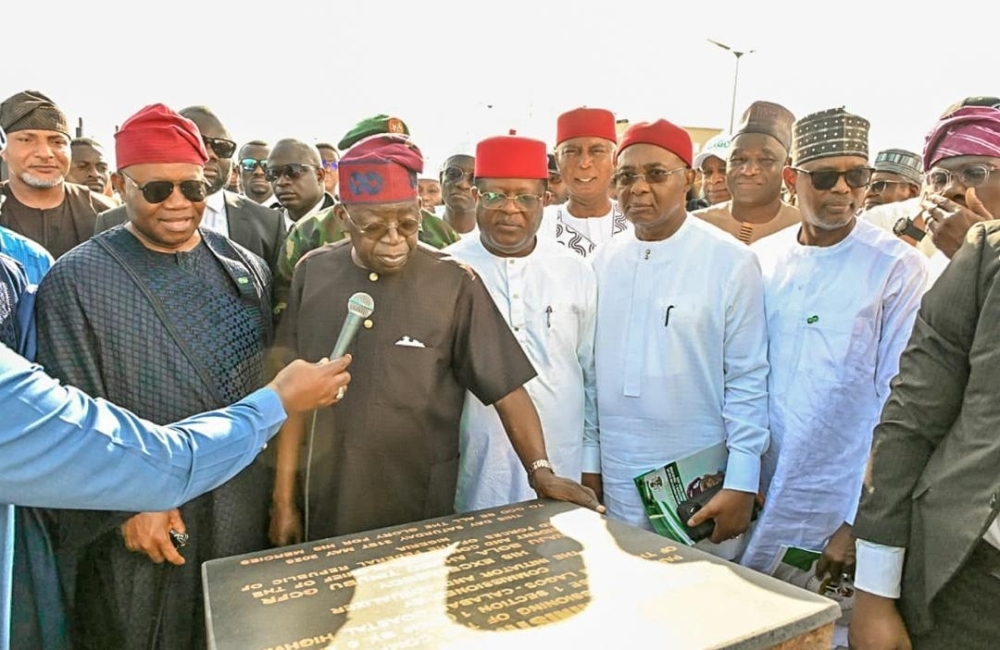
DRIVING NIGERIA’S FUTURE: CELEBRATING TWO YEARS OF TRANSFORMATIVE LEADERSHIP AND THE LAGOS-CALABAR COASTAL HIGHWAY MILESTONE
DRIVING NIGERIA’S FUTURE: CELEBRATING TWO YEARS OF TRANSFORMATIVE LEADERSHIP AND THE LAGOS-CALABAR COASTAL HIGHWAY MILESTONE
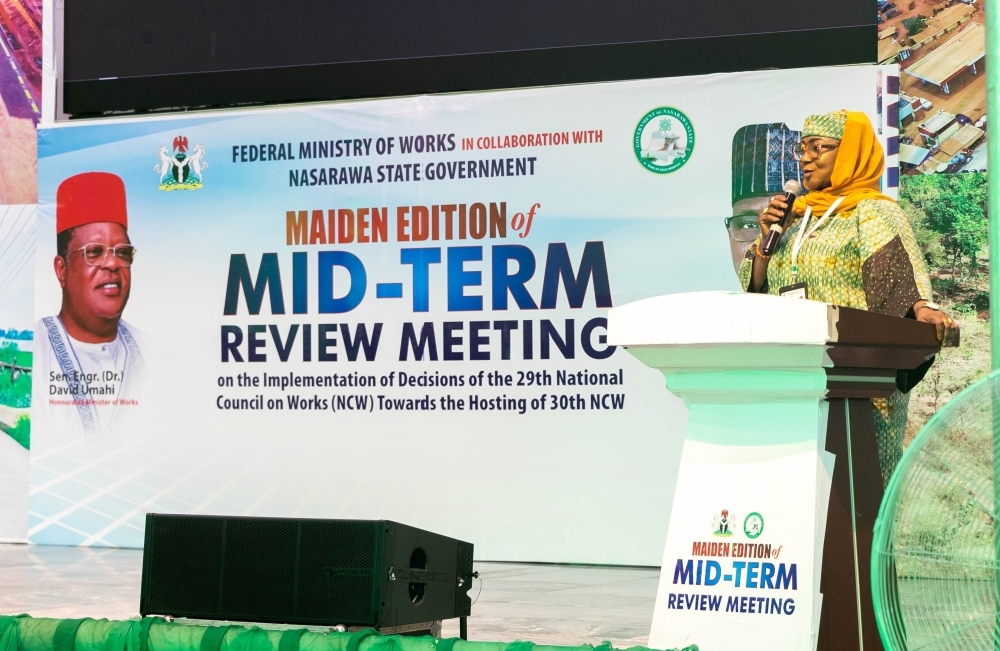
MID -TERM REVIEW MEETING ON THE IMPLIMENTATION OF THE DECISIONS REACHED AT THE 29TH NATIONAL COUNCIL ON WORKS (NCW) DAY 1
MID -TERM REVIEW MEETING ON THE IMPLIMENTATION OF THE DECISIONS REACHED AT THE 29TH NATIONAL COUNCIL ON WORKS (NCW) DAY 1