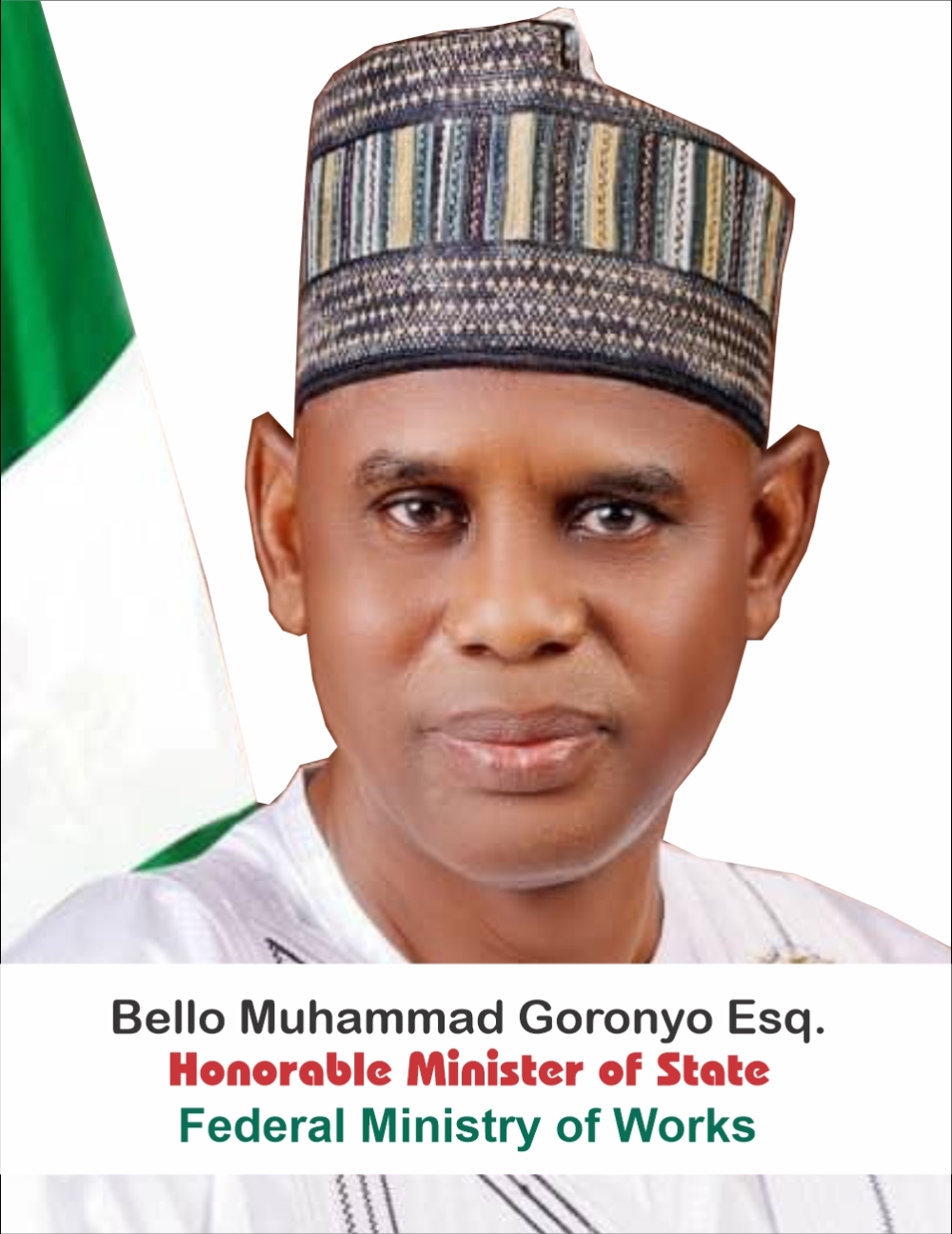
GORONYO COMMENDS SOKOTO GOVERNOR FOR DONATING 10 HILUX VEHICLES TO STRENGTHEN SECURITY ALONG SOKOTO–BADAGRY SUPERHIGHWAY
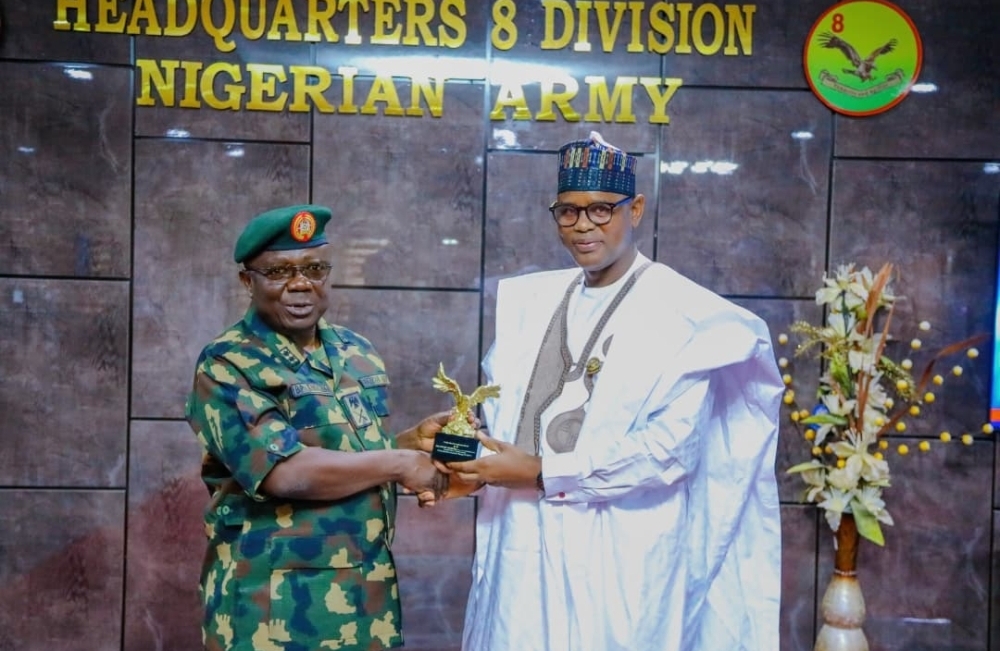
The Honourable Minister of State for Works, Rt. Hon. Bello Muhammad Goronyo, Esq., has commended the Governor of Sokoto State, Dr. Ahmed Aliyu Sokoto, PhD, for donating 10 operational Toyota Hilux vehicles to strengthen security operations along the Sokoto–Badagry Superhighway and other strategic infrastructure corridors.
The vehicles were formally commissioned and handed over to the Nigerian Army at the Headquarters of the 8 Division, Nigerian Army, Sokoto, on Thursday, October 8, 2026, by the Honourable Minister of State for Works, on behalf of the Honourable Minister of Works, Engr. David Nweze Umahi, CON, FNSE.
The donation is expected to enhance the operational capacity of military personnel and other security agencies responsible for protecting construction workers, contractors, equipment and host communities along the highway corridor.
Speaking during the ceremony, Goronyo described the donation as a demonstration of the Sokoto State Government’s commitment to national development and the successful implementation of President Bola Ahmed Tinubu, GCFR’s Renewed Hope Agenda, particularly its landmark infrastructure projects.
The Minister emphasised that the Sokoto–Badagry Superhighway represents a long-standing national infrastructure vision that dates back several decades, with its conception traced to the era of former President Shehu Shagari in the 1970s. However, the vision remained unrealised for decades until the administration of President Bola Ahmed Tinubu, GCFR, initiated the construction of the 1,068-kilometre highway in October 2024.
He described the project as a significant step towards translating a historic aspiration into tangible infrastructure that will connect communities, expand economic opportunities and strengthen national integration.
According to Goronyo, President Tinubu’s commitment to the project demonstrates the Federal Government’s determination to bridge critical infrastructure gaps and improve connectivity between northern and southern Nigeria.
He noted that the superhighway, which traverses Sokoto, Kebbi, Niger, Kwara, Oyo, Ogun and Lagos states, is designed to facilitate the movement of people and goods, reduce transportation costs, stimulate trade, create employment and open up new economic opportunities along its route.
The Minister added that the highway would improve access to markets, schools, healthcare facilities and other essential services while supporting agriculture, commerce, industry and the development of communities across the corridor.
He stressed that the successful delivery of the project would require sustained commitment, effective coordination and cooperation among the Federal Government, state governments, security agencies, contractors and host communities.
Goronyo maintained that effective security remained essential to the timely and successful completion of the Sokoto–Badagry Superhighway. He explained that the provision of operational vehicles would strengthen the mobility and response capabilities of security personnel deployed to safeguard the project and its surrounding communities.
The Minister highlighted other strategic infrastructure projects being undertaken by the Federal Government, including the Lagos–Calabar Coastal Highway, the Calabar–Abuja/Trans-Saharan corridor, the Akwanga–Jos–Bauchi–Gombe corridor, the Abuja–Kaduna–Zaria–Kano route and the Zaria–Gusau–Sokoto corridor.
He explained that these projects form part of the Federal Government’s broader commitment to developing an integrated road network capable of supporting commerce, strengthening inter-state connections and accelerating national economic growth.
Rt. Hon. Goronyo further noted that the use of continuously reinforced concrete pavement on the Sokoto–Badagry Superhighway was intended to provide durable road infrastructure capable of serving Nigerians for decades. He added that complementary environmental and safety measures, including tree planting and solar-powered street lighting where provided for in the project, would contribute to environmental sustainability, visibility and road safety.
Goronyo commended the Nigerian Army and other security agencies for their resilience, professionalism and sacrifices in protecting lives, property and critical national infrastructure. He acknowledged the difficult conditions under which security personnel operate and urged them to remain steadfast in carrying out their constitutional responsibilities.
The Honourable Minister also expressed deep condolences to the Nigerian military over the reported loss of personnel in a bandit attack while on official duty the previous day. He described the loss as painful and extended his sympathy to the affected personnel, their colleagues and bereaved families, while praying for the peaceful repose of the departed and strength for their loved ones.
He further acknowledged the support of the National Security Adviser in addressing security challenges associated with the project, particularly through assistance and coordination aimed at strengthening security operations along the highway corridor.
Reaffirming his commitment to the Federal Government’s infrastructure development agenda, Goronyo said the Ministry of Works would continue to support the implementation of strategic projects under President Tinubu’s leadership, working in collaboration with relevant stakeholders to ensure their successful delivery.
He expressed optimism that the continued implementation of the Federal Government’s development programmes would bring lasting benefits to Nigerians, while acknowledging the complementary role of the Sokoto State Government in supporting infrastructure development and security.
In his remarks, the General Officer Commanding (GOC), 8 Division, Nigerian Army, Sokoto, Major General Bengba Paul Koughna, expressed appreciation to the Federal Government, the Federal Ministry of Works and the Sokoto State Government for the donation of the 10 Hilux vehicles.
The GOC noted that the vehicles would significantly enhance the operational mobility and response capabilities of troops deployed along the highway corridor, particularly across the approximately 440-kilometre section extending through Sokoto and Kebbi states.
He explained that troops conduct regular patrols and maintain multiple deployment points along the corridor, making the additional vehicles a valuable boost to their operational effectiveness.
He assured the Minister that the vehicles would be deployed appropriately to support security operations and protect construction workers, contractors, equipment and other stakeholders involved in the project.
The GOC also commended the representative of Hitech Construction Company, retired General Sa'ad Abubakar, for the company's involvement in the project.
The event was attended by retired Assistant Inspector-General of Police (AIG) Aliyu Garba, officials of the Federal Ministry of Works, representatives of the Sokoto State Government and other stakeholders.
The donation underscores the importance of sustained collaboration among the Federal Government, state governments, security agencies, contractors and host communities in addressing security challenges and ensuring the safe and timely delivery of strategic infrastructure projects.
The Federal Ministry of Works reiterates its commitment to working with all relevant stakeholders to protect national infrastructure and advance the objectives of President Bola Ahmed Tinubu, GCFR’s Renewed Hope Agenda for sustainable economic growth and development.

GORONYO COMMENDS SOKOTO GOVERNOR FOR DONATING 10 HILUX VEHICLES TO STRENGTHEN SECURITY ALONG SOKOTO–BADAGRY SUPERHIGHWAY The Honourable Minister of State for Works, Rt. Hon. Bello Muhammad Goronyo, Esq., has commended the Governor of Sokoto State, Dr. Ahmed Aliyu Sokoto, PhD, for donating 10 operational Toyota Hilux vehicles to strengthen security operations along the Sokoto–Badagry Superhighway and other strategic infrastructure corridors. The vehicles were formally commissioned and handed over to the Nigerian Army at the Headquarters of the 8 Division, Nigerian Army, Sokoto, on Thursday, October 8, 2026, by the Honourable Minister of State for Works, on behalf of the Honourable Minister of Works, Engr. David Nweze Umahi, CON, FNSE. Speaking during the ceremony, Goronyo described the donation as a demonstration of the Sokoto State Government’s commitment to national development and the successful implementation of President Bola Ahmed Tinubu, GCFR’s Renewed Hope Agenda, particularly its landmark infrastructure projects. The Minister emphasised that the Sokoto–Badagry Superhighway represents a long-standing national infrastructure vision that dates back several decades, with its conception traced to the era of former President Shehu Shagari in the 1970s. However, the vision remained unrealised for decades until the administration of President Bola Ahmed Tinubu, GCFR, initiated the construction of the 1,068-kilometre highway in October 2024. He described the project as a significant step towards translating a historic aspiration into tangible infrastructure that will connect communities, expand economic opportunities and strengthen national integration. According to Goronyo, President Tinubu’s commitment to the project demonstrates the Federal Government’s determination to bridge critical infrastructure gaps and improve connectivity between northern and southern Nigeria. The Minister added that the highway would improve access to markets, schools, healthcare facilities and other essential services while supporting agriculture, commerce, industry and the development of communities across the corridor. Goronyo maintained that effective security remained essential to the timely and successful completion of the Sokoto–Badagry Superhighway. He explained that the provision of operational vehicles would strengthen the mobility and response capabilities of security personnel deployed to safeguard the project and its surrounding communities. The Minister highlighted other strategic infrastructure projects being undertaken by the Federal Government, including the Lagos–Calabar Coastal Highway, the Calabar–Abuja/Trans-Saharan corridor, the Akwanga–Jos–Bauchi–Gombe corridor, the Abuja–Kaduna–Zaria–Kano route and the Zaria–Gusau–Sokoto corridor. Rt. Hon. Goronyo further noted that the use of continuously reinforced concrete pavement on the Sokoto–Badagry Superhighway was intended to provide durable road infrastructure capable of serving Nigerians for decades. He added that complementary environmental and safety measures, including tree planting and solar-powered street lighting where provided for in the project, would contribute to environmental sustainability, visibility and road safety. Goronyo commended the Nigerian Army and other security agencies for their resilience, professionalism and sacrifices in protecting lives, property and critical national infrastructure. He acknowledged the difficult conditions under which security personnel operate and urged them to remain steadfast in carrying out their constitutional responsibilities. The Honourable Minister also expressed deep condolences to the Nigerian military over the reported loss of personnel in a bandit attack while on official duty the previous day. He described the loss as painful and extended his sympathy to the affected personnel, their colleagues and bereaved families, while praying for the peaceful repose of the departed and strength for their loved ones. He further acknowledged the support of the National Security Adviser in addressing security challenges associated with the project, particularly through assistance and coordination aimed at strengthening security operations along the highway corridor. Reaffirming his commitment to the Federal Government’s infrastructure development agenda, Goronyo said the Ministry of Works would continue to support the implementation of strategic projects under President Tinubu’s leadership, working in collaboration with relevant stakeholders to ensure their successful delivery. He expressed optimism that the continued implementation of the Federal Government’s development programmes would bring lasting benefits to Nigerians, while acknowledging the complementary role of the Sokoto State Government in supporting infrastructure development and security. In his remarks, the General Officer Commanding (GOC), 8 Division, Nigerian Army, Sokoto, Major General Bengba Paul Koughna, expressed appreciation to the Federal Government, the Federal Ministry of Works and the Sokoto State Government for the donation of the 10 Hilux vehicles. The GOC noted that the vehicles would significantly enhance the operational mobility and response capabilities of troops deployed along the highway corridor, particularly across the approximately 440-kilometre section extending through Sokoto and Kebbi states. He explained that troops conduct regular patrols and maintain multiple deployment points along the corridor, making the additional vehicles a valuable boost to their operational effectiveness. He assured the Minister that the vehicles would be deployed appropriately to support security operations and protect construction workers, contractors, equipment and other stakeholders involved in the project. The GOC also commended the representative of Hitech Construction Company, retired General Sa'ad Abubakar, for the company's involvement in the project. The event was attended by retired Assistant Inspector-General of Police (AIG) Aliyu Garba, officials of the Federal Ministry of Works, representatives of the Sokoto State Government and other stakeholders. The Federal Ministry of Works reiterates its commitment to working with all relevant stakeholders to protect national infrastructure and advance the objectives of President Bola Ahmed Tinubu, GCFR’s Renewed Hope Agenda for sustainable economic growth and development.
The donation is expected to enhance the operational capacity of military personnel and other security agencies responsible for protecting construction workers, contractors, equipment and host communities along the highway corridor.
He noted that the superhighway, which traverses Sokoto, Kebbi, Niger, Kwara, Oyo, Ogun and Lagos states, is designed to facilitate the movement of people and goods, reduce transportation costs, stimulate trade, create employment and open up new economic opportunities along its route.
He stressed that the successful delivery of the project would require sustained commitment, effective coordination and cooperation among the Federal Government, state governments, security agencies, contractors and host communities.
He explained that these projects form part of the Federal Government’s broader commitment to developing an integrated road network capable of supporting commerce, strengthening inter-state connections and accelerating national economic growth.
The donation underscores the importance of sustained collaboration among the Federal Government, state governments, security agencies, contractors and host communities in addressing security challenges and ensuring the safe and timely delivery of strategic infrastructure projects.
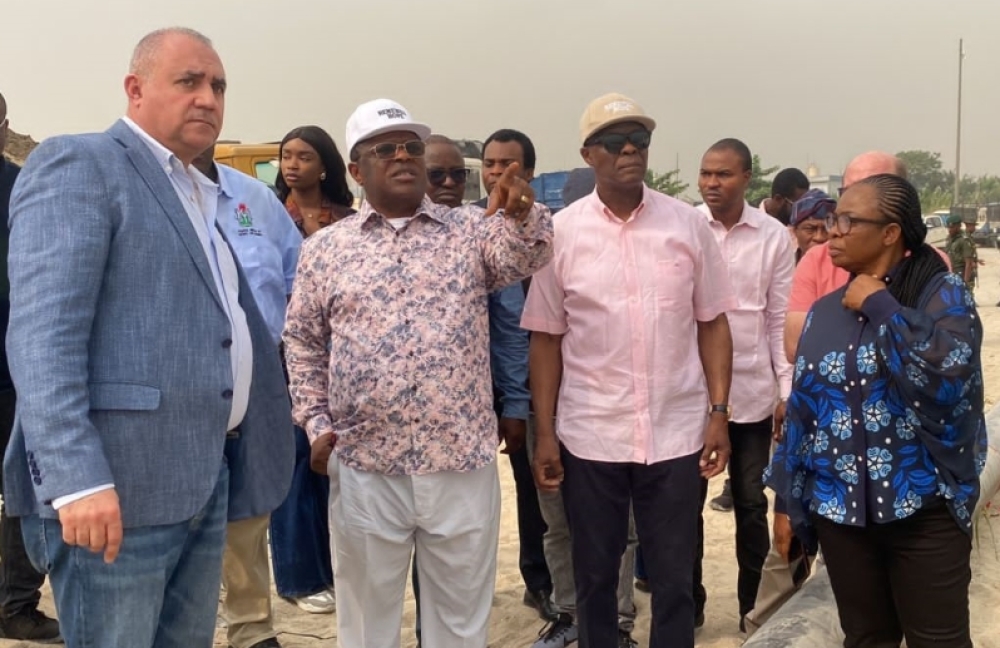
WORKS MINISTER ALLAYS FEAR ABOUT THE STATE OF BRIDGES IN LAGOS, SAYS NO NEED TO WORRY * Umahi orders relocation of those cooking under Carter bridge The Honourable Minister of Works, Sen. Engr. Nweze David Umahi, CON, has allayed the fear of road users in Lagos about the integrity of the Third Mainland bridge, Eko and Carter bridges, saying “there is no need to worry.” Explaining the work to be done , he said “Some of the elements which are defective are going to be fixed. But there's nothing to worry about. We are going to reinstate those defective slabs with the new the design.” Speaking to journalists Wednesday after the joint assessment tour of the three bridges in company of the Honourable Minister of Finance and Coordinating Minister of the Economy, Wale Edun, the Minister explained that “over the years, after the construction of the bridge, there was no serious maintenance,” He therefore assured that the failure of the bridge would be addressed. “So, we are working on the problems about the bridges.” On the state of the Lagos shoreline, Sen. Umahi stressed that the shore protection on the marina needs urgent attention, noting that the Lagos railway project, the blue line might be threatened if nothing is done to address the matter. At the end of the exercise in Lagos, the Ministers who agreed there was need for rehabilitation work to be carried out, noting that the impact created by the current of water under the bridges and on the shoreline need intervention. On the ongoing rehabilitation of the third mainland bridges, the Minister revealed that some comprehensive works would be done especially in area of provision of street lights on and under the bridge and installation of CCTV. While praising the work being done by the Contractor, he assured that the bridge would be opened to road users soon. On his part, the Minister of Finance and Coordinating Minister of the Economy, Wale Edun commended the Minister of Works and his team of officials for their efforts at rehabilitating the roads and bridges as he described them as very important for economic development. While answering questions from reporters, the Minister disclosed that the Federal Government was looking to raise revenue to finance infrastructure, pointing out that “what we are targeting and working towards is a 77% increase in internally generated revenue for the Federal Government. So that is where the funding particularly is going to come from”, he submitted. Meanwhile, during the inspection tour, the Works Minister upon citing those cooking under the Carter bridge, ordered that security be mobilised to stop the menace, adding that they be relocated immediately to avoid any serious damage to the health of the bridge. In continuation of the inspection of Federal road projects in Lagos, the two Ministers also visited the Lagos - Calabar coastal highway and met with the contractor to review progress work on the project. The project when completed is expected to go through the shoreline linking Lagos with Calabar . In the inspection were senior government officials from the Ministry, officials of Julius Berger and some journalists. ...
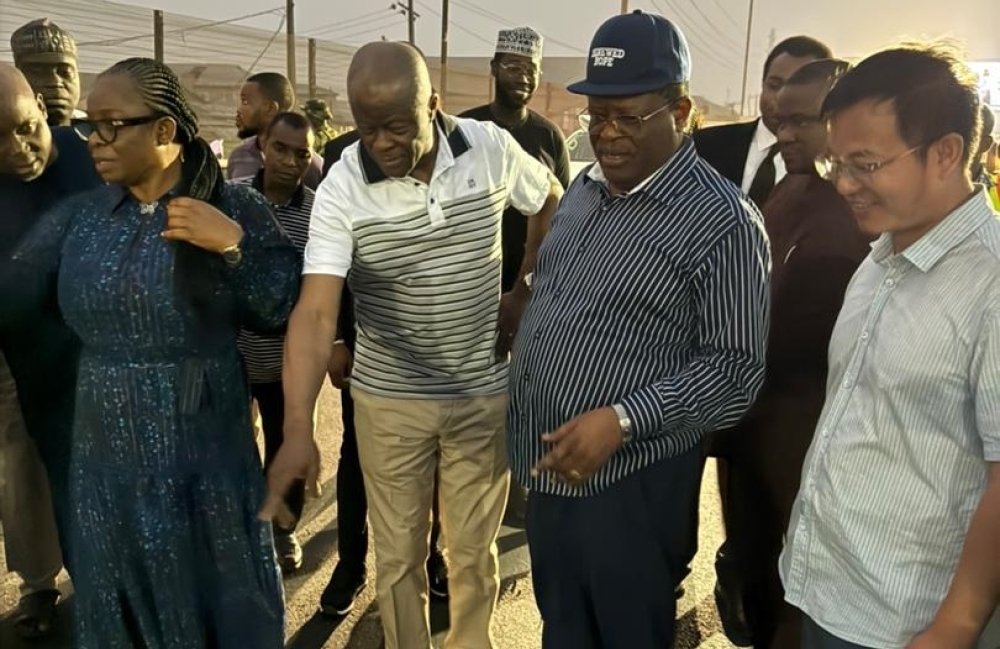
WORKS, FINANCE MINISTERS UNDERTAKE INSPECTION OF ONGOING REHABILITATION OF THIRD MAINLAND BRIDGE The Honourable Minister of Works, Sen. Engr. Nweze David Umahi, CON, and his counterpart, the Minister of Finance and Coordinating Minister of the Economy, Chief Wale Edun have undertaken the inspection of the ongoing rehabilitation of the Third Mainland bridge in Lagos. While Inspecting the ongoing rehabilitation work this Tuesday, the Ministers took time to examine different aspects of the rehabilitation work, commending the contractor, Messrs CCECC for their good efforts so far. Sen. Umahi particularly gave good attention to the ongoing relaying of asphalt pavements of the bridge which commenced at the Owornshoki end of the 11.8kn bridge, noting the quality of work by the contractor, encouraging them to maintain the quality of work. On the installation of the solar based street lights and the CCTV cameras on the 3rd mainland, Engr Umahi described solar lights as very useful and will be strategic for road users. He however told the contractor to ensure the right quality materials are utilised to ensure value for money. In the inspection team of the two ministers were other senior government officials and the Contractor handling the project. It would be recalled that the Ministers of Works and Finance had early in January this year visited the ongoing construction of the Abuja-Kaduna-Kano road projects to assess the status of the project ...
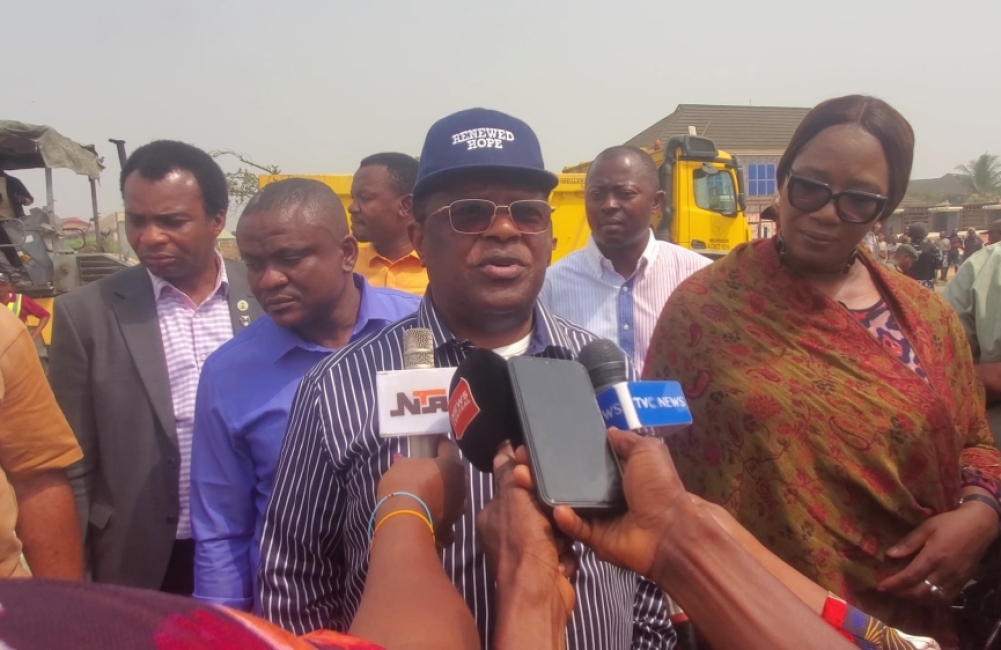
WORKS MINISTER DEBUNKS CLAIM OF FRAUDULENT PAYMENT OF FUNDS TO A MICTOFINANCE BANK, SAYS IT IS A DISTRACTION * To work with Governors to certify job completion before payment to contractors The Honourable Minister of Works Sen. Engr. Nweke David Umahi, CON, has debunked the claim that funds for construction of roads was fraudulently paid into a Microfinance Bank contrary to extant regulations. According to the Honourable Minister, “Let me also use the opportunity to debunk something that is ongoing in the social media. I don't know what they call the group, Is it Tracta Budgit or something which claims they're monitoring the budget of federal government; said that we paid 8.7 billion to the microfinance bank. Speaking to some journalists today in Rivers State during the inspection of the Enugu-Port Harcourt dual carriageway being reconstructed by Arab Contractors Ltd, Sen. Umahi disclosed that the organisation “went ahead and said, that the 8.7 billion were paid against a number of projects in Ekiti State, in Kaduna State, Kastina State and Borno State between June and September, 2023. The Honourable Minister while debunking further the erroneous claim by Tracka Budgit stated that as at June 2023, “he was in the Senate. So, if they are correct, it means the contracts would have been awarded while I was still a Governor, so not a minister.” Concerning the payments to a Microfinance bank, the Minister explained that as at July, “I was in the Senate Up to the 20th of August”. He, however explained concerning the payments to a Microfinance Bank that “when a contractor has done his or her work, the money becomes his money. He can say pay it to any bank of his choice." Sen. David Umahi described as very mischievous the claim by the organisation stating that they should have investigated “whether the job was done, that is the only right they have. But they don't have the right to say where a contractor will say his money will be paid. He submitted therefore that “whether it's paid in microfinance bank or macrofinance bank, what is paramount to establish if the funds were rightly paid for good work done.” The Honourable Minister averred that it was an attempt to distract his commitment to delivering on the Renewd Hope Agenda of President Tinubu for the road sector development in Nigeria. “And so, it's just a distraction. And then, some of the bank contractors are using them to fight back. But I refuse to be distracted, he restated. On his efforts to ensure quality delivery of road projects through partnership with the States, Sen. Umahi said “let me also say that in all the states, it's our policy that the state governors, through their appointed officials, must mark off any project, especially the emergency, palliative projects. According to him “when a contractor has completed a job, no matter how big it is, my advice is for the state governor to come to the site and look at it and then mark off the job before he gets to office for payment. He strongly affirmed that “Where this procedure is not done, I will not sign any generated certificate”. ...
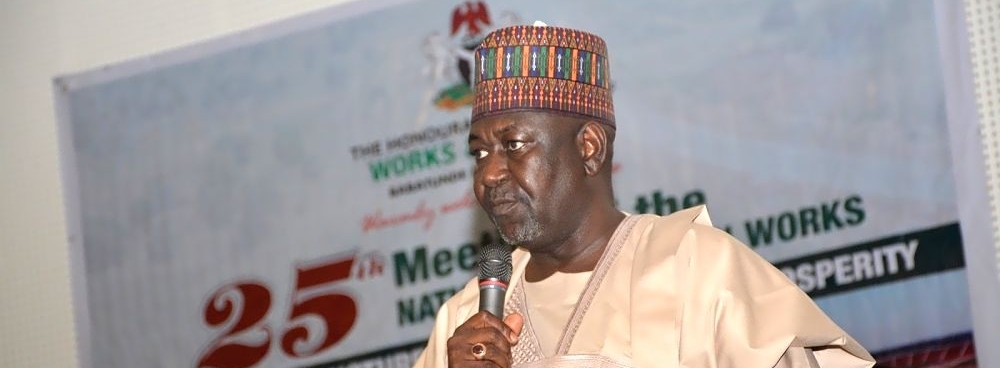
FG Committed to Entrench PPP for Roads Infrastructure - Fashola
Minister of Works an Housing, Babatunde Raji Fashola has stated that the Nigerian Government is committed to entrench the Public Private Partnership (PPP) arrangement to improve road infrastructure in Nigeria.
The Minister spoke at a workshop on Nigeria - South Africa Road Transport Infrastructure and PPP Collaboration Initiative which was held in Abuja, Monday, December 2, 2019
Fashola was represented by the Minister of State for Works and Housing, Engr Abubakar Aliyu, FNSE.
The workshop was organised under the auspices of the office of the secretary to the government of the federation (SGF) in partnership with the Infrastructure Concession Regulatory Commission (ICRC), Development Bank of South Africa (DBSA), Federal Road Maintenance Agency (FERMA) and South African National Roads Authority (SANRAL).
While commending the ICRC for it's committment to increasing infrastructure investment in Nigeria, Fashola also appreciated other partners for organising the workshop, adding that his ministry is in alignement with the objectives of the initiative
He explained that the workshop would provide an opportunity to expand West African roads and rail infrastructure thereby improving the socio-economic well being of the people.
Accordingly, the minister assured that the govt of Nigeria will continually support the PPP and improve private sector participation, pointing out that government is already engaged in many PPP investments in the country
Earlier the DG ICRC, Engr Chidi Izuwah, had listed the benefits derivable from the provision of roads infrastructure which he said smong others include; creation of jobs, boosting production,, creation of industrial parks, springing of new residential areas and township
Engr Chidi explained that the ICRC and FERMA in Collaboration with the DBSA and various South African entities intend to produce and support a West African focused regional transport and logistics infrastructure development program.
In a good will message, the South African Deputy High Commissioner to Nigeria, Mr Bobby Moore expressed gratitude to the government of Nigeria for the initiative, stating that the swiftness in the take off of this event after the visit of the Nigerian President Muhammadu Buhari to South Africa where the matter was discussed, signalled the committment of Nigeria in the collaboration with South Africa on Road infrastructure.
The Senate President who was represented by Chairman of Senate Committee on Works , Senator Adamu Aliero, stated that National Assembly is ready to work with ICRC to clear all bottlenecks for it to ddeliver. He explained that National Assembly will look at ICRC Act with the view to amending it to accommodate more of private sector participation in infrastructure investment.

Keynote Speech Of The Honourable Minister Of Power, Works And Housing At The Guardian Power Summit
Keynote Speech At The Guardian Power Summit: "Beyond Rhetoric: Turning Nigeria's Power Sector Value Chain Potentials To Profit" Delivered By Babatunde Raji Fashola, San At Four Points, Lagos On Thursday 14th September 2017
I would like to start by thanking Lady Maiden Alex-Ibru, the chairman and publisher of the Guardian newspaper for inviting me to speak at this forum.
In particular, I have been invited as keynote speaker with the task of "setting the context" around the theme of turning Nigeria's power sector value chain potential to profit.
I welcome the opportunity this platform provides because it provides the Buhari led government a forum of expression to well-meaning and right-thinking persons who want to know what is going on about power.
As my invitation rightly acknowledges, context is important. It provides a rational basis for assessment and a fair determination for deciding whether progress is being made.
So, let us start by going back to May 29, 2015 when this government was inaugurated.
The amount of power available on the grid on that day was 2690 MW. The transmission capacity was around 5000 MW and was then infamously described as the weakest link.
The distribution capacity existing at around 750 33/KV trading points, from where power is received by the DisCos and sent to us, was about 4000 MW.
Clearly, the power then being generated at 2690 MW was not up to the transmission capacity of 5000 MW and was insufficient to fully optimize the distribution capacity of 4000 MW.
Within a few months after President Buhari’s assumption of office, power improved and we all acknowledged. We credited it to the President's ‘body language.’
But the truth was that it had little to do with body language, and more to do with a sense of purpose that people sat up and began to do what ought to be done.
In addition, the rains were upon us in July 2015 to September 2015.
There was Gas supply which allowed the Thermal plants to produce power.
Therefore from Hydro and Thermal sources we reached an all time peak power production of 5,074MW before the damage to the pipelines started and we started losing power.
We cannot damage power and gas assets and still expect them to provide service to us.
It does not make sense.
Instead of rhetoric, this government set to work.
a. Government engaged the aggrieved communities where the attacks were taking place to restore peace.
b. Government repaired the damaged gas pipelines and gradually restored gas supply.
c. Government launched an economic recovery and growth plan which made power supply one of 5 (FIVE) critical pillars.
d. Government launched a Power Sector Recovery Programme to work out and implement policies and actions such as:
i. Constituting the regulatory commission, the Nigerian Electricity Regulatory Commission (NERC); except the Chairman, now awaiting the confirmation of Senate and the Rural Electrification Agency (REA) to Champion solar power development and rural electricity deployment and access.
ii. Payment of debts to specific DisCos, and verification of debts to all others.
iii. Payment assurance guarantee scheme of N701 Billion to give confidence to GenCos, gas suppliers and their financiers that we mean business.
iv. Declaration of eligible customers, to encourage people to invest in building and expanding distribution assets.
v. Development of mini grid regulations to encourage individuals and communities to build their own mini power generation and distribution facilities.
vi. Awarding contracts to complete and expand transmission facilities and building new ones across the country.
Ladies and gentlemen, all of these policies and action go beyond rhetoric.
They are well thought out decisions, consistent with law and informed by a thorough diagnosis of the problems in the sector that have produced a clear set of solutions to deliver incremental power.
The result is that as at 4 September 2017 the available power that can be put on the grid was 6619 MW (the incremental power we sought to achieve from 2069 MW in 2015); the transmission capacity was simulated at 6,700 MW (up from 5,000 MW in 2015) but the distribution capacity was 4,600 MW which was what was put on the grid.
On September 12, 2017, production of power reached an all time level of 7,001 MW.
Clearly this is evidence-based progress, because we now produce more power then we can distribute. This does not mean that we have enough yet. It means that policies are working, but all the problems are not resolved.
We must continue the Power Sector Recovery Programme to impact the distribution end of the value chain so that we distribute and sell everything that we produce as an incentive to more power production and supply.
The recent GDP growth results by NBS, announcing Nigeria's exit from recession, and its detailed sector analysis, shows and I quote:
"Electricity production as well as financial services and construction also grew strongly..."
It went further to provide details by stating that:
"Other sectors the did very well in the second quarter 2017 include electricity and gas and financial institutions, with electricity and gas growing by 35.5%."
I acknowledge that there will be cynics who will say, it was because of the rains. True enough, the rains contributed to the Hydro power increase, but the total Hydro capacity available with the rains from Jebba, Kainji and Shiroro as of 4th of September 2017 was about 1,000 MW, so it is the gas thermal plants, arising from peace efforts and pipeline repairs that made up the difference that made the total available power of 6619 MW that was produced.
Therefore, beyond rhetoric, our next step is to solve the distribution problem.
This involves the sustained implementation of the Power Sector Recovery Programme.
Before I speak to the programme, let me say that although the power sector has been substantially privatized, and therefore it is the private sector that we must look to lead us through this. The sector is a regulated sector, governed by law, the Electric Power Sector Reform Act of 2005, and the regulations made by NERC (the Nigerian Electricity Regulatory Commission) which makes rules and regulations that govern the conduct of all participants in the value chain of power including TCN, the government owned company.
It is these rules and regulations that ensure confidence and predictability in the sector.
Therefore, one of the decisions under the Power Sector Recovery Programme is the enhancement of governance, like the constitution of NERC (that I have referred to), who have issued regulations to guide the development and deployment of mini grids of 100 KW -1 MW which will help distribution as they come on stream.
Another decision is to strengthen the governance of DisCos by reconstituting our board representation in all the discos, a process that is also underway.
Next is the implementation of eligible customers, which is awaiting the finalization of regulations by NERC based on consultations with stakeholders.
The successful implementation of this policy will help heavy power consumers, who are denied power because of defective distribution, to make the investment by building the distribution equipment under arrangements and agreements with the DisCos.
We are also looking at licensing some private power plants who have generation licenses and excess power, but no distribution license, to grant them permits to willing buyers especially in industrial clusters under regulations made by NERC.
Ladies and gentlemen, the Power Sector Recovery Programme also involves producing more power, like:
a. Completing the first phase of 9 (NINE) federal universities out of a planned 37 (THIRTY-SEVEN);
b. The completion of the 240 MW Afam power plant; the 10 MW Kasina wind farm, the 29 MW Dadin Kowa Hydro plant, 30 MW Gurara Hydro plant, the 40 MW Kashimbilla Hydro power plant, the Kaduna 215 MW plant, the Zungeru 700 MW Hydro plant and the Mambilla 3050 MW Hydro plant which was just approved for award;
c. Completing several transmission projects across the country; and
d. Implementing the meter supply and installation plan through licensing of service providers, franchise holders, rural communities meters to be implemented on the regulations by NERC this year.
My time constraints prevents me from going further into detail.
However, I believe that the much I have said reveals that this Government has undertaken a clear diagnosis of the problems, clearly understands them, has evolved solutions to address them, and some of them are already bearing fruit.
Successes so far recorded in power generation and transmission have revealed that the work is far from finished, but the capacity that achieved the success in generation and transmission can demonstrably be transferred to solve the distribution problems.
Finally, I believe that well-meaning and right-thinking Nigerians will agree, that the Buhari Government has gone way beyond rhetoric.
We have evolved solutions that are already contributing to GDP growth, and the promise to do more, unlock the power value chain potential for enterprise and profit clearly lies ahead of us, with the successful implementation of the Power Sector Recovery Programme.
Thank you for listening.
Babatunde Raji Fashola, SAN
Honourable Minister for Power, Works and Housing
Thursday 14th September 2017
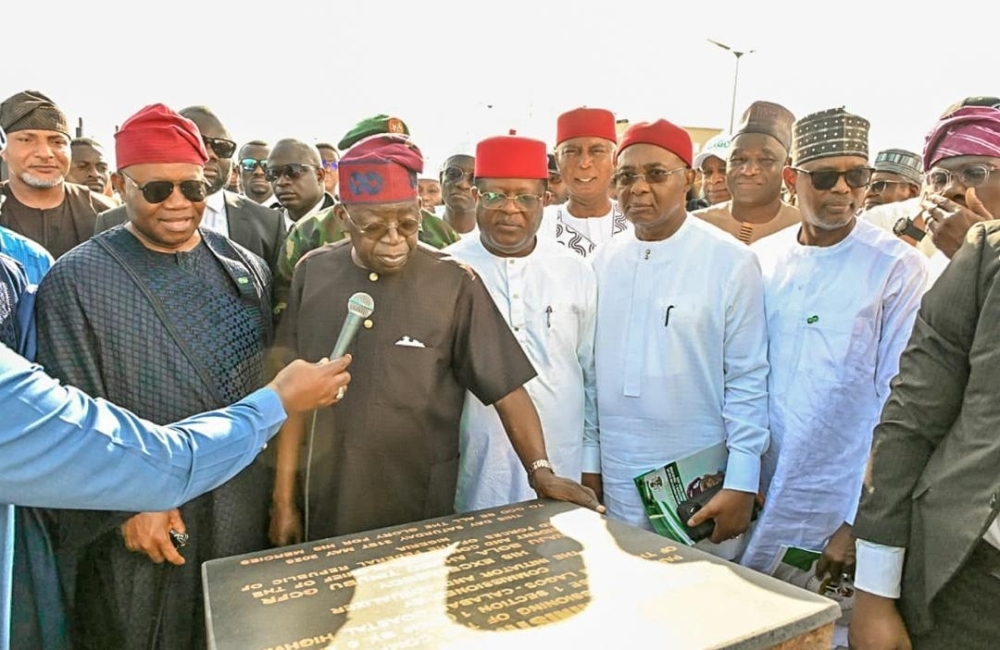
DRIVING NIGERIA’S FUTURE: CELEBRATING TWO YEARS OF TRANSFORMATIVE LEADERSHIP AND THE LAGOS-CALABAR COASTAL HIGHWAY MILESTONE
DRIVING NIGERIA’S FUTURE: CELEBRATING TWO YEARS OF TRANSFORMATIVE LEADERSHIP AND THE LAGOS-CALABAR COASTAL HIGHWAY MILESTONE
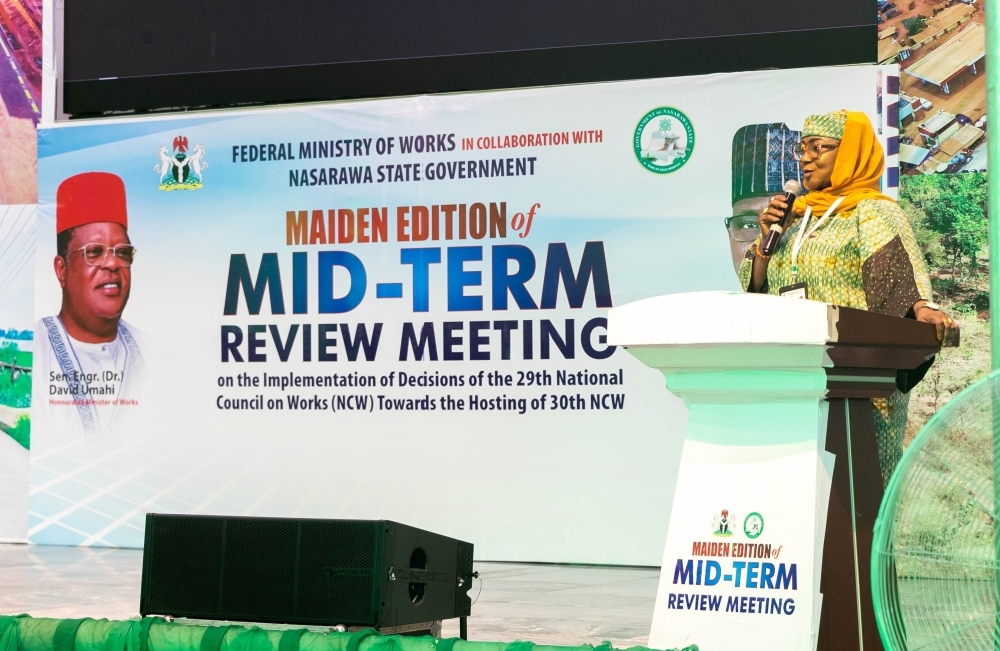
MID -TERM REVIEW MEETING ON THE IMPLIMENTATION OF THE DECISIONS REACHED AT THE 29TH NATIONAL COUNCIL ON WORKS (NCW) DAY 1
MID -TERM REVIEW MEETING ON THE IMPLIMENTATION OF THE DECISIONS REACHED AT THE 29TH NATIONAL COUNCIL ON WORKS (NCW) DAY 1