Highways Code & Manual
Services
Ongoing Projects
GORONYO COMMENDS SOKOTO GOVERNOR FOR DONATING 10 HILUX VEHICLES TO STRENGTHEN SECURITY ALONG SOKOTO–BADAGRY SUPERHIGHWAY
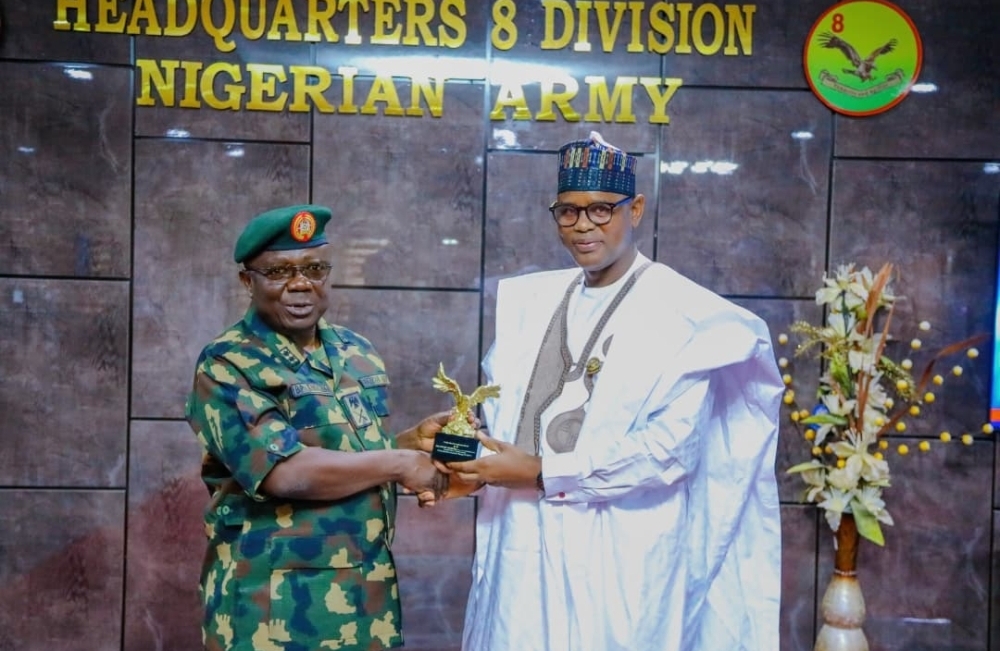
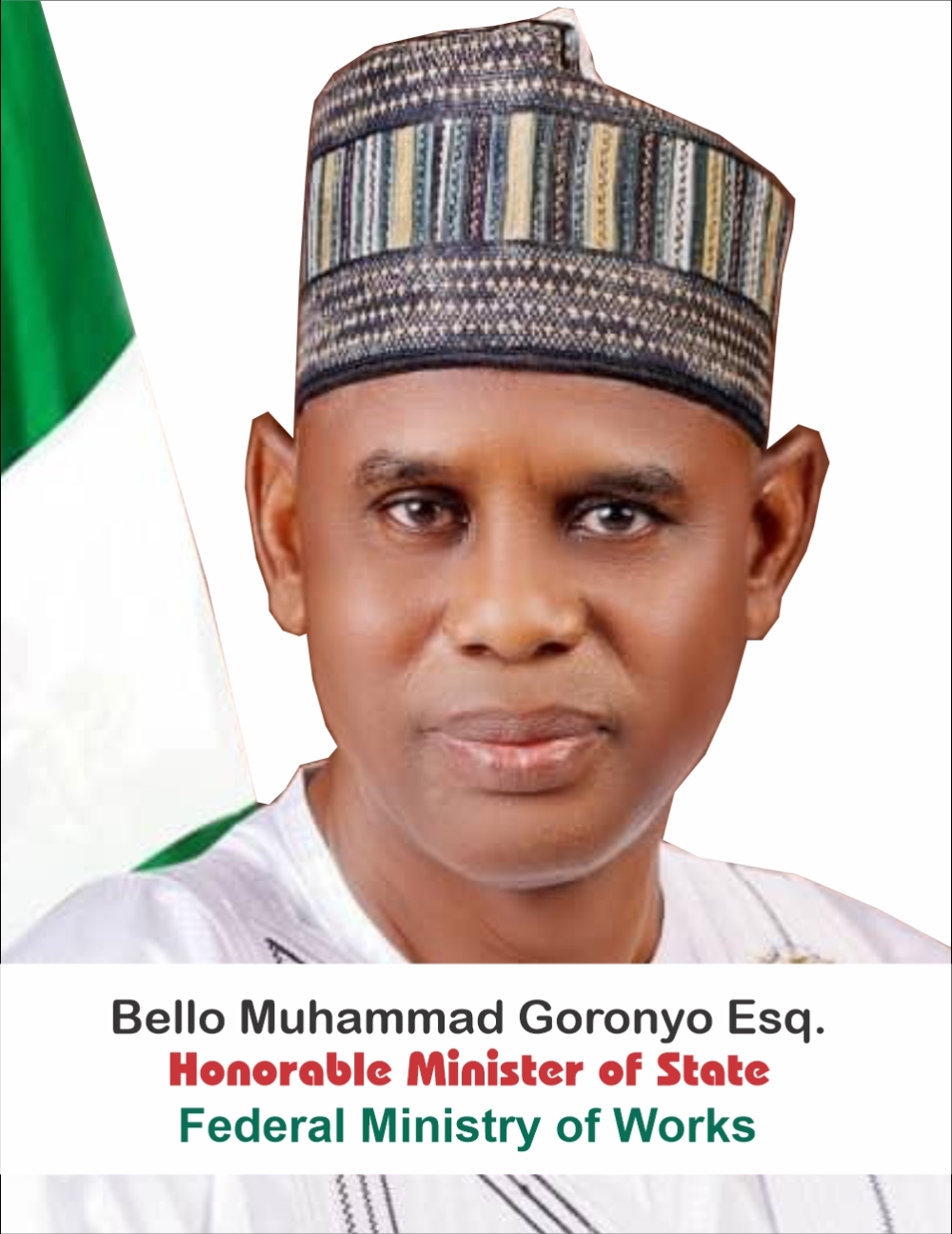
The Honourable Minister of State for Works, Rt. Hon. Bello Muhammad Goronyo, Esq., has commended the Governor of Sokoto State, Dr. Ahmed Aliyu Sokoto, PhD, for donating 10 operational Toyota Hilux vehicles to strengthen security operations along the Sokoto–Badagry Superhighway and other strategic infrastructure corridors.
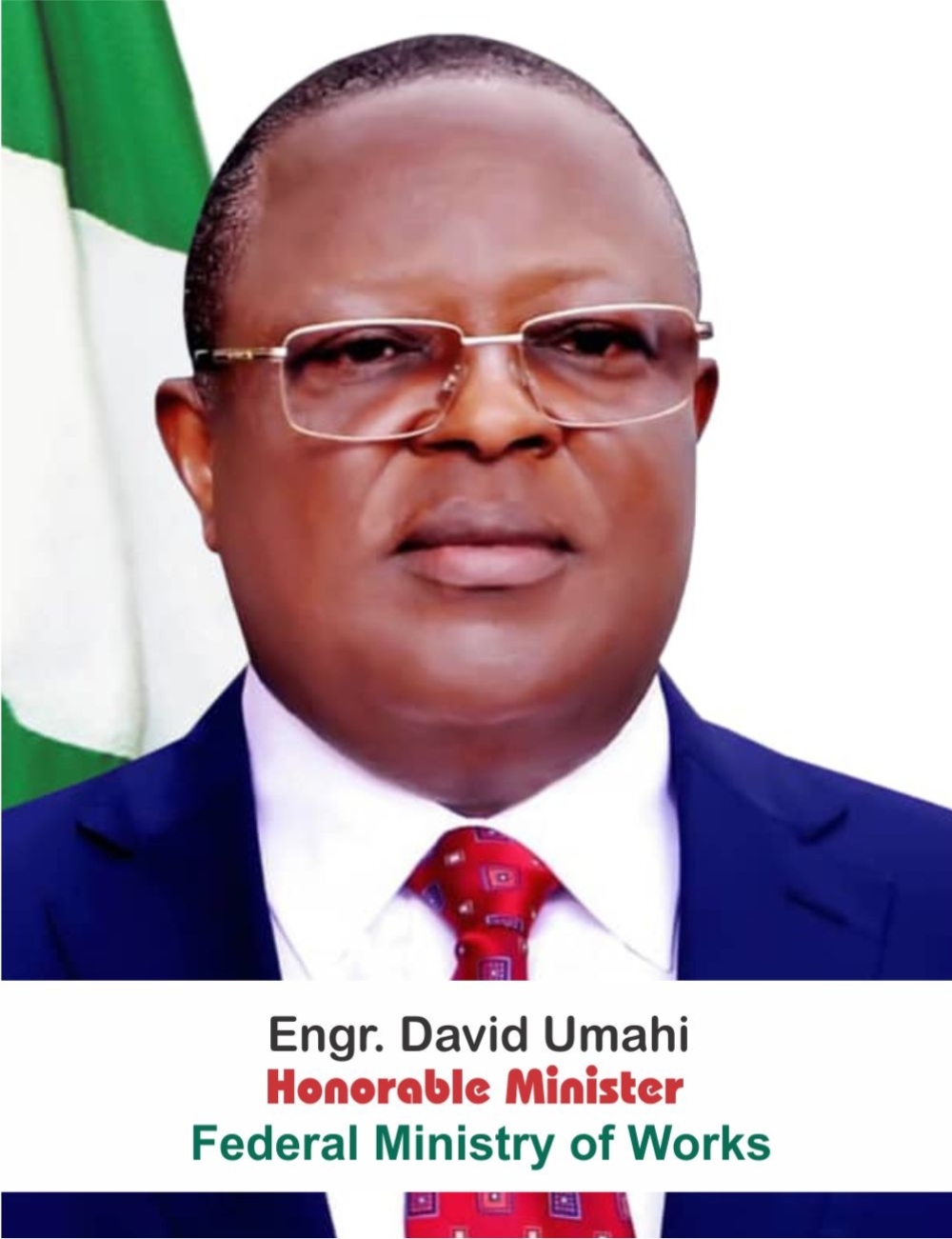
The vehicles were formally commissioned and handed over to the Nigerian Army at the Headquarters of the 8 Division, Nigerian Army, Sokoto, on Thursday, October 8, 2026, by the Honourable Minister of State for Works, on behalf of the Honourable Minister of Works, Engr. David Nweze Umahi, CON, FNSE.
The donation is expected to enhance the operational capacity of military personnel and other security agencies responsible for protecting construction workers, contractors, equipment and host communities along the highway corridor.
Speaking during the ceremony, Goronyo described the donation as a demonstration of the Sokoto State Government’s commitment to national development and the successful implementation of President Bola Ahmed Tinubu, GCFR’s Renewed Hope Agenda, particularly its landmark infrastructure projects.
The Minister emphasised that the Sokoto–Badagry Superhighway represents a long-standing national infrastructure vision that dates back several decades, with its conception traced to the era of former President Shehu Shagari in the 1970s. However, the vision remained unrealised for decades until the administration of President Bola Ahmed Tinubu, GCFR, initiated the construction of the 1,068-kilometre highway in October 2024.
He described the project as a significant step towards translating a historic aspiration into tangible infrastructure that will connect communities, expand economic opportunities and strengthen national integration.
According to Goronyo, President Tinubu’s commitment to the project demonstrates the Federal Government’s determination to bridge critical infrastructure gaps and improve connectivity between northern and southern Nigeria.
He noted that the superhighway, which traverses Sokoto, Kebbi, Niger, Kwara, Oyo, Ogun and Lagos states, is designed to facilitate the movement of people and goods, reduce transportation costs, stimulate trade, create employment and open up new economic opportunities along its route.
The Minister added that the highway would improve access to markets, schools, healthcare facilities and other essential services while supporting agriculture, commerce, industry and the development of communities across the corridor.
He stressed that the successful delivery of the project would require sustained commitment, effective coordination and cooperation among the Federal Government, state governments, security agencies, contractors and host communities.
Goronyo maintained that effective security remained essential to the timely and successful completion of the Sokoto–Badagry Superhighway. He explained that the provision of operational vehicles would strengthen the mobility and response capabilities of security personnel deployed to safeguard the project and its surrounding communities.
The Minister highlighted other strategic infrastructure projects being undertaken by the Federal Government, including the Lagos–Calabar Coastal Highway, the Calabar–Abuja/Trans-Saharan corridor, the Akwanga–Jos–Bauchi–Gombe corridor, the Abuja–Kaduna–Zaria–Kano route and the Zaria–Gusau–Sokoto corridor.
He explained that these projects form part of the Federal Government’s broader commitment to developing an integrated road network capable of supporting commerce, strengthening inter-state connections and accelerating national economic growth.
Rt. Hon. Goronyo further noted that the use of continuously reinforced concrete pavement on the Sokoto–Badagry Superhighway was intended to provide durable road infrastructure capable of serving Nigerians for decades. He added that complementary environmental and safety measures, including tree planting and solar-powered street lighting where provided for in the project, would contribute to environmental sustainability, visibility and road safety.
Goronyo commended the Nigerian Army and other security agencies for their resilience, professionalism and sacrifices in protecting lives, property and critical national infrastructure. He acknowledged the difficult conditions under which security personnel operate and urged them to remain steadfast in carrying out their constitutional responsibilities.
The Honourable Minister also expressed deep condolences to the Nigerian military over the reported loss of personnel in a bandit attack while on official duty the previous day. He described the loss as painful and extended his sympathy to the affected personnel, their colleagues and bereaved families, while praying for the peaceful repose of the departed and strength for their loved ones.
He further acknowledged the support of the National Security Adviser in addressing security challenges associated with the project, particularly through assistance and coordination aimed at strengthening security operations along the highway corridor.
Reaffirming his commitment to the Federal Government’s infrastructure development agenda, Goronyo said the Ministry of Works would continue to support the implementation of strategic projects under President Tinubu’s leadership, working in collaboration with relevant stakeholders to ensure their successful delivery.
He expressed optimism that the continued implementation of the Federal Government’s development programmes would bring lasting benefits to Nigerians, while acknowledging the complementary role of the Sokoto State Government in supporting infrastructure development and security.
In his remarks, the General Officer Commanding (GOC), 8 Division, Nigerian Army, Sokoto, Major General Bengba Paul Koughna, expressed appreciation to the Federal Government, the Federal Ministry of Works and the Sokoto State Government for the donation of the 10 Hilux vehicles.
The GOC noted that the vehicles would significantly enhance the operational mobility and response capabilities of troops deployed along the highway corridor, particularly across the approximately 440-kilometre section extending through Sokoto and Kebbi states.
He explained that troops conduct regular patrols and maintain multiple deployment points along the corridor, making the additional vehicles a valuable boost to their operational effectiveness.
He assured the Minister that the vehicles would be deployed appropriately to support security operations and protect construction workers, contractors, equipment and other stakeholders involved in the project.
The GOC also commended the representative of Hitech Construction Company, retired General Sa'ad Abubakar, for the company's involvement in the project.
The event was attended by retired Assistant Inspector-General of Police (AIG) Aliyu Garba, officials of the Federal Ministry of Works, representatives of the Sokoto State Government and other stakeholders.
The donation underscores the importance of sustained collaboration among the Federal Government, state governments, security agencies, contractors and host communities in addressing security challenges and ensuring the safe and timely delivery of strategic infrastructure projects.
The Federal Ministry of Works reiterates its commitment to working with all relevant stakeholders to protect national infrastructure and advance the objectives of President Bola Ahmed Tinubu, GCFR’s Renewed Hope Agenda for sustainable economic growth and development.

GORONYO COMMENDS SOKOTO GOVERNOR FOR DONATING 10 HILUX VEHICLES TO STRENGTHEN SECURITY ALONG SOKOTO–BADAGRY SUPERHIGHWAY The Honourable Minister of State for Works, Rt. Hon. Bello Muhammad Goronyo, Esq., has commended the Governor of Sokoto State, Dr. Ahmed Aliyu Sokoto, PhD, for donating 10 operational Toyota Hilux vehicles to strengthen security operations along the Sokoto–Badagry Superhighway and other strategic infrastructure corridors. The vehicles were formally commissioned and handed over to the Nigerian Army at the Headquarters of the 8 Division, Nigerian Army, Sokoto, on Thursday, October 8, 2026, by the Honourable Minister of State for Works, on behalf of the Honourable Minister of Works, Engr. David Nweze Umahi, CON, FNSE. Speaking during the ceremony, Goronyo described the donation as a demonstration of the Sokoto State Government’s commitment to national development and the successful implementation of President Bola Ahmed Tinubu, GCFR’s Renewed Hope Agenda, particularly its landmark infrastructure projects. The Minister emphasised that the Sokoto–Badagry Superhighway represents a long-standing national infrastructure vision that dates back several decades, with its conception traced to the era of former President Shehu Shagari in the 1970s. However, the vision remained unrealised for decades until the administration of President Bola Ahmed Tinubu, GCFR, initiated the construction of the 1,068-kilometre highway in October 2024. He described the project as a significant step towards translating a historic aspiration into tangible infrastructure that will connect communities, expand economic opportunities and strengthen national integration. According to Goronyo, President Tinubu’s commitment to the project demonstrates the Federal Government’s determination to bridge critical infrastructure gaps and improve connectivity between northern and southern Nigeria. The Minister added that the highway would improve access to markets, schools, healthcare facilities and other essential services while supporting agriculture, commerce, industry and the development of communities across the corridor. Goronyo maintained that effective security remained essential to the timely and successful completion of the Sokoto–Badagry Superhighway. He explained that the provision of operational vehicles would strengthen the mobility and response capabilities of security personnel deployed to safeguard the project and its surrounding communities. The Minister highlighted other strategic infrastructure projects being undertaken by the Federal Government, including the Lagos–Calabar Coastal Highway, the Calabar–Abuja/Trans-Saharan corridor, the Akwanga–Jos–Bauchi–Gombe corridor, the Abuja–Kaduna–Zaria–Kano route and the Zaria–Gusau–Sokoto corridor. Rt. Hon. Goronyo further noted that the use of continuously reinforced concrete pavement on the Sokoto–Badagry Superhighway was intended to provide durable road infrastructure capable of serving Nigerians for decades. He added that complementary environmental and safety measures, including tree planting and solar-powered street lighting where provided for in the project, would contribute to environmental sustainability, visibility and road safety. Goronyo commended the Nigerian Army and other security agencies for their resilience, professionalism and sacrifices in protecting lives, property and critical national infrastructure. He acknowledged the difficult conditions under which security personnel operate and urged them to remain steadfast in carrying out their constitutional responsibilities. The Honourable Minister also expressed deep condolences to the Nigerian military over the reported loss of personnel in a bandit attack while on official duty the previous day. He described the loss as painful and extended his sympathy to the affected personnel, their colleagues and bereaved families, while praying for the peaceful repose of the departed and strength for their loved ones. He further acknowledged the support of the National Security Adviser in addressing security challenges associated with the project, particularly through assistance and coordination aimed at strengthening security operations along the highway corridor. Reaffirming his commitment to the Federal Government’s infrastructure development agenda, Goronyo said the Ministry of Works would continue to support the implementation of strategic projects under President Tinubu’s leadership, working in collaboration with relevant stakeholders to ensure their successful delivery. He expressed optimism that the continued implementation of the Federal Government’s development programmes would bring lasting benefits to Nigerians, while acknowledging the complementary role of the Sokoto State Government in supporting infrastructure development and security. In his remarks, the General Officer Commanding (GOC), 8 Division, Nigerian Army, Sokoto, Major General Bengba Paul Koughna, expressed appreciation to the Federal Government, the Federal Ministry of Works and the Sokoto State Government for the donation of the 10 Hilux vehicles. The GOC noted that the vehicles would significantly enhance the operational mobility and response capabilities of troops deployed along the highway corridor, particularly across the approximately 440-kilometre section extending through Sokoto and Kebbi states. He explained that troops conduct regular patrols and maintain multiple deployment points along the corridor, making the additional vehicles a valuable boost to their operational effectiveness. He assured the Minister that the vehicles would be deployed appropriately to support security operations and protect construction workers, contractors, equipment and other stakeholders involved in the project. The GOC also commended the representative of Hitech Construction Company, retired General Sa'ad Abubakar, for the company's involvement in the project. The event was attended by retired Assistant Inspector-General of Police (AIG) Aliyu Garba, officials of the Federal Ministry of Works, representatives of the Sokoto State Government and other stakeholders. The Federal Ministry of Works reiterates its commitment to working with all relevant stakeholders to protect national infrastructure and advance the objectives of President Bola Ahmed Tinubu, GCFR’s Renewed Hope Agenda for sustainable economic growth and development.
The donation is expected to enhance the operational capacity of military personnel and other security agencies responsible for protecting construction workers, contractors, equipment and host communities along the highway corridor.
He noted that the superhighway, which traverses Sokoto, Kebbi, Niger, Kwara, Oyo, Ogun and Lagos states, is designed to facilitate the movement of people and goods, reduce transportation costs, stimulate trade, create employment and open up new economic opportunities along its route.
He stressed that the successful delivery of the project would require sustained commitment, effective coordination and cooperation among the Federal Government, state governments, security agencies, contractors and host communities.
He explained that these projects form part of the Federal Government’s broader commitment to developing an integrated road network capable of supporting commerce, strengthening inter-state connections and accelerating national economic growth.
The donation underscores the importance of sustained collaboration among the Federal Government, state governments, security agencies, contractors and host communities in addressing security challenges and ensuring the safe and timely delivery of strategic infrastructure projects.
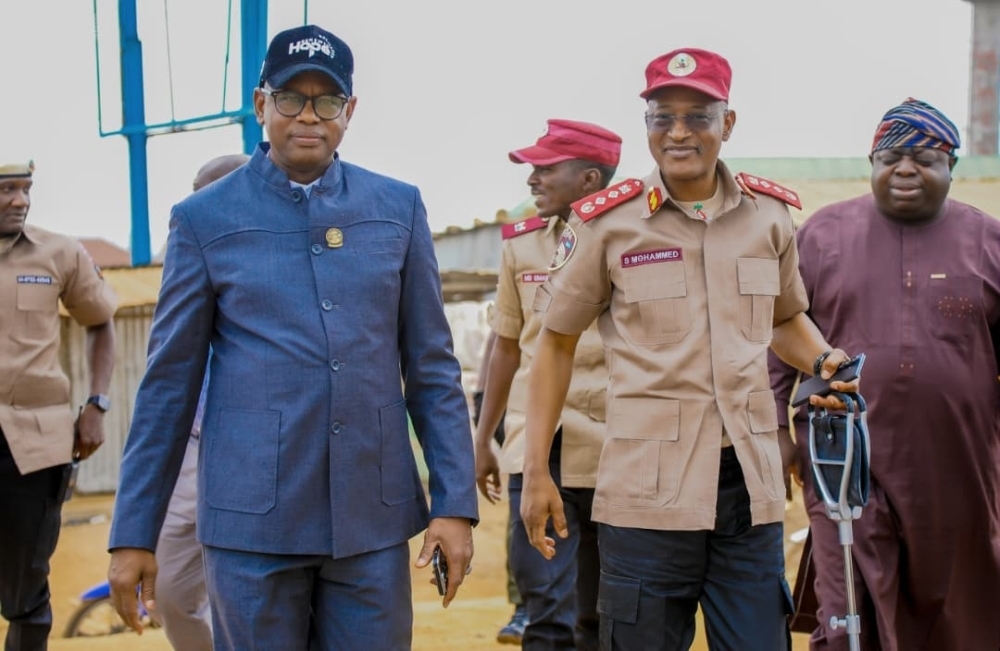
FG INTENSIFIES INTERVENTION ON INHERITED BIDA–LAPAI–LAMBATA, MAJE–DIKKO ROADS AS GORONYO INSPECTS PROJECTS The Federal Government has intensified efforts to restore full motorability on the critical Bida–Lapa–Lambata and Maje–Dikko road corridors in Niger State, with the Honourable Minister of State for Works, Rt. Hon. Bello Muhammad Goronyo, Esq., inspecting the projects and directing contractors to accelerate remedial, palliative and permanent works. The inspection, which took place on Thursday, 24 September 2026, formed part of the Federal Ministry of Works’ sustained monitoring of critical road projects across the country, particularly inherited projects requiring urgent intervention to improve road safety, ease traffic movement and enhance connectivity. Speaking during the inspection of the Bida–Lapai–Lambata corridor, the Minister sympathized with motorists, particularly articulated-vehicle operators, who have experienced prolonged delays and difficult travelling conditions along the route. He described the corridor as an important economic artery connecting communities in Niger State and facilitating the movement of agricultural produce, goods and people across the region. Goronyo explained that the approximately 123.4-kilometre Bida–Lapai–Lambata project is an inherited project being executed under the Presidential/NNPC Tax Credit financing arrangement. He noted that, in view of the heavy movement of articulated vehicles along the corridor, the project was designed with continuously reinforced concrete pavement to enhance its durability and service life. The Minister said the Federal Government was concerned about the present condition of the road and would ensure the immediate mobilisation of the contractor for palliative intervention, while permanent reconstruction works progress. “We deeply sympathise with the drivers and other road users. This is a very important economic corridor, and we cannot allow it to fail completely. We are going to push the contractor to mobilise early and undertake palliative works to provide relief to motorists while we await the full reconstruction of the road,” he said. The Minister stressed that the present administration inherited several road projects across the country and had continued to address them rather than abandoning ongoing projects. He said the administration of President Bola Ahmed Tinubu, GCFR, recognises the strategic importance of road infrastructure as an enabler of economic growth, trade, mobility and national development. Goronyo assured motorists and communities along the corridor that the Ministry would continue to closely monitor the project and engage relevant stakeholders to ensure timely intervention and sustained progress. At the Maje–Dikko section, the Minister expressed satisfaction with the significant improvement recorded following the Federal Government’s earlier directive for urgent intervention. He, however, directed the contractor to redouble its efforts, mobilise additional equipment and materials, and sustain round-the-clock operations at critical sections of the corridor. Goronyo recalled that the Ministry had given the contractor a 48-hour directive to restore passability on the affected sections and commended the progress achieved so far. “The progress of the work so far is impressive, and we are satisfied with what you have been doing over the last few days. But you need to double your efforts, mobilise more materials and equipment, and concentrate on the difficult sections. Nigerians deserve better roads, and we have no excuse,” Goronyo said. He directed the contractor to maintain the current tempo of work, particularly at locations where drainage and erosion challenges continue to affect traffic movement. The Minister also disclosed that the Ministry would continue its daily monitoring of the corridor, either personally or through senior officials, stressing that the Federal Government was committed to ensuring that motorists regained easier and safer access along the route. The Managing Director of Trunkroad Consortium Nigeria Limited, Mr. Isaac Abeka, said the contractor had responded to the Federal Government’s 48-hour directive by mobilising additional personnel, materials and equipment to the site. He disclosed that the immediate intervention had significantly eased the major gridlock along the corridor, with traffic now flowing from the affected sections towards Lambata and Dikko. According to him, failed sections were backfilled with stones, rocks and boulders, after which stone-base materials were applied and graded to improve the riding surface. Abeka added that drainage channels had also been opened to facilitate the movement of water away from the roadway, while additional equipment had been deployed to the remaining difficult sections. He assured that the intervention would be sustained towards the major bridge section. Speaking on the Maje–Jazu Section II of the project, being handled by Messrs CCECC Nigeria Limited, the Honourable Minister expressed concern over the slow pace of work and directed the contractor to substantially increase its mobilisation and productivity to ensure delivery within the agreed timeline and required quality standards. Goronyo noted that more than ₦10 billion had so far been released to the contractor as mobilisation out of the approximately ₦90 billion project value. He said the level of work completed, which stood at about one per cent, was not commensurate with the funds already advanced or the progress expected under the project schedule. “The amount so far released to you as mobilisation is over ₦10 billion. Yet, the progress of work on site is not commensurate with the amount that has been advanced to you. The percentage of work completed is not even up to one per cent, whereas, according to the project schedule, you are expected to have achieved almost 16 per cent at this stage. Honestly, we are not satisfied with the progress of work,” he said. The Minister further disclosed that the Honourable Minister of Works, Engr. David Umahi, CON, had been briefed on the progress of the project and had directed that the contractor be made to understand that the pace of work was unacceptable. Goronyo stressed that the project, which covers approximately 71.9 kilometres and involves the construction of about 11 culverts and 11 bridges, required urgent acceleration. He noted that although five or six structures had reportedly been completed, the overall physical progress remained about one per cent. “The Honourable Minister is not satisfied with what you are doing, and that is also the position of all of us here. We are not satisfied with the progress recorded so far. Nigerians deserve better roads. Mr. President has already provided the necessary support and mobilisation for this project, and you have no excuse whatsoever not to deliver,” he said. Goronyo noted that the project has a 36-month completion period, adding that almost six months had already been consumed without appreciable progress. He therefore directed the contractor to mobilise more machines, equipment, materials and manpower to accelerate construction. “We want this project delivered within record time. Nigerians are yearning for better roads, and we cannot continue to accept excuses,” the Minister said. Responding, the contractor, Messrs CCECC Nigeria Limited, explained that prolonged traffic congestion caused by articulated vehicles had significantly affected its operations between June and August. The contractor said the road was heavily blocked during the period, making it difficult to move equipment and materials and carry out construction activities effectively. It, however, stated that following the clearance of the traffic from the previous day, the company immediately deployed its machines, equipment, labourers and technical personnel to the site to accelerate the work. The contractor assured the Minister that it had the capacity, manpower, equipment and machinery required to execute the project and committed to accelerating construction. It further indicated that it was expected to complete approximately nine to ten kilometres of the road by March next year. The Minister, however, maintained that completing nine or ten kilometres by March would not represent sufficient progress considering the overall length of the 71.9-kilometre project. “You have told us that the gridlock caused by articulated vehicles between June and August affected your operations. But this contract was awarded in February. What were you doing from February to June? That explanation is not acceptable,” Goronyo said. He directed the contractor to immediately increase its mobilisation and deploy additional machines, equipment, materials and manpower to the project. “We want this project delivered within record time. We cannot continue to accept excuses. Nigerians are yearning for better roads, and the government expects you to respond by delivering this project within the stipulated timeframe,” he said. Meanwhile, at the Lambata–Lapai corridor, the Director of Construction and Rehabilitation, Engr. David Yiltong Dechi, explained that the contractor handling the permanent rehabilitation and reconstruction works had indicated its readiness to mobilise to the site. He, however, noted that extensive earthworks during the rainy season could temporarily worsen some sections of the corridor. He therefore recommended immediate palliative measures, including the deployment of boulders, stone-base materials, graders and bulldozers at identified critical locations to maintain motorability until weather conditions become more favourable for full-scale permanent works. The Senior Special Assistant to the President on Transportation, Prince Adetokunbo Ademola, commended the Federal Ministry of Works and other stakeholders for physically monitoring the corridor and implementing the President’s directive. He described the road as an inherited project and assured motorists that efforts were underway to provide both immediate palliative relief and long-term reconstruction. The Corps Marshal of the Federal Road Safety Corps, Mallam Shehu Mohammed, sympathised with motorists over the difficult conditions experienced along the route. He urged truck owners and drivers to avoid overloading, stressing that excessive loading has implications for road safety, vehicles and pavement durability. He assured road users that the FRSC would continue to provide traffic control and support safe movement along the corridor. The Director of Civil Engineering Services, Niger State, Engr. Andrew Adamu, appreciated the Federal Government for its intervention on the critical road infrastructure. He supported the immediate use of palliative measures during the rainy season, including hardcore, boulders, chippings and stone-base materials, followed by full mobilisation for permanent works as the dry season sets in. Also speaking, the President of the National Association of Road Transport Owners (NARTO), Alhaji Yusuf Lawal Othman, expressed optimism over the intervention and appealed to motorists, vehicle owners and drivers to remain patient as the government and contractors work to restore the corridor. He said the presence of the Minister of State and other key stakeholders on site demonstrated the seriousness attached to resolving the challenges confronting road users. The Federal Ministry of Works reiterated its commitment to continuous monitoring of the two corridors and ensuring that contractors sustain the pace of work until the identified critical sections are made safely and effectively motorable. The Ministry further appealed to motorists to exercise patience, cooperate with traffic-management agencies and comply with applicable vehicle loading limits while remedial and reconstruction works continue. ...
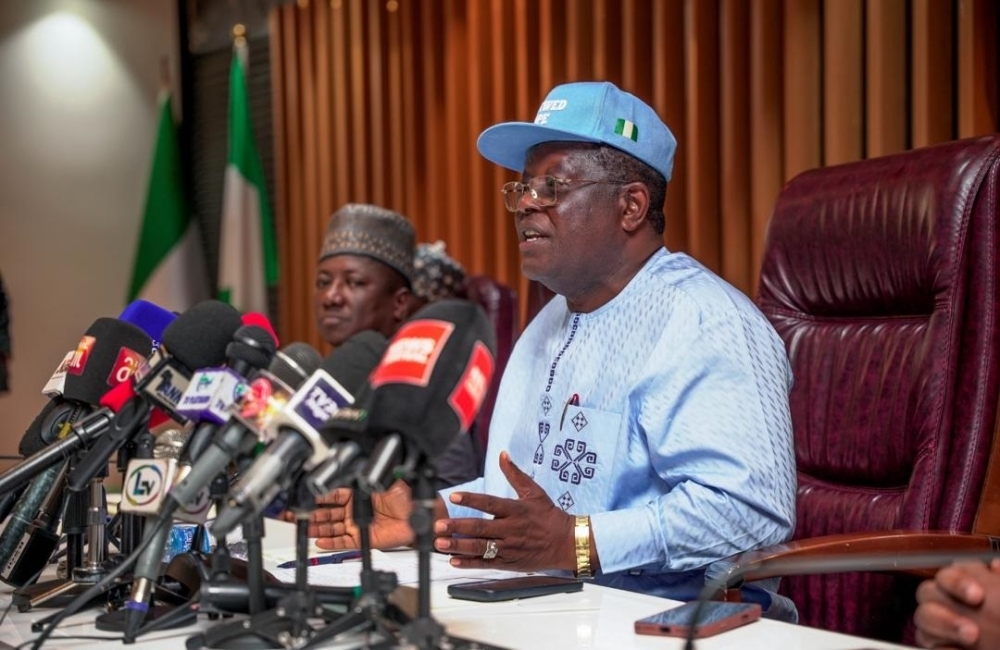
*UMAHI RECEIVES NANS ASSESSMENT REPORT ON FEDERAL ROAD INFRASTRUCTURE IN THE NORTH-WEST ZONE* *- Mobilises Stakeholders for Renewed Hope Infrastructure Agenda* The Honourable Minister of Works, Engr. David Umahi, CON, FNSE, FNATE, has received an assessment report by the National Association of Nigerian Students (NANS) on Federal Government road infrastructure projects inspected across the North-West Zone. The report was presented to the Minister at the Ministry’s Conference Hall, Mabushi, Abuja, by the President of NANS, Comrade Akinteye Babatunde Afeez. The assessment followed a nationwide student-led inspection initiative aimed at enabling Nigerian students to obtain first-hand information on the progress, quality and relevance of Federal Government infrastructure projects. Upon receiving the report, Minister Umahi commended NANS's leadership and the participating student representatives for embarking on the tour, describing the initiative as a responsible demonstration of youth participation in national development. He reiterated that the Federal Ministry of Works welcomes constructive assessments from students, civil society organisations and other stakeholders, noting that such engagements provide the Ministry with unbiased feedback on projects and help identify areas requiring further attention. According to him, the Ministry has continued to open its project sites to stakeholders and independent observers to enable them to assess ongoing and completed projects and gain a better understanding of the scope, quality and progress of work being undertaken by the Renewed Hope Administration of His Excellency, President Bola Ahmed Tinubu, GCFR. Engr. Umahi assured that the Ministry would carefully study the observations and recommendations contained in the NANS report and take appropriate action, where necessary. He specifically directed relevant Directors in the Ministry to note the students’ recommendations on access roads and pedestrian safety around educational institutions, including the request for a pedestrian bridge at the Federal Cooperative College area of Kaduna. The Minister also assured the students that their concerns regarding roads serving universities, polytechnics, colleges of education and surrounding communities would receive appropriate attention within the Ministry’s mandate. He noted that road infrastructure is critical to education, commerce, agriculture and the movement of people and goods, stressing that the Federal Government remains committed to improving connectivity across the country. Speaking on the broader national conversation surrounding the Renewed Hope Agenda, Umahi stressed the importance of assessing government policies and their implementation through facts, projects and measurable outcomes. He also encouraged stakeholders, including state governments and citizens, to engage constructively on issues affecting their communities. He highlighted the Ministry’s community engagement, sensitisation and mobilisation structure, which is intended to showcase infrastructure projects as catalysts for national integration and development. On the thorny subject of fuel subsidy removal and its implications for governance, the Minister underscored the need for citizens to examine how changes in government revenues and fiscal space are being reflected in public services and social interventions. Stakeholders were encouraged to engage their respective state governments on how additional revenues are being utilised for the benefit of citizens. Engr. Umahi recognises that roads are more than engineering structures. Their condition directly affects the movement of people and agricultural produce, access to schools and healthcare facilities, transportation costs, trade, security and the wider economic life of communities. Presenting the report, the NANS President, Comrade Akinteye Babatunde Afeez, disclosed that the students embarked on the inspection tour because they considered roads leading to educational institutions an important component of the infrastructure required to support access to education. He said the North-West leg of the exercise covered major road projects across Kano, Kaduna, Jigawa, Katsina, Sokoto and Zamfara States. Among the projects inspected, according to NANS, were the Kano Northern Bypass; Kano–Kwanar Danja–Hadejia Road; Kano–Maiduguri Expressway; Dualisation of Kano–Katsina Road; Kaduna–Zaria–Kano Expressway; Zaria-Funtua–Gusau-Sokoto Road; Kaduna (Mando)–Birnin Gwari Road; Kaduna–Pambegwa–Jos Road; and other Federal road projects across the zone. On the Reconstruction of Kaduna (Mando)–Birnin Gwari Road, the students described the project as strategically important to interstate connectivity and access to communities and educational institutions. Comrade Babatunde said the delegation observed that several of the roads inspected have a direct impact on students by improving access to campuses, reducing travel difficulties, and strengthening connectivity between educational institutions and surrounding communities. He commended the quality and scale of work observed at several project sites, particularly the detailed attention given to road pavement construction, the adoption of continuous reinforced concrete pavement (CRCP) technology, drainage infrastructure, subgrade preparation, and the installation of solar-powered streetlights along selected corridors. The NANS President, however, revealed that the students identified areas where additional interventions could further enhance the impact of some projects. Among the recommendations contained in the report was the provision of pedestrian infrastructure around educational institutions located close to major highways, as well as the construction and improvement of access roads linking some major Federal highways to citadels of learning. He stated that NANS would continue to undertake similar assessment exercises in other parts of the country and communicate its findings to the Ministry. The Senior Special Assistants to the President (SSA-P) on Community Engagement representing the six geopolitical zones used the occasion to call on Nigerians, traditional institutions, community leaders, youth organisations and other stakeholders to support and participate in the Federal Government’s infrastructure engagement initiative. They highlighted the long-standing challenges associated with neglected road corridors across the country and noted the importance of ongoing rehabilitation, reconstruction, expansion and completion of strategic routes to improve connectivity, security and socioeconomic activities. The Community Engagement teams are expected to serve as a bridge between the Ministry and communities by taking information about infrastructure development to the people, while bringing citizens’ observations, concerns and feedback to the Ministry’s attention. Speaking, the SSA-P, Community Engagement, North-West Zone, Abdullahi Tanko Yakasai, commended the students for visiting project sites and engaging with communities and road users. Yakasai said the exercise provided an opportunity for the students to see ongoing infrastructure projects firsthand and communicate their observations to the Federal Government. He commended the Federal Ministry of Works for facilitating access to the project sites and urged the students to continue providing constructive feedback on Federal Government projects across the country. In his closing remarks, the Director Overseeing the Office of the Permanent Secretary (DOOPS), Alhaji Aminu Ahmed, commended the Minister for his commitment to the Ministry’s mandate and his sustained attention to infrastructure delivery and stakeholder engagement. He thanked the NANS delegation for the initiative and for taking the time to inspect ongoing projects. He underscored the importance of collaboration among the political leadership, career officials, technical personnel, and external stakeholders in delivering and communicating the Ministry’s mandate. The DOOPS guaranteed the students that their observations would be handled appropriately. He commended the students for their interest in infrastructure development and their commitment to contributing to national development through on-the-spot assessment and constructive engagement. Ultimately, the impact of road infrastructure development is measured not only in the number of kilometres constructed or rehabilitated, but also in how effectively roads improve connectivity, facilitate economic activity and ease movement for the people who depend on them. This initiative, therefore, seeks to position citizens and communities as active participants in understanding, monitoring, and communicating the impact of federal infrastructure development. ...
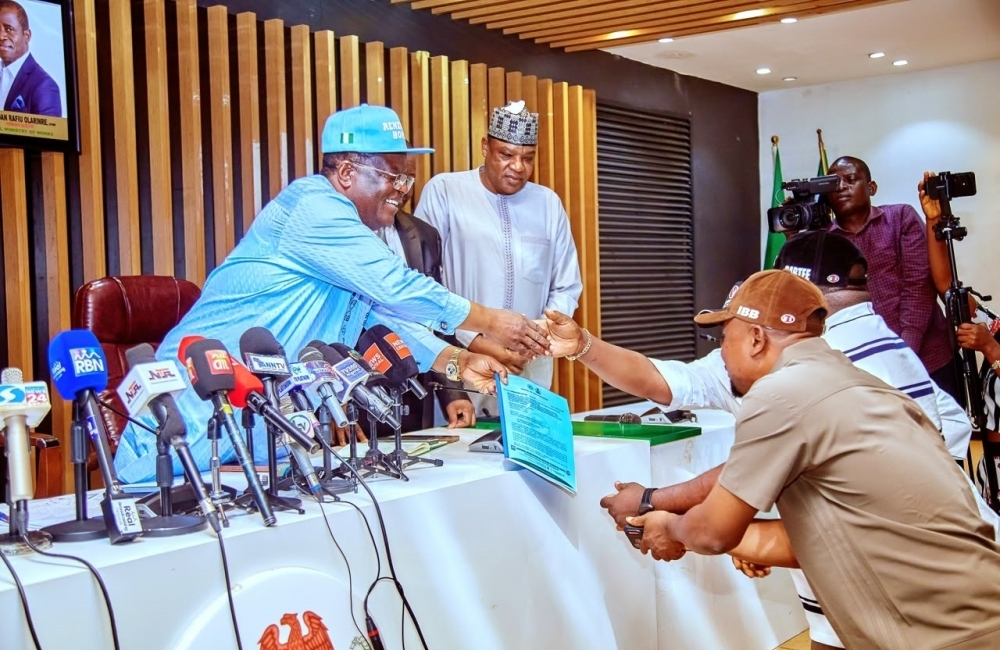
“ROADS ARE FREEDOM” — SAYS UMAHI AS STUDENTS PROJECTS INSPECTION VALIDATE TINUBU’S INFRASTRUCTURE REVOLUTION The nationwide inspection of Federal Government road projects by the leadership of the National Association of Nigerian Students (NANS) has given a fresh dimension to the conversation around the infrastructure programme of President Bola Ahmed Tinubu’s administration, with the Minister of Works, Senator Engr. David Umahi, CON, describing roads as “freedom” for Nigerians. Receiving the report of the students’ inspection tour in Abuja on Tuesday, September 22, 2026, Umahi commended the student leaders for choosing to physically inspect the projects rather than relying solely on political narratives, government reports or what they hear from others. The NANS delegation, led by its President, Comrade Babatunde Akinteye Afeez, had embarked on a nationwide Federal Roads Project Tour, inspecting projects in parts of the North West and other areas of the country. The exercise was designed to enable the students to assess the quality, progress and impact of Federal Government road projects on students, tertiary institutions, businesses and surrounding communities. Following their inspection, the students commended the quality, durability and pace of construction on the projects visited, while identifying areas requiring additional attention, particularly pedestrian bridges around tertiary institutions where major highways intersect with campus access routes. Speaking during the engagement, Umahi said what particularly impressed him was that the student leadership independently requested access to project sites across the six geopolitical zones. According to him, even when the Ministry offered to assist with logistics, the students declined, insisting that they wanted to see the projects themselves and form their own assessment. “They want to see these projects we talked about. I think this is effective leadership, and I pray that this is responsible leadership,” the Minister said. Umahi said the students’ decision to travel across the country and inspect infrastructure firsthand demonstrated a responsible approach to leadership, adding that they were determined to establish for themselves the extent to which the infrastructure programme was impacting Nigerians. “They were tired of hearing the success story of the infrastructure revolution in Nigeria, and they ventured on their own to go and see for themselves how it positively impacts on the lives and safety of their students,” he said. He commended the NANS President and his colleagues for taking the initiative, describing the students as important stakeholders in the future of Nigeria. Presenting their findings, the NANS President, Comrade Babatunde Akinteye, said the students deliberately embarked on the inspection to establish the condition of the roads themselves and understand how the projects are affecting education, mobility, safety and economic activities. The student leadership commended the Federal Government for the quality and pace of work observed on the projects, particularly the use of durable pavement technology, improved drainage systems, road expansion and the integration of safety infrastructure such as solar-powered street lighting. Responding to the students, Umahi explained that roads and bridges are not simply concrete structures or transportation facilities, but the backbone of economic activity and a major determinant of how freely people can move, trade, work, study and access opportunities. “Let me tell you, it is the road and bridges sector, the works sector, that grows the GDP of every nation. And it is the backbone of all other GDP,” he said. “When people cannot move from one point to another, it is tantamount to imprisonment. And a man that is imprisoned has no freedom. But while we are doing this beautiful infrastructure revolution in Nigeria, it is freedom we are giving to our people.” Umahi said this was the thinking behind the Federal Government’s focus on major highways and strategic road corridors across the country. He also linked the road programme to national security, explaining that improved roads, street lighting and CCTV surveillance would reduce isolation along highways and improve the ability of security agencies and citizens to monitor and use the routes safely. The Minister urged stakeholders and supporters of the administration to communicate with Nigerians through facts, projects and records, saying the scale of infrastructure development provides sufficient material for public engagement. “We have bragging rights under President Bola Tinubu to campaign with. But our mouth will not be shut. We have to let people know what is happening now that never happened before,” he said. Umahi said the responsibility was to ensure that Nigerians knew what was happening across the country rather than allowing infrastructure projects to remain poorly communicated. “I’m proud of what the President is doing in infrastructure. I’m proud of other gains we have made in various sectors of the economy. So we have to tell our stories. If you don’t say it, nobody may tell you.” He urged stakeholders, including student leaders and community engagement officials, to continue taking citizens to project sites so they could see the work for themselves. The Minister also described President Tinubu’s infrastructure programme as deliberate, particularly in its emphasis on durability. He highlighted the use of reinforced concrete pavement on selected major roads, saying the technology was intended to provide longer-lasting infrastructure and reduce the burden created by Nigeria’s maintenance challenges. “The President is very intentional because when the roads and bridges are done, then the country is on autopilot,” Umahi said. He noted that the administration was pursuing infrastructure projects that had been discussed for many years without reaching completion, citing the Lagos-Calabar Coastal Highway and the Sokoto-Badagry corridor among major national infrastructure ambitions. “Only President Bola Tinubu is giving that opportunity to dream and then to perform,” he said. Umahi also clarified what he described as misconceptions surrounding the Federal Government’s legacy road projects, explaining that many of the projects are not entirely new roads but the reconstruction, expansion and modernisation of existing routes. He cited the Akwanga-Jos Road, explaining that it is an existing road being reconstructed and expanded. He also mentioned the Gombe-Biu corridor and disclosed that the Ministry is designing the Gombe-Bauchi and Bauchi-Jos corridors as part of a broader connectivity strategy. The Minister said the projects should be viewed as long-term infrastructure investments, particularly given the financing arrangements involving foreign funding and tolling mechanisms upon completion. On the Lagos-Calabar Coastal Highway, Umahi strongly defended the strategic importance of the project, arguing that it should not be viewed simply as a Lagos project because much of its route runs through the Niger Delta. He noted the importance of infrastructure investment across the coastal states and linked the project to economic development, regional connectivity and the long-term development of the Niger Delta. The minister also connected infrastructure development with efforts to address longstanding socio-economic challenges in the region, including the Ogoni area, stressing that improved infrastructure would support communities, businesses and future investment while strengthening connectivity across the region. Reacting to a statement by Ayede, Umahi said he had no intention of leaving office and challenged critics to examine the infrastructure projects being executed across the country. “I take note that Chief Ayede says that I should resign. I’m not about to resign. But if Ayede knows the projects that President Bola Tinubu has done in South-South, I think he will eat his words,” he said. He maintained that the scale of ongoing construction demonstrates the administration’s response to Nigeria’s infrastructure needs. “Take me anywhere in this country, any region that is not a construction site. And so we have a lot to campaign for the President. We have a lot.” The Minister also defended the Tinubu administration’s decision to remove fuel subsidy, arguing that the discussion should include the fiscal consequences of the previous subsidy regime, Federation Account revenues and government debt obligations. He warned against promises to restore fuel subsidy without explaining how such a policy would be financed and urged political actors to engage Nigerians on concrete policies and explain what they intend to do differently. “So we should engage constructively to debate about the future of the country,” he said. Umahi further connected road construction with national security, noting that poor and isolated roads have historically created difficult environments for movement and provided opportunities for criminal activities. He said the integration of solar lighting, CCTV surveillance and improved road networks would make major highways safer, citing the Abuja-Kaduna-Zaria-Kano corridor as an example of the Federal Government’s investment in solar-powered street lighting and planned surveillance infrastructure. According to the Minister, the infrastructure programme is therefore not only about transportation but also about commerce, education, security, investment and economic growth. The Minister directed relevant officials to take note of the requests of the students and assured the students that the Ministry would address identified safety concerns. “To the students, the pedestrian bridge you requested, I want the directors to take note of it. We’ll do it,” he said. He cited the University of Abuja and Nnamdi Azikiwe University, Awka, among institutions where pedestrian bridge requests were being considered. “As long as you make your request for the safety of our students, we will definitely look into it,” Umahi assured. He said future road designs would, where possible, incorporate safer access arrangements around tertiary institutions. Umahi also urged the students and other stakeholders to continue communicating their firsthand experiences of Federal Government projects, saying citizens should be encouraged to visit project sites and see the infrastructure for themselves. He encouraged the Senior Special Assistant to the President on Community Engagement to mobilise citizens in their respective states and zones to understand the projects being executed in their communities. At the end of the engagement, Umahi announced additional support for the SSAs, saying he regarded them as partners in engaging Nigerians and communicating development. Umahi announced that friends and partners had put together busses to support them in nationwide engagement and pledged continued cooperation. He thanked the NANS leadership for what he described as a responsible approach to national development. The Special Advisers to the President on Community Engagement also commended President Bola Ahmed Tinubu and the Minister of Works for the road infrastructure projects being executed across their respective zones. ...
FORMER MINISTER OF SCIENCE, TECHNOLOGY AND INNOVATION, DR CHRISTOPHER OGBONNAYA ONU WAS A GREAT TRAILBLAZER AND SHINING LIGHT TO HIS PEOPLE. HE MARKED THRESHOLDS IN INTELLECTS, INTEGRITY, INDUSTRY, AND PASSION FOR EXCELLENCE
-SEN. UMAHI
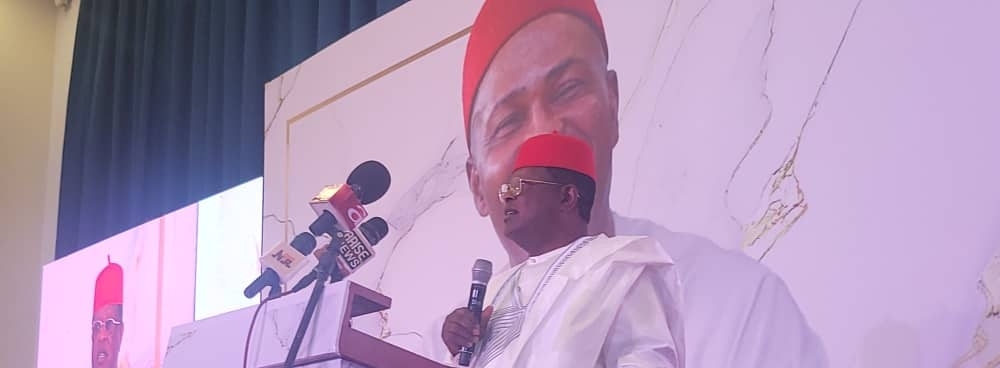
BEING A TRIBUTE PRESENTED IN HONOUR OF HIS EXCELLENCY, LATE DR. CHRISTOPHER OGBONNAYA ONU, CON, BY THE HONOURABLE MINISTER OF WORKS, HIS EXCELLENCY, ENGR. SEN. NWEZE DAVID UMAHI, CON, DURING A TRIBUTE NIGHT HELD AT YAR’ADUA CENTRE, DATED 4TH NOVEMBER 2024.
I received the sad news of the passing of my dear brother, His Excellency, Dr. Christopher Ogbonnaya Onu, CON with profound shock and a deep sense of loss. His call to eternal glory on the 11th day of April 2024 at the age of 72 years was received with grief and deep sorrow.
Dr. Christopher Onu was a great trailblazer and a leadership light in Uburu Community and Ebonyi State, where I hail from. He was not just a mentor to me, he was a kinsman whose positive marks inspired great leadership motivations to his people. He was charming in character and charismatic in leadership. While alive, he marked a threshold in intellects, integrity, industry, and passion for excellence in all his endeavours; he was a great illustrious son of Uburu Community who made an immeasurable impact in nation-building and service to humanity.
Though he departed at the prime of his leadership and service to humanity, we shall forever cherish the values he bequeathed and the gains of the service he rendered as pioneer elected Governor of Abia State, former National Chairman of the All People’s Party (APP), first Presidential flagbearer of APP, former Honourable Minister of Science and technology and a host of other services he rendered to his community and the nation. Our consolation and fortitude are in the assurances that he lived the true purpose of life, which is service to God and humanity.
My deepest condolences go to his dear wife, children, the entire family of HRH, late Eze David Abba Onu, Eze Adu l of Uburu, and the government and people of Ebonyi State. May his soul rest in perfect peace, Amen.
As he makes his journey to immortality, I pray for God's eternal mercies upon him and divine fortitude and comfort to all of us who are impacted by this irreparable loss.
Thanks, and God bless you.
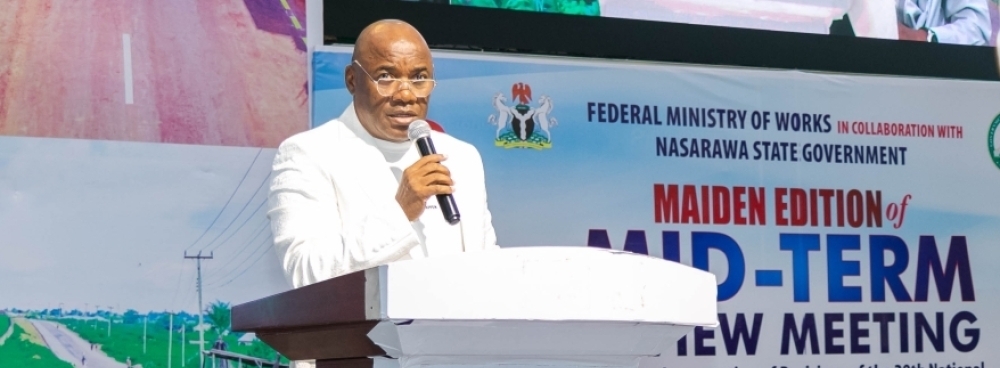
WELCOME REMARKS BY THE PERMANENT SECRETARY, ENGR. OLUFUNSO O. ADEBIYI FNSE, DURING THE MID-TERM REVIEW MEETING ON THE 29TH NATIONAL COUNCIL ON WORKS DECISIONS REACHED IN 29TH NCW FOR THE PREPARATION OF 30TH EDITION OF THE COUNCIL MEETING
PROTOCOLS
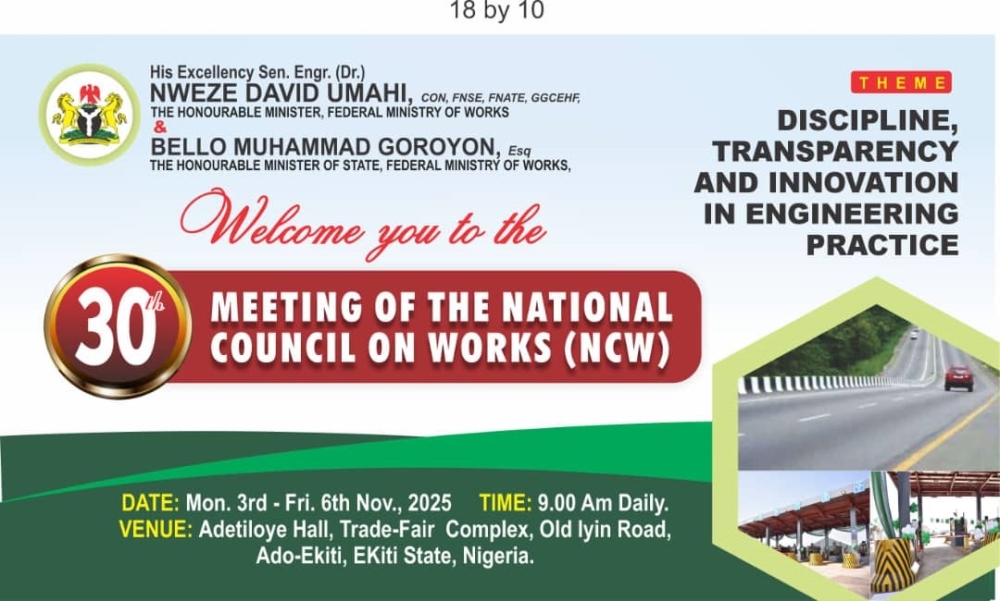
It is with great pleasure that I welcome you all to this Mid-Term Review Meeting in preparation for the 30th National Council on Works (NCW). I extend my profound gratitude to the Honourable Minister of Works for approving this important gathering, which is a vital step towards ensuring the successful implementation of resolutions from our previous deliberations.
I would also like to express my appreciation to the Nasarawa State Government for the support and hospitality towards the hosting of the meeting in the State Capital. My gratitude equally extends to our distinguished stakeholders who have taken the time to be part of this crucial discourse.
RATIONALE FOR THE MID-TERM REVIEW MEETING
This Mid-Term Review Meeting serves as a statutory activity critical to tracking the progress made in implementing key resolutions from the 29th National Council on Works, which was held in Abakaliki, Ebonyi State, from 15th to 18th July 2024. As we approach the 30th NCW, it is imperative that we take stock of our achievements, challenges, and the way forward.
The main objective of the maiden Mid-Term Review/ Preparatory meeting is to provide a veritable and suitable platform for critical Stakeholders in the road infrastructure Sector to have a robust national consideration on the dynamics and emerging issues concerning the sector, while the specific objectives for convening the meeting include to:
The discussions at this plenary session will set the tone for the deliberations of our six dedicated Desk Review Groups, which have been carefully structured to cover key technical and policy aspects of infrastructure development.
The Desk Review Group on Policy Formation and Implementation Decisions is expected to analyze policy frameworks and regulatory mechanisms guiding infrastructure projects, evaluating their effectiveness and proposing necessary adjustments to enhance policy coherence and sustainability.
The Desk Review Group on Institutional Strengthening Decisions will examine strategies for enhancing the capacity and efficiency of institutions responsible for infrastructure development, focusing on governance structures, inter-agency collaboration, and workforce competency.
The Desk Review Group on Alternative Technologies Decisions is tasked with exploring innovative construction methodologies and materials that offer cost-effective, durable, and sustainable solutions in road and infrastructure development.
The Desk Review Group on Technical and Operational Decisions will assess engineering standards, project execution models, and maintenance strategies, ensuring that technical best practices are integrated into the sector’s operational framework.
The Desk Review Group on Alternative Funding Mechanisms Decisions will evaluate existing and emerging financing models, identifying viable options for sustainable funding of infrastructure projects through public-private partnerships, concessional funding, and other financial instruments.
Finally, the Desk Review Group on Rule of Law and Good Governance will review compliance with legal and ethical standards in the sector, ensuring adherence to procurement laws, transparency, and accountability in project implementation.
As we embark on this review process, I urge all technical experts, policy advisers, and stakeholders present to engage in robust discussions, leveraging data-driven insights and global best practices to enrich our deliberations. The recommendations from this session will serve as the foundation for policy refinement, institutional reforms, and strategic decision-making at the forthcoming 30th NCW.
In this regard, we have invited three distinguished Resource Persons from the office of the Senior Special Assistant to the President on Central Delivery and coordinating Unit (CDCU), the Budget and National Economic Planning and the Head of Civil Service of the Federation to share their expertise and insights. Their contributions will undoubtedly enrich our discussions and provide strategic direction for achieving our collective goals.
I extend my profound gratitude to the Honourable Minister for his unwavering leadership and commitment to infrastructure transformation in Nigeria. Let us remain focused on our collective mission to build a resilient, innovative, and well-governed infrastructure ecosystem that will drive national development. I look forward to insightful contributions and practical resolutions that will enhance the effectiveness of the Works Sector.
CONCLUSION
As we engage in fruitful deliberations over the next few days, I encourage all participants to be proactive, open-minded, and solution-driven. The impact of our discussions here will go a long way in shaping the deliberations of the 30th NCW and, ultimately, the trajectory of infrastructure development in Nigeria.
Thank you, and I wish us all productive deliberations.
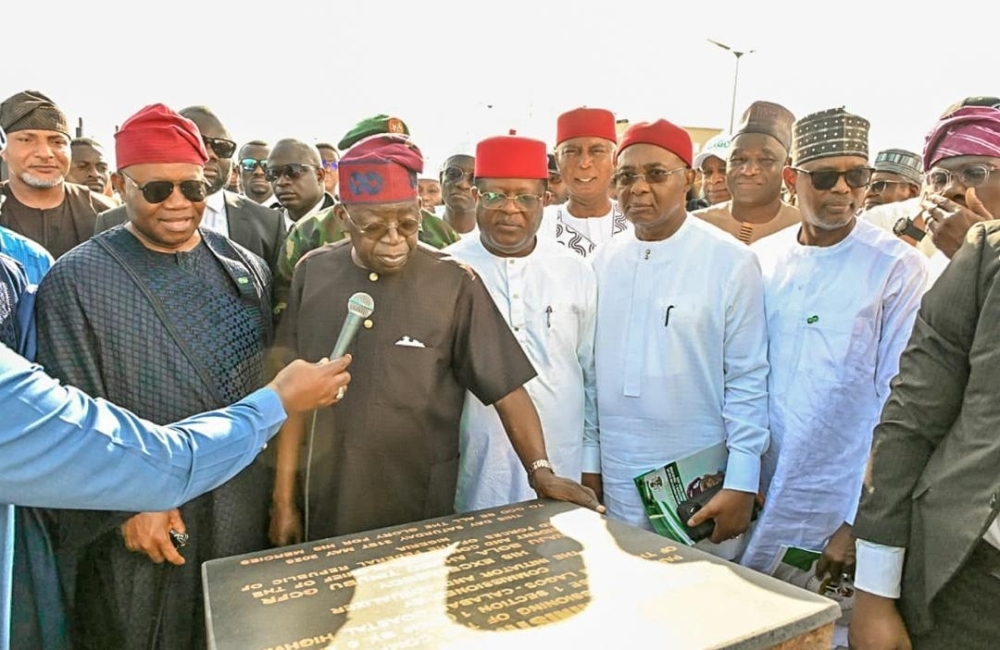
DRIVING NIGERIA’S FUTURE: CELEBRATING TWO YEARS OF TRANSFORMATIVE LEADERSHIP AND THE LAGOS-CALABAR COASTAL HIGHWAY MILESTONE
DRIVING NIGERIA’S FUTURE: CELEBRATING TWO YEARS OF TRANSFORMATIVE LEADERSHIP AND THE LAGOS-CALABAR COASTAL HIGHWAY MILESTONE
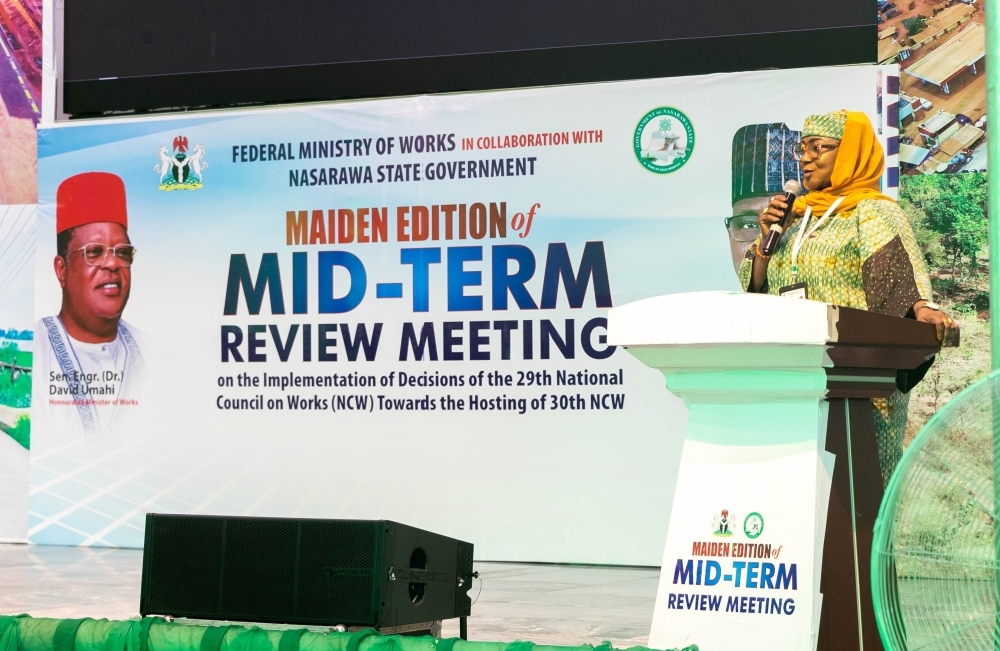
MID -TERM REVIEW MEETING ON THE IMPLIMENTATION OF THE DECISIONS REACHED AT THE 29TH NATIONAL COUNCIL ON WORKS (NCW) DAY 1
MID -TERM REVIEW MEETING ON THE IMPLIMENTATION OF THE DECISIONS REACHED AT THE 29TH NATIONAL COUNCIL ON WORKS (NCW) DAY 1