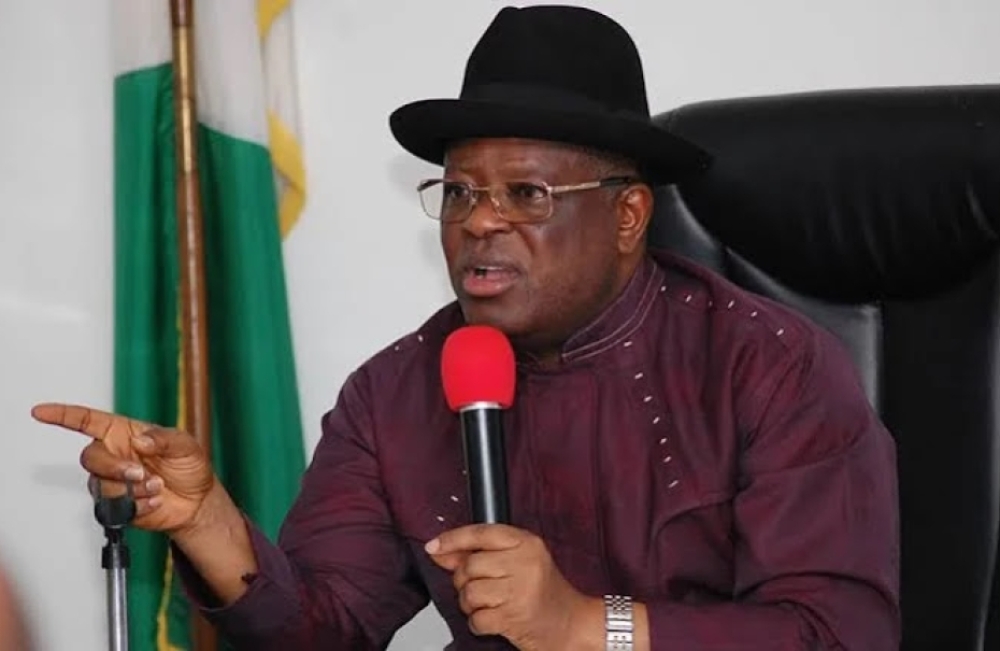
UMAHI ORDERS IMMEDIATE EMERGENCY INTERVENTION ON BENIN-ASABA ROAD, AND SOME OTHER CRITICAL FEDERAL ROADS
The Honourable Minister of Works, Senator Engr. David Nweze Umahi, CON, has directed the immediate deployment of major contractors to all three sections of the Benin-Asaba Federal Road to restore the failed sections and bring an end to the suffering of motorists and other road users.
This is because, the situation on the concessioned Benin-Asaba Road has reached a point where the overall public interest must take precedence over the existing concession agreement.
Recall that the Honourable Minister of Works was on the Benin-Asaba Road about seven days ago, where he assembled a number of contractors and directed them to prepare for immediate palliative intervention on the affected sections of the road at no cost to the concessionaire. In line with the Concession agreement which requires that before the Federal Government could intervene, the permission of the concessionaire must be required, and that permission was not granted to federal government.
The Minister subsequently proposed three options to the concessionaire, any one of which would have enabled the Federal Government to move in and address the worsening condition of the road. Unfortunately, none of the options was accepted by the concessionaire. Immediately after the Minister left Asaba, the already limited equipment deployed to the road by the concessionaire was further reduced to just one, worsening the situation and increasing the suffering of motorists and other road users.
While the Minister takes responsibility for the concerns and suffering of Nigerians using the road, it is important to state that the concessionaire has also not taken the suffering of Edo people and travelling public sufficiently into consideration by declining all the options put forward by the Federal Government. The concessionaire continues to rely on the terms of the concession agreement entered into by the previous administration, an agreement which weighs heavily against the Federal Government’s ability to intervene quickly in the interest of the public in a situation like this.
In view of this situation, the Honourable Minister of Works has directed the immediate deployment of major contractors within the corridor to all three sections of the Benin-Asaba Road to restore the failed sections and bring relief to the people, with the cost of the emergency intervention being borne by the Federal Government. The Honourable Minister has also directed immediate redesign of the entire route to be rebuilt with reinforced concrete pavement. The public should therefore take note that immediate action is underway to restore every failed section of the Benin-Asaba Road and subsequently rehabilitate the entire sections of the road using reinforced concrete pavement.
2. On the Benin-Sapele Road:
The Governors of Edo and Delta States, the Niger Delta Development Commission (NDDC), and the Federal Government are currently engaged in interventions on different sections of the road to restore the entire route. While some sections are receiving palliative attention, permanent works are also ongoing on other sections.
3. On Ifaki(Ekiti) - Kabba (Kogi) Road:
The Federal Government is engaging both the contractor; Gamji Nigeria Company Limited, and Dangote PLC on immediate emergency and permanent intervention on the most failed sections of the road, while efforts are being made to financially mobilise the company for more extensive permanent work to commence on the axis.
4. On the Sokoto-Zamfara-Katsina Road: This is an inherited project involving the dualisation of approximately 350 kilometres, which translates to about 700 kilometers. The project has since been redesigned and is currently ongoing and most sections are being reconstructed using reinforced concrete pavement. From the Sokoto axis towards Zamfara, over 50 kilometres of one carriageway have been fully completed with reinforced concrete pavement. From Zamfara to Katsina, some sections have been completed and palliative works have been ordered over the sections that have not been reconstructed. However, the pace of work slowed down due to the redesign and rephasing of the project. The contractors currently engaged on the road include CBC, SETRACO, Triacta and Mothercat. They are being remobilised to return to site and complete the outstanding works.
5. On the Abuja-Kaduna-Zaria-Kano Road: The Federal Government took over the Road project and has currently completed the 118-kilometer mostly on reinforced concrete pavement on lot 1. The Lot 2, which covers 164 kilometres, is over 60 percent completed on reinforced concrete pavement. The Federal Government has also introduced solar-powered light on the entire route of Abuja-Kaduna-Zaria - Kano to improve visibility during night travel and enhance the overall security situation on the route. The entire project is scheduled for completion by December 2026.
6. On Bauchi-Jigawa Road: Triacta Nigeria Limited has been mobilised to carry out the necessary interventions on some failed sections and work is currently ongoing in those failed sections.
7. On the Sagamu-Ore Road: 48 Kilometers of the 96-kilometre road have already been completed using reinforced concrete pavement. There is also a 24-kilometre section around Ore which was abandoned by the previous contractor. The Federal Government has directed its immediate restoration to ensure seamless travel. Solar lights are being installed in the entire 96kilometer of the road.
8. On Flooded Sections on Sagamu-Ore-Benin Road: The flooded sections on the same corridor between Sagamu-Ore-Benin Road, as well as other flooded sections in Ondo State, are being designed for emergency procurement and intervention.
9. On the East-West Road:
Some failed and critical sections, including defective sections of bridges along the East-West Road, are being marked out for emergency procurement and intervention.
10. On the Abuja-Lokoja Road:
Several contracts are ongoing along the route, while the three critical sections currently without contracts are being procured for emergency intervention.
11. On the Lokoja-Benin-Warri Road: The President has directed a complete redesign and procurement of the 400-kilometre dualised route covering the uncompleted sections, using reinforced concrete pavement, while palliative works will continue with the contractors currently on the road.
12. On Carter Bridge:
While the Federal Government continues to undertake weekly maintenance of the underwater elements of the bridge. The site has also been handed over to the contractor, CCECC, for the construction of a permanent new bridge, and work has commenced.
13. On the Third Mainland Bridge:
With regard to the defective underwater structural elements, the Federal Government is at the final stage of determining the appropriate intervention for the repair of the affected elements.
14. On the flooded section of the Lagos-Ibadan Road: Work has commenced on the affected section. There are also several flooded sections on federal roads across the six geopolitical zones, largely occasioned by excessive flooding and the effects of climate change. The Federal Government is identifying and marking these sections for immediate attention.
15. On the First and Second Niger Bridges:
Intervention work is ongoing on the approach roads to the Second Niger Bridge damaged by flood and the work is progressing very well. The First Niger Bridge has been closed to traffic to enable immediate repair works. Contractor has mobilized to site and comprehensive rehabilitation of the bridge has started. From Summit Junction to the First Niger Bridge, massive rehabilitation work is also ongoing using reinforced concrete pavement.
16. The Honourable Minister wishes to commend the President of the Federal Republic of Nigeria, His Excellency Bola Ahmed Tinubu, GCFR, for the massive work being undertaken on the nation’s roads since the administration assumed office in 2023.
17. It is important to state that when the present administration came into office, there was hardly any part of the country where one could travel for an hour without encountering significant challenges on the road network. The condition of the country’s roads and bridges was a major national infrastructure challenge.
18. Rather than shy away from the problem, the administration of President Bola Ahmed Tinubu made the nation’s road network a priority. Virtually every part of the country became a priority, and the Federal Government, through the Federal Ministry of Works, Regional Commissions, Parastatals and other MDA’s has continued to respond extensively to these challenges.
19. The Federal Government is currently working on over 80 percent of the inherited federal roads, an unprecedented level of intervention in the country’s road infrastructure.
20. We ask the public to understand the enormous challenges inherited on our roads and bridges and to take note not only of the problems being solved, but also of the permanent solutions being introduced.
21. A major part of this new approach is the use of reinforced concrete pavement, designed to significantly extend the lifespan of major roads. These roads are expected to last between 50 and 100 years. This means that roads being constructed under President Bola Ahmed Tinubu’s administration are being designed with future generations in mind, rather than simply providing temporary solutions to today’s problems. And this is a complete departure from the past, when roads often deteriorated only a few years after completion, resulting in a continuous cycle of reconstruction and expenditure.
22. We appreciate the concerns of Nigerians over the condition of some roads presently and the difficulties faced by motorists and commuters who cannot move easily from one point to another. Those concerns are legitimate, and the Federal Government is listening. But Nigerians should also recognise the enormous scale of the problems inherited and the amount of work currently being undertaken across the country.
23. It is simply impossible to resolve every road challenge accumulated over many years of neglect by the past administrations within three years. What is important is that the government is working, the government is responding, and the government is putting permanent solutions in place.
25. We appreciate members of the public who send situation reports on failed roads and other infrastructure challenges. These reports help the Ministry identify areas requiring urgent attention. However, we also appeal to members of the public to report when such problems have been addressed, just as they report when they occur.
24. We are aware of situations where photographs and reports of road challenges continue to circulate on social media even after the Federal Government has intervened and resolved the particular problem.
25. However, the Ministry will continue to respond as rapidly as possible to genuine reports and concerns from Nigerians.
26. It is also important to note that we have compiled a comprehensive record of all inherited, ongoing and intervention projects across the country which is available to the public. This is to ensure that Nigerians have access to information on the infrastructure projects being undertaken nationwide and can fully participate in and appreciate the infrastructure revolution of President Bola Ahmed Tinubu’s administration.

UMAHI ORDERS IMMEDIATE EMERGENCY INTERVENTION ON BENIN-ASABA ROAD, AND SOME OTHER CRITICAL FEDERAL ROADS The Honourable Minister of Works, Senator Engr. David Nweze Umahi, CON, has directed the immediate deployment of major contractors to all three sections of the Benin-Asaba Federal Road to restore the failed sections and bring an end to the suffering of motorists and other road users. This is because, the situation on the concessioned Benin-Asaba Road has reached a point where the overall public interest must take precedence over the existing concession agreement. Recall that the Honourable Minister of Works was on the Benin-Asaba Road about seven days ago, where he assembled a number of contractors and directed them to prepare for immediate palliative intervention on the affected sections of the road at no cost to the concessionaire. In line with the Concession agreement which requires that before the Federal Government could intervene, the permission of the concessionaire must be required, and that permission was not granted to federal government. The Minister subsequently proposed three options to the concessionaire, any one of which would have enabled the Federal Government to move in and address the worsening condition of the road. Unfortunately, none of the options was accepted by the concessionaire. Immediately after the Minister left Asaba, the already limited equipment deployed to the road by the concessionaire was further reduced to just one, worsening the situation and increasing the suffering of motorists and other road users. While the Minister takes responsibility for the concerns and suffering of Nigerians using the road, it is important to state that the concessionaire has also not taken the suffering of Edo people and travelling public sufficiently into consideration by declining all the options put forward by the Federal Government. The concessionaire continues to rely on the terms of the concession agreement entered into by the previous administration, an agreement which weighs heavily against the Federal Government’s ability to intervene quickly in the interest of the public in a situation like this. In view of this situation, the Honourable Minister of Works has directed the immediate deployment of major contractors within the corridor to all three sections of the Benin-Asaba Road to restore the failed sections and bring relief to the people, with the cost of the emergency intervention being borne by the Federal Government. The Honourable Minister has also directed immediate redesign of the entire route to be rebuilt with reinforced concrete pavement. The public should therefore take note that immediate action is underway to restore every failed section of the Benin-Asaba Road and subsequently rehabilitate the entire sections of the road using reinforced concrete pavement. 2. On the Benin-Sapele Road: 3. On Ifaki(Ekiti) - Kabba (Kogi) Road: 4. On the Sokoto-Zamfara-Katsina Road: This is an inherited project involving the dualisation of approximately 350 kilometres, which translates to about 700 kilometers. The project has since been redesigned and is currently ongoing and most sections are being reconstructed using reinforced concrete pavement. From the Sokoto axis towards Zamfara, over 50 kilometres of one carriageway have been fully completed with reinforced concrete pavement. From Zamfara to Katsina, some sections have been completed and palliative works have been ordered over the sections that have not been reconstructed. However, the pace of work slowed down due to the redesign and rephasing of the project. The contractors currently engaged on the road include CBC, SETRACO, Triacta and Mothercat. They are being remobilised to return to site and complete the outstanding works. 5. On the Abuja-Kaduna-Zaria-Kano Road: The Federal Government took over the Road project and has currently completed the 118-kilometer mostly on reinforced concrete pavement on lot 1. The Lot 2, which covers 164 kilometres, is over 60 percent completed on reinforced concrete pavement. The Federal Government has also introduced solar-powered light on the entire route of Abuja-Kaduna-Zaria - Kano to improve visibility during night travel and enhance the overall security situation on the route. The entire project is scheduled for completion by December 2026. 6. On Bauchi-Jigawa Road: Triacta Nigeria Limited has been mobilised to carry out the necessary interventions on some failed sections and work is currently ongoing in those failed sections. 7. On the Sagamu-Ore Road: 48 Kilometers of the 96-kilometre road have already been completed using reinforced concrete pavement. There is also a 24-kilometre section around Ore which was abandoned by the previous contractor. The Federal Government has directed its immediate restoration to ensure seamless travel. Solar lights are being installed in the entire 96kilometer of the road. 8. On Flooded Sections on Sagamu-Ore-Benin Road: The flooded sections on the same corridor between Sagamu-Ore-Benin Road, as well as other flooded sections in Ondo State, are being designed for emergency procurement and intervention. 9. On the East-West Road: 10. On the Abuja-Lokoja Road: 11. On the Lokoja-Benin-Warri Road: The President has directed a complete redesign and procurement of the 400-kilometre dualised route covering the uncompleted sections, using reinforced concrete pavement, while palliative works will continue with the contractors currently on the road. 12. On Carter Bridge: 13. On the Third Mainland Bridge: 14. On the flooded section of the Lagos-Ibadan Road: Work has commenced on the affected section. There are also several flooded sections on federal roads across the six geopolitical zones, largely occasioned by excessive flooding and the effects of climate change. The Federal Government is identifying and marking these sections for immediate attention. 15. On the First and Second Niger Bridges: 16. The Honourable Minister wishes to commend the President of the Federal Republic of Nigeria, His Excellency Bola Ahmed Tinubu, GCFR, for the massive work being undertaken on the nation’s roads since the administration assumed office in 2023. 17. It is important to state that when the present administration came into office, there was hardly any part of the country where one could travel for an hour without encountering significant challenges on the road network. The condition of the country’s roads and bridges was a major national infrastructure challenge. 18. Rather than shy away from the problem, the administration of President Bola Ahmed Tinubu made the nation’s road network a priority. Virtually every part of the country became a priority, and the Federal Government, through the Federal Ministry of Works, Regional Commissions, Parastatals and other MDA’s has continued to respond extensively to these challenges. 19. The Federal Government is currently working on over 80 percent of the inherited federal roads, an unprecedented level of intervention in the country’s road infrastructure. 20. We ask the public to understand the enormous challenges inherited on our roads and bridges and to take note not only of the problems being solved, but also of the permanent solutions being introduced. 21. A major part of this new approach is the use of reinforced concrete pavement, designed to significantly extend the lifespan of major roads. These roads are expected to last between 50 and 100 years. This means that roads being constructed under President Bola Ahmed Tinubu’s administration are being designed with future generations in mind, rather than simply providing temporary solutions to today’s problems. And this is a complete departure from the past, when roads often deteriorated only a few years after completion, resulting in a continuous cycle of reconstruction and expenditure. 22. We appreciate the concerns of Nigerians over the condition of some roads presently and the difficulties faced by motorists and commuters who cannot move easily from one point to another. Those concerns are legitimate, and the Federal Government is listening. But Nigerians should also recognise the enormous scale of the problems inherited and the amount of work currently being undertaken across the country. 23. It is simply impossible to resolve every road challenge accumulated over many years of neglect by the past administrations within three years. What is important is that the government is working, the government is responding, and the government is putting permanent solutions in place. 25. We appreciate members of the public who send situation reports on failed roads and other infrastructure challenges. These reports help the Ministry identify areas requiring urgent attention. However, we also appeal to members of the public to report when such problems have been addressed, just as they report when they occur. 24. We are aware of situations where photographs and reports of road challenges continue to circulate on social media even after the Federal Government has intervened and resolved the particular problem.
The Governors of Edo and Delta States, the Niger Delta Development Commission (NDDC), and the Federal Government are currently engaged in interventions on different sections of the road to restore the entire route. While some sections are receiving palliative attention, permanent works are also ongoing on other sections.
The Federal Government is engaging both the contractor; Gamji Nigeria Company Limited, and Dangote PLC on immediate emergency and permanent intervention on the most failed sections of the road, while efforts are being made to financially mobilise the company for more extensive permanent work to commence on the axis.
Some failed and critical sections, including defective sections of bridges along the East-West Road, are being marked out for emergency procurement and intervention.
Several contracts are ongoing along the route, while the three critical sections currently without contracts are being procured for emergency intervention.
While the Federal Government continues to undertake weekly maintenance of the underwater elements of the bridge. The site has also been handed over to the contractor, CCECC, for the construction of a permanent new bridge, and work has commenced.
With regard to the defective underwater structural elements, the Federal Government is at the final stage of determining the appropriate intervention for the repair of the affected elements.
Intervention work is ongoing on the approach roads to the Second Niger Bridge damaged by flood and the work is progressing very well. The First Niger Bridge has been closed to traffic to enable immediate repair works. Contractor has mobilized to site and comprehensive rehabilitation of the bridge has started. From Summit Junction to the First Niger Bridge, massive rehabilitation work is also ongoing using reinforced concrete pavement.
25. However, the Ministry will continue to respond as rapidly as possible to genuine reports and concerns from Nigerians.
26. It is also important to note that we have compiled a comprehensive record of all inherited, ongoing and intervention projects across the country which is available to the public. This is to ensure that Nigerians have access to information on the infrastructure projects being undertaken nationwide and can fully participate in and appreciate the infrastructure revolution of President Bola Ahmed Tinubu’s administration.
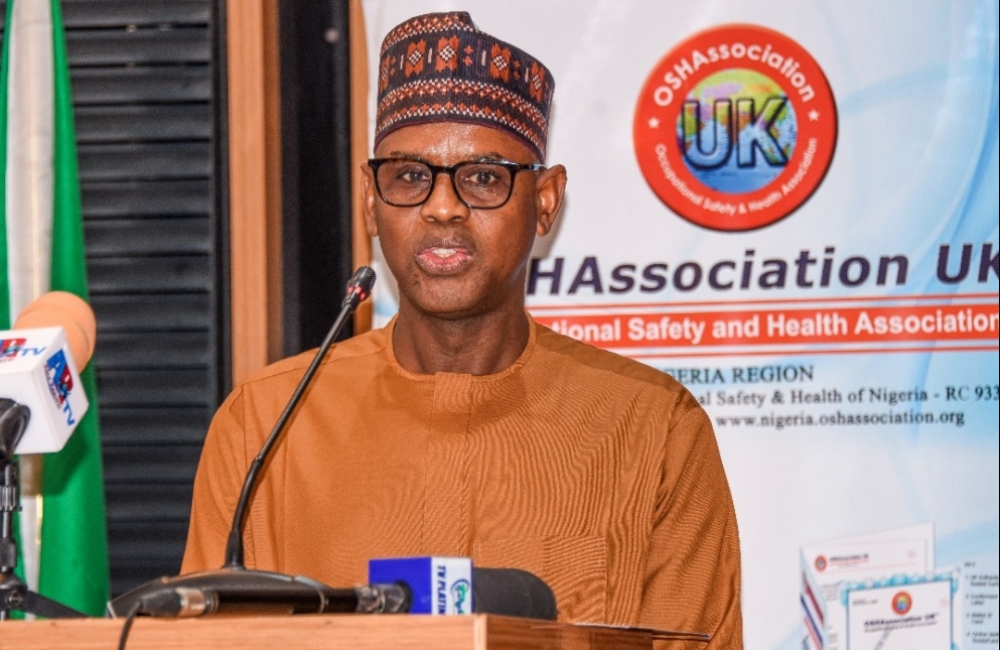
Goronyo Calls for Stronger Workplace Safety Culture as Stakeholders Rally Support Minister urges collective action, commends President Tinubu’s Renewed Hope Agenda, and is decorated as Fellow of OSHA The Honourable Minister of State for Works, Mohammed Bello Goronyo, Esq., has reiterated the Federal Government’s unwavering commitment to strengthening workplace safety standards in Nigeria, stressing that occupational health and safety must remain a national priority for sustainable development. Speaking at a national stakeholders’ workshop on Workplace Safety and Health held on 28th August 2025, at the Ministry's Hall, the Minister emphasized that workplace safety is not merely a regulatory duty but a shared responsibility that requires the active involvement of government, the private sector, labour unions, professional bodies, and society at large. “When safety measures and protocols are enforced, accidents reduce drastically, productivity improves, and the human development index records significant gains. Protecting human lives must be at the center of every workplace policy and practice,” Barr. Goronyo stated. The Minister acknowledged existing challenges such as weak enforcement, inadequate regulations, and low awareness, but called for stronger collaboration among stakeholders to adapt global best practices to Nigeria’s realities. He commended the Occupational Safety and Health Association (OSHA) for its leadership in promoting international standards, while also applauding President Bola Ahmed Tinubu’s Renewed Hope Agenda, which he said “is already yielding results across all sectors.” Highlighting Nigeria’s workforce as one of the nation’s greatest assets, Goronyo warned that the loss of lives and productivity due to unsafe work environments cannot be ignored. Research, he noted, shows that organizations prioritizing workplace safety enjoy higher employee morale, reduced injuries, and improved efficiency. The workshop also featured goodwill messages from senior stakeholders: The Permanent Secretary of the Federal Ministry of Works, Engr. Olufunsho Adebiyi (represented by the Director, Central Workshop and Equipment, Engr. Atule Isaac), stressed that workplace safety is especially critical in high-risk sectors such as construction, oil and gas, and manufacturing, as well as in the informal economy where enforcement is weak. He urged employers to treat safety as part of production costs while encouraging workers to adhere strictly to safety guidelines. He reaffirmed that the Ministry remains committed to ensuring that workplace safety is upheld across all its operations and projects. Also speaking, the President of OSHAssociation UK, Nigeria Chapter, Mr. Aderemi (JP, FIMC, CMC, MCArb, FOSHA), represented by the Chairman, Council of Fellowship (OSHAssociation), Dr. Dalhatu Mohammed, described health and safety as both a moral and economic responsibility. He urged stakeholders to embrace prevention over cure, embed a safety-first culture across workplaces, and reiterated the Association's guiding principles. Rear Admiral (Rtd.) BEE Ibe-Enwo, FOSHA, Chief Technical Officer, OSHA Nigeria, highlighted alarming statistics showing that fatalities from workplace accidents rose from 71 deaths in 1997–1999 to 238 deaths between 2014–2016, underscoring the urgency of sustained action. In recognition of his exceptional leadership and advocacy, Barr. Goronyo was formally decorated as a Fellow of the Occupational Safety and Health Association (OSHA). The prestigious honor reflects his outstanding commitment to advancing workplace safety, health standards, and the promotion of safer work environments in Nigeria. Responding to the conferment, the Minister described the fellowship as a call to greater responsibility, pledging to deepen his efforts in protecting workers’ lives, promoting safer workplaces, and ensuring that safety becomes an integral part of national development. Abdullahi Ameen Mohammed, For: Director, Press and Public Relations 28th August, 2025 ...
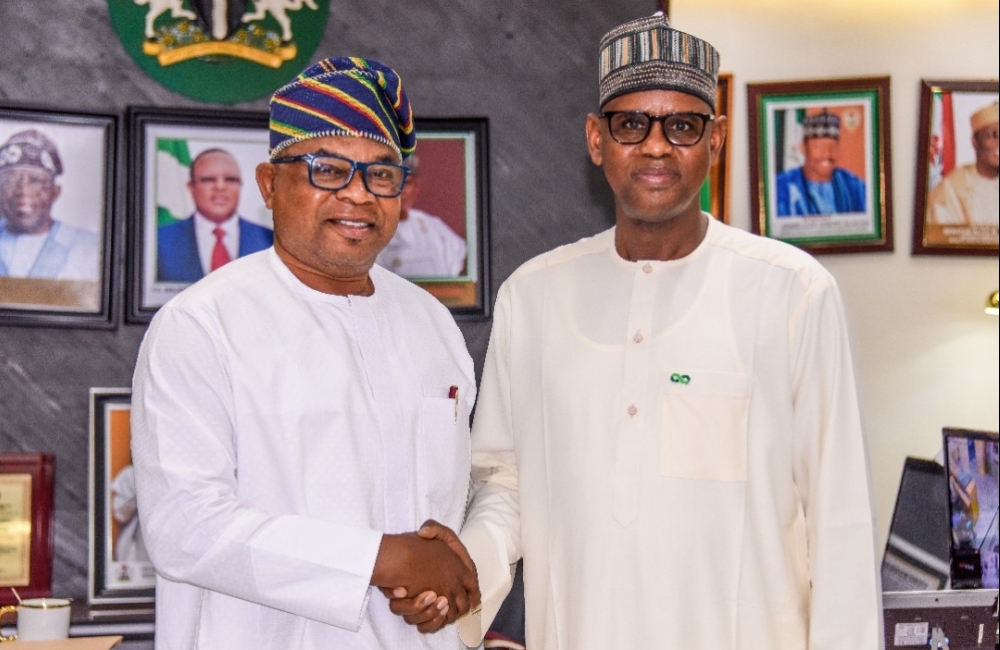
Goronyo Commends Swift Rescue Response, Reaffirms FG’s Commitment to Waterway Safety The Federal Government has reiterated its commitment to improving safety and rescue operations across Nigeria’s waterways following a recent boat mishap in Sokoto State, which saw a quick response from rescue agencies. The Honourable Minister of State for Works, Mohammed Bello Goronyo, Esq., provided this assurance on August 25, 2025, during an interactive meeting with the Managing Director of the National Inland Waterways Authority (NIWA), Mr. Bola Oyebamji, and senior officials of the agency. The Minister praised NIWA and the National Emergency Management Agency (NEMA) for their timely intervention, noting that their coordinated rescue efforts saved several lives and ensured the prompt recovery of victims. “The rescue efforts in Sokoto demonstrate the importance of synergy between agencies. In the previous week, NIWA and NEMA were on-site even before other responders arrived, rescuing passengers and recovering victims. This level of dedication illustrates what can be achieved when we work together in unity,” Goronyo stated. The Minister also commended President Bola Ahmed Tinubu for his Renewed Hope Agenda, observing that the administration’s vision and policy direction continue to create a supportive framework for enhanced safety, infrastructure, and service delivery across critical sectors, including water transportation. In his remarks, NIWA’s Managing Director, Mr. Oyebamji, thanked the Honourable Minister for his leadership and assured that the agency would continue to strengthen its operations to protect lives and improve navigation safety on the waterways. He announced that the Federal Government is set to receive five new boats in the coming months, including one aluminum and one iron boat designated for deployment to Sokoto State. The NIWA Managing Director also revealed that immediate measures are being implemented to clear water hyacinth that obstructs free movement on the waterways in the region. Additionally, arrangements have been finalized for distributing life jackets to riverine communities in the coming weeks. Reaffirming the Government’s commitment, Minister Goronyo emphasized that such engagements should be sustained as an ongoing platform for collaboration rather than a “one-off meeting.” He underscored that the Federal Government remains fully dedicated to providing the necessary infrastructure, equipment, and policies to prevent casualties and ensure safe, efficient, and secure inland water transport across the nation. *Mohammed A. Ahmed* Director, Press and Public Relations August 26, 2025. ...
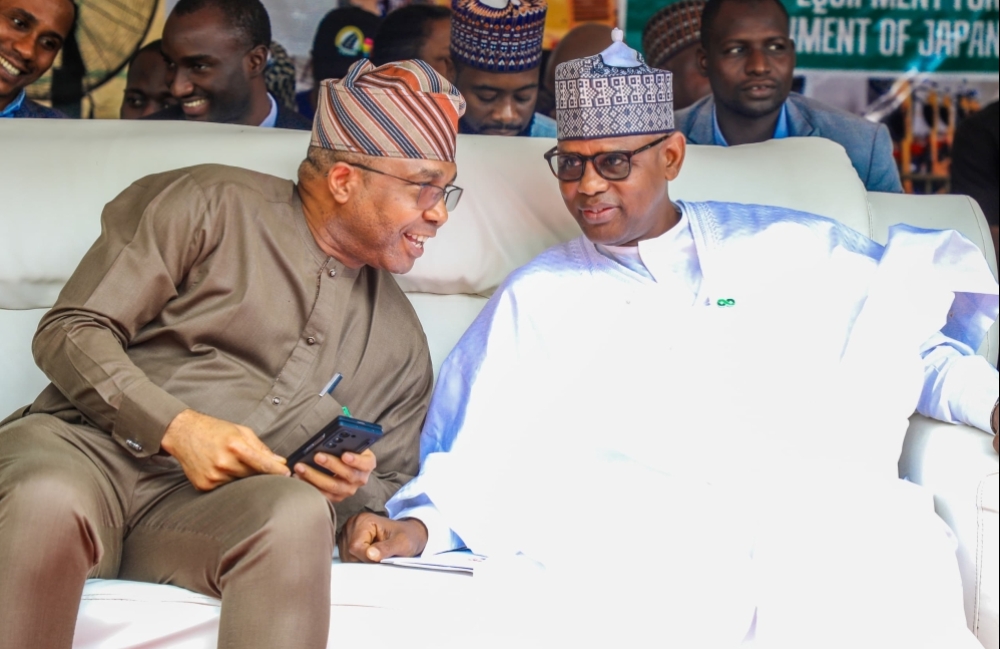
FG PREPARES FOR ANTICIPATED ABUJA–LOKOJA FLOOD GORONYO DIRECTS FERMA TO REHABILITATE LOKO–OWETO–AGATU ROAD IN NASARAWA. The Honourable Minister of State for Works, Mohammed Bello Goronyo, Esq., has directed the Federal Roads Maintenance Agency (FERMA) to immediately commence the rehabilitation of the Loko–Oweto–Agatu Road in Nasarawa State, as an alternative route for commuters. in case of the envisaged Abuja–Lokoja flooding. The directive was issued during a stakeholders’ engagement with the Nigerian Association of Road Transport Owners (NARTO) and the Independent Petroleum Marketers Association of Nigeria (IPMAN), The Minister further disclosed that the Federal Executive Council (FEC) approved several critical infrastructure initiatives, including the urgent rehabilitation of other strategic bridges such as the Carter Bridge, third Mainland Bridge, and Donga Bridge in Taraba State to strengthen Nigeria’s economic corridors and improve nationwide access for motorists. Speaking at the Minister’s Conference Room on Friday, 15th August 2025, Goronyo underscored the enormous workload of the Ministry, citing major routes such as Abuja–Lokoja, Abuja–Kaduna–Kano, Sokoto–Zaria, and many others across the North, South, East, and West. He commended President Bola Ahmed Tinubu, GCFR, describing him as “the people’s president”, and lauded his inclusive leadership and unwavering prioritisation of infrastructure as a “key enabler of growth and development” under the Renewed Hope Agenda. He highlighted ongoing interventions, particularly the Legacy Projects, including Lagos–Sokoto, Lagos–Badagry, Lagos–Calabar, Ebonyi–Nasarawa–Abuja, and the Akwanga–Jos–Bauchi–Gombe Trans-Sahara Route, stressing that no state has been left without road maintenance or construction under the current administration. He also applauded the Honourable Minister of Works, Engr. David Umahi, CON, FNSE, FANTE, for bringing engineering excellence and dedication to the Ministry’s projects. Reaffirming the Ministry’s determination to work tirelessly in delivering modern, safe, and durable infrastructure for all Nigerians, in line with the vision of President Bola Ahmed Tinubu’s Renewed Hope Agenda, Goronyo acknowledged the need for public re-orientation on road usage and enjoined the leaderships of the two associations on dedication, accountability and selfless service to the masses. “Public office is a burden, and that burden must be discharged with full accountability. There is no time for comfort zones, you must work day and night to deliver on your mandate. This is not a position for enjoyment or status, but for tireless service to Nigerians,” Goronyo stated. Speaking, the MD/CEO of FERMA, Dr. Chukwuemeka Agbasi, outlined the agency’s core focus namely; management of the road network with priority on economic corridors and addressing issues such as vandalism and overuse; and Data Collection, Updating Nigeria’s road corridor map with traffic statistics to guide maintenance planning. This, according to the Agbasi, was supported by a technical working group tasked with preparing a draft of Memorandum of Understanding (MoU). The President, NARTO, Alhaji Yusuf Lawal Othman, praised President Tinubu’s initiative on the delivery of Compressed Natural Gas (CNG) buses, 5 units of 50-seater buses, 20 units of 14-seater buses, and 50 units of 50 -seater buses, which have collectively reduced transportation costs for NARTO operations by over 30%. He also remarked the impact of the Ministry’s collaboration with the Federal Ministry of Petroleum Resources and the Nigerian Midstream and Downstream Petroleum Regulatory Authority (NMDPRA) in enforcing axle load limits, revealing that, effective from 1st October, no truck will be allowed to load more than 45,000 litres, a move expected to reduce road damage and extend infrastructure lifespan. Similarly, IPMAN President, Alhaji Abubakar Maigandi Shettima, pledged full support for the Ministry’s efforts, stating "even a blind man can see this government is doing its best to keep Nigerian roads in order. We stand fully behind your work.” Queenet Iheoma-Hart, For: Director, Press and Public Relations 15th August 2025 ...
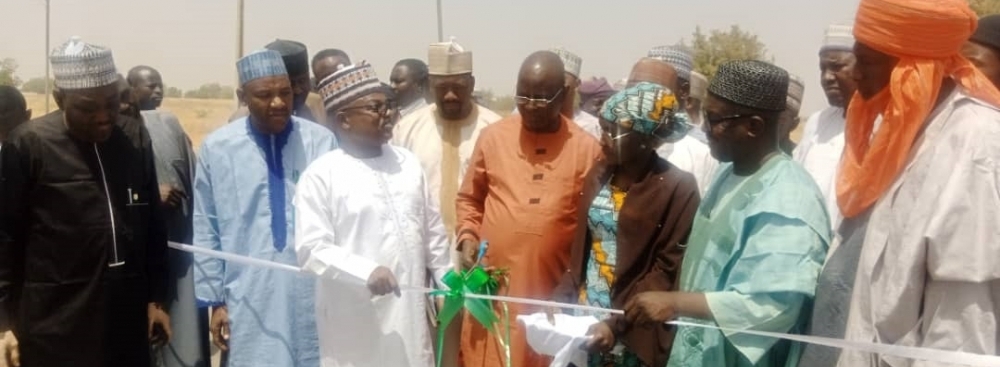
FG Completes, Hands Over 1km Road to Fedpoly Kazaure
The fast moving train in the Season of Completion and Impact involving the commissioning of projects under the Federal Ministry of Works and Housing moved to Jigawa State, North Western Nigeria, Thursday, February 24th, 2022.
Hussaini Adamu Federal Polytechnic, Kazaure in Jigawa State was the beneficiary this time around. And the project commissioned and handed over consisted of four link roads totalling one kilometer length rehabilitated with asphalt overlay in the institution by the Federal Ministry of Works and Housing.
The four link roads were: Road A linking four classrooms and three lecture halls; Road B linking the three halls with the 500-seater lecture theatre; Road C linking the 500-seater theatre with students’ hostel; while Road D connect the students hostel and the accommodation tower.
In his address, the Minister of Works and Housing, Mr. Babatunde Fashola, SAN, represented by the Federal Controller of Works in Jigawa State, Engr. Atewolara Oladele Gabriel said that the Ministry was working on 76 road projects in selected Federal Tertiary Institutions across the nation.
"We have successfully intervened in the internal road networks of 46 Tertiary Institutions and handed over 29 as at 2021 and we now have another 17 ready to be handed over while we are currently attending to 30 roads in similar institutions across the country making a total of 76", he said.
The Minister explained that the quality of infrastructure in the tertiary institutions would improve the learning environment, and impact positively on the quality of education, pointing out that the feedbacks from the students of the schools where this type of intervention had taken place testified to it.
"The summary of all the feedbacks from students and Management staff of the institutions has demonstrated that the gap of the nation's infrastructure needs is steadily being bridged by a gradual process of repairs and construction on the major highways and schools," he said.
Accordingly, the Minister stated that the construction of the internal roads in the tertiary institutions by Federal Government was a pointer to the progressive ideals of the Buhari administration in improving the human condition by supporting education.
In his response, the Rector of the Polytechnic, Dr. Sabo Wada Dutse, expressed happiness and excitement at the intervention, which he described as significant to the development of the Polytechnic.
The Rector stated that, with the road intervention, the Polytechnic community was now living at peace with no fears of reptiles which the area was prone to before the intervention.
He, however, solicited further intervention by the Federal government in areas like street and security lights and construction of sports complex in the Polytechnic whenever the opportunity arises.
Chairman Academic Staff Union of Polytechnics, Federal Polytechnic Kazaure Chapter, Dr. Abdul'azeez Ibrahim Badaru, expressed appreciation to the Minister for including the Polytechnic in the Tertiary Schools Road Intervention Scheme.
He said ", this will ease the stress of both staff and students. The access roads will enhance the environment and improve teaching and learning”. He also thanked the immediate past Permanent Secretary of the Ministry, Alh. Babangida Hussain, for what he has done for the Fedpoly Kazaure
" I want to appeal to the Honourable Minister to please include Federal Polytechnic Kazaure in the Housing scheme of the Ministry as the houses in the school are very few and very old, built by the Jigawa State Government before the conversion of the Polytechnic to a federal institution”, Dr Badaru added
Accordingly, he said the gesture would alleviate the suffering of the staff, who mostly come from Kano and other distant places, adding that it would also boost morale and performance, suggesting that the Ministry should construct at least 100 units of houses.
The President of the Students Union Government, Fedpoly Kazaure, comrade Adamu Sani Yarima, expressed profound gratitude to the Federal government and the Ministry of Works and Housing under the watch of Mr. Babatunde Fashola for supporting the Institution with the roads.
Comrade Yarima, also requested for more interventions especially in recreational facilities such as sports complex in the polytechnic.
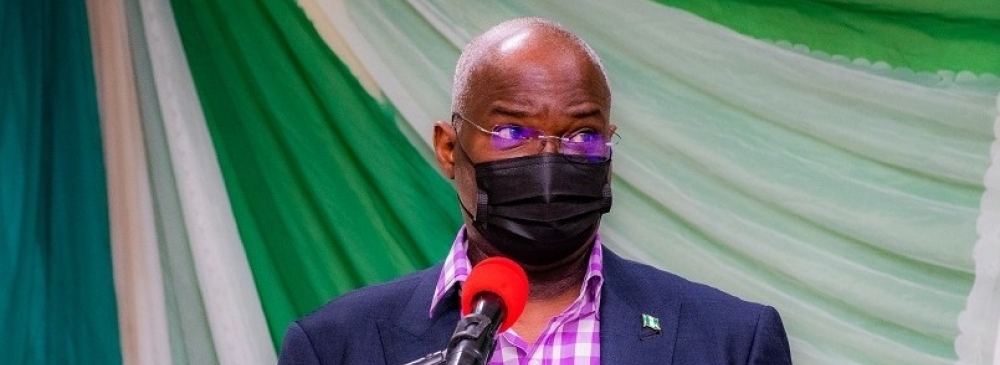
BEING THE TEXT OF H.E BABATUNDE RAJI FASHOLA, SAN AT THE 27TH MEETING OF THE NATIONAL COUNCIL ON WORKS AND HOUSING HELD AT THE COMMAND GUEST HOUSE, BAUCHI, BAUCHI STATE ON THURSDAY, 23RD SEPTEMBER, 2021
It is a very exciting homecoming for me to return to Bauchi State, named after the ancient and historic Emirate of Bauchi, the home of the Yankari Game Reserve, a great gift of nature to Nigeria.
But Bauchi is not just home to Yankari, it is home to some very great and inimitable patriots who have served our country.
Perhaps Bauchi’s most famous son is Abubakar Tafewa Balewa, but Bauchi also gave Nigeria the Katagums, the Giades, the Toros, the Ahmeds, the Yugudas and so many other illustrious sons and daughters who have dedicated their lives to the service of our nation.
Of course we could not have this event here today without the support and commitment of another Bauchi son, who has followed the path of his illustrious predecessors in public service.
I speak of none other than our chief host HE Sen. Bala Abdulkadir Mohammed, former Minister of the Federal Capital and now Governor of Bauchi State.
Your Excellency, I bring to you and the people of Bauchi the goodwill of the Federal Government and the best wishes of President Muhammadu Buhari and thank you for accepting to host this National Council.
Distinguished Ladies and Gentlemen, the theme chosen for this year‘s council is “Infrastructure delivery, The Maintenance Economy and National Prosperity” and I hope it would help all of us focus on, not just the importance of the investment in infrastructure, but more importantly on the maintenance of infrastructure, the economy around maintenance and sustainable and long lasting jobs that are created through maintenance.
Since the implementation of the Marshall plan in 1948, after the Second World War, it has become clear to any serious minded economist or politician that infrastructure provision is critical to development, growth, wealth creation, employment and prosperity.
I have said and I will repeat it here, that infrastructure investment is the most legitimate way to distribute wealth in any economy.
This is why it is not surprising that during campaigns for elections and after elections, you will find discussions not only centering around roads, bridges, rails, schools, hospitals, water supply and power supply to be provided, you will also find that in the inauguration speech of every President, Prime Minister, Governor and other elected public officers, time is dedicated to addressing the provision of infrastructure.
I am sure our host will recall that he made similar commitments in his inauguration speech on May 29, 2019:
“…at the core of this mandate is the crucial drive to give Bauchi State citizens a better prospect and greater opportunity for a prosperous life. Reducing poverty and empowering our citizens in the areas of Agriculture, Education, urban and rural infrastructure among others.”
The reason for this is not far-fetched. The nations that are richer than us have more infrastructure than us and in order to bridge this gap we have to invest; because no nation or community can grow bigger than the stock of infrastructure.
Infrastructure also helps to make people efficient, it creates competition and leads to productivity. Currently the Federal Government is executing 895 contracts in 795 projects spanning over 13,000 km of roads and bridges nationwide.
Across all of these, engineers, geologists, surveyors, lawyers, bankers, suppliers, artisans and laborers are involved in an ecosystem of enterprise from which they earn a daily, weekly or other periodic income.
But that is only part of the story, the employment. The other parts include improved asset value, because everywhere a new road or bridge is built, the land value appreciates by up to 30% creating enormous capital gain.
On the completed sections of the roads, journeys that used to take days now take only a few hours, journeys that took hours are now reduced to minutes; and if it is true that time is money, clearly reduced journey times currently being delivered across Nigerian roads is money either through savings on journeys and fuel cost, or utilization of time saved for other productive activities, not to mention the Health benefits attributable to shorter travel time and reduced stress.
So when President Buhari committed on June 12, 2019 to taking 100 million people out of poverty in 10 years, his vision was not a Federal Government vision but a national one, which has started with the work being undertaken in all states and FCT and to which the Federal Government is contributing through infrastructure.
In the pursuit of this National vision, I urge all of us to embrace the more wholistic view and definition of poverty as not only the number of jobs, or amount of cash, but also well-being, efficiency and the lack of access.
For example if a one-hour journey takes six hours even in the best car, or land value is stagnant because it lacks an access road, the reversal of these situations by improved journey time or provision of access roads are steps towards prosperity.
Similarly, all those employed in the process of building the roads, surveyors, contractors, engineers, bankers, artisans, suppliers and lawyers have certainly been impacted on the income side.
Regrettably we cannot build forever and so when the infrastructure project is completed, most of those employed in the building must leave the site to look for new opportunities.
This is the heart of the matter and this is the message that the theme of this council seeks to focus on. What should we do in addition to building infrastructure, in order to keep the jobs on.
The answer, Ladies and Gentlemen is simple. We must maintain the infrastructure we built.
This is important for many reasons, the first of which is that we preserve the life of the infrastructure and get the best value for the money we spent on it.
The second reason is that a maintenance economy is a critical contributor and driver of GDP in many economies around the world.
You will notice that I have spoken about a “maintenance economy” not a “maintenance culture.” This is because maintenance is not a cultural thing, it is an existential matter of survival, bread and butter and income.
Available data shows that in the “built industry” only about 30% of the manpower is employable by design and construction which lasts until the project is completed; while the remaining 70% are employed in the process of “operation” and “maintenance” of the infrastructure.
These are the reasons why the development of a maintenance economy must commend itself to all of us here and why we must all return home not only to think about it, but to do something about it.
The question is what needs to be done? My answer is that we must develop policies to stimulate the economy of maintenance.
All that we need to do is take a look at the state of existing infrastructure, and we are likely to see bridges with damaged expansion joints and bearings, buildings with broken windows and leaking pipes, doors that do not lock properly, toilets that do not work well and so much more.
If we reflect on what we see, we will realize that these are jobs for plumbers, carpenters, printers, foundry workers and many more skilled and unskilled people in our country and it is our responsibility to connect these people to the opportunities that infrastructure in disrepair represents for sustainable employment.
The Federal Government has already initiated such a policy in 2019, and we are now at implementation stage.
This has seen the Head of the Federal Civil Service approve the creation of the Department for Federal Public Asset Maintenance.
The next step is for each Ministry Department and Agency (MDA) of government to set up their own units for maintenance, undertake a condition assessment of their infrastructure, develop a maintenance plan, and implement the procurement for annual periodic and scheduled maintenance.
You might want to ask what this will do? My answer is that it will immediately begin to create jobs.
From the first stage of condition assessment, people are employed to inspect, assess, measure, document, photograph and do many things in the process of ascertaining what the infrastructure needs.
In 9 (nine) facilities that we assessed the conditions of fittings such as fans, air conditioners, light fittings, toilets and wash hand basin, we found that out of 41,800 installations 12,459 representing 29.8% were not functioning. These are people’s jobs to repair, supply, replace and install as the case may be.
The development of the maintenance plan and the procurement plan leading to invitation to tender and award of maintenance contracts for rehabilitation and facility management is a sure pathway to job creation.
Currently we are undertaking maintenance works on 41 (Forty-One) bridges that has employed 1,157 people directly and created 3,309 indirect jobs and we have facility management contracts for 25 federal secretariats across Nigeria after we completed renovation works. Each facility manager employs at least 40 people.
This is only a tip of the iceberg because the supply side that supports maintenance involves the purchase and supply of paint, bleach, rakes, brooms and other tools which create employment for small and medium size enterprises which is another activity of economic empowerment.
When we started the office of Facility Management in Lagos State, I recall one day when we awarded contracts for the facility management of 600 schools. This was employment not only for 600 small contractors but also for the people that were employed to do the job.
Ladies and Gentlemen, when we see functional and efficient public assets in other parts of the world there is no secret to it. It is evidence of a maintenance economy led by government.
Our federal maintenance initiative has assessed schools, courts, hospitals, correctional facilities and police buildings and is getting ready to commence work on them. I commend the same to you in your states if you want to create sustainable jobs.
Thank you for listening.
Babatunde Raji Fashola SAN
Honourable Minister of Works and Housing
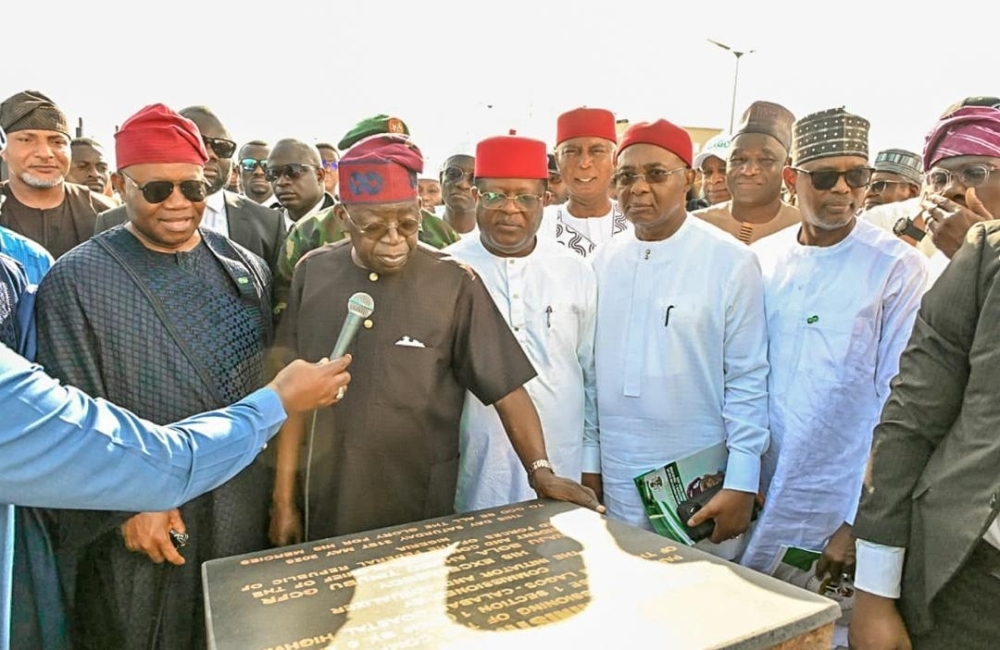
DRIVING NIGERIA’S FUTURE: CELEBRATING TWO YEARS OF TRANSFORMATIVE LEADERSHIP AND THE LAGOS-CALABAR COASTAL HIGHWAY MILESTONE
DRIVING NIGERIA’S FUTURE: CELEBRATING TWO YEARS OF TRANSFORMATIVE LEADERSHIP AND THE LAGOS-CALABAR COASTAL HIGHWAY MILESTONE
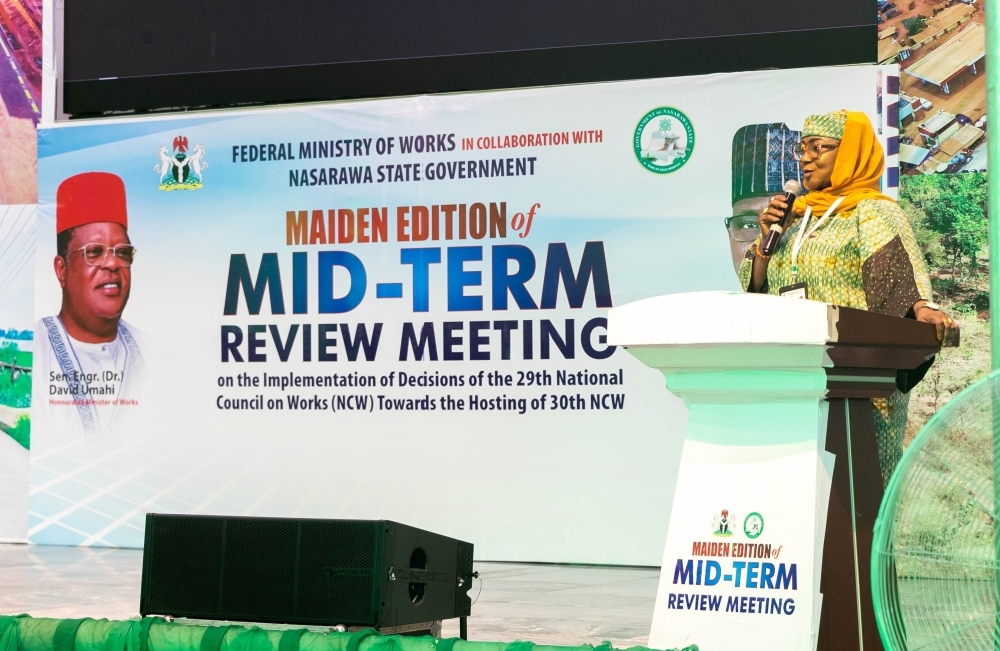
MID -TERM REVIEW MEETING ON THE IMPLIMENTATION OF THE DECISIONS REACHED AT THE 29TH NATIONAL COUNCIL ON WORKS (NCW) DAY 1
MID -TERM REVIEW MEETING ON THE IMPLIMENTATION OF THE DECISIONS REACHED AT THE 29TH NATIONAL COUNCIL ON WORKS (NCW) DAY 1