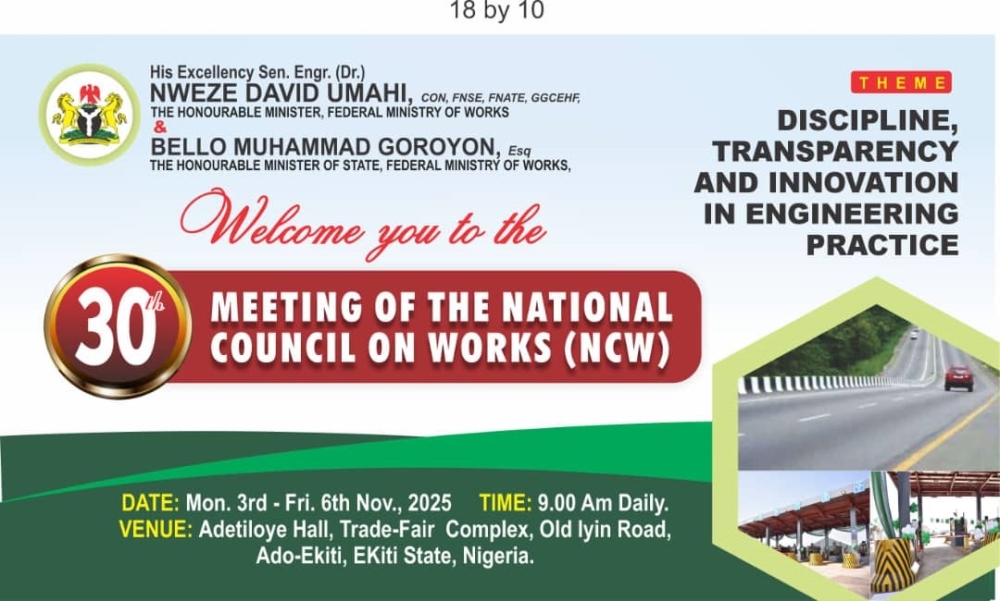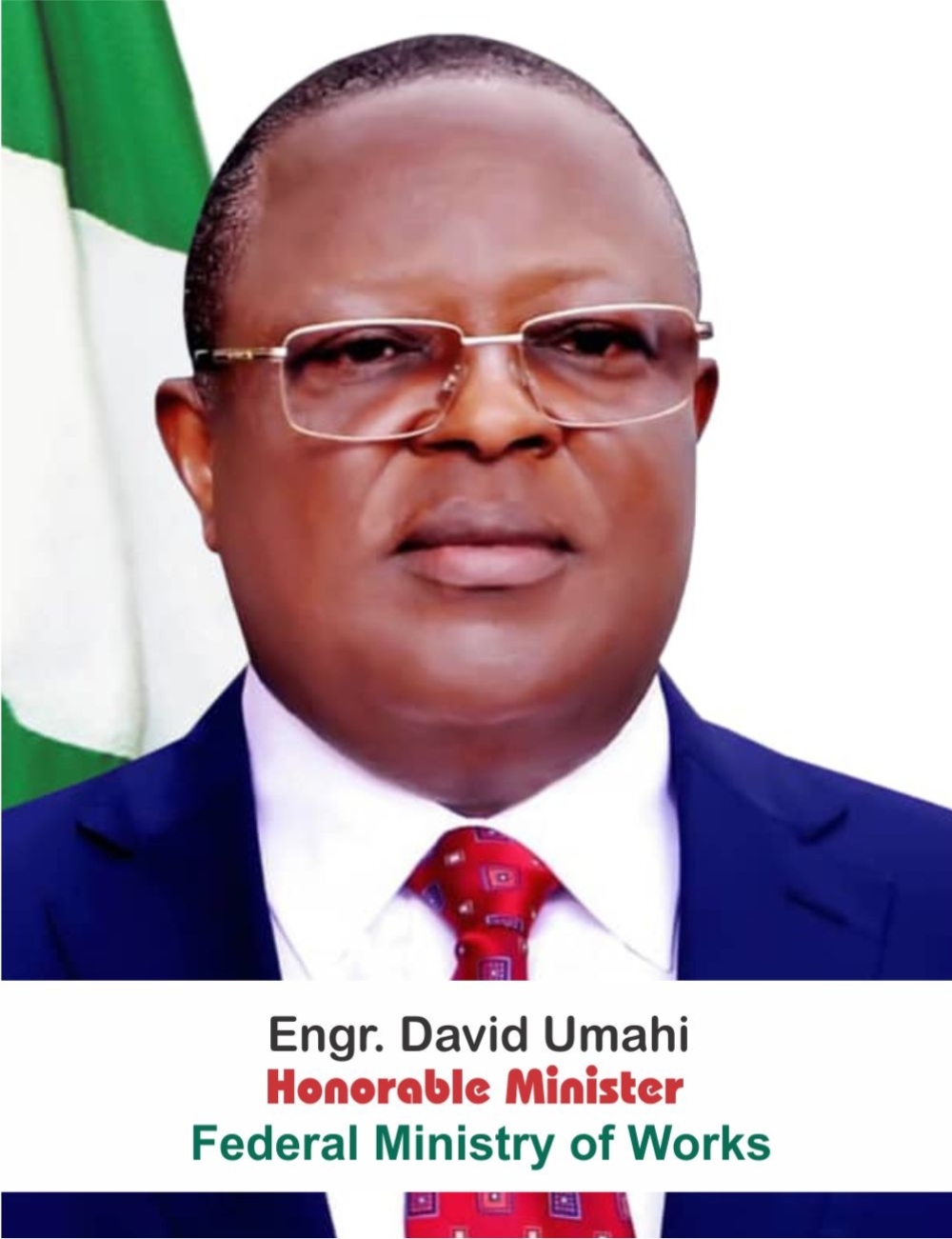
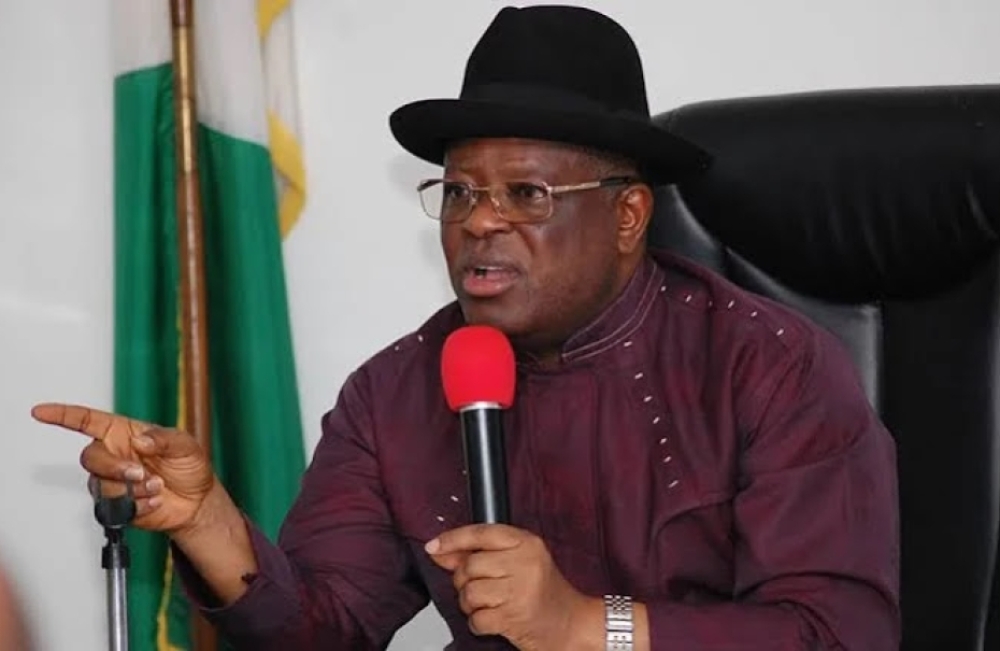
UMAHI ORDERS IMMEDIATE EMERGENCY INTERVENTION ON BENIN-ASABA ROAD, AND SOME OTHER CRITICAL FEDERAL ROADS
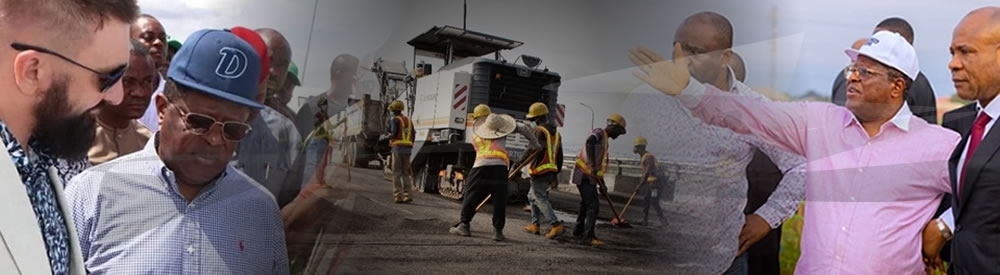
The Honourable Minister of Works, Senator Engr. David Nweze Umahi, CON, has directed the immediate deployment of major contractors to all three sections of the Benin-Asaba Federal Road to restore the failed sections and bring an end to the suffering of motorists and other road users.
This is because, the situation on the concessioned Benin-Asaba Road has reached a point where the overall public interest must take precedence over the existing concession agreement.
Recall that the Honourable Minister of Works was on the Benin-Asaba Road about seven days ago, where he assembled a number of contractors and directed them to prepare for immediate palliative intervention on the affected sections of the road at no cost to the concessionaire. In line with the Concession agreement which requires that before the Federal Government could intervene, the permission of the concessionaire must be required, and that permission was not granted to federal government.
The Minister subsequently proposed three options to the concessionaire, any one of which would have enabled the Federal Government to move in and address the worsening condition of the road. Unfortunately, none of the options was accepted by the concessionaire. Immediately after the Minister left Asaba, the already limited equipment deployed to the road by the concessionaire was further reduced to just one, worsening the situation and increasing the suffering of motorists and other road users.
While the Minister takes responsibility for the concerns and suffering of Nigerians using the road, it is important to state that the concessionaire has also not taken the suffering of Edo people and travelling public sufficiently into consideration by declining all the options put forward by the Federal Government. The concessionaire continues to rely on the terms of the concession agreement entered into by the previous administration, an agreement which weighs heavily against the Federal Government’s ability to intervene quickly in the interest of the public in a situation like this.
In view of this situation, the Honourable Minister of Works has directed the immediate deployment of major contractors within the corridor to all three sections of the Benin-Asaba Road to restore the failed sections and bring relief to the people, with the cost of the emergency intervention being borne by the Federal Government. The Honourable Minister has also directed immediate redesign of the entire route to be rebuilt with reinforced concrete pavement. The public should therefore take note that immediate action is underway to restore every failed section of the Benin-Asaba Road and subsequently rehabilitate the entire sections of the road using reinforced concrete pavement.
2. On the Benin-Sapele Road:
The Governors of Edo and Delta States, the Niger Delta Development Commission (NDDC), and the Federal Government are currently engaged in interventions on different sections of the road to restore the entire route. While some sections are receiving palliative attention, permanent works are also ongoing on other sections.
3. On Ifaki(Ekiti) - Kabba (Kogi) Road:
The Federal Government is engaging both the contractor; Gamji Nigeria Company Limited, and Dangote PLC on immediate emergency and permanent intervention on the most failed sections of the road, while efforts are being made to financially mobilise the company for more extensive permanent work to commence on the axis.
4. On the Sokoto-Zamfara-Katsina Road: This is an inherited project involving the dualisation of approximately 350 kilometres, which translates to about 700 kilometers. The project has since been redesigned and is currently ongoing and most sections are being reconstructed using reinforced concrete pavement. From the Sokoto axis towards Zamfara, over 50 kilometres of one carriageway have been fully completed with reinforced concrete pavement. From Zamfara to Katsina, some sections have been completed and palliative works have been ordered over the sections that have not been reconstructed. However, the pace of work slowed down due to the redesign and rephasing of the project. The contractors currently engaged on the road include CBC, SETRACO, Triacta and Mothercat. They are being remobilised to return to site and complete the outstanding works.
5. On the Abuja-Kaduna-Zaria-Kano Road: The Federal Government took over the Road project and has currently completed the 118-kilometer mostly on reinforced concrete pavement on lot 1. The Lot 2, which covers 164 kilometres, is over 60 percent completed on reinforced concrete pavement. The Federal Government has also introduced solar-powered light on the entire route of Abuja-Kaduna-Zaria - Kano to improve visibility during night travel and enhance the overall security situation on the route. The entire project is scheduled for completion by December 2026.
6. On Bauchi-Jigawa Road: Triacta Nigeria Limited has been mobilised to carry out the necessary interventions on some failed sections and work is currently ongoing in those failed sections.
7. On the Sagamu-Ore Road: 48 Kilometers of the 96-kilometre road have already been completed using reinforced concrete pavement. There is also a 24-kilometre section around Ore which was abandoned by the previous contractor. The Federal Government has directed its immediate restoration to ensure seamless travel. Solar lights are being installed in the entire 96kilometer of the road.
8. On Flooded Sections on Sagamu-Ore-Benin Road: The flooded sections on the same corridor between Sagamu-Ore-Benin Road, as well as other flooded sections in Ondo State, are being designed for emergency procurement and intervention.
9. On the East-West Road:
Some failed and critical sections, including defective sections of bridges along the East-West Road, are being marked out for emergency procurement and intervention.
10. On the Abuja-Lokoja Road:
Several contracts are ongoing along the route, while the three critical sections currently without contracts are being procured for emergency intervention.
11. On the Lokoja-Benin-Warri Road: The President has directed a complete redesign and procurement of the 400-kilometre dualised route covering the uncompleted sections, using reinforced concrete pavement, while palliative works will continue with the contractors currently on the road.
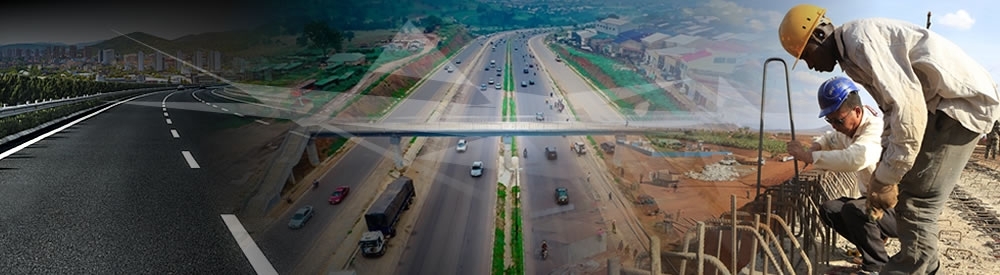
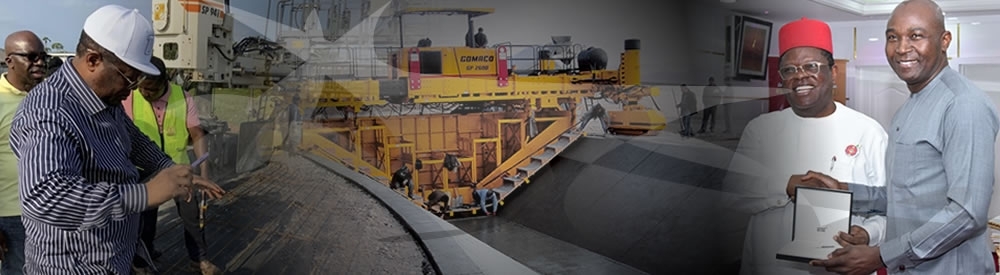
12. On Carter Bridge:
While the Federal Government continues to undertake weekly maintenance of the underwater elements of the bridge. The site has also been handed over to the contractor, CCECC, for the construction of a permanent new bridge, and work has commenced.
13. On the Third Mainland Bridge:
With regard to the defective underwater structural elements, the Federal Government is at the final stage of determining the appropriate intervention for the repair of the affected elements.
14. On the flooded section of the Lagos-Ibadan Road: Work has commenced on the affected section. There are also several flooded sections on federal roads across the six geopolitical zones, largely occasioned by excessive flooding and the effects of climate change. The Federal Government is identifying and marking these sections for immediate attention.
15. On the First and Second Niger Bridges:
Intervention work is ongoing on the approach roads to the Second Niger Bridge damaged by flood and the work is progressing very well. The First Niger Bridge has been closed to traffic to enable immediate repair works. Contractor has mobilized to site and comprehensive rehabilitation of the bridge has started. From Summit Junction to the First Niger Bridge, massive rehabilitation work is also ongoing using reinforced concrete pavement.
16. The Honourable Minister wishes to commend the President of the Federal Republic of Nigeria, His Excellency Bola Ahmed Tinubu, GCFR, for the massive work being undertaken on the nation’s roads since the administration assumed office in 2023.
17. It is important to state that when the present administration came into office, there was hardly any part of the country where one could travel for an hour without encountering significant challenges on the road network. The condition of the country’s roads and bridges was a major national infrastructure challenge.
18. Rather than shy away from the problem, the administration of President Bola Ahmed Tinubu made the nation’s road network a priority. Virtually every part of the country became a priority, and the Federal Government, through the Federal Ministry of Works, Regional Commissions, Parastatals and other MDA’s has continued to respond extensively to these challenges.
19. The Federal Government is currently working on over 80 percent of the inherited federal roads, an unprecedented level of intervention in the country’s road infrastructure.
20. We ask the public to understand the enormous challenges inherited on our roads and bridges and to take note not only of the problems being solved, but also of the permanent solutions being introduced.
21. A major part of this new approach is the use of reinforced concrete pavement, designed to significantly extend the lifespan of major roads. These roads are expected to last between 50 and 100 years. This means that roads being constructed under President Bola Ahmed Tinubu’s administration are being designed with future generations in mind, rather than simply providing temporary solutions to today’s problems. And this is a complete departure from the past, when roads often deteriorated only a few years after completion, resulting in a continuous cycle of reconstruction and expenditure.
22. We appreciate the concerns of Nigerians over the condition of some roads presently and the difficulties faced by motorists and commuters who cannot move easily from one point to another. Those concerns are legitimate, and the Federal Government is listening. But Nigerians should also recognise the enormous scale of the problems inherited and the amount of work currently being undertaken across the country.
23. It is simply impossible to resolve every road challenge accumulated over many years of neglect by the past administrations within three years. What is important is that the government is working, the government is responding, and the government is putting permanent solutions in place.
25. We appreciate members of the public who send situation reports on failed roads and other infrastructure challenges. These reports help the Ministry identify areas requiring urgent attention. However, we also appeal to members of the public to report when such problems have been addressed, just as they report when they occur.
24. We are aware of situations where photographs and reports of road challenges continue to circulate on social media even after the Federal Government has intervened and resolved the particular problem.
25. However, the Ministry will continue to respond as rapidly as possible to genuine reports and concerns from Nigerians.
26. It is also important to note that we have compiled a comprehensive record of all inherited, ongoing and intervention projects across the country which is available to the public. This is to ensure that Nigerians have access to information on the infrastructure projects being undertaken nationwide and can fully participate in and appreciate the infrastructure revolution of President Bola Ahmed Tinubu’s administration.

UMAHI ORDERS IMMEDIATE EMERGENCY INTERVENTION ON BENIN-ASABA ROAD, AND SOME OTHER CRITICAL FEDERAL ROADS The Honourable Minister of Works, Senator Engr. David Nweze Umahi, CON, has directed the immediate deployment of major contractors to all three sections of the Benin-Asaba Federal Road to restore the failed sections and bring an end to the suffering of motorists and other road users. This is because, the situation on the concessioned Benin-Asaba Road has reached a point where the overall public interest must take precedence over the existing concession agreement. Recall that the Honourable Minister of Works was on the Benin-Asaba Road about seven days ago, where he assembled a number of contractors and directed them to prepare for immediate palliative intervention on the affected sections of the road at no cost to the concessionaire. In line with the Concession agreement which requires that before the Federal Government could intervene, the permission of the concessionaire must be required, and that permission was not granted to federal government. The Minister subsequently proposed three options to the concessionaire, any one of which would have enabled the Federal Government to move in and address the worsening condition of the road. Unfortunately, none of the options was accepted by the concessionaire. Immediately after the Minister left Asaba, the already limited equipment deployed to the road by the concessionaire was further reduced to just one, worsening the situation and increasing the suffering of motorists and other road users. While the Minister takes responsibility for the concerns and suffering of Nigerians using the road, it is important to state that the concessionaire has also not taken the suffering of Edo people and travelling public sufficiently into consideration by declining all the options put forward by the Federal Government. The concessionaire continues to rely on the terms of the concession agreement entered into by the previous administration, an agreement which weighs heavily against the Federal Government’s ability to intervene quickly in the interest of the public in a situation like this. In view of this situation, the Honourable Minister of Works has directed the immediate deployment of major contractors within the corridor to all three sections of the Benin-Asaba Road to restore the failed sections and bring relief to the people, with the cost of the emergency intervention being borne by the Federal Government. The Honourable Minister has also directed immediate redesign of the entire route to be rebuilt with reinforced concrete pavement. The public should therefore take note that immediate action is underway to restore every failed section of the Benin-Asaba Road and subsequently rehabilitate the entire sections of the road using reinforced concrete pavement. 2. On the Benin-Sapele Road: 3. On Ifaki(Ekiti) - Kabba (Kogi) Road: 4. On the Sokoto-Zamfara-Katsina Road: This is an inherited project involving the dualisation of approximately 350 kilometres, which translates to about 700 kilometers. The project has since been redesigned and is currently ongoing and most sections are being reconstructed using reinforced concrete pavement. From the Sokoto axis towards Zamfara, over 50 kilometres of one carriageway have been fully completed with reinforced concrete pavement. From Zamfara to Katsina, some sections have been completed and palliative works have been ordered over the sections that have not been reconstructed. However, the pace of work slowed down due to the redesign and rephasing of the project. The contractors currently engaged on the road include CBC, SETRACO, Triacta and Mothercat. They are being remobilised to return to site and complete the outstanding works. 5. On the Abuja-Kaduna-Zaria-Kano Road: The Federal Government took over the Road project and has currently completed the 118-kilometer mostly on reinforced concrete pavement on lot 1. The Lot 2, which covers 164 kilometres, is over 60 percent completed on reinforced concrete pavement. The Federal Government has also introduced solar-powered light on the entire route of Abuja-Kaduna-Zaria - Kano to improve visibility during night travel and enhance the overall security situation on the route. The entire project is scheduled for completion by December 2026. 6. On Bauchi-Jigawa Road: Triacta Nigeria Limited has been mobilised to carry out the necessary interventions on some failed sections and work is currently ongoing in those failed sections. 7. On the Sagamu-Ore Road: 48 Kilometers of the 96-kilometre road have already been completed using reinforced concrete pavement. There is also a 24-kilometre section around Ore which was abandoned by the previous contractor. The Federal Government has directed its immediate restoration to ensure seamless travel. Solar lights are being installed in the entire 96kilometer of the road. 8. On Flooded Sections on Sagamu-Ore-Benin Road: The flooded sections on the same corridor between Sagamu-Ore-Benin Road, as well as other flooded sections in Ondo State, are being designed for emergency procurement and intervention. 9. On the East-West Road: 10. On the Abuja-Lokoja Road: 11. On the Lokoja-Benin-Warri Road: The President has directed a complete redesign and procurement of the 400-kilometre dualised route covering the uncompleted sections, using reinforced concrete pavement, while palliative works will continue with the contractors currently on the road. 12. On Carter Bridge: 13. On the Third Mainland Bridge: 14. On the flooded section of the Lagos-Ibadan Road: Work has commenced on the affected section. There are also several flooded sections on federal roads across the six geopolitical zones, largely occasioned by excessive flooding and the effects of climate change. The Federal Government is identifying and marking these sections for immediate attention. 15. On the First and Second Niger Bridges: 16. The Honourable Minister wishes to commend the President of the Federal Republic of Nigeria, His Excellency Bola Ahmed Tinubu, GCFR, for the massive work being undertaken on the nation’s roads since the administration assumed office in 2023. 17. It is important to state that when the present administration came into office, there was hardly any part of the country where one could travel for an hour without encountering significant challenges on the road network. The condition of the country’s roads and bridges was a major national infrastructure challenge. 18. Rather than shy away from the problem, the administration of President Bola Ahmed Tinubu made the nation’s road network a priority. Virtually every part of the country became a priority, and the Federal Government, through the Federal Ministry of Works, Regional Commissions, Parastatals and other MDA’s has continued to respond extensively to these challenges. 19. The Federal Government is currently working on over 80 percent of the inherited federal roads, an unprecedented level of intervention in the country’s road infrastructure. 20. We ask the public to understand the enormous challenges inherited on our roads and bridges and to take note not only of the problems being solved, but also of the permanent solutions being introduced. 21. A major part of this new approach is the use of reinforced concrete pavement, designed to significantly extend the lifespan of major roads. These roads are expected to last between 50 and 100 years. This means that roads being constructed under President Bola Ahmed Tinubu’s administration are being designed with future generations in mind, rather than simply providing temporary solutions to today’s problems. And this is a complete departure from the past, when roads often deteriorated only a few years after completion, resulting in a continuous cycle of reconstruction and expenditure. 22. We appreciate the concerns of Nigerians over the condition of some roads presently and the difficulties faced by motorists and commuters who cannot move easily from one point to another. Those concerns are legitimate, and the Federal Government is listening. But Nigerians should also recognise the enormous scale of the problems inherited and the amount of work currently being undertaken across the country. 23. It is simply impossible to resolve every road challenge accumulated over many years of neglect by the past administrations within three years. What is important is that the government is working, the government is responding, and the government is putting permanent solutions in place. 25. We appreciate members of the public who send situation reports on failed roads and other infrastructure challenges. These reports help the Ministry identify areas requiring urgent attention. However, we also appeal to members of the public to report when such problems have been addressed, just as they report when they occur. 24. We are aware of situations where photographs and reports of road challenges continue to circulate on social media even after the Federal Government has intervened and resolved the particular problem.
The Governors of Edo and Delta States, the Niger Delta Development Commission (NDDC), and the Federal Government are currently engaged in interventions on different sections of the road to restore the entire route. While some sections are receiving palliative attention, permanent works are also ongoing on other sections.
The Federal Government is engaging both the contractor; Gamji Nigeria Company Limited, and Dangote PLC on immediate emergency and permanent intervention on the most failed sections of the road, while efforts are being made to financially mobilise the company for more extensive permanent work to commence on the axis.
Some failed and critical sections, including defective sections of bridges along the East-West Road, are being marked out for emergency procurement and intervention.
Several contracts are ongoing along the route, while the three critical sections currently without contracts are being procured for emergency intervention.
While the Federal Government continues to undertake weekly maintenance of the underwater elements of the bridge. The site has also been handed over to the contractor, CCECC, for the construction of a permanent new bridge, and work has commenced.
With regard to the defective underwater structural elements, the Federal Government is at the final stage of determining the appropriate intervention for the repair of the affected elements.
Intervention work is ongoing on the approach roads to the Second Niger Bridge damaged by flood and the work is progressing very well. The First Niger Bridge has been closed to traffic to enable immediate repair works. Contractor has mobilized to site and comprehensive rehabilitation of the bridge has started. From Summit Junction to the First Niger Bridge, massive rehabilitation work is also ongoing using reinforced concrete pavement.
25. However, the Ministry will continue to respond as rapidly as possible to genuine reports and concerns from Nigerians.
26. It is also important to note that we have compiled a comprehensive record of all inherited, ongoing and intervention projects across the country which is available to the public. This is to ensure that Nigerians have access to information on the infrastructure projects being undertaken nationwide and can fully participate in and appreciate the infrastructure revolution of President Bola Ahmed Tinubu’s administration.
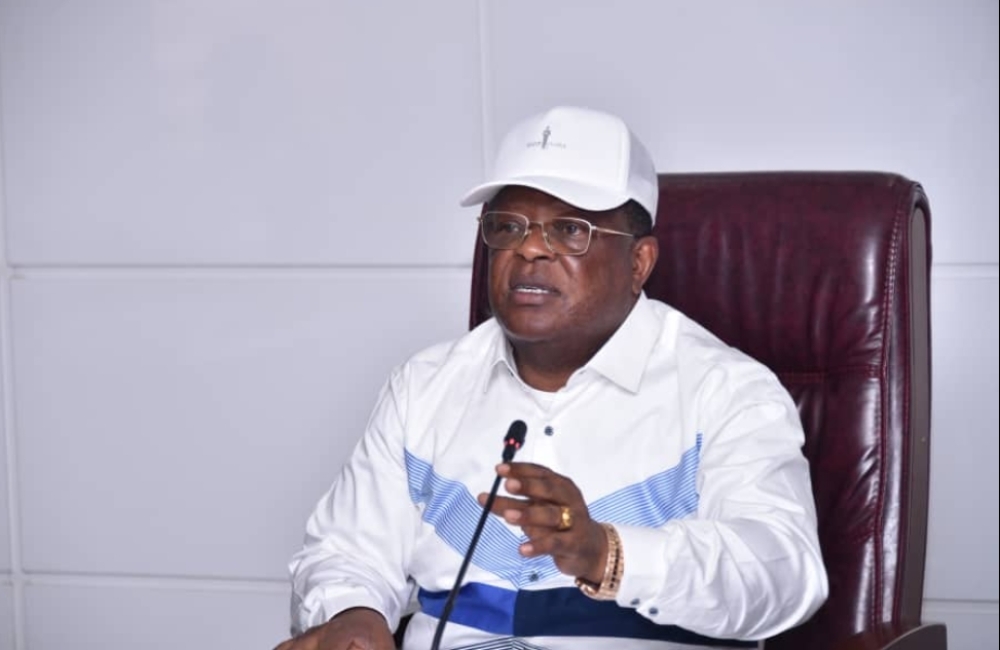
TRENDING STATEMENT OF A MAN PURPORTING TO BE ADDRESSING THE HONOURABLE MINISTER OF WORKS MISGUIDED, SELF SERVING AND VICIOUS PROPAGANDA TYPICAL OF A PROXY SPEAKING FOR NONCONFORMING CONTRACTORS. The attention of the Honourable Minister of Works, His Excellency, Sen. Engr. Nweze David Umahi, CON has been drawn to a trending statement of a man purporting to be addressing the Honourable Minister of Works over the state of roads in Nigeria and which was credited to the Chairman, House Committee on FERMA, Hon. Engr. Aderemi Abasi Oseni. The Honourable Minister views this unprovoked attack as an inconceivable embarrassment demeaning to his person and the Federal Ministry of Works as neither he nor his Permanent Secretary was in such a meeting where the said Chairman of House Committee on FERMA was said to be addressing the Honourable Minister of Works. In a news conference dated 28th October 2024, the Honourable Minister stated that it was no doubt akin to darkening counsel without knowledge for the Honourable Chairman, House Committee on FERMA to vilify him over the bad state of Federal roads inherited from previous administrations numbering over 2,604 without deferring to the records of various interventions made by the Renewed Hope administration which have made a great difference in the public transport trajectory of Nigeria. The Honourable Minister has however chosen to refrain from joining issues with the said House Committee Chairman on FERMA because of the respect he has for the hallowed institution of the National Assembly, the Senate President and the Speaker of the Federal House of Representatives. He said, "For the respect of Mr. Speaker, and of course the Senate President and the National Assembly that I belong to, I will refrain myself from joining issues with him. He said, I have failed, and if a blind man is to assess you, your guess is as good as mine because if he has no knowledge of anything, then his knowledge becomes his god so I will not join issues with him.” He views the action of addressing him as if he was before the House Committee on FERMA as deliberate, ill-motivated, misguided, self-serving and nothing but a vicious propaganda typical of a proxy representing the interest of nonconforming contractors who have constituted themselves into adversaries against the Federal Ministry of Works for insisting on best practices in project pricing, variation on price and foreign exchange differentials. There is no doubt that the vituperations of the House Committee Chairman on FERMA were from the abundance of his heart, but to say that all the roads across the country have failed for the failure of the Honourable Minister of Works to address the existing road with the resources approved or for his failure to deploy the N300 billon supplementary fund approved for him or that he is concentrating his energy on the less priority issues shows that the House Committee Chairman on FERMA either has little knowledge of the volume of road infrastructure deficits inherited from successive administrations and cost requirements for road construction or that he deliberately refused, ignored and neglected to appreciate the Renewed Hope administration's intervention milestones or he is playing to the gallery on the prompting of the nonconforming contractors. He said," And let me say to him that the projects Mr. President inherited were a total of 2,604 projects. As of May 29, 2023, the total cost was N13 trillion. That's what the President inherited and a debt to contractors of N1.6 trillion. And when you look at the variation by the reason of the subsidy removal, by the reason of the floating of the dollar, you'll find out that if you review all these projects, you will see that you will get over N19 trillion for the total ongoing projects. Mr. President did what no other President has done. He manifested all the projects in the 2024 budget with the hope to give him time to look for resources, including loans, to do these projects. I wasn't in that meeting where the Honourable House member was said to be addressing me, and there is no way I was going to complain of resources to fix our roads because Mr. President has given very special attention to the Federal Ministry of Works. He has paid so much attention to the sufferings of Nigerians vis-a-vis the road situation, and the Ministry is not the only Ministry in Nigeria. Mr. President has a lot of other challenging situations and competing demands, yet he has given priority attention to the Ministry of Works" He noted that the utterances of the Chairman, House Committee on FERMA were no doubt aimed at inciting the public against the government that brought him on board as it is a common sense that a person of his level and profession ought to know the method statement required of road construction. He said, “There is no way you expect some projects that have lasted 20 years, 18 years, 17 years to be done in one year. And if he says he's an engineer, he should try and understand the processes that are involved in the Ministry of Works. It's different from his procurement of fertilizer with his constituency project. They are two different things. You have to go to the field, you have to measure the project, you have to design it, and you have to do in-house procurement to look at it.” He further said, “The method deployed in the construction will require you to do earthwork, to compact etc and if you don't give it one month and you start to put stone base and asphalt, it will fail. So, those times that you are preparing the sub-grade, the sub-base, the base course before the pavement, what do you call it? It is not valued by people like him as progress made" Furthermore, the Honourable Minister views it as a gross violation of parliamentary procedure for the Chairman of the House Committee on FERMA to invade the legislative powers of the Senate and House Committees on Works which have been carrying out oversight functions on the Ministry and are conversant with the achievements and challenges of the Ministry. He carpeted the Chairman of House Committee on FERMA for acting outside the legislative competence of his committee. Highlighting the modest achievements of the ministry across the six Geo-Political zones, the Honourable Minister thanked the President of the Federal Republic of Nigeria, His Excellency, Asiwaju Bola Ahmed Tinubu GCFR for the unprecedented attention he has given in bridging the funding gap on the inherited projects. He said, “What we did is that we used over 90% of these funds to keep all the inherited projects alive as directed by Mr. President because a project has to be alive and in the budget before you can look for funds to assist it to be completed. That's what we've done, and so for those who are bitter that we have no projects to award to them, this is the reality.” He further said, “ Over 2,600 projects plus 330 supplementary projects plus the new projects in 2024 is not a tea party. It requires commitment, and it requires dedication, which we are doing. We work on Saturday, Sundays, and Public Holidays, and somebody will say we are giving attention to less priority issues without mentioning those less priority issues that we are giving attention to.” ...
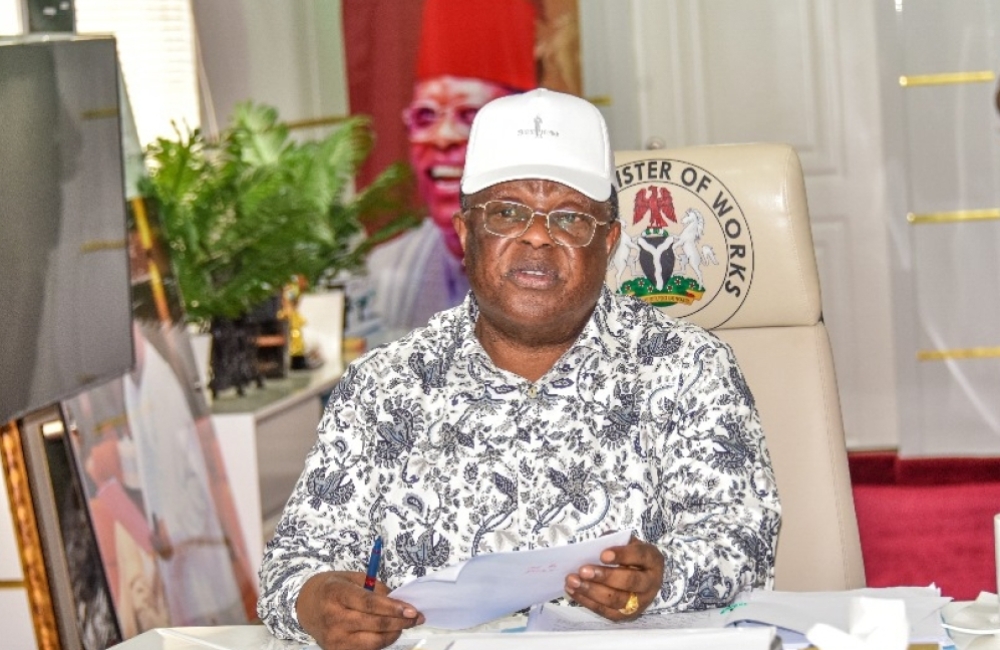
Engr. Umahi Flags Off Construction of Sokoto-Badagry Superhighway - Describes project as a jinx broken and true testament of Mr. President’s love for the North The Minister of Works, His Excellency, Sen. (Engr.) Nweze David Umahi has described the award of the contract for the construction of Sokoto - Badagry Superhighway as a forty-eight year jinx being broken and a show of love for the people of the Northern part of the country by President Bola Ahmed Tinubu, GCFR. He disclosed this at the flag off ceremony for construction works on the Section I, Phase 1A of the project in Ilelah town, Sokoto State on Thursday, 24th October, 2024. Engr. Umahi informed the gathering that the idea of the project was first muted during the first tenure of former President Shehu Shagari but could not be started earlier than the present, describing it as a payback to the people of Sokoto for the massive support given to the Tinubu Presidency at the 2023 polls, while also soliciting for same and much more during the 2027 elections. He further described the epoch-making event as a manifestation of one of the Legacy Projects of Mr. President, spanning over 2,000 km with the North having 52% and the South 48. The Minister revealed that the choice of rigid pavement i.e. concrete in its design and construction is informed by longevity, while that of the contractor, Messrs Hitech Construction (Nig.) Ltd is premised on capacity to deliver according to specifications and on schedule due to availability of both brand new equipment and requisite manpower. It has done a similar pavement work on the Apapa - Oshodi Expressway in Lagos State and is doing same on the Lagos - Calabar Coastal Highway. While appreciating the unwavering commitment and support of Members of the National Assembly for the President’s infrastructure renaissance, he equally thanked the Office of the National Security Adviser (NSA) for the promise to provide security for the entire stretch of the corridor, while the work lasts. In welcoming guests at the occasion, the Deputy Governor, Sokoto State and Commissioner of Works, Hon. Idris Mohammed Danchadi alluded the project to “a dream come true” for the loyal people of the State. Briefing the massive crowd at the Ceremony, the Director, Highways, Construction and Rehabilitation, Engr. Bakare Umar and the representative of the Director, Highways, Bridges and Design, Engr. Musa Seidu described the 1,068-kilometre Sokoto - Badagry Superhighway as a Trade, Transport and Security (TTS) Greenfield corridor traversing Sokoto state through Kebbi, Niger, Kwara, Oyo, Ogun and terminating in Lagos State. They opined that the project seeks to reduce transportation costs, improve trade, connectivity, efficiency and economies of scale around the corridor and beyond. The 120-kilometre, 6-lane highway, 3 lanes on each side is to be separated with beautiful median landscaping, solar street lighting and modern digital signages, adding that it will link various existing inter-border towns and routes, provide quick access, enhance border settlements for trade, security support and enablement. The length of Section I, Phase 1A starts from Km. 0 + 000 (Ilelah, Sokoto State) and ends at Silame on the Sokoto/Kebbi State border, according to them. In separate Good Messages, the Minister of Budget and National Planning, H.E. Sen. Abubakar Bagudu disclosed that at a Town Hall Meeting in July, 2024 at Birnin Kebbi, the Minister spoke about plans to embark on the project. He said that the flag-off represents the vision of President Bola Ahmed Tinubu, GCFR to transform Nigeria and a proof that building viable and lasting infrastructures is possible. Also another former Governor of Kebbi State and Vice Chairman, Senate Committee on Works, H.E. Sen. Adamu Aliero stated that upon completion of the Superhighway, travel time between Sokoto to Lagos will be drastically reduced by 48 hours, adding that dams for irrigation and electricity generation and rail lines are amongst its integral parts. The Deputy Chief Whip of the Senate, Sen. (Barr.) Onyekachi Peter Nwebonyi dubbed the Minister of Works as “Mr. Projects,” further assuring Nigerians of getting value for their money. While the Vice Chairman, House Committee on Works, Hon. Usman Banye said it was a rare honour and a privilege to be a part of the epoch-making ceremony, also described the project as a catalyst for economic growth and a testament to Mr. President’s desire to better the lives of the citizenry. Speaking, the Minister of State for Works, Barr. Mohammed Bello Goronyo revealed that the project is a clear testament of the Renewed Hope Agenda of the present Administration. He further stated that, as a Member of the Federal Executive Council (FEC), he has heard the Minister spoke about the project in Council for a record three times, which is a demonstration of his, as well as the President’s love for Northern Nigeria, also a passion for infrastructure development. On his part, the Sultan of Sokoto, His Eminence, Alh. Sa’ad Abubakar promised to gather brothers and sisters in Sokoto and its environs to assist the Ministry in the delivery of the project, which is very dear to the people of Northern Nigeria. He used the opportunity to admonish leaders to, always, prioritise the welfare of the populace in their deeds. In his Speech, the Sokoto State Governor, H.E. Dr. Ahmad Aliyu Sokoto, FCNA, who flagged off the project, on behalf of the President, was full of praises for the Federal Government. While mentioning that the gigantic road project, when completed, will link the state with the Central and Western parts of Nigeria, he promised to provide adequate security cover throughout the length and breadth of the alignment within his jurisdiction. The Executive Governor also, specifically, expressed the sincere gratitude and best wishes of the entire people of Sokoto to Mr. President for adding yet another Ministerial slot to the State in yesterday’s cabinet reshuffle. ...
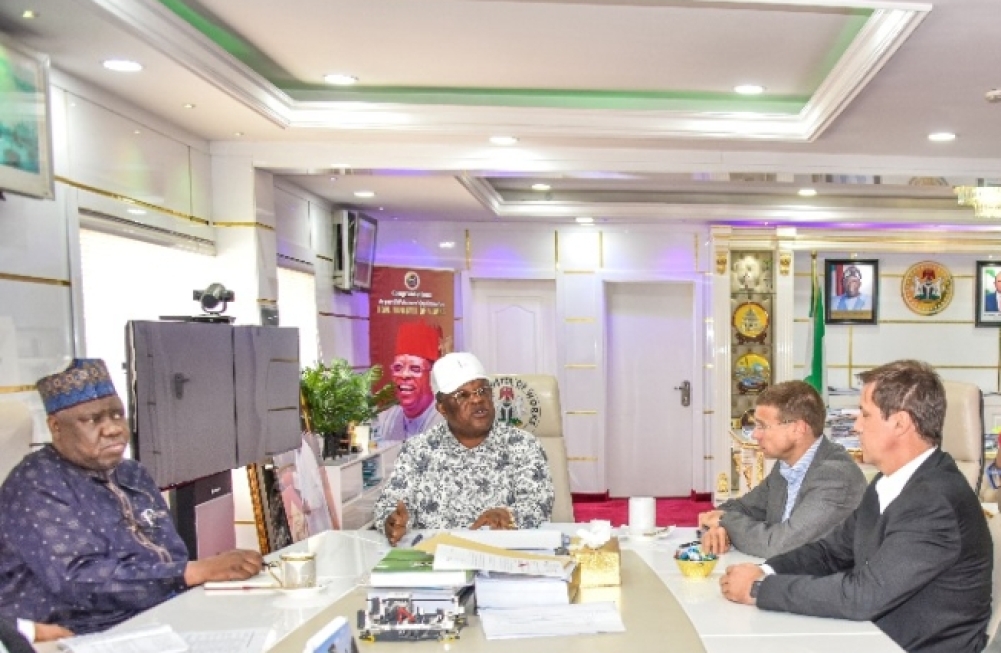
JULIUS BERGER PLC URGED NOT TO RENEGE ON THEIR COMMITMENT TOWARDS COMPLETING THE REHABILITATION OF THE 82 KM SECTION II OF ABUJA-KADUNA- ZARIA- KANO ROAD. - AS THE WORKS MINISTER, SEN. UMAHI CHARGES THE NEW MANAGING DIRECTOR OF JB PLC TO BRACE UP FOR A REALISTIC CONTRACT PRICING IN DEFERENCE TO NATIONAL ECONOMIC RECOVERY PLANS. The Honourable Minister of Works, His Excellency, Sen. Engr. Nweze David Umahi, CON has for the umpteenth time called on Julius Berger Plc. to show corporate patriotism by accepting the Federal Government’s approved reviewed total contract sum of ₦740, 797,204,713.25 (Seven Hundred and Forty Billion, Seven Hundred and Ninety-Seven Million, Two Hundred and Four Thousand, Seven Hundred and Thirteen Naira, Twenty Five Kobo for the completion of the rehabilitation of the 82 km section II of the Abuja-Kaduna-Zaria-Kano road, contract No.6350. This call was made during the courtesy visit of the new Managing Director of Julius Berger Plc, Dr. Pier Lubasch, who was accompanied by the outgoing Managing Director, Dr. Lars Richter at his office, Federal Ministry of Works Headquarters, Mabushi Abuja on 22nd October 2024. He lamented that the delay in mobilizing to the site despite the approved funds by the Federal Executive Council is causing untold hardship to the road users and that the Federal Government is at the receiving end of the situation. In the Honourable Minister’s Words “So if Berger is not doing it, then let's have other people to do the job and within the time that we can control price. We've had more than 20 letters from Berger on this. It is a ping pong game from Julius Berger. The prices rose from ₦710 billion to ₦740 billion because of these delays. And if we continue the delays, it is the problem of the Ministry of Works.” The Honourable Minster expressed dismay that Julius Berger Plc, which has had years of patronage by Federal Government and sub-national governments, is not realistic in the contract pricing, especially at this time of Nigeria’s economic challenges. He therefore urged the contractor to within 7 days accept or reject the approved reviewed contract sum for the completion of the rehabilitation of section II of the Abuja-Kaduna-Zaria-Kano road or face contract determination as Federal Government cannot be held to ransom by the desire for unrealistic pricing and augmentation by contractors. He said, “This offer is not subject to any condition. It's not subject to any condition that is being dished out here. It's taken as given after more than 14 months. I'm sorry, I have to sound this way because there must be an end to negotiation. If anybody says there shouldn't be an end to negotiation, then that person is not a business person. If you have negotiated for 14 months without any result, you should terminate the negotiation.” While welcoming the new Managing Director of Julius Berger Plc, the Honourable Minister reiterated the need for construction companies working with the Federal Ministry of Works to prepare to make sacrifices in terms of value for money and realistic contract pricing, so as to encourage the much needed road infrastructure revolution for the nation’s economic transformation which is a cardinal agenda of the Renewed Hope administration of the President of the Federal Republic of Nigeria, His Excellency, President Bola Ahmed Tinubu, GCFR He said, “already a number of Berger projects have been terminated because the site has been abandoned. And we needed to do something about it because Nigerians are suffering. Nigerians are crying, and they are insulting the President. We cannot allow that to be happening.” The new Managing Director promised to revert as soon as possible on the issues sought to be addressed and hoped that consensus would be reached for the project to take off without further delay. The outgoing Managing Director, however, noted that the essence of the courtesy call to the Honourable Minister of Works was to introduce the new Managing Director of the company. ...
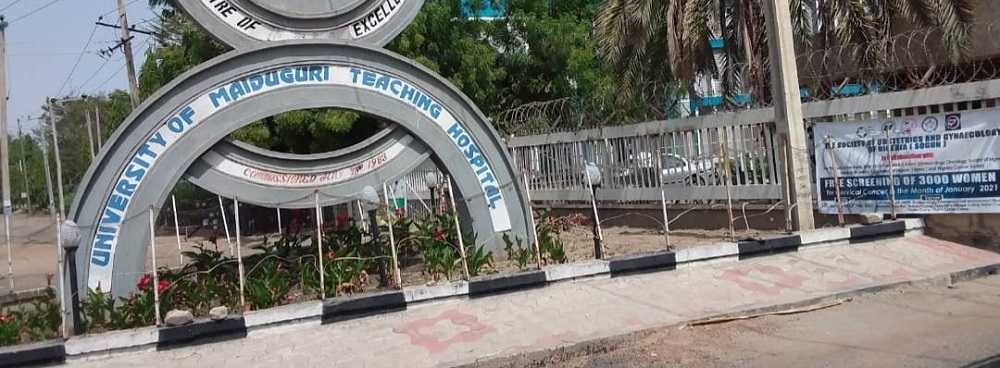
FG Hands Over 2.5 Kilometres Internal Roads At UMTH
A total of 2.5 kilometres internal roads rehabilitated at the University of Maiduguri Teaching Hospital (UMTH) by the Federal Ministry of Works and Housing have been handed over by the Honourable Minister of Works and Housing, Mr. Babatunde Fashola, SAN.
Speaking at the event the Chief Medical Director of University of Maiduguri Teaching Hospital, Professor Ahmed Ahidjo commended President Muhammadu Buhari, GCFR and Ministry of Works and Housing for selecting the institute as beneficiary of the intervention programme.
The Minister of Works and Housing Babatunde Raji Fashola SAN, who was represented at the handing over ceremony by the Federal Controller of Works Borno State, Engineer Amos Adams Tongman explained that the intervention by the Federal Government in the development of infrastructure in the tertiary institutions was to boost quality of education, give students a renewed hope and enthusiasm with regards to attending classes because some defective roads have been restored to motorability.
"It is undebatable that the quality of education will be impacted by the quality of infrastructure and the learning environment and those who doubt it should simply listen to some of the feedbacks from the students of the schools where this type of intervention has taken place." he said.
He said that the 2.5 kilometers road network was a laudable project as it would ease movement of both students and staff of the institute within the campus.
The CMD said, "We are fortunate to be able to witness this handing over occasion of roads rehabilitated by the Federal Ministry of Works and Housing. We thank you for your tremendous support in bringing out our landmark project which is being commissioned today. "
The four rehabilitated roads were renamed: Former Ring Road now Babatunde Raji Fashola Road, former Kidney Centre to Engineering Road now Mohammed Bukar Road, former Engineering Junction to Polio Laboratory Road now Professor Jibrin Aminu Road and lastly, School of Nursing Road to Babangida Hussaini Road.
In the words of Professor Ahidjo:’’ These roads are renamed in recognition of the great contributions they have made to the success story we are celebrating”, he said.
On the impact of the road, the President of the Students Union Government (SUG) of the institute, Comrade Hakuri Tamus said the intervention had been a big blessing to the students and management of the institution as well.
"We are grateful to the Minister. We are very happy that the roads have been fixed. Because of the sandy nature of the roads before the intervention students usually fall from bikes. We have recorded a lot of accidents on these roads," he explained.
The Students Union Vice President Comrade Wakhumahysel Peter expressed joy that the project was completed during her time. “We thank President Buhari and the Honourable Minister for making this happen. It will attract more students to the school. It will boost our learning activities as the roads will ease our movement within the school premise,’’ she said.
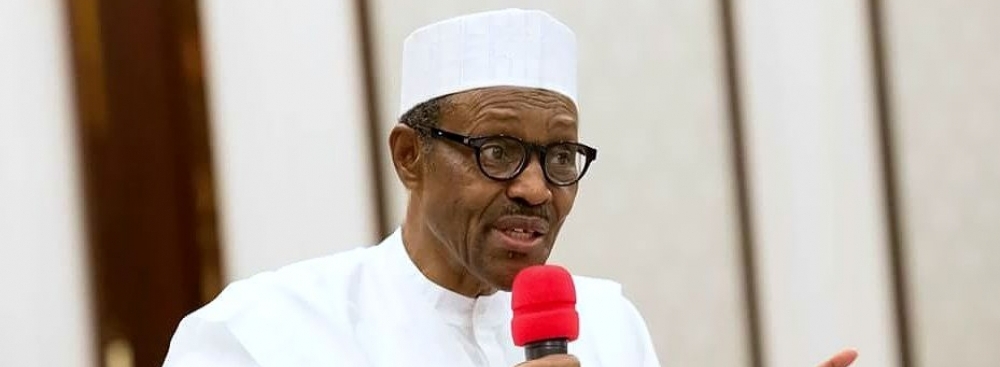
“Nation Building And Institutional Development, Lessons For Nigeria From The Island Club At 75,” Address Delivered By His Excellency, President Muhammadu Buhari, GCFR On The Occasion Of The Seventy-Fifth Anniversary Of The Island Club, Lagos
My chairman of the great Island Club, members of the management committee, worthy members of the club, eminent Nigerians, distinguished ladies and gentlemen.
Permit me to open my speech with words of congratulations and felicitations to the Island Club, her leadership team, comprised of the management committee and her body of members; on this occasion of the Seventy-Fifth Anniversary of the club.
To you all, I say Happy Anniversary and best wishes for many more years.
As an institution, Island Club has endured, not without challenges, but in spite of them: and there are many lessons for us as a people and a nation to learn from 75 years of history that has been woven into the walls and fabric of this club.
The first is perhaps the lesson that dispels the hyperbolic expression that flies around these days that Nigeria lacks institutions.
The Island Club and many other social clubs who have endured over decades put a lie to those kind of uninformed statements.
Apart from social clubs, and non-governmental institutions, Nigeria has governmental institutions like federal, state and local governments, and indeed judicial, parliamentary, law enforcement and other institutions.
The fact that we expect more from them, the fact that they may be facing challenges does not justify the unsupported assertions that they do not exist.
Many of them have existed before and after the creation of Nigeria as corporate entities and have evolved from sometimes very humble beginnings to what they have become today.
At some times, they have worked very well. At other times, they have been challenged to give more; but they have never ceased to exist.
This is why I said earlier, that there is a lot to be learned from the Island Club.
Her history is all too well known and published to warrant any repetition here.
What is relevant for my purpose is to briefly recall that at any time, this was the place where the Giants of Nigeria gathered.
At the time, Lagos was the capital of Nigeria and ministers, state commissioners, many public officers and captains of industry were regular users of this club.
That has changed in the sense that the capital of Nigeria has moved to Abuja, but Island Club still retains its fair share of members of government at various levels as it does among the leaders of the business community.
But we must remember that just a few years ago this club faced very serious headwinds which threatened it to its very core.
Attendance dwindled, regular events around which brotherhood and conviviality that bound members together were threatened; indeed, there were court cases.
In the end, the storm calmed, Island Club went through a very tedious and I daresay painful process of change, and here we are at a glorious dawn that heralds many possibilities.
The club of which I proudly serve as grand patron has found its groove again.
Because of this process of change, I can confidently predict that Island Club will be here for another 75 years and more, long after we are all gone.
But that process of change and reform did not happen because Island Club did anything.
It happened because people, yes people, members of the club and I believe non-members, who were people of goodwill chose to act.
As an institution, like governments or agencies, Island Club as a creature of charter, brought into existence by laws made by men, can do nothing by herself.
It is men and women who define, who decide and who determine what happens to institutions.
When institutions do well, it is men and women who are entrusted with authority over that institution who have done well and vice versa.
This is an important lesson to learn from Island Club‘s history.
At the time of perhaps the greatest crisis, the men entrusted with the fortunes of the Island Club did not abdicate.
They confronted crises and embraced change; and they reminded me of the story of the Eagle which has been well told but which I crave your indulgence to repeat because of its profound lessons about change and hard decisions.
“The Eagle has the longest life-span of its species. It can live up to 70 years. But to reach this age, the eagle must make a very difficult decision!
In its 40th year, the eagle's long and flexible Talons can no longer grab a prey which serves as food. Its long and sharp beak becomes bent.
Its old-aged and heavy wings, due to their thick feathers, stick to its chest and make it difficult to fly. Then, the eagle is left with only two options: DIE or go through a painful process of CHANGE!
This process lasts for 150 days (5 months)
The process requires the eagle to fly to a mountain top and sit on its nest. There the eagle knocks its beak against a rock until it plucks it out.
Then the eagle will wait for the new beak to grow back after which it will pluck out its talons. When its talons grow back, the eagle starts plucking its old aged feathers.
And after this the eagle takes its famous flight of rebirth and LIVES for 30 more years!”
This story is not biologically proven and seems scientifically impossible for the Eagle to live without food for 150 days. But it is nonetheless inspiring. It is the inspiration that I seek to draw from and share.
Why is Change needed?
In order to better our Nation and ourselves, we too have to start the change process. We need to jettison things that have not worked and embrace those that will work.
We need to free ourselves from habits that have held us hostage in the past so that we can embrace the promise of a better Nigeria that beckons ahead.
That process may be painful, it may be tedious, but if an Eagle does it to survive, why can’t we?
When I took office on 29th May 2015 on the basis of the mandate you generously gave me as your President, one of the challenges I had to deal with was Nigeria‘s food security risk.
With so much arable land, we were entirely dependent on others to feed ourselves, especially for staples and greens.
We were spending about $5 million daily to import rice that could be produced in Lagos, Ogun, Abia, Kebbi, Sokoto, Jigawa and many parts of Nigeria.
In the past, we had laudable initiatives like Operation Feed The Nation and Green Revolution aimed at securing our food supply and empowering our people.
Regrettably, by a combination of many factors, not least the vested interest of those who benefit from us importing food that we can produce, these initiatives did not achieve their laudable objectives.
Those interests were still there when I assumed office in May 2015. They fought back when I announced our commitment to produce what we eat and our refusal to provide foreign exchange to import those things.
I will not inundate you with the details of what they did, except to say that they nearly crippled us economically.
But today, I stand very proud to say that we took the flight of the Eagle in reaction to our food security.
Although they are still fighting, by importing to neighboring countries and dumping on us through smuggling; we are responding, and will do more to defeat them for the benefits of our people.
But I can tell you now that we have made progress.
Not only have we created millions of new rice and wheat farmers, who are not only self employed, they are now employers.
We intend to move this forward and retain the full benefits of what we have created, not only by expanding the number of farmers, but by developing the value-added chain of processing and ultimately building the base that leads us to full industrialization.
This is one of the reasons why I am offering myself to serve you for another term.
Manufacturing, which is a key driver of employment and wealth creation is largely dependent on agriculture, as it is on power supply and reliable transportation infrastructure about which I will speak shortly.
But before I leave the subject of manufacturing, let me say that our modest efforts are beginning to yield results as shown by the recent reports of the National Bureau of Statistics which shows increased growth in the manufacturing sector.
Let me say therefore, that as far as our institutions are concerned, it will require all of us, men and women of goodwill, right thinking and well-meaning Nigerians to get involved, participate, play our roles and do our level best in the way that the members of Island Club have done, in order to change what we do not like and create what we want.
On a related note let me quickly allude to the state of our national infrastructure.
A significant stock of our national infrastructure whether it is power, roads, bridges, schools, airports, rail, hospitals and many more require replacement, repairs, maintenance and expansion.
The challenges we face with infrastructure are not too dissimilar to what Island Club faced in the past and which they have now acted to remedy.
Most of the Roads, Bridges, Airports, Seaports, Power plants that we need to get on with our lives were largely built in the 1970s, and 1980s.
They were the best when we built them, but our population has grown faster than the rate of the growth of infrastructure.
I also recall that at one time, the Island Club had no hall of this size like the hall we now converge in.
The Annual Christmas and Ileya dances used to hold in the open and were dependent on the benevolence of nature, until one Chairman and management team decided to fly like the Eagle.
At the time they took the flight of change to bring down what remained of the old and inadequate structure, they did not have the resources to build this hall but they had a lot of belief and resolve.
And because of their commitment to change, we can now converge in this hall without the fear of the Rains.
Let me remind us that it took more than one term and one election cycle of the Chairman of the Island Club to build this hall, just as it will require more than one election cycle to build a nation and deliver change.
But I can report that the process of change for our infrastructure has commenced.
We have completed the Abuja-Kaduna Rail and the Abuja Business District to Airport intra-city rail and the New Port Harcourt International Airport Building which were not completed because we failed to pay the counterpart funding at the time we were earning about $100 per barrel of oil.
Our administration paid these monies when the price of oil dropped to about $50 per barrel, and simultaneously committed to the Construction of the Lagos- Abeokuta- Ibadan- Kano Rail which has started.
We have revived most of the road contracts that were abandoned and started new ones and I can say to you confidently that there is no state in Nigeria where our Government is not constructing at least one Road.
In Lagos for example, the Ikorodu-Sagamu and the Lagos-Otta-Abeokuta Roads are long abandoned roads we have revived and contractors are now back to work while I have inaugurated an Infrastructure Development Fund to ensure that the Lagos-Ibadan, Second Niger Bridge and Abuja-Kano roads are not affected or delayed by funding problems again. We have also awarded the Tin-Can Island, Mile 2, Oshodi – Oworonshoki Expressway which is contributing to the gridlock in the State and work should start in November this year.
With significantly less resources we are getting a lot more done.
As far as power supply is concerned, we all know that it had been largely privatized before the advent of my administration with only the transmission part left for Government to manage.
But even our harshest critics will admit that we have moved things forward from where we met them.
A significant number of Nigerians admit that the hours they run their generators, and the amount they spend on diesel and petrol to power their generators is reducing.
That is progress and we are not finished.
We know there is a lot of work to do but we are inspired by the progress in generation from 4,000MW to 7,000MW ; in transmission from 5,000MW to 7,000MW and in distribution from 2,690MW to 5,222MW.
Compared to the 4,000 MW of generation that we inherited after 16 years which did not start from zero in 1999, it means that we are averaging 1000 MW per annum of incremental power Generation every year since 2015 when we took office.
This is change for the better, compared to 4,000 MW after sixteen years (which as I said did not start from zero in 1999), which is an average of 250 MW per annum.
Our policy of Eligible Customers to provide power to industrial customers working with the Manufactures Association of Nigeria is bearing encouraging results, with 5 industries already connected to reliable power and 14 more industries are being processed while many more new applications are coming in.
The policy of Meter Asset Providers to facilitate increased supply of meters excited 103 applicants, out of which 80 no objections have been issued.
As you all know, the only thing that stands between Policy, Impact and Results is time. We can only now wait to see how the solutions we have designed trickle down and bear fruit. But this is only one side of the Power story. The on-grid side.
On the Off-grid development side, another policy outcome of our Government will imminently bear fruits in 9 Federal Universities which are the pilot phase of supplying independent power to our children‘s places of learning.
Two markets, Ariaria in Abia State with 37,000 shops and Sabon Gari market in Kano with 13,000 shops are the pilots of 15 markets comprising 85,000 shops and 255,000 micro small and medium Enterprises that will get reliable and uninterrupted power.
Last week Friday, the Vice President was here in Lagos to inaugurate the Sura Independent Power Project , a product of our Mini Grid policy that has delivered uninterrupted power to 1,047 shop owners in Sura market. The feedback from the shop owners, that they have not used their generators for the last 70 days since the project was completed and that their businesses are growing , they are employing more people , confirm to me that we are on the right track.
It is because of these hardworking Nigerians who need the support of Government that I offer to serve again.
I could not conclude this address without a mention of our progress with regards to Security.
During my campaign for office in 2014, we were in a situation where insurgents had actually captured local governments and hoisted flags with a view to setting up their own parallel government.
We have retaken all of that from them.
But because crime is rewarding to its perpetrators, they do not give up easily.
They now attack soft targets and we will not stop our pursuit of them until they give up their nefarious acts and are brought to justice.
As we deal with new challenges and the dynamic nature of crime and indeed life as a whole, I understand that it is sometimes easy to forget what we overcame and have achieved when we face new challenges.
We overcame a situation where government activity like National day parades could not hold in the open.
They were held inside the villa in Abuja. That has changed since my assumption of office.
We rescued 107 children from Chibok incident and reunited them with their families, although 112 children still remain to be rescued, as very painful reminders that our work is not done.
We had a set back with the abduction of our children in Dapchi, but our response was quicker than Chibok, as we recovered all the children except unfortunately Leah Sharibu, the young girl for whom I will not rest until we bring her home, to the care and love of her anxious and traumatised parents.
I wish there is a crime free world; but sadly this world exists only in the ideal and it is my responsibility in this part of the world to lead the search for that ideal world.
Like the history of the Island Club to which I have referred, where the road to overcoming her challenges took more than one term of the chairman, it is obvious that we cannot solve all the problems we are faced within one term of my Presidency or one term of any President.
Change is not an event, it is a process and requires time.
This is another reason why I am offering myself to serve again. I believe that these problems can be solved and our choices are moving us in the right direction, which is forward.
Mr. Chairman, members of the management committee, Eminent body of members, invited Guests, Ladies and Gentlemen, like the Island Club, I believe Nigeria must move forward, consolidate on progress and seek to achieve more. We cannot afford to go back.
This is what I offer and promise, that we work together to build the Nigeria that we desire, and I invite all of you to join me, because it is possible, as we consign our difficulties to history and embrace a future of prosperity.
Let us consolidate and move forward together, because going back cannot be a choice.
Muhammadu Buhari, GCFR
President of the Federal Republic of Nigeria
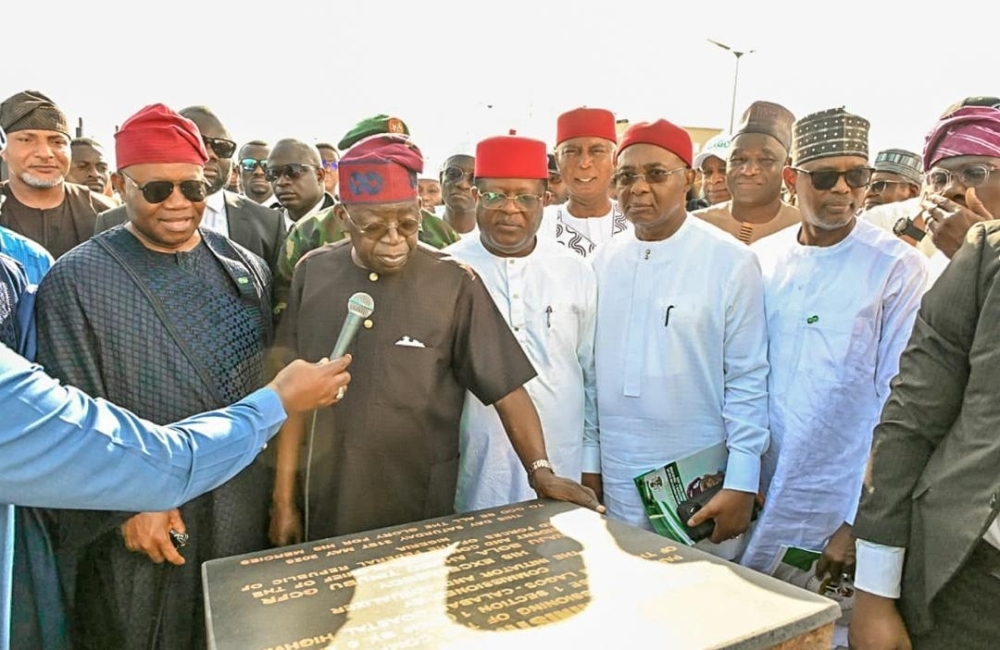
DRIVING NIGERIA’S FUTURE: CELEBRATING TWO YEARS OF TRANSFORMATIVE LEADERSHIP AND THE LAGOS-CALABAR COASTAL HIGHWAY MILESTONE
DRIVING NIGERIA’S FUTURE: CELEBRATING TWO YEARS OF TRANSFORMATIVE LEADERSHIP AND THE LAGOS-CALABAR COASTAL HIGHWAY MILESTONE
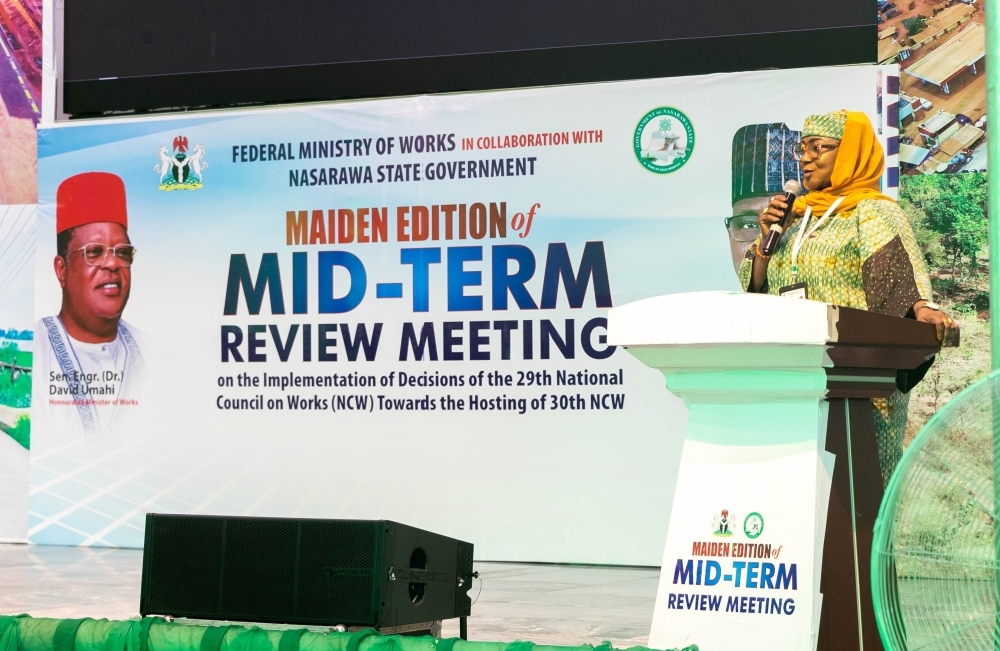
MID -TERM REVIEW MEETING ON THE IMPLIMENTATION OF THE DECISIONS REACHED AT THE 29TH NATIONAL COUNCIL ON WORKS (NCW) DAY 1
MID -TERM REVIEW MEETING ON THE IMPLIMENTATION OF THE DECISIONS REACHED AT THE 29TH NATIONAL COUNCIL ON WORKS (NCW) DAY 1