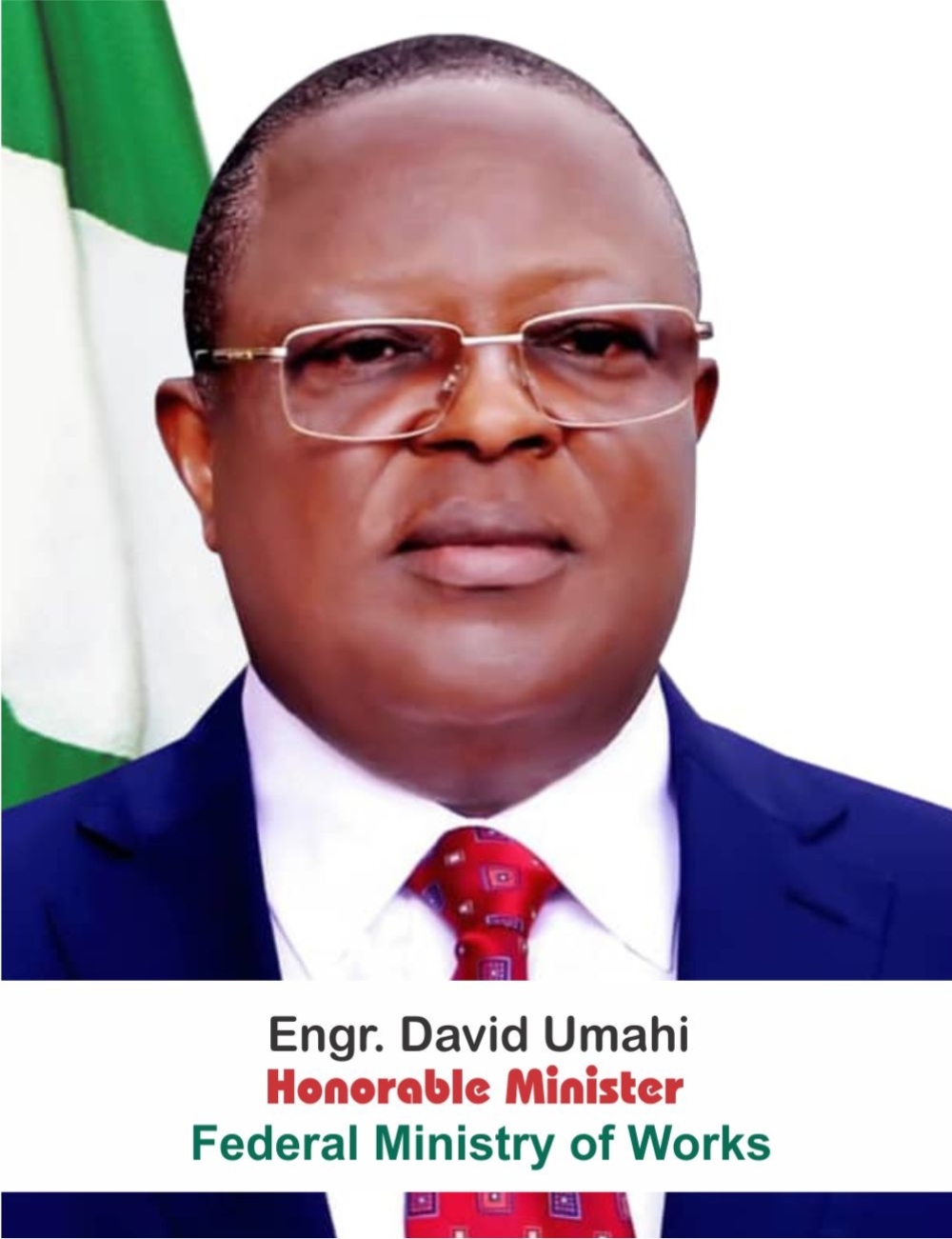
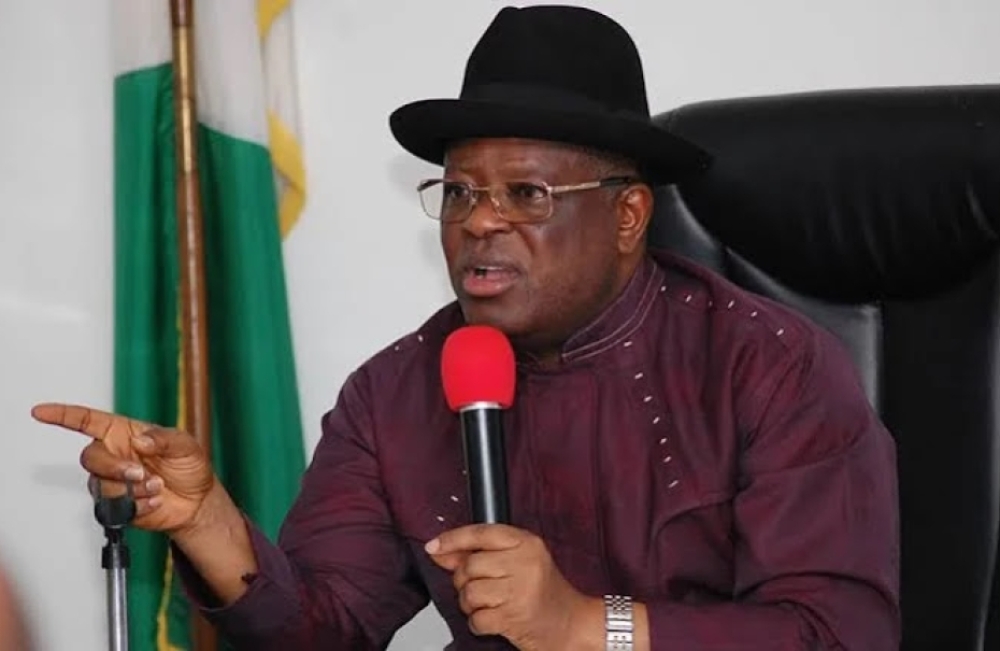
UMAHI ORDERS IMMEDIATE EMERGENCY INTERVENTION ON BENIN-ASABA ROAD, AND SOME OTHER CRITICAL FEDERAL ROADS
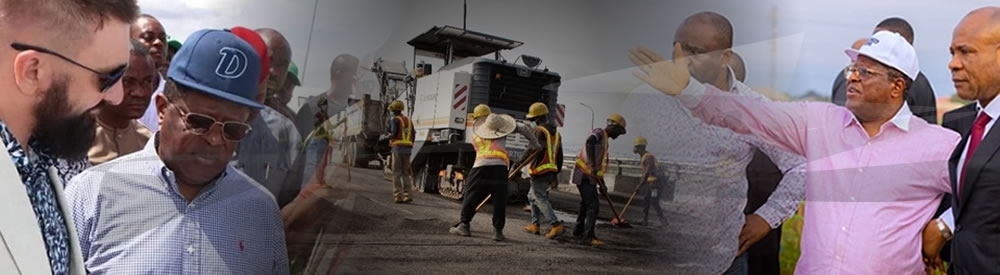
The Honourable Minister of Works, Senator Engr. David Nweze Umahi, CON, has directed the immediate deployment of major contractors to all three sections of the Benin-Asaba Federal Road to restore the failed sections and bring an end to the suffering of motorists and other road users.
This is because, the situation on the concessioned Benin-Asaba Road has reached a point where the overall public interest must take precedence over the existing concession agreement.
Recall that the Honourable Minister of Works was on the Benin-Asaba Road about seven days ago, where he assembled a number of contractors and directed them to prepare for immediate palliative intervention on the affected sections of the road at no cost to the concessionaire. In line with the Concession agreement which requires that before the Federal Government could intervene, the permission of the concessionaire must be required, and that permission was not granted to federal government.
The Minister subsequently proposed three options to the concessionaire, any one of which would have enabled the Federal Government to move in and address the worsening condition of the road. Unfortunately, none of the options was accepted by the concessionaire. Immediately after the Minister left Asaba, the already limited equipment deployed to the road by the concessionaire was further reduced to just one, worsening the situation and increasing the suffering of motorists and other road users.
While the Minister takes responsibility for the concerns and suffering of Nigerians using the road, it is important to state that the concessionaire has also not taken the suffering of Edo people and travelling public sufficiently into consideration by declining all the options put forward by the Federal Government. The concessionaire continues to rely on the terms of the concession agreement entered into by the previous administration, an agreement which weighs heavily against the Federal Government’s ability to intervene quickly in the interest of the public in a situation like this.
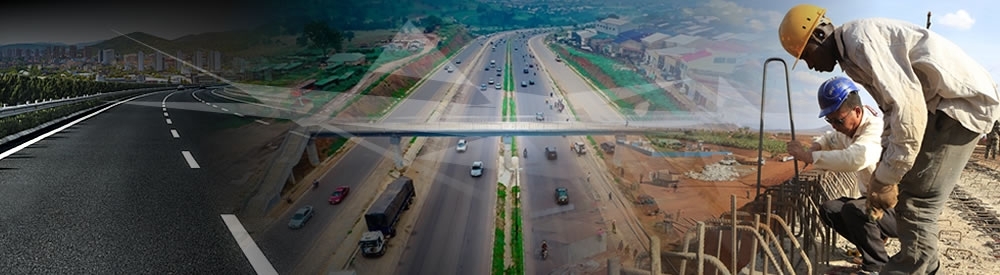
In view of this situation, the Honourable Minister of Works has directed the immediate deployment of major contractors within the corridor to all three sections of the Benin-Asaba Road to restore the failed sections and bring relief to the people, with the cost of the emergency intervention being borne by the Federal Government. The Honourable Minister has also directed immediate redesign of the entire route to be rebuilt with reinforced concrete pavement. The public should therefore take note that immediate action is underway to restore every failed section of the Benin-Asaba Road and subsequently rehabilitate the entire sections of the road using reinforced concrete pavement.
2. On the Benin-Sapele Road:
The Governors of Edo and Delta States, the Niger Delta Development Commission (NDDC), and the Federal Government are currently engaged in interventions on different sections of the road to restore the entire route. While some sections are receiving palliative attention, permanent works are also ongoing on other sections.
3. On Ifaki(Ekiti) - Kabba (Kogi) Road:
The Federal Government is engaging both the contractor; Gamji Nigeria Company Limited, and Dangote PLC on immediate emergency and permanent intervention on the most failed sections of the road, while efforts are being made to financially mobilise the company for more extensive permanent work to commence on the axis.
4. On the Sokoto-Zamfara-Katsina Road: This is an inherited project involving the dualisation of approximately 350 kilometres, which translates to about 700 kilometers. The project has since been redesigned and is currently ongoing and most sections are being reconstructed using reinforced concrete pavement. From the Sokoto axis towards Zamfara, over 50 kilometres of one carriageway have been fully completed with reinforced concrete pavement. From Zamfara to Katsina, some sections have been completed and palliative works have been ordered over the sections that have not been reconstructed. However, the pace of work slowed down due to the redesign and rephasing of the project. The contractors currently engaged on the road include CBC, SETRACO, Triacta and Mothercat. They are being remobilised to return to site and complete the outstanding works.
5. On the Abuja-Kaduna-Zaria-Kano Road: The Federal Government took over the Road project and has currently completed the 118-kilometer mostly on reinforced concrete pavement on lot 1. The Lot 2, which covers 164 kilometres, is over 60 percent completed on reinforced concrete pavement. The Federal Government has also introduced solar-powered light on the entire route of Abuja-Kaduna-Zaria - Kano to improve visibility during night travel and enhance the overall security situation on the route. The entire project is scheduled for completion by December 2026.
6. On Bauchi-Jigawa Road: Triacta Nigeria Limited has been mobilised to carry out the necessary interventions on some failed sections and work is currently ongoing in those failed sections.
7. On the Sagamu-Ore Road: 48 Kilometers of the 96-kilometre road have already been completed using reinforced concrete pavement. There is also a 24-kilometre section around Ore which was abandoned by the previous contractor. The Federal Government has directed its immediate restoration to ensure seamless travel. Solar lights are being installed in the entire 96kilometer of the road.
8. On Flooded Sections on Sagamu-Ore-Benin Road: The flooded sections on the same corridor between Sagamu-Ore-Benin Road, as well as other flooded sections in Ondo State, are being designed for emergency procurement and intervention.
9. On the East-West Road:
Some failed and critical sections, including defective sections of bridges along the East-West Road, are being marked out for emergency procurement and intervention.
10. On the Abuja-Lokoja Road:
Several contracts are ongoing along the route, while the three critical sections currently without contracts are being procured for emergency intervention.
11. On the Lokoja-Benin-Warri Road: The President has directed a complete redesign and procurement of the 400-kilometre dualised route covering the uncompleted sections, using reinforced concrete pavement, while palliative works will continue with the contractors currently on the road.
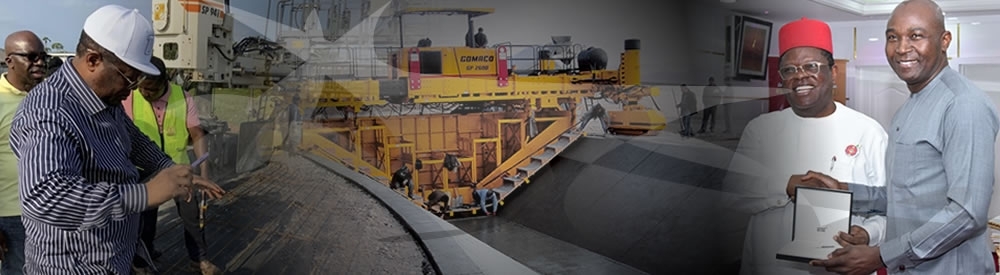
12. On Carter Bridge:
While the Federal Government continues to undertake weekly maintenance of the underwater elements of the bridge. The site has also been handed over to the contractor, CCECC, for the construction of a permanent new bridge, and work has commenced.
13. On the Third Mainland Bridge:
With regard to the defective underwater structural elements, the Federal Government is at the final stage of determining the appropriate intervention for the repair of the affected elements.
14. On the flooded section of the Lagos-Ibadan Road: Work has commenced on the affected section. There are also several flooded sections on federal roads across the six geopolitical zones, largely occasioned by excessive flooding and the effects of climate change. The Federal Government is identifying and marking these sections for immediate attention.
15. On the First and Second Niger Bridges:
Intervention work is ongoing on the approach roads to the Second Niger Bridge damaged by flood and the work is progressing very well. The First Niger Bridge has been closed to traffic to enable immediate repair works. Contractor has mobilized to site and comprehensive rehabilitation of the bridge has started. From Summit Junction to the First Niger Bridge, massive rehabilitation work is also ongoing using reinforced concrete pavement.
16. The Honourable Minister wishes to commend the President of the Federal Republic of Nigeria, His Excellency Bola Ahmed Tinubu, GCFR, for the massive work being undertaken on the nation’s roads since the administration assumed office in 2023.
17. It is important to state that when the present administration came into office, there was hardly any part of the country where one could travel for an hour without encountering significant challenges on the road network. The condition of the country’s roads and bridges was a major national infrastructure challenge.
18. Rather than shy away from the problem, the administration of President Bola Ahmed Tinubu made the nation’s road network a priority. Virtually every part of the country became a priority, and the Federal Government, through the Federal Ministry of Works, Regional Commissions, Parastatals and other MDA’s has continued to respond extensively to these challenges.
19. The Federal Government is currently working on over 80 percent of the inherited federal roads, an unprecedented level of intervention in the country’s road infrastructure.
20. We ask the public to understand the enormous challenges inherited on our roads and bridges and to take note not only of the problems being solved, but also of the permanent solutions being introduced.
21. A major part of this new approach is the use of reinforced concrete pavement, designed to significantly extend the lifespan of major roads. These roads are expected to last between 50 and 100 years. This means that roads being constructed under President Bola Ahmed Tinubu’s administration are being designed with future generations in mind, rather than simply providing temporary solutions to today’s problems. And this is a complete departure from the past, when roads often deteriorated only a few years after completion, resulting in a continuous cycle of reconstruction and expenditure.
22. We appreciate the concerns of Nigerians over the condition of some roads presently and the difficulties faced by motorists and commuters who cannot move easily from one point to another. Those concerns are legitimate, and the Federal Government is listening. But Nigerians should also recognise the enormous scale of the problems inherited and the amount of work currently being undertaken across the country.
23. It is simply impossible to resolve every road challenge accumulated over many years of neglect by the past administrations within three years. What is important is that the government is working, the government is responding, and the government is putting permanent solutions in place.
25. We appreciate members of the public who send situation reports on failed roads and other infrastructure challenges. These reports help the Ministry identify areas requiring urgent attention. However, we also appeal to members of the public to report when such problems have been addressed, just as they report when they occur.
24. We are aware of situations where photographs and reports of road challenges continue to circulate on social media even after the Federal Government has intervened and resolved the particular problem.
25. However, the Ministry will continue to respond as rapidly as possible to genuine reports and concerns from Nigerians.
26. It is also important to note that we have compiled a comprehensive record of all inherited, ongoing and intervention projects across the country which is available to the public. This is to ensure that Nigerians have access to information on the infrastructure projects being undertaken nationwide and can fully participate in and appreciate the infrastructure revolution of President Bola Ahmed Tinubu’s administration.

UMAHI ORDERS IMMEDIATE EMERGENCY INTERVENTION ON BENIN-ASABA ROAD, AND SOME OTHER CRITICAL FEDERAL ROADS The Honourable Minister of Works, Senator Engr. David Nweze Umahi, CON, has directed the immediate deployment of major contractors to all three sections of the Benin-Asaba Federal Road to restore the failed sections and bring an end to the suffering of motorists and other road users. This is because, the situation on the concessioned Benin-Asaba Road has reached a point where the overall public interest must take precedence over the existing concession agreement. Recall that the Honourable Minister of Works was on the Benin-Asaba Road about seven days ago, where he assembled a number of contractors and directed them to prepare for immediate palliative intervention on the affected sections of the road at no cost to the concessionaire. In line with the Concession agreement which requires that before the Federal Government could intervene, the permission of the concessionaire must be required, and that permission was not granted to federal government. The Minister subsequently proposed three options to the concessionaire, any one of which would have enabled the Federal Government to move in and address the worsening condition of the road. Unfortunately, none of the options was accepted by the concessionaire. Immediately after the Minister left Asaba, the already limited equipment deployed to the road by the concessionaire was further reduced to just one, worsening the situation and increasing the suffering of motorists and other road users. While the Minister takes responsibility for the concerns and suffering of Nigerians using the road, it is important to state that the concessionaire has also not taken the suffering of Edo people and travelling public sufficiently into consideration by declining all the options put forward by the Federal Government. The concessionaire continues to rely on the terms of the concession agreement entered into by the previous administration, an agreement which weighs heavily against the Federal Government’s ability to intervene quickly in the interest of the public in a situation like this. In view of this situation, the Honourable Minister of Works has directed the immediate deployment of major contractors within the corridor to all three sections of the Benin-Asaba Road to restore the failed sections and bring relief to the people, with the cost of the emergency intervention being borne by the Federal Government. The Honourable Minister has also directed immediate redesign of the entire route to be rebuilt with reinforced concrete pavement. The public should therefore take note that immediate action is underway to restore every failed section of the Benin-Asaba Road and subsequently rehabilitate the entire sections of the road using reinforced concrete pavement. 2. On the Benin-Sapele Road: 3. On Ifaki(Ekiti) - Kabba (Kogi) Road: 4. On the Sokoto-Zamfara-Katsina Road: This is an inherited project involving the dualisation of approximately 350 kilometres, which translates to about 700 kilometers. The project has since been redesigned and is currently ongoing and most sections are being reconstructed using reinforced concrete pavement. From the Sokoto axis towards Zamfara, over 50 kilometres of one carriageway have been fully completed with reinforced concrete pavement. From Zamfara to Katsina, some sections have been completed and palliative works have been ordered over the sections that have not been reconstructed. However, the pace of work slowed down due to the redesign and rephasing of the project. The contractors currently engaged on the road include CBC, SETRACO, Triacta and Mothercat. They are being remobilised to return to site and complete the outstanding works. 5. On the Abuja-Kaduna-Zaria-Kano Road: The Federal Government took over the Road project and has currently completed the 118-kilometer mostly on reinforced concrete pavement on lot 1. The Lot 2, which covers 164 kilometres, is over 60 percent completed on reinforced concrete pavement. The Federal Government has also introduced solar-powered light on the entire route of Abuja-Kaduna-Zaria - Kano to improve visibility during night travel and enhance the overall security situation on the route. The entire project is scheduled for completion by December 2026. 6. On Bauchi-Jigawa Road: Triacta Nigeria Limited has been mobilised to carry out the necessary interventions on some failed sections and work is currently ongoing in those failed sections. 7. On the Sagamu-Ore Road: 48 Kilometers of the 96-kilometre road have already been completed using reinforced concrete pavement. There is also a 24-kilometre section around Ore which was abandoned by the previous contractor. The Federal Government has directed its immediate restoration to ensure seamless travel. Solar lights are being installed in the entire 96kilometer of the road. 8. On Flooded Sections on Sagamu-Ore-Benin Road: The flooded sections on the same corridor between Sagamu-Ore-Benin Road, as well as other flooded sections in Ondo State, are being designed for emergency procurement and intervention. 9. On the East-West Road: 10. On the Abuja-Lokoja Road: 11. On the Lokoja-Benin-Warri Road: The President has directed a complete redesign and procurement of the 400-kilometre dualised route covering the uncompleted sections, using reinforced concrete pavement, while palliative works will continue with the contractors currently on the road. 12. On Carter Bridge: 13. On the Third Mainland Bridge: 14. On the flooded section of the Lagos-Ibadan Road: Work has commenced on the affected section. There are also several flooded sections on federal roads across the six geopolitical zones, largely occasioned by excessive flooding and the effects of climate change. The Federal Government is identifying and marking these sections for immediate attention. 15. On the First and Second Niger Bridges: 16. The Honourable Minister wishes to commend the President of the Federal Republic of Nigeria, His Excellency Bola Ahmed Tinubu, GCFR, for the massive work being undertaken on the nation’s roads since the administration assumed office in 2023. 17. It is important to state that when the present administration came into office, there was hardly any part of the country where one could travel for an hour without encountering significant challenges on the road network. The condition of the country’s roads and bridges was a major national infrastructure challenge. 18. Rather than shy away from the problem, the administration of President Bola Ahmed Tinubu made the nation’s road network a priority. Virtually every part of the country became a priority, and the Federal Government, through the Federal Ministry of Works, Regional Commissions, Parastatals and other MDA’s has continued to respond extensively to these challenges. 19. The Federal Government is currently working on over 80 percent of the inherited federal roads, an unprecedented level of intervention in the country’s road infrastructure. 20. We ask the public to understand the enormous challenges inherited on our roads and bridges and to take note not only of the problems being solved, but also of the permanent solutions being introduced. 21. A major part of this new approach is the use of reinforced concrete pavement, designed to significantly extend the lifespan of major roads. These roads are expected to last between 50 and 100 years. This means that roads being constructed under President Bola Ahmed Tinubu’s administration are being designed with future generations in mind, rather than simply providing temporary solutions to today’s problems. And this is a complete departure from the past, when roads often deteriorated only a few years after completion, resulting in a continuous cycle of reconstruction and expenditure. 22. We appreciate the concerns of Nigerians over the condition of some roads presently and the difficulties faced by motorists and commuters who cannot move easily from one point to another. Those concerns are legitimate, and the Federal Government is listening. But Nigerians should also recognise the enormous scale of the problems inherited and the amount of work currently being undertaken across the country. 23. It is simply impossible to resolve every road challenge accumulated over many years of neglect by the past administrations within three years. What is important is that the government is working, the government is responding, and the government is putting permanent solutions in place. 25. We appreciate members of the public who send situation reports on failed roads and other infrastructure challenges. These reports help the Ministry identify areas requiring urgent attention. However, we also appeal to members of the public to report when such problems have been addressed, just as they report when they occur. 24. We are aware of situations where photographs and reports of road challenges continue to circulate on social media even after the Federal Government has intervened and resolved the particular problem.
The Governors of Edo and Delta States, the Niger Delta Development Commission (NDDC), and the Federal Government are currently engaged in interventions on different sections of the road to restore the entire route. While some sections are receiving palliative attention, permanent works are also ongoing on other sections.
The Federal Government is engaging both the contractor; Gamji Nigeria Company Limited, and Dangote PLC on immediate emergency and permanent intervention on the most failed sections of the road, while efforts are being made to financially mobilise the company for more extensive permanent work to commence on the axis.
Some failed and critical sections, including defective sections of bridges along the East-West Road, are being marked out for emergency procurement and intervention.
Several contracts are ongoing along the route, while the three critical sections currently without contracts are being procured for emergency intervention.
While the Federal Government continues to undertake weekly maintenance of the underwater elements of the bridge. The site has also been handed over to the contractor, CCECC, for the construction of a permanent new bridge, and work has commenced.
With regard to the defective underwater structural elements, the Federal Government is at the final stage of determining the appropriate intervention for the repair of the affected elements.
Intervention work is ongoing on the approach roads to the Second Niger Bridge damaged by flood and the work is progressing very well. The First Niger Bridge has been closed to traffic to enable immediate repair works. Contractor has mobilized to site and comprehensive rehabilitation of the bridge has started. From Summit Junction to the First Niger Bridge, massive rehabilitation work is also ongoing using reinforced concrete pavement.
25. However, the Ministry will continue to respond as rapidly as possible to genuine reports and concerns from Nigerians.
26. It is also important to note that we have compiled a comprehensive record of all inherited, ongoing and intervention projects across the country which is available to the public. This is to ensure that Nigerians have access to information on the infrastructure projects being undertaken nationwide and can fully participate in and appreciate the infrastructure revolution of President Bola Ahmed Tinubu’s administration.
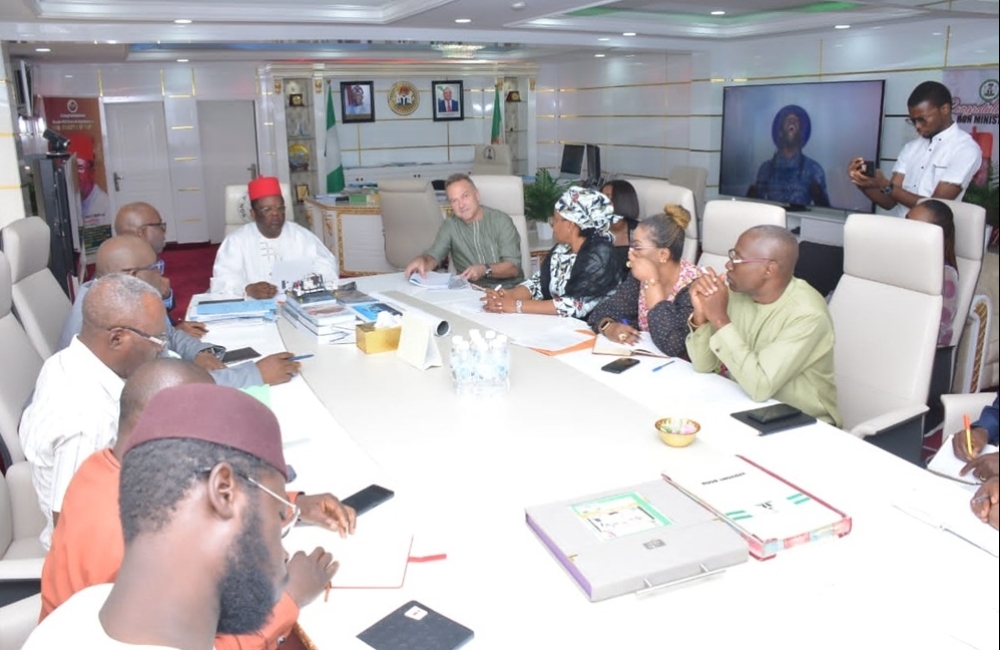
FG Tasks Concessionaire on the Revitalization of Central Workshop Ijora Lagos for Optimal Delivery in its Mandate of Public Works The concessionaire interested in investment in the rehabilitation and management of the Central Workshop Ijora, Lagos under Public Private Partnership has been tasked on the need to leverage on the private sector initiatives of the Renewed Hope administration of the President of Nigeria, His Excellency President Asiwaju Bola Ahmed Tinubu, GCFR to invest on technologies that will promote best construction standards in Nigeria, bearing in mind the mandate of the Central Workshop which is essentially public works as provided by the Infrastructure Concession Regulatory Commission. The Honourable Minister of Works, His Excellency, Sen. Engr Nweze David Umahi CON stated this during a concession review meeting with the Public Private Partnership unit of the Federal Ministry of Works led by its head, Ugwu- Chima Nnennaya (Mrs) and Messrs. BETA Transport Nigeria Ltd led by its Director, Nana Fatima Paturel, dated 13th February 2024. He urged them to see the partnership as an opportunity to develop technologies that would help in the building and maintenance of the government's infrastructure, especially buildings, road construction, bridges, rail tracks, harbours, and aerodromes. He highlighted the importance of the Federal Government's approval for the concession of the Central Works Ijora, Lagos and expressed confidence that if fully rehabilitated and put into optimal use, it would create job opportunities and help in the training of Nigerian youths, artisans and craftsmen that would close the gap in the human capital formation needed to drive the construction and manufacturing industry. Considering the report on the processes leading to the finalization of the concession agreement with Messrs BETA Transport Nigeria Ltd, the Honourable Minister expressed reservations over the strength of negotiation that gave rise to the financial close, and therefore constituted a five- member committee to re- evaluate the negotiation outcome and make appropriate recommendations with a view to achieving value for the federal government. The Committee is made up of the following members: 1. Director Highway Construction and Rehabilitation - Chairman 2. Director Highway Panning & Development - member 3. Director Engineering Services 4. Director Legal Services 5. Head Public Private Partnership - Secretary Responding on behalf of the committee, the Chairman thanked the Hon. Minister for his sense of commitment to the cause of national development and for the ethical standards he introduced in the conduct of government businesses in the Federal Ministry of Works and assured him that the committee would deliver on a record time in the assignment given to them. ...
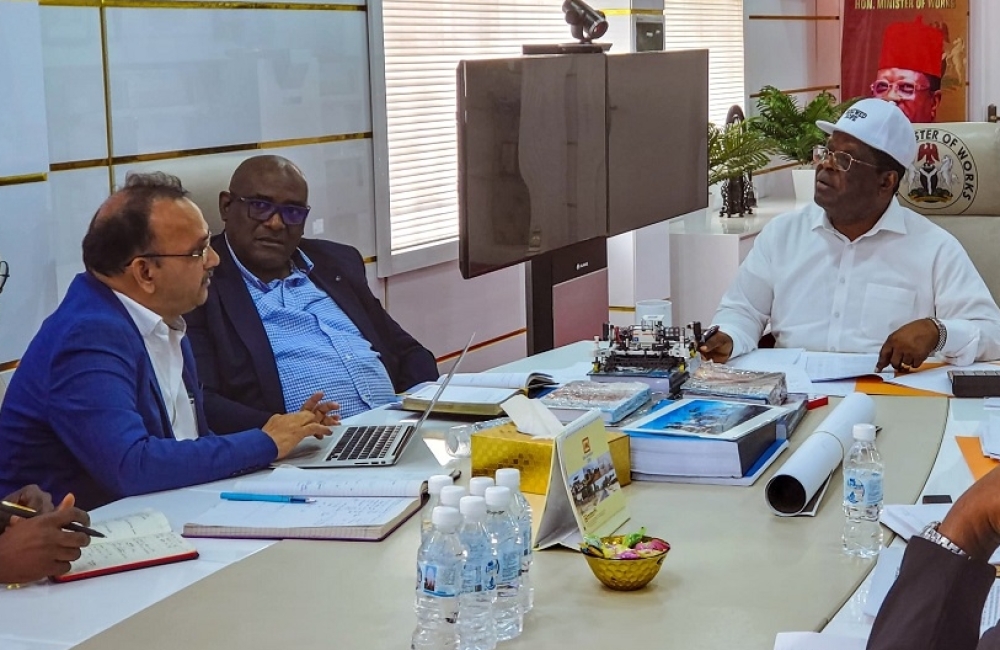
FG TO STRENGTHEN OPERATIONAL MODEL OF HIGHWAY DEVELOPMENT AND MANAGEMENT INITIATIVE TO ENSURE QUALITY DELIVERY AND EFFICIENT UTILIZATION OF ROAD INFRASTRUCTURE In his efforts towards rejigging the operational model of the Highway Development and Management Initiative (HDMI), the Honourable Minister of Works, His Excellency Sen. Engr. Nweze David Umahi, CON has introduced parameters that will strengthen the quality delivery and management of road infrastructure under the Public Private Partnership model of road infrastructure development known as Highway Development and Management Initiative (HDMI) and ensure efficient utilization of the completed projects by road users. The Honourable Minister gave this indication during a meeting with the Public Private Partnership unit of the Federal Ministry of Works and Messrs. Africa Plus Partners Nigeria Ltd (APPNL) concessionaires for the Benin-Asaba and Lagos-Abeokuta road corridors in his office on 12th February 2024. In the meeting, which had in attendance the team of the PPP headed by Ugwu-Chima Nnennaya (Mrs.) and the team of APPNL lead by Mr. Dipo Lawore and Mr. K. V. Rao, there were discussions on the way forward for achieving a more effective operational model for the HDMI programme and more efficient contractual relations between the Federal Government and Concessionaires. The meeting which dwelt on the review of the project parameters for the Benin-Asaba and Lagos-Abeokuta road corridors as negotiated in 2022 by Messrs. Africa Plus Partners Nigeria Ltd (APPNL) was necessitated by the heightened inflationary pressures, exchange rate concerns, reduced vehicular traffic on the highways occasioned by the increase in fuel pump price of Premium Motor Spirit (PMS). Speaking on the need for quality delivery of road projects and efficiency in project negotiation, the Honourable Minister listed what he termed Renewed Hope model of the Highway Development and Management Initiative (HDMI) and said the parameters would be finetuned, agreed upon and adopted in all contractual relations between the Federal Government and concessionaires going forward. He highlighted the parameters to include: a. The design of the project to be in line with the specification of the Federal Ministry of Works and investor can only improve upon the design made by the Ministry. b. A reasonable construction period must be agreed upon. c. There shall be no variation on the project. d. 100% of one carriage way must be completed before tolling by concessionaires. e. The business plan must be in line with the socio-economic dynamics. f. Terms of tolling of road projects must be in accordance with the Laws of the Federation, and standard contract conditions must be followed. g. Contingency and variation on Price (VOP) shall be utilized only by the express and written permission of the client. h. Bill of Quantities shall be verified and adopted in line with the prevailing market prices. i. Road count on traffic shall be carried out by the investor and where such data has been provided by the client, it is the duty of the investor to accept or verify and where the investor accepts, it shall be binding on all. j. It shall be the duty of the investor to sensitize the public on the toll programme in every project. k. The client shall have the right to terminate the job of the investor for failure to comply with the time of road project completion. l. Every road construction for highways must be in accordance with the highway standard prescribed by the Laws of the Federation. In their separate responses, the team leader of the APPNL and the head of the PPP unit of the Federal Ministry pf Works assured the Honourable Minister of their commitment to the innovative initiatives of the Federal Ministry of Works on road infrastructure and thanked the Hon. Minister for pointing out that there was a dire need to review not only the cost of the concessioned project, but also the scope of the project to meet with the standard of road construction in accordance with the innovations introduced by the Ministry under the Renewed Hope administration of President Bola Ahmed Tinubu, GGFR. They expressed their commitment towards a robust negotiation on the project review that would lead to a financial close so that work could commence without further delay. They promised to carry out further technical analysis on all the issues raised in the meeting and re-present same to the Honourable Minister for consideration. ...
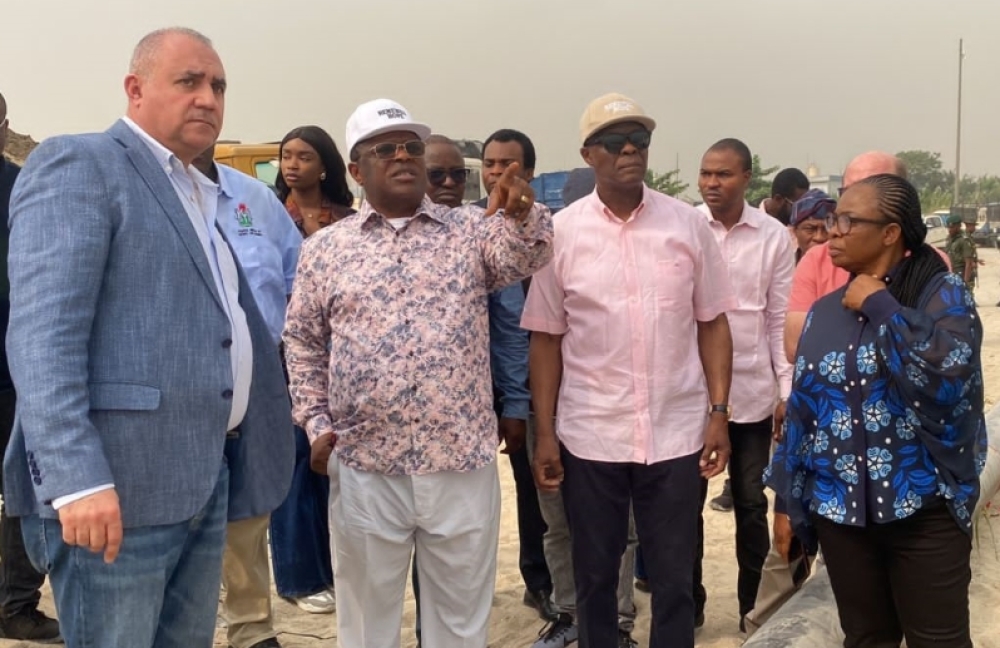
WORKS MINISTER ALLAYS FEAR ABOUT THE STATE OF BRIDGES IN LAGOS, SAYS NO NEED TO WORRY * Umahi orders relocation of those cooking under Carter bridge The Honourable Minister of Works, Sen. Engr. Nweze David Umahi, CON, has allayed the fear of road users in Lagos about the integrity of the Third Mainland bridge, Eko and Carter bridges, saying “there is no need to worry.” Explaining the work to be done , he said “Some of the elements which are defective are going to be fixed. But there's nothing to worry about. We are going to reinstate those defective slabs with the new the design.” Speaking to journalists Wednesday after the joint assessment tour of the three bridges in company of the Honourable Minister of Finance and Coordinating Minister of the Economy, Wale Edun, the Minister explained that “over the years, after the construction of the bridge, there was no serious maintenance,” He therefore assured that the failure of the bridge would be addressed. “So, we are working on the problems about the bridges.” On the state of the Lagos shoreline, Sen. Umahi stressed that the shore protection on the marina needs urgent attention, noting that the Lagos railway project, the blue line might be threatened if nothing is done to address the matter. At the end of the exercise in Lagos, the Ministers who agreed there was need for rehabilitation work to be carried out, noting that the impact created by the current of water under the bridges and on the shoreline need intervention. On the ongoing rehabilitation of the third mainland bridges, the Minister revealed that some comprehensive works would be done especially in area of provision of street lights on and under the bridge and installation of CCTV. While praising the work being done by the Contractor, he assured that the bridge would be opened to road users soon. On his part, the Minister of Finance and Coordinating Minister of the Economy, Wale Edun commended the Minister of Works and his team of officials for their efforts at rehabilitating the roads and bridges as he described them as very important for economic development. While answering questions from reporters, the Minister disclosed that the Federal Government was looking to raise revenue to finance infrastructure, pointing out that “what we are targeting and working towards is a 77% increase in internally generated revenue for the Federal Government. So that is where the funding particularly is going to come from”, he submitted. Meanwhile, during the inspection tour, the Works Minister upon citing those cooking under the Carter bridge, ordered that security be mobilised to stop the menace, adding that they be relocated immediately to avoid any serious damage to the health of the bridge. In continuation of the inspection of Federal road projects in Lagos, the two Ministers also visited the Lagos - Calabar coastal highway and met with the contractor to review progress work on the project. The project when completed is expected to go through the shoreline linking Lagos with Calabar . In the inspection were senior government officials from the Ministry, officials of Julius Berger and some journalists. ...
We Will Deliver Roads That Will Stand The Test Of Time - Works Minister
Minister of State for Works and Housing, Engr Abubakar Aliyu has said that the Federal government is committed to deliver qualitative roads that will stand the test of time for Nigerians to enjoy the long lasting benefit in the road usage.
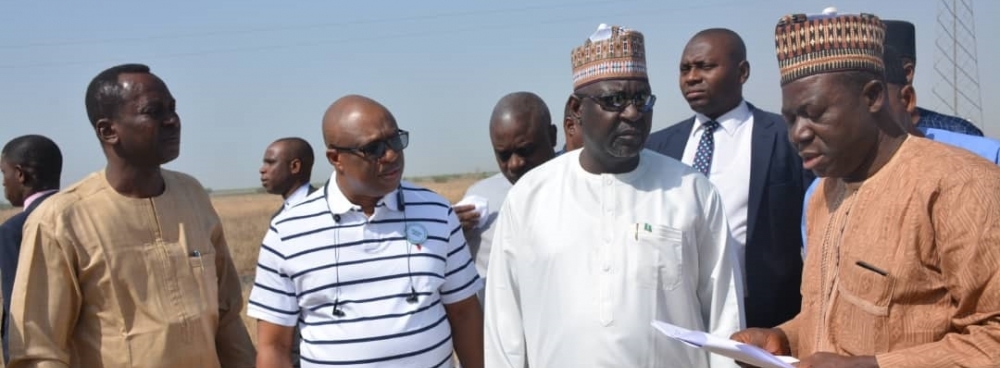
Engr Aliyu spoke during the media inspection visit of the rehabilitation of Cham - Numan section of Gombe-Numan-Yola road over the weekend.
Responding to a question on the expected delivery time of the road, he said "We don't deliver roads because of politics, we deliver roads that will stand the test of time for Nigerians to enjoy the benefit for a long lasting time'.
The Minister explained that the section of the Cham-Numan road was delayed because of the 11 kilometers portion of the Savannah swamp area has bad/soft soil, which he said has to be evacuated, replaced and refill.
"We are seriously working on it and the procurement process has gone far and about to be completed. If we want to do politics with it, we would have rushed to complete it and it will later collapse, but we want to deliver a qualitative job for Nigerians" he said.
Aliyu also reiterated the commitment of President Muhamnadu Buhari to deliver the promises made to Nigerians on roads, adding that the administration is also showing strong determination to fulfil the promises in other sectors, such as housing, rails and others.
Butressing the committment of President Buhari on delivering roads, he revealed that the budget of his Ministry has risen to N200 billion from the N19 bilion they met it in 2015, pointing to the fact that the current administration has shown more committment to providing road infrastructure.
Touching on the other mandate of his ministry in providing affordable housing for Nigerians, the Ministry urged people to come in groups and form cooperative societies so that they patner with the Federal Mortgage Bank of Nigeria in order to get the houses they needed for themselves.
Earlier in his briefing to the minister on the rehabilitation of the Cham-Numan section of Gombe-Numan-Yola, the Federal Controller of Works, Engr Salihu Abubakar told the Minister that among the challenges delaying the work is the security problem of frequent farmers hardersmen clashes in the area
He explained that the contractor had carried out emergency repair works of critical failed sections of the road under the ember month of 2019 program of the Ministry
Egr Abubakar further stated that the contractor is presently on site working and the weather is favourable, adding that over 4,250 direct and indirect jobs have been created through the project
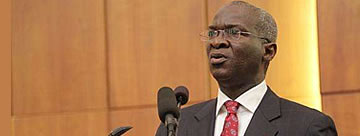
Keynote Address Delivered By Babatunde Raji Fashola, SAN At The Africa Today Summit On October 17th At The Transcorp Hilton
TOPIC: The Outlook for Nigeria - Energy options in a Low-cost and Low Carbon World: Which Way Nigeria and Africa.
Distinguished Ladies and Gentlemen:
I apologise and regret my inability to be personally present and I welcome the compromise by Africa Today and Mr. Kayode Soyinka that I should be represented.
This is an important gathering that contributes to increasing the attention we pay to the critical role of electricity in our developmental aspirations.
Until about the last decade, we appear not to have paid enough attention to the need for more power, (and I dare say more water supply) even as our populations in and across Africa grew.
Yes, we were concerned about poverty and about growth, but we seem to have dwelt more overtly on them than on development.
Growth can occur in Economies as we have seen in commodities-driven economies when prices rise; but they do not necessarily bring about development which has a correlation with infrastructure, such as power.
It is important therefore to keep in mind the clear difference between Growth and Development; as I think most African economies, including Nigeria, are now doing as they focus on investing in Infrastructure especially power.
This summit is part of that focus and call to attention; and I am enthused to share not only my thoughts but our road map.
First let me start with the road map.
If you look at news reports in 1999, 2007, 2010 and 2011 in the first few months of the emergence of a new administration at our Federal Government level, you will see different statements of commitments to produce certain Megawatts of power ranging from 10, 20, to 40 thousand megawatts by a certain date.
None of those targets was met; but that is not the problem. The problem is that the scientific basis for deciding those targets was not explained.
I also know that what consumers want (and I am a consumer), is predictable energy when they need it.
Therefore, this time, we are not talking Megawatts, we are addressing a journey.
Our roadmap is to get incremental power because we do not have enough, make that steady, because that is what consumers want, and aim toward uninterrupted power through conservation, elimination of waste and use of technology.
We are currently at the Incremental Power stage of our roadmap, and megawatts are useful to demarcate milestones by showing that we started at a base of 2,069 MW in May 2015 which has increased to 6,911 MW in September 2017.
As recently as September 2017 we recovered and restored 100 MW to the grid from the Afam power station IV which had been out of commission since January 2015 due to a burnt transformer. Most of the power, until recently has been from gas fired turbines, and this is where I will proceed to address the OUTLOOK for Nigeria and opportunities for Renewable Energy in a low cost and low carbon world; as requested by Africa Today.
Let me be clear and unequivocal by saying upfront that our commitment as a Nation and Government to pursue renewable and low carbon energy at low cost is CLEAR, FIRM and UNSHAKING. But this is not all. It is a commitment driven by NECESSITY, CONTRACT and POLICY about which I will now speak.
NECESSITY
As I pointed out earlier, our take off point of available power in MAY 2015 was 2,690 MW. On the 22nd of May 1999, the amount of power on the grid was 2,345 Mw out of which 85% was gas fired power and 15% was hydro power.
This made us very vulnerable as a nation whenever there was a gas shortage or failure for any reason including wilful damage to Gas pipelines and assets.
This much was evident in 2016 when we had no less than 20 attacks on our Gas pipelines.
Our response of course has been to diversify our energy sources and optimize other assets for power production by producing an Energy Mix that targets a 30% component of renewable energy out of the Gross energy we produce by 2030.
That document also provides investment information about the areas where renewable energy such as solar and hydro are most prolific.
We have also matched our intent with actions such as signing 14 solar Power Purchase Agreement (PPAs) with 14 Developers with the potential to deliver over 1,000 MW of solar power.
We have resolved problems that stalled work at the Zungeru 700 MW hydro power plant with a new completion date of 2019 and we have also now awarded the 3050 MW Mambilla hydro power plant after over 40 years of its initial conception.
In addition, we are in advanced stages of procurement for 6 small hydro dams for private sector operation. What remains therefore is the faithful implementation of these projects to bring on stream their stock of renewable solar and Hydro Power.
Even before all these other sources of renewable power come on stream, we are seeing better results through maintenance, repairs and investment in the hydro power plants.
On the 22nd of May this year, the percentage of hydro power on the grid has gone up to 26% from 15% that it was in May 2015 and the gas fired power has reduced proportion now respresents 74% of our energy mix from 85% in the same month in 2015, even though total power has increased.
This is progress that we must sustain to get more renewable energy
CONTRACT
In addition to the necessity to diversify our energy sources from Gas and provide some energy security, we are also driven to pursue renewable energy by contract.
You will all recall that Nigeria is one of the early signatories to the Paris Climate Change Agreement, which signatories were committed to low carbon energy sources as a contribution to helping the global community protect our climate.
The Solar and Hydro projects I have referred to are parts of our contribution to this global commitment. We have also moved to seek to improve efficiency by completing the Energy Efficiency Building Code that will form part of our National Building Code, to help us develop energy efficient buildings and reduce our carbon foot print.
POLICY
Beyond necessity and contract, our commitment is driven by policy embedded in the Economic Recovery and Growth Plan (ERGP), where one of the 5 pillars is Energy sufficiency in power and petroleum products.
As far as the power component of this Pillar goes, while we have expanded the National Grid capacity for on- grid power from 5,000 MW in 2015 to 6,900 MW in September 2017, we are mindful that quick access to power will be easier to achieve by off-grid connections.
Therefore, through the Nigerian Electricity Regulatory Commission (NERC) we have issued mini grid Regulations to guide registration and licencing for small consumers and off-grid developers seeking to produce up to 100 kilowatts and over 100 kilowatts and up to 1 megawatts respectively.
This is already producing results as more people are now developing their own grids or developing to supply others without connecting to the National grid.
As a conscious measure to incentivize developers, the national policy for pioneer status has been revised by the Ministry of Industry Trade and Investment and approved by the Federal Executive Council to include solar panels, solar Home Systems, light emitting diodes, batteries other components that support solar systems which can be manufactured in Nigeria.
Finally, I will like to also state that the Buhari Administration has approved and started the implementation of Rural Electrification Strategy and Plan for Nigeria in 2017 and constituted the board and management of the Rural Electrification Agency early this year.
Their mandate is to champion and drive rural electrification and penetration with the bias to use solar and mini grids. This should have been done since 2006, one year after the Electric Power Reform Act was passed in 2005.
Ladies and Gentlemen, this is the outlook of renewable energy in Africa and the options we have chosen in pursuit of low cost and low carbon energy.
I am confident that we can deliver on what we have conceived, planned and are implementing. I therefore now have the pleasure to declare this summit open and invite you to join us in the implementation of and delivery of our commitments.
Babatunde Raji Fashola, SAN
Honourable Minister of Power, Works and Housing
Tuesday October 17th 2017
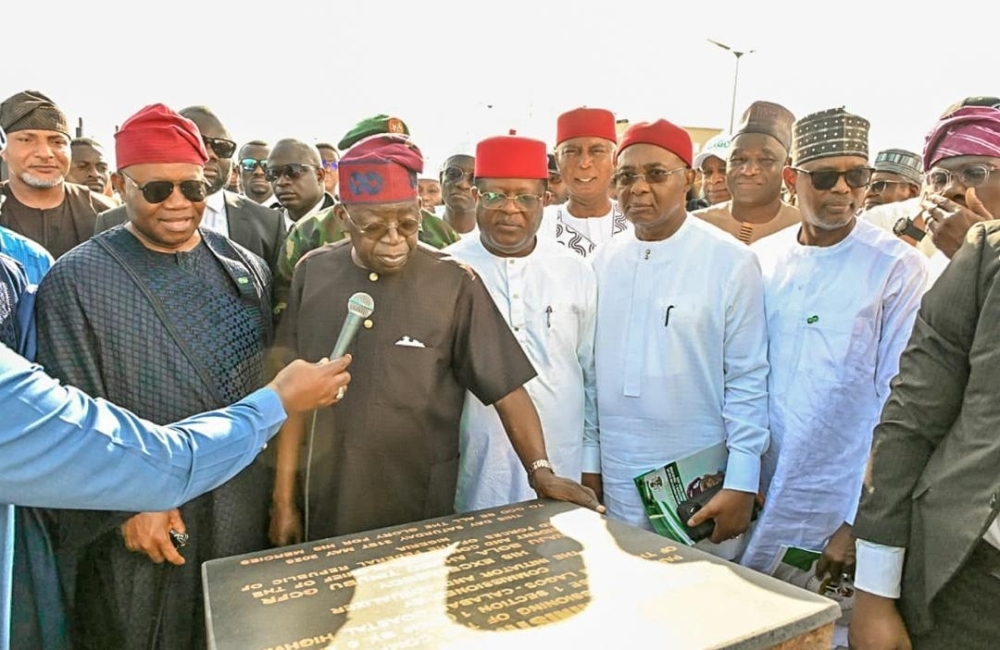
DRIVING NIGERIA’S FUTURE: CELEBRATING TWO YEARS OF TRANSFORMATIVE LEADERSHIP AND THE LAGOS-CALABAR COASTAL HIGHWAY MILESTONE
DRIVING NIGERIA’S FUTURE: CELEBRATING TWO YEARS OF TRANSFORMATIVE LEADERSHIP AND THE LAGOS-CALABAR COASTAL HIGHWAY MILESTONE
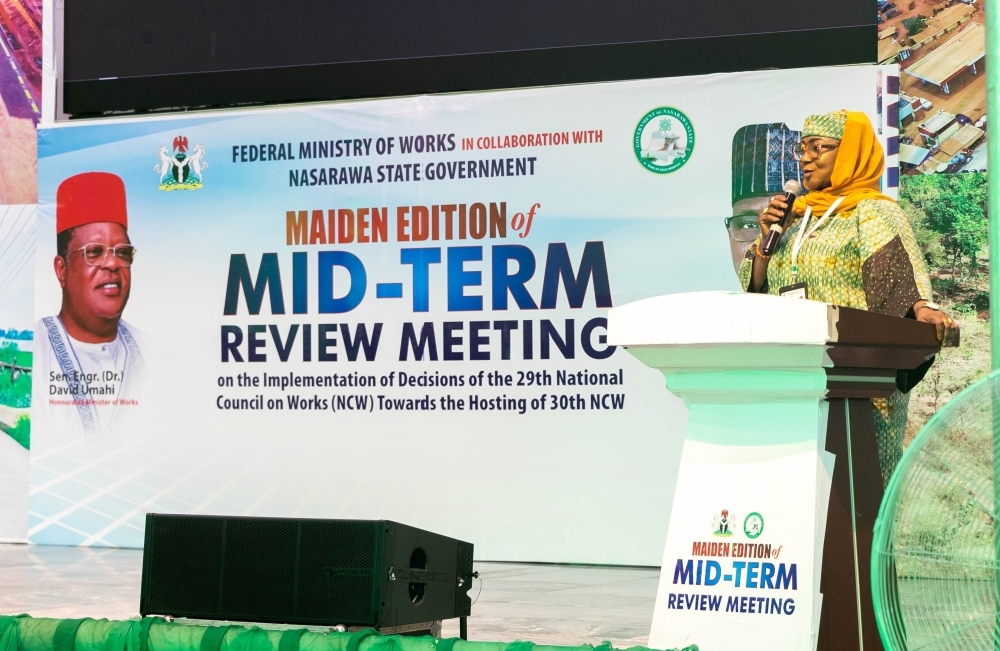
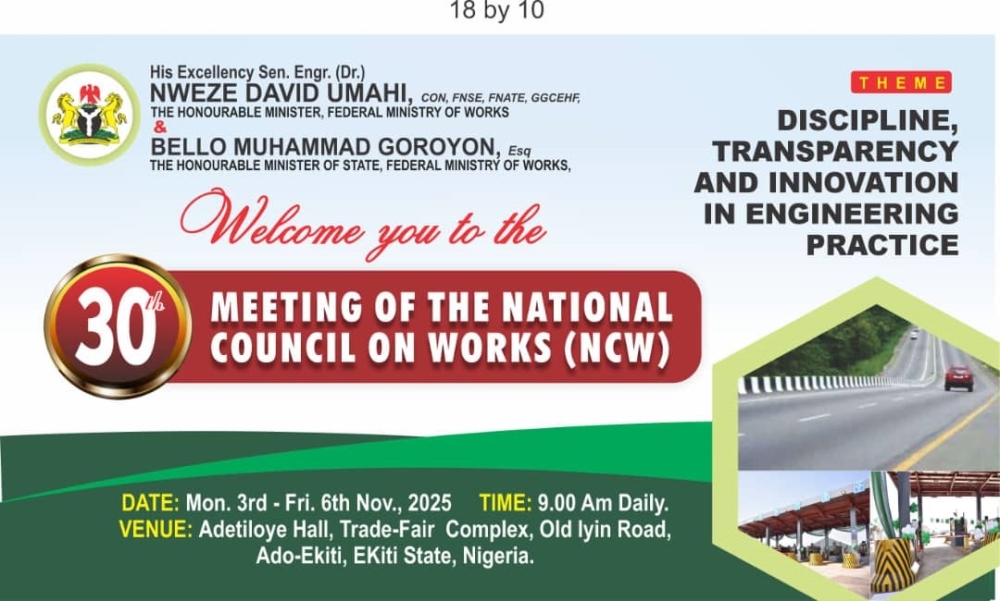
MID -TERM REVIEW MEETING ON THE IMPLIMENTATION OF THE DECISIONS REACHED AT THE 29TH NATIONAL COUNCIL ON WORKS (NCW) DAY 1
MID -TERM REVIEW MEETING ON THE IMPLIMENTATION OF THE DECISIONS REACHED AT THE 29TH NATIONAL COUNCIL ON WORKS (NCW) DAY 1