GORONYO COMMENDS SOKOTO GOVERNOR FOR DONATING 10 HILUX VEHICLES TO STRENGTHEN SECURITY ALONG SOKOTO–BADAGRY SUPERHIGHWAY
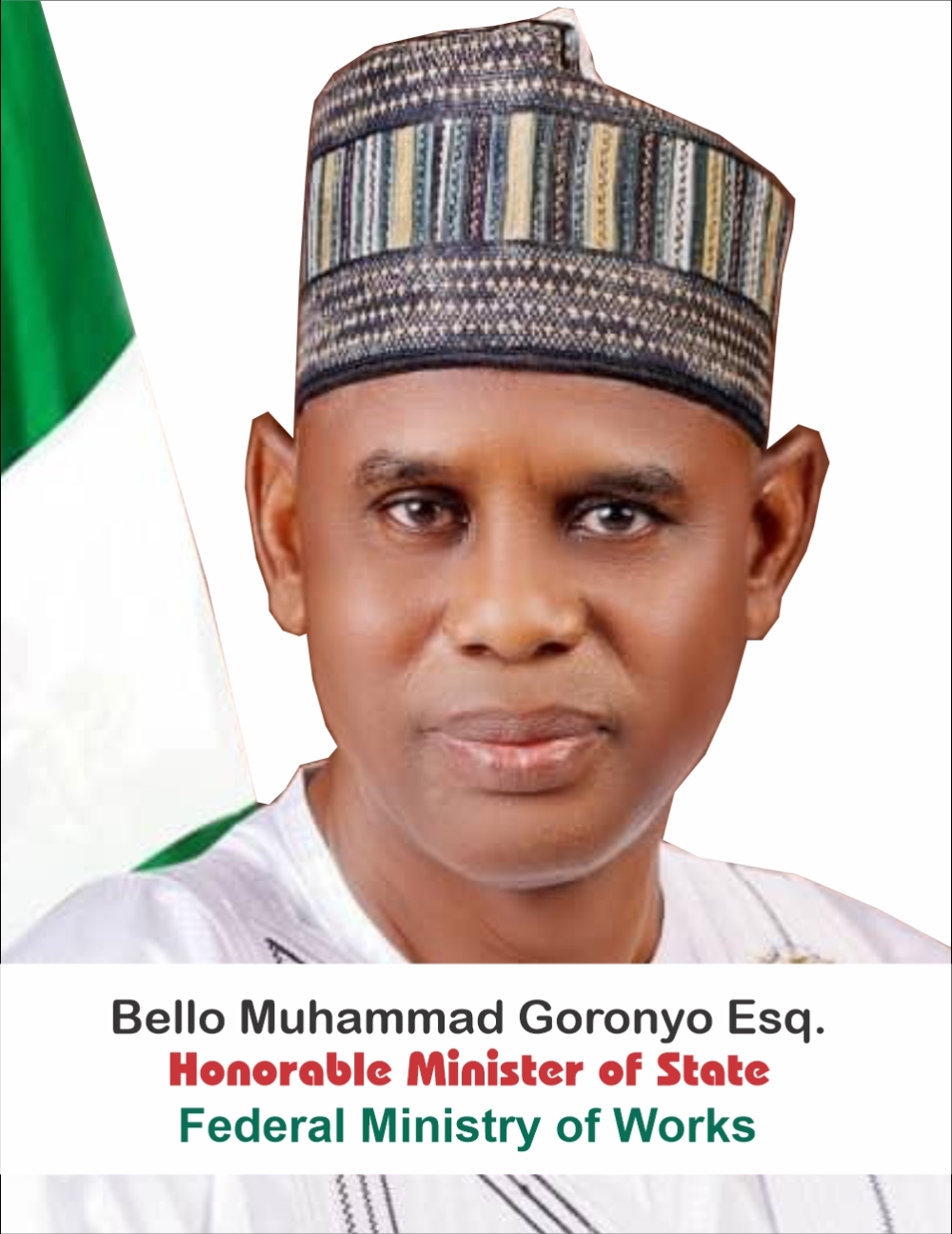
The Honourable Minister of State for Works, Rt. Hon. Bello Muhammad Goronyo, Esq., has commended the Governor of Sokoto State, Dr. Ahmed Aliyu Sokoto, PhD, for donating 10 operational Toyota Hilux vehicles to strengthen security operations along the Sokoto–Badagry Superhighway and other strategic infrastructure corridors.
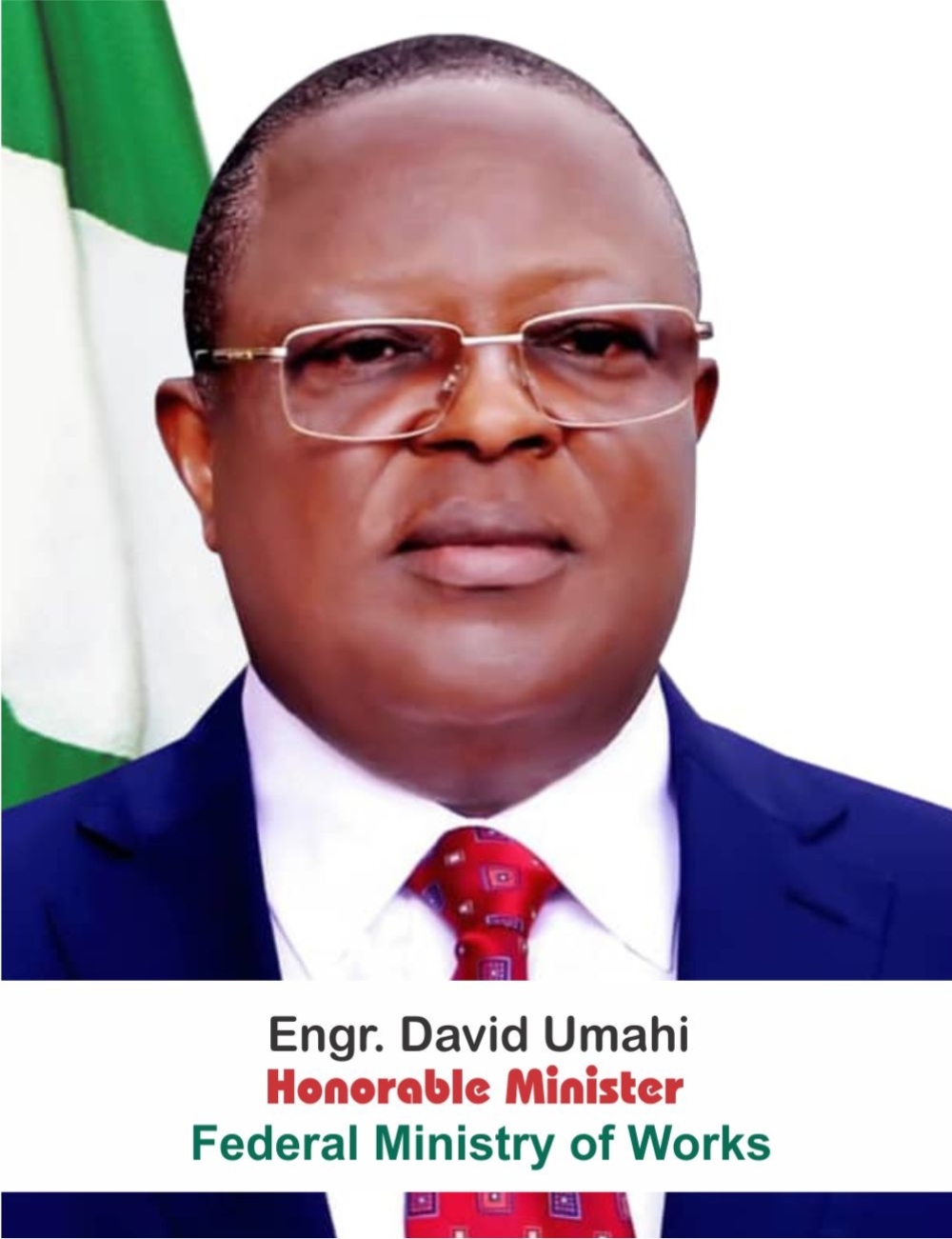
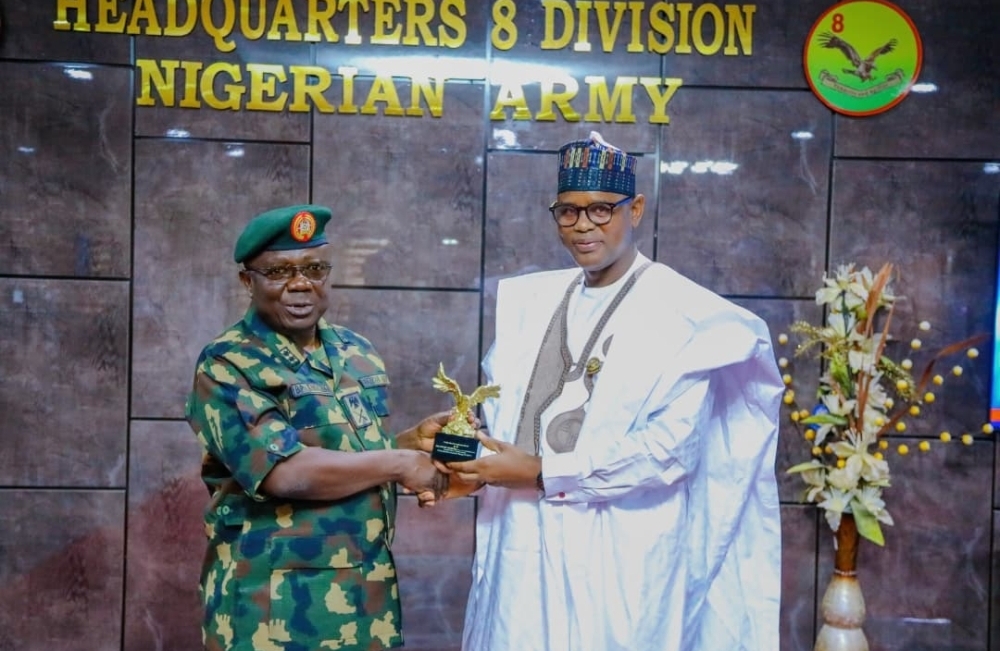
The vehicles were formally commissioned and handed over to the Nigerian Army at the Headquarters of the 8 Division, Nigerian Army, Sokoto, on Thursday, October 8, 2026, by the Honourable Minister of State for Works, on behalf of the Honourable Minister of Works, Engr. David Nweze Umahi, CON, FNSE.
The donation is expected to enhance the operational capacity of military personnel and other security agencies responsible for protecting construction workers, contractors, equipment and host communities along the highway corridor.
Speaking during the ceremony, Goronyo described the donation as a demonstration of the Sokoto State Government’s commitment to national development and the successful implementation of President Bola Ahmed Tinubu, GCFR’s Renewed Hope Agenda, particularly its landmark infrastructure projects.
The Minister emphasised that the Sokoto–Badagry Superhighway represents a long-standing national infrastructure vision that dates back several decades, with its conception traced to the era of former President Shehu Shagari in the 1970s. However, the vision remained unrealised for decades until the administration of President Bola Ahmed Tinubu, GCFR, initiated the construction of the 1,068-kilometre highway in October 2024.
He described the project as a significant step towards translating a historic aspiration into tangible infrastructure that will connect communities, expand economic opportunities and strengthen national integration.
According to Goronyo, President Tinubu’s commitment to the project demonstrates the Federal Government’s determination to bridge critical infrastructure gaps and improve connectivity between northern and southern Nigeria.
He noted that the superhighway, which traverses Sokoto, Kebbi, Niger, Kwara, Oyo, Ogun and Lagos states, is designed to facilitate the movement of people and goods, reduce transportation costs, stimulate trade, create employment and open up new economic opportunities along its route.
The Minister added that the highway would improve access to markets, schools, healthcare facilities and other essential services while supporting agriculture, commerce, industry and the development of communities across the corridor.
He stressed that the successful delivery of the project would require sustained commitment, effective coordination and cooperation among the Federal Government, state governments, security agencies, contractors and host communities.
Goronyo maintained that effective security remained essential to the timely and successful completion of the Sokoto–Badagry Superhighway. He explained that the provision of operational vehicles would strengthen the mobility and response capabilities of security personnel deployed to safeguard the project and its surrounding communities.
The Minister highlighted other strategic infrastructure projects being undertaken by the Federal Government, including the Lagos–Calabar Coastal Highway, the Calabar–Abuja/Trans-Saharan corridor, the Akwanga–Jos–Bauchi–Gombe corridor, the Abuja–Kaduna–Zaria–Kano route and the Zaria–Gusau–Sokoto corridor.
He explained that these projects form part of the Federal Government’s broader commitment to developing an integrated road network capable of supporting commerce, strengthening inter-state connections and accelerating national economic growth.
Rt. Hon. Goronyo further noted that the use of continuously reinforced concrete pavement on the Sokoto–Badagry Superhighway was intended to provide durable road infrastructure capable of serving Nigerians for decades. He added that complementary environmental and safety measures, including tree planting and solar-powered street lighting where provided for in the project, would contribute to environmental sustainability, visibility and road safety.
Goronyo commended the Nigerian Army and other security agencies for their resilience, professionalism and sacrifices in protecting lives, property and critical national infrastructure. He acknowledged the difficult conditions under which security personnel operate and urged them to remain steadfast in carrying out their constitutional responsibilities.
The Honourable Minister also expressed deep condolences to the Nigerian military over the reported loss of personnel in a bandit attack while on official duty the previous day. He described the loss as painful and extended his sympathy to the affected personnel, their colleagues and bereaved families, while praying for the peaceful repose of the departed and strength for their loved ones.
He further acknowledged the support of the National Security Adviser in addressing security challenges associated with the project, particularly through assistance and coordination aimed at strengthening security operations along the highway corridor.
Reaffirming his commitment to the Federal Government’s infrastructure development agenda, Goronyo said the Ministry of Works would continue to support the implementation of strategic projects under President Tinubu’s leadership, working in collaboration with relevant stakeholders to ensure their successful delivery.
He expressed optimism that the continued implementation of the Federal Government’s development programmes would bring lasting benefits to Nigerians, while acknowledging the complementary role of the Sokoto State Government in supporting infrastructure development and security.
In his remarks, the General Officer Commanding (GOC), 8 Division, Nigerian Army, Sokoto, Major General Bengba Paul Koughna, expressed appreciation to the Federal Government, the Federal Ministry of Works and the Sokoto State Government for the donation of the 10 Hilux vehicles.
The GOC noted that the vehicles would significantly enhance the operational mobility and response capabilities of troops deployed along the highway corridor, particularly across the approximately 440-kilometre section extending through Sokoto and Kebbi states.
He explained that troops conduct regular patrols and maintain multiple deployment points along the corridor, making the additional vehicles a valuable boost to their operational effectiveness.
He assured the Minister that the vehicles would be deployed appropriately to support security operations and protect construction workers, contractors, equipment and other stakeholders involved in the project.
The GOC also commended the representative of Hitech Construction Company, retired General Sa'ad Abubakar, for the company's involvement in the project.
The event was attended by retired Assistant Inspector-General of Police (AIG) Aliyu Garba, officials of the Federal Ministry of Works, representatives of the Sokoto State Government and other stakeholders.
The donation underscores the importance of sustained collaboration among the Federal Government, state governments, security agencies, contractors and host communities in addressing security challenges and ensuring the safe and timely delivery of strategic infrastructure projects.
The Federal Ministry of Works reiterates its commitment to working with all relevant stakeholders to protect national infrastructure and advance the objectives of President Bola Ahmed Tinubu, GCFR’s Renewed Hope Agenda for sustainable economic growth and development.

GORONYO COMMENDS SOKOTO GOVERNOR FOR DONATING 10 HILUX VEHICLES TO STRENGTHEN SECURITY ALONG SOKOTO–BADAGRY SUPERHIGHWAY The Honourable Minister of State for Works, Rt. Hon. Bello Muhammad Goronyo, Esq., has commended the Governor of Sokoto State, Dr. Ahmed Aliyu Sokoto, PhD, for donating 10 operational Toyota Hilux vehicles to strengthen security operations along the Sokoto–Badagry Superhighway and other strategic infrastructure corridors. The vehicles were formally commissioned and handed over to the Nigerian Army at the Headquarters of the 8 Division, Nigerian Army, Sokoto, on Thursday, October 8, 2026, by the Honourable Minister of State for Works, on behalf of the Honourable Minister of Works, Engr. David Nweze Umahi, CON, FNSE. Speaking during the ceremony, Goronyo described the donation as a demonstration of the Sokoto State Government’s commitment to national development and the successful implementation of President Bola Ahmed Tinubu, GCFR’s Renewed Hope Agenda, particularly its landmark infrastructure projects. The Minister emphasised that the Sokoto–Badagry Superhighway represents a long-standing national infrastructure vision that dates back several decades, with its conception traced to the era of former President Shehu Shagari in the 1970s. However, the vision remained unrealised for decades until the administration of President Bola Ahmed Tinubu, GCFR, initiated the construction of the 1,068-kilometre highway in October 2024. He described the project as a significant step towards translating a historic aspiration into tangible infrastructure that will connect communities, expand economic opportunities and strengthen national integration. According to Goronyo, President Tinubu’s commitment to the project demonstrates the Federal Government’s determination to bridge critical infrastructure gaps and improve connectivity between northern and southern Nigeria. The Minister added that the highway would improve access to markets, schools, healthcare facilities and other essential services while supporting agriculture, commerce, industry and the development of communities across the corridor. Goronyo maintained that effective security remained essential to the timely and successful completion of the Sokoto–Badagry Superhighway. He explained that the provision of operational vehicles would strengthen the mobility and response capabilities of security personnel deployed to safeguard the project and its surrounding communities. The Minister highlighted other strategic infrastructure projects being undertaken by the Federal Government, including the Lagos–Calabar Coastal Highway, the Calabar–Abuja/Trans-Saharan corridor, the Akwanga–Jos–Bauchi–Gombe corridor, the Abuja–Kaduna–Zaria–Kano route and the Zaria–Gusau–Sokoto corridor. Rt. Hon. Goronyo further noted that the use of continuously reinforced concrete pavement on the Sokoto–Badagry Superhighway was intended to provide durable road infrastructure capable of serving Nigerians for decades. He added that complementary environmental and safety measures, including tree planting and solar-powered street lighting where provided for in the project, would contribute to environmental sustainability, visibility and road safety. Goronyo commended the Nigerian Army and other security agencies for their resilience, professionalism and sacrifices in protecting lives, property and critical national infrastructure. He acknowledged the difficult conditions under which security personnel operate and urged them to remain steadfast in carrying out their constitutional responsibilities. The Honourable Minister also expressed deep condolences to the Nigerian military over the reported loss of personnel in a bandit attack while on official duty the previous day. He described the loss as painful and extended his sympathy to the affected personnel, their colleagues and bereaved families, while praying for the peaceful repose of the departed and strength for their loved ones. He further acknowledged the support of the National Security Adviser in addressing security challenges associated with the project, particularly through assistance and coordination aimed at strengthening security operations along the highway corridor. Reaffirming his commitment to the Federal Government’s infrastructure development agenda, Goronyo said the Ministry of Works would continue to support the implementation of strategic projects under President Tinubu’s leadership, working in collaboration with relevant stakeholders to ensure their successful delivery. He expressed optimism that the continued implementation of the Federal Government’s development programmes would bring lasting benefits to Nigerians, while acknowledging the complementary role of the Sokoto State Government in supporting infrastructure development and security. In his remarks, the General Officer Commanding (GOC), 8 Division, Nigerian Army, Sokoto, Major General Bengba Paul Koughna, expressed appreciation to the Federal Government, the Federal Ministry of Works and the Sokoto State Government for the donation of the 10 Hilux vehicles. The GOC noted that the vehicles would significantly enhance the operational mobility and response capabilities of troops deployed along the highway corridor, particularly across the approximately 440-kilometre section extending through Sokoto and Kebbi states. He explained that troops conduct regular patrols and maintain multiple deployment points along the corridor, making the additional vehicles a valuable boost to their operational effectiveness. He assured the Minister that the vehicles would be deployed appropriately to support security operations and protect construction workers, contractors, equipment and other stakeholders involved in the project. The GOC also commended the representative of Hitech Construction Company, retired General Sa'ad Abubakar, for the company's involvement in the project. The event was attended by retired Assistant Inspector-General of Police (AIG) Aliyu Garba, officials of the Federal Ministry of Works, representatives of the Sokoto State Government and other stakeholders. The Federal Ministry of Works reiterates its commitment to working with all relevant stakeholders to protect national infrastructure and advance the objectives of President Bola Ahmed Tinubu, GCFR’s Renewed Hope Agenda for sustainable economic growth and development.
The donation is expected to enhance the operational capacity of military personnel and other security agencies responsible for protecting construction workers, contractors, equipment and host communities along the highway corridor.
He noted that the superhighway, which traverses Sokoto, Kebbi, Niger, Kwara, Oyo, Ogun and Lagos states, is designed to facilitate the movement of people and goods, reduce transportation costs, stimulate trade, create employment and open up new economic opportunities along its route.
He stressed that the successful delivery of the project would require sustained commitment, effective coordination and cooperation among the Federal Government, state governments, security agencies, contractors and host communities.
He explained that these projects form part of the Federal Government’s broader commitment to developing an integrated road network capable of supporting commerce, strengthening inter-state connections and accelerating national economic growth.
The donation underscores the importance of sustained collaboration among the Federal Government, state governments, security agencies, contractors and host communities in addressing security challenges and ensuring the safe and timely delivery of strategic infrastructure projects.

NORTH-CENTRAL ROAD PROJECTS UNDER SPOTLIGHT AS WORKS MINISTER SUSTAINS ROUTINE INSPECTION OF PROJECTS The Honourable Minister of Works, Engr. David Umahi, CON, FNSE, FNATE, has expressed satisfaction with the quality and pace of work on the Reconstruction and Expansion of the 43.65-kilometre Mararaba–Keffi Road. He made the remarks while inspecting ongoing Federal Government road projects in the FCT and Nasarawa State. The contractor on the Mararaba–Keffi (Keffi Bound) Road project is China Harbour Engineering Company (CHEC) Ltd. During the inspection of projects within the corridor, the Minister also commended another contractor, Messrs JRB Construction Company, for the standard of work being delivered in the Full Emergency Rehabilitation of the Mararaba–Keffi (Abuja-Bound) Road. He expressed confidence that the project would be completed before the scheduled 1st March, 2028 deadline, with ancillary components, including the installation of solar-powered street lighting. “This is highly commendable. The quality of work is evident, and I encourage you to sustain this standard through to completion,” the Minister urged the Contractor. Engr. Umahi reaffirmed the Federal Government’s commitment to ending the era of abandoned and substandard infrastructure projects that have impeded national development over time. He stressed the need for contractors to adhere strictly to approved specifications, contractual obligations, and the Ministry’s directives, while maintaining open communication with the Ministry on operational challenges. “If you encounter any difficulty, inform us immediately. The Federal Government remains committed to meeting its obligations, including timely payments. However, quality must never be compromised,” he asserted. The Minister further directed the contractor to prioritise the completion of all outstanding sections of the road before commencing additional asphalt works. He noted that several projects across the country had suffered setbacks due to unfinished stretches and emphasised that the Ministry’s priority is the delivery of durable, safe, and fully serviced infrastructure that will serve Nigerians for decades. The Minister also inspected the Abuja–Kaduna–Zaria–Kano Road, Section II, being handled by Messrs Infiouest International Ltd. He noted that completion of outstanding works is scheduled for 12th November, 2026. Also speaking during the tour of duty, the Chairman of the Senate Committee on Works, Sen. Allwell Onyesoh, and the Chairman of the House of Representatives Committee on Works, Hon. Akin Alabi, alongside the Member representing Akwanga/Wamba/Nasarawa Eggon Federal Constituency, Hon. Jeremiah Sa’idu, commended President Bola Ahmed Tinubu, GCFR, for the renewed momentum in infrastructure development across the nation. They described the ongoing road projects as strategic investments capable of stimulating economic growth, improving connectivity, facilitating trade and commerce, and enhancing national integration. They pledged their continued support and oversight of the projects. Also speaking is the Federal Controller of Works, FCT, Engr. Mohammed Usman highlighted the level of commitment demonstrated in the execution of the ongoing projects. He commended the Minister for his hands-on leadership and consistent supervision, as well as the contractors for maintaining quality standards and ensuring steady progress on the projects. The Senior Special Assistant to the President on Community Engagement, North Central Zone, Dr. Abiodun Essiet, lauded President Tinubu’s commitment to improving the welfare of Nigerians through sustained investments in critical infrastructure, agricultural empowerment programmes, and other people-centred initiatives designed to promote economic prosperity and ease of movement. In his briefing, the Managing Director of JRB Construction Company, Mr. Jamilu Ogunbola, disclosed that the company’s participation in the Abuja–Keffi Road project demonstrates the growing capacity of indigenous construction firms to successfully execute complex infrastructure projects, in line with global standards and best practices. The inspection tour further highlights the Federal Government’s resolve to ensure the timely completion and delivery of critical road projects across the country in tandem with the Renewed Hope Agenda of President Tinubu. The Ministry remains committed to sustaining the current pace of infrastructure development as a catalyst for transformation, national cohesion, and improved quality of life for all Nigerians. ...

DON’T POLITICIZE SECURITY, IT WILL BE DEFEATED UNDER PRESIDENT TINUBU, SAYS UMAHI AS FG FLAGS OFF GOMBE–BIU DUALIZATION The Federal Government on Thursday, June 4, 2026 officially flagged off the Gombe–Biu Super Highway, a major component of the Akwanga–Jos–Bauchi–Gombe–Biu–Maiduguri Dualization Project, with the Minister of Works, Senator Engr. David Umahi, CON, expressing confidence that Nigeria's security challenges will be overcome under the administration of President Bola Ahmed Tinubu. Speaking at the ceremony in Gombe State, Umahi described the project as another demonstration of President Tinubu's commitment to infrastructure development and national unity, while commending Governor Muhammadu Inuwa Yahaya for the transformation of the state. "I’m very proud to boldly say that Gombe is an APC state. I’m very proud to have you as the Governor of Gombe State. Very proud to have President Bola Ahmed Tinubu as the President of Nigeria," Umahi said. "Just a few hours ago, you took us around, but what we saw, we are honestly very, very proud of what you have achieved in this state. We never knew that Gombe was this developed by you. We thank you, and we thank you because you’re a true Nigerian." Umahi disclosed that the Federal Government had expanded the scope of the Gombe-Biu section following requests from the state government and assured residents that construction activities would begin almost immediately. "We promise you that within the next 30 days, you will see real work on this highway." According to him, the Gombe-Biu section forms part of the approximately 700-kilometre Fourth Legacy Project stretching from Akwanga through Jos, Bauchi, Gombe and Biu to Maiduguri. He explained that the section was awarded to construction giant HITECH after a rigorous procurement process. "There were five other companies that contested with HITECH, and HITECH won it." The Minister also addressed the nation's security challenges, expressing confidence that the Tinubu administration would overcome them through collective efforts and sustained government action. “Security should not be politicized. It should not be weaponized. Why is it that anytime we are trying to have an election, there is heightened insecurity? This is very concerning because anybody who takes the life of others under any guise, God is watching, and God is going to pay back. “If anybody has a hand in the insecurity because the person wants power, God will resist such a person. "So we stand with the President, we pray for him, and we work with him. This phase will also pass, and we will win our election by God’s special grace." He noted that President Tinubu had demonstrated leadership in stabilizing key sectors of the economy and would also succeed in restoring lasting peace across the country. "The boat is already on sail. It is on the high sea. We are experiencing turbulence, but the President has been able to stabilize the boat in so many directions." "The macroeconomy is stabilized, the naira is stable, and we are descending the gains of the reforms to the micro level. This insecurity will also be solved by this President, and then we will all be grateful to God Almighty." The Minister described President Tinubu as a leader committed to delivering projects that had remained unrealized for decades. "I was shocked when the Governor traced back the history of this project, how past governments attempted it, but it remained a dot in a circle." "But the man that God has sent to solve the impossibilities, and that’s why I’m confident that this security issue will be solved by him." He cited the Sokoto-Badagry Super Highway, the Lagos-Calabar Coastal Highway and the Akwanga-Maiduguri Corridor as examples of long-conceived projects now being actualized under President Tinubu's administration. "The Sokoto-Badagry project was dreamt about fifty years ago by the Shagari administration. Who actualized it? President Bola Tinubu." "The Lagos-Calabar Coastal Highway was dreamt by himself about twenty-eight years ago. Who is actualizing it? President Bola Tinubu." "This one also goes back decades. Who is bringing it to fruition? The same President Bola Tinubu." Governor Muhammadu Inuwa Yahaya, CON, in his remarks, described the project as one of the most significant infrastructure investments in the history of Gombe State and expressed appreciation to President Tinubu and the Minister of Works for making it a reality. "The joy and excitement on the faces of our people speak for themselves. Across the state, people are celebrating because this project has come at a very important time in our history," the Governor said. He noted that the project aligns with the state's livestock and agricultural industrial zone initiative and would serve as a major catalyst for economic growth. "The livestock and agricultural zone will connect directly to the Super Highway, linking economic activities to critical infrastructure and opening up new opportunities for trade and investment." Governor Yahaya assured the Federal Government, contractors and stakeholders of the state's full support throughout the execution of the project. "On behalf of the Government and people of Gombe State, I assure you that the security of your personnel, equipment, and machinery is guaranteed throughout the duration of the project." Managing Director of HITECH Construction Company, Engr. Dany Abboud, assured stakeholders that the company would deliver the project according to the highest international standards. "We will execute this project to the highest international standards, as I have previously assured Your Excellencies. We will mobilize all necessary resources to ensure its successful delivery." He also pledged to create employment opportunities for host communities, particularly young people. "We are also committed to creating employment opportunities and empowering as many people as possible from the host communities, particularly the youth." Chairman of the Senate Committee on Works, Senator Allwell H. Onyesoh, commended President Tinubu's commitment to infrastructure development and called on Nigerians to support the administration. "We know we'll be coming here often considering the so many federal projects here. And I want to appeal to all of you to support Mr. President. He's doing very wonderfully for the nation." "Forget about induced insecurity that people are trying to bring to destabilize the country, but God will not allow it to work." Similarly, Chairman of the House Committee on Works, Hon. Akin Alabi, praised the partnership between the Executive and Legislature in delivering critical infrastructure projects across the country. He commended HITECH Construction Company for its quality of work, timely delivery of projects and positive relationship with host communities, describing the company as a strong partner in Nigeria's development. "As legislators, we oversee appropriations and project funding. From what we have seen on the ground, the company has delivered work that shows commitment and value." The traditional ruler of Yamaltu Emirate, The Mai Tangle and Chairman of the Gombe State Council of Chiefs, Dr. Danladi Sanusi Maiyamba III expressed appreciation to President Tinubu, the Federal Ministry of Works and all stakeholders involved in the project. He also pledged the full support of his people toward the successful execution of the highway. A significant portion of the road within Gombe State passes through the Yamaltu Emirate, and the monarch assured contractors of a peaceful and conducive environment throughout the construction period. Dignitaries at the flag-off ceremony included Senator Onyekachi Nwebonyi, Senator Ede Dafinone; Senator Anthony Yaro; Vice Chairman of the House Committee on Works, Hon. Usman Banye; Hon. Ajilosoro; Hon. Inuwa Garba; Hon. Alex; SSA-President Community Development (North East); SSA to President Community Development (SouthEast), Barr. Chioma Nweze, traditional rulers; government officials; representatives of HITECH Construction Company; and other stakeholders from across the country. ...
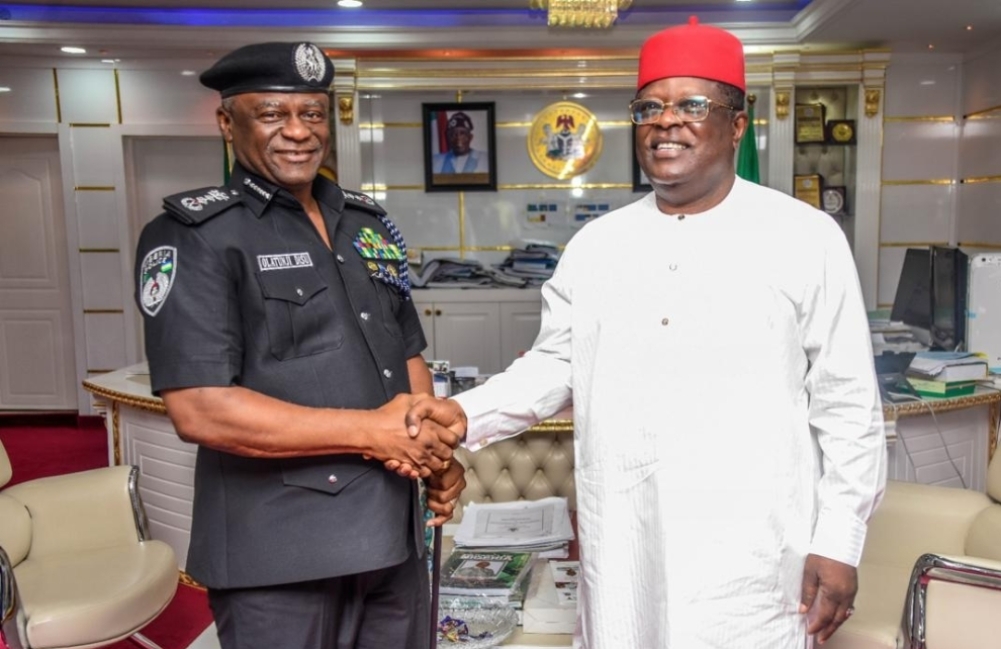
FG, NIGERIA POLICE DEEPEN PARTNERSHIP AS MINISTER UMAHI, IGP DISU STRENGTHEN SECURITY COLLABORATION FOR SAFER HIGHWAYS, NATIONAL DEVELOPMENT The Honourable Minister of Works, Sen. Engr. David Umahi, CON, FNSE, FNATE has commended President Bola Ahmed Tinubu’s administration for its impact on road infrastructure development across the six geopolitical zones of the country, while reaffirming the Federal Government’s commitment to strengthening collaboration with the Nigeria Police to safeguard critical national infrastructure and improve security along major highways. Engr. Umahi made the remarks during a working visit by the Nigeria Police delegation led by the Inspector-General of Police, IGP Olatunji Rilwan Disu, PSC, NPM, to the Federal Ministry of Works Headquarters in Abuja, where discussions focused on improving security around major road projects, deepening inter-agency cooperation, and advancing national developmental objectives. The visit underscored the Force's commitment, under the leadership of the IGP, to strengthening strategic collaboration with the Ministry to protect critical infrastructure and ensure safer highways across the country. He asked for logistic support from the Ministry to reposition the Nigeria Police Highway Patrol Unit in the face of a recent nationwide surge in the theft and vandalism of vital road furniture. Speaking during the visit, the Inspector-General of Police, IGP Olatunji Rilwan Disu, commended the Honourable Minister of Works for the transformation taking place in Nigeria’s road sector. He described roads as vital links of national unity, economic growth, social interaction, and public safety. According to the IGP, roads not only connect communities but also create employment opportunities, stimulate commerce, and contribute to crime reduction by expanding economic activities for citizens. He stated that his visit was aimed at reinforcing collaboration and synergy between the Ministry and the Nigeria Police to ensure improved transportation safety and enhanced security across Federal roads. IGP Disu noted that some of the ongoing road projects have attracted national and international attention due to their economic, tourist, and sporting potentials, stressing that improved infrastructure would open up opportunities for tourism, commerce, sports, and other socioeconomic activities across the country. He also pledged the readiness of the Force to strengthen security presence along major highways and critical project corridors, nationwide, emphasising that effective security on our highways remains essential for sustainable national development and economic stability. Responding, the Honourable Minister expressed appreciation to the Inspector-General of Police and the Nigeria Police for their continued support in securing ongoing and completed road projects, particularly in areas experiencing security challenges. He described the IGP as a dependable, disciplined, and professional officer, whose dedication to service continues to strengthen public confidence in the organisation. Engr. Umahi also welcomed the proactive security initiatives introduced under the IGP’s leadership, describing them as timely measures capable of enhancing peace, public safety, and national stability. He insisted that the success of the Federal Government’s ambitious road development agenda would not have been possible without the commitment and sacrifices of security agencies working tirelessly to protect project sites, personnel, and equipment, as well as installed furnishings such as solar panels, lights, batteries, and poles and reinforcements to road medians and CCTV systems. He also noted that many strategic road projects, particularly in insecurity-prone areas, would have been difficult to execute without the support and sacrifices of officers and men of the Nigeria Police and other security agencies. The Minister highlighted the ongoing four (4) Renewed Hope Legacy Road Projects and other strategic infrastructure developments being executed across the country, noting that no geopolitical zone has been left behind in the Federal Government’s development agenda, under President Tinubu. He further applauded the President’s determination to reposition Nigeria’s infrastructure landscape, explaining that government borrowings are being strategically directed toward economically viable and critical infrastructure projects capable of improving transportation, boosting commerce, and enhancing the quality of life of Nigerians. He explained that the current administration had adopted reinforced concrete pavement technology on several strategic road projects to ensure durability and long-term value, noting that many of the completed roads are designed to serve Nigerians for decades with minimal maintenance. He also disclosed that the Ministry had already begun integrating modern security features into major infrastructure projects, including surveillance systems, observation facilities, rest stations, and collaborative response mechanisms with security agencies along strategic highways. Engr. Umahi proposed the integration of a dedicated police security architecture into highway development plans, including designated security checkpoints, patrol bases, and operational centres to support intelligence gathering and emergency response along major road corridors and construction sites. In his address, the Honourable Minister of State for Works, Hon. Bello M. Goronyo, Esq., welcomed the IGP and his delegation and commended the Inspector-General for his leadership and untiring dedication to national security. He stressed the importance of security support for ongoing infrastructure development, especially with several strategic road projects currently underway across the country. He noted that improved collaboration between the Ministry and security agencies remains essential for protecting workers, equipment, and communities along project corridors. Goronyo further stated that President Tinubu has continued to provide the necessary budgetary support to enable the Ministry to execute numerous infrastructure projects nationwide, reaffirming the administration’s commitment to delivering quality roads and infrastructure capable of driving economic growth, connectivity, and national integration. In a Vote of Thanks, the Permanent Secretary of the Ministry, Mr. Rafiu Adeladan, appreciated the Inspector-General of Police and his team for the visit and commended the existing collaboration between the Ministry, the Office of the National Security Adviser (NSA), and other security agencies in protecting critical national infrastructure across the country. He noted that huge investments have been committed to road infrastructure development nationwide, echoing the need for sustained protection of these national assets to ensure their long-term value and impact on the lives of Nigerians. He expressed confidence that the working visit would further strengthen collaboration between the Ministry and the Nigeria Police in safeguarding critical infrastructure projects. Mohammed A. Ahmed Director, Information and Public Relations 25 May, 2026. ...

EXIT OF A CORE CIVIL SERVANT: RETD PERMANENT SECRETARY; MR. AKOH DANIEL ALIFA
The Federal Ministry of Works And Housing (FMWH) and the entire family of Mr. Akoh Daniel Alifa, wish to announce the glorious exit of a retired Permanent Secretary of the Ministry who passed in the early hours of Sunday, 26th March, 2023 at LUTH in Lagos.
Speaking on behalf of the family, former Minister of Health, Architect Gabriel Yakubu Aduku confirmed the death of this retired core Civil Servant. Mr. Alifa who hails from Kogi State died after a brief illness peacefully at the age of Eighty –Eight (88) years.
He is survived by his wife, four children, grandchildren and other relatives.
The Ministry deeply regrets his sudden exit and pray Almighty God to comfort the family and give them the grace and fortitude to bear this sad incidence.
MAY GOD GRANT HIS SOUL PEACEFUL REST
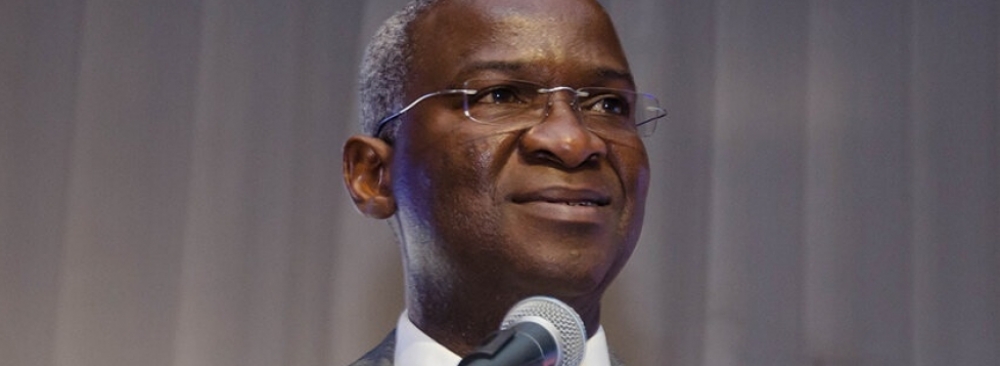
Keynote Speech Delivered By H.E Babatunde Raji Fashola, SAN As Guest Speaker At The Niche 2022 Annual Lecture On Thursday September 8, 2022 At The Muson Centre, Lagos
The theme chosen by Acclaim Communications Ltd, for this year’s annual lecture, which is “2023 AND THE FUTURE OF NIGERIA’S DEMOCRACY” was perhaps too tempting for me to resist, and the invitation, issued since April 20, 2022, was more than timely, which is not easy to say these days for some speaking events.
Given that we are 20 Days to the formal commencement of campaigns for the 2023 general elections, this year’s annual lecture coming 170 days to the first of the elections in February 2023 provides a potential platform for many possibilities.
However, I have elected not to be partisan, and instead chosen to be even-handed, I believe this is the challenge, albeit self-imposed that the theme of the lecture now presents.
Let me start from the beginning about the 2023 general elections.
Shortly after the announcement of the results of the 2019 General Elections proclaiming the victory of President Muhammadu Buhari, and whilst the opposition petition in the election tribunal was still pending, I started hearing talk of 2023.
Initially I dismissed it as offhanded or, at the worst, isolated but it turned out that I was mistaken; it continued.
Therefore, long before the Presidential Election petition was resolved and before Buhari was sworn in for a second term in 2019, talk of the 2023 election, especially the presidential one, had started gathering momentum.
This is the context in which I present my thoughts about the 2023 General Elections and Nigeria’s democracy.
Therefore, you can see that rather than focus on what was going to happen to our lives as a result of the new mandate, now clearly won and lost as determined by the Election Tribunal, some were already thinking about the next election.
So, it should not surprise anyone when you hear rhetoric like: “this will be a most defining election,” “this will be an election like no other,” and so on and so forth.
But truth be told, this rhetoric is common in every democracy and at the onset of a new election cycle.
This is understandable because no two elections are the same; and the intensity always varies anyway as indeed the number of voters and sometimes the number of parties; and the novelty of some candidates.
Unlike economists who urge the probability that “all things being the same,” politics and elections draw their oxygen from the probability that things will not remain the same, especially if you are in opposition.
For example, young people who were by age not eligible to vote in a previous election, would have attained voting age at the next election cycle and become eligible to vote if they register.
In our current situation we now have 12,332,336 newly registered voters for the 2023 election, whereas there were 14,360,053 newly registered voters in 2019, while 6,944,752 registered as new voters in 2015.
So, if the hype about 2023 is anything to go by, the number of 12,332,366 newly registered voters does not support it, because it is 2,027,687 less than the 14,360,053 newly registered voters in 2019.
Obviously, we have seen all the hype before and they detract from the real question which in my view should be: how can democracy, especially the 2023 elections, make our lives better and our country greater?
I think we should focus on this question because we must remember that democracy is simply concerned about the popular participation in choosing a leader or set of leaders.
Democracy does not guarantee that the leader or those leaders will deliver or indeed are able to deliver on what we want.
Put conversely, what really is it that we expect from those we elect and what do they promise to do before we vote, and what have they done for us?
Did we vote for, or did we collect tricycles, sewing machines, generators etc. from them?
If we did, can we legitimately expect that the budget from which these things were procured will also provide healthcare, drugs and diagnostic equipment in our health facilities?
If they have sponsored weddings for our families, financed the burial of our dear departed ones or paid school fees for a whole community do we understand that these things or some of them are funded by the budget from which we also expect good schools, good roads and other public infrastructure and services upon which our prosperity depends collectively?
Put differently, how many of us who vote truly understand how the process works?
How many of our electorate understand what the actual constitutional roles of our legislators, Local Government Chairman, Governors, and President are?
These questions may look ordinary, but my experience in government suggests that they are not. I have been surprised by how unfamiliar some of us are with the constitution and our responsibilities, although I must concede that we are fairly well acquainted when it comes to our rights.
Truth be told, elections are only a part of the democratic process; and this requires not only the successful party to play their role in the formation and running of government, but the opposition as watchdog, and government in waiting, has an equally important role to play in enriching the process.
Governance in power is not easy, and I daresay opposition is even more hard work.
Let us ask ourselves when last an opposition party prepared and detailed an alternative budget to that of the party in government.
True enough, we hear criticisms of what the party in Government is not doing or getting right; but when I ask, can you recall an opposition party offering a credible and alternative solution to what the party in Government has done wrong.
To be fair I must acknowledge the generalizations such as we will do this and do that, but very often that is where it ends.
On the question of revenue or lack thereof for example and the borrowing by Government, apart from the legitimate concerns about borrowing which are rightfully expressed, I have challenged the critics to provide the alternative; and I am still awaiting a response.
If you listen to any of the several Morning shows the issue will come up and you will hear the criticisms, which are legitimate, but you will not get any credible answer to the question – what are the alternatives?
The answer must lie somewhere between cutting waste, reducing the size of Government, raising taxes, stopping some programmes, projects or policies.
But who is ready to have these conversations in real politics?
This is something we must demand in the run up to the 2023 General Elections in order to sustain the future of our democracy.
Yes, democracy heralds freedoms including the freedom to speak. But what kind of speeches are we engaging in? Heckling, online trolling, hate and in person verbal abuse in some cases or talk about ethnicity or religion.
How do we resolve the revenue problem we have with fuel subsidy without leading to social unrest which the two dominant parties have not yet resolved, and the other contenders remain quiet about.
Why has parliament, where all the people of Nigeria are represented, not taken a bipartisan position on the matter after consulting with their constituents, the Nigerian people, and say that we have your mandate to do this or that about the subsidy.
Why can we not have a voting process that shows how each legislator voted, to show that the vote was the result of consultation with the constituents and ensure that they will re-elect the legislator again.
Why is it not a stipulation that our elected representatives live in our constituency so that they understand what we experience and present it for government attention.
Is this type of hands-on representation less important than the occasional goodies shared at seasonal meetings by absentee representatives?
When the campaigns for election to executive office starts and we hear of free this and free that, do we engage in a conversation about how much it would cost and where the money will come from?
After all, to use the cliche nothing is free even in Freetown.
When those promises do not materialize, are we complicit in their stillbirth by the lack of engagement or the quality of engagement.
Let me segue to another issue, to which perhaps we should pay attention, and this is the Federal Government.
In particular, I seek to highlight what I perceive to be a lack of appreciation of what constitutes the Federal Government and what her role is.
To start with, there is a lie that is being told and repeated and some are beginning to believe it, that we do not have a Federal type of constitutional governance partly because they think our Federation is not perfect which I agree with, but an imperfect federation is not the same thing as a non-existent Federation.
The truth is that the imperfection is probably one of the reasons why there are provisions for amendments in the constitution.
If a constitution provides that the federal, state and local governments have different responsibilities and some shared responsibilities as our constitution does in the exclusive and concurrent list of the second schedule and the fourth schedule, I think the minimum requirements of federalism have been met.
Whether the states or local governments should get more powers, lies with us to exercise the amendment in a process requiring federal legislators to initiate it and 2/3 of the states to concur with it.
If that has not happened, it seems to me that it does not extinguish the existence of a federal arrangement, neither is it solely the fault of one person such as the president or the federal government.
This brings me to the heart of the matter about our understanding of the Federal Government.
Not infrequently, I have heard some federal legislators laying the blame of some failing or the other on the “Federal Government,” when in fact what they probably intended is the “Federal Executive” arm of the Federal Government.
The fact is that the federal judiciary, legislative and executive all constitutes one Federal Government operating in three arms.
If we decompose the constituents of the federal government, it will become obvious that it is all of us, the states, through our representatives who make up the federal government.
For example, in the Federal Executive arm of Government, the election of the president and vice president only represents a partial composition of the federal executive. By virtue of section 147 (3) of the constitution, ministers must be appointed from each of the 36 states before the federal executive is probably properly constituted.
In effect, each of our states makes up the much-vilified Federal Executive because the ministers represent us there.
On the federal legislative side of the federal government, the 109 senators and 360 representatives are elected to represent us from senatorial districts and federal constituencies created within our states.
The same is true in the federal judiciary at least at the Federal High Court level and largely so at the Appeal court, except for the supreme court that does not have 36 seats.
The point I seek to make therefore is that it is the representatives of the 36 states who truly constitute the federal government rather than any behemoth or entity.
So, if we agree for example to amend the constitution to allow state policing, I don’t see who can stop it. But do we have a consensus on this matter?
If the Government is not giving us what we expect, I think we should all look in the mirror and ask ourselves what we have put into it, because we are the ones who constitute it.
I must emphasize that democracy works when a working majority exists. Without a working majority in parliament, the work of the executive becomes more difficult.
Therefore, I fail to understand why a party that has a Legislative majority is accused without more, of being a Rubber Stamp.
They are not elected to “fight” the executive especially of their own party, and they are expected to use their majority to push their Party and government agenda through.
That is why elective seats are hotly contested and won. But I find it even stranger and inexplicable that a party that have won legislative majority then literally surrenders its mandate in the parliament by handing over not just Committee Chairmanship seats to the minority, but also committees that are critical in the party’s agenda.
Apart from Public Accounts and probably Ethics, minority should not chair a committee.
Of course, if only briefly I cannot but point out the fact that there are things we expect from different levels of government and legislators that are not their constitutional responsibilities. We would do well to read our constitution before the campaign starts and before we vote. (EXAMPLES ORALLY).
It is these things that should shape the future of our democracy in 2023 and beyond.
These things require us to focus on the kind of people we will elect to states and federal constituencies because it is those people who will determine many things that will affect us.
The kind of people we elect for example to the Senate, will determine what kind of people they will confirm to become ministers, heads of parastatals and so on, which will determine the quality of service we get.
The kind of people we elect, will determine the quality of policies, budgets, programmes and projects that are designed and delivered to us.
The local elections, to elect people to serve in the local governments, as state legislators and as governors are extremely important to our quality of life and deserve that we pay the utmost attention to them without losing sight of the federal elections.
Issues like water supply, rent, land acquisition, building permits, refuse management, sanitation, traffic management, primary health and education, community development are local and not federal issues.
As a small business operator, you need more support from your State Governments than the Federal (save for fiscal and monetary issues) in order for your business to thrive.
I have spoken to the freedoms that democracy offers and the freedom of speech in relation to our rhetoric. The other side of the coin is the role of the press.
While I respect and understand the responsibility to report the news, I hold the view that the press has a big responsibility in shaping the news.
Before I am misunderstood, let me explain.
While they have done a good job serving us with the developments relating to fallout from the choice of running mates and even the purported suspension of a presidential candidate, they can do more to focus on conversations that affect the majority of potential voters.
I am certain you agree with me that the majority of potential voters will be more likely interested to know if there is any plan to improve their children’s education and access to healthcare.
They certainly will be interested to know if something will be done to bring water to their taps at home and what the plans for more reliable electricity will be.
You can bet that those who pay 2 to 3 years rent in advance will be interested to know if anything can be done about it and what that would be.
These are examples of conversations that I think the media can focus on and thereby shape the news.
While there is a lot of work still to be done, it is proper at this point to also highlight the successes our democracy has delivered because the democratic experience since 1999 came at great cost.
Therefore, before I close, let me remind us about some of the things our democracy has delivered since 1999 so that we keep stock, and we believe and reaffirm our commitment to the choice that democracy offer is us and we remain faithful to its ideals.
Our democracy has delivered an interstate train service, the first and only one since the one built by the colonial government.
Our democracy is delivering solutions to problems that seem to have defied solutions, like a road and bridge network to Bonny Island, like the Second Niger Bridge and the reconstruction of the Lagos - Ibadan Expressway, Enugu-Onitsha Expressway, Kano-Maiduguri Expressway and an extensive broadband rollout nationwide.
And lest I forget, our democracy delivered access to telephone service for many Nigerians.
Our democracy has delivered an increasing reliance on Tax revenue as the basis of Government expenditure.
This is important because it increases the focus on representation.
While there is still a lot to do, these are building blocks of hope around which to build our prosperity.
They represent critical items of infrastructure and fiscal options about our current and future livelihoods around which to frame the issue for 2023 elections and plan the future of Nigeria’s democracy.
Therefore, let me close by saying that we can win elections without exaggerating our problems. We can do so by offering credible service and well thought out solutions.
We can win elections without disrobing our country before the global community.
We can do so by valorising Nigeria’s possibilities and not by widening her fault lines.
Elections and Democracy must represent for us a feast of ideas and choices that bring out the best of us and the best of our country.
Thank you for inviting me, and thank you for listening.
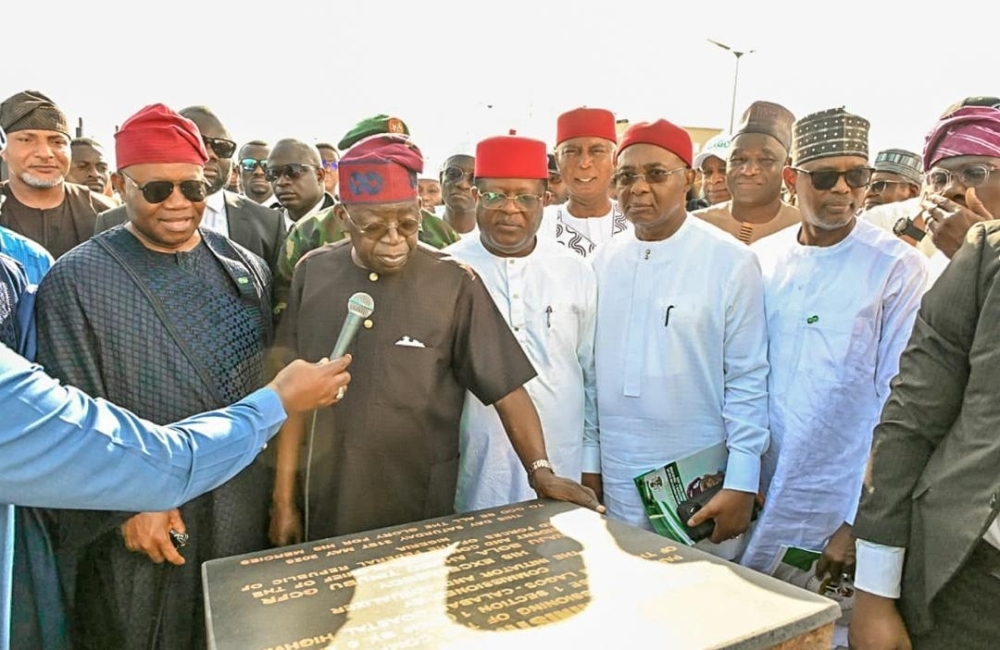
DRIVING NIGERIA’S FUTURE: CELEBRATING TWO YEARS OF TRANSFORMATIVE LEADERSHIP AND THE LAGOS-CALABAR COASTAL HIGHWAY MILESTONE
DRIVING NIGERIA’S FUTURE: CELEBRATING TWO YEARS OF TRANSFORMATIVE LEADERSHIP AND THE LAGOS-CALABAR COASTAL HIGHWAY MILESTONE
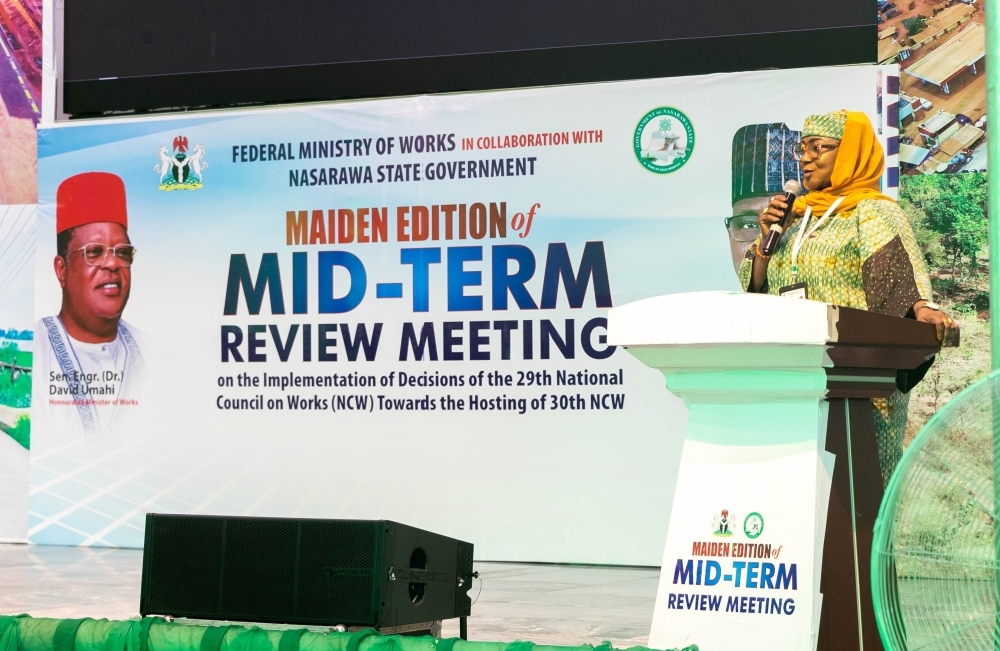
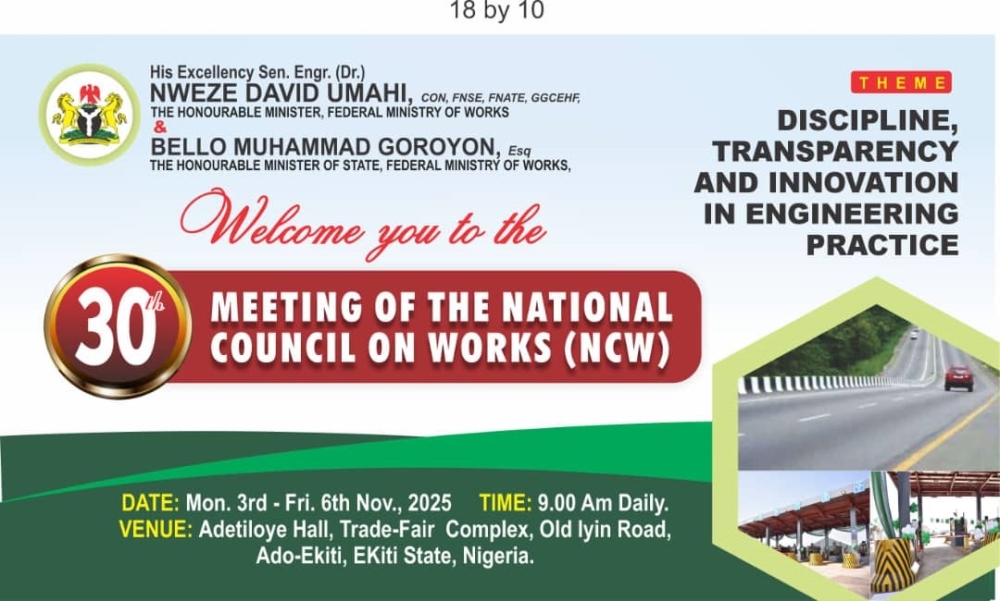
MID -TERM REVIEW MEETING ON THE IMPLIMENTATION OF THE DECISIONS REACHED AT THE 29TH NATIONAL COUNCIL ON WORKS (NCW) DAY 1
MID -TERM REVIEW MEETING ON THE IMPLIMENTATION OF THE DECISIONS REACHED AT THE 29TH NATIONAL COUNCIL ON WORKS (NCW) DAY 1