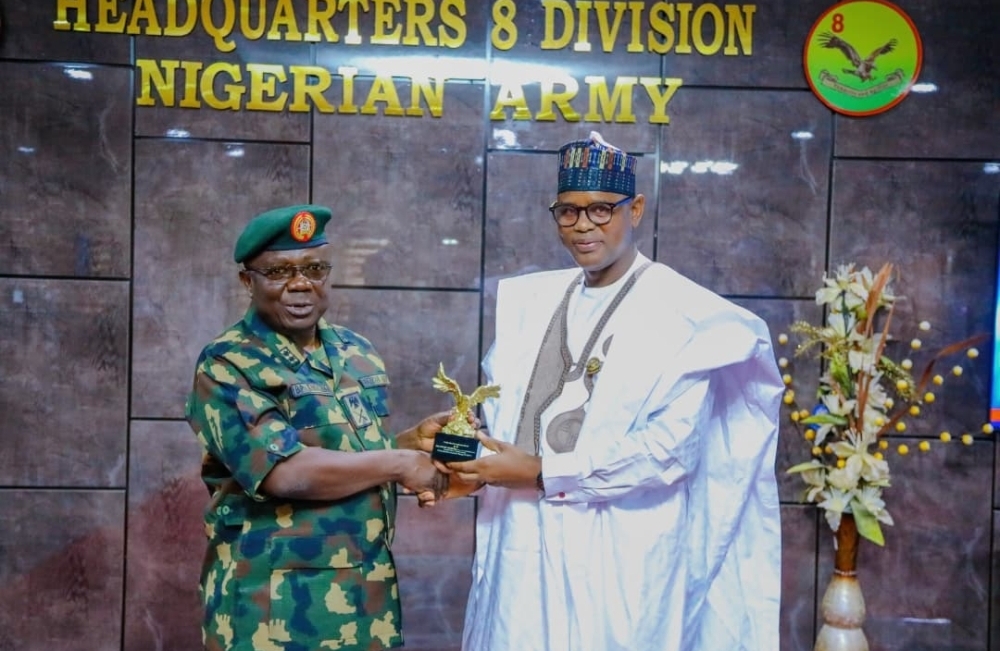
GORONYO COMMENDS SOKOTO GOVERNOR FOR DONATING 10 HILUX VEHICLES TO STRENGTHEN SECURITY ALONG SOKOTO–BADAGRY SUPERHIGHWAY
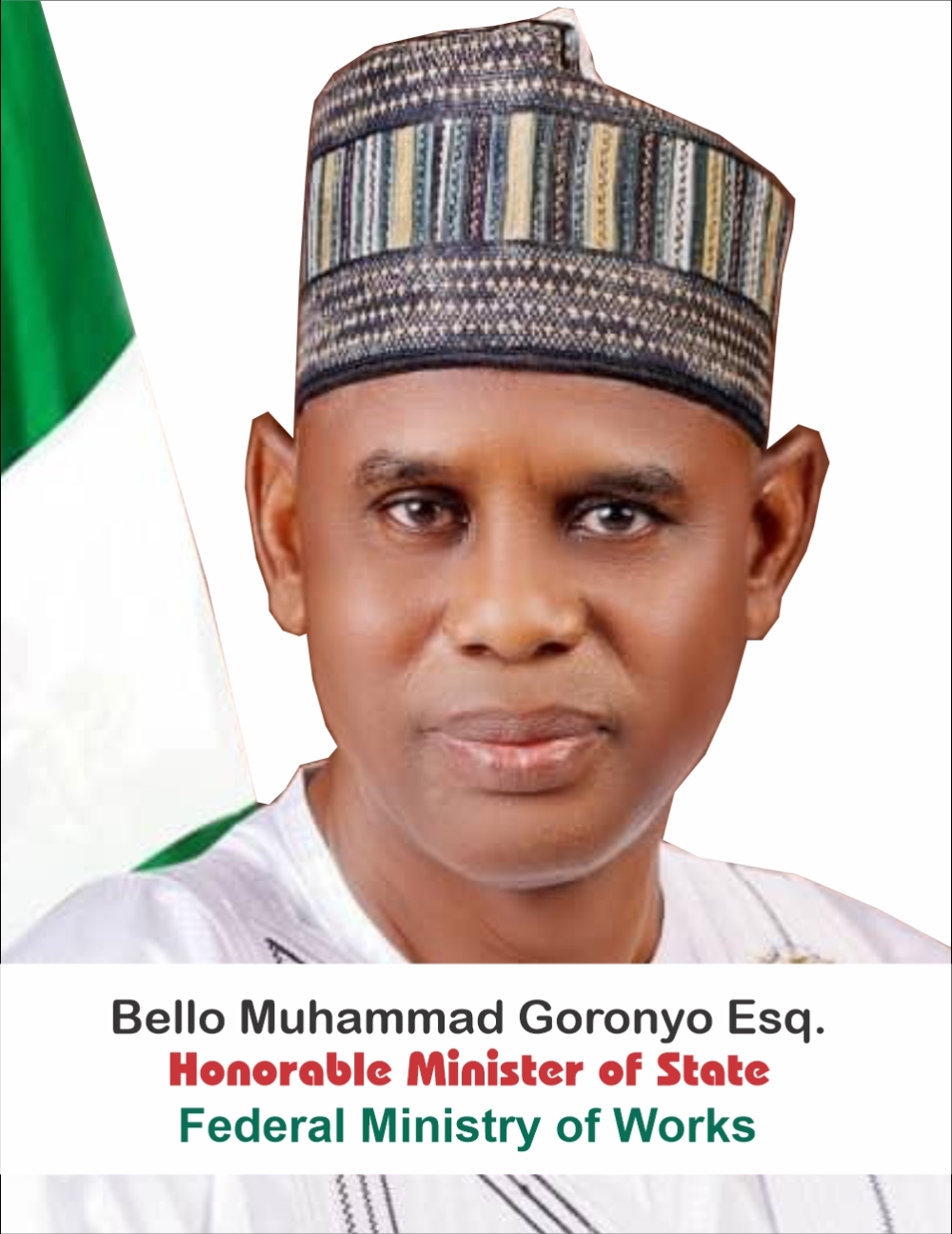
The Honourable Minister of State for Works, Rt. Hon. Bello Muhammad Goronyo, Esq., has commended the Governor of Sokoto State, Dr. Ahmed Aliyu Sokoto, PhD, for donating 10 operational Toyota Hilux vehicles to strengthen security operations along the Sokoto–Badagry Superhighway and other strategic infrastructure corridors.
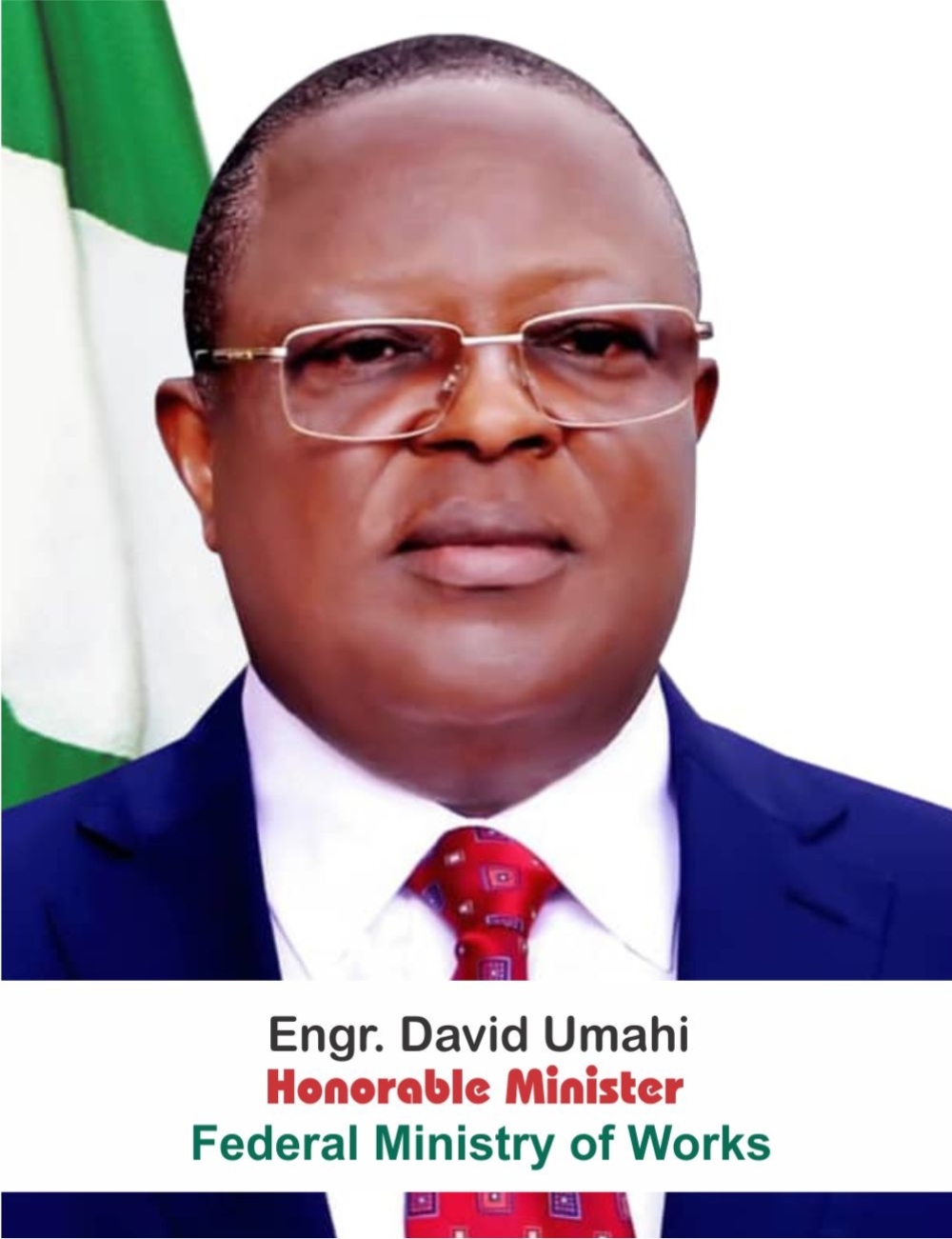
The vehicles were formally commissioned and handed over to the Nigerian Army at the Headquarters of the 8 Division, Nigerian Army, Sokoto, on Thursday, October 8, 2026, by the Honourable Minister of State for Works, on behalf of the Honourable Minister of Works, Engr. David Nweze Umahi, CON, FNSE.
The donation is expected to enhance the operational capacity of military personnel and other security agencies responsible for protecting construction workers, contractors, equipment and host communities along the highway corridor.
Speaking during the ceremony, Goronyo described the donation as a demonstration of the Sokoto State Government’s commitment to national development and the successful implementation of President Bola Ahmed Tinubu, GCFR’s Renewed Hope Agenda, particularly its landmark infrastructure projects.
The Minister emphasised that the Sokoto–Badagry Superhighway represents a long-standing national infrastructure vision that dates back several decades, with its conception traced to the era of former President Shehu Shagari in the 1970s. However, the vision remained unrealised for decades until the administration of President Bola Ahmed Tinubu, GCFR, initiated the construction of the 1,068-kilometre highway in October 2024.
He described the project as a significant step towards translating a historic aspiration into tangible infrastructure that will connect communities, expand economic opportunities and strengthen national integration.
According to Goronyo, President Tinubu’s commitment to the project demonstrates the Federal Government’s determination to bridge critical infrastructure gaps and improve connectivity between northern and southern Nigeria.
He noted that the superhighway, which traverses Sokoto, Kebbi, Niger, Kwara, Oyo, Ogun and Lagos states, is designed to facilitate the movement of people and goods, reduce transportation costs, stimulate trade, create employment and open up new economic opportunities along its route.
The Minister added that the highway would improve access to markets, schools, healthcare facilities and other essential services while supporting agriculture, commerce, industry and the development of communities across the corridor.
He stressed that the successful delivery of the project would require sustained commitment, effective coordination and cooperation among the Federal Government, state governments, security agencies, contractors and host communities.
Goronyo maintained that effective security remained essential to the timely and successful completion of the Sokoto–Badagry Superhighway. He explained that the provision of operational vehicles would strengthen the mobility and response capabilities of security personnel deployed to safeguard the project and its surrounding communities.
The Minister highlighted other strategic infrastructure projects being undertaken by the Federal Government, including the Lagos–Calabar Coastal Highway, the Calabar–Abuja/Trans-Saharan corridor, the Akwanga–Jos–Bauchi–Gombe corridor, the Abuja–Kaduna–Zaria–Kano route and the Zaria–Gusau–Sokoto corridor.
He explained that these projects form part of the Federal Government’s broader commitment to developing an integrated road network capable of supporting commerce, strengthening inter-state connections and accelerating national economic growth.
Rt. Hon. Goronyo further noted that the use of continuously reinforced concrete pavement on the Sokoto–Badagry Superhighway was intended to provide durable road infrastructure capable of serving Nigerians for decades. He added that complementary environmental and safety measures, including tree planting and solar-powered street lighting where provided for in the project, would contribute to environmental sustainability, visibility and road safety.
Goronyo commended the Nigerian Army and other security agencies for their resilience, professionalism and sacrifices in protecting lives, property and critical national infrastructure. He acknowledged the difficult conditions under which security personnel operate and urged them to remain steadfast in carrying out their constitutional responsibilities.
The Honourable Minister also expressed deep condolences to the Nigerian military over the reported loss of personnel in a bandit attack while on official duty the previous day. He described the loss as painful and extended his sympathy to the affected personnel, their colleagues and bereaved families, while praying for the peaceful repose of the departed and strength for their loved ones.
He further acknowledged the support of the National Security Adviser in addressing security challenges associated with the project, particularly through assistance and coordination aimed at strengthening security operations along the highway corridor.
Reaffirming his commitment to the Federal Government’s infrastructure development agenda, Goronyo said the Ministry of Works would continue to support the implementation of strategic projects under President Tinubu’s leadership, working in collaboration with relevant stakeholders to ensure their successful delivery.
He expressed optimism that the continued implementation of the Federal Government’s development programmes would bring lasting benefits to Nigerians, while acknowledging the complementary role of the Sokoto State Government in supporting infrastructure development and security.
In his remarks, the General Officer Commanding (GOC), 8 Division, Nigerian Army, Sokoto, Major General Bengba Paul Koughna, expressed appreciation to the Federal Government, the Federal Ministry of Works and the Sokoto State Government for the donation of the 10 Hilux vehicles.
The GOC noted that the vehicles would significantly enhance the operational mobility and response capabilities of troops deployed along the highway corridor, particularly across the approximately 440-kilometre section extending through Sokoto and Kebbi states.
He explained that troops conduct regular patrols and maintain multiple deployment points along the corridor, making the additional vehicles a valuable boost to their operational effectiveness.
He assured the Minister that the vehicles would be deployed appropriately to support security operations and protect construction workers, contractors, equipment and other stakeholders involved in the project.
The GOC also commended the representative of Hitech Construction Company, retired General Sa'ad Abubakar, for the company's involvement in the project.
The event was attended by retired Assistant Inspector-General of Police (AIG) Aliyu Garba, officials of the Federal Ministry of Works, representatives of the Sokoto State Government and other stakeholders.
The donation underscores the importance of sustained collaboration among the Federal Government, state governments, security agencies, contractors and host communities in addressing security challenges and ensuring the safe and timely delivery of strategic infrastructure projects.
The Federal Ministry of Works reiterates its commitment to working with all relevant stakeholders to protect national infrastructure and advance the objectives of President Bola Ahmed Tinubu, GCFR’s Renewed Hope Agenda for sustainable economic growth and development.

GORONYO COMMENDS SOKOTO GOVERNOR FOR DONATING 10 HILUX VEHICLES TO STRENGTHEN SECURITY ALONG SOKOTO–BADAGRY SUPERHIGHWAY The Honourable Minister of State for Works, Rt. Hon. Bello Muhammad Goronyo, Esq., has commended the Governor of Sokoto State, Dr. Ahmed Aliyu Sokoto, PhD, for donating 10 operational Toyota Hilux vehicles to strengthen security operations along the Sokoto–Badagry Superhighway and other strategic infrastructure corridors. The vehicles were formally commissioned and handed over to the Nigerian Army at the Headquarters of the 8 Division, Nigerian Army, Sokoto, on Thursday, October 8, 2026, by the Honourable Minister of State for Works, on behalf of the Honourable Minister of Works, Engr. David Nweze Umahi, CON, FNSE. Speaking during the ceremony, Goronyo described the donation as a demonstration of the Sokoto State Government’s commitment to national development and the successful implementation of President Bola Ahmed Tinubu, GCFR’s Renewed Hope Agenda, particularly its landmark infrastructure projects. The Minister emphasised that the Sokoto–Badagry Superhighway represents a long-standing national infrastructure vision that dates back several decades, with its conception traced to the era of former President Shehu Shagari in the 1970s. However, the vision remained unrealised for decades until the administration of President Bola Ahmed Tinubu, GCFR, initiated the construction of the 1,068-kilometre highway in October 2024. He described the project as a significant step towards translating a historic aspiration into tangible infrastructure that will connect communities, expand economic opportunities and strengthen national integration. According to Goronyo, President Tinubu’s commitment to the project demonstrates the Federal Government’s determination to bridge critical infrastructure gaps and improve connectivity between northern and southern Nigeria. The Minister added that the highway would improve access to markets, schools, healthcare facilities and other essential services while supporting agriculture, commerce, industry and the development of communities across the corridor. Goronyo maintained that effective security remained essential to the timely and successful completion of the Sokoto–Badagry Superhighway. He explained that the provision of operational vehicles would strengthen the mobility and response capabilities of security personnel deployed to safeguard the project and its surrounding communities. The Minister highlighted other strategic infrastructure projects being undertaken by the Federal Government, including the Lagos–Calabar Coastal Highway, the Calabar–Abuja/Trans-Saharan corridor, the Akwanga–Jos–Bauchi–Gombe corridor, the Abuja–Kaduna–Zaria–Kano route and the Zaria–Gusau–Sokoto corridor. Rt. Hon. Goronyo further noted that the use of continuously reinforced concrete pavement on the Sokoto–Badagry Superhighway was intended to provide durable road infrastructure capable of serving Nigerians for decades. He added that complementary environmental and safety measures, including tree planting and solar-powered street lighting where provided for in the project, would contribute to environmental sustainability, visibility and road safety. Goronyo commended the Nigerian Army and other security agencies for their resilience, professionalism and sacrifices in protecting lives, property and critical national infrastructure. He acknowledged the difficult conditions under which security personnel operate and urged them to remain steadfast in carrying out their constitutional responsibilities. The Honourable Minister also expressed deep condolences to the Nigerian military over the reported loss of personnel in a bandit attack while on official duty the previous day. He described the loss as painful and extended his sympathy to the affected personnel, their colleagues and bereaved families, while praying for the peaceful repose of the departed and strength for their loved ones. He further acknowledged the support of the National Security Adviser in addressing security challenges associated with the project, particularly through assistance and coordination aimed at strengthening security operations along the highway corridor. Reaffirming his commitment to the Federal Government’s infrastructure development agenda, Goronyo said the Ministry of Works would continue to support the implementation of strategic projects under President Tinubu’s leadership, working in collaboration with relevant stakeholders to ensure their successful delivery. He expressed optimism that the continued implementation of the Federal Government’s development programmes would bring lasting benefits to Nigerians, while acknowledging the complementary role of the Sokoto State Government in supporting infrastructure development and security. In his remarks, the General Officer Commanding (GOC), 8 Division, Nigerian Army, Sokoto, Major General Bengba Paul Koughna, expressed appreciation to the Federal Government, the Federal Ministry of Works and the Sokoto State Government for the donation of the 10 Hilux vehicles. The GOC noted that the vehicles would significantly enhance the operational mobility and response capabilities of troops deployed along the highway corridor, particularly across the approximately 440-kilometre section extending through Sokoto and Kebbi states. He explained that troops conduct regular patrols and maintain multiple deployment points along the corridor, making the additional vehicles a valuable boost to their operational effectiveness. He assured the Minister that the vehicles would be deployed appropriately to support security operations and protect construction workers, contractors, equipment and other stakeholders involved in the project. The GOC also commended the representative of Hitech Construction Company, retired General Sa'ad Abubakar, for the company's involvement in the project. The event was attended by retired Assistant Inspector-General of Police (AIG) Aliyu Garba, officials of the Federal Ministry of Works, representatives of the Sokoto State Government and other stakeholders. The Federal Ministry of Works reiterates its commitment to working with all relevant stakeholders to protect national infrastructure and advance the objectives of President Bola Ahmed Tinubu, GCFR’s Renewed Hope Agenda for sustainable economic growth and development.
The donation is expected to enhance the operational capacity of military personnel and other security agencies responsible for protecting construction workers, contractors, equipment and host communities along the highway corridor.
He noted that the superhighway, which traverses Sokoto, Kebbi, Niger, Kwara, Oyo, Ogun and Lagos states, is designed to facilitate the movement of people and goods, reduce transportation costs, stimulate trade, create employment and open up new economic opportunities along its route.
He stressed that the successful delivery of the project would require sustained commitment, effective coordination and cooperation among the Federal Government, state governments, security agencies, contractors and host communities.
He explained that these projects form part of the Federal Government’s broader commitment to developing an integrated road network capable of supporting commerce, strengthening inter-state connections and accelerating national economic growth.
The donation underscores the importance of sustained collaboration among the Federal Government, state governments, security agencies, contractors and host communities in addressing security challenges and ensuring the safe and timely delivery of strategic infrastructure projects.
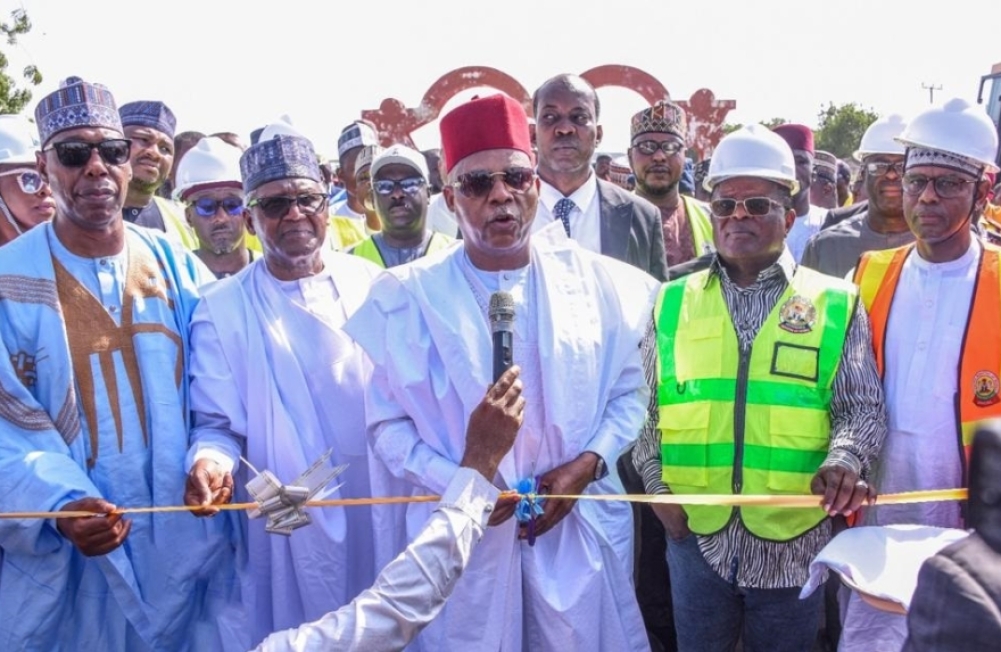
TINUBU FLAGS OFF STRATEGIC NORTH-EAST ROAD PROJECTS TO ENHANCE SECURITY, TRADE, AND REGIONAL INTEGRATION President Bola Ahmed Tinubu, GCFR, has officially flagged off the rehabilitation of the Bama – Banki and the Dikwa – Gamboru Ngala Roads, describing them as strategic investments to restore critical infrastructure, enhance security, and drive economic growth in the North-East. Represented at the ceremony by the Vice President, Senator Kashim Shettima, GCON, the President said the projects reflect his administration's campaign promise to rebuild vital infrastructure that will improve connectivity, strengthen regional integration, and promote sustainable development. The two contracts are awarded to Dangote Industries (Nig.) Ltd. under the Infrastructure Tax Credit Scheme, while the subcontractor is Dantata & Sawoe (Nig.) Limited. President Tinubu noted that the strategic road corridors would improve access to neighbouring Cameroon and the Republic of Chad, creating new opportunities for trans-Saharan trade and expanding cross-border commerce. He stressed that the projects would not only facilitate the movement of people, goods, and services but also improve security and support the socio-economic recovery of communities affected by insurgency. He called on all stakeholders to work closely with the people of the North East to ensure the successful execution of the projects, while assuring Nigerians that his administration would continue to invest in infrastructure that stimulates economic growth and national development. The Honourable Minister of Works, Engr. Sen. David Umahi, CON, FNSE, FNATE, described the commencement of the projects as another pointer to the Federal Government's infrastructure renewal drive. He explained that the roads are part of the administration's four legacy infrastructure projects, spread across the six geopolitical zones, and are designed to improve regional connectivity, reduce travel time, facilitate trade, and strengthen economic integration with neighbouring countries. Also speaking, the Honourable Minister of State for Works, Bello Muhammad Goronyo, Esq., highlighted the enormous economic, security, healthcare, and tourism benefits of the projects. According to him, the roads are more than transportation infrastructure; they are strategic investments that will promote regional integration, improve livelihoods, and enhance the quality of life of the people. He commended President Tinubu for his visionary leadership and unwavering commitment to transforming Nigeria through sustained infrastructure development. In their separate remarks, the Chairman of the Senate Committee on Works, Senator Allwell Heacho Onyesoh, and the Chairman of the House of Representatives Committee on Works, Hon. Akin Alabi, applauded the strong collaboration between the National Assembly and the Federal Ministry of Works. They described the projects as a clear demonstration of the Federal Government's commitment to inclusive infrastructure development and pledged the continued legislative support of the National Assembly towards their successful completion. President/CEO of the Dangote Group, Alhaji Aliko Dangote, GCON, described the Federal Government's Tax Credit Scheme as a transformative initiative for financing critical infrastructure. He disclosed that the Dangote Group is currently executing 12 road projects valued at about ₦3 trillion under the scheme and reaffirmed the company's readiness to undertake additional projects in support of national development. He noted that quality roads and bridges stimulate economic activities, attract investment, and promote national prosperity. Dangote also commended the leadership of the Minister, describing him as "a conqueror" for his dedication and outstanding commitment to infrastructure delivery. The Governor of Borno State, Professor Babagana Umara Zulum, CON, described the projects as strategically important to the economic recovery and security of the North East. He said the roads would strengthen commercial and social ties with Cameroon and the Chad Republics, while improving peace, security, and economic activities across the region. Governor Zulum expressed profound appreciation to President Tinubu for his continued support for Borno State and the entire Zone. Speaking on behalf of the Borno State Council of Traditional Rulers, comprising the Emirates of Borno, Biu, Dikwa, and Gwoza, the Chairman of the Council, His Royal Highness Alhaji (Dr.) Abubakar Ibn Umar Garbai Al-Amin El-Kanemi, represented by the Shehu of Dikwa, welcomed the initiative. He expressed confidence that the projects would deliver lasting socio-economic benefits to the affected communities and assured the Federal Government of the traditional institution's full support throughout the implementation process. The flag-off of the Bama–Banki and Dikwa–Gamboru Ngala Roads’ rehabilitation projects underscores the Administration's commitment to renewing critical infrastructure, strengthening national security, expanding regional trade, and accelerating economic transformation. Upon completion, the roads are expected to improve mobility, facilitate cross-border commerce, attract investment, and unlock new opportunities for sustainable growth and prosperity across the North East and Nigeria as a whole. ...
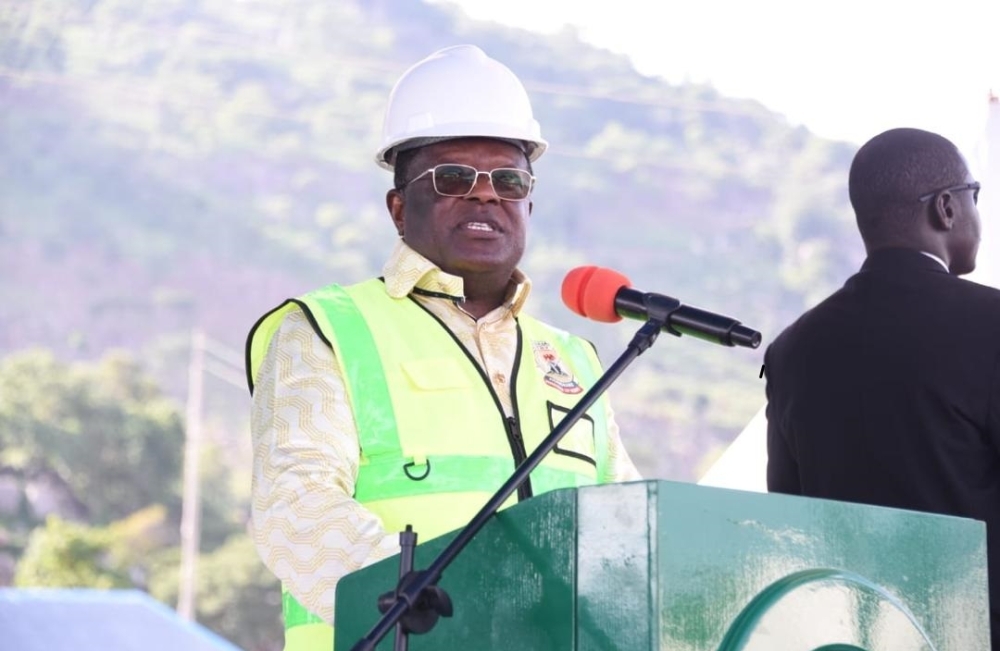
FG Inaugurates Rehabilitation of Babban Lamba–Sharam Road, Phase II in Plateau State — Minister Bags Ngas Land’s Chieftaincy Title The Federal Government has officially flagged off construction works on Phase II of the Rehabilitation of Babban Lamba–Sharam Road in Plateau State, restating its avowed intention to deliver critical infrastructure that promotes economic growth, regional connectivity, national development, and integration. Representing President Bola Ahmed Tinubu, GCFR, at the ceremony, the National Chairman of the All Progressives Congress (APC), Professor Nentawe Goshwe Yilwatda, described the project as a strategic investment that will drive economic growth, create jobs, boost tourism and culture, and strengthen regional integration. He noted that the road forms part of the present administration’s infrastructure renewal programme being implemented across Nigeria's six (6) geopolitical zones. Professor Yilwatda disclosed that the road is of immense national significance, linking the North Central, North East, South East, and, by extension, the South-South zones. He urged the contractor, Messrs Decency Associates (Nigeria) Limited, to ensure the project's timely completion while maintaining the highest standards of quality. He also highlighted the historical importance of the area as the birthplace of former Head of State, General Yakubu Gowon, and the late Governor of the old Benue-Plateau State, Police Commissioner Joseph Gomwalk. He appealed to the contractor to prioritise the employment of indigenes along the project’s corridor throughout the construction period. The APC National Chairman assured the Governor and good people of Plateau State that he would personally convey the state's gratitude and goodwill to President Tinubu. He added that he has a personal interest in seeing the road rehabilitated, given that it has remained in a deplorable condition since 1975. In his remarks, the Honourable Minister of Works, Engr. David Umahi expressed gratitude to the Ngas community for conferring a prestigious chieftaincy title on him. He said the honour had made him a son of the soil and pledged to give the project special attention until its successful completion. The Honourable Minister of Works, Engr. Sen. David Umahi, CON, FNSE, FNATE, while highlighting the modest achievements of the Administration in the road sector, as enshrined in the Renewed Hope Agenda, welcomed constructive criticism, stressing that he remains accountable to Nigerians and open to objective public scrutiny. He, however, cautioned against unfounded attacks, noting that genuine criticism strengthens governance and promotes better service delivery. Engr. Umahi described the four (4) Legacy Road Projects as catalysts for growth and prosperity, and “a major bold step no past administration had dared to take,” describing President Tinubu as “God-sent, a bridge-builder and visionary leader.” He appealed to the people on the plateau to support the renewed vigour of the present administration in changing their lives for the better in many different ways. “The changing landscape of Nigeria’s road sector is a clear manifestation of a government that truly cares for the now and future of its citizens,” according to the Minister. He informed that no part of the country can talk about marginalisation in the provision of road and bridge infrastructure because “President Tinubu is a leader for all Nigerians.” Earlier, the Governor of Plateau State, Barr. Caleb Manasseh Mutfwang welcomed the President's representative and commended President Tinubu and the Minister of Works for prioritising critical road infrastructure nationwide. He described the project as “a landmark intervention that would stimulate economic activities, improve connectivity, reduce travel time, and unlock new investment opportunities across Plateau State and beyond. Governor Mutfwang praised President Tinubu's commitment to infrastructure development, stating that the people of the State deeply appreciate the Federal Government's intervention. Quoting a Hausa proverb, he said: "Mai hakuri zai dafa dutse ya sha romonsa," meaning that patience begets unexpected and rewarding outcomes. Also speaking at the event, the Chairman of the Senate Committee on Works, Senator Allwell Heacho Onyesoh, and the Chairman of the House Committee on Works, Hon. Akin Alabi, pledged sustained funding and proper oversight for the sector across the country. They commended the President and the Minister for their uncommon strides in delivering durable road projects nationwide. A former Governor of the State, and Minister, presently a Senator representing Plateau South, Sen. Simon Lalong, similarly expressed appreciation to the President for extending major infrastructure projects to Plateau State, in particular, and the North Central region, in general. He pledged the continued support and prayers of the people of the state for the administration. During the ceremony, the paramount ruler of Ngas land, Ngolong Ngas, His Majesty Nde Jika conferred a traditional title on the Honourable Minister of Works in recognition of his outstanding contributions to infrastructure development in his domain. "I am honoured, on behalf of the Panshin and Kanke Joint Traditional Council and the Ngas Nation, to confer on you the prestigious title of Ngorot Ngasmwa (Lover of Ngas). We warmly welcome you as a member of our Council of Traditional Title Holders," stated the Ngolong Ngas. The Babban Lamba–Sharam Road, Phase II spans 38.625 kilometres, stretching from Babban-Dungun Village to Sharam, with an additional two-kilometre spur linking Dungun to Kwai. The Ministry, under the purposeful leadership of Engr. Umahi remains committed to delivering durable, safe, and accessible roads and associated infrastructure across Nigeria in support of sustainable economic growth and national development. ...
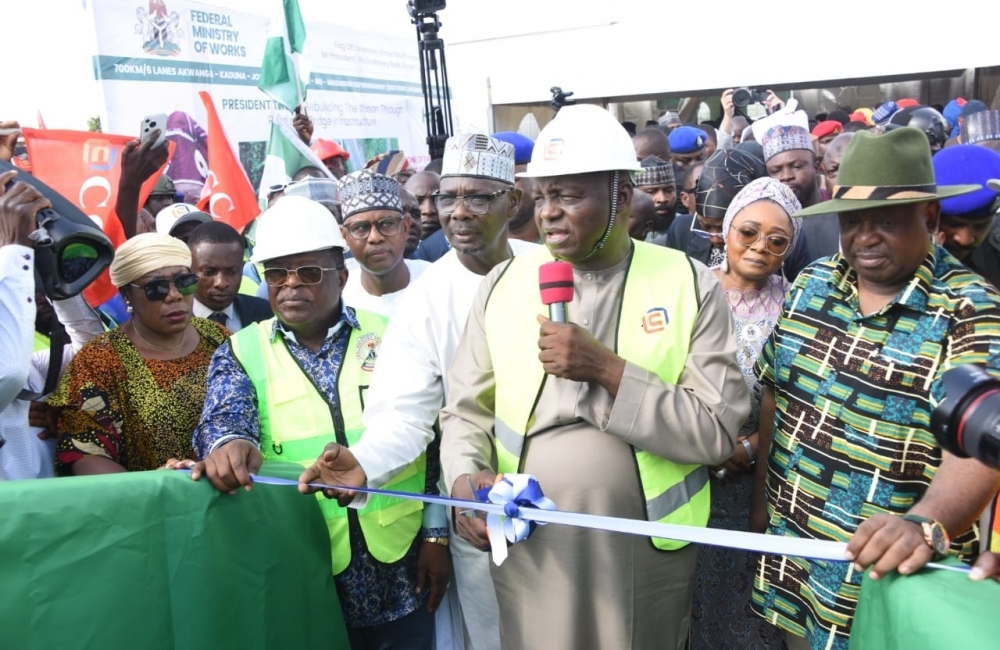
FG FLAGS OFF CONSTRUCTION OF AKWANGA–JOS–BAUCHI–GOMBE–BIU—MAIDUGURI SUPERHIGHWAY, COMMISSIONS AKWANGA TOWNSHIP DUAL CARRIAGEWAY AND UNDERPASS The Federal Government has officially flagged off the construction of Section One of the 700-kilometre Akwanga–Jos–Bauchi–Gombe–Biu—Maiduguri Superhighway, reaffirming President Bola Ahmed Tinubu, GCFR's commitment to delivering transformative infrastructure under the Renewed Hope Agenda. The flag-off ceremony, held on the 1st July, 2026, in Akwanga, Nasarawa State, where the President, His Excellency Bola Ahmed Tinubu, GCFR, was represented by the National Chairman of the All Progressives Congress (APC), Prof. Nentawe Goshwe Yilwatda, stated that the project is one of the President's four Renewed Hope Legacy Road Projects, designed to transform Nigeria's transportation network, strengthen national integration, improve security, facilitate trade, and stimulate economic growth across the North-Central and North-East geopolitical zones. The first phase of the project covers approximately 125 kilometres from Akwanga in Nasarawa State to Jos in Plateau State and forms part of the larger 700-kilometre, six-lane, continuously reinforced concrete pavement (CRCP) superhighway stretching through Nasarawa, Kaduna, Plateau, Bauchi, Gombe, Yobe, and Borno States. The President's representative praised the Minister of Works for his exceptional leadership and dedication to transforming Nigeria's road sector, describing him as one of the administration's most outstanding performers. He described the Minister of Works as “the shining light of the Renewed Hope Administration.” Speaking at the ceremony, the Honourable Minister of Works, Engr. Sen. David Umahi, CON, FNSE, FNATE, disclosed that the project is a landmark investment that will improve connectivity, reduce travel time, enhance road safety, lower transportation costs, create jobs, and unlock the region’s economic potential. He explained that the Akwanga–Maiduguri Superhighway is one of four legacy highway corridors being implemented simultaneously by the Federal Government, alongside the Lagos–Calabar Coastal Highway, the Sokoto–Badagry, and the Calabar–Abuja (Trans Sahara) Superhighways. The Minister reiterated the Federal Government's commitment to CRCP technology to ensure greater durability, lower maintenance costs, and a lifespan of up to 100 years. He commended President Tinubu for his untiring support for infrastructure development and urged the contractor to deliver quality work, while engaging local communities through employment, skills acquisition, and technology transfer. The President's representative also commissioned the newly completed Akwanga Township Dual Carriageway and Underpass, executed by the Nasarawa State Government under the leadership of the Governor, His Excellency, Engr. Abdullahi Sule, CON. He commended him for complementing the Federal Government's infrastructure drive through strategic investments in road development across the state. In his Welcome Address, the Honourable Minister of State for Works, Bello Muhammad Goronyo, Esq., stated that the Superhighway would serve as a major transportation corridor linking North-Central and North-East Nigeria, while facilitating trade, agriculture, investment, and national security. Also speaking at the well-attended event, the Honourable Minister of Information and National Orientation, Alhaji Mohammad Idris, highlighted the Federal Government's unprecedented investment in infrastructure, education, healthcare, and economic reforms, noting that the Renewed Hope Agenda is delivering tangible benefits across all sectors and the country. The Honourable Minister of Women Affairs, Hon. Imaan Sulaiman Ibrahim, described the project as another demonstration of the administration's commitment to inclusive development, noting that investments in infrastructure are being complemented by programmes supporting businesses, women, and youth development. Governor Sule expressed appreciation to President Tinubu for approving the project, describing it as a strategic national corridor that will connect communities, boost commerce, and attract investments across the region. Speaking on behalf of the benefiting states, Governor Barr. Caleb Manasseh Mutfwang of Plateau State said the commencement of the project is the fulfilment of a long-standing aspiration of the people of the region and commended the Federal Government for making its promise a reality. The Permanent Secretary, Federal Ministry of Works, Mr. Rafiu Olarinre Adeladan, stated that the project represents a new era in highway development in Nigeria and reaffirmed the Ministry's commitment to quality delivery, transparency, and value for money. The Managing Director of CGC (Nig.) Ltd., Engr. Zhong Xiang assured the Federal Government, the State Governors on the road’s corridor, and all Nigerians of the company's readiness to deliver the project safely, professionally, on schedule, and in accordance with international standards and best practices. The Federal Ministry of Works reaffirmed its commitment to delivering strategic road infrastructure that will strengthen national unity, promote inclusive economic growth, and improve the quality of life of Nigerians, in line with the Renewed Hope Agenda of the Administration of President Tinubu, GCFR. ...

RE: Appointment as a Member of Inter-Governmental Committee
H.E. Dr. Abdullahi U. Ganduje, OFR.
National Chairman, All Progressives Congress (APC),
FCT, Abuja.
I acknowledge with the deepest appreciation the letter of Your Excellency conveying my appointment as a Member of the Inter- Governmental Committee by our great Party, the All Progressives Congress (APC).
2. I thank you immensely our dear National Chairman together with all the members of the National Working Committee (NWC) for the opportunity offered me to serve our great Party in this capacity and I commend you highly for the lofty ideas, innovations and successes that have been recorded under your able leadership since you came on board. I assure you of my unwavering commitment to the cause of our Party's Inter-Governmental Committee and the objectives set to be achieved.
3. Once again, thank you most profoundly and please accept always, the assurances of the esteemed regards and best wishes of my family, the management and staff of the Federal Ministry of Works.
H.E. Sen. (Engr.) Nweze David Umahi, CON, FNSE, FNATE
(Honourable Minister of Works)
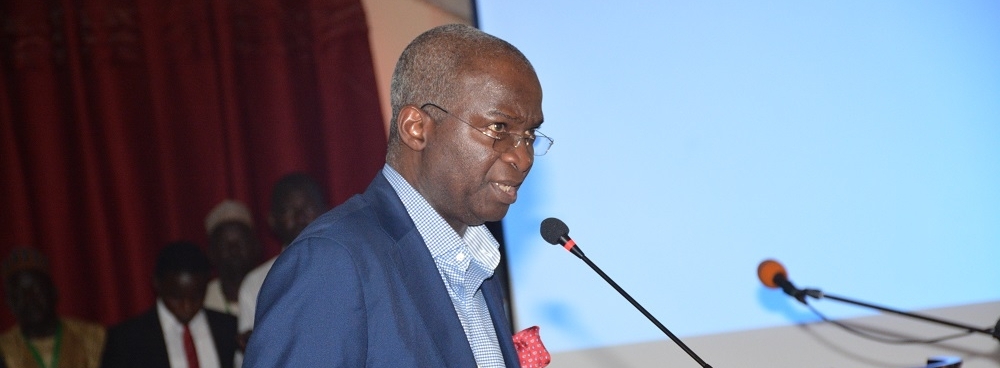
Convocation Lecture Delivered by H.E Babatunde Raji Fashola SAN at the 38th Convocation of the Federal College of Education (Technical) Akoka, Lagos
Ladies and gentlemen, Members of the Academic Community of the Federal College of Education (Technical) Akoka, let me commend you all for another convocation ceremony, the 38th that this institution is undertaking.
It bears testimony to your patriotic commitment to nation-building by undertaking to produce and shape the quality of our human capital.
To the parents and guardians of graduating students, I commend your labour of love. I share your sense of relief and your sense of pride on this auspicious occasion, the graduation day of a child or ward. I have walked this route before. I know how good it feels. May your labour not be in vain.
Most especially and very deservedly, I congratulate all the graduands of today. I doff my heart for your achievement, I salute the industry that you have invested in order to be here today.
When the Provost, Dr. Wahab Ademola Azeez invited me to be the convocation lecturer, I accepted because of you. Because you are the next set of Nigerians who will occupy the frontlines in the process of building our country. That in part is why the school was set up. A place to prepare the next set of leaders of Nigeria.
Make no mistake about it, your leadership responsibility started from the day your education started. You are not just leaders of tomorrow, you have become leaders already. With your training here, how far you go on the leadership ladder is now a matter of your own choice and how you react to opportunities.
This brings me to the topic of my lecture. Dr. Azeez in his letter informed me that the theme of the convocation is “VOCATIONAL-TECHNICAL TRAINING AND SKILLS ACQUISITION AND THE YOUTH IN WORLD OF WORK AND EMPLOYMENT MARKET. WHAT DOES NIGERIA HAVE TO OFFER?”
Then he says in his letter “…you are at liberty to approach the lecture from a perspective suitable for you…”
I intend to do just that. I believe that the Nigerian developmental agenda has been organised around a question of what the country can offer or do for her citizens, which is okay, without necessarily demanding from her citizens a corresponding discharge of their duties.
It seems to explain why many Nigerians know their “rights” so to speak and perhaps why not enough of us know that we owe “duties” to Nigeria, or even know what those duties are.
Therefore, my approach to the lecture will be to depart from the question what does Nigeria have to offer? And discuss our duties to Nigeria.
But in doing so, perhaps I will try to orient you differently from the way my parents and I were oriented, which is to graduate and look for employment; and instead orient you to ask the question: Why should I be an employee, when I can be the employer?
It seems that, the place to start is to give you a teaser of what Nigeria has on offer, and still is offering.
Let us start from your very illustrious school, whose colours you wear today and from which you graduate. Nigeria has given you this, by the vision, and action of many who came long before you and their decision to set up this school.
They did a great thing and performed a public duty and laid a block of development from which you now benefit. That is nation building and service to the fatherland. That is the mindset I want you to leave here with in addition to your certificate.
The other mindset is that of a creator. This is what your technical and vocational training has been about - using your minds to visualize things and using your hands to make those things happen.
The greatest nations on earth are those whose people make the most of what they need with their hands. You are the production powerhouse of Nigeria who will build, maintain, Repair, re-purpose, fabricate and invent all the assets that will propel Nigeria to her destined greatness.
In terms of what Nigeria has to offer, let me give you examples - she has roads, refineries, airplanes, gas pipelines to build, she has scores of minerals in massive quantities to process, millions of tons of agricultural produce to process, preserve and package, buildings, machines, equipment and assets to develop, rehabilitate, maintain, repair and preserve.
These are all the things that require people who can use their minds and hands, in other words vocational and technical skills. This is not a demand for those who talk. Talk is cheap. This is a theatre of dreams for those who can DO.
The global economy including that of Nigeria is changing and in need of those who are creative and creating. That is why talent is now so highly paid for today more than 30 years ago.
I spoke earlier about mindset along with your certificate. The additional mindset you must take from here today is to see Nigeria’s challenges, needs and her TO-DO-LIST, as your opportunity for prosperity, not an opportunity to emigrate.
And if you choose to migrate, there is the possibility that once you present your certificate wherever you go, the job they are likely to offer you is one that asks you to do in a foreign land, what you refused to do in your motherland.
The illogic is manifest if you ask yourself the question: whether you will go to build another person’s home, when your parent’s home is in need of rebuilding.
But let me deal with another thing Nigeria offers you apart from this school. President Muhammadu Buhari signed Executive Order No 11 of 2022 on 6th April, 2022 for the implementation of a National Public Buildings Maintenance Policy.
In his short remarks at the signing event, the President said:
“…Maintenance of assets is more than a culture, it is an economy from which many can prosper and we must nurture and water that economy by policy and actions that create opportunities and inclusion for people. It is my hope that this order will open the door to this treasure of opportunities for young technicians, for artisans, for vendors and suppliers and for small businesses and cottage industries…”
I am unable to guess how many people in this gathering are aware that such a policy exists.
I am equally curious to find out how many of you graduands see yourselves as possibly being among those that Mr President was referring to when he mentioned: “…opportunities for young technicians, for artisans, for vendors and suppliers and for small businesses and cottage industries.”
How many of you know perhaps that there are about 40 million micro, small and medium businesses in Nigeria, and that these are our largest employers of labour and also the largest number of self-employed people as is the case all over the world.
How many here still want to look for employment and how many want to start their own small business.
Indeed, how many of us know that when governments all over the world talk about “the private sector” it is to the small businesses that they refer and not to the few conglomerates.
While this policy of national maintenance was approved in on the 4th of January 2019, and before the President signed the executive order in April 2022, the Ministry of works had started to give effect to it, by commencing the maintenance of public buildings, roads and bridges.
In the building maintenance sector, we currently have 28 federal secretariats under maintenance contracts to small businesses. We pay between N20 - N40 million every quarter to each company depending on the nature of works they are contracted to undertake. Each of them employs at least 40 persons who do various things from plumbing, heating, ventilation and cooling, to masonry and carpentry, security and Horticulture to mention a few.
Houses in 35 states constructed under the National Housing Programme already have facility managers.
We have contracts for the periodic maintenance of bridges across Nigeria including the Third Mainland Bridge, Eko bridge and Apongbon bridge all in Lagos. These people are using their hands and skills to build Nigeria, rather than wait for what Nigeria can offer them. In 2021 we had 42 Bridges under repairs and maintenance.
There is more that can happen, and many more of us can find inclusion in these and other spaces, but our mindset must change from asking for our rights alone, and transition to recognising our duties to Nigeria and performing them.
Perhaps the most important message I wish to pass to you in this lecture is to invite you to acquire the mindset along with your certificate that you owe duties to Nigeria as a citizen.
Those duties are enshrined in Section 24 (a)_(f ) of the 1999 constitution as amended.
The section provides that:
Section 24 (a)
It shall be the duty of every citizen to –
abide by this Constitution, respect its ideals and its institutions, the National Flag, the National Anthem, the National Pledge, and legitimate authorities;
Section 24 (b)
help to enhance the power, prestige and good name of Nigeria, defend Nigeria and render such national service as may be required;
Section 24 (c)
respect the dignity of other citizens and the rights and legitimate interests of others and live in unity and harmony and in the spirit of common brotherhood;
Section 24 (d)
make positive and useful contribution to the advancement, progress and well-being of the community where he resides;
Section 24 (e)
render assistance to appropriate and lawful agencies in the maintenance of law and order; and
Section 24 (f)
declare his income honestly to appropriate and lawful agencies and pay his tax promptly.
How many of us know that we have duties that we owe Nigeria, what our duties are, and how many of us perform our duties?
I think that all these duties are clear enough and need no further explanation.
For those who want to read about them after this interaction, I implore you to either get a copy of the Constitution or use search engines on your smart phones to access it.
But I cannot conclude this lecture without speaking about a few of them. I will do so in no specific order.
Let us examine the duty in Section 24 (e) to “render assistance to appropriate and lawful agencies in the maintenance of law and order.”
What can be more lawful in the face of corruption and insecurity than the battle launched by the Buhari administration against the illicit narcotic drugs and psychotropic substance trade through the Buba Marwa led Nigeria Drug Law Enforcement Agency (NDLEA).
This agency in the last two years has arrested no less than 38 criminal minded drug barons and seized over 2,000,000 kg of illicit drugs.
Just imagine what has slipped through before Buba Marwa came on board and the damage to the future of human capital especially young ones, whose minds have been damaged by drug abuse.
Why is this relevant you might wonder?
It is because I came across a report in the news a few days ago that “THUGS attack NDLEA operatives, FOIL ARREST OF SUSPECTS”.
If those so-called thugs were Nigerians, they were in tragic breach of their duty under Section 24 (e) of the constitution.
They should have provided support to NDLEA if they are patriots.
Unfortunately, they are not.
They let themselves down and they let Nigeria down. You must never copy their example.
Our duty as patriots is to help lawful agencies like NDLEA in their noble tasks. Providing useful information that leads to arrest and seizure is an example of how we can perform this duty. A drug free society is one that has a future, a promise of prosperity and renewed hope.
Let me also quickly deal with Section 24 (c) about the duty to “…respect dignity of other citizens and the rights and legitimate interests of others and live in unity, harmony and the spirit of common brotherhood…”
Not a few of us have fallen short of the constitutional expectation in respect of this duty.
Sadly, the evidence is easy to gather on public platforms especially on social media. We have carried on as if we are at war with one another only because we disagree with the views that others express.
If we were looking for who to blame, there are enough people who should cover their faces in shame.
I have held the view and still do so, that our disagreement should not make us disagreeable. I can disagree with you without calling you names or trolling you on social media or worse still manufacturing lies against you or addressing you in words that should never be in print.
Let me remind us that the world wide web and Internet has a long memory, if at all it forgets anything we put there; and the whole world will relate with us on the basis of what we have said about ourselves and to ourselves.
You will observe that I have included myself in the conversation by the words I have used such as “our” country instead of “your” country.
This is because I have ownership, and it is because this is my country, although some Nigerians speak of Nigeria in the words “your country”, “your government”, “your problem.”
I respect your choice not to take ownership. I also appeal to them not to compound the problems if they have no solutions to offer. I am also convinced that the problem are man and woman-made; and they can be solved by men and women with the right resolve and the right mindset.
As somebody once said, a life without challenges is a life perhaps not lived at all. And I might add that adversity is the foundation upon which all successes I have read about or heard about have been built.
In this respect, I urge you to take another mindset along with your certificate. That mindset is that Nigeria is your country, it is the motherland, it is the place called home and we must show love and affection to her in order to get the best out of her.
And this takes me to the duty in section 24(b): “… to enhance power, prestige and good name of Nigeria, defend Nigeria and render such national service as may be required…”
Some of our brethren who perhaps may have been disappointed by the conduct of public officers or government as a whole have equated the government with their country. Sadly, this is a grave error around which I urge them to reflect.
Nigeria may be reflective of its governments, but they are not one on the same. Their disappointment is no excuse for the denigrating and unprintable things they have said at home and abroad about our country.
Some of them, (and I am not one of them, because I will never speak ill of my country, but I will criticize its governance) have pointed the darkest picture of the country to the whole world.
They have described our problems in deficit without basis, magnified our challenges to the world in hyperbolic proportions, one of which is the statement that we are the poverty capital of the world.
The bigger the problem of Nigeria, the happier they seem to be without offering any solution.
Nigeria is understandably facing a challenging time, as indeed most parts of the world are. But she is investing in rebuilding, replacing and upgrading her public infrastructure assets.
This is the road to prosperity, accepted by the whole world since the Marshall Plan of 1948.
Our human capital, such as those of you graduating from here today, must never lose hope, must never accept to be defined by these unpatriotic statements.
You must instead find inspiration in the actions and conduct of our contemporaries such as sportsmen, artistes, Nobel laureates and scientists at home and abroad who have used their craft, their talents, their hands, minds and their skills to positively “enhance the power, prestige and good name of Nigeria at home and abroad.”
My concluding statement is to urge you to do your duty to Nigeria and adopt the mindset of patriots.
I always see Nigeria’s glass as half full not half empty.
Congratulations once again, thank you for listening and may your future be prosperous.
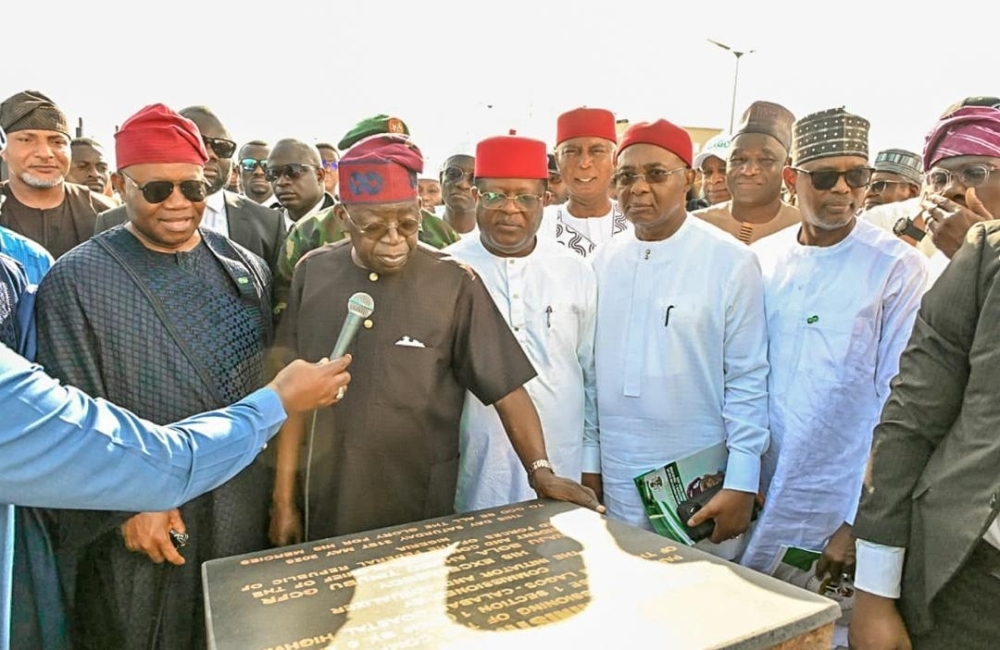
DRIVING NIGERIA’S FUTURE: CELEBRATING TWO YEARS OF TRANSFORMATIVE LEADERSHIP AND THE LAGOS-CALABAR COASTAL HIGHWAY MILESTONE
DRIVING NIGERIA’S FUTURE: CELEBRATING TWO YEARS OF TRANSFORMATIVE LEADERSHIP AND THE LAGOS-CALABAR COASTAL HIGHWAY MILESTONE
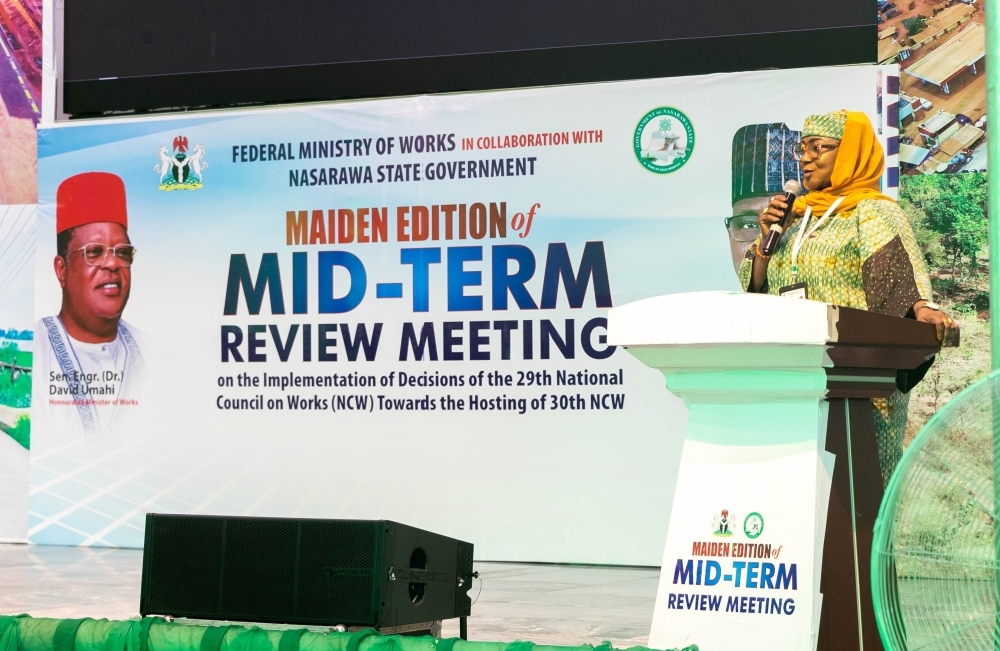
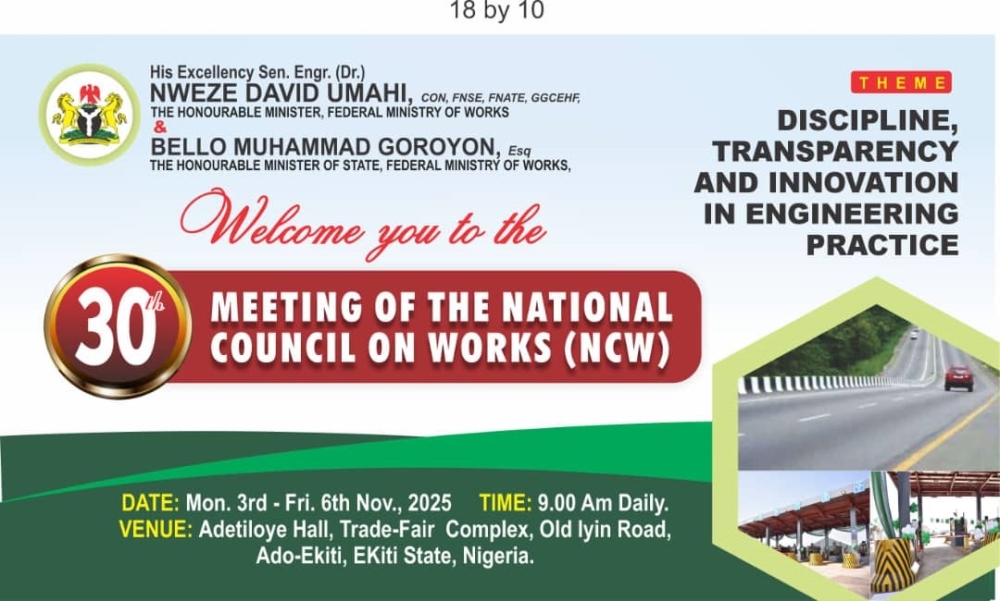
MID -TERM REVIEW MEETING ON THE IMPLIMENTATION OF THE DECISIONS REACHED AT THE 29TH NATIONAL COUNCIL ON WORKS (NCW) DAY 1
MID -TERM REVIEW MEETING ON THE IMPLIMENTATION OF THE DECISIONS REACHED AT THE 29TH NATIONAL COUNCIL ON WORKS (NCW) DAY 1