UMAHI HIGHLIGHTS IMPACT OF TINUBU’S LEGACY PROJECTS, SAYS INFRASTRUCTURE INVESTMENTS ARE TRANSFORMING NIGERIA
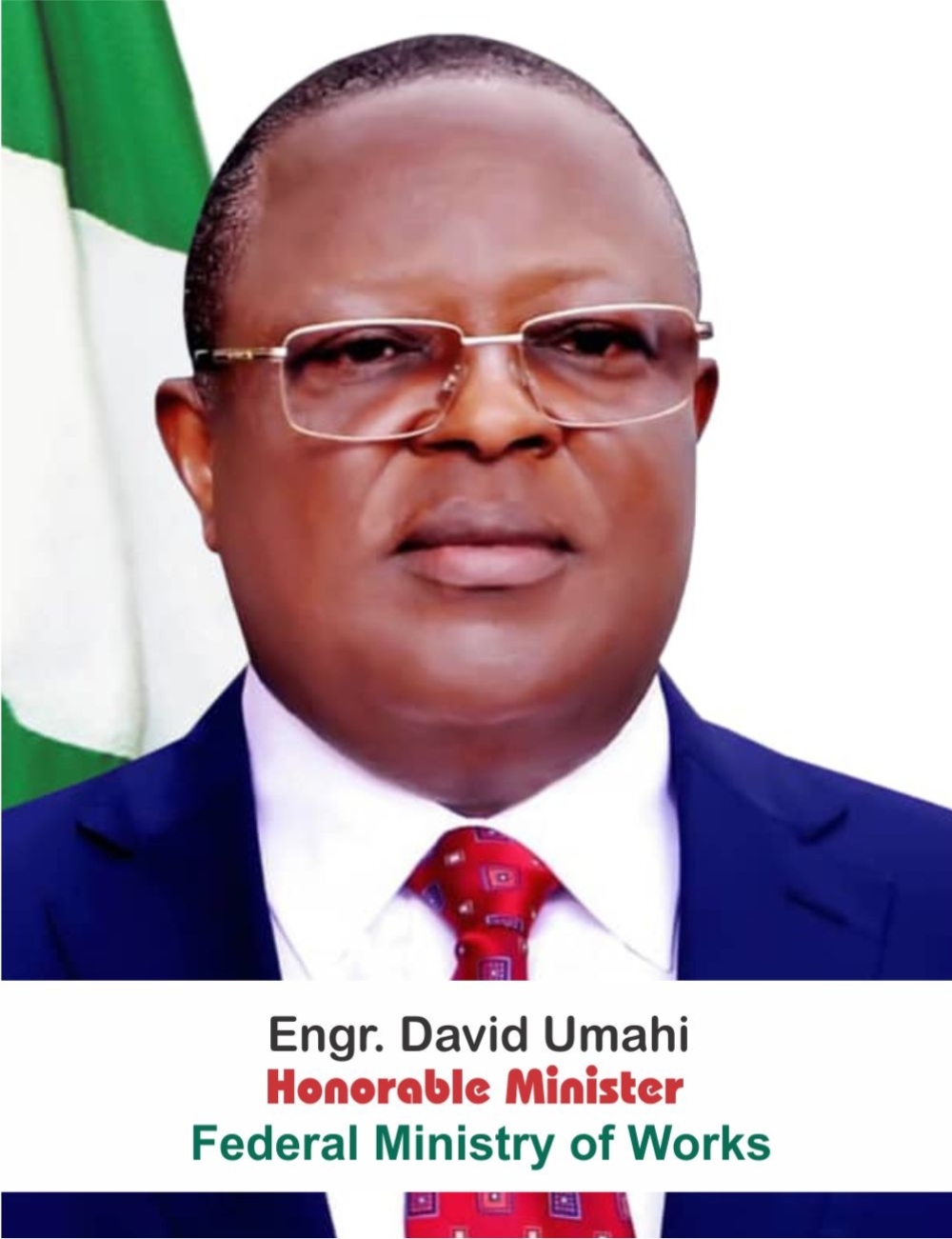
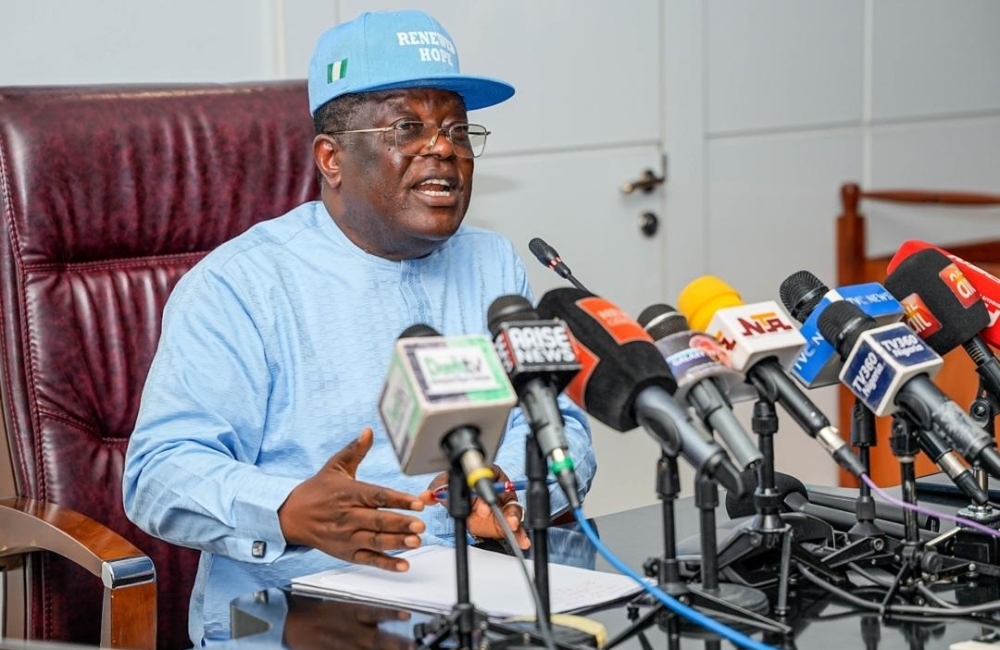
The Honourable Minister of Works, Engr. David Umahi, CON, FNSE, FNATE, has highlighted the progress and transformative impact of the major infrastructure projects being executed by the President Bola Ahmed Tinubu-led Administration, describing them as strategic investments aimed at reshaping Nigeria’s transportation network, strengthening national connectivity and stimulating economic growth.
Umahi said this on Wednesday, 7 October 2026, in Abuja, during a *Press Conference,* where he updated on the Tinubu Administration's *four Legacy Road Projects,* ongoing federal road interventions, completed projects, procurement processes, and the Ministry’s efforts to ensure value for money in the development of infrastructure.
The Minister identified the four legacy projects as the Lagos-Calabar Coastal Highway, Sokoto-Badagry Superhighway, Calabar-Ebonyi-Abuja Highway (the Trans-Saharan Route/North-South connectivity corridor, and the Dualisation of Akwanga-Jos-Bauchi-Gombe-Biu-Maiduguri Road.
According to him, the projects were conceived as strategic national infrastructure to connect all six (6) geopolitical zones, facilitate the movement of people and goods, open up economic opportunities, and strengthen Nigeria’s long-term development.
Giving an update on the Lagos-Calabar Coastal Highway, Umahi disclosed that Section 1, covering 47 kilometres, has been completed, while significant progress has also been recorded on Section 2, covering approximately 55 kilometres.
He explained that pavement works on Section 2 were nearing completion, while major flyovers, overpasses and underpasses were being constructed to address complex traffic, environmental and engineering challenges along the corridor.
The Minister said some parts of the alignment had to be redesigned to accommodate existing and planned rail, road and industrial infrastructure, particularly around the Dangote Refinery and Lekki Deep Seaport axis. He stressed that the objective was to develop an integrated transportation system rather than an isolated road project. On the Ondo State axis, Umahi explained that the alignment was redesigned in some locations because of difficult terrain, deep pits and challenging subsoil conditions. He said the redesign was aimed at ensuring durability, safety and cost-effectiveness, with substantial filling and ground improvement works ongoing in some areas.
The Minister further disclosed that President Tinubu had directed that the continuation of the Lagos-Calabar Coastal Highway be aligned with the existing East-West Road in parts of the Niger Delta area.
He described the decision as a strategic engineering intervention that would address the increasing impact of flooding and climate change on the vital infrastructure. According to him, critical sections of the East-West Road would be raised to accommodate present and anticipated flood levels and ensure the continued functionality of the strategic route.
Umahi also dwelled on the importance of the Construction of the Benin City Bypass and other sections of the littoral corridor in reducing congestion and improving movement across the South-South zone.
On the Sokoto-Badagry Superhighway, the Minister said the project was designed to establish a major economic corridor linking Ilelah in Sokoto State with Badagry in Lagos State. He noted that various sections of the highway were at different stages of construction, with significant progress recorded across the Sokoto, Kebbi, Oyo, Ogun and Badagry axes, while those of Niger and Kwara States are commencing soon.
Umahi said the strategic importance of the project is beyond road construction, noting that the corridor would unlock agricultural, industrial, tourism and other economic opportunities. He added that the Federal Government was exploring opportunities for complementary investments, including agriculture, housing, tourism and other economic activities along the major infrastructure corridors.
Speaking on the third legacy project, the ancient Trans-Saharan Route, Engr. Umahi explained that it was designed to strengthen connectivity between the coastal axis and the northern parts of the country, thereby facilitating the movement of people, goods and services across the South-South, South East and North Central geopolitical zones.
He disclosed that substantial progress had been recorded on the initial sections, while additional sections had been approved to make the corridor more economically viable and attractive to potential financiers.
On the fourth legacy project, the Minister said the Akwanga-Jos-Bauchi-Gombe-Biu-Maiduguri single carriageway is being expanded as a major northern connectivity route. He explained that the scope had been extended to cover an additional spur from Jos to Ibi in Taraba State, with design and procurement processes ongoing.
Responding to questions from journalists on the number of completed projects, the Minister listed several major road and bridge projects completed or ready for commissioning across the country. Among the projects, he mentioned Section I of the Lagos-Calabar Coastal Highway, the Kwanar Danja-Hadejia Road, the Kaduna-Pambeguwa Road, the Lafia Bypass, the Bodo-Bonny Road with Bridges along the Opobo Channel, among many others.
He also listed the completed first lot of the Lagos-Calabar Coastal Highway, the Gombe-Potiskum rehabilitation project, sections of the Azare road linking Jigawa and Bauchi, the five-span Ampoha Bridge, the 23-kilometre, 23-span flyover project at Ekpoma-Benin axis, and a three-span, 75-metre dualised bridge structure.
Umahi further disclosed that several sections of the Lagos-Badagry and Lagos-Ibadan, Lagos-Shagamu-Ore corridors had been completed, while other sections were at advanced stages of completion.
He assured journalists that the Ministry was updating its compendium of completed and ongoing projects. “*We have quite a lot of projects. We have completed projects and we have ongoing projects. We are updating the compendium and it will be made available on the Ministry’s website and circulated to the public,”* he assured.
The Minister reiterated the Federal Ministry of Works' increasing adoption of concrete pavement on major highways, saying the need for greater durability and reduced maintenance costs is driving the policy.
According to him, the Ministry is developing infrastructure that would serve Nigerians for several decades and provide better value for public resources. He reiterated that concrete pavement provides longer durability guarantees, when properly designed and constructed, compared with the recurring maintenance challenges associated with conventional asphalt pavement.
Addressing questions concerning the procurement process for the Lagos-Calabar Coastal Highway, Umahi explained that the Ministry followed an applicable procurement framework. He said the special procurement approach was necessitated by the unique engineering requirements of constructing a major highway through a difficult coastal terrain.
According to him, the Ministry identified the need for a contractor with a proven track record in executing similar coastal infrastructure and subsequently made a recommendation to the Bureau of Public Procurement (BPP). He disclosed that the BPP reviewed the recommendation and gave its clearance, while the Federal Executive Council remained the final approving authority.
Umahi said the Ministry subjected the contractor's bid to scrutiny by comparing proposed rates with prevailing market prices for materials and other inputs. He stressed that both indigenous and expatriate contractors were subjected to the same pricing and evaluation principles.
*“We put everybody on the same platform. We sent the proposals to the Bureau of Public Procurement. They reviewed it and where they felt that the rates went beyond their expected maxima, they called our attention to it, and we reviewed the rates accordingly,”* he explained.
The Minister also disclosed that substantial progress had been recorded on the Outstanding Sections of the Abuja-Kaduna-Zaria-Kano Expressway, with all the sections completed except the Jere-Kaduna portion advancing steadily. He revealed that the Ministry is installing solar-powered lighting along the 375-kilometre Expressway to improve night visibility, thereby enhancing safety and security. He also said that the improved condition of the highway, alongside security interventions, was contributing to safer and more efficient movement along the corridor.
The Minister disclosed that the Ministry had commenced an *“Operation Rescue”* on the Benin-Asaba Expressway following challenges associated with the road and its existing concession arrangement. He said the Federal Government had intervened to restore mobility, while plans were being developed for a comprehensive reconstruction of the entire alignment, using continuously reinforced concrete pavement (CRCP). He stressed that Nigerians should not continue to suffer because of unresolved contractual or concession-related issues.
The Minister, particularly, highlighted the Federal Government's increased infrastructure investment in the South East, saying the Tinubu Administration had demonstrated a clear commitment to reintegrating the hitherto neglected zone into the national infrastructure development programme. He said several major road projects had either been approved, commenced, or completed by the present administration.
Umahi, who is from the zone, said it might not have the highest number of federal projects compared with other geopolitical zones, but it was no longer being left behind.
*“We can't continue to live in denial. What we have been crying for is being given. The people of the South East are being fully reintegrated into the national infrastructure development plan,”* he emphasised.
He cited the completion of the Second Niger Bridge, the rehabilitation of the 1st Niger Bridge, ongoing construction of major Bypasses and other federal road projects in the zone as evidence of the administration's commitment.
The Minister maintained that infrastructure development should be viewed from the perspective of national integration rather than regional politics. He stated that the Federal Government's infrastructure agenda was intended to ensure that every part of Nigeria benefited from strategic investments in roads, bridges and other transportation infrastructure.
On the Tax-Credit Scheme’s projects inherited from the previous administrations, Umahi explained that the Federal Government had taken proactive measures to address them, especially where private-sector partners were no longer able to sustain previously approved financing arrangements.
He warned contractors, who had received mobilisation or project funds but failed to deploy the funds on the work that the Ministry would take appropriate steps to recover such funds. He stressed that accountability, performance and value for money remained central to the Ministry's project execution strategy.
The Minister also addressed the ongoing intervention on the First Niger Bridge, explaining that measures were being introduced to improve traffic management and protect the structural integrity of the bridge. He said the Ministry was installing appropriate traffic management infrastructure, CCTV cameras and other security measures at its Asaba and Onitsha ends. According to Umahi, the measures were necessary because bridges are designed primarily for dynamic as opposed to static loads, explaining that prolonged traffic gridlock can create additional structural and safety challenges. He said remedial works, repainting and other maintenance activities were also being undertaken to ensure the long-term usage of the structure.
Umahi further explained that the Federal Government's road development strategy included environmental considerations, such as the planting of trees along major highways and the installation of solar-powered street lighting. He said the initiative would help improve visibility and the environment, provide shade, and contribute to the reduction of harmful emissions along major transport corridors.
The Minister also linked infrastructure development to the broader economic reforms of the Renewed Hope Agenda of the Tinubu Administration, saying improved roads and connectivity would support agricultural production, industrialisation, trade, commerce, tourism and investment. He maintained that the Federal Government's infrastructure investments were part of a broader strategy to move economic growth from the macroeconomic level to the grassroots.
On the financing of the major legacy projects, Umahi assured Nigerians that the Federal Government had put mechanisms in place to ensure that the projects are adequately funded to completion.
He revealed that significant portions of the projects had been funded, while loan-financing arrangements were being implemented for the remaining components.
He noted that the administration was determined not to embark on projects without ensuring that there was a credible financing mechanism for their completion.
*“We don't start what we will not finish. And we will not finish what we have not started,”* he stated.
The Minister reaffirmed the commitment of the Ministry to completing inherited projects, while simultaneously delivering new strategic infrastructure under the Tinubu Administration. He said the legacy projects were not merely road construction schemes but long-term investments designed to transform Nigeria's economic landscape, improve connectivity, strengthen national integration and security, and create opportunities for millions of Nigerians.
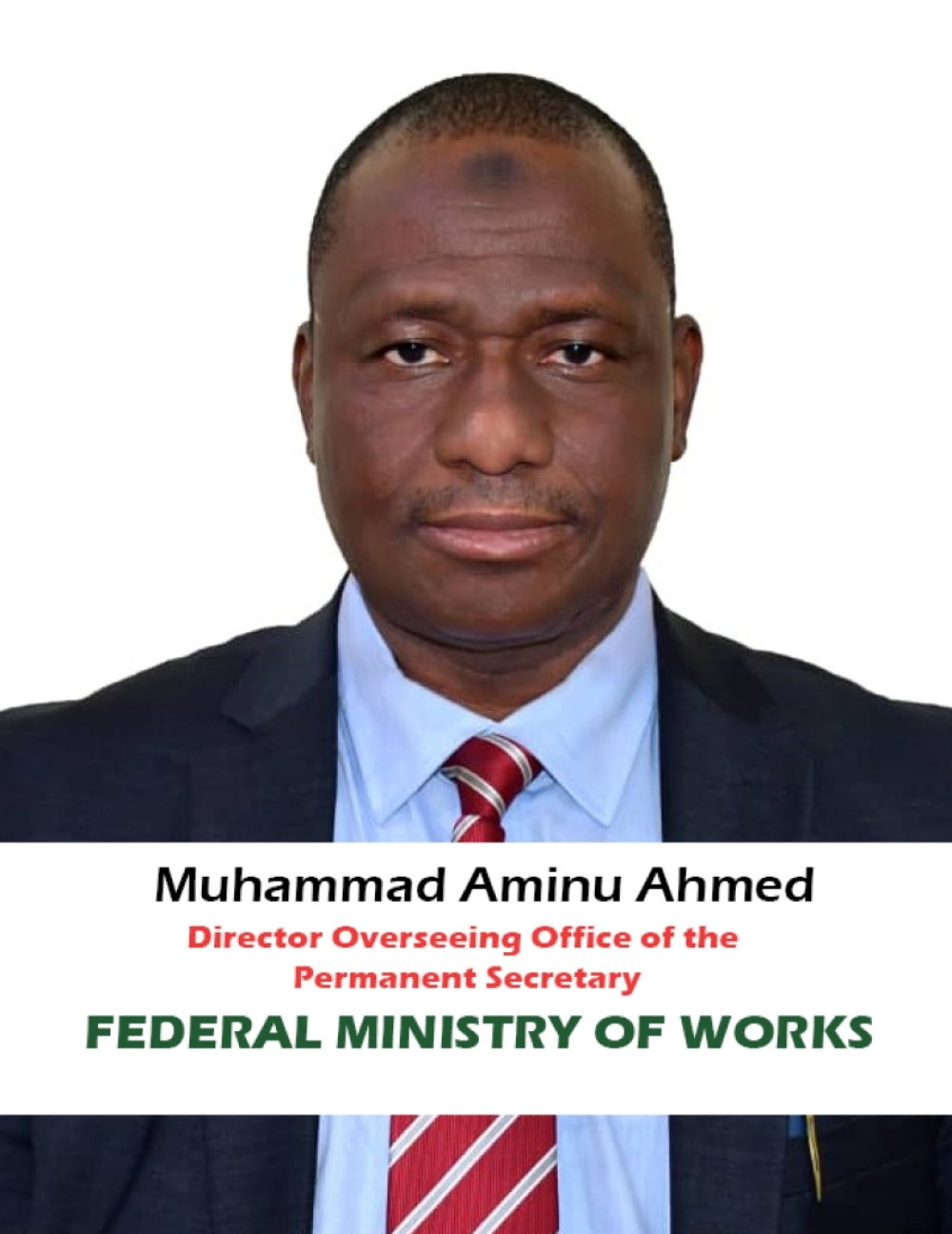
In his closing remarks, the *Director Overseeing the Office of the Permanent Secretary (DOOPS), Mohammed Aminu Ahmed, FCNA,* expressed appreciation to the Minister, members of the media, and all participants for attending. He commended the media for its continued partnership with the Ministry in informing Nigerians about government infrastructure projects and encouraged it to continue to provide constructive criticism on the Ministry's activities.

UMAHI HIGHLIGHTS IMPACT OF TINUBU’S LEGACY PROJECTS, SAYS INFRASTRUCTURE INVESTMENTS ARE TRANSFORMING NIGERIA The Honourable Minister of Works, Engr. David Umahi, CON, FNSE, FNATE, has highlighted the progress and transformative impact of the major infrastructure projects being executed by the President Bola Ahmed Tinubu-led Administration, describing them as strategic investments aimed at reshaping Nigeria’s transportation network, strengthening national connectivity and stimulating economic growth. Umahi said this on Wednesday, 7 October 2026, in Abuja, during a *Press Conference,* where he updated on the Tinubu Administration's *four Legacy Road Projects,* ongoing federal road interventions, completed projects, procurement processes, and the Ministry’s efforts to ensure value for money in the development of infrastructure. The Minister identified the four legacy projects as the Lagos-Calabar Coastal Highway, Sokoto-Badagry Superhighway, Calabar-Ebonyi-Abuja Highway (the Trans-Saharan Route/North-South connectivity corridor, and the Dualisation of Akwanga-Jos-Bauchi-Gombe-Biu-Maiduguri Road. According to him, the projects were conceived as strategic national infrastructure to connect all six (6) geopolitical zones, facilitate the movement of people and goods, open up economic opportunities, and strengthen Nigeria’s long-term development. Giving an update on the Lagos-Calabar Coastal Highway, Umahi disclosed that Section 1, covering 47 kilometres, has been completed, while significant progress has also been recorded on Section 2, covering approximately 55 kilometres. He explained that pavement works on Section 2 were nearing completion, while major flyovers, overpasses and underpasses were being constructed to address complex traffic, environmental and engineering challenges along the corridor. The Minister said some parts of the alignment had to be redesigned to accommodate existing and planned rail, road and industrial infrastructure, particularly around the Dangote Refinery and Lekki Deep Seaport axis. He stressed that the objective was to develop an integrated transportation system rather than an isolated road project. On the Ondo State axis, Umahi explained that the alignment was redesigned in some locations because of difficult terrain, deep pits and challenging subsoil conditions. He said the redesign was aimed at ensuring durability, safety and cost-effectiveness, with substantial filling and ground improvement works ongoing in some areas. The Minister further disclosed that President Tinubu had directed that the continuation of the Lagos-Calabar Coastal Highway be aligned with the existing East-West Road in parts of the Niger Delta area. He described the decision as a strategic engineering intervention that would address the increasing impact of flooding and climate change on the vital infrastructure. According to him, critical sections of the East-West Road would be raised to accommodate present and anticipated flood levels and ensure the continued functionality of the strategic route. Umahi also dwelled on the importance of the Construction of the Benin City Bypass and other sections of the littoral corridor in reducing congestion and improving movement across the South-South zone. On the Sokoto-Badagry Superhighway, the Minister said the project was designed to establish a major economic corridor linking Ilelah in Sokoto State with Badagry in Lagos State. He noted that various sections of the highway were at different stages of construction, with significant progress recorded across the Sokoto, Kebbi, Oyo, Ogun and Badagry axes, while those of Niger and Kwara States are commencing soon. Umahi said the strategic importance of the project is beyond road construction, noting that the corridor would unlock agricultural, industrial, tourism and other economic opportunities. He added that the Federal Government was exploring opportunities for complementary investments, including agriculture, housing, tourism and other economic activities along the major infrastructure corridors. Speaking on the third legacy project, the ancient Trans-Saharan Route, Engr. Umahi explained that it was designed to strengthen connectivity between the coastal axis and the northern parts of the country, thereby facilitating the movement of people, goods and services across the South-South, South East and North Central geopolitical zones. He disclosed that substantial progress had been recorded on the initial sections, while additional sections had been approved to make the corridor more economically viable and attractive to potential financiers. On the fourth legacy project, the Minister said the Akwanga-Jos-Bauchi-Gombe-Biu-Maiduguri single carriageway is being expanded as a major northern connectivity route. He explained that the scope had been extended to cover an additional spur from Jos to Ibi in Taraba State, with design and procurement processes ongoing. Responding to questions from journalists on the number of completed projects, the Minister listed several major road and bridge projects completed or ready for commissioning across the country. Among the projects, he mentioned Section I of the Lagos-Calabar Coastal Highway, the Kwanar Danja-Hadejia Road, the Kaduna-Pambeguwa Road, the Lafia Bypass, the Bodo-Bonny Road with Bridges along the Opobo Channel, among many others. He also listed the completed first lot of the Lagos-Calabar Coastal Highway, the Gombe-Potiskum rehabilitation project, sections of the Azare road linking Jigawa and Bauchi, the five-span Ampoha Bridge, the 23-kilometre, 23-span flyover project at Ekpoma-Benin axis, and a three-span, 75-metre dualised bridge structure. Umahi further disclosed that several sections of the Lagos-Badagry and Lagos-Ibadan, Lagos-Shagamu-Ore corridors had been completed, while other sections were at advanced stages of completion. He assured journalists that the Ministry was updating its compendium of completed and ongoing projects. “*We have quite a lot of projects. We have completed projects and we have ongoing projects. We are updating the compendium and it will be made available on the Ministry’s website and circulated to the public,”* he assured. The Minister reiterated the Federal Ministry of Works' increasing adoption of concrete pavement on major highways, saying the need for greater durability and reduced maintenance costs is driving the policy. According to him, the Ministry is developing infrastructure that would serve Nigerians for several decades and provide better value for public resources. He reiterated that concrete pavement provides longer durability guarantees, when properly designed and constructed, compared with the recurring maintenance challenges associated with conventional asphalt pavement. Addressing questions concerning the procurement process for the Lagos-Calabar Coastal Highway, Umahi explained that the Ministry followed an applicable procurement framework. He said the special procurement approach was necessitated by the unique engineering requirements of constructing a major highway through a difficult coastal terrain. Umahi said the Ministry subjected the contractor's bid to scrutiny by comparing proposed rates with prevailing market prices for materials and other inputs. He stressed that both indigenous and expatriate contractors were subjected to the same pricing and evaluation principles. *“We put everybody on the same platform. We sent the proposals to the Bureau of Public Procurement. They reviewed it and where they felt that the rates went beyond their expected maxima, they called our attention to it, and we reviewed the rates accordingly,”* he explained. The Minister also disclosed that substantial progress had been recorded on the Outstanding Sections of the Abuja-Kaduna-Zaria-Kano Expressway, with all the sections completed except the Jere-Kaduna portion advancing steadily. He revealed that the Ministry is installing solar-powered lighting along the 375-kilometre Expressway to improve night visibility, thereby enhancing safety and security. He also said that the improved condition of the highway, alongside security interventions, was contributing to safer and more efficient movement along the corridor. The Minister disclosed that the Ministry had commenced an *“Operation Rescue”* on the Benin-Asaba Expressway following challenges associated with the road and its existing concession arrangement. He said the Federal Government had intervened to restore mobility, while plans were being developed for a comprehensive reconstruction of the entire alignment, using continuously reinforced concrete pavement (CRCP). He stressed that Nigerians should not continue to suffer because of unresolved contractual or concession-related issues. The Minister, particularly, highlighted the Federal Government's increased infrastructure investment in the South East, saying the Tinubu Administration had demonstrated a clear commitment to reintegrating the hitherto neglected zone into the national infrastructure development programme. He said several major road projects had either been approved, commenced, or completed by the present administration. *“We can't continue to live in denial. What we have been crying for is being given. The people of the South East are being fully reintegrated into the national infrastructure development plan,”* he emphasised. He cited the completion of the Second Niger Bridge, the rehabilitation of the 1st Niger Bridge, ongoing construction of major Bypasses and other federal road projects in the zone as evidence of the administration's commitment. The Minister maintained that infrastructure development should be viewed from the perspective of national integration rather than regional politics. He stated that the Federal Government's infrastructure agenda was intended to ensure that every part of Nigeria benefited from strategic investments in roads, bridges and other transportation infrastructure. On the Tax-Credit Scheme’s projects inherited from the previous administrations, Umahi explained that the Federal Government had taken proactive measures to address them, especially where private-sector partners were no longer able to sustain previously approved financing arrangements. He warned contractors, who had received mobilisation or project funds but failed to deploy the funds on the work that the Ministry would take appropriate steps to recover such funds. He stressed that accountability, performance and value for money remained central to the Ministry's project execution strategy. The Minister also addressed the ongoing intervention on the First Niger Bridge, explaining that measures were being introduced to improve traffic management and protect the structural integrity of the bridge. He said the Ministry was installing appropriate traffic management infrastructure, CCTV cameras and other security measures at its Asaba and Onitsha ends. According to Umahi, the measures were necessary because bridges are designed primarily for dynamic as opposed to static loads, explaining that prolonged traffic gridlock can create additional structural and safety challenges. He said remedial works, repainting and other maintenance activities were also being undertaken to ensure the long-term usage of the structure. Umahi further explained that the Federal Government's road development strategy included environmental considerations, such as the planting of trees along major highways and the installation of solar-powered street lighting. He said the initiative would help improve visibility and the environment, provide shade, and contribute to the reduction of harmful emissions along major transport corridors. The Minister also linked infrastructure development to the broader economic reforms of the Renewed Hope Agenda of the Tinubu Administration, saying improved roads and connectivity would support agricultural production, industrialisation, trade, commerce, tourism and investment. He maintained that the Federal Government's infrastructure investments were part of a broader strategy to move economic growth from the macroeconomic level to the grassroots. On the financing of the major legacy projects, Umahi assured Nigerians that the Federal Government had put mechanisms in place to ensure that the projects are adequately funded to completion. He noted that the administration was determined not to embark on projects without ensuring that there was a credible financing mechanism for their completion. The Minister reaffirmed the commitment of the Ministry to completing inherited projects, while simultaneously delivering new strategic infrastructure under the Tinubu Administration. He said the legacy projects were not merely road construction schemes but long-term investments designed to transform Nigeria's economic landscape, improve connectivity, strengthen national integration and security, and create opportunities for millions of Nigerians. In his closing remarks, the *Director Overseeing the Office of the Permanent Secretary (DOOPS), Mohammed Aminu Ahmed, FCNA,* expressed appreciation to the Minister, members of the media, and all participants for attending. He commended the media for its continued partnership with the Ministry in informing Nigerians about government infrastructure projects and encouraged it to continue to provide constructive criticism on the Ministry's activities.
According to him, the Ministry identified the need for a contractor with a proven track record in executing similar coastal infrastructure and subsequently made a recommendation to the Bureau of Public Procurement (BPP). He disclosed that the BPP reviewed the recommendation and gave its clearance, while the Federal Executive Council remained the final approving authority.
Umahi, who is from the zone, said it might not have the highest number of federal projects compared with other geopolitical zones, but it was no longer being left behind.
He revealed that significant portions of the projects had been funded, while loan-financing arrangements were being implemented for the remaining components.
*“We don't start what we will not finish. And we will not finish what we have not started,”* he stated.
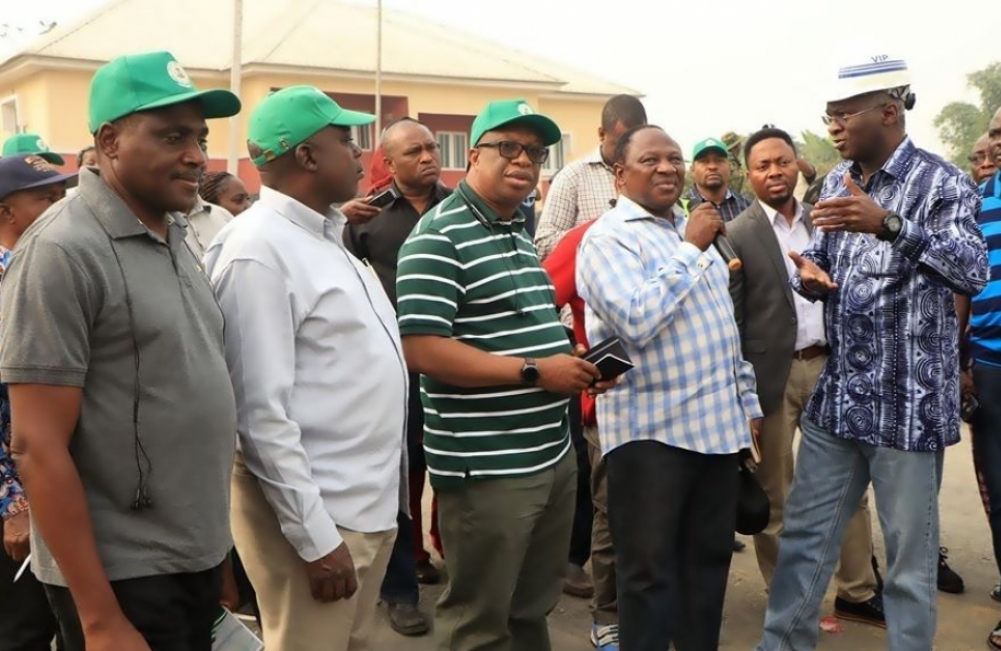
Plans To Immediately Remove Broken Down Trucks From The Road Underway -Fashola The Honourable Minister of Works and Housing, Babatunde Raji Fashola ,SAN has assured Nigerians that his ministry has made plans to immediately remove any broken down truck on the highways as part of measures to ensure free flow of traffic this year while construction work is on -going. He gave the assurance on Friday while inspecting the rehabilitation of Odukpani- Akpet-Alesi -Ugep road in Cross River state in conclusion of his one week tour of some federal roads in the South-South and South-East geopolitical zones of the country. The Honourable Minister said government intends to adopt a strategy of immediate removal of broken down trucks along Nigerian highways to avoid commuters being delayed. He added that this would apply to all the highways where trucks get stuck easily like the Numan road in Taraba state, Calabar-Itu road and Abeokuta - Ota road. Fashola said, "We want to ensure that this time our contractors are better prepared for the rainy season, so we need to evolve a strategy where our contractors are mindful that yes we have the construction work but the roads must remain motorable during the rainy season." The Minister, however, advised vehicle owners to ensure that their vehicles were well maintained in preparation for the rainy season to avoid break down. He said the 76km Alesi-Ugep road which links Iyamoyung and Akpet communities to other parts of the state used to be one of the troubled spots in the last few years but had become passable. Fashola further said President Muhammadu Buhari was anxious to see that the 67km road was completed knowing its importance to the economy of Cross River State. Speaking earlier, Federal Controller of Works for Cross River State, Engr. Bassey Nsentip disclosed that some communities had benefited economically from the construction of the road adding that the contractor employed 176 skilled and unskilled workers in executing the road project. Engr. Nsentip also said suppliers of building materials and food vendors benefitted immensely from the project. He disclosed that the project was 97% completed as only surface dressing, road markings and signs were yet to be done. He said when all those things were put in place the project would be ready for inauguration. ...
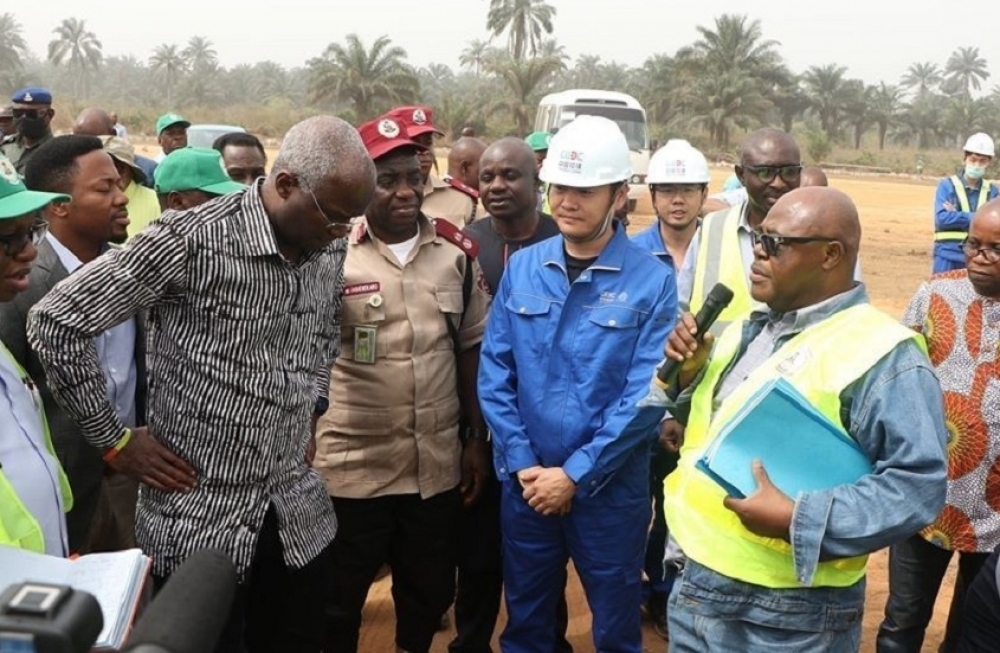
Hire Local Equipment And Personnel, Fashola Charges Contractor The Minister of Works and Housing, Babatunde Raji Fashola, SAN has charged the contractor handling the Dualization of Aba – Ikot Ekpene Road, Section 1 to source and deploy equipment and personnel locally to fast track the pace of work on the road project. The Minister gave the charge during the inspection of the project.He said, “Start hiring local equipment and hire local people that you need, start training them for engagement while waiting for the one from China.” Fashola directed that between now and March all the bad portions of the road must be made motorable before the rains come. He said, “Try and repair the bad portions first before the rains come, so that these people will know that their government care about them. So if you do not finish the construction of the road, they will know the road is getting better”. While speaking to newsmen, the minister said the contract was initially awarded to a different company but had to be terminated due to poor performance and now re-awarded to Messrs CGGC Global Projects Nig. Limited. Speaking earlier, the contractor complained that the equipment and some of the personnel they wanted to use were stuck in China as a result of the outbreak of corona virus. Similarly, while inspecting work on the Dualization of Odukpani – Itu road the minister expressed optimism that the contractor, Julius Berger Nigeria Limited that is handling 21Kilometres of the road will do everything possible to ensure that the road is motorable during the rainy season even if the construction was still on going. The Minister assured the contractor that he doesn’t need to leave the site on funding basis because he had enlisted the project for SUKUK funding hence they wont run out of money. He further informed that the other bad portions of the Odukpani- Itu road which so many people didn’t understand the contractual responsibilities, had been awarded to another company, so we have a contractor on both sides. The Permanent Secretary for Works in Akwa Ibom State, Engr. John Itiat expressed happiness over the commitment of the Federal government to the work on the road. ...
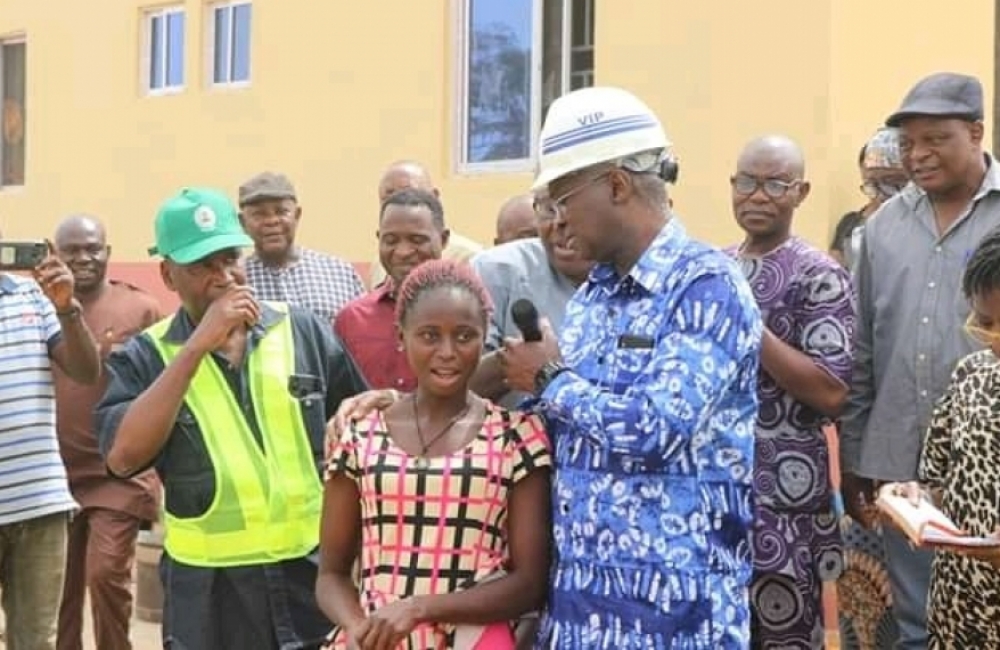
Infrastructure Policy Is Clearly Hitting The Right Buttons Across The Country – Works and Housing Minister The Minister of Works and Housing,Babatunde Raji Fashola, SAN has stated that the Infrastructure policy of the present administration is clearly hitting the right buttons across the country. He made this statement during an inspection tour of Amansea Section of the Rehabilitation of Onitsha-Enugu Expressway, Anambra; and the tour of the Federal Secretariat, Awka; as well as the National Housing Programme at Isiagwu, the Second Niger Bridge in Anambra and Delta States and the National Housing Programme in Asaba, Delta State. Mr. President, he said has continued to emphasize commitment to infrastructure as the quickest way to employing people. Fashola further said, “Policies have very diverse and extensive impact on the people, so when Mr. President says he wants to lift a 100millon people out of poverty he knows what he is saying and he knows some of the right buttons like infrastructure, to press.” Whilst going round the sites, the Minister interacted with workers who were full of appreciation to the administration of President Buhari for the opportunity to work and earn a living rather than going into crime. Mr. Sunday Etikwu, a mason at one of the National Housing Programme site who was visibly excited said he received a daily pay of N4,500 naira and works all through the week. A food vendor Mrs. Ebele Chukwu also expressed happiness for the opportunity to cook and sell alongside her husband who works as a labourer at the site goes home with at least N5,000 naira daily. Fashola said the end product may be constructing a road or building a housing estate but the human capacity is enhanced through drains being laid, electric fittings being installed, foundations being dug, blocks being molded and 7 foods being supplied, thereby proving employment and boosting the economy as well as the living standard of the community and its environs. “It is the initial value chain of the economy which is the first impact you feel when it comes to infrastructure” he said. At the National Housing Programme site at Isiagwu, the Minister observed significant improvements especially when accessing the site as compared to what obtained when he first came to the site. He further said it was a far sighted vision by the state government to open up the community, but was still expectant on their commitment to open up more roads as it would take some time for the Isiagwu community to come alive. During the inspection of the Federal Secretariat project in Awka the supervisor Engr. Nnamdi Umeji who conducted the minister round the site said the project had reached 90% completion level. The contractor handling the project observed that the project had no provision for a lift as it was not budgeted for. The Minster asked him to submit the design and cost implication for the provision of a lift booth which the contractor promised to submit within three weeks. Fashola also inspected the National Housing Programme in Asaba located along Benin-Asaba expressway which had twelve contractors on site. The Project Supervisor, Arc. Godwin Otobo said the first phase of the semi detached houses had reached almost 100% completion level. Other projects inspected were the construction of Umunya road in Awka, Anambra State where the Minister expressed dissatisfaction over the slow pace of work and charged the contractor to expedite action on the project and the construction of the second Niger Bridge which had reached over 30% completion level. It was revealed that the Second Niger Bridge will be completed in year 2022. ...
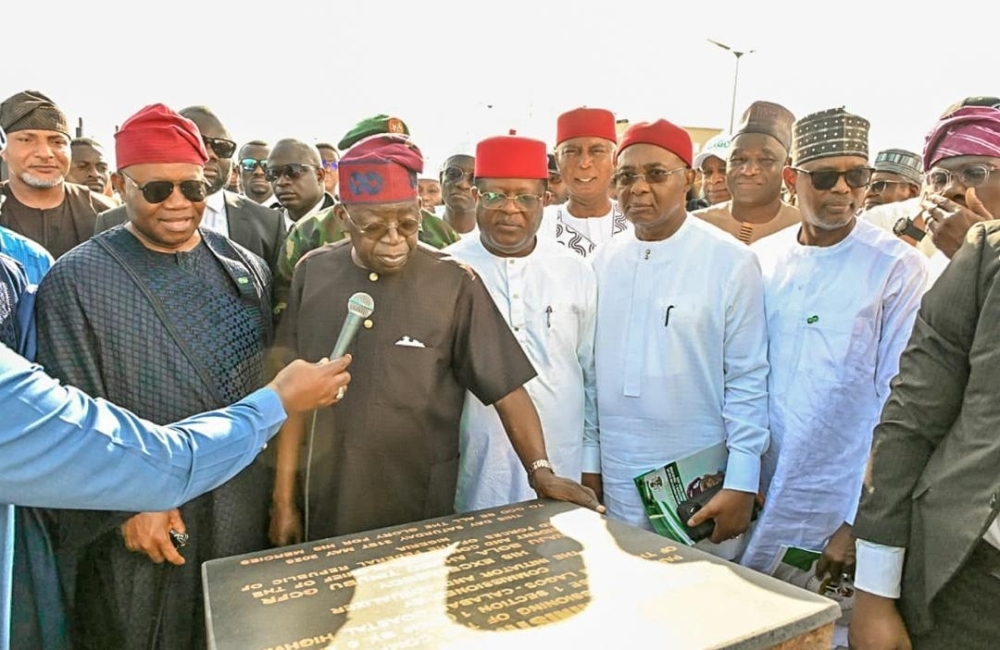
DRIVING NIGERIA’S FUTURE: CELEBRATING TWO YEARS OF TRANSFORMATIVE LEADERSHIP AND THE LAGOS-CALABAR COASTAL HIGHWAY MILESTONE
DRIVING NIGERIA’S FUTURE: CELEBRATING TWO YEARS OF TRANSFORMATIVE LEADERSHIP AND THE LAGOS-CALABAR COASTAL HIGHWAY MILESTONE
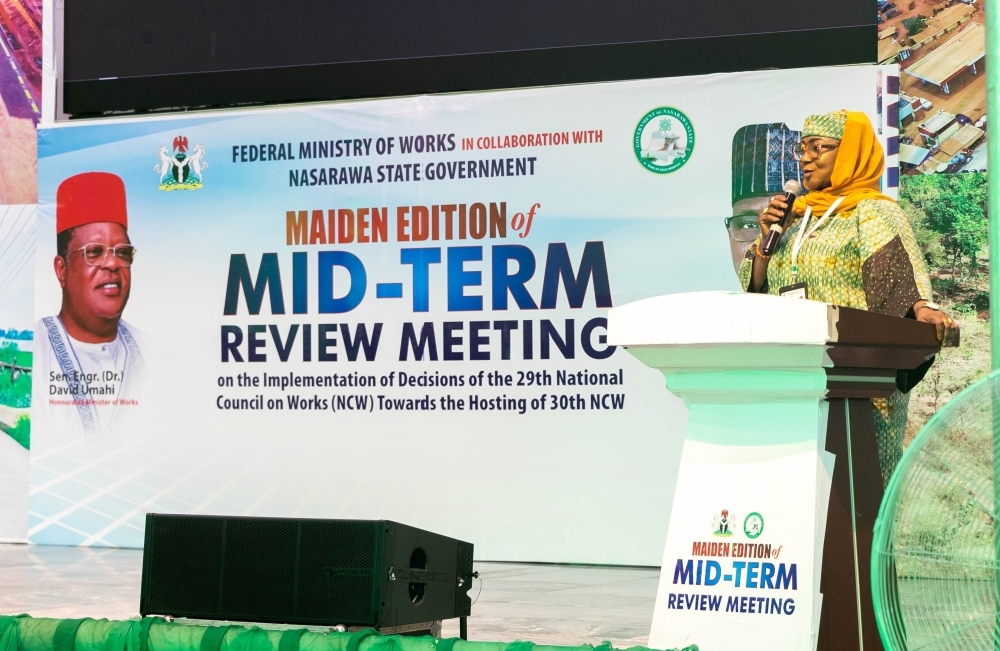
MID -TERM REVIEW MEETING ON THE IMPLIMENTATION OF THE DECISIONS REACHED AT THE 29TH NATIONAL COUNCIL ON WORKS (NCW) DAY 1
MID -TERM REVIEW MEETING ON THE IMPLIMENTATION OF THE DECISIONS REACHED AT THE 29TH NATIONAL COUNCIL ON WORKS (NCW) DAY 1