UMAHI HIGHLIGHTS IMPACT OF TINUBU’S LEGACY PROJECTS, SAYS INFRASTRUCTURE INVESTMENTS ARE TRANSFORMING NIGERIA
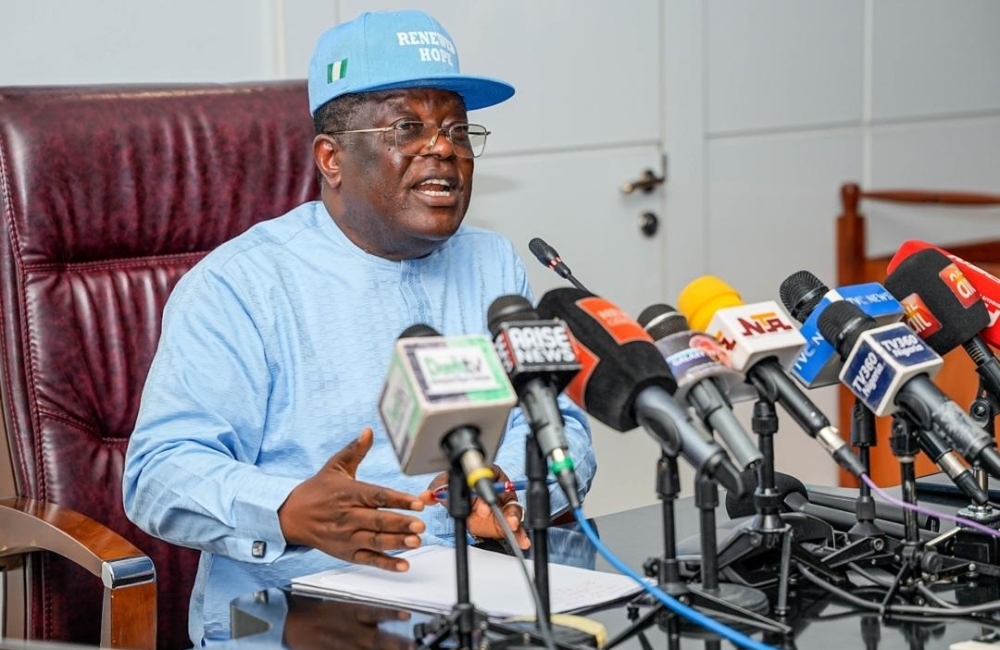
The Honourable Minister of Works, Engr. David Umahi, CON, FNSE, FNATE, has highlighted the progress and transformative impact of the major infrastructure projects being executed by the President Bola Ahmed Tinubu-led Administration, describing them as strategic investments aimed at reshaping Nigeria’s transportation network, strengthening national connectivity and stimulating economic growth.
Umahi said this on Wednesday, 7 October 2026, in Abuja, during a *Press Conference,* where he updated on the Tinubu Administration's *four Legacy Road Projects,* ongoing federal road interventions, completed projects, procurement processes, and the Ministry’s efforts to ensure value for money in the development of infrastructure.
The Minister identified the four legacy projects as the Lagos-Calabar Coastal Highway, Sokoto-Badagry Superhighway, Calabar-Ebonyi-Abuja Highway (the Trans-Saharan Route/North-South connectivity corridor, and the Dualisation of Akwanga-Jos-Bauchi-Gombe-Biu-Maiduguri Road.
According to him, the projects were conceived as strategic national infrastructure to connect all six (6) geopolitical zones, facilitate the movement of people and goods, open up economic opportunities, and strengthen Nigeria’s long-term development.
Giving an update on the Lagos-Calabar Coastal Highway, Umahi disclosed that Section 1, covering 47 kilometres, has been completed, while significant progress has also been recorded on Section 2, covering approximately 55 kilometres.
He explained that pavement works on Section 2 were nearing completion, while major flyovers, overpasses and underpasses were being constructed to address complex traffic, environmental and engineering challenges along the corridor.
The Minister said some parts of the alignment had to be redesigned to accommodate existing and planned rail, road and industrial infrastructure, particularly around the Dangote Refinery and Lekki Deep Seaport axis. He stressed that the objective was to develop an integrated transportation system rather than an isolated road project. On the Ondo State axis, Umahi explained that the alignment was redesigned in some locations because of difficult terrain, deep pits and challenging subsoil conditions. He said the redesign was aimed at ensuring durability, safety and cost-effectiveness, with substantial filling and ground improvement works ongoing in some areas.
The Minister further disclosed that President Tinubu had directed that the continuation of the Lagos-Calabar Coastal Highway be aligned with the existing East-West Road in parts of the Niger Delta area.
He described the decision as a strategic engineering intervention that would address the increasing impact of flooding and climate change on the vital infrastructure. According to him, critical sections of the East-West Road would be raised to accommodate present and anticipated flood levels and ensure the continued functionality of the strategic route.
Umahi also dwelled on the importance of the Construction of the Benin City Bypass and other sections of the littoral corridor in reducing congestion and improving movement across the South-South zone.
On the Sokoto-Badagry Superhighway, the Minister said the project was designed to establish a major economic corridor linking Ilelah in Sokoto State with Badagry in Lagos State. He noted that various sections of the highway were at different stages of construction, with significant progress recorded across the Sokoto, Kebbi, Oyo, Ogun and Badagry axes, while those of Niger and Kwara States are commencing soon.
Umahi said the strategic importance of the project is beyond road construction, noting that the corridor would unlock agricultural, industrial, tourism and other economic opportunities. He added that the Federal Government was exploring opportunities for complementary investments, including agriculture, housing, tourism and other economic activities along the major infrastructure corridors.
Speaking on the third legacy project, the ancient Trans-Saharan Route, Engr. Umahi explained that it was designed to strengthen connectivity between the coastal axis and the northern parts of the country, thereby facilitating the movement of people, goods and services across the South-South, South East and North Central geopolitical zones.
He disclosed that substantial progress had been recorded on the initial sections, while additional sections had been approved to make the corridor more economically viable and attractive to potential financiers.
On the fourth legacy project, the Minister said the Akwanga-Jos-Bauchi-Gombe-Biu-Maiduguri single carriageway is being expanded as a major northern connectivity route. He explained that the scope had been extended to cover an additional spur from Jos to Ibi in Taraba State, with design and procurement processes ongoing.
Responding to questions from journalists on the number of completed projects, the Minister listed several major road and bridge projects completed or ready for commissioning across the country. Among the projects, he mentioned Section I of the Lagos-Calabar Coastal Highway, the Kwanar Danja-Hadejia Road, the Kaduna-Pambeguwa Road, the Lafia Bypass, the Bodo-Bonny Road with Bridges along the Opobo Channel, among many others.
He also listed the completed first lot of the Lagos-Calabar Coastal Highway, the Gombe-Potiskum rehabilitation project, sections of the Azare road linking Jigawa and Bauchi, the five-span Ampoha Bridge, the 23-kilometre, 23-span flyover project at Ekpoma-Benin axis, and a three-span, 75-metre dualised bridge structure.
Umahi further disclosed that several sections of the Lagos-Badagry and Lagos-Ibadan, Lagos-Shagamu-Ore corridors had been completed, while other sections were at advanced stages of completion.
He assured journalists that the Ministry was updating its compendium of completed and ongoing projects. “*We have quite a lot of projects. We have completed projects and we have ongoing projects. We are updating the compendium and it will be made available on the Ministry’s website and circulated to the public,”* he assured.
The Minister reiterated the Federal Ministry of Works' increasing adoption of concrete pavement on major highways, saying the need for greater durability and reduced maintenance costs is driving the policy.
According to him, the Ministry is developing infrastructure that would serve Nigerians for several decades and provide better value for public resources. He reiterated that concrete pavement provides longer durability guarantees, when properly designed and constructed, compared with the recurring maintenance challenges associated with conventional asphalt pavement.
Addressing questions concerning the procurement process for the Lagos-Calabar Coastal Highway, Umahi explained that the Ministry followed an applicable procurement framework. He said the special procurement approach was necessitated by the unique engineering requirements of constructing a major highway through a difficult coastal terrain.
According to him, the Ministry identified the need for a contractor with a proven track record in executing similar coastal infrastructure and subsequently made a recommendation to the Bureau of Public Procurement (BPP). He disclosed that the BPP reviewed the recommendation and gave its clearance, while the Federal Executive Council remained the final approving authority.
Umahi said the Ministry subjected the contractor's bid to scrutiny by comparing proposed rates with prevailing market prices for materials and other inputs. He stressed that both indigenous and expatriate contractors were subjected to the same pricing and evaluation principles.
*“We put everybody on the same platform. We sent the proposals to the Bureau of Public Procurement. They reviewed it and where they felt that the rates went beyond their expected maxima, they called our attention to it, and we reviewed the rates accordingly,”* he explained.
The Minister also disclosed that substantial progress had been recorded on the Outstanding Sections of the Abuja-Kaduna-Zaria-Kano Expressway, with all the sections completed except the Jere-Kaduna portion advancing steadily. He revealed that the Ministry is installing solar-powered lighting along the 375-kilometre Expressway to improve night visibility, thereby enhancing safety and security. He also said that the improved condition of the highway, alongside security interventions, was contributing to safer and more efficient movement along the corridor.
The Minister disclosed that the Ministry had commenced an *“Operation Rescue”* on the Benin-Asaba Expressway following challenges associated with the road and its existing concession arrangement. He said the Federal Government had intervened to restore mobility, while plans were being developed for a comprehensive reconstruction of the entire alignment, using continuously reinforced concrete pavement (CRCP). He stressed that Nigerians should not continue to suffer because of unresolved contractual or concession-related issues.
The Minister, particularly, highlighted the Federal Government's increased infrastructure investment in the South East, saying the Tinubu Administration had demonstrated a clear commitment to reintegrating the hitherto neglected zone into the national infrastructure development programme. He said several major road projects had either been approved, commenced, or completed by the present administration.
Umahi, who is from the zone, said it might not have the highest number of federal projects compared with other geopolitical zones, but it was no longer being left behind.
*“We can't continue to live in denial. What we have been crying for is being given. The people of the South East are being fully reintegrated into the national infrastructure development plan,”* he emphasised.
He cited the completion of the Second Niger Bridge, the rehabilitation of the 1st Niger Bridge, ongoing construction of major Bypasses and other federal road projects in the zone as evidence of the administration's commitment.
The Minister maintained that infrastructure development should be viewed from the perspective of national integration rather than regional politics. He stated that the Federal Government's infrastructure agenda was intended to ensure that every part of Nigeria benefited from strategic investments in roads, bridges and other transportation infrastructure.
On the Tax-Credit Scheme’s projects inherited from the previous administrations, Umahi explained that the Federal Government had taken proactive measures to address them, especially where private-sector partners were no longer able to sustain previously approved financing arrangements.
He warned contractors, who had received mobilisation or project funds but failed to deploy the funds on the work that the Ministry would take appropriate steps to recover such funds. He stressed that accountability, performance and value for money remained central to the Ministry's project execution strategy.
The Minister also addressed the ongoing intervention on the First Niger Bridge, explaining that measures were being introduced to improve traffic management and protect the structural integrity of the bridge. He said the Ministry was installing appropriate traffic management infrastructure, CCTV cameras and other security measures at its Asaba and Onitsha ends. According to Umahi, the measures were necessary because bridges are designed primarily for dynamic as opposed to static loads, explaining that prolonged traffic gridlock can create additional structural and safety challenges. He said remedial works, repainting and other maintenance activities were also being undertaken to ensure the long-term usage of the structure.
Umahi further explained that the Federal Government's road development strategy included environmental considerations, such as the planting of trees along major highways and the installation of solar-powered street lighting. He said the initiative would help improve visibility and the environment, provide shade, and contribute to the reduction of harmful emissions along major transport corridors.
The Minister also linked infrastructure development to the broader economic reforms of the Renewed Hope Agenda of the Tinubu Administration, saying improved roads and connectivity would support agricultural production, industrialisation, trade, commerce, tourism and investment. He maintained that the Federal Government's infrastructure investments were part of a broader strategy to move economic growth from the macroeconomic level to the grassroots.
On the financing of the major legacy projects, Umahi assured Nigerians that the Federal Government had put mechanisms in place to ensure that the projects are adequately funded to completion.
He revealed that significant portions of the projects had been funded, while loan-financing arrangements were being implemented for the remaining components.
He noted that the administration was determined not to embark on projects without ensuring that there was a credible financing mechanism for their completion.
*“We don't start what we will not finish. And we will not finish what we have not started,”* he stated.
The Minister reaffirmed the commitment of the Ministry to completing inherited projects, while simultaneously delivering new strategic infrastructure under the Tinubu Administration. He said the legacy projects were not merely road construction schemes but long-term investments designed to transform Nigeria's economic landscape, improve connectivity, strengthen national integration and security, and create opportunities for millions of Nigerians.
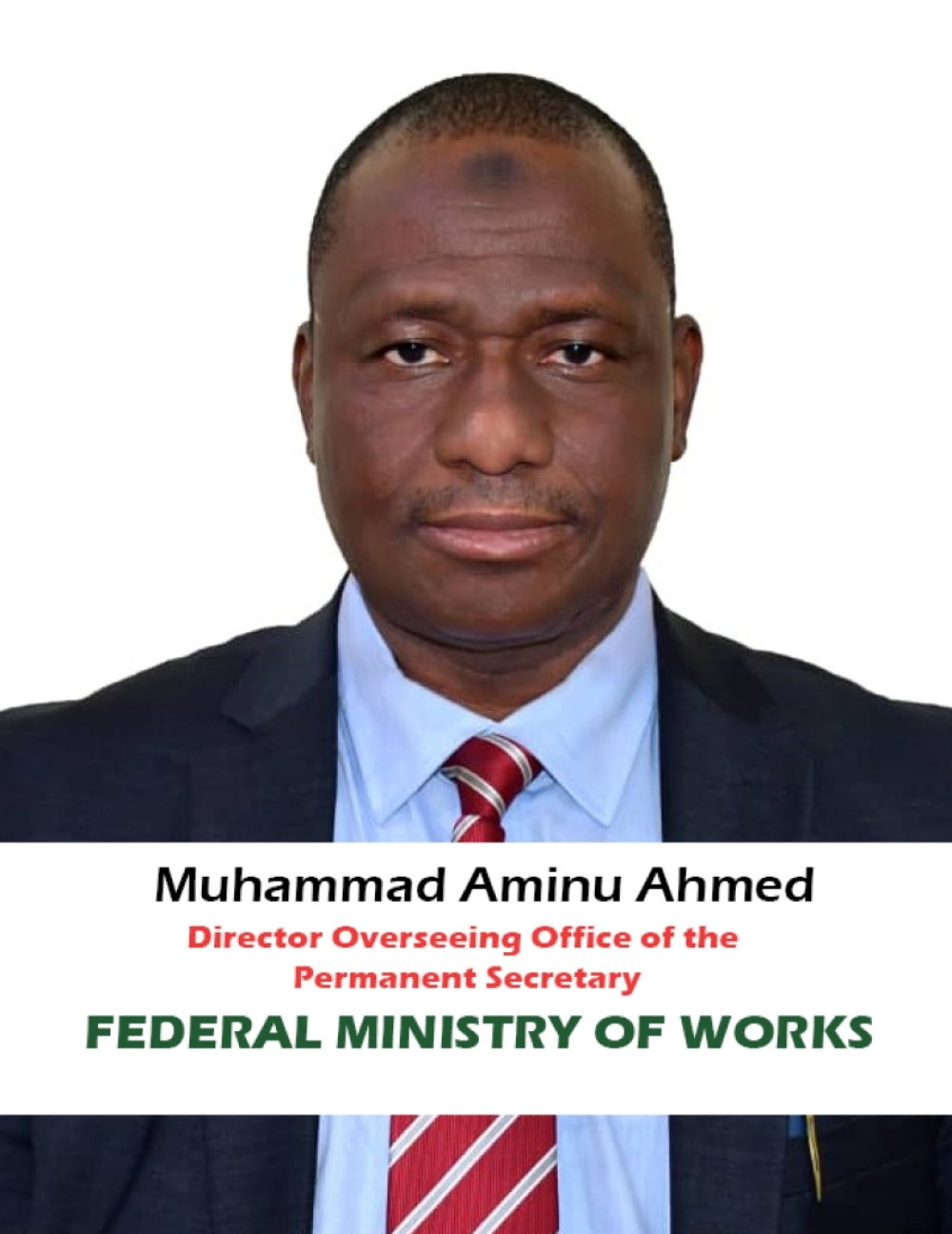
In his closing remarks, the *Director Overseeing the Office of the Permanent Secretary (DOOPS), Mohammed Aminu Ahmed, FCNA,* expressed appreciation to the Minister, members of the media, and all participants for attending. He commended the media for its continued partnership with the Ministry in informing Nigerians about government infrastructure projects and encouraged it to continue to provide constructive criticism on the Ministry's activities.

UMAHI HIGHLIGHTS IMPACT OF TINUBU’S LEGACY PROJECTS, SAYS INFRASTRUCTURE INVESTMENTS ARE TRANSFORMING NIGERIA The Honourable Minister of Works, Engr. David Umahi, CON, FNSE, FNATE, has highlighted the progress and transformative impact of the major infrastructure projects being executed by the President Bola Ahmed Tinubu-led Administration, describing them as strategic investments aimed at reshaping Nigeria’s transportation network, strengthening national connectivity and stimulating economic growth. Umahi said this on Wednesday, 7 October 2026, in Abuja, during a *Press Conference,* where he updated on the Tinubu Administration's *four Legacy Road Projects,* ongoing federal road interventions, completed projects, procurement processes, and the Ministry’s efforts to ensure value for money in the development of infrastructure. The Minister identified the four legacy projects as the Lagos-Calabar Coastal Highway, Sokoto-Badagry Superhighway, Calabar-Ebonyi-Abuja Highway (the Trans-Saharan Route/North-South connectivity corridor, and the Dualisation of Akwanga-Jos-Bauchi-Gombe-Biu-Maiduguri Road. According to him, the projects were conceived as strategic national infrastructure to connect all six (6) geopolitical zones, facilitate the movement of people and goods, open up economic opportunities, and strengthen Nigeria’s long-term development. Giving an update on the Lagos-Calabar Coastal Highway, Umahi disclosed that Section 1, covering 47 kilometres, has been completed, while significant progress has also been recorded on Section 2, covering approximately 55 kilometres. He explained that pavement works on Section 2 were nearing completion, while major flyovers, overpasses and underpasses were being constructed to address complex traffic, environmental and engineering challenges along the corridor. The Minister said some parts of the alignment had to be redesigned to accommodate existing and planned rail, road and industrial infrastructure, particularly around the Dangote Refinery and Lekki Deep Seaport axis. He stressed that the objective was to develop an integrated transportation system rather than an isolated road project. On the Ondo State axis, Umahi explained that the alignment was redesigned in some locations because of difficult terrain, deep pits and challenging subsoil conditions. He said the redesign was aimed at ensuring durability, safety and cost-effectiveness, with substantial filling and ground improvement works ongoing in some areas. The Minister further disclosed that President Tinubu had directed that the continuation of the Lagos-Calabar Coastal Highway be aligned with the existing East-West Road in parts of the Niger Delta area. He described the decision as a strategic engineering intervention that would address the increasing impact of flooding and climate change on the vital infrastructure. According to him, critical sections of the East-West Road would be raised to accommodate present and anticipated flood levels and ensure the continued functionality of the strategic route. Umahi also dwelled on the importance of the Construction of the Benin City Bypass and other sections of the littoral corridor in reducing congestion and improving movement across the South-South zone. On the Sokoto-Badagry Superhighway, the Minister said the project was designed to establish a major economic corridor linking Ilelah in Sokoto State with Badagry in Lagos State. He noted that various sections of the highway were at different stages of construction, with significant progress recorded across the Sokoto, Kebbi, Oyo, Ogun and Badagry axes, while those of Niger and Kwara States are commencing soon. Umahi said the strategic importance of the project is beyond road construction, noting that the corridor would unlock agricultural, industrial, tourism and other economic opportunities. He added that the Federal Government was exploring opportunities for complementary investments, including agriculture, housing, tourism and other economic activities along the major infrastructure corridors. Speaking on the third legacy project, the ancient Trans-Saharan Route, Engr. Umahi explained that it was designed to strengthen connectivity between the coastal axis and the northern parts of the country, thereby facilitating the movement of people, goods and services across the South-South, South East and North Central geopolitical zones. He disclosed that substantial progress had been recorded on the initial sections, while additional sections had been approved to make the corridor more economically viable and attractive to potential financiers. On the fourth legacy project, the Minister said the Akwanga-Jos-Bauchi-Gombe-Biu-Maiduguri single carriageway is being expanded as a major northern connectivity route. He explained that the scope had been extended to cover an additional spur from Jos to Ibi in Taraba State, with design and procurement processes ongoing. Responding to questions from journalists on the number of completed projects, the Minister listed several major road and bridge projects completed or ready for commissioning across the country. Among the projects, he mentioned Section I of the Lagos-Calabar Coastal Highway, the Kwanar Danja-Hadejia Road, the Kaduna-Pambeguwa Road, the Lafia Bypass, the Bodo-Bonny Road with Bridges along the Opobo Channel, among many others. He also listed the completed first lot of the Lagos-Calabar Coastal Highway, the Gombe-Potiskum rehabilitation project, sections of the Azare road linking Jigawa and Bauchi, the five-span Ampoha Bridge, the 23-kilometre, 23-span flyover project at Ekpoma-Benin axis, and a three-span, 75-metre dualised bridge structure. Umahi further disclosed that several sections of the Lagos-Badagry and Lagos-Ibadan, Lagos-Shagamu-Ore corridors had been completed, while other sections were at advanced stages of completion. He assured journalists that the Ministry was updating its compendium of completed and ongoing projects. “*We have quite a lot of projects. We have completed projects and we have ongoing projects. We are updating the compendium and it will be made available on the Ministry’s website and circulated to the public,”* he assured. The Minister reiterated the Federal Ministry of Works' increasing adoption of concrete pavement on major highways, saying the need for greater durability and reduced maintenance costs is driving the policy. According to him, the Ministry is developing infrastructure that would serve Nigerians for several decades and provide better value for public resources. He reiterated that concrete pavement provides longer durability guarantees, when properly designed and constructed, compared with the recurring maintenance challenges associated with conventional asphalt pavement. Addressing questions concerning the procurement process for the Lagos-Calabar Coastal Highway, Umahi explained that the Ministry followed an applicable procurement framework. He said the special procurement approach was necessitated by the unique engineering requirements of constructing a major highway through a difficult coastal terrain. Umahi said the Ministry subjected the contractor's bid to scrutiny by comparing proposed rates with prevailing market prices for materials and other inputs. He stressed that both indigenous and expatriate contractors were subjected to the same pricing and evaluation principles. *“We put everybody on the same platform. We sent the proposals to the Bureau of Public Procurement. They reviewed it and where they felt that the rates went beyond their expected maxima, they called our attention to it, and we reviewed the rates accordingly,”* he explained. The Minister also disclosed that substantial progress had been recorded on the Outstanding Sections of the Abuja-Kaduna-Zaria-Kano Expressway, with all the sections completed except the Jere-Kaduna portion advancing steadily. He revealed that the Ministry is installing solar-powered lighting along the 375-kilometre Expressway to improve night visibility, thereby enhancing safety and security. He also said that the improved condition of the highway, alongside security interventions, was contributing to safer and more efficient movement along the corridor. The Minister disclosed that the Ministry had commenced an *“Operation Rescue”* on the Benin-Asaba Expressway following challenges associated with the road and its existing concession arrangement. He said the Federal Government had intervened to restore mobility, while plans were being developed for a comprehensive reconstruction of the entire alignment, using continuously reinforced concrete pavement (CRCP). He stressed that Nigerians should not continue to suffer because of unresolved contractual or concession-related issues. The Minister, particularly, highlighted the Federal Government's increased infrastructure investment in the South East, saying the Tinubu Administration had demonstrated a clear commitment to reintegrating the hitherto neglected zone into the national infrastructure development programme. He said several major road projects had either been approved, commenced, or completed by the present administration. *“We can't continue to live in denial. What we have been crying for is being given. The people of the South East are being fully reintegrated into the national infrastructure development plan,”* he emphasised. He cited the completion of the Second Niger Bridge, the rehabilitation of the 1st Niger Bridge, ongoing construction of major Bypasses and other federal road projects in the zone as evidence of the administration's commitment. The Minister maintained that infrastructure development should be viewed from the perspective of national integration rather than regional politics. He stated that the Federal Government's infrastructure agenda was intended to ensure that every part of Nigeria benefited from strategic investments in roads, bridges and other transportation infrastructure. On the Tax-Credit Scheme’s projects inherited from the previous administrations, Umahi explained that the Federal Government had taken proactive measures to address them, especially where private-sector partners were no longer able to sustain previously approved financing arrangements. He warned contractors, who had received mobilisation or project funds but failed to deploy the funds on the work that the Ministry would take appropriate steps to recover such funds. He stressed that accountability, performance and value for money remained central to the Ministry's project execution strategy. The Minister also addressed the ongoing intervention on the First Niger Bridge, explaining that measures were being introduced to improve traffic management and protect the structural integrity of the bridge. He said the Ministry was installing appropriate traffic management infrastructure, CCTV cameras and other security measures at its Asaba and Onitsha ends. According to Umahi, the measures were necessary because bridges are designed primarily for dynamic as opposed to static loads, explaining that prolonged traffic gridlock can create additional structural and safety challenges. He said remedial works, repainting and other maintenance activities were also being undertaken to ensure the long-term usage of the structure. Umahi further explained that the Federal Government's road development strategy included environmental considerations, such as the planting of trees along major highways and the installation of solar-powered street lighting. He said the initiative would help improve visibility and the environment, provide shade, and contribute to the reduction of harmful emissions along major transport corridors. The Minister also linked infrastructure development to the broader economic reforms of the Renewed Hope Agenda of the Tinubu Administration, saying improved roads and connectivity would support agricultural production, industrialisation, trade, commerce, tourism and investment. He maintained that the Federal Government's infrastructure investments were part of a broader strategy to move economic growth from the macroeconomic level to the grassroots. On the financing of the major legacy projects, Umahi assured Nigerians that the Federal Government had put mechanisms in place to ensure that the projects are adequately funded to completion. He noted that the administration was determined not to embark on projects without ensuring that there was a credible financing mechanism for their completion. The Minister reaffirmed the commitment of the Ministry to completing inherited projects, while simultaneously delivering new strategic infrastructure under the Tinubu Administration. He said the legacy projects were not merely road construction schemes but long-term investments designed to transform Nigeria's economic landscape, improve connectivity, strengthen national integration and security, and create opportunities for millions of Nigerians. In his closing remarks, the *Director Overseeing the Office of the Permanent Secretary (DOOPS), Mohammed Aminu Ahmed, FCNA,* expressed appreciation to the Minister, members of the media, and all participants for attending. He commended the media for its continued partnership with the Ministry in informing Nigerians about government infrastructure projects and encouraged it to continue to provide constructive criticism on the Ministry's activities.
According to him, the Ministry identified the need for a contractor with a proven track record in executing similar coastal infrastructure and subsequently made a recommendation to the Bureau of Public Procurement (BPP). He disclosed that the BPP reviewed the recommendation and gave its clearance, while the Federal Executive Council remained the final approving authority.
Umahi, who is from the zone, said it might not have the highest number of federal projects compared with other geopolitical zones, but it was no longer being left behind.
He revealed that significant portions of the projects had been funded, while loan-financing arrangements were being implemented for the remaining components.
*“We don't start what we will not finish. And we will not finish what we have not started,”* he stated.
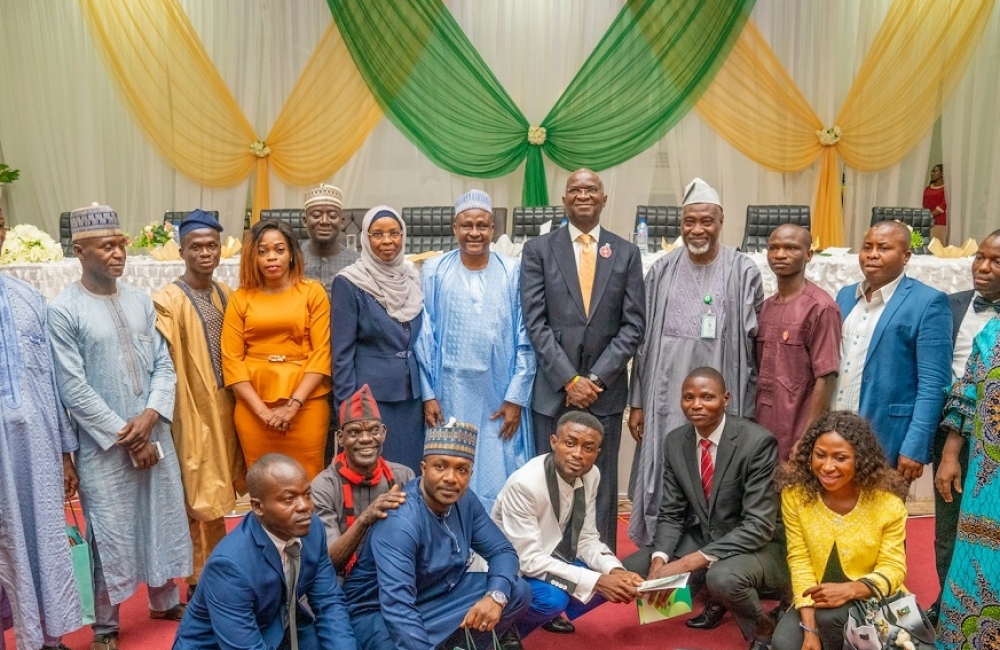
Reward For Hard Work Is More Work-Fashola The Hon. Minister of Works and Housing, Babatunde Raji Fashola has said that the reward for hard work is to be given more work to enhance productivity and service delivery. He stated this at the 2018 Recognition and Reward Ceremony organised for staff of Federal Ministry of Power Works and Housing on Tuesday 19th November 2019 at Idiris A Abudulkadir Auditorium, National Universities Commission, Abuja. Fashola explained that the essence of the award was to inspire the awardees to work harder, bring about healthy competition and in turn increases productivity. The Minister noted that the 100 million jobs to be created by the President Buhari’s led Administration was not for the government alone but a call to duty by all Nigerians. “He said, ‘’Those people whom you will never meet but who by act of fate pass through a place you help to build may earn their living from there. This implies that whatever you are doing, do it well to favour others. Own the environment, own the space and do the best you can” Fashola further directed that in subsequent award ceremonies, Team Award (completed projects) should be added among recipients. He congratulated the award recipients and encouraged other staff to emulate them to join hands together to move the nation forward. During his opening remarks, the Permanent Secretary Federal Ministry of Woks and Housing, ably represented by the Acting, Permanent Secretary, Federal Ministry of Power, Ahmed Abdul noted that recognition/award is an important tool embedded in the Public Service Rule to motivate and reward excellent performance of staff in ministries, departments and agencies (MDAs) He reiterated that the cardinal objectives of the event were to motivate staff of the ministry towards achieving greater performance/productivity, influence personal commitment and proper conduct. The representative of the Chairman Federal Civil Service Commission and the Commissioner for Osun and Oyo State, Engr. Fatai Adebayo Olapade stated that the reward for diligence and hard work was clearly stated in Chapter 15 of the Public Service Rule. He said it was given to staff to motivate them to put in their best based on merit and fairness. The categories of award given were, Most Outstanding Director of the Year, Best Performing Senior Staff Award, and Most Hardworking Junior Staff Award. In all a total of 47 officers from Power, Works, & Housing Sectors were awarded. The award was for 2018 and the three ministries were together then. The recipients were given plaques cash and other items such as grinding machines and refrigerators. Responding on behalf of his fellow awardees, the Director Highways Planning and Development Engr. Chukwubuikem Uzor who bagged the award as the most outstanding director of the year 2018 in the Ministry thanked the Minister, Permanent Secretary for initiating the idea of recognition and award for deserving staff of the Ministry. He further praised them for their support and thorough guidance which had made the staff of the Ministry better in discharge of their duties. ...
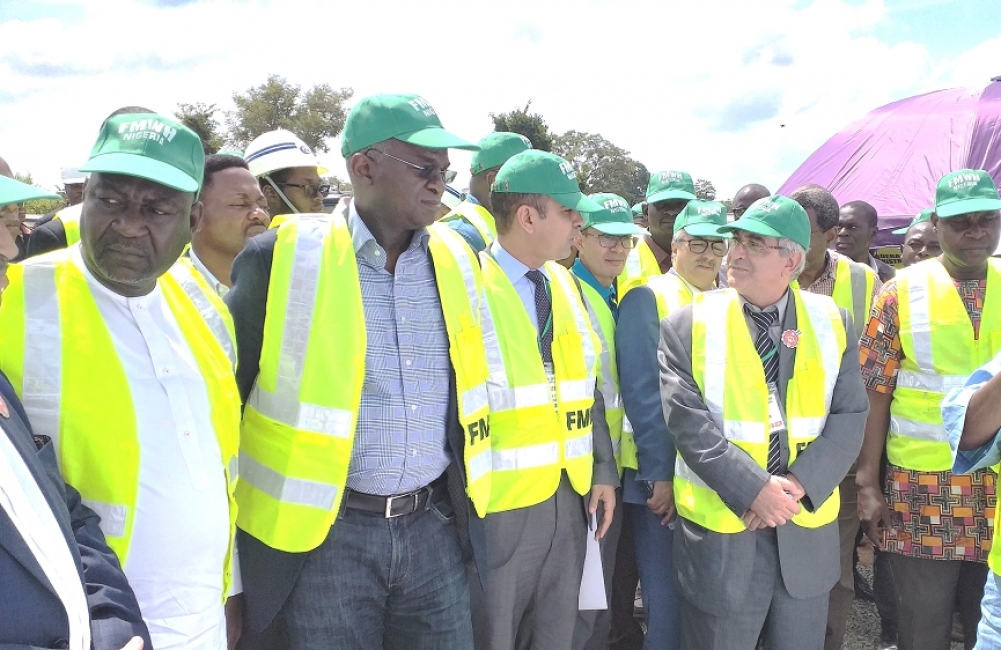
Road: Trans Sahara Committee Inspects Roads Within Nigerian Territory The Trans-Saharan Road Liaison Committee (TRLC) has inspected some of the road projects within the Nigerian territory as part of activities lined up for the 70th session of the committee which took place in Abuja, Nigeria from the 11th -12th of November 2019 The Member countries of the TLC are; Niger, Mali , Algeria Chad ,Tunisia and Nigeria. Nigeria's Minister of Works and Housing, Mr. Babatunde Raji Fashola,SAN who conducted his colleagues round the project sites said “ it is the tradition of the committee that the host country should take other members on inspection of the road projects under its territory in order to see level of progress and compliance on the routes. Fashola explained that Nigeria accounts for over 1000 kilometets length out of the over 9000 kilometers roads in the six sub-saharan countries. He further explained that in compliance with the local content executive order, Nigerian companies are given preference over foreign companies in the award of the contracts. Accordingly the Minister also stated that there were nine highways at different levels of construction that would connect Nigeria with the rest of Africa along the Trans-Sahara routes, pointing out that the ultimate aim was to transform those roads to highways of vehicles and trucks to link them to the ports for ease of doing business. The Minister listed Lagos - Algiers as one of such routes that would connect Nigeria with other parts of Africa, saying that the route cuts across Lagos-Ibadan, Oyo , Ogbomosho, Ilorin, Jebba , Mokwa, Kaduna and Kano leading to the Niger Republic. The team inspected the rehabilitation works of Abuja-Kaduna-Zaria-Kano dual carriageway which is being handled by Julius Berger Nig Ltd, the 5.4Km Abuja –Keffi expressway and dualisation of Keffi-Akwanga -Lafia-Makurdi road being handled by China Harbour Engineering Company Limited. The delegation from the member countries on the inspection commended Nigerian Government for the local content policy in the construction industry, hoping that such could be replicated in other member countries. ...
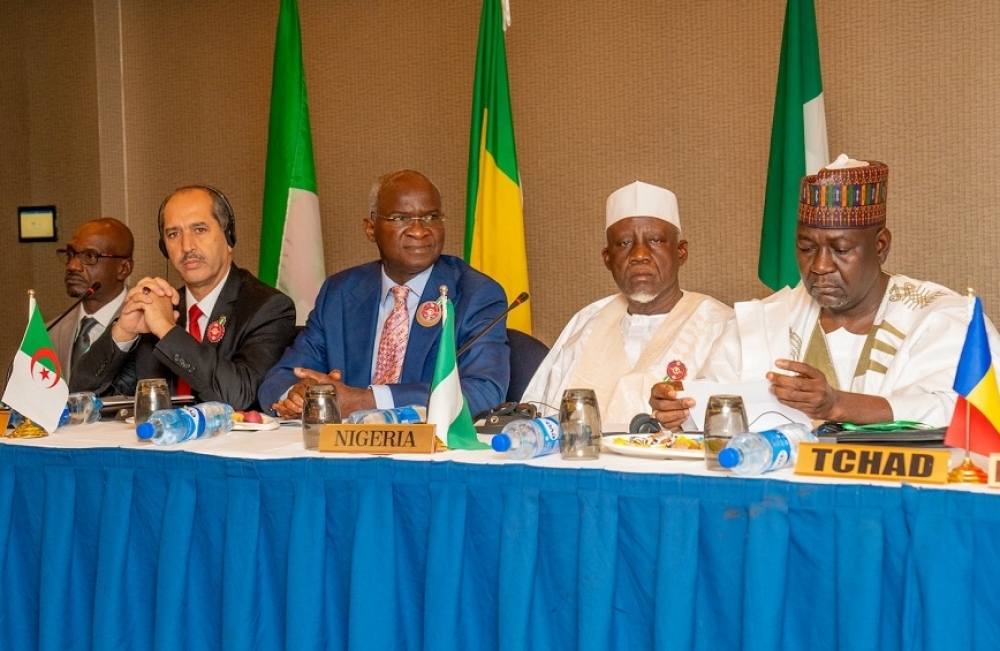
Reconstruction of Trans Sahara Highways within Nigerian Territory in Advanced Stage - Fashola Honourable Minister of Works and Housing,Mr. Babatunde Raji Fashola SAN, has disclosed that the reconstruction of the major highways that link Nigeria's borders with the six member states of the Trans Sahara Road namely: Chad, Niger, Tunisia, Mali and Algeria is 80% asphalted. Fashola made the disclosure at the opening ceremony of the 70th session and meeting of the Trans Sahara Road Liaison Committee (TRLC) which Nigeria is hosting in Abuja. The ministers in charge of roads in the six countries are taking part at the meeting. The objective of the meeting of the TRLC member countries was to discuss and share knowledge on how to improve African connectivity, integration and trade. Fashola noted that the over 9000 kms Trans Sahara Road Which serves about 37 regions in Africa and connects about 74 urban cities and 60 million people across six countries if completed would create immense opportunities in Agriculture, information technology and the fashion industry among others, adding that most of the roads that were plied by horses and carmels are presently motorable. According to the Minister, “Now if you appreciate that these roads, roads of horses and camels are now the roads of vehicles and trucks, you can imagine the opportunities that lie ahead as we converge here.” He further noted that Nigeria is part of the large urban network of opportunity as the rehabilitation and reconstruction of the Trans Sahara Road would intensify cultural and economic exchange of goods and services across the African region. Accordingly, the Minister also stated that the reconstruction of these major roads are due to their busy nature, adding that heavy duty trucks of about 5000 in number ply these roads on a regular basis. He listed some roads in the trans sharan route such as: the Abuja- Kaduna- Kano , Lagos - Ibadan-Ilorin-Jebba among others which are at different stages of completion. In an address by the President of the Federal Republic of Nigeria, Muhammadu Buhari delivered by his representative, the Minister of Police Affairs Alhaji Mohammed Dingyadi,the Mr.President reiterated the committment of his administration to introduce change in Nigeria geared towards a sustainable and quality infrastructure development to drive economic development and job creation. He explained that provision of road infrastructure was meant to increase Nigeria’s trunks of roads to ease the cost and time of doing business and improve economic competiveness in Nigeria's Economic Recovery Growth Plan (ERGP). The President, however, maintained that his administration “shares the vision of the Trans Sahara Road Liaison Committee to develop the section of the Trans Sahara road within their respective territories.” The President also charged the delegates attending the meeting to remain committed to the prompt delivery of the crucial development of road transport infrastructure for the benefit of the people in member states. In his address, the Secretary General of the Trans Sahara Road Liaison Committee, Mr. Ayadi Mohammed, commended President Muhammadu Buhari, the Honourable Minister for Works and Housing Babatunde Raji Fashola SAN ,the Honourable Minister of State for Works and Housing, Engineer Abubakar Aliyu and the management and staff of the Federal Ministry of Works and Housing for their hospitality and reception given to the delegates. He added that the member countries of the Trans Sahara and Committee have the task to build excellent relationship that would stimulate trade in the region. ...
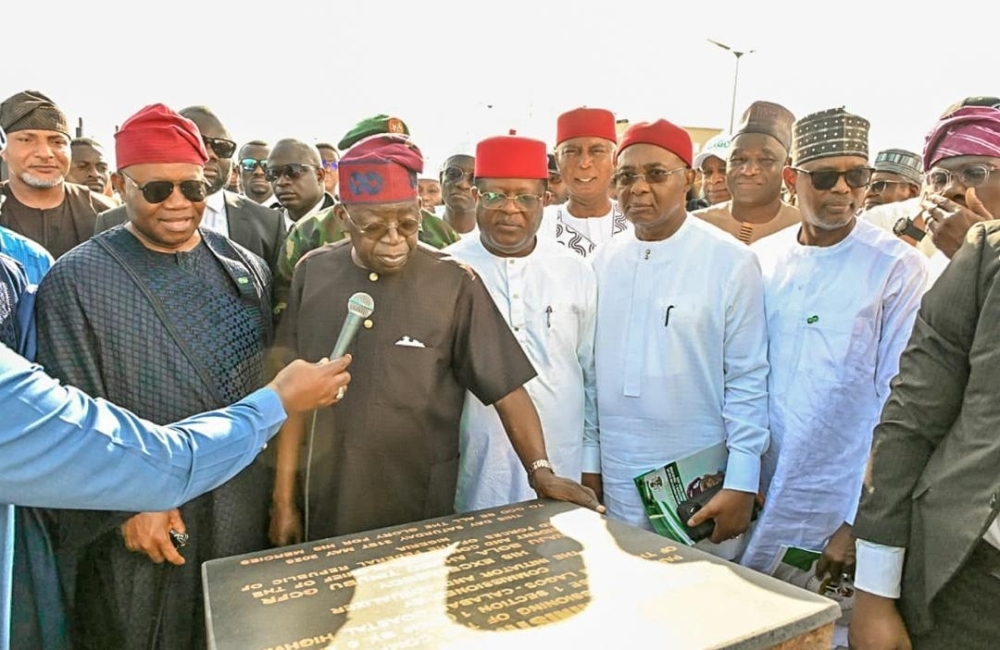
DRIVING NIGERIA’S FUTURE: CELEBRATING TWO YEARS OF TRANSFORMATIVE LEADERSHIP AND THE LAGOS-CALABAR COASTAL HIGHWAY MILESTONE
DRIVING NIGERIA’S FUTURE: CELEBRATING TWO YEARS OF TRANSFORMATIVE LEADERSHIP AND THE LAGOS-CALABAR COASTAL HIGHWAY MILESTONE
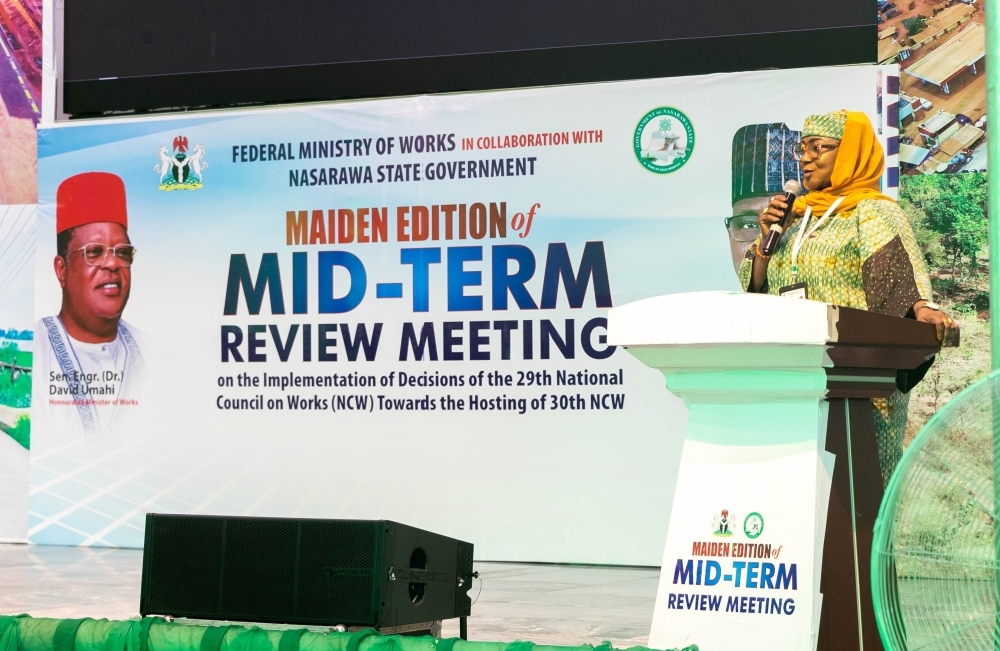
MID -TERM REVIEW MEETING ON THE IMPLIMENTATION OF THE DECISIONS REACHED AT THE 29TH NATIONAL COUNCIL ON WORKS (NCW) DAY 1
MID -TERM REVIEW MEETING ON THE IMPLIMENTATION OF THE DECISIONS REACHED AT THE 29TH NATIONAL COUNCIL ON WORKS (NCW) DAY 1