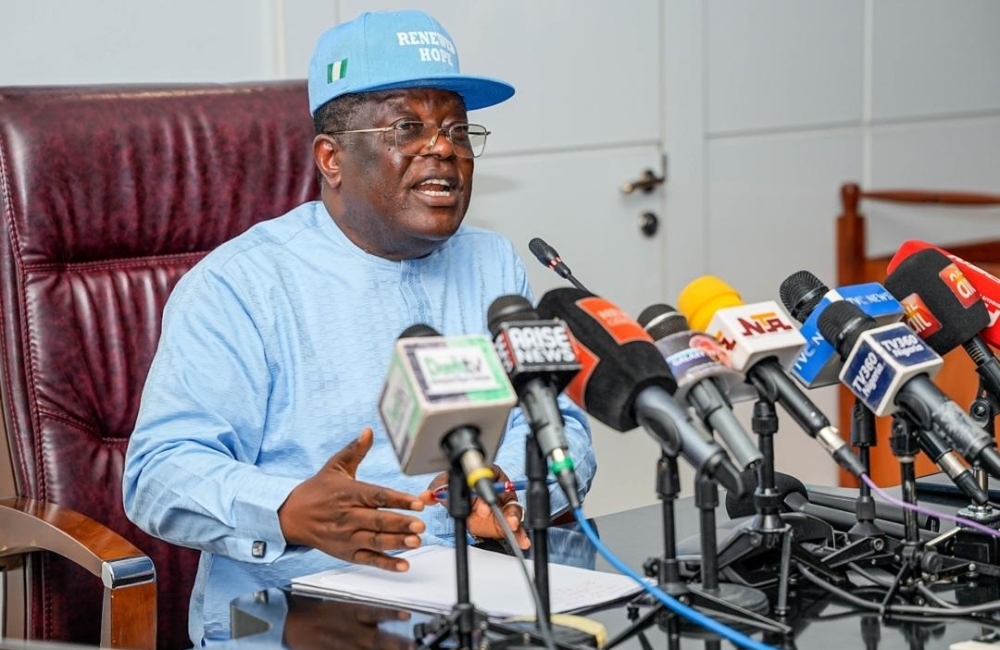
UMAHI HIGHLIGHTS IMPACT OF TINUBU’S LEGACY PROJECTS, SAYS INFRASTRUCTURE INVESTMENTS ARE TRANSFORMING NIGERIA
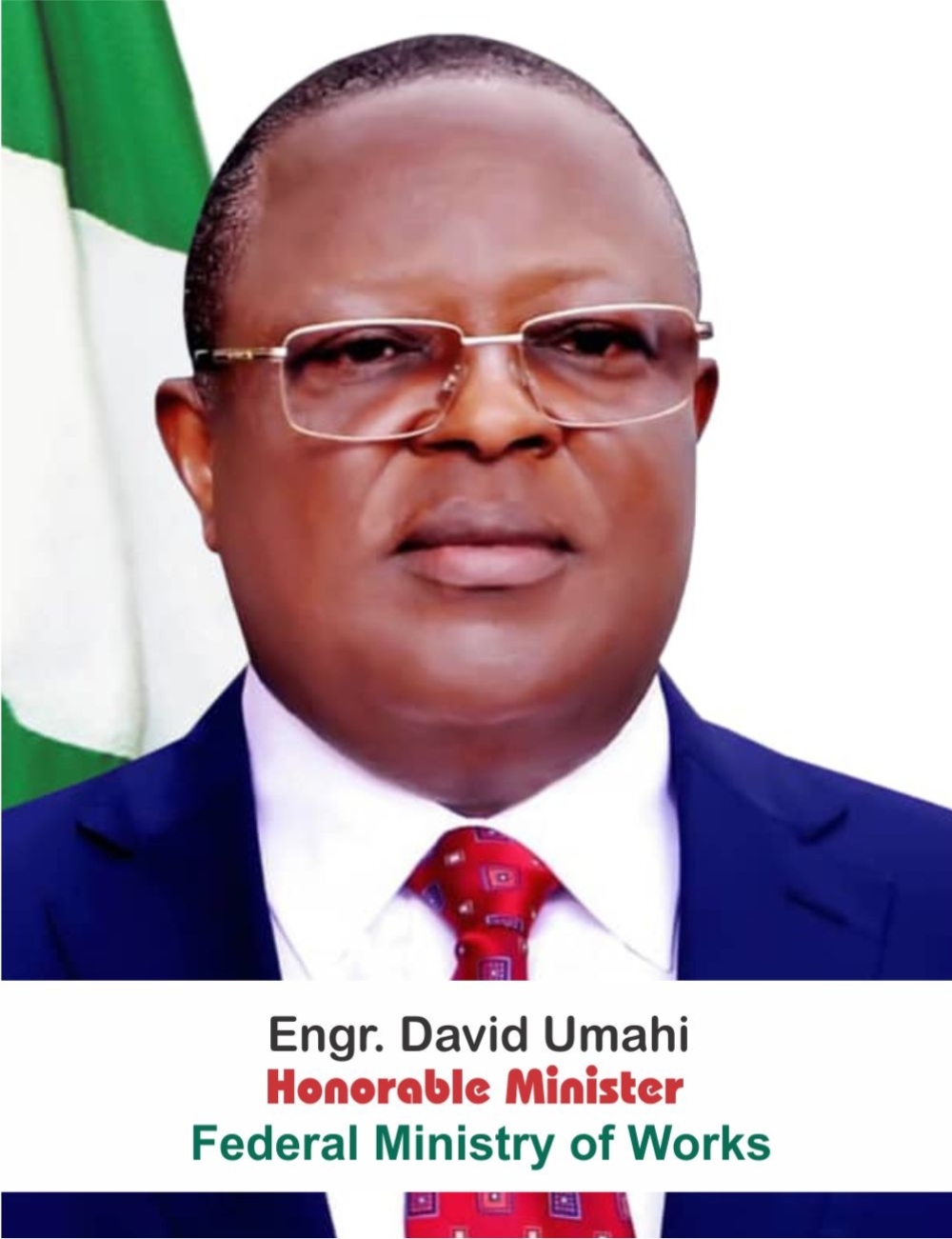
The Honourable Minister of Works, Engr. David Umahi, CON, FNSE, FNATE, has highlighted the progress and transformative impact of the major infrastructure projects being executed by the President Bola Ahmed Tinubu-led Administration, describing them as strategic investments aimed at reshaping Nigeria’s transportation network, strengthening national connectivity and stimulating economic growth.
Umahi said this on Wednesday, 7 October 2026, in Abuja, during a *Press Conference,* where he updated on the Tinubu Administration's *four Legacy Road Projects,* ongoing federal road interventions, completed projects, procurement processes, and the Ministry’s efforts to ensure value for money in the development of infrastructure.
The Minister identified the four legacy projects as the Lagos-Calabar Coastal Highway, Sokoto-Badagry Superhighway, Calabar-Ebonyi-Abuja Highway (the Trans-Saharan Route/North-South connectivity corridor, and the Dualisation of Akwanga-Jos-Bauchi-Gombe-Biu-Maiduguri Road.
According to him, the projects were conceived as strategic national infrastructure to connect all six (6) geopolitical zones, facilitate the movement of people and goods, open up economic opportunities, and strengthen Nigeria’s long-term development.
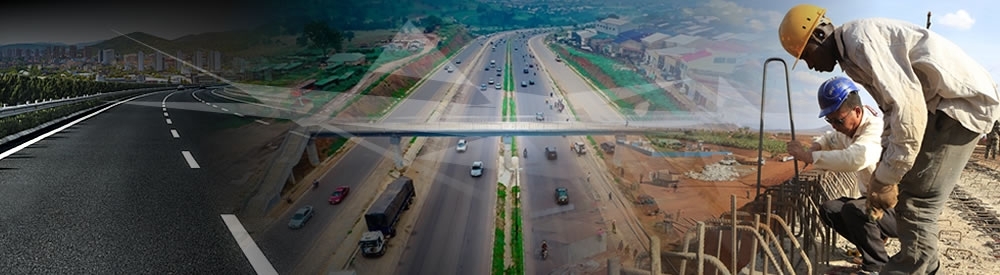
Giving an update on the Lagos-Calabar Coastal Highway, Umahi disclosed that Section 1, covering 47 kilometres, has been completed, while significant progress has also been recorded on Section 2, covering approximately 55 kilometres.
He explained that pavement works on Section 2 were nearing completion, while major flyovers, overpasses and underpasses were being constructed to address complex traffic, environmental and engineering challenges along the corridor.
The Minister said some parts of the alignment had to be redesigned to accommodate existing and planned rail, road and industrial infrastructure, particularly around the Dangote Refinery and Lekki Deep Seaport axis. He stressed that the objective was to develop an integrated transportation system rather than an isolated road project. On the Ondo State axis, Umahi explained that the alignment was redesigned in some locations because of difficult terrain, deep pits and challenging subsoil conditions. He said the redesign was aimed at ensuring durability, safety and cost-effectiveness, with substantial filling and ground improvement works ongoing in some areas.
The Minister further disclosed that President Tinubu had directed that the continuation of the Lagos-Calabar Coastal Highway be aligned with the existing East-West Road in parts of the Niger Delta area.
He described the decision as a strategic engineering intervention that would address the increasing impact of flooding and climate change on the vital infrastructure. According to him, critical sections of the East-West Road would be raised to accommodate present and anticipated flood levels and ensure the continued functionality of the strategic route.
Umahi also dwelled on the importance of the Construction of the Benin City Bypass and other sections of the littoral corridor in reducing congestion and improving movement across the South-South zone.
On the Sokoto-Badagry Superhighway, the Minister said the project was designed to establish a major economic corridor linking Ilelah in Sokoto State with Badagry in Lagos State. He noted that various sections of the highway were at different stages of construction, with significant progress recorded across the Sokoto, Kebbi, Oyo, Ogun and Badagry axes, while those of Niger and Kwara States are commencing soon.
Umahi said the strategic importance of the project is beyond road construction, noting that the corridor would unlock agricultural, industrial, tourism and other economic opportunities. He added that the Federal Government was exploring opportunities for complementary investments, including agriculture, housing, tourism and other economic activities along the major infrastructure corridors.
Speaking on the third legacy project, the ancient Trans-Saharan Route, Engr. Umahi explained that it was designed to strengthen connectivity between the coastal axis and the northern parts of the country, thereby facilitating the movement of people, goods and services across the South-South, South East and North Central geopolitical zones.
He disclosed that substantial progress had been recorded on the initial sections, while additional sections had been approved to make the corridor more economically viable and attractive to potential financiers.
On the fourth legacy project, the Minister said the Akwanga-Jos-Bauchi-Gombe-Biu-Maiduguri single carriageway is being expanded as a major northern connectivity route. He explained that the scope had been extended to cover an additional spur from Jos to Ibi in Taraba State, with design and procurement processes ongoing.
Responding to questions from journalists on the number of completed projects, the Minister listed several major road and bridge projects completed or ready for commissioning across the country. Among the projects, he mentioned Section I of the Lagos-Calabar Coastal Highway, the Kwanar Danja-Hadejia Road, the Kaduna-Pambeguwa Road, the Lafia Bypass, the Bodo-Bonny Road with Bridges along the Opobo Channel, among many others.
He also listed the completed first lot of the Lagos-Calabar Coastal Highway, the Gombe-Potiskum rehabilitation project, sections of the Azare road linking Jigawa and Bauchi, the five-span Ampoha Bridge, the 23-kilometre, 23-span flyover project at Ekpoma-Benin axis, and a three-span, 75-metre dualised bridge structure.
Umahi further disclosed that several sections of the Lagos-Badagry and Lagos-Ibadan, Lagos-Shagamu-Ore corridors had been completed, while other sections were at advanced stages of completion.
He assured journalists that the Ministry was updating its compendium of completed and ongoing projects. “*We have quite a lot of projects. We have completed projects and we have ongoing projects. We are updating the compendium and it will be made available on the Ministry’s website and circulated to the public,”* he assured.
The Minister reiterated the Federal Ministry of Works' increasing adoption of concrete pavement on major highways, saying the need for greater durability and reduced maintenance costs is driving the policy.
According to him, the Ministry is developing infrastructure that would serve Nigerians for several decades and provide better value for public resources. He reiterated that concrete pavement provides longer durability guarantees, when properly designed and constructed, compared with the recurring maintenance challenges associated with conventional asphalt pavement.
Addressing questions concerning the procurement process for the Lagos-Calabar Coastal Highway, Umahi explained that the Ministry followed an applicable procurement framework. He said the special procurement approach was necessitated by the unique engineering requirements of constructing a major highway through a difficult coastal terrain.
According to him, the Ministry identified the need for a contractor with a proven track record in executing similar coastal infrastructure and subsequently made a recommendation to the Bureau of Public Procurement (BPP). He disclosed that the BPP reviewed the recommendation and gave its clearance, while the Federal Executive Council remained the final approving authority.
Umahi said the Ministry subjected the contractor's bid to scrutiny by comparing proposed rates with prevailing market prices for materials and other inputs. He stressed that both indigenous and expatriate contractors were subjected to the same pricing and evaluation principles.
*“We put everybody on the same platform. We sent the proposals to the Bureau of Public Procurement. They reviewed it and where they felt that the rates went beyond their expected maxima, they called our attention to it, and we reviewed the rates accordingly,”* he explained.
The Minister also disclosed that substantial progress had been recorded on the Outstanding Sections of the Abuja-Kaduna-Zaria-Kano Expressway, with all the sections completed except the Jere-Kaduna portion advancing steadily. He revealed that the Ministry is installing solar-powered lighting along the 375-kilometre Expressway to improve night visibility, thereby enhancing safety and security. He also said that the improved condition of the highway, alongside security interventions, was contributing to safer and more efficient movement along the corridor.
The Minister disclosed that the Ministry had commenced an *“Operation Rescue”* on the Benin-Asaba Expressway following challenges associated with the road and its existing concession arrangement. He said the Federal Government had intervened to restore mobility, while plans were being developed for a comprehensive reconstruction of the entire alignment, using continuously reinforced concrete pavement (CRCP). He stressed that Nigerians should not continue to suffer because of unresolved contractual or concession-related issues.
The Minister, particularly, highlighted the Federal Government's increased infrastructure investment in the South East, saying the Tinubu Administration had demonstrated a clear commitment to reintegrating the hitherto neglected zone into the national infrastructure development programme. He said several major road projects had either been approved, commenced, or completed by the present administration.
Umahi, who is from the zone, said it might not have the highest number of federal projects compared with other geopolitical zones, but it was no longer being left behind.
*“We can't continue to live in denial. What we have been crying for is being given. The people of the South East are being fully reintegrated into the national infrastructure development plan,”* he emphasised.
He cited the completion of the Second Niger Bridge, the rehabilitation of the 1st Niger Bridge, ongoing construction of major Bypasses and other federal road projects in the zone as evidence of the administration's commitment.
The Minister maintained that infrastructure development should be viewed from the perspective of national integration rather than regional politics. He stated that the Federal Government's infrastructure agenda was intended to ensure that every part of Nigeria benefited from strategic investments in roads, bridges and other transportation infrastructure.
On the Tax-Credit Scheme’s projects inherited from the previous administrations, Umahi explained that the Federal Government had taken proactive measures to address them, especially where private-sector partners were no longer able to sustain previously approved financing arrangements.
He warned contractors, who had received mobilisation or project funds but failed to deploy the funds on the work that the Ministry would take appropriate steps to recover such funds. He stressed that accountability, performance and value for money remained central to the Ministry's project execution strategy.
The Minister also addressed the ongoing intervention on the First Niger Bridge, explaining that measures were being introduced to improve traffic management and protect the structural integrity of the bridge. He said the Ministry was installing appropriate traffic management infrastructure, CCTV cameras and other security measures at its Asaba and Onitsha ends. According to Umahi, the measures were necessary because bridges are designed primarily for dynamic as opposed to static loads, explaining that prolonged traffic gridlock can create additional structural and safety challenges. He said remedial works, repainting and other maintenance activities were also being undertaken to ensure the long-term usage of the structure.
Umahi further explained that the Federal Government's road development strategy included environmental considerations, such as the planting of trees along major highways and the installation of solar-powered street lighting. He said the initiative would help improve visibility and the environment, provide shade, and contribute to the reduction of harmful emissions along major transport corridors.
The Minister also linked infrastructure development to the broader economic reforms of the Renewed Hope Agenda of the Tinubu Administration, saying improved roads and connectivity would support agricultural production, industrialisation, trade, commerce, tourism and investment. He maintained that the Federal Government's infrastructure investments were part of a broader strategy to move economic growth from the macroeconomic level to the grassroots.
On the financing of the major legacy projects, Umahi assured Nigerians that the Federal Government had put mechanisms in place to ensure that the projects are adequately funded to completion.
He revealed that significant portions of the projects had been funded, while loan-financing arrangements were being implemented for the remaining components.
He noted that the administration was determined not to embark on projects without ensuring that there was a credible financing mechanism for their completion.
*“We don't start what we will not finish. And we will not finish what we have not started,”* he stated.
The Minister reaffirmed the commitment of the Ministry to completing inherited projects, while simultaneously delivering new strategic infrastructure under the Tinubu Administration. He said the legacy projects were not merely road construction schemes but long-term investments designed to transform Nigeria's economic landscape, improve connectivity, strengthen national integration and security, and create opportunities for millions of Nigerians.
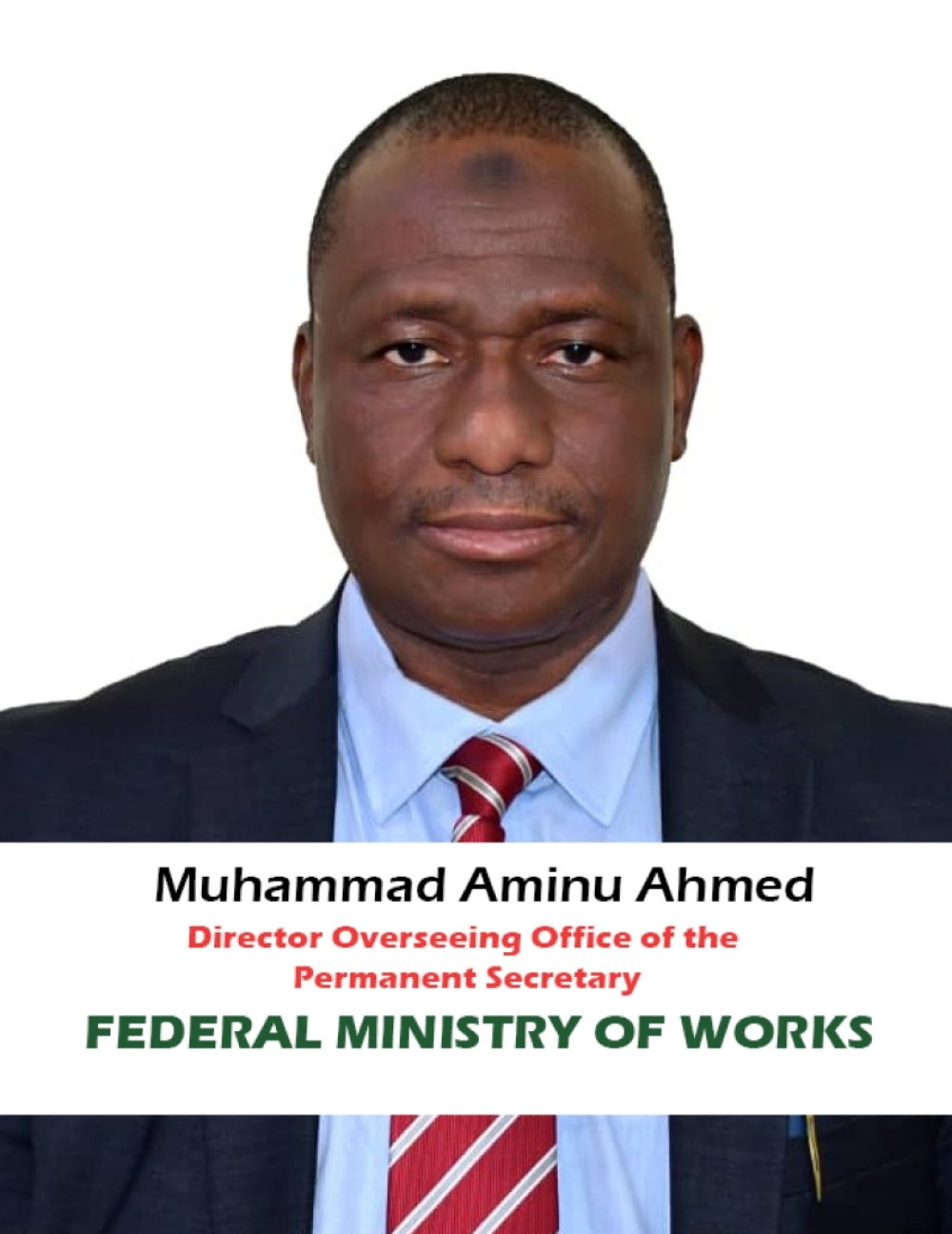
In his closing remarks, the *Director Overseeing the Office of the Permanent Secretary (DOOPS), Mohammed Aminu Ahmed, FCNA,* expressed appreciation to the Minister, members of the media, and all participants for attending. He commended the media for its continued partnership with the Ministry in informing Nigerians about government infrastructure projects and encouraged it to continue to provide constructive criticism on the Ministry's activities.

UMAHI HIGHLIGHTS IMPACT OF TINUBU’S LEGACY PROJECTS, SAYS INFRASTRUCTURE INVESTMENTS ARE TRANSFORMING NIGERIA The Honourable Minister of Works, Engr. David Umahi, CON, FNSE, FNATE, has highlighted the progress and transformative impact of the major infrastructure projects being executed by the President Bola Ahmed Tinubu-led Administration, describing them as strategic investments aimed at reshaping Nigeria’s transportation network, strengthening national connectivity and stimulating economic growth. Umahi said this on Wednesday, 7 October 2026, in Abuja, during a *Press Conference,* where he updated on the Tinubu Administration's *four Legacy Road Projects,* ongoing federal road interventions, completed projects, procurement processes, and the Ministry’s efforts to ensure value for money in the development of infrastructure. The Minister identified the four legacy projects as the Lagos-Calabar Coastal Highway, Sokoto-Badagry Superhighway, Calabar-Ebonyi-Abuja Highway (the Trans-Saharan Route/North-South connectivity corridor, and the Dualisation of Akwanga-Jos-Bauchi-Gombe-Biu-Maiduguri Road. According to him, the projects were conceived as strategic national infrastructure to connect all six (6) geopolitical zones, facilitate the movement of people and goods, open up economic opportunities, and strengthen Nigeria’s long-term development. Giving an update on the Lagos-Calabar Coastal Highway, Umahi disclosed that Section 1, covering 47 kilometres, has been completed, while significant progress has also been recorded on Section 2, covering approximately 55 kilometres. He explained that pavement works on Section 2 were nearing completion, while major flyovers, overpasses and underpasses were being constructed to address complex traffic, environmental and engineering challenges along the corridor. The Minister said some parts of the alignment had to be redesigned to accommodate existing and planned rail, road and industrial infrastructure, particularly around the Dangote Refinery and Lekki Deep Seaport axis. He stressed that the objective was to develop an integrated transportation system rather than an isolated road project. On the Ondo State axis, Umahi explained that the alignment was redesigned in some locations because of difficult terrain, deep pits and challenging subsoil conditions. He said the redesign was aimed at ensuring durability, safety and cost-effectiveness, with substantial filling and ground improvement works ongoing in some areas. The Minister further disclosed that President Tinubu had directed that the continuation of the Lagos-Calabar Coastal Highway be aligned with the existing East-West Road in parts of the Niger Delta area. He described the decision as a strategic engineering intervention that would address the increasing impact of flooding and climate change on the vital infrastructure. According to him, critical sections of the East-West Road would be raised to accommodate present and anticipated flood levels and ensure the continued functionality of the strategic route. Umahi also dwelled on the importance of the Construction of the Benin City Bypass and other sections of the littoral corridor in reducing congestion and improving movement across the South-South zone. On the Sokoto-Badagry Superhighway, the Minister said the project was designed to establish a major economic corridor linking Ilelah in Sokoto State with Badagry in Lagos State. He noted that various sections of the highway were at different stages of construction, with significant progress recorded across the Sokoto, Kebbi, Oyo, Ogun and Badagry axes, while those of Niger and Kwara States are commencing soon. Umahi said the strategic importance of the project is beyond road construction, noting that the corridor would unlock agricultural, industrial, tourism and other economic opportunities. He added that the Federal Government was exploring opportunities for complementary investments, including agriculture, housing, tourism and other economic activities along the major infrastructure corridors. Speaking on the third legacy project, the ancient Trans-Saharan Route, Engr. Umahi explained that it was designed to strengthen connectivity between the coastal axis and the northern parts of the country, thereby facilitating the movement of people, goods and services across the South-South, South East and North Central geopolitical zones. He disclosed that substantial progress had been recorded on the initial sections, while additional sections had been approved to make the corridor more economically viable and attractive to potential financiers. On the fourth legacy project, the Minister said the Akwanga-Jos-Bauchi-Gombe-Biu-Maiduguri single carriageway is being expanded as a major northern connectivity route. He explained that the scope had been extended to cover an additional spur from Jos to Ibi in Taraba State, with design and procurement processes ongoing. Responding to questions from journalists on the number of completed projects, the Minister listed several major road and bridge projects completed or ready for commissioning across the country. Among the projects, he mentioned Section I of the Lagos-Calabar Coastal Highway, the Kwanar Danja-Hadejia Road, the Kaduna-Pambeguwa Road, the Lafia Bypass, the Bodo-Bonny Road with Bridges along the Opobo Channel, among many others. He also listed the completed first lot of the Lagos-Calabar Coastal Highway, the Gombe-Potiskum rehabilitation project, sections of the Azare road linking Jigawa and Bauchi, the five-span Ampoha Bridge, the 23-kilometre, 23-span flyover project at Ekpoma-Benin axis, and a three-span, 75-metre dualised bridge structure. Umahi further disclosed that several sections of the Lagos-Badagry and Lagos-Ibadan, Lagos-Shagamu-Ore corridors had been completed, while other sections were at advanced stages of completion. He assured journalists that the Ministry was updating its compendium of completed and ongoing projects. “*We have quite a lot of projects. We have completed projects and we have ongoing projects. We are updating the compendium and it will be made available on the Ministry’s website and circulated to the public,”* he assured. The Minister reiterated the Federal Ministry of Works' increasing adoption of concrete pavement on major highways, saying the need for greater durability and reduced maintenance costs is driving the policy. According to him, the Ministry is developing infrastructure that would serve Nigerians for several decades and provide better value for public resources. He reiterated that concrete pavement provides longer durability guarantees, when properly designed and constructed, compared with the recurring maintenance challenges associated with conventional asphalt pavement. Addressing questions concerning the procurement process for the Lagos-Calabar Coastal Highway, Umahi explained that the Ministry followed an applicable procurement framework. He said the special procurement approach was necessitated by the unique engineering requirements of constructing a major highway through a difficult coastal terrain. Umahi said the Ministry subjected the contractor's bid to scrutiny by comparing proposed rates with prevailing market prices for materials and other inputs. He stressed that both indigenous and expatriate contractors were subjected to the same pricing and evaluation principles. *“We put everybody on the same platform. We sent the proposals to the Bureau of Public Procurement. They reviewed it and where they felt that the rates went beyond their expected maxima, they called our attention to it, and we reviewed the rates accordingly,”* he explained. The Minister also disclosed that substantial progress had been recorded on the Outstanding Sections of the Abuja-Kaduna-Zaria-Kano Expressway, with all the sections completed except the Jere-Kaduna portion advancing steadily. He revealed that the Ministry is installing solar-powered lighting along the 375-kilometre Expressway to improve night visibility, thereby enhancing safety and security. He also said that the improved condition of the highway, alongside security interventions, was contributing to safer and more efficient movement along the corridor. The Minister disclosed that the Ministry had commenced an *“Operation Rescue”* on the Benin-Asaba Expressway following challenges associated with the road and its existing concession arrangement. He said the Federal Government had intervened to restore mobility, while plans were being developed for a comprehensive reconstruction of the entire alignment, using continuously reinforced concrete pavement (CRCP). He stressed that Nigerians should not continue to suffer because of unresolved contractual or concession-related issues. The Minister, particularly, highlighted the Federal Government's increased infrastructure investment in the South East, saying the Tinubu Administration had demonstrated a clear commitment to reintegrating the hitherto neglected zone into the national infrastructure development programme. He said several major road projects had either been approved, commenced, or completed by the present administration. *“We can't continue to live in denial. What we have been crying for is being given. The people of the South East are being fully reintegrated into the national infrastructure development plan,”* he emphasised. He cited the completion of the Second Niger Bridge, the rehabilitation of the 1st Niger Bridge, ongoing construction of major Bypasses and other federal road projects in the zone as evidence of the administration's commitment. The Minister maintained that infrastructure development should be viewed from the perspective of national integration rather than regional politics. He stated that the Federal Government's infrastructure agenda was intended to ensure that every part of Nigeria benefited from strategic investments in roads, bridges and other transportation infrastructure. On the Tax-Credit Scheme’s projects inherited from the previous administrations, Umahi explained that the Federal Government had taken proactive measures to address them, especially where private-sector partners were no longer able to sustain previously approved financing arrangements. He warned contractors, who had received mobilisation or project funds but failed to deploy the funds on the work that the Ministry would take appropriate steps to recover such funds. He stressed that accountability, performance and value for money remained central to the Ministry's project execution strategy. The Minister also addressed the ongoing intervention on the First Niger Bridge, explaining that measures were being introduced to improve traffic management and protect the structural integrity of the bridge. He said the Ministry was installing appropriate traffic management infrastructure, CCTV cameras and other security measures at its Asaba and Onitsha ends. According to Umahi, the measures were necessary because bridges are designed primarily for dynamic as opposed to static loads, explaining that prolonged traffic gridlock can create additional structural and safety challenges. He said remedial works, repainting and other maintenance activities were also being undertaken to ensure the long-term usage of the structure. Umahi further explained that the Federal Government's road development strategy included environmental considerations, such as the planting of trees along major highways and the installation of solar-powered street lighting. He said the initiative would help improve visibility and the environment, provide shade, and contribute to the reduction of harmful emissions along major transport corridors. The Minister also linked infrastructure development to the broader economic reforms of the Renewed Hope Agenda of the Tinubu Administration, saying improved roads and connectivity would support agricultural production, industrialisation, trade, commerce, tourism and investment. He maintained that the Federal Government's infrastructure investments were part of a broader strategy to move economic growth from the macroeconomic level to the grassroots. On the financing of the major legacy projects, Umahi assured Nigerians that the Federal Government had put mechanisms in place to ensure that the projects are adequately funded to completion. He noted that the administration was determined not to embark on projects without ensuring that there was a credible financing mechanism for their completion. The Minister reaffirmed the commitment of the Ministry to completing inherited projects, while simultaneously delivering new strategic infrastructure under the Tinubu Administration. He said the legacy projects were not merely road construction schemes but long-term investments designed to transform Nigeria's economic landscape, improve connectivity, strengthen national integration and security, and create opportunities for millions of Nigerians. In his closing remarks, the *Director Overseeing the Office of the Permanent Secretary (DOOPS), Mohammed Aminu Ahmed, FCNA,* expressed appreciation to the Minister, members of the media, and all participants for attending. He commended the media for its continued partnership with the Ministry in informing Nigerians about government infrastructure projects and encouraged it to continue to provide constructive criticism on the Ministry's activities.
According to him, the Ministry identified the need for a contractor with a proven track record in executing similar coastal infrastructure and subsequently made a recommendation to the Bureau of Public Procurement (BPP). He disclosed that the BPP reviewed the recommendation and gave its clearance, while the Federal Executive Council remained the final approving authority.
Umahi, who is from the zone, said it might not have the highest number of federal projects compared with other geopolitical zones, but it was no longer being left behind.
He revealed that significant portions of the projects had been funded, while loan-financing arrangements were being implemented for the remaining components.
*“We don't start what we will not finish. And we will not finish what we have not started,”* he stated.
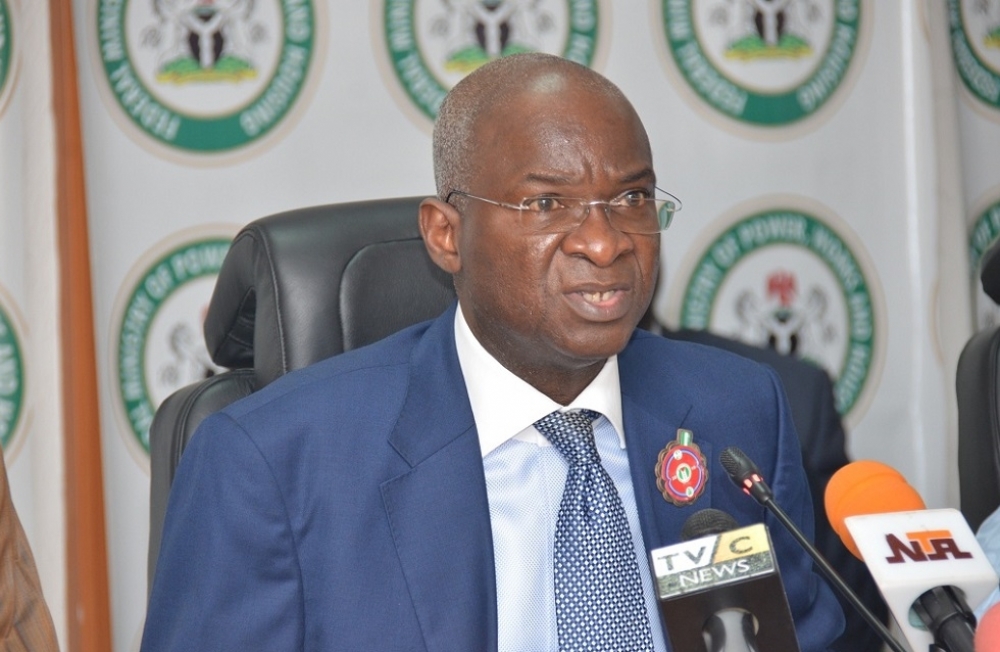
Buhari-Led FG Has Delivered Visible Results, Addressing Economic Growth Through Infrastructure, Says Fashola * As Minister delivers Progress Report on activities of his Ministry in the last three years * Total of 2147 roads constructed/rehabilitated and 79,378 people employed between 2016 and November 2018 * Generation increased from 4,000 MW to 7000 MW, Transmission from 5000 MW to 7000 MW, Distribution from 2690 MW to 5,222 MW * National Housing Programme ongoing in 34 States that provided land, sites are an ecosystem of human enterprise that offers opportunities to the society’s most vulnerable * This is progress that we must move forward by consolidating on our mandate of change. We cannot go back , he says The Minister of Power, Works and Housing, Mr Babatunde Fashola SAN, Monday reviewed the activities and achievements of his Ministry in the last three years saying the President Muhammadu Buhari-led Administration has delivered visible results and recorded qualitative progress with the outcome that there was no state in Nigeria today where the Federal Government was not executing one project or the other. Briefing newsmen on his Third Year Progress Report, Fashola, who recalled his first briefing on December 8, 2015 titled “Setting the Agenda for Delivering Change” in which he stated what he inherited, what he planned to do, and what Nigerians should expect, declared that with careful thinking, planning, and a dedicated team of public officers, the Ministry now has a firm foothold on its way to the top. The Minister told the various news platforms as well as members of the public at the crowded press conference, “Our policies have shown what is possible with critical sectors recording growth. What remains is time that it takes for the full harvest of the fruits of our policies in plenitude and prosperity of our people”. With regard to power, Fashola asserted that generation, which was at 4,000 MW in when he took over in the Ministry in 2015 has increased to 7,000 MW and transmission from 5,000 MW in 2015 to 7,000 MW while distribution has increased from 2,690 MW to 5,222 MW adding that although the work was clearly not finished, the Ministry was still in the process of delivering additional power to the grid. According to him, the additional 215MW would come from the Kaduna Power Plant while 240MW would come from Afam IV, 40 MW from Kashimbila, 30 MW from Gurara, 29 MW from Dadin Kowa and a total of 3,750 MW from two big Hydro power plants in Zungeru (700MW) and Mambilla (3,050MW) while power is also programmed for nine universities and 15 markets across the country. Also expected are transmission expansion from 90 transmission projects nationwide to boost the capacities of the Distribution Companies to distribute power across the country, the Minister said adding that some of the transmission substations recently completed included Apo, Mayo Belwa, Damaturu, Maiduguri, Odogunyan and Ejigbo substations. According to him, while distribution is being boosted through over 100 injection sub-stations, a distribution expansion programme to be funded by the Federal Government was now in an advanced state of procurement adding that although there are still people yet to be reached and challenges due to disruptions from time to time and people who also needed meters “it is indisputable that we have delivered on incremental power”. “The evidence of our progress is not only captured in the last quarter of the National Bureau of Statistics (NBS) Report for Q2 of 2018 which shows a growth of 7.5 per cent in the electricity sector”, the Minister said adding that previous quarterly reports from 2017 had consistently recorded growth, which, he noted “is a clear departure from 2014-2015 and proof of change”. Recalling that he promised in his inaugural address that it would not just be electricity by numbers but electricity that would be borne out by personal experiences, Fashola disclosed that the report of survey carried out by government and feedback mechanism put in place by it had confirmed that many Nigerians now have public power for longer hours compared to 2015 and run generators for shorter periods compared to 2015 while they now spend less money on diesel to power their generators. “As some Citizens recently reported, they no longer have to iron all their clothes one week in advance as they previously used to do, because the supply is proving reliable and predictable even if not yet fully Stable and uninterrupted. This is progress that we must move forward by consolidating on our mandate of change. We cannot go back”, the Minister declared. He said as the policies on Mini Grids, Meter Asset Provider, Eligible Customer, and liquidity sustenance and improved governance deepen, the experience with power supply could only get better adding, however, that the success of the plans now would depend on “energy users who must conserve energy when not needed”. Relating to roads and bridges, Fashola, who also said progress report has confirmed the promise he made at inauguration had been fulfilled, declared, “We have recovered the thousands of jobs that were lost to public works. This recovery is the result of an expansive infrastructure spending that saw works budget grow from N18.132b in 2015 to N394b in 2018”. “The outcome is that there is not one state in Nigeria today where the Federal Government is not executing at least one road project and construction workers are engaged on these sites”, he said adding that even difficult or abandoned projects like the 2nd Niger Bridge, Lagos-Ibadan Expressway and the Bodo-Bonny Bridge have been brought back to life. He noted that sections of Ilorin-Jebba, Sokoto to Jega, Sokoto-Ilela have been completed, “while progress of works continues nationwide from Jada to Mayo Belwa, Enugu to Port Harcourt, Lagos to Otta, Ikorodu to Shagamu, Benin to Okene, Lokoja to Abuja, Kano to Maiduguri, Abuja – Kaduna, Kano to mention a few”. Fashola said apart from recovered construction jobs and growth in construction sector of the economy, the feedback from road users has shown that the journey times were reducing on the completed roads recalling a text message he received last week from a commuter reporting that he travelled from Warri to Lagos in Five and Half hours. Noting that the foregoing represents a promise kept, Fashola, who recalled that the journey from Warri to Lagos used to take a whole day with people sometimes sleeping on the Road before President Buhari was elected, declared, “We cannot go back to that era. We are determined to move forward”. He added, “Although the work was not finished, but as long as we remain able to finance the projects, I have no doubt that it will get better”. And supporting the assertions of the Minister, the Director Highways Planning and Development, Engineer Chukwunwike Uzo, said a total of 1262 roads were constructed and 885 roads were rehabilitated between 2016 and November 2018 while 79,378 persons were employed. A breakdown of the figure showed that while 277 roads were constructed and 345 rehabilitated with 17,749 people employed in 2016, in 2017, 468 roads were constructed and 256 rehabilitated with 31,227 people employed in the process, while 497 roads were constructed and 284 rehabilitated while 30,402 people got employed According to the Director, who made a contribution during the Question and Answer session, a total of N907, 628.118, 217 was budgeted for Works between 2016 and 2018 while a total of N499, 609,297,524 were disbursed to contractors during the period. Pointing out that the intervention on roads did not stop on interstate highways, the Minister said his Ministry has also entered 14 Federal Universities where unattended internal roads were now receiving attention listing the institutions to include, University of Nigeria, Nsukka, Federal University Oye, Ekiti, University of Benin, Federal University, Lafia, Federal University, Otuoke Bayelsa and Bayero University, Kano. Others, according to him, are Federal University of Technology Owerri (FUTO), University of Maiduguri, Federal University, Lokoja, Federal Polytechnic Bauchi, Federal University, Gashua, Kaduna Polytechnic, Federal College of Education Katsina and University College Ibadan. According to him, “This is the First Phase under the 2017 Budget and we are preparing to do more under the 2018 Budget. Noting that the intervention and nine Independent Power projects in Federal Universities was an investment in Education for the benefit of those who seek more funding for education, Fashola said while roads were being built, government was also attending to old or damaged bridges and restoring the value of maintenance. While the Loko - Oweto Bridge was nearing completion, the damaged Tatabu Bridge linking Ilorin and Jebba had been reconstructed and the Tamburawa Bridge in Kano, the Isaac Boro Bridge in Rivers, Eko Bridge in Lagos and the Old Niger Bridge that links Anambra and Delta were receiving regular maintenance attention. In Housing, the Minister said public buildings like the Federal Secretariats in Zamfara, Bayelsa, Nasarawa and Ekiti and the Zik Mausoleum in Onitsha had now been practically completed pointing out that the pilot National Housing Programme has led to a nationwide Housing Construction being undertaken in the 34 states where government had received land. “No less than 1,000 people are employed on each site apart from the staff of the successful contractors”, he said. “These sites are an ecosystem of human enterprise, where artisans, vendors, suppliers and craftsmen converge to partake of opportunities and contribute to nation building. These are some of the most vulnerable people for whom President Buhari has delivered”, Fashola said adding parastatals like the Federal Mortgage Bank of Nigeria (FMBN) and the Federal Housing Authority (FHA) were also contributing while policies like the reduction of equity contribution from 5% to 0% for those seeking mortgage loans of up to N5million, and reduction from 15% to 10% for those seeking loans over N5million were helping to ease access to housing. According to the Minister, the Ministry is also tackling the backlog of issuance of consent and Certificates of Occupancy to Federal Government land” adding that a total of 1,216 Application for Consent to transfer interests in Land application and 1,300 Certificates of Occupancy have been approved and signed respectively as at 25th October 2018. Fashola, who noted that as the year heads to an end, festivity, end of year activity and consequent movement of goods and services would put pressure on the roads nationwide, added, “Our Ember month planning committee, working with FRSC and FERMA have been meeting to prepare themselves to make your movement during this period as conducive as the circumstances will permit”. According the Minister, “FRSC will deploy their personnel across the major transport corridors of the country during this period of heavy movement to help manage traffic. They have committed to setting up nine camps and 18 help areas across the zones to provide support and help to commuters in need”. The Ministry’s staff, he also said, had identified 53 critical roads requiring intervention while construction is going on in order to move traffic and would be working with the contractors to provide relief gangs while the Ministry as also deploying the Zonal Directors to their zones of responsibility until the period of peak traffic subsides. Wishing Nigerians a Happy Christmas in advance with a promise of pleasant travel time during the festivities, Fashola declared, “With careful thinking, planning, and a dedicated team of public officers, we have a firm foothold on our way to the top. Our policies have shown what is possible with critical sectors recording growth. What remains is time that it takes for the full harvest of the fruits of our policies in plenitude and prosperity of our people.We cannot go back to the bottom of the mountain when the plateau is now within reach”. ...
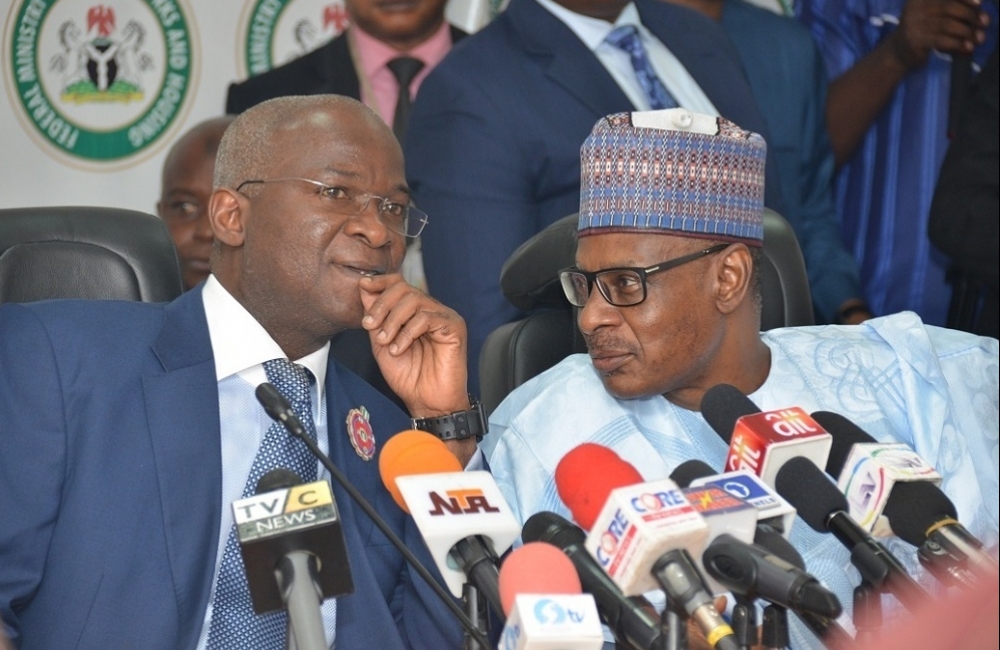
Our Three Years Score Card on Infrastructure Development: A Fulfillment of the "Change Mandate" The Honourable Minister of Power, Works and Housing, Babatunde Raji Fashola, SAN, has presented the Ministry’s scorecard and achievements on infrastructure development and provision across the country in commemoration of his three years in office. He added that the ‘’present government has no doubt move the nation forward by consolidating on the mandate of change promised Nigerians. 2. Addressing the media and the general public at a press conference held in Abuja, today, he noted that there is the need to refresh on his inaugural statements titled, ‘’Setting the Agenda for Delivering Change,’’ when President Muhammadu Buhari inaugurated the present Federal Executive Council and the subsequent creation of the Ministry of Power, Works and Housing. 3. The Minister noted that with regards to power supply, ‘’I promised that we will improve on gas supply, increase transmission capacity, pay MDAs' debts to the DisCos and generally improve your experience with power supply, first by getting incremental power, then proceed to stable and hopefully reach uninterrupted supply.’’ 4. Fashola also reported that with regards to works, ‘’as at May, 2015, many contractors have stopped work due to lack of payment and many fathers and wives employed by them laid off as a result. The possibility to return those who have lost their jobs back to work is the kind of change that we expect to see’’. 5. Retrospectively speaking on the Housing sector, the Minister stated that, ‘’it presents an enormous opportunity for positively impacting the economy to promote not only growth but inclusion’’. He further stated that ‘’Government will lead the aggressive intervention to increase supply starting with a pilot’’. 6. Fashola, however, noted that where the nation is standing today, despite little resources to work with, is a clear evidence of qualitative progress in the delivery of infrastructure across Nigeria, adding that this is a remarkable departure from past Administrations. 7. Further in his address, the Minister disclosed that power generation has increased from 4,000 MW to 7,000 MW, transmission from 5,000 MW to 7,000 MW and distribution from 2,690 MW to 5, 222 MW. He noted that the consistence progress recorded in the power sector from 2015 till date is a clear departure from what obtained before, also a proof of change. 8. In relation to public works, the Minister stated that the dogged determination of the present Administration to deliver on critical infrastructure has brought about expansive spending on Federal road projects across the nation. He stressed that this development saw the budget of the works sector growing from N18.132b in 2015 to N394B in 2018. 9. The outcome of these massive spending and investment on infrastructure has not left any state in Nigeria today without a Federal Government visible road project(s) with thousand of construction workers, who were formerly laid-off now being fully engaged. 10. Fashola stated that the Ministry’s intervention on roads does not stop on interstate highways alone. It has also affected 14 Federal Universities, where failed internal roads are now receiving proper attention. 11. According to the Minister, the present government also took a giant stride by creating a Presidential Infrastructural Development Fund to address critical economic projects across the country. Projects such as the 2nd Niger Bridge, Lagos-Ibadan Expressway, the Mambilla hydro - power project and many more are expected to benefit from the Fund. 12. Speaking on the housing sector, the Minister stated that the pilot National Housing Programme, second in the history of the nation, has led to a nationwide housing construction currently at various stages of completion in 34 States where landed properties were provided. 13. He added that construction works at these project sites are an ecosystem of human enterprise, where artisans, vendors, suppliers and craftsmen are direct beneficiaries, as well as contributing to nation building. 14. The Minister opined that the Ministry is also tackling the backlog of issuance of Consent and Certificates of Occupancy on Federal Government lands. He stated that ‘’a total of 1, 216 applications for Consent to Transfer Interest in Land and 1, 300 Certificates of Occupancy were approved and signed’’. 15. Fashola noted that without the team of dedicated staff, the landslide achievements and growth in these sectors would have been a mirage. In attendance were, the Permanent Secretaries of Works and Housing, Mohammed Bukar and that of Power, Engr. Louis Edozien, Directors from the three sectors, Heads/CEOs of Parastatals. ...
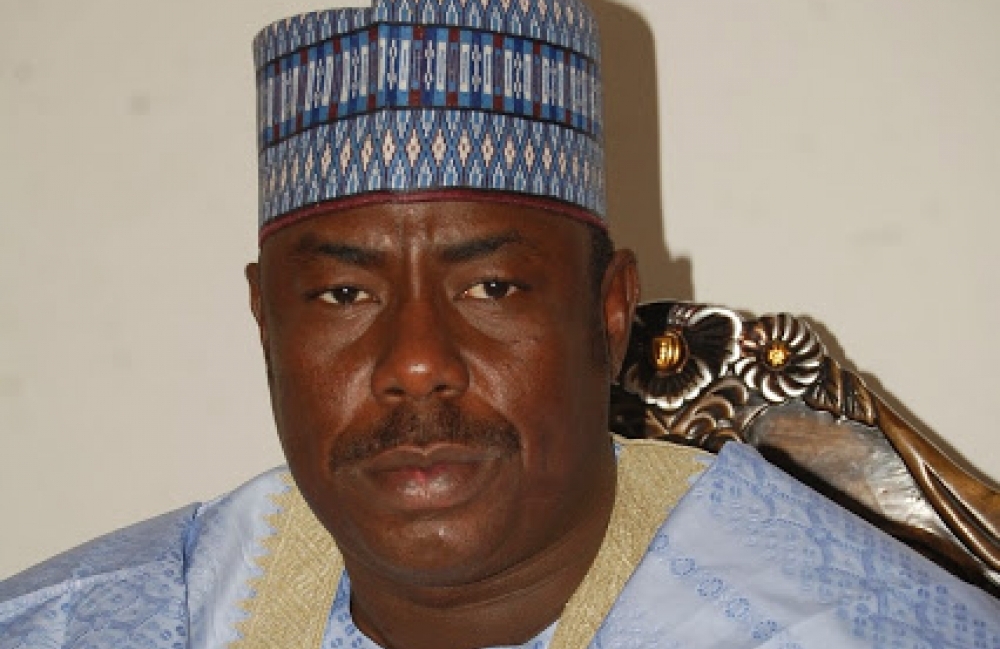
Nigerian-Sweden Collaborate To Improve Electricity Supply In Nigeria The Minister of State I for Power, Works and Housing, Hon. Mustapha Baba Shehuri has applauded the Swedish Government for their expression of interest to collaborate with the Federal Government of Nigeria in the provision of infrastructure needed to move the economy forward and make life meaningful for Nigerians. Baba Shehuri made the commendation when he receivedthe representatives of Her Excellency, the Swedish Ambassador to Nigeria, Mrs. IngerUltvedt, Charge d’ affaires of the Swedish Embassy, Mrs. Ida Hockerfeldtand Head of Economic Affairs, Mrs.Fanny Nylanderwho paid him a courtesy call. The Minister revealed that with the privatization of the generation and distribution aspects of electric power supply, it makes economic sense for any foreign country to invest in Nigeria, a country that already has the population and enabling environment for Foreign Direct Investment to thrive. He stated, “We have the population and a lot of potentials in the areas of renewable energy which some investors like the Chinese have already keyed into by providing mini grids to generate andsupply electric power to some communities”. The Head of Economic Affairs of the Swedish Embassy in Nigeria, Mrs. Fanny Nylander had earlier explained that the meeting is a follow-up to the Swedish Minister for Trade, Mrs Ann Linda’s, visit to theHonourable Minister for Power, Works and Housing, BabatundeRajiFashola, SAN in 2016 and thesigning of a Memorandum of Understanding (MoU) with Nigeria under the Nordic Umbrella on Energy. Mrs. Nylander further invited the Minister to be the “Country Host” to the ‘Swedish – Nigerian Sustainable Energy Conference’ holding in Lagos on November 13, 2018, adding that the event is to create an avenue for Swedish companies to explore ways of supporting Africa, particularly Nigeria, in power generation, transmission and distribution. ...
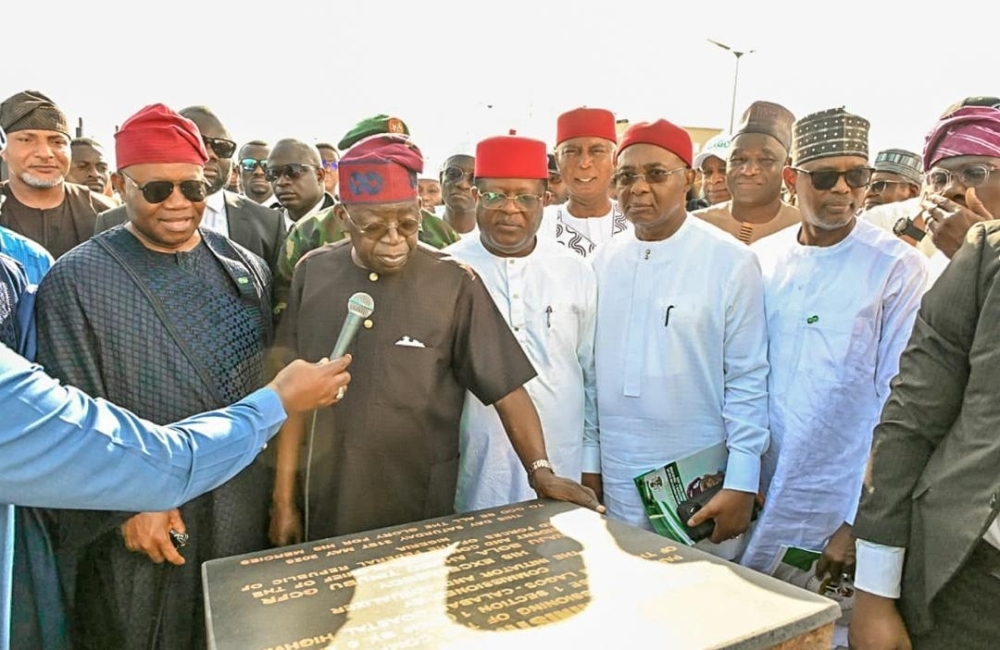
DRIVING NIGERIA’S FUTURE: CELEBRATING TWO YEARS OF TRANSFORMATIVE LEADERSHIP AND THE LAGOS-CALABAR COASTAL HIGHWAY MILESTONE
DRIVING NIGERIA’S FUTURE: CELEBRATING TWO YEARS OF TRANSFORMATIVE LEADERSHIP AND THE LAGOS-CALABAR COASTAL HIGHWAY MILESTONE
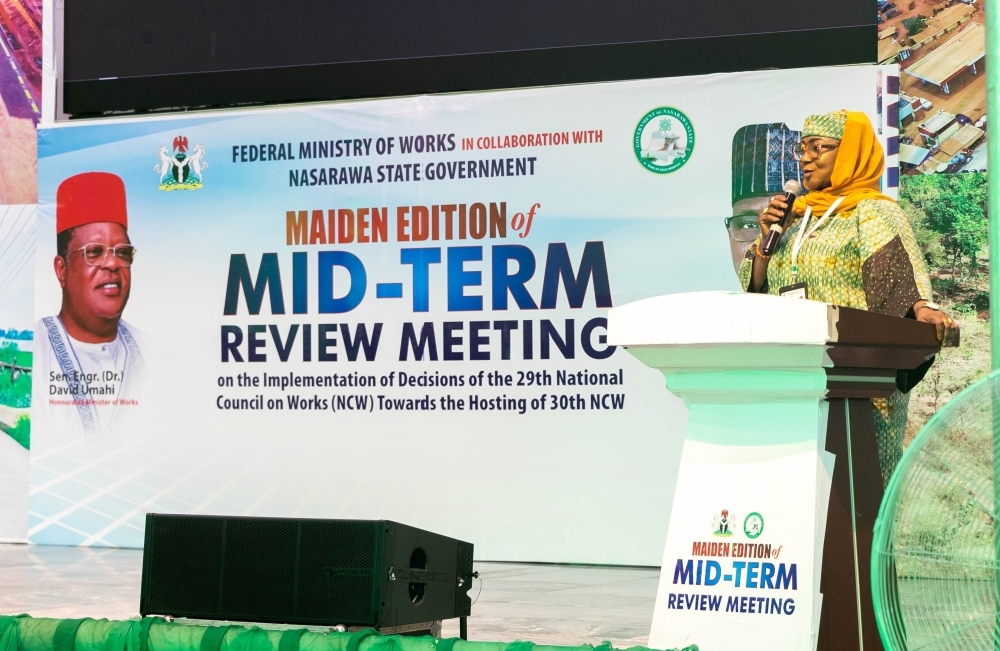
MID -TERM REVIEW MEETING ON THE IMPLIMENTATION OF THE DECISIONS REACHED AT THE 29TH NATIONAL COUNCIL ON WORKS (NCW) DAY 1
MID -TERM REVIEW MEETING ON THE IMPLIMENTATION OF THE DECISIONS REACHED AT THE 29TH NATIONAL COUNCIL ON WORKS (NCW) DAY 1