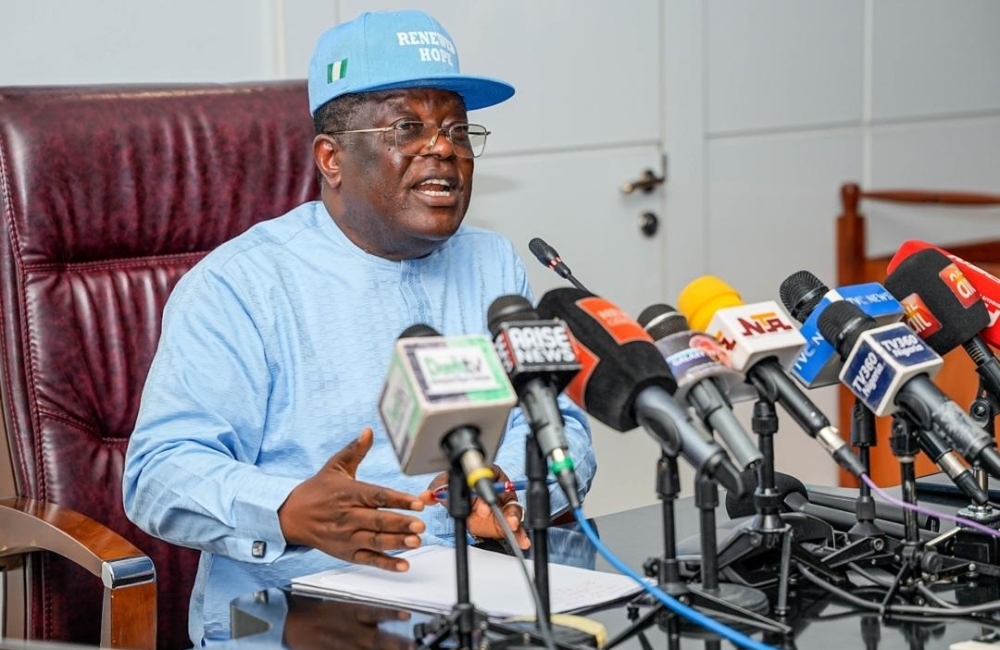
UMAHI HIGHLIGHTS IMPACT OF TINUBU’S LEGACY PROJECTS, SAYS INFRASTRUCTURE INVESTMENTS ARE TRANSFORMING NIGERIA
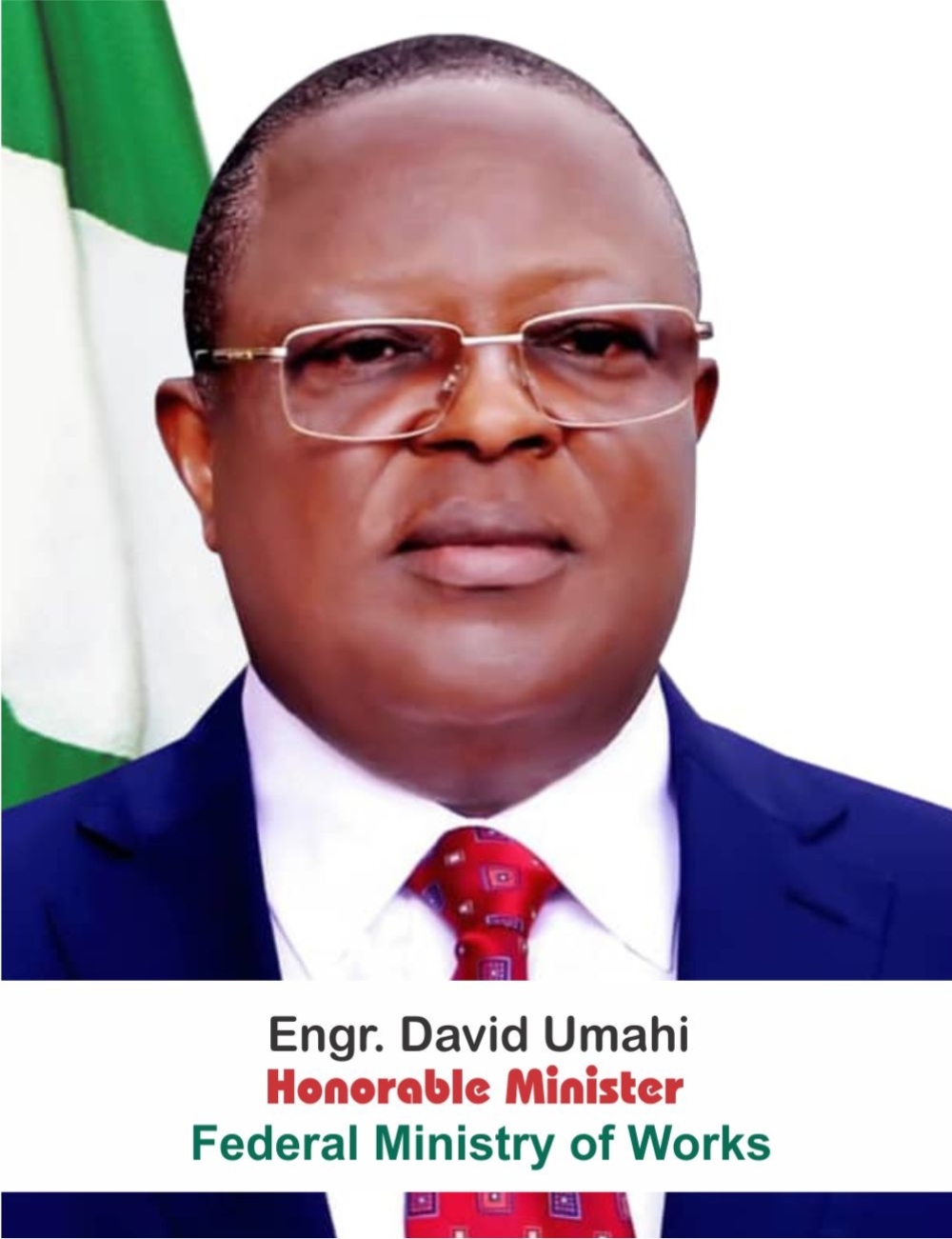
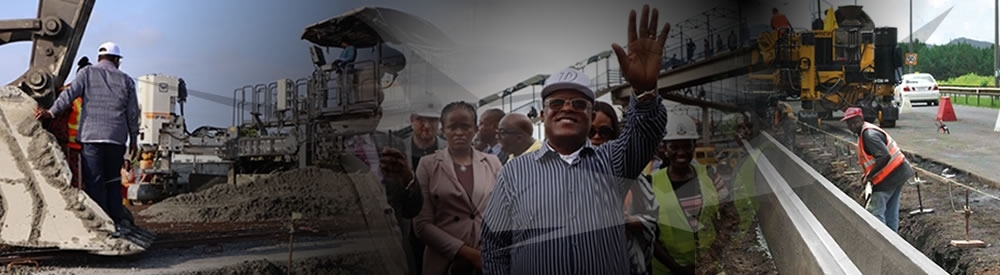
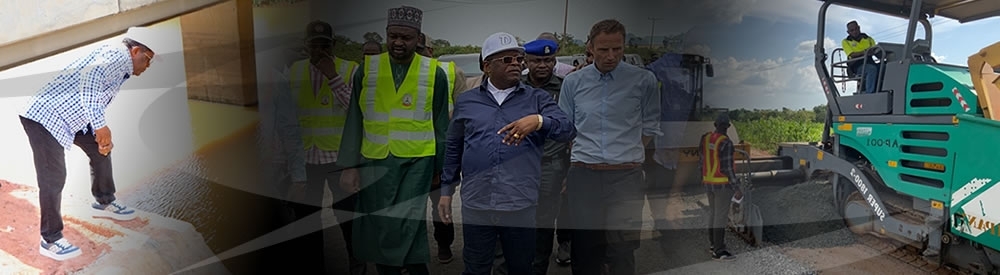
The Honourable Minister of Works, Engr. David Umahi, CON, FNSE, FNATE, has highlighted the progress and transformative impact of the major infrastructure projects being executed by the President Bola Ahmed Tinubu-led Administration, describing them as strategic investments aimed at reshaping Nigeria’s transportation network, strengthening national connectivity and stimulating economic growth.
Umahi said this on Wednesday, 7 October 2026, in Abuja, during a *Press Conference,* where he updated on the Tinubu Administration's *four Legacy Road Projects,* ongoing federal road interventions, completed projects, procurement processes, and the Ministry’s efforts to ensure value for money in the development of infrastructure.
The Minister identified the four legacy projects as the Lagos-Calabar Coastal Highway, Sokoto-Badagry Superhighway, Calabar-Ebonyi-Abuja Highway (the Trans-Saharan Route/North-South connectivity corridor, and the Dualisation of Akwanga-Jos-Bauchi-Gombe-Biu-Maiduguri Road.
According to him, the projects were conceived as strategic national infrastructure to connect all six (6) geopolitical zones, facilitate the movement of people and goods, open up economic opportunities, and strengthen Nigeria’s long-term development.
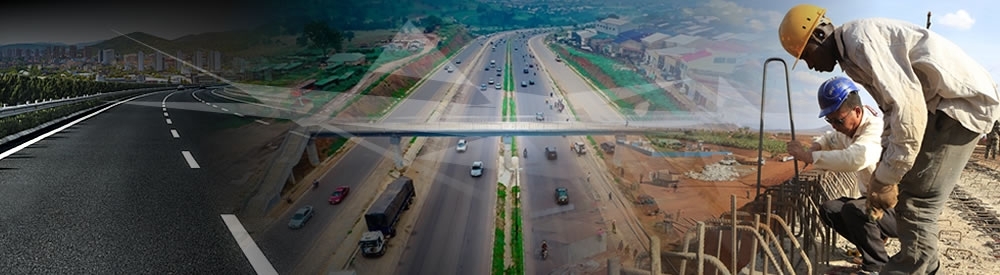
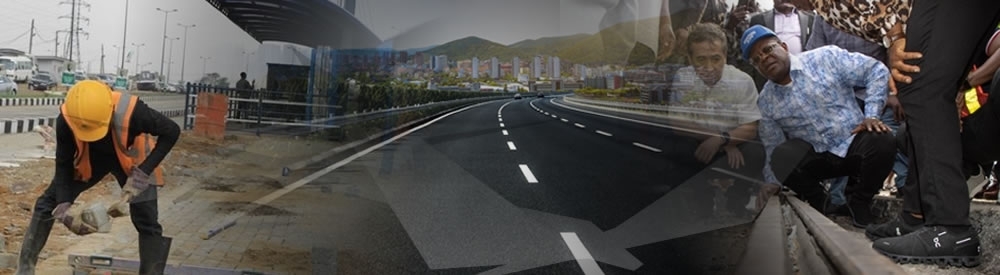
Giving an update on the Lagos-Calabar Coastal Highway, Umahi disclosed that Section 1, covering 47 kilometres, has been completed, while significant progress has also been recorded on Section 2, covering approximately 55 kilometres.
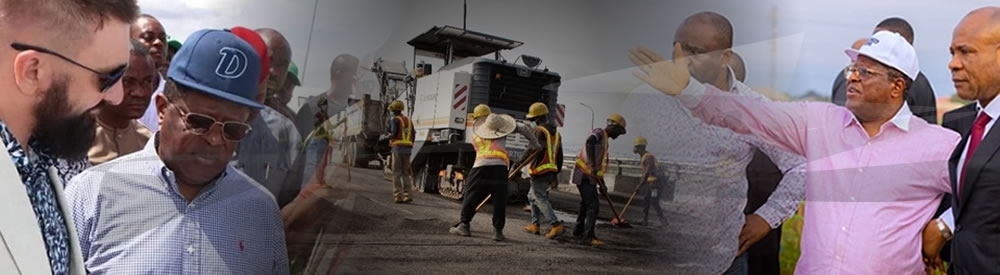
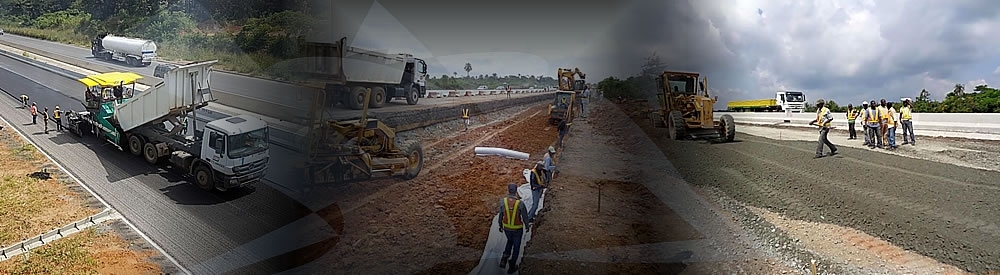
He explained that pavement works on Section 2 were nearing completion, while major flyovers, overpasses and underpasses were being constructed to address complex traffic, environmental and engineering challenges along the corridor.
The Minister said some parts of the alignment had to be redesigned to accommodate existing and planned rail, road and industrial infrastructure, particularly around the Dangote Refinery and Lekki Deep Seaport axis. He stressed that the objective was to develop an integrated transportation system rather than an isolated road project. On the Ondo State axis, Umahi explained that the alignment was redesigned in some locations because of difficult terrain, deep pits and challenging subsoil conditions. He said the redesign was aimed at ensuring durability, safety and cost-effectiveness, with substantial filling and ground improvement works ongoing in some areas.
The Minister further disclosed that President Tinubu had directed that the continuation of the Lagos-Calabar Coastal Highway be aligned with the existing East-West Road in parts of the Niger Delta area.
He described the decision as a strategic engineering intervention that would address the increasing impact of flooding and climate change on the vital infrastructure. According to him, critical sections of the East-West Road would be raised to accommodate present and anticipated flood levels and ensure the continued functionality of the strategic route.
Umahi also dwelled on the importance of the Construction of the Benin City Bypass and other sections of the littoral corridor in reducing congestion and improving movement across the South-South zone.
On the Sokoto-Badagry Superhighway, the Minister said the project was designed to establish a major economic corridor linking Ilelah in Sokoto State with Badagry in Lagos State. He noted that various sections of the highway were at different stages of construction, with significant progress recorded across the Sokoto, Kebbi, Oyo, Ogun and Badagry axes, while those of Niger and Kwara States are commencing soon.
Umahi said the strategic importance of the project is beyond road construction, noting that the corridor would unlock agricultural, industrial, tourism and other economic opportunities. He added that the Federal Government was exploring opportunities for complementary investments, including agriculture, housing, tourism and other economic activities along the major infrastructure corridors.
Speaking on the third legacy project, the ancient Trans-Saharan Route, Engr. Umahi explained that it was designed to strengthen connectivity between the coastal axis and the northern parts of the country, thereby facilitating the movement of people, goods and services across the South-South, South East and North Central geopolitical zones.
He disclosed that substantial progress had been recorded on the initial sections, while additional sections had been approved to make the corridor more economically viable and attractive to potential financiers.
On the fourth legacy project, the Minister said the Akwanga-Jos-Bauchi-Gombe-Biu-Maiduguri single carriageway is being expanded as a major northern connectivity route. He explained that the scope had been extended to cover an additional spur from Jos to Ibi in Taraba State, with design and procurement processes ongoing.
Responding to questions from journalists on the number of completed projects, the Minister listed several major road and bridge projects completed or ready for commissioning across the country. Among the projects, he mentioned Section I of the Lagos-Calabar Coastal Highway, the Kwanar Danja-Hadejia Road, the Kaduna-Pambeguwa Road, the Lafia Bypass, the Bodo-Bonny Road with Bridges along the Opobo Channel, among many others.
He also listed the completed first lot of the Lagos-Calabar Coastal Highway, the Gombe-Potiskum rehabilitation project, sections of the Azare road linking Jigawa and Bauchi, the five-span Ampoha Bridge, the 23-kilometre, 23-span flyover project at Ekpoma-Benin axis, and a three-span, 75-metre dualised bridge structure.
Umahi further disclosed that several sections of the Lagos-Badagry and Lagos-Ibadan, Lagos-Shagamu-Ore corridors had been completed, while other sections were at advanced stages of completion.
He assured journalists that the Ministry was updating its compendium of completed and ongoing projects. “*We have quite a lot of projects. We have completed projects and we have ongoing projects. We are updating the compendium and it will be made available on the Ministry’s website and circulated to the public,”* he assured.
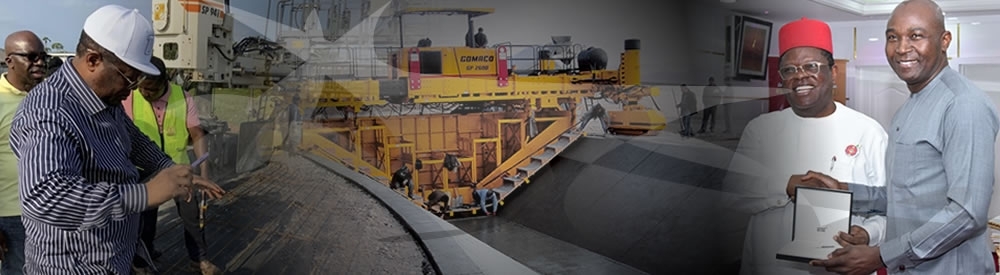
The Minister reiterated the Federal Ministry of Works' increasing adoption of concrete pavement on major highways, saying the need for greater durability and reduced maintenance costs is driving the policy.
According to him, the Ministry is developing infrastructure that would serve Nigerians for several decades and provide better value for public resources. He reiterated that concrete pavement provides longer durability guarantees, when properly designed and constructed, compared with the recurring maintenance challenges associated with conventional asphalt pavement.
Addressing questions concerning the procurement process for the Lagos-Calabar Coastal Highway, Umahi explained that the Ministry followed an applicable procurement framework. He said the special procurement approach was necessitated by the unique engineering requirements of constructing a major highway through a difficult coastal terrain.
According to him, the Ministry identified the need for a contractor with a proven track record in executing similar coastal infrastructure and subsequently made a recommendation to the Bureau of Public Procurement (BPP). He disclosed that the BPP reviewed the recommendation and gave its clearance, while the Federal Executive Council remained the final approving authority.
Umahi said the Ministry subjected the contractor's bid to scrutiny by comparing proposed rates with prevailing market prices for materials and other inputs. He stressed that both indigenous and expatriate contractors were subjected to the same pricing and evaluation principles.
*“We put everybody on the same platform. We sent the proposals to the Bureau of Public Procurement. They reviewed it and where they felt that the rates went beyond their expected maxima, they called our attention to it, and we reviewed the rates accordingly,”* he explained.
The Minister also disclosed that substantial progress had been recorded on the Outstanding Sections of the Abuja-Kaduna-Zaria-Kano Expressway, with all the sections completed except the Jere-Kaduna portion advancing steadily. He revealed that the Ministry is installing solar-powered lighting along the 375-kilometre Expressway to improve night visibility, thereby enhancing safety and security. He also said that the improved condition of the highway, alongside security interventions, was contributing to safer and more efficient movement along the corridor.
The Minister disclosed that the Ministry had commenced an *“Operation Rescue”* on the Benin-Asaba Expressway following challenges associated with the road and its existing concession arrangement. He said the Federal Government had intervened to restore mobility, while plans were being developed for a comprehensive reconstruction of the entire alignment, using continuously reinforced concrete pavement (CRCP). He stressed that Nigerians should not continue to suffer because of unresolved contractual or concession-related issues.
The Minister, particularly, highlighted the Federal Government's increased infrastructure investment in the South East, saying the Tinubu Administration had demonstrated a clear commitment to reintegrating the hitherto neglected zone into the national infrastructure development programme. He said several major road projects had either been approved, commenced, or completed by the present administration.
Umahi, who is from the zone, said it might not have the highest number of federal projects compared with other geopolitical zones, but it was no longer being left behind.
*“We can't continue to live in denial. What we have been crying for is being given. The people of the South East are being fully reintegrated into the national infrastructure development plan,”* he emphasised.
He cited the completion of the Second Niger Bridge, the rehabilitation of the 1st Niger Bridge, ongoing construction of major Bypasses and other federal road projects in the zone as evidence of the administration's commitment.
The Minister maintained that infrastructure development should be viewed from the perspective of national integration rather than regional politics. He stated that the Federal Government's infrastructure agenda was intended to ensure that every part of Nigeria benefited from strategic investments in roads, bridges and other transportation infrastructure.
On the Tax-Credit Scheme’s projects inherited from the previous administrations, Umahi explained that the Federal Government had taken proactive measures to address them, especially where private-sector partners were no longer able to sustain previously approved financing arrangements.
He warned contractors, who had received mobilisation or project funds but failed to deploy the funds on the work that the Ministry would take appropriate steps to recover such funds. He stressed that accountability, performance and value for money remained central to the Ministry's project execution strategy.
The Minister also addressed the ongoing intervention on the First Niger Bridge, explaining that measures were being introduced to improve traffic management and protect the structural integrity of the bridge. He said the Ministry was installing appropriate traffic management infrastructure, CCTV cameras and other security measures at its Asaba and Onitsha ends. According to Umahi, the measures were necessary because bridges are designed primarily for dynamic as opposed to static loads, explaining that prolonged traffic gridlock can create additional structural and safety challenges. He said remedial works, repainting and other maintenance activities were also being undertaken to ensure the long-term usage of the structure.
Umahi further explained that the Federal Government's road development strategy included environmental considerations, such as the planting of trees along major highways and the installation of solar-powered street lighting. He said the initiative would help improve visibility and the environment, provide shade, and contribute to the reduction of harmful emissions along major transport corridors.
The Minister also linked infrastructure development to the broader economic reforms of the Renewed Hope Agenda of the Tinubu Administration, saying improved roads and connectivity would support agricultural production, industrialisation, trade, commerce, tourism and investment. He maintained that the Federal Government's infrastructure investments were part of a broader strategy to move economic growth from the macroeconomic level to the grassroots.
On the financing of the major legacy projects, Umahi assured Nigerians that the Federal Government had put mechanisms in place to ensure that the projects are adequately funded to completion.
He revealed that significant portions of the projects had been funded, while loan-financing arrangements were being implemented for the remaining components.
He noted that the administration was determined not to embark on projects without ensuring that there was a credible financing mechanism for their completion.
*“We don't start what we will not finish. And we will not finish what we have not started,”* he stated.
The Minister reaffirmed the commitment of the Ministry to completing inherited projects, while simultaneously delivering new strategic infrastructure under the Tinubu Administration. He said the legacy projects were not merely road construction schemes but long-term investments designed to transform Nigeria's economic landscape, improve connectivity, strengthen national integration and security, and create opportunities for millions of Nigerians.
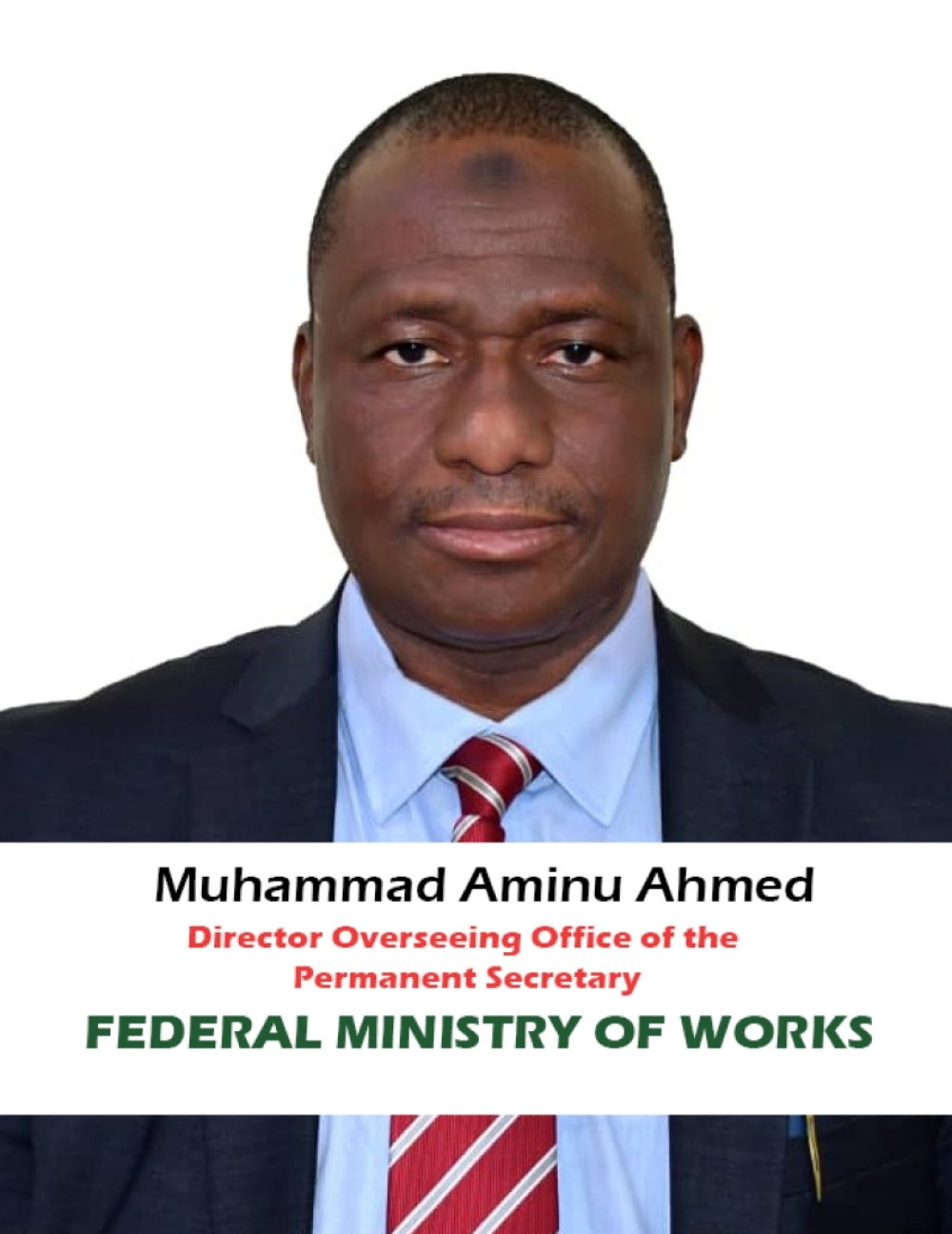
In his closing remarks, the *Director Overseeing the Office of the Permanent Secretary (DOOPS), Mohammed Aminu Ahmed, FCNA,* expressed appreciation to the Minister, members of the media, and all participants for attending. He commended the media for its continued partnership with the Ministry in informing Nigerians about government infrastructure projects and encouraged it to continue to provide constructive criticism on the Ministry's activities.

UMAHI HIGHLIGHTS IMPACT OF TINUBU’S LEGACY PROJECTS, SAYS INFRASTRUCTURE INVESTMENTS ARE TRANSFORMING NIGERIA The Honourable Minister of Works, Engr. David Umahi, CON, FNSE, FNATE, has highlighted the progress and transformative impact of the major infrastructure projects being executed by the President Bola Ahmed Tinubu-led Administration, describing them as strategic investments aimed at reshaping Nigeria’s transportation network, strengthening national connectivity and stimulating economic growth. Umahi said this on Wednesday, 7 October 2026, in Abuja, during a *Press Conference,* where he updated on the Tinubu Administration's *four Legacy Road Projects,* ongoing federal road interventions, completed projects, procurement processes, and the Ministry’s efforts to ensure value for money in the development of infrastructure. The Minister identified the four legacy projects as the Lagos-Calabar Coastal Highway, Sokoto-Badagry Superhighway, Calabar-Ebonyi-Abuja Highway (the Trans-Saharan Route/North-South connectivity corridor, and the Dualisation of Akwanga-Jos-Bauchi-Gombe-Biu-Maiduguri Road. According to him, the projects were conceived as strategic national infrastructure to connect all six (6) geopolitical zones, facilitate the movement of people and goods, open up economic opportunities, and strengthen Nigeria’s long-term development. Giving an update on the Lagos-Calabar Coastal Highway, Umahi disclosed that Section 1, covering 47 kilometres, has been completed, while significant progress has also been recorded on Section 2, covering approximately 55 kilometres. He explained that pavement works on Section 2 were nearing completion, while major flyovers, overpasses and underpasses were being constructed to address complex traffic, environmental and engineering challenges along the corridor. The Minister said some parts of the alignment had to be redesigned to accommodate existing and planned rail, road and industrial infrastructure, particularly around the Dangote Refinery and Lekki Deep Seaport axis. He stressed that the objective was to develop an integrated transportation system rather than an isolated road project. On the Ondo State axis, Umahi explained that the alignment was redesigned in some locations because of difficult terrain, deep pits and challenging subsoil conditions. He said the redesign was aimed at ensuring durability, safety and cost-effectiveness, with substantial filling and ground improvement works ongoing in some areas. The Minister further disclosed that President Tinubu had directed that the continuation of the Lagos-Calabar Coastal Highway be aligned with the existing East-West Road in parts of the Niger Delta area. He described the decision as a strategic engineering intervention that would address the increasing impact of flooding and climate change on the vital infrastructure. According to him, critical sections of the East-West Road would be raised to accommodate present and anticipated flood levels and ensure the continued functionality of the strategic route. Umahi also dwelled on the importance of the Construction of the Benin City Bypass and other sections of the littoral corridor in reducing congestion and improving movement across the South-South zone. On the Sokoto-Badagry Superhighway, the Minister said the project was designed to establish a major economic corridor linking Ilelah in Sokoto State with Badagry in Lagos State. He noted that various sections of the highway were at different stages of construction, with significant progress recorded across the Sokoto, Kebbi, Oyo, Ogun and Badagry axes, while those of Niger and Kwara States are commencing soon. Umahi said the strategic importance of the project is beyond road construction, noting that the corridor would unlock agricultural, industrial, tourism and other economic opportunities. He added that the Federal Government was exploring opportunities for complementary investments, including agriculture, housing, tourism and other economic activities along the major infrastructure corridors. Speaking on the third legacy project, the ancient Trans-Saharan Route, Engr. Umahi explained that it was designed to strengthen connectivity between the coastal axis and the northern parts of the country, thereby facilitating the movement of people, goods and services across the South-South, South East and North Central geopolitical zones. He disclosed that substantial progress had been recorded on the initial sections, while additional sections had been approved to make the corridor more economically viable and attractive to potential financiers. On the fourth legacy project, the Minister said the Akwanga-Jos-Bauchi-Gombe-Biu-Maiduguri single carriageway is being expanded as a major northern connectivity route. He explained that the scope had been extended to cover an additional spur from Jos to Ibi in Taraba State, with design and procurement processes ongoing. Responding to questions from journalists on the number of completed projects, the Minister listed several major road and bridge projects completed or ready for commissioning across the country. Among the projects, he mentioned Section I of the Lagos-Calabar Coastal Highway, the Kwanar Danja-Hadejia Road, the Kaduna-Pambeguwa Road, the Lafia Bypass, the Bodo-Bonny Road with Bridges along the Opobo Channel, among many others. He also listed the completed first lot of the Lagos-Calabar Coastal Highway, the Gombe-Potiskum rehabilitation project, sections of the Azare road linking Jigawa and Bauchi, the five-span Ampoha Bridge, the 23-kilometre, 23-span flyover project at Ekpoma-Benin axis, and a three-span, 75-metre dualised bridge structure. Umahi further disclosed that several sections of the Lagos-Badagry and Lagos-Ibadan, Lagos-Shagamu-Ore corridors had been completed, while other sections were at advanced stages of completion. He assured journalists that the Ministry was updating its compendium of completed and ongoing projects. “*We have quite a lot of projects. We have completed projects and we have ongoing projects. We are updating the compendium and it will be made available on the Ministry’s website and circulated to the public,”* he assured. The Minister reiterated the Federal Ministry of Works' increasing adoption of concrete pavement on major highways, saying the need for greater durability and reduced maintenance costs is driving the policy. According to him, the Ministry is developing infrastructure that would serve Nigerians for several decades and provide better value for public resources. He reiterated that concrete pavement provides longer durability guarantees, when properly designed and constructed, compared with the recurring maintenance challenges associated with conventional asphalt pavement. Addressing questions concerning the procurement process for the Lagos-Calabar Coastal Highway, Umahi explained that the Ministry followed an applicable procurement framework. He said the special procurement approach was necessitated by the unique engineering requirements of constructing a major highway through a difficult coastal terrain. Umahi said the Ministry subjected the contractor's bid to scrutiny by comparing proposed rates with prevailing market prices for materials and other inputs. He stressed that both indigenous and expatriate contractors were subjected to the same pricing and evaluation principles. *“We put everybody on the same platform. We sent the proposals to the Bureau of Public Procurement. They reviewed it and where they felt that the rates went beyond their expected maxima, they called our attention to it, and we reviewed the rates accordingly,”* he explained. The Minister also disclosed that substantial progress had been recorded on the Outstanding Sections of the Abuja-Kaduna-Zaria-Kano Expressway, with all the sections completed except the Jere-Kaduna portion advancing steadily. He revealed that the Ministry is installing solar-powered lighting along the 375-kilometre Expressway to improve night visibility, thereby enhancing safety and security. He also said that the improved condition of the highway, alongside security interventions, was contributing to safer and more efficient movement along the corridor. The Minister disclosed that the Ministry had commenced an *“Operation Rescue”* on the Benin-Asaba Expressway following challenges associated with the road and its existing concession arrangement. He said the Federal Government had intervened to restore mobility, while plans were being developed for a comprehensive reconstruction of the entire alignment, using continuously reinforced concrete pavement (CRCP). He stressed that Nigerians should not continue to suffer because of unresolved contractual or concession-related issues. The Minister, particularly, highlighted the Federal Government's increased infrastructure investment in the South East, saying the Tinubu Administration had demonstrated a clear commitment to reintegrating the hitherto neglected zone into the national infrastructure development programme. He said several major road projects had either been approved, commenced, or completed by the present administration. *“We can't continue to live in denial. What we have been crying for is being given. The people of the South East are being fully reintegrated into the national infrastructure development plan,”* he emphasised. He cited the completion of the Second Niger Bridge, the rehabilitation of the 1st Niger Bridge, ongoing construction of major Bypasses and other federal road projects in the zone as evidence of the administration's commitment. The Minister maintained that infrastructure development should be viewed from the perspective of national integration rather than regional politics. He stated that the Federal Government's infrastructure agenda was intended to ensure that every part of Nigeria benefited from strategic investments in roads, bridges and other transportation infrastructure. On the Tax-Credit Scheme’s projects inherited from the previous administrations, Umahi explained that the Federal Government had taken proactive measures to address them, especially where private-sector partners were no longer able to sustain previously approved financing arrangements. He warned contractors, who had received mobilisation or project funds but failed to deploy the funds on the work that the Ministry would take appropriate steps to recover such funds. He stressed that accountability, performance and value for money remained central to the Ministry's project execution strategy. The Minister also addressed the ongoing intervention on the First Niger Bridge, explaining that measures were being introduced to improve traffic management and protect the structural integrity of the bridge. He said the Ministry was installing appropriate traffic management infrastructure, CCTV cameras and other security measures at its Asaba and Onitsha ends. According to Umahi, the measures were necessary because bridges are designed primarily for dynamic as opposed to static loads, explaining that prolonged traffic gridlock can create additional structural and safety challenges. He said remedial works, repainting and other maintenance activities were also being undertaken to ensure the long-term usage of the structure. Umahi further explained that the Federal Government's road development strategy included environmental considerations, such as the planting of trees along major highways and the installation of solar-powered street lighting. He said the initiative would help improve visibility and the environment, provide shade, and contribute to the reduction of harmful emissions along major transport corridors. The Minister also linked infrastructure development to the broader economic reforms of the Renewed Hope Agenda of the Tinubu Administration, saying improved roads and connectivity would support agricultural production, industrialisation, trade, commerce, tourism and investment. He maintained that the Federal Government's infrastructure investments were part of a broader strategy to move economic growth from the macroeconomic level to the grassroots. On the financing of the major legacy projects, Umahi assured Nigerians that the Federal Government had put mechanisms in place to ensure that the projects are adequately funded to completion. He noted that the administration was determined not to embark on projects without ensuring that there was a credible financing mechanism for their completion. The Minister reaffirmed the commitment of the Ministry to completing inherited projects, while simultaneously delivering new strategic infrastructure under the Tinubu Administration. He said the legacy projects were not merely road construction schemes but long-term investments designed to transform Nigeria's economic landscape, improve connectivity, strengthen national integration and security, and create opportunities for millions of Nigerians. In his closing remarks, the *Director Overseeing the Office of the Permanent Secretary (DOOPS), Mohammed Aminu Ahmed, FCNA,* expressed appreciation to the Minister, members of the media, and all participants for attending. He commended the media for its continued partnership with the Ministry in informing Nigerians about government infrastructure projects and encouraged it to continue to provide constructive criticism on the Ministry's activities.
According to him, the Ministry identified the need for a contractor with a proven track record in executing similar coastal infrastructure and subsequently made a recommendation to the Bureau of Public Procurement (BPP). He disclosed that the BPP reviewed the recommendation and gave its clearance, while the Federal Executive Council remained the final approving authority.
Umahi, who is from the zone, said it might not have the highest number of federal projects compared with other geopolitical zones, but it was no longer being left behind.
He revealed that significant portions of the projects had been funded, while loan-financing arrangements were being implemented for the remaining components.
*“We don't start what we will not finish. And we will not finish what we have not started,”* he stated.
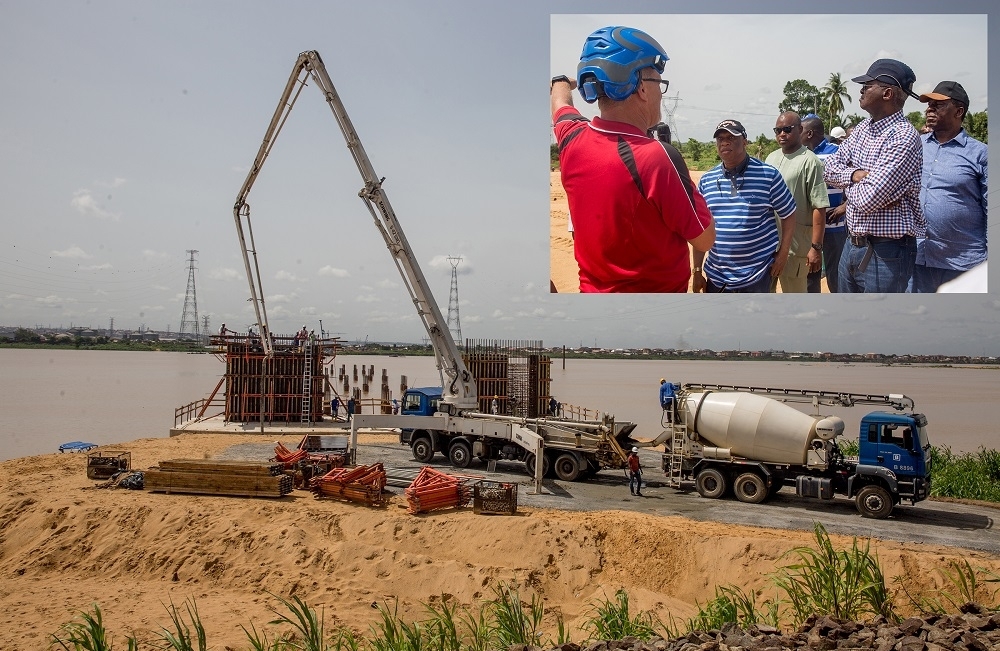
FG Committed To Even National Development – Fashola The Minister of Power Works and Housing, Babatunde Raji Fashola, has reiterated the commitment of the administration of President Muhammad Buhari to even national development as opposed to partisan politics and would be willing to work with all state governments irrespective of their party affiliations or ethnic divide. He made this remark when he paid courtesy calls on Governors of Ebonyi State, Engr. David Umahi, Enugu State, Ifeanyi Ugwuanyi and Anambra State, Chief Willi Obiano, at their various Offices during his three-day working inspection tour of Federal Government projects in the South East zone of the country. Fashola commended the Governor of Ebonyi state for keying into agricultural initiative of the Federal Government while assuring him of the present administration’s readiness to link Ebonyi and Cameroon through road boarders, which would facilitate international trade for the South Eastern States. The Governor in his response thanked the Minister for his visit and pleaded with the Minister to facilitate the payment of fund owed his state, which was incurred for maintaining the Federal roads within his domain. While at the Enugu Government house, the Minister enjoined the Governor to work in mutual cooperation with Electric Distribution Company of Nigeria (DISCO) towards having regular supply of power as Federal Government has provided a window for states and corporate bodies to buy power directly. He also added that the window also provides for individual or state production of private power up to 1 megawatt without conditions attached. Similarly, in Anambra State, the Minister gave account of all the Federal Government projects he had inspected in the state, and on the indebtedness of Federal Government to the state on Road maintenance, the Minister said that what is left is appropriation from the National Assembly. He, however, warned that states must observe due process before they embark on rehabilitation of Federal roads to avoid loss of their investment. Projects inspected in the South East before rounding off his working visit included National Housing Programme in all South East states, Energising Economy Electrification of Ariaria Market in Aba., Rehabilitation of Calabar -Itu-Ikot Ekpene -Aba Road ,Section III, Enugu -Port Harcourt Dual Carriageway Section II among others. The Site of Zik’s Mausoleum and Library Complex in Awka including Second Niger Bridge in Anambra State were also inspected. ...
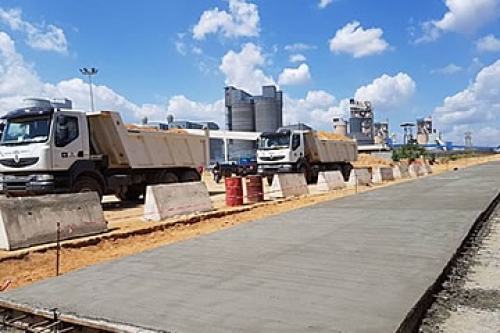
FG Threatens To Terminate Abaji-Koton-Karfe Dualisation Road Project The Ministry of Power, Works and Housing on Wednesday threatened to terminate the contract for the dualisation of the Abaji-Koton-Karfe road due to “negligence” by the contractor for five months. The Director of Highways Constructions and Rehabilitation of the ministry, Mr Dayyabu Mamman made the recommendation on Wednesday during an inspection by the Minister of State II for Power, Works and Housing, Suleiman Zarma. The News Agency of Nigeria (NAN) reports that the minister in the company of some ministry’s officials was on an inspection of the Federal highways projects in Kogi state, including housing projects. The project which is being handled by Bulletine Construction Company Ltd at the cost of N15. 1 billion is part of the dualisation of the Abuja-Lokoja Road; section III (Abaji-Koton-Karfe) C/No.5884. The 49.40 km road construction which began on Oct. 12, 2006 with initial completion date of April 11, 2009 but extended completion date of March 12, 2014 has 159.72 as per cent time lapse. “The site has been inactive since December 2017, labourers have not been deployed on site, I recommend for the termination of the project. “The project is giving us sleepiness nights, all effort to make them work to hasten the completion of the dualisation proved abortive for the past five months,’’ the Director noted while briefing the minister. Mamman, also the North-Central Zone Director noted that the contractor who has spent 12 years on the project with only 54.48 per cent completion and has applied for extension of contract period. “The contractor has an advance payment of N1.6 billion only to pay back. None rendering approved services which the contractor has received payment for also amounted to the sum of N414.2 million,’’ he said. He identified another challenge facing the project as the “Rutting on the carriage way’’ report which the department of Materials and Geotechnic has conducted pavement evaluation test to certify the reason for the failure but has not been submitted. The Engineer also ascribed delay in the project to high rate of accidents on the road due to untidiness of the site. Mamman recalled that the contractor has been issued warning letters for poor performance and series of meetings have equally been held with the contractor to encourage increase performance but it yielded no result. Meanwhile, thethe company’s site agent, Mr Peter Omenye confirmed that the contract was abandoned because of labour related issues concerning workers salaries and entitlement. According to him, the workers have refused to work until they are paid all their entitlements. Reacting to this, the minister noted that there was every reason to terminate the contract because the contractor has not been on site for five months because of domestic issues. “It is not because we have any issue with them, we do not have any issue with them rather they have issues with their employees; I understand that they have not been paid salaries or allowances. “We do not owe, so we want construction to continue, we have no reason to be held hostage by any contractor in an event where we are not in default. However, Zarma who is also a Surveyor noted that in terms of contractor’s conditions, the ministry would go into the documents to look at the contractor’s conditions before making categorical statement. Zarma also inspected the dualisation of Abuja-Lokoja road, section IV (Koton-Karfe-Lokoja) Obajana junction, C/No. 5885 being handled by Gitto Construction Company with 61 per cent completion. The minister had earlier inspected the dualisation project of Abuja-Abaji-Lokoja road (section 1), contract No. 5862 including spur to Airport junction. He lauded the road work progress, emphasising that there was fulfilment of President Muhammadu Buhari’s commitment to fix infrastructure deficit in the country. He said road project were always costly due to outsourcing of raw materials such as granite and cement including conducting soil test before actual project execution commenced. NAN reports that the percentage completion of the project being handle by Dantata and Sawoe construction Ltd. as at April 2018 is 90 per cent while the financial expenditure as at January 2017 is 88 per cent. The major works completed include the construction of new road (11.4km) along Airport road Spur, rehabilitation of existing road (10.04KM), and construction of interchange at Giri and Gwagwalada among others. Source: (NAN) ...
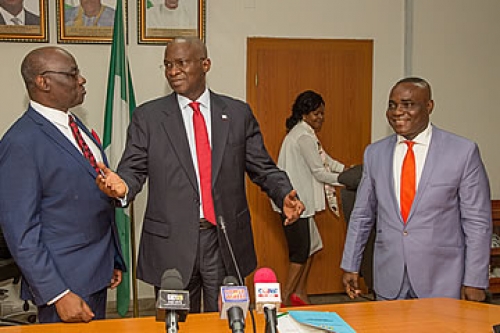
Fashola Inaugurates NERC Chairman, Charges Commission On Customer Service * Says having fully constituted NERC with the inauguration of the Chairman, the focus would now be on Metering * Expresses delight that between 2015 and now, many consumers have experienced better, longer power supply * Azura Power Plant now ready to go into full operation says the Minister * New Chairman promises collaboration with Commissioners, Ministry and legislature to take Power Sector to the next level The Minister of Power, Works and Housing, Mr. Babatunde Fashola SAN, Thursday inaugurated the Chairman of the Nigerian Electricity Regulatory Commission (NERC) charging the Commission to focus more on Customer Service as the critical component that would move the Power Sector forward. Speaking after the brief but colourful ceremony at the Conference Room of the Ministry, Fashola, who said Customer Service was a challenging bridge that must be crossed, said it was the duty of the Commission to make Consumers understand what was going on with their metering, what are their rights and so on and so forth as well as who to hold accountable when things went wrong with service delivery. The Minister told the new NERC Chairman, Professor James Momoh, “Consumers must understand what is going on with their metering, what are their rights and so on and so forth; who do they hold accountable, where are the NERC field offices to which they can complain; what is the process of getting remediation for service that is not in sufficient quantity and of quality?” Promising to make himself available to render assistance in terms of “policy guidelines, policy directions and helping to move the wheel of bureaucracy to make progress to get the work done”, he added that the Commission also had to do a lot of enlightenment among the customers in terms of making them understand who and where to complain when they needed service. “I want to thank the Permanent Secretary and all the members of the team. I continue to receive those text messages; I like to thank the Director of Distribution and her team; they are the ones I send those texts of complaints, ‘Our meter has failed, etc’ and they respond as best they can all over the country and I get feedbacks from those who have received service”, he said. Fashola, who described the Commission as the Policeman of the Power Sector, expressed delight that it now has the full complement of its membership with a Chairman, added, “I am one of the happiest people today and I will tell Nigerians why. Since Privatization took place, one of the things that have happened is that the size of the Ministry of Power shrank significantly”. “I think our staff strength before I came was in the region of 15,000 and all of that is now less than a thousand people because most of the staff some retired as a consequence of the Privatization and transfer of ownership to the GenCos and the DisCos. Today, unlike the old Power Holding Company of Nigeria (PHCN), this Ministry does not own any Gencos or DisCos”, he further explained adding that the Ministry only supervises the Yola Disco where, according to him, privatization became problematic and force majeure was declared. According to the Minister, “The truth is that we don’t buy meters and we don’t supply meters. Really and truly our role now is just to make policies; our quality of energy, type of energy; whether it is hydro, thermal, and solar or wind and to make sure that if there are problems we go and solve them. And that is in terms of government activities”. Reiterating that owners of the power assets today are the GenCos and DisCos, Fashola pointed out that the power industry was now a business where the aforementioned investors are now responsible for providing electricity to Nigerians, adding, “The owners of the DisCos are the ones who now have the challenge and responsibility of distributing electricity to Nigerians”. The Minister added that the Transmission Company of Nigeria (TCN), owned by the government, was now run as a business to transmit electricity pointing out that all of the organizations, both private and public, were subject to the regulatory power of NERC whose Chairman was being inaugurated. “So that is the Policeman of the Power Industry”, he said. Describing Metering as a “big issue” in the industry, Fashola, who noted that the Commission has already issued regulations concerning the problem promised that government was working hard on how quickly meters could come, adding that for those people not connected to the grid, NERC has also issued regulations for mini-grids and how it would happen. The Minister thanked the Commissioners of NERC for their collaborative working relationship without a substantive Chairman adding, “I value the work that you do; but sadly I just have to ask you to do more. Nigerians need to experience the full benefit that Privatization can bring. I am convinced that it will happen. Irrespective of what we see, what matters most now is what people are experiencing”. He expressed delight that between 2015 and now, many consumers have experienced better supply by way of having power for longer hours compared with before, buying less diesel and running their generators for shorter periods adding, however, that in some places people would still say that their experience was not good. “So that means there is still a lot of work to do”, he said. On the progress being made in the sector, Fashola declared, “By increasing generation to 7,000MW, increasing transmission to over 7,000MW and increasing distribution from 2,690MW to an average of 4,900MW and 5,000MW, clearly that is progress and that is what we must do more”. The Minister, who acknowledged that there were challenges that came with the Privatization of the industry such as metering and governance issues, said that was why government came up with the Power Sector Recovery Programme (PSRP) as a component of its Economic Recovery and Growth Plan (ERGP) to solve the challenges and put the sector on the path of sustainable growth. “What we see is that like every policy, Privatization will have its challenges. We have gathered all the challenges together and that is what we have put in the PSRP; from meters to governance and one of the governance issues is the full constitution of the NERC with the appointment of the Chairman and today one item in the list of to-do items of the PSRP is now completed and we can proudly report that”, he said. The Minister said, having solved that governance problem, other items to be faced include metering and expansion of distribution network adding that although there is an existing capacity of 2,000MW of power that could not be distributed, government was working to see what it could do quickly to solve the problem before the end of the year. He disclosed that the Azura Power in Edo State just sent a message that their plant was now completed and was ready to run full operation, adding, “That is 459 MW of power. We are expecting another 240 MW from Afam and another 215 MW from Kaduna and also from Kashimbila. There is a lot of power coming. So, the distribution end is where our real challenge lies”. The Minister, who noted that the mini-grid regulations issued recently by NERC have started producing results with impacts in markets, pointed out that later this year, places like Sura Market in Lagos, Sabon Gari Market in Kano, Ariaria Market in Aba and about 13 other markets across the country were going to be energized. “So the progress we are making inspires us to continue. It reinforces the methods that we have formulated and the choices that we have made, that clearly we are on the right part. This is clearly an elephant and so we are going to break it bit by bit because you can’t eat an elephant whole”, he said. Thanking President Muhammadu Buhari for the choice of Professor Momoh as Chairman of NERC, Fashola also thanked the Chairman for deciding “to find his way home to come and be part of fixing what may be wrong instead of pointing fingers at what is wrong”. “I think that it is always easy to complain about what is wrong; but it is much more challenging to volunteer to be part of the problem solving team and that is what Professor Momoh has done in accepting this nomination to serve his country”, the Minister said adding that the new Chairman while needing the help of God in fulfilling his oath of office would also need his own resolve, the help of his wife, friends and family for the same purpose. Also singled out for special thanks were the Vice-Chairman of the Commission, Mr. Sanusi Garba, who also acted as Chairman in the absence of the substantive Chairman, Mr. Frank Okafor, Mr. Musiliu Oseni and other commissioners of the Commission who held the fort till the inauguration as well as the Senate who, according to him, although they delayed the confirmation, “It is better late than never”. In his acceptance remarks, the new Chairman, Professor James Momoh, pledged to abide by the oath of office which he had earlier taken, adding that he was proud to return and serve his country in the capacity he had been chosen after serving in the United States for so many years. “I understand that I have been given a trust. My job is a trust. I want to assure you that I am a team player. I will work with the Commissioners of NERC; I will work with the Ministry and I will work with the legislative arm of government so that together we will forge a relationship where we understand we have been given a trust to move the power sector to the next level”, he said. Also present at the occasion were the Vice Chairman of NERC and other Commissioners of the Commission while on the Ministry’s side were the Permanent Secretary Power, Mr. Louis Edozien, Directors and Special Advisers to the Minister. ...
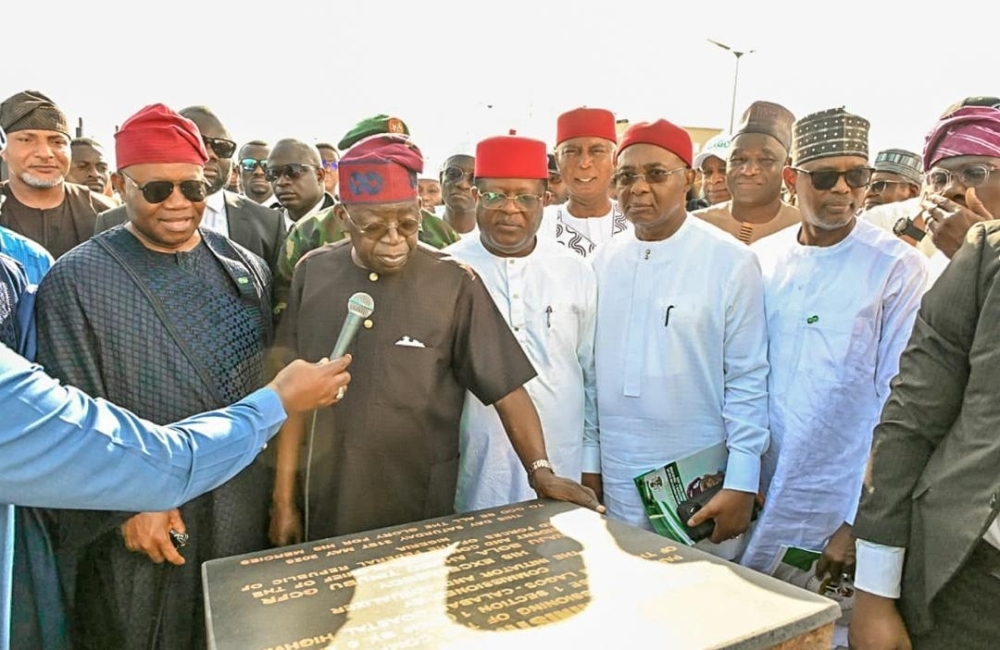
DRIVING NIGERIA’S FUTURE: CELEBRATING TWO YEARS OF TRANSFORMATIVE LEADERSHIP AND THE LAGOS-CALABAR COASTAL HIGHWAY MILESTONE
DRIVING NIGERIA’S FUTURE: CELEBRATING TWO YEARS OF TRANSFORMATIVE LEADERSHIP AND THE LAGOS-CALABAR COASTAL HIGHWAY MILESTONE
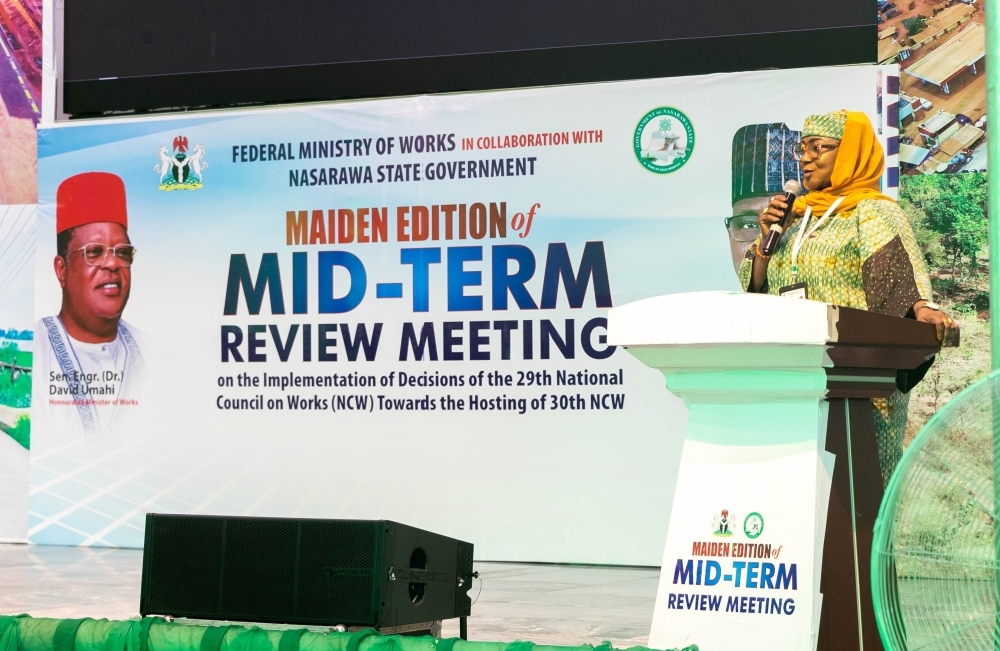
MID -TERM REVIEW MEETING ON THE IMPLIMENTATION OF THE DECISIONS REACHED AT THE 29TH NATIONAL COUNCIL ON WORKS (NCW) DAY 1
MID -TERM REVIEW MEETING ON THE IMPLIMENTATION OF THE DECISIONS REACHED AT THE 29TH NATIONAL COUNCIL ON WORKS (NCW) DAY 1