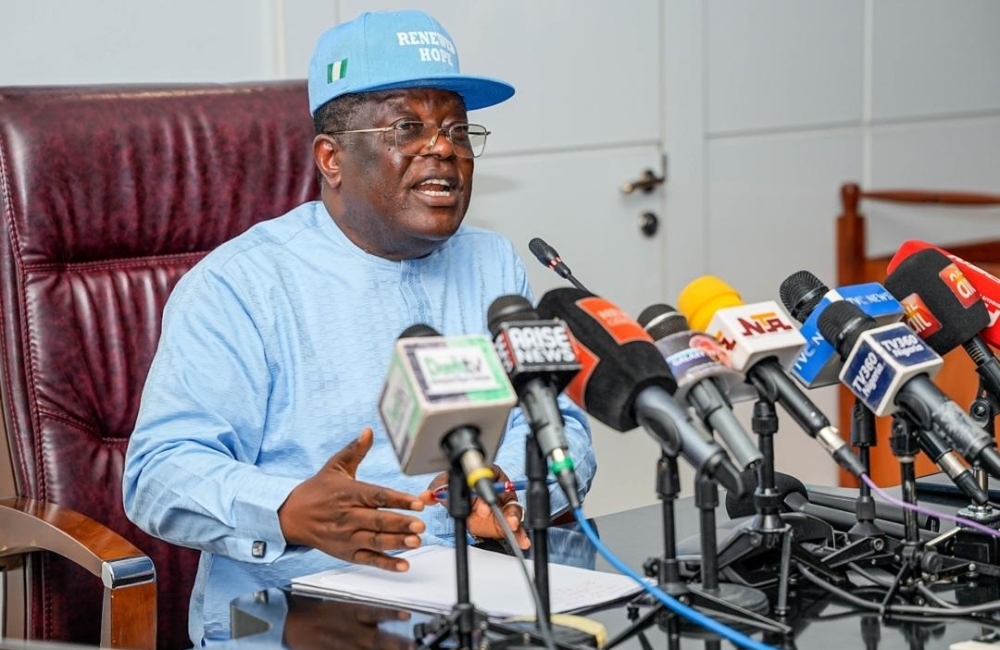
UMAHI HIGHLIGHTS IMPACT OF TINUBU’S LEGACY PROJECTS, SAYS INFRASTRUCTURE INVESTMENTS ARE TRANSFORMING NIGERIA
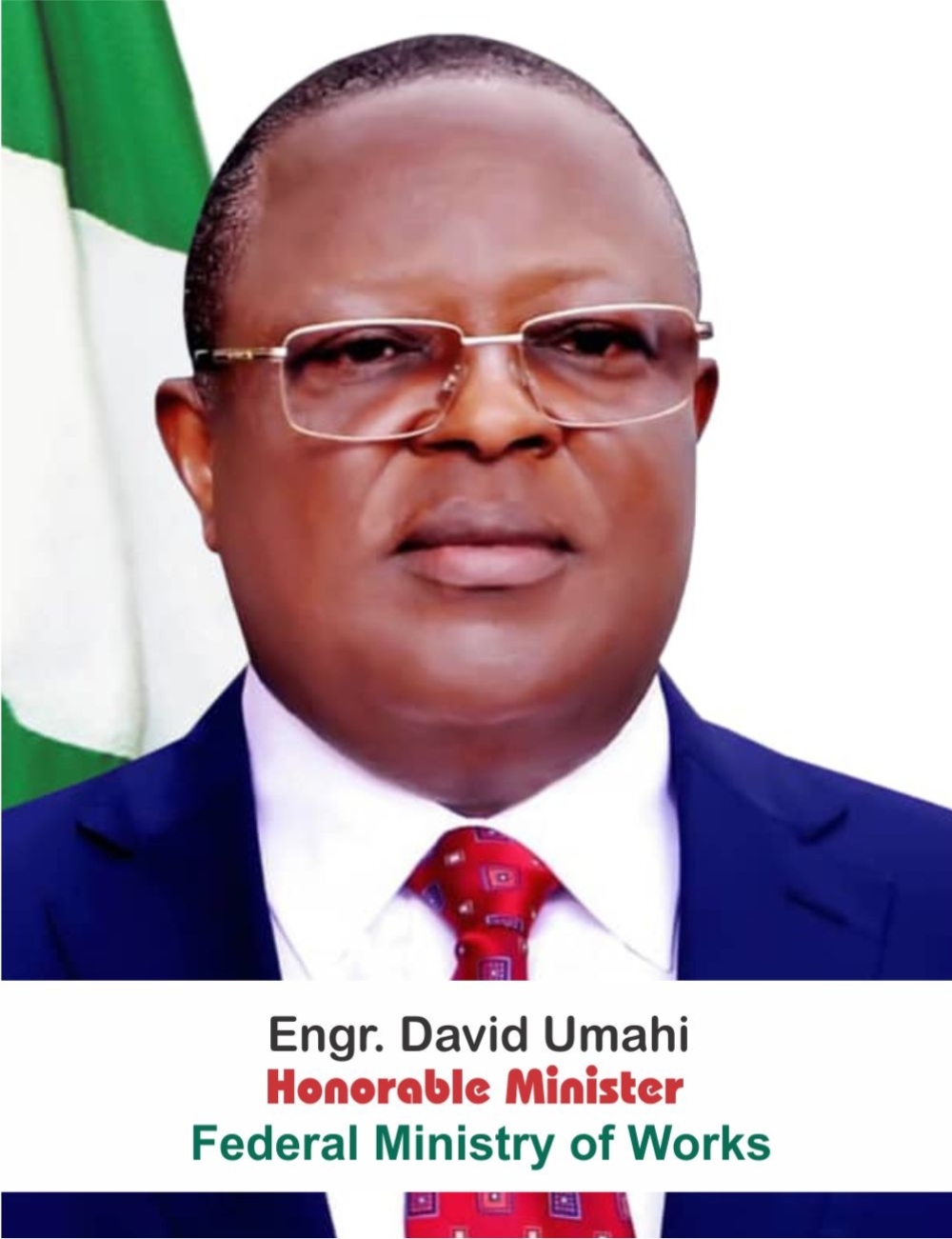
The Honourable Minister of Works, Engr. David Umahi, CON, FNSE, FNATE, has highlighted the progress and transformative impact of the major infrastructure projects being executed by the President Bola Ahmed Tinubu-led Administration, describing them as strategic investments aimed at reshaping Nigeria’s transportation network, strengthening national connectivity and stimulating economic growth.
Umahi said this on Wednesday, 7 October 2026, in Abuja, during a *Press Conference,* where he updated on the Tinubu Administration's *four Legacy Road Projects,* ongoing federal road interventions, completed projects, procurement processes, and the Ministry’s efforts to ensure value for money in the development of infrastructure.
The Minister identified the four legacy projects as the Lagos-Calabar Coastal Highway, Sokoto-Badagry Superhighway, Calabar-Ebonyi-Abuja Highway (the Trans-Saharan Route/North-South connectivity corridor, and the Dualisation of Akwanga-Jos-Bauchi-Gombe-Biu-Maiduguri Road.
According to him, the projects were conceived as strategic national infrastructure to connect all six (6) geopolitical zones, facilitate the movement of people and goods, open up economic opportunities, and strengthen Nigeria’s long-term development.
Giving an update on the Lagos-Calabar Coastal Highway, Umahi disclosed that Section 1, covering 47 kilometres, has been completed, while significant progress has also been recorded on Section 2, covering approximately 55 kilometres.
He explained that pavement works on Section 2 were nearing completion, while major flyovers, overpasses and underpasses were being constructed to address complex traffic, environmental and engineering challenges along the corridor.
The Minister said some parts of the alignment had to be redesigned to accommodate existing and planned rail, road and industrial infrastructure, particularly around the Dangote Refinery and Lekki Deep Seaport axis. He stressed that the objective was to develop an integrated transportation system rather than an isolated road project. On the Ondo State axis, Umahi explained that the alignment was redesigned in some locations because of difficult terrain, deep pits and challenging subsoil conditions. He said the redesign was aimed at ensuring durability, safety and cost-effectiveness, with substantial filling and ground improvement works ongoing in some areas.
The Minister further disclosed that President Tinubu had directed that the continuation of the Lagos-Calabar Coastal Highway be aligned with the existing East-West Road in parts of the Niger Delta area.
He described the decision as a strategic engineering intervention that would address the increasing impact of flooding and climate change on the vital infrastructure. According to him, critical sections of the East-West Road would be raised to accommodate present and anticipated flood levels and ensure the continued functionality of the strategic route.
Umahi also dwelled on the importance of the Construction of the Benin City Bypass and other sections of the littoral corridor in reducing congestion and improving movement across the South-South zone.
On the Sokoto-Badagry Superhighway, the Minister said the project was designed to establish a major economic corridor linking Ilelah in Sokoto State with Badagry in Lagos State. He noted that various sections of the highway were at different stages of construction, with significant progress recorded across the Sokoto, Kebbi, Oyo, Ogun and Badagry axes, while those of Niger and Kwara States are commencing soon.
Umahi said the strategic importance of the project is beyond road construction, noting that the corridor would unlock agricultural, industrial, tourism and other economic opportunities. He added that the Federal Government was exploring opportunities for complementary investments, including agriculture, housing, tourism and other economic activities along the major infrastructure corridors.
Speaking on the third legacy project, the ancient Trans-Saharan Route, Engr. Umahi explained that it was designed to strengthen connectivity between the coastal axis and the northern parts of the country, thereby facilitating the movement of people, goods and services across the South-South, South East and North Central geopolitical zones.
He disclosed that substantial progress had been recorded on the initial sections, while additional sections had been approved to make the corridor more economically viable and attractive to potential financiers.
On the fourth legacy project, the Minister said the Akwanga-Jos-Bauchi-Gombe-Biu-Maiduguri single carriageway is being expanded as a major northern connectivity route. He explained that the scope had been extended to cover an additional spur from Jos to Ibi in Taraba State, with design and procurement processes ongoing.
Responding to questions from journalists on the number of completed projects, the Minister listed several major road and bridge projects completed or ready for commissioning across the country. Among the projects, he mentioned Section I of the Lagos-Calabar Coastal Highway, the Kwanar Danja-Hadejia Road, the Kaduna-Pambeguwa Road, the Lafia Bypass, the Bodo-Bonny Road with Bridges along the Opobo Channel, among many others.
He also listed the completed first lot of the Lagos-Calabar Coastal Highway, the Gombe-Potiskum rehabilitation project, sections of the Azare road linking Jigawa and Bauchi, the five-span Ampoha Bridge, the 23-kilometre, 23-span flyover project at Ekpoma-Benin axis, and a three-span, 75-metre dualised bridge structure.
Umahi further disclosed that several sections of the Lagos-Badagry and Lagos-Ibadan, Lagos-Shagamu-Ore corridors had been completed, while other sections were at advanced stages of completion.
He assured journalists that the Ministry was updating its compendium of completed and ongoing projects. “*We have quite a lot of projects. We have completed projects and we have ongoing projects. We are updating the compendium and it will be made available on the Ministry’s website and circulated to the public,”* he assured.
The Minister reiterated the Federal Ministry of Works' increasing adoption of concrete pavement on major highways, saying the need for greater durability and reduced maintenance costs is driving the policy.
According to him, the Ministry is developing infrastructure that would serve Nigerians for several decades and provide better value for public resources. He reiterated that concrete pavement provides longer durability guarantees, when properly designed and constructed, compared with the recurring maintenance challenges associated with conventional asphalt pavement.
Addressing questions concerning the procurement process for the Lagos-Calabar Coastal Highway, Umahi explained that the Ministry followed an applicable procurement framework. He said the special procurement approach was necessitated by the unique engineering requirements of constructing a major highway through a difficult coastal terrain.
According to him, the Ministry identified the need for a contractor with a proven track record in executing similar coastal infrastructure and subsequently made a recommendation to the Bureau of Public Procurement (BPP). He disclosed that the BPP reviewed the recommendation and gave its clearance, while the Federal Executive Council remained the final approving authority.
Umahi said the Ministry subjected the contractor's bid to scrutiny by comparing proposed rates with prevailing market prices for materials and other inputs. He stressed that both indigenous and expatriate contractors were subjected to the same pricing and evaluation principles.
*“We put everybody on the same platform. We sent the proposals to the Bureau of Public Procurement. They reviewed it and where they felt that the rates went beyond their expected maxima, they called our attention to it, and we reviewed the rates accordingly,”* he explained.
The Minister also disclosed that substantial progress had been recorded on the Outstanding Sections of the Abuja-Kaduna-Zaria-Kano Expressway, with all the sections completed except the Jere-Kaduna portion advancing steadily. He revealed that the Ministry is installing solar-powered lighting along the 375-kilometre Expressway to improve night visibility, thereby enhancing safety and security. He also said that the improved condition of the highway, alongside security interventions, was contributing to safer and more efficient movement along the corridor.
The Minister disclosed that the Ministry had commenced an *“Operation Rescue”* on the Benin-Asaba Expressway following challenges associated with the road and its existing concession arrangement. He said the Federal Government had intervened to restore mobility, while plans were being developed for a comprehensive reconstruction of the entire alignment, using continuously reinforced concrete pavement (CRCP). He stressed that Nigerians should not continue to suffer because of unresolved contractual or concession-related issues.
The Minister, particularly, highlighted the Federal Government's increased infrastructure investment in the South East, saying the Tinubu Administration had demonstrated a clear commitment to reintegrating the hitherto neglected zone into the national infrastructure development programme. He said several major road projects had either been approved, commenced, or completed by the present administration.
Umahi, who is from the zone, said it might not have the highest number of federal projects compared with other geopolitical zones, but it was no longer being left behind.
*“We can't continue to live in denial. What we have been crying for is being given. The people of the South East are being fully reintegrated into the national infrastructure development plan,”* he emphasised.
He cited the completion of the Second Niger Bridge, the rehabilitation of the 1st Niger Bridge, ongoing construction of major Bypasses and other federal road projects in the zone as evidence of the administration's commitment.
The Minister maintained that infrastructure development should be viewed from the perspective of national integration rather than regional politics. He stated that the Federal Government's infrastructure agenda was intended to ensure that every part of Nigeria benefited from strategic investments in roads, bridges and other transportation infrastructure.
On the Tax-Credit Scheme’s projects inherited from the previous administrations, Umahi explained that the Federal Government had taken proactive measures to address them, especially where private-sector partners were no longer able to sustain previously approved financing arrangements.
He warned contractors, who had received mobilisation or project funds but failed to deploy the funds on the work that the Ministry would take appropriate steps to recover such funds. He stressed that accountability, performance and value for money remained central to the Ministry's project execution strategy.
The Minister also addressed the ongoing intervention on the First Niger Bridge, explaining that measures were being introduced to improve traffic management and protect the structural integrity of the bridge. He said the Ministry was installing appropriate traffic management infrastructure, CCTV cameras and other security measures at its Asaba and Onitsha ends. According to Umahi, the measures were necessary because bridges are designed primarily for dynamic as opposed to static loads, explaining that prolonged traffic gridlock can create additional structural and safety challenges. He said remedial works, repainting and other maintenance activities were also being undertaken to ensure the long-term usage of the structure.
Umahi further explained that the Federal Government's road development strategy included environmental considerations, such as the planting of trees along major highways and the installation of solar-powered street lighting. He said the initiative would help improve visibility and the environment, provide shade, and contribute to the reduction of harmful emissions along major transport corridors.
The Minister also linked infrastructure development to the broader economic reforms of the Renewed Hope Agenda of the Tinubu Administration, saying improved roads and connectivity would support agricultural production, industrialisation, trade, commerce, tourism and investment. He maintained that the Federal Government's infrastructure investments were part of a broader strategy to move economic growth from the macroeconomic level to the grassroots.
On the financing of the major legacy projects, Umahi assured Nigerians that the Federal Government had put mechanisms in place to ensure that the projects are adequately funded to completion.
He revealed that significant portions of the projects had been funded, while loan-financing arrangements were being implemented for the remaining components.
He noted that the administration was determined not to embark on projects without ensuring that there was a credible financing mechanism for their completion.
*“We don't start what we will not finish. And we will not finish what we have not started,”* he stated.
The Minister reaffirmed the commitment of the Ministry to completing inherited projects, while simultaneously delivering new strategic infrastructure under the Tinubu Administration. He said the legacy projects were not merely road construction schemes but long-term investments designed to transform Nigeria's economic landscape, improve connectivity, strengthen national integration and security, and create opportunities for millions of Nigerians.
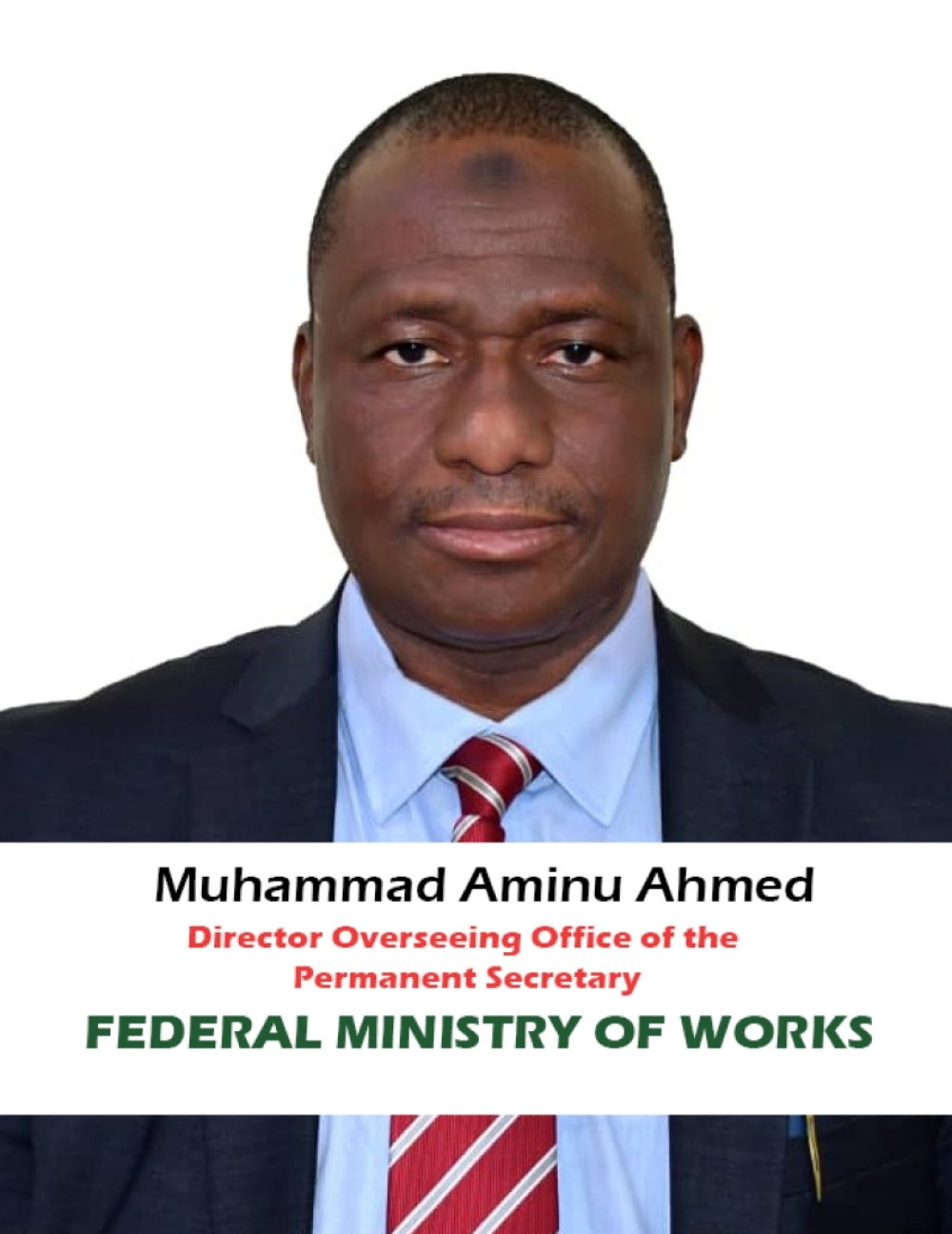
In his closing remarks, the *Director Overseeing the Office of the Permanent Secretary (DOOPS), Mohammed Aminu Ahmed, FCNA,* expressed appreciation to the Minister, members of the media, and all participants for attending. He commended the media for its continued partnership with the Ministry in informing Nigerians about government infrastructure projects and encouraged it to continue to provide constructive criticism on the Ministry's activities.

UMAHI HIGHLIGHTS IMPACT OF TINUBU’S LEGACY PROJECTS, SAYS INFRASTRUCTURE INVESTMENTS ARE TRANSFORMING NIGERIA The Honourable Minister of Works, Engr. David Umahi, CON, FNSE, FNATE, has highlighted the progress and transformative impact of the major infrastructure projects being executed by the President Bola Ahmed Tinubu-led Administration, describing them as strategic investments aimed at reshaping Nigeria’s transportation network, strengthening national connectivity and stimulating economic growth. Umahi said this on Wednesday, 7 October 2026, in Abuja, during a *Press Conference,* where he updated on the Tinubu Administration's *four Legacy Road Projects,* ongoing federal road interventions, completed projects, procurement processes, and the Ministry’s efforts to ensure value for money in the development of infrastructure. The Minister identified the four legacy projects as the Lagos-Calabar Coastal Highway, Sokoto-Badagry Superhighway, Calabar-Ebonyi-Abuja Highway (the Trans-Saharan Route/North-South connectivity corridor, and the Dualisation of Akwanga-Jos-Bauchi-Gombe-Biu-Maiduguri Road. According to him, the projects were conceived as strategic national infrastructure to connect all six (6) geopolitical zones, facilitate the movement of people and goods, open up economic opportunities, and strengthen Nigeria’s long-term development. Giving an update on the Lagos-Calabar Coastal Highway, Umahi disclosed that Section 1, covering 47 kilometres, has been completed, while significant progress has also been recorded on Section 2, covering approximately 55 kilometres. He explained that pavement works on Section 2 were nearing completion, while major flyovers, overpasses and underpasses were being constructed to address complex traffic, environmental and engineering challenges along the corridor. The Minister said some parts of the alignment had to be redesigned to accommodate existing and planned rail, road and industrial infrastructure, particularly around the Dangote Refinery and Lekki Deep Seaport axis. He stressed that the objective was to develop an integrated transportation system rather than an isolated road project. On the Ondo State axis, Umahi explained that the alignment was redesigned in some locations because of difficult terrain, deep pits and challenging subsoil conditions. He said the redesign was aimed at ensuring durability, safety and cost-effectiveness, with substantial filling and ground improvement works ongoing in some areas. The Minister further disclosed that President Tinubu had directed that the continuation of the Lagos-Calabar Coastal Highway be aligned with the existing East-West Road in parts of the Niger Delta area. He described the decision as a strategic engineering intervention that would address the increasing impact of flooding and climate change on the vital infrastructure. According to him, critical sections of the East-West Road would be raised to accommodate present and anticipated flood levels and ensure the continued functionality of the strategic route. Umahi also dwelled on the importance of the Construction of the Benin City Bypass and other sections of the littoral corridor in reducing congestion and improving movement across the South-South zone. On the Sokoto-Badagry Superhighway, the Minister said the project was designed to establish a major economic corridor linking Ilelah in Sokoto State with Badagry in Lagos State. He noted that various sections of the highway were at different stages of construction, with significant progress recorded across the Sokoto, Kebbi, Oyo, Ogun and Badagry axes, while those of Niger and Kwara States are commencing soon. Umahi said the strategic importance of the project is beyond road construction, noting that the corridor would unlock agricultural, industrial, tourism and other economic opportunities. He added that the Federal Government was exploring opportunities for complementary investments, including agriculture, housing, tourism and other economic activities along the major infrastructure corridors. Speaking on the third legacy project, the ancient Trans-Saharan Route, Engr. Umahi explained that it was designed to strengthen connectivity between the coastal axis and the northern parts of the country, thereby facilitating the movement of people, goods and services across the South-South, South East and North Central geopolitical zones. He disclosed that substantial progress had been recorded on the initial sections, while additional sections had been approved to make the corridor more economically viable and attractive to potential financiers. On the fourth legacy project, the Minister said the Akwanga-Jos-Bauchi-Gombe-Biu-Maiduguri single carriageway is being expanded as a major northern connectivity route. He explained that the scope had been extended to cover an additional spur from Jos to Ibi in Taraba State, with design and procurement processes ongoing. Responding to questions from journalists on the number of completed projects, the Minister listed several major road and bridge projects completed or ready for commissioning across the country. Among the projects, he mentioned Section I of the Lagos-Calabar Coastal Highway, the Kwanar Danja-Hadejia Road, the Kaduna-Pambeguwa Road, the Lafia Bypass, the Bodo-Bonny Road with Bridges along the Opobo Channel, among many others. He also listed the completed first lot of the Lagos-Calabar Coastal Highway, the Gombe-Potiskum rehabilitation project, sections of the Azare road linking Jigawa and Bauchi, the five-span Ampoha Bridge, the 23-kilometre, 23-span flyover project at Ekpoma-Benin axis, and a three-span, 75-metre dualised bridge structure. Umahi further disclosed that several sections of the Lagos-Badagry and Lagos-Ibadan, Lagos-Shagamu-Ore corridors had been completed, while other sections were at advanced stages of completion. He assured journalists that the Ministry was updating its compendium of completed and ongoing projects. “*We have quite a lot of projects. We have completed projects and we have ongoing projects. We are updating the compendium and it will be made available on the Ministry’s website and circulated to the public,”* he assured. The Minister reiterated the Federal Ministry of Works' increasing adoption of concrete pavement on major highways, saying the need for greater durability and reduced maintenance costs is driving the policy. According to him, the Ministry is developing infrastructure that would serve Nigerians for several decades and provide better value for public resources. He reiterated that concrete pavement provides longer durability guarantees, when properly designed and constructed, compared with the recurring maintenance challenges associated with conventional asphalt pavement. Addressing questions concerning the procurement process for the Lagos-Calabar Coastal Highway, Umahi explained that the Ministry followed an applicable procurement framework. He said the special procurement approach was necessitated by the unique engineering requirements of constructing a major highway through a difficult coastal terrain. Umahi said the Ministry subjected the contractor's bid to scrutiny by comparing proposed rates with prevailing market prices for materials and other inputs. He stressed that both indigenous and expatriate contractors were subjected to the same pricing and evaluation principles. *“We put everybody on the same platform. We sent the proposals to the Bureau of Public Procurement. They reviewed it and where they felt that the rates went beyond their expected maxima, they called our attention to it, and we reviewed the rates accordingly,”* he explained. The Minister also disclosed that substantial progress had been recorded on the Outstanding Sections of the Abuja-Kaduna-Zaria-Kano Expressway, with all the sections completed except the Jere-Kaduna portion advancing steadily. He revealed that the Ministry is installing solar-powered lighting along the 375-kilometre Expressway to improve night visibility, thereby enhancing safety and security. He also said that the improved condition of the highway, alongside security interventions, was contributing to safer and more efficient movement along the corridor. The Minister disclosed that the Ministry had commenced an *“Operation Rescue”* on the Benin-Asaba Expressway following challenges associated with the road and its existing concession arrangement. He said the Federal Government had intervened to restore mobility, while plans were being developed for a comprehensive reconstruction of the entire alignment, using continuously reinforced concrete pavement (CRCP). He stressed that Nigerians should not continue to suffer because of unresolved contractual or concession-related issues. The Minister, particularly, highlighted the Federal Government's increased infrastructure investment in the South East, saying the Tinubu Administration had demonstrated a clear commitment to reintegrating the hitherto neglected zone into the national infrastructure development programme. He said several major road projects had either been approved, commenced, or completed by the present administration. *“We can't continue to live in denial. What we have been crying for is being given. The people of the South East are being fully reintegrated into the national infrastructure development plan,”* he emphasised. He cited the completion of the Second Niger Bridge, the rehabilitation of the 1st Niger Bridge, ongoing construction of major Bypasses and other federal road projects in the zone as evidence of the administration's commitment. The Minister maintained that infrastructure development should be viewed from the perspective of national integration rather than regional politics. He stated that the Federal Government's infrastructure agenda was intended to ensure that every part of Nigeria benefited from strategic investments in roads, bridges and other transportation infrastructure. On the Tax-Credit Scheme’s projects inherited from the previous administrations, Umahi explained that the Federal Government had taken proactive measures to address them, especially where private-sector partners were no longer able to sustain previously approved financing arrangements. He warned contractors, who had received mobilisation or project funds but failed to deploy the funds on the work that the Ministry would take appropriate steps to recover such funds. He stressed that accountability, performance and value for money remained central to the Ministry's project execution strategy. The Minister also addressed the ongoing intervention on the First Niger Bridge, explaining that measures were being introduced to improve traffic management and protect the structural integrity of the bridge. He said the Ministry was installing appropriate traffic management infrastructure, CCTV cameras and other security measures at its Asaba and Onitsha ends. According to Umahi, the measures were necessary because bridges are designed primarily for dynamic as opposed to static loads, explaining that prolonged traffic gridlock can create additional structural and safety challenges. He said remedial works, repainting and other maintenance activities were also being undertaken to ensure the long-term usage of the structure. Umahi further explained that the Federal Government's road development strategy included environmental considerations, such as the planting of trees along major highways and the installation of solar-powered street lighting. He said the initiative would help improve visibility and the environment, provide shade, and contribute to the reduction of harmful emissions along major transport corridors. The Minister also linked infrastructure development to the broader economic reforms of the Renewed Hope Agenda of the Tinubu Administration, saying improved roads and connectivity would support agricultural production, industrialisation, trade, commerce, tourism and investment. He maintained that the Federal Government's infrastructure investments were part of a broader strategy to move economic growth from the macroeconomic level to the grassroots. On the financing of the major legacy projects, Umahi assured Nigerians that the Federal Government had put mechanisms in place to ensure that the projects are adequately funded to completion. He noted that the administration was determined not to embark on projects without ensuring that there was a credible financing mechanism for their completion. The Minister reaffirmed the commitment of the Ministry to completing inherited projects, while simultaneously delivering new strategic infrastructure under the Tinubu Administration. He said the legacy projects were not merely road construction schemes but long-term investments designed to transform Nigeria's economic landscape, improve connectivity, strengthen national integration and security, and create opportunities for millions of Nigerians. In his closing remarks, the *Director Overseeing the Office of the Permanent Secretary (DOOPS), Mohammed Aminu Ahmed, FCNA,* expressed appreciation to the Minister, members of the media, and all participants for attending. He commended the media for its continued partnership with the Ministry in informing Nigerians about government infrastructure projects and encouraged it to continue to provide constructive criticism on the Ministry's activities.
According to him, the Ministry identified the need for a contractor with a proven track record in executing similar coastal infrastructure and subsequently made a recommendation to the Bureau of Public Procurement (BPP). He disclosed that the BPP reviewed the recommendation and gave its clearance, while the Federal Executive Council remained the final approving authority.
Umahi, who is from the zone, said it might not have the highest number of federal projects compared with other geopolitical zones, but it was no longer being left behind.
He revealed that significant portions of the projects had been funded, while loan-financing arrangements were being implemented for the remaining components.
*“We don't start what we will not finish. And we will not finish what we have not started,”* he stated.
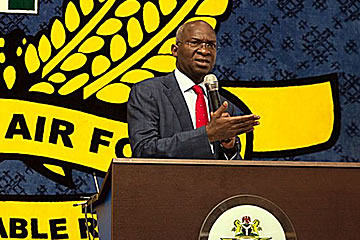
Fashola Stresses Need To Raise Nation’s Road Transport Infrastructure To Global Standard To Aid Mobility * As 23rd Meeting of National Council of Works ends in Abuja * Our development, prosperity, survival is tied to our mobility and so is our productivity, social and cultural interactions , he says * Ministry to award sub-contracts on roads with sections significantly completed, for procurement in collaboration with the main contractors; to be advertised as required by law,subject to open , competitive bids The Minister of Power Works and Housing, Mr. Babatunde Fashola SAN, Thursday stressed the need to raise the country’s transport infrastructure, especially road signage, to acceptable global standard as a means to aid mobility across states and communities within the country. Fashola, who spoke at the NAF Air Conference Centre venue of the 23rd Meeting of the National Council on Works with the theme, “Adequate Traffic Signage- An Essential Key for Highways Infrastructure, Safety and Comfort,” said the current efforts in building roads, highways and bridges across the country would hardly achieve the objective of mobility if the destinations of these critical transport infrastructures currently being built were not made known through appropriate signage. In his keynote address at the event, also attended by the Minister of State, Hon. Mustapha Baba Shehuri, top Ministry Officials and Legislators as well as Commissioners responsible for Works from the states of the Federation and the Federal Capital Territory, said the need had become more urgent as mobility had become a major commitment of the global urban agenda. According to the Minister, “As human beings, mobility has become a major commitment of the global urban agenda. This must be so because our development, prosperity and sometimes our survival are tied to our mobility and so is our productivity, social and cultural interactions”. “Yes, we have to build roads, highways and bridges. But the question then is: Roads, highways and bridges to where? Where do they lead?”, he asked, adding that maps alone would not adequately answer the questions without road signs, which, according to him, “indicates to road users, how far their journey is, how far they have progressed, how much is left to travel”, among other things. Noting that before the advent of Internet, smart phones and apps, many countries developed maps to help guide transport infrastructure users through their network of roads, Fashola added that road signs would also indicate to road users how far away they were from one village, city, local government, or from critical services like hospitals, fuel stations and hotels or motels “to help ease the stress and tedium of long distance travel”. The Minister, who expressed sadness that road signs were either non-existent or largely insufficient on the nation’s highways, added that this has made travel through unfamiliar cities and towns across the country difficult pointing out that it would be a herculean task driving by oneself into a city one had never been as one would be ignorant of where to link the next interstate highway, or expect to buy fuel or plan to sleep for the night on a long journey or get medical help in case of a road traffic accident. He said the proliferation of global, country and state maps on the handheld devices has made it both compelling and urgent for the country to start developing and installing signage on her roads, bridges and highways at interstate and intra-state levels adding, “This is one sure way of facilitating mobility and implementing the local component of the global urban agenda for the benefit of our people”. Fashola expressed delight that Nigeria, under the leadership of President Buhari, has played a critical and positive role in developing a common African position since 2016 that has helped to shape the Global Urban Agenda adopted in Quito, Ecuador this year to guide the global development until 2036, adding, “What is left is for us, as champions of that African position and urban agenda, to begin to localize and implement its component parts for the benefits of our people”. Pointing out, however, that it would not be enough to just simply erect any type of sign, in any place or anyhow, the Minister, who noted that they must be produced according to specifications and enduring materials, and “be installed to a minimum standard that ensures their durability, endurance and utility for commuters”, commended the staff of the Works sector of his Ministry for their hard work in developing the specifications and standards. He also acknowledge the technical support and cooperation that the Corp Marshal of the Federal Road Safety Corps (FRSC) and his team had afforded the Ministry “in the process of developing the size, quality and lettering specifications of these signs”, adding that they would help commuters to navigate their journey across the country as “the human benefit of signage and our mobility policy”. On the direct economic benefits of traffic signage, Fashola noted that the existence of highway signs was the reason why “the car rental business and its collateral employment thrives in some countries and not in our own”, adding that it would provide financial reward for those who would benefit from the contracts as well as jobs and the financial rewards that would come from producing the signs, fabricating the steel, printing the signs, and the labour to be employed in installing them. “These benefits are also true of lane marking”, the Minister said adding, “This is why we have chosen this National Council, where states are represented, professional groups are represented and the requisite technical personnel are present to unveil this policy and programme”. He said Nigeria’s economic needs compelled her to commence the installation of the signage while her roads were still in various stages of completion, instead of waiting until everything was done before beginning “to confer the benefits of lane marking and street signage on our people”. Fashola disclosed that the Ministry had agreed to compile the list of roads where significant sections have been completed, and prepare them for procurement and award of sub-contracts in collaboration with the main contractors adding that the procurement would “then be advertised in due course as required by law and subject to open and competitive bids”. Insisting that those who benefit from the contracts perform them to the highest standards of quality, the Minister declared, “We understand that signs can be damaged, and road markings require periodic touching up”, adding that as more sections of roads reach completion they would be subject to similar processes with the expectation that the process would be continuous. “Therefore, we see a future of maintenance jobs and contracts going forward, to create sustained employment in our road transport sector”, he said adding that there was no better time than this period when the nation’s economy needed “to be creative in order to provide inclusion for unemployed young able-bodied people”. Commending the theme of the Council Meeting ‘Adequate Traffic Signage - An Essential Key for Highways Infrastructure, Safety and Comfort’ as apt, Fashola declared, “I could think of no better time, when our economy needs and I can think of no better forum than this National Council of Works, to discuss the economic, safety, and people-oriented basis of this policy, to address the theme of this council”. The Minister, who urged that all hands should be on deck “in order to ensure that the benefits of this policy reach all the sectors of our economy and the people they are designed for”, expressed the hope that the government would be able to count on the stakeholders to ensure the successful implementation of the policy. Earlier, in his goodwill message, Chairman of the Federal Character Commission, Dr. Shettima Bukar Abba, expressed delight that since Fashola assumed duties as Minister of Power, Works and Housing, the National Council on Works had made tremendous efforts in completing and initiating critical projects of monumental importance to drive and reinvigorate economic development in the country. The Chairman, who listed such critical projects to include the Kano-Maiduguri dual carriageway, the Second Niger Bridge, which he noted had defied previous governments, numerous Power and Housing projects springing up in every state of the Federation, pointed out that they were projects that cut across, not only geopolitical zones, but also all states of the Federation. “These projects and infrastructural facilities are, no doubt, fulcrum of national unity and integration”, he said expressing delight that the 2017 Budget allocation to the Ministry of Power Works and Housing “has taken into consideration regional and national spread in citing projects to be executed”, he said. Commending the Minister and his State counterpart for the monumental efforts in driving progress, the Chairman declared, “The Minister’s pedigree as accomplished administrator who has turned Lagos to a model city is gradually being replicated across the country. His zeal, tenacity, passion and workaholic nature is driving the change mantra. We have no doubt that sooner than later the infrastructural deficit the country faces will be a thing of the past”. Also present at the event were the Federal Capital Territory Minister, Mohammed Musa Bello represented by the Executive Secretary, Federal Capital Development Authority, Engr. Umar Jibril, Permanent Secretary (Power), Engr. Louis Edozien , Chairman, Committee on Works, House of Representatives, Hon. Toby Okechukwu, among many other dignitaries and stakeholders. ...
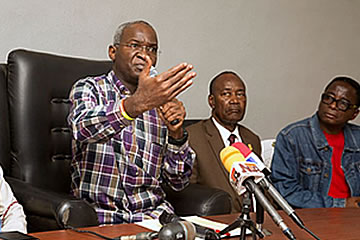
Nigeria To Meet International Standards And Best Practices- Fashola The Minister of Power, Works and Housing, Babatunde Raji Fashola, SAN has said that the theme of the 23rd Meeting of the National Council on Works seeks to raise the level and quality of Nigerian transport infrastructure to globally acceptable standards. Fashola stated this in a paper delivered at the 23rd Meeting of the National Council on Works held at the Nigerian Air Force (NAF) Conference Centre, Abuja with a theme: “Adequate Traffic Signage- An Essential Key for Highways Infrastructure, Safety and Comfort” The Minister opined that as human beings, mobility is inevitable because development, prosperity and sometimes survival of human beings are tied to mobility as well as productivity, social and cultural interactions. He said that Nigeria under the leadership of President Muhammadu Buhari has played a critical and positive role in developing a common African position since 2016. According to him, Nigeria has helped to shape the Global Urban Agenda which was adopted in Quito, Ecuador, this year, to guide global development up till 2036, but the missing link is to start implementing its component parts for the benefits of Nigerians. The Minister said some of these benefits would be best appreciated when the highways, roads and bridges are adorned with road signs, adding that this will inform road users on how far their journey is, how far they have progressed, how much is left to travel and how far away they are from one village, city, local government, or from critical services like hospitals, fuel stations and hotels or motels, thereby easing the stress associated with long distance travels. Fashola disclosed that what will make the travellers enjoy their travel time is the provision of adequate road signs. “This is the best way to facilitate mobility and implement the local components of the Global Urban Agenda for the benefit of Nigerians” he stated that having the road signs erected in any place or anyhow is not enough, but must be in accordance with specifications and quality of materials, it must also be in tandem with minimum standards to ensure their durability to serve the people. The Minister said aside the benefits of helping commuters to navigate the journey through the provision of road signs on Nigerian roads, it also have direct economic benefits to the people who will benefit from contract jobs that will attract financial rewards as a result of producing the signs, fabricating the steel, printing the signs and the direct labour needed to erect/mount the signs. Fashola expressed his gratitude to the Minster of the FCT, Mallam Muhammad Musa Bello for hosting the 23rd Meeting of the National Council on Works in Abuja. The Minister also appreciated the Minister of State, Honourable Mustapha Baba Shehuri, the Permanent Secretary, Alhaji Mohammed Bukar and staff of the Federal Ministry of Power, Works and Housing (Works sector) for their hard work in developing very high standards and specific road signs that will stand the test of time. Earlier in his welcome address, the Minister of the Federal Capital Territory, Mallam Muhammad Musa Bello, represented by the Executive Secretary, FCDA, Engr. U. G. Jibril, expressed his profound gratitude to the Minister of Power, Works and Housing, Babatunde Raji Fashola, SAN, the Minister of State, Honourable Mustapha Baba Shehuri, the Permanent Secretary, Alhaji Mohammed Bukar for successfully hosting this year’s Meeting of the National Council on Works in Abuja. Mallam Bello said the theme of this year’s Meeting, “Adequate Traffic Signage-An Essential Key for Highways Infrastructure, Safety and Comfort” is very important to the residents of the Federal Capital Territory, due to daily increase in the number of motorists plying our highways. He opined that the outcome of the Council’s deliberations will provide the much needed inputs for policy making to address the problem of inadequate and improper signage on some of the highways. The Chairman, House of Representatives Committee on Works, Hon. Tobi Okechukwu, in his goodwill message at the occasion, congratulated the Council for this year’s Meeting and applauded the organisers for the excellent theme of this year. He said the National Assembly is ready to partner and support the Executive Arm of government on any initiative that is people oriented. The Chairman, Federal Character Commission, Alhaji Bukar Abba Shetima, while congratulating the Council, also used the occasion to reiterate on the Commission’s mandate and called on the Ministry to adhere to equitable distribution of wealth in line with the mandate of the Commission. The Minister of State for Power, Works and Housing, Hon. Mustapha Baba Shehuri, while giving a Vote of Thanks, congratulated the Minister for the successful hosting as well as for the efficient delivery of the 23rd Meeting of the National Council on Works. He also expressed his appreciation to all the stakeholders who have contributed in one way or the other to the success of the Meeting. Amongst the dignitaries at the event were, the Permanent Secretaries, Federal Ministry of Power, Works Housing, Works and Housing sector and his counterpart from Power, Louise Edozein, Commissioners and Permanent Secretaries of Works from 36 States of the Federation, the Surveyor General of the Federation, Surveyor Ebisintei Awudu, Assistant Corps Marshal, Federal Road Safety Corps (FRSC), Mr. Kayode Olagunju, Directors and Federal Controllers of Works from the 36 States of the Federation. ...
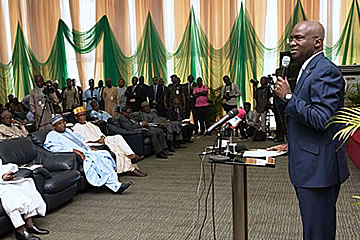
Fashola Charged Stakeholders To Complement Government’s Effort In Housing Delivery The Minister of Power, Works and Housing, Babatunde Raji Fashola, SAN, has charged stakeholders in the housing sector to focus more on how to solve the problem of housing deficits in the country rather than magnify the problem. He said inspite of the housing challenges; Nigeria will over time come out if consistent right policies are put in place. Fashola stated this at the opening ceremony of the 11th Abuja International Housing Show with the theme, Solving Nigeria’s Housing Challenges through Innovative Finance and Infrastructure Solution. The Minister noted that financing is not only the problem in the housing industry but also the issue of affordability and acceptability, adding that it is important to build to the satisfaction of the off - takers. He said that the Ministry is currently building in 33 States of the federation to respond to the climatic and cultural demands of the people under the National Housing Programme, adding that this will be used as a pilot to interface with the private sector. While commending the vision and tenacity of Fesadeb Communication Ltd, the organiser, the Minister said that it is important to have a housing economy, an economy that delivers on a value chain that will impact on people’s economic lives like the artisans, mason, plumbers, welders and food vendors. Earlier in his address, the Chairman of the All Progressive Congress (APC) and Chairman of the Abuja International Housing Show, Chief John Odigie-Oyegun, noted that the choice of the theme for this year’s event is not only apt but appropriate. Oyegun stated that the Buhari administration promised to provide decent and affordable housing to Nigerians through the establishment of the National Housing Programme with a target of raising enough finance to build 1 million housing estates annually within the next decades. He said that the APC-led government is also committed to bridge the gap of housing deficits by providing affordable housing for low income earners who are the most marginalised due to access to finance. He added that a new housing social project has been included in the economic recovery plan recently launched by the federal government with the objective to reduce the housing deficits and stimulate economic growth of the country. The Abuja International Housing Show over the years has proved to be a veritable platform that brings stakeholders’ in the built industry together to chat a way forward in solving housing problem in Nigeria. ...
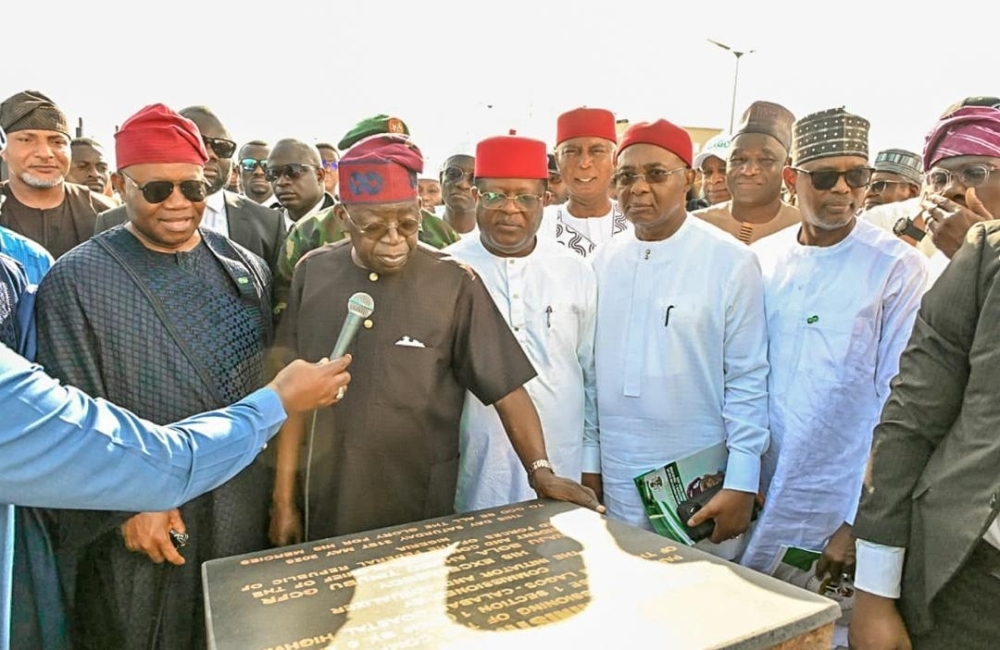
DRIVING NIGERIA’S FUTURE: CELEBRATING TWO YEARS OF TRANSFORMATIVE LEADERSHIP AND THE LAGOS-CALABAR COASTAL HIGHWAY MILESTONE
DRIVING NIGERIA’S FUTURE: CELEBRATING TWO YEARS OF TRANSFORMATIVE LEADERSHIP AND THE LAGOS-CALABAR COASTAL HIGHWAY MILESTONE
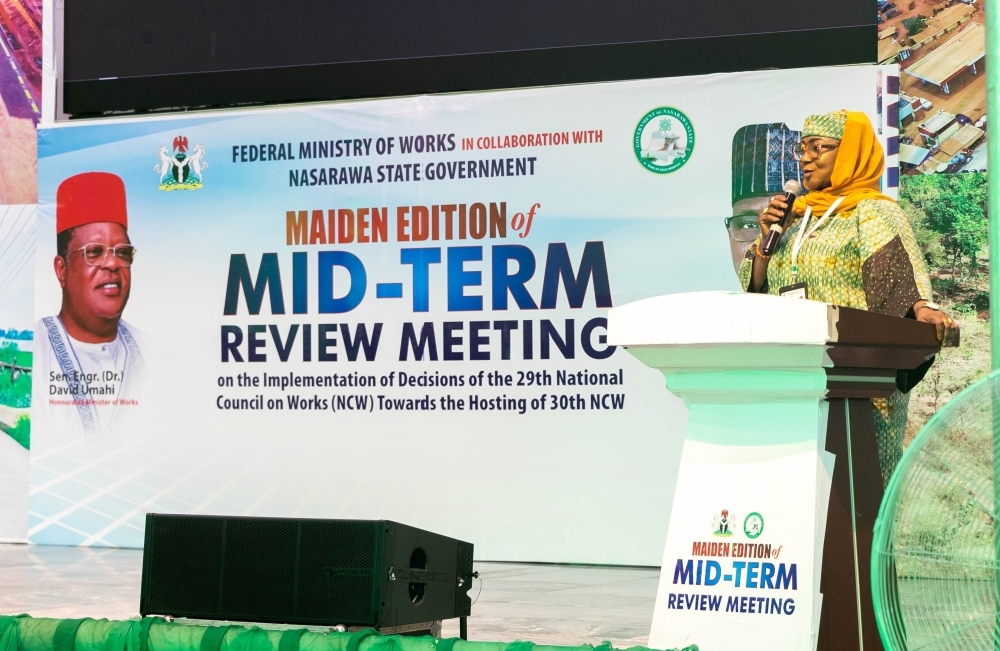
MID -TERM REVIEW MEETING ON THE IMPLIMENTATION OF THE DECISIONS REACHED AT THE 29TH NATIONAL COUNCIL ON WORKS (NCW) DAY 1
MID -TERM REVIEW MEETING ON THE IMPLIMENTATION OF THE DECISIONS REACHED AT THE 29TH NATIONAL COUNCIL ON WORKS (NCW) DAY 1