GORONYO COMMENDS SOKOTO GOVERNOR FOR DONATING 10 HILUX VEHICLES TO STRENGTHEN SECURITY ALONG SOKOTO–BADAGRY SUPERHIGHWAY
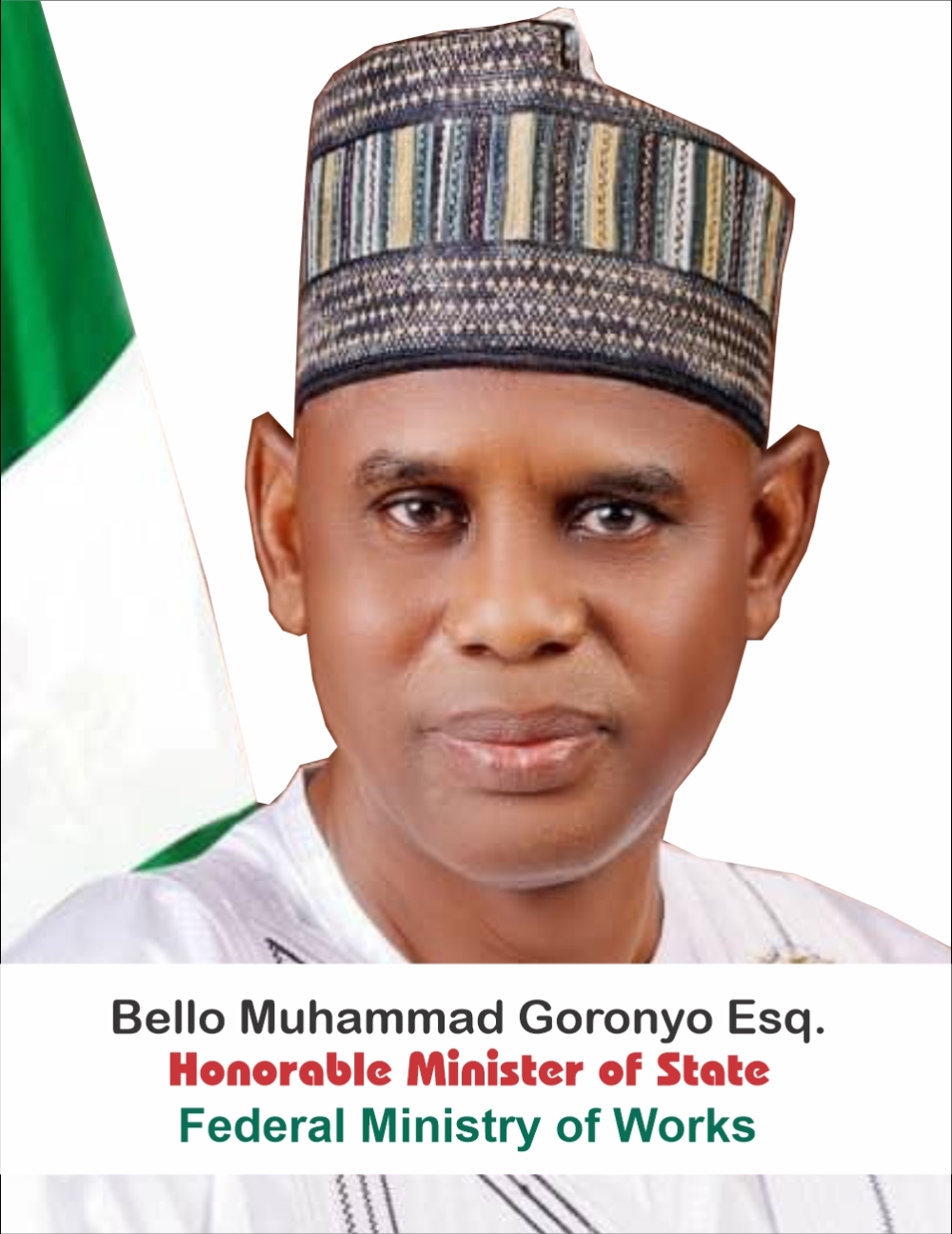
The Honourable Minister of State for Works, Rt. Hon. Bello Muhammad Goronyo, Esq., has commended the Governor of Sokoto State, Dr. Ahmed Aliyu Sokoto, PhD, for donating 10 operational Toyota Hilux vehicles to strengthen security operations along the Sokoto–Badagry Superhighway and other strategic infrastructure corridors.
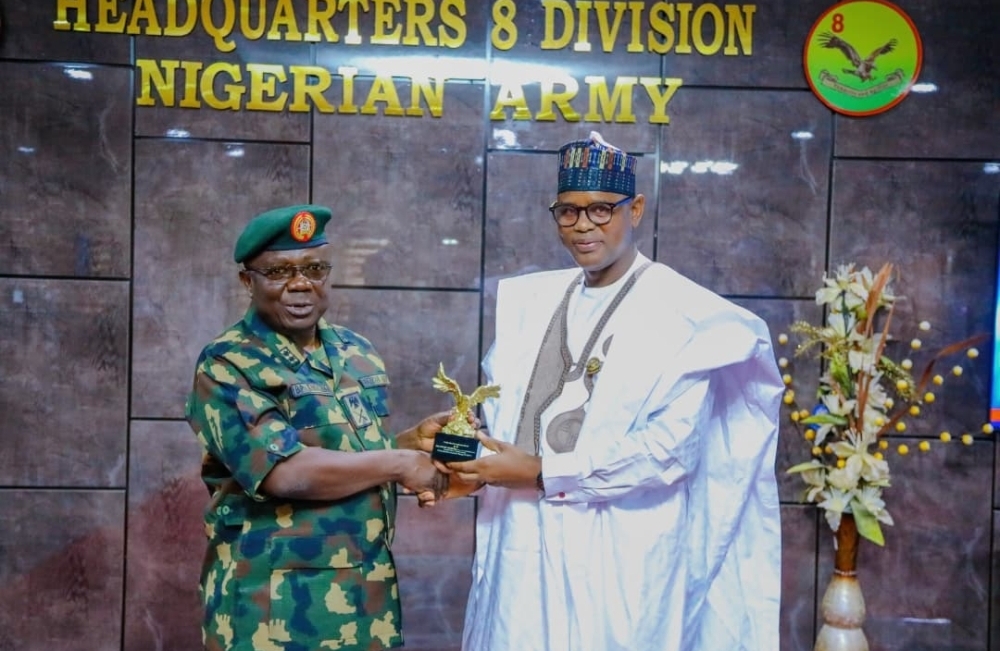
The vehicles were formally commissioned and handed over to the Nigerian Army at the Headquarters of the 8 Division, Nigerian Army, Sokoto, on Thursday, October 8, 2026, by the Honourable Minister of State for Works, on behalf of the Honourable Minister of Works, Engr. David Nweze Umahi, CON, FNSE.
The donation is expected to enhance the operational capacity of military personnel and other security agencies responsible for protecting construction workers, contractors, equipment and host communities along the highway corridor.
Speaking during the ceremony, Goronyo described the donation as a demonstration of the Sokoto State Government’s commitment to national development and the successful implementation of President Bola Ahmed Tinubu, GCFR’s Renewed Hope Agenda, particularly its landmark infrastructure projects.
The Minister emphasised that the Sokoto–Badagry Superhighway represents a long-standing national infrastructure vision that dates back several decades, with its conception traced to the era of former President Shehu Shagari in the 1970s. However, the vision remained unrealised for decades until the administration of President Bola Ahmed Tinubu, GCFR, initiated the construction of the 1,068-kilometre highway in October 2024.
He described the project as a significant step towards translating a historic aspiration into tangible infrastructure that will connect communities, expand economic opportunities and strengthen national integration.
According to Goronyo, President Tinubu’s commitment to the project demonstrates the Federal Government’s determination to bridge critical infrastructure gaps and improve connectivity between northern and southern Nigeria.
He noted that the superhighway, which traverses Sokoto, Kebbi, Niger, Kwara, Oyo, Ogun and Lagos states, is designed to facilitate the movement of people and goods, reduce transportation costs, stimulate trade, create employment and open up new economic opportunities along its route.
The Minister added that the highway would improve access to markets, schools, healthcare facilities and other essential services while supporting agriculture, commerce, industry and the development of communities across the corridor.
He stressed that the successful delivery of the project would require sustained commitment, effective coordination and cooperation among the Federal Government, state governments, security agencies, contractors and host communities.
Goronyo maintained that effective security remained essential to the timely and successful completion of the Sokoto–Badagry Superhighway. He explained that the provision of operational vehicles would strengthen the mobility and response capabilities of security personnel deployed to safeguard the project and its surrounding communities.
The Minister highlighted other strategic infrastructure projects being undertaken by the Federal Government, including the Lagos–Calabar Coastal Highway, the Calabar–Abuja/Trans-Saharan corridor, the Akwanga–Jos–Bauchi–Gombe corridor, the Abuja–Kaduna–Zaria–Kano route and the Zaria–Gusau–Sokoto corridor.
He explained that these projects form part of the Federal Government’s broader commitment to developing an integrated road network capable of supporting commerce, strengthening inter-state connections and accelerating national economic growth.
Rt. Hon. Goronyo further noted that the use of continuously reinforced concrete pavement on the Sokoto–Badagry Superhighway was intended to provide durable road infrastructure capable of serving Nigerians for decades. He added that complementary environmental and safety measures, including tree planting and solar-powered street lighting where provided for in the project, would contribute to environmental sustainability, visibility and road safety.
Goronyo commended the Nigerian Army and other security agencies for their resilience, professionalism and sacrifices in protecting lives, property and critical national infrastructure. He acknowledged the difficult conditions under which security personnel operate and urged them to remain steadfast in carrying out their constitutional responsibilities.
The Honourable Minister also expressed deep condolences to the Nigerian military over the reported loss of personnel in a bandit attack while on official duty the previous day. He described the loss as painful and extended his sympathy to the affected personnel, their colleagues and bereaved families, while praying for the peaceful repose of the departed and strength for their loved ones.
He further acknowledged the support of the National Security Adviser in addressing security challenges associated with the project, particularly through assistance and coordination aimed at strengthening security operations along the highway corridor.
Reaffirming his commitment to the Federal Government’s infrastructure development agenda, Goronyo said the Ministry of Works would continue to support the implementation of strategic projects under President Tinubu’s leadership, working in collaboration with relevant stakeholders to ensure their successful delivery.
He expressed optimism that the continued implementation of the Federal Government’s development programmes would bring lasting benefits to Nigerians, while acknowledging the complementary role of the Sokoto State Government in supporting infrastructure development and security.
In his remarks, the General Officer Commanding (GOC), 8 Division, Nigerian Army, Sokoto, Major General Bengba Paul Koughna, expressed appreciation to the Federal Government, the Federal Ministry of Works and the Sokoto State Government for the donation of the 10 Hilux vehicles.
The GOC noted that the vehicles would significantly enhance the operational mobility and response capabilities of troops deployed along the highway corridor, particularly across the approximately 440-kilometre section extending through Sokoto and Kebbi states.
He explained that troops conduct regular patrols and maintain multiple deployment points along the corridor, making the additional vehicles a valuable boost to their operational effectiveness.
He assured the Minister that the vehicles would be deployed appropriately to support security operations and protect construction workers, contractors, equipment and other stakeholders involved in the project.
The GOC also commended the representative of Hitech Construction Company, retired General Sa'ad Abubakar, for the company's involvement in the project.
The event was attended by retired Assistant Inspector-General of Police (AIG) Aliyu Garba, officials of the Federal Ministry of Works, representatives of the Sokoto State Government and other stakeholders.
The donation underscores the importance of sustained collaboration among the Federal Government, state governments, security agencies, contractors and host communities in addressing security challenges and ensuring the safe and timely delivery of strategic infrastructure projects.
The Federal Ministry of Works reiterates its commitment to working with all relevant stakeholders to protect national infrastructure and advance the objectives of President Bola Ahmed Tinubu, GCFR’s Renewed Hope Agenda for sustainable economic growth and development.

GORONYO COMMENDS SOKOTO GOVERNOR FOR DONATING 10 HILUX VEHICLES TO STRENGTHEN SECURITY ALONG SOKOTO–BADAGRY SUPERHIGHWAY The Honourable Minister of State for Works, Rt. Hon. Bello Muhammad Goronyo, Esq., has commended the Governor of Sokoto State, Dr. Ahmed Aliyu Sokoto, PhD, for donating 10 operational Toyota Hilux vehicles to strengthen security operations along the Sokoto–Badagry Superhighway and other strategic infrastructure corridors. The vehicles were formally commissioned and handed over to the Nigerian Army at the Headquarters of the 8 Division, Nigerian Army, Sokoto, on Thursday, October 8, 2026, by the Honourable Minister of State for Works, on behalf of the Honourable Minister of Works, Engr. David Nweze Umahi, CON, FNSE. Speaking during the ceremony, Goronyo described the donation as a demonstration of the Sokoto State Government’s commitment to national development and the successful implementation of President Bola Ahmed Tinubu, GCFR’s Renewed Hope Agenda, particularly its landmark infrastructure projects. The Minister emphasised that the Sokoto–Badagry Superhighway represents a long-standing national infrastructure vision that dates back several decades, with its conception traced to the era of former President Shehu Shagari in the 1970s. However, the vision remained unrealised for decades until the administration of President Bola Ahmed Tinubu, GCFR, initiated the construction of the 1,068-kilometre highway in October 2024. He described the project as a significant step towards translating a historic aspiration into tangible infrastructure that will connect communities, expand economic opportunities and strengthen national integration. According to Goronyo, President Tinubu’s commitment to the project demonstrates the Federal Government’s determination to bridge critical infrastructure gaps and improve connectivity between northern and southern Nigeria. The Minister added that the highway would improve access to markets, schools, healthcare facilities and other essential services while supporting agriculture, commerce, industry and the development of communities across the corridor. Goronyo maintained that effective security remained essential to the timely and successful completion of the Sokoto–Badagry Superhighway. He explained that the provision of operational vehicles would strengthen the mobility and response capabilities of security personnel deployed to safeguard the project and its surrounding communities. The Minister highlighted other strategic infrastructure projects being undertaken by the Federal Government, including the Lagos–Calabar Coastal Highway, the Calabar–Abuja/Trans-Saharan corridor, the Akwanga–Jos–Bauchi–Gombe corridor, the Abuja–Kaduna–Zaria–Kano route and the Zaria–Gusau–Sokoto corridor. Rt. Hon. Goronyo further noted that the use of continuously reinforced concrete pavement on the Sokoto–Badagry Superhighway was intended to provide durable road infrastructure capable of serving Nigerians for decades. He added that complementary environmental and safety measures, including tree planting and solar-powered street lighting where provided for in the project, would contribute to environmental sustainability, visibility and road safety. Goronyo commended the Nigerian Army and other security agencies for their resilience, professionalism and sacrifices in protecting lives, property and critical national infrastructure. He acknowledged the difficult conditions under which security personnel operate and urged them to remain steadfast in carrying out their constitutional responsibilities. The Honourable Minister also expressed deep condolences to the Nigerian military over the reported loss of personnel in a bandit attack while on official duty the previous day. He described the loss as painful and extended his sympathy to the affected personnel, their colleagues and bereaved families, while praying for the peaceful repose of the departed and strength for their loved ones. He further acknowledged the support of the National Security Adviser in addressing security challenges associated with the project, particularly through assistance and coordination aimed at strengthening security operations along the highway corridor. Reaffirming his commitment to the Federal Government’s infrastructure development agenda, Goronyo said the Ministry of Works would continue to support the implementation of strategic projects under President Tinubu’s leadership, working in collaboration with relevant stakeholders to ensure their successful delivery. He expressed optimism that the continued implementation of the Federal Government’s development programmes would bring lasting benefits to Nigerians, while acknowledging the complementary role of the Sokoto State Government in supporting infrastructure development and security. In his remarks, the General Officer Commanding (GOC), 8 Division, Nigerian Army, Sokoto, Major General Bengba Paul Koughna, expressed appreciation to the Federal Government, the Federal Ministry of Works and the Sokoto State Government for the donation of the 10 Hilux vehicles. The GOC noted that the vehicles would significantly enhance the operational mobility and response capabilities of troops deployed along the highway corridor, particularly across the approximately 440-kilometre section extending through Sokoto and Kebbi states. He explained that troops conduct regular patrols and maintain multiple deployment points along the corridor, making the additional vehicles a valuable boost to their operational effectiveness. He assured the Minister that the vehicles would be deployed appropriately to support security operations and protect construction workers, contractors, equipment and other stakeholders involved in the project. The GOC also commended the representative of Hitech Construction Company, retired General Sa'ad Abubakar, for the company's involvement in the project. The event was attended by retired Assistant Inspector-General of Police (AIG) Aliyu Garba, officials of the Federal Ministry of Works, representatives of the Sokoto State Government and other stakeholders. The Federal Ministry of Works reiterates its commitment to working with all relevant stakeholders to protect national infrastructure and advance the objectives of President Bola Ahmed Tinubu, GCFR’s Renewed Hope Agenda for sustainable economic growth and development.
The donation is expected to enhance the operational capacity of military personnel and other security agencies responsible for protecting construction workers, contractors, equipment and host communities along the highway corridor.
He noted that the superhighway, which traverses Sokoto, Kebbi, Niger, Kwara, Oyo, Ogun and Lagos states, is designed to facilitate the movement of people and goods, reduce transportation costs, stimulate trade, create employment and open up new economic opportunities along its route.
He stressed that the successful delivery of the project would require sustained commitment, effective coordination and cooperation among the Federal Government, state governments, security agencies, contractors and host communities.
He explained that these projects form part of the Federal Government’s broader commitment to developing an integrated road network capable of supporting commerce, strengthening inter-state connections and accelerating national economic growth.
The donation underscores the importance of sustained collaboration among the Federal Government, state governments, security agencies, contractors and host communities in addressing security challenges and ensuring the safe and timely delivery of strategic infrastructure projects.
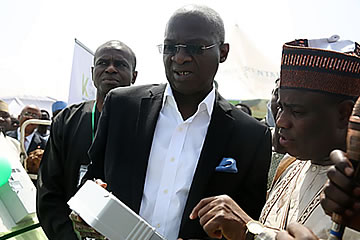
Fashola Lists New Economy, Infrastructure Budget Funds As Benefits Of Proposed Sovereign Green Bonds * Solar Unit Distribution Programme (SUDIP) will provide up to 12MWs, 6,000 jobs and impact at least 60,000 persons, he says * Advocates that programme be taken to the street level to make the people understand and connect with it * A new economy is possible and people must understand that this is that new economy - Minister As the nation plans to inaugurate the first African Sovereign Green Bond to address climate change and sustainable environment , the Minister of Power, Works and Housing, Mr Babatunde Fashola SAN, has stated the benefits derivable from the project saying it would facilitate a new economy and help the government to source funds to implement its budget, especially in infrastructure development. Fielding questions from newsmen after the Green Bonds Capital Market & Investors Conference organised by the Federal Ministry of Environment and the Debt Management Office (DMO) at the Nigerian Stock Exchange (NSE) House in Lagos, Fashola said the fund, which, according to him, would be directed to fighting climate change, would enable government realise its renewable energy projection. Reiterating that Nigeria was working towards achieving 30 per cent in renewable energy by 2030, the Minister, who disclosed that the Solar Unit Distribution Programme (SUDIP) project was estimated to cost N1.3 billion, added that the units in aggregate from the project would provide up to 12MWs of power, creating 6,000 jobs and impacting at least 60,000 persons. The Minister, who noted that one of the challenges that has stalled development in the country over the years was the lack of sufficient infrastructure spend added, however, that going forward the Green Bond would help government to source funding to implement its budget. “So, that is how it affects us; it is a source of funding for budget”, he said. On what his Ministry expects from the Bond when issued, Fashola explained that the decision as to who gets what and what goes where would be the responsibility of the Ministry of Finance adding, however, that his Ministry needed as much money as it could get “to continue to upgrade and build new infrastructure in Power, in Works and in Housing”. He explained further, “As you heard from the Acting President and the Hon. Minister of the Environment, the first launch of this Bond is only looking to a size of about N20Billion to test the Market; those are going to go ostensibly into some smaller spend size because there are so many things to do”. “But the ultimate decision as to who gets what is the responsibility of the Ministry of Finance. But we need as much money as we can get to continue to upgrade and build new infrastructure in Power, in Works and in Housing”, he said. According to the Minister, “N20Billion is the first issuance in Naira; but this is the first Sovereign Bond in the whole of this Continent, so I expect that they want to enter the Market very conservatively and see what the appetite is and from there ramp up”, adding that over the last one and a half decades, the entry threshold of government into Capital Market had been very modest but had grown severally. Assuring that the proposal to achieve 30 per cent renewable energy by 2030 was realistic, Fashola declared, “It is extremely realistic; it is based on very extensive consultations, it is based on our current realities, it is based on what we expect is realistically achievable”. “Yes, I said 30-30-30, it is 30 per cent in 2030 and these things are not unconnected with our current realities also and one of our realities is that we signed the Paris Agreement and the Paris Agreement has thresholds and nationally determined contributions that we have made as a country that we would achieve in terms of reducing Green House gases, Green House emissions and so on and so forth”, he said. In his contribution at the Conference earlier, during the Ministers’ Dialogue with the theme, “Ensuring Sustainability of Green Bonds”, Fashola advocated that the concept of the Sovereign Green Bond and its components of Climate Change must be taken to the street level to enable Nigerians understand and connect with it adding that it would also make implementation of the environmental projects easy among the people. “The first thing to do is to bring all that we do here to the street level. It must get to the street level otherwise it becomes a very esoteric discussion that people on the streets don’t understand and can’t connect to”, the Minister said, adding that the people should be made to understand why they should or should not take some actions. He added, “I say this in the context of my own personal experience; each year we tell the people ‘don’t use firewood’, don’t do this, don’t do that and the question then is ‘what would they do to survive?’ So, in very simple terms, we must put this in the hands of the people”. According to the Minister, “A new economy is, therefore, possible and they must understand that this is that new economy; an economy that allows them to do the same things differently, in a much better way and in a way that sustains the environment for the human civilization”. Fashola said the proposed Renewable Energy micro utility in the 45 communities across the country would cost $10Billion while the Energizing Education Project would cost $213Million. Also, according to the Minister, out of the expected 119MW of Power, 60MW would be renewable adding that 37 universities and seven teaching hospitals have been audited as anchors to the programme. On the Energy Mix programme which, he reiterated, is meant to achieve 30 per cent of renewable energy by 2030, the Minister said most of the renewable energy would come from Solar, Biomass and all other forms of sustainable energy sources adding that it would give the country an Energy Security. When that is achieved, he said “No part of the country will be able to hold the nation to ransom in future”, adding “The first sign of that journey is the 1.2 MW of Power in Abuja to power the Water Works. “So that Water Works is now off-public power, it is Solar-driven”. The Minister added, “You may wonder how much power is 1.2MW solar power; it is power for at least 200 families; that is how prolific it can be. The next one is 1125MW of solar power that we have issue Power Purchase Agreements to 14 Solar Energy Providers”. He commended the Minister of the Environment, Mrs Amina Mohammed and everybody else who had worked with her to put the programme together describing the subject of our Panel discussion, “Sustainability of Green Bonds”, as “a fitting place to kick off the brain box”. The Acting President, Professor Yemi Osinbajo SAN, in his address, described the initiative as a new addition to the market funding portfolio, stating that the proceeds would be used to fight climate change which, according to him, “had led to more natural disasters, thereby impacting negatively on food, water and energy supply”. Osinbajo, who said the initiative would also provide an opportunity to deepen the capital market as well as tackle poverty, pointed out that the bond issuance would also support the Federal Government’s shift to non-oil base assets for project financing for economic growth and development. He said that the proceeds of the bonds would be used for environmental projects such as renewable energy micro-utilities in three communities estimated at N10 billion adding that it would as well provide an average of 33KW of power through solar technology. Also speaking, Minister of Environment, Mrs Amina Mohammed, said the project was in line with the Federal Government’s sustainable development initiative started in September 2016 adding that the government, under its recovery growth plan initiative, identified Green Bonds as a vehicle that could be used to drive the economy in terms of environmental projects funding. She said the bonds if properly harnessed would create new jobs, open new investment avenues for the country as well as ensure creative thinking adding that the proceeds would be invested in critical social-economic and environmental sectors that would impact on the lives of common Nigerians even as she called on domestic investors to rally round the issuance to ensure its success in order to support government diversification agenda. ...
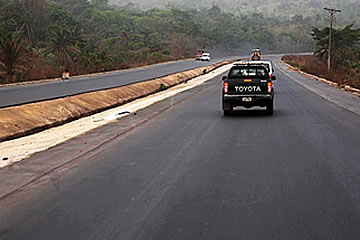
Good Roads Enhance Rapid Socio-Economic Development - Fashola The Minister of Power, Works and Housing Babatunde Raji Fashola, SAN, has said good road guarantees safety road users comfort, promotes good health and enhances rapid economic development, reduce travel time, less vehicle operation cost and timely delivery of goods and services nationwide. He made this known today while commissioning the Abuja-Kaduna (Zuba) Expressway; he was represented by the Director Highways (Construction and Rehabilitation) Engr. Yemi Oguntominiyi. The Minister disclosed that prior to the repairs, the existing dual carriageway was characterized with several failed section, potholes and multiple cracks; the scenario had led to many black spots resulting to avoidable accident, Kidnapping, armed robbery, increased travel time and high vehicle operating costs. He further said that the emergency rehabilitation of the Expressway is necessitated by proposed maintenance of works to be carried out on the runway of the Nnamdi Azikiwe International Airport, Abuja. The Kaduna Airport is designated to serve as an alternative landing airport for all local and international flights to Abuja while the Abuja Airport undergoes repairs. Fashola said that the Kaduna Dual Expressway, Route A2 has a total length of 165Km (all together 330Km) linking the Kaduna Western Bye Pass interchange at Kaduna to interchange in Zuba Abuja. He added that the road principally links the Federal Capital Territory (FCT) Abuja, to the Northwest and extends to some Northeastern parts of the country via Kaduna. The Minister appreciated the contractors for delivering the project within the agreeable period of 7th January to 28th February 2017, and prayed the Federal Ministry of Aviation will equally deliver the repairs of the runway within the stipulated 6 weeks. ...
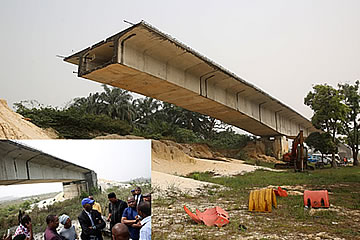
Inspection Tour Of South-South Zone : Fashola Preaches Peace As Only Viable Means To Achieve Economic Recovery, Prosperity *“Everybody wins when there is peace and nobody wins when there is conflict”, he says *Commends National Assembly, South-South Parliamentarians for support on Infrastructure Development *Underscores role of FG , Federal Controllers of Works as partners in progress not competitors with States The Minister of Power, Works and Housing, Mr. Babatunde Fashola SAN has advocated peace in the country as the only means to achieve the overall development of the country saying in the atmosphere of peace everybody wins while nobody wins in a situation of conflict. Fashola, who spoke while touring on-going Federal road projects across the five South-South States of the country, said in spite of political and ideological differences, the most important objective of the nation was to develop Nigeria for the benefit of all Nigerians. In all the States he paid courtesy calls on the Governors after inspecting the projects, the Minister reiterated the importance of peace as a vehicle of development through investments by both local and foreign investors pointing out that no investor would want to commit his capital in an insecure and conflict prone environment. Speaking against the backdrop of constant sabotage of gas pipelines in the Niger Delta region which had a negative impact on Gas supply to power plants in the country, Fashola told his hosts, “We need to find peace here very quickly and the story must change and this is not a place the story suggests you can’t work”, adding that the main reason for his visit was to come and see first-hand whether what was being said about the region was true. The Minister, who acknowledged that the grievances of those who sabotage the pipelines was equally important added, “You will see that in the last few days, the Acting President has been particularly busy in this area trying to reach out to communities to see what methods and efforts would bring peace; because that is really when we will begin to talk of the economy and prosperity, when we have peace”. “So as I continue to say, our brothers who are angry in this Nigerian family must understand that damaging the household is not the best way to express their anger. That does not make their grievances unimportant; but destroying the house and bringing down the roof does not solve their anger. So there must be a meeting of minds somewhere”, the Minister said. According to him, “Let us produce fuel, let us earn money; we fought for OPEC to cut production so that the price can go up so why are we now breaking the pipelines? It means that we can’t produce and benefit from what we fought for. The price of oil has gone up from over $40 to over $50. We made all the efforts through OPEC and now we can’t benefit from it, it doesn’t make sense”. The Minister, who pointed out that peace would mean that teachers and workers could be paid, while gas production would be enhanced to support more power production, declared, “That will give comfort to small businesses, villages, communities, welders, when we have the extra 3,000MW. Then it is in that atmosphere of peace that we can then solve the problems of our brothers. Everybody wins when there is peace and nobody wins when there is conflict”. Fashola, who said more ambassadors were needed who would be proud and feel safe to work in the region, said that would encourage investments in infrastructure which, according to him is desperately needed in the region adding, “But we can only do that by collaboration, by peace and partnership.” The Minister, therefore, advocated a better synergy between the Federal and State governments in the development of the country pointing out that the Federal Controllers of Work in the various states were sent as ambassadors of the Federal Government for the establishment of partnership between the two levels of government. At the Government House Yenagoa where he paid a courtesy call on the Governor of Bayelsa State, for example, Fashola reiterated his message to all the other Governors he had visited during the tour of the region, “I will urge you to accord the Federal Controller of Works here the same if not better treatment which we accord the foreign people that come here. They are our Ambassadors for partnership and collaboration with you and not to compete with you”. According to the Minister, “We can only address the infrastructure work that needs to be done here by peace and partnership”, adding that not only did the Governor and himself have their jobs cut out for them but the governors in the South-South “must step up now and change the conversation” around the region. At an interview after inspecting the road projects in the State including the construction of the Yenagoa-Okaki –Kolo Road, the Minister, who acknowledged the challenges of infrastructure in the region due to its topography, however, said the importance of the region to the Federal Government was such that it must get all the attention it deserved. He reiterated that paucity of fund was not the major challenge to completion of road projects, especially in the Niger Delta region adding that it took the commitment of the Buhari administration, which he said increased capital budget from 15 per cent in the 2015 and previously to 30 per cent in 2016, to remobilize contractors back to sites they abandoned for more than two years due to non-payment of contract fees. According to the Minister, “As at the time when we had money, when a barrel of oil sold for $100 per barrel, we did not take the issue of roads seriously because the capital budget then used to be 15 per cent. It is the Buhari administration which is increasing capital budget to 30 per cent which means that this government is taking the issue of roads more seriously and that is why we are here.” The Minister commended the members of National Assembly for their supportive role in approving budgetary provisions for the Ministry and especially for their cooperation towards the proposed new bulk budgeting system for infrastructure development which would help ensure that Contractors no longer abandon project sites simply because their names were not in the budget for a particular year. Fashola also thanked the lawmakers especially those representing the people of the Niger Delta states, for their contribution and support to the on-going infrastructure development across the country and Niger Delta saying their cooperation had enabled the government to forge ahead with the remobilization of contractors to previously abandoned road contracts including the Yenagoa-Okaki –Kolo Road. The Minister, particularly commended Senator Ovie Omo-Agege, Senator Magnus Abe and former member of the House of Representatives, Hon. Halims Agoda for drawing his attention to various roads in their Constituencies which according to him, had received due contract approval resulting in the remobilization of the contractors and resumption of activities on the sites. On-going road projects inspected during the three-day inspection by Fashola and senior officials of the Ministry include, the Calabar-Ikom-Ogoja Road (Sections 1 and 2), Calabar-Akamkpa Road and Akamkpa-Alesi-Ugep (Iyamoyong), Calabar-Ugep-Katsina-Ala, Clabar- Odukpani Junction among others in Cross River State, Umuahia-Ikot-Ekpene in Abia/Akwa Ibom States, Ikot-Ekpene-Aba-Port Harcourt and Enugu-Aba-Port Harcourt Expressway (Section iv). Others are Bodo - Bonny road with Bridges across Afa, Opobo and Nanabie Creeks in Rivers State ,Warri-Sapele Expressway (repairs) and Sapele-Ewu (Section 1) and Sapele-Agbor in Delta State and Dualisation of Lokoja-Benin road (Section iv) and Ehor-Benin City in Edo State, among others The Minister had earlier undertaken a similar inspection tour of highway projects in the South-East and North Central Zones of the country. ...
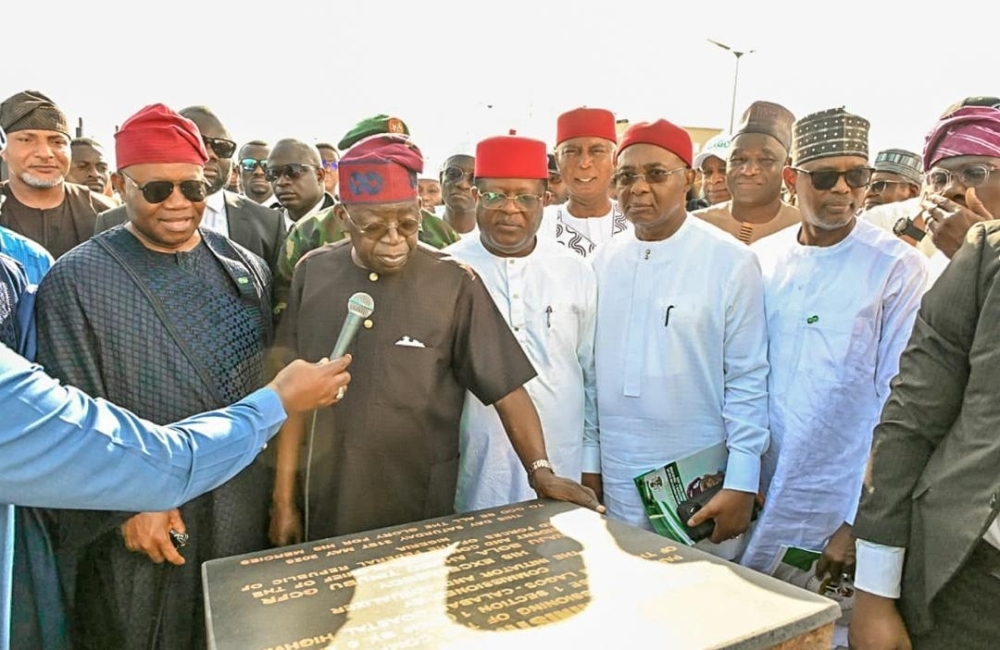
DRIVING NIGERIA’S FUTURE: CELEBRATING TWO YEARS OF TRANSFORMATIVE LEADERSHIP AND THE LAGOS-CALABAR COASTAL HIGHWAY MILESTONE
DRIVING NIGERIA’S FUTURE: CELEBRATING TWO YEARS OF TRANSFORMATIVE LEADERSHIP AND THE LAGOS-CALABAR COASTAL HIGHWAY MILESTONE
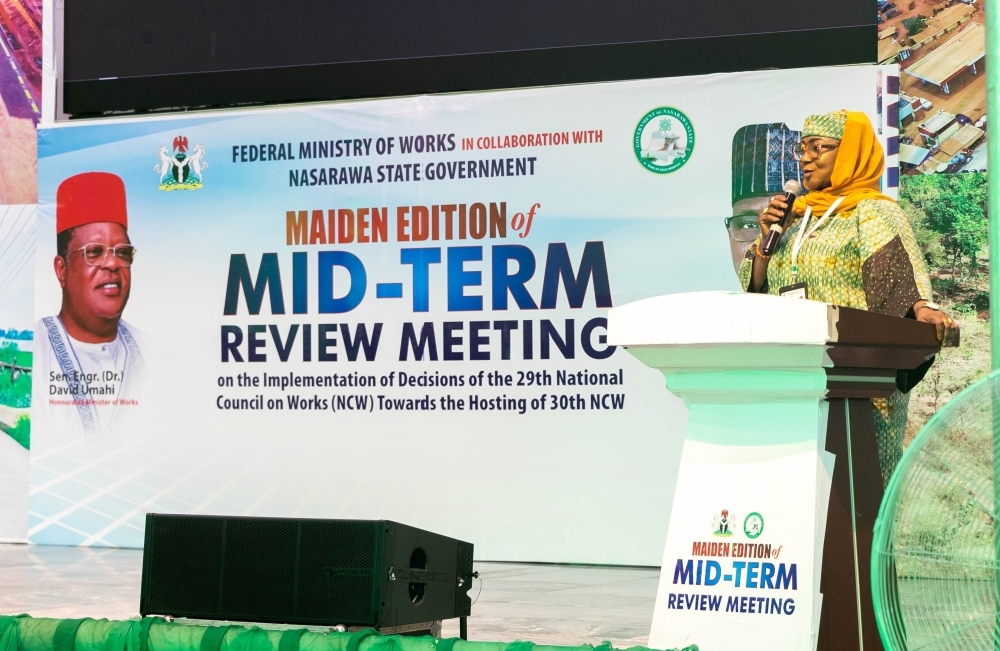
MID -TERM REVIEW MEETING ON THE IMPLIMENTATION OF THE DECISIONS REACHED AT THE 29TH NATIONAL COUNCIL ON WORKS (NCW) DAY 1
MID -TERM REVIEW MEETING ON THE IMPLIMENTATION OF THE DECISIONS REACHED AT THE 29TH NATIONAL COUNCIL ON WORKS (NCW) DAY 1