GORONYO COMMENDS SOKOTO GOVERNOR FOR DONATING 10 HILUX VEHICLES TO STRENGTHEN SECURITY ALONG SOKOTO–BADAGRY SUPERHIGHWAY
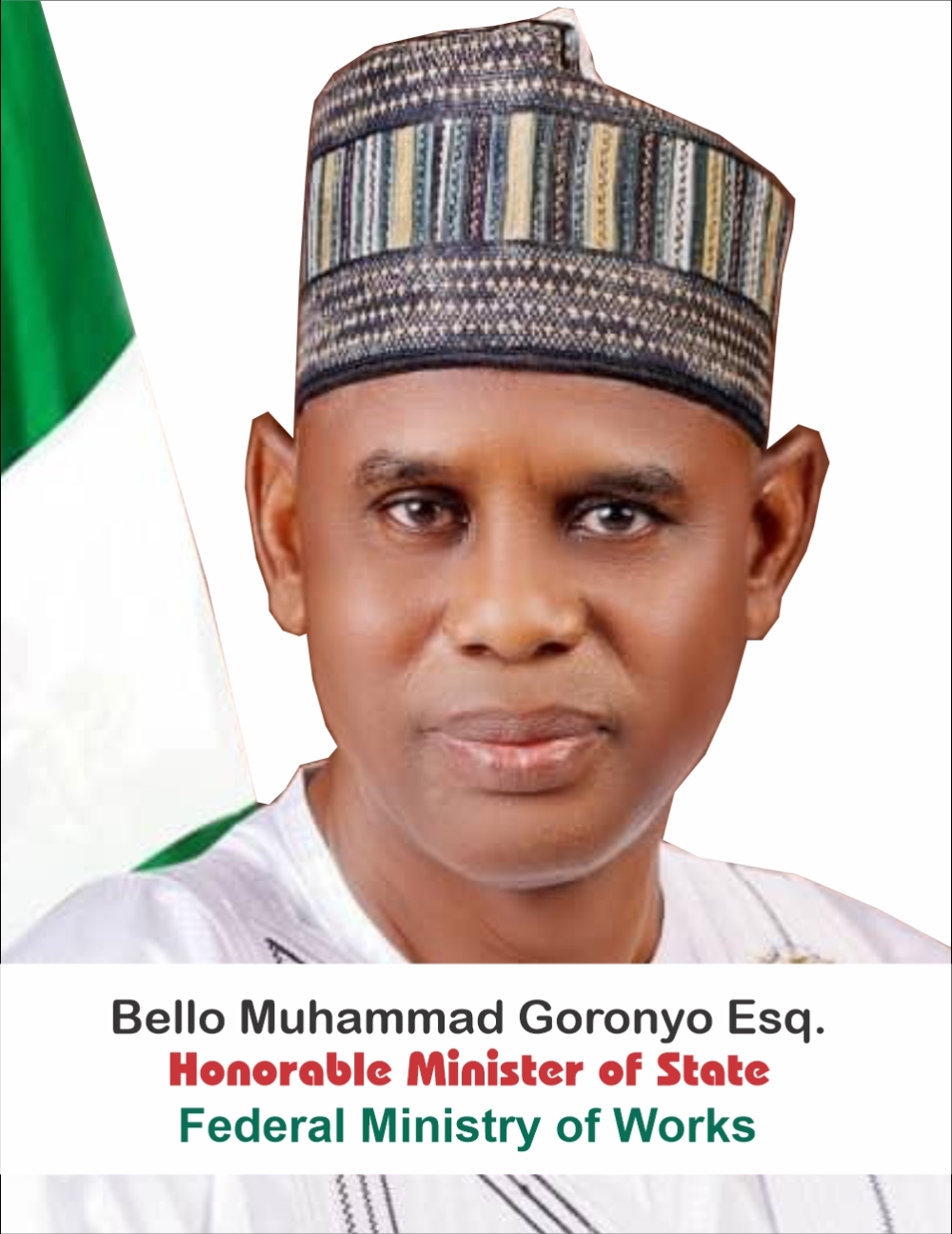
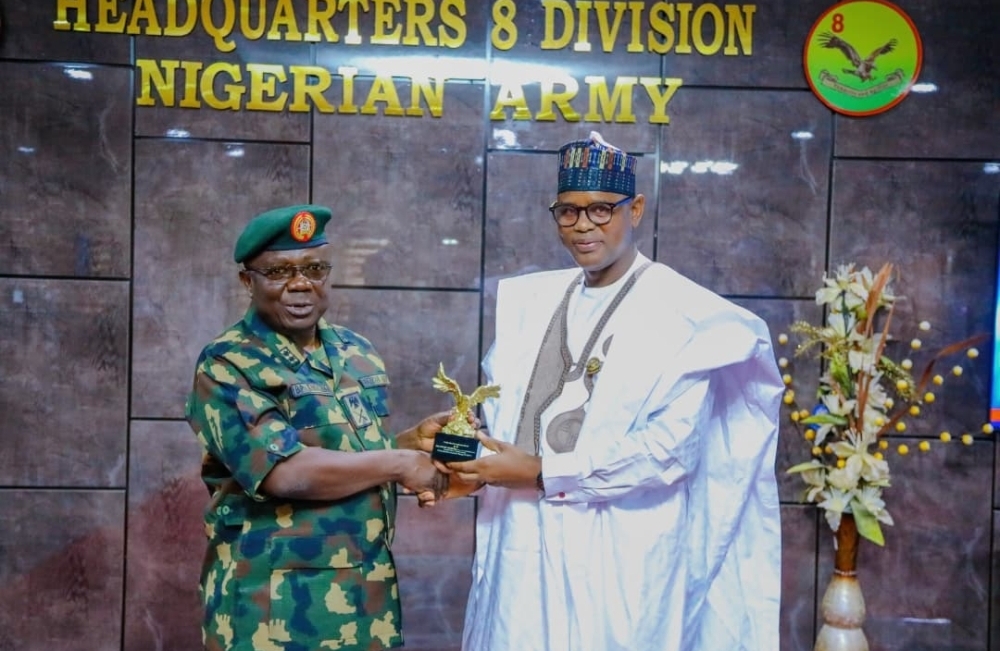
The Honourable Minister of State for Works, Rt. Hon. Bello Muhammad Goronyo, Esq., has commended the Governor of Sokoto State, Dr. Ahmed Aliyu Sokoto, PhD, for donating 10 operational Toyota Hilux vehicles to strengthen security operations along the Sokoto–Badagry Superhighway and other strategic infrastructure corridors.
The vehicles were formally commissioned and handed over to the Nigerian Army at the Headquarters of the 8 Division, Nigerian Army, Sokoto, on Thursday, October 8, 2026, by the Honourable Minister of State for Works, on behalf of the Honourable Minister of Works, Engr. David Nweze Umahi, CON, FNSE.
The donation is expected to enhance the operational capacity of military personnel and other security agencies responsible for protecting construction workers, contractors, equipment and host communities along the highway corridor.
Speaking during the ceremony, Goronyo described the donation as a demonstration of the Sokoto State Government’s commitment to national development and the successful implementation of President Bola Ahmed Tinubu, GCFR’s Renewed Hope Agenda, particularly its landmark infrastructure projects.
The Minister emphasised that the Sokoto–Badagry Superhighway represents a long-standing national infrastructure vision that dates back several decades, with its conception traced to the era of former President Shehu Shagari in the 1970s. However, the vision remained unrealised for decades until the administration of President Bola Ahmed Tinubu, GCFR, initiated the construction of the 1,068-kilometre highway in October 2024.
He described the project as a significant step towards translating a historic aspiration into tangible infrastructure that will connect communities, expand economic opportunities and strengthen national integration.
According to Goronyo, President Tinubu’s commitment to the project demonstrates the Federal Government’s determination to bridge critical infrastructure gaps and improve connectivity between northern and southern Nigeria.
He noted that the superhighway, which traverses Sokoto, Kebbi, Niger, Kwara, Oyo, Ogun and Lagos states, is designed to facilitate the movement of people and goods, reduce transportation costs, stimulate trade, create employment and open up new economic opportunities along its route.
The Minister added that the highway would improve access to markets, schools, healthcare facilities and other essential services while supporting agriculture, commerce, industry and the development of communities across the corridor.
He stressed that the successful delivery of the project would require sustained commitment, effective coordination and cooperation among the Federal Government, state governments, security agencies, contractors and host communities.
Goronyo maintained that effective security remained essential to the timely and successful completion of the Sokoto–Badagry Superhighway. He explained that the provision of operational vehicles would strengthen the mobility and response capabilities of security personnel deployed to safeguard the project and its surrounding communities.
The Minister highlighted other strategic infrastructure projects being undertaken by the Federal Government, including the Lagos–Calabar Coastal Highway, the Calabar–Abuja/Trans-Saharan corridor, the Akwanga–Jos–Bauchi–Gombe corridor, the Abuja–Kaduna–Zaria–Kano route and the Zaria–Gusau–Sokoto corridor.
He explained that these projects form part of the Federal Government’s broader commitment to developing an integrated road network capable of supporting commerce, strengthening inter-state connections and accelerating national economic growth.
Rt. Hon. Goronyo further noted that the use of continuously reinforced concrete pavement on the Sokoto–Badagry Superhighway was intended to provide durable road infrastructure capable of serving Nigerians for decades. He added that complementary environmental and safety measures, including tree planting and solar-powered street lighting where provided for in the project, would contribute to environmental sustainability, visibility and road safety.
Goronyo commended the Nigerian Army and other security agencies for their resilience, professionalism and sacrifices in protecting lives, property and critical national infrastructure. He acknowledged the difficult conditions under which security personnel operate and urged them to remain steadfast in carrying out their constitutional responsibilities.
The Honourable Minister also expressed deep condolences to the Nigerian military over the reported loss of personnel in a bandit attack while on official duty the previous day. He described the loss as painful and extended his sympathy to the affected personnel, their colleagues and bereaved families, while praying for the peaceful repose of the departed and strength for their loved ones.
He further acknowledged the support of the National Security Adviser in addressing security challenges associated with the project, particularly through assistance and coordination aimed at strengthening security operations along the highway corridor.
Reaffirming his commitment to the Federal Government’s infrastructure development agenda, Goronyo said the Ministry of Works would continue to support the implementation of strategic projects under President Tinubu’s leadership, working in collaboration with relevant stakeholders to ensure their successful delivery.
He expressed optimism that the continued implementation of the Federal Government’s development programmes would bring lasting benefits to Nigerians, while acknowledging the complementary role of the Sokoto State Government in supporting infrastructure development and security.
In his remarks, the General Officer Commanding (GOC), 8 Division, Nigerian Army, Sokoto, Major General Bengba Paul Koughna, expressed appreciation to the Federal Government, the Federal Ministry of Works and the Sokoto State Government for the donation of the 10 Hilux vehicles.
The GOC noted that the vehicles would significantly enhance the operational mobility and response capabilities of troops deployed along the highway corridor, particularly across the approximately 440-kilometre section extending through Sokoto and Kebbi states.
He explained that troops conduct regular patrols and maintain multiple deployment points along the corridor, making the additional vehicles a valuable boost to their operational effectiveness.
He assured the Minister that the vehicles would be deployed appropriately to support security operations and protect construction workers, contractors, equipment and other stakeholders involved in the project.
The GOC also commended the representative of Hitech Construction Company, retired General Sa'ad Abubakar, for the company's involvement in the project.
The event was attended by retired Assistant Inspector-General of Police (AIG) Aliyu Garba, officials of the Federal Ministry of Works, representatives of the Sokoto State Government and other stakeholders.
The donation underscores the importance of sustained collaboration among the Federal Government, state governments, security agencies, contractors and host communities in addressing security challenges and ensuring the safe and timely delivery of strategic infrastructure projects.
The Federal Ministry of Works reiterates its commitment to working with all relevant stakeholders to protect national infrastructure and advance the objectives of President Bola Ahmed Tinubu, GCFR’s Renewed Hope Agenda for sustainable economic growth and development.

GORONYO COMMENDS SOKOTO GOVERNOR FOR DONATING 10 HILUX VEHICLES TO STRENGTHEN SECURITY ALONG SOKOTO–BADAGRY SUPERHIGHWAY The Honourable Minister of State for Works, Rt. Hon. Bello Muhammad Goronyo, Esq., has commended the Governor of Sokoto State, Dr. Ahmed Aliyu Sokoto, PhD, for donating 10 operational Toyota Hilux vehicles to strengthen security operations along the Sokoto–Badagry Superhighway and other strategic infrastructure corridors. The vehicles were formally commissioned and handed over to the Nigerian Army at the Headquarters of the 8 Division, Nigerian Army, Sokoto, on Thursday, October 8, 2026, by the Honourable Minister of State for Works, on behalf of the Honourable Minister of Works, Engr. David Nweze Umahi, CON, FNSE. Speaking during the ceremony, Goronyo described the donation as a demonstration of the Sokoto State Government’s commitment to national development and the successful implementation of President Bola Ahmed Tinubu, GCFR’s Renewed Hope Agenda, particularly its landmark infrastructure projects. The Minister emphasised that the Sokoto–Badagry Superhighway represents a long-standing national infrastructure vision that dates back several decades, with its conception traced to the era of former President Shehu Shagari in the 1970s. However, the vision remained unrealised for decades until the administration of President Bola Ahmed Tinubu, GCFR, initiated the construction of the 1,068-kilometre highway in October 2024. He described the project as a significant step towards translating a historic aspiration into tangible infrastructure that will connect communities, expand economic opportunities and strengthen national integration. According to Goronyo, President Tinubu’s commitment to the project demonstrates the Federal Government’s determination to bridge critical infrastructure gaps and improve connectivity between northern and southern Nigeria. The Minister added that the highway would improve access to markets, schools, healthcare facilities and other essential services while supporting agriculture, commerce, industry and the development of communities across the corridor. Goronyo maintained that effective security remained essential to the timely and successful completion of the Sokoto–Badagry Superhighway. He explained that the provision of operational vehicles would strengthen the mobility and response capabilities of security personnel deployed to safeguard the project and its surrounding communities. The Minister highlighted other strategic infrastructure projects being undertaken by the Federal Government, including the Lagos–Calabar Coastal Highway, the Calabar–Abuja/Trans-Saharan corridor, the Akwanga–Jos–Bauchi–Gombe corridor, the Abuja–Kaduna–Zaria–Kano route and the Zaria–Gusau–Sokoto corridor. Rt. Hon. Goronyo further noted that the use of continuously reinforced concrete pavement on the Sokoto–Badagry Superhighway was intended to provide durable road infrastructure capable of serving Nigerians for decades. He added that complementary environmental and safety measures, including tree planting and solar-powered street lighting where provided for in the project, would contribute to environmental sustainability, visibility and road safety. Goronyo commended the Nigerian Army and other security agencies for their resilience, professionalism and sacrifices in protecting lives, property and critical national infrastructure. He acknowledged the difficult conditions under which security personnel operate and urged them to remain steadfast in carrying out their constitutional responsibilities. The Honourable Minister also expressed deep condolences to the Nigerian military over the reported loss of personnel in a bandit attack while on official duty the previous day. He described the loss as painful and extended his sympathy to the affected personnel, their colleagues and bereaved families, while praying for the peaceful repose of the departed and strength for their loved ones. He further acknowledged the support of the National Security Adviser in addressing security challenges associated with the project, particularly through assistance and coordination aimed at strengthening security operations along the highway corridor. Reaffirming his commitment to the Federal Government’s infrastructure development agenda, Goronyo said the Ministry of Works would continue to support the implementation of strategic projects under President Tinubu’s leadership, working in collaboration with relevant stakeholders to ensure their successful delivery. He expressed optimism that the continued implementation of the Federal Government’s development programmes would bring lasting benefits to Nigerians, while acknowledging the complementary role of the Sokoto State Government in supporting infrastructure development and security. In his remarks, the General Officer Commanding (GOC), 8 Division, Nigerian Army, Sokoto, Major General Bengba Paul Koughna, expressed appreciation to the Federal Government, the Federal Ministry of Works and the Sokoto State Government for the donation of the 10 Hilux vehicles. The GOC noted that the vehicles would significantly enhance the operational mobility and response capabilities of troops deployed along the highway corridor, particularly across the approximately 440-kilometre section extending through Sokoto and Kebbi states. He explained that troops conduct regular patrols and maintain multiple deployment points along the corridor, making the additional vehicles a valuable boost to their operational effectiveness. He assured the Minister that the vehicles would be deployed appropriately to support security operations and protect construction workers, contractors, equipment and other stakeholders involved in the project. The GOC also commended the representative of Hitech Construction Company, retired General Sa'ad Abubakar, for the company's involvement in the project. The event was attended by retired Assistant Inspector-General of Police (AIG) Aliyu Garba, officials of the Federal Ministry of Works, representatives of the Sokoto State Government and other stakeholders. The Federal Ministry of Works reiterates its commitment to working with all relevant stakeholders to protect national infrastructure and advance the objectives of President Bola Ahmed Tinubu, GCFR’s Renewed Hope Agenda for sustainable economic growth and development.
The donation is expected to enhance the operational capacity of military personnel and other security agencies responsible for protecting construction workers, contractors, equipment and host communities along the highway corridor.
He noted that the superhighway, which traverses Sokoto, Kebbi, Niger, Kwara, Oyo, Ogun and Lagos states, is designed to facilitate the movement of people and goods, reduce transportation costs, stimulate trade, create employment and open up new economic opportunities along its route.
He stressed that the successful delivery of the project would require sustained commitment, effective coordination and cooperation among the Federal Government, state governments, security agencies, contractors and host communities.
He explained that these projects form part of the Federal Government’s broader commitment to developing an integrated road network capable of supporting commerce, strengthening inter-state connections and accelerating national economic growth.
The donation underscores the importance of sustained collaboration among the Federal Government, state governments, security agencies, contractors and host communities in addressing security challenges and ensuring the safe and timely delivery of strategic infrastructure projects.
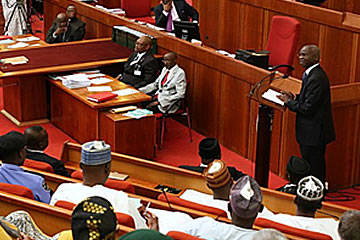
2016 Budget: We only Received 53 Per Cent of Our Allocation – Fashola The Minister of Power, Works and Housing, Mr Babatunde Fashola, has disclosed that the works sector received only 53 per cent of the over N300 billion appropriated to it 2016. He made this known at the ongoing 2017 budget defence before the Senate Committee on Works on Monday in Abuja Fashola said that although the entire ministry was allocated N456. 94 billion in the 2016 budget, works section had N301.85 billion allocation. He, however, said that the ministry’s capacity to implement the budget had been directly related to the monies released to it. “It is not the question of lack of capacity but the question of how much revenue the country earns and how they can give to us to pursue our work. “We received only 53 per cent on the allocation; there is the possibility that we will get more before the current budget fully winds down,” he said. Fashola notified the committee that the proposal of the ministry for the return of contractors to work was progressively implemented. “I doubt that there is any state in the federation where there is no road project going on, whether it is our own direct project or constituency project,” he said. According to him, the budget is working but more needs to be done in terms of continued funding of infrastructure to recover lost roads. Earlier, Chairman of the committee, Sen. Kabiru Gaya, had said that budget defence symbolised the commitment of the National Assembly in the pursuit of national economic wellbeing through the road map of key infrastructure, like roads. While clearing the “padding misconception’’ of the 2016 budget, Gaya said “the budget was brought to us as a draft. We are to amend whatever is to be amended. “The budget is a draft, we will do our work. The National Assembly could not have been said to have padded the budget. “By law, it has constitutional rights to appraise the budget proposal sent to it. It will therefore be a misnomer in the process of considering the budget to be seen as padding.” He, however, emphasized the importance of road infrastructure to the economic wellbeing of the country and called for the rehabilitation of dilapidated roads across the country. “This will help to promote national economic growth and prosperity,” he said. The chairman said that major challenge in the development and maintenance of road infrastructure was inadequate funding. He said that funding and investment needs of the nation’s key infrastructural deficit could not be considerably met by relying on solely on budget. “We must explore more resourceful ways of delivering quality service in this sector. “We must consider alternative sources of funding like public-private partnership and foreign investors to support the budget in the future,” he said. ...
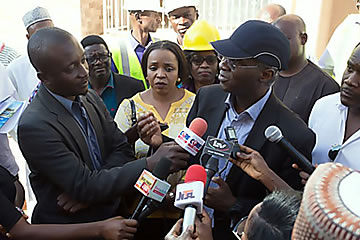
Public Private Partnership, A Panacea to Housing Deficit in Nigeria- FASHOLA The Honorable Minister for Power, Works and Housing, Mr. Babatunde Fashola, SAN has reiterated the importance of synergy between the Federal Government and the Private sector in the built industry in the provision of mass housing to Nigerians. He said the Federal government must find a way to exploit the Private Sector participation in the industry especially in the area of local content manufacturing of building materials, noting that it would aid in the reduction of prices of the materials and subsequently the cost of the houses. He made this known during an inspection visit to some selected sites and Polystyrene manufacturing company in Abuja. He said the visit was a follow up to the claims by some sponsors in the built industry during the Affordable Housing Summit held in Abuja earlier in the year that they had all the machineries to partner with the Federal Government in delivering affordable mass housing to Nigerians. The Minister who expressed satisfaction with what he saw on ground, noted that the concepts of acceptability and affordability were significant and must be factored into any system the Federal Government intends to adopt in the sector, adding that the low and middle income earners in Nigeria may not be interested in most of the houses available on ground at the moment, though beautiful and accepted but because they are mostly not affordable and said government was committed to initiate policies that would address the situation. At the Citec building and manufacturing factory in Mbora District, Abuja, The minister who was ushered round the factory by the Managing Director, Engineer Bello inspected EPS Polystyrene, a building raw material made from petrochemical products, is a lightweight, rigid, closed-cell insulation available in various densities to withstand load and back-fill forces and is being used to construct facials used in decking for storey buildings. The Minister said more companies using polystyrene would be encouraged as houses built with it are cheaper, noise proof, self fire extinguishing and does not need the use of air conditioners because it regulates the weather, adding that for the concept of acceptability and affordability to be meaningful to Nigerians, government must do its best to bring down the cost of owning a house. He said as part of efforts to assist Nigerians own houses with less burdens, the Federal Mortgage Bank has been repositioned to better perform its statutory function so that government on its part would concentrate more on ensuring the provision of acceptable housing designs. The Minister also visited building sites including: Braines and Hammers at Life Camp and Galadimawa, Sunny Vale at Logokoma and Rockvale at Gudu. He expressed satisfaction that Nigerian youths were being engaged at the sites in various trades such as masons, building sewage plants, iron mongering, and so on, noting that it has shown that the built sector is important in reducing the unemployment rate in the country. ...
No To Premium Times’ New Found Love For Fiction As Journalism The attention of the Office of the Hon. Minister of Power, Works and Housing, Mr. Babatunde Fashola SAN has been drawn to another sensational offering from the platform of the Premium Times. Without doubt, the so called “Special Report” with the screaming headline “Works Minister, Fashola, in N166 billion contract mess” fits perfectly into an emerging pattern by Premium Times to create fiction, avoid obvious facts and sensationalise headlines in order to draw attention and sell its struggling platform. Barely two weeks ago, the same Premium Times published a similarly fabricated report with the mischievous headline, “EXCLUSIVE: Buhari administration plotting to break Nigerian law in award of $800 million contract.” It is a known fact that the media industry, like other sectors, in the economy, faces challenges thrown up by the recession. Indeed, the challenges of the media industry precede the recession. However, while the Federal Government and well meaning Stakeholders, including the media, are working assiduously to address the challenges, constantly muckraking and deliberately maligning public officials and institutions should not replace the age long responsibility of the media to hold government accountable to the populace. Examining the mischievous report published by Premium Times readily shows the obvious contradictions and the less than altruistic intentions therein. To start with, the report established the fact that there was an Evaluation Committee made up of a Chairman and Members who are ranking professionals in their own right. Even by its own admission, the report that went to the Bureau of Public Procurement (BPP) was the work of the Evaluation Committee which does not have the Hon. Minister as member. Except the publication was insinuating that the Committee colluded to perpetrate fraud for itself and the Ministry, which is not the case, then going to town about “Fashola” being in a “contract mess” leaves much to be desired. The Premium Times contradicted itself by alleging a “contract mess” and yet admitted that the Ministry of Power, Works and Housing followed Due Process by advertising projects to be awarded and sending the list of selected contractors to the Bureau of Public Procurement. If the Ministry does what is expected of it by law and the institution of Government that it went to did its job, in what way does it amount to a “mess”? It is pertinent to inform Nigerians that as at this moment, no new contracts have been awarded to date based on the 2016 Appropriation and as such no single kobo has been paid. The ‘contract mess’ which Premium Timessought to mislead Nigerian citizens with is an exchange of correspondence between two government institutions to which the Ministry has adequately responded. It is worrisome that whilst Premium Times devoted its journalistic energy to the correspondence from the Bureau of Public Procurement, it failed to inform its readers of the response of the Ministry which comprehensively addressed all the issues raised in the Bureau’s referenced report. Is journalism now a one-way traffic? For the avoidance of doubt, the statutory role of the Bureau of Public Procurement is to vet contracts to be awarded depending on the threshold. At the end of its work, it either issues a Due Process Certificate of ‘No Objection’ or withholds it. Indeed, even if it issues a Certificate of No Objection, the last approving authority for the threshold of jobs so sensationally reported by Premium Times is the Federal Executive Council and not the Hon. Minister or the Permanent Secretary of the Awarding Ministry. It should be noted that the BPP has the final decision on contract prices and in previous memos from the Ministry, the Bureau had reviewed the cost of contracts. In a regime emphasising Due Process and underscoring efficient institutions, it should be a source of worry if the BPP certifies every piece of document that goes to it as being okay. So rather than sensationalise public institutions doing its job, it would be advisable for media organisations to educate its personnel on how the procurement system works. Indeed, it is curious to note, that the frivolous allegations being published by Premium Times and most times often instantly “boosted” across social media platforms seems to have gained currency with the resolve of the Federal Government under the leadership of President Muhammdu Buhari to make budgets work for the people through faithful execution of projects across the country. In the locust years of miserable budgetary allocations to capital development, with scant regard for Due Process, it would seem all was well. A question that should aptly end this clarification meant to set the records straight is: “What do ‘they‘ want?” ...
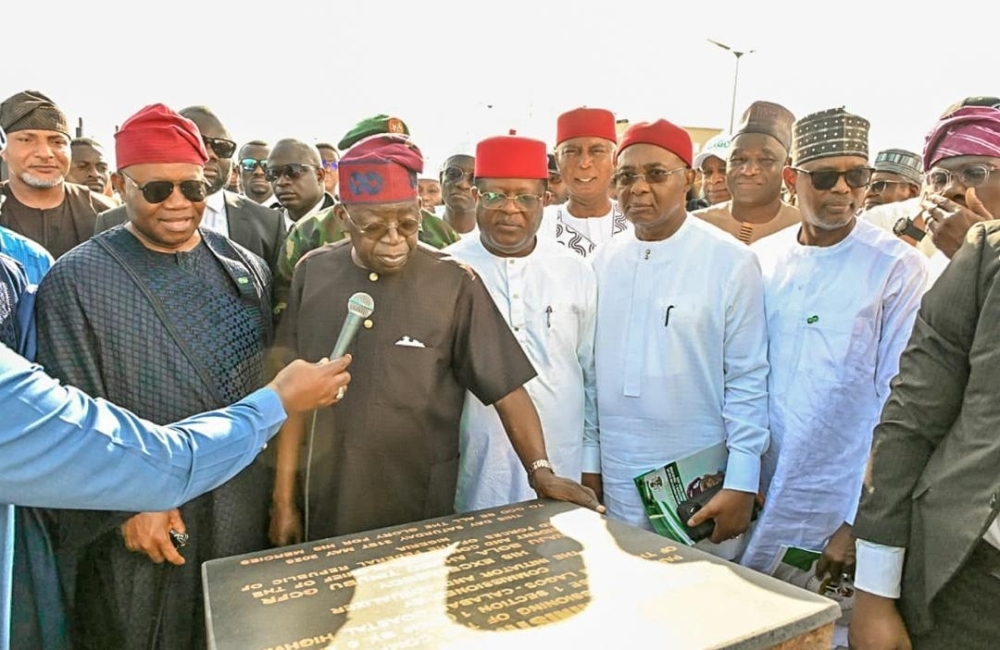
DRIVING NIGERIA’S FUTURE: CELEBRATING TWO YEARS OF TRANSFORMATIVE LEADERSHIP AND THE LAGOS-CALABAR COASTAL HIGHWAY MILESTONE
DRIVING NIGERIA’S FUTURE: CELEBRATING TWO YEARS OF TRANSFORMATIVE LEADERSHIP AND THE LAGOS-CALABAR COASTAL HIGHWAY MILESTONE
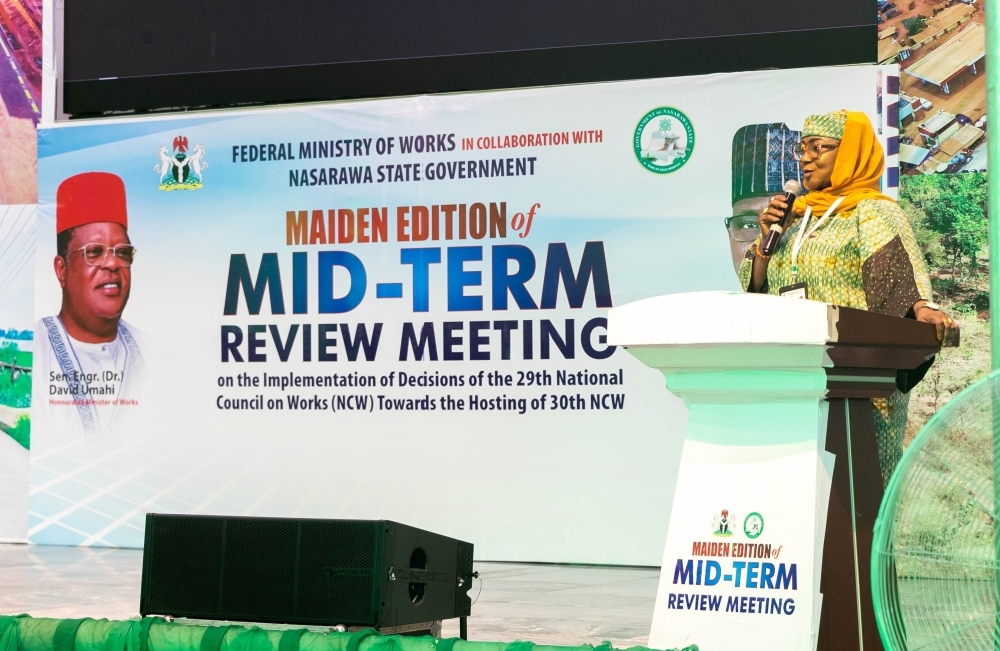
MID -TERM REVIEW MEETING ON THE IMPLIMENTATION OF THE DECISIONS REACHED AT THE 29TH NATIONAL COUNCIL ON WORKS (NCW) DAY 1
MID -TERM REVIEW MEETING ON THE IMPLIMENTATION OF THE DECISIONS REACHED AT THE 29TH NATIONAL COUNCIL ON WORKS (NCW) DAY 1