GORONYO COMMENDS SOKOTO GOVERNOR FOR DONATING 10 HILUX VEHICLES TO STRENGTHEN SECURITY ALONG SOKOTO–BADAGRY SUPERHIGHWAY
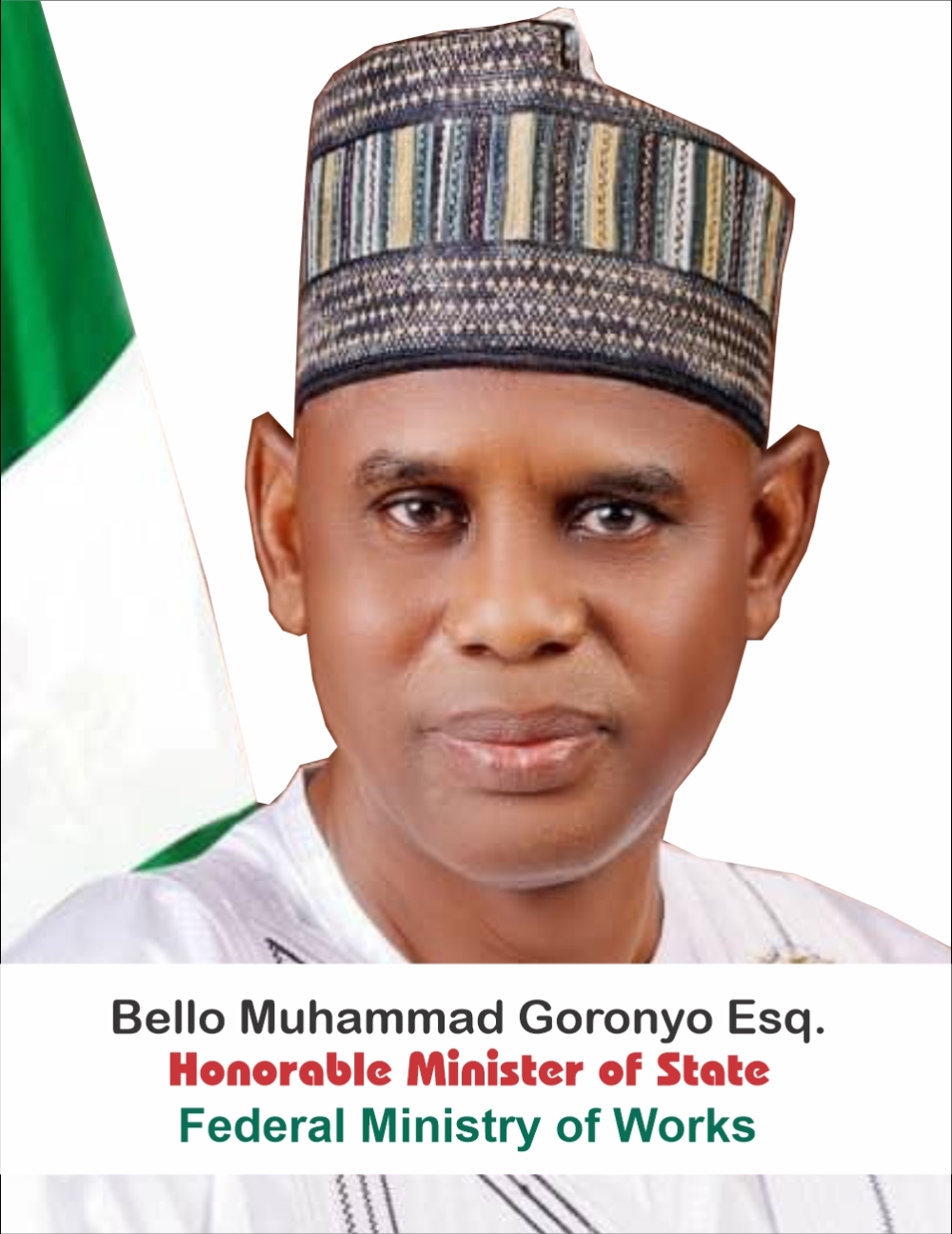
The Honourable Minister of State for Works, Rt. Hon. Bello Muhammad Goronyo, Esq., has commended the Governor of Sokoto State, Dr. Ahmed Aliyu Sokoto, PhD, for donating 10 operational Toyota Hilux vehicles to strengthen security operations along the Sokoto–Badagry Superhighway and other strategic infrastructure corridors.
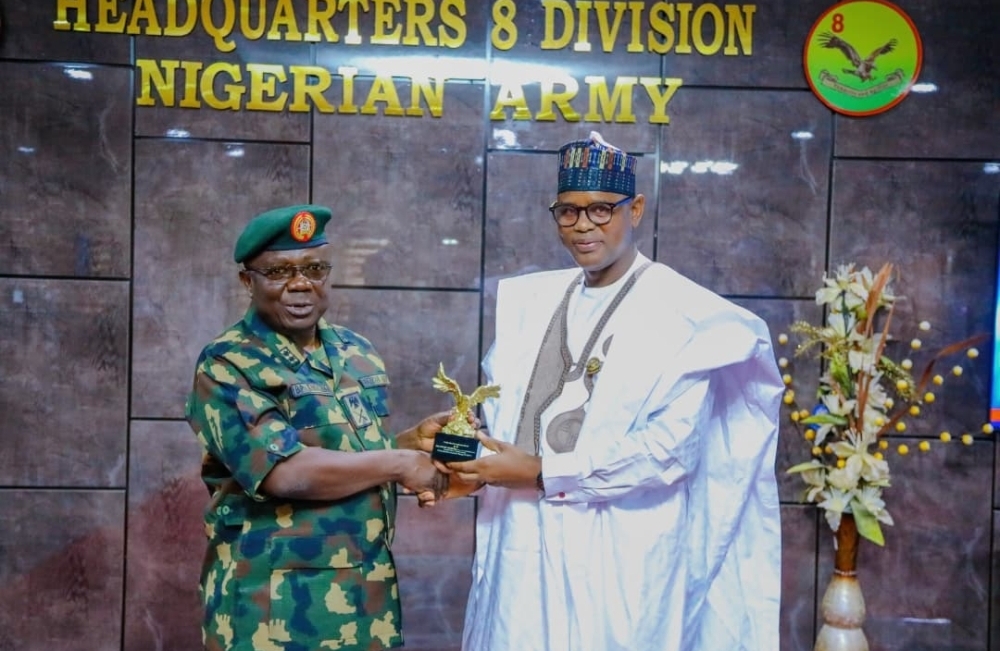
The vehicles were formally commissioned and handed over to the Nigerian Army at the Headquarters of the 8 Division, Nigerian Army, Sokoto, on Thursday, October 8, 2026, by the Honourable Minister of State for Works, on behalf of the Honourable Minister of Works, Engr. David Nweze Umahi, CON, FNSE.
The donation is expected to enhance the operational capacity of military personnel and other security agencies responsible for protecting construction workers, contractors, equipment and host communities along the highway corridor.
Speaking during the ceremony, Goronyo described the donation as a demonstration of the Sokoto State Government’s commitment to national development and the successful implementation of President Bola Ahmed Tinubu, GCFR’s Renewed Hope Agenda, particularly its landmark infrastructure projects.
The Minister emphasised that the Sokoto–Badagry Superhighway represents a long-standing national infrastructure vision that dates back several decades, with its conception traced to the era of former President Shehu Shagari in the 1970s. However, the vision remained unrealised for decades until the administration of President Bola Ahmed Tinubu, GCFR, initiated the construction of the 1,068-kilometre highway in October 2024.
He described the project as a significant step towards translating a historic aspiration into tangible infrastructure that will connect communities, expand economic opportunities and strengthen national integration.
According to Goronyo, President Tinubu’s commitment to the project demonstrates the Federal Government’s determination to bridge critical infrastructure gaps and improve connectivity between northern and southern Nigeria.
He noted that the superhighway, which traverses Sokoto, Kebbi, Niger, Kwara, Oyo, Ogun and Lagos states, is designed to facilitate the movement of people and goods, reduce transportation costs, stimulate trade, create employment and open up new economic opportunities along its route.
The Minister added that the highway would improve access to markets, schools, healthcare facilities and other essential services while supporting agriculture, commerce, industry and the development of communities across the corridor.
He stressed that the successful delivery of the project would require sustained commitment, effective coordination and cooperation among the Federal Government, state governments, security agencies, contractors and host communities.
Goronyo maintained that effective security remained essential to the timely and successful completion of the Sokoto–Badagry Superhighway. He explained that the provision of operational vehicles would strengthen the mobility and response capabilities of security personnel deployed to safeguard the project and its surrounding communities.
The Minister highlighted other strategic infrastructure projects being undertaken by the Federal Government, including the Lagos–Calabar Coastal Highway, the Calabar–Abuja/Trans-Saharan corridor, the Akwanga–Jos–Bauchi–Gombe corridor, the Abuja–Kaduna–Zaria–Kano route and the Zaria–Gusau–Sokoto corridor.
He explained that these projects form part of the Federal Government’s broader commitment to developing an integrated road network capable of supporting commerce, strengthening inter-state connections and accelerating national economic growth.
Rt. Hon. Goronyo further noted that the use of continuously reinforced concrete pavement on the Sokoto–Badagry Superhighway was intended to provide durable road infrastructure capable of serving Nigerians for decades. He added that complementary environmental and safety measures, including tree planting and solar-powered street lighting where provided for in the project, would contribute to environmental sustainability, visibility and road safety.
Goronyo commended the Nigerian Army and other security agencies for their resilience, professionalism and sacrifices in protecting lives, property and critical national infrastructure. He acknowledged the difficult conditions under which security personnel operate and urged them to remain steadfast in carrying out their constitutional responsibilities.
The Honourable Minister also expressed deep condolences to the Nigerian military over the reported loss of personnel in a bandit attack while on official duty the previous day. He described the loss as painful and extended his sympathy to the affected personnel, their colleagues and bereaved families, while praying for the peaceful repose of the departed and strength for their loved ones.
He further acknowledged the support of the National Security Adviser in addressing security challenges associated with the project, particularly through assistance and coordination aimed at strengthening security operations along the highway corridor.
Reaffirming his commitment to the Federal Government’s infrastructure development agenda, Goronyo said the Ministry of Works would continue to support the implementation of strategic projects under President Tinubu’s leadership, working in collaboration with relevant stakeholders to ensure their successful delivery.
He expressed optimism that the continued implementation of the Federal Government’s development programmes would bring lasting benefits to Nigerians, while acknowledging the complementary role of the Sokoto State Government in supporting infrastructure development and security.
In his remarks, the General Officer Commanding (GOC), 8 Division, Nigerian Army, Sokoto, Major General Bengba Paul Koughna, expressed appreciation to the Federal Government, the Federal Ministry of Works and the Sokoto State Government for the donation of the 10 Hilux vehicles.
The GOC noted that the vehicles would significantly enhance the operational mobility and response capabilities of troops deployed along the highway corridor, particularly across the approximately 440-kilometre section extending through Sokoto and Kebbi states.
He explained that troops conduct regular patrols and maintain multiple deployment points along the corridor, making the additional vehicles a valuable boost to their operational effectiveness.
He assured the Minister that the vehicles would be deployed appropriately to support security operations and protect construction workers, contractors, equipment and other stakeholders involved in the project.
The GOC also commended the representative of Hitech Construction Company, retired General Sa'ad Abubakar, for the company's involvement in the project.
The event was attended by retired Assistant Inspector-General of Police (AIG) Aliyu Garba, officials of the Federal Ministry of Works, representatives of the Sokoto State Government and other stakeholders.
The donation underscores the importance of sustained collaboration among the Federal Government, state governments, security agencies, contractors and host communities in addressing security challenges and ensuring the safe and timely delivery of strategic infrastructure projects.
The Federal Ministry of Works reiterates its commitment to working with all relevant stakeholders to protect national infrastructure and advance the objectives of President Bola Ahmed Tinubu, GCFR’s Renewed Hope Agenda for sustainable economic growth and development.

GORONYO COMMENDS SOKOTO GOVERNOR FOR DONATING 10 HILUX VEHICLES TO STRENGTHEN SECURITY ALONG SOKOTO–BADAGRY SUPERHIGHWAY The Honourable Minister of State for Works, Rt. Hon. Bello Muhammad Goronyo, Esq., has commended the Governor of Sokoto State, Dr. Ahmed Aliyu Sokoto, PhD, for donating 10 operational Toyota Hilux vehicles to strengthen security operations along the Sokoto–Badagry Superhighway and other strategic infrastructure corridors. The vehicles were formally commissioned and handed over to the Nigerian Army at the Headquarters of the 8 Division, Nigerian Army, Sokoto, on Thursday, October 8, 2026, by the Honourable Minister of State for Works, on behalf of the Honourable Minister of Works, Engr. David Nweze Umahi, CON, FNSE. Speaking during the ceremony, Goronyo described the donation as a demonstration of the Sokoto State Government’s commitment to national development and the successful implementation of President Bola Ahmed Tinubu, GCFR’s Renewed Hope Agenda, particularly its landmark infrastructure projects. The Minister emphasised that the Sokoto–Badagry Superhighway represents a long-standing national infrastructure vision that dates back several decades, with its conception traced to the era of former President Shehu Shagari in the 1970s. However, the vision remained unrealised for decades until the administration of President Bola Ahmed Tinubu, GCFR, initiated the construction of the 1,068-kilometre highway in October 2024. He described the project as a significant step towards translating a historic aspiration into tangible infrastructure that will connect communities, expand economic opportunities and strengthen national integration. According to Goronyo, President Tinubu’s commitment to the project demonstrates the Federal Government’s determination to bridge critical infrastructure gaps and improve connectivity between northern and southern Nigeria. The Minister added that the highway would improve access to markets, schools, healthcare facilities and other essential services while supporting agriculture, commerce, industry and the development of communities across the corridor. Goronyo maintained that effective security remained essential to the timely and successful completion of the Sokoto–Badagry Superhighway. He explained that the provision of operational vehicles would strengthen the mobility and response capabilities of security personnel deployed to safeguard the project and its surrounding communities. The Minister highlighted other strategic infrastructure projects being undertaken by the Federal Government, including the Lagos–Calabar Coastal Highway, the Calabar–Abuja/Trans-Saharan corridor, the Akwanga–Jos–Bauchi–Gombe corridor, the Abuja–Kaduna–Zaria–Kano route and the Zaria–Gusau–Sokoto corridor. Rt. Hon. Goronyo further noted that the use of continuously reinforced concrete pavement on the Sokoto–Badagry Superhighway was intended to provide durable road infrastructure capable of serving Nigerians for decades. He added that complementary environmental and safety measures, including tree planting and solar-powered street lighting where provided for in the project, would contribute to environmental sustainability, visibility and road safety. Goronyo commended the Nigerian Army and other security agencies for their resilience, professionalism and sacrifices in protecting lives, property and critical national infrastructure. He acknowledged the difficult conditions under which security personnel operate and urged them to remain steadfast in carrying out their constitutional responsibilities. The Honourable Minister also expressed deep condolences to the Nigerian military over the reported loss of personnel in a bandit attack while on official duty the previous day. He described the loss as painful and extended his sympathy to the affected personnel, their colleagues and bereaved families, while praying for the peaceful repose of the departed and strength for their loved ones. He further acknowledged the support of the National Security Adviser in addressing security challenges associated with the project, particularly through assistance and coordination aimed at strengthening security operations along the highway corridor. Reaffirming his commitment to the Federal Government’s infrastructure development agenda, Goronyo said the Ministry of Works would continue to support the implementation of strategic projects under President Tinubu’s leadership, working in collaboration with relevant stakeholders to ensure their successful delivery. He expressed optimism that the continued implementation of the Federal Government’s development programmes would bring lasting benefits to Nigerians, while acknowledging the complementary role of the Sokoto State Government in supporting infrastructure development and security. In his remarks, the General Officer Commanding (GOC), 8 Division, Nigerian Army, Sokoto, Major General Bengba Paul Koughna, expressed appreciation to the Federal Government, the Federal Ministry of Works and the Sokoto State Government for the donation of the 10 Hilux vehicles. The GOC noted that the vehicles would significantly enhance the operational mobility and response capabilities of troops deployed along the highway corridor, particularly across the approximately 440-kilometre section extending through Sokoto and Kebbi states. He explained that troops conduct regular patrols and maintain multiple deployment points along the corridor, making the additional vehicles a valuable boost to their operational effectiveness. He assured the Minister that the vehicles would be deployed appropriately to support security operations and protect construction workers, contractors, equipment and other stakeholders involved in the project. The GOC also commended the representative of Hitech Construction Company, retired General Sa'ad Abubakar, for the company's involvement in the project. The event was attended by retired Assistant Inspector-General of Police (AIG) Aliyu Garba, officials of the Federal Ministry of Works, representatives of the Sokoto State Government and other stakeholders. The Federal Ministry of Works reiterates its commitment to working with all relevant stakeholders to protect national infrastructure and advance the objectives of President Bola Ahmed Tinubu, GCFR’s Renewed Hope Agenda for sustainable economic growth and development.
The donation is expected to enhance the operational capacity of military personnel and other security agencies responsible for protecting construction workers, contractors, equipment and host communities along the highway corridor.
He noted that the superhighway, which traverses Sokoto, Kebbi, Niger, Kwara, Oyo, Ogun and Lagos states, is designed to facilitate the movement of people and goods, reduce transportation costs, stimulate trade, create employment and open up new economic opportunities along its route.
He stressed that the successful delivery of the project would require sustained commitment, effective coordination and cooperation among the Federal Government, state governments, security agencies, contractors and host communities.
He explained that these projects form part of the Federal Government’s broader commitment to developing an integrated road network capable of supporting commerce, strengthening inter-state connections and accelerating national economic growth.
The donation underscores the importance of sustained collaboration among the Federal Government, state governments, security agencies, contractors and host communities in addressing security challenges and ensuring the safe and timely delivery of strategic infrastructure projects.
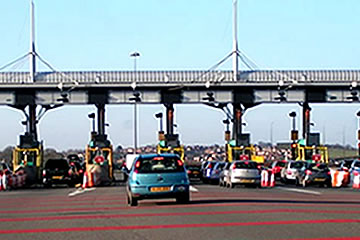
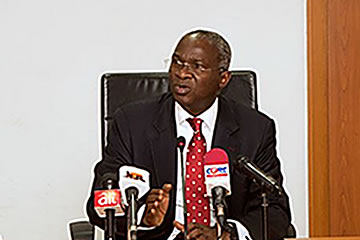
Reintroduction Of Tollgates: One Of The Needful Steps For Road Development And Maintenance Tolling is one of the ways of meeting the critical road and bridge needs of a country, more rapidly than would otherwise be possible with public funds alone, due to both limited and untimely release of public works budgets. Tolls are fast becoming a sustainable way of delivering transportation infrastructure projects, whether public, private or public-private-partnerships funded. It is also note worthy that tolled roads may be funded by accessing capital (debt and equity needed to construct, re-construction or rehabilitate) from commercial market and paid with income generated from tolls over a contractually agreed time frame. Again, the income from tolling could be used to manage and maintain the road and/or bridge infrastructure and the provision of ancillary services. The Federal Government of Nigeria, through the use of public funds and private road concessionaires, can access this funding option. Government’s view is that there are substantial benefits to be derived from tolling, provided certain principles are adhered to. Nigeria has long suffered from a sub-optimal road network that imposes significant costs in terms of travel time, vehicle wear and tear and high fatality rates. Limited or poor access resulting from underdeveloped networks also discourages investment and economic development in many regions of the country. It is worth noting that road tolling is a tried and tested model in many countries. Indeed, road tolling is currently in operation in Nigeria on the newly built Lekki-Epe road and on access roads to major airports nationwide. Nigeria had operated some public tolled roads several years ago which were unfortunately discontinued in 2004 with the exception of some airport approach roads, due mainly to legal disputes, revenue leakages and unmet requirements for maintenance of the tolled roads. Due to the enormity of the benefits accruable to the tolling system, the present administration of President Muhammadu Buhari received several proposals on the issue of re-introduction of toll gates, as additional source of revenue to government. In view of the dwindling oil prices and the commodity being the mainstay of our economy and by way of ensuring sustainability and maintenance of Federal roads, tolling appears to be a credible option. The re-introduction of tolling, will therefore, serve as a tool for additional revenue to support effective management of the Federal road network. Additionally, motorable Federal roads and bridges will reduce journey times and travel costs and ensure safer travel for road users. It can also encourage more investment and diversification of commercial activity to outlying areas that are currently not served by an effective trunk network. Importantly, tolls are also equitable because they are paid by those who use the road or bridge rather than from general taxes and a good avenue for job creation for the nation’s teaming unemployed youth. Now that tolling is once again being considered as a policy option, Nigeria has the advantage of drawing from its past experience and the good practices of other countries applying same to successfully build, manage and maintain its highways through the instruments of tolling and Public-Private- Partnership (PPP). The challenges and experiences from previous concessionaired projects should be well studied to avoid a repetition of past mistakes. The Federal Ministry of Works should draw from the experience of specialist consultants through the Nigeria Infrastructure Advisory Facility and other International Institutions. During their maiden press briefing, the Minister of Power, Works and Housing, Babatunde Fashola and the Minister of State, Hon. Mustapha Baba Shehuri disclosed that "if we ask everyone to pay a little as our commonwealth and hold those in charge accountable, and use technology…We don’t pay cash, we pay by token or by ticket and money is accountable and will go to the right place ". On this note, the adoption of technology as professed by the Minister in collecting monies from toll gating will make the system efficient and accountable. ...
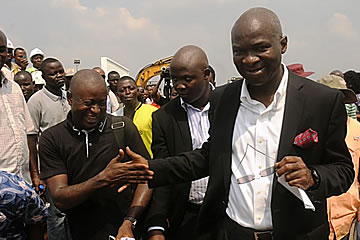
Fashola To Nigerian Youths: Don’T Despair, There Is Hope, Recovery Ahead Calls for patience, hard work as panacea for economic recovery "With what I am seeing in the seven months of implementing a budget, recovery is on the way", he says Urges Nigerian youths to be prepared to play bigger roles as results of budget implementation, steps to stimulate local production begin to manifest more forcefully The Minister of Power, Works and Housing, Mr. Babatunde Fashola SAN, Tuesday participated in a Special Town Meeting with Youths in Abuja bearing an unmistakable message of hope even as he called for patience and hard work among Nigerians as the panacea for the much desired national economic recovery. Fashola, who spoke at the Town Hall Meeting with Nigerian Youths in Abuja organised by the Federal Ministry of Information and Culture, prefaced his contribution with an acknowledgement of his age and some of his colleagues as being beyond the youth bracket but quickly added that he has useful experience to share with the gathering. His words: " The point really is that as unyouthful as I am there is a lot of story and history there. For the very, very young people, the first thing I’ll like to say to you is don’t despair. There is hope and there is light at the end of the tunnel. I have seen Nigeria like this before, even worse…I want to say to you don’t lose faith." The Minister also urged the young people to be patient and hopeful assuring that government policies and actions being implemented across the country from the 2016 budget had given the indication that economic recovery was on the way. Addressing the capacity audience of youths, representatives of youth organisations, Ministers and top government functionaries, Fashola said because recession came about when the country stopped producing and started having negative growth the only means of recovery was for all, especially the youths, to roll up their sleeves and "work very hard to take back our economy". The Minister said the 2017 Budget was appropriately named, "Budget of Recovery and Growth" by President Muhammadu Buhari, adding, however, that although the President has set all the parameters for economic recovery and growth, the President can neither recover nor grow back the economy alone. He declared, "It is the sum total of what all of us do that the National Bureau of Statistics will record and that is when the numbers come out. It is either a plus or a minus. To everybody here and to those who are watching us at home, you must understand that this is the time when we must work our hardest". "I don’t pretend that it is easy. I don’t assume that people are not facing difficult times, I am mindful of it; I see it up close. I know those who are struggling to pay rent; I know those who are struggling to pay fees, those who are withdrawing their children from school. I have relations, but I know that we can turn this corner together", the Minister said. Predicating his stance on the implementation of the 2017 Budget proposals, Fashola said as more money became available for the country, Nigerians would feel it in the quality of infrastructure; in railway projects being completed, electricity installations being expanded and liabilities in electricity being cleared, pointing out that there were "quite a number of liabilities there that have to be paid off". Appealing to people engaged in counterproductive activities against the economy to stop, the Minister declared, "As money moves around, if I pay A, A can buy sugar and milk. The sugar and milk seller can pay for her children’s school fees, the school fees can pay salaries of teachers. That is how money moves around in an economy". "It is important for us, especially those who are sabotaging this economy, breaking pipelines, that this is time to stop if we must recover; because the price of oil is going to go up but we will not benefit from it if we don’t produce; that was why I talked about working hard and producing because that is still a major source of our income. It is also the major source of our foreign exchange", he said adding that selling more oil would also reduce the pressure on Dollar to Naira for the benefits of all Nigerians. On the role of his Ministry in achieving a turn around for the economy, Fashola, who recalled his earlier addresses in which he had disclosed the realities he met on assumption of duties, pointed out that for upwards of two to three years, the contractors in Power and in Works were not paid while nothing except Public Private Partnership (PPP) was happening in Housing. According to the Minister, "As contractors started losing income, the net effect was to start shedding jobs. So the first thing that we have started doing is to recover those jobs by starting to pay contractors. The first disbursements were made, I think, in June, the second disbursements were made between October and November". The Minister, who also noted Ministers have spent one year, one month and nine days in office during which period they have implemented the 2016 budget for roughly seven months, added that in seven months, the government has quarter by quarter, as confirmed by Minister of Finance and Minister of Economic Planning and Development, been able to put contractors back to work. "Contractors who haven’t worked for three years are back to work. Those are the first steps to recovery, getting those who have lost their jobs back to work and I am optimistic that if what I see, what’s being reported to me, and we are not by any means near to where we want to be, with what I am seeing in the seven months of implementing a budget, recovery is on the way", he said. Tracing the recession to what government did and failed to do in the past as well as unavoidable global events, Fashola recalled that between 1979 and 1984 Nigeria had much money but wasted it all in importation of frivolities adding that by 1984, most of the imported things had disappeared. "By 1985, in my University, recession meant we could not go to the cafeteria again. We used to eat a meal at 50 kobo; eggs, coffee and tea in this country, chicken at lunch, 50k per meal... That disappeared. But, you know what? Nigeria did not disappear", he said. Saying the scenario of those years were almost similar to what is happening again today, Fashola urged Nigerian youths not to despair "because there is hope" adding that the best thing for them to do was not to "check out" as was popular in his time, but to stay put and take the opportunities emerging in the economy to build the nation up to international standard and acceptability. Responding to a question on the supply of prepaid meters and ending estimated bills, the Minister assured that his Ministry was doing all in its power to end the vexed issue adding, however, that it was better to come to the public with results than speak of the efforts being made now for which it would receive no credit. He, however, noted that if the Government of Nigeria could not meter all Nigerians in the 63 years it was in full control of electricity generation, transmission and distribution, it would be unfair to expect that private companies that took over ownership of generation and distribution three years ago would perform that feat. "The point to make, therefore, is that the Power Sector in private hands is a three-year transition thus far. We are doing a lot of things and one of the things we are trying to ensure does not happen again is massive importation of meters because the more meters we import the more jobs we take away from you", he told the youths. The Minister said government was trying to encourage local meter manufacturing companies to produce the meters here adding, however, that because there were still components that still technologically were not produced in the country, government was trying to get support for the companies to access funds. "Just yesterday, I signed a letter to the Governor of CBN supporting the request of the two meter manufacturing companies to access foreign exchange which had been denied them in the past", he said adding, "But that is one half of the story. The other half of the story is also the liquidity issue in the Power Sector which I have alluded to and which makes it difficult for the DisCos to access funds to buy meters and supply you". He said in order to avoid the mistrust between the DisCos and consumers over supply of meters, government has advised the DisCos that their responsibility was to provide the meters and stop passing the burden to consumers adding, "Their (customers’) burden is to pay bills for energy consumed". Expressing the commitment of the present administration to the local manufacture and supply of meters, Fashola declared, "This administration is determined that the mistake we made in the telecommunications sector will not be repeated in the same way that we are trying to localise our opportunities for producing what we eat". He added, "So bear with us. Step by step, but very progressively and assuredly we will reach you and in the fullness of time". Earlier, in his opening remarks, the Minister of Information, Alhaji Lai Mohammed, said the present administration headed by President Muhammadu Buhari, was very concerned about youth empowerment in the country adding that in the first phase of the N-Power programme government created 200,000 jobs pointing out that it was the greatest number of jobs created in one swoop by any administration in the country. According to him, another 300, 000 jobs were next in line to bring the number to the 500,000 which the administration promised adding that most of the jobs, which he said would be from Education, Health and Agriculture programmes, would benefit the youths. Noting that the school feeding had taken off in Anambra, Kaduna and Osun States and was being scaled up now to 11 of the 18 states designated for the first phase of the programme, the Minister added that some 45,000 cooks had been trained in all the states. Urging the youths to cooperate with government in achieving the set goals, the Minister said the data for cash transfers for nine states of the country was now ready and the payment processes in those states were already in top gear adding that for the micro-credit scheme, more than 1,000,000 Nigerians were set to get loans at low interest rates through the Bank of Industries. Other Ministers that addressed the youths and answered questions during the robust interactive sessions were, the Minister of Labour and Productivity, Minister of Sports and Youths Development, Minister of Finance and Minister of State for Trade and Commerce. ...
Fashola Adds 700MW To National Grid The Minister of Power, Works and Housing, Babatunde Raji Fashola has disclosed that the on-going construction work on the Zungeru Hydroelectric Power Plant Project would add 700MW to the national grid when completed. This is as a result of the pursuit for regular and reliable electricity supply nationwide. The Minister who was represented by the Director, Energy Resources in the Ministry, Engr. Emmanuel Ajayi made this disclosure recently during the River Closure Ceremony of the project at Zungeru, Niger State. He described the project being carried out in conjunction with a consortium of major Chinese Companies as one of the biggest hydro-electric power projects in the country. He said that it is a great and feasible feat that would boost the provision of electricity supply nation-wide. He also pointed out that it is a good omen for the attainment of the present administration’s thrust of providing incremental, sustainable and uninterrupted power supply which Nigerians are yeaming for. The Minister commended the efforts of those who contributed to the construction of the project and advised the host communities to maintain peace as government has put in place modalities to ensure adequate compensations and resettlement of the affected people around the project site. The Governor of Niger State, Alhaji Abubakar Sani Bello, represented by the Commissioner for Works and Transport, Abdulmalik Usman Cheche stated that Niger State is housing yet another power project of 700MW apart from the 3 other power projects already sited in the State. He commended the federal government for creating mass employment to their people, he also noted that the project has already created over 5,000 employments to the host communities. The Governor gave assurance of the safety of the contractors and workers on the site, saying that the deployment of soldiers to the station is government’s proactive response to its citizenry as no responsible government will fold its arms on security of such a huge investment. The Vice President of SinoHydro Consortuim, one of the contracting companies handling the project, Xiao Jun pledged his company’s readiness to promote the project in line with the contract agreement, he gave assurance that the project would be realized on record time. The Project Director of employers’ Representative (Engr. (Dr.) Adewumi); the Project Director of CNEEC-SinoHydro Consortium (Wu Guisheng) and the Vice President of PowerChina International Group Limited (Tian Haha) also graced the ceremony. ...
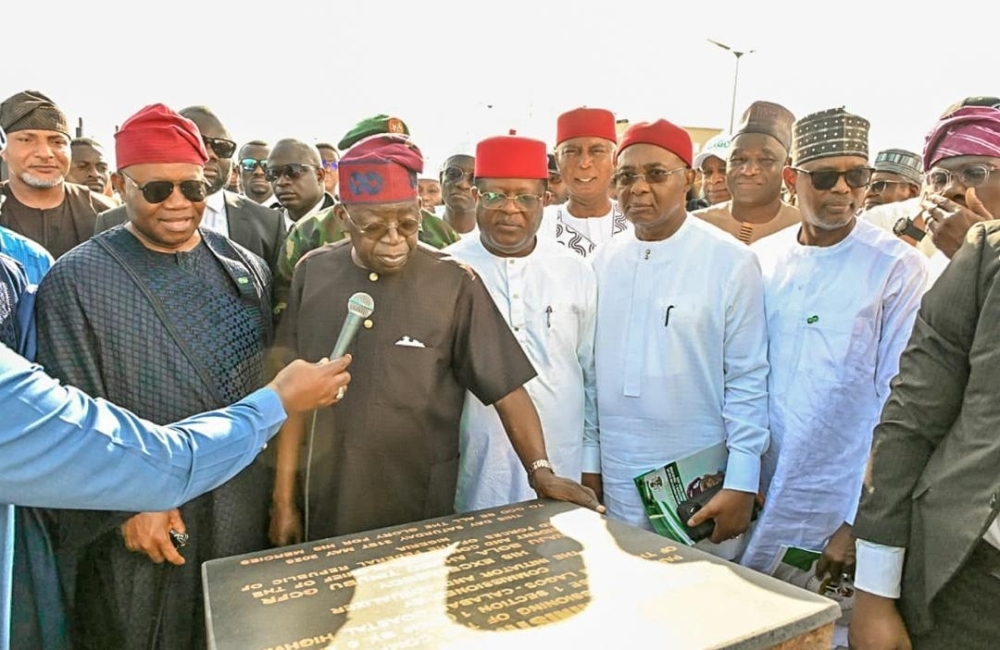
DRIVING NIGERIA’S FUTURE: CELEBRATING TWO YEARS OF TRANSFORMATIVE LEADERSHIP AND THE LAGOS-CALABAR COASTAL HIGHWAY MILESTONE
DRIVING NIGERIA’S FUTURE: CELEBRATING TWO YEARS OF TRANSFORMATIVE LEADERSHIP AND THE LAGOS-CALABAR COASTAL HIGHWAY MILESTONE
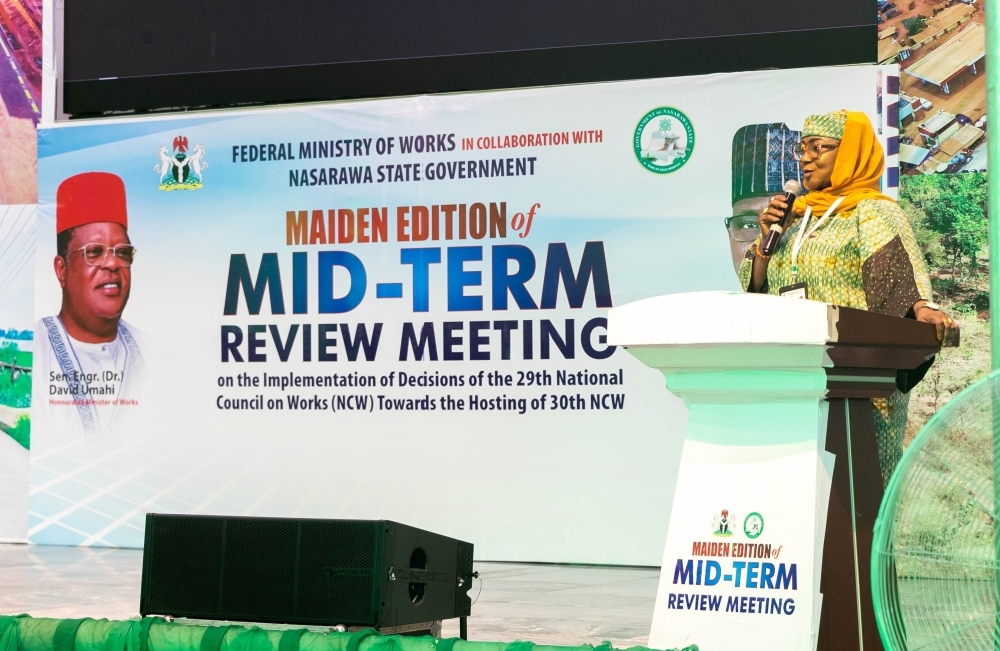
MID -TERM REVIEW MEETING ON THE IMPLIMENTATION OF THE DECISIONS REACHED AT THE 29TH NATIONAL COUNCIL ON WORKS (NCW) DAY 1
MID -TERM REVIEW MEETING ON THE IMPLIMENTATION OF THE DECISIONS REACHED AT THE 29TH NATIONAL COUNCIL ON WORKS (NCW) DAY 1