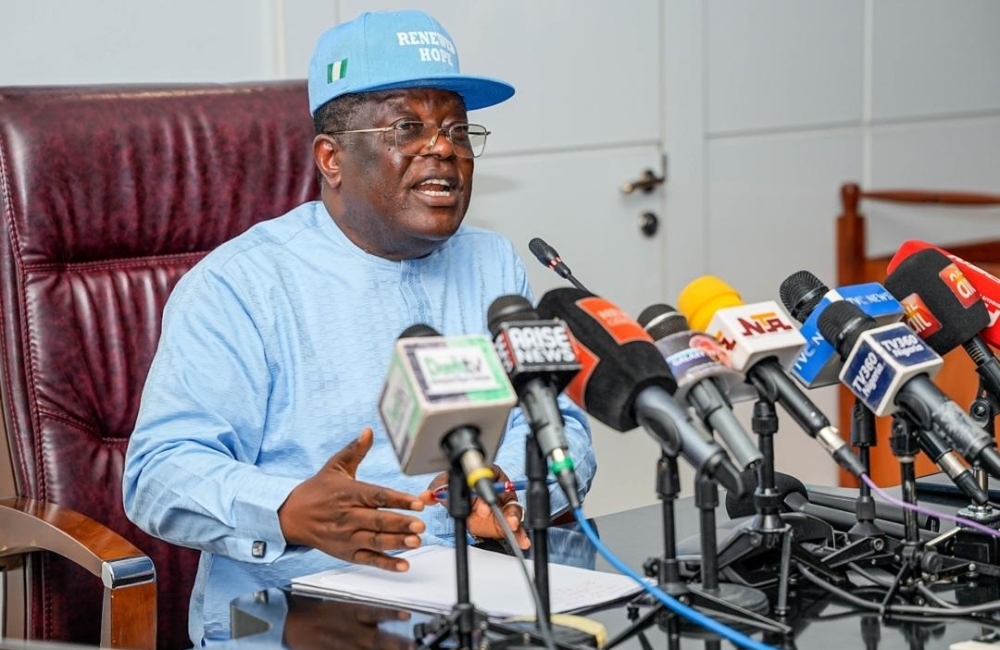
UMAHI HIGHLIGHTS IMPACT OF TINUBU’S LEGACY PROJECTS, SAYS INFRASTRUCTURE INVESTMENTS ARE TRANSFORMING NIGERIA
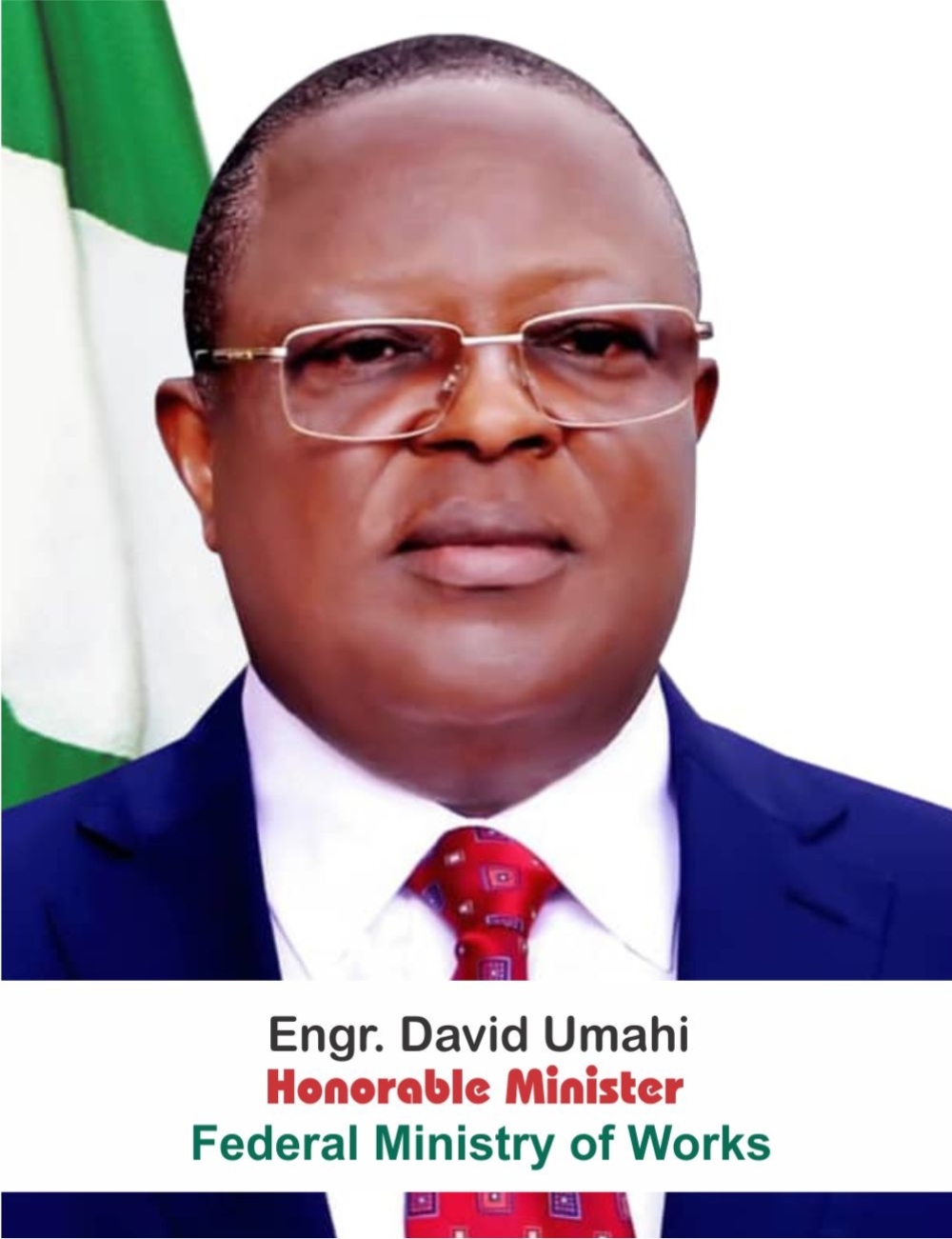
The Honourable Minister of Works, Engr. David Umahi, CON, FNSE, FNATE, has highlighted the progress and transformative impact of the major infrastructure projects being executed by the President Bola Ahmed Tinubu-led Administration, describing them as strategic investments aimed at reshaping Nigeria’s transportation network, strengthening national connectivity and stimulating economic growth.
Umahi said this on Wednesday, 7 October 2026, in Abuja, during a *Press Conference,* where he updated on the Tinubu Administration's *four Legacy Road Projects,* ongoing federal road interventions, completed projects, procurement processes, and the Ministry’s efforts to ensure value for money in the development of infrastructure.
The Minister identified the four legacy projects as the Lagos-Calabar Coastal Highway, Sokoto-Badagry Superhighway, Calabar-Ebonyi-Abuja Highway (the Trans-Saharan Route/North-South connectivity corridor, and the Dualisation of Akwanga-Jos-Bauchi-Gombe-Biu-Maiduguri Road.
According to him, the projects were conceived as strategic national infrastructure to connect all six (6) geopolitical zones, facilitate the movement of people and goods, open up economic opportunities, and strengthen Nigeria’s long-term development.
Giving an update on the Lagos-Calabar Coastal Highway, Umahi disclosed that Section 1, covering 47 kilometres, has been completed, while significant progress has also been recorded on Section 2, covering approximately 55 kilometres.
He explained that pavement works on Section 2 were nearing completion, while major flyovers, overpasses and underpasses were being constructed to address complex traffic, environmental and engineering challenges along the corridor.
The Minister said some parts of the alignment had to be redesigned to accommodate existing and planned rail, road and industrial infrastructure, particularly around the Dangote Refinery and Lekki Deep Seaport axis. He stressed that the objective was to develop an integrated transportation system rather than an isolated road project. On the Ondo State axis, Umahi explained that the alignment was redesigned in some locations because of difficult terrain, deep pits and challenging subsoil conditions. He said the redesign was aimed at ensuring durability, safety and cost-effectiveness, with substantial filling and ground improvement works ongoing in some areas.
The Minister further disclosed that President Tinubu had directed that the continuation of the Lagos-Calabar Coastal Highway be aligned with the existing East-West Road in parts of the Niger Delta area.
He described the decision as a strategic engineering intervention that would address the increasing impact of flooding and climate change on the vital infrastructure. According to him, critical sections of the East-West Road would be raised to accommodate present and anticipated flood levels and ensure the continued functionality of the strategic route.
Umahi also dwelled on the importance of the Construction of the Benin City Bypass and other sections of the littoral corridor in reducing congestion and improving movement across the South-South zone.
On the Sokoto-Badagry Superhighway, the Minister said the project was designed to establish a major economic corridor linking Ilelah in Sokoto State with Badagry in Lagos State. He noted that various sections of the highway were at different stages of construction, with significant progress recorded across the Sokoto, Kebbi, Oyo, Ogun and Badagry axes, while those of Niger and Kwara States are commencing soon.
Umahi said the strategic importance of the project is beyond road construction, noting that the corridor would unlock agricultural, industrial, tourism and other economic opportunities. He added that the Federal Government was exploring opportunities for complementary investments, including agriculture, housing, tourism and other economic activities along the major infrastructure corridors.
Speaking on the third legacy project, the ancient Trans-Saharan Route, Engr. Umahi explained that it was designed to strengthen connectivity between the coastal axis and the northern parts of the country, thereby facilitating the movement of people, goods and services across the South-South, South East and North Central geopolitical zones.
He disclosed that substantial progress had been recorded on the initial sections, while additional sections had been approved to make the corridor more economically viable and attractive to potential financiers.
On the fourth legacy project, the Minister said the Akwanga-Jos-Bauchi-Gombe-Biu-Maiduguri single carriageway is being expanded as a major northern connectivity route. He explained that the scope had been extended to cover an additional spur from Jos to Ibi in Taraba State, with design and procurement processes ongoing.
Responding to questions from journalists on the number of completed projects, the Minister listed several major road and bridge projects completed or ready for commissioning across the country. Among the projects, he mentioned Section I of the Lagos-Calabar Coastal Highway, the Kwanar Danja-Hadejia Road, the Kaduna-Pambeguwa Road, the Lafia Bypass, the Bodo-Bonny Road with Bridges along the Opobo Channel, among many others.
He also listed the completed first lot of the Lagos-Calabar Coastal Highway, the Gombe-Potiskum rehabilitation project, sections of the Azare road linking Jigawa and Bauchi, the five-span Ampoha Bridge, the 23-kilometre, 23-span flyover project at Ekpoma-Benin axis, and a three-span, 75-metre dualised bridge structure.
Umahi further disclosed that several sections of the Lagos-Badagry and Lagos-Ibadan, Lagos-Shagamu-Ore corridors had been completed, while other sections were at advanced stages of completion.
He assured journalists that the Ministry was updating its compendium of completed and ongoing projects. “*We have quite a lot of projects. We have completed projects and we have ongoing projects. We are updating the compendium and it will be made available on the Ministry’s website and circulated to the public,”* he assured.
The Minister reiterated the Federal Ministry of Works' increasing adoption of concrete pavement on major highways, saying the need for greater durability and reduced maintenance costs is driving the policy.
According to him, the Ministry is developing infrastructure that would serve Nigerians for several decades and provide better value for public resources. He reiterated that concrete pavement provides longer durability guarantees, when properly designed and constructed, compared with the recurring maintenance challenges associated with conventional asphalt pavement.
Addressing questions concerning the procurement process for the Lagos-Calabar Coastal Highway, Umahi explained that the Ministry followed an applicable procurement framework. He said the special procurement approach was necessitated by the unique engineering requirements of constructing a major highway through a difficult coastal terrain.
According to him, the Ministry identified the need for a contractor with a proven track record in executing similar coastal infrastructure and subsequently made a recommendation to the Bureau of Public Procurement (BPP). He disclosed that the BPP reviewed the recommendation and gave its clearance, while the Federal Executive Council remained the final approving authority.
Umahi said the Ministry subjected the contractor's bid to scrutiny by comparing proposed rates with prevailing market prices for materials and other inputs. He stressed that both indigenous and expatriate contractors were subjected to the same pricing and evaluation principles.
*“We put everybody on the same platform. We sent the proposals to the Bureau of Public Procurement. They reviewed it and where they felt that the rates went beyond their expected maxima, they called our attention to it, and we reviewed the rates accordingly,”* he explained.
The Minister also disclosed that substantial progress had been recorded on the Outstanding Sections of the Abuja-Kaduna-Zaria-Kano Expressway, with all the sections completed except the Jere-Kaduna portion advancing steadily. He revealed that the Ministry is installing solar-powered lighting along the 375-kilometre Expressway to improve night visibility, thereby enhancing safety and security. He also said that the improved condition of the highway, alongside security interventions, was contributing to safer and more efficient movement along the corridor.
The Minister disclosed that the Ministry had commenced an *“Operation Rescue”* on the Benin-Asaba Expressway following challenges associated with the road and its existing concession arrangement. He said the Federal Government had intervened to restore mobility, while plans were being developed for a comprehensive reconstruction of the entire alignment, using continuously reinforced concrete pavement (CRCP). He stressed that Nigerians should not continue to suffer because of unresolved contractual or concession-related issues.
The Minister, particularly, highlighted the Federal Government's increased infrastructure investment in the South East, saying the Tinubu Administration had demonstrated a clear commitment to reintegrating the hitherto neglected zone into the national infrastructure development programme. He said several major road projects had either been approved, commenced, or completed by the present administration.
Umahi, who is from the zone, said it might not have the highest number of federal projects compared with other geopolitical zones, but it was no longer being left behind.
*“We can't continue to live in denial. What we have been crying for is being given. The people of the South East are being fully reintegrated into the national infrastructure development plan,”* he emphasised.
He cited the completion of the Second Niger Bridge, the rehabilitation of the 1st Niger Bridge, ongoing construction of major Bypasses and other federal road projects in the zone as evidence of the administration's commitment.
The Minister maintained that infrastructure development should be viewed from the perspective of national integration rather than regional politics. He stated that the Federal Government's infrastructure agenda was intended to ensure that every part of Nigeria benefited from strategic investments in roads, bridges and other transportation infrastructure.
On the Tax-Credit Scheme’s projects inherited from the previous administrations, Umahi explained that the Federal Government had taken proactive measures to address them, especially where private-sector partners were no longer able to sustain previously approved financing arrangements.
He warned contractors, who had received mobilisation or project funds but failed to deploy the funds on the work that the Ministry would take appropriate steps to recover such funds. He stressed that accountability, performance and value for money remained central to the Ministry's project execution strategy.
The Minister also addressed the ongoing intervention on the First Niger Bridge, explaining that measures were being introduced to improve traffic management and protect the structural integrity of the bridge. He said the Ministry was installing appropriate traffic management infrastructure, CCTV cameras and other security measures at its Asaba and Onitsha ends. According to Umahi, the measures were necessary because bridges are designed primarily for dynamic as opposed to static loads, explaining that prolonged traffic gridlock can create additional structural and safety challenges. He said remedial works, repainting and other maintenance activities were also being undertaken to ensure the long-term usage of the structure.
Umahi further explained that the Federal Government's road development strategy included environmental considerations, such as the planting of trees along major highways and the installation of solar-powered street lighting. He said the initiative would help improve visibility and the environment, provide shade, and contribute to the reduction of harmful emissions along major transport corridors.
The Minister also linked infrastructure development to the broader economic reforms of the Renewed Hope Agenda of the Tinubu Administration, saying improved roads and connectivity would support agricultural production, industrialisation, trade, commerce, tourism and investment. He maintained that the Federal Government's infrastructure investments were part of a broader strategy to move economic growth from the macroeconomic level to the grassroots.
On the financing of the major legacy projects, Umahi assured Nigerians that the Federal Government had put mechanisms in place to ensure that the projects are adequately funded to completion.
He revealed that significant portions of the projects had been funded, while loan-financing arrangements were being implemented for the remaining components.
He noted that the administration was determined not to embark on projects without ensuring that there was a credible financing mechanism for their completion.
*“We don't start what we will not finish. And we will not finish what we have not started,”* he stated.
The Minister reaffirmed the commitment of the Ministry to completing inherited projects, while simultaneously delivering new strategic infrastructure under the Tinubu Administration. He said the legacy projects were not merely road construction schemes but long-term investments designed to transform Nigeria's economic landscape, improve connectivity, strengthen national integration and security, and create opportunities for millions of Nigerians.
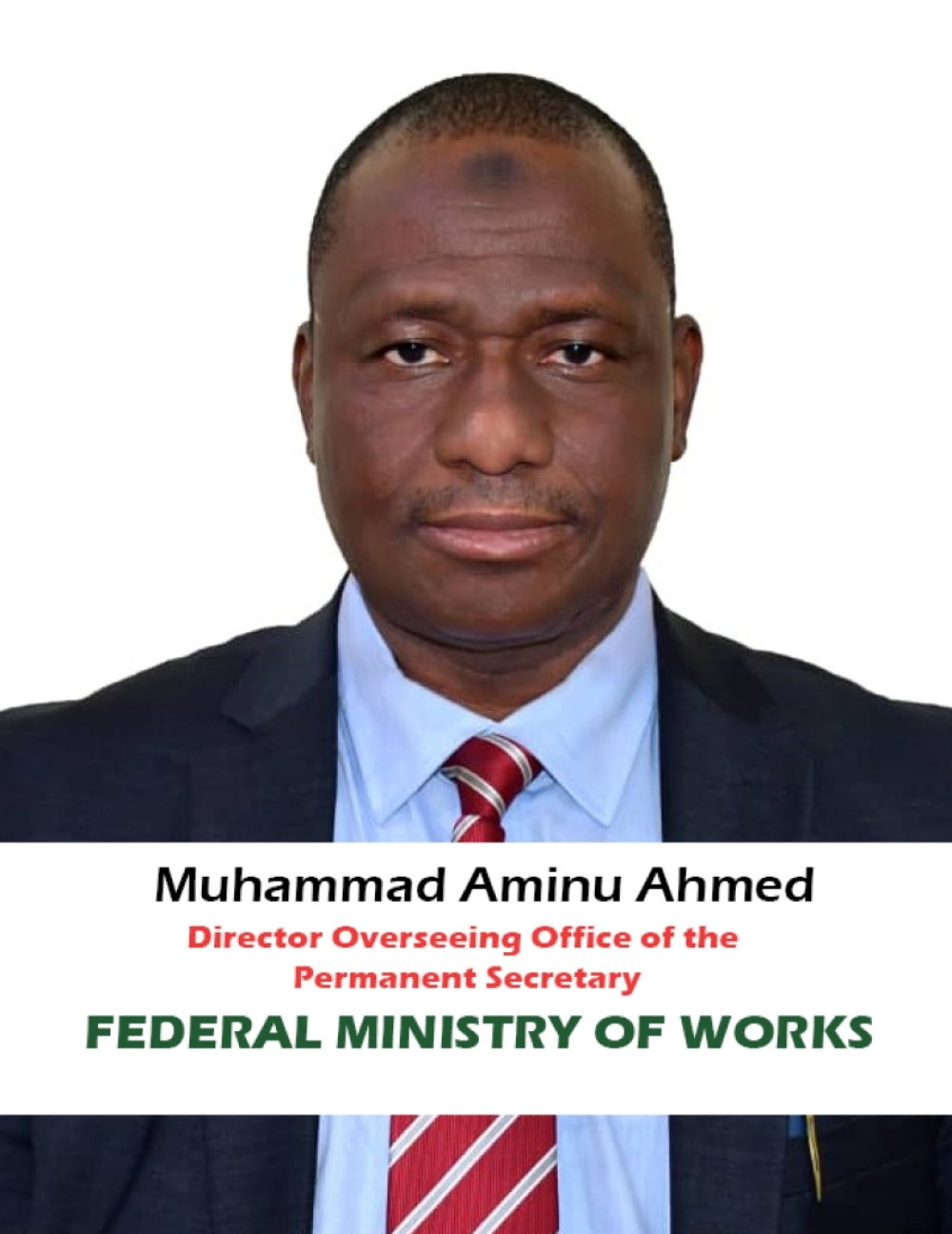
In his closing remarks, the *Director Overseeing the Office of the Permanent Secretary (DOOPS), Mohammed Aminu Ahmed, FCNA,* expressed appreciation to the Minister, members of the media, and all participants for attending. He commended the media for its continued partnership with the Ministry in informing Nigerians about government infrastructure projects and encouraged it to continue to provide constructive criticism on the Ministry's activities.

UMAHI HIGHLIGHTS IMPACT OF TINUBU’S LEGACY PROJECTS, SAYS INFRASTRUCTURE INVESTMENTS ARE TRANSFORMING NIGERIA The Honourable Minister of Works, Engr. David Umahi, CON, FNSE, FNATE, has highlighted the progress and transformative impact of the major infrastructure projects being executed by the President Bola Ahmed Tinubu-led Administration, describing them as strategic investments aimed at reshaping Nigeria’s transportation network, strengthening national connectivity and stimulating economic growth. Umahi said this on Wednesday, 7 October 2026, in Abuja, during a *Press Conference,* where he updated on the Tinubu Administration's *four Legacy Road Projects,* ongoing federal road interventions, completed projects, procurement processes, and the Ministry’s efforts to ensure value for money in the development of infrastructure. The Minister identified the four legacy projects as the Lagos-Calabar Coastal Highway, Sokoto-Badagry Superhighway, Calabar-Ebonyi-Abuja Highway (the Trans-Saharan Route/North-South connectivity corridor, and the Dualisation of Akwanga-Jos-Bauchi-Gombe-Biu-Maiduguri Road. According to him, the projects were conceived as strategic national infrastructure to connect all six (6) geopolitical zones, facilitate the movement of people and goods, open up economic opportunities, and strengthen Nigeria’s long-term development. Giving an update on the Lagos-Calabar Coastal Highway, Umahi disclosed that Section 1, covering 47 kilometres, has been completed, while significant progress has also been recorded on Section 2, covering approximately 55 kilometres. He explained that pavement works on Section 2 were nearing completion, while major flyovers, overpasses and underpasses were being constructed to address complex traffic, environmental and engineering challenges along the corridor. The Minister said some parts of the alignment had to be redesigned to accommodate existing and planned rail, road and industrial infrastructure, particularly around the Dangote Refinery and Lekki Deep Seaport axis. He stressed that the objective was to develop an integrated transportation system rather than an isolated road project. On the Ondo State axis, Umahi explained that the alignment was redesigned in some locations because of difficult terrain, deep pits and challenging subsoil conditions. He said the redesign was aimed at ensuring durability, safety and cost-effectiveness, with substantial filling and ground improvement works ongoing in some areas. The Minister further disclosed that President Tinubu had directed that the continuation of the Lagos-Calabar Coastal Highway be aligned with the existing East-West Road in parts of the Niger Delta area. He described the decision as a strategic engineering intervention that would address the increasing impact of flooding and climate change on the vital infrastructure. According to him, critical sections of the East-West Road would be raised to accommodate present and anticipated flood levels and ensure the continued functionality of the strategic route. Umahi also dwelled on the importance of the Construction of the Benin City Bypass and other sections of the littoral corridor in reducing congestion and improving movement across the South-South zone. On the Sokoto-Badagry Superhighway, the Minister said the project was designed to establish a major economic corridor linking Ilelah in Sokoto State with Badagry in Lagos State. He noted that various sections of the highway were at different stages of construction, with significant progress recorded across the Sokoto, Kebbi, Oyo, Ogun and Badagry axes, while those of Niger and Kwara States are commencing soon. Umahi said the strategic importance of the project is beyond road construction, noting that the corridor would unlock agricultural, industrial, tourism and other economic opportunities. He added that the Federal Government was exploring opportunities for complementary investments, including agriculture, housing, tourism and other economic activities along the major infrastructure corridors. Speaking on the third legacy project, the ancient Trans-Saharan Route, Engr. Umahi explained that it was designed to strengthen connectivity between the coastal axis and the northern parts of the country, thereby facilitating the movement of people, goods and services across the South-South, South East and North Central geopolitical zones. He disclosed that substantial progress had been recorded on the initial sections, while additional sections had been approved to make the corridor more economically viable and attractive to potential financiers. On the fourth legacy project, the Minister said the Akwanga-Jos-Bauchi-Gombe-Biu-Maiduguri single carriageway is being expanded as a major northern connectivity route. He explained that the scope had been extended to cover an additional spur from Jos to Ibi in Taraba State, with design and procurement processes ongoing. Responding to questions from journalists on the number of completed projects, the Minister listed several major road and bridge projects completed or ready for commissioning across the country. Among the projects, he mentioned Section I of the Lagos-Calabar Coastal Highway, the Kwanar Danja-Hadejia Road, the Kaduna-Pambeguwa Road, the Lafia Bypass, the Bodo-Bonny Road with Bridges along the Opobo Channel, among many others. He also listed the completed first lot of the Lagos-Calabar Coastal Highway, the Gombe-Potiskum rehabilitation project, sections of the Azare road linking Jigawa and Bauchi, the five-span Ampoha Bridge, the 23-kilometre, 23-span flyover project at Ekpoma-Benin axis, and a three-span, 75-metre dualised bridge structure. Umahi further disclosed that several sections of the Lagos-Badagry and Lagos-Ibadan, Lagos-Shagamu-Ore corridors had been completed, while other sections were at advanced stages of completion. He assured journalists that the Ministry was updating its compendium of completed and ongoing projects. “*We have quite a lot of projects. We have completed projects and we have ongoing projects. We are updating the compendium and it will be made available on the Ministry’s website and circulated to the public,”* he assured. The Minister reiterated the Federal Ministry of Works' increasing adoption of concrete pavement on major highways, saying the need for greater durability and reduced maintenance costs is driving the policy. According to him, the Ministry is developing infrastructure that would serve Nigerians for several decades and provide better value for public resources. He reiterated that concrete pavement provides longer durability guarantees, when properly designed and constructed, compared with the recurring maintenance challenges associated with conventional asphalt pavement. Addressing questions concerning the procurement process for the Lagos-Calabar Coastal Highway, Umahi explained that the Ministry followed an applicable procurement framework. He said the special procurement approach was necessitated by the unique engineering requirements of constructing a major highway through a difficult coastal terrain. Umahi said the Ministry subjected the contractor's bid to scrutiny by comparing proposed rates with prevailing market prices for materials and other inputs. He stressed that both indigenous and expatriate contractors were subjected to the same pricing and evaluation principles. *“We put everybody on the same platform. We sent the proposals to the Bureau of Public Procurement. They reviewed it and where they felt that the rates went beyond their expected maxima, they called our attention to it, and we reviewed the rates accordingly,”* he explained. The Minister also disclosed that substantial progress had been recorded on the Outstanding Sections of the Abuja-Kaduna-Zaria-Kano Expressway, with all the sections completed except the Jere-Kaduna portion advancing steadily. He revealed that the Ministry is installing solar-powered lighting along the 375-kilometre Expressway to improve night visibility, thereby enhancing safety and security. He also said that the improved condition of the highway, alongside security interventions, was contributing to safer and more efficient movement along the corridor. The Minister disclosed that the Ministry had commenced an *“Operation Rescue”* on the Benin-Asaba Expressway following challenges associated with the road and its existing concession arrangement. He said the Federal Government had intervened to restore mobility, while plans were being developed for a comprehensive reconstruction of the entire alignment, using continuously reinforced concrete pavement (CRCP). He stressed that Nigerians should not continue to suffer because of unresolved contractual or concession-related issues. The Minister, particularly, highlighted the Federal Government's increased infrastructure investment in the South East, saying the Tinubu Administration had demonstrated a clear commitment to reintegrating the hitherto neglected zone into the national infrastructure development programme. He said several major road projects had either been approved, commenced, or completed by the present administration. *“We can't continue to live in denial. What we have been crying for is being given. The people of the South East are being fully reintegrated into the national infrastructure development plan,”* he emphasised. He cited the completion of the Second Niger Bridge, the rehabilitation of the 1st Niger Bridge, ongoing construction of major Bypasses and other federal road projects in the zone as evidence of the administration's commitment. The Minister maintained that infrastructure development should be viewed from the perspective of national integration rather than regional politics. He stated that the Federal Government's infrastructure agenda was intended to ensure that every part of Nigeria benefited from strategic investments in roads, bridges and other transportation infrastructure. On the Tax-Credit Scheme’s projects inherited from the previous administrations, Umahi explained that the Federal Government had taken proactive measures to address them, especially where private-sector partners were no longer able to sustain previously approved financing arrangements. He warned contractors, who had received mobilisation or project funds but failed to deploy the funds on the work that the Ministry would take appropriate steps to recover such funds. He stressed that accountability, performance and value for money remained central to the Ministry's project execution strategy. The Minister also addressed the ongoing intervention on the First Niger Bridge, explaining that measures were being introduced to improve traffic management and protect the structural integrity of the bridge. He said the Ministry was installing appropriate traffic management infrastructure, CCTV cameras and other security measures at its Asaba and Onitsha ends. According to Umahi, the measures were necessary because bridges are designed primarily for dynamic as opposed to static loads, explaining that prolonged traffic gridlock can create additional structural and safety challenges. He said remedial works, repainting and other maintenance activities were also being undertaken to ensure the long-term usage of the structure. Umahi further explained that the Federal Government's road development strategy included environmental considerations, such as the planting of trees along major highways and the installation of solar-powered street lighting. He said the initiative would help improve visibility and the environment, provide shade, and contribute to the reduction of harmful emissions along major transport corridors. The Minister also linked infrastructure development to the broader economic reforms of the Renewed Hope Agenda of the Tinubu Administration, saying improved roads and connectivity would support agricultural production, industrialisation, trade, commerce, tourism and investment. He maintained that the Federal Government's infrastructure investments were part of a broader strategy to move economic growth from the macroeconomic level to the grassroots. On the financing of the major legacy projects, Umahi assured Nigerians that the Federal Government had put mechanisms in place to ensure that the projects are adequately funded to completion. He noted that the administration was determined not to embark on projects without ensuring that there was a credible financing mechanism for their completion. The Minister reaffirmed the commitment of the Ministry to completing inherited projects, while simultaneously delivering new strategic infrastructure under the Tinubu Administration. He said the legacy projects were not merely road construction schemes but long-term investments designed to transform Nigeria's economic landscape, improve connectivity, strengthen national integration and security, and create opportunities for millions of Nigerians. In his closing remarks, the *Director Overseeing the Office of the Permanent Secretary (DOOPS), Mohammed Aminu Ahmed, FCNA,* expressed appreciation to the Minister, members of the media, and all participants for attending. He commended the media for its continued partnership with the Ministry in informing Nigerians about government infrastructure projects and encouraged it to continue to provide constructive criticism on the Ministry's activities.
According to him, the Ministry identified the need for a contractor with a proven track record in executing similar coastal infrastructure and subsequently made a recommendation to the Bureau of Public Procurement (BPP). He disclosed that the BPP reviewed the recommendation and gave its clearance, while the Federal Executive Council remained the final approving authority.
Umahi, who is from the zone, said it might not have the highest number of federal projects compared with other geopolitical zones, but it was no longer being left behind.
He revealed that significant portions of the projects had been funded, while loan-financing arrangements were being implemented for the remaining components.
*“We don't start what we will not finish. And we will not finish what we have not started,”* he stated.
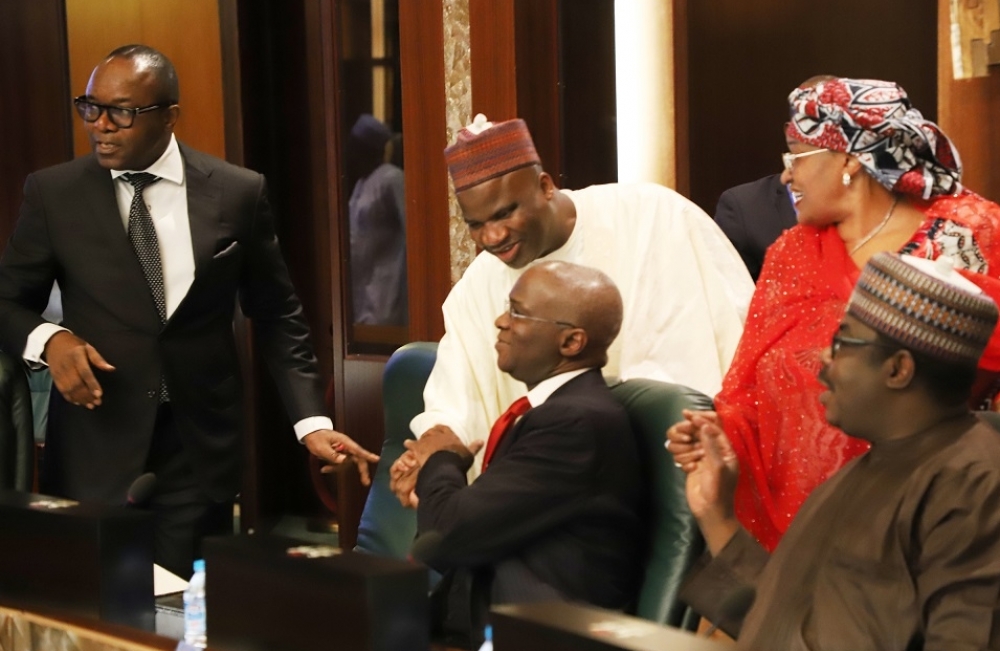
FEC Approves N230billion For Roads Construction The Federal Executive Council (FEC) presided over by President Muhammadu Buhari on Wednesday approved N230.28 billion for road projects and mining data in the country. The Minister of Information and Culture, Alhaji Lai Mohammed and the Minister of State for Mines and Steel Development, Alhaji Bawa Bwari, made this known when they briefed State House correspondents at the end of Council’s meeting at the Presidential Villa, Abuja. The minister of Information and Culture disclosed that N206 billion of the amount was approved for linking roads and associated infrastructures for the 2nd Niger Bridge linking Anambra and Delta states. Also approved today is a contract for the link road and associated infrastructures for the 2nd Niger Bridge. The link road is about 11.9 kilometers. The contract was awarded to Julius Berger at N206 billion. The bridge is linking Anambra and Delta states. If you remember, the contract was awarded by the last administration under a Public Private Partnership (PPP) arrangement which failed,’’ he added. According to him, N11.58 billion was approved for rehabilitation of a road in Enugu State. Approval for the re-award of the contract for the rehabilitation of Oji-Achi-Maku-Agu-Ndiabi section in Enugu State. What happened in this road was that the contract was awarded earlier to the company that failed and Setraco has now been re-awarded that section of the road, he added. He said another 92 million dollar was approved for engineering, procurement and construction of the OB3 gas pipeline project. The minister explained that the project had been awarded but there was need for redesigning it. The project is important because of delivery of gas from the Eastern part of the country to power turbines and to improve our power supply,’’ he said. According to him, the Minister of Finance, Kemi Adeosun, also presented three memos which were approved by the Council. He said the memos included ratification of the multilateral competent authority agreement on automatic exchange of financial accounting information and ratification of the Africa 50th Articles of Association. The Council also gave the approval for the financial transparency policy guidelines. In his contribution, the Minister of State for Mines and Steel Development, Bawa Bwari, said that the Council approved N12.7billion for exploration and consultancy projects in the mining sector. According to him, the projects will help in getting accurate mining data, which will attract local and foreign investments. Our major challenge in diversification programme of the government in the mining sector has been that of data. Today the Federal Executive Council approved the contract for exploration and consultancy on some of our targeted minerals like gold, industrial minerals, earth metals, iron ore for four companies in exploration and four companies in consultancy side of it and this contract is worth N12.7 billion. "And with this, we will encourage both local and foreign investors to come in. Our Major challenge is the bankable data, most mining companies will not want to come into your country when they are not sure of what they are going to meet. Nigeria has the potential for minerals although we have not been known as a solid mineral destination, we have been known as oil and gas destination. The perception is gradually changing and for us to really encourage this people to come in, we really need to explore because you cannot mine without information and information can only be gotten through exploration. The government today approved for us to start with some of our targeted minerals in line with what we have in the road map,’’ he stated. (NAN) ...
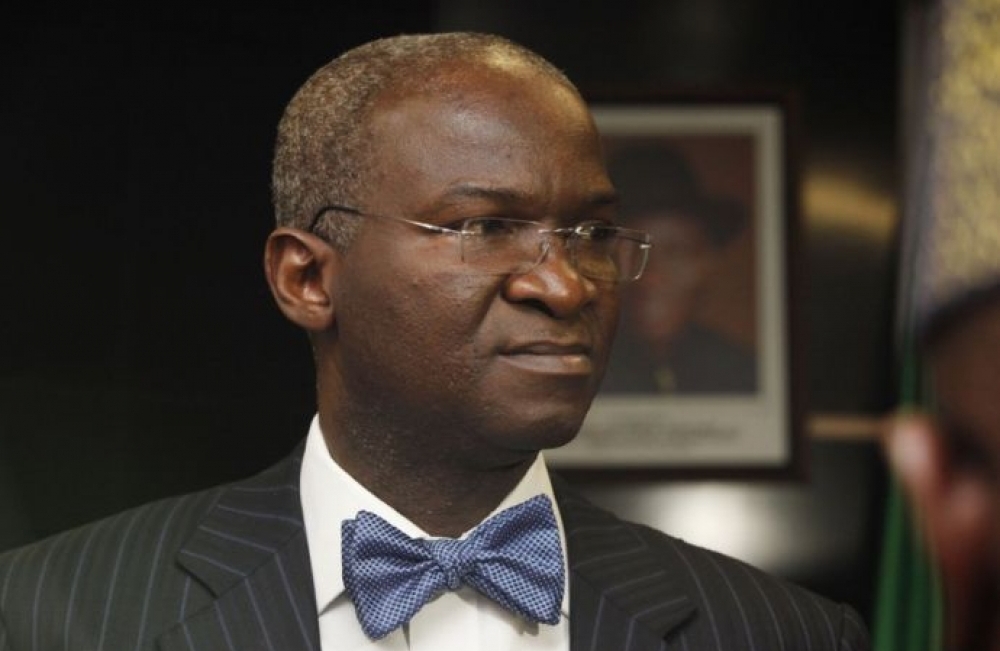
BRF At 55 : Greying Gracefully, Going On With Gusto By HAKEEM BELLO In November 2010, in a tribute to Stephen J. Solarz, a former nine-term New York congressman, Douglas Martin wrote that he was a “torrent of activity” supporting it with a statement issued by the late lawmaker’s office that “during his first six months in Congress, he made 12 speeches on the House floor, co-sponsored 370 bills, held 11 news conferences, made 24 trips to his district and attended 99 events there, visited 23 subway stations, sent constituents 513,720 pieces of mail and took an 18-day tour of the Middle East.” In October 2015, Babatunde Raji Fashola, SAN, was honoured amongst seven distinguished personalities with an award named for Stephen J Solarz by the International Crisis Group. From his eight-year tenure as the governor of Lagos State to his two-year-plus as Nigeria’s minister of Power, Works and Housing, our own BRF has, as the global conflict-prevention organisation acknowledged in conferring the honour on him, been a “relentless fighter for the improvement of people's lives….” Barely a month after the global recognition of BRF’s “commitment to resolving social, economic and security challenges in one of the world’s most challenging urban environments”, President Muhammadu Buhari tapped him to join him in tackling the nation’s multifarious infrastructural challenges. Ever since, the three-in-one ministry has witnessed a “torrent of activity” towards the making life more meaningful for Nigerians of all strata. Has he lived up to the recognition of the ICG and the confidence reposed in him by President Buhari to deliver? His 55th birthday on 28 June affords us the opportunity to not only answer that question but also look at The Essential BRF. For BRF, results rather than excuses should count towards measuring a leader’s gravitas. So, not for him any argument which suggests that , comparing an executive position with an appointive capacity within a complex federation such as Nigeria is like comparing apples with oranges. Not even if you illustrate with the now-common fiasco over the national budget as an example of a barrier to effective delivery of much-expected services to the people. Any unbiased but informed observer would, unhesitantly, proffer that, within those constraints, and with the unwavering support from his principal, the minister has demonstrated unflinching commitment to reducing Nigeria’s infrastructural deficit to the barest minimum, one project at a time, across Nigeria’s 36 states. One thing you can’t take away from BRF is his penchant for, to use a favourite word of his, dimensioning any problem, no matter how seemingly gargantuan. He is the master of drilling down. His staff at the ministry will attest to how, from the day of his inauguration, he has been engaging everyone in marathon consultations, sometimes into the night, to be able to put every problem in proper perspective and then ensuring that the job gets done - without any short-cut. A DEVELOPMENT MATRIX For him, nothing should be done superficially. Let’s take work on roads. He starts with the premise that good roads will help reflate and grow the nation’s economy, reduce travel time, cost of transportation of goods and services, and create jobs which will provide the economic means for the worker to live meaningfully. To achieve this, in the short term, would mean starting with roads which can be quickly completed to facilitate connectivity. This should further be guided by choosing first the roads which connect states together and bear the heaviest traffic such as the Lagos-Ibadan expressway, and working the way across Nigeria gradually. By sticking religiously to, and developing this plan, enunciated with his team in the Ministry with necessary policy and budgetary support from the Cabinet led by the President and National Assembly, albeit, with all the “constituency complications,” Fashola has been delivering on his mandate. On Power, Fashola believes that predictable supply achieved through incremental, stable, and, ultimately, uninterrupted supply of electricity, availability will be a critical and defining component of our economic renaissance, job creation, GDP growth and reduction of income inequalities. This has formed the basis of the Federal Government’s Roadmap to Power with the accompanying policies and plans like the Power Sector Recovery Programme (PSRP) aimed at strengthening the responsibility of the Ministry as a regulator through the National Electricity Regulatory Commission (NERC), so that the GenCos and DisCos can be held to their contracts with citizens; getting the support needed to complete stalled power projects in the generation, transmission and distribution value chains; and improving the liquidity in the sector. Coming with a practical experience from Lagos, Fashola believes the construction of houses will complement the economic growth drive by direct and indirect jobs in the housing value chain from construction companies, to artisans, labourers, vendors and many more. The Federal Government’s housing project is currently going on in 34 States of the Federation which have provided the required suitable land for the programme, currently at its pilot stage and poised to address the issues of affordability, acceptability and climatic/cultural diversities which have been the bane of the previous housing programmes. What used to be the standard question about how one man can cope with the leadership of three ministries comes less frequently in its monotony now because Fashola has continually demonstrated that tackling challenges is his second nature. Never mind that he has had to sleep less than the averagely-required hours and do unusual things - for instance in 2017 during an inspection of projects in the North East, he led the team to drive on the road by the dreaded Sambisa Forest in the thick of the night - whilst greying graciously but achieving results. By the way, Hamza Idris of the Daily Trust, who was on the trip, had asked him what gave him the courage to travel at that time, he answered as only a BRF would: “Well, I don’t think it is courage. I have a job to do and it has to be done well. If you are building and managing roads, you can’t manage them from slides, you can’t manage them remotely. You must at least see how good or bad those roads are. It gives a sense, either of urgency, enthusiasm, or a combination of both, to be able to really deal with it. The Ministry of Defence is aware that we are here, but the security arrangement is just precautionary. We have seen ordinary Nigerians travelling in their buses. I have seen the Taraba Mass Transit Services, Adamawa Express, Bauchi Express and others. So, life is going on and we just have a job to do.” There is no better way to end this birthday tribute to this quintessential man who is extremely loyal to his principal, political party and his principles, than quoting his answer to another question on that North East inspection trip: “I am never satisfied with anything I am involved in; I just keep going. It’s difficult to satisfy me, and if you ask me to assess myself, I would continue to push myself.” ...
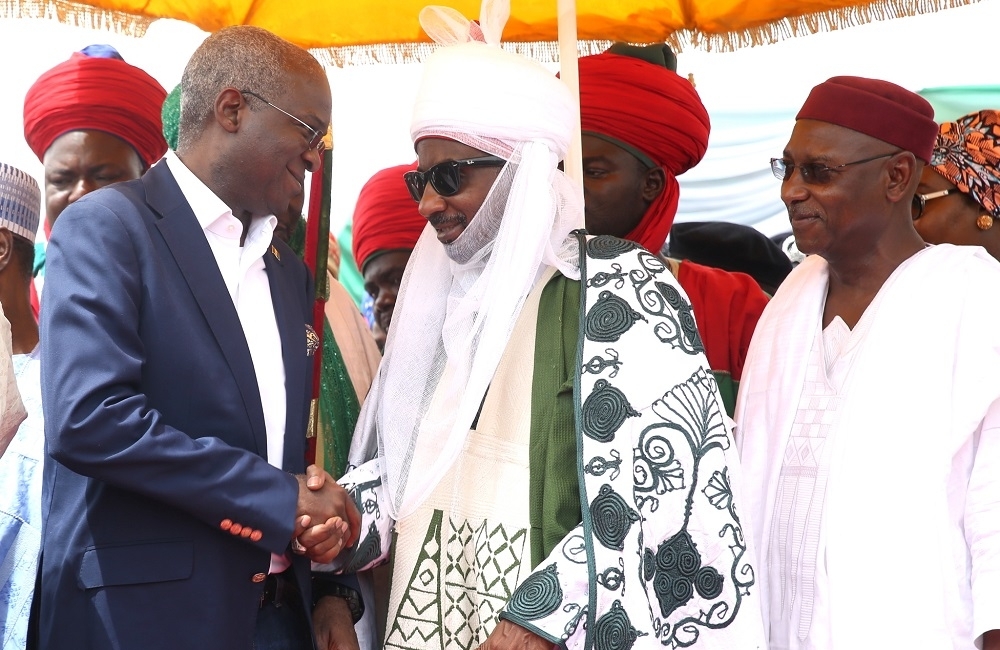
FG Flags-Off Reconstruction Of Abuja-Kaduna-Zaria-Kano Road The Federal Government has flagged-off the reconstruction of the 375.4 - kilometre Abuja-Kaduna-Zaria-Kano Dual Carriageway, a vital link between the South and the North of the country. The existing road which has outlived its service life span of 20 years was approved by the Federal Executive Council (FEC) on December 20, 2017 to Messrs Julius Berger (Nigeria) Plc at a contract sum of N155, 470, 626, 078.07 (One Hundred and Fifty-Five Billion, Four Hundred and Seventy Million, Six Hundred and Twenty- Six Thousand, Seventy-Eight Naira and Seven Kobo) with a completion period of three years. The Honourable Minister of Power, Works and Housing, Babatunde Raji Fashola, SAN, performed the flag-off ceremony on behalf of President Muhammadu Buhari, at Chiromawa Town, Kano State, recently. Fashola pointed out that President Buhari requires the support of well meaning Nigerians to deliver on the mandate of rebuilding the nation. According to him, ‘’one of the objectives of the Economy Recovery and Growth Plan (ERGP) of the present Administration, lunched by Mr. President in 2016, is in fulfilment of the promise to make Nigeria a globally competitive country’’. He added that a major critical action point of the ERGP was to renew, improve and increase the stock of infrastructure, particularly in the road sector. He stressed that the Abuja-Kaduna-Zaria-Kano road project will reduce the cost and time of travelling, as well as stimulate economic and social development in the country. The Minister noted that in the face of limited resources, the President approved the SUKUK bond to improve economic activities on 25 arterial roads spread across the six geo-political zones, adding that construction works are ongoing with teeming population of youth gainfully employed on these road projects being funded by the SUKUK bond. Earlier in his opening remarks, the Permanent Secretary, Works and Housing, Alh. Mohammed Bukar, while thanking dignitaries that graced the flag-off ceremony, stated that the Ministry is vigorously pursuing the mandate of this Administration in the delivery of critical infrastructure across the nation. Alh. Bukar noted that the inauguration of the road project is a milestone achievement in the effort of the present Administration in bridging the infrastructural gap in the country. He said “the completion of the reconstruction works will no doubt reduce vehicle operating cost, improve travel time, reduce road accidents and stimulate the socio-economic growth and the general security of towns and cities along the corridor.” The Managing Director, Julius Berger (Nigeria) Plc, Engr. Wolfgang Goetsch, in his vote of thanks at the occasion, stated that the road is a high priority infrastructure of national significance which form an important part of the nation’s highways. He assured that with a strong and experienced workforce coupled with adequate equipment to fast track the execution of the project, the Company will deliver on schedule. In attendance, were the two Ministers of State I and II, Hon. Mustapha Baba Shehuri and Surv. Sulieman Hassan Zarma, mnis respectively, the Executive Governor of Kano State, His Excellency Abdullahi Umar Ganduje, represented by the Deputy Governor Prof. Hafiz Abubakar, the Executive Governor of Kaduna State, His Excellency, Mallam Nasir El-Rufai was represented by the Commissioner for Works and Transport, Hajiya Balaraba Aliyu Inuwa, the Chairman Senate Committee on Works, Senator (Arc). Kabiru Gaya, the Chairman, House of Representatives Committee on Works, Hon. Toby Okechukwu represented by Hon. (Engr) Maren were among the high profile dignitaries that graced the occasion. His Royal Highnesses in attendance took turns to deliver goodwill massages, the Emir of Kano, Alhaji Mohammadu Sanusi II commended the Federal Government for the project and urged the Ministry and Contractor to speed up the delivery of the project. Emir of Zazzau, His Royal Highness, Alh. (Dr). Shehu Idris also pledged his support and that of his people to safeguard the significant infrastructure. They both appreciated President Buhari and the Ministry in the award of the project and urged the Federal Government on road maintenance. Members of the National Association of Road Transport Owners (NARTO) and Tanker drivers who were well represented at the ground breaking occasion made an appealed to the Minister for a separate parking space. ...
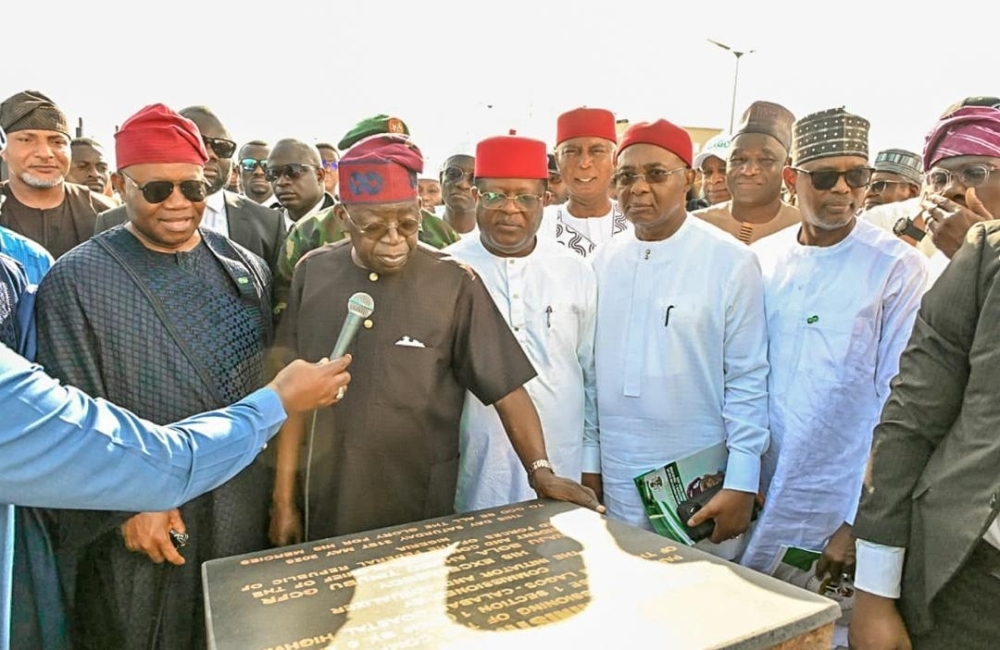
DRIVING NIGERIA’S FUTURE: CELEBRATING TWO YEARS OF TRANSFORMATIVE LEADERSHIP AND THE LAGOS-CALABAR COASTAL HIGHWAY MILESTONE
DRIVING NIGERIA’S FUTURE: CELEBRATING TWO YEARS OF TRANSFORMATIVE LEADERSHIP AND THE LAGOS-CALABAR COASTAL HIGHWAY MILESTONE
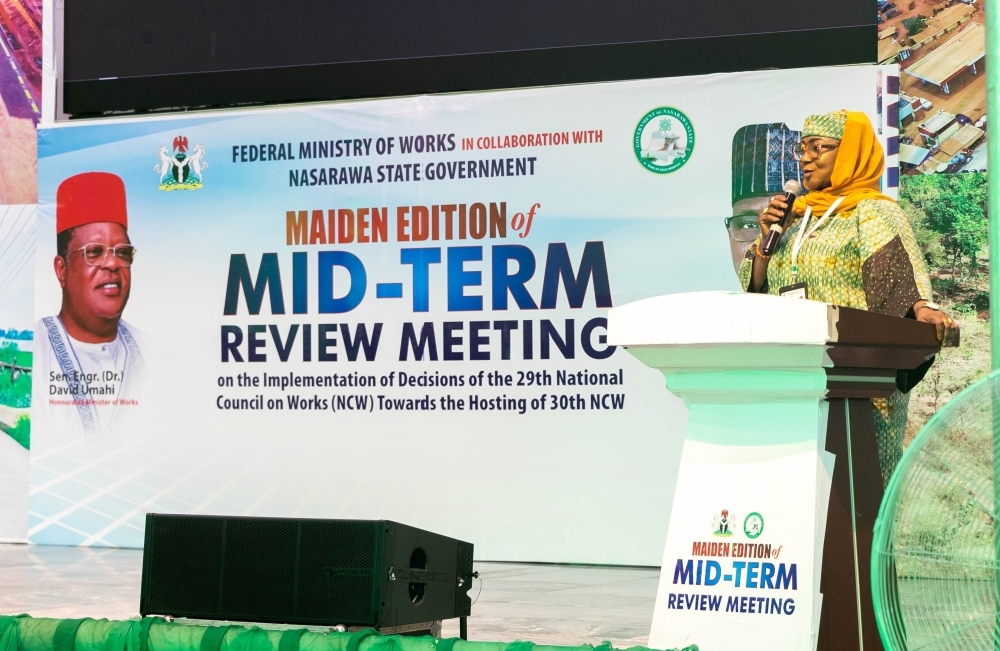
MID -TERM REVIEW MEETING ON THE IMPLIMENTATION OF THE DECISIONS REACHED AT THE 29TH NATIONAL COUNCIL ON WORKS (NCW) DAY 1
MID -TERM REVIEW MEETING ON THE IMPLIMENTATION OF THE DECISIONS REACHED AT THE 29TH NATIONAL COUNCIL ON WORKS (NCW) DAY 1