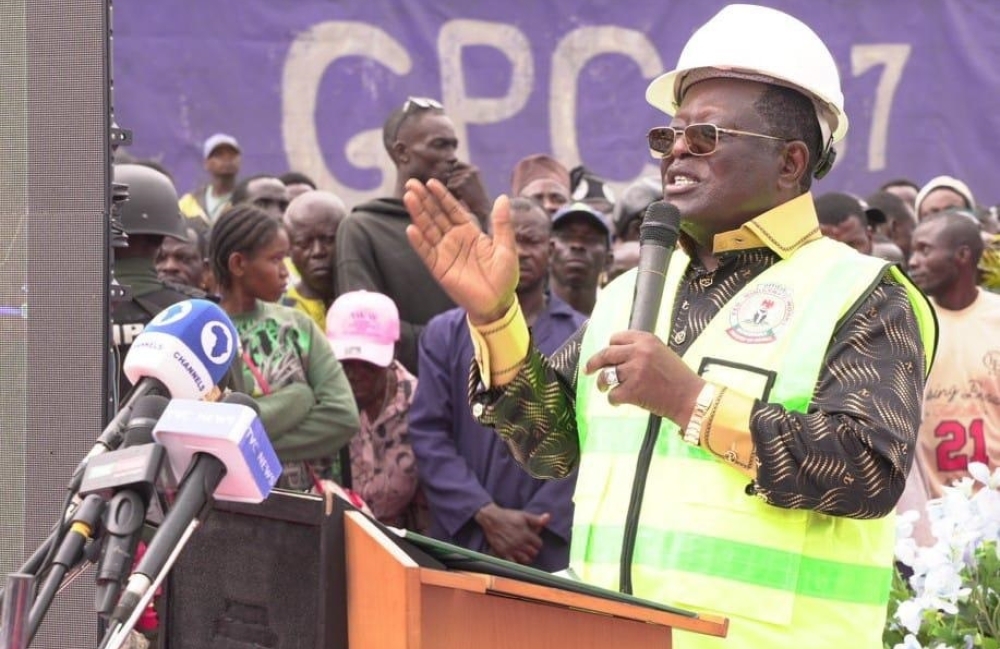
FG EMBARKS ON DECISIVE EMERGENCY INTERVENTION ON BENIN-ASABA EXPRESSWAY
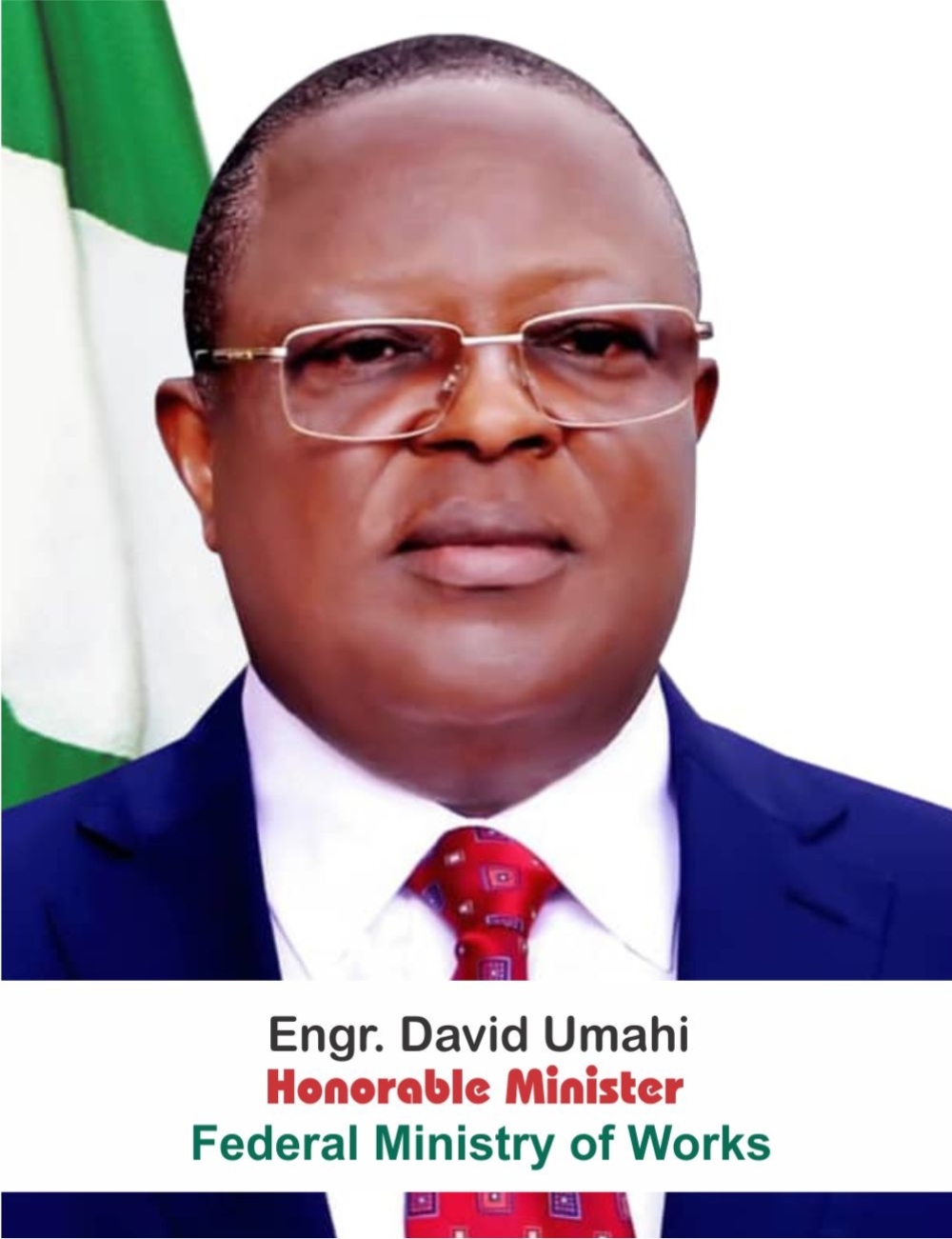
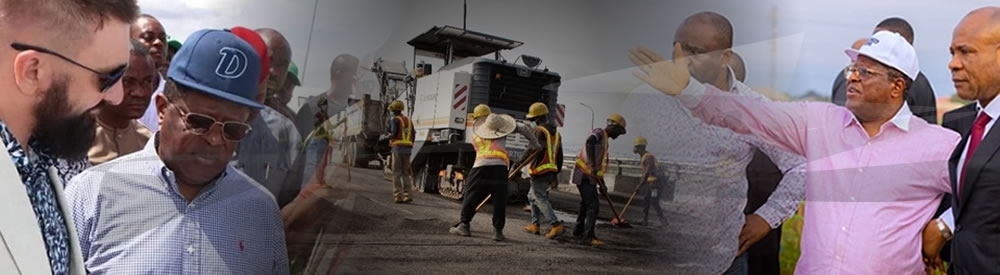
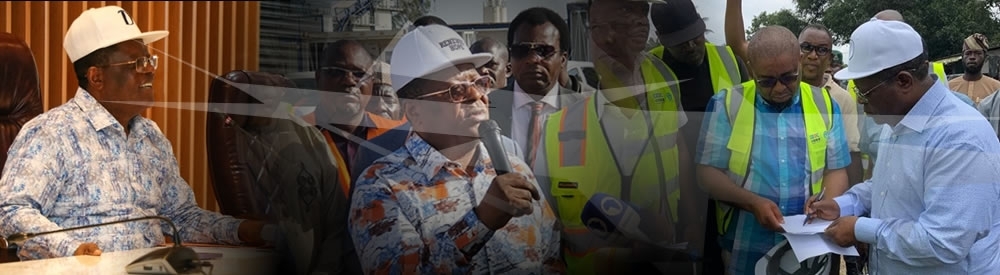
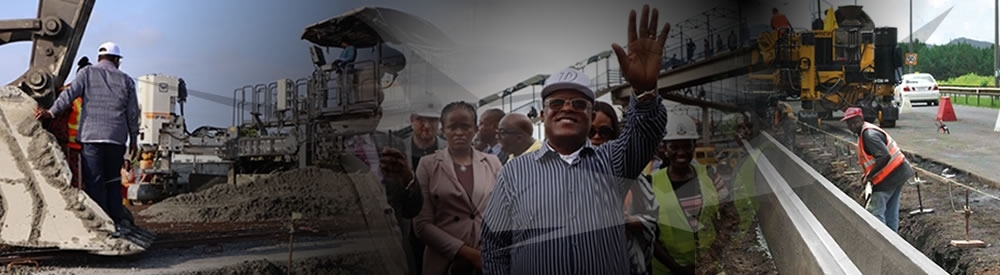
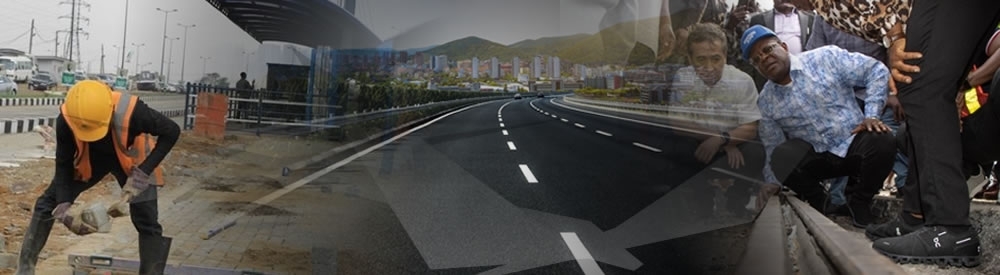
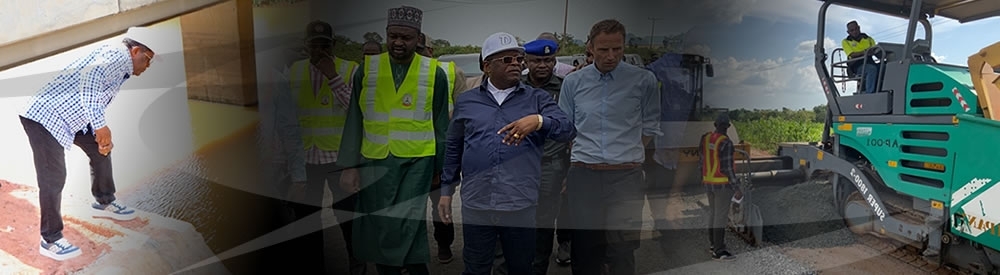
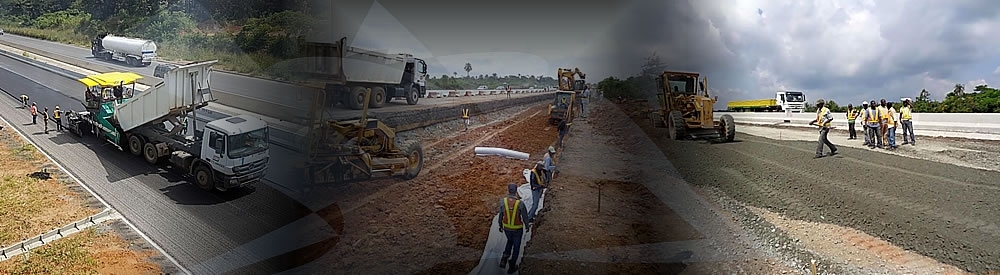
The Honourable Minister of Works, Engr. David Nweze Umahi, CON, FNSE, FNATE, has kick-started the Federal Government’s emergency intervention on the Benin–Asaba Highway under the Ministry’s “Operation Rescue” initiative, aimed at restoring safe, smooth, and uninterrupted movement along the critical corridor. The intervention, to be carried out by the Ministry, through the hiring of equipment and direct implementation, is a demonstration of its determination to address the severe deterioration of sections of the road and bring immediate relief to motorists, commuters, businesses, and the affected communities. He made this known during the inauguration of *"Operation Rescue Benin -Asaba Expressway”* at Benin City, Edo State on Thursday, 24 September, 2026. The Benin–Asaba Highway is a strategic Federal Highway that commences at AIF Roundabout in Benin City, Edo State, and terminates at Summit Junction in Asaba, Delta State, with a distance of 125km. It was concessioned to the Benin-Asaba Expressway Concession Company (BAECC) by the immediate past administration but the handing over of the site was performed by the present one in March, 2025. However, it has since been proven that the Concessionaire lacks the technical and financial capabilities to execute the project. This was established by the *Independent Engineer (I.E.)* for the project, *Messrs Yolas Consultants Limited*.* Considering the plight of road users and the continued deterioration of the concessioned road, the I.E. advised the Ministry to urgently take all necessary steps to save it from further deterioration, avert further gridlock, assuage the suffering of motorists, as well as save the Federal Government from embarrassment.
Engr. Umahi has personally been monitoring the implementation of the concession project, through several site visits and issued instructions via the I.E. for the *Concessionaire* to stick to the Ministry’s standards and methodology, which were not complied with leading to the worsening of the road condition. Hence, the Ministry’s intervention to save the critically failed sections of the Expressway, through the deployment of equipment and personnel.
The Federal Ministry of Works, according to the Minister, is poised to alleviate the hardship being experienced by road users and communities on the corridor, alike. He reiterated that the Federal Government would not allow the condition of a major national artery to continue to undermine economic activities, the movement of people, goods, and services, as well as the safety of road users and the host communities. He stressed that the emergency intervention is focused on achieving immediate traffic relief, while providing a sustainable engineering solution to the identified problem spots.
According to him, the intervention is also being driven by the overriding need to protect public interest and ensure that Nigerians using the road are not left to bear the consequences of the deteriorating infrastructure occasioned by the lapses of the *Concessionaire.* The Minister emphasised that *” this is not a new contract but an immediate solution to the plight of road users.”* He reaffirmed the commitment of President Bola Ahmed Tinubu’s administration to restoring critical road infrastructure across the country and ensuring that emergencies receive prompt and decisive attention.
*“Operation Rescue”* is about immediate action, restoration of movement, and protection of the travelling public and communities along the corridor. *“We are determined to address the failed sections and, thereafter, provide a durable solution that will serve Nigerians for many years,”* the Minister asserted.
Engr. Umahi called on road users and people along the corridor to cooperate with the Ministry’s officials and traffic-management personnel, as emergency works commence, assuring them that the Ministry would continue to monitor progress and take all necessary measures to minimise hardship during the period of the intervention. “*I am pleading with motorists to exercise patience, observe traffic-management directives and drive cautiously around active construction zones,* he stated.
Engr. Umahi highly commended President Tinubu's concern over the well-being of citizens, reiterating that *”the Ministry remains committed to restoring the Benin–Asaba Expressway to a safe, functional and durable condition in the overall interest of Nigerians and the national economy."*
Before this, the Governor of Edo State, His Excellency, Senator Monday Okpebholo had demonstrated his commitment to the welfare of his people during the protest in August, 2026 caused by the bad state of the road by immediately identifying with the situation and dispatching his Chief of Staff to appeal for calm and reassure the affected communities and motorists of immediate remedial action. Speaking at the Ceremony, His Excellency appreciated the President of the Federal Republic of Nigeria for his prompt and decisive intervention, as well as the Minister of Works for his continued commitment to the provision of road infrastructure across the country.
The Governor of Delta State, His Excellency, Sheriff Oborevwori, represented by his Deputy, Charles Anaogu, expressed much gratitude for the immediate response in restoring the all-important road. *”It is a well-desired action to better the lives of the people of Delta State and the general public,* he added.
The *representative of the Managing Director of the Niger Delta Development Commission (NDDC),* applauded the President for his commitment to the development of the Niger Delta region. He also commended the Honourable Minister for his steadfastness to the welfare of the people of the zone and Nigerians, at large.
Delivering the Welcome Address earlier, the Special Adviser to the Edo State Governor on Project Implementation and Monitoring, Engr. Phoebe William Bello, described the rescue operation as very timely in reinstating the critical transportation corridor connecting communities, facilitating mobility, commerce and trade between Edo and Delta States with the other parts of the country. Therefore,*its importance cannot be overstated,”* she noted.
The occasion was graced by lots of dignitaries and Goodwill Messages were delivered by the Deputy Governors of Edo and Delta States, the Rt. Honourable Speaker of the Edo State House of Assembly, the Youth Leader of Ikpaba Hill Community, and other stakeholders, who unanimously eulogised the Federal Government’s proactive response.

FG EMBARKS ON DECISIVE EMERGENCY INTERVENTION ON BENIN-ASABA EXPRESSWAY The Honourable Minister of Works, Engr. David Nweze Umahi, CON, FNSE, FNATE, has kick-started the Federal Government’s emergency intervention on the Benin–Asaba Highway under the Ministry’s “Operation Rescue” initiative, aimed at restoring safe, smooth, and uninterrupted movement along the critical corridor. The intervention, to be carried out by the Ministry, through the hiring of equipment and direct implementation, is a demonstration of its determination to address the severe deterioration of sections of the road and bring immediate relief to motorists, commuters, businesses, and the affected communities. He made this known during the inauguration of *"Operation Rescue Benin -Asaba Expressway”* at Benin City, Edo State on Thursday, 24 September, 2026. The Benin–Asaba Highway is a strategic Federal Highway that commences at AIF Roundabout in Benin City, Edo State, and terminates at Summit Junction in Asaba, Delta State, with a distance of 125km. It was concessioned to the Benin-Asaba Expressway Concession Company (BAECC) by the immediate past administration but the handing over of the site was performed by the present one in March, 2025. However, it has since been proven that the Concessionaire lacks the technical and financial capabilities to execute the project. This was established by the *Independent Engineer (I.E.)* for the project, *Messrs Yolas Consultants Limited*.* Considering the plight of road users and the continued deterioration of the concessioned road, the I.E. advised the Ministry to urgently take all necessary steps to save it from further deterioration, avert further gridlock, assuage the suffering of motorists, as well as save the Federal Government from embarrassment. Engr. Umahi has personally been monitoring the implementation of the concession project, through several site visits and issued instructions via the I.E. for the *Concessionaire* to stick to the Ministry’s standards and methodology, which were not complied with leading to the worsening of the road condition. Hence, the Ministry’s intervention to save the critically failed sections of the Expressway, through the deployment of equipment and personnel. The Federal Ministry of Works, according to the Minister, is poised to alleviate the hardship being experienced by road users and communities on the corridor, alike. He reiterated that the Federal Government would not allow the condition of a major national artery to continue to undermine economic activities, the movement of people, goods, and services, as well as the safety of road users and the host communities. He stressed that the emergency intervention is focused on achieving immediate traffic relief, while providing a sustainable engineering solution to the identified problem spots. According to him, the intervention is also being driven by the overriding need to protect public interest and ensure that Nigerians using the road are not left to bear the consequences of the deteriorating infrastructure occasioned by the lapses of the *Concessionaire.* The Minister emphasised that *” this is not a new contract but an immediate solution to the plight of road users.”* He reaffirmed the commitment of President Bola Ahmed Tinubu’s administration to restoring critical road infrastructure across the country and ensuring that emergencies receive prompt and decisive attention. *“Operation Rescue”* is about immediate action, restoration of movement, and protection of the travelling public and communities along the corridor. *“We are determined to address the failed sections and, thereafter, provide a durable solution that will serve Nigerians for many years,”* the Minister asserted. Engr. Umahi called on road users and people along the corridor to cooperate with the Ministry’s officials and traffic-management personnel, as emergency works commence, assuring them that the Ministry would continue to monitor progress and take all necessary measures to minimise hardship during the period of the intervention. “*I am pleading with motorists to exercise patience, observe traffic-management directives and drive cautiously around active construction zones,* he stated. Engr. Umahi highly commended President Tinubu's concern over the well-being of citizens, reiterating that *”the Ministry remains committed to restoring the Benin–Asaba Expressway to a safe, functional and durable condition in the overall interest of Nigerians and the national economy."* Before this, the Governor of Edo State, His Excellency, Senator Monday Okpebholo had demonstrated his commitment to the welfare of his people during the protest in August, 2026 caused by the bad state of the road by immediately identifying with the situation and dispatching his Chief of Staff to appeal for calm and reassure the affected communities and motorists of immediate remedial action. Speaking at the Ceremony, His Excellency appreciated the President of the Federal Republic of Nigeria for his prompt and decisive intervention, as well as the Minister of Works for his continued commitment to the provision of road infrastructure across the country. The Governor of Delta State, His Excellency, Sheriff Oborevwori, represented by his Deputy, Charles Anaogu, expressed much gratitude for the immediate response in restoring the all-important road. *”It is a well-desired action to better the lives of the people of Delta State and the general public,* he added. The *representative of the Managing Director of the Niger Delta Development Commission (NDDC),* applauded the President for his commitment to the development of the Niger Delta region. He also commended the Honourable Minister for his steadfastness to the welfare of the people of the zone and Nigerians, at large. Delivering the Welcome Address earlier, the Special Adviser to the Edo State Governor on Project Implementation and Monitoring, Engr. Phoebe William Bello, described the rescue operation as very timely in reinstating the critical transportation corridor connecting communities, facilitating mobility, commerce and trade between Edo and Delta States with the other parts of the country. Therefore,*its importance cannot be overstated,”* she noted. The occasion was graced by lots of dignitaries and Goodwill Messages were delivered by the Deputy Governors of Edo and Delta States, the Rt. Honourable Speaker of the Edo State House of Assembly, the Youth Leader of Ikpaba Hill Community, and other stakeholders, who unanimously eulogised the Federal Government’s proactive response.
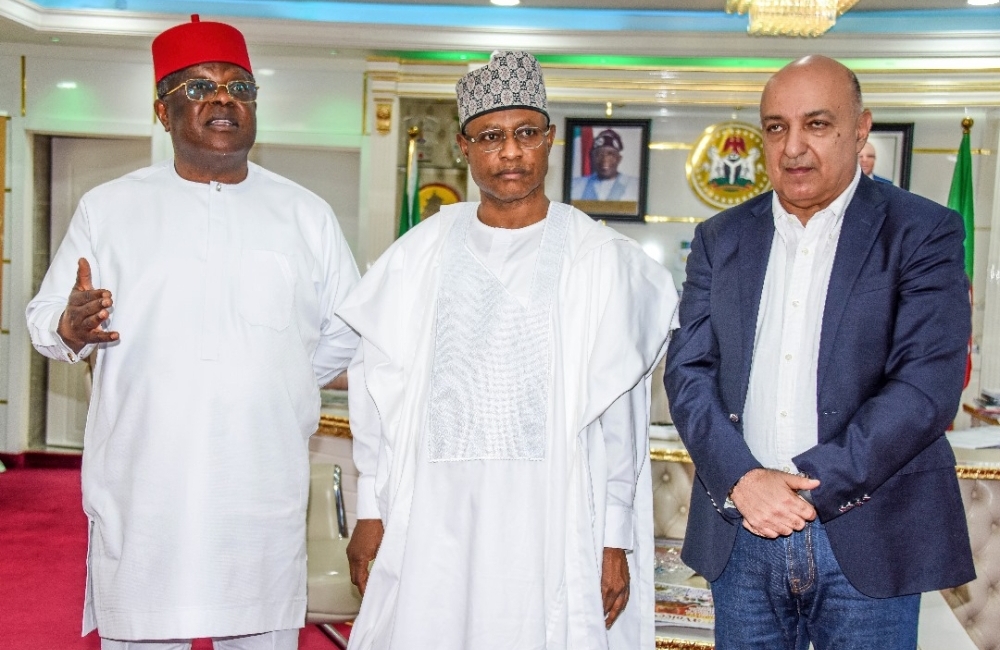
OUSTANDING WORKS ON ABUJA-KADUNA-ZARIA-KANO ROAD PROJECT GET EXPEDITIOUS DELIVERY BOOST, AS WORKS MINISTER, SEN DAVID UMAHI AND KADUNA STATE GOVERNOR,SEN. UBA SANI MEET ON MODALITIES TO FASTRACK DELIVERY OF PROJECT. In the commitment of the Renewed Hope administration towards achieving timeous completion of the outstanding works on Abuja-Kaduna-Zaria-Kano road project, handled by Messrs Infiouest International Limited, the Hoonourable Minister of Works, His Excellency, Sen. Engr. Nweze David Umahi CON has directed the contractor to fastrack the delivery of the two sections of the road project particularly by increasing the number of work zones between Jere and kaduna in Kaduna State and ensuring that the project is delivered in record time. The Honourable Minister of Works gave this directive after a meeting he had with the Governor of Kaduna State, His Excellency, Sen. Uba Sani CON together with the contractor handling the project, held at the Honourable Minister’s office, Federal Ministry of Works, Mabushi, Abuja on 10th October, 2025. Speaking on the importance and priority accorded to the project by the President of the Federal Republic of Nigeria, His Excellency, Bola Ahmed Tinubu GCFR, the Hounourable Minister stated; “We have been monitoring this project almost every week, and so we insisted that we must do a meeting with the MD of Infiouest who has the contract of these sections, lot 1, which is N252,000,000,000.00 (Two Hundred and Fifty Two Billion Naira), and lot 2 which is basically in Kaduna, 82 kilometres by 2 that is 164 kilometres costing Federal Government N502,000,000,000.00 (Five Hundred and Two Billion Naira), so altogether to complete all the sections from Abuja down to Kaduna, down Kano is costing the Federal Government N754,000,000,000.00 (Seven Hundred and Fifty Four Billion). Lot 1 is 118 kilometres, costing N252,000,000,000.00 (Two Hundred and Fifty Two Billion Naira), and lot 2 is 164 kilometres, costing N502,000,000,000.00 (Five Hundred and Two Billion)”. He directed the contractor, Infiouest, to deploy on 4 sections and ensure steady work progress, and the Engineer Representative to relocate to Kaduna and monitor strictly the progress of the project and feed him back on daily basis. He assured the Governor that the progress and quality of work would be tracked with a view to achieving delivery in record time. " I want to assure you that the President is very highly concerned to get this project done. But the quality of using the same standard of coastal highway is something that our brothers and sisters in the North will never forget President Bola Ahmed Tinubu for his love and commitment towards the development of every part of this country ." Also, speaking on the outcome of the meeting, the Governor of Kaduna State expressed satisfaction with the outcome of the meeting and the quality of the job being done on the project. He said that he had no doubt that in the next two weeks, the contractor should be able to record commendable milestones given the quality of the meeting held with the Honourable Minister of Works and the contractor handling the job.He further stated that the road is a very important transport corridor that connects not only the economic corridors of the North West but also that of the North Central and the North East " What is more important for us here is for you to understand that Abuja, Kaduna, Kano road connects about 12 States. States from North West, as well as some States from North Central and North East. So it is a very important road that I believe that by the time you complete this project, many people, apart from Kaduna, will be very happy." He commended the professionalism, passion, and innovation brought to bare by the Honourable Minister of Works, whom he described as a rare gem in public service delivery." We are proud to have a Minister of the caliber of Engr. David Umahi, who is of very top profession. I am surprised, when I came here he had to break down the entire project ( off hand) from the size of the project to the level of the project as well as the quality of what is going on there, and I can say that if we have a lot of Honourable Ministers like him in Nigeria,we have to go to sleep without having any problems " In the response of the contractor handling the project, the Managing Director of Infiouest International Limited, Mr. Joseph Abou Jaounde assured of keeping to the directive of the Honourable Minister. “ I am here to assure you, even though we have some little challenges in Kaduna, but from now to 2 weeks, we are going to have a visit a site and to make sure that this portion of the road will be joined with Zuba to Kaduna, and all the sections will be joined together to make sure that the work will be done on time in the right way and quality required ”. This collaborative support and encouragement from the Governor of Kaduna State is made possible because of his interest to tap into the massive infrastructural development programmes of the federal government across the Geo-Political Zones of Nigeria. He is a visionary leader and development advocate who is widely recognized for his contributions to democracy, governance, and social transformation. He is a product of Nigeria’s diverse educational system, a financial guru, business administrator, and engineer in thought. He played a frontline role in the struggle against the military rule in Nigeria. He was a courageous pro-democracy activist, organizing and mobilizing citizens in Northern Nigeria against military dictatorship. Today, he is on the saddle as the Governor of Kaduna State and he is one of the serving Governors in Nigeria who have shown untiring determination to right the wrong in the socio-economic conditions of their people and he is achieving progressive and exponential result given the unprecedented wave of support and leverage provided by the Renewed Hope administration of President Tinubu to the sub-national governments. Hon. Barr. Orji Uchenna Orji Special Adviser (Media) to the Honourable Minister of Works. ...
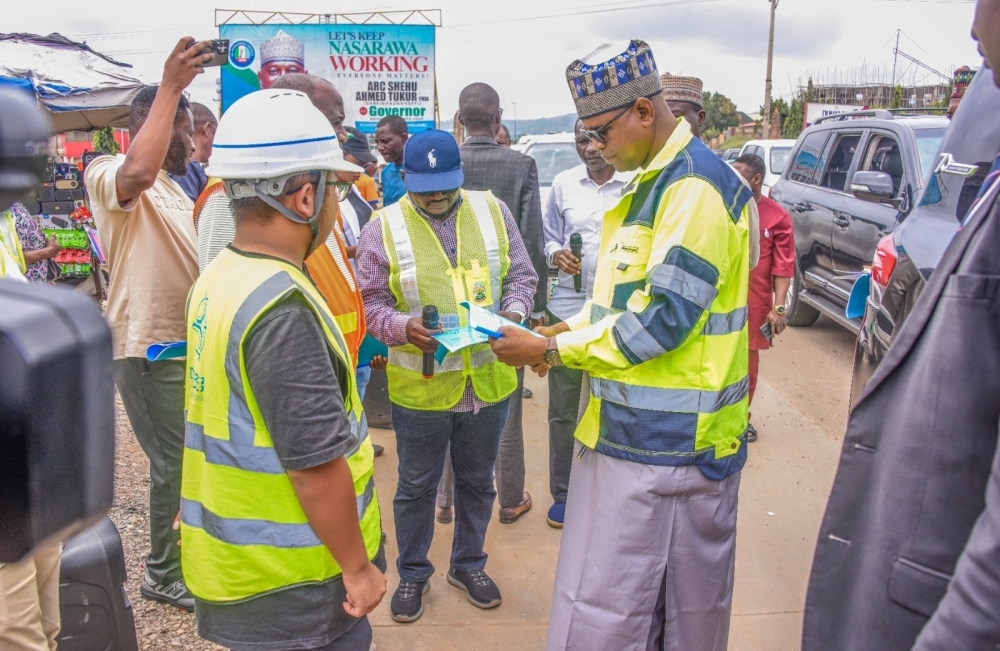
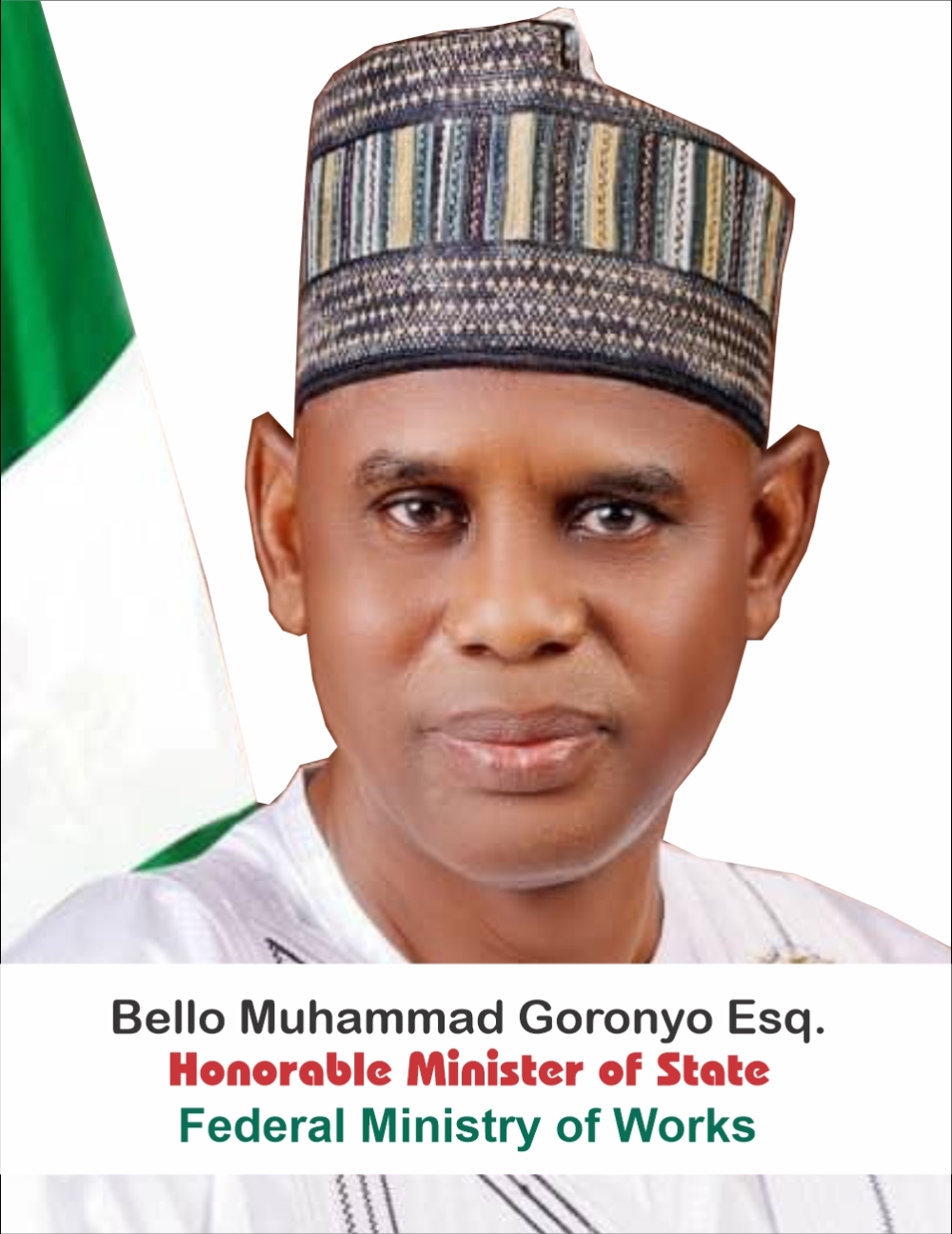
Minister Inspects Ongoing Reconstruction and Expansion of Mararaba-Keffi Road (43.65km) Under Tax Credit Scheme. The Honourable Minister of State for Works, Rt. Hon. Muhammad Bello Goronyo, Esq., on Thursday, 2nd October 2025, conducted a site inspection of the ongoing reconstruction and expansion works on the 43.65-kilometre Mararaba-Keffi Road. The project, a critical infrastructure upgrade under the Road Infrastructure Development and Refurbishment Investment Tax Credit Scheme, is being executed by China Harbour Engineering Company Nigeria Limited. The Minister, during the inspection, expressed serious concern over the pace of work and the persistent traffic congestion along the corridor, which serves as a vital link between the Federal Capital Territory and Nasarawa State. He noted that the daily gridlock severely affects thousands of commuters, particularly civil servants residing along the axis, many of whom struggle to arrive at work on time. Rt. Hon. Goronyo emphasized the urgency of expediting the construction timeline, reminding the contractor that the Federal Government had granted permission for night-time construction activities to ensure faster delivery and to mitigate the hardship faced by road users. "This project is of national importance. The volume of traffic here is massive, and many public servants are suffering. The government is fully supportive of this project, but the contractor must rise to the occasion. You have approval to work at night — please utilise it to meet the delivery schedule," the Minister stated. In response, Mr. Dong Hong, the Project Manager representing China Harbour Engineering Company Nigeria Limited, assured the Minister and the Nigerian public that the project remains on track and will be completed within the agreed timeline. "We understand the importance of this road and the urgency to ease traffic for the people. Our team is fully mobilised, and we are committed to delivering quality work on time," said Mr. Hong. The Mararaba-Keffi Road project forms part of the Federal Government’s efforts to address critical infrastructure needs through innovative financing mechanisms such as the Tax Credit Scheme, which allows private sector partners to invest in public road projects in exchange for tax reliefs. The Federal Ministry of Works remains committed to ensuring that all ongoing infrastructure projects are delivered efficiently, timely, and to the highest standards, in line with President Bola Ahmed Tinubu’s Renewed Hope Agenda. Mohammed Abdullahi Ahmed. Director, Press and Public Relations Department. Federal Ministry of Works. ...
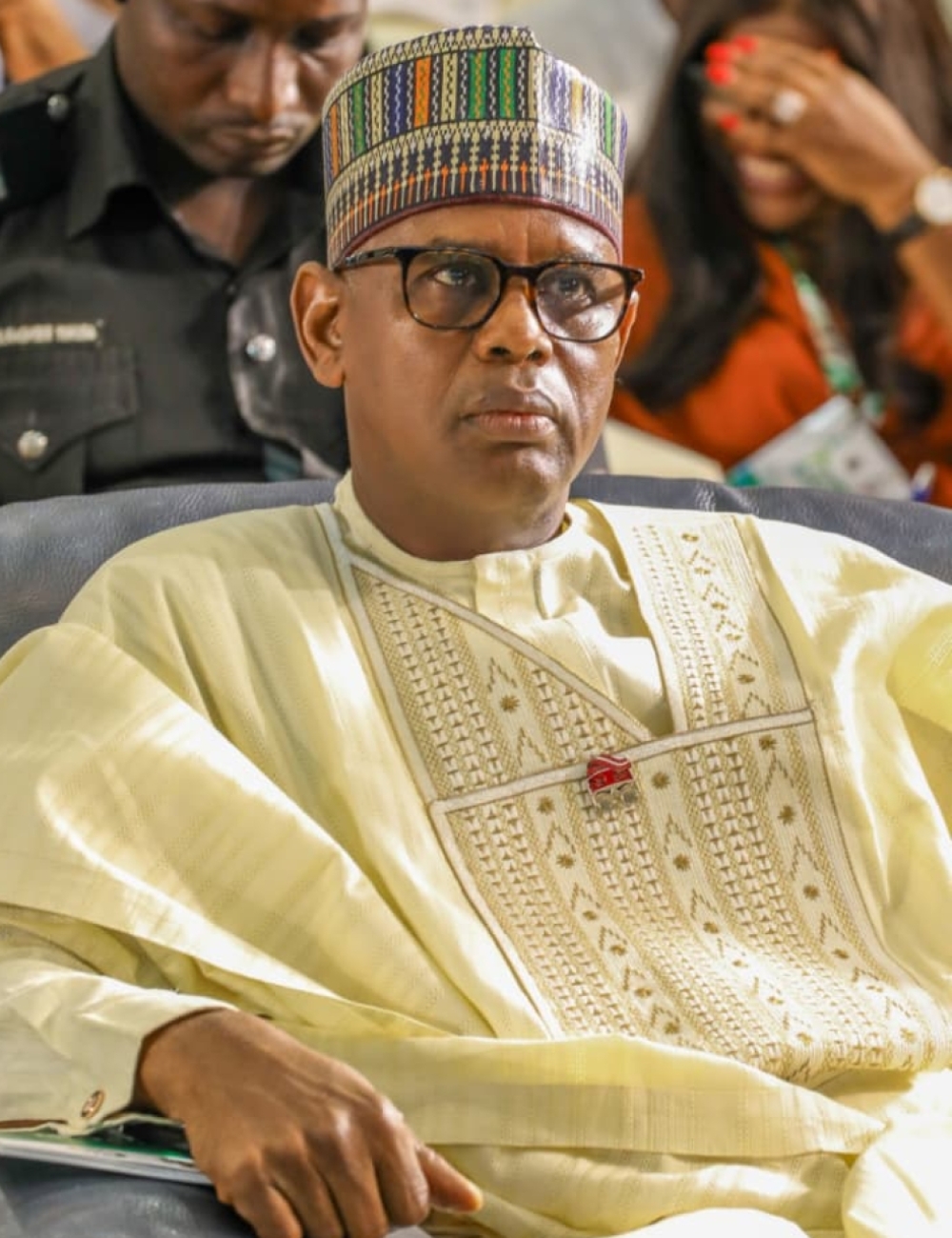
Independence Day: Goronyo Hails Tinubu, Urges Nigerians to Renew Patriotism As Nigeria marks another year of its independence, the Honourable Minister of State for Works, Rt. Hon. Bello Muhammad Goronyo, Esq., has extended warm felicitations to His Excellency, the President of the Federal Republic of Nigeria, Asiwaju Bola Ahmed Tinubu, GCFR, and to all Nigerians at home and abroad. In his Independence Day message, the Minister emphasized that the celebration is not only a tribute to the sacrifices of Nigeria’s founding fathers but also a reminder of the unity, resilience, and indomitable spirit of the Nigerian people. “Independence is a call to renew our shared responsibility in building a stronger, more prosperous, and peaceful nation for generations to come,” the Minister stated. He further urged both leaders and citizens to embrace patriotism and dedication in order to ensure that Nigeria continues to stand tall among the comity of nations. “May this anniversary inspire us all to work together with renewed hope and commitment towards the growth and greatness of our dear country,” he added. The Minister concluded by wishing Nigerians a joyous celebration, declaring: “Happy Independence Day, Nigeria! Long live Mr. President." Long live the Federal Republic of Nigeria.” Abdullahi Ameen Mohammed. For: S A (Media) to the Honourable Minister of State for Works 1st October, 2025 ...
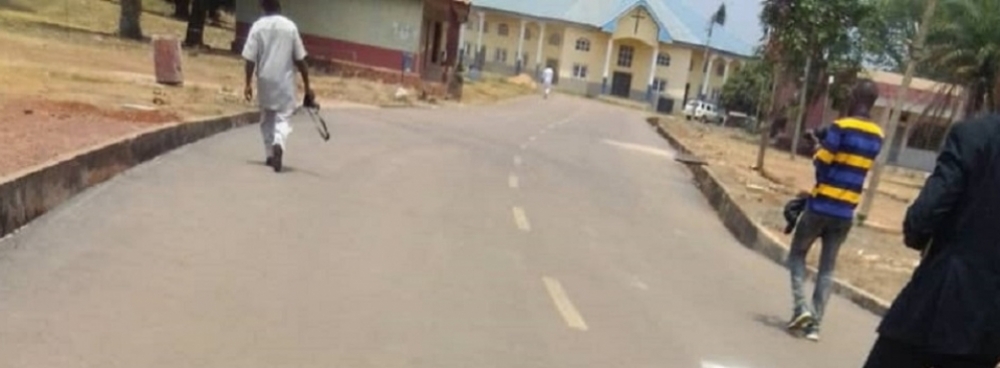
FG COMMITTED TO BRIDGING INFRASTRUCTURE GAP IN TERTIARY INSTITUTIONS - FASHOLA
The Honourable Minister of Works and Housing, Babatunde Raji Fashola, SAN has restated Federal Government’s commitment to bridging the road infrastructure challenges in tertiary institutions across the country.
The Minister who spoke in Enugu at the official commissioning and handover ceremony of the 1.0 kilometre road project constructed at the Federal College of Dental Technology and Therapy Enugu State by his Ministry said the gap of the nation's infrastructure needs is steadily being bridged by a gradual process of rehabilitations and constructions and it has reached the tertiary institutions.
Fashola, who was represented at the occasion by the Federal Controller of Works in Enugu State, Engr. Olufemi Oyekanmi explained that the intervention by the Federal Government was to boost quality of education and renewed hope and enthusiasm with regards to attending classes as defective roads have been been restored to motorability.
"It's undebatable that the quality of education will be impacted by the quality of infrastructure and the learning environment and those who doubt it should simply listen to some feedbacks from the students of the schools where this type of intervention have taken place" the Minister said.
He disclosed that under the Tertiary Institutions road Intervention Programme initiated by his Ministry, the Federal Government is currently working on 76 roads projects in selected Federal Tertiary Institutions across the nation.
" We have successfully intervened in the internal Road networks of 46 Tertiary Federal Institutions and handed over 29 as at 2021and we now have another 17 ready to be handed over while we are currently attending to 30 roads in similar institutions across the country, making a total of 76", Fashola said.
The Minister described the construction of the internal roads by the Federal Government in the federal tertiary institutions as a pointer to President Muhammadu Buhari's administration's progressive ideal of improving the human condition by supporting education.
In his response, the Rector Federal College of Dental Technology and Therapy, Dr. John Emaimo thanked the Honourable Minister and Federal Ministry of Works and Housing for selecting the college to benefit from this laudable Government Intervention in bringing infrastructural development gap saying that it is a dream fulfilled bearing in mind the deplorable state of the roads before the intervention.
According to Dr Emaimo, infrastructure is critical to the progress of stakeholders it can attract.
He added that with this kind gesture from the Ministry, the institution wears a new look making it conducive for both teaching and learning.
The Rector appreciated the Honourable Minister yet for another project currently being executed by the Ministry which he said is the provision of street lights to illuminate the campus during night hours.
Emaimo however, requested for the Ministry's intervention in the construction of two more roads in the school premises which are in a deplorable condition.
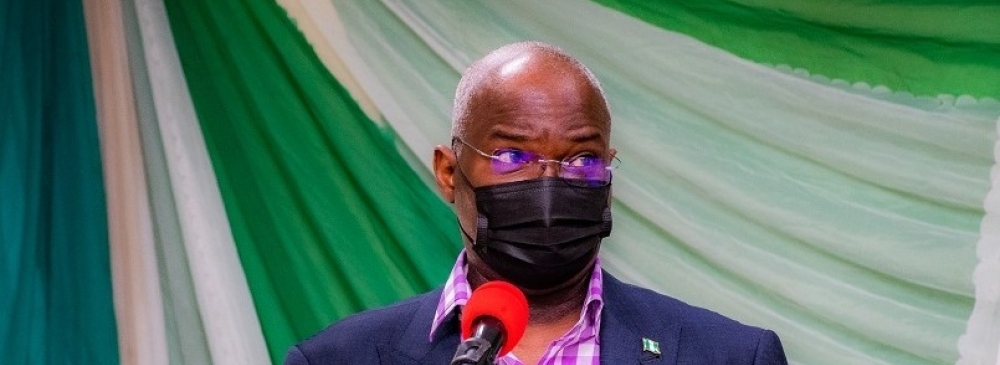
KEYNOTE SPEECH BY H.E BABATUNDE RAJI FASHOLA, SAN AT LAGOS BUSINESS SCHOOL EVENING WITH THE MINISTERS SERIES HELD ON SEPTEMBER 29, 2021
Distinguished Ladies and Gentlemen:
The compelling part of the LBS’ invitation letter to me dated August 31st 2021 signed by Dr. Franklin N. Ngwu is the part which talks about:
“…the need for more public/private sector dialogue and collaboration for Nigeria’s inclusive and sustainable economic growth and development.”
It is about those 3 (three) things: inclusiveness, sustainable growth and development that I wish to focus my intervention today.
But before I do so, let me push back against the part of the letter that says that:
“Some key constraints such as limited trust, lack of information on the opportunities available, impact of policies and business and operational frameworks of engagement limit their collaboration.”
The first question I wish to ask is “limited trust” on whose part?
My appeal to those who have a one-sided view of the public sector is to stand back and take a hard look at the antecedents of many of those who now occupy leadership positions in the public sector.
What you will see is that many of them, including me, spent a sizable part of their careers in the private sector.
Have we become unworthy of trust because we chose to serve?
And speaking of information or lack thereof about opportunities and policies, I recall that it was to this business school that we came for the launch of the Highway Development and Management Initiative (HDMI) to share information and opportunities regarding the planned concession of 12 highways spanning over 1,000 km of federal road network, and the opportunity for investment growth and job creation.
It is the largest highway concession ever undertaken on the African continent with the potential to create 5,000 direct jobs and 200,000 indirect jobs if successful.
We did not go to a foreign business school to launch the initiative; and there are many we could have gone to, if we so desired. We came to the Lagos Business School, because we wanted a homegrown success.
By way of updates, even though LBS has not come back to ask for one, I can report that out of 75 applicants, 18 have been prequalified, and will soon be requested to submit requests for proposals, environmental and social impact studies are concurrently being undertaken and the national tolling policy has been approved to guide the development of business plans.
Of course, as far as providing information about development and growth goes, many of us regularly brief the public about projects, I go on many project inspection tours to highlight what is going on.
Every quarter, the National Bureau of Statistics (NBS) releases reports about the growth situations in the economy.
What I have observed of course is that the negative results are readily acceptable and pleasing to some people, while they question the data when the same Bureau announces positive quarterly economic performances.
I will now return to the 3 (THREE) issues of:
a) inclusiveness;
b) sustainable growth and
c) development
But first, I must set the context.
Between the period 2012 to 2015 Nigeria‘s economy was reportedly growing at between 5% to 7%. But if we all take time to go back to the reviews and reports in the media at the time, the overwhelming response was that it was “jobless growth or “non-inclusive growth.”
This was the story then and it is not a new story. The other context before we proceed is to remind ourselves that at the peak of that growth, sometime in 2014, the then Minister of Finance issued a statement that Nigeria was heading towards a recession.
These were her words:
“There are some difficult moments out there in the international economy and we have noticed a downward slide in oil prices in recent weeks. Nigeria may not be so lucky to avoid recession this time as it did during the last economic meltdown.”
The question to ask is a recession under who’s watch?
My response is that it did not matter who was managing the economy, the recession was inevitable. We had consumed all the prolific and extraordinary income we earned from high prices of crude oil sales.
We did not invest them in infrastructure, new hospitals, universities, rail, bridges, broadband rollout, airports etc.
So the logical issue would be, what is the plan to get out of the recession?
Before I proceed let me quickly deal in broad strokes with some of the things that happen during a recession.
One of them is that it is the “services sector” that first feels the pinch, and when growth returns the services sector is the last to recover and that is when the feel-good factor returns. I will come back to this.
So in deciding what to do when the recession beckons or happens, the first thing to look at is who is managing the economy and what views do they espouse, because this is likely to shape the choices they will make.
Regrettably, many have again fallen into the error of believing the one-sided story that there is no ideology in Nigerian politics or in the political parties.
Nothing could be further from the truth and any worthy scholar who goes through the various party manifestoes will find not only differences but also similarities and this is one thing I commend for further study and analysis by this business school.
Whilst I will do my best not to be overly partisan, I find it difficult to effectively discharge my task without linking policy to politics.
For example, my party professes a progressive ideology and what this simply means is a “commitment to improving the human condition” and this is one difference between us and the others.
Ask them what they profess?
The other difference is that in 6 (SIX) years we have ensured that the average Nigerian remembers what we committed to: anti-corruption; economic development and security. This is a major reason why we have been held accountable.
You have to go back to 1993, (28 years ago); or further back to 1978 (43years), to find a political era where the public remembers what the parties promised during the campaign.
In MKO Abiola’s SDP, the party manifesto hinged on Energy, Rural Development, Education and Defence. In UPN, Awolowo’s 4 (FOUR) cardinal points (Free Education, Free Health Services, Integrated rural development, Employment) were examples of political promises or ideology so clearly articulated and retained.
This is another difference between us and them, and I challenge many here to ask themselves if they can remember two or three things they were promised in the 16 years before us.
With this background I will now go back to the choices for getting out of recession; because we inherited the doomsday which was foretold.
As I have said earlier, in over five years when oil sold about $100 per barrel, we did not invest in infrastructure.
The 2015 Federal Government budget left by our predecessors for Nigeria’s road network was N18 billion, less than the 2015 budget for roads in Lagos State of N31 billion. (Office of Infrastructure budget)
The said budget had a 15% capital component and 85% of the recurrent component. A budget says a lot about what the Government wants to do. Consume 85% and invest 15%, at the time that oil prices were high.
This is another area of vast policy difference between us and them because from the first budget of 2016 we committed to a minimum of 30% capital investment in the annual budget and an expansive infrastructure investment to boost growth, facilitate development and create jobs.
With oil revenues averaging $43 per barrel in 2016, the works budget for roads was cast at N200 Billion naira, an increase of 1011%.
This pattern has continued to date, where we are spending even more on infrastructure with far less resources.
We must remember that with very high oil prices the total FGN budget in 2015 was N4.4 Trillion while the first budget passed under this administration was N6.06 Trillion.
The Economic Recovery and Growth Plan (ERGP) 2017 - 2020 which was developed as the pathway to recovery from recession was underpinned by infrastructure investment as it committed to:
a) Achieving a stable microeconomic environment;
b) Creating a globally competitive economy and
c) Investing in the Nigerian people.
Apart from over 13,000 km of roads and bridges now under construction or rehabilitation nationwide, hitherto very difficult projects, like Bodo-Bonny Bridge, Lagos-Ibadan Expressway, Abuja-Kano Expressway and Second Niger Bridge now underway and heading towards completion before 2023, a generation of Nigerians can now travel by rail in their own country from Lagos to Ibadan and Abuja to Kano for the first time after a very long hiatus.
This did not happen in 16 years before us.
You may not like how we look or what we say, you may even disbelieve what we say but you cannot disbelieve what we have done with limited income on infrastructure.
This is another difference between us and them.
There is yet another difference and it relates to how we the progressives have chosen to deploy resources.
Between 1999 and 2015 all the infrastructure we are talking about today were crying out for attention.
In spite of prolific oil resources in between that period, I ask anyone to show one bridge, major highway, airport or a rail project that our country built.
I will remind you that in 2005 we choose to pay $12.09 billion to negotiate a Paris debt forgiveness when there was infrastructure crying out for attention.
However, by 2015 the debt stock we inherited was $10.3 Billion in spite of prolific oil resources.
That was a policy choice. No debt, no infrastructure while population grows.
On the contrary, with limited resources and commitment to expansionary fiscal investment and infrastructure to improve the living conditions of Nigeria, our budgets have been deficit budgets funded by debts to invest in infrastructure.
It is our belief that instead of increasing the tax burden of Nigerians, if we borrow to build infrastructure, small businesses who need broadband, rail, roads, bridges and other infrastructure will improve their efficiency and create opportunities.
This can only lead to the inclusiveness, sustainable Growth and development that my invitation letter speaks about.
The Economic Recovery and Growth Plan that we developed to address the recession that our predecessors predicted has worked.
By the second quarter of 2017 we were out of the recession that started in Quarter 2 of 2016 and we recorded 12 consecutive quarters of growth until COVID-19 struck.
By staying true to our core beliefs and by developing the Economic Sustainability Plan to deal with the COVID-19 impact, we came out of a second recession which was global and we now have a 5.1 GDP growth in Quarter 2 with services sector growing at 2.8%.
Remember I told you that the services sector is the last sector to recover after recession and this result is therefore clear evidence that the economy is on the mend and we must sustain it and expand it. In this regard I urge cautious optimism.
If you still think we are the same, let me share with you two different quotes from two sides of the divide to disabuse your minds.
The first is by the Vice-Presidential candidate of the main opposition party during the last elections in 2019.
This is what he said on August 8th 2021 about how to grow the economy.
“You cannot use infrastructure to drive economic growth…taking people out of poverty is not magic.”
But contrast President Buhari’s views expressed in Owerri on 9th September 2021 when he said:
“If we fix infrastructure, people will get on with their businesses.”
I am persuaded that President Buhari gets it.
His contemporary in the USA (a country held out as the example to follow) also gets it when he said:
“The American Jobs Plan will generate historic job growth, historic economic growth, help businesses to compete internationally, create more revenue as well. They are among the highest-value investments we can make in the nation — investing in our infrastructure.”
What limits or enhances the capacity of business is the infrastructure in the environment they operate.
The better the infrastructure the more efficient business becomes and the more productive and prosperous they will be.
If they can move goods and services in quicker time, through ports, rail and road, if they can transact financial services through reliable broadband, move fuel through new pipelines like the Ajaokuta-Kaduna pipeline project, if they can traverse about 40 kilometres on the Bodo-Bonny Bridge on land rather on canoes through the creeks, businesses will prosper and the economy will grow.
This in part is what the enablement of this private sector by the public sector means; in addition to fiscal and monetary policy.
This is a clear road to sustainable growth; and it is growth that will need more people to manage it thereby achieving inclusiveness.
Thank you for listening.
Babatunde Raji Fashola, SAN
Honourable Minister of Works and Housing
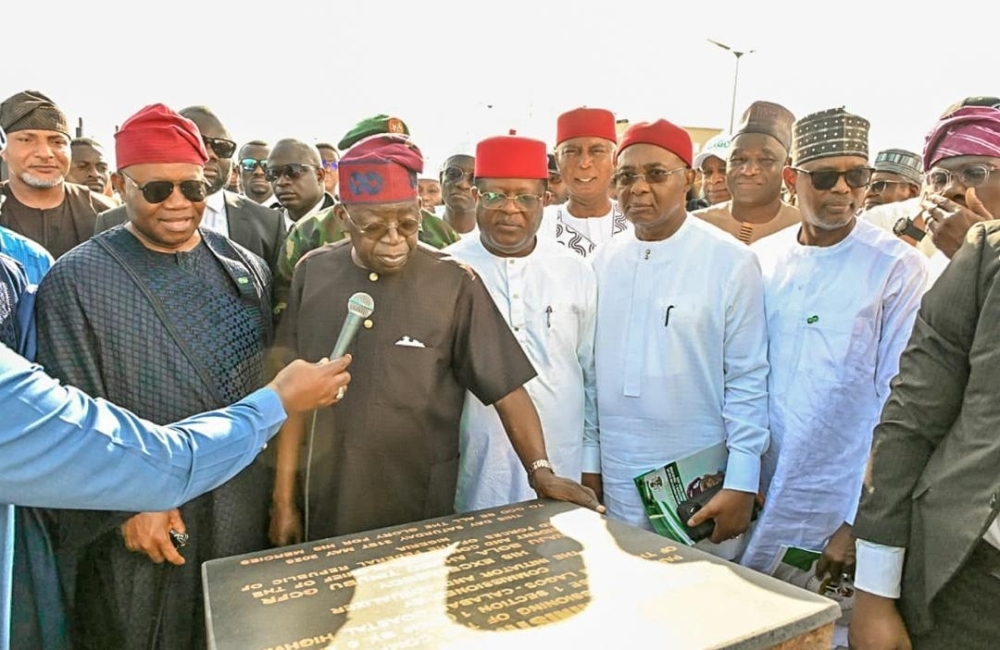
DRIVING NIGERIA’S FUTURE: CELEBRATING TWO YEARS OF TRANSFORMATIVE LEADERSHIP AND THE LAGOS-CALABAR COASTAL HIGHWAY MILESTONE
DRIVING NIGERIA’S FUTURE: CELEBRATING TWO YEARS OF TRANSFORMATIVE LEADERSHIP AND THE LAGOS-CALABAR COASTAL HIGHWAY MILESTONE
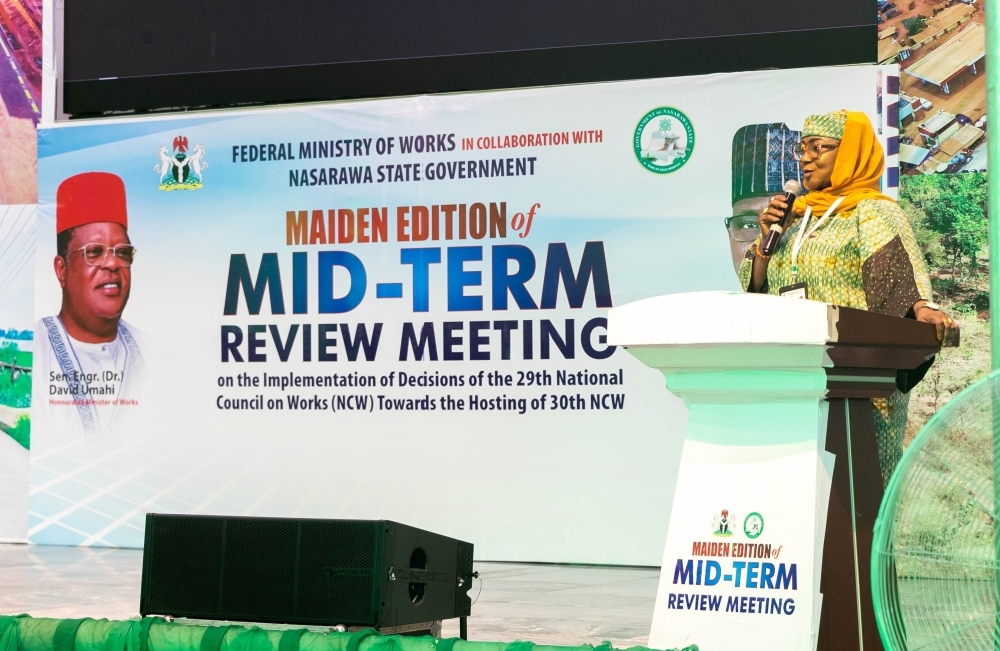
MID -TERM REVIEW MEETING ON THE IMPLIMENTATION OF THE DECISIONS REACHED AT THE 29TH NATIONAL COUNCIL ON WORKS (NCW) DAY 1
MID -TERM REVIEW MEETING ON THE IMPLIMENTATION OF THE DECISIONS REACHED AT THE 29TH NATIONAL COUNCIL ON WORKS (NCW) DAY 1