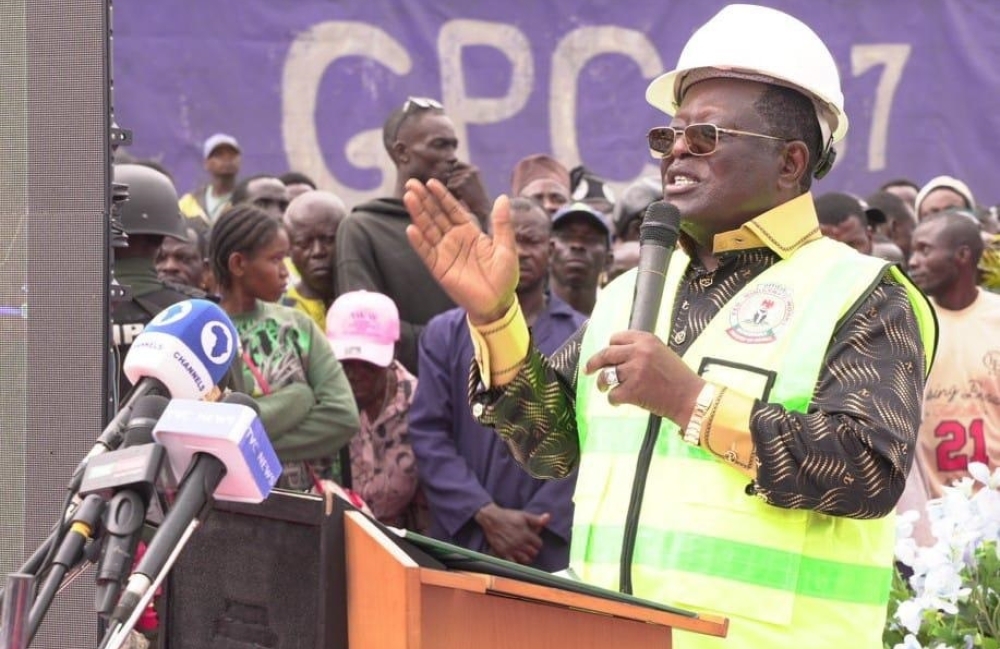
FG EMBARKS ON DECISIVE EMERGENCY INTERVENTION ON BENIN-ASABA EXPRESSWAY
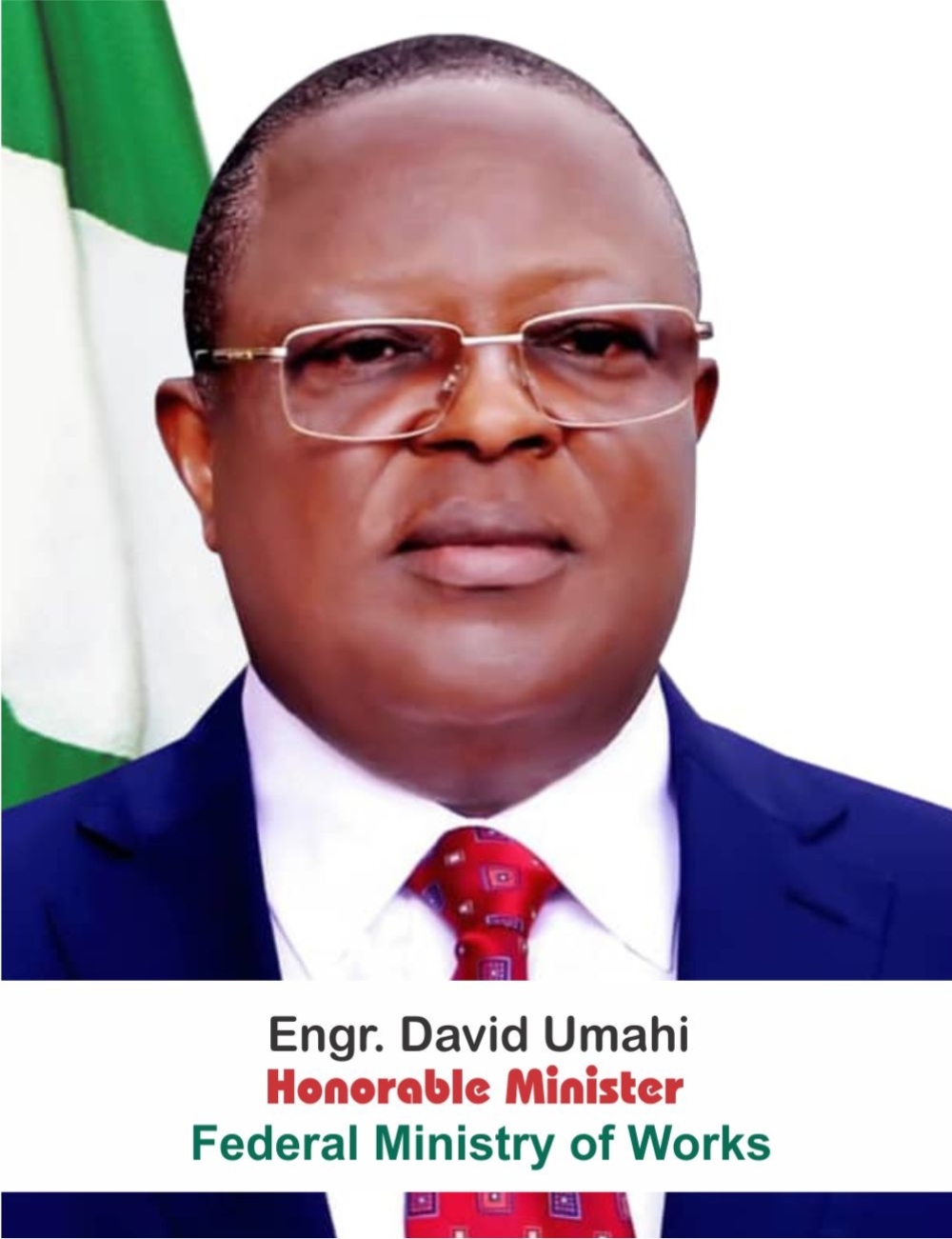
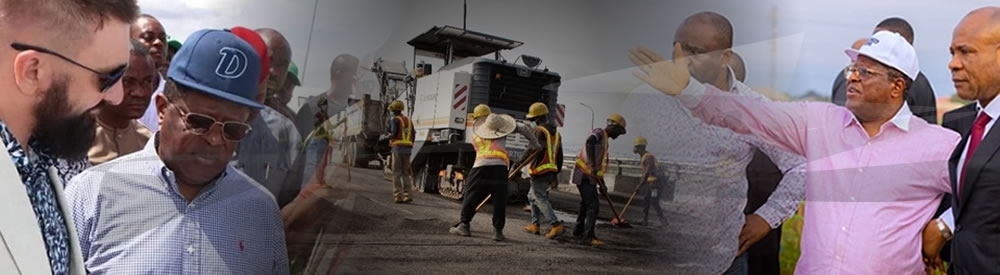
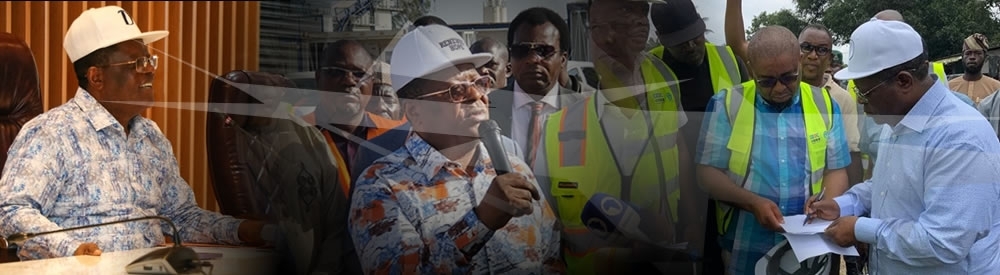
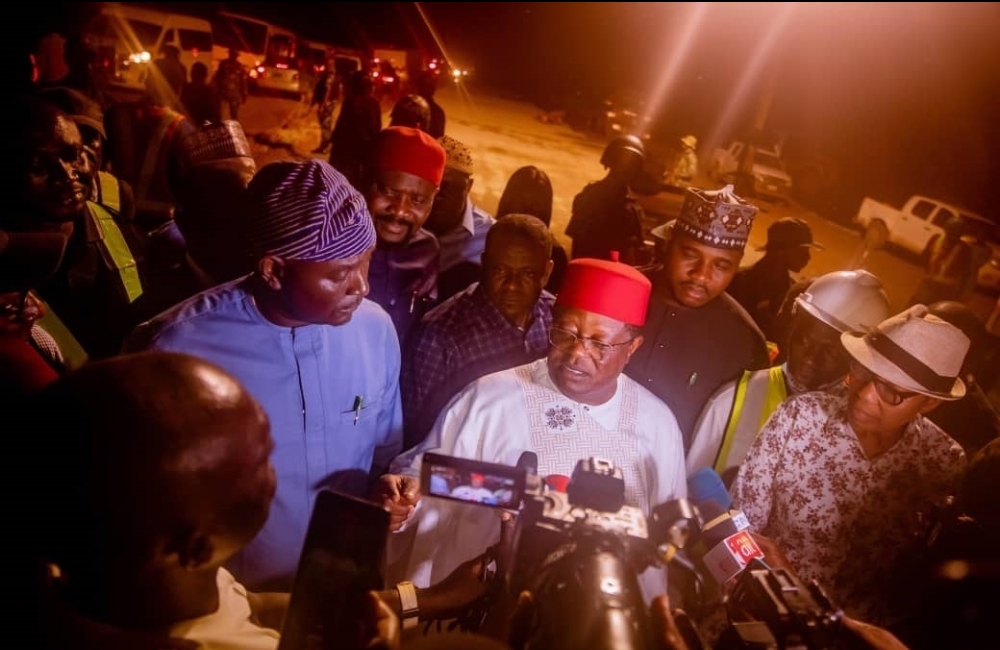
The Honourable Minister of Works, Engr. David Nweze Umahi, CON, FNSE, FNATE, has kick-started the Federal Government’s emergency intervention on the Benin–Asaba Highway under the Ministry’s “Operation Rescue” initiative, aimed at restoring safe, smooth, and uninterrupted movement along the critical corridor. The intervention, to be carried out by the Ministry, through the hiring of equipment and direct implementation, is a demonstration of its determination to address the severe deterioration of sections of the road and bring immediate relief to motorists, commuters, businesses, and the affected communities. He made this known during the inauguration of *"Operation Rescue Benin -Asaba Expressway”* at Benin City, Edo State on Thursday, 24 September, 2026. The Benin–Asaba Highway is a strategic Federal Highway that commences at AIF Roundabout in Benin City, Edo State, and terminates at Summit Junction in Asaba, Delta State, with a distance of 125km. It was concessioned to the Benin-Asaba Expressway Concession Company (BAECC) by the immediate past administration but the handing over of the site was performed by the present one in March, 2025. However, it has since been proven that the Concessionaire lacks the technical and financial capabilities to execute the project. This was established by the *Independent Engineer (I.E.)* for the project, *Messrs Yolas Consultants Limited*.* Considering the plight of road users and the continued deterioration of the concessioned road, the I.E. advised the Ministry to urgently take all necessary steps to save it from further deterioration, avert further gridlock, assuage the suffering of motorists, as well as save the Federal Government from embarrassment.
Engr. Umahi has personally been monitoring the implementation of the concession project, through several site visits and issued instructions via the I.E. for the *Concessionaire* to stick to the Ministry’s standards and methodology, which were not complied with leading to the worsening of the road condition. Hence, the Ministry’s intervention to save the critically failed sections of the Expressway, through the deployment of equipment and personnel.
The Federal Ministry of Works, according to the Minister, is poised to alleviate the hardship being experienced by road users and communities on the corridor, alike. He reiterated that the Federal Government would not allow the condition of a major national artery to continue to undermine economic activities, the movement of people, goods, and services, as well as the safety of road users and the host communities. He stressed that the emergency intervention is focused on achieving immediate traffic relief, while providing a sustainable engineering solution to the identified problem spots.
According to him, the intervention is also being driven by the overriding need to protect public interest and ensure that Nigerians using the road are not left to bear the consequences of the deteriorating infrastructure occasioned by the lapses of the *Concessionaire.* The Minister emphasised that *” this is not a new contract but an immediate solution to the plight of road users.”* He reaffirmed the commitment of President Bola Ahmed Tinubu’s administration to restoring critical road infrastructure across the country and ensuring that emergencies receive prompt and decisive attention.
*“Operation Rescue”* is about immediate action, restoration of movement, and protection of the travelling public and communities along the corridor. *“We are determined to address the failed sections and, thereafter, provide a durable solution that will serve Nigerians for many years,”* the Minister asserted.
Engr. Umahi called on road users and people along the corridor to cooperate with the Ministry’s officials and traffic-management personnel, as emergency works commence, assuring them that the Ministry would continue to monitor progress and take all necessary measures to minimise hardship during the period of the intervention. “*I am pleading with motorists to exercise patience, observe traffic-management directives and drive cautiously around active construction zones,* he stated.
Engr. Umahi highly commended President Tinubu's concern over the well-being of citizens, reiterating that *”the Ministry remains committed to restoring the Benin–Asaba Expressway to a safe, functional and durable condition in the overall interest of Nigerians and the national economy."*
Before this, the Governor of Edo State, His Excellency, Senator Monday Okpebholo had demonstrated his commitment to the welfare of his people during the protest in August, 2026 caused by the bad state of the road by immediately identifying with the situation and dispatching his Chief of Staff to appeal for calm and reassure the affected communities and motorists of immediate remedial action. Speaking at the Ceremony, His Excellency appreciated the President of the Federal Republic of Nigeria for his prompt and decisive intervention, as well as the Minister of Works for his continued commitment to the provision of road infrastructure across the country.
The Governor of Delta State, His Excellency, Sheriff Oborevwori, represented by his Deputy, Charles Anaogu, expressed much gratitude for the immediate response in restoring the all-important road. *”It is a well-desired action to better the lives of the people of Delta State and the general public,* he added.
The *representative of the Managing Director of the Niger Delta Development Commission (NDDC),* applauded the President for his commitment to the development of the Niger Delta region. He also commended the Honourable Minister for his steadfastness to the welfare of the people of the zone and Nigerians, at large.
Delivering the Welcome Address earlier, the Special Adviser to the Edo State Governor on Project Implementation and Monitoring, Engr. Phoebe William Bello, described the rescue operation as very timely in reinstating the critical transportation corridor connecting communities, facilitating mobility, commerce and trade between Edo and Delta States with the other parts of the country. Therefore,*its importance cannot be overstated,”* she noted.
The occasion was graced by lots of dignitaries and Goodwill Messages were delivered by the Deputy Governors of Edo and Delta States, the Rt. Honourable Speaker of the Edo State House of Assembly, the Youth Leader of Ikpaba Hill Community, and other stakeholders, who unanimously eulogised the Federal Government’s proactive response.

FG EMBARKS ON DECISIVE EMERGENCY INTERVENTION ON BENIN-ASABA EXPRESSWAY The Honourable Minister of Works, Engr. David Nweze Umahi, CON, FNSE, FNATE, has kick-started the Federal Government’s emergency intervention on the Benin–Asaba Highway under the Ministry’s “Operation Rescue” initiative, aimed at restoring safe, smooth, and uninterrupted movement along the critical corridor. The intervention, to be carried out by the Ministry, through the hiring of equipment and direct implementation, is a demonstration of its determination to address the severe deterioration of sections of the road and bring immediate relief to motorists, commuters, businesses, and the affected communities. He made this known during the inauguration of *"Operation Rescue Benin -Asaba Expressway”* at Benin City, Edo State on Thursday, 24 September, 2026. The Benin–Asaba Highway is a strategic Federal Highway that commences at AIF Roundabout in Benin City, Edo State, and terminates at Summit Junction in Asaba, Delta State, with a distance of 125km. It was concessioned to the Benin-Asaba Expressway Concession Company (BAECC) by the immediate past administration but the handing over of the site was performed by the present one in March, 2025. However, it has since been proven that the Concessionaire lacks the technical and financial capabilities to execute the project. This was established by the *Independent Engineer (I.E.)* for the project, *Messrs Yolas Consultants Limited*.* Considering the plight of road users and the continued deterioration of the concessioned road, the I.E. advised the Ministry to urgently take all necessary steps to save it from further deterioration, avert further gridlock, assuage the suffering of motorists, as well as save the Federal Government from embarrassment. Engr. Umahi has personally been monitoring the implementation of the concession project, through several site visits and issued instructions via the I.E. for the *Concessionaire* to stick to the Ministry’s standards and methodology, which were not complied with leading to the worsening of the road condition. Hence, the Ministry’s intervention to save the critically failed sections of the Expressway, through the deployment of equipment and personnel. The Federal Ministry of Works, according to the Minister, is poised to alleviate the hardship being experienced by road users and communities on the corridor, alike. He reiterated that the Federal Government would not allow the condition of a major national artery to continue to undermine economic activities, the movement of people, goods, and services, as well as the safety of road users and the host communities. He stressed that the emergency intervention is focused on achieving immediate traffic relief, while providing a sustainable engineering solution to the identified problem spots. According to him, the intervention is also being driven by the overriding need to protect public interest and ensure that Nigerians using the road are not left to bear the consequences of the deteriorating infrastructure occasioned by the lapses of the *Concessionaire.* The Minister emphasised that *” this is not a new contract but an immediate solution to the plight of road users.”* He reaffirmed the commitment of President Bola Ahmed Tinubu’s administration to restoring critical road infrastructure across the country and ensuring that emergencies receive prompt and decisive attention. *“Operation Rescue”* is about immediate action, restoration of movement, and protection of the travelling public and communities along the corridor. *“We are determined to address the failed sections and, thereafter, provide a durable solution that will serve Nigerians for many years,”* the Minister asserted. Engr. Umahi called on road users and people along the corridor to cooperate with the Ministry’s officials and traffic-management personnel, as emergency works commence, assuring them that the Ministry would continue to monitor progress and take all necessary measures to minimise hardship during the period of the intervention. “*I am pleading with motorists to exercise patience, observe traffic-management directives and drive cautiously around active construction zones,* he stated. Engr. Umahi highly commended President Tinubu's concern over the well-being of citizens, reiterating that *”the Ministry remains committed to restoring the Benin–Asaba Expressway to a safe, functional and durable condition in the overall interest of Nigerians and the national economy."* Before this, the Governor of Edo State, His Excellency, Senator Monday Okpebholo had demonstrated his commitment to the welfare of his people during the protest in August, 2026 caused by the bad state of the road by immediately identifying with the situation and dispatching his Chief of Staff to appeal for calm and reassure the affected communities and motorists of immediate remedial action. Speaking at the Ceremony, His Excellency appreciated the President of the Federal Republic of Nigeria for his prompt and decisive intervention, as well as the Minister of Works for his continued commitment to the provision of road infrastructure across the country. The Governor of Delta State, His Excellency, Sheriff Oborevwori, represented by his Deputy, Charles Anaogu, expressed much gratitude for the immediate response in restoring the all-important road. *”It is a well-desired action to better the lives of the people of Delta State and the general public,* he added. The *representative of the Managing Director of the Niger Delta Development Commission (NDDC),* applauded the President for his commitment to the development of the Niger Delta region. He also commended the Honourable Minister for his steadfastness to the welfare of the people of the zone and Nigerians, at large. Delivering the Welcome Address earlier, the Special Adviser to the Edo State Governor on Project Implementation and Monitoring, Engr. Phoebe William Bello, described the rescue operation as very timely in reinstating the critical transportation corridor connecting communities, facilitating mobility, commerce and trade between Edo and Delta States with the other parts of the country. Therefore,*its importance cannot be overstated,”* she noted. The occasion was graced by lots of dignitaries and Goodwill Messages were delivered by the Deputy Governors of Edo and Delta States, the Rt. Honourable Speaker of the Edo State House of Assembly, the Youth Leader of Ikpaba Hill Community, and other stakeholders, who unanimously eulogised the Federal Government’s proactive response.
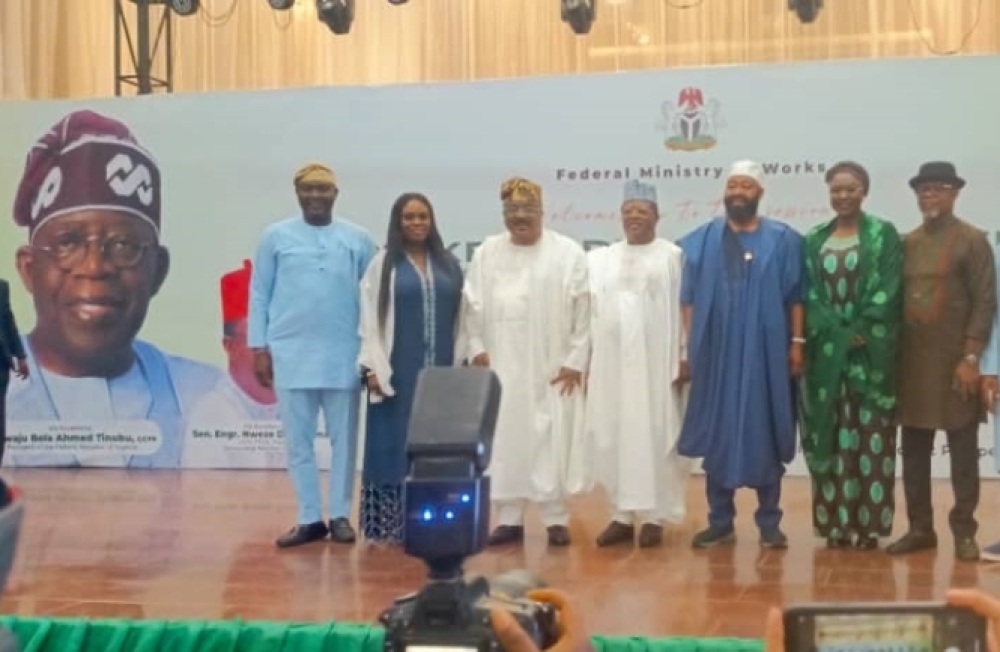
Super-Highway construction: Works Minister call on Investors to leverage on its Economic Potentials The Minister of Works, Sen. (Engr) David Umahi has called on Investors and political stakeholders to leverage on the infrastructural development drive of the Renewed Hope Agenda of President Ahmed Tinubu to boost economic activities in the country. Senator Umahi made the call at the Stakeholders engagement meeting on the alignment of Niger (125klm), Kwara (188klm) which is (313klm) out of 1000klm Super-Highway in Ilorin on 4th July 2024. The Minister further calls on the stakeholders to stand on the mandate of President Bola Ahmed Tinubu to ensure that one of the legacy projects which include the alignment of Sokoto to Badagry Super-Highway is achieved. In his remarks, the Governor of Kwara State, Mallam Abdulahmam Abdulrasaq, who was represented by Kayode Alabi thanked Mr. President and the Minister of Works for this Renewed Hope Legacy Infrastructure Project which connects Kwara to Sokoto 1000km Super-Highway project's which will boost Nigeria's Economic prosperity. Also speaking, the Niger State Governor, Mohamed Umaru Bago states that Nigeria needs a value chain in Agriculture and Road Infrastructure, He called on all the Stakeholders to join hands to move the Renewed Hope Agenda of Mr. President. Bago said in Niger State no compensation will be paid for Road Infrastructure, because the road is for the development of the State. ...
FG TERMINATES CONTRACTS WITH MOTHERCAT, DANTATA & SAWOE AND RCC COMPANIES FOR NON-PERFOMANCE ON THE DUALIZATION OF OBAJANA-BENIN ROAD; SECTIONS II, III AND IV, WARNS THAT GOING FORWARD, ALL FUNDED BUT NON-PERFORMING CONTRACTS SHALL BE TERMINATED The Federal Ministry of Works has terminated contract numbers 6136, 6137 and 6138 with Mothercat Ltd, Dantata & Sawoe Construction Ltd and RCC Ltd respectively. The projects affected by this termination are the dualization of Obajana - Benin road, section II (Okene - Auchi) in Kogi/Edo State; the dualization of Obajana - Benin road, section III (Auchi - Ehor) in Edo State and the dualization of Obajana - Benin road section IV (Ehor - Benin) in Edo State. The termination of the said contracts became necessary in view of the inordinate delay of the affected companies in job performance and their failure, neglect and or refusal to fulfil their contractual obligations as required by the Standard Conditions of Contract and this has affected the timely completion of the projects and thus resulted in the expiration of the contracts by effluxion of time. The projects which were awarded on 3rd December 2012 were advertently abandoned by the contractors and no genuine commitment or good faith was shown towards executing the projects after accepting the considerations offered by the Federal Government and thereby exposing the road users to untold hardship due to the deplorable condition of the projects. The Honourable Minister has therefore directed the engineers in charge to take necessary steps to enter upon both the site and the works and take the same over from the affected companies. He further directs the engineers concerned to, upon doing the needful, arrange with the affected companies for a joint measurement of work so far done by the said companies preparatory to taking over the sites from the said companies, and this directive is without prejudice to the exercise of other rights of Federal Government under the contract. He warns that the Federal Ministry of Works under his watch will not condone acts of unseriousness and sabotage by contractors whose plan is to become a clog in the wheel of progress of the Renewed Hope administration which is determined to change the ugly narrative of Nigeria's road infrastructure. He further warns that going forward, the government will not hesitate in terminating all projects that are funded but are non-performing. ...
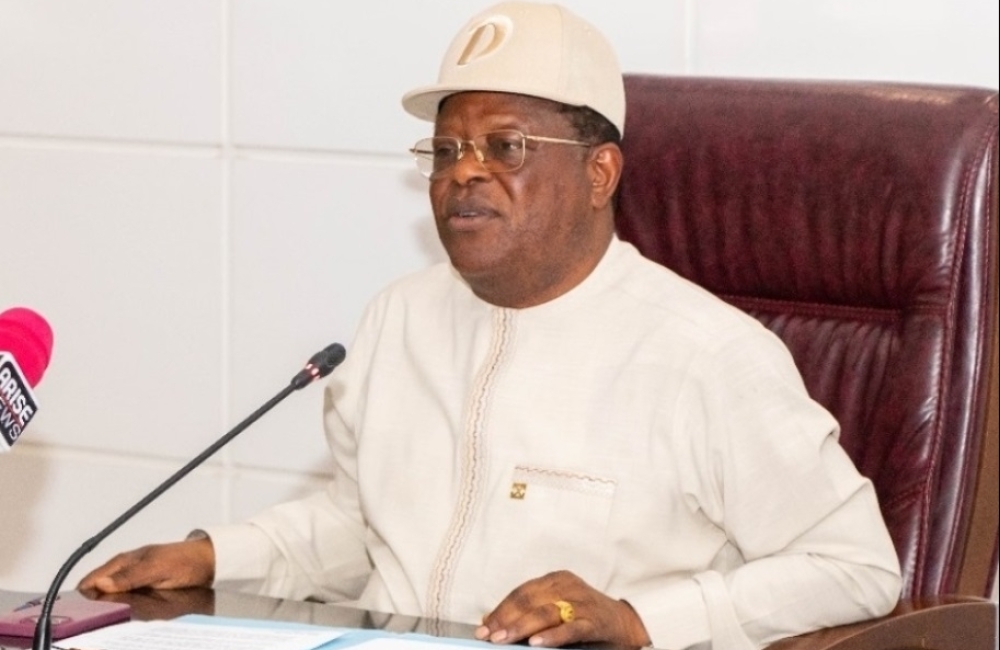
COASTAL HIGHWAY: TINUBU TO FLAG-OFF SECTIONS THREE AND FOUR IN CROSS RIVER TO AKWA IBOM As part of the commitment of the Tinubu Administration to sustain its on-going infrastructural development drive in line with its Renewed Hope Agenda. The Federal Government has announced plans to commence the flag-off of the next phase of the Lagos- Calabar Coastal highway from Cross River to Akwa Ibom. The Minister of Works Senator (Engr) David Umahi disclosed this at the stakeholder’s engagement meeting in Uyo, Akwa Ibom state on 29, June 2024. According to the Minister of Works, “we are here to introduce sections three and four of the famous Lagos- Calabar Coastal Highway. "We started and awarded section one which started in Lagos and terminated at deep port in Lagos and is at 474 km "There is section two that is starting at Lekki Deep Sea Port and taking it to the famous Dangote Refinery" The Honourable Minister added that the President has graciously directed that sections three and four must start at Cross River and stop at Akwa Ibom. Senator Umahi recalled that the Senate President once addressed the people of Akwa Ibom state, and he assured them that "sections three and four will start on this part of the coastal highway and this is the fulfilment of that assurance, and we are happy doing this”. He added. Speaking further, the Minister explained "that section three has 27km on Akwa Ibom land 38km on Cross River State. While section four is entirely on Akwa Ibom that is 80km. When you add 27km and 80km, you have 107km, so you are benefiting through maximizing this coastal highway. "When we complete the procurement process and award these sections three and four, work will start in many sub- sections of this sections all at the same time. "Tinubu is a man who matches his words with actions. So, we are happy with the level of commendations and support we receive from Nigerians for the so many benefits of the coastal highway Speaking at the event, the Senate President, Senator Godswill Akpabio expressed his appreciation to President Bola Ahmed Tinubu for listening to his plea to start sections three and four of the coastal highways in Cross River State to Akwa Ibom. He called on the Akwa Ibom State Governor, Pastor Umo Eno to give maximum support to the federal government and buy into the coastal highway project. The former governor also called on the Minister of works to engage the services of engineers from the state on the project. Also speaking at the event, the Akwa Ibom state governor assured the stakeholders that the state will cooperate with the federal government to ensure the completion of the project. ...
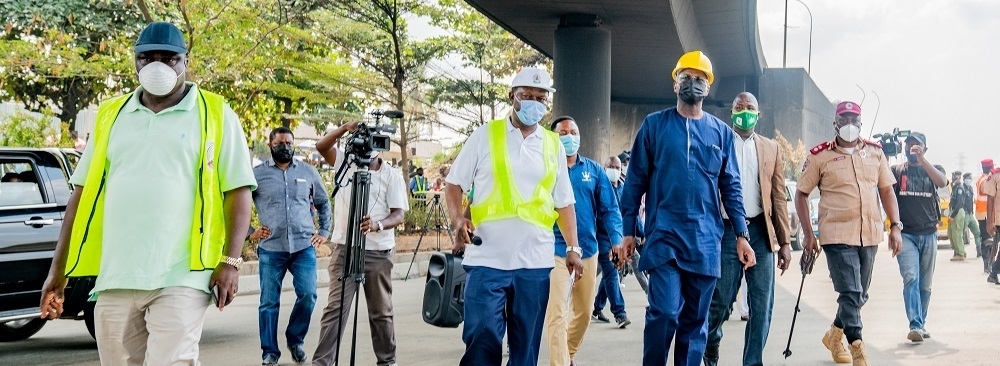
Apapa-Oworonshoki Road Project to Be Delivered by End of 2021
The Federal Director of Highway construction and rehabilitation, Engr Funso Adebiyi has reassured Nigerians that the Apapa/Oshodi Oworpnshoki Expressway project would be completed by the end of 2021.
It could be recalled that Mr. President flagged off the project on 17th November, 2018 to address the heavy grid lock on the expressway with the promise to deliver it in two years.
During an inspection of the 4 sections project over the weekend, Adebiyi said that the road had achieved varied levels of completion on the four sections of the road.
Addressing journalists, he said : " About in overall 61 percentage have been achieve as of today, in the first phase covering 27km ever busy road project. "
Breaking the figures down, he said : "On section 1, we have achieved about 70 percentage completion and on section 3, we have achieved 63 percent.
Continuing, he said: "Section 4 has recorded about 41 percent, which means work is going on in that section. The contract for section 2, has been awarded and work would commence there soon."
The Director explained that before the intervention of Federal Goverment through the Ministry of Works and Housing, the road was in deplorable state and this hindered free flow of traffic on the road.
"But from what we have seen so far on the finished portions of the road, I want to assure you that bad days are over, we have good days here now and better days are ahead of us. So Nigerians should bear with us, we are making progress and I can assure you that by the end of this year, Apapa port users would have the best road because we have made significant progress, " he explained.
Adebiyi noted rhat the current traffic gridlock experience on some sections of the road is not due to the construction but the illegal parking of trailer drivers on the bridge, adding that trailer drivers should make use of the trailler parks along the Corridor and the newly constructed one for transit to the port.
On the economic benefit of the project, the Director of Highway, South-West Engr. Kuti Adedamola said that, adding to the ease of traffic on the road, the project has created about 600 direct jobs and over 1000 indirect jobs, thereby improving the Livehood of Nigerians and this is a further support to Mr. President's dream of moving 100 million Nigerians out of poverty to the ladder of prosperity.
On the quality of the job, the Federal Controller of Works, Lagos, Engr. Kayode Popoola explained that several layers if construction went underneath, with up to eight inches thickness of concrete to make the rigid pavement strong for durability.
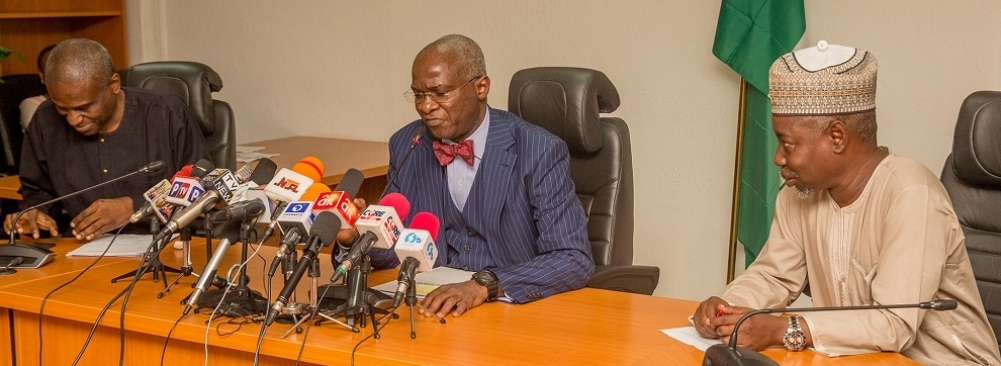
Press Briefing On Power Sector State Of Play, Next Steps And Policy Directions By The Honourable Minister Of Power, Works And Housing, At The Ministry Of Power, Works And Housing Headquarters
I believe that most Nigerians know that the Power sector has been privatized and that this happened since November 2013.
What I believe most Nigerians have struggled with is an understanding of:
a. The organizational and operational structure of the Power sector after privatization;
b. An understanding of who to turn to when service is not good;
c. And perhaps what to expect the privatization to give to the sector.
These are some of the issues I propose to address in this briefing, and I intend to highlight the challenges we have encountered, those we have solved, those we are working on, the progress we have made, what needs to be done and who has the responsibility to do what.
Perhaps the best place to start is to go back to the beginning, to recall what we had before privatization; and then compare it with post-privatization, in order to facilitate the understanding of the ordinary Nigerian.
The first thing to deal with is to explain the power and supply process (which is sometimes called the value chain) as comprising 3 (THREE) main parts:
a.Power Generation – Which is where electricity is produced;
b.Power Transmission – which is the system of substations, towers and lines that convey the power from the power generation sites to the distribution sites;
c.Power Distribution – which is the final leg that supplies the power to end users, homes, offices, factories, markets, etc, Meter the power consumers, BilI them and collect the bills.
Before the privatization, all these 3 (THREE) functions of (a) Generation, (b) Transmission and (c) Distribution were substantially Government business, which was run as a monopoly through Power Holding Company of Nigeria (PHCN).
This means that Government generated the power from various gas and hydro power plants, transported the power from hundreds of substations across Nigeria and distributed the power from hundreds of distribution stations nationwide, and supplied meters, billed customers and collected the money.
Privatization has changed this.
Government has sold some of the Power generation plants to 6 (SIX) Generation Companies (GENCOs), and sold the Distribution Assets to 11 (ELEVEN) Distribution Companies (DISCOs).
It is the DISCOs after privatization who now have responsibility to supply power to the consumers, provide meters and collect the money.
Government has retained the responsibility of transmission (transport of power) in a company called Transmission Company of Nigeria (TCN).
From this, it must be obvious to the ordinary person that supply of power is now a private business in the hands of the owners of the DISCOs.
But because of the critical and sensitive nature of power supply, Government has not left the supply of power supply solely to the DISCOs. Government at Federal, State and Local Government, and the former employees of the PHCN hold 40% of the shares of the DISCOs.
In addition, Government is responsible for regulating behaviour and compliance through the Nigerian Electricity Regulatory Commission (NERC), which is like what the Central Bank (CBN) is to the Banking Sector, or what the Nigerian Communication Commission (NCC) is to the Telecoms sector or the Nigerian Broadcasting Corporation (NBC) is to the media, and I will say more about this.
Government, during the privatization, also took steps to perform its support and enabling role to private sector by setting up a company called the Nigerian Bulk electricity trading company (NBET).
What NBET does is to give confidence to generation companies by guaranteeing to buy bulk power, which is an incentive to GENCOs to invest in building more Power plants because there is an assured buyer.
In real terms therefore, the power that the DISCOs sell does not belong to them; they are only distributors for a commission under a vesting contract with NBET, who is the person who pays the GENCOs for the power, and vests them in the DISCOs.
All of these arrangements arise from the Electric Power Sector Reform Act (EPSRA) of 2005 which led to the privatization which took place in 2013.
That law, which regulates the power sector, recognizes certain categories of persons who can buy power from a GENCO and they are:
A. A distribution company (DISCO)
B. A bulk trader (NBET)
C. An eligible customer declared by the Minister under Section 27 of the Act.
Interestingly no DISCO is buying power directly from the GENCO for reasons only known to them.
They are content to allow the government bulk trader pay the GENCO for the power and receive it under the vesting contract which they are not properly performing because they remit only about 15% to 20% of the power they receive, and have accumulated debts of about N859 Billion (Principal and Interest) owed to NBET. I will also come back to these in the next steps and policy directives I will issue.
Interestingly, the EPSRA does not make it mandatory for any Nigerian to receive power only from the DISCO or to use only public power.
That is why it is not an offence for Nigerians to buy generators, inverters or solar systems which are, of course, more expensive than the power which NBET buys from the Gencos and vests in the DISCOs to distribute to consumers.
Therefore, in answer to the question of who to turn to when you have no meter, no supply of power, or your transformer is bad; it is the discos, who are your service providers, that you should turn to. They are the ones who bill you and collect money from you.
I must of course point out that, from time to time, there are failures in the system such as gas supply shortage or transmission failures.
This is not the fault of DISCOs, but any fair-minded observer will admit that this does not happen every day and this has nothing to do with supply of meters or the proliferation of estimated bills.
As to where we are today I can report progress in generation, transmission and distribution post-privatization.
1. Generation of power has improved from 4,000 MW (approx) in 2015 to 7,000 MW (approx) in 2018 averaging an increase of 1,000 MW (approx) per annum and we expect to add 455 MW (Azura); 215 megawatts (Kaduna), 240 MW (Afam III); 40 MW (Kashimbilla); almost a total of 954 MW in 2018; and 700 MW (Zubgeru) 480 MW (Okpai II) about 1,150 MW projected for 2019, and the GENCOs are undertaking various repairs, rehabilitation and expansion that will bring on incremental power.
2. Transmission has increased from 5,000 MW (Approx) in 2015 to 7,124 MW (Approx) in December 2017 averaging 1,062 MW per annum increase in transmission capacity. TCN currently has about 90 Transmission projects in various stages of construction and many are to be completed this year.
So, we can transport what the GENCOS generate and there is a Transmission Expansion plan 2018 to 2028 which Government is committed to implement.
3. Distribution has increased from 2,690 MW (Approx) in 2015 to 5,222 MW Approx in 2018, averaging an increase of 844 MW per annum because the DISCOS have also done some work.
But as it is now obvious, from 2016 when the DISCOs complained about lack of enough power to distribute, the problem today is that the DISCOs cannot distribute all of the Power that is available, leaving the sector with an unused capacity of 2,000 MW (Approx), with the approximately 1,150 MW projected to come this year and 2019.
This is not a time to trade blames, because there is enough to go round; rather it is a time to reiterate everybody's responsibility and urge all of us to brace up, to do what we are obliged to do, which is to serve the people.
I suspect that these facts may appear like a red flag to the bulls of anti-privatization, but I remain convinced that privatization is the way forward.
Privatisation has brought us better value in broadcasting, newspapers, telecoms, banking and other sectors and I remain convinced that it will deliver in power.
The fact is that like in telecoms, banking, newspapers and other sectors, those who cannot compete will concede as some banks, and telecoms companies did without bringing down the sector.
What is government doing?
As a facilitator of business and enabler of the private sector, Government has done the following:
A. Through the Central Bank of Nigeria (CBN) government has made available the sum of N213 Billion to the power sector at concessionary interest rate below market rate to GENCOS and DISCOS.
Regrettably because of the source of funds, conditions such as the opening of Letters of Credit were attached to secure performance of the purpose for which the money was meant;
Some DISCOS have not taken the money and instead have gone to court thereby frustrating full disbursement, and recently the NERC has revealed unauthorized use of the money by Ibadan DISCO and taken some regulatory actions;
B. Government has responded to claims of debts owed by MDAs to DISCOs before this administration alleged to be in the region of upwards of over N70 Billion.
At the cost of government, several hundreds of thousands of bills were very painstakingly verified and government ascertained that N27 billion was owed by federal MDAs to DISCOS.
The payment was by a set-off of this amount against the sum of N859 billion owed by DISCOs to NBET (a government agency) to reduce that debt;
C Prior to the tenure of this administration and during it, GENCOS and gas suppliers who produce the power were being underpaid by NBET because DISCOs were under collecting or under remitting, such that GENCOs were getting only about 20% of their invoices for power they generated.
Government created a N701 Billion Payment Assurance Guarantee for NBET to ensure that payments to GENCOS improved and this has now increased to 80% payment on invoices, up from 20%, in the hope that with improved power production, DISCOs will collect and remit more;
ii) As things stands my office still receives daily reports by text, e-mails and letters of "exhorbitant" bills by Discos to consumers without meters, but the remittance by Discos to NBET is not increasing;
iii) NBET is also owing the GENCOs N325.784 Billion which can be settled if NBET collects what the Discos are owing;
iv) Of course it is important to point out that some other Government institutions are owing the Discos and there are individuals and corporations who are by-passing meters and stealing energy
All these point to a situation that can be resolved if everybody does what is right.
D In order to assist in the evacuation of 2000 MW (the deficit between what the GENCOS can produce which is 7000 MW and what the DISCOs can distribute which is 5000 MW) the Government asked the DISCOs to submit their transformers and equipment requirements.
As 40% shareholder, Government has committed to invest N72 Billion for procurement of equipment and installation to help get the 2,000 MW to consumers and this process has been advertised with encouraging responses from original equipment manufacturers, which are being evaluated.
E In order to bridge the metering gap, Government has settled an inherited court case and is able to make available N37 billion to Meter Asset Providers (MAP) under regulations made by NERC to license meter entrepreneurs to help supply meters that the DISCOs are under contract to supply but are as yet unable to fully discharge.
The regulations require DISCOs to contract with their MAPs in order to promote a harmonious relationship and reduce friction and disputes.
F In order to accelerate supply to industries and heavy consumers, Government, through my office, pursuant to powers conferred by Section 27 of the EPSRA declared eligible customer, which was to enable people who consumed 2MW and above, who were not getting power because of lack of distribution equipment, invest in the provision of the equipment and take power directly from GENCOs who had the power.
The DISCOs initially resisted and are currently giving reluctant co-operation to a policy meant to supply power to people they cannot supply.
G All of you will remember of course that NERC, (not the Ministry of Power or the Minister ) , approved a Tariff increase for the Sector. When the public complained it was I, (not the Discos), who stood in the forefront of explaining to the public. Yet it is the Discos who collect the tariff.
This is a picture of the industry as best as I can summarize the facts.
In the face of this picture, where we have power to sell, with more to come, the number of complaints coming to Government for meters, which the DISCOs should supply, and for estimated billings, and mass disconnections when not everybody is owing cannot continue.
Government must act, and will do so. The DISCOs bought these assets with their eyes opened, and they must compete to deliver or exit.
Small businesses who need very little power are not getting enough because the DISCOs cannot take the power to them.
The investment of GENCOs is threatened because they cannot utilize the capacity they have installed.
In order to improve service to small businesses, Government, acting through the Rural Electrification Agency (REA) is linking Small Power Entrepreneurs with markets like Ariaria in Aba, Sabon Gari Market in Kano, and Sura Market in Lagos.
The markets contain approximately 37,000, 13,000, and 1,047 shops respectively, which are being metered by the small entrepreneurs who have offered to replace their generators with more efficient power and meters.
There are 15 (fifteen) markets in all which if successfully implemented would provide power to 85,485 shops, empower 205,000 SMEs and create 2,000 jobs during the installation and after in operation and maintenance.
The DISCOs are agitating that this should not happen , yet they offer no solution. I want to use this opportunity to refer to Section 71(6) of EPSRA, which I will discuss later and say clearly that the Law did not anticipate exclusivity for any DISCO.
Clearly, unless the DISCOs have a license that is endorsed as EXCLUSIVE, it is clear that no DISCO has exclusivity over its franchise area.
It is obvious that the law did not intend to replace Government monopoly of PHCN in the Power Sector, with a private monopoly of businessmen.
Whenever there is poor service, Government, as a matter of Policy and Public Interest is able and entitled to act and invite new players to fill the gap.
The truth is that the generator sellers, inverter sellers are already filling this gap without protest.
What these entrepreneurs therefore bring is, to replace multiple, inefficient, unhealthy and expensive generators with simple efficient and environment friendly solutions and meters.
This is what the public interest demands.
Policy Directions and Next Steps
It is not my intention, or that of Government, to take over the business of DISCOs. On the contrary, it is Government’s desire to see DISCOs thrive and flourish in a competitive environment.
In the period when they are not yet ready, willing, or able, life must go on and we must find solutions and substitutes as we have seen in other sectors. Therefore, pursuant to the provision of Section 33 of the EPSRA which provides that:
33 (1) The minister may issue general policy directions to the commission (NERC) on matters concerning electricity, including directions on overall system planning and co-ordination, which the commission shall take into consideration in discharging its functions under Section 32 (2) provided that such directions are not in conflict with this Act or the Constitution of the Federal Republic of Nigeria.
And
Section 32 (1) (a) – (g) provides for what the commission (NERC) is set up to do, which includes:
(a) to create, promote and preserve efficient industry and market structures and to ensure optimal utilization of resources for the provision of electricity services;
(c) to ensure that an adequate supply of electricity supply is available to consumers;
And
Section 32 (2) (a) – (g) which specifies functions for the commission (NERC) to:
(a) promote competition and private sector participation, when and where feasible.
(d) license and regulate persons engaged in the generation, transmission, system operation, distribution and trading of electricity.”
It is clear that a combined reading of these provisions show that it is necessary to direct NERC to step in to:-
Ensure that DISCOs improve on their distribution equipment and capacity to take up the available 2,000MW in order to optimize the use of the electrical resource produced by the GENCOs, and I direct NERC to immediately act in this regard.
Enforce the contract of DISCOs to supply meters and act to ensure the urgent speedy supply and installation of meters with a view to eliminating estimated billing and promote efficient industry and market structures;
Stop DISCOs from threatening private entrepreneurs from entering the market to supply consumers whom the DISCOs cannot supply and to license such persons subject to terms and conditions in order to “promote competition and private sector participation” and avoid a private monopoly of power.
3a) Section 71(6) dealing with Terms and Conditions of licenses clearly shows that no exclusivity or monopoly was intended for a license holder such as GENCOs or DISCOs when it provides that:-
“unless expressly indicated in the licence, the grant of a license shall not hinder or restrict the grant of a license to another person for a like purpose and, in the absence of such an express indication, the licensee shall not claim any exclusivity, provided that the commission may allow a licenced activity to be exclusive for all or part of the period of the licence for a specific purpose, for a geographical area, or for some combination of the foregoing.
To the best of my knowledge, the commission (NERC) has not issued any exclusive license.
If we take into consideration that after 5 (FIVE) years of privatization, there are still people and businesses who do not have power or enough power, common sense and public interest demands that we must not resist ordinary people, small businesses like shops and markets from seeking alternative sources of energy.
The truth is that they already have these sources of alternative energy, in small petrol and diesel generators that cost them about N100 per kilowatt hour.
If the DISCOs are not resisting the generator sellers who are contributing to pollution, what is the logic of resisting small entrepreneurs bringing mini gas plants to supply a market need?
I am not unmindful of concerns about loss of market or customers by DISCOs but this must be balanced against our national interest and my belief that as their businesses steady and improve, they will be in a position to use their economies of scale of large volumes of power to buy out or outprice these small entrepreneurs.
For now, our developmental needs cannot wait for businessmen who are not yet ready to serve.
National interest, public good, the need to support small business, provide access to power for ordinary people and increase productivity inform the policy statements 1, 2, and 3, that I have made above; and I expect NERC to act with dispatch.
Let me implore members of the public who seek more information to get a copy of EPSRA and read its simple provisions.
They confer extensive regulatory powers on NERC ( not on the Ministry or the Minister) including the power in Sections 73 and 74, to amend or cancel a licence if the licensee is unable it "...discharge the duties and obligations imposed by the licence."
In order in to promote stability, I also direct NBET the bulk trader, to work with Bureau of Public Enterprises (BPE), to fashion out ways to ensure that the DISCOs improve their collection remittance and also start to pay their debts.
This business cannot progress if debtors do not pay their debts.
In conclusion let me thank all players for their commitment thus far and express my commitment and that of my Ministry to continue to work towards the progress and success of the sector to deliver service to the public.
Thank you very much.
Babatunde Raji Fashola, SAN
Honourable Minister of Power, Works and Housing
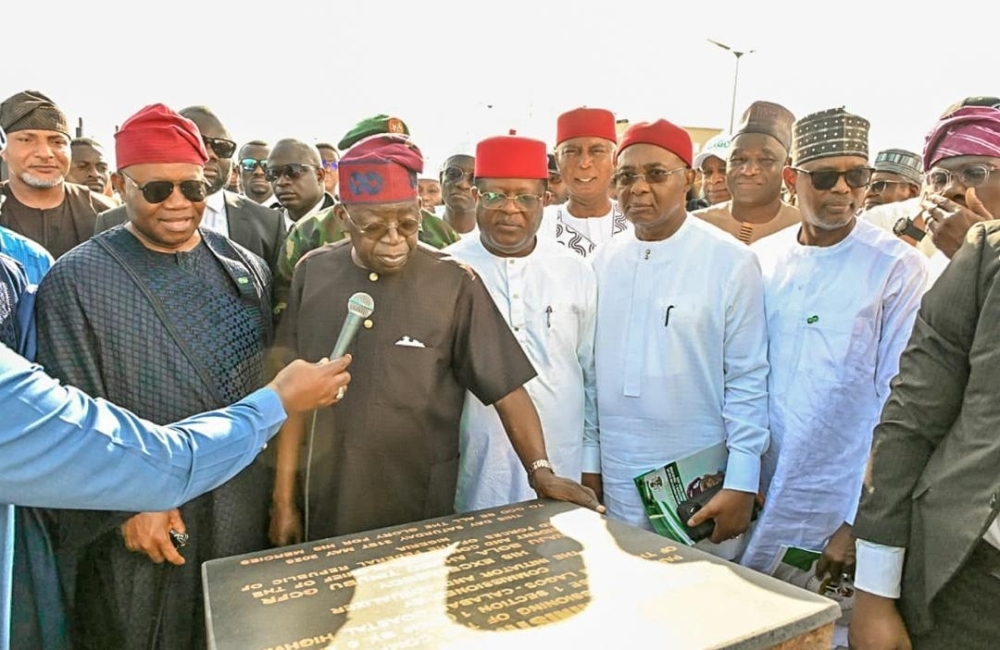
DRIVING NIGERIA’S FUTURE: CELEBRATING TWO YEARS OF TRANSFORMATIVE LEADERSHIP AND THE LAGOS-CALABAR COASTAL HIGHWAY MILESTONE
DRIVING NIGERIA’S FUTURE: CELEBRATING TWO YEARS OF TRANSFORMATIVE LEADERSHIP AND THE LAGOS-CALABAR COASTAL HIGHWAY MILESTONE
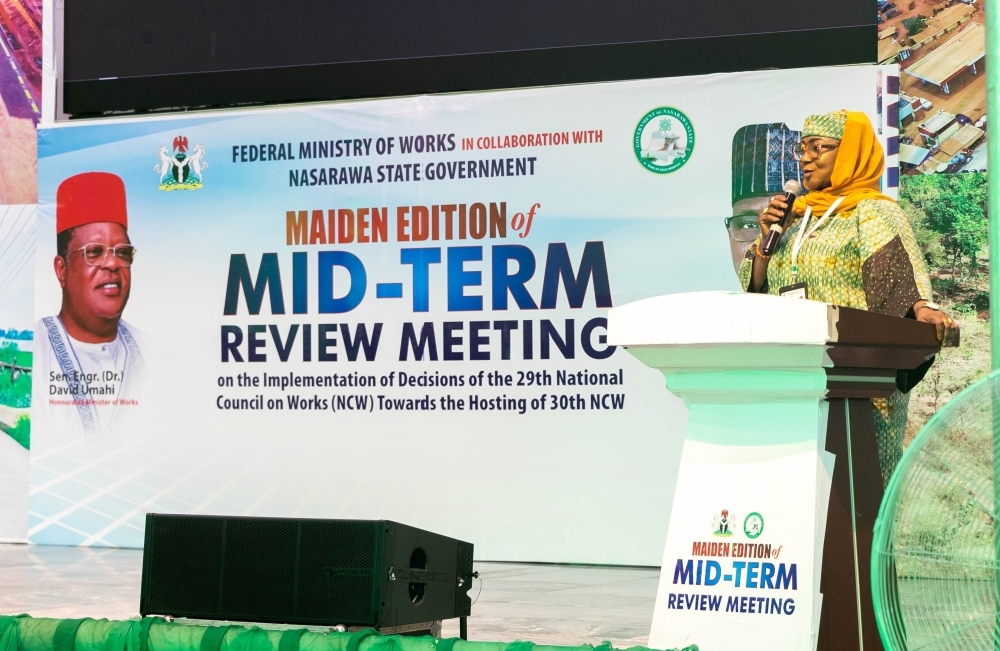
MID -TERM REVIEW MEETING ON THE IMPLIMENTATION OF THE DECISIONS REACHED AT THE 29TH NATIONAL COUNCIL ON WORKS (NCW) DAY 1
MID -TERM REVIEW MEETING ON THE IMPLIMENTATION OF THE DECISIONS REACHED AT THE 29TH NATIONAL COUNCIL ON WORKS (NCW) DAY 1